Every image is free to use — no credit required. See license below.
Jason D’s VisionSweden
450 scenes
Sweden
Dagens ord · Word of the daybaka“to bake”·“Vi bakar äppelpaj på söndag.”“We bake apple pie on Sunday.”Day 298 of 365
Our promise to creators
Beautiful, realistic imagery should never stand between a creator and their work. Everything in this gallery is free to use — for any purpose, forever, with no credit required. We make these images so the people doing the work always have something stunning to build on.
Gallery split across 3 pages — search & filters apply to this page only (scenes 151–300 of 450).
No scenes match your search.
SE-01-151
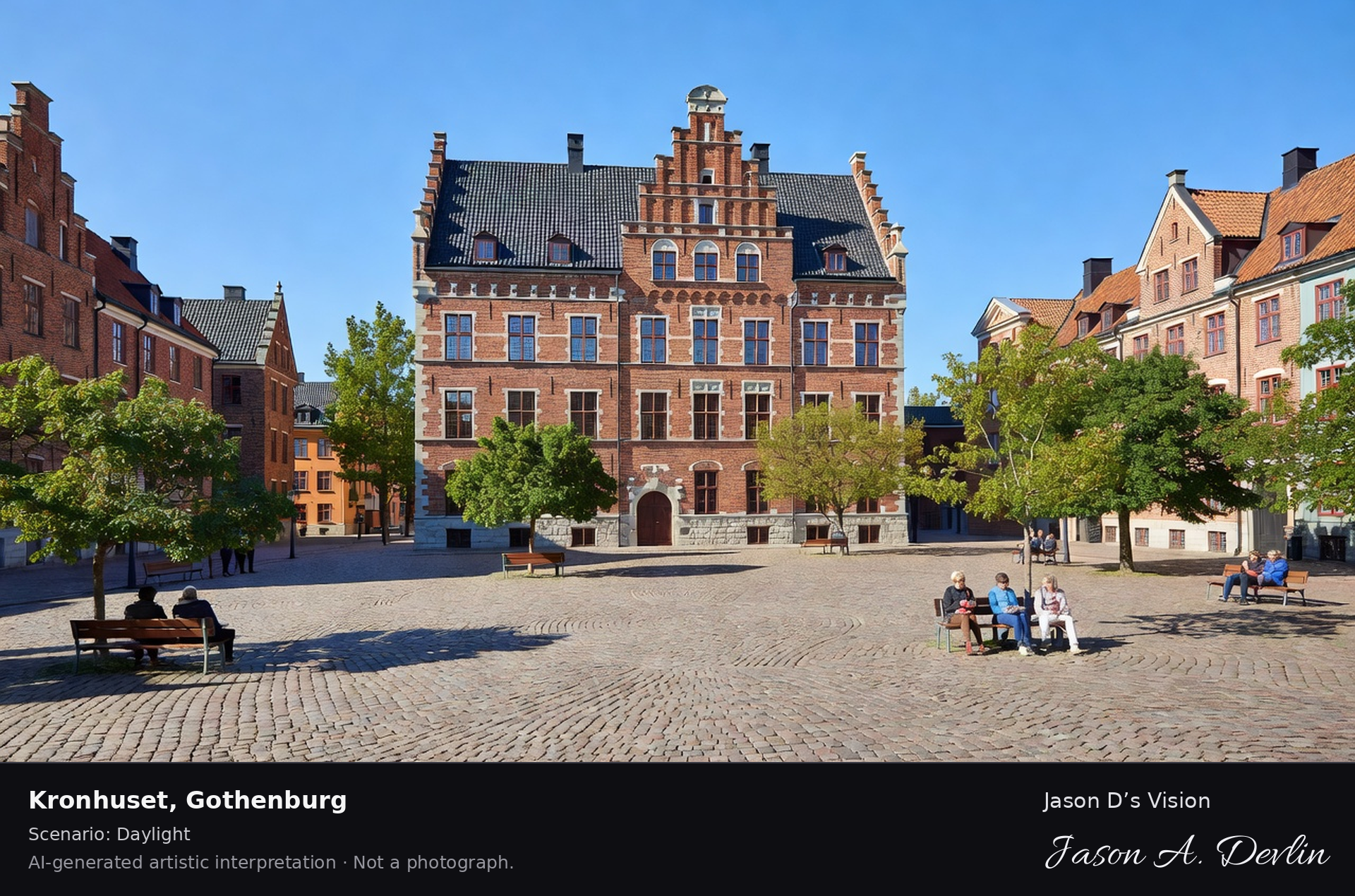
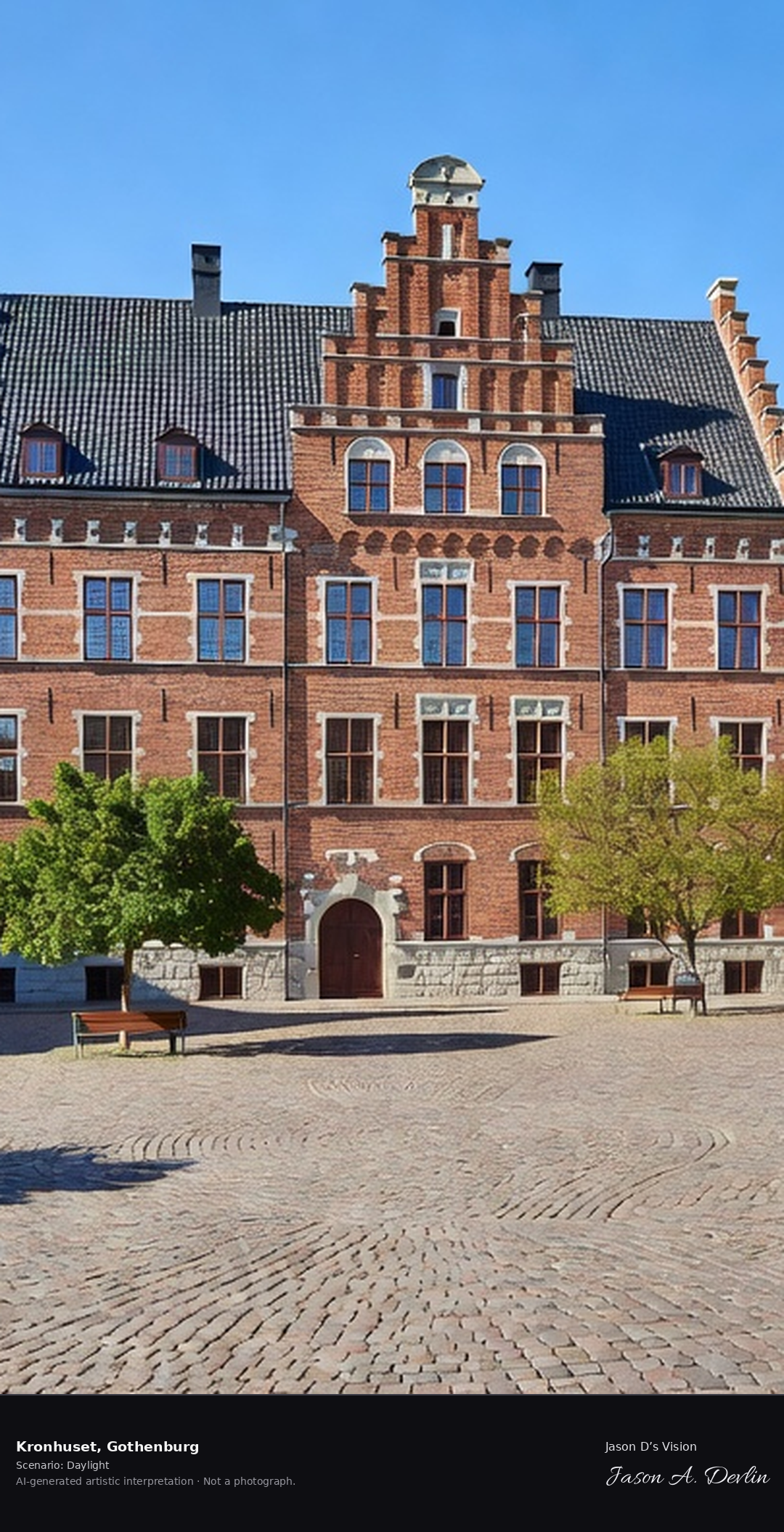
Kronhuset, Gothenburg
Scenario: Daylight
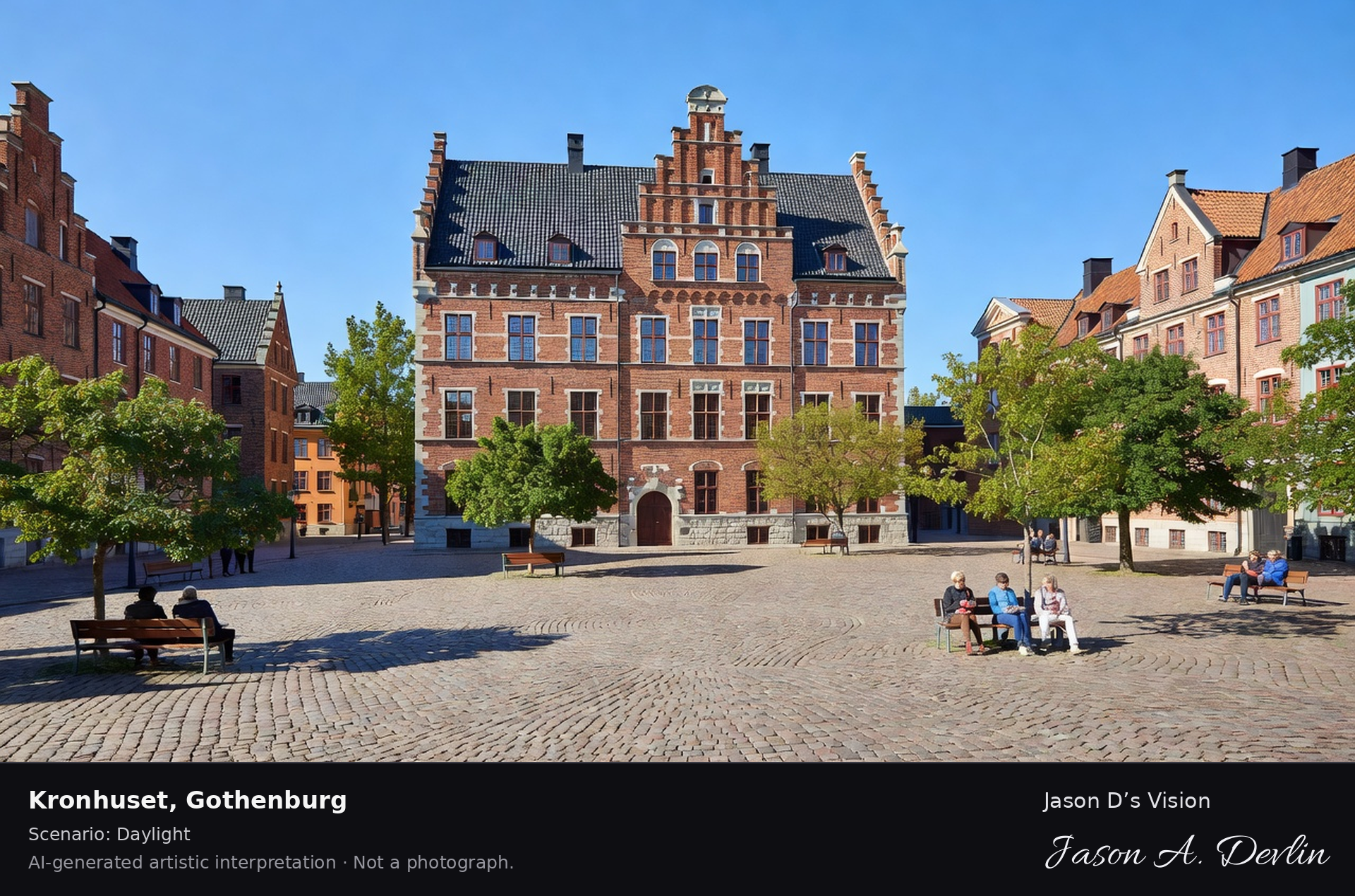
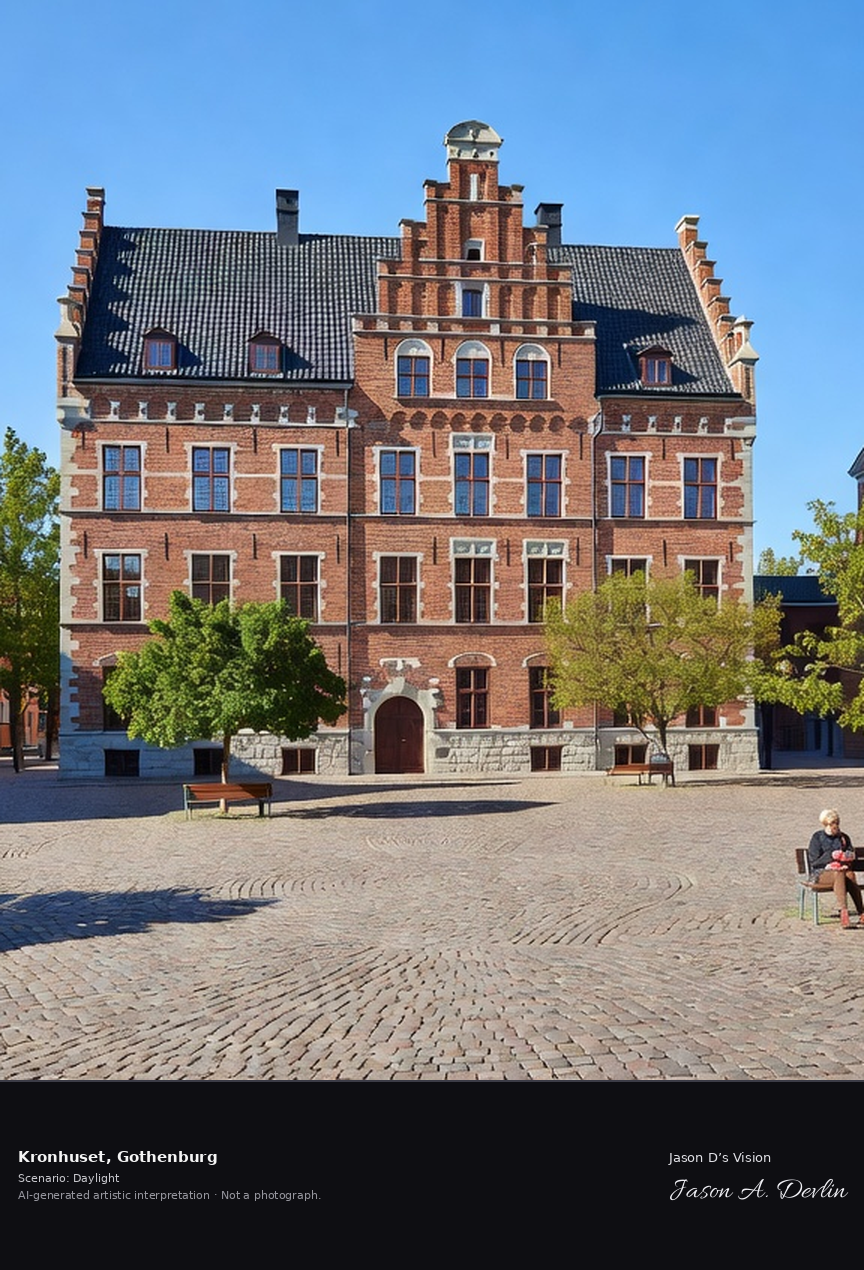
Kronhuset, Gothenburg's oldest secular building from 1643, its Dutch Renaissance brick gables surrounding the cobbled Kronhusparken courtyard. The former arsenal and parliament hall in the historic city core.
Kronhuset, Gothenburg's oldest secular building, stands in warm brick around the cobbled courtyard of Kronhusparken. Completed in 1643, this Dutch Renaissance landmark once served as an arsenal and parliament hall — a historic treasure in the heart of the city, captured in bright natural daylight.
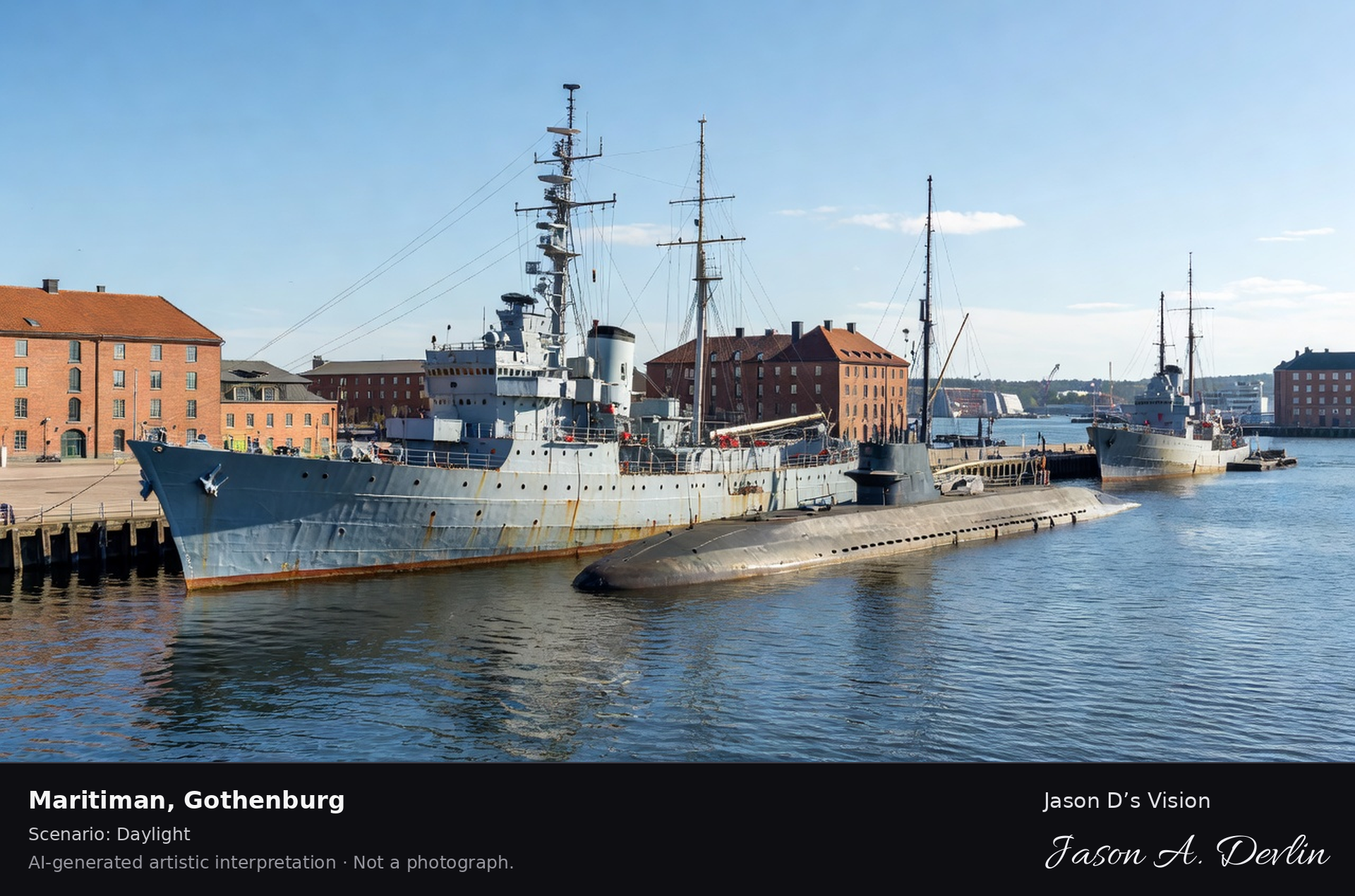
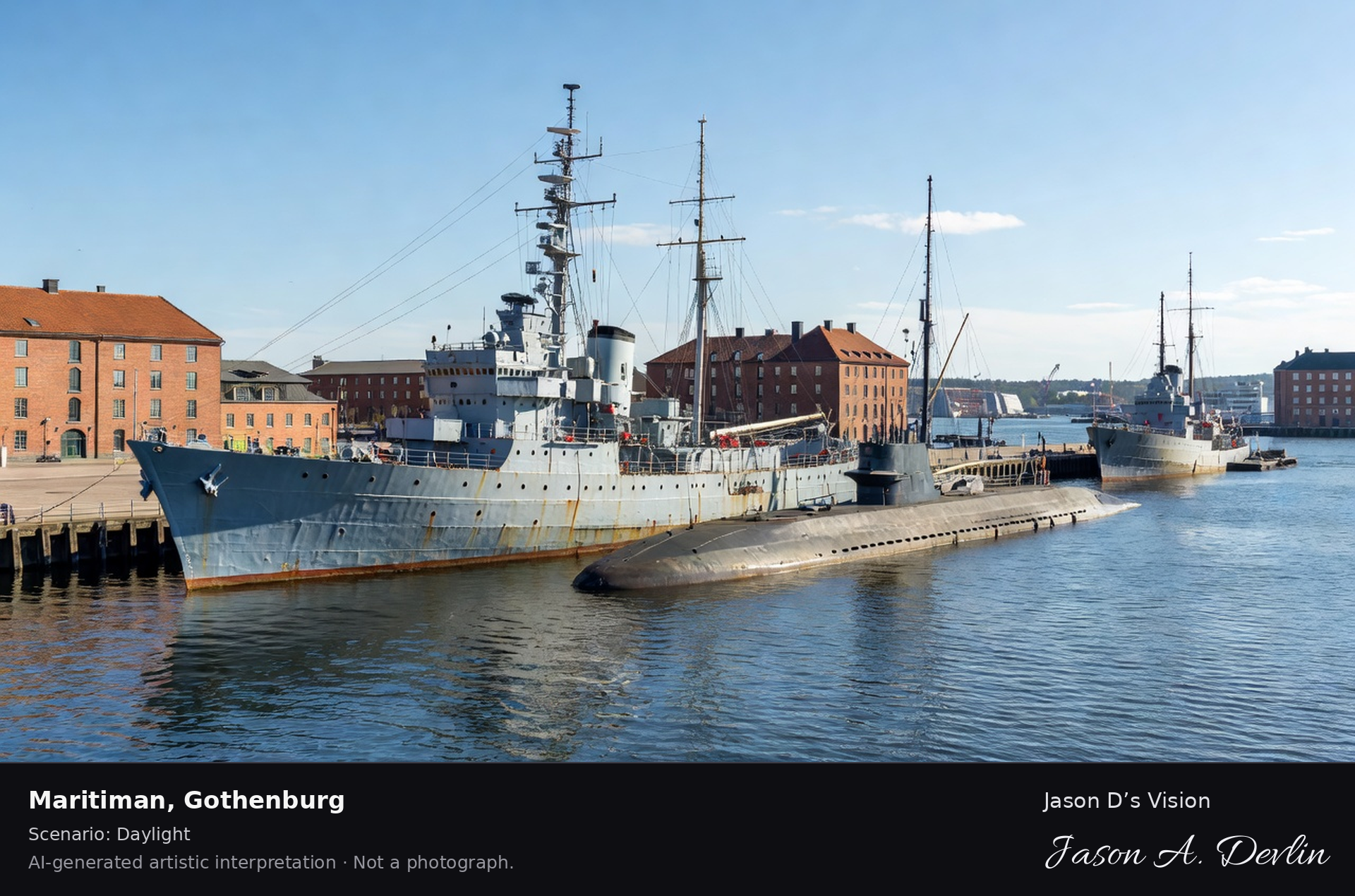
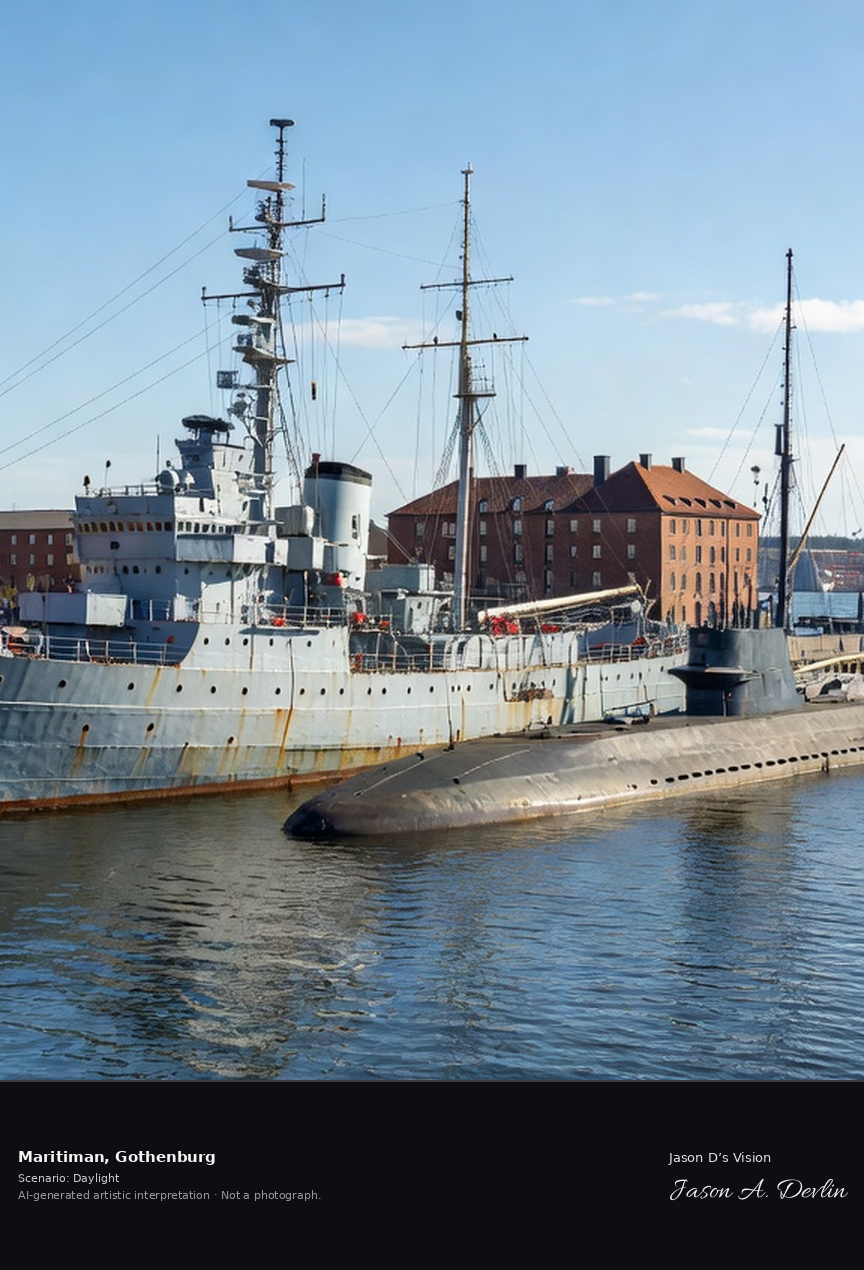
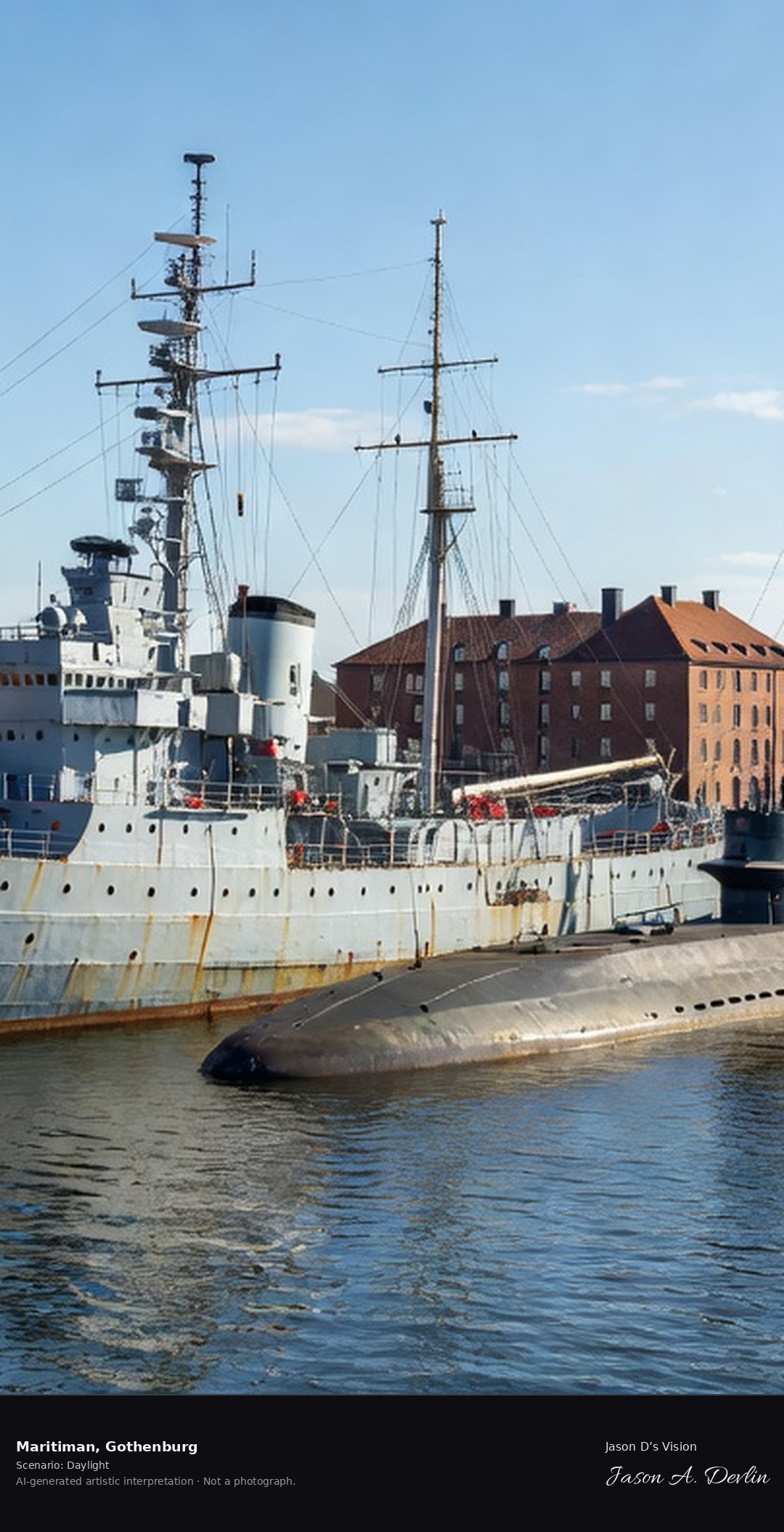
The floating museum ships of Maritiman moored at Packhuskajen, including the destroyer Småland and submarine Nordkaparen, with rigging and masts against the harbor sky. The world's largest floating maritime museum.
Maritiman at Packhuskajen in Gothenburg is the world's largest floating maritime museum, home to the destroyer Småland and the submarine Nordkaparen moored side by side. Masts and rigging rise against the harbour sky before the red-brick Packhus warehouses — a beloved working-museum waterfront captured in bright natural daylight.
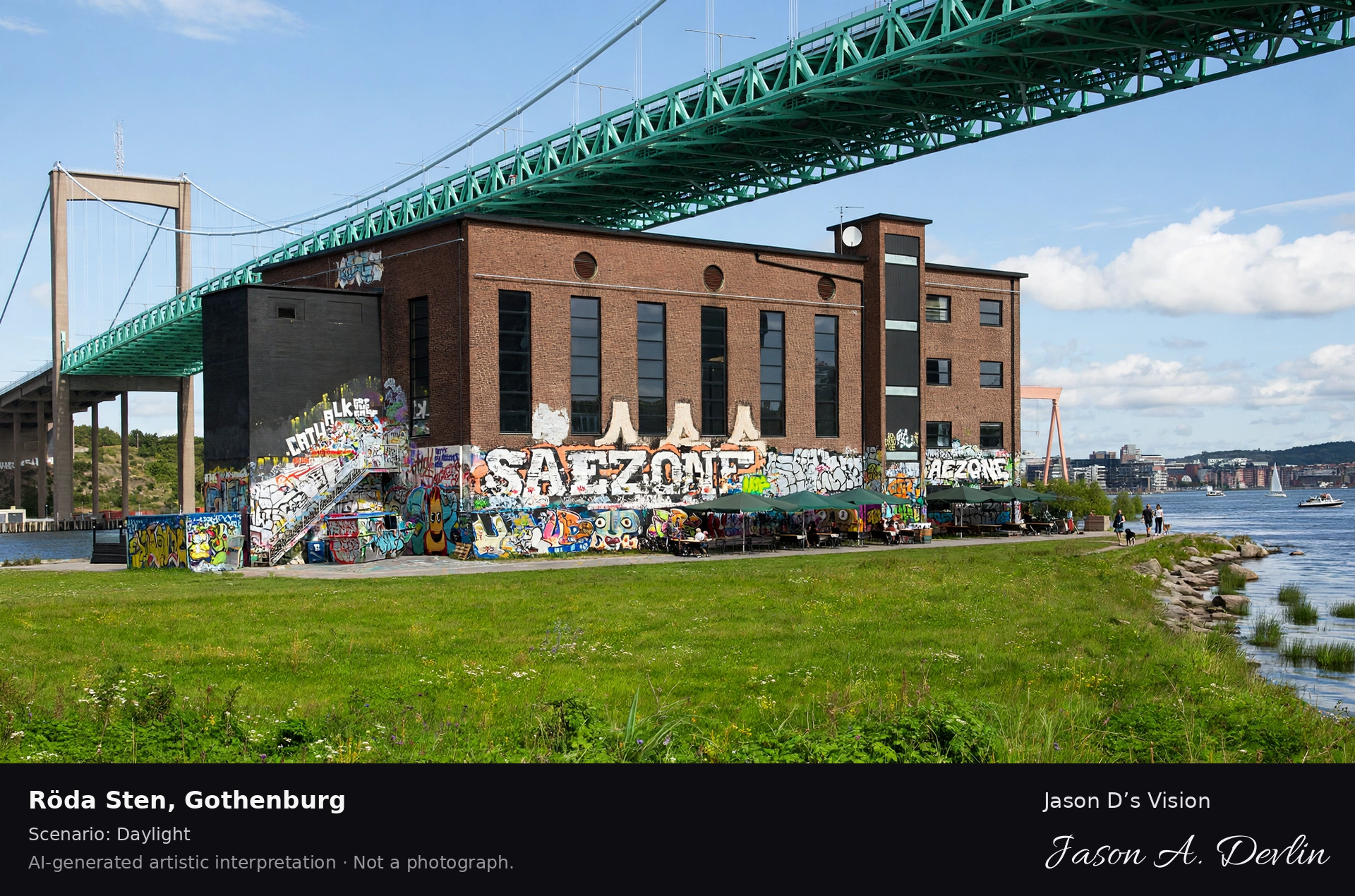
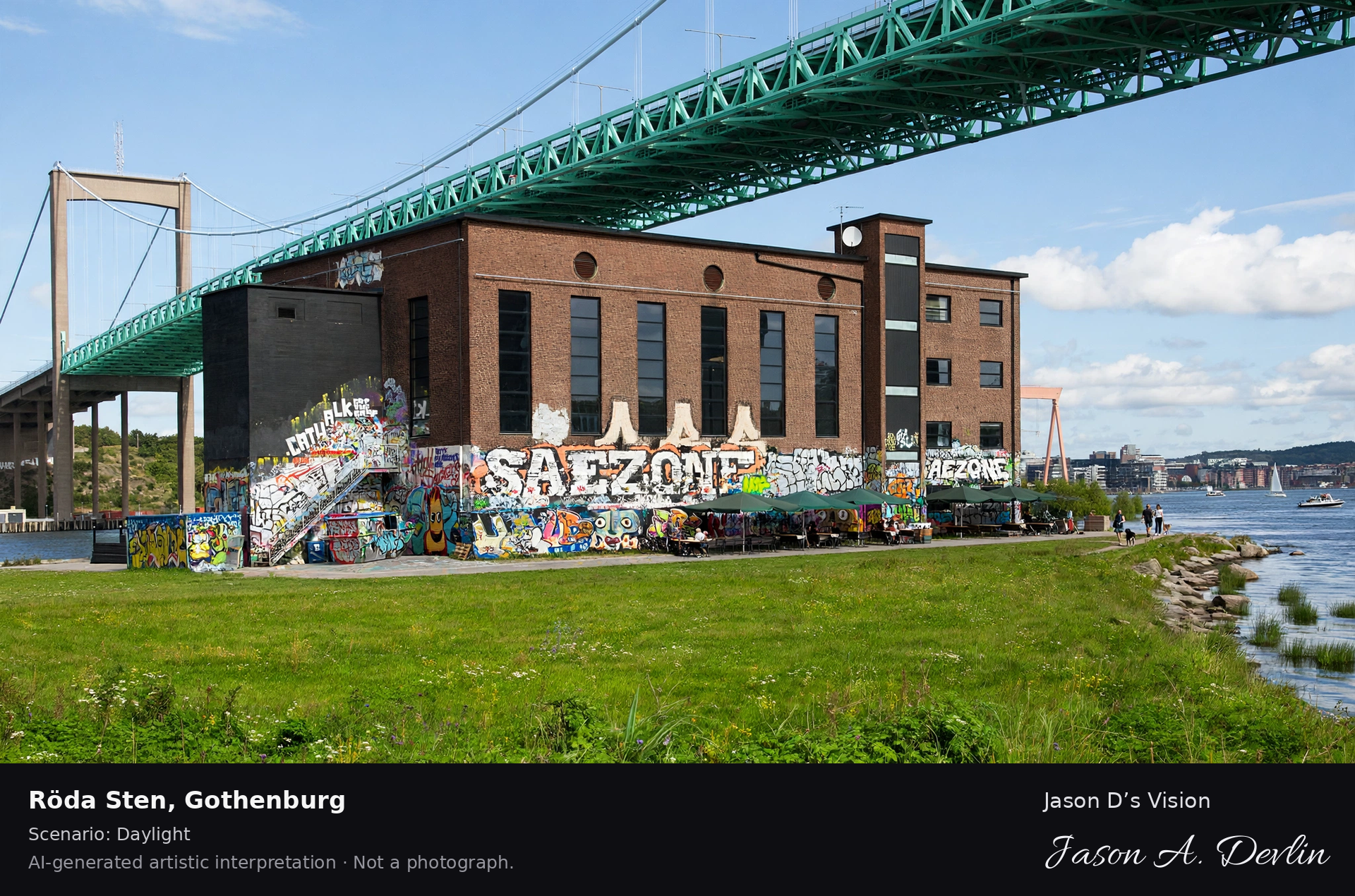
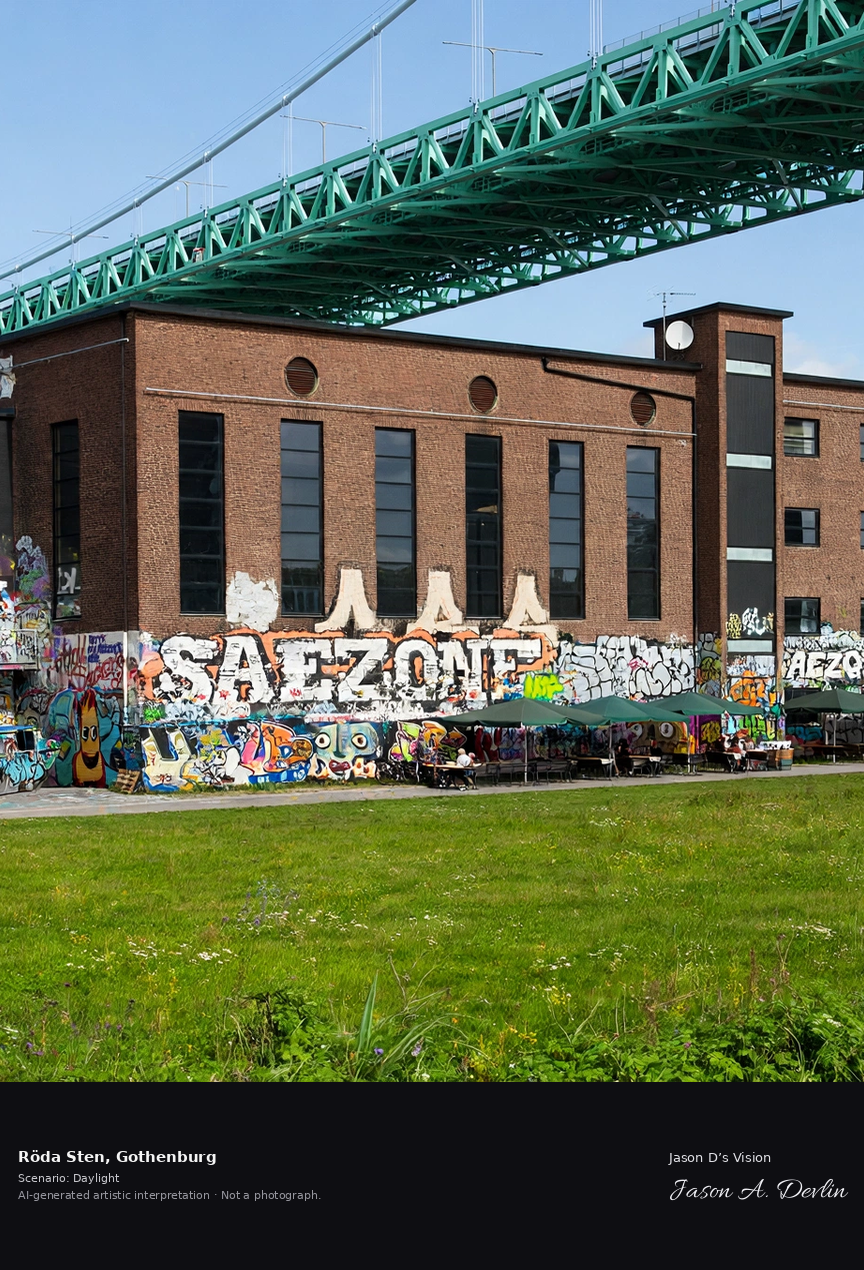
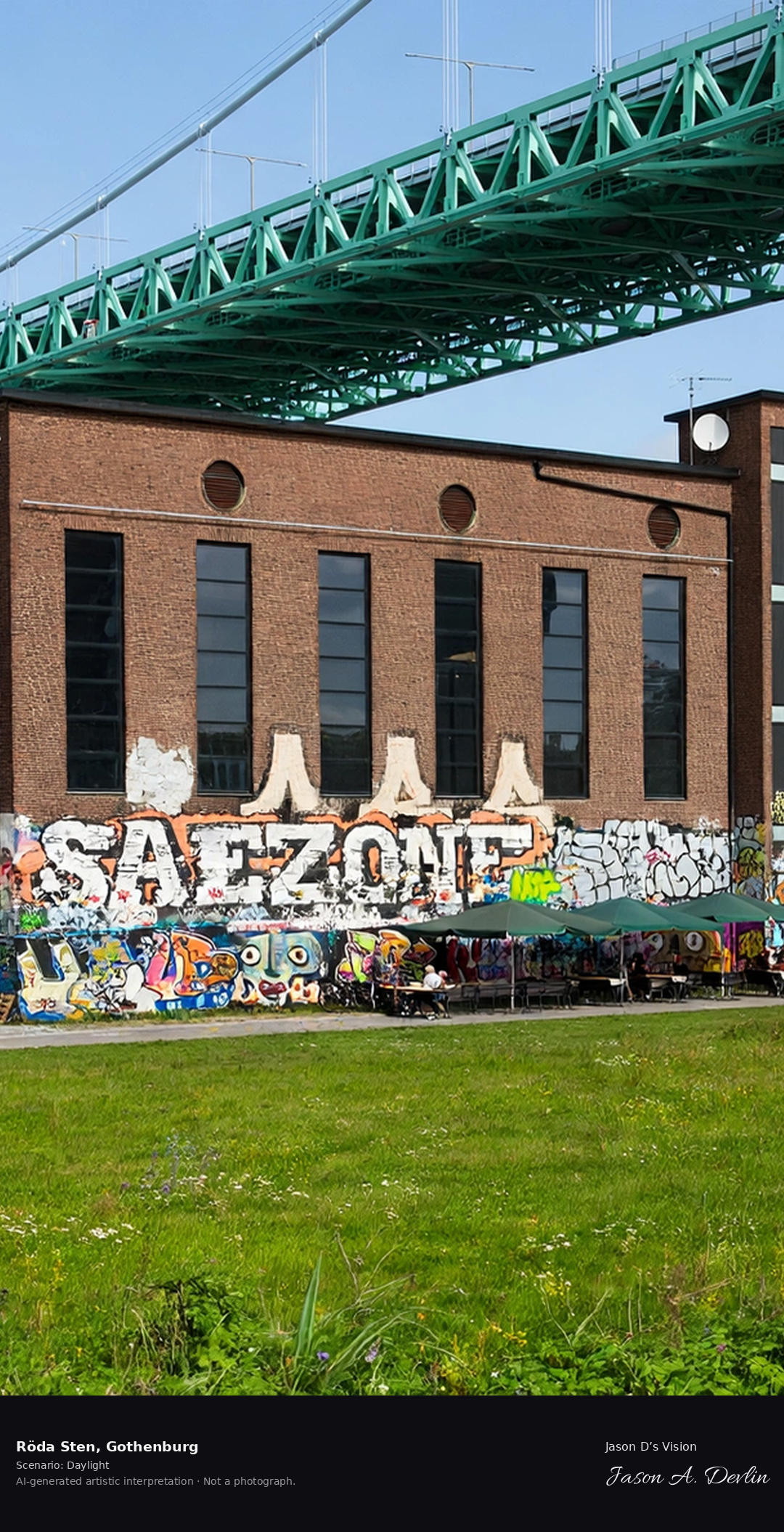
Röda Sten art center in the former boiler house under Älvsborg Bridge, its industrial brick facade covered in graffiti art with the bridge's steel arches soaring overhead and the river below.
Röda Sten in Gothenburg is a former industrial boiler house beneath the Älvsborg Bridge, reborn as one of Sweden's most distinctive contemporary art centers. Its brick walls carry large-scale graffiti murals in vivid color while the bridge's steel arches soar overhead — industrial heritage and street art meeting the river in bright natural daylight.
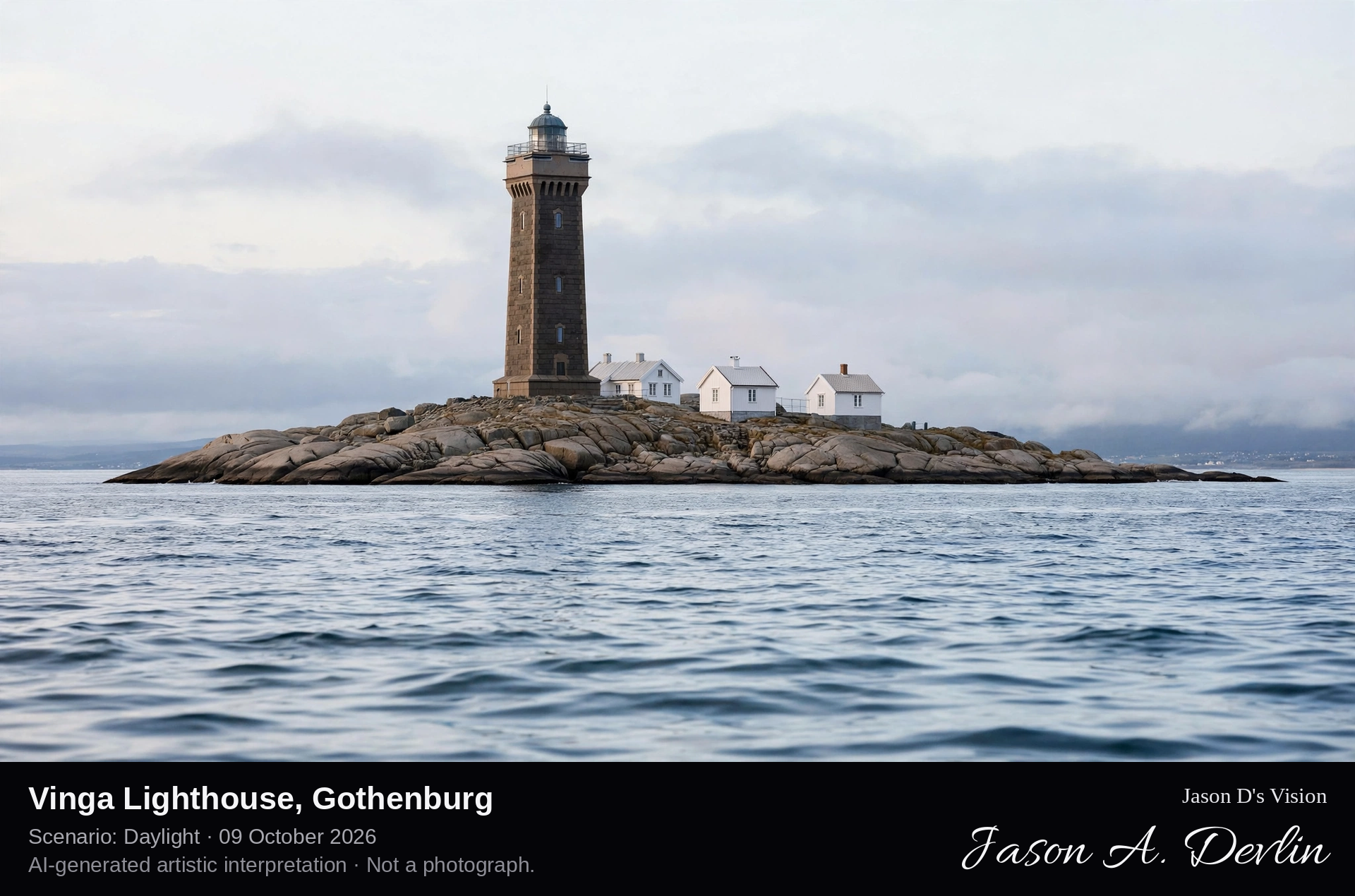
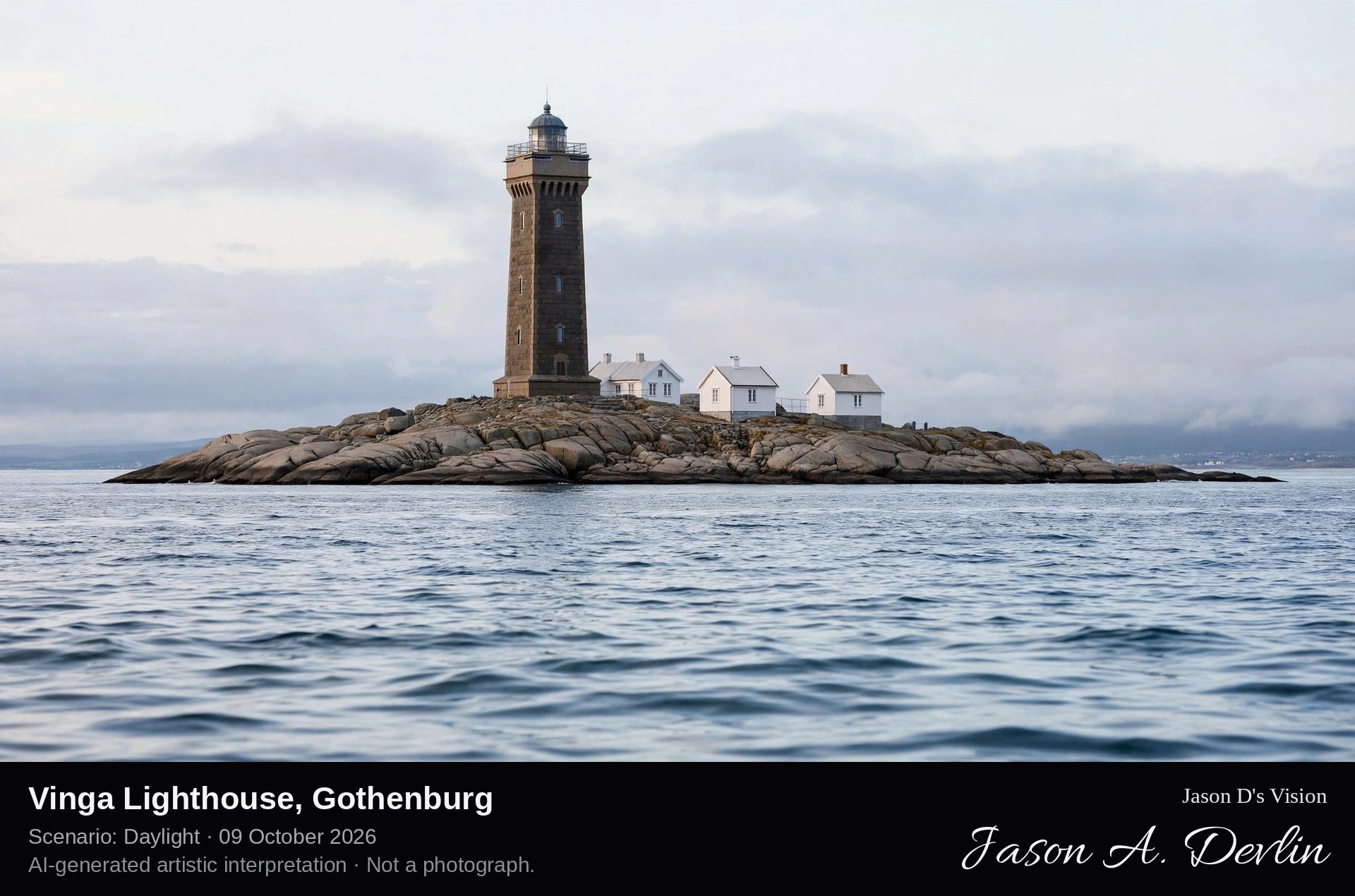
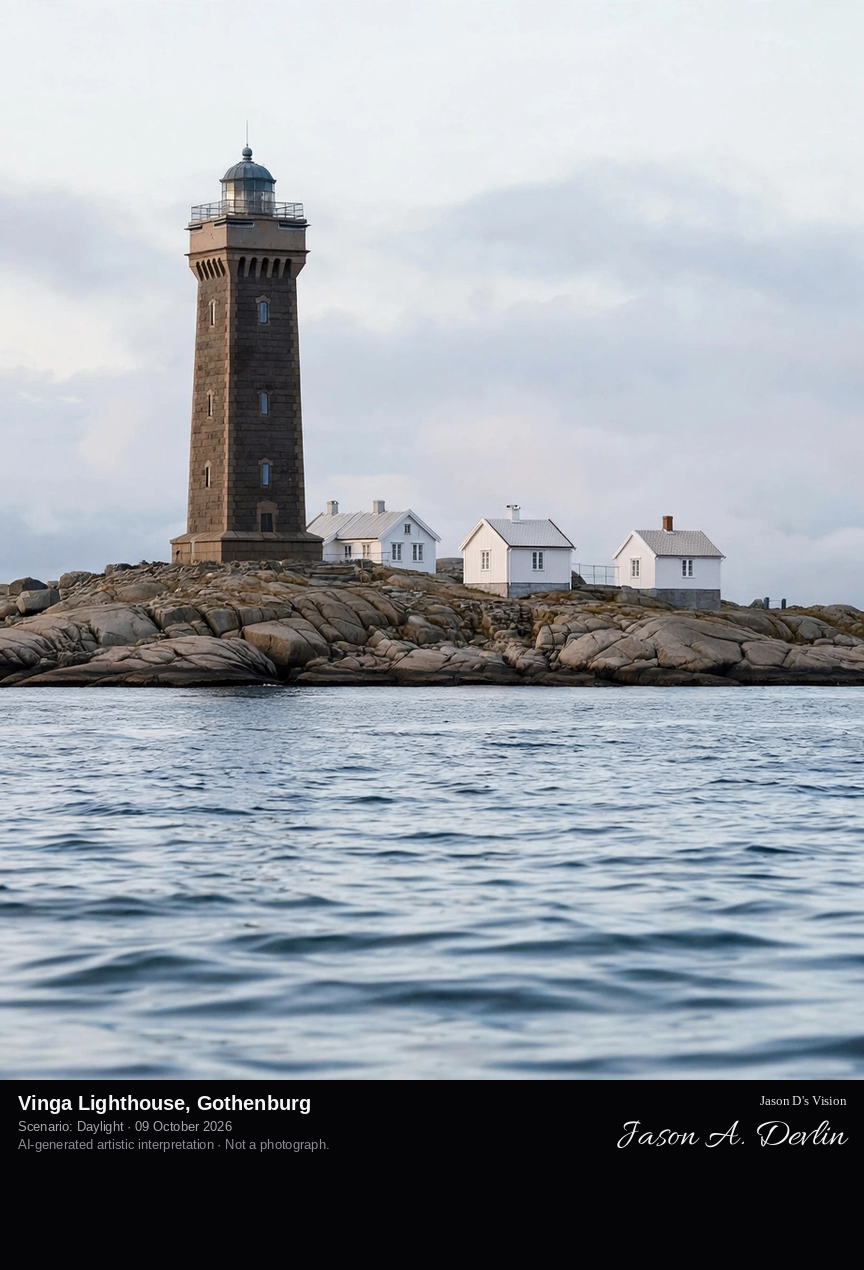
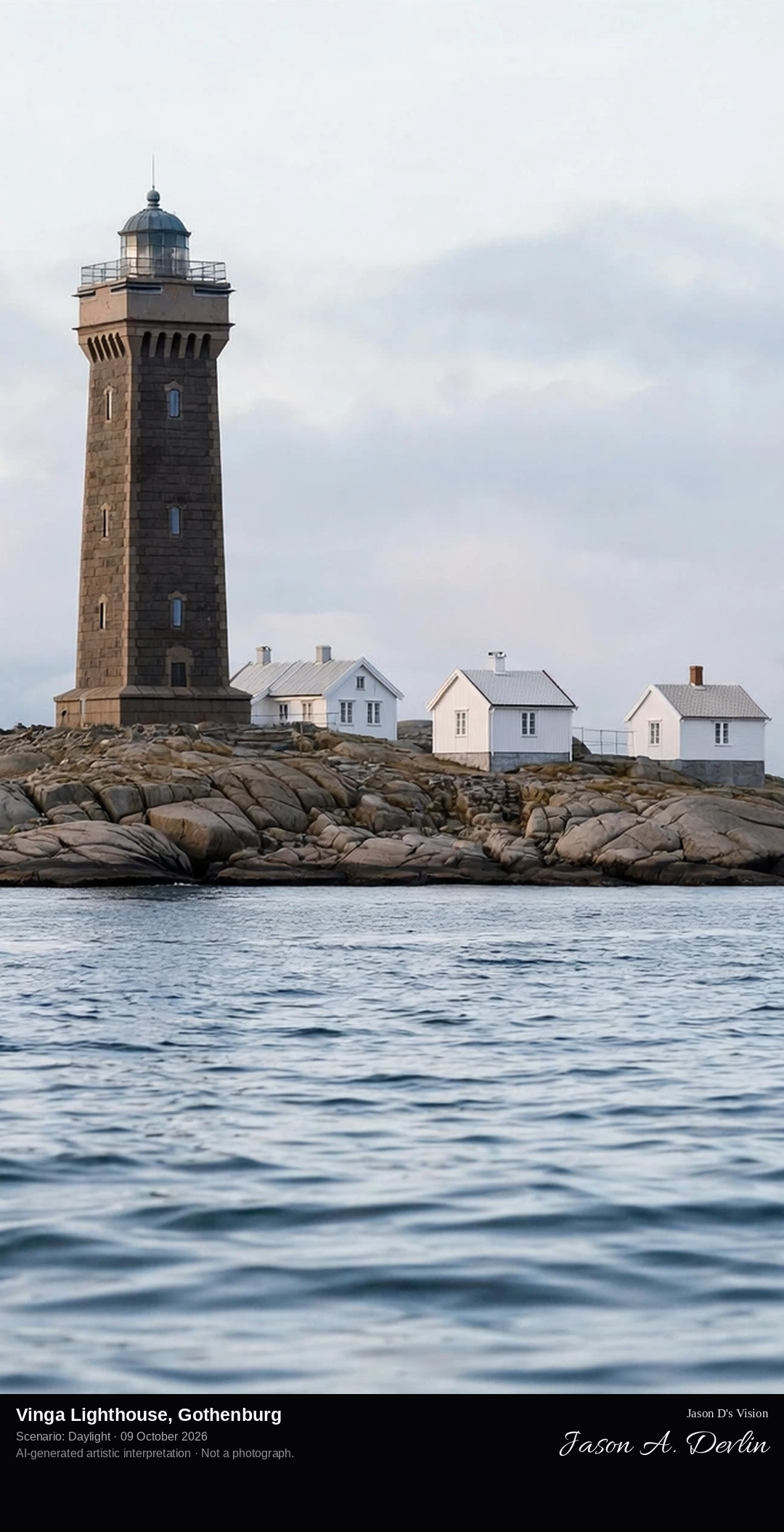
Vinga lighthouse on the outermost island of the Gothenburg archipelago, the white tower with red top standing on bare granite cliffs above the open Kattegat. Evert Taube's island, windswept and timeless.
Vinga Lighthouse stands on the outermost island of the Gothenburg archipelago, the white tower with its red lantern top rising from bare granite cliffs above the open Kattegat. This is Evert Taube's island — windswept, timeless, and one of Sweden's most storied maritime landmarks, seen here in bright natural daylight.
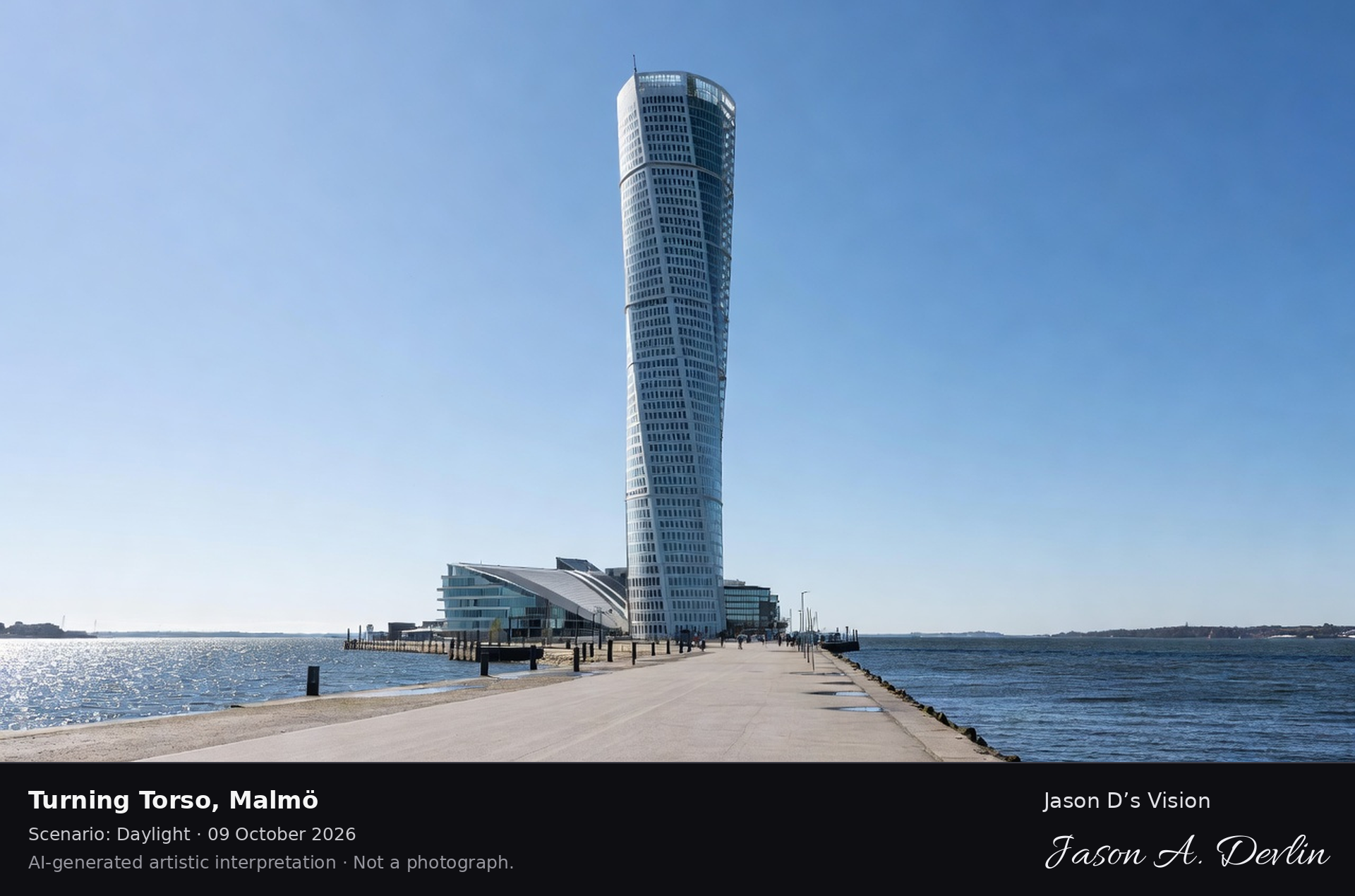
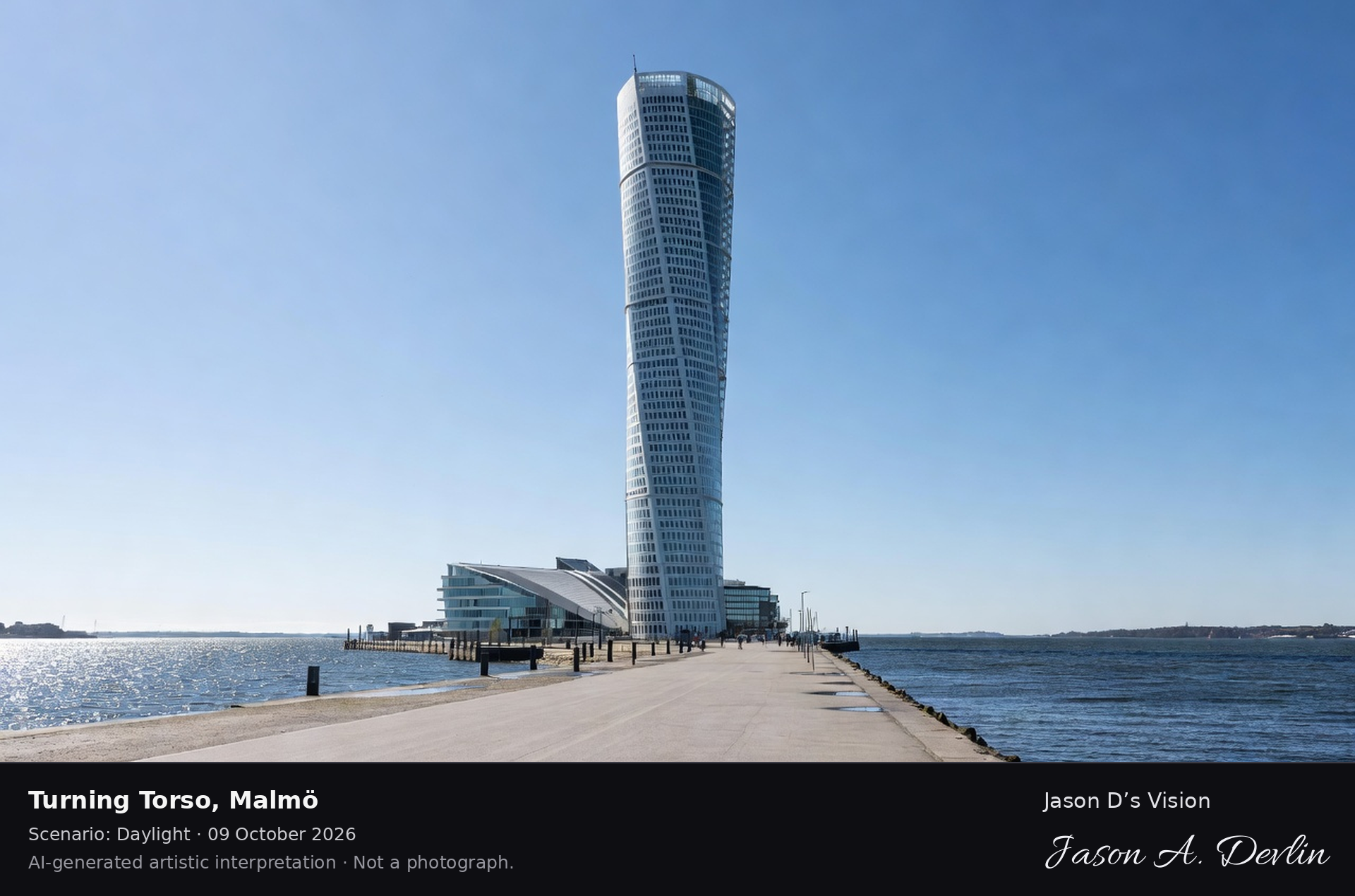
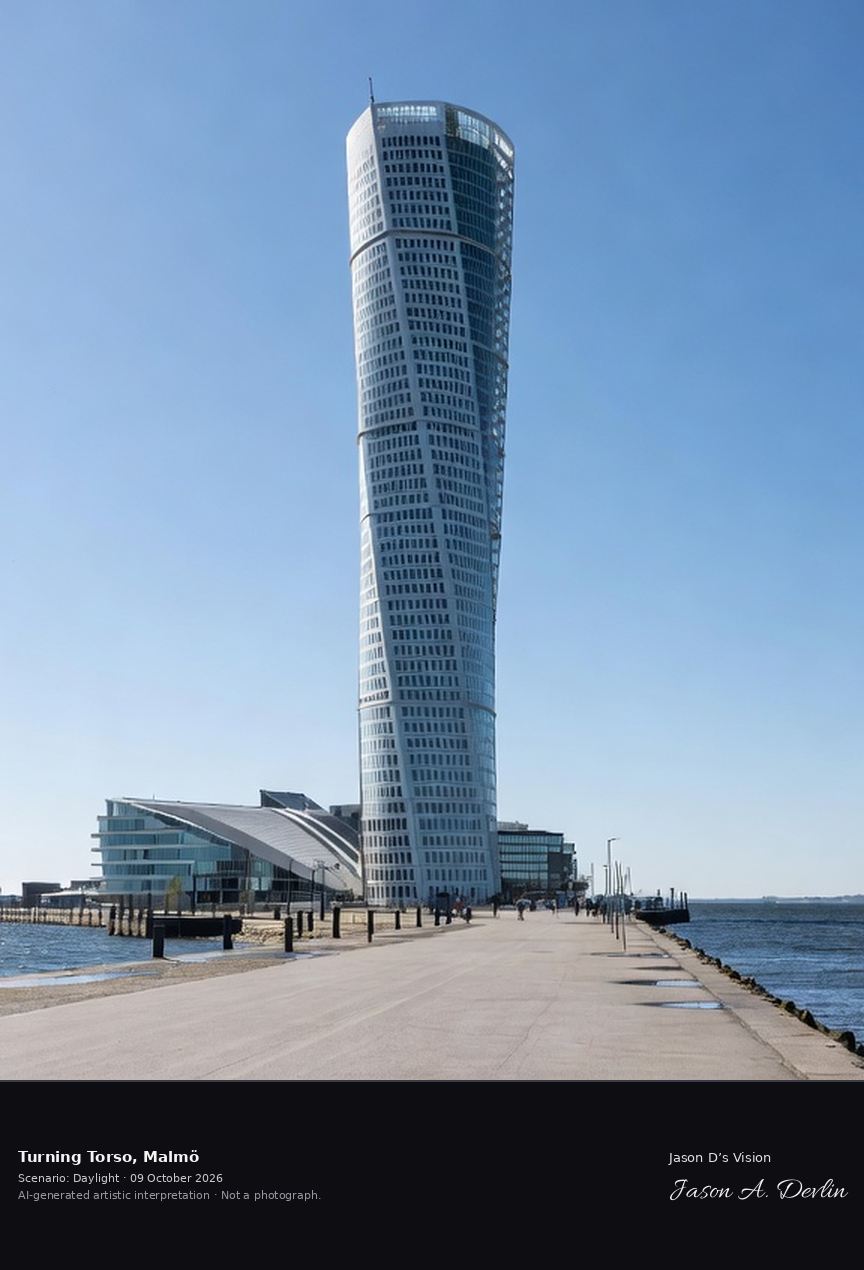
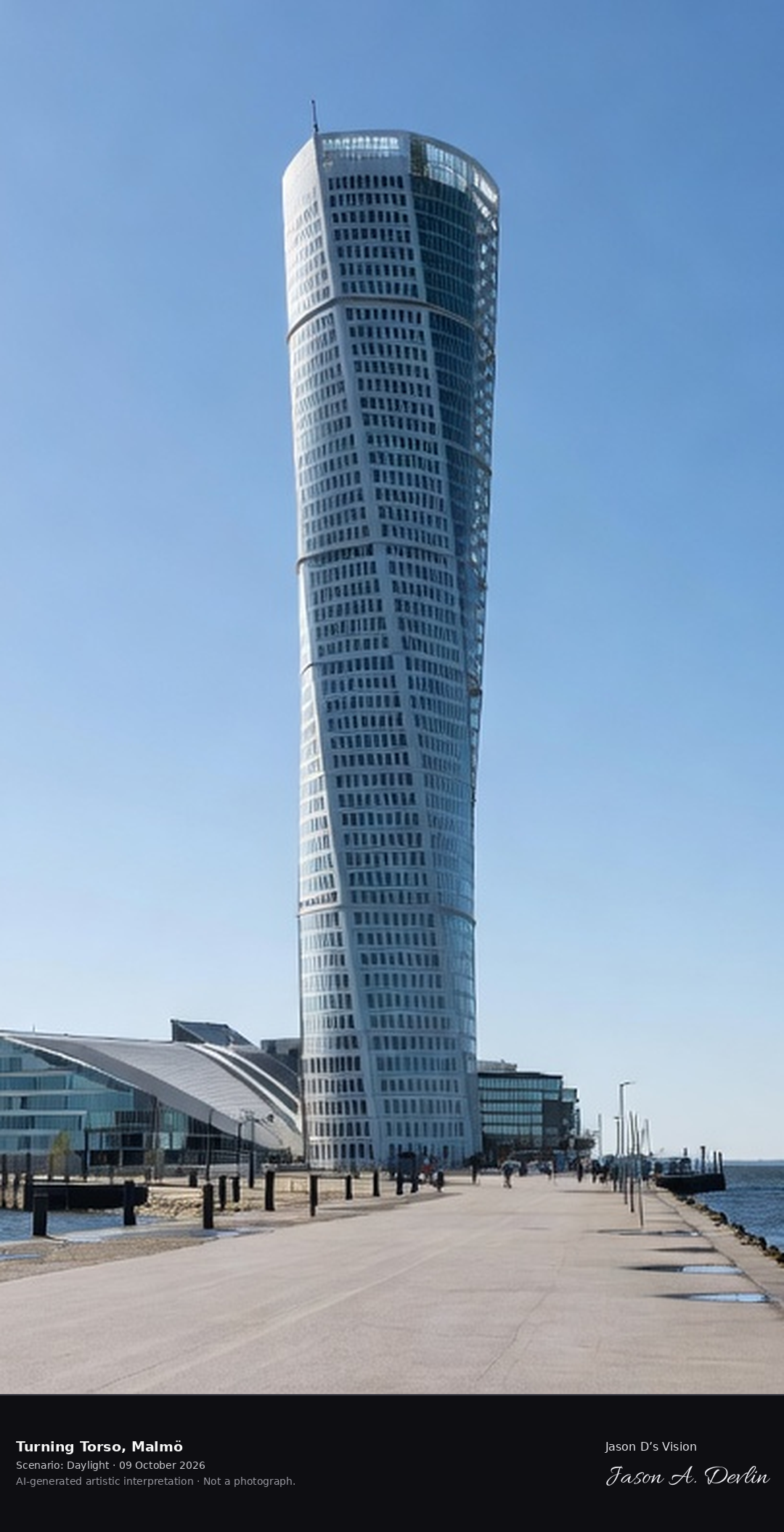
Santiago Calatrava's Turning Torso twisting 190 meters above Västra Hamnen, viewed from the waterfront promenade with the Öresund strait glittering beyond. Scandinavia's tallest building, a white sculptural spiral against the sky.
Turning Torso in Malmö is Santiago Calatrava's twisting white tower, the tallest building in Scandinavia at 190 meters, rising above the Västra Hamnen waterfront. Nine cube segments rotate ninety degrees around a steel spine, a sculptural spiral in glass and white steel, seen here from the harbour promenade with the Öresund strait glittering beyond in bright natural daylight.
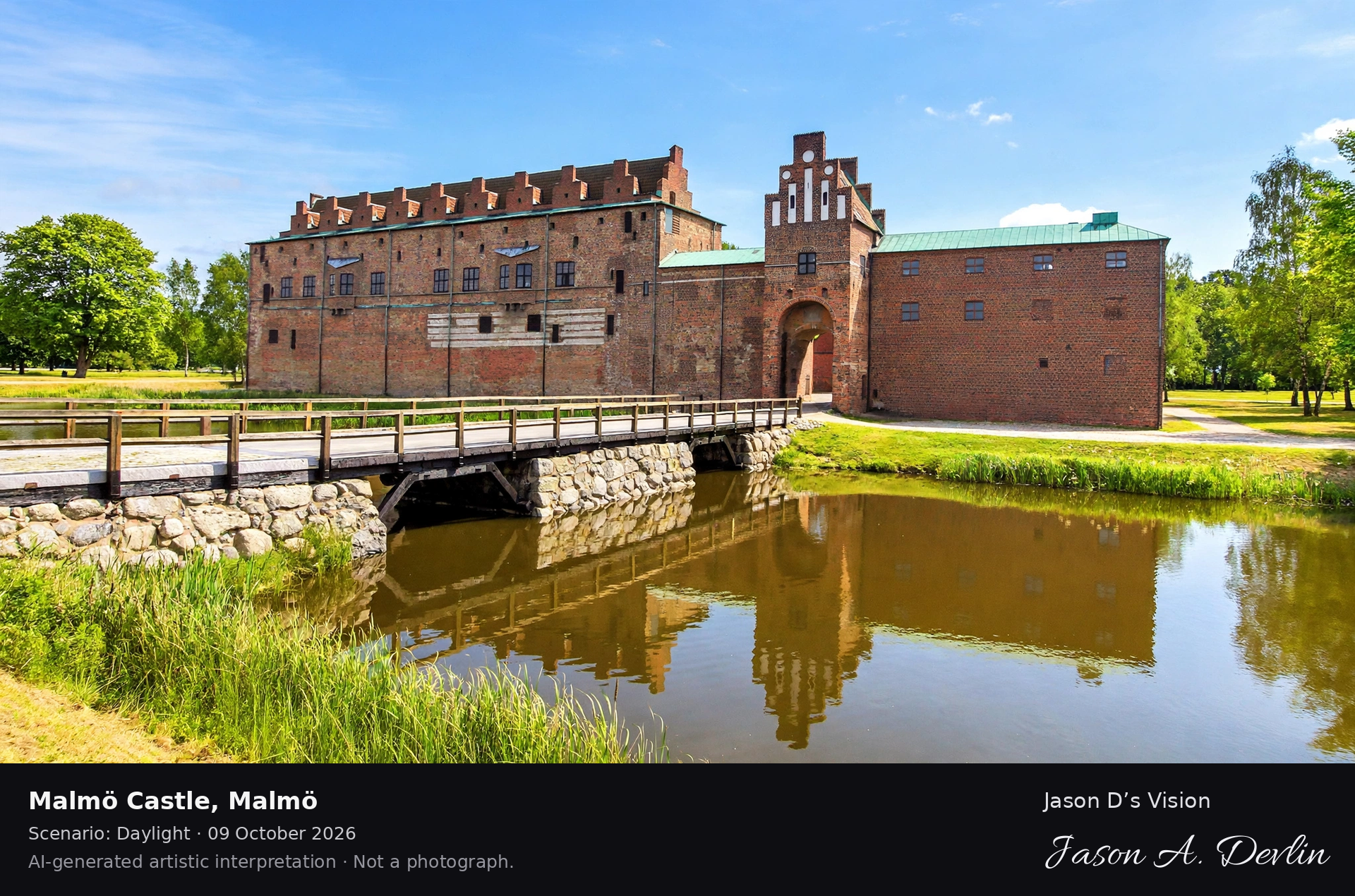
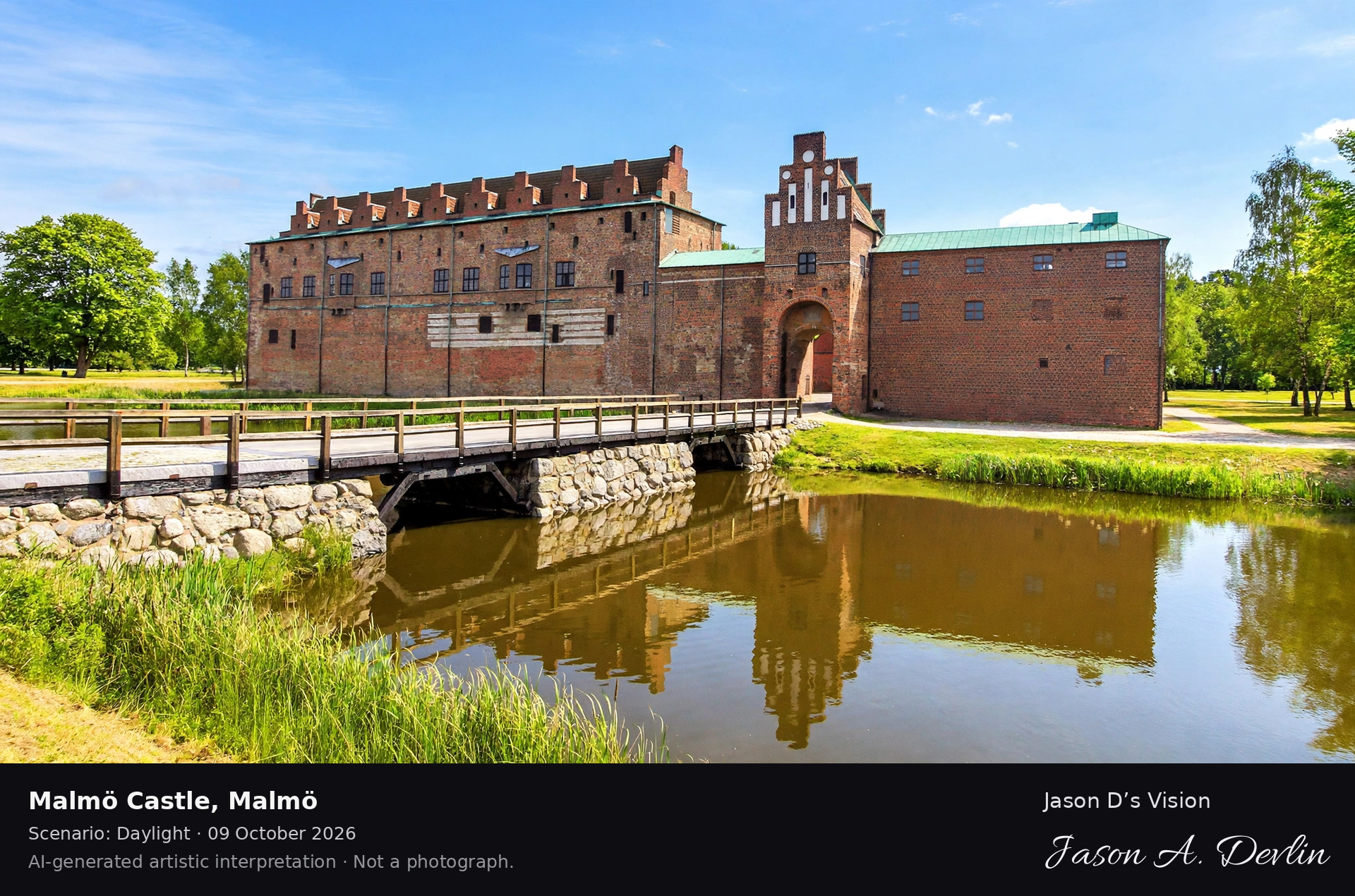
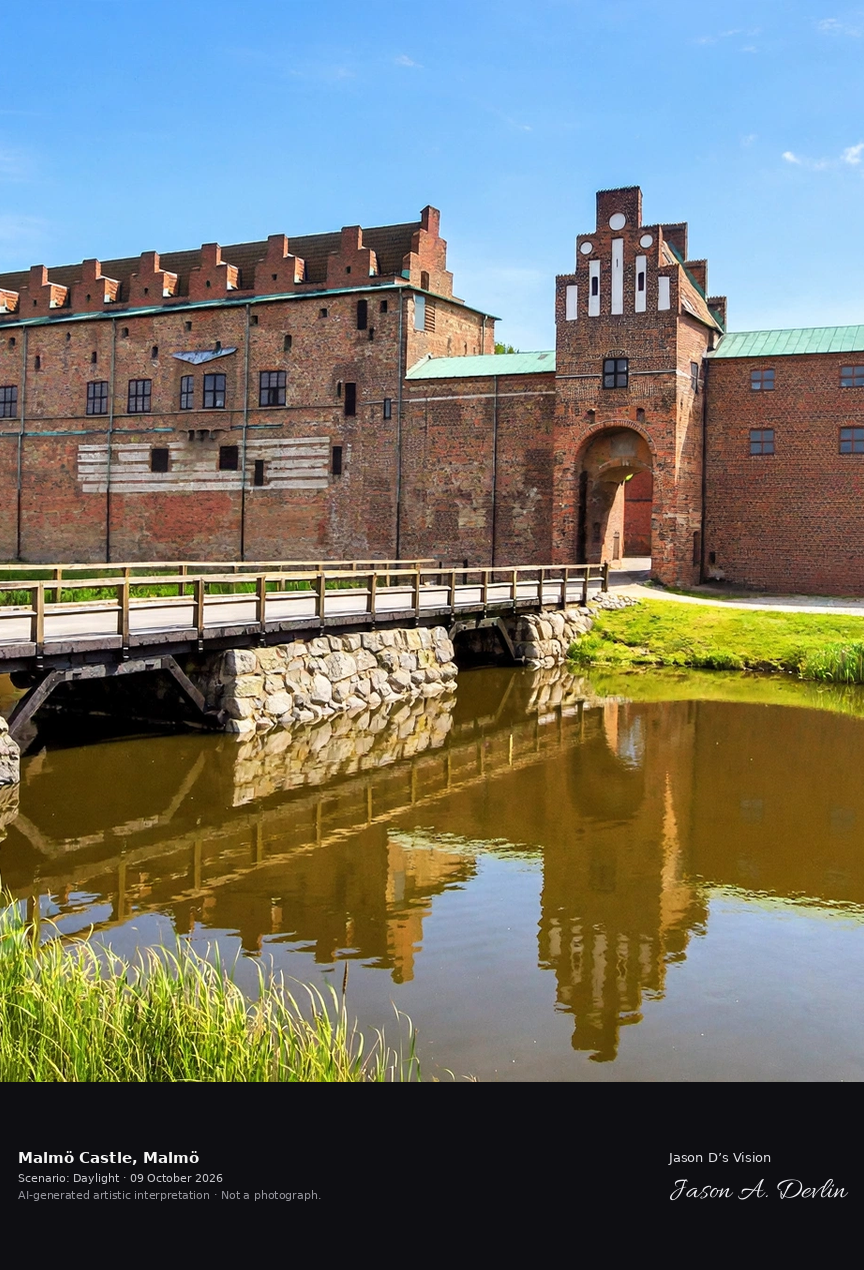
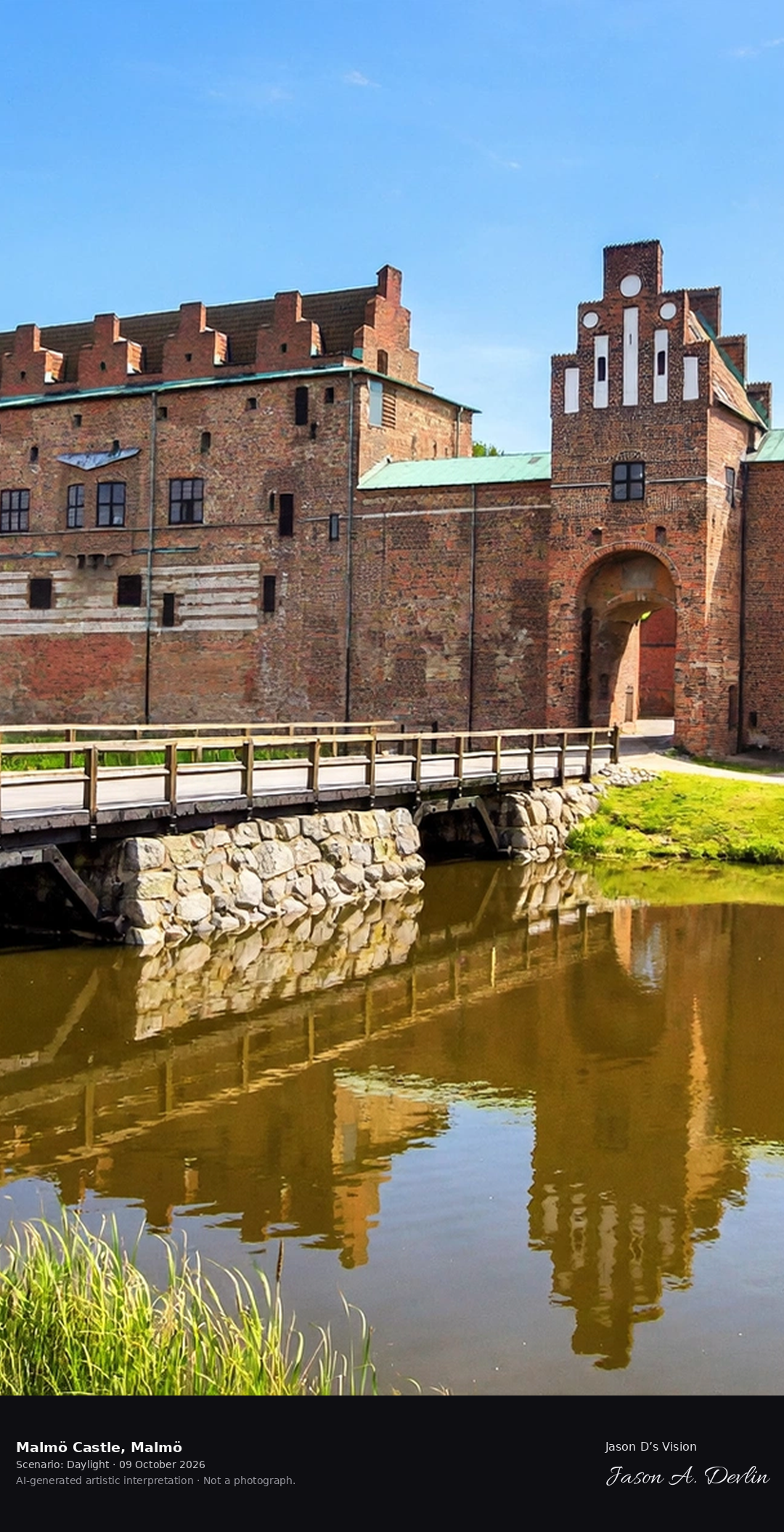
Malmöhus Castle's red-brick Renaissance bulk rising from its moat in Slottsparken, viewed across the water with swans. Scandinavia's oldest surviving Renaissance castle, now housing museums.
Malmö Castle — Malmöhus — is Scandinavia's oldest surviving Renaissance castle, its red-brick bulk rising from a wide moat in Slottsparken in central Malmö. Round corner towers with red tile roofs and rows of dormers face the water, where swans glide across the castle's reflection. Built in the 1530s under Christian III of Denmark, the castle now houses Malmö's museums; the classic tourist viewpoint looks across the moat from the park's green banks in bright natural daylight.
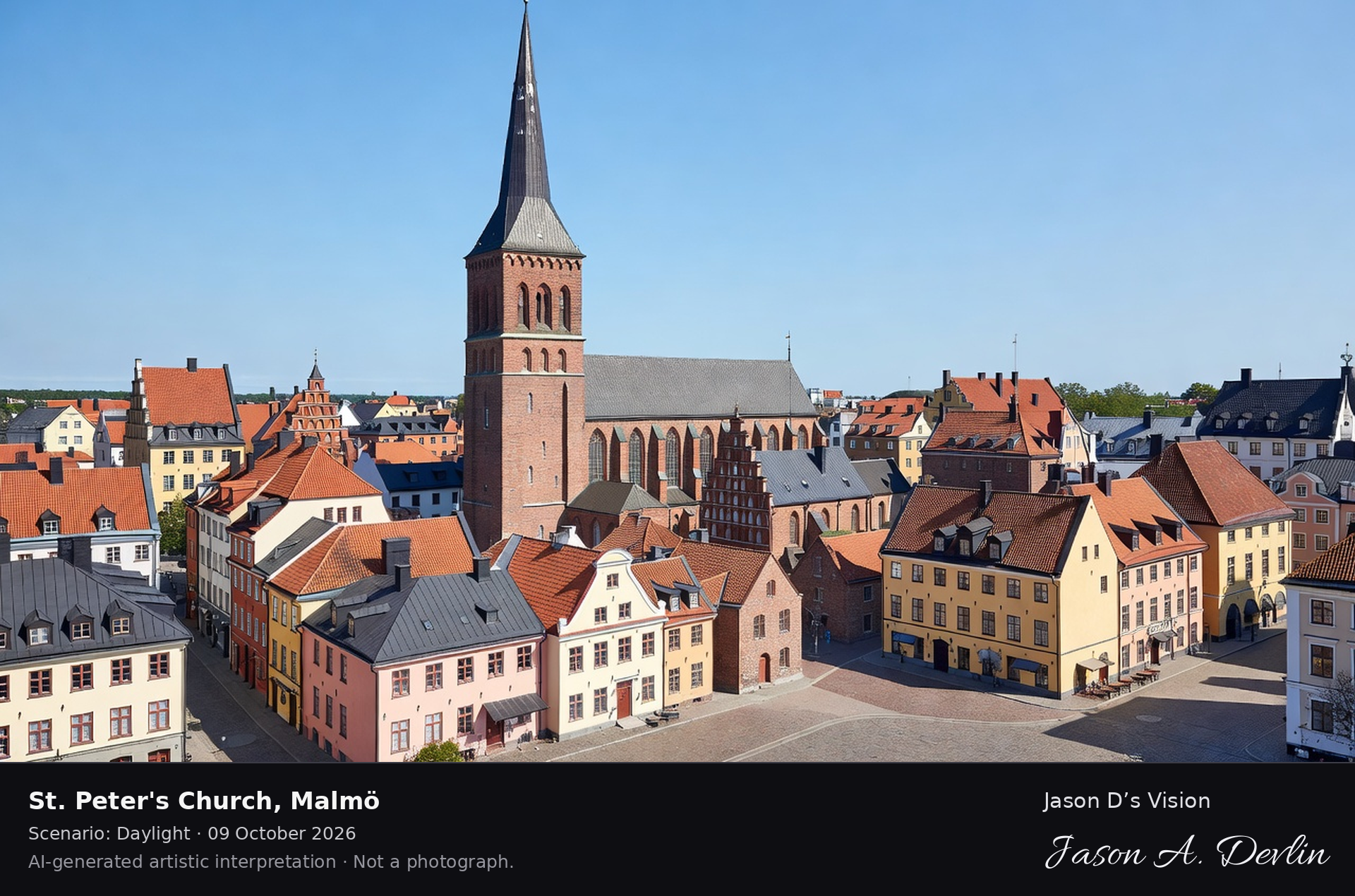
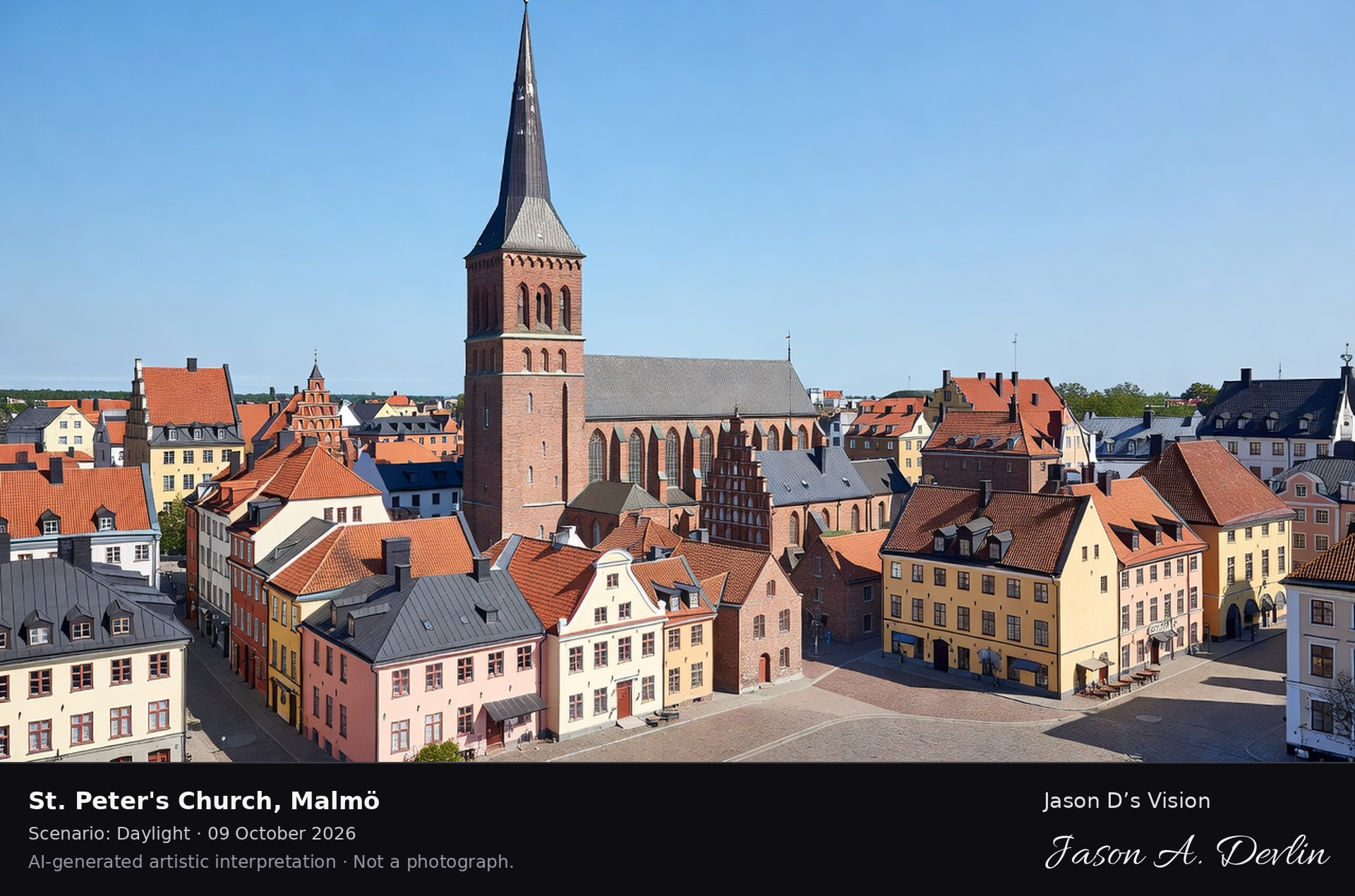
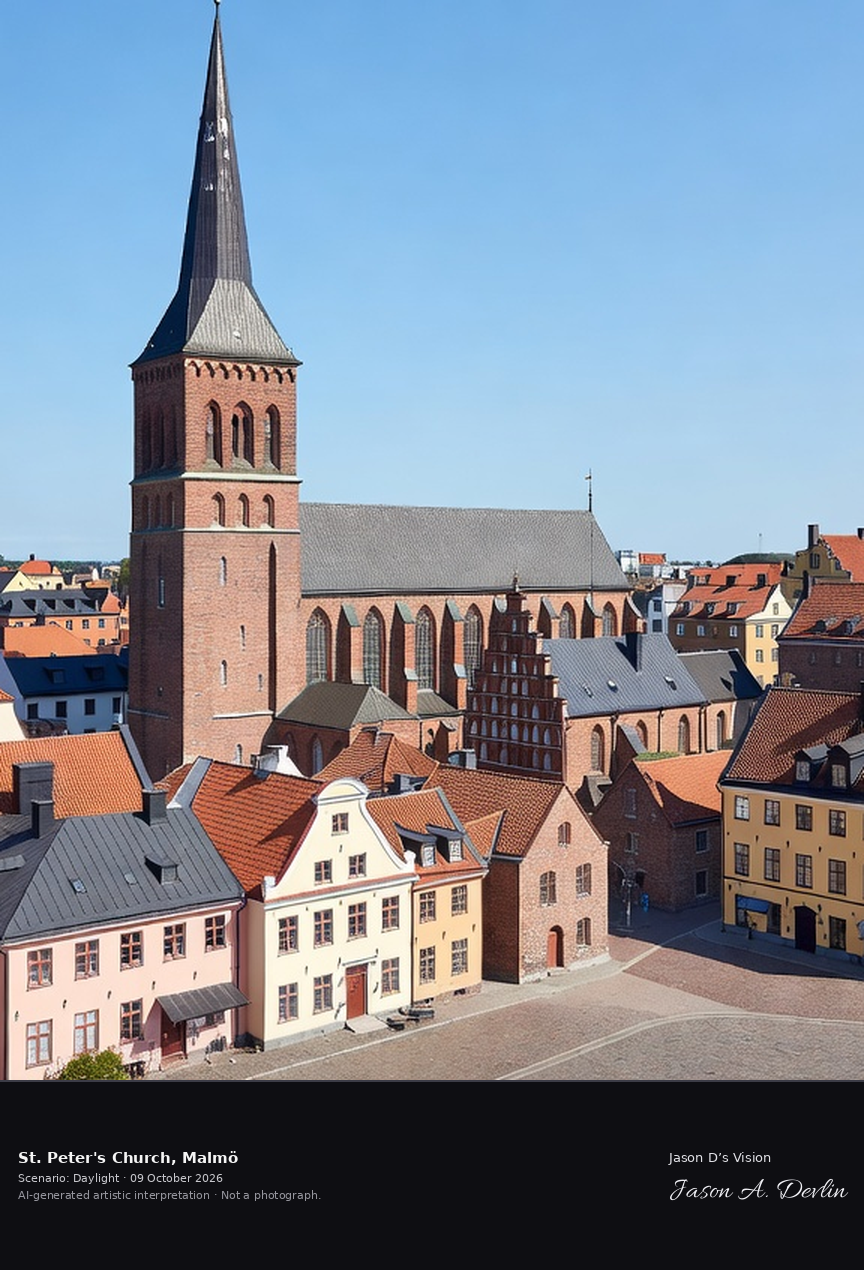
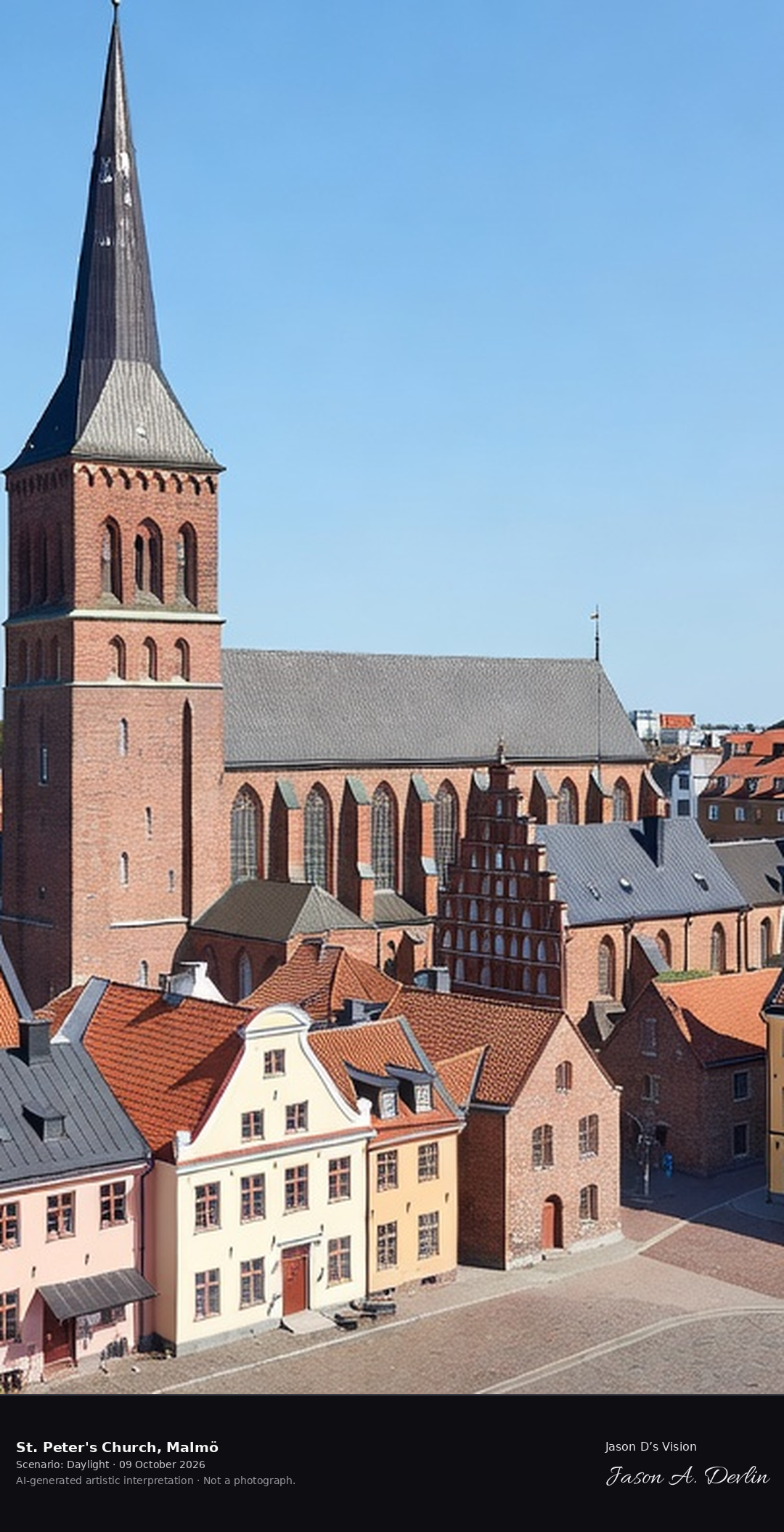
Sankt Petri kyrka's soaring brick Gothic tower above Malmö's old town rooftops, viewed from Stortorget square. The 14th-century Baltic brick church, modeled on Lübeck's Marienkirche.
St. Peter's Church — Sankt Petri kyrka — is Malmö's oldest church, a 14th-century brick Gothic hall church modeled on Lübeck's Marienkirche. Its soaring tower and dark spire rise above the old town rooftops around Stortorget, Malmö's main square, surrounded by red-tiled houses, pastel facades and half-timbered gables. Built when Malmö was Denmark's second city, the church is the Baltic brick Gothic landmark of Scania's capital. The classic tourist viewpoint looks up at the tower from Stortorget in bright natural daylight.
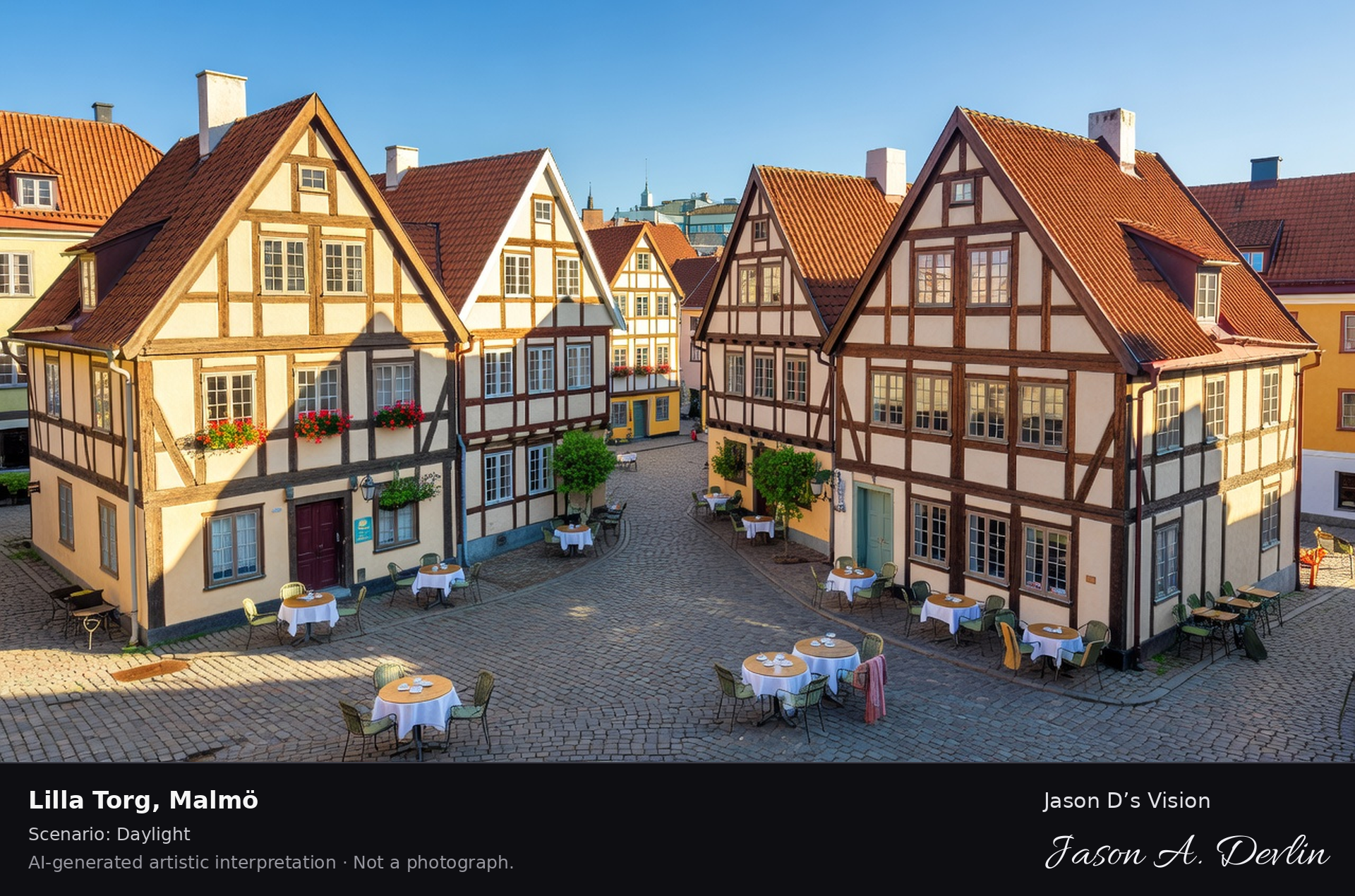
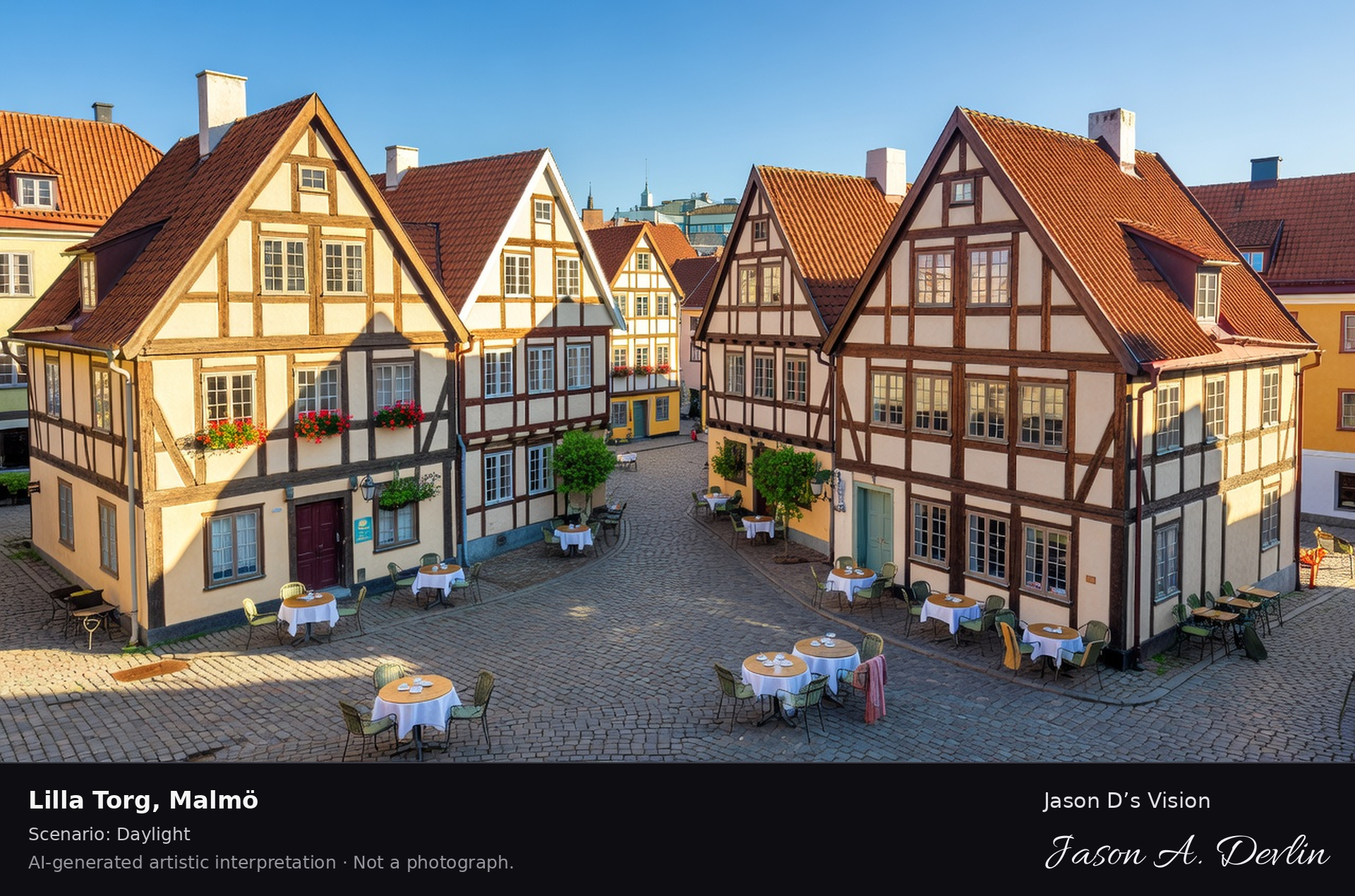
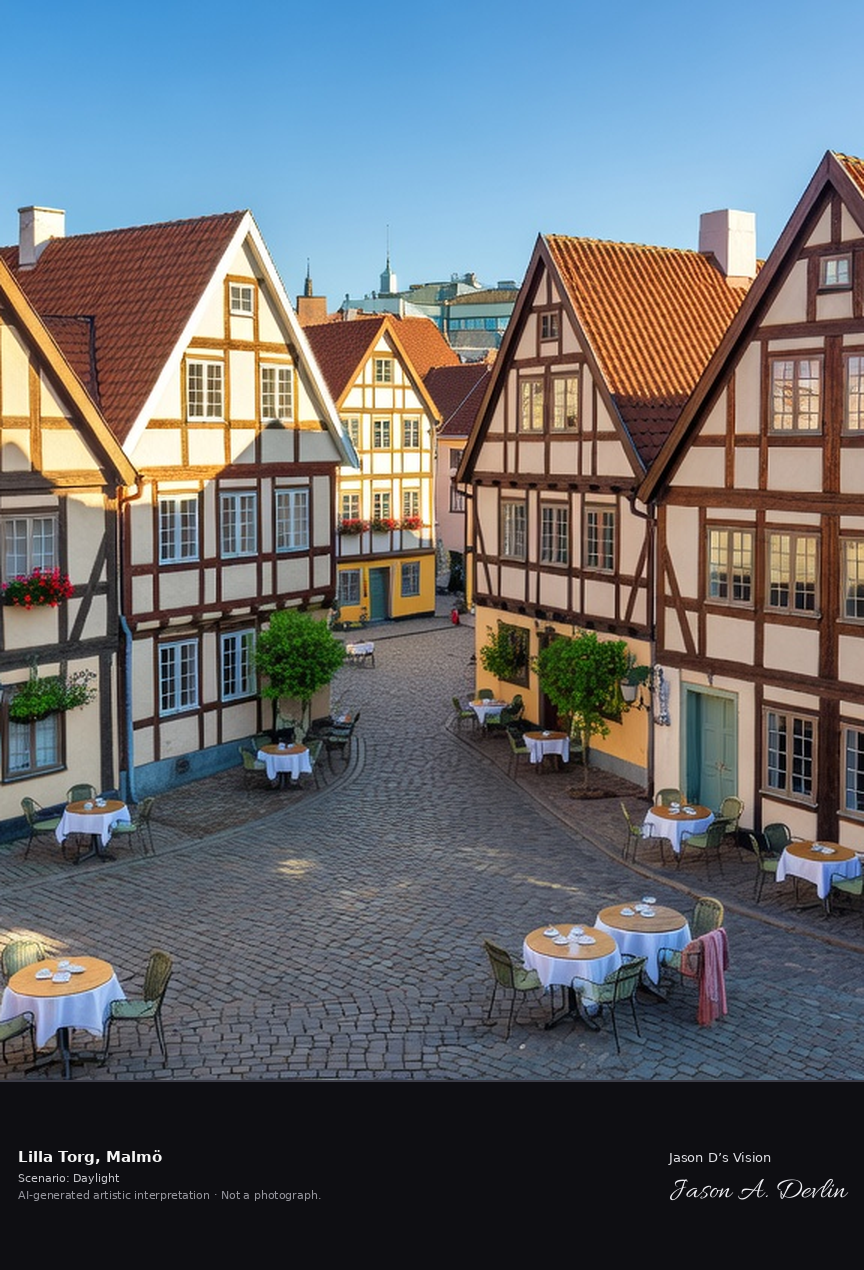
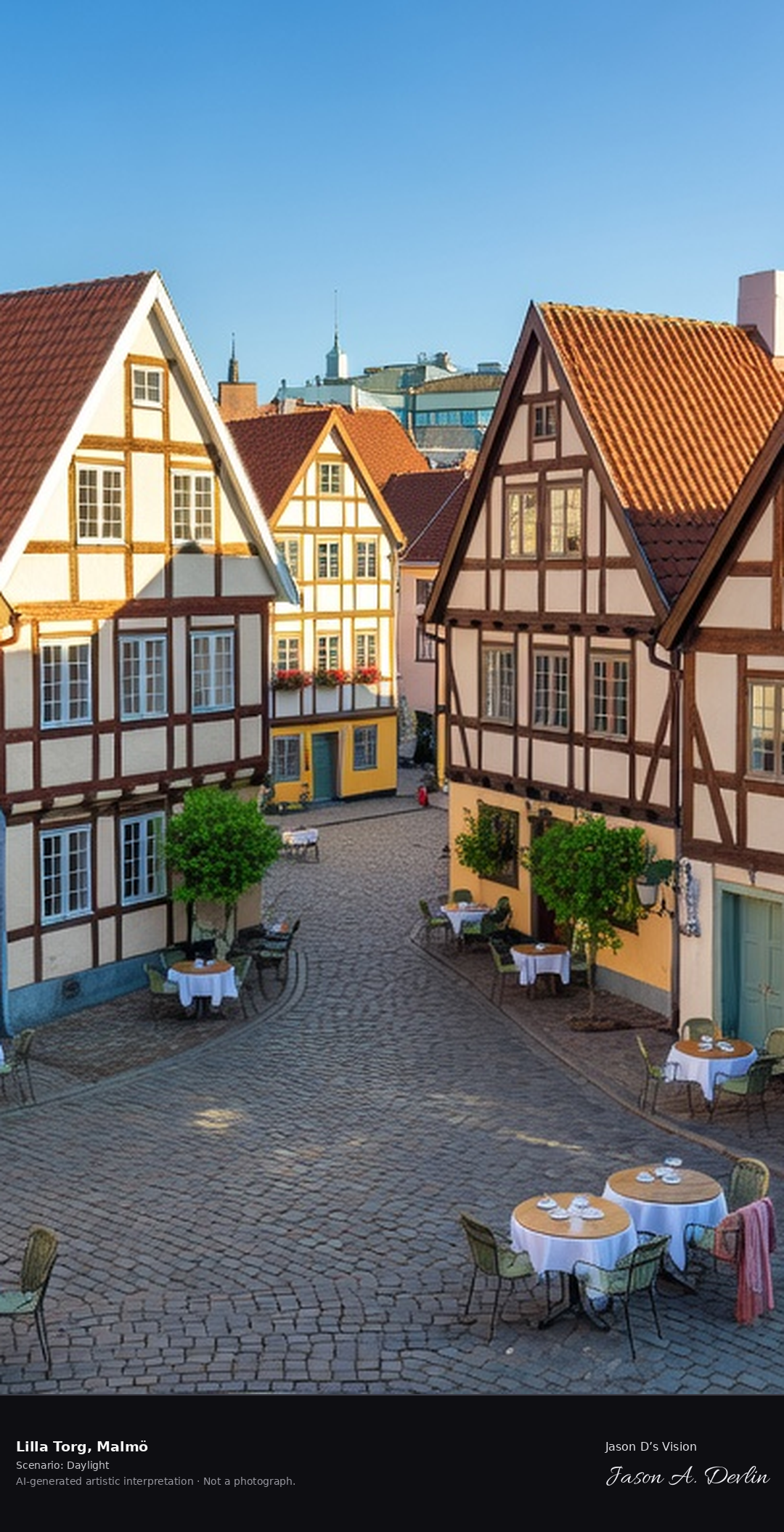
Lilla Torg's intimate cobbled square ringed by half-timbered 16th-century houses with outdoor café tables, the Hedvig Eleonora-style facades glowing in afternoon sun. Malmö's most picturesque old-town square.
Lilla Torg is Malmö's most picturesque old-town square, an intimate cobbled space ringed by half-timbered 16th-century houses. The square's gabled merchants' houses — some of the oldest in the city — now hold outdoor cafés and restaurants that spill onto the cobbles in good weather. Red-tiled roofs, carved wooden timbers, flower boxes and café tables make it one of Sweden's best-loved historic squares. The classic tourist viewpoint looks across the square at the half-timbered facades glowing in bright afternoon daylight.
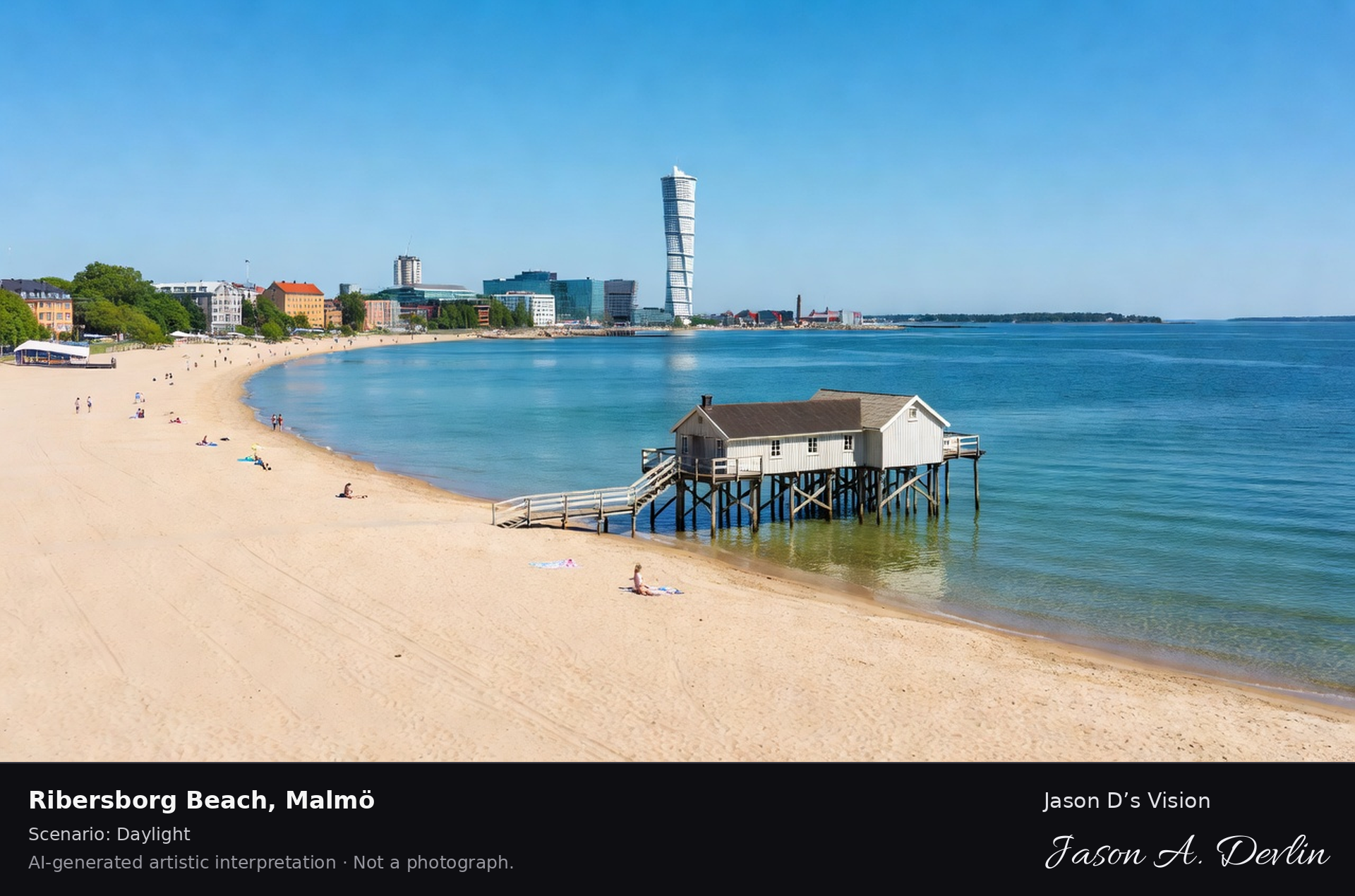
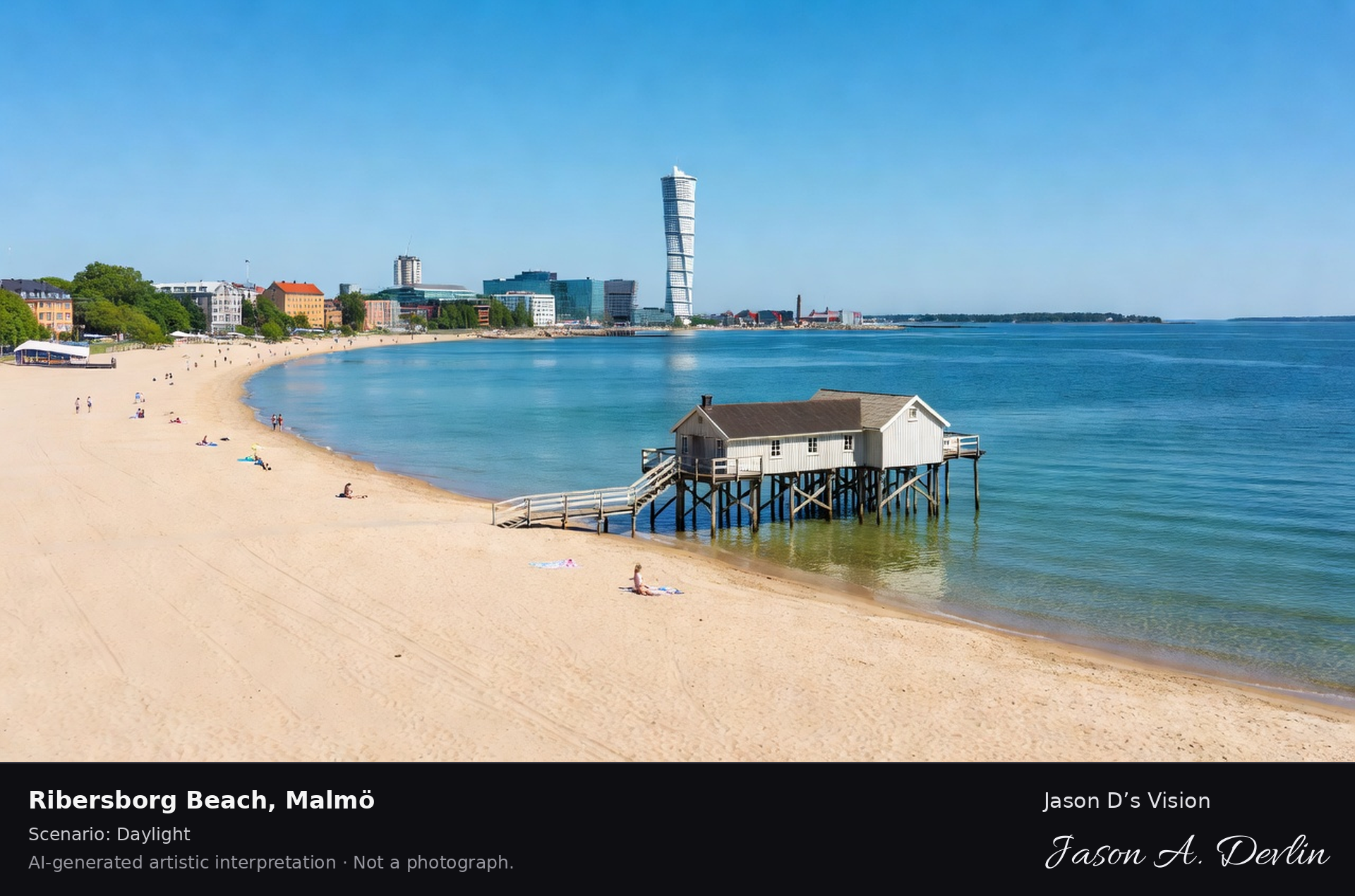
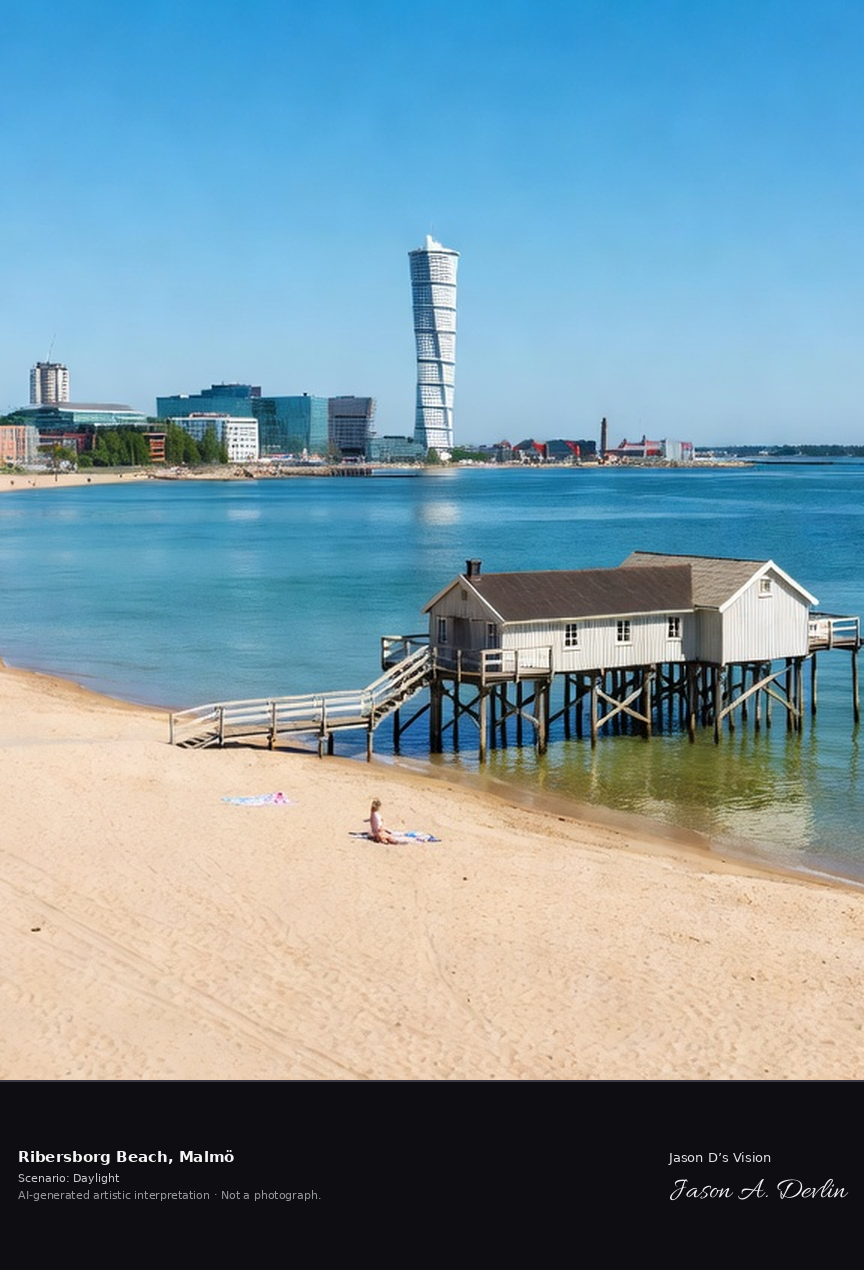
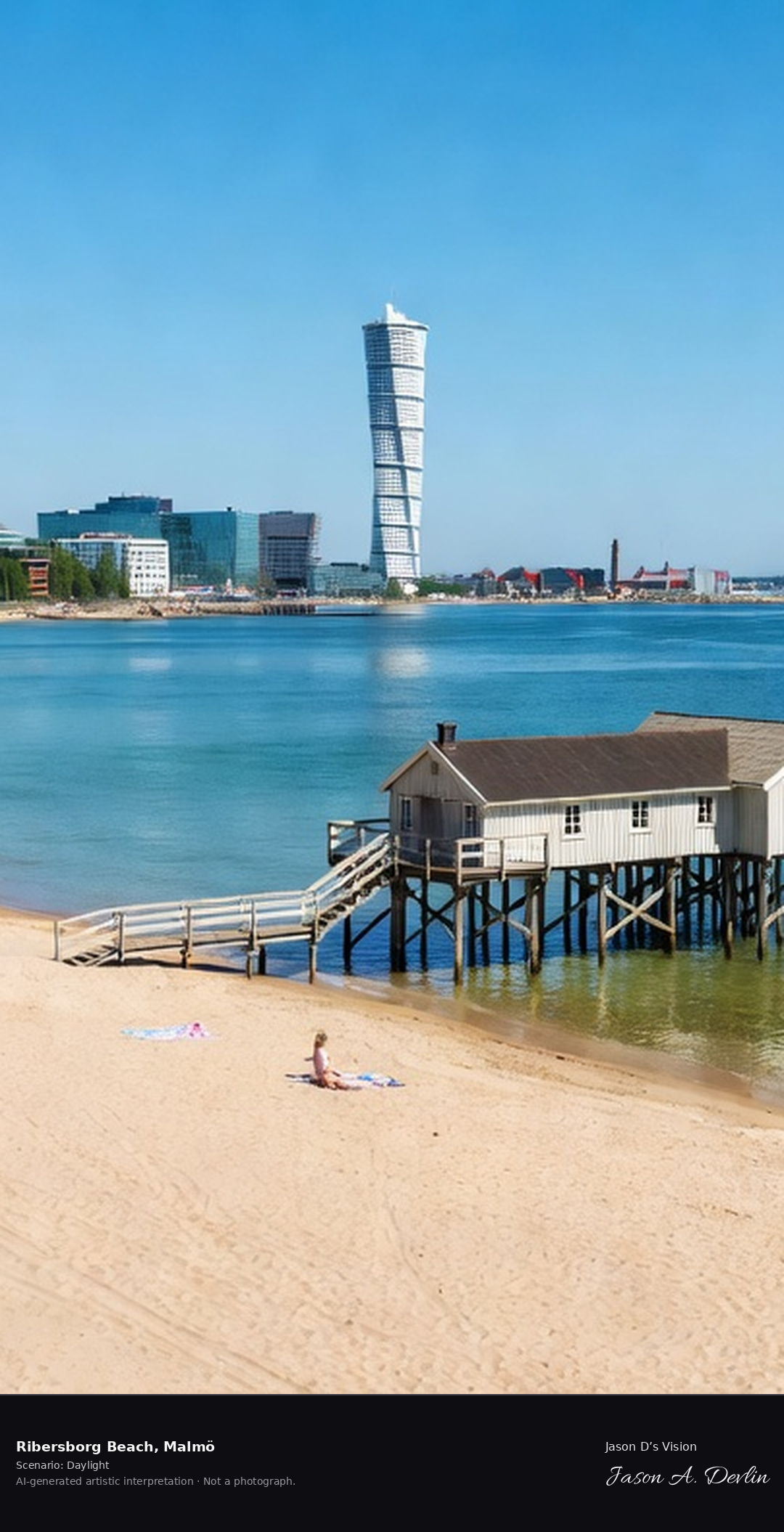
Ribersborg's sandy beach curving along the Öresund with the Turning Torso on the horizon and the historic cold bath house on stilts in the water. Malmö's beloved city beach on a clear summer day.
Ribersborg's sandy beach curving along the Öresund with the Turning Torso on the horizon and the historic cold bath house on stilts in the water. Malmö's beloved city beach on a clear summer day — soft sand, gentle water, and Sweden's most famous twisted skyscraper in the distance. The classic tourist viewpoint looks along the curving shoreline toward the bath house and the city skyline.
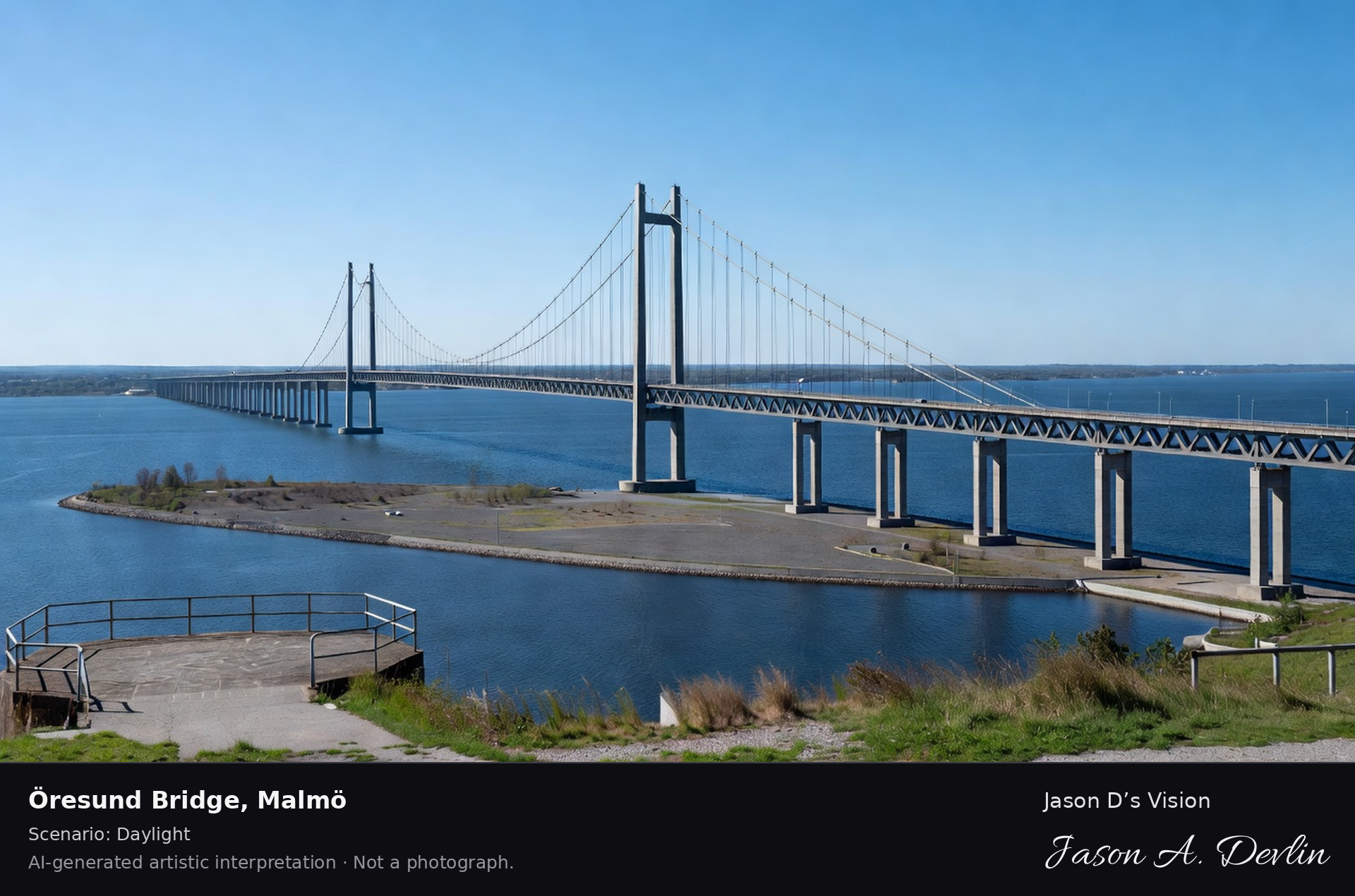
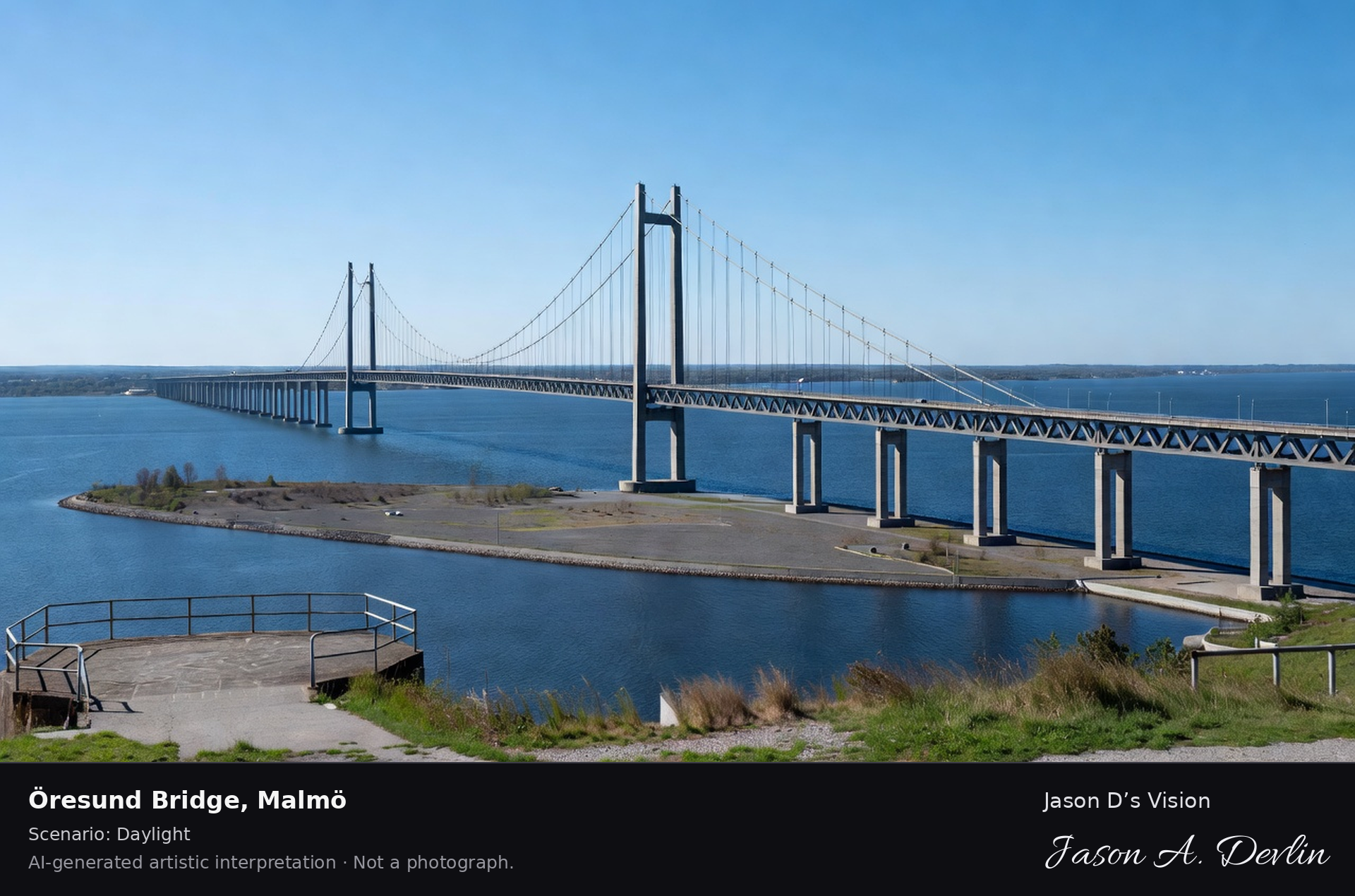
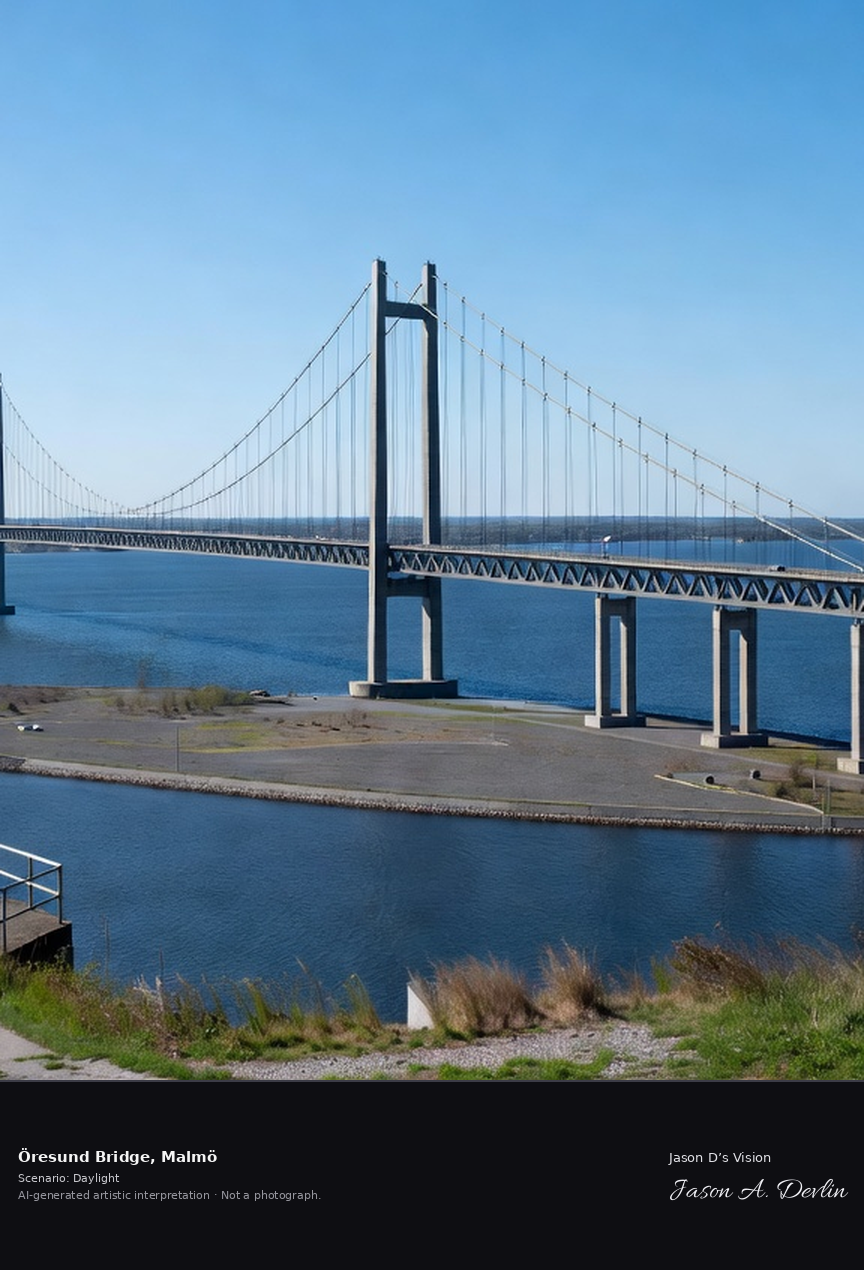
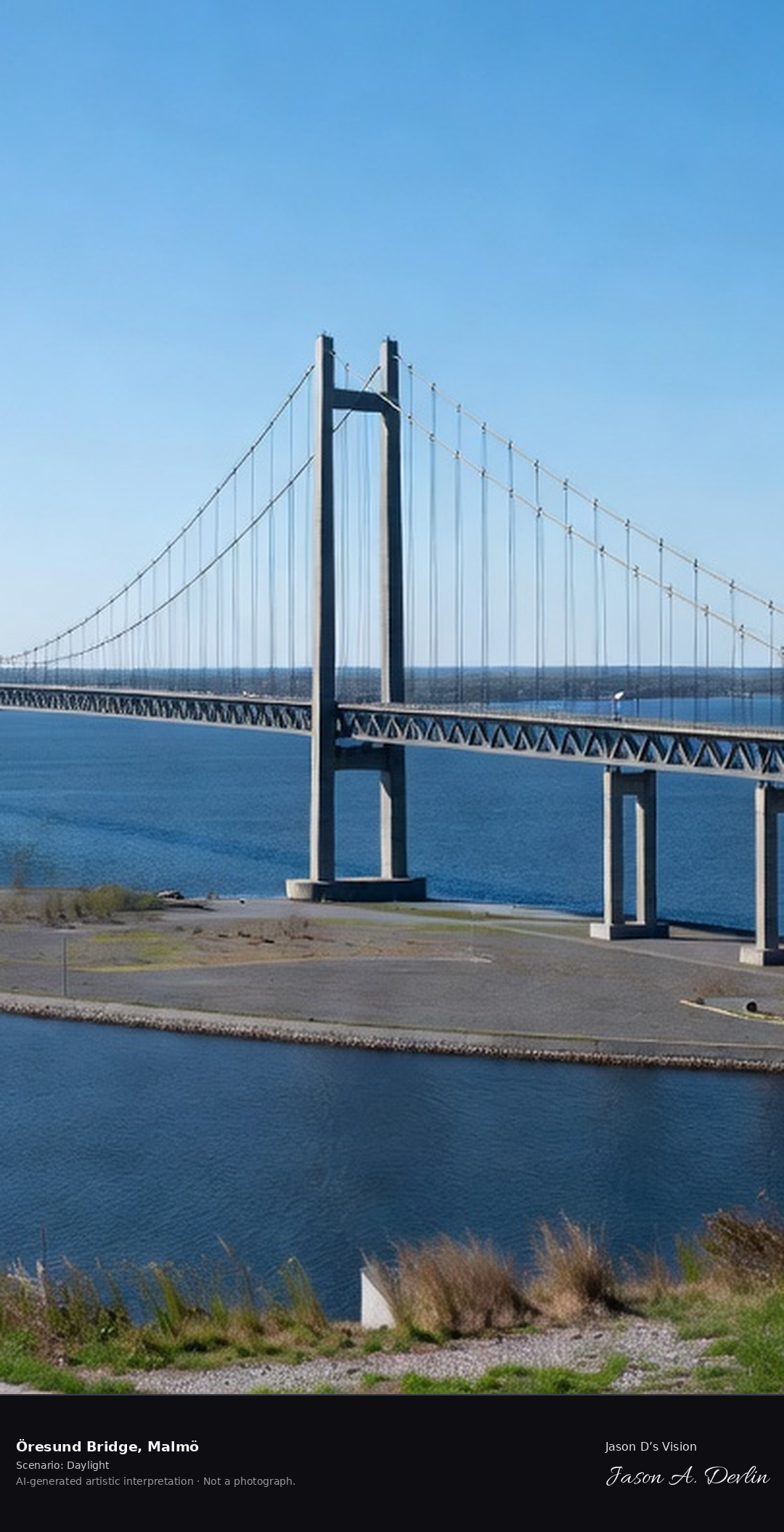
The Öresund Bridge's cable-stayed pylons rising from the strait, viewed from the Lernacken viewpoint with the artificial island of Pepparholm below. The 8-kilometer link between Sweden and Denmark.
The Öresund Bridge's cable-stayed pylons rising from the strait, viewed from the Lernacken viewpoint with the artificial island of Pepparholm below. The 8-kilometer link between Sweden and Denmark in bright natural daylight — the bridge deck runs out over the blue Öresund toward Denmark, a favorite tourist viewpoint south of Malmö.
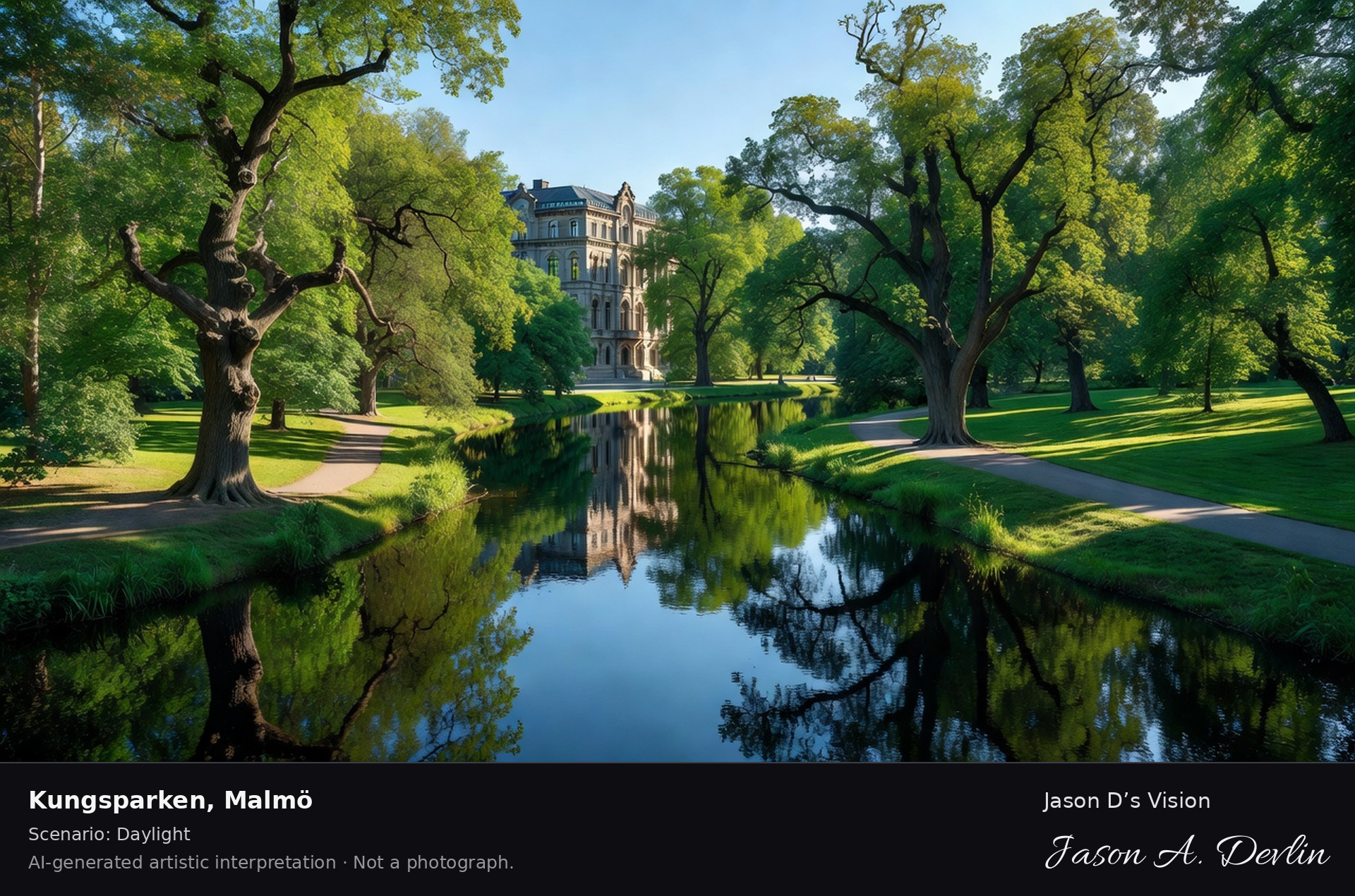
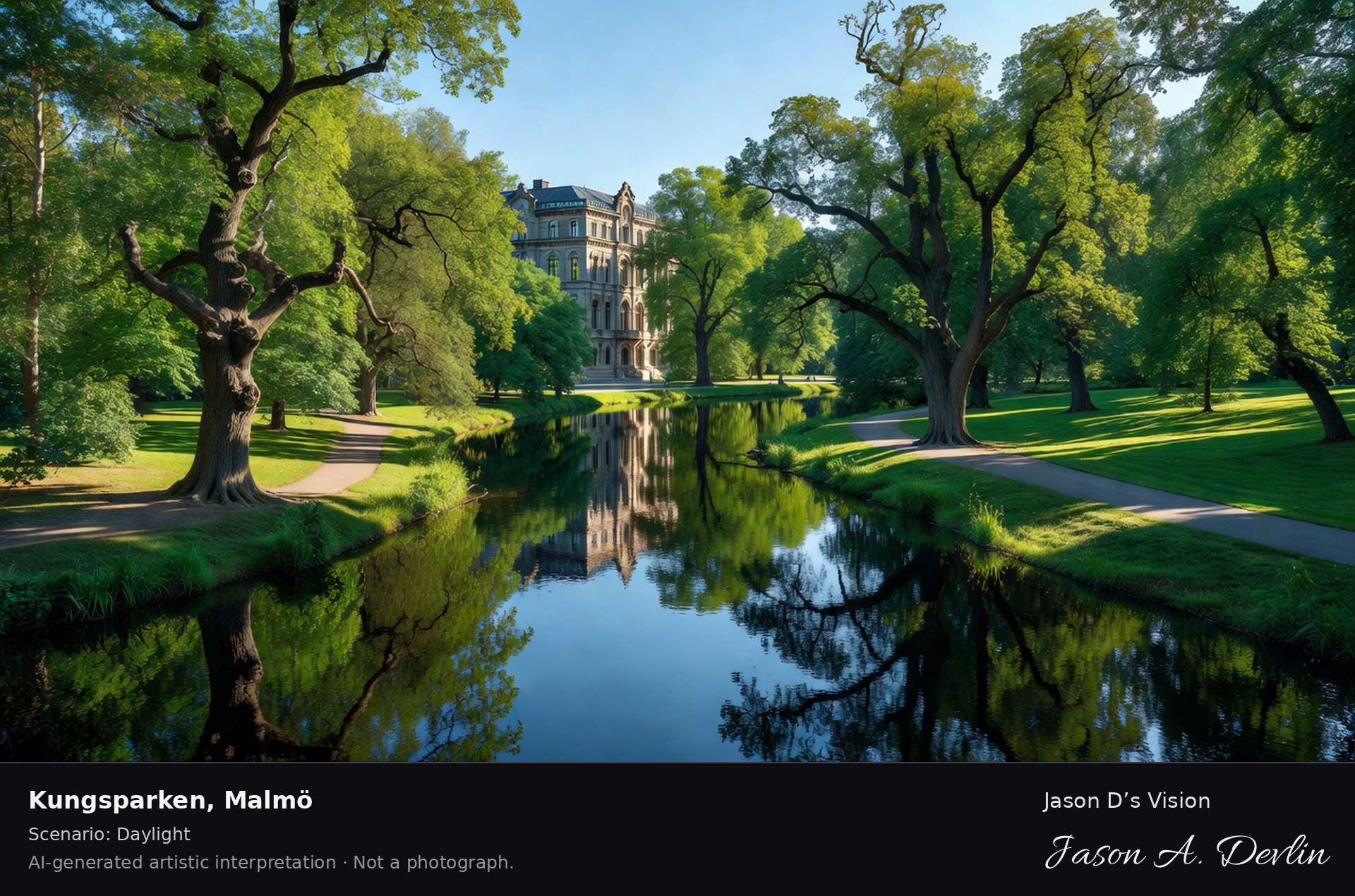
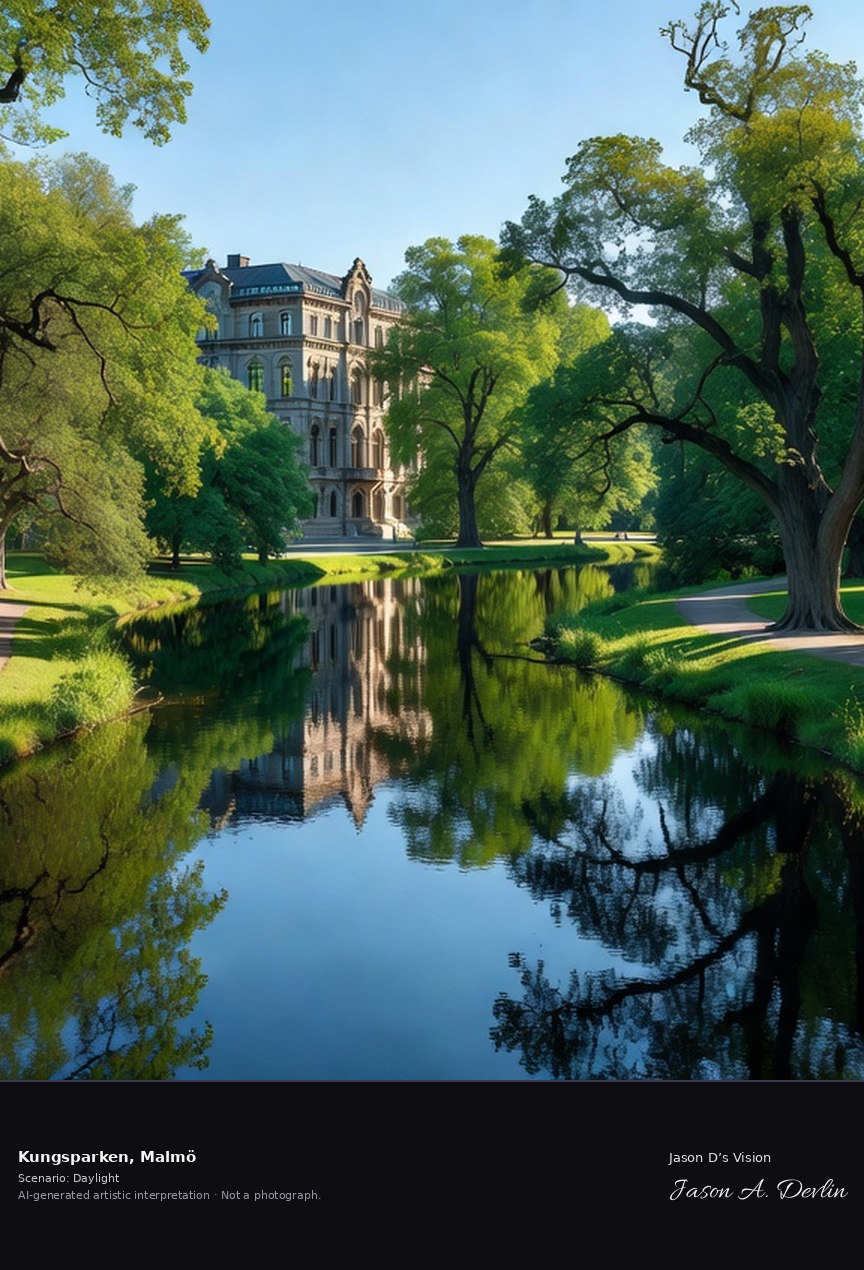
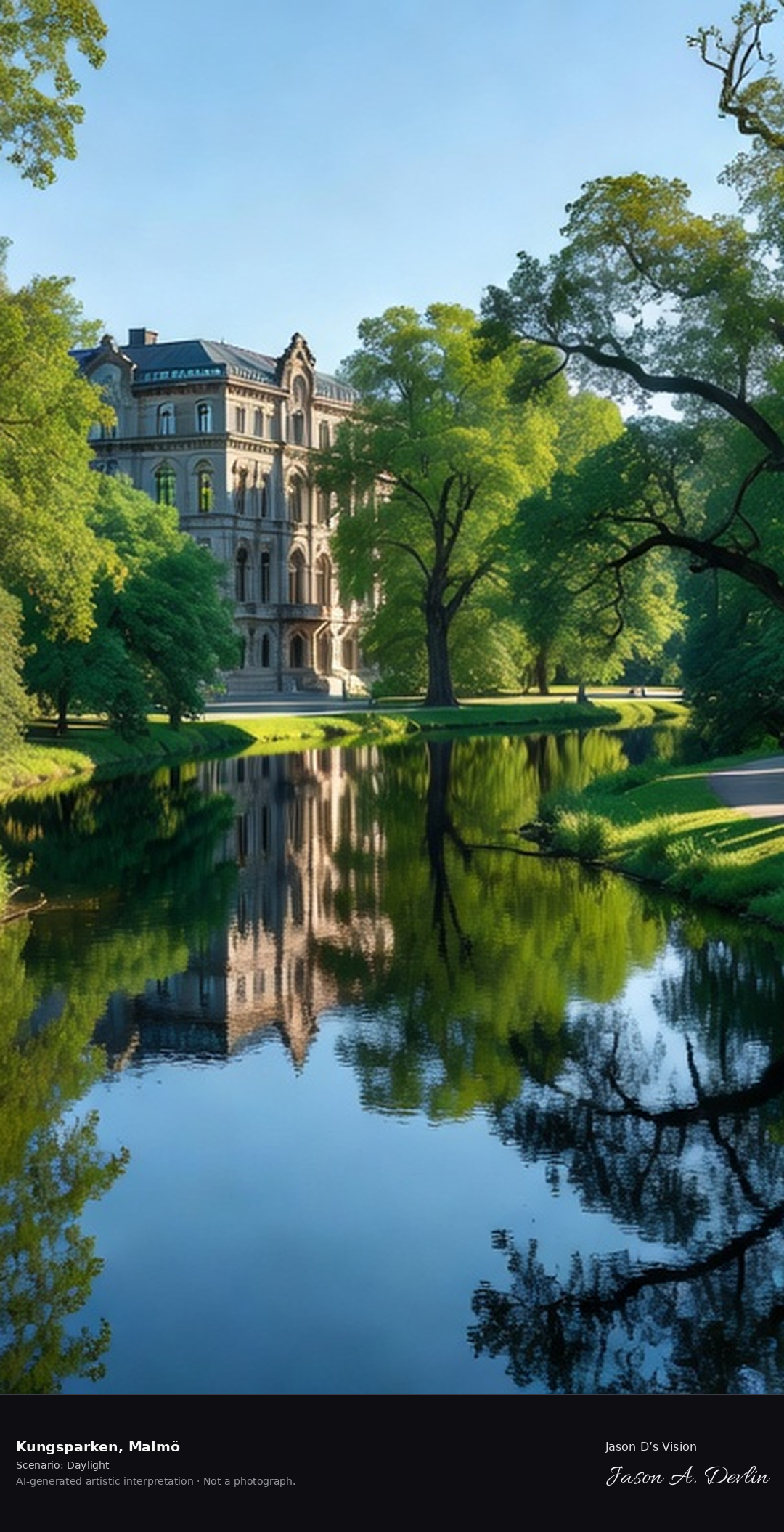
The canal winding through Kungsparken with the old-growth trees reflected in still water, the Casino Cosmopol building peeking through greenery. Malmö's oldest park, a green lung beside the castle.
The canal winding through Kungsparken with the old-growth trees reflected in still water, the Casino Cosmopol building peeking through greenery. Malmö's oldest park, a green lung beside the castle, in bright natural daylight.
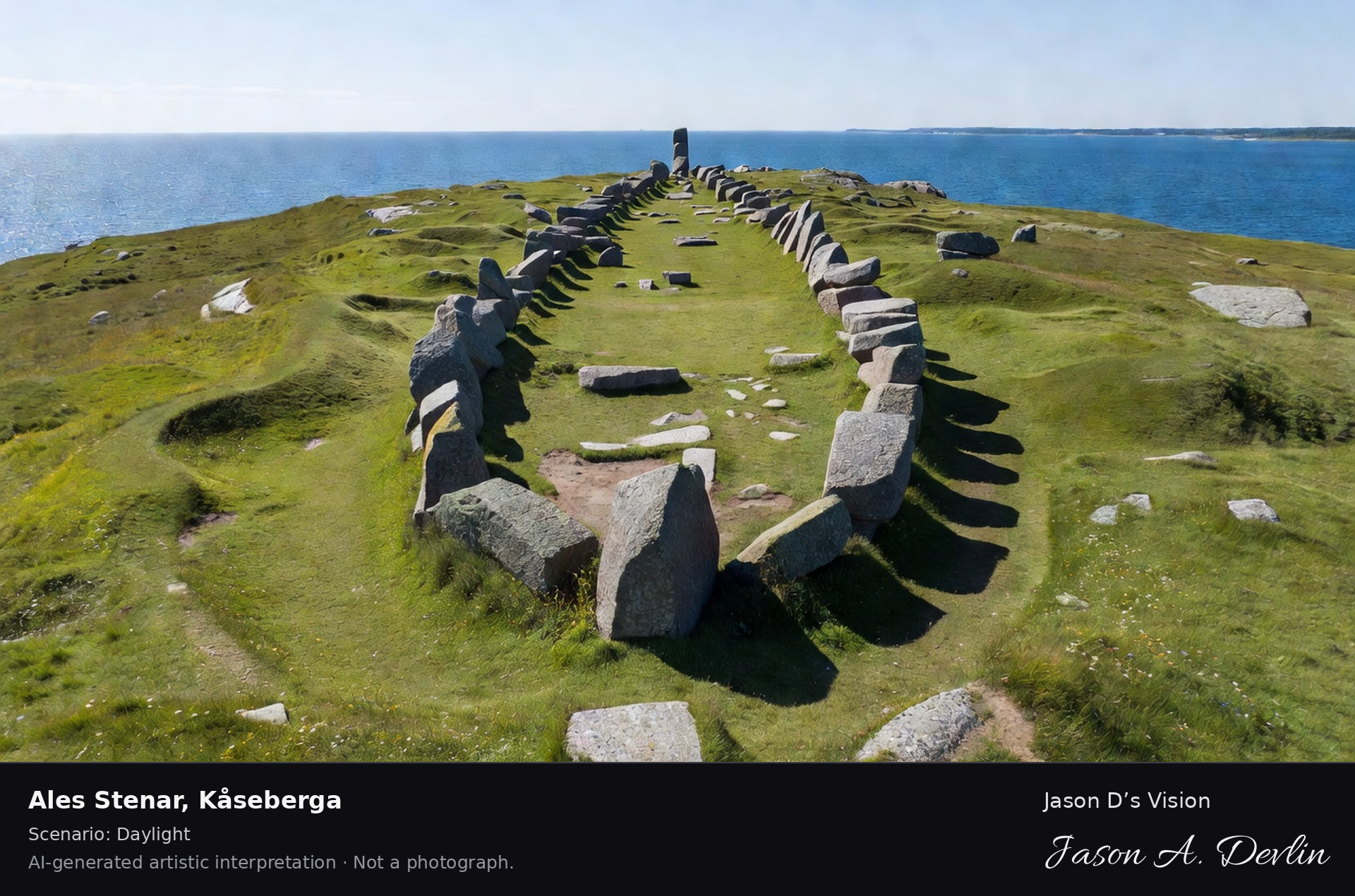
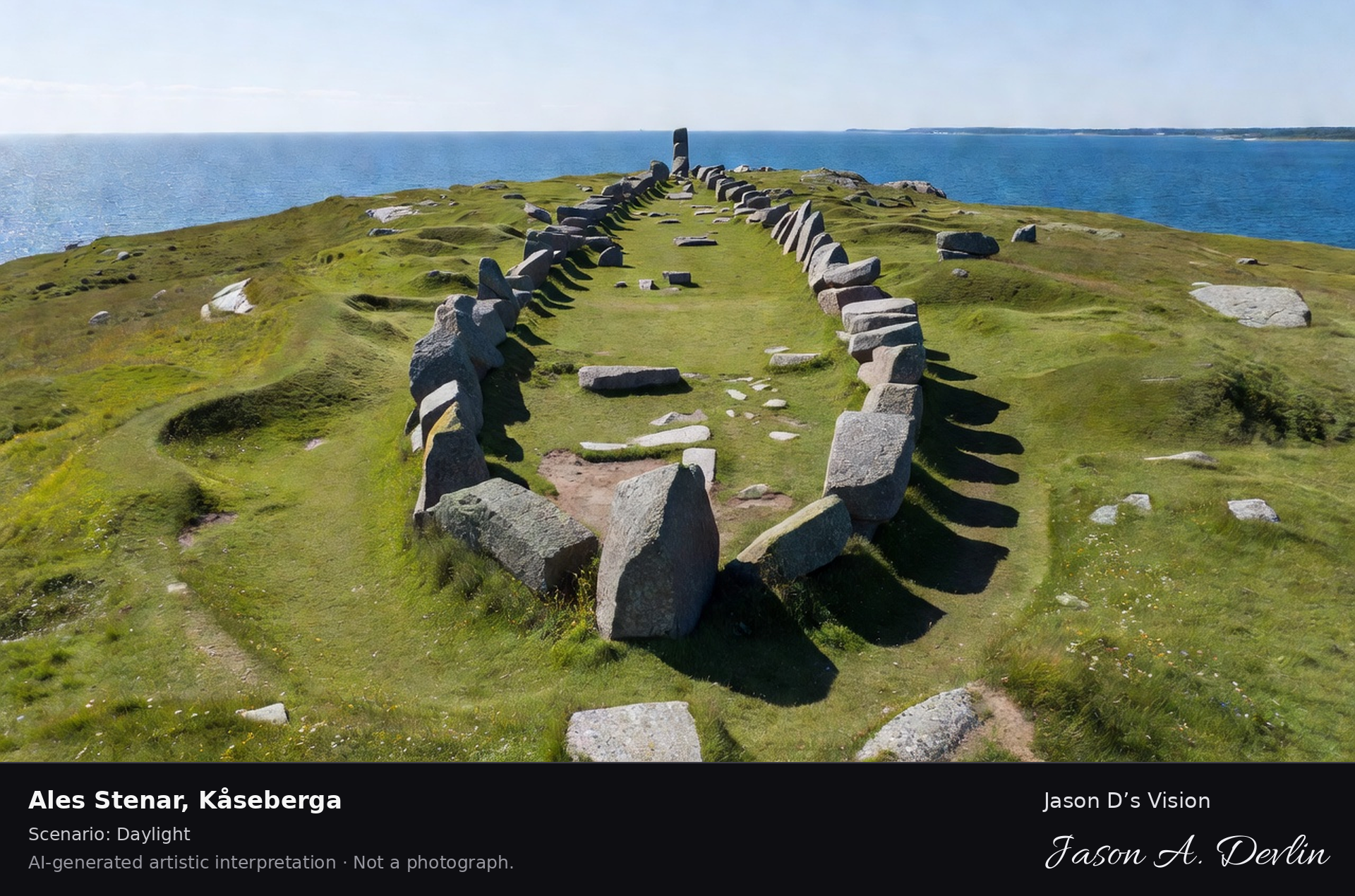
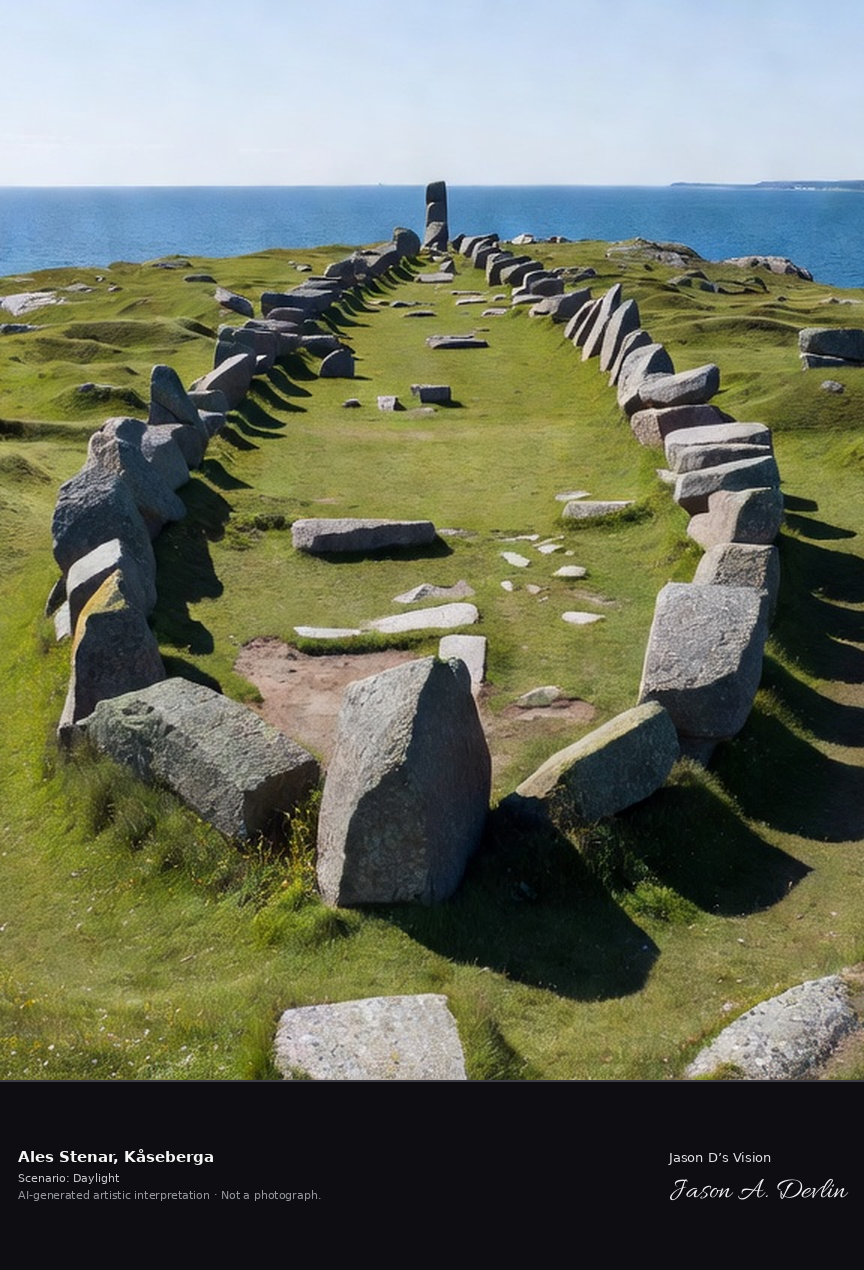
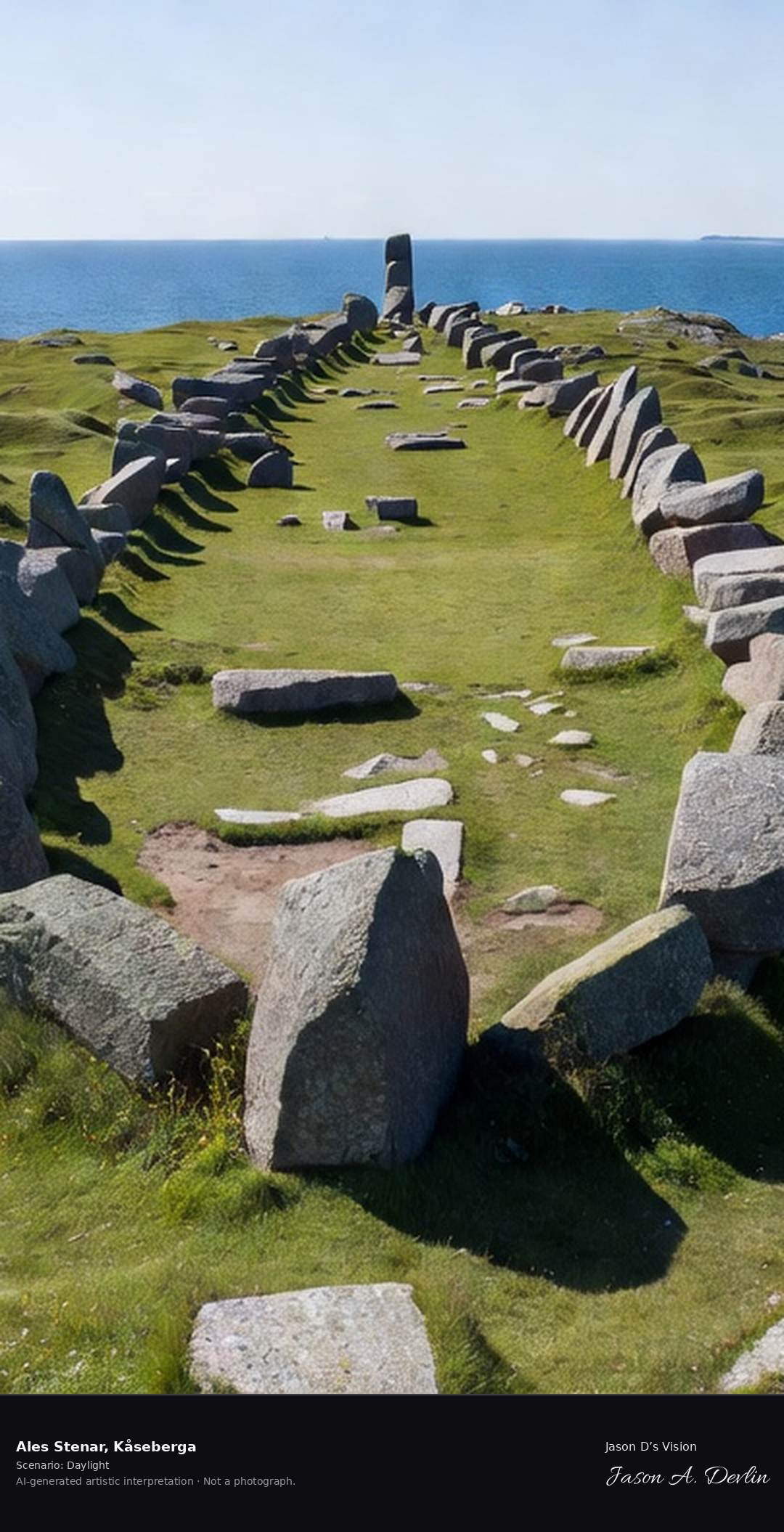
Ales Stenar's 59 massive boulders forming a 67-meter stone ship on the windswept headland above the Baltic, viewed along the ship's axis toward the sea. Sweden's largest stone ship setting, 1,400 years old.
Ales Stenar's 59 massive boulders forming a 67-meter stone ship on the windswept headland above the Baltic, viewed along the ship's axis toward the sea. Sweden's largest stone ship setting, 1,400 years old, in bright natural daylight.
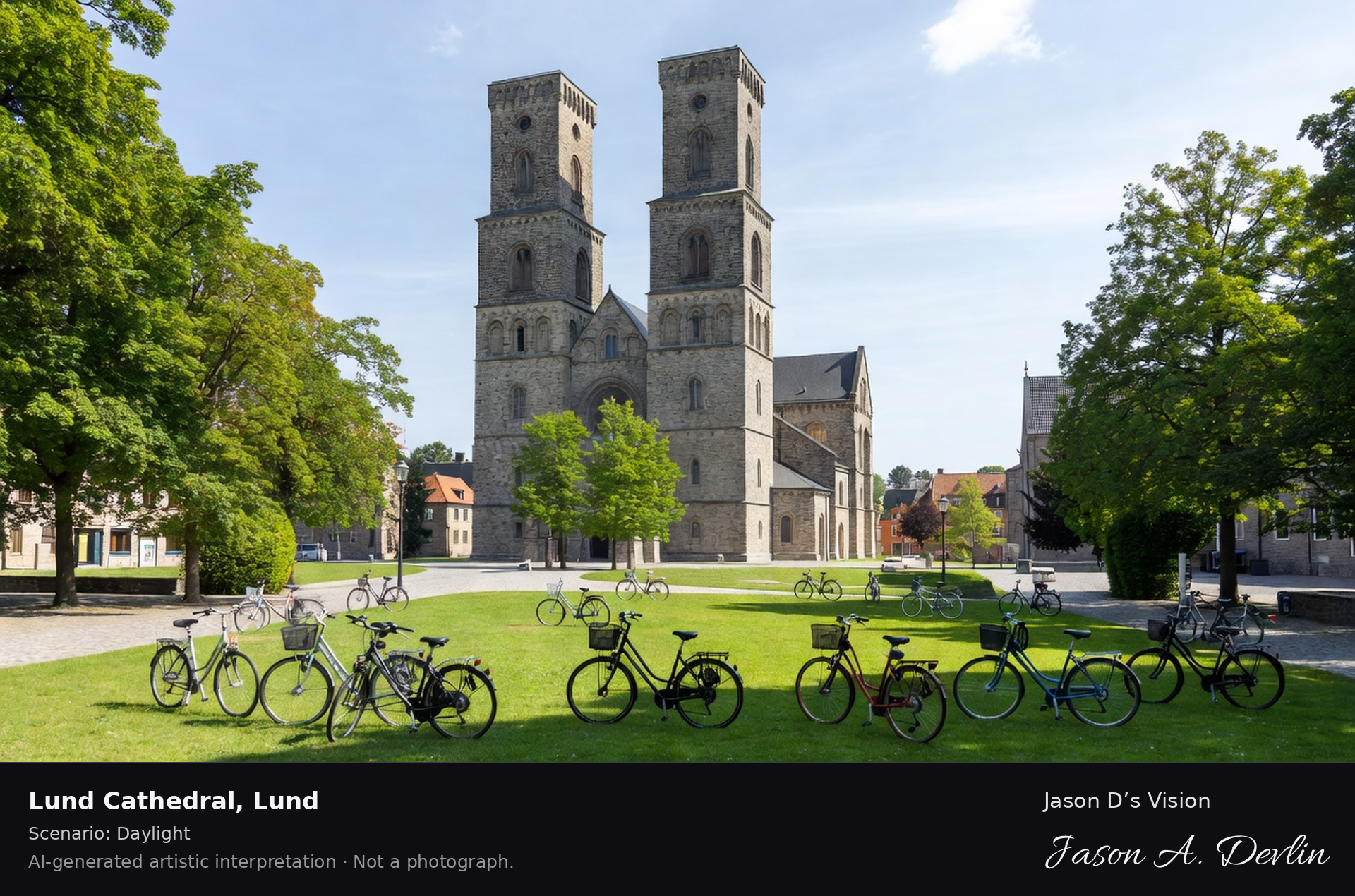
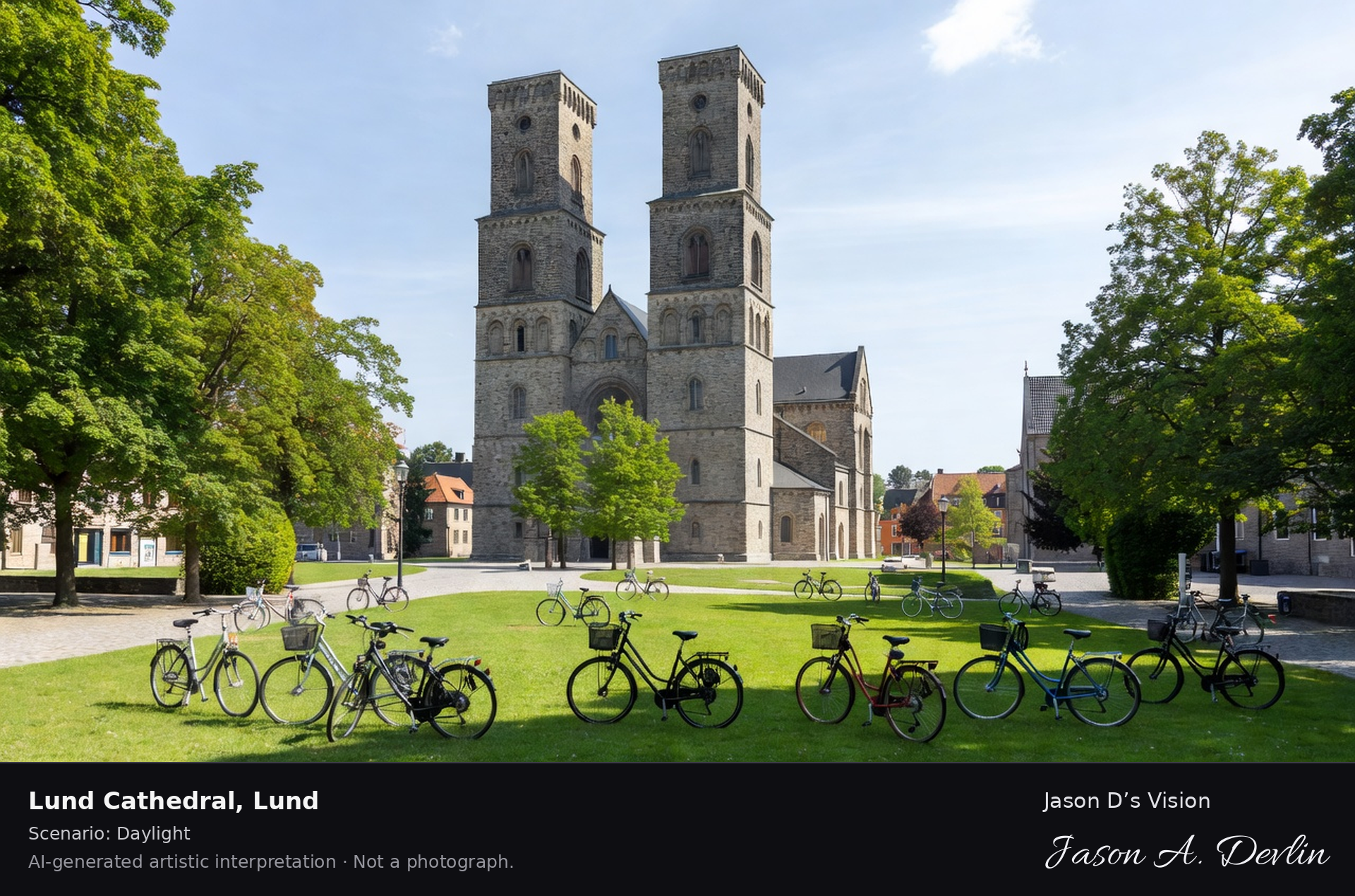
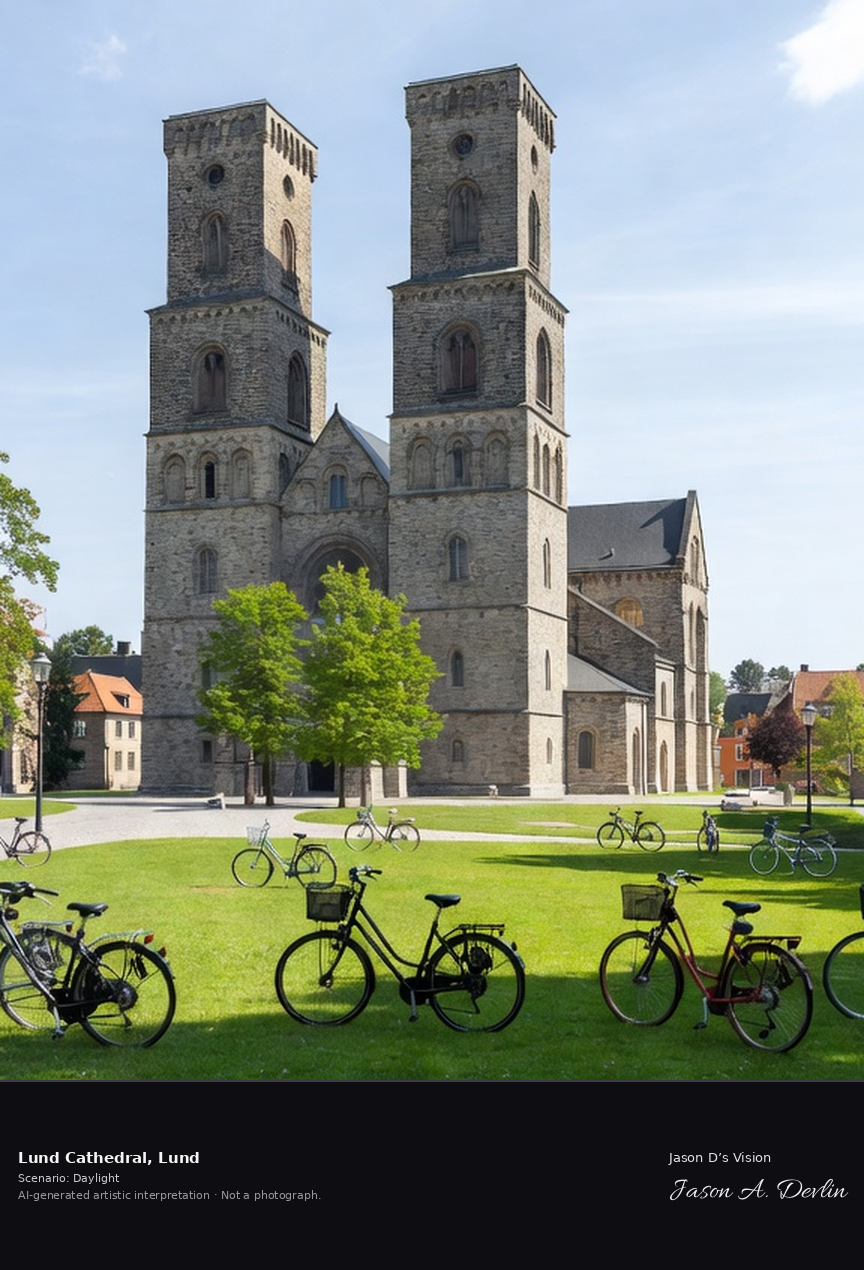
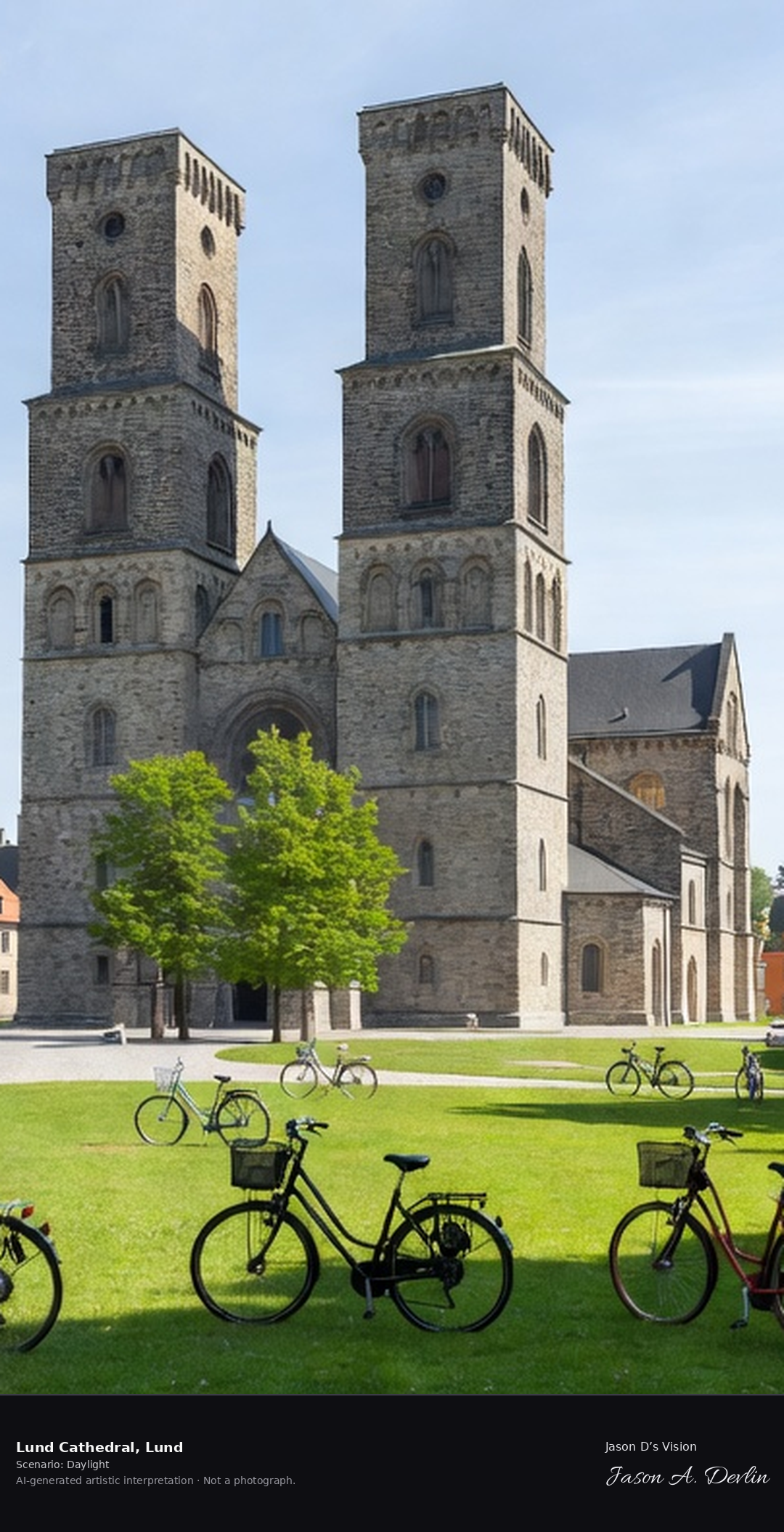
Lund Cathedral's twin Romanesque towers rising above the university town, viewed from Lundagård park with students' bicycles in the foreground. Scandinavia's most important Romanesque church, consecrated 1145.
Lund Cathedral's twin Romanesque sandstone towers rising above the university town, viewed from Lundagård park with students' bicycles parked on the lawn in the foreground. Scandinavia's most important Romanesque church, consecrated 1145, in bright natural daylight.
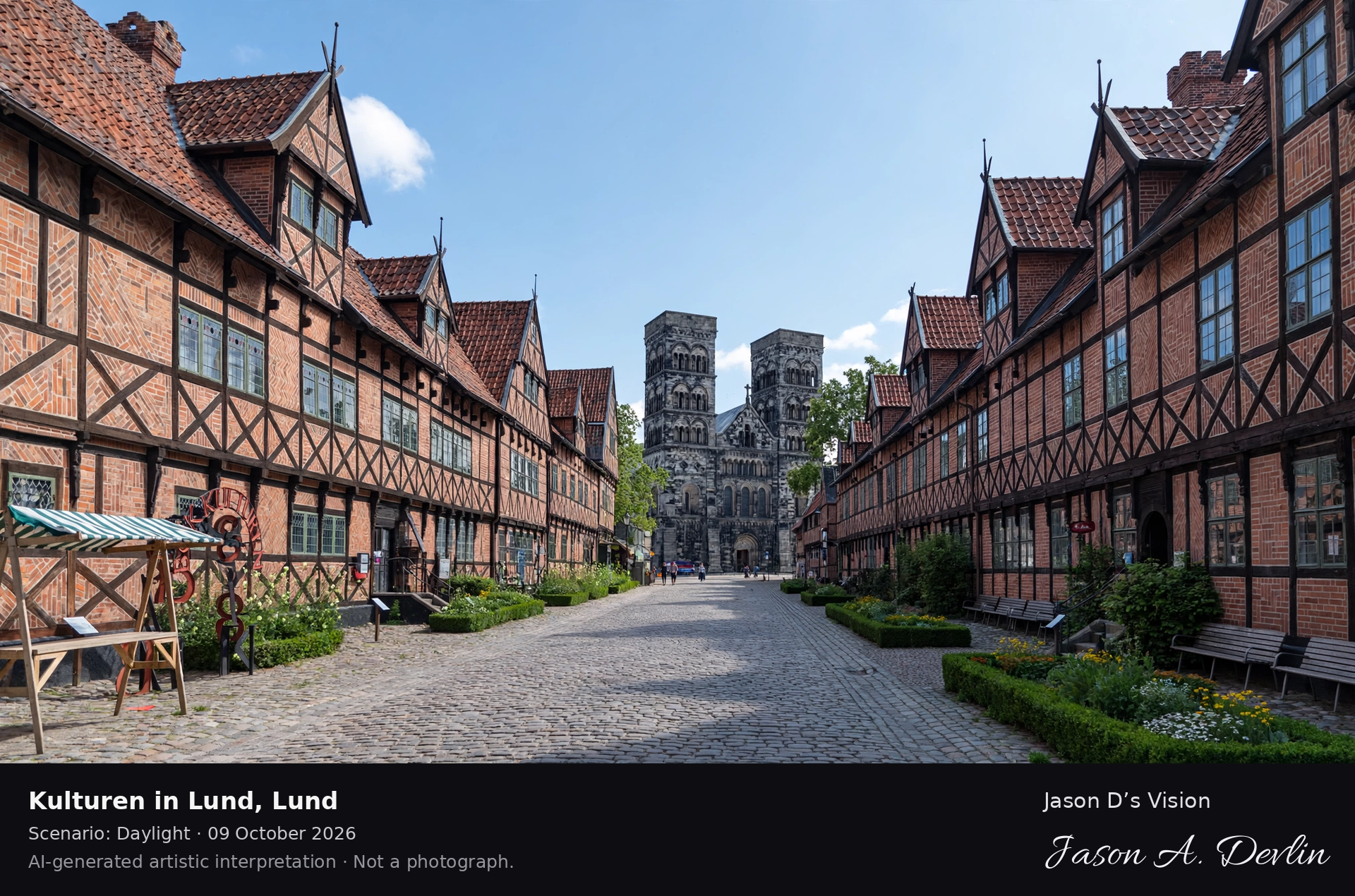
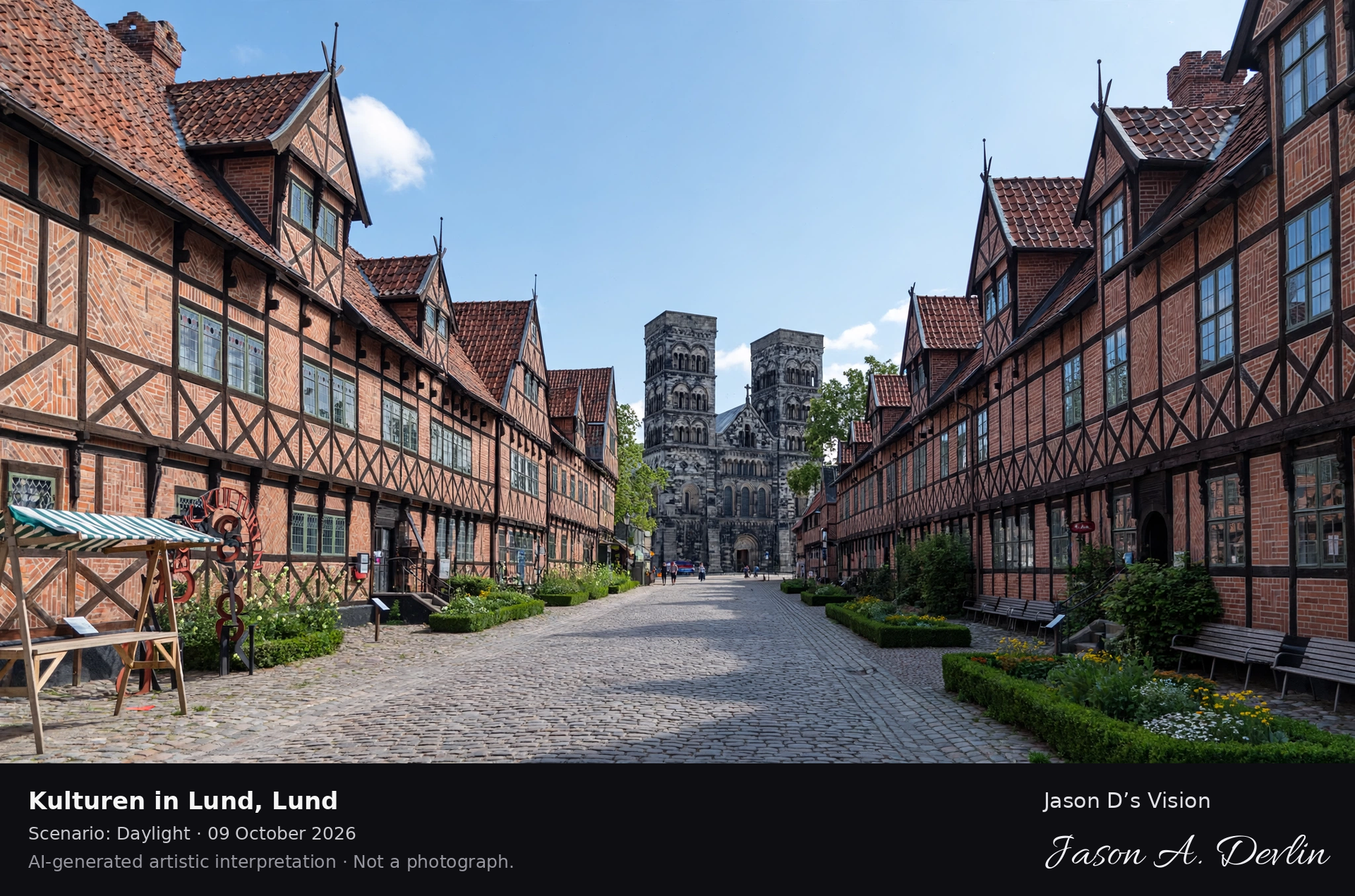
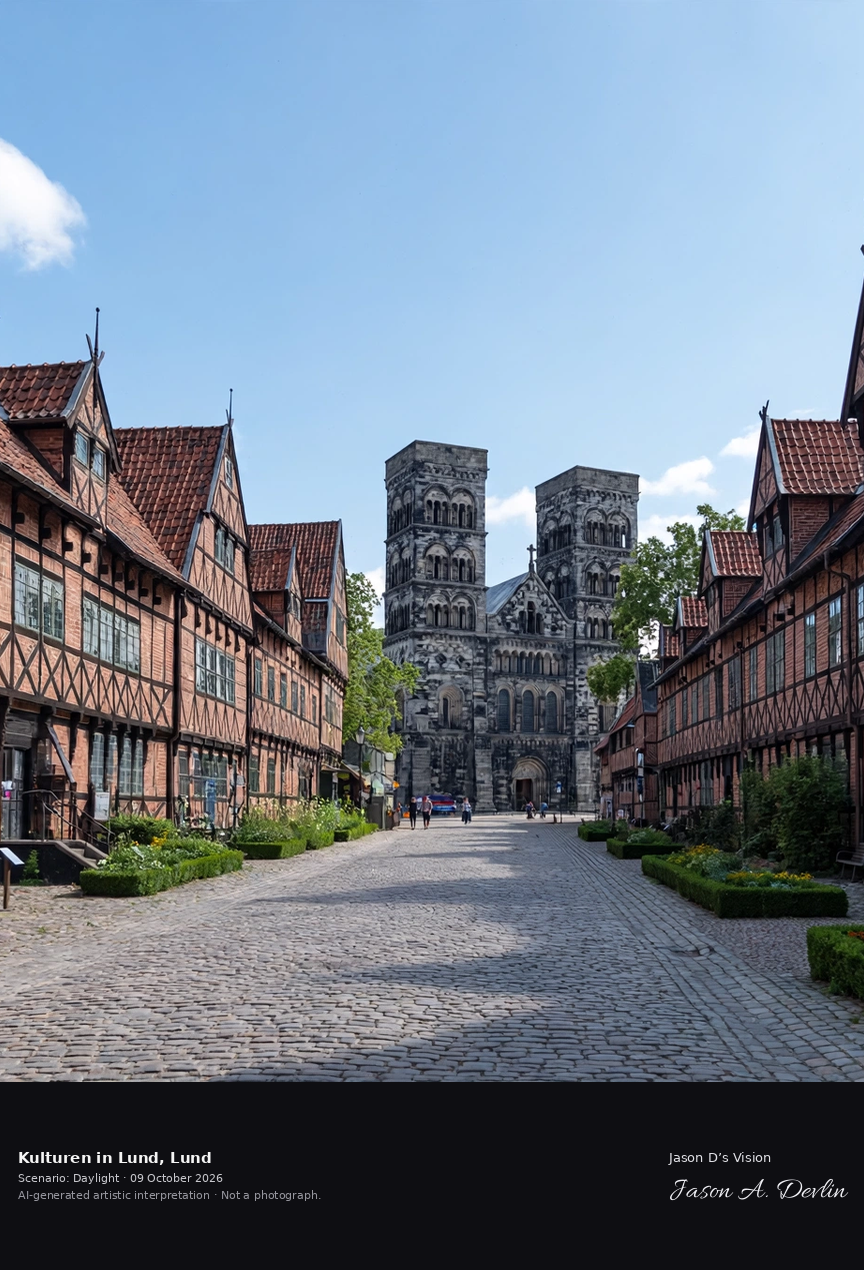
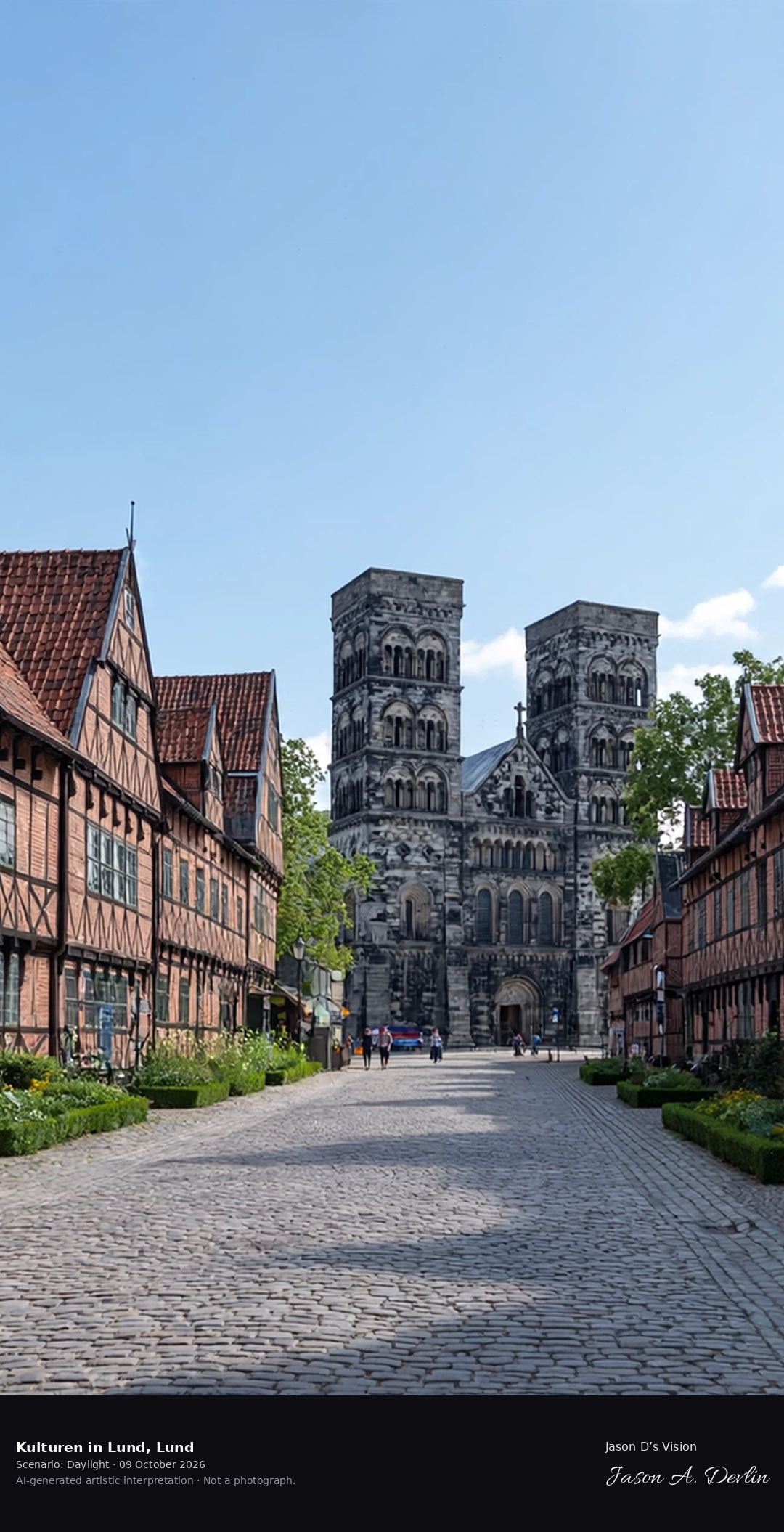
The open-air museum streets of Kulturen in Lund, half-timbered houses and cobbled lanes recreating centuries of Scanian town life, with the cathedral towers overhead. A living museum in the university quarter.
The open-air museum streets of Kulturen in Lund: half-timbered Scanian town houses lining a cobbled lane, with Lund Cathedral's twin spires rising over the rooftops — a living museum in the university quarter, in bright natural daylight.
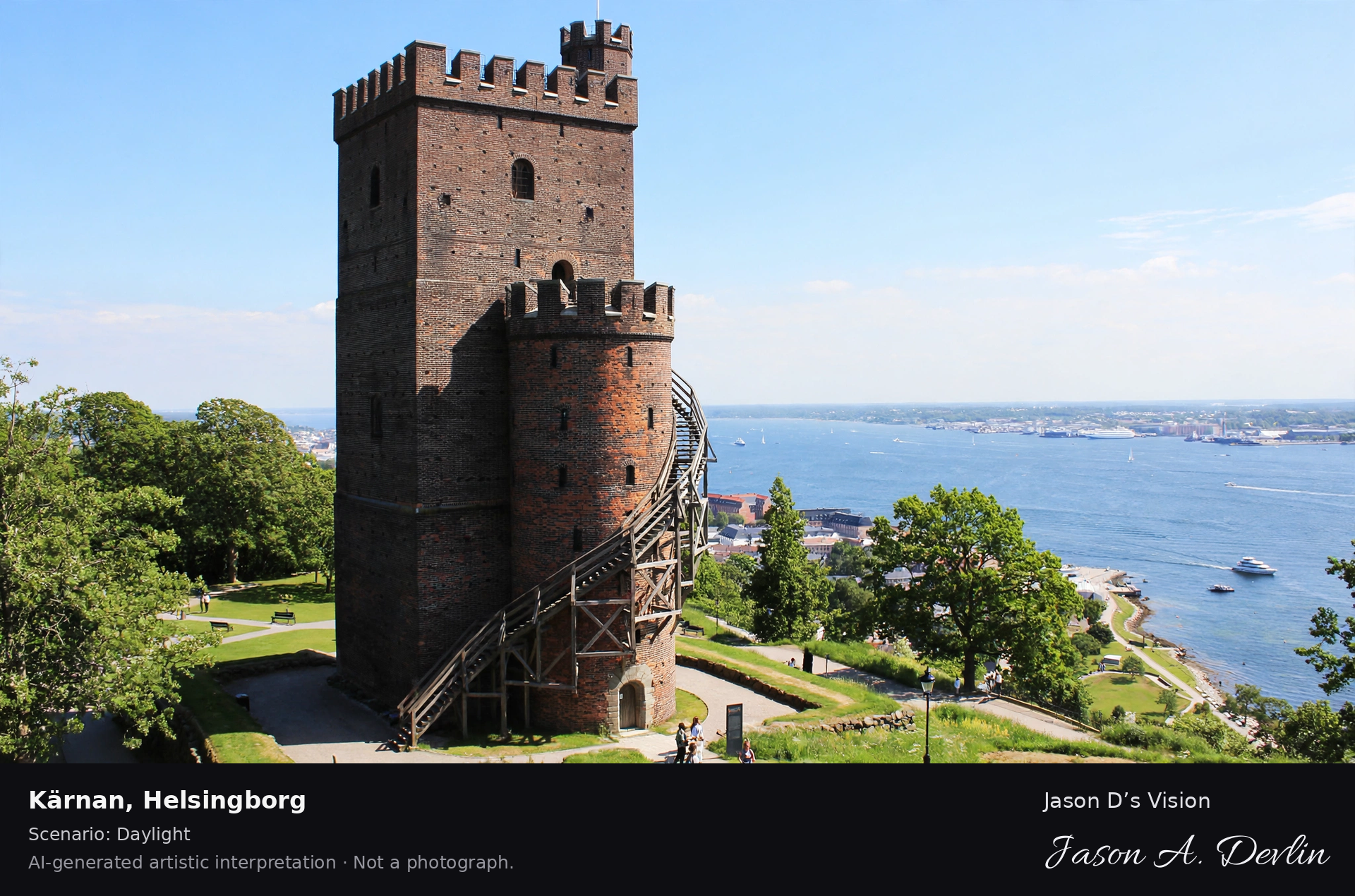
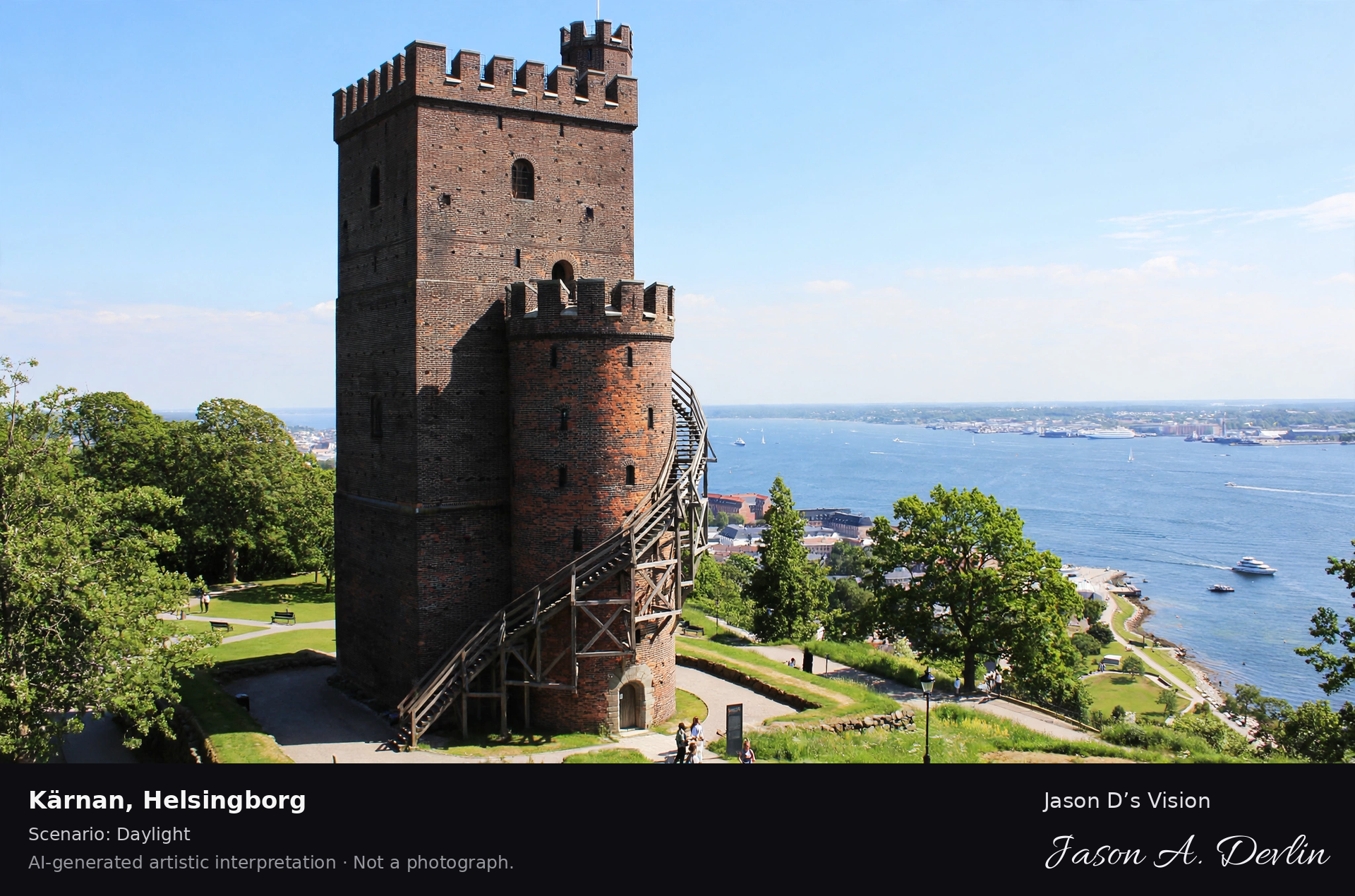
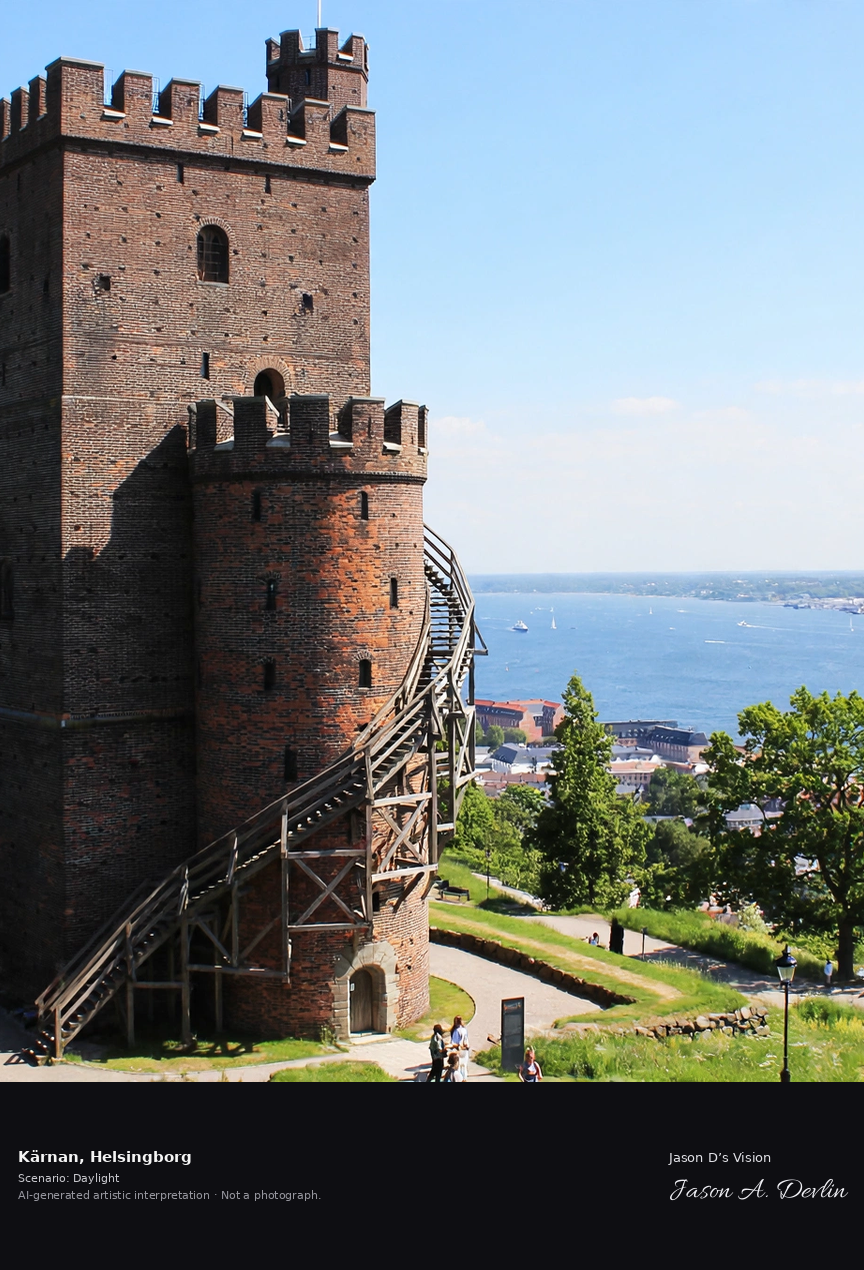
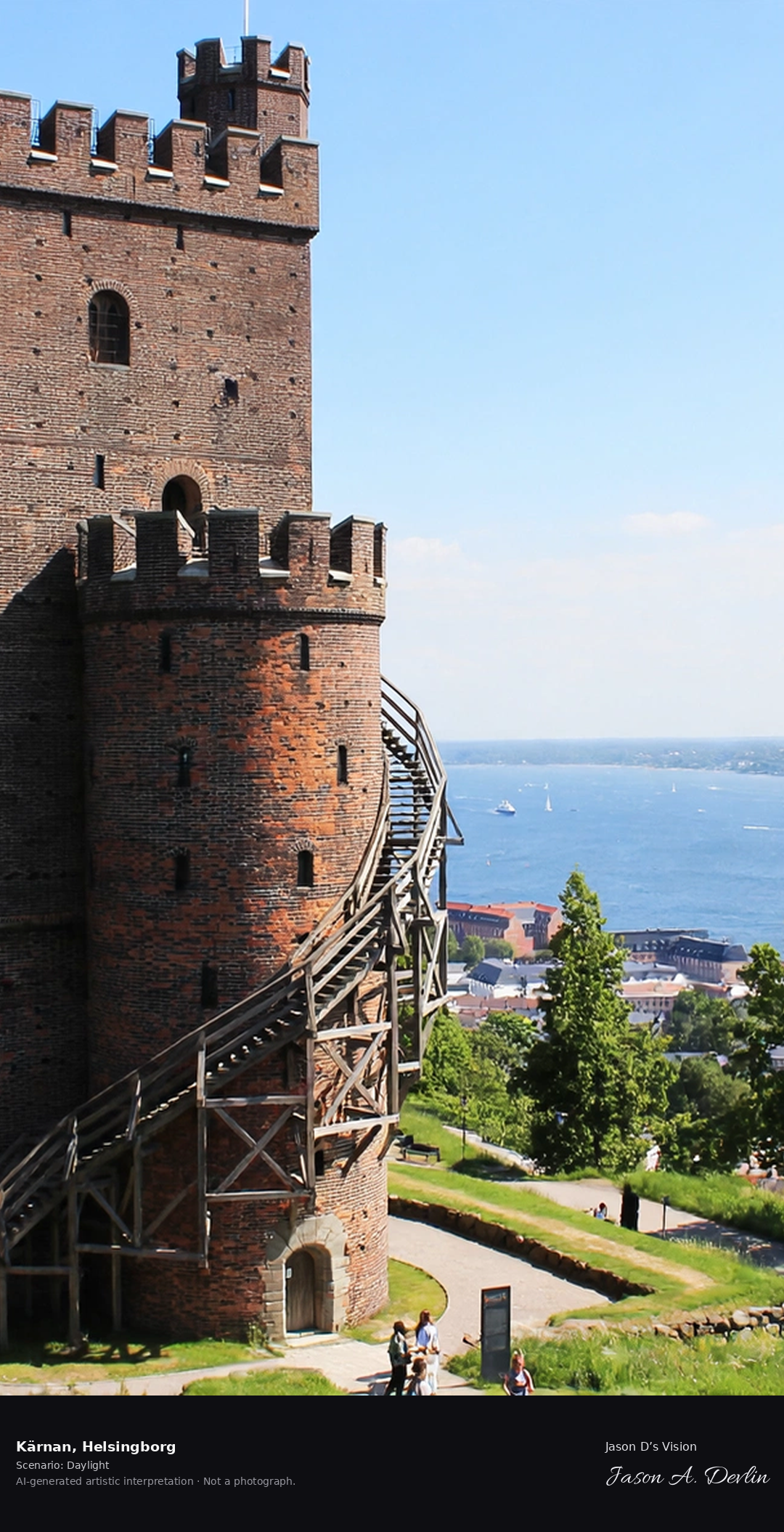
Kärnan's medieval brick keep towering over Helsingborg from Slottshagen park, the Öresund strait and Danish coast visible beyond. The last remnant of the once-mighty Helsingborg Castle.
From Slottshagen park the view looks up at Kärnan, the medieval brick keep towering over Helsingborg. Beyond it the Öresund strait and the Danish coast are visible in bright natural daylight. The keep is the last remnant of the once-mighty Helsingborg Castle.
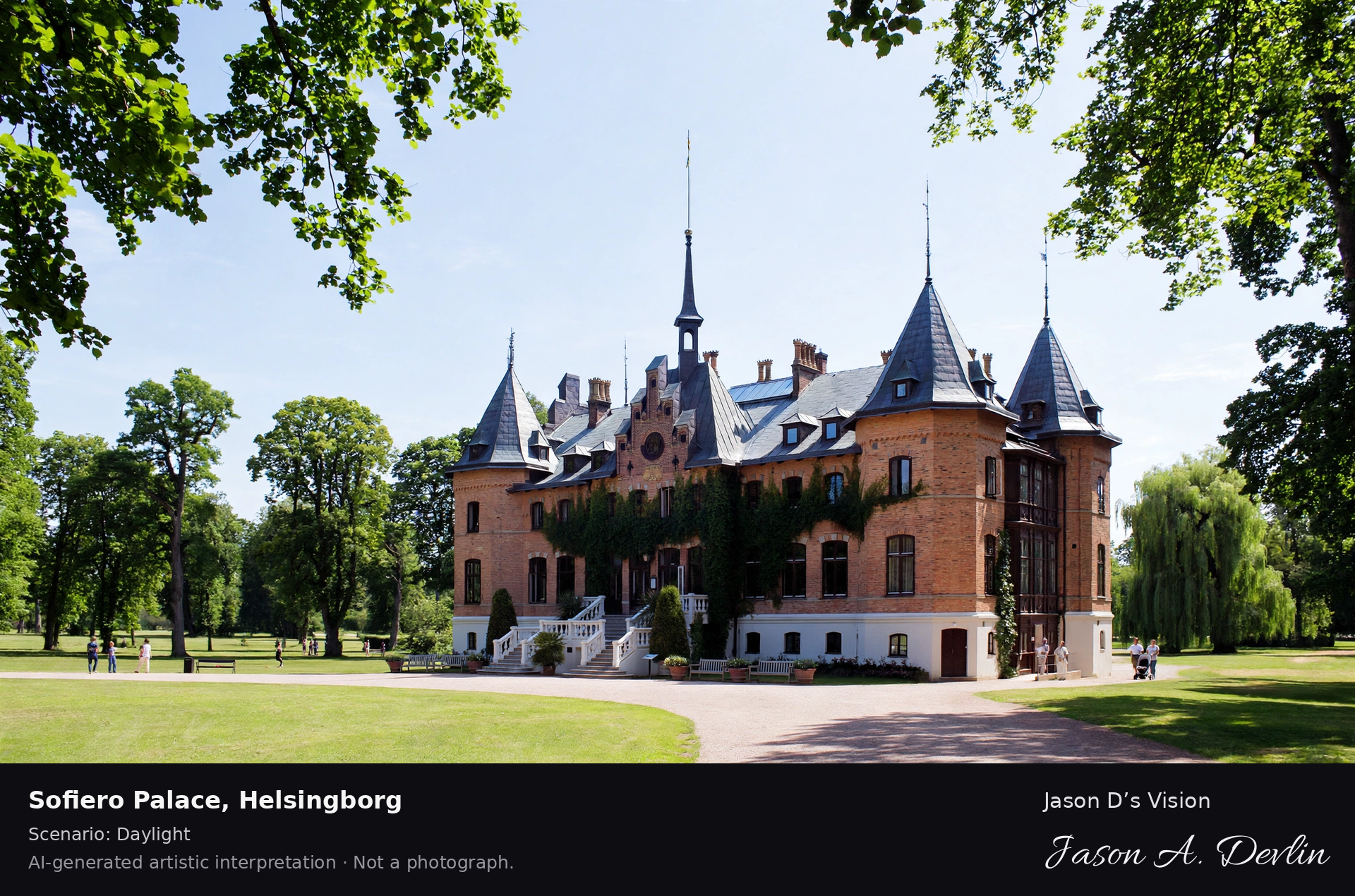
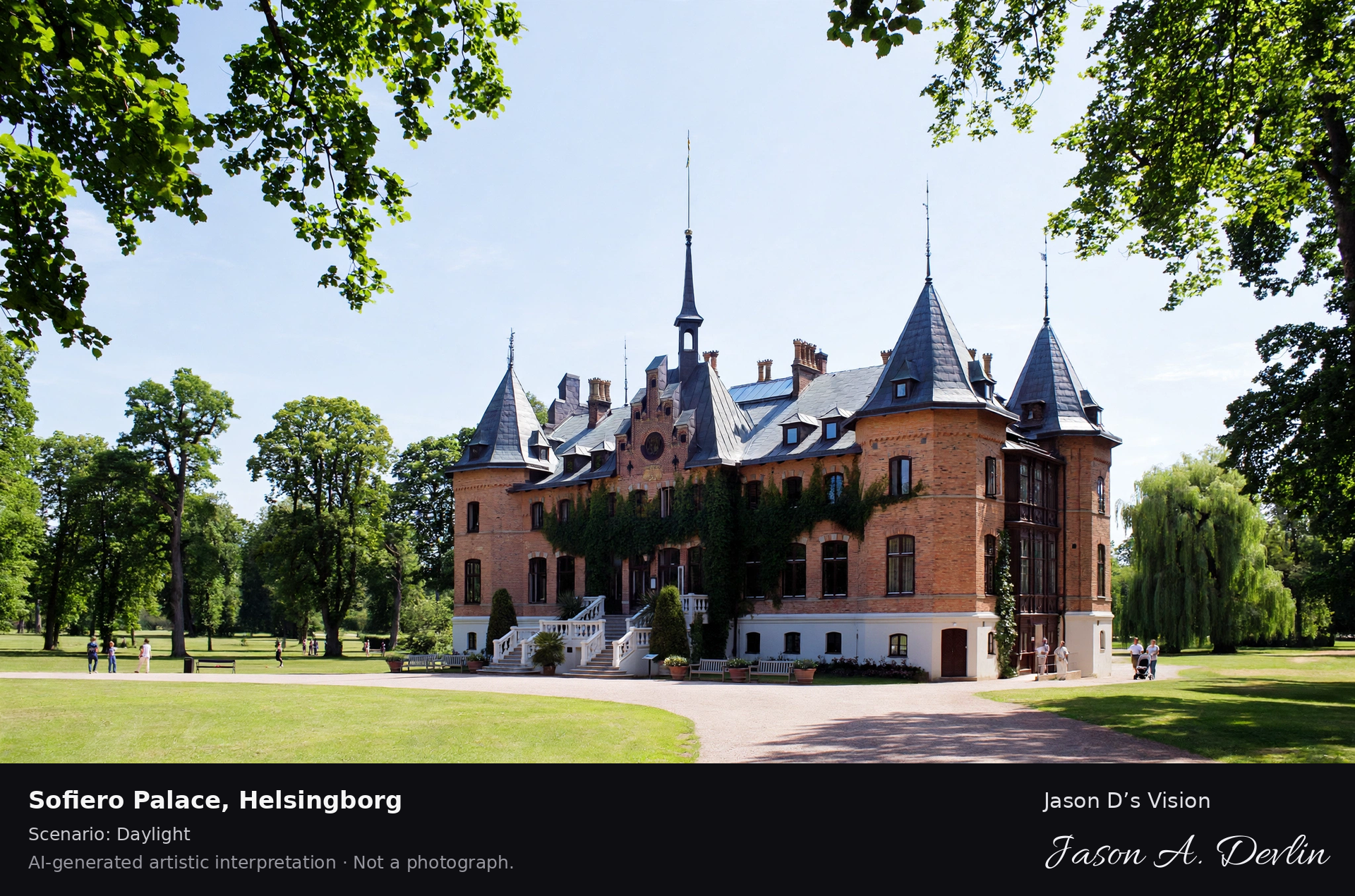
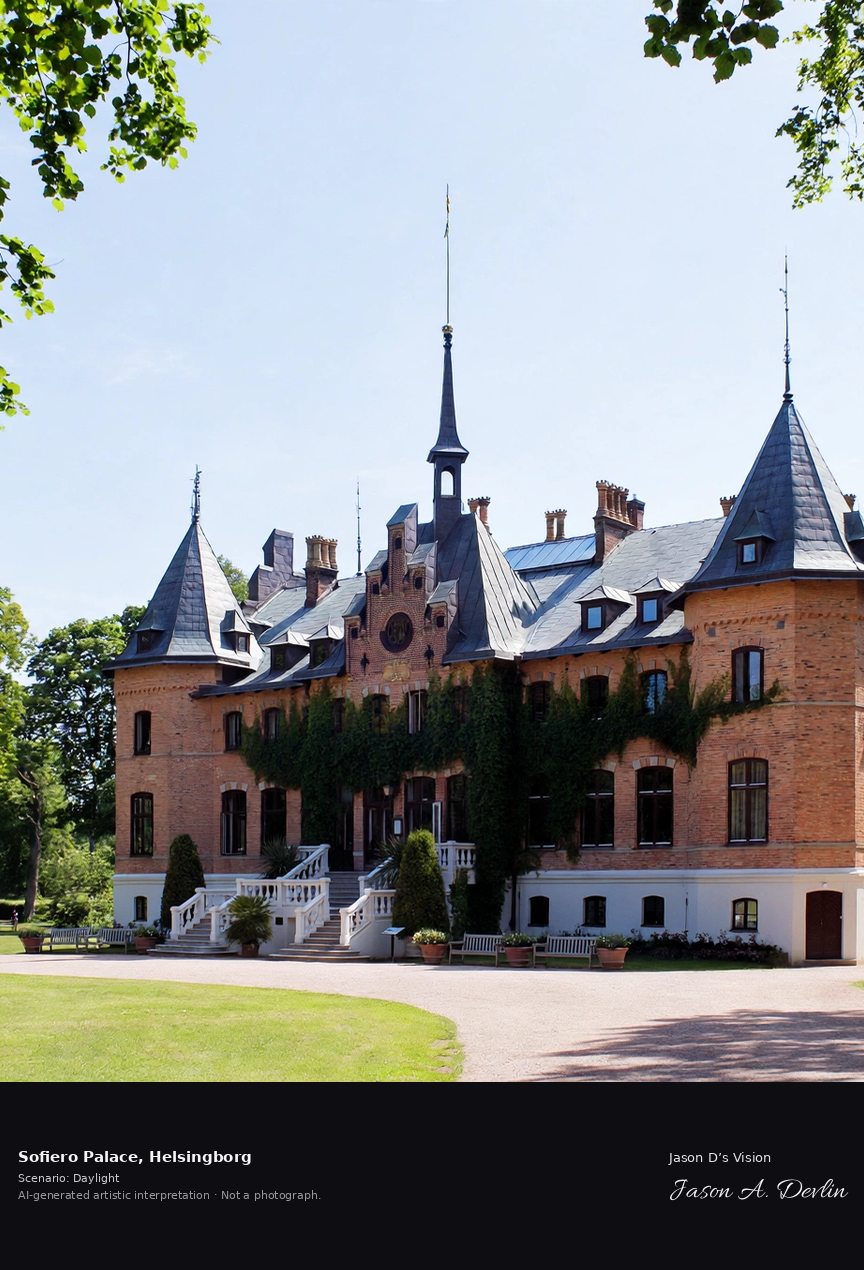
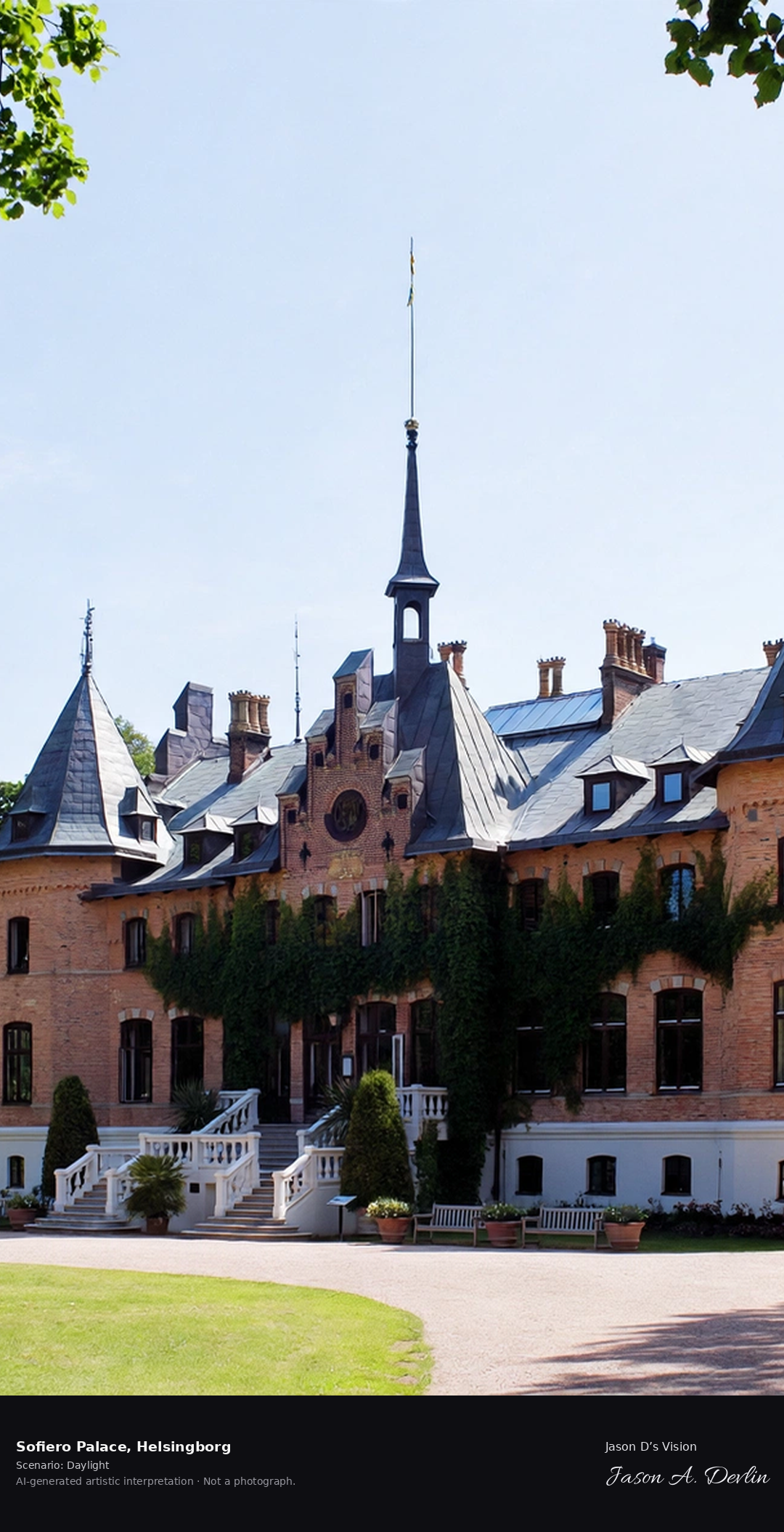
Sofiero Palace's elegant facade above its world-famous rhododendron ravine in full June bloom, the Öresund glittering through the trees below. The former royal summer residence's magnificent gardens.
Sofiero Palace in Helsingborg: the former royal summer residence's elegant facade rising above its world-famous rhododendron ravine in full June bloom — magenta, purple and white blossom masses sweeping down the garden slopes, with the Öresund glittering through the trees below.
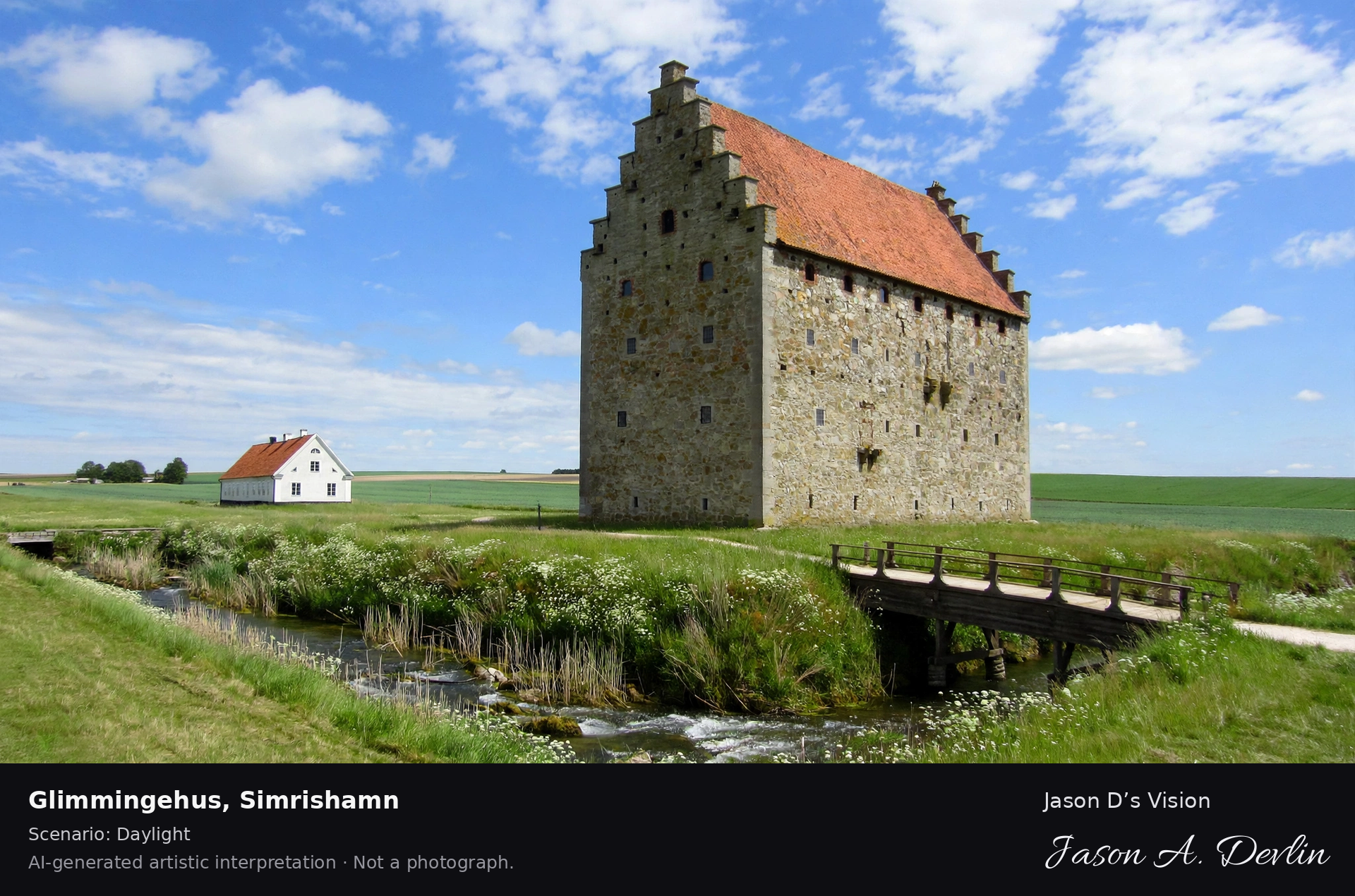
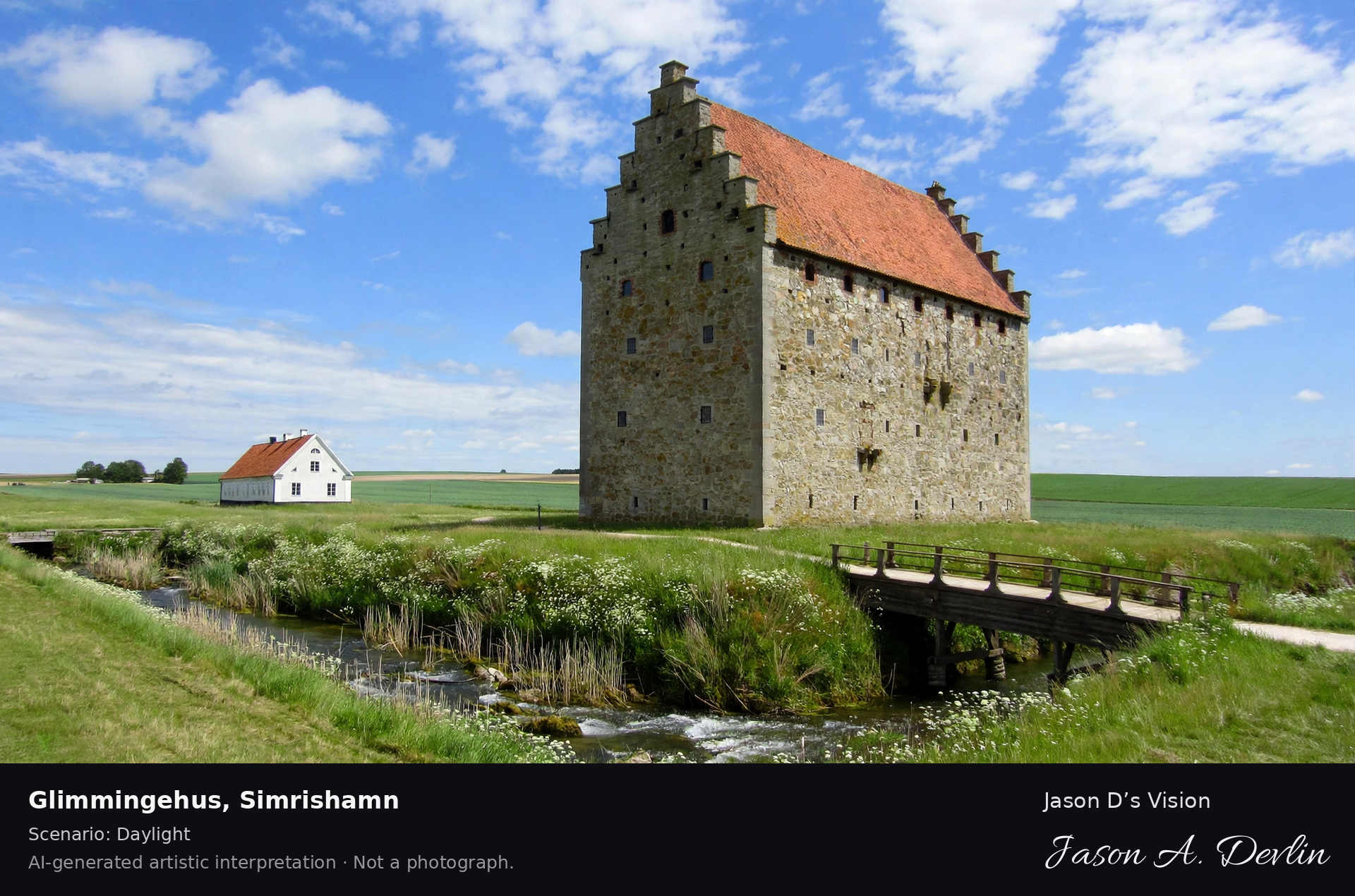
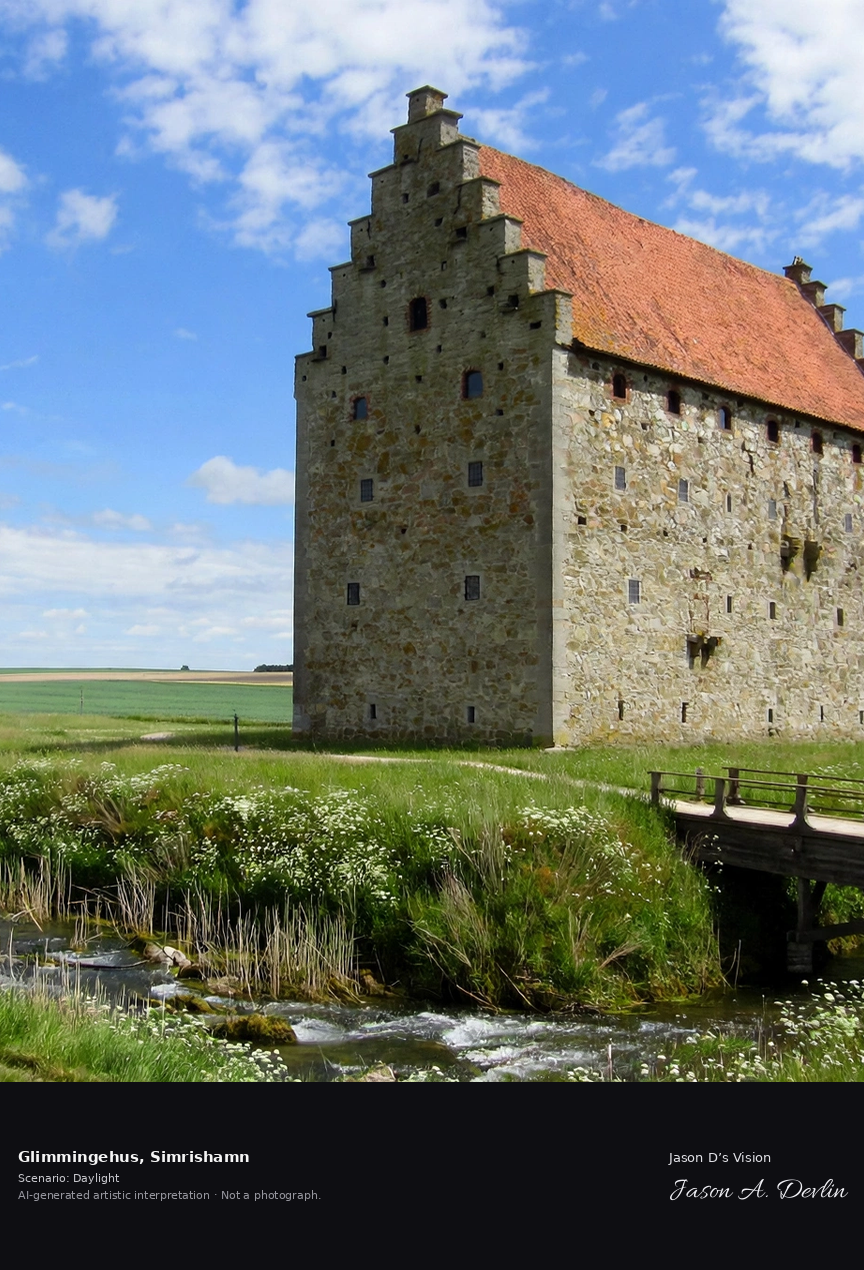
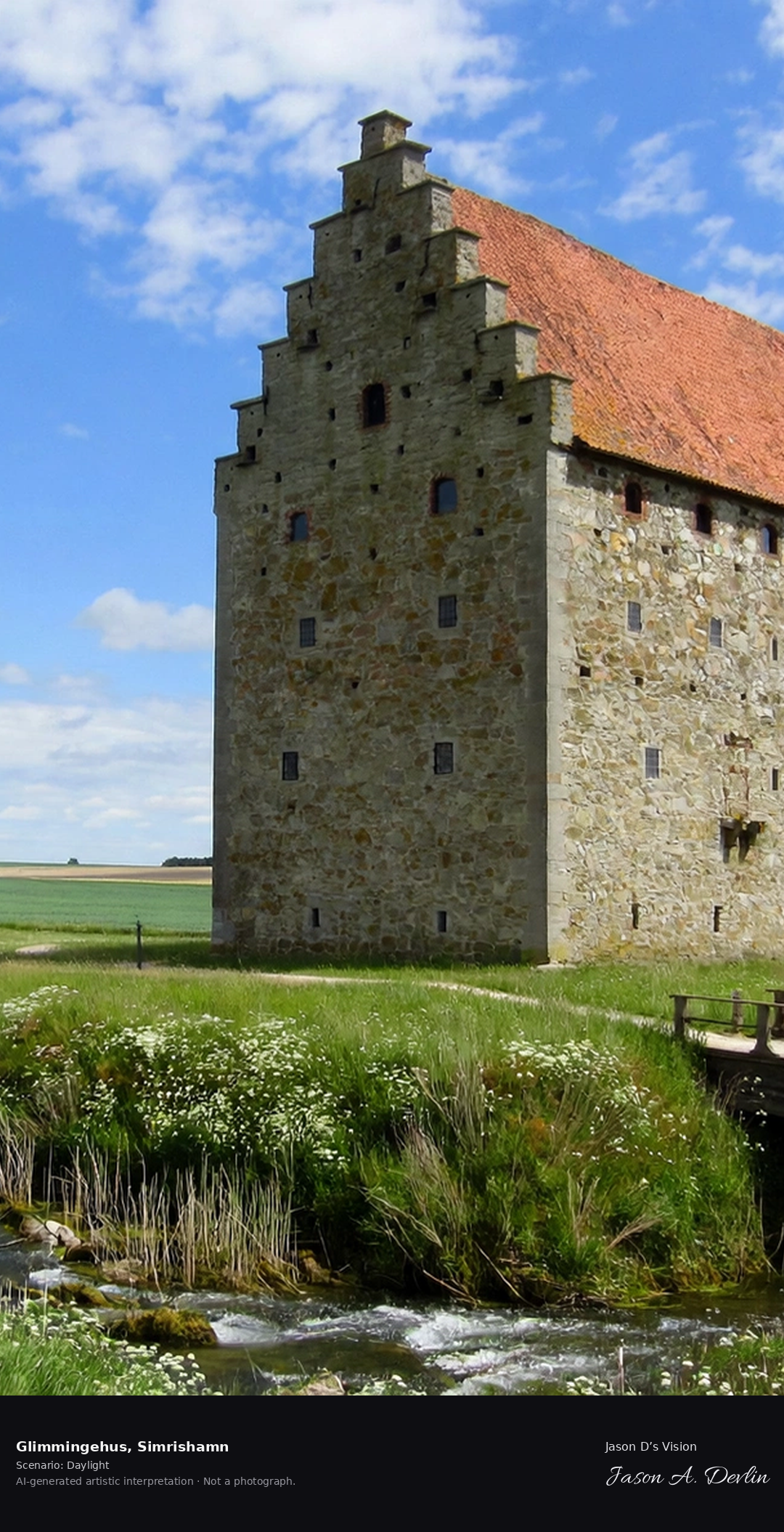
Glimmingehus, Scandinavia's best-preserved medieval stone castle, its massive grey walls and stepped gables rising from the Scanian farmland. Built 1499, never taken by force.
Glimmingehus in Simrishamn: Scandinavia's best-preserved medieval stone castle — massive grey walls with stepped gables and corner turrets rising above the moat, surrounded by the green Scanian farmland. Built 1499, never taken by force.
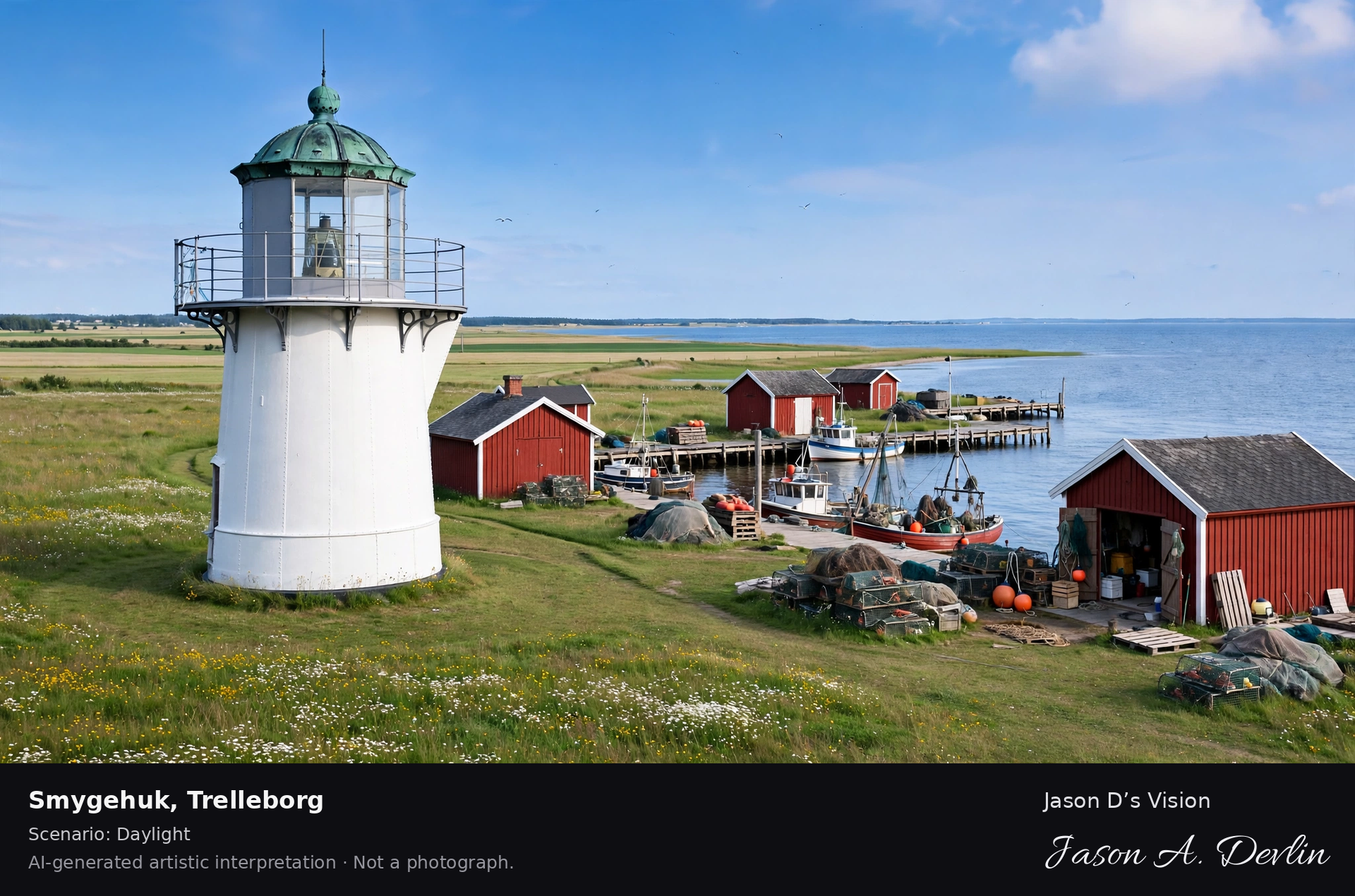
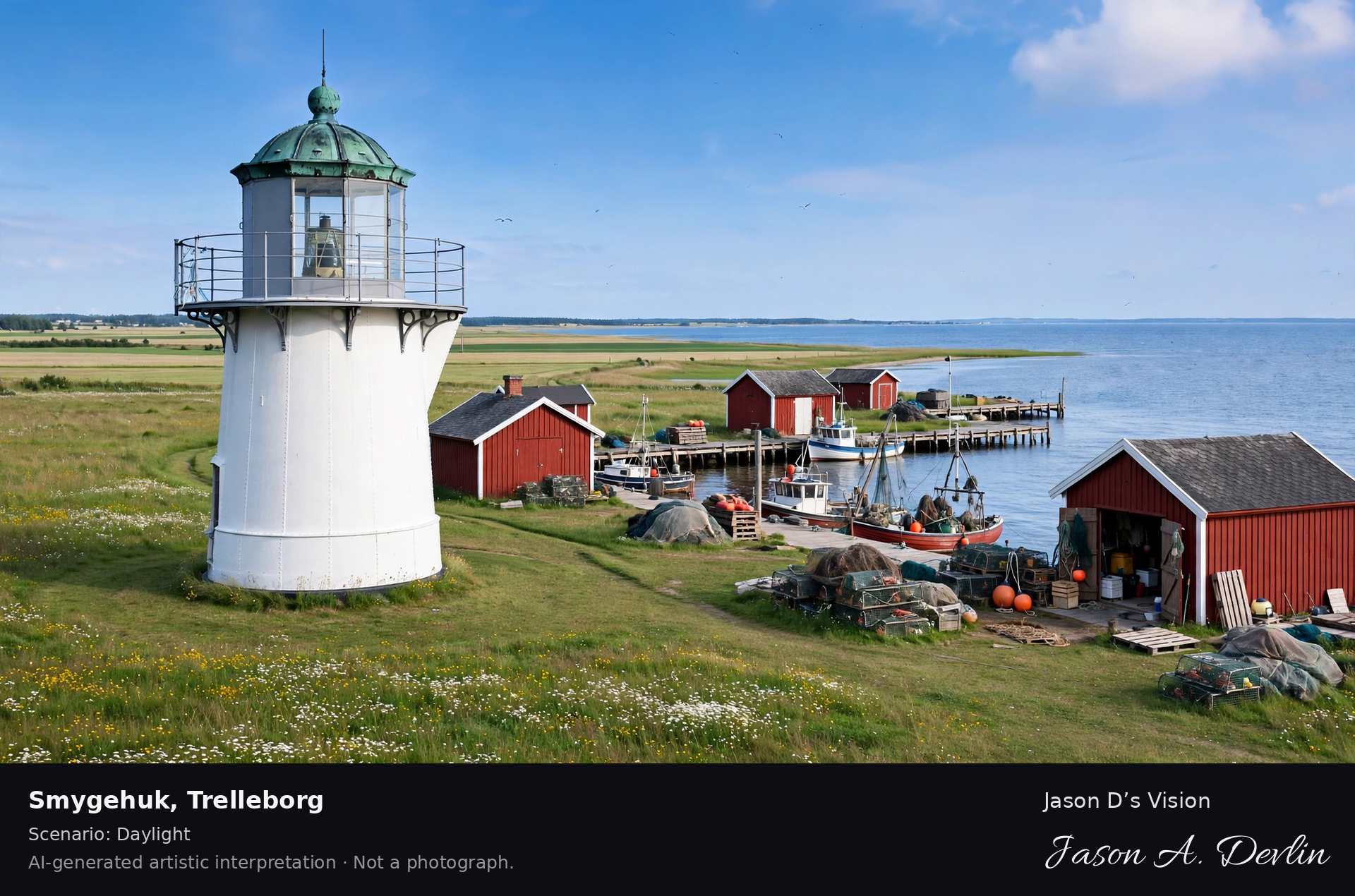
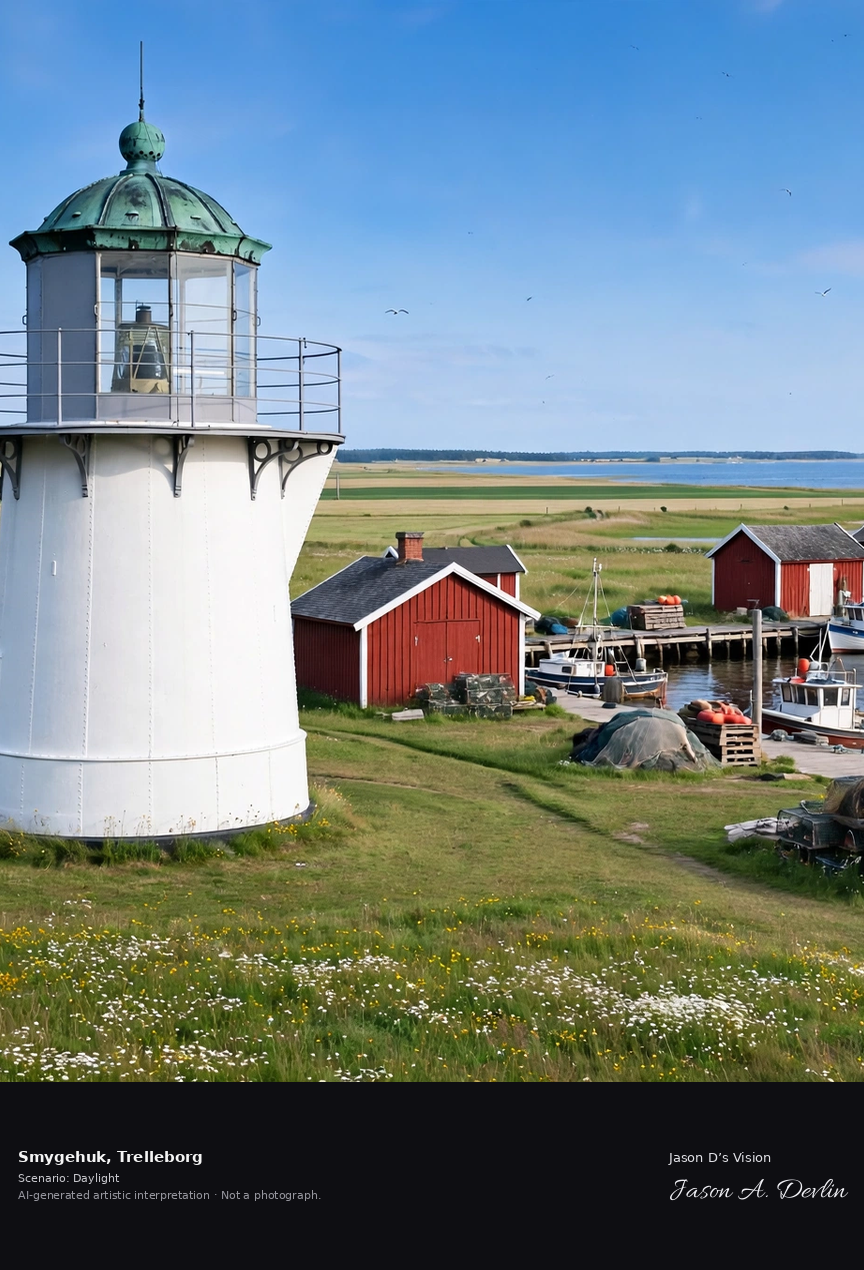
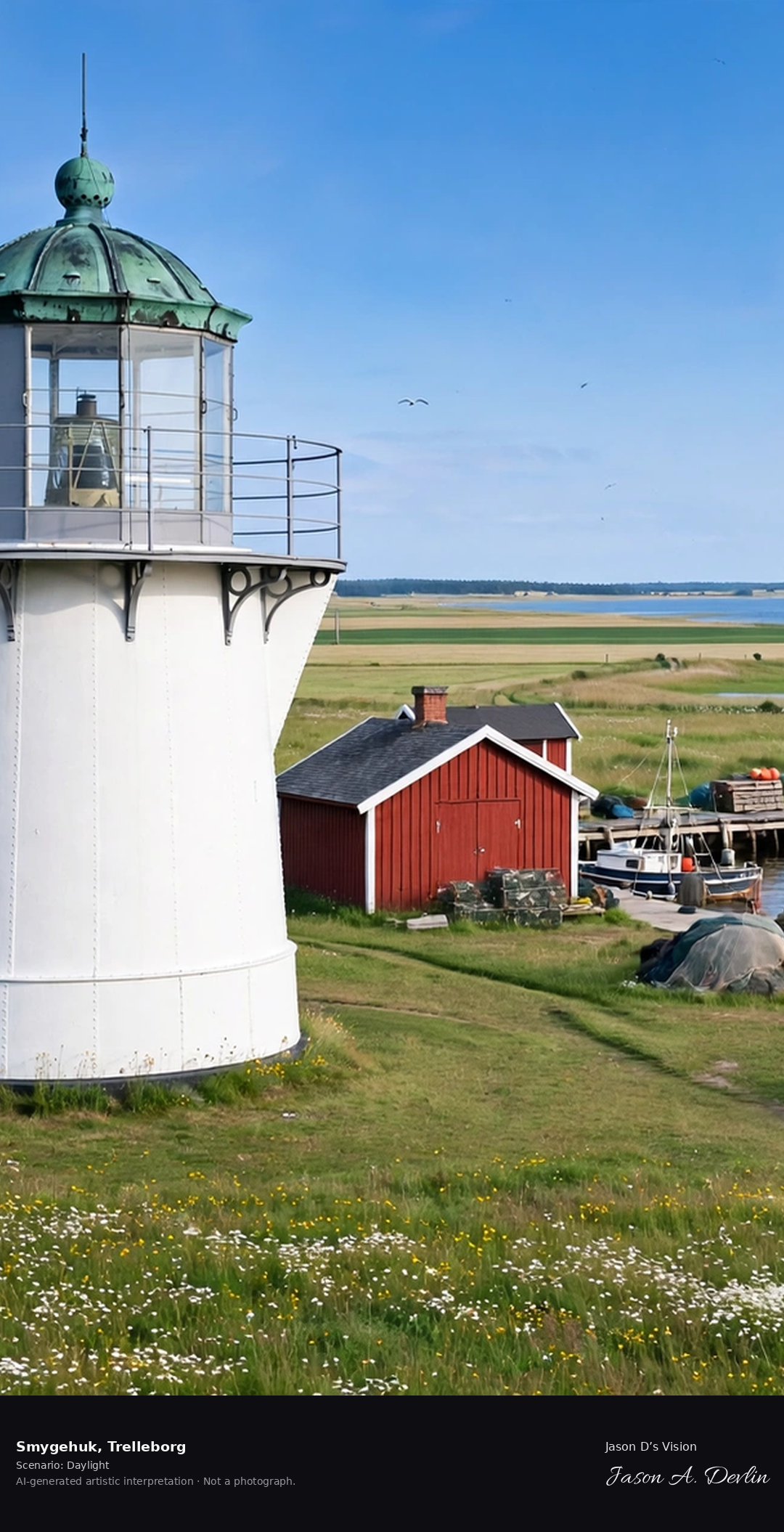
The Smygehuk lighthouse and harbor at Sweden's southernmost point, viewed from the rocky shore with the Baltic stretching to the horizon. Fishing boats and the iconic yellow lighthouse buildings.
Smygehuk in Trelleborg: Sweden's southernmost point — the white Smygehus lighthouse with its yellow lantern room, the iconic yellow keeper's buildings with red tile roofs, fishing boats moored at the harbor, and the rocky Baltic shoreline. A classic Scanian coastal landmark.
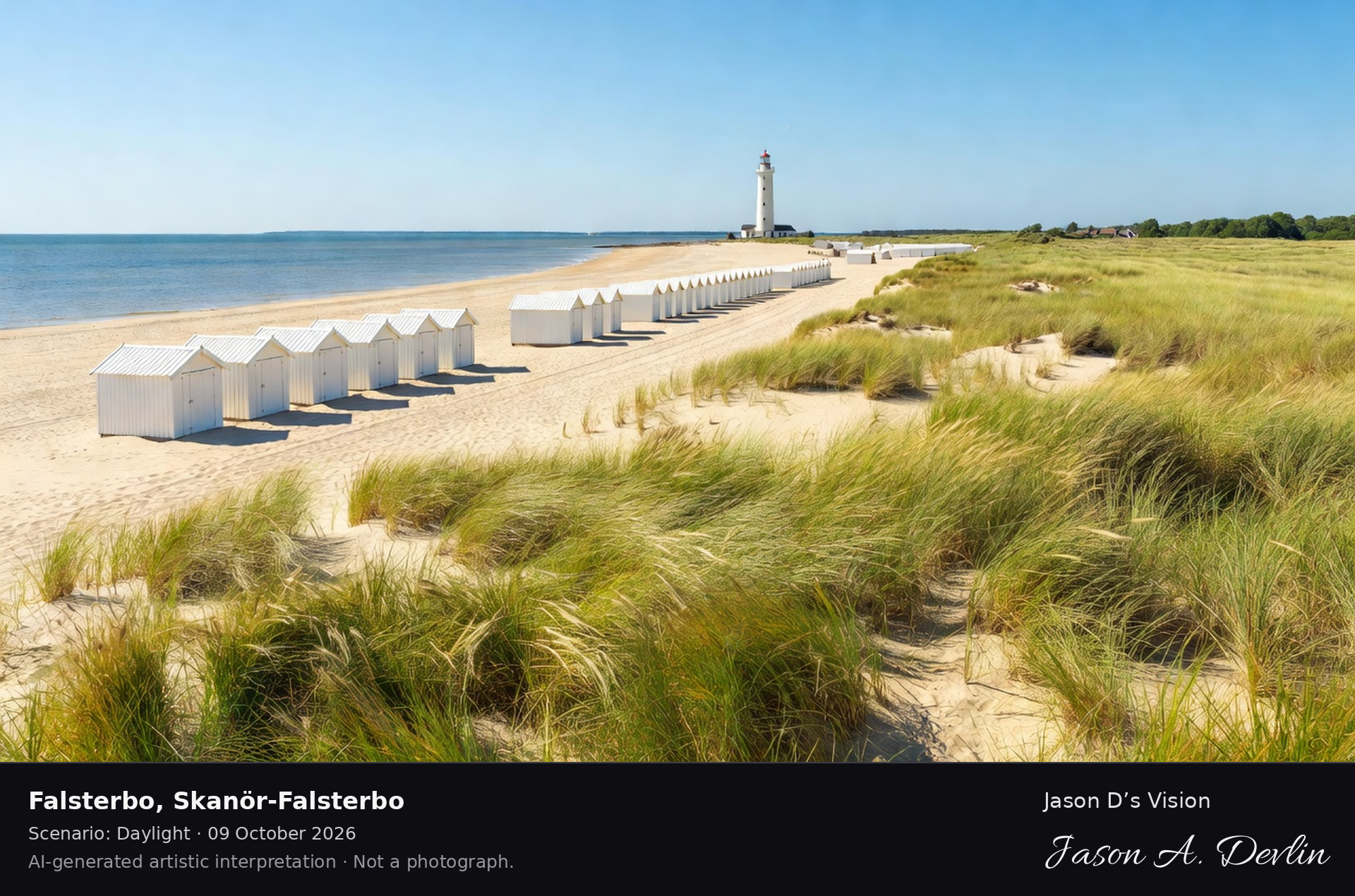
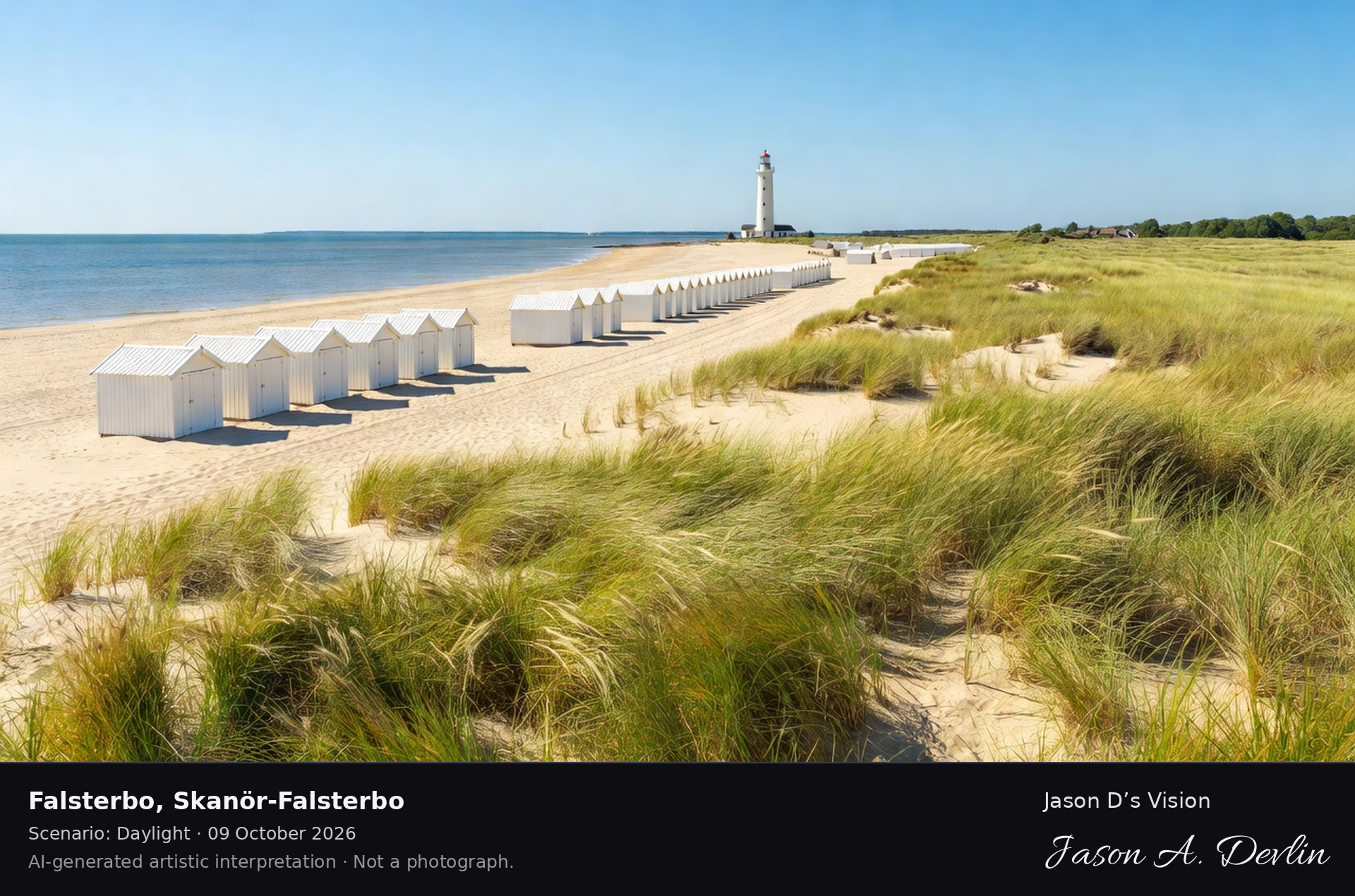
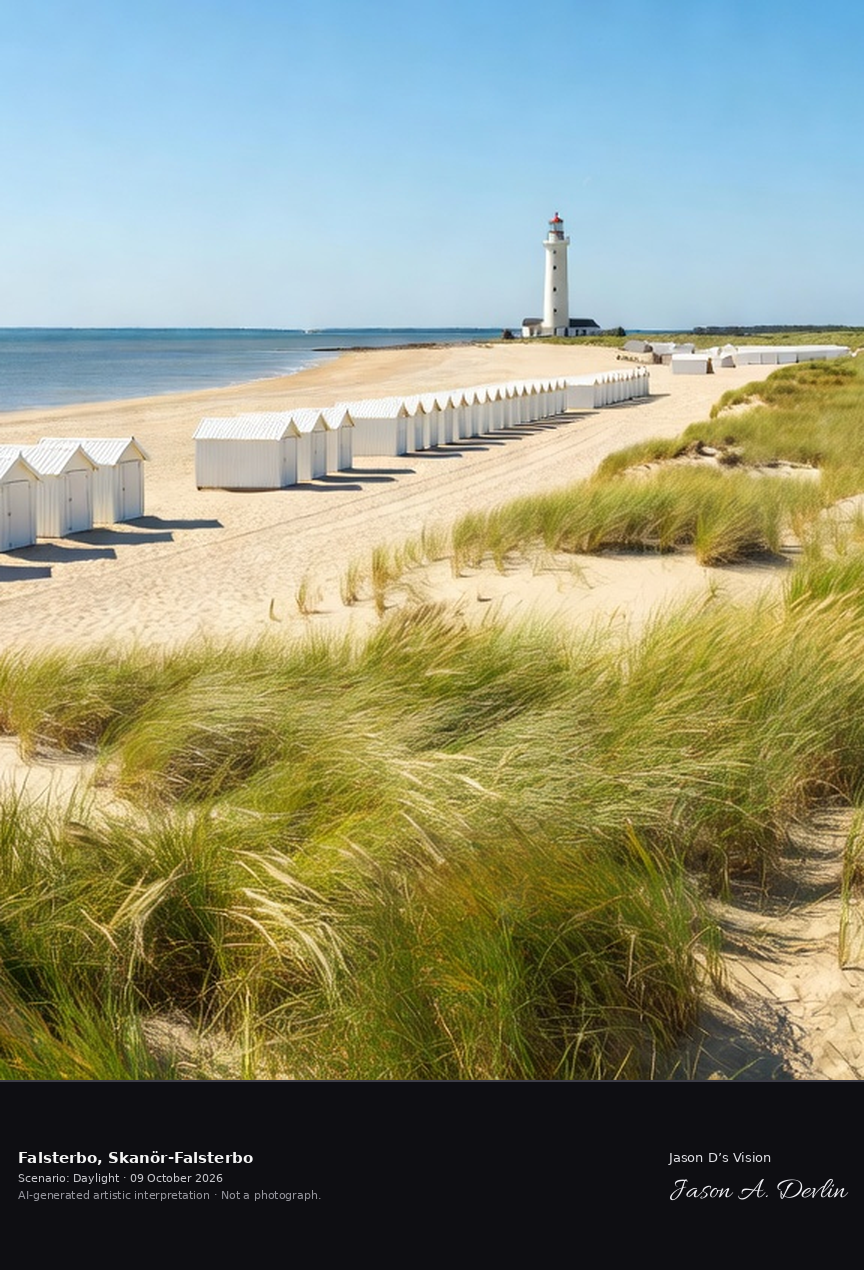
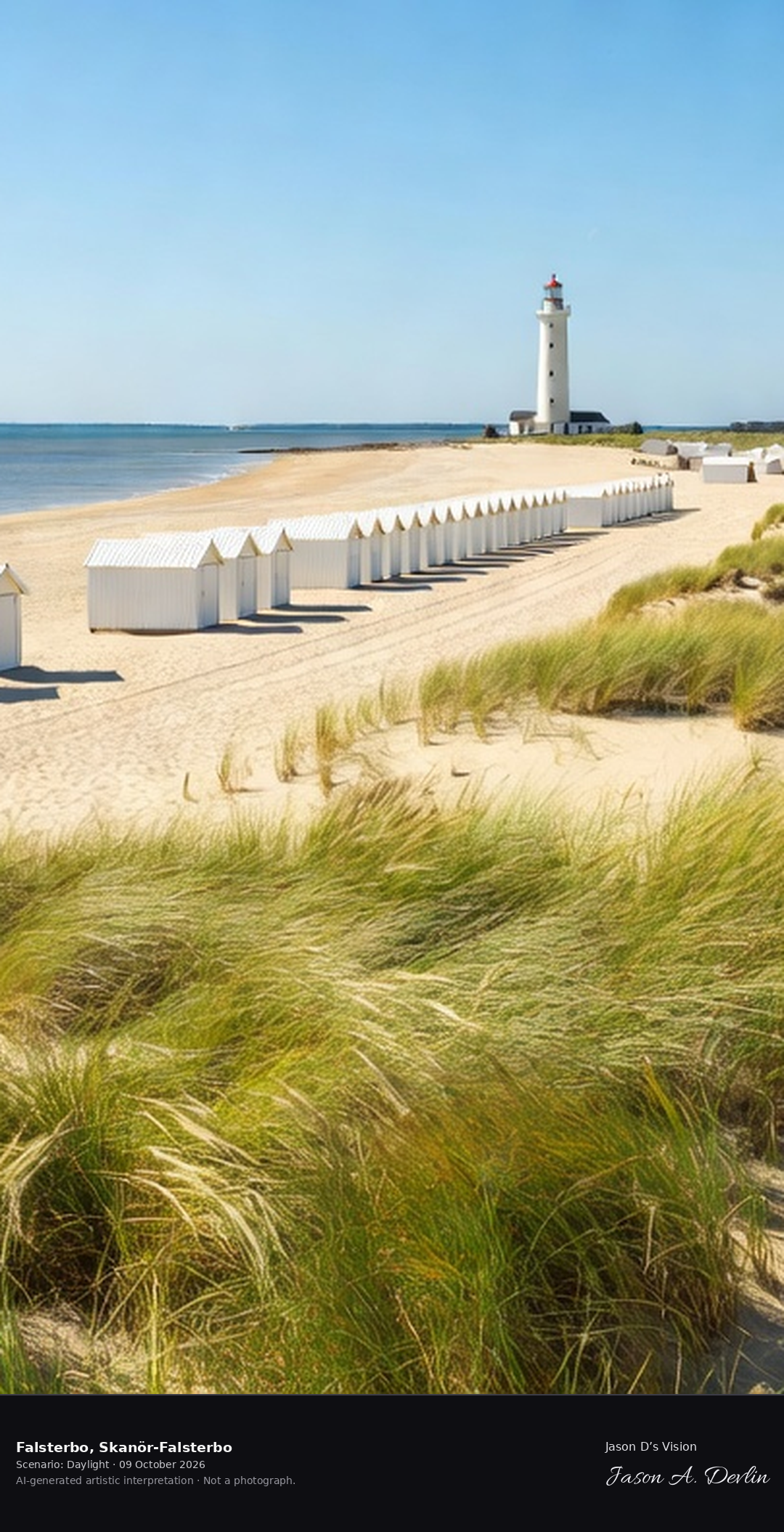
Falsterbo's long sandy beach with characteristic white beach huts and the lighthouse in the distance, dune grass waving in the sea breeze. Sweden's classic riviera on the Falsterbo peninsula.
From the dunes at Falsterbo the view runs along the long sandy beach toward the lighthouse: rows of characteristic white beach huts punctuate the pale sand, dune grass waves in the sea breeze in the foreground, and the sea stretches to the horizon on the left. Sweden's classic riviera on the Falsterbo peninsula, rendered in bright natural daylight.
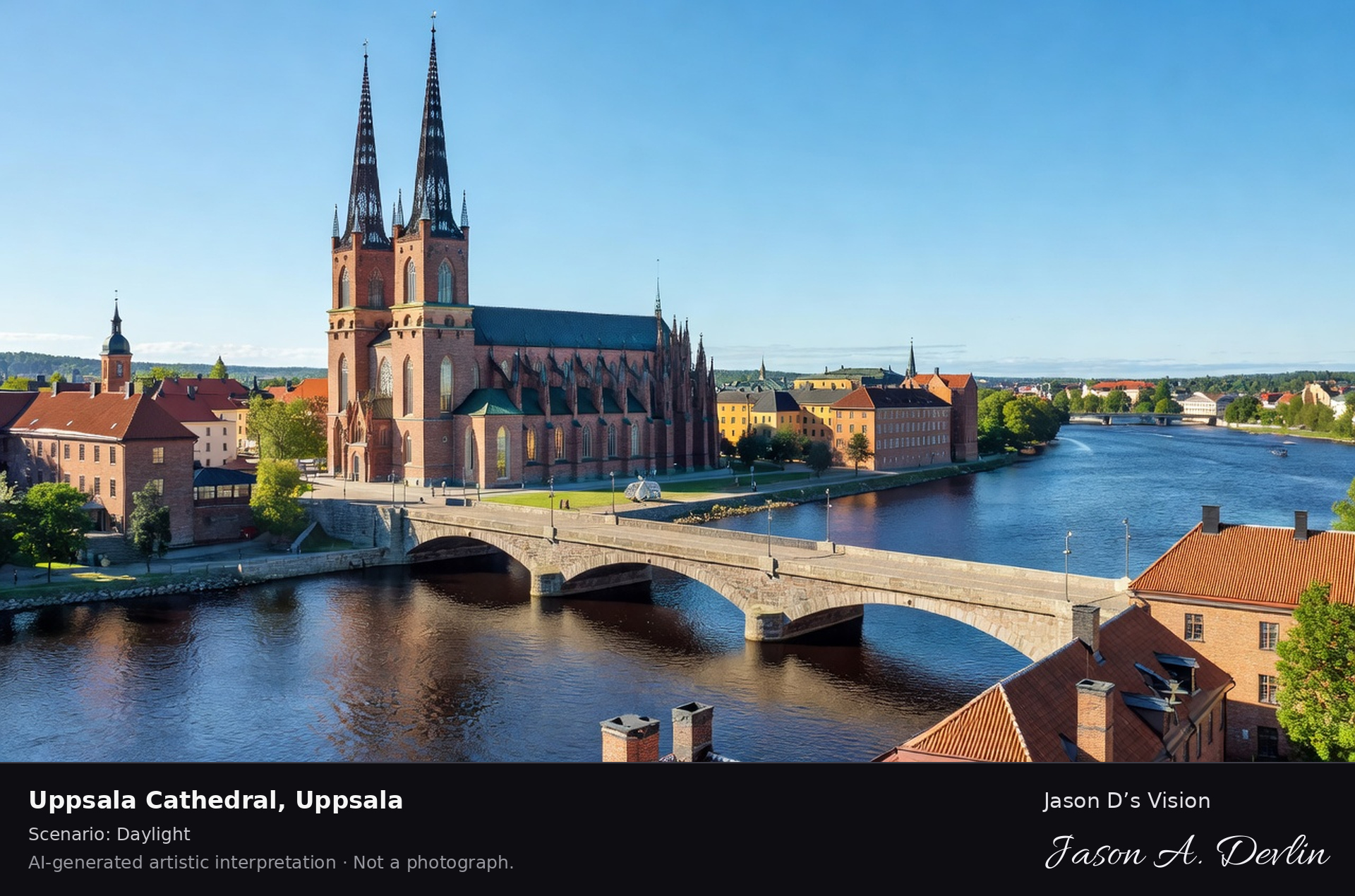
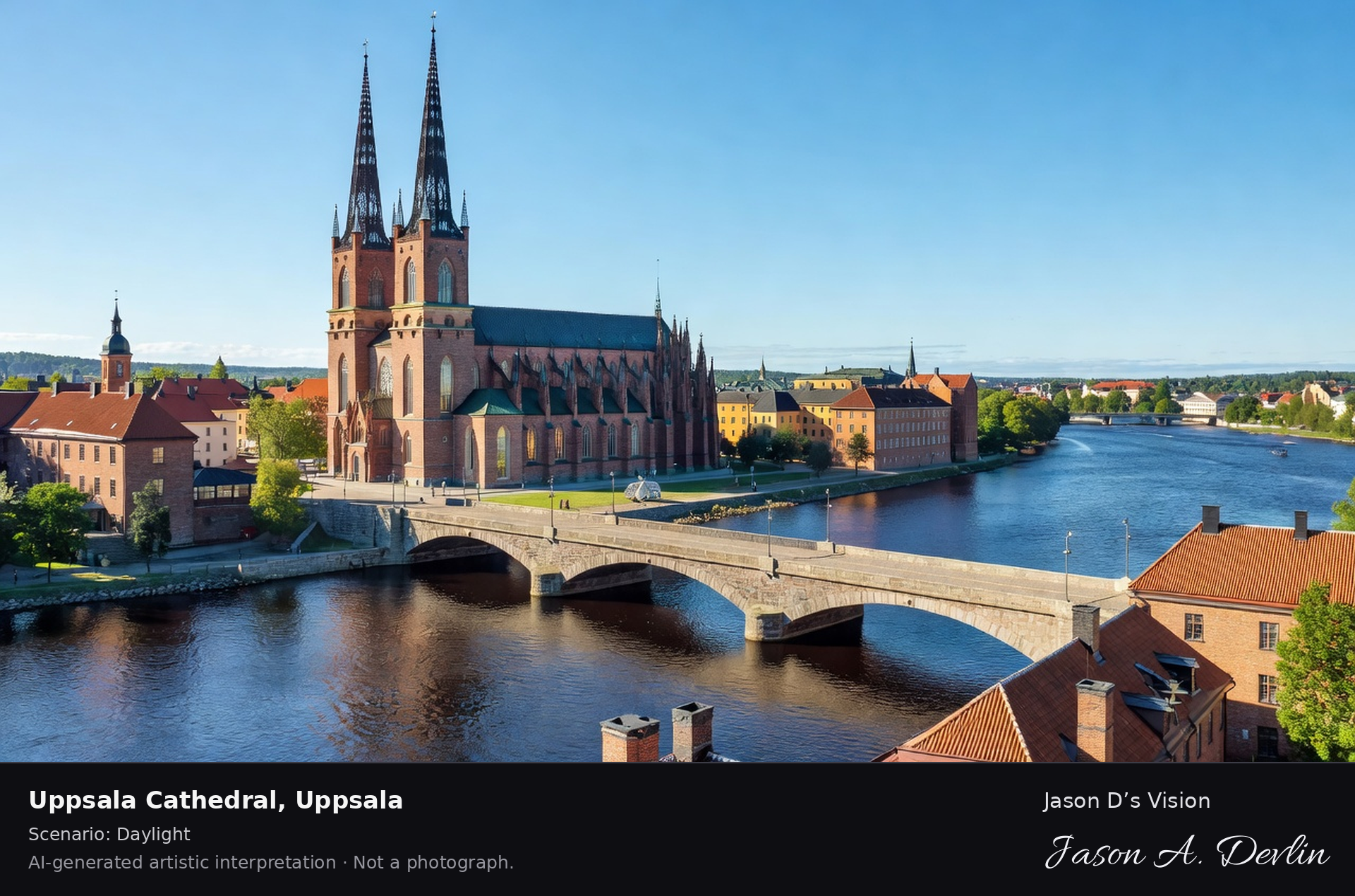
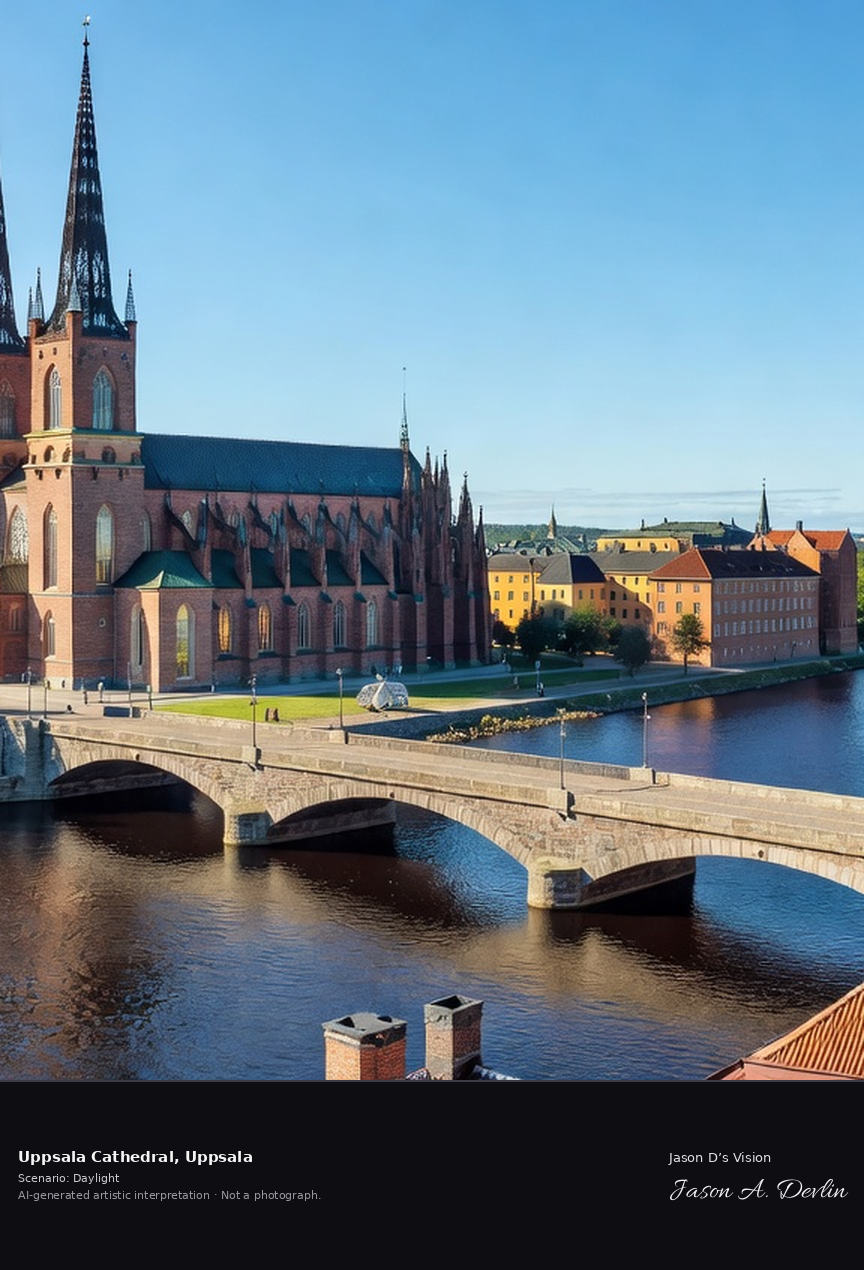
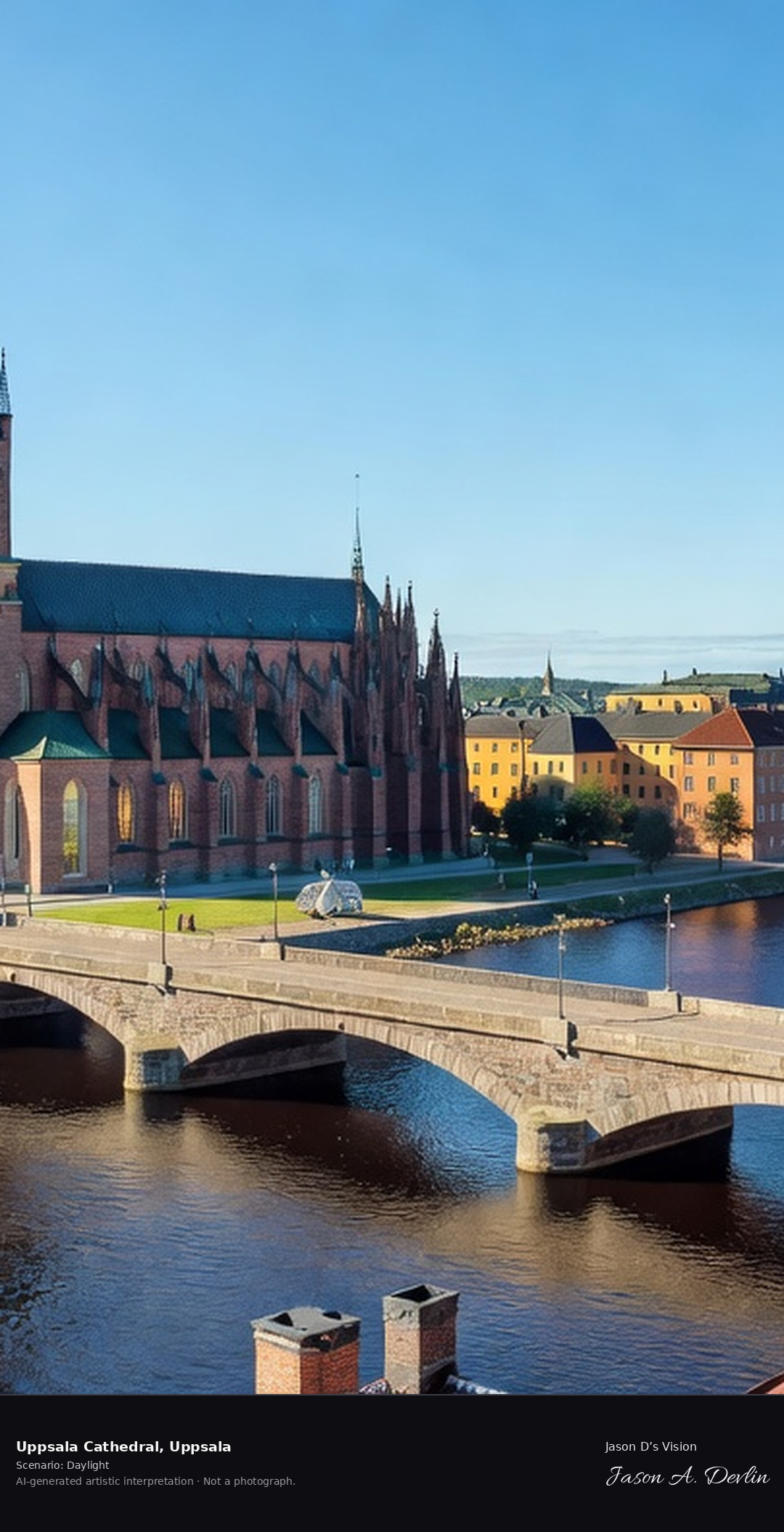
Uppsala Cathedral's twin Gothic spires dominating the skyline above the Fyris River, viewed from the Islandsbron bridge with the university rooftops in the foreground. Scandinavia's largest church, coronation site of Swedish monarchs.
From the Islandsbron bridge over the Fyris River the view runs up to Uppsala Cathedral: the cathedral's twin Gothic spires dominate the skyline, the stone arch bridge crosses the river in the foreground, and university rooftops line the banks. Scandinavia's largest church, coronation site of Swedish monarchs, rendered in bright natural daylight.
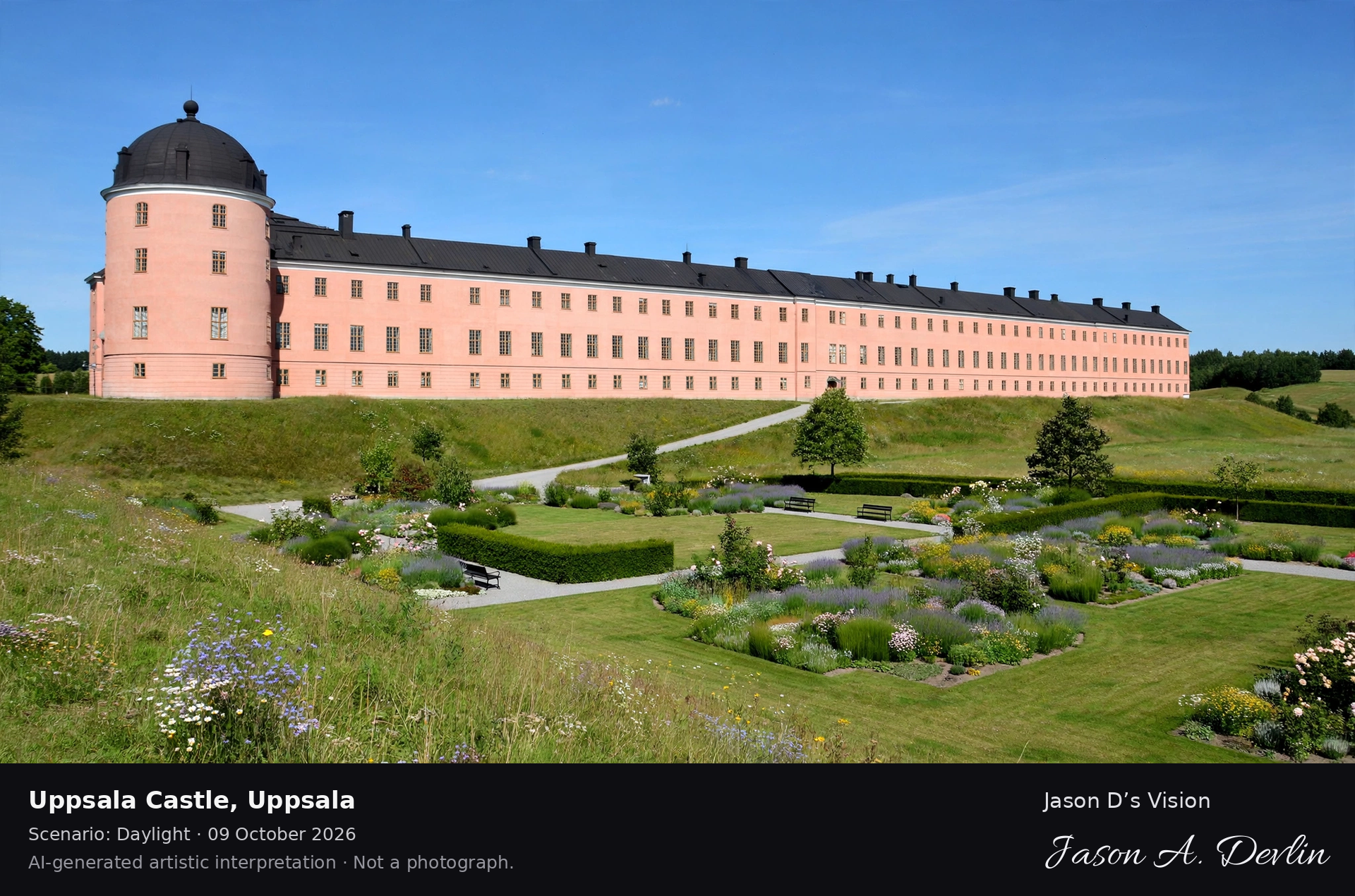
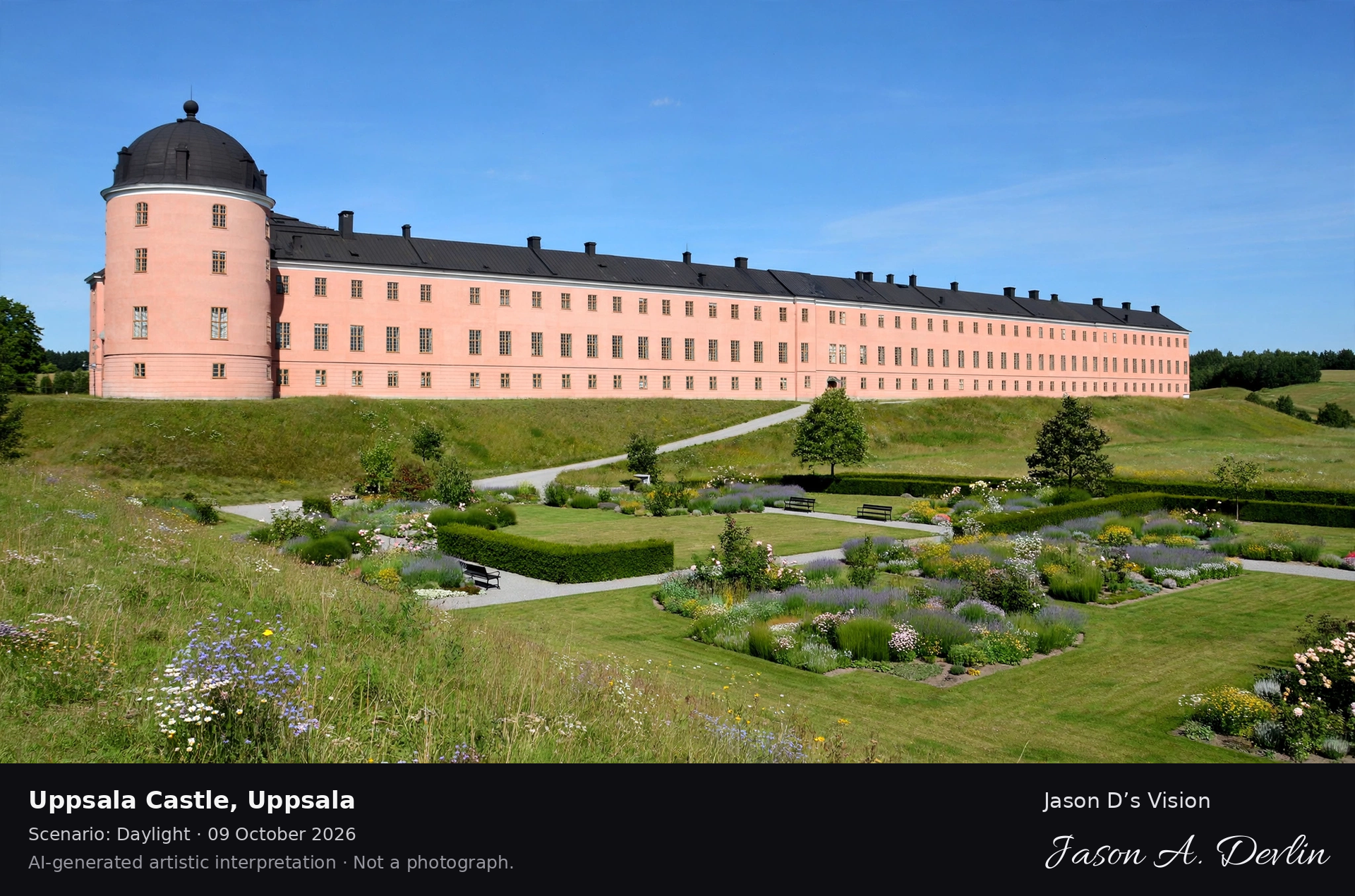
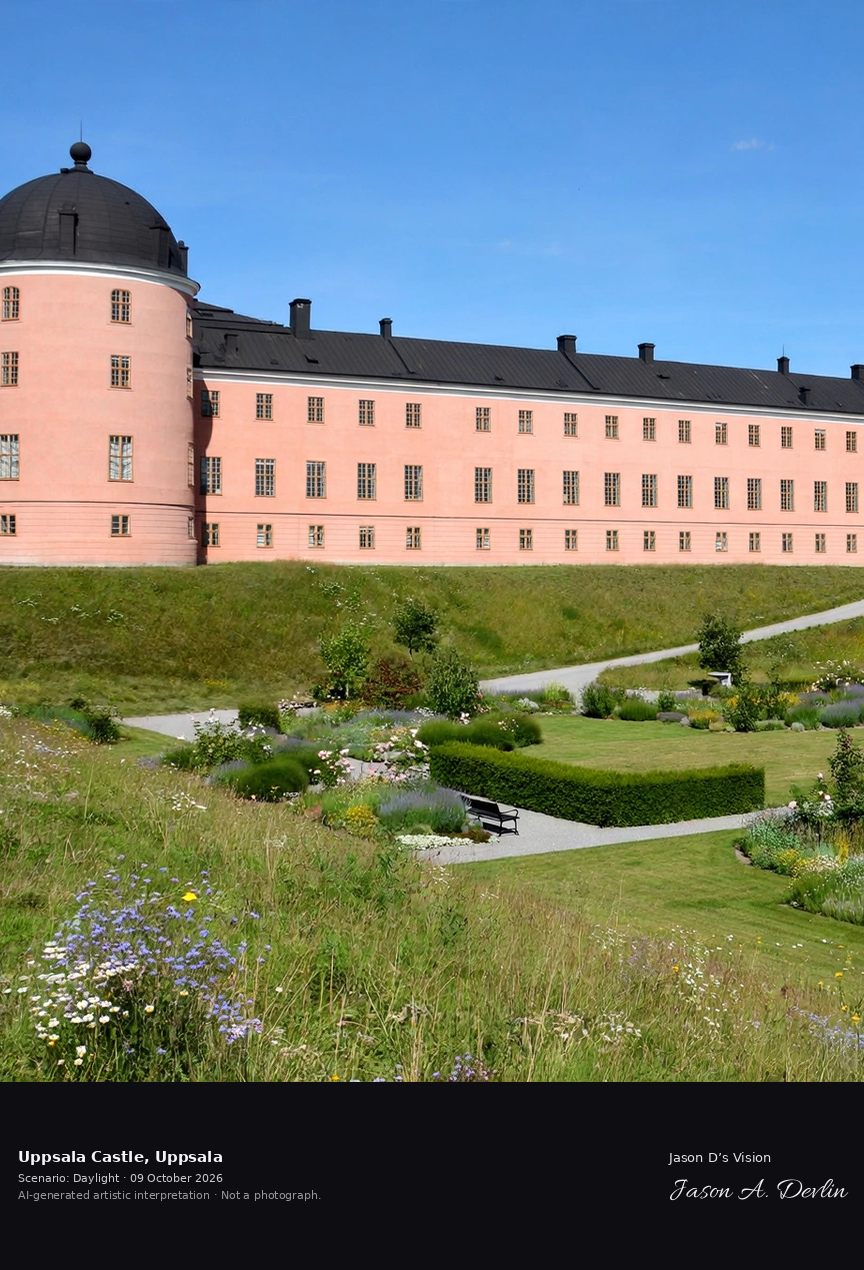
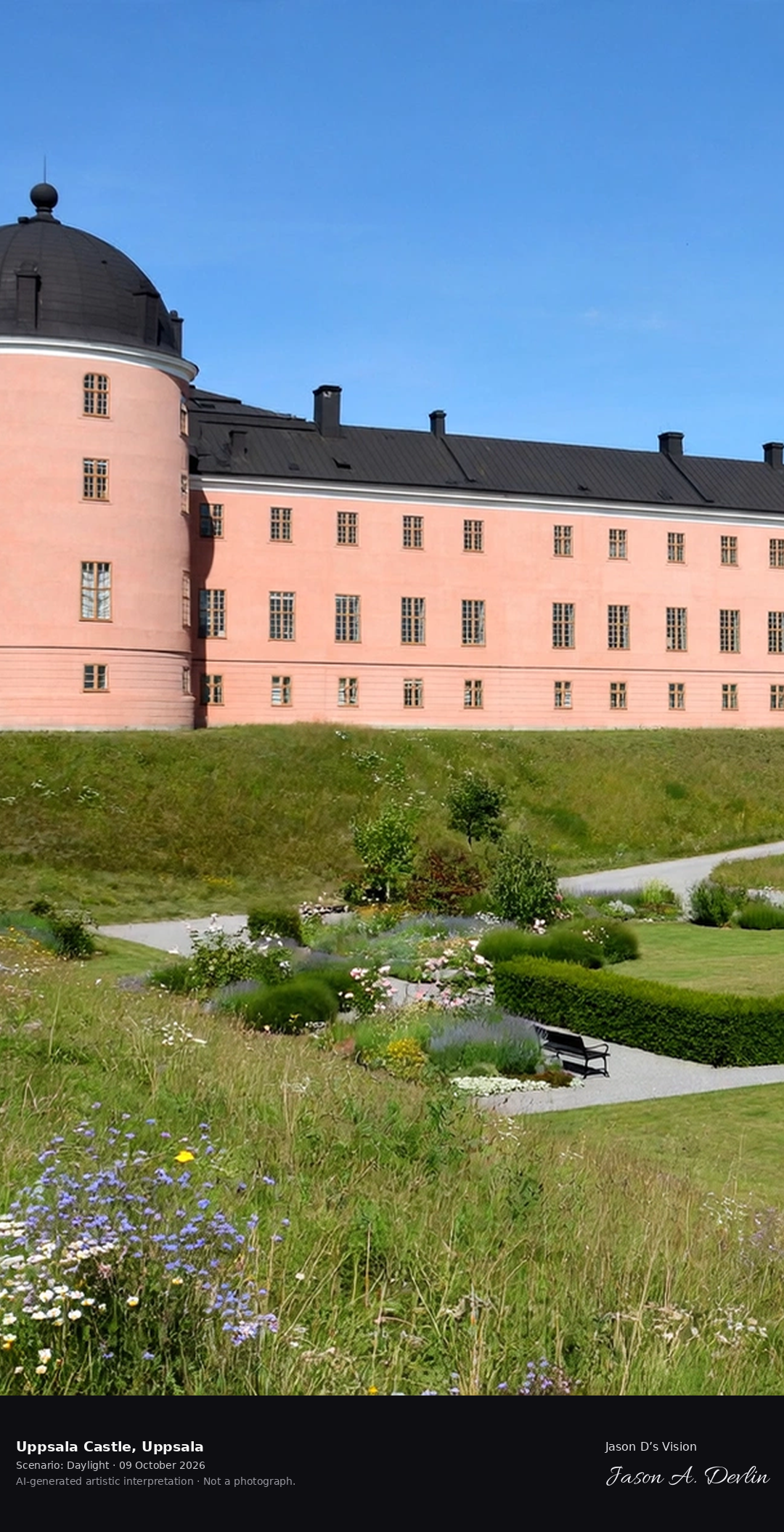
Uppsala Castle's pink-washed Renaissance bulk on Kasåsen hill, viewed from the Botanical Garden below with the Gunillaklockan bell tower. The Vasaborgen started by Gustav Vasa in 1549.
From the Botanical Garden below the hill the view runs up to Uppsala Castle: the castle's pink-washed Renaissance bulk rises on Kasåsen hill, the Gunillaklockan bell tower spire stands beside the main block, and flower beds and lawns of the gardens frame the foreground. The Vasaborgen started by Gustav Vasa in 1549, rendered in bright natural daylight.
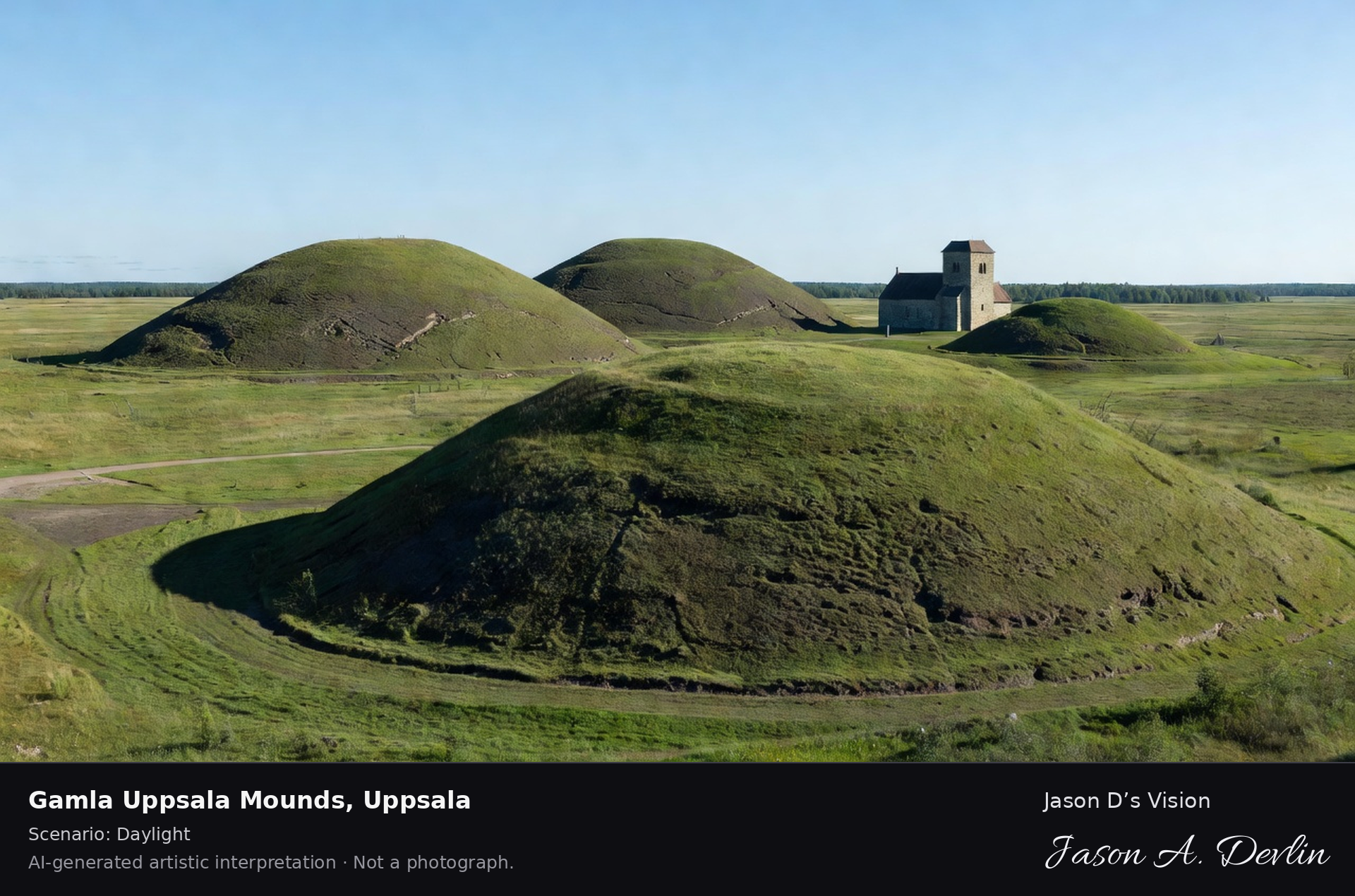
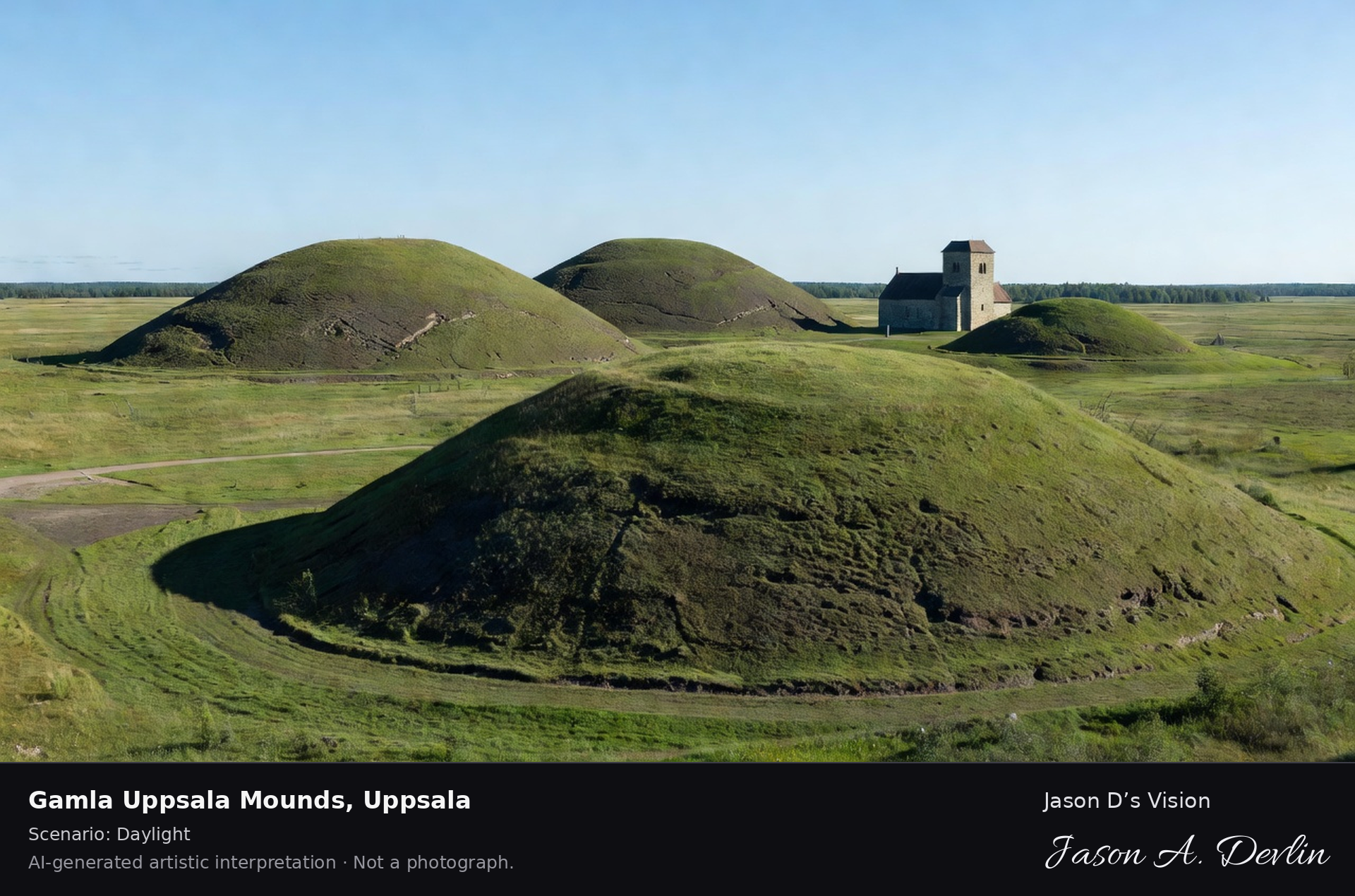
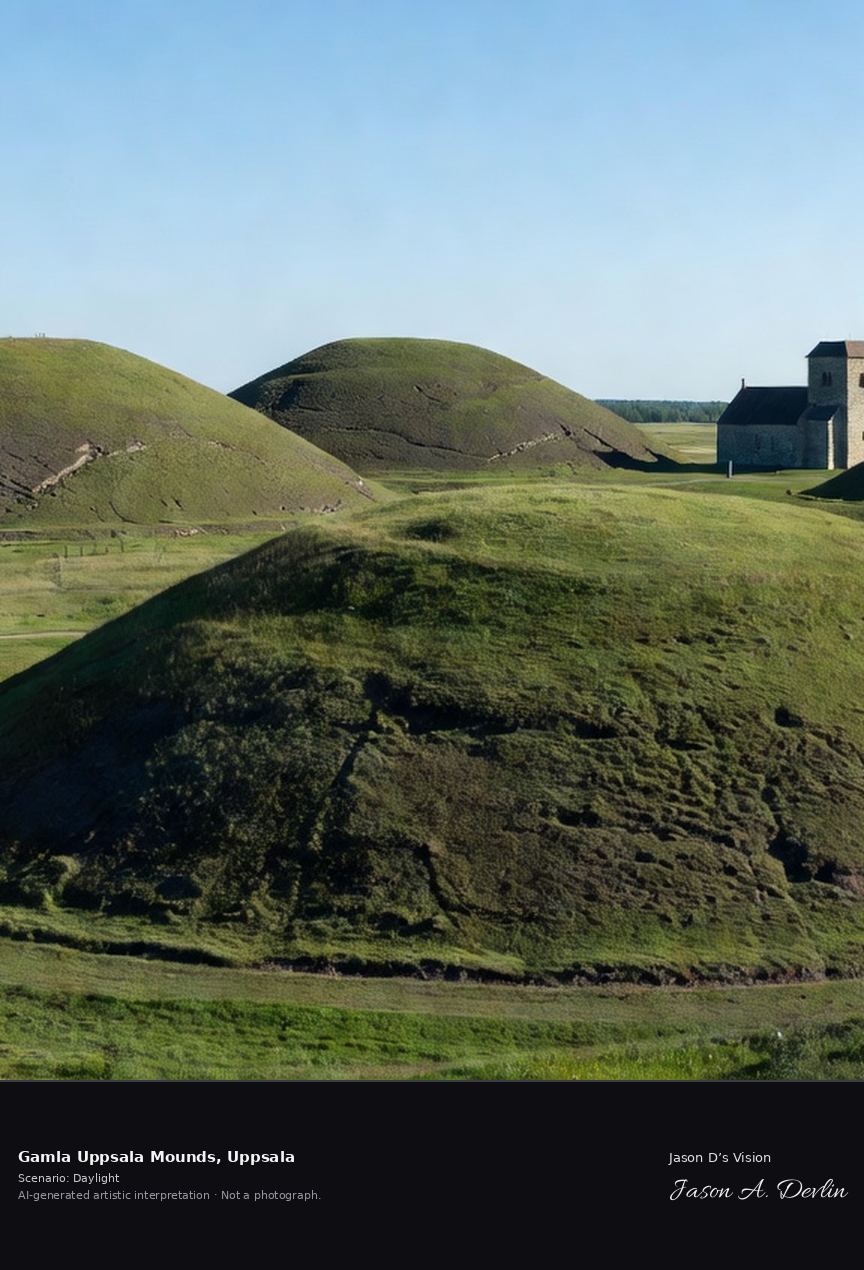
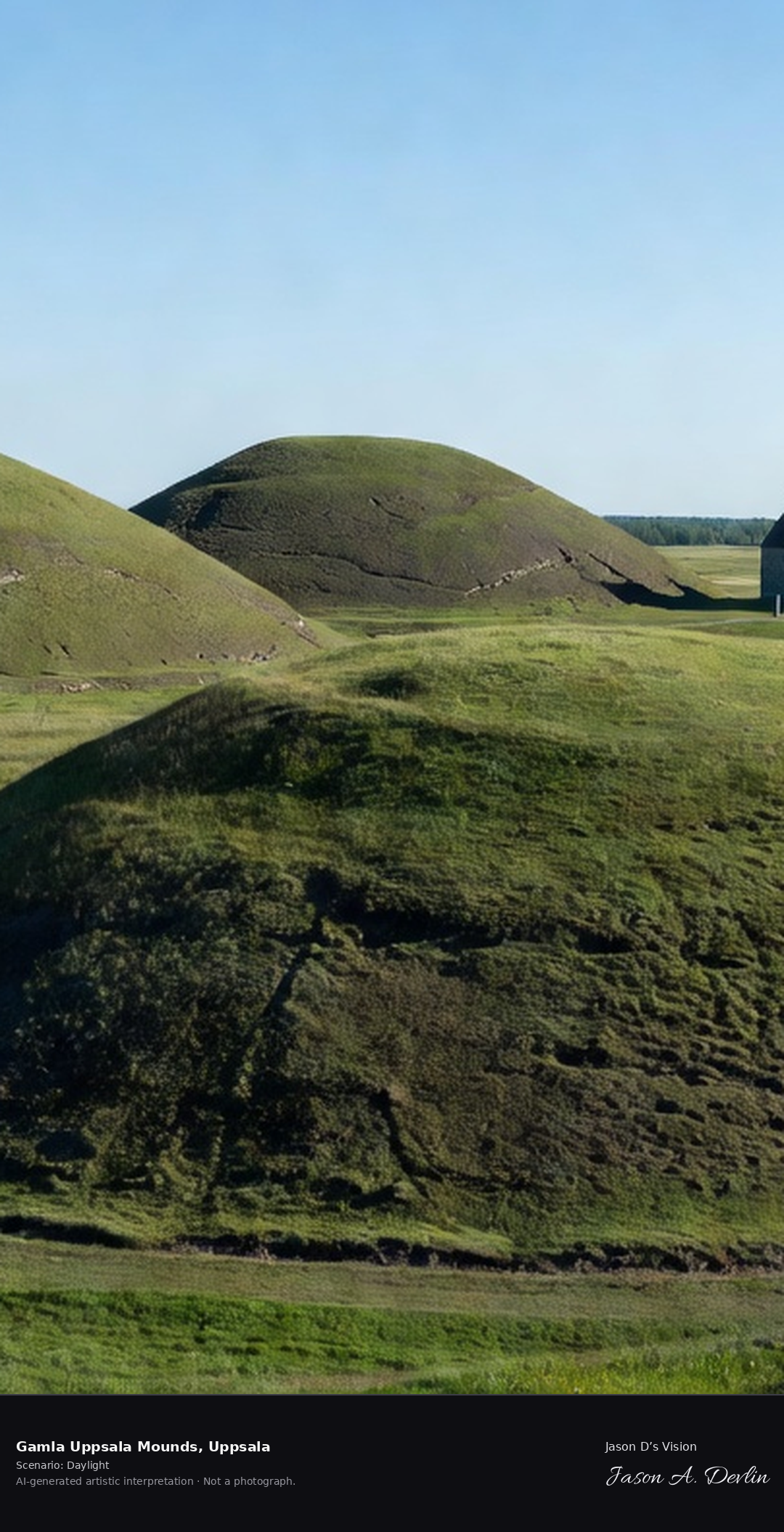
The three great Royal Mounds of Gamla Uppsala rising from the flat Uppland plain, ancient burial mounds of 6th-century kings with the old church beside them. Sweden's most legendary pagan and early Christian site.
The three great Royal Mounds of Gamla Uppsala rise from the flat Uppland plain, the 6th-century burial mounds of kings, with the old stone church beside them. Sweden's most legendary pagan and early Christian site, rendered in bright natural daylight.
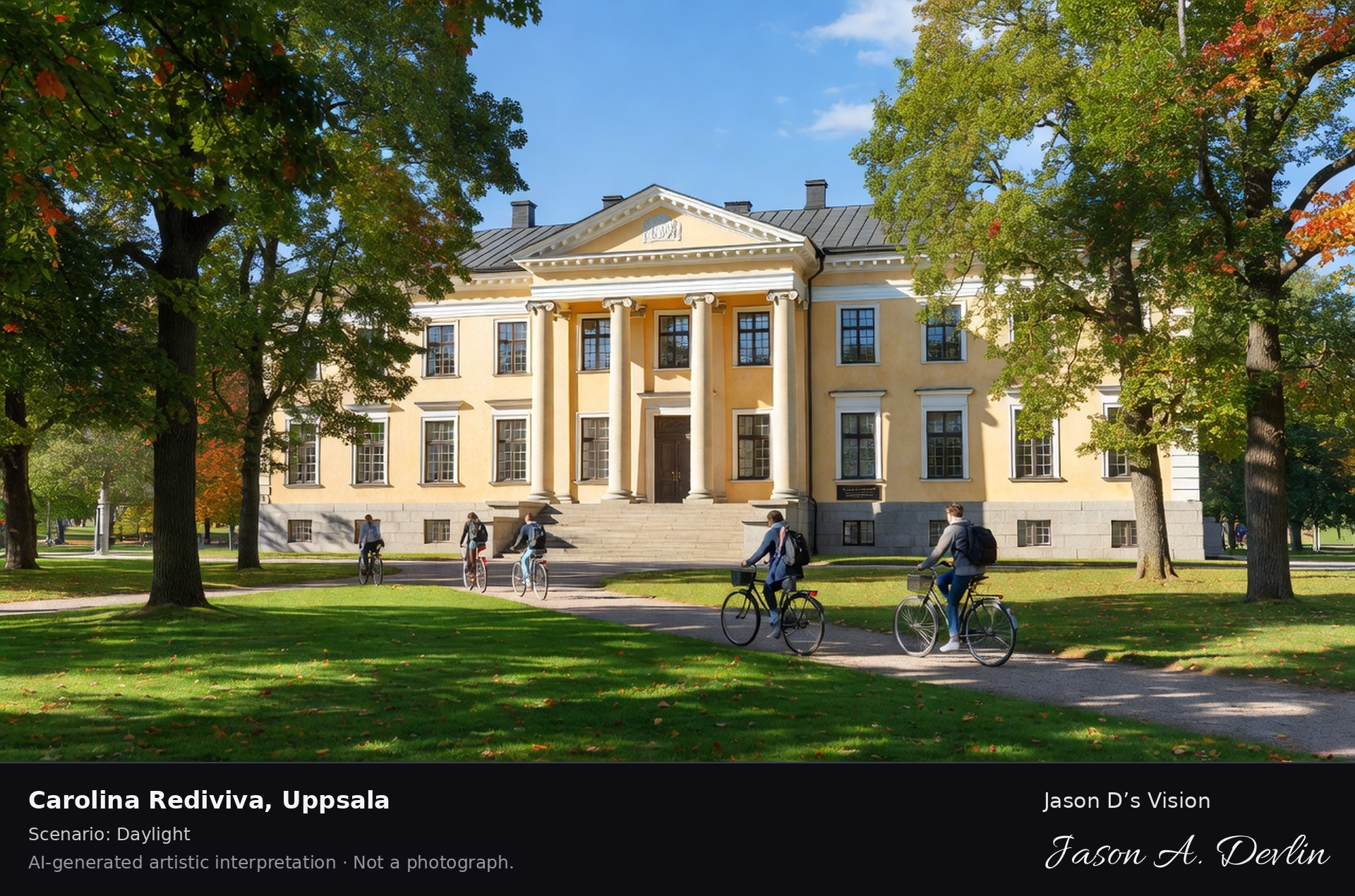
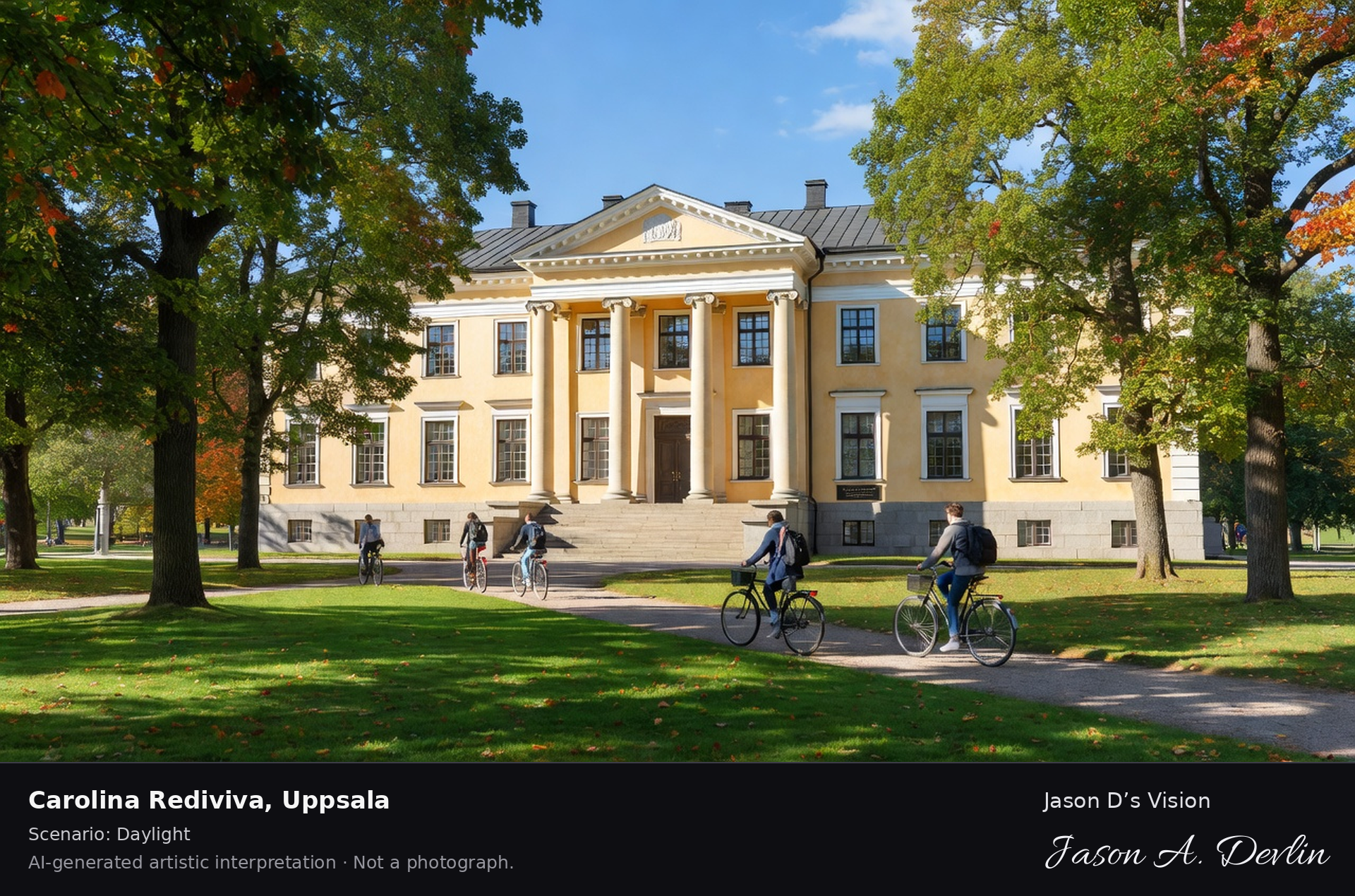
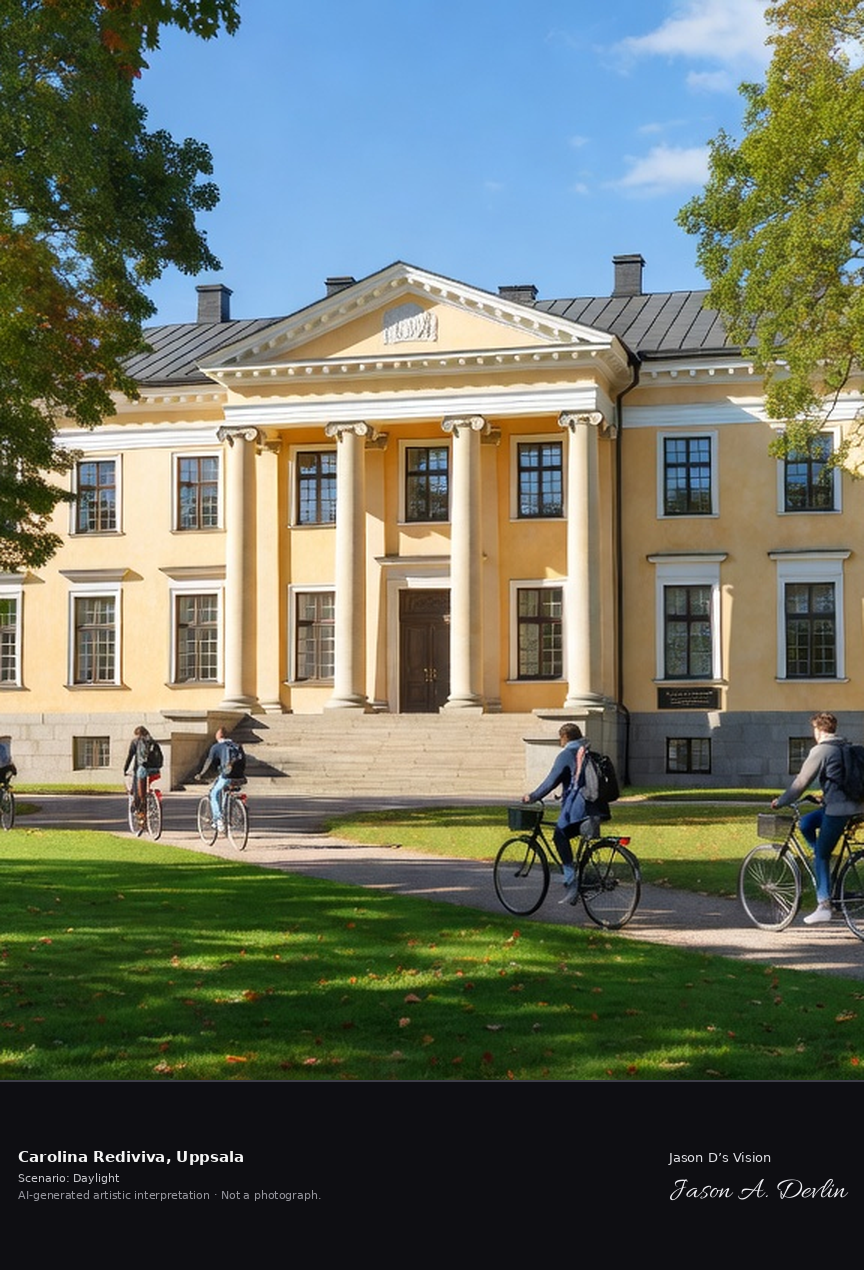
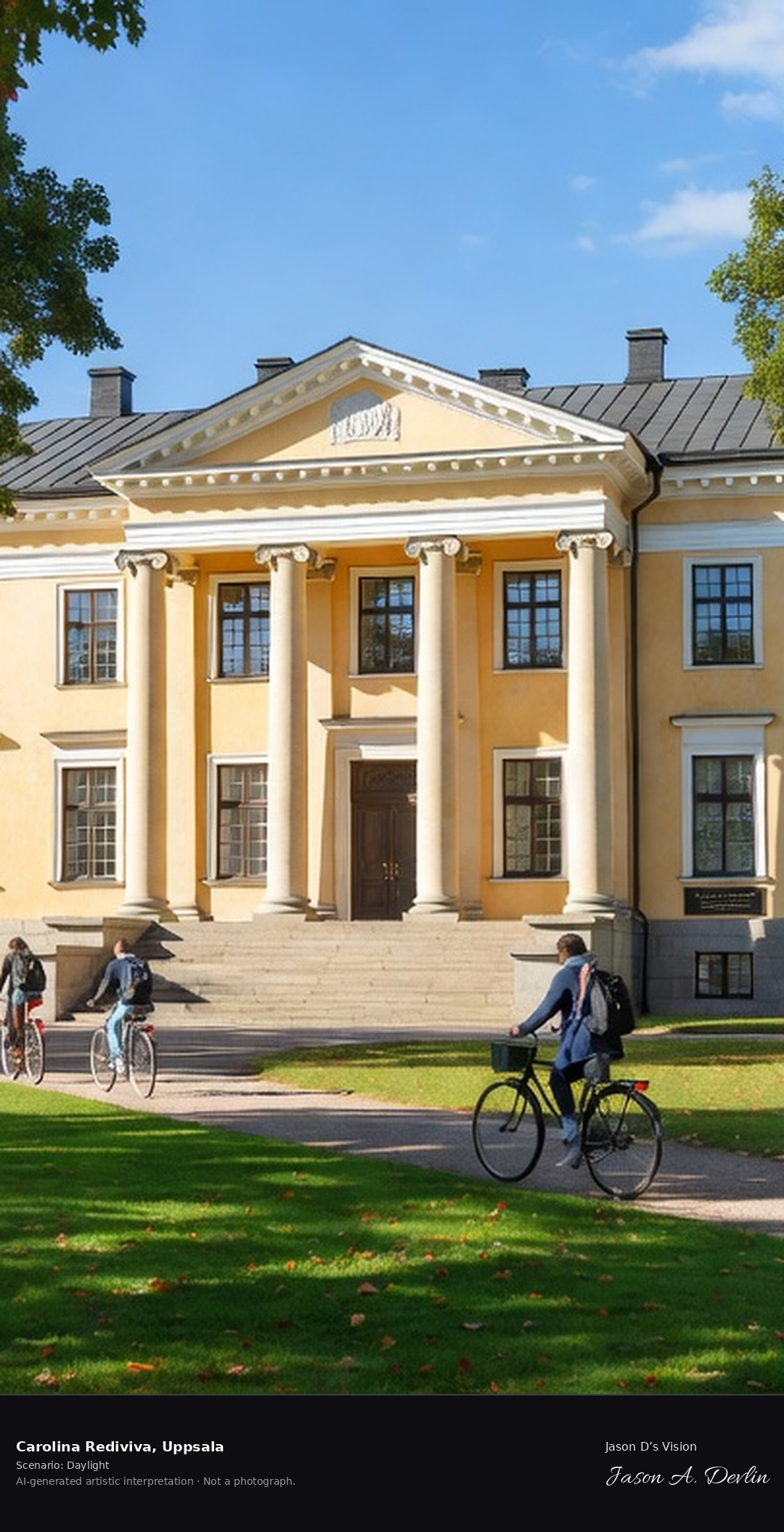
Carolina Rediviva's neoclassical facade, Sweden's oldest university library, viewed across the park with students cycling past. Home to the Silver Bible, the 6th-century Gothic manuscript.
Carolina Rediviva, Sweden's oldest university library, presents its grand neoclassical facade across the park in Uppsala, students cycling past in the foreground. Home to the Silver Bible, the 6th-century Gothic manuscript, rendered in bright natural daylight.
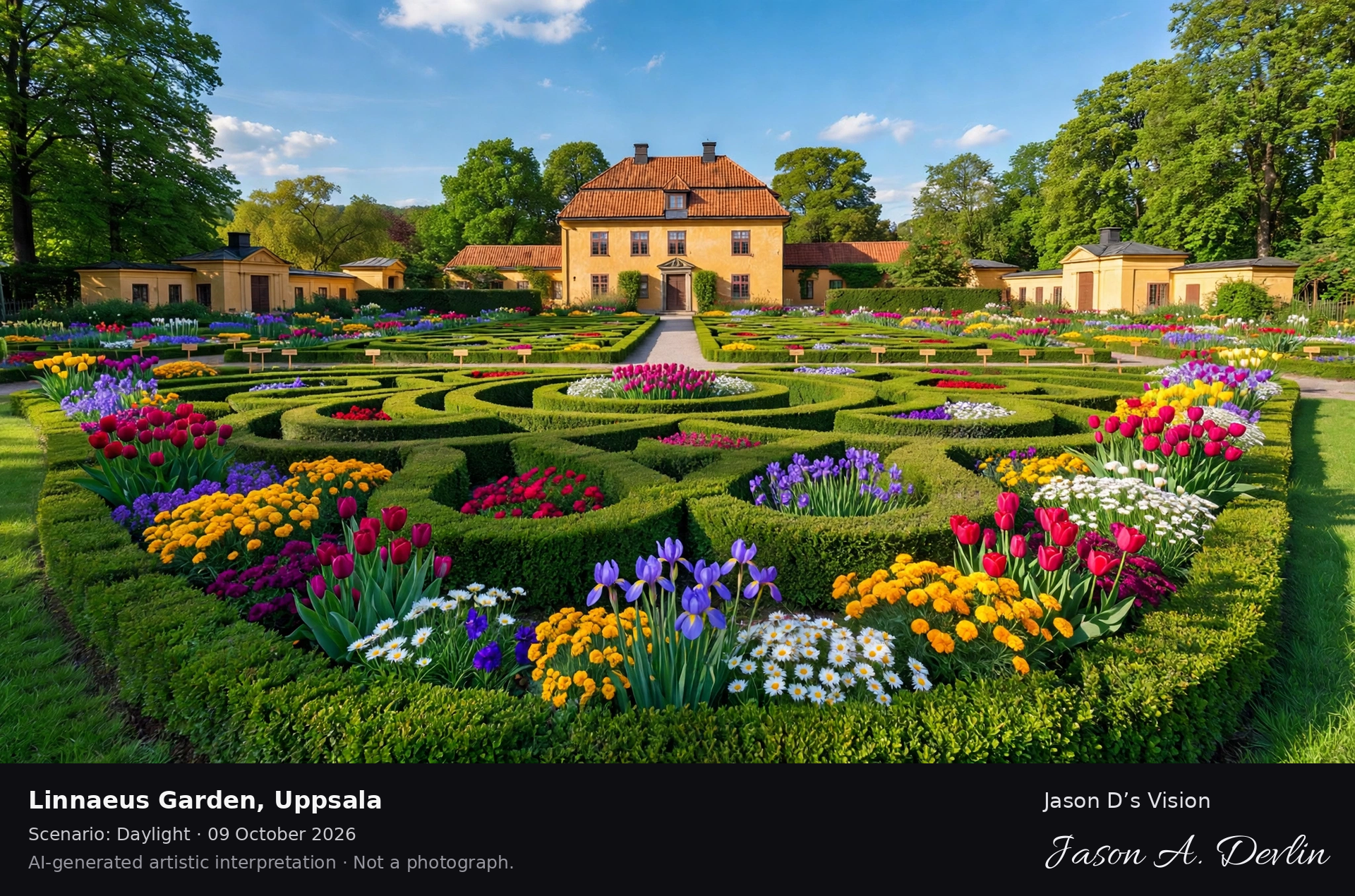
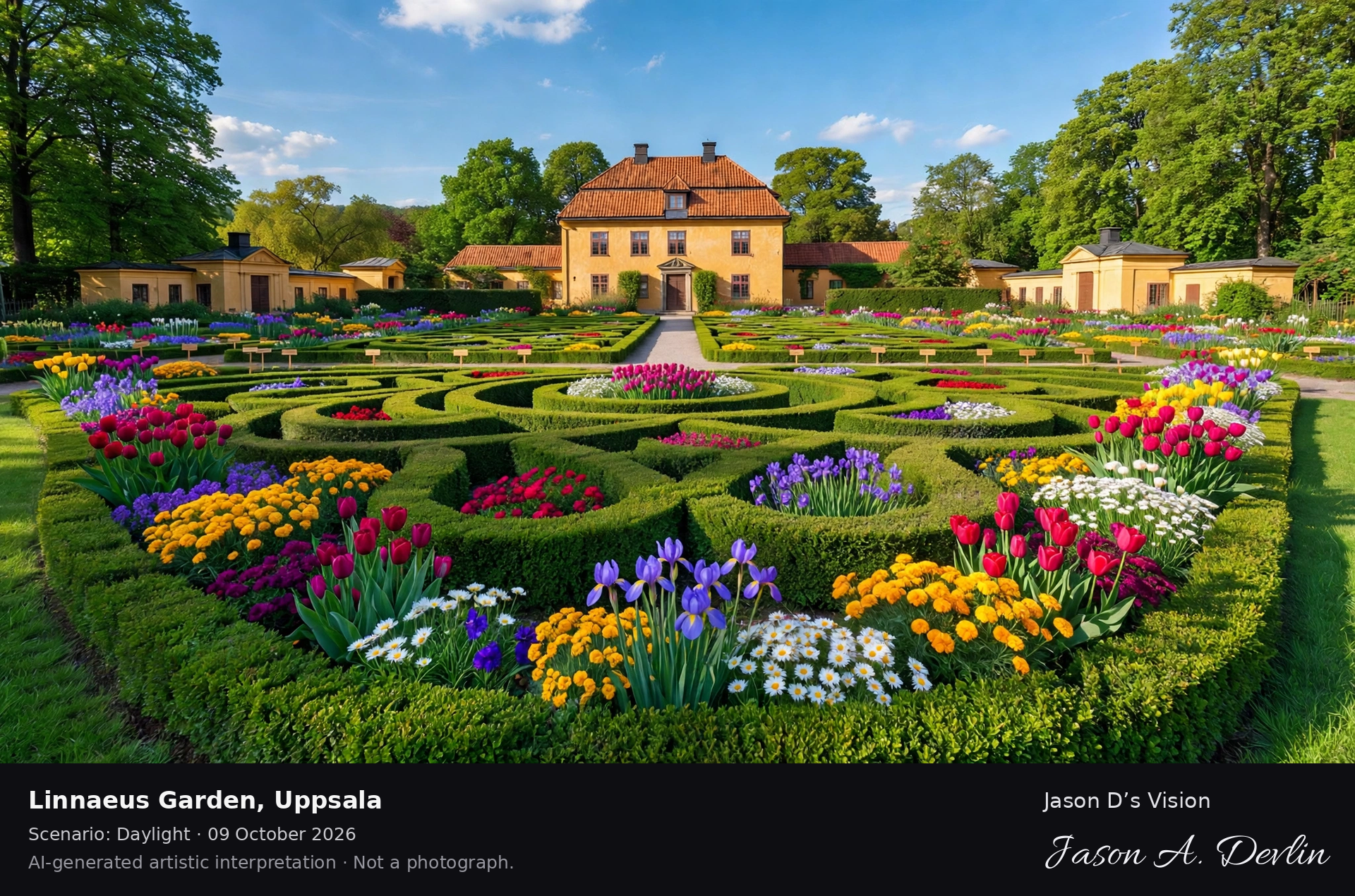
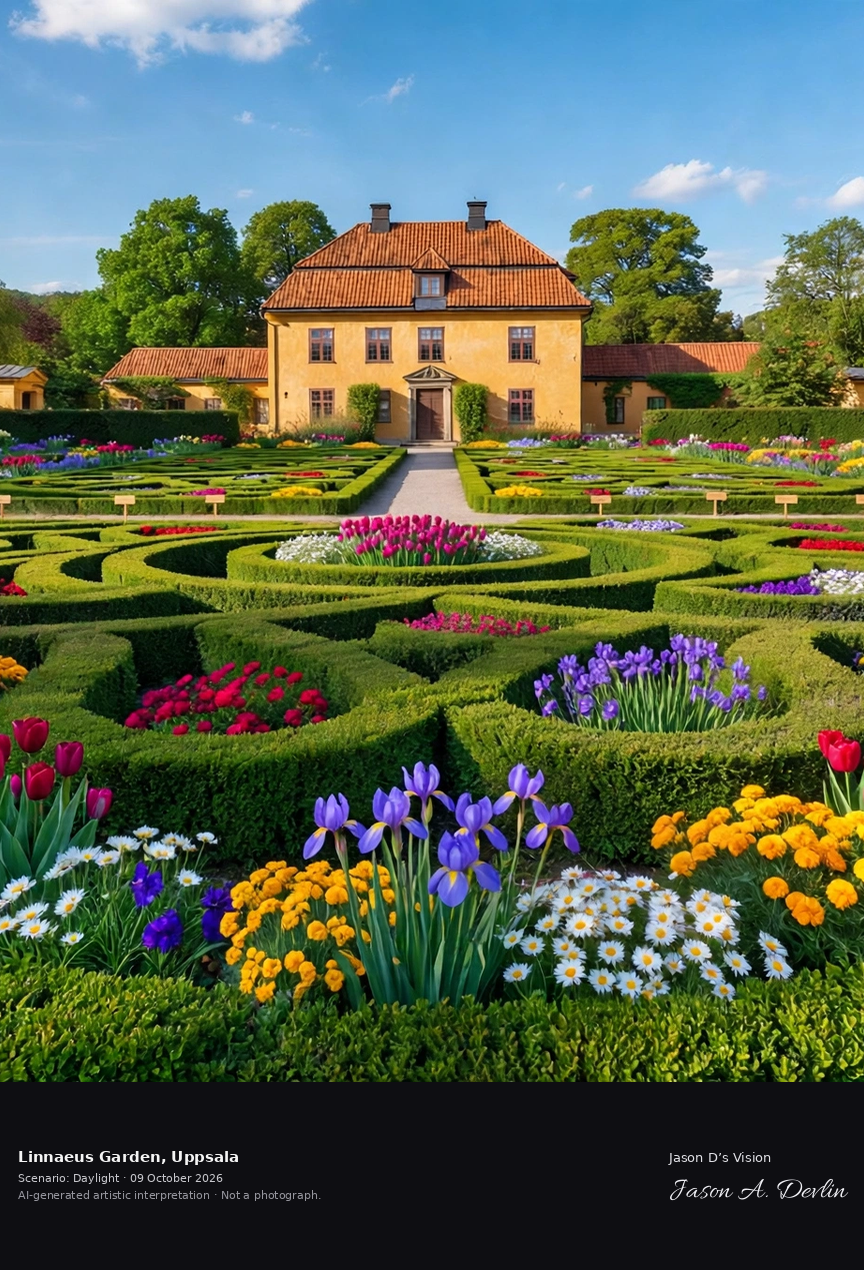
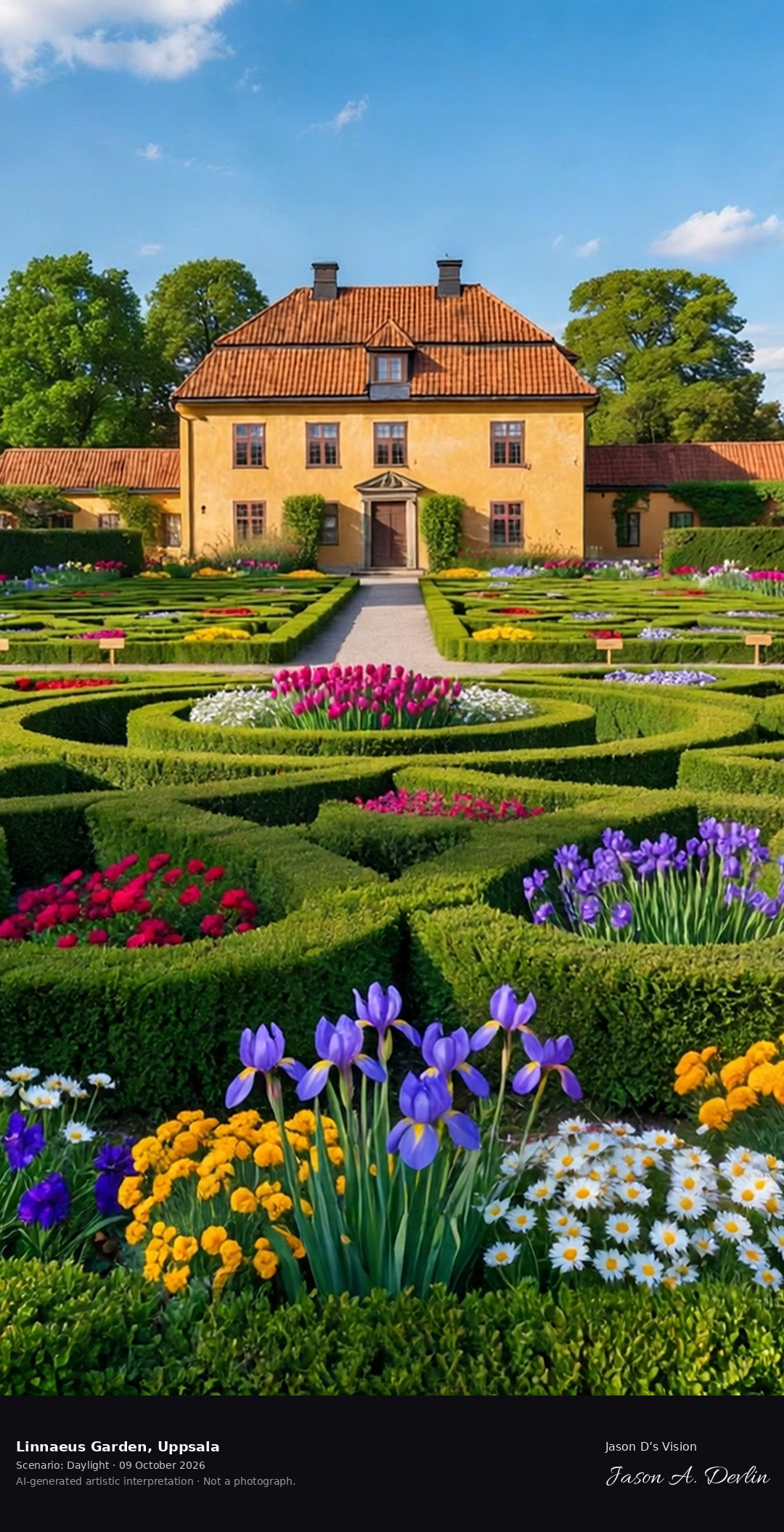
The Linnaeus Garden's baroque parterre with the professor's house behind, the world's oldest botanical garden still in its original 18th-century layout. Carl Linnaeus's living classroom in summer bloom.
Linnaeus Garden in Uppsala, the world's oldest botanical garden still in its original 18th-century layout, unfolds its baroque parterre in summer bloom. The red timber professor's house stands behind the geometric box-hedge beds, Carl Linnaeus's living classroom in bright natural daylight.
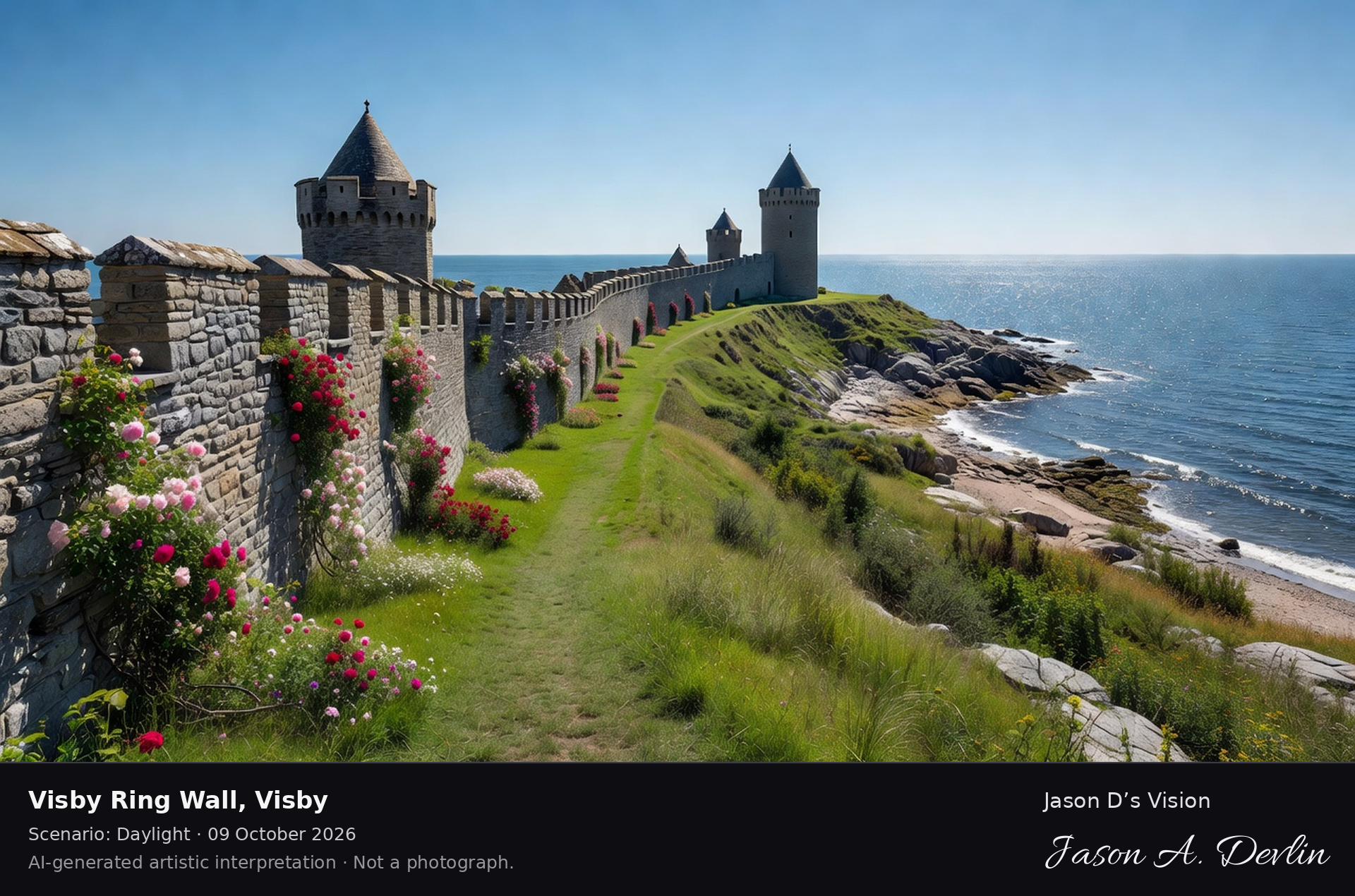
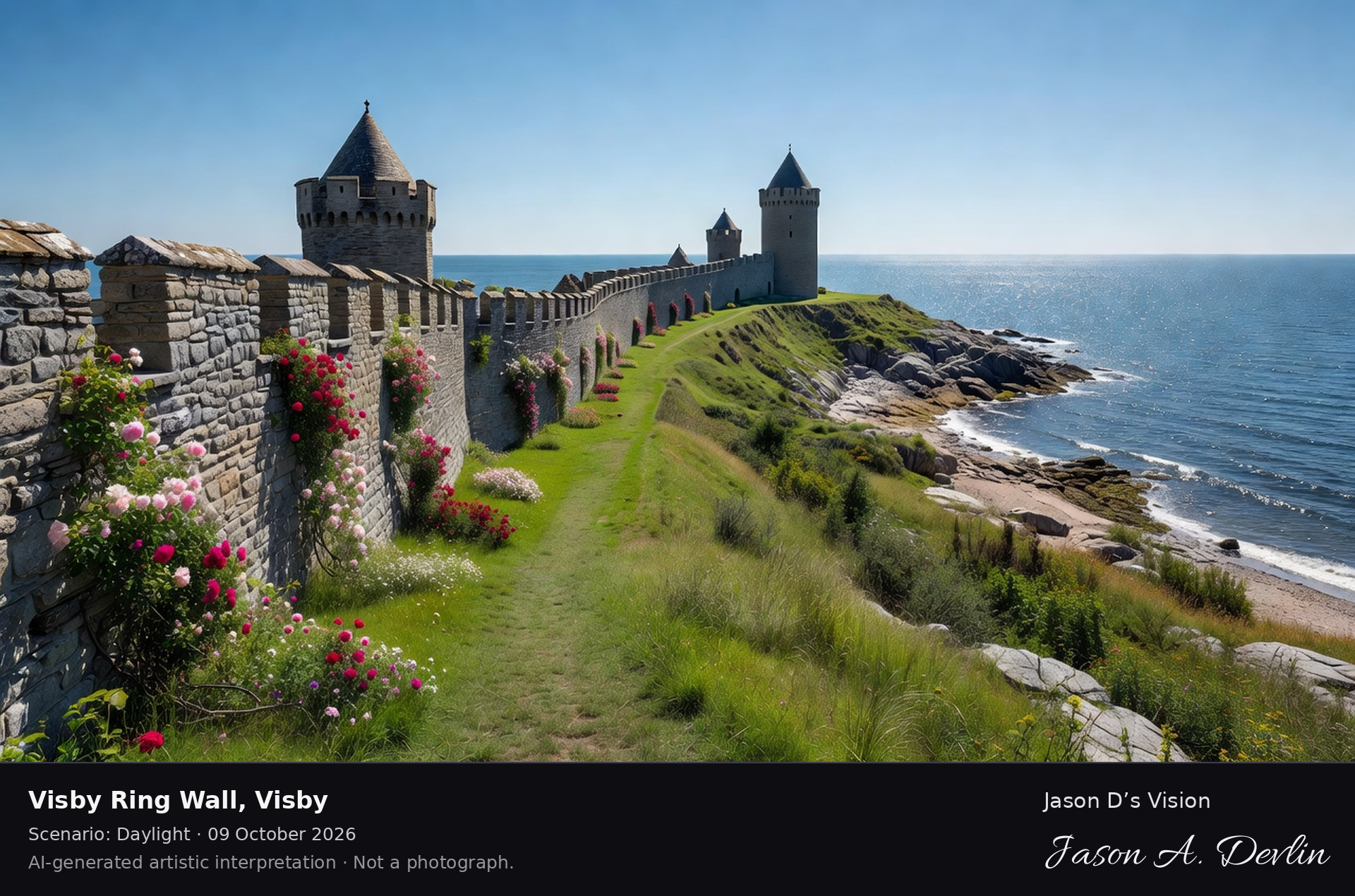
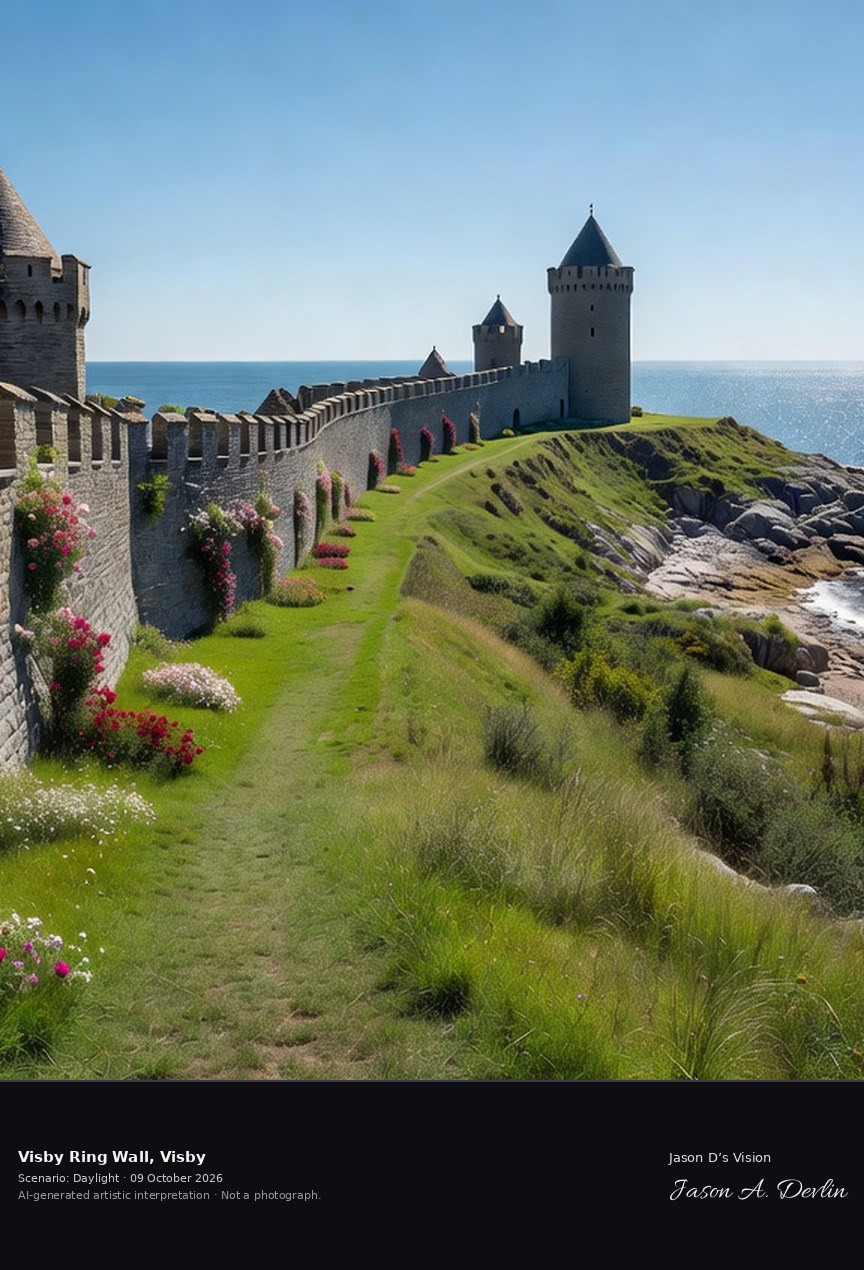
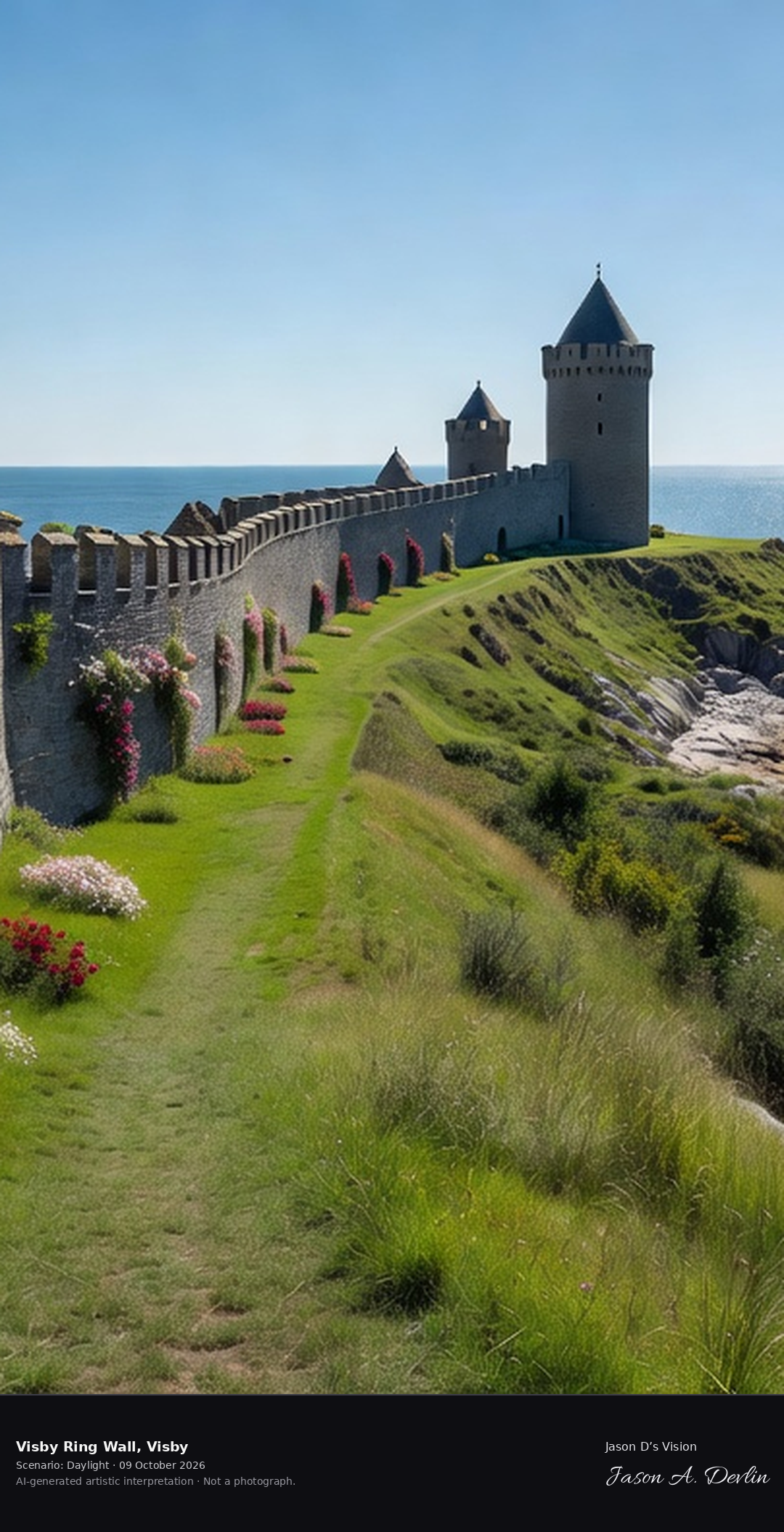
Visby's medieval ring wall stretching along the coast, its towers and crenellations silhouetted against the Baltic with roses climbing the limestone. The best-preserved medieval city wall in Scandinavia, 3.4 kilometers long.
Visby's medieval ring wall, the best-preserved medieval city wall in Scandinavia at 3.4 kilometers long, stretches along the coast of the Baltic. Towers and crenellations stand silhouetted against the sea with roses climbing the limestone, in bright natural daylight.
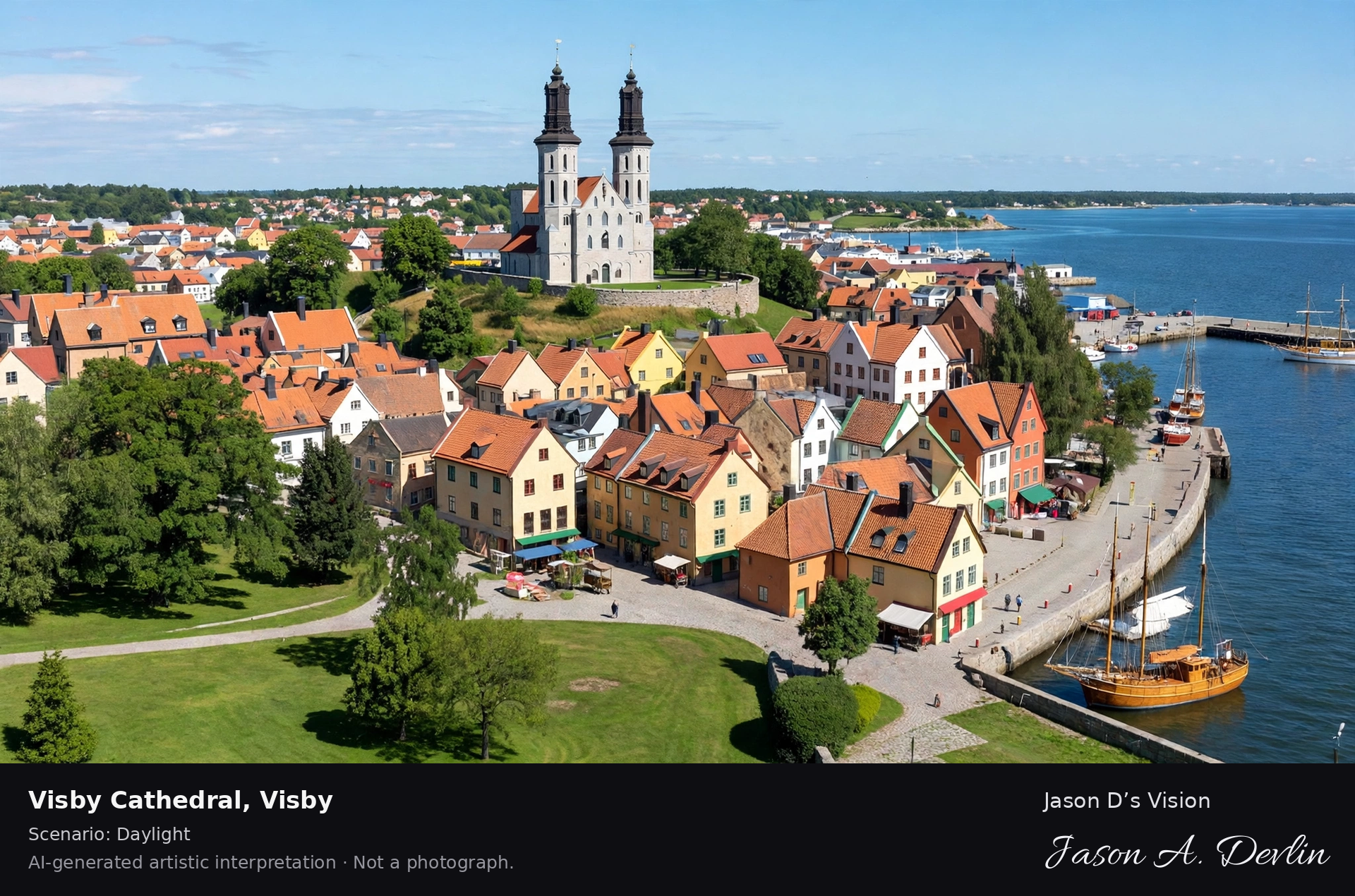
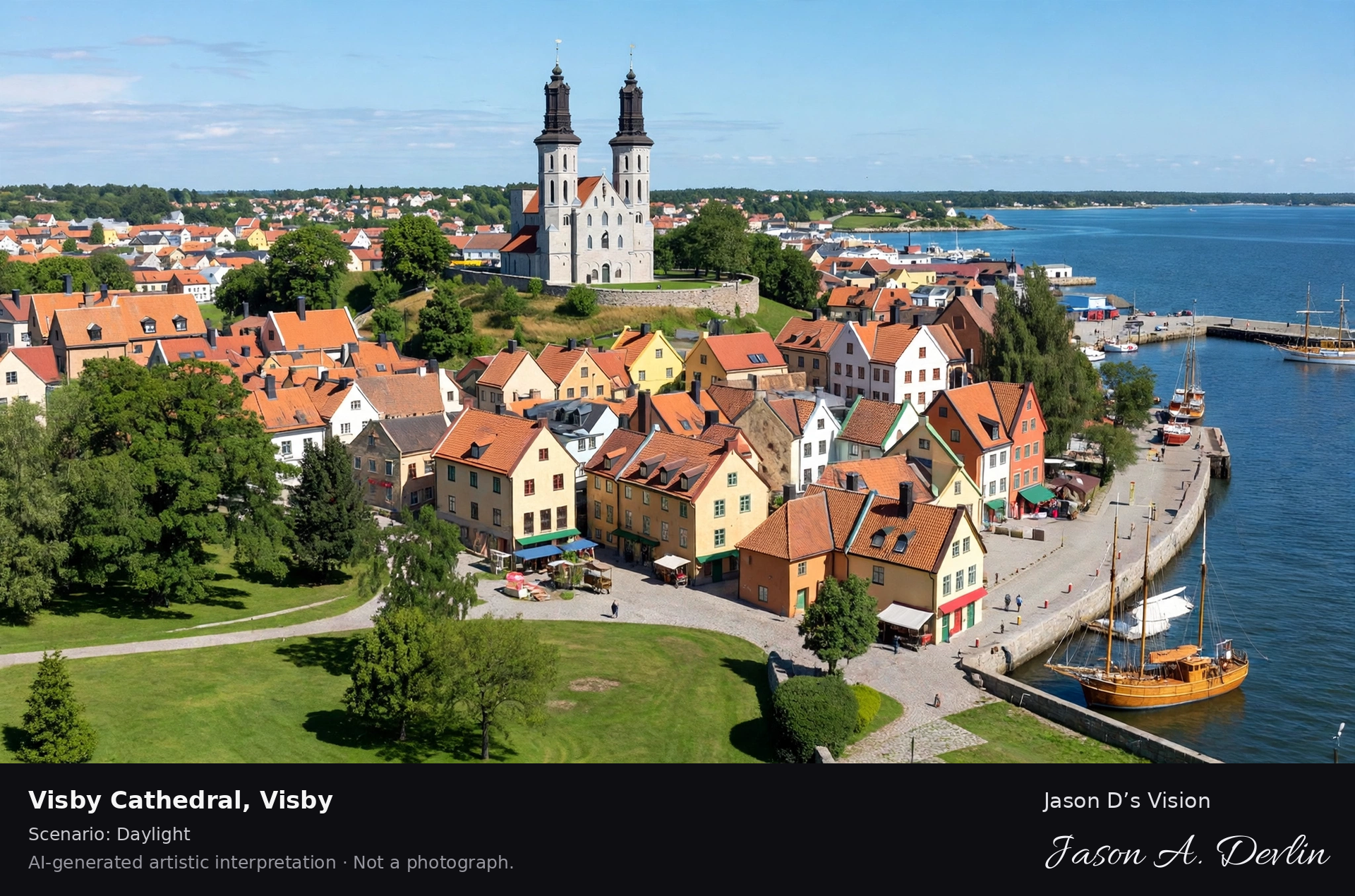
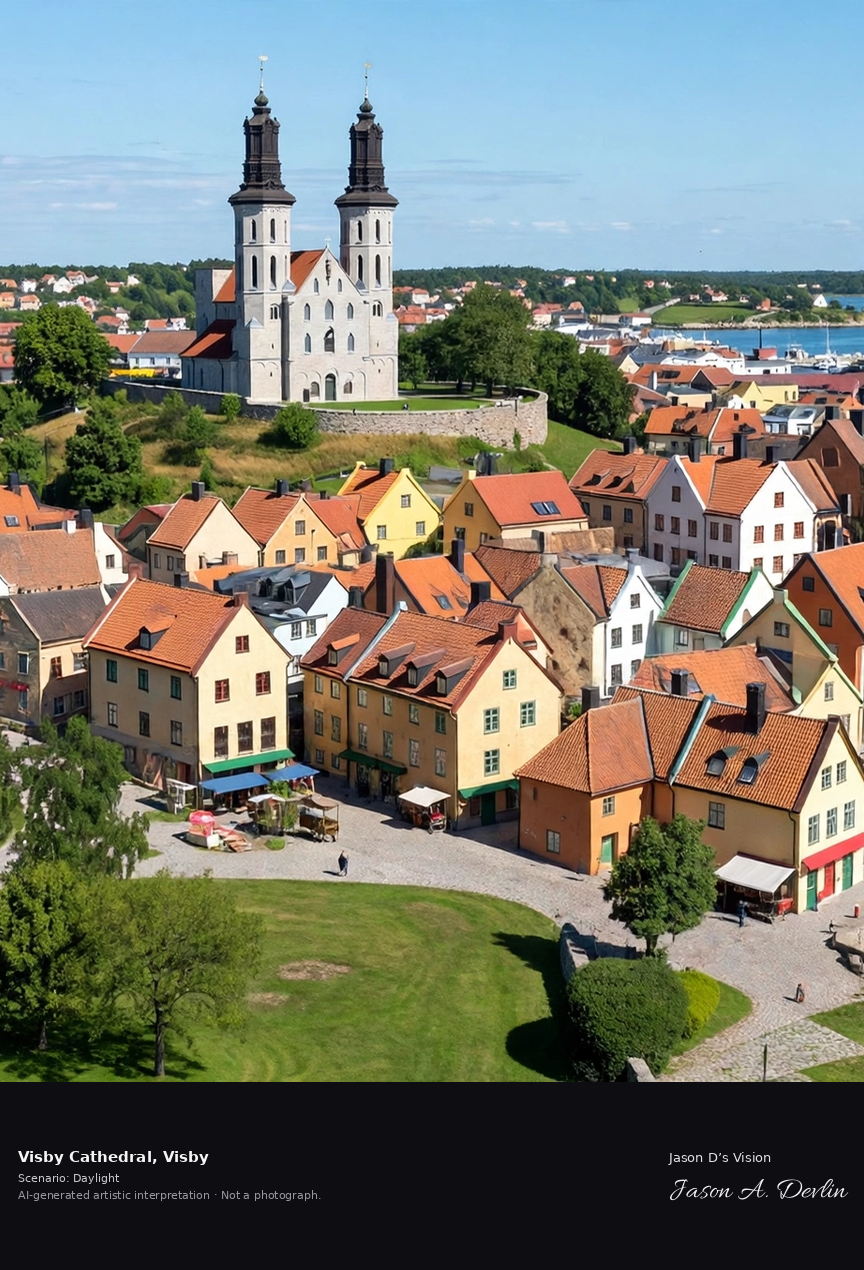
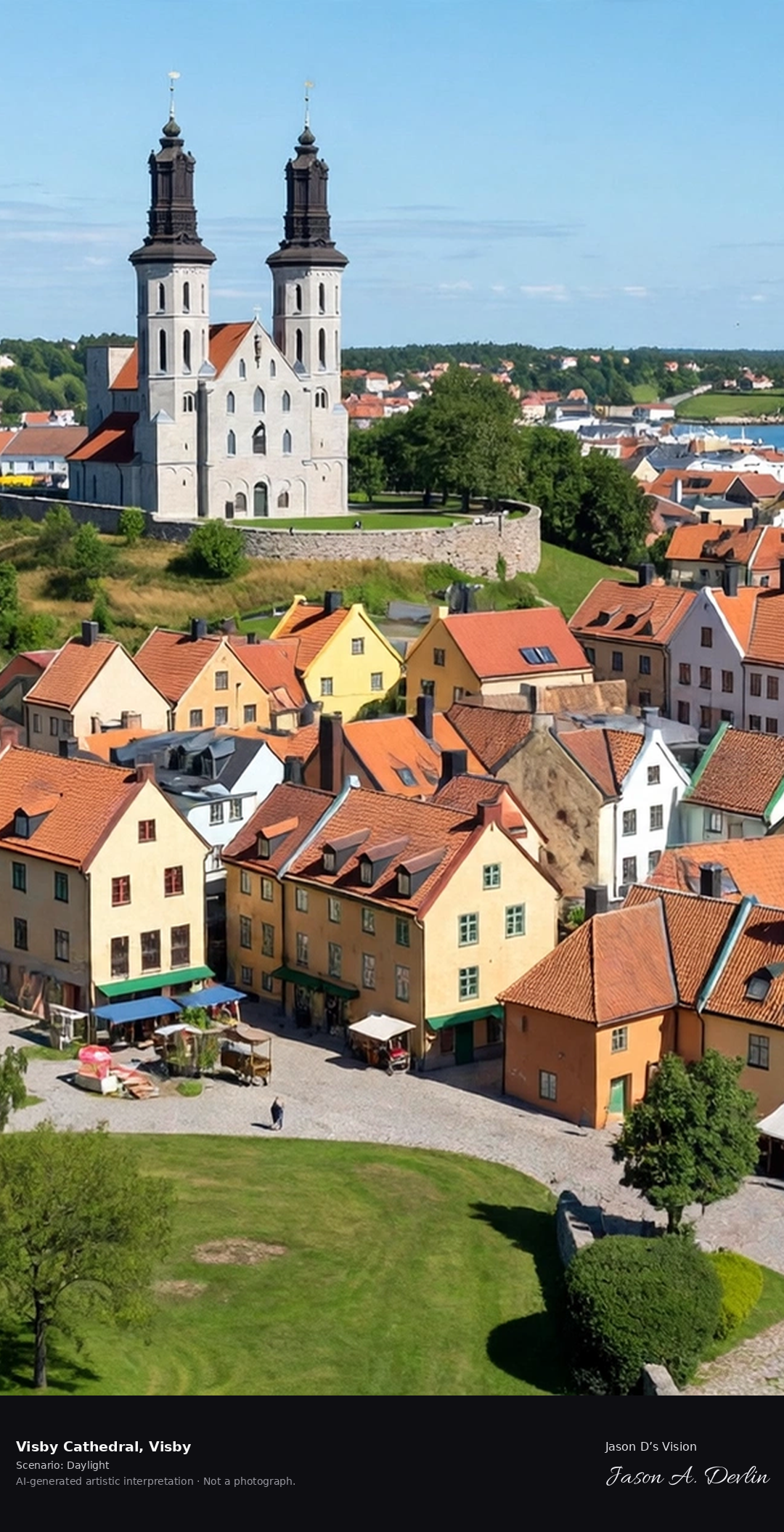
St. Mary's Cathedral (Visby domkyrka) rising above the medieval town's stepped-gable houses, viewed from Almedalen park with the harbor below. The 13th-century Hanseatic merchants' church.
From Almedalen park the view rises to Visby Cathedral above the medieval town’s stepped-gable houses, with the harbor below. The cathedral is the 13th-century Hanseatic merchants’ church, in bright natural daylight.
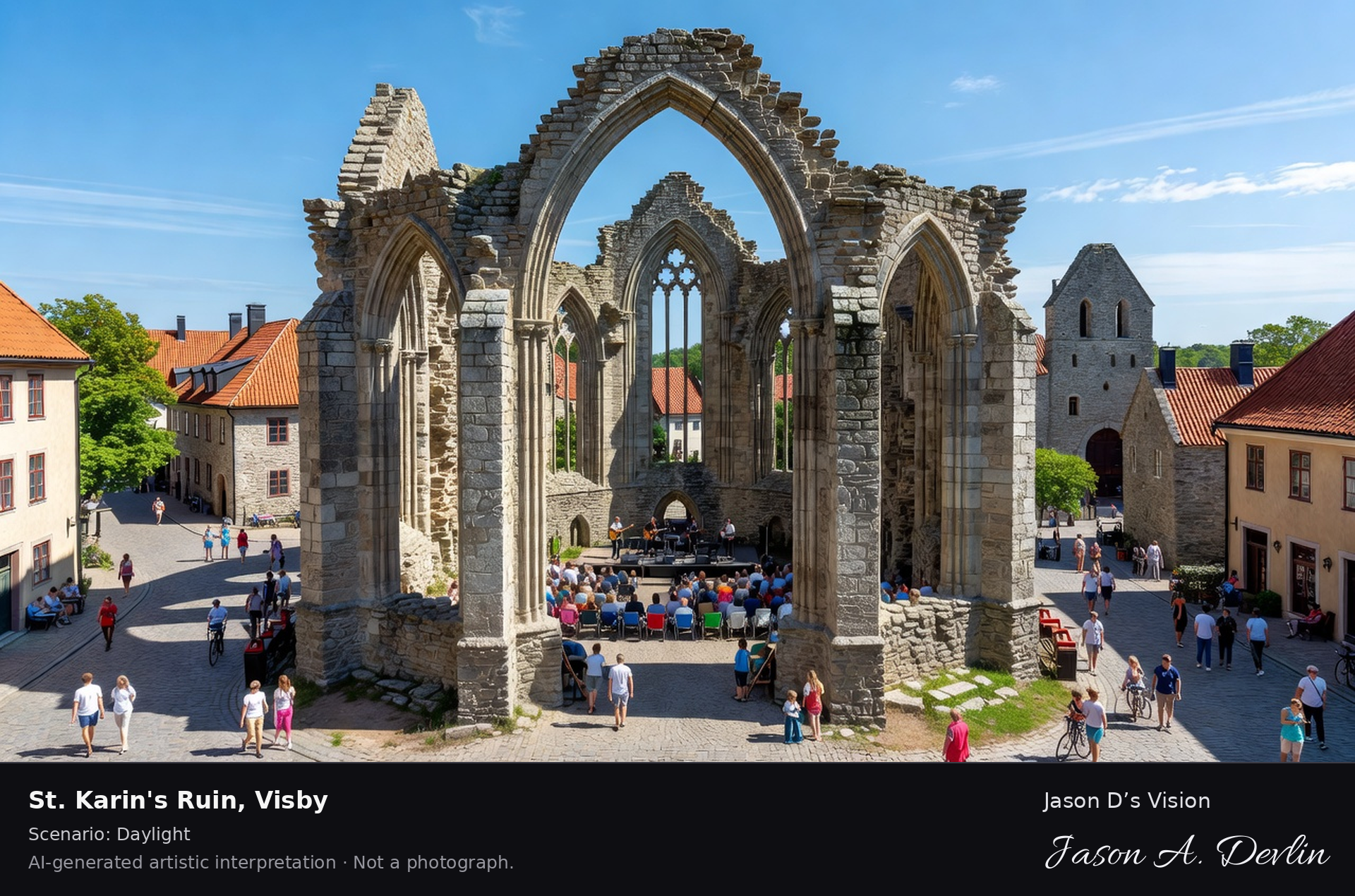
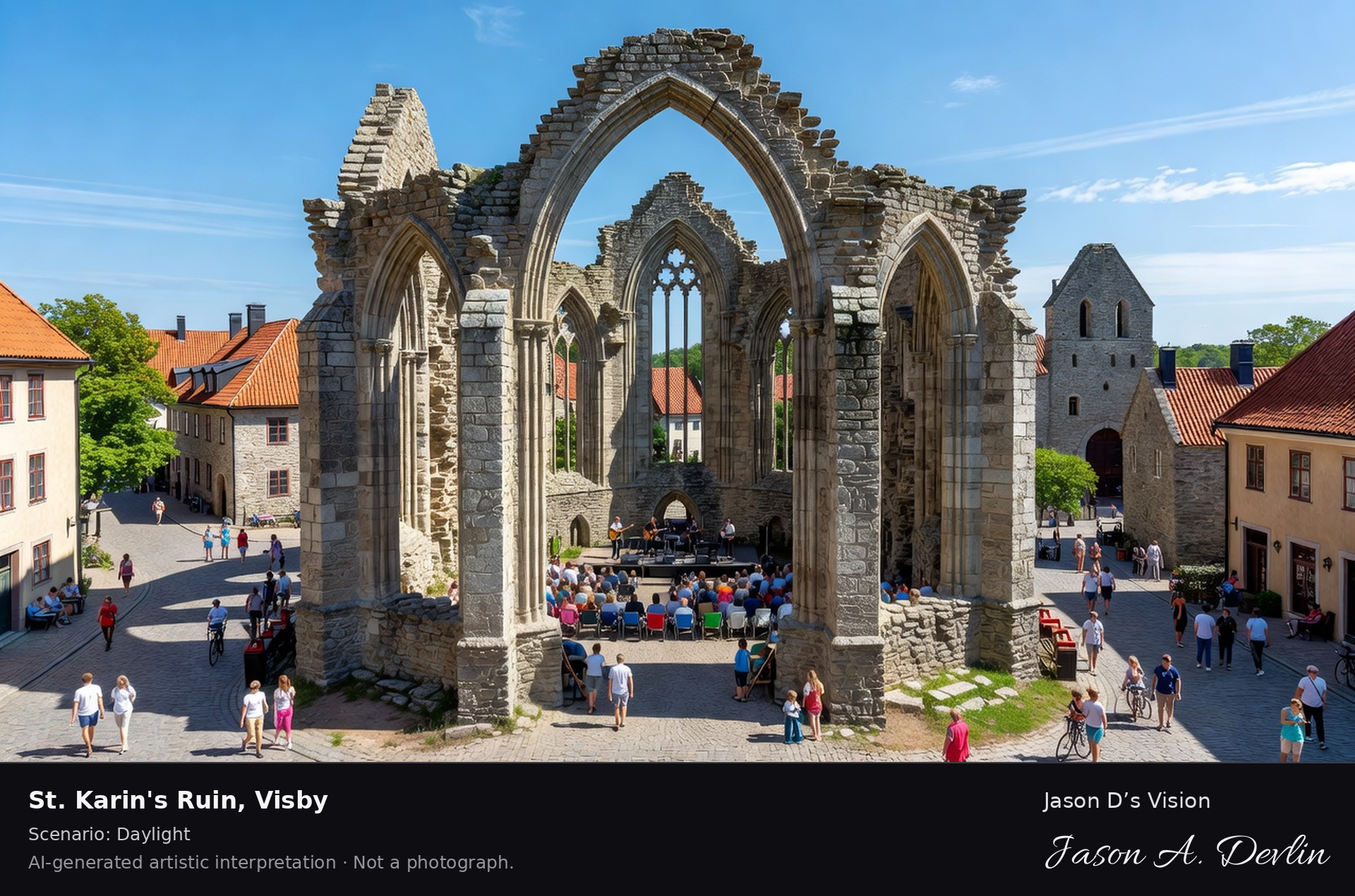
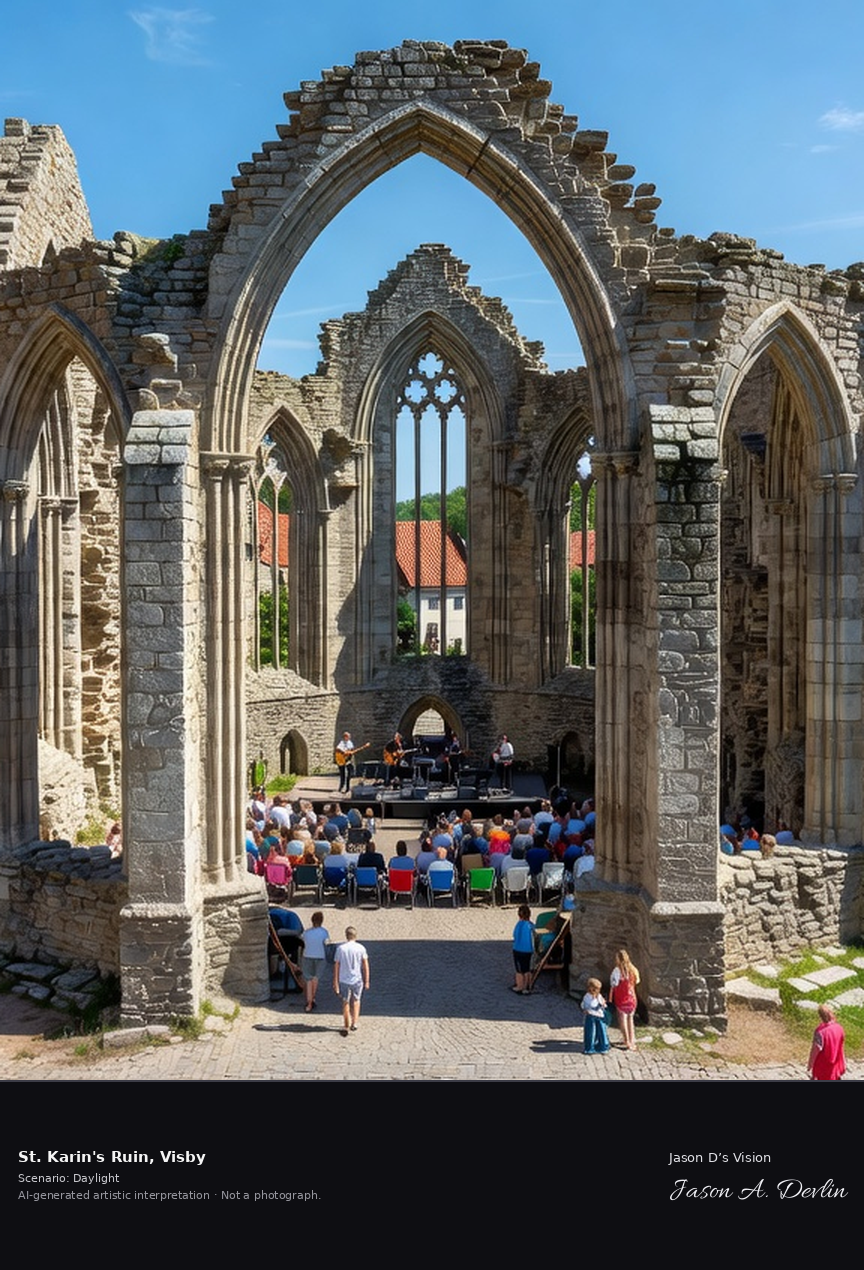
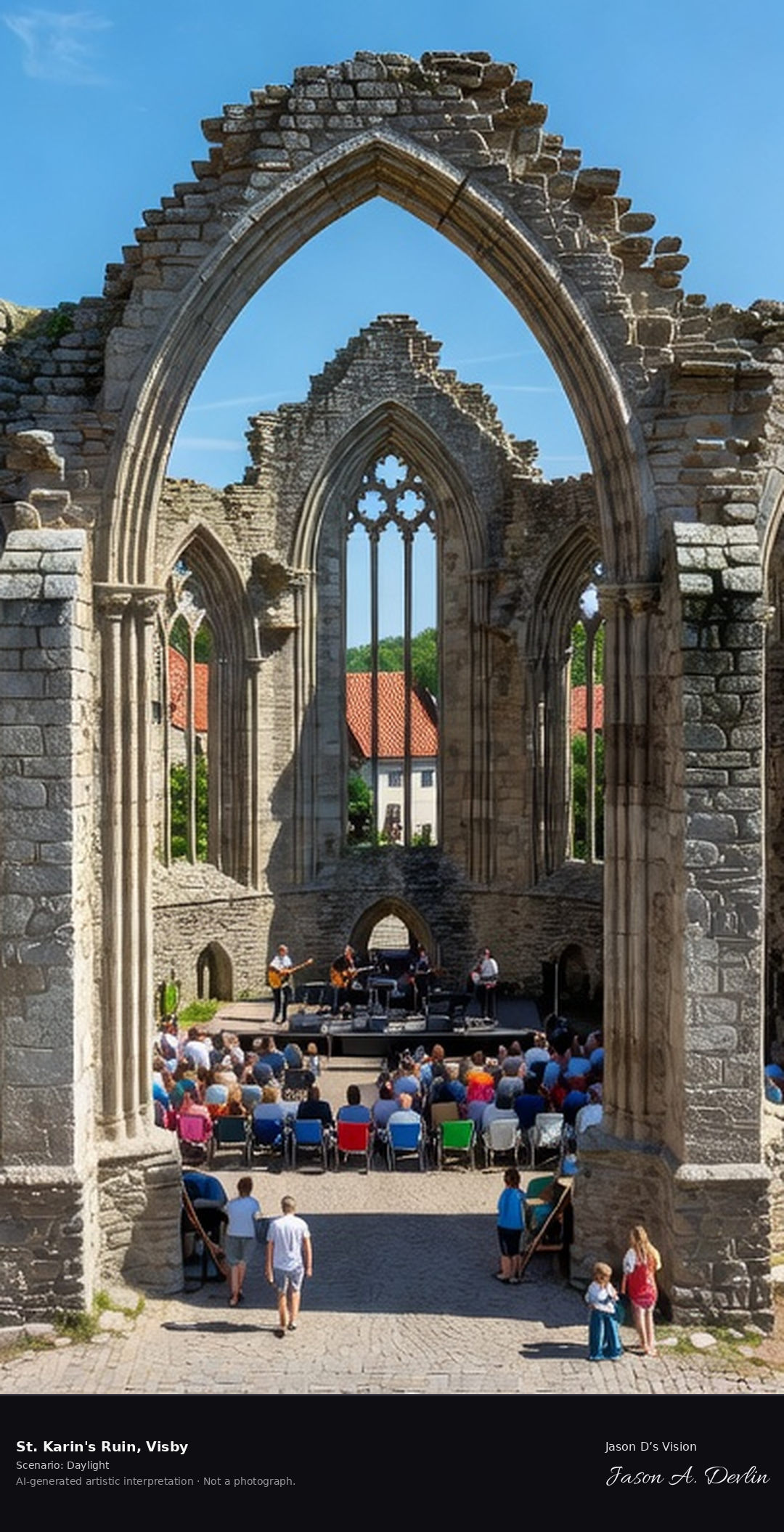
The skeletal Gothic arches of St. Karin's church ruin framing the sky in central Visby, medieval stonework open to the elements with the town life flowing around it. Summer concerts fill the roofless nave.
The skeletal Gothic arches of St. Karin's church ruin frame the open sky in the heart of Visby, the medieval stone walls standing roofless amid the town's cobbled square. A summer concert audience fills the nave where monks once sang, with red-roofed stone houses and bustling streets all around — Visby's Hanseatic past kept alive as a living venue.
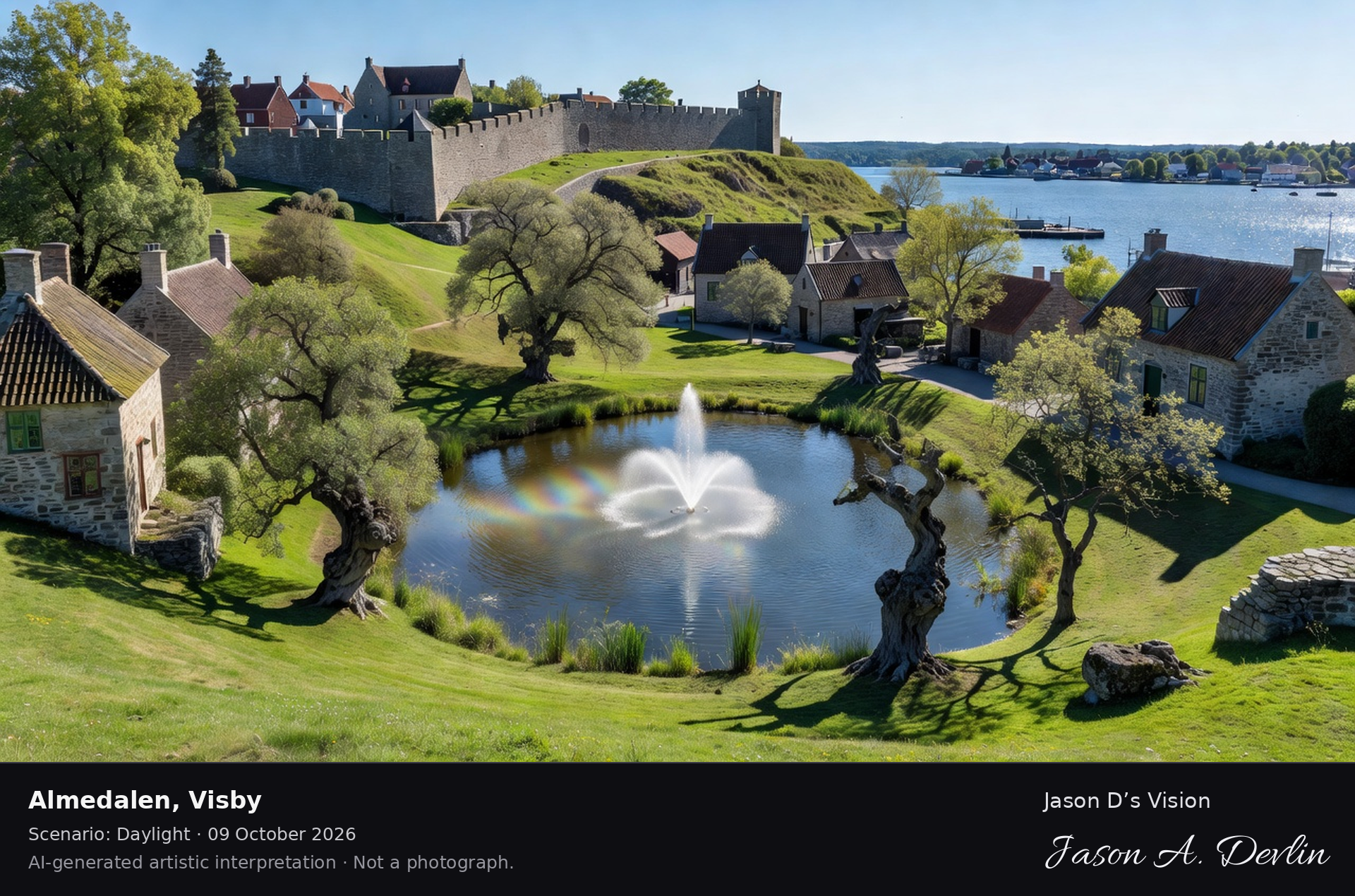
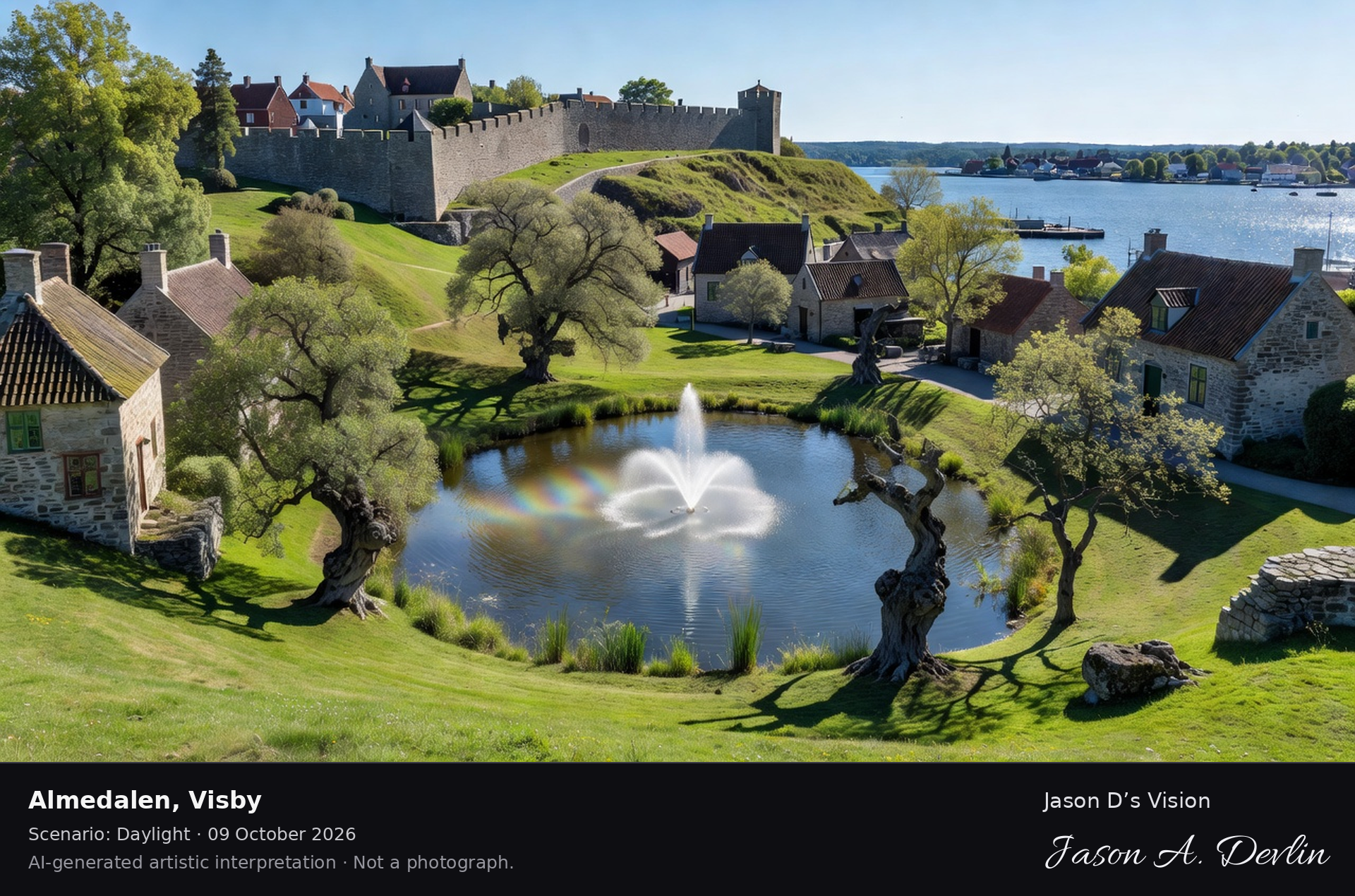
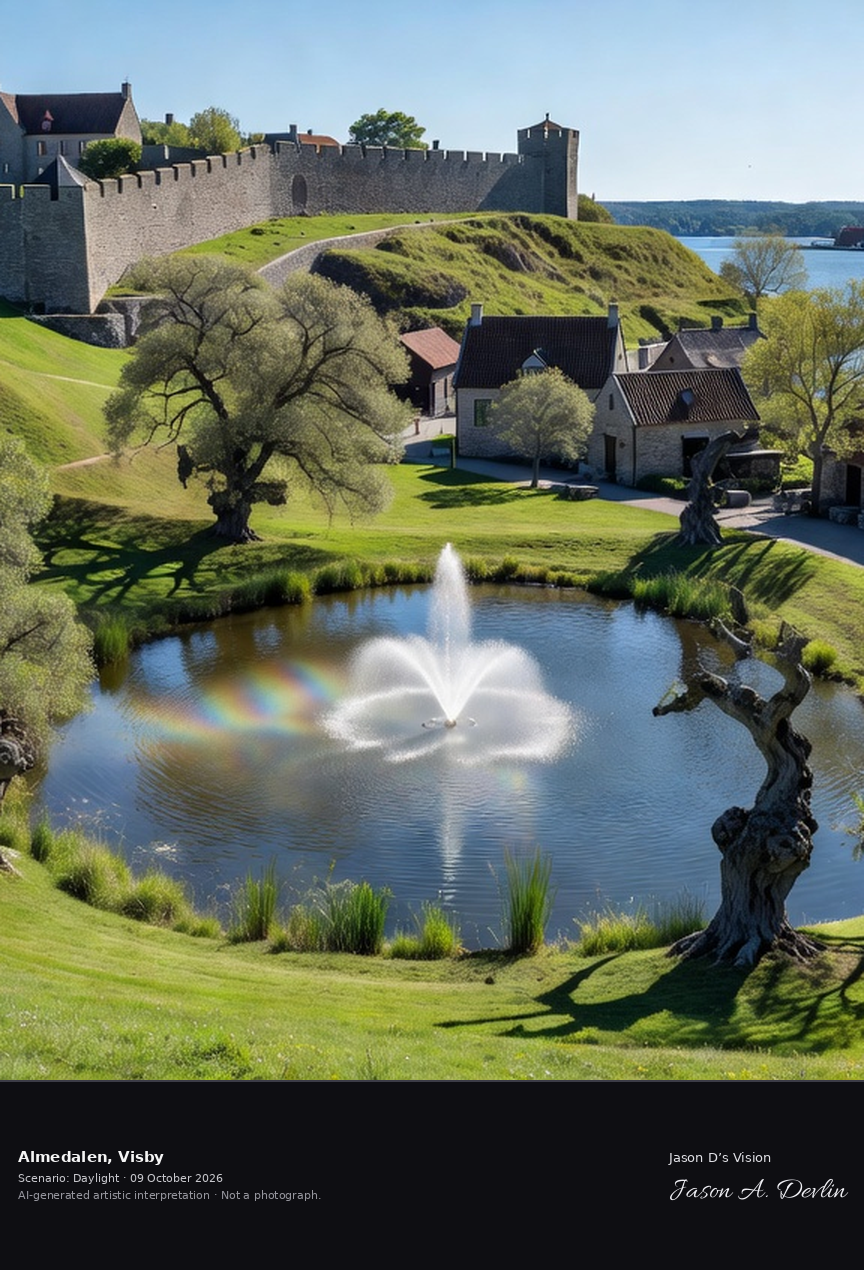
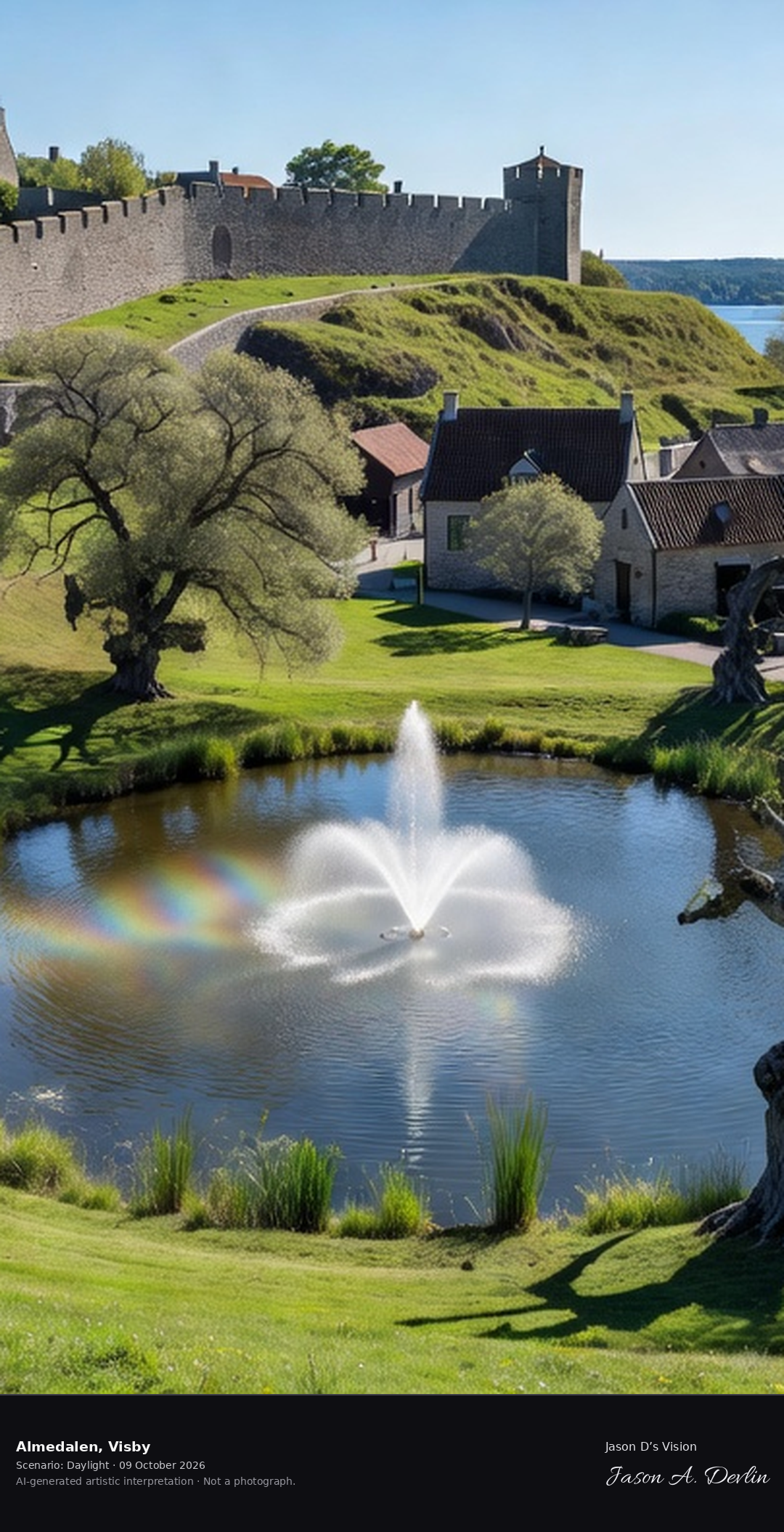
Almedalen park sloping down to Visby harbor, the pond with its fountain surrounded by ancient trees and medieval houses, the ring wall climbing the hill behind. The heart of Sweden's political summer week.
Almedalen park slopes down toward Visby's harbor, the pond and its fountain framed by gnarled ancient trees, with medieval stone houses on either side and the great ring wall climbing the hill behind — the green heart of the old Hanseatic town, famous across Sweden as the home of the political summer week.
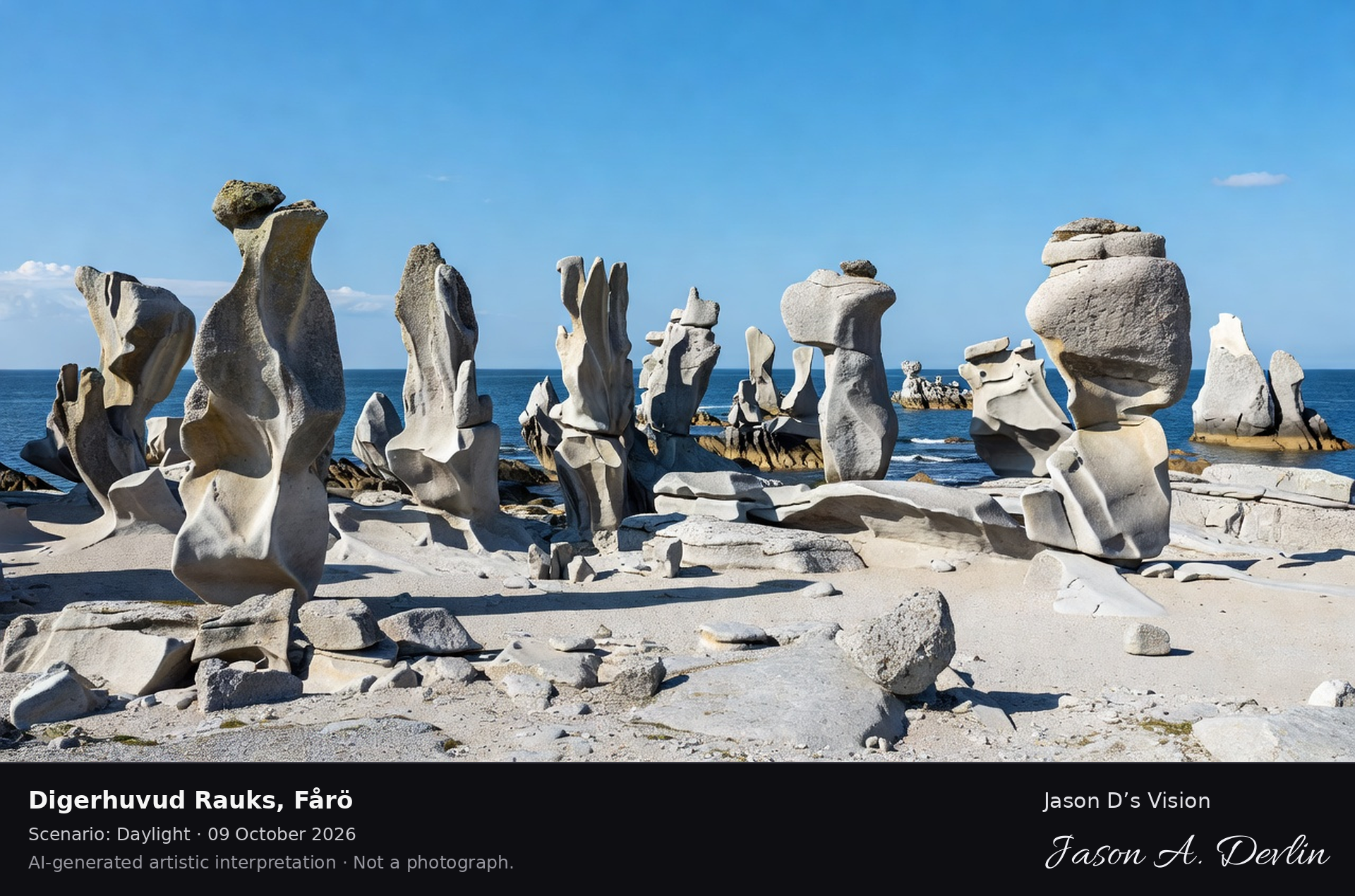
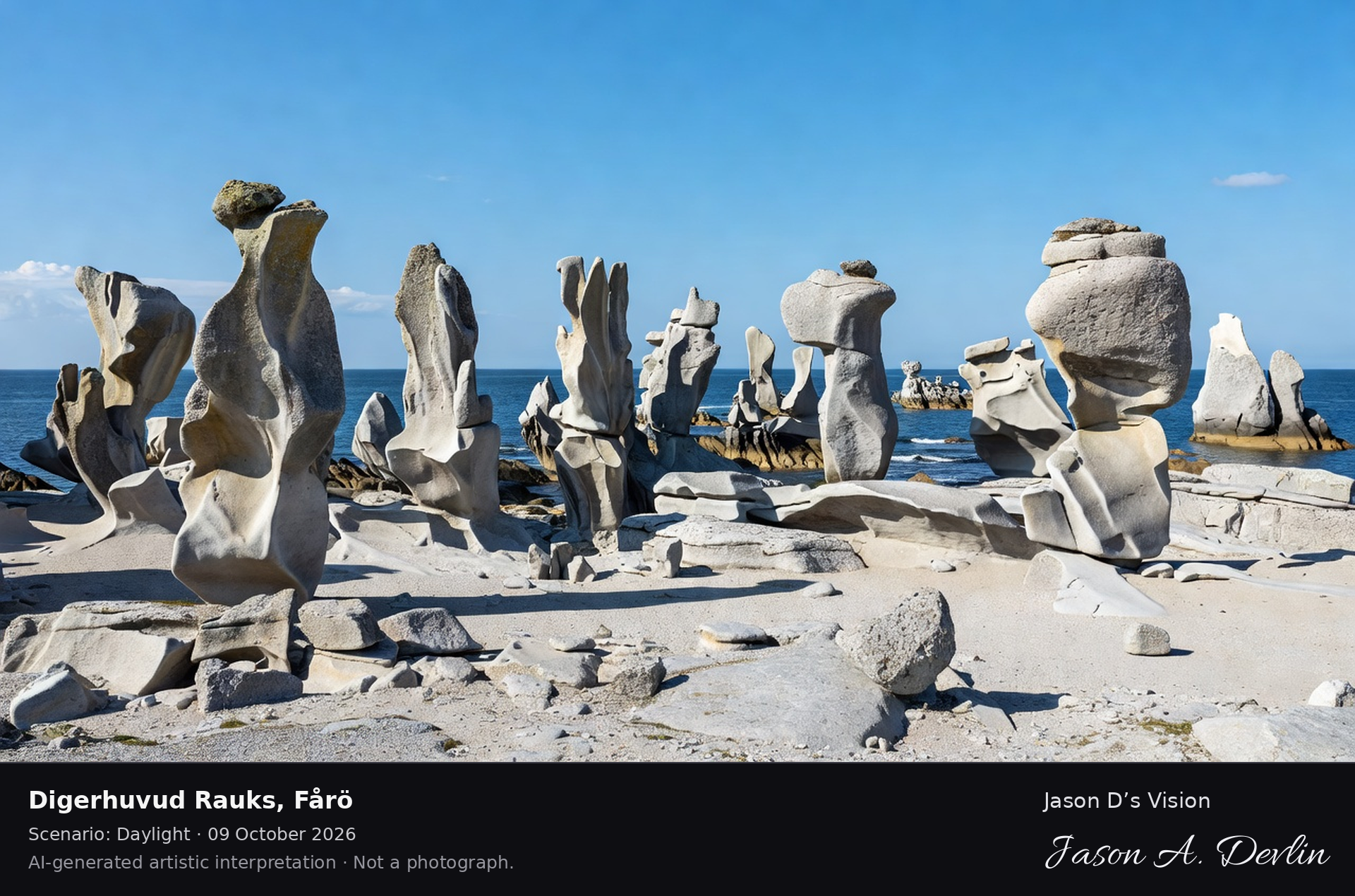
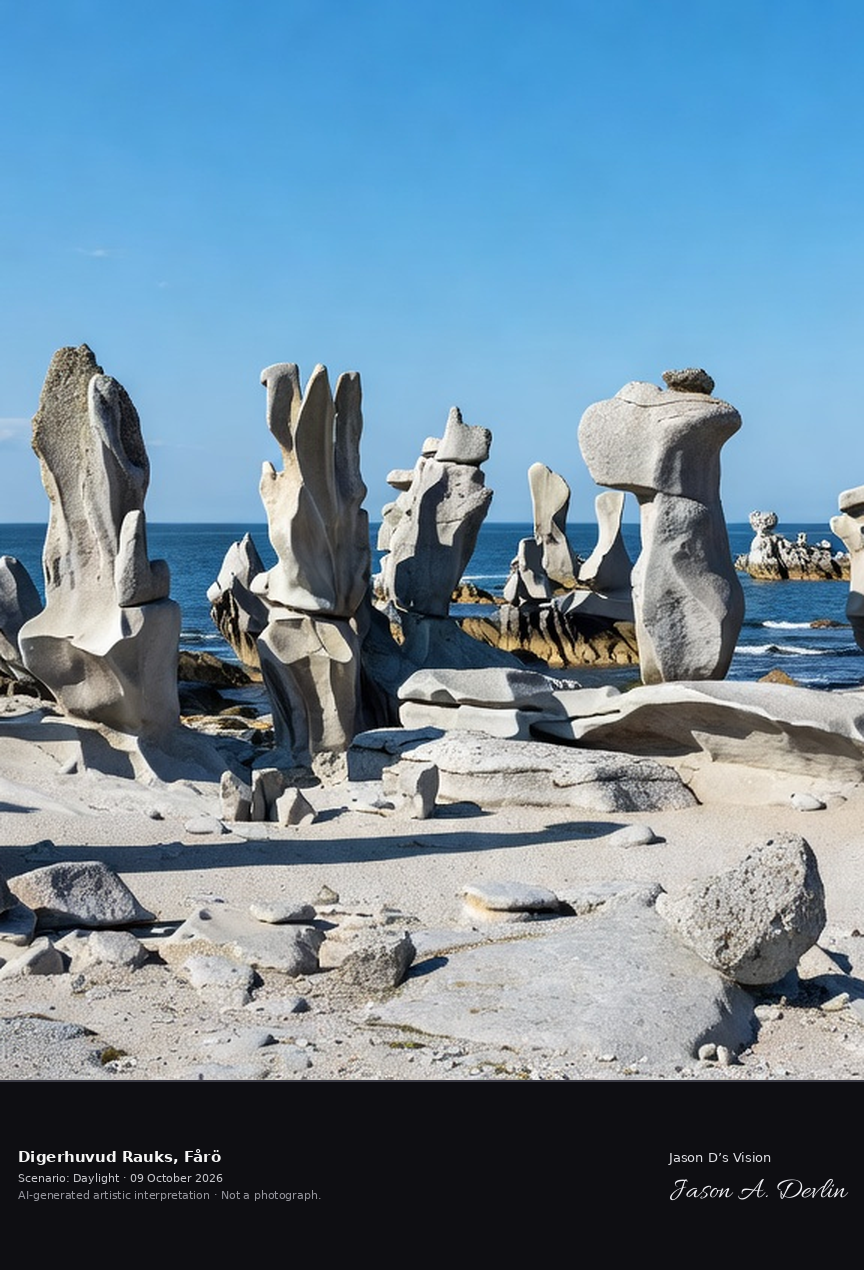
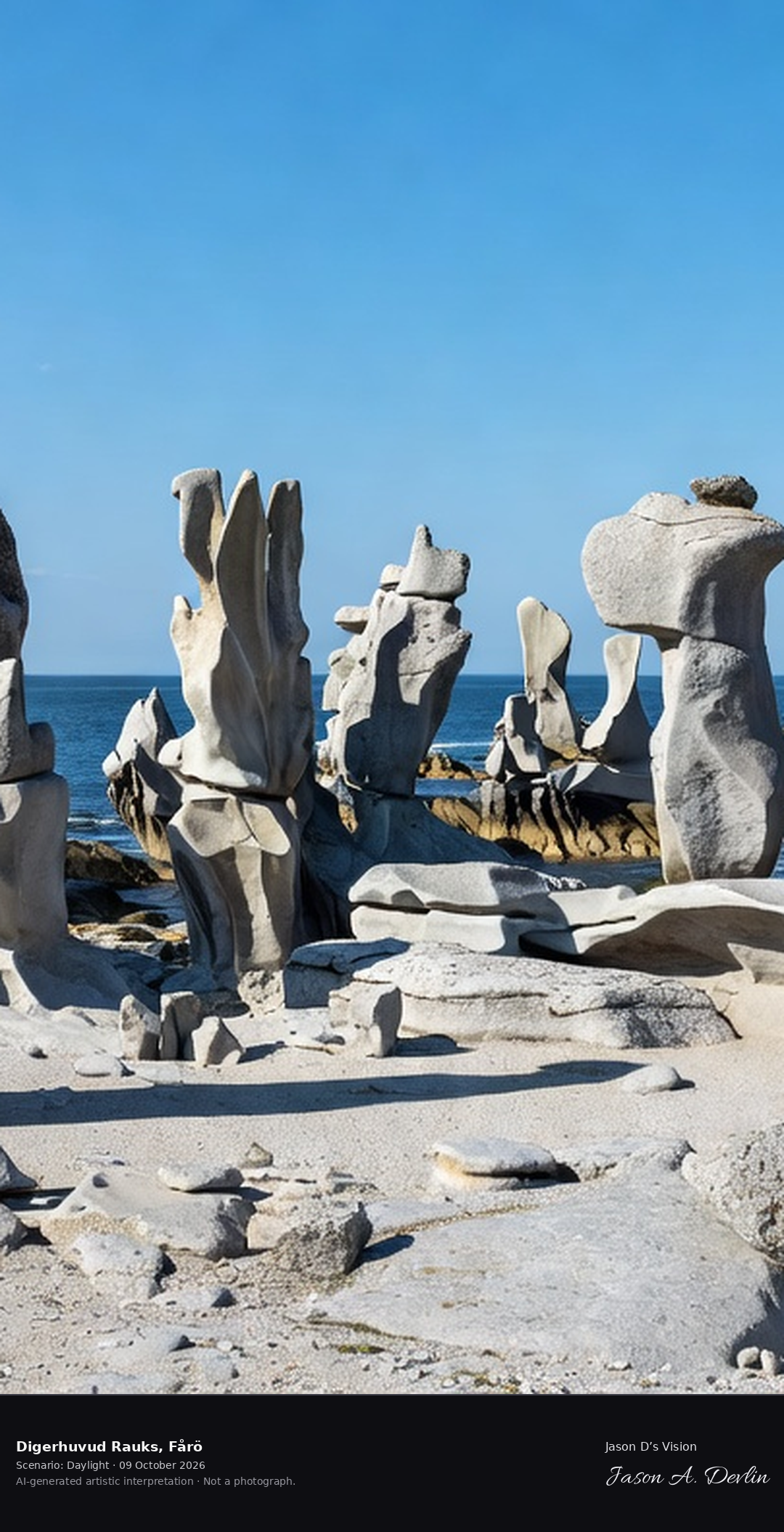
The Digerhuvud rauk field on Fårö's northwest coast, giant limestone sea stacks sculpted by the Baltic into surreal shapes, the largest rauk area in Sweden. A lunar landscape at the water's edge.
On Fårö's northwest coast lies Digerhuvud, Sweden's largest rauk field — giant limestone sea stacks sculpted by the Baltic into surreal, wind-carved shapes along a lunar shoreline. A landscape of pale stone and open sea, famous across Gotland for its wild, otherworldly beauty.
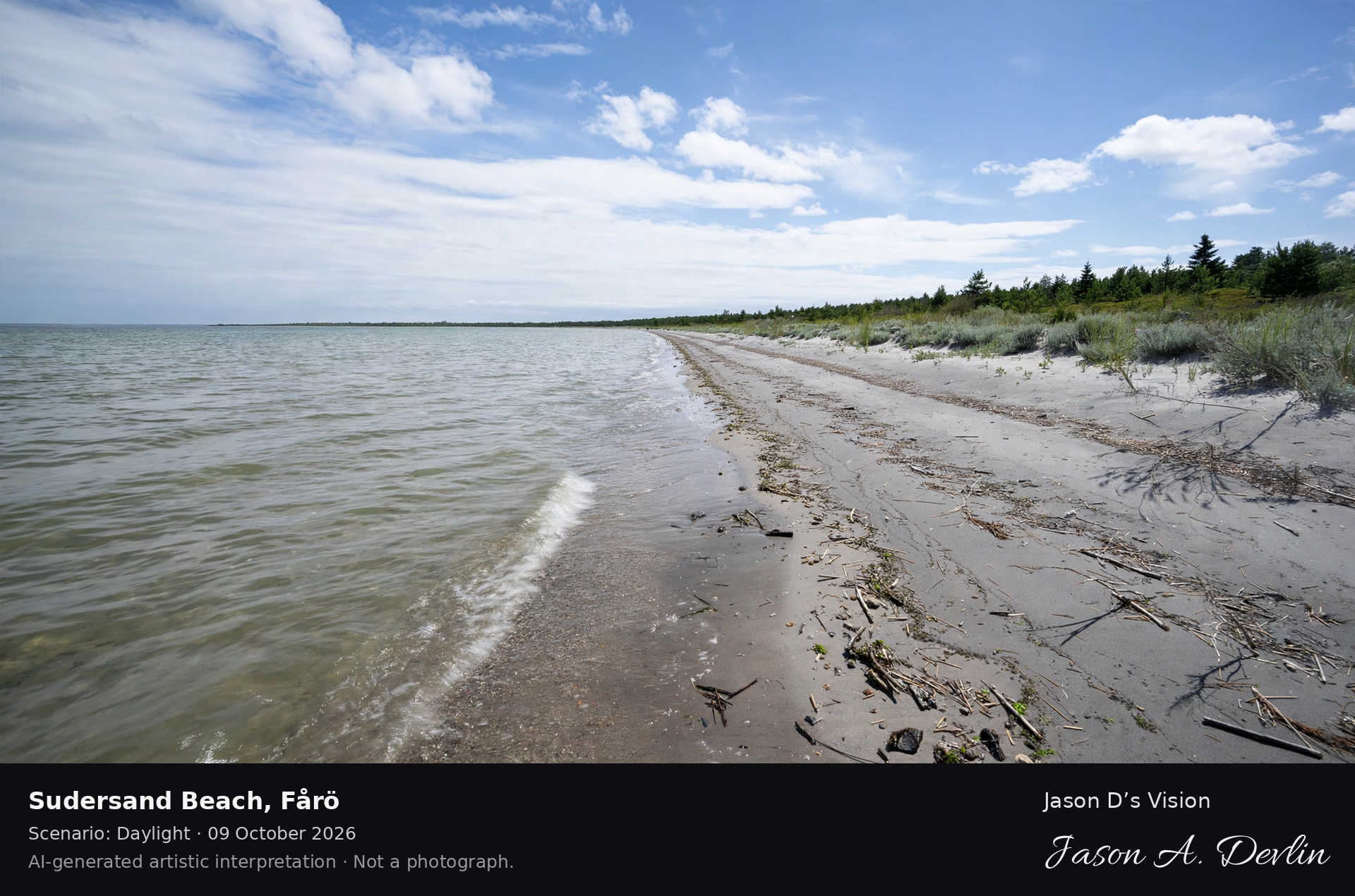
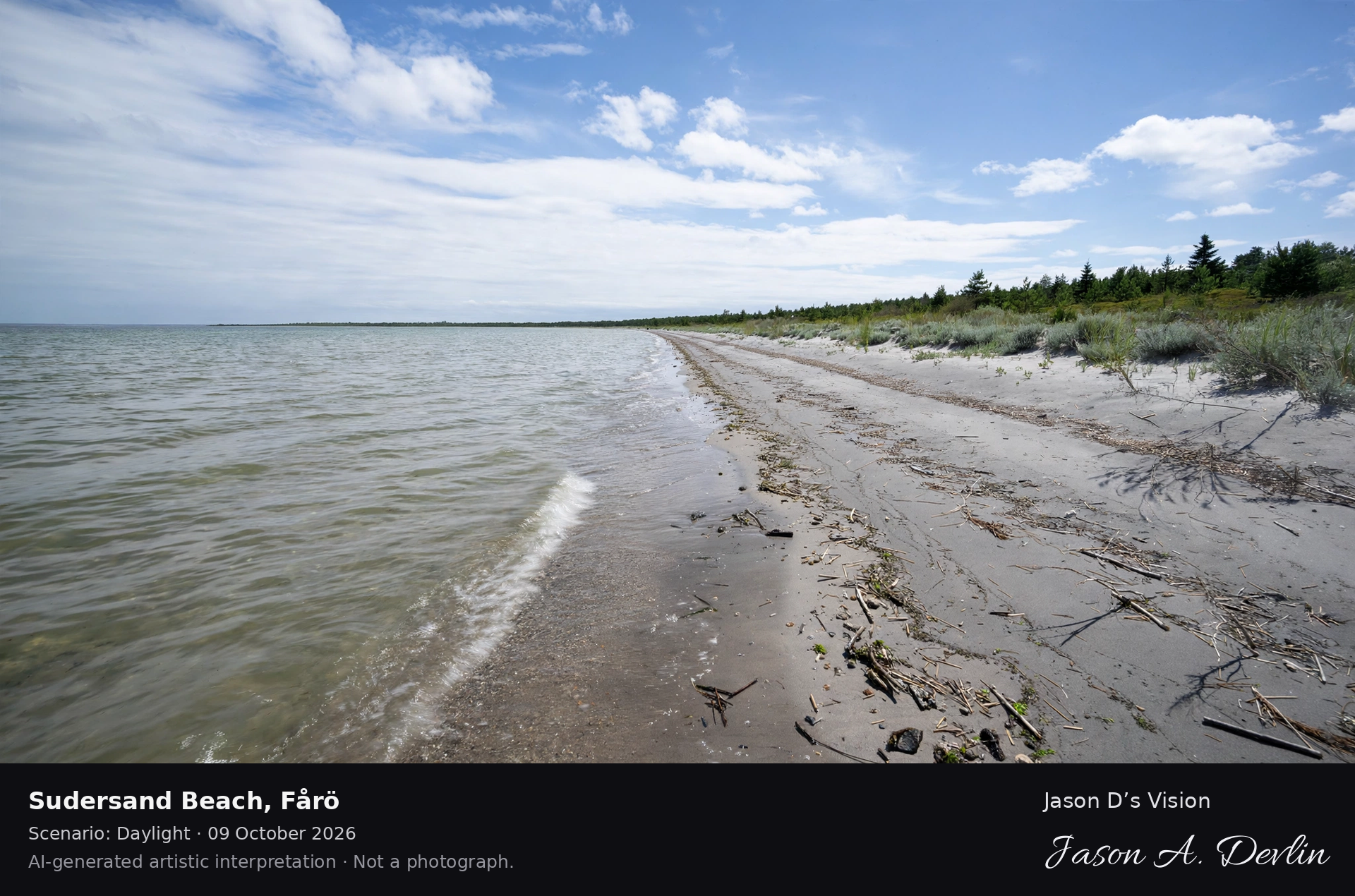
Sudersand's white sandy beach curving along Fårö's northeast coast, shallow turquoise Baltic water and pine forest behind the dunes. Gotland's finest beach, Bergman's island.
On Fårö's northeast coast lies Sudersand, Gotland's finest beach — a long curving arc of white sand lapped by shallow turquoise Baltic water, with pine-forested dunes rising behind. A place of rare Nordic brightness, and the island forever linked with Ingmar Bergman.
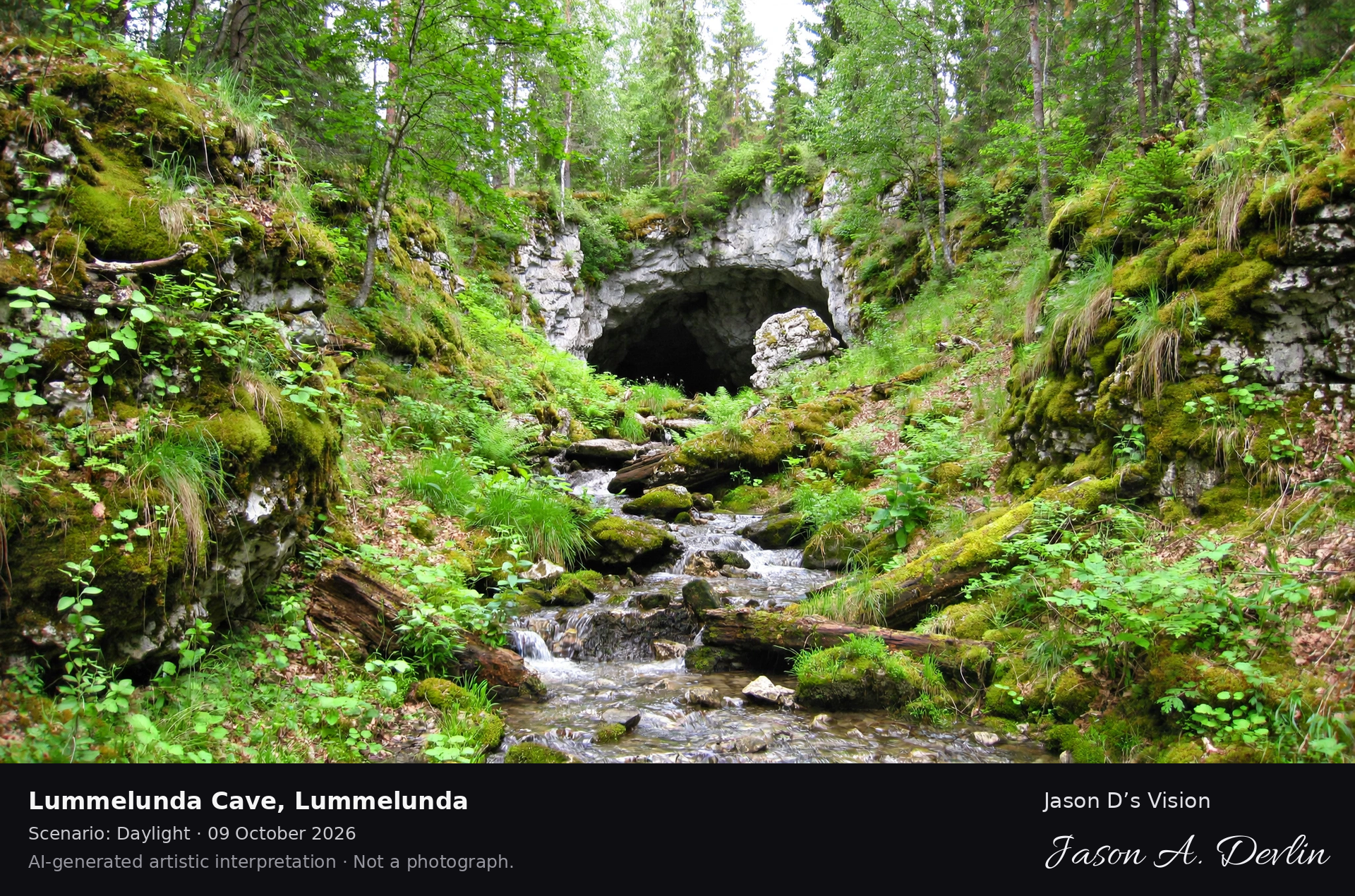
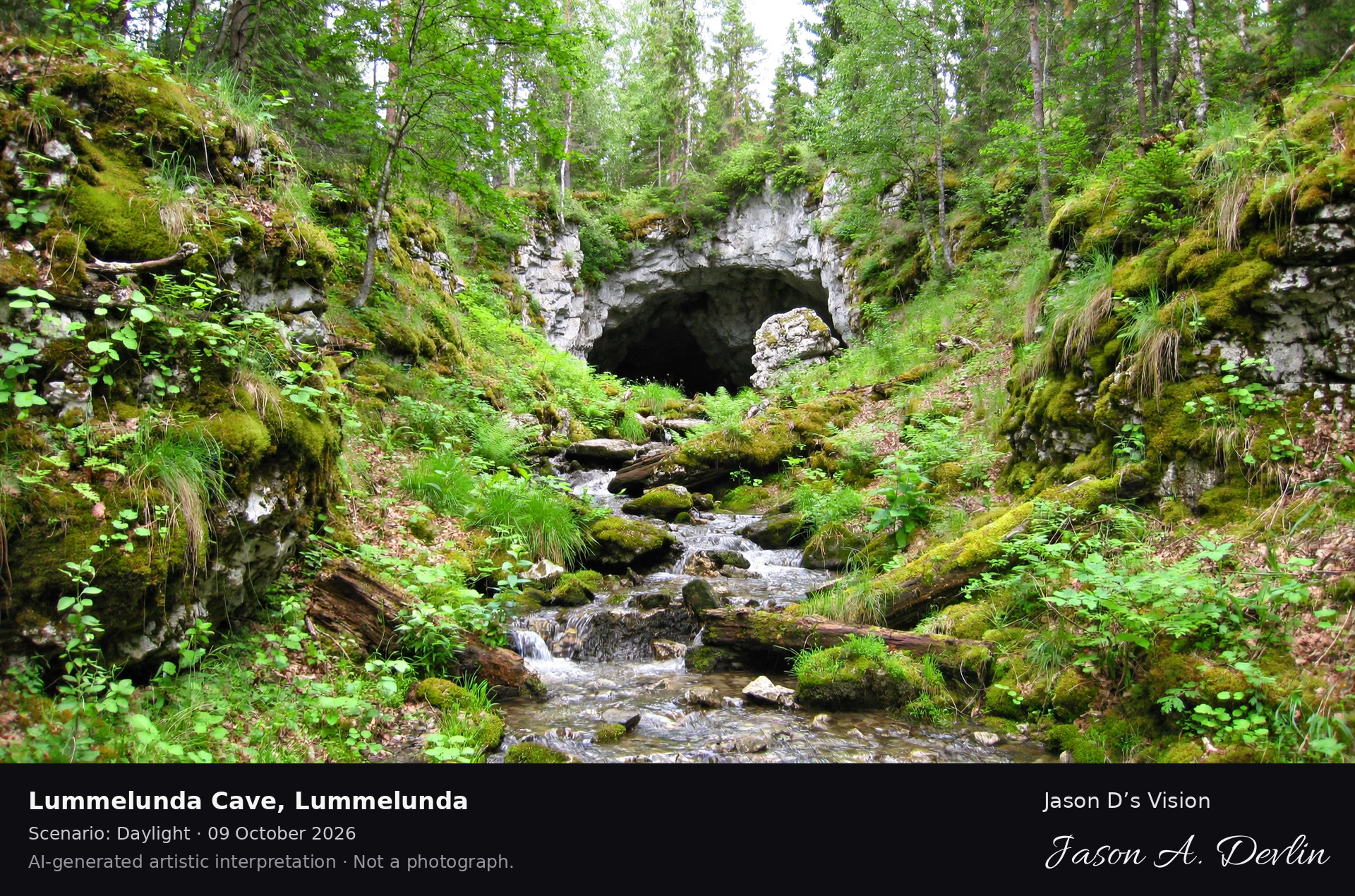
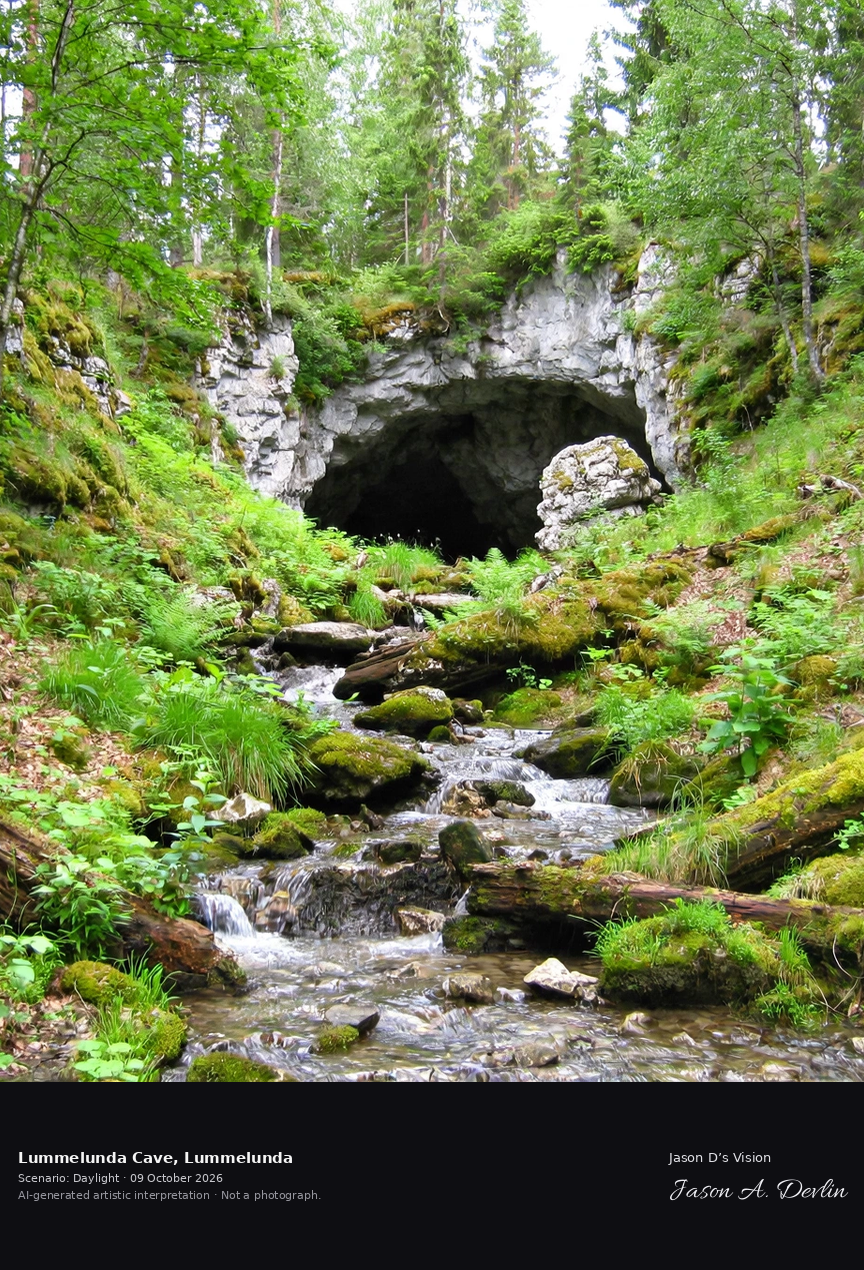
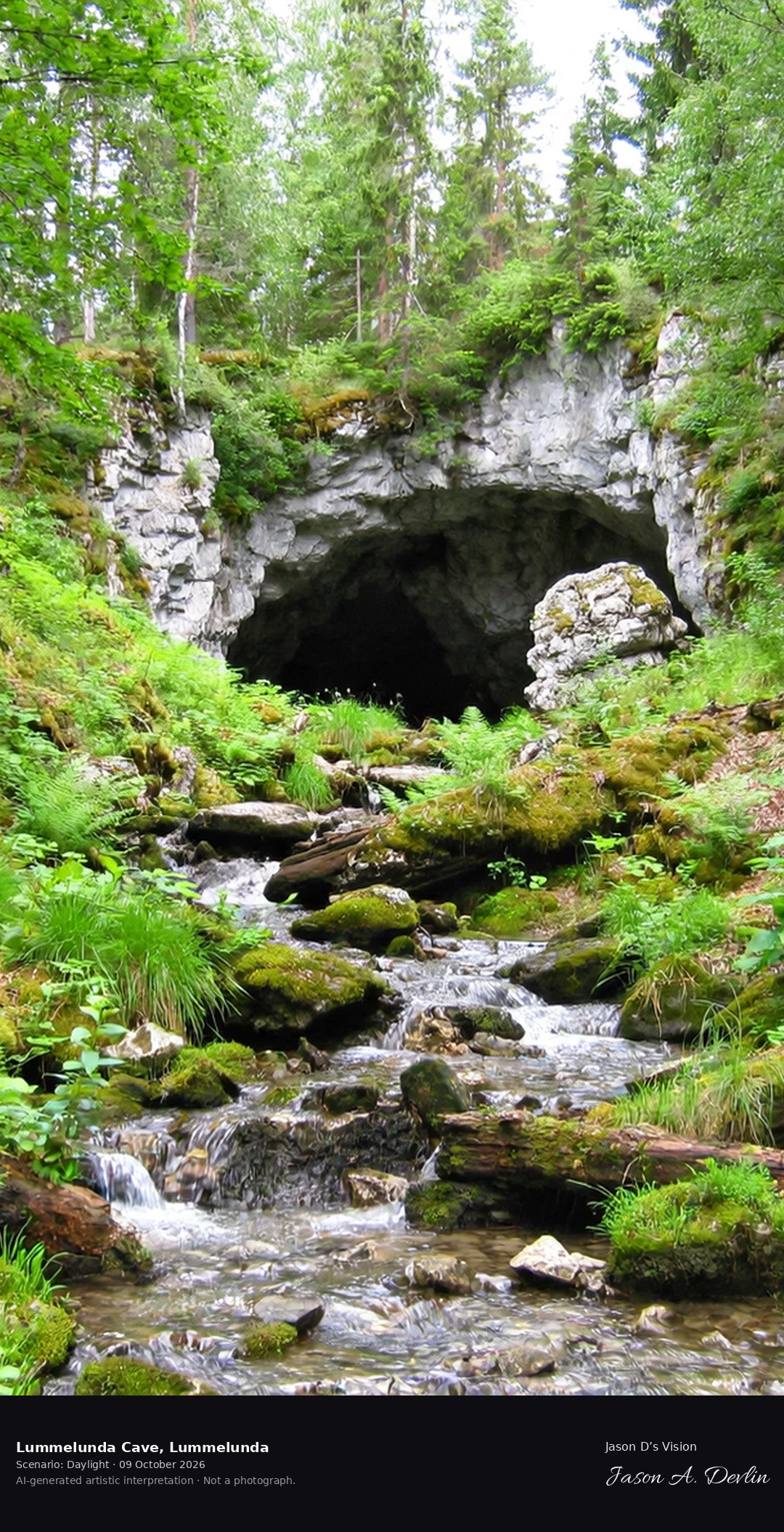
The Lummelunda Cave entrance in the limestone cliff, one of Sweden's longest caves with its underground stream. The mossy grotto mouth opening into the rock face above the Baltic shore.
Lummelunda Cave, one of Sweden's longest caves, opens through a mossy grotto mouth in the limestone cliff above the Baltic shore on Gotland. An underground stream trickles from the dark mouth onto the pebble beach — a cool, green, mysterious place that feels ancient the moment you arrive.
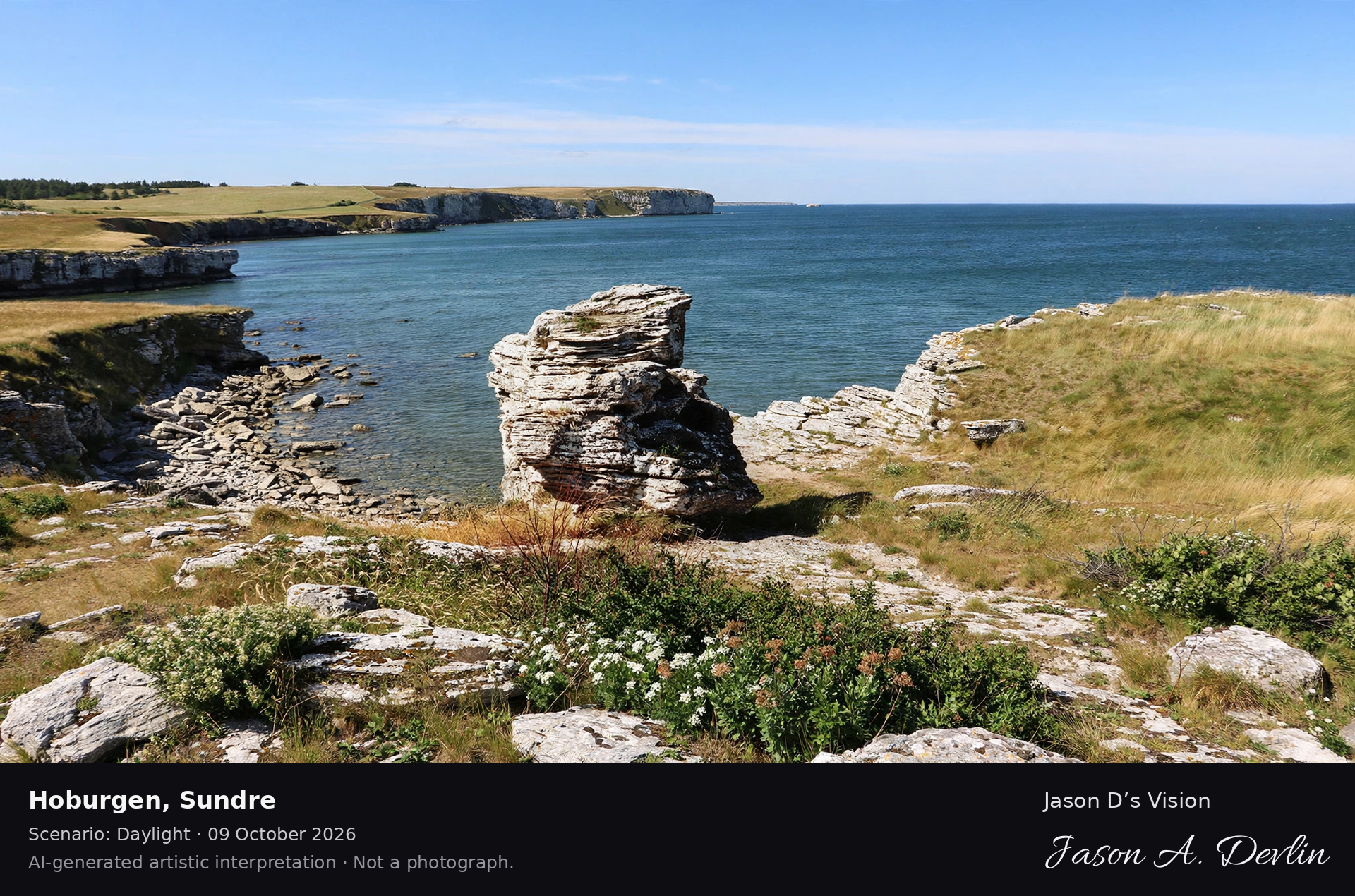
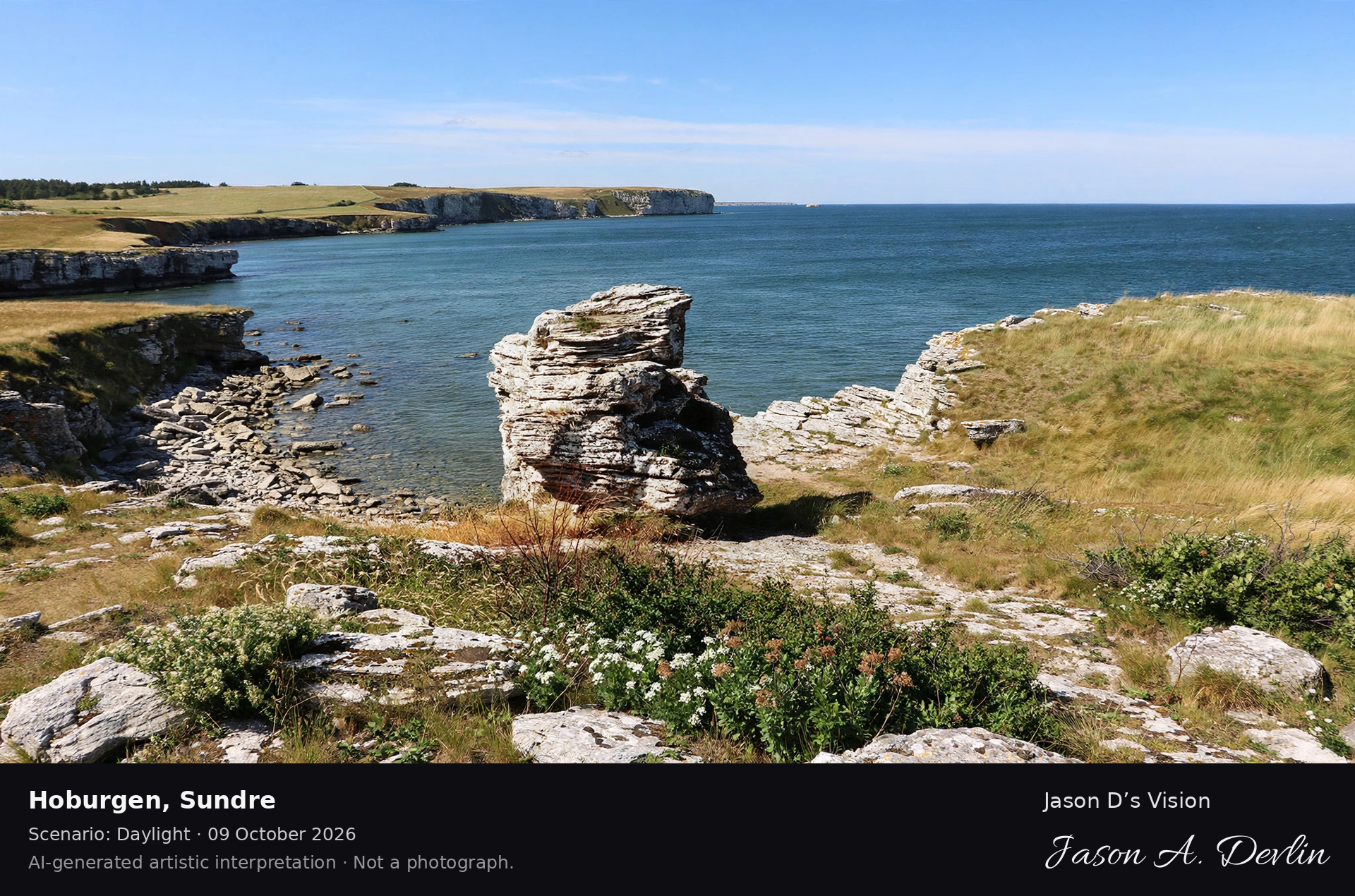
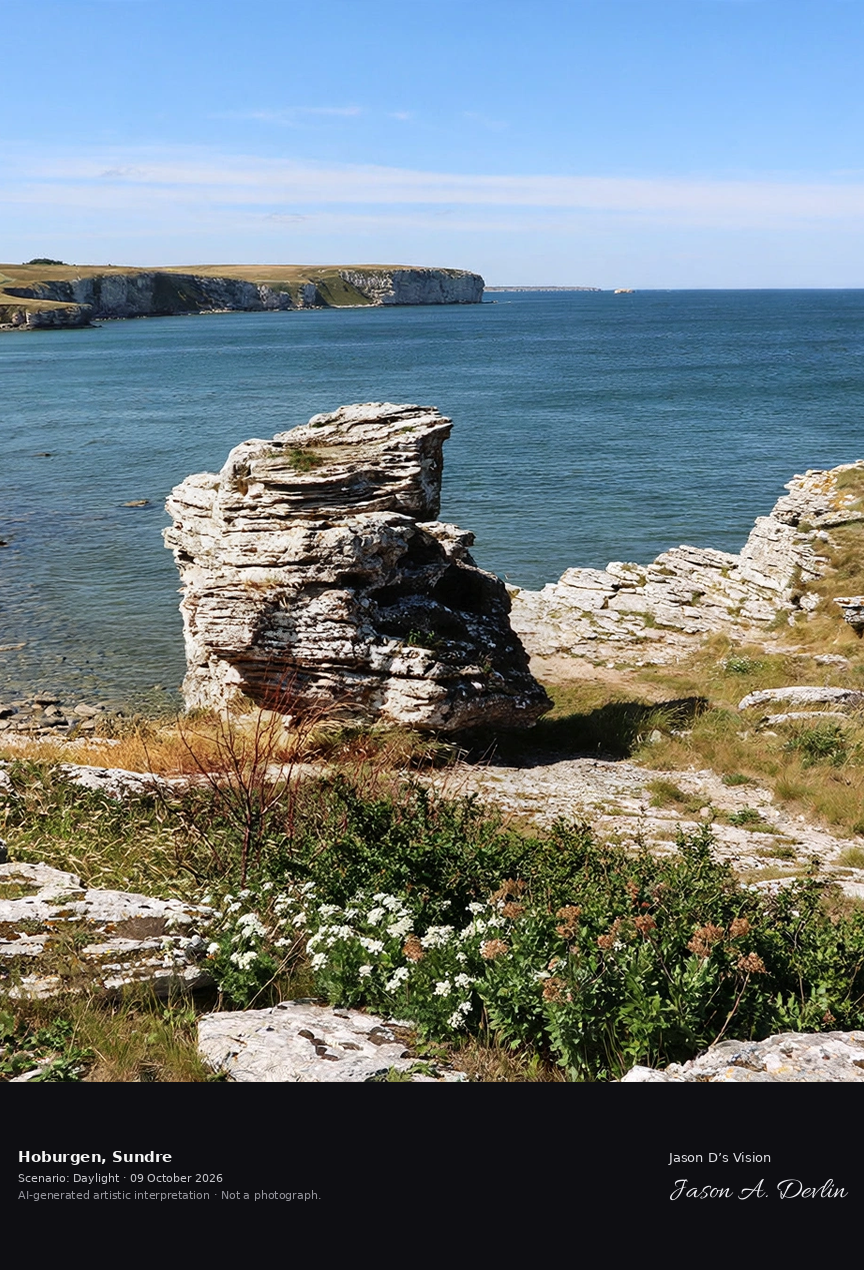
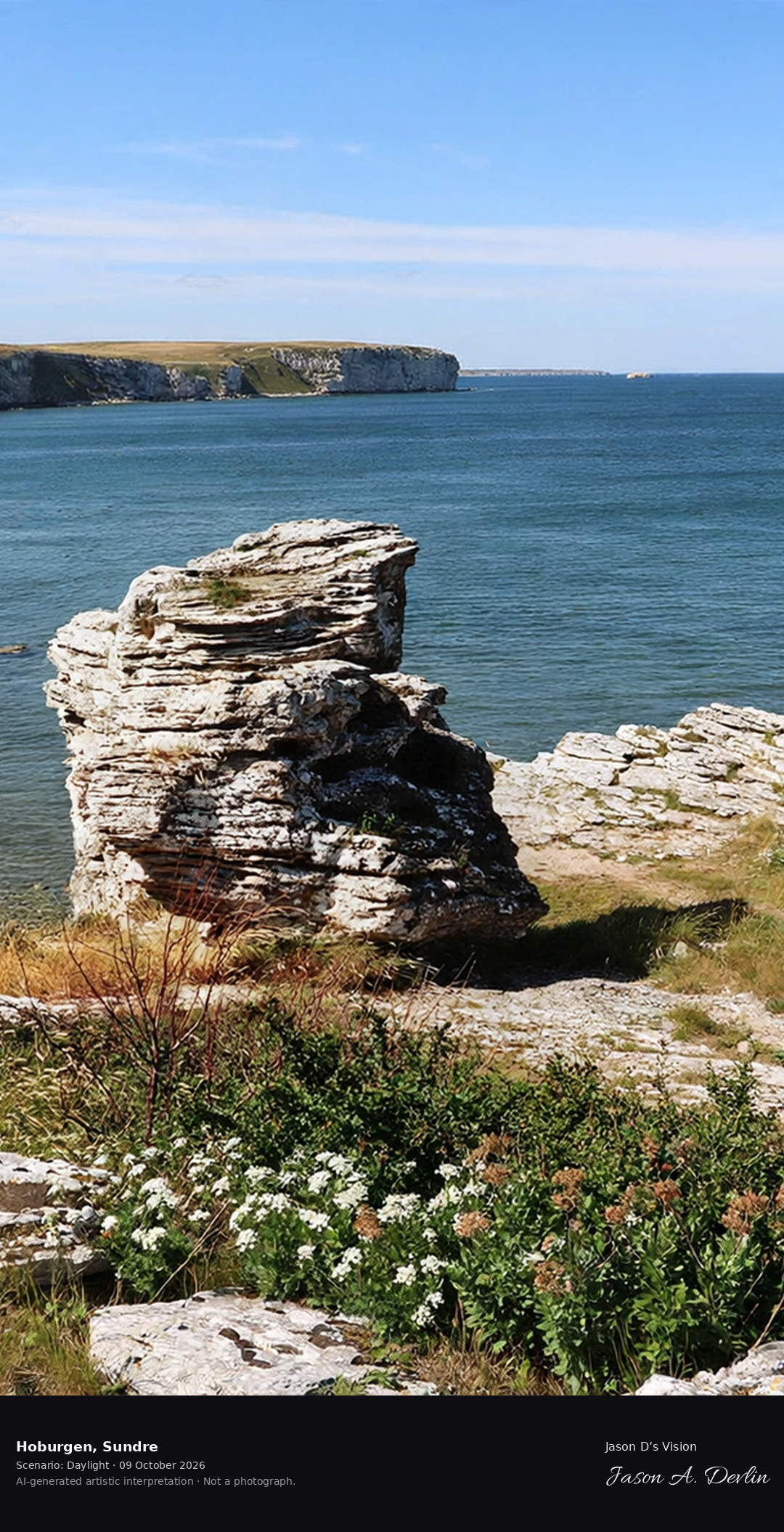
The Hoburgen rauk towering over Gotland's southern tip, the famous Hoburgsgubben sea stack profile against the open Baltic. Sweden's southernmost headland, dramatic and windswept.
Hoburgen, Sweden's southernmost headland, is crowned by its famous limestone rauk — the Hoburgsgubben sea stack rising sheer above the open Baltic. From the windswept grassy clifftop the classic tourist viewpoint frames the towering stack in the centre, surf breaking white on the rocks at its base, and the low headland sweeping left into the horizon. In bright daylight the pale limestone, blue water and green turf make one of Gotland's most dramatic coastal pictures.
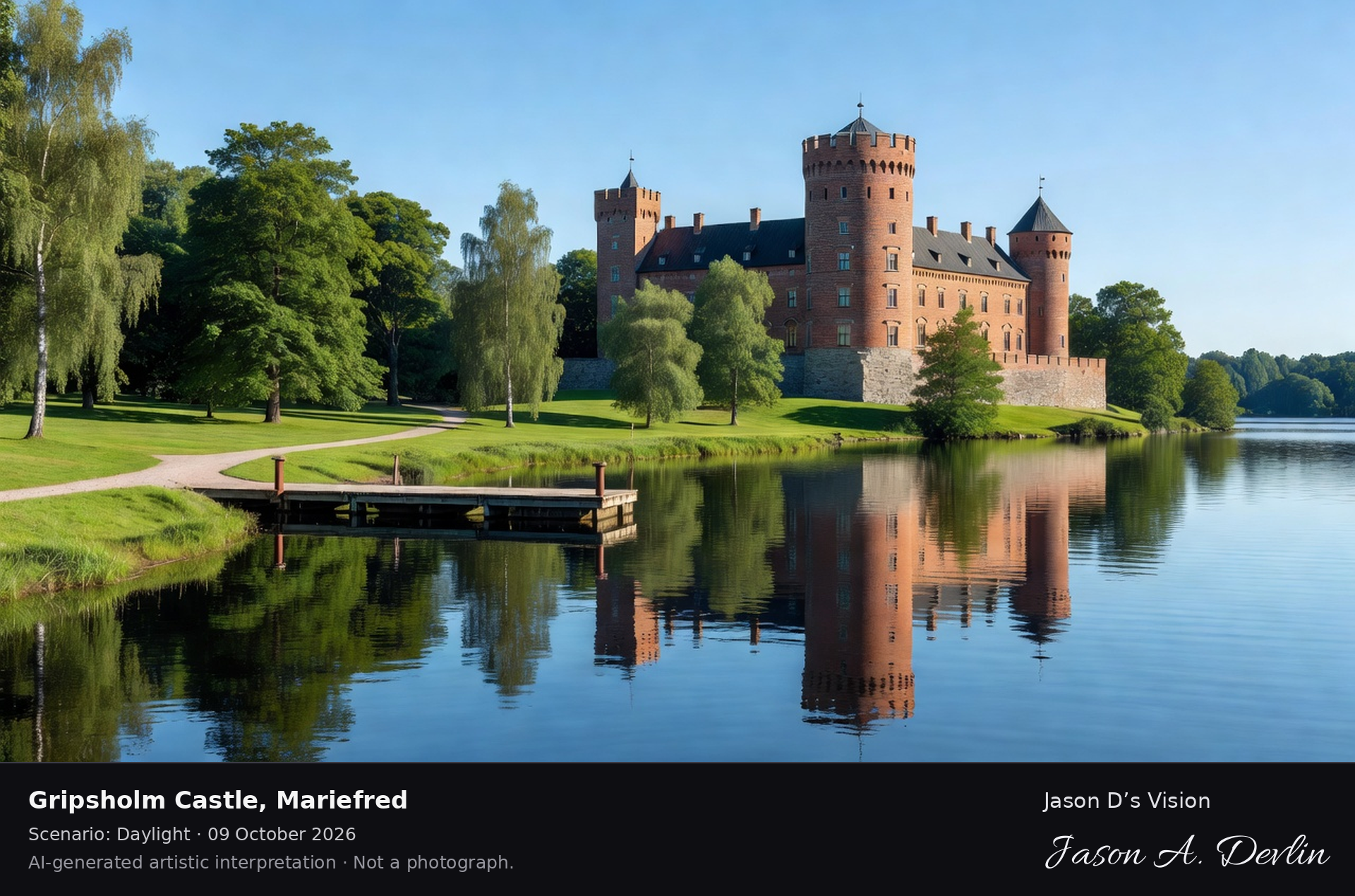
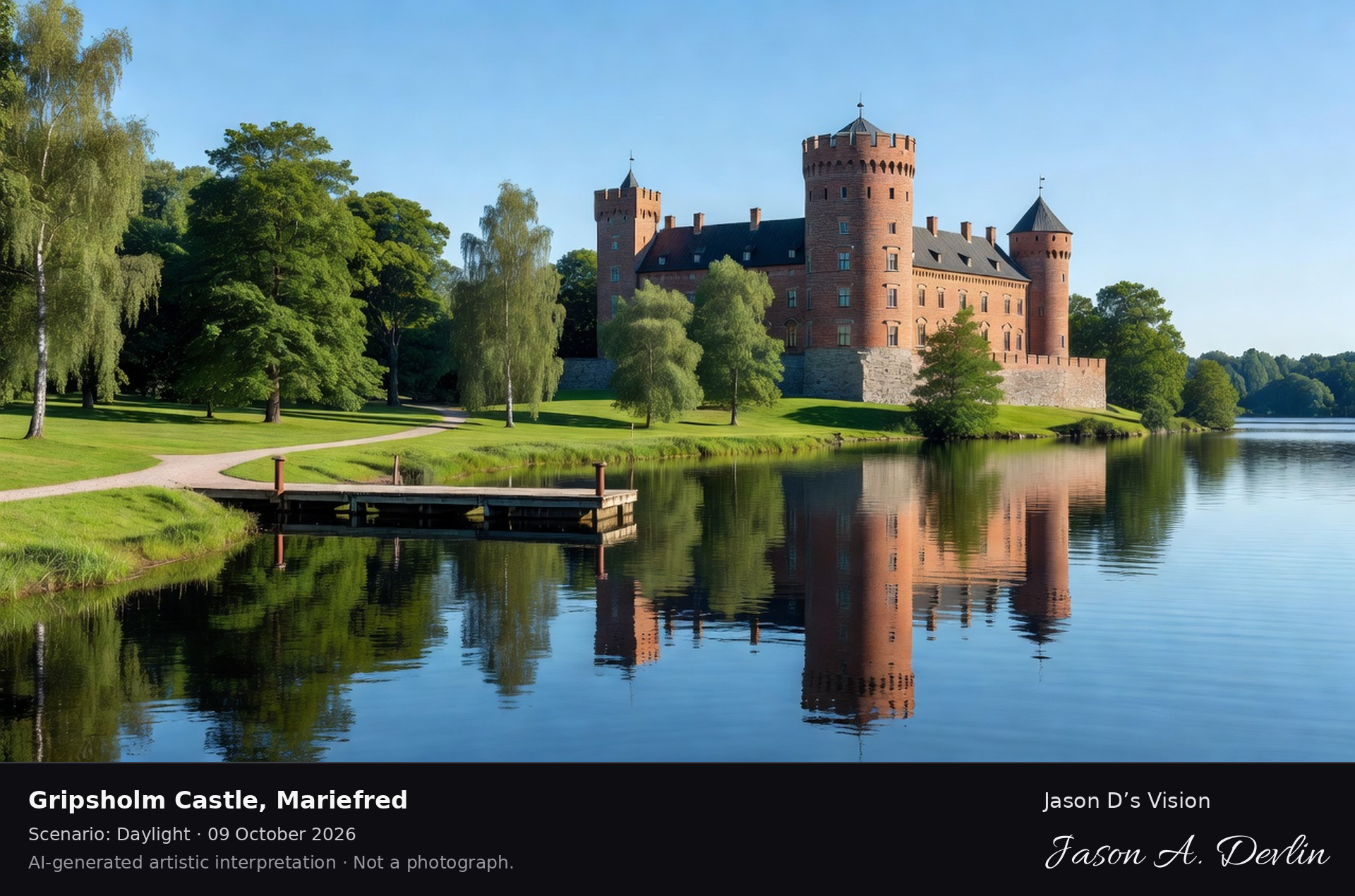
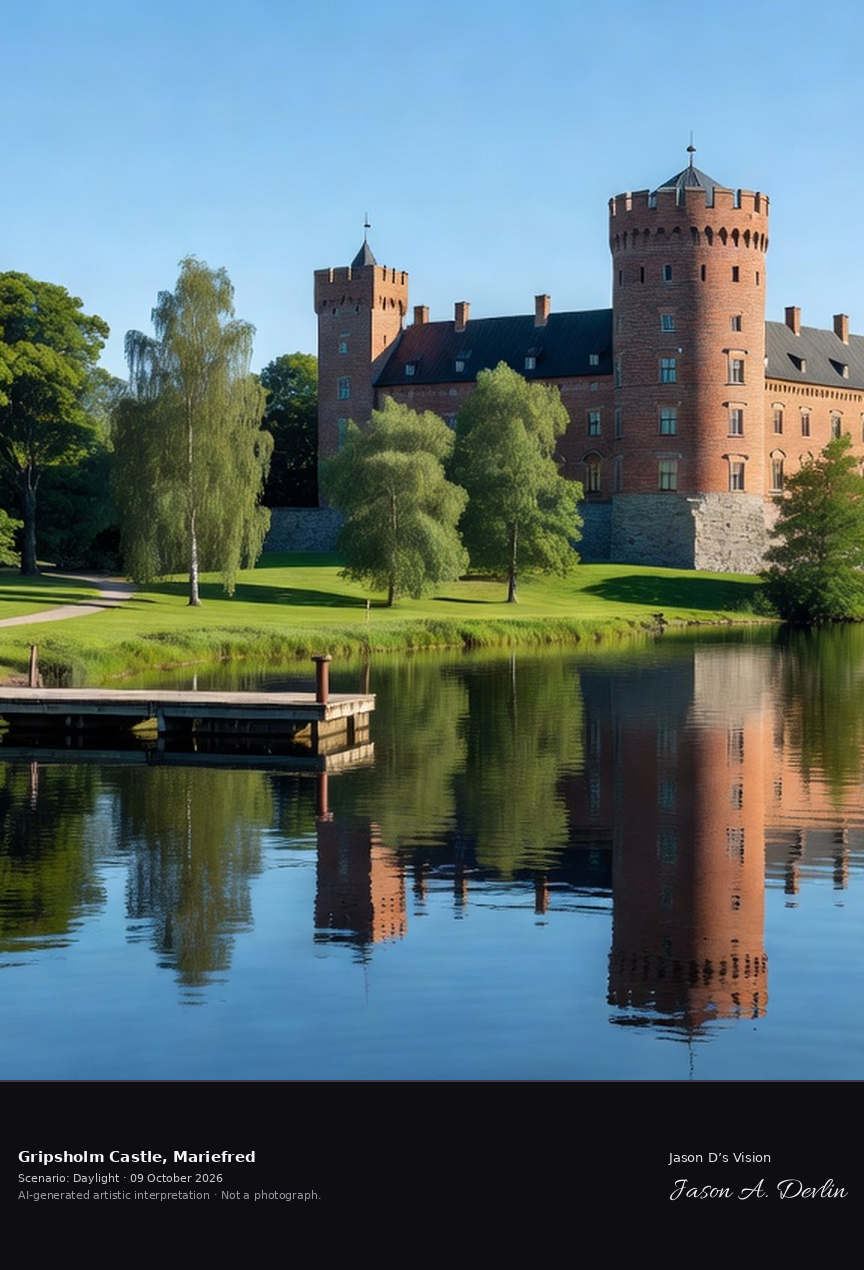
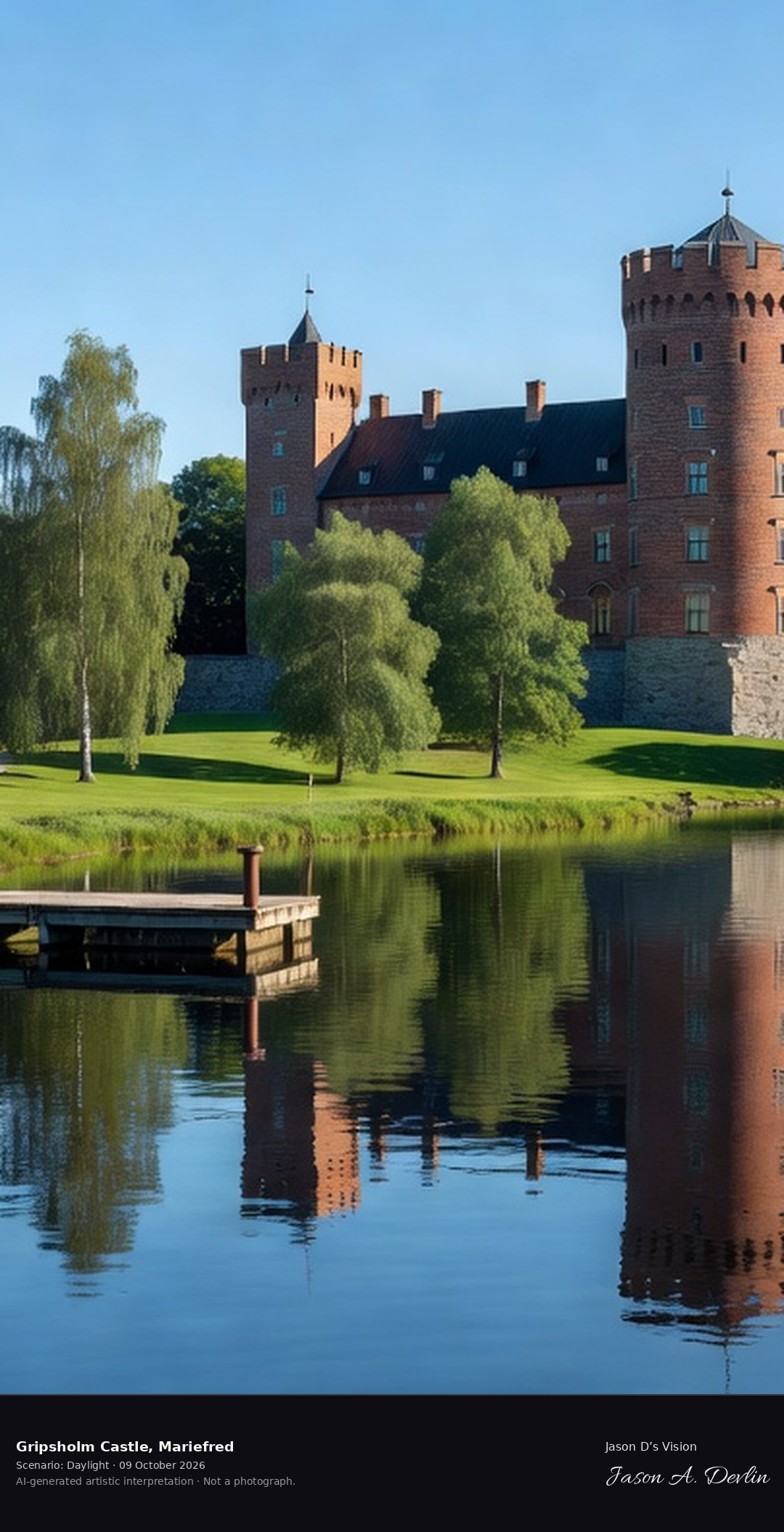
Gripsholm Castle's red-brick round towers reflected in Lake Mälaren, viewed from the steamboat jetty with the Hjorthagen park in the foreground. Gustav Vasa's 16th-century fortress-palace, home to the National Portrait Gallery.
Gripsholm Castle, one of Sweden's best-preserved Renaissance fortresses, rises from the shore of Lake Mälaren with its distinctive red-brick round towers. From the classic steamboat jetty viewpoint the castle's towers double in the calm water, framed by the green sweep of the Hjorthagen park to the left. In bright daylight the warm brickwork glows against the blue lake — the picture Gustav Vasa's 16th-century fortress-palace has offered visitors for centuries, now home to the National Portrait Gallery.
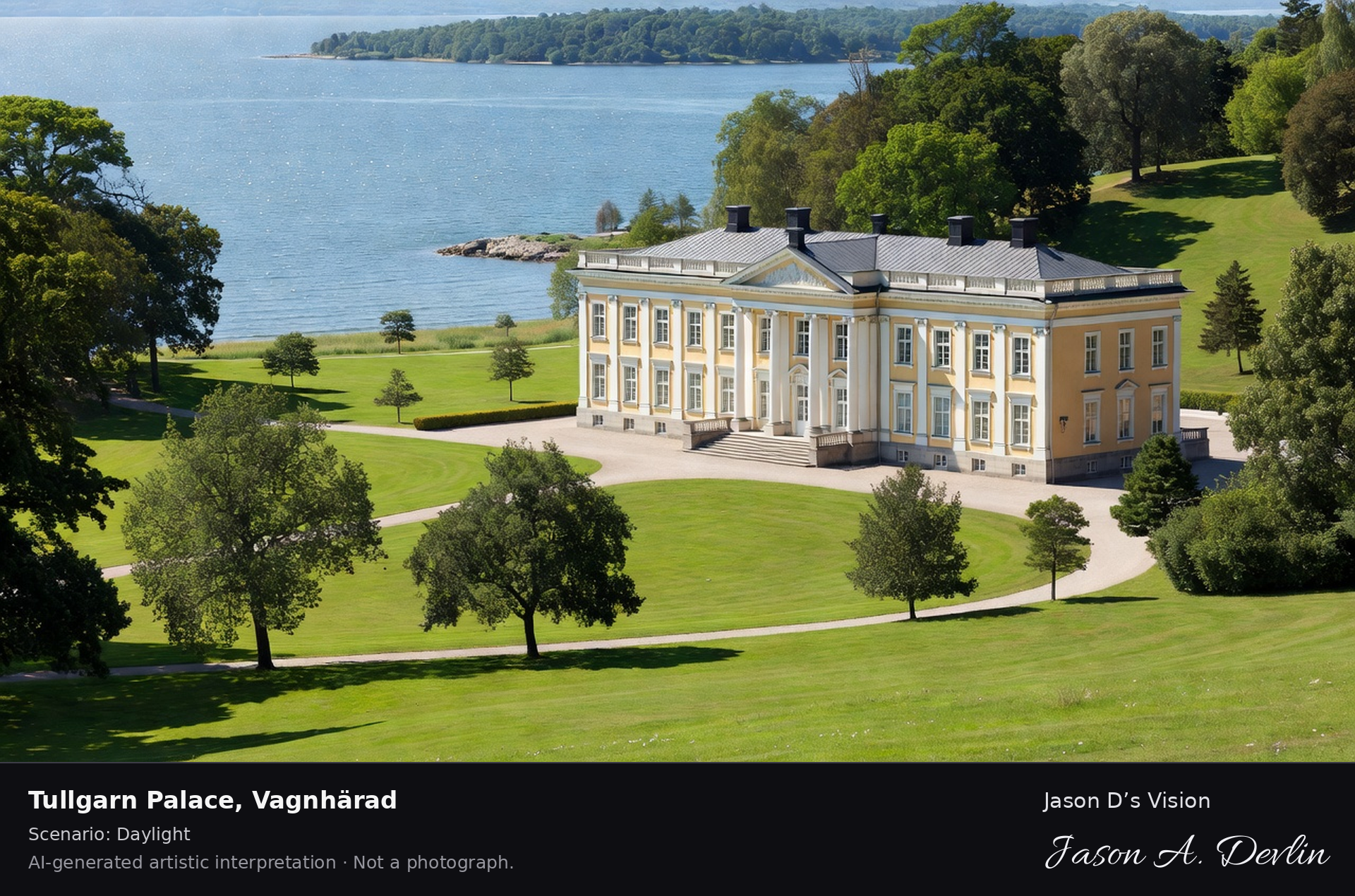
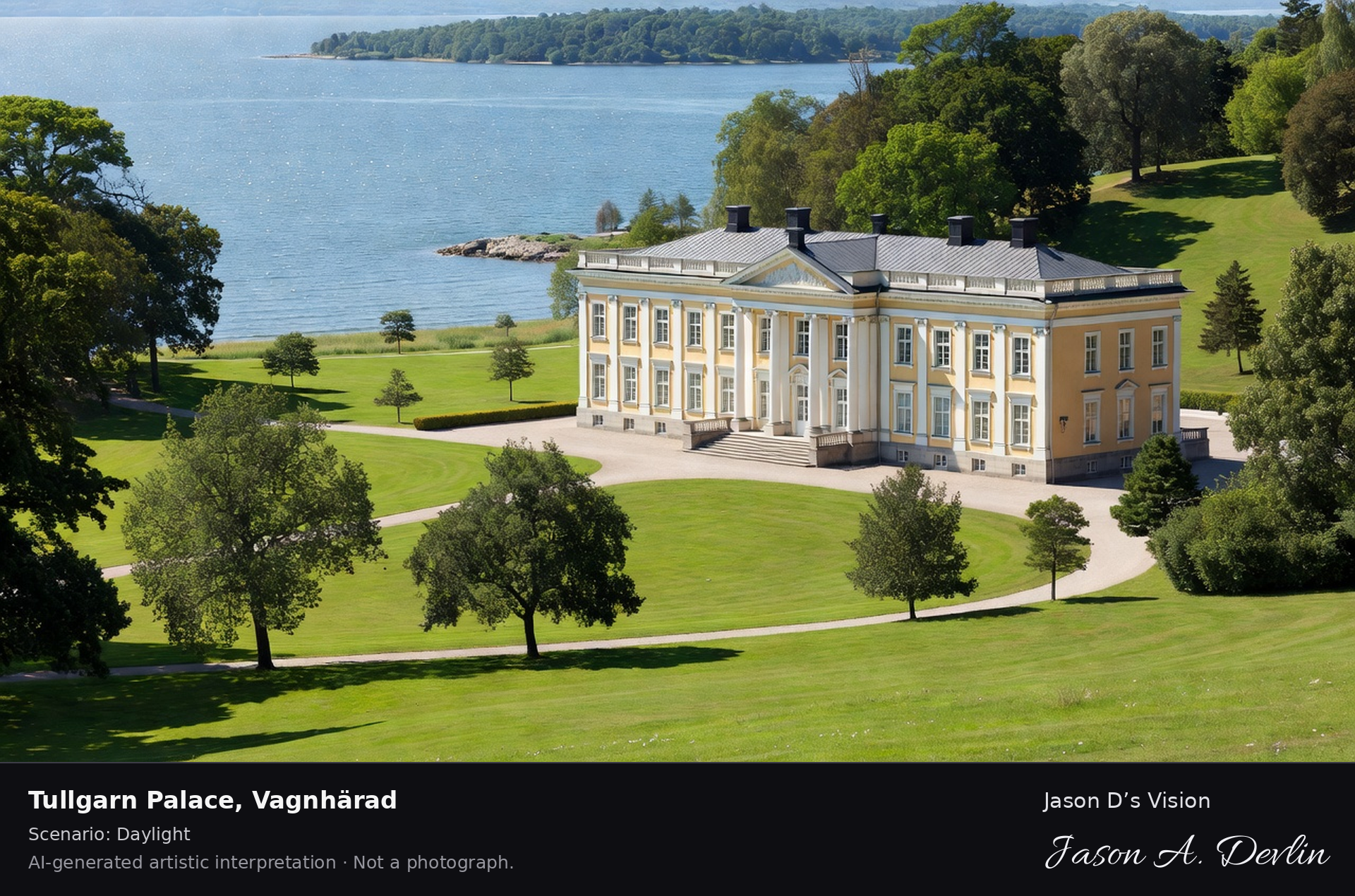
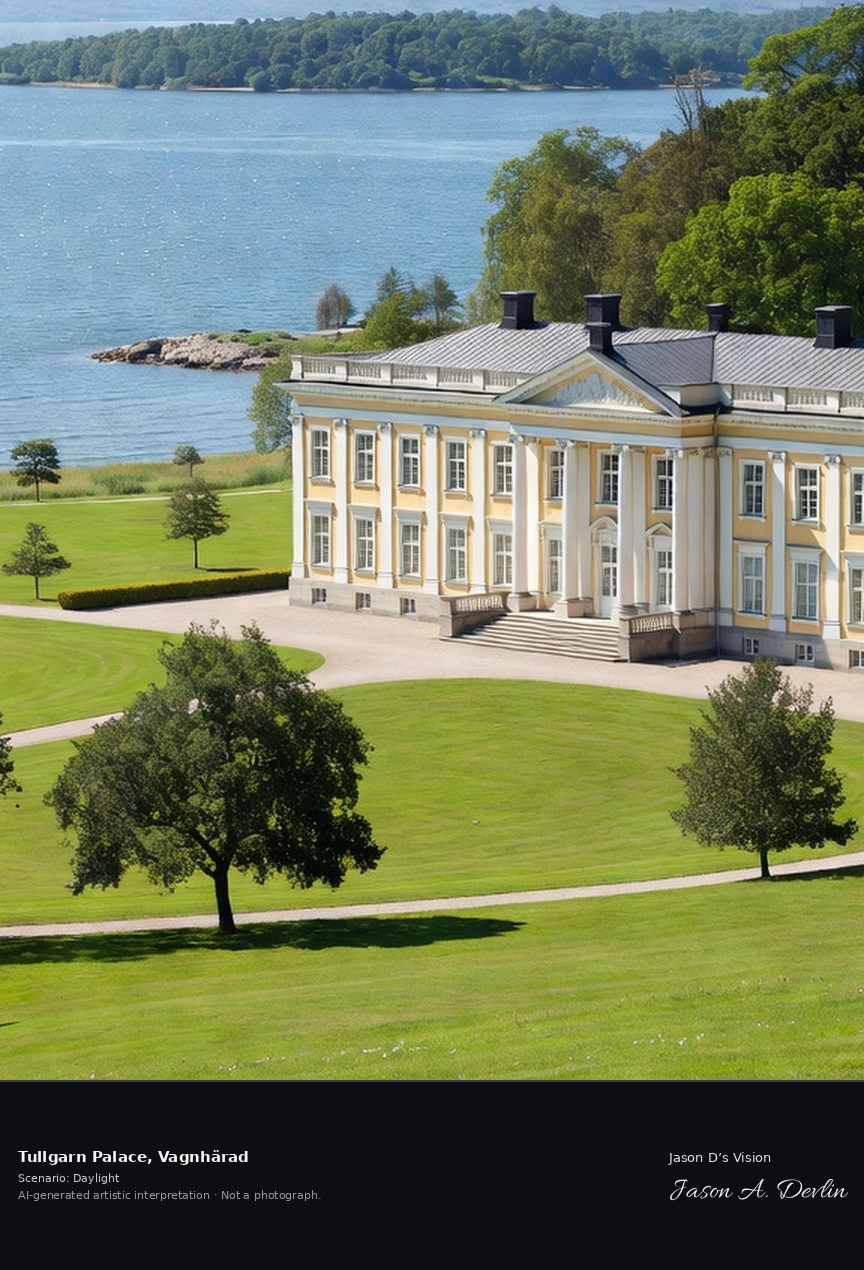
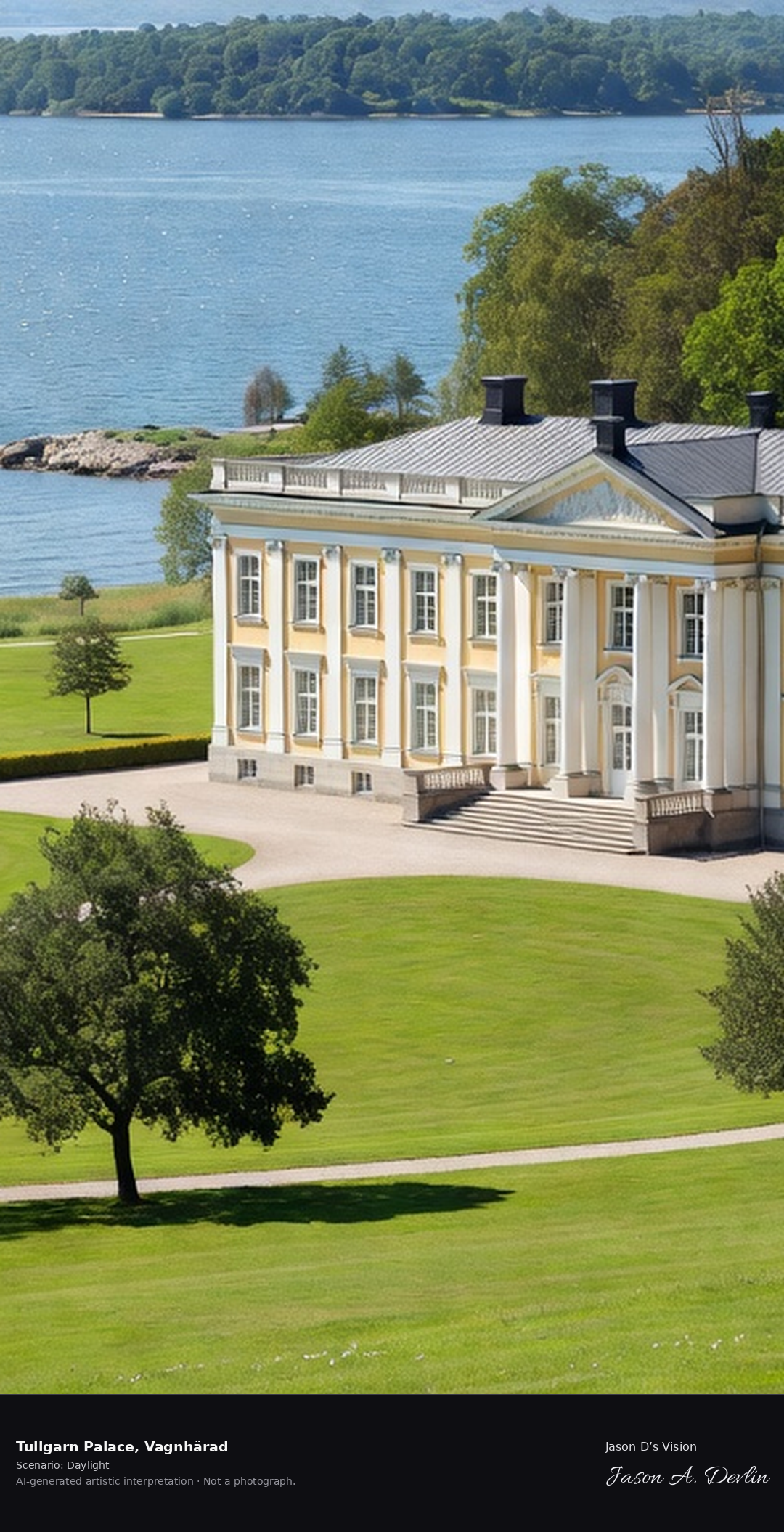
Tullgarn Palace's neoclassical facade above its English park sloping to the Baltic inlet, the royal summer palace where Gustaf V spent his summers. Elegant 18th-century architecture in coastal parkland.
Tullgarn Palace, the royal summer palace in Vagnhärad, Södermanland, where Gustaf V spent his summers. Its neoclassical facade rises above an English park sloping down to a Baltic inlet — elegant 18th-century architecture in coastal parkland, seen in bright natural daylight.
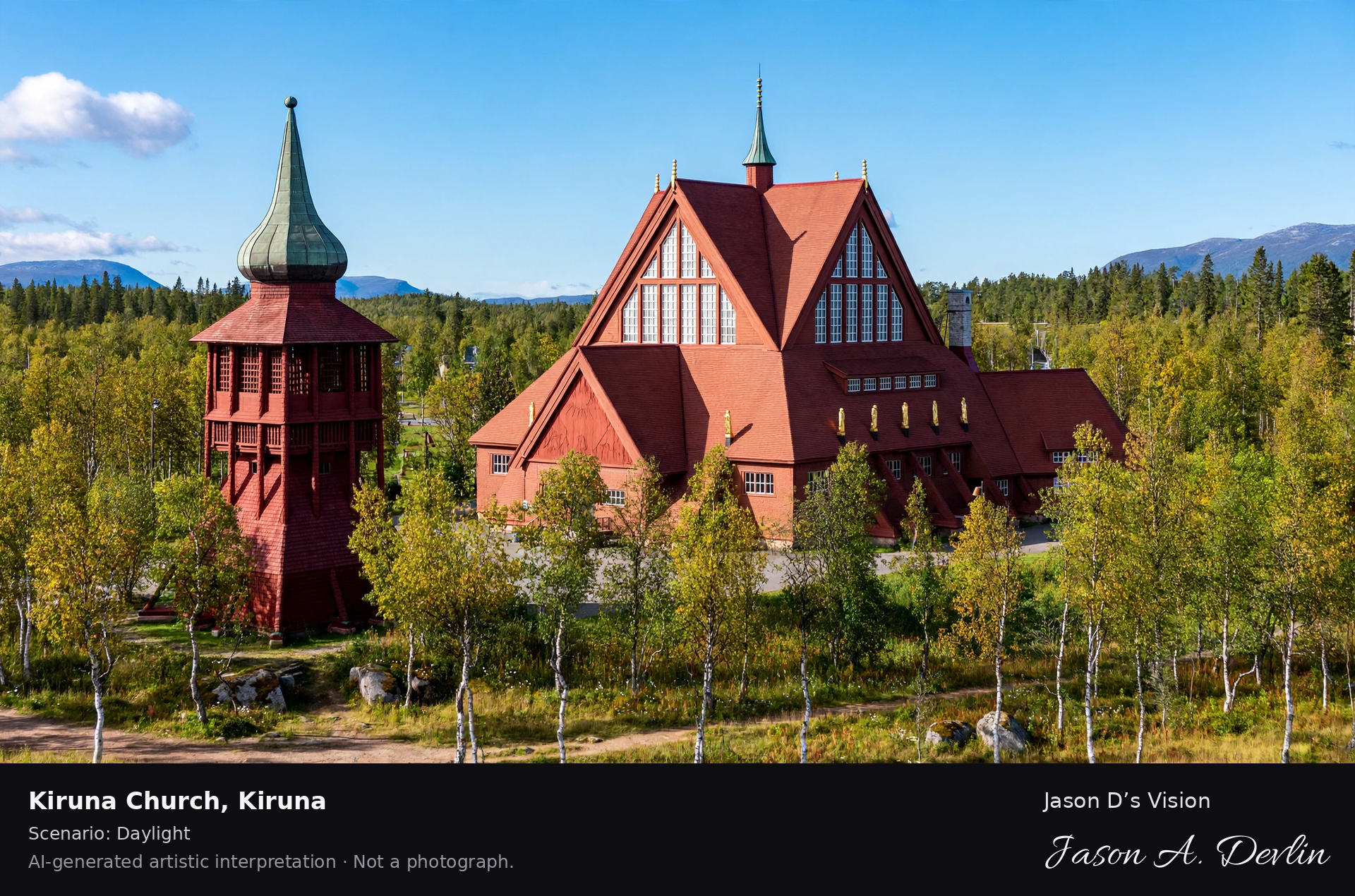
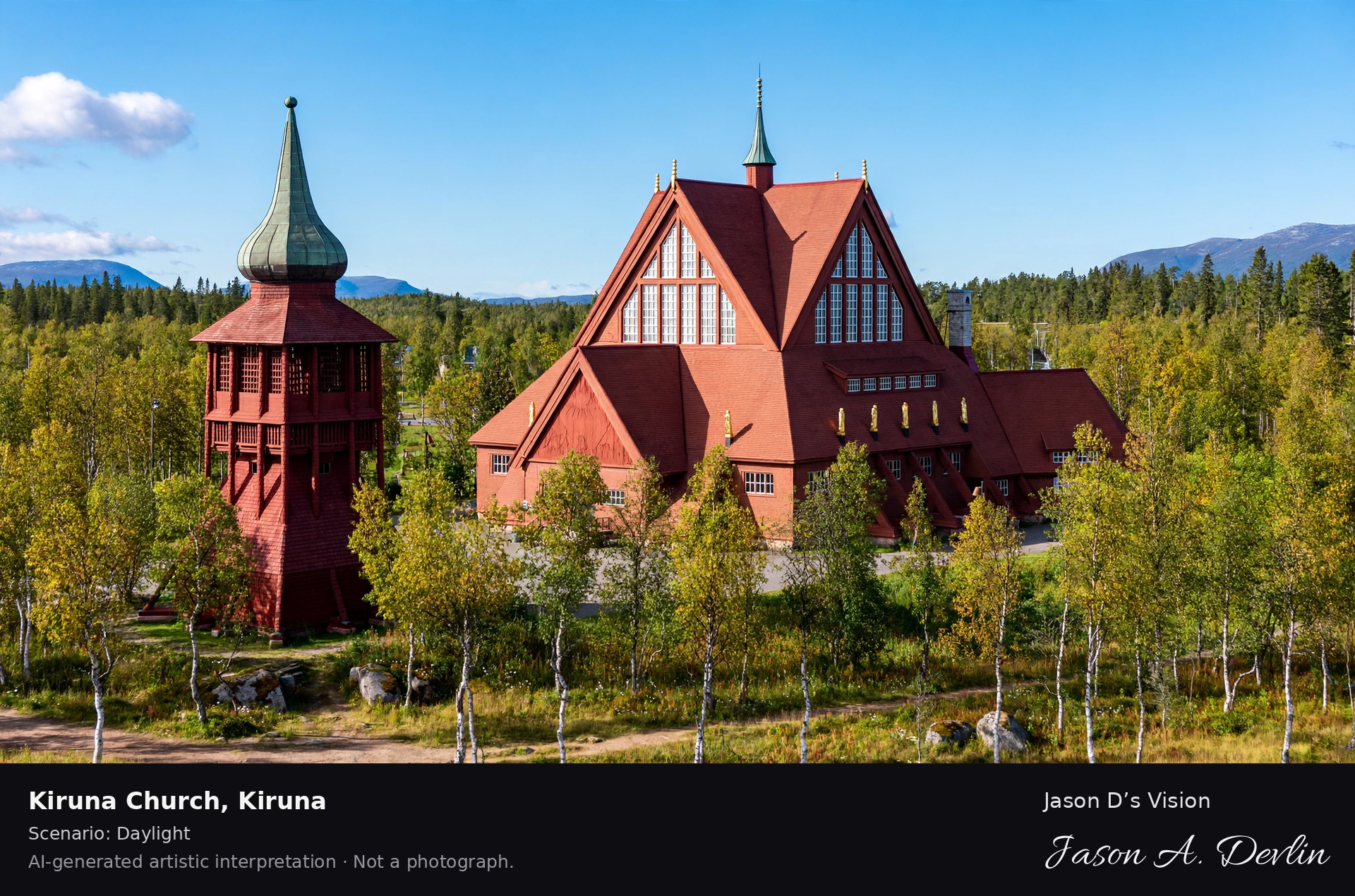
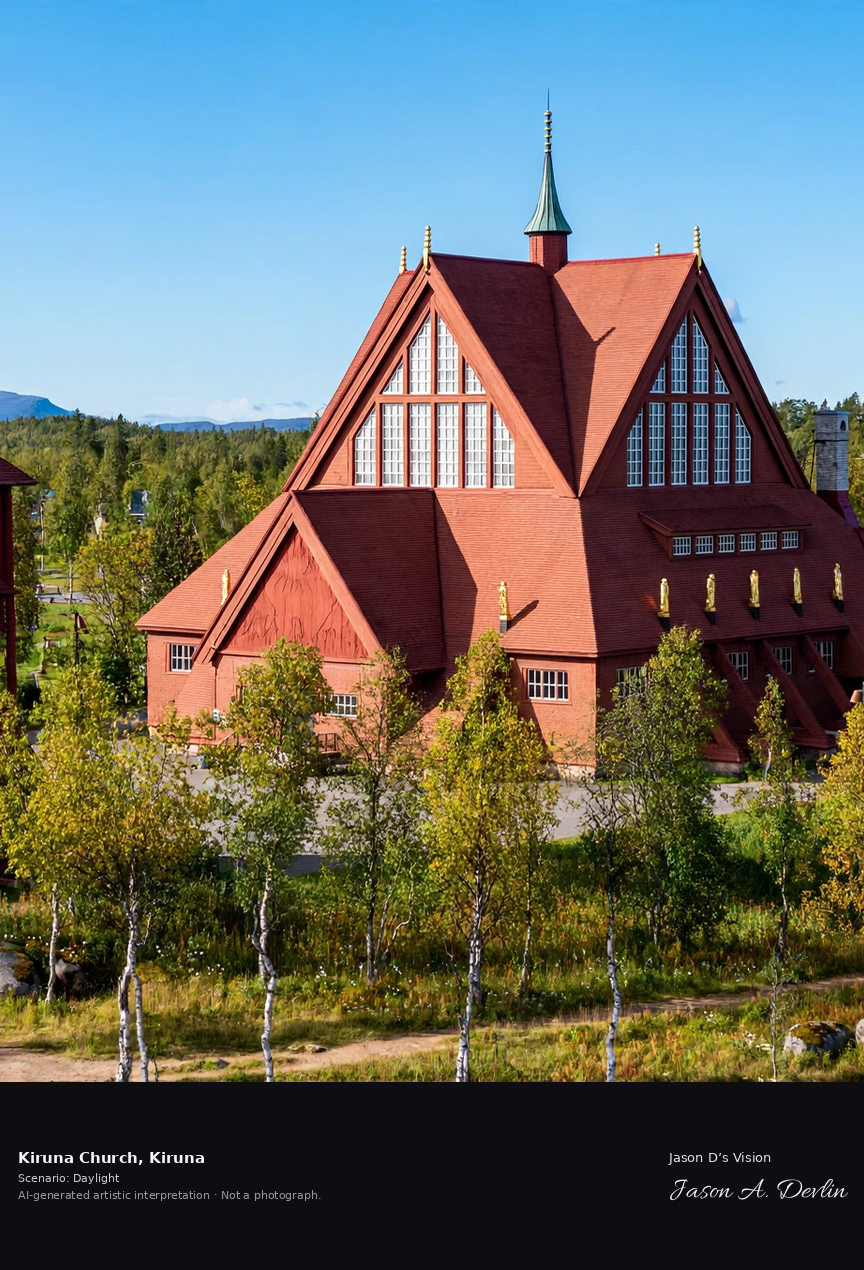
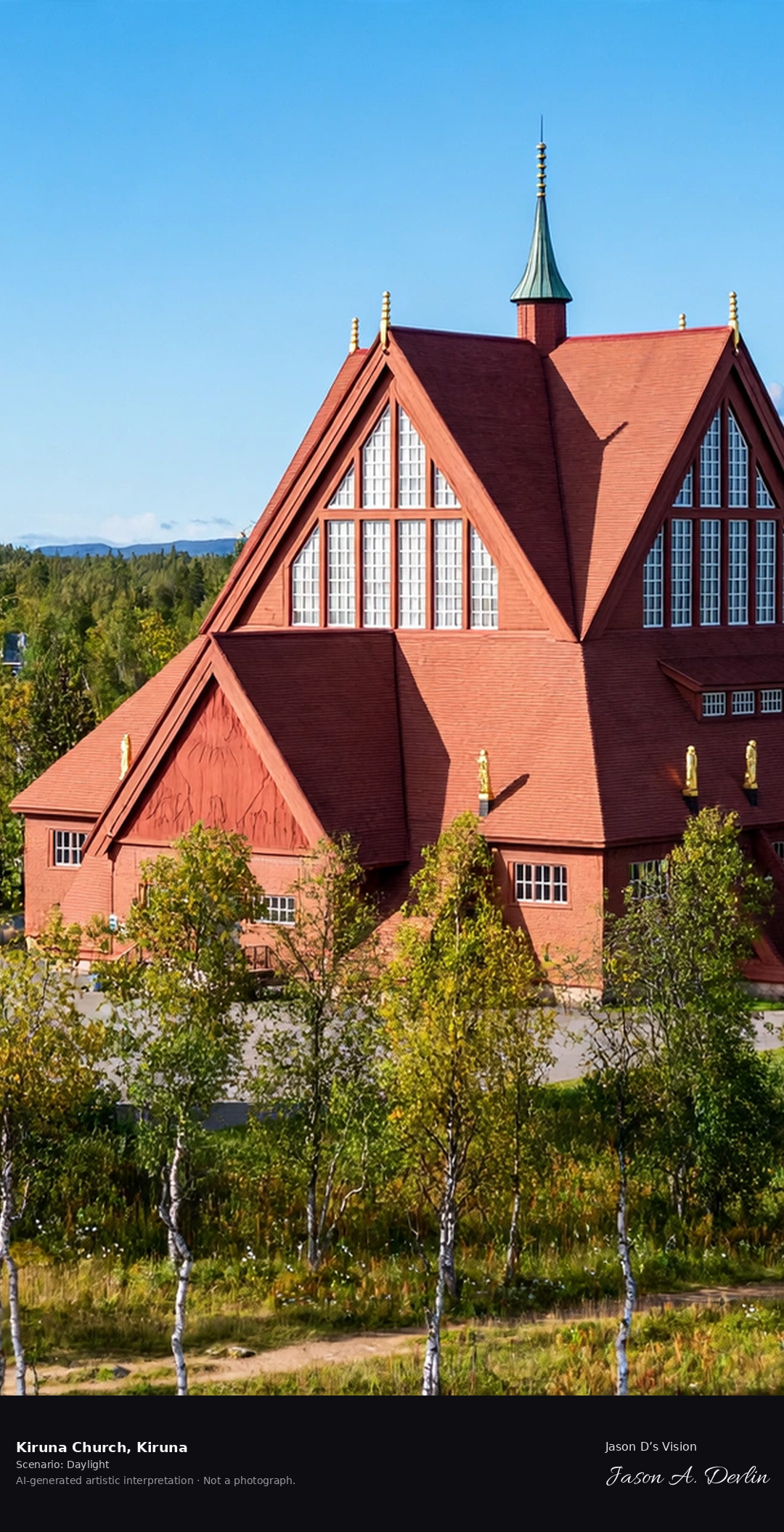
Kiruna Church's distinctive Sami-inspired wooden architecture, the dark timber kåta-shaped church with its shingled roof and detached bell tower against the Arctic sky. Voted Sweden's most beautiful church, now moved with the city.
Kiruna Church in Kiruna, Lapland — the Sami-inspired wooden kåta-shaped church with its dark timber shingled conical roof and detached bell tower, voted Sweden's most beautiful church. Arctic snowfields around the knoll, seen in bright natural daylight.
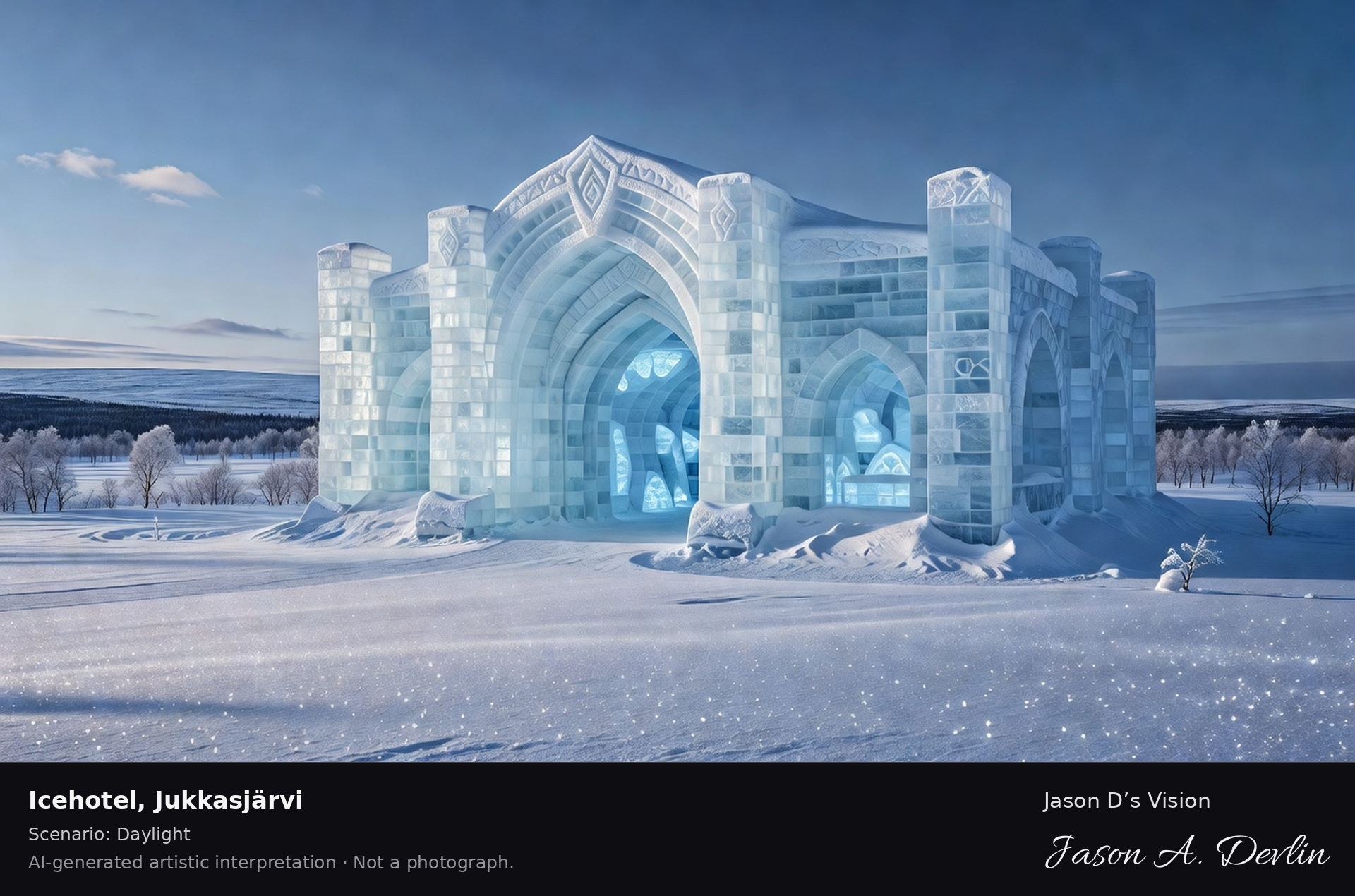
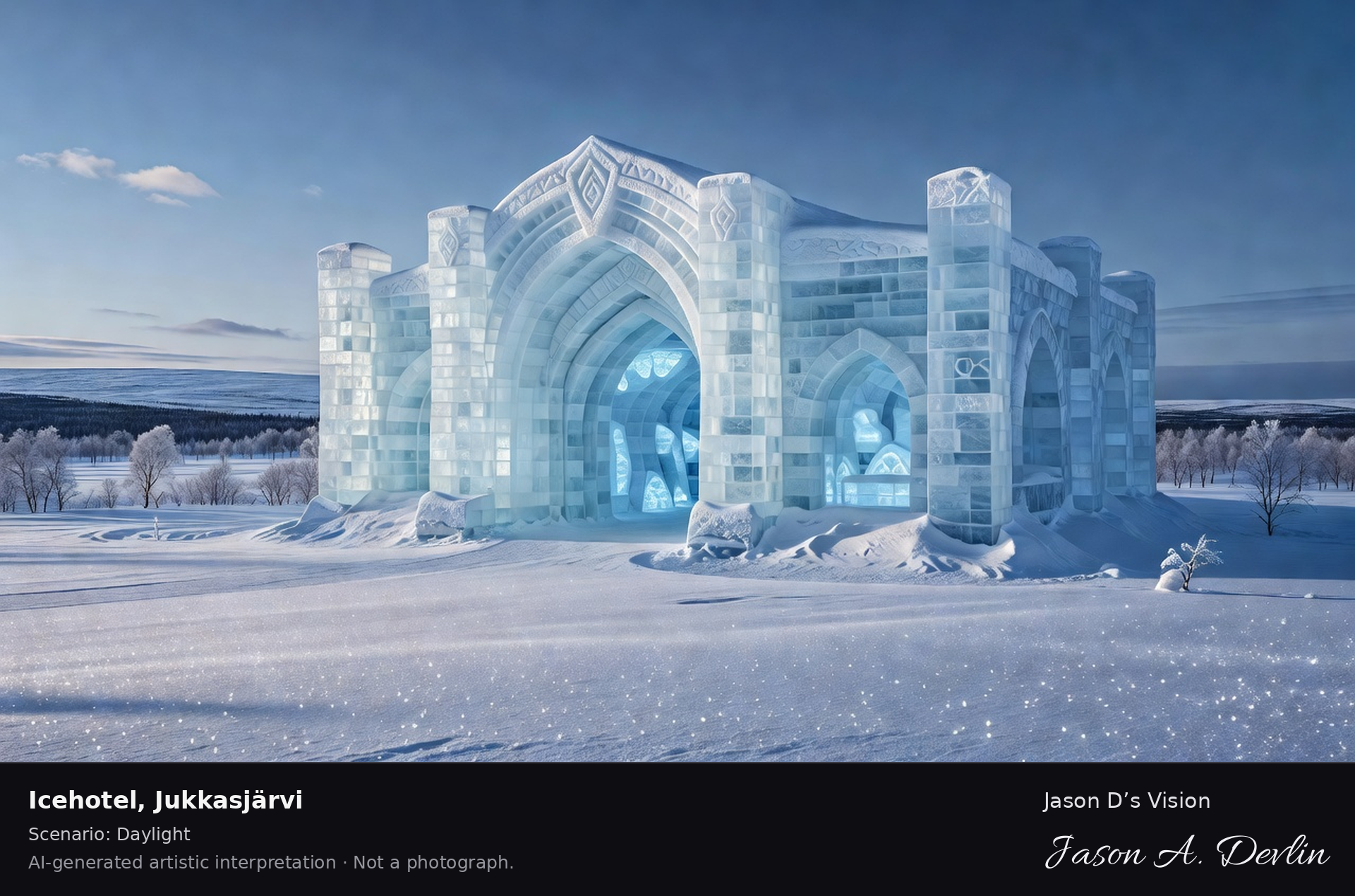
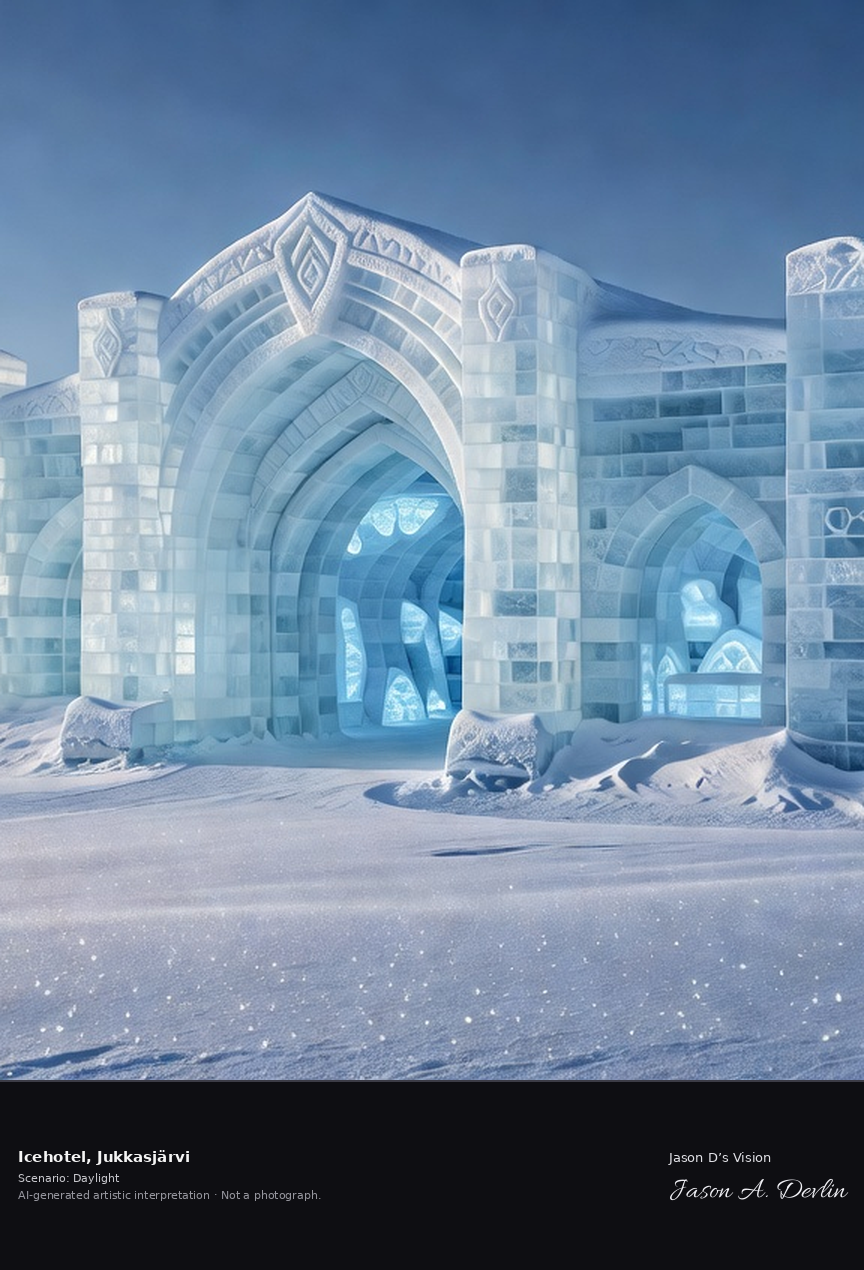
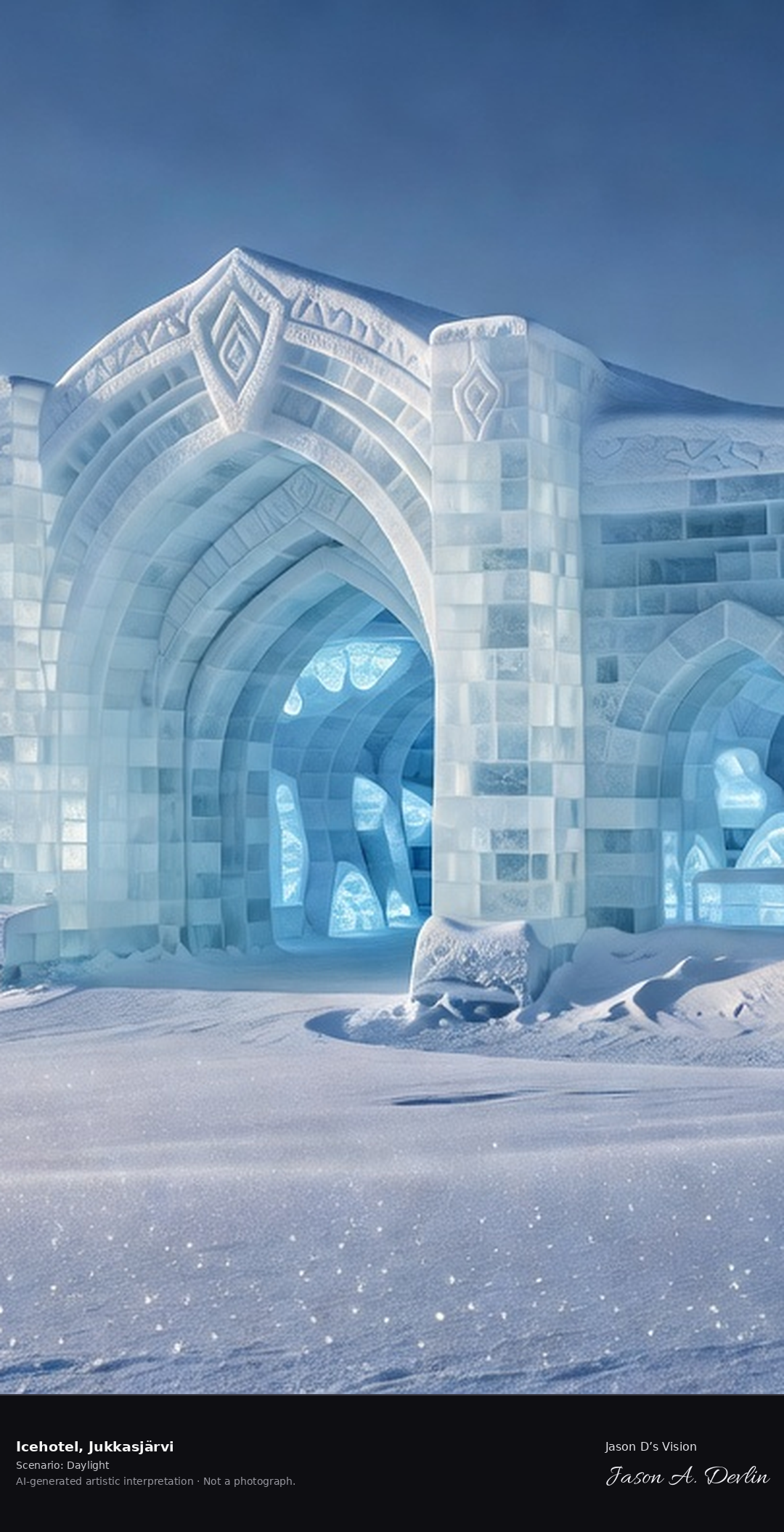
The Icehotel's main hall carved from Torne River ice, crystal-clear ice columns and sculpted suites glowing blue in the Arctic twilight. Rebuilt every winter from 2,500 tons of ice.
Icehotel in Jukkasjärvi, Lapland — the world-famous hotel rebuilt every winter from Torne River ice, its carved ice-block main hall with a grand central arch, sculpted ice columns and smaller side arches revealing glowing blue ice-sculpted suites. Snow-drifted grounds with sparse birch, seen in bright natural daylight.
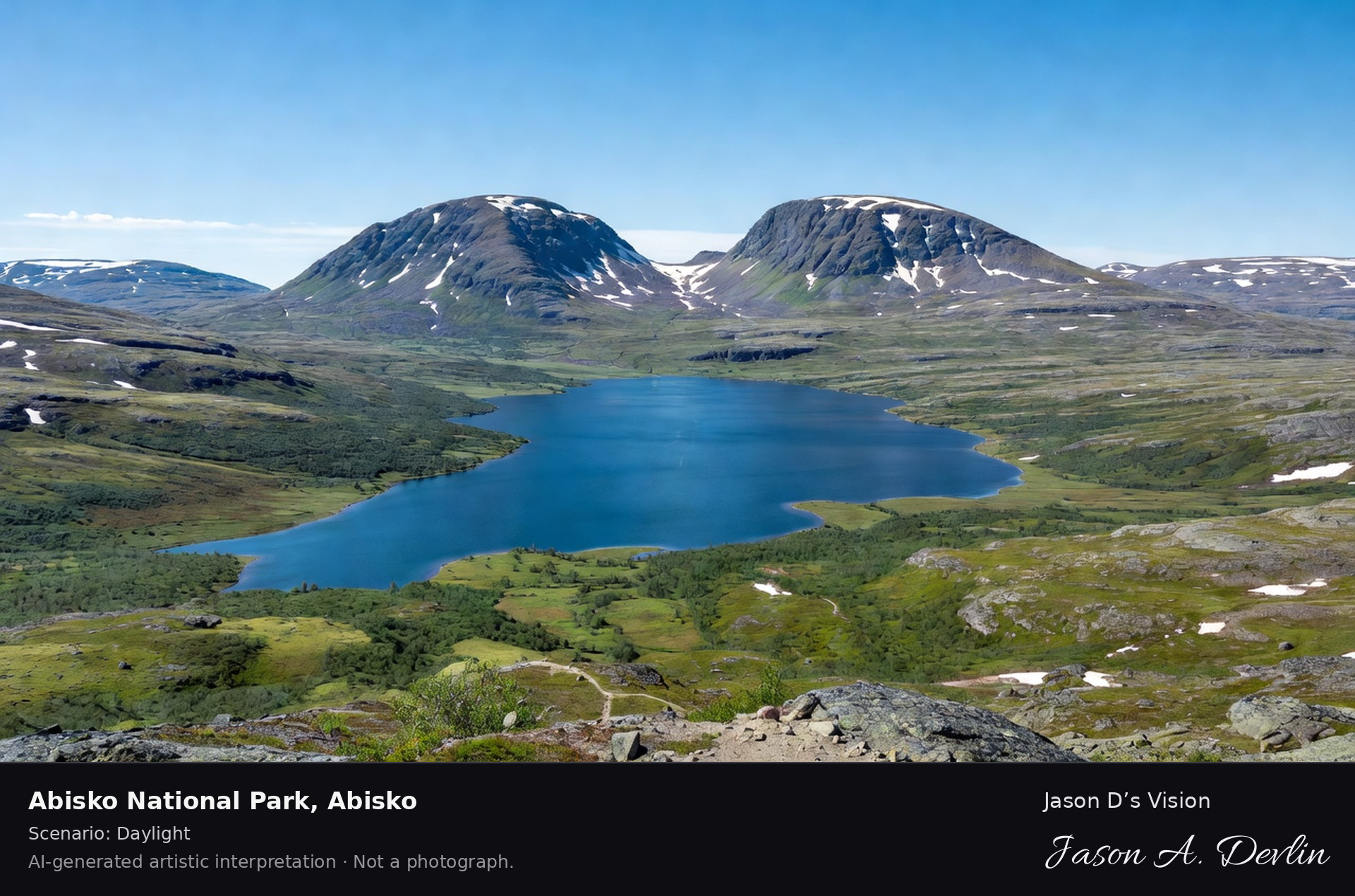
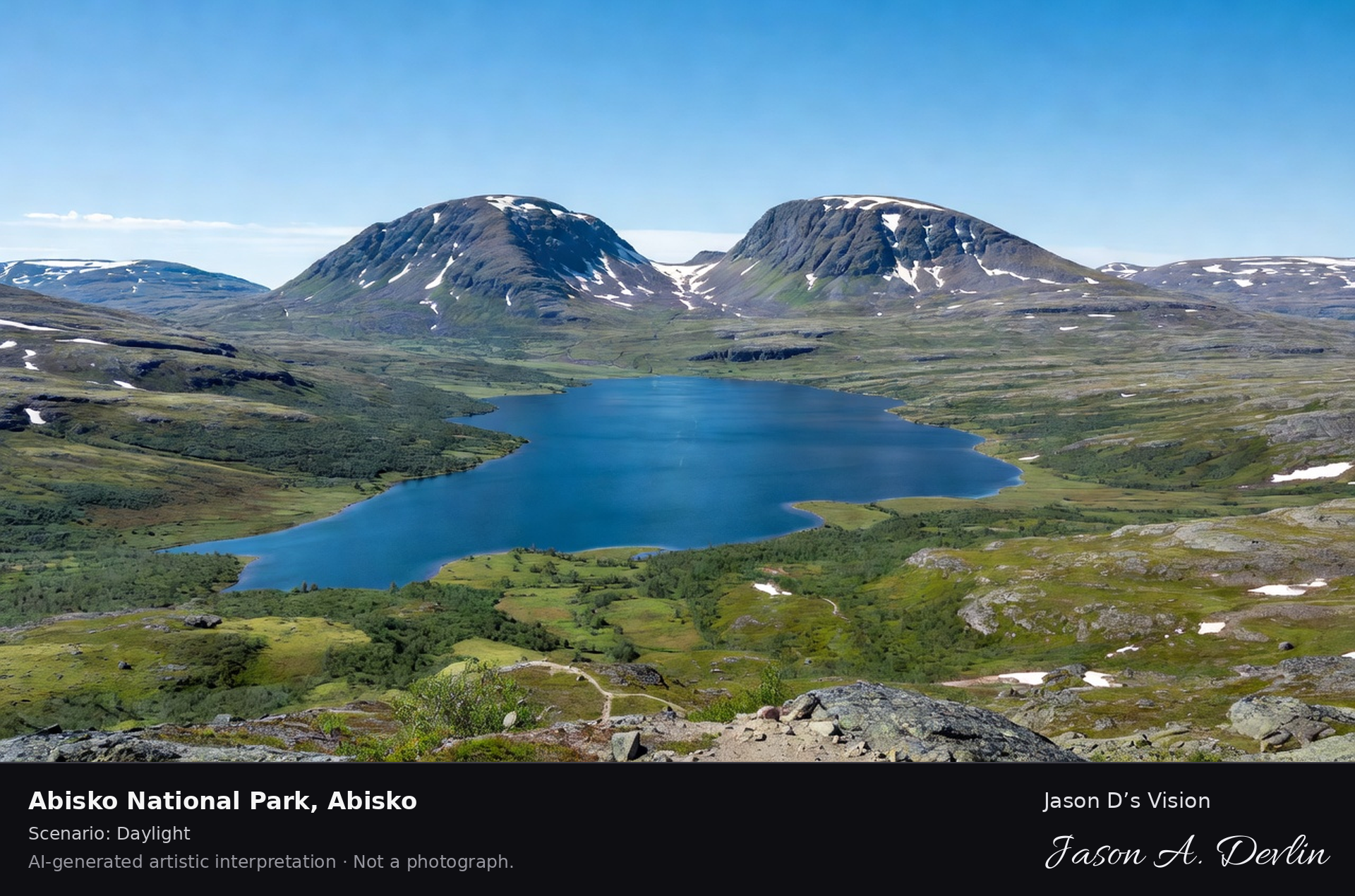
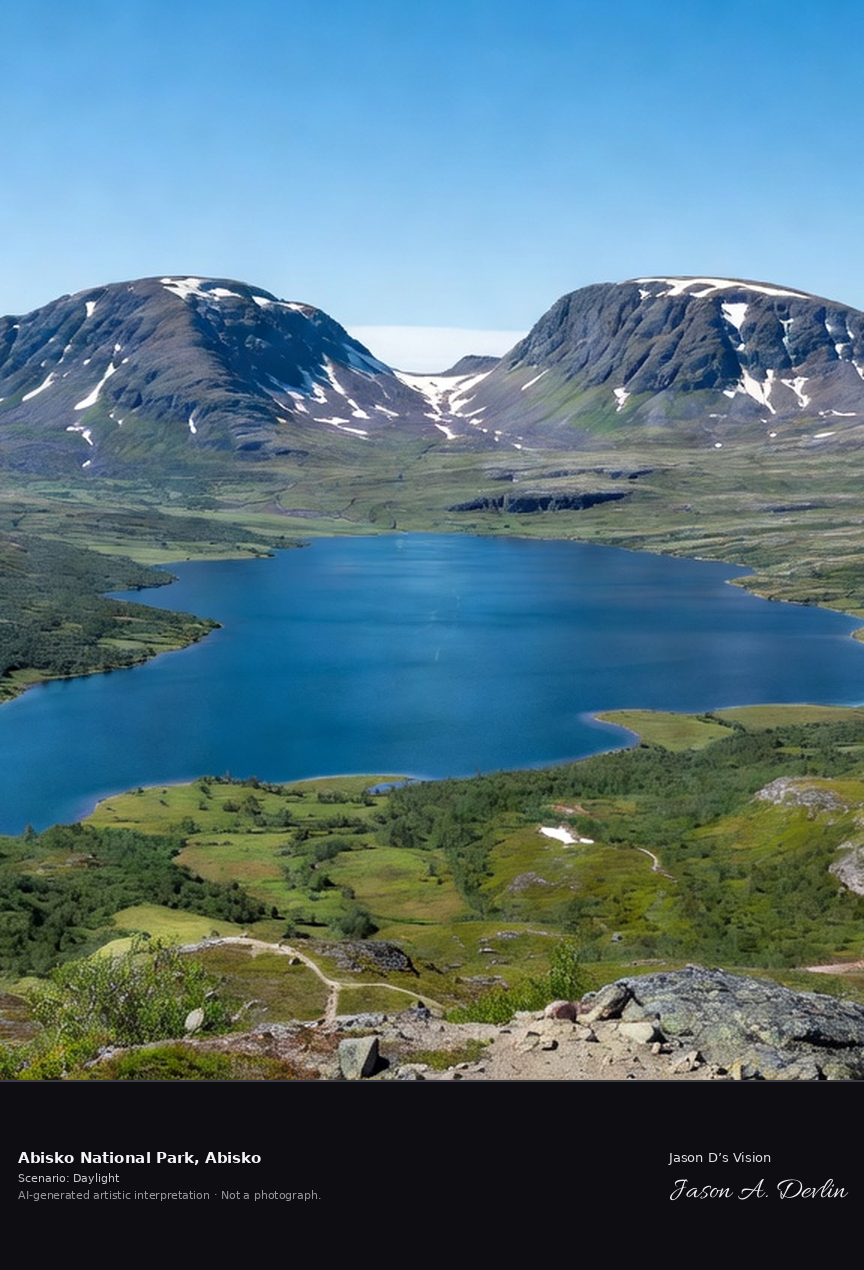
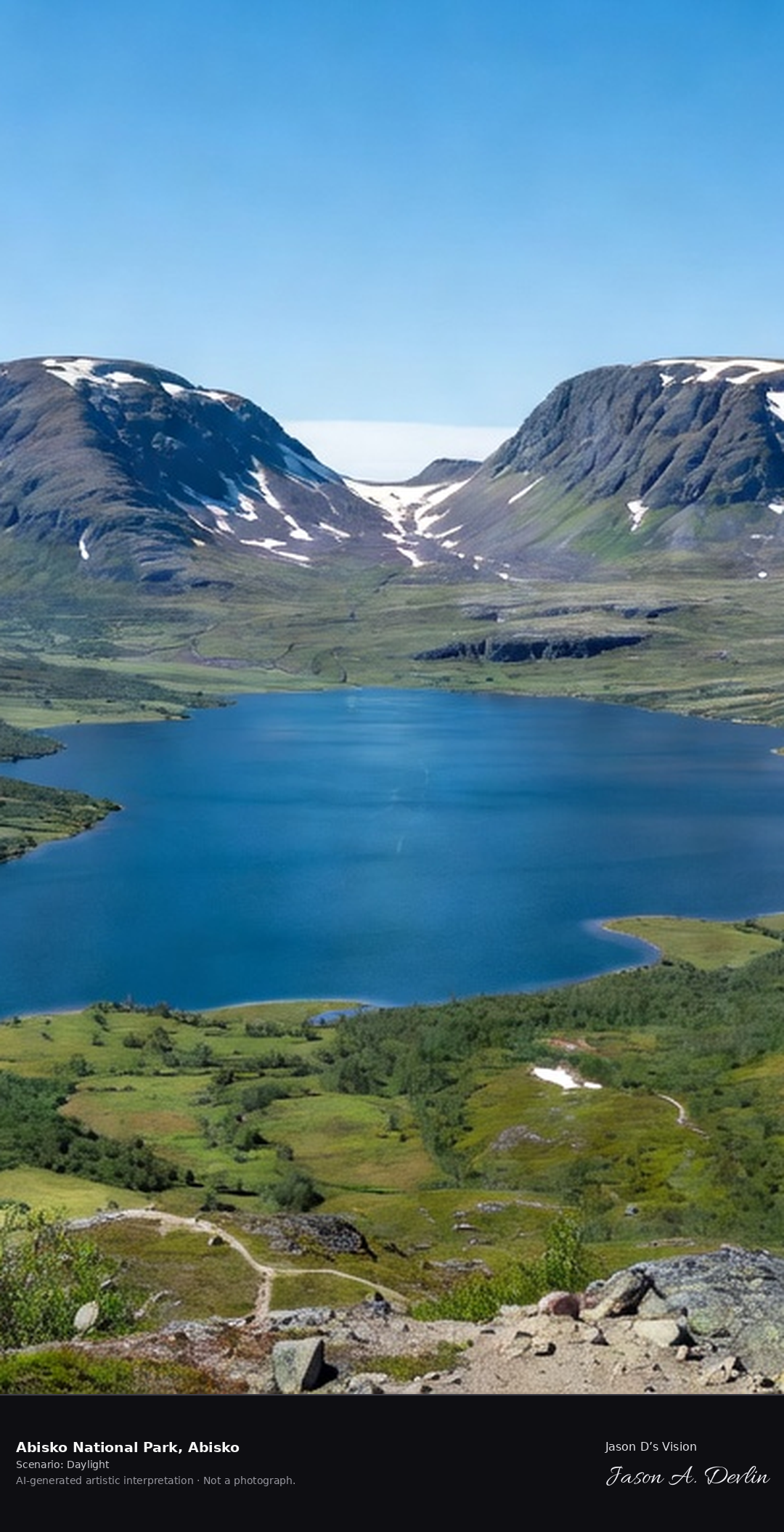
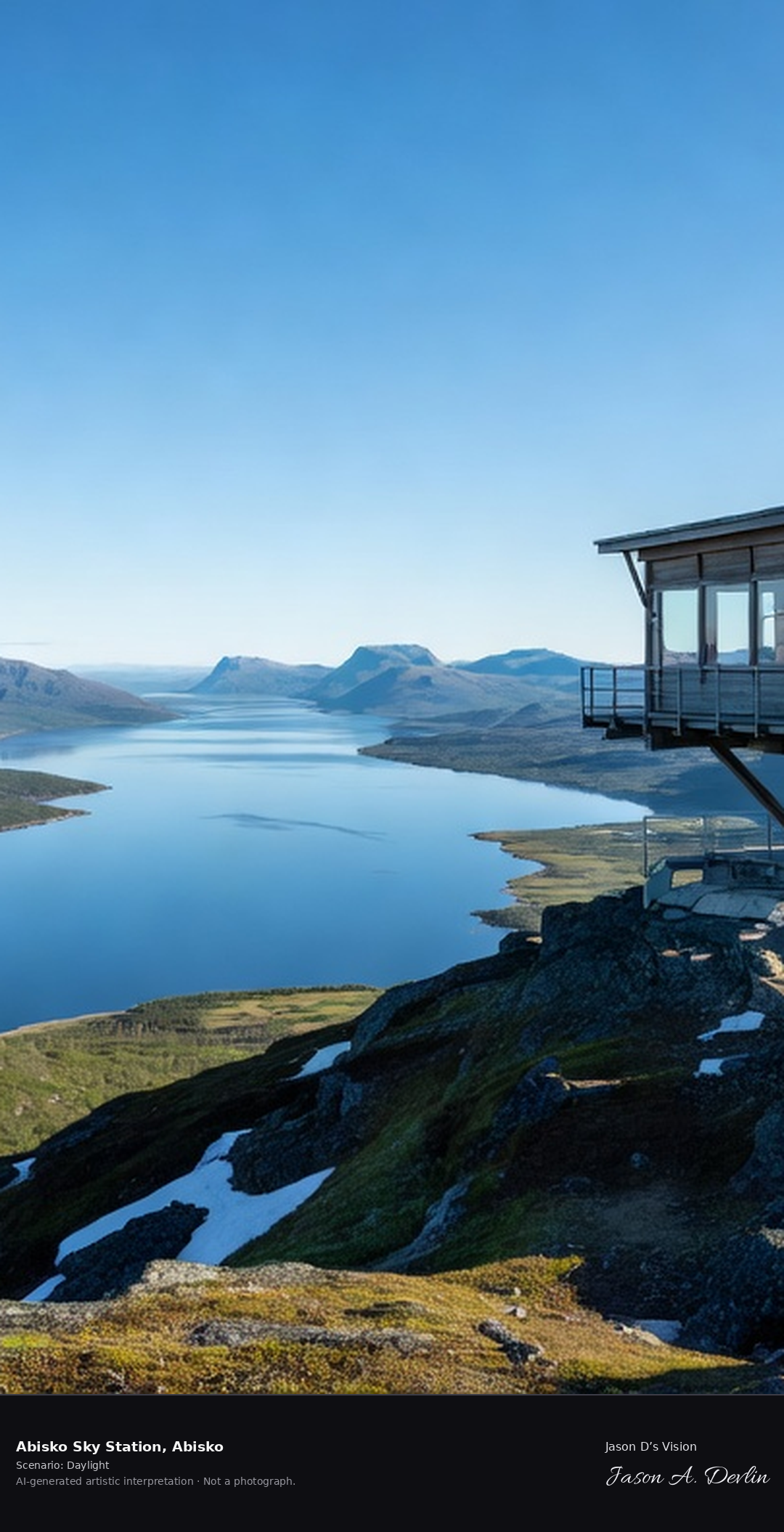
The Abisko valley with Torneträsk lake below and the Lapporten gap in the mountains beyond, viewed from the Sky Station at dusk. Sweden's premier northern lights destination in the rain shadow of the Scandes.
Abisko National Park in Abisko, Lapland — the Abisko valley floor with Tornetrask lake below and the Lapporten mountain gap centred in the distance, viewed from the elevated Sky Station side, with snow-flecked Scandes ridges, a rocky trail in the foreground, and a clear blue summer sky. Seen in bright natural daylight.
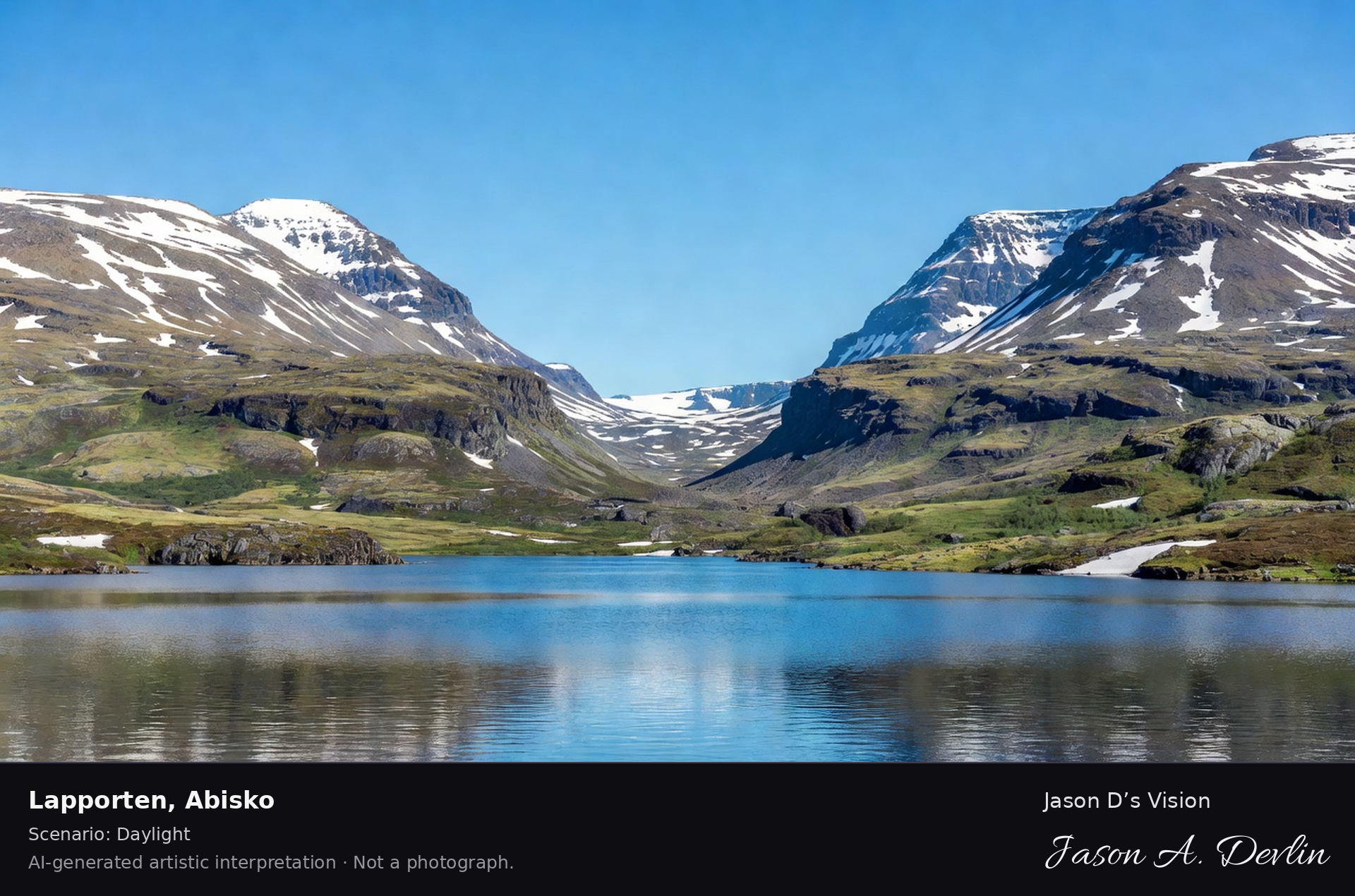
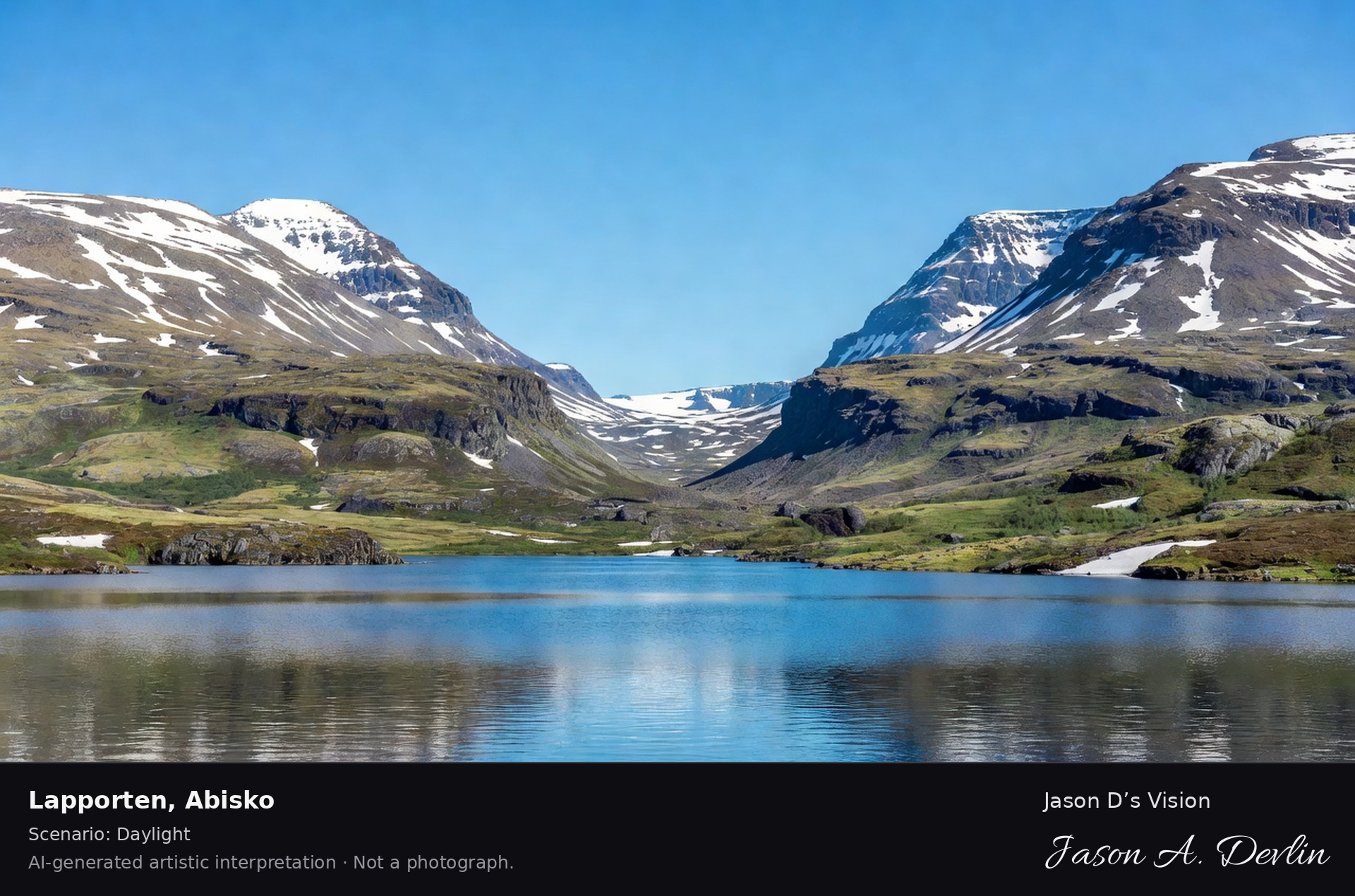
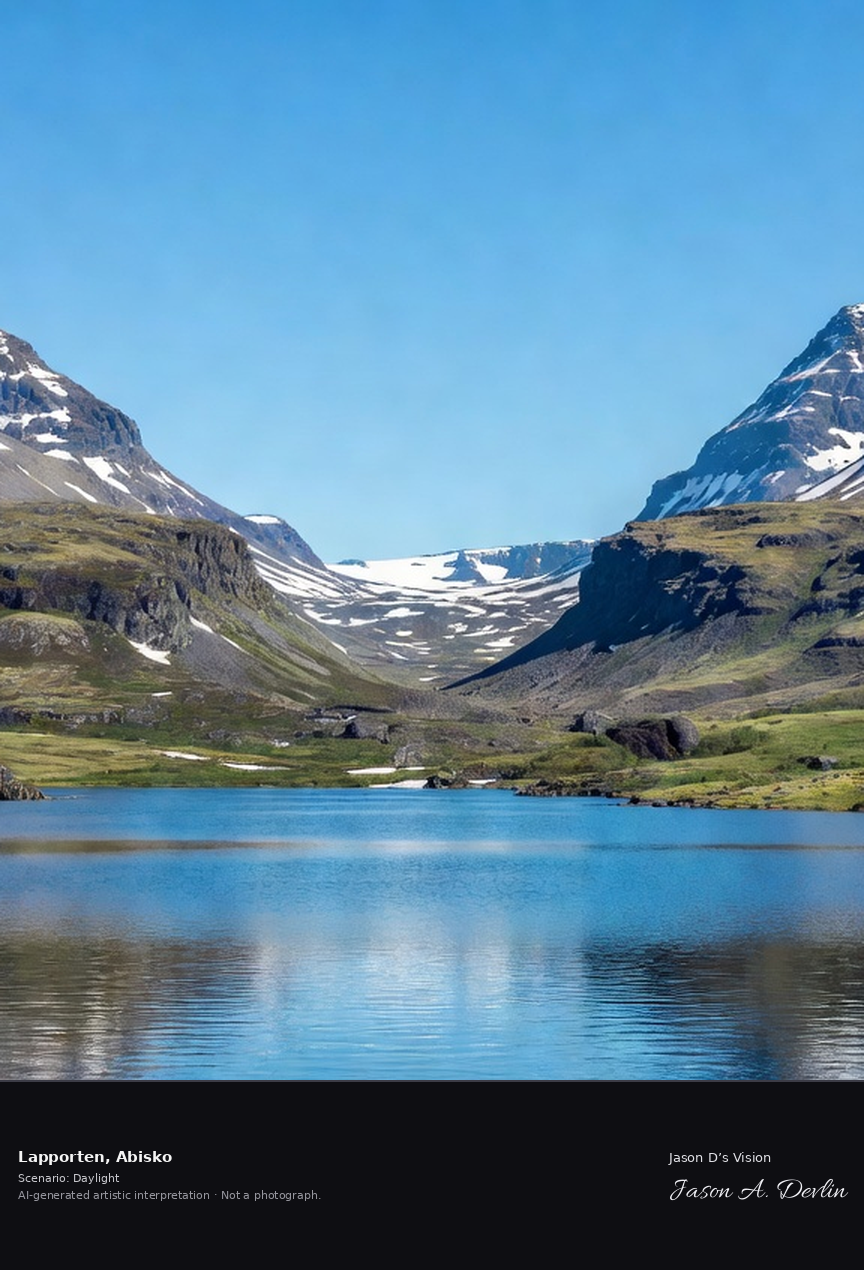
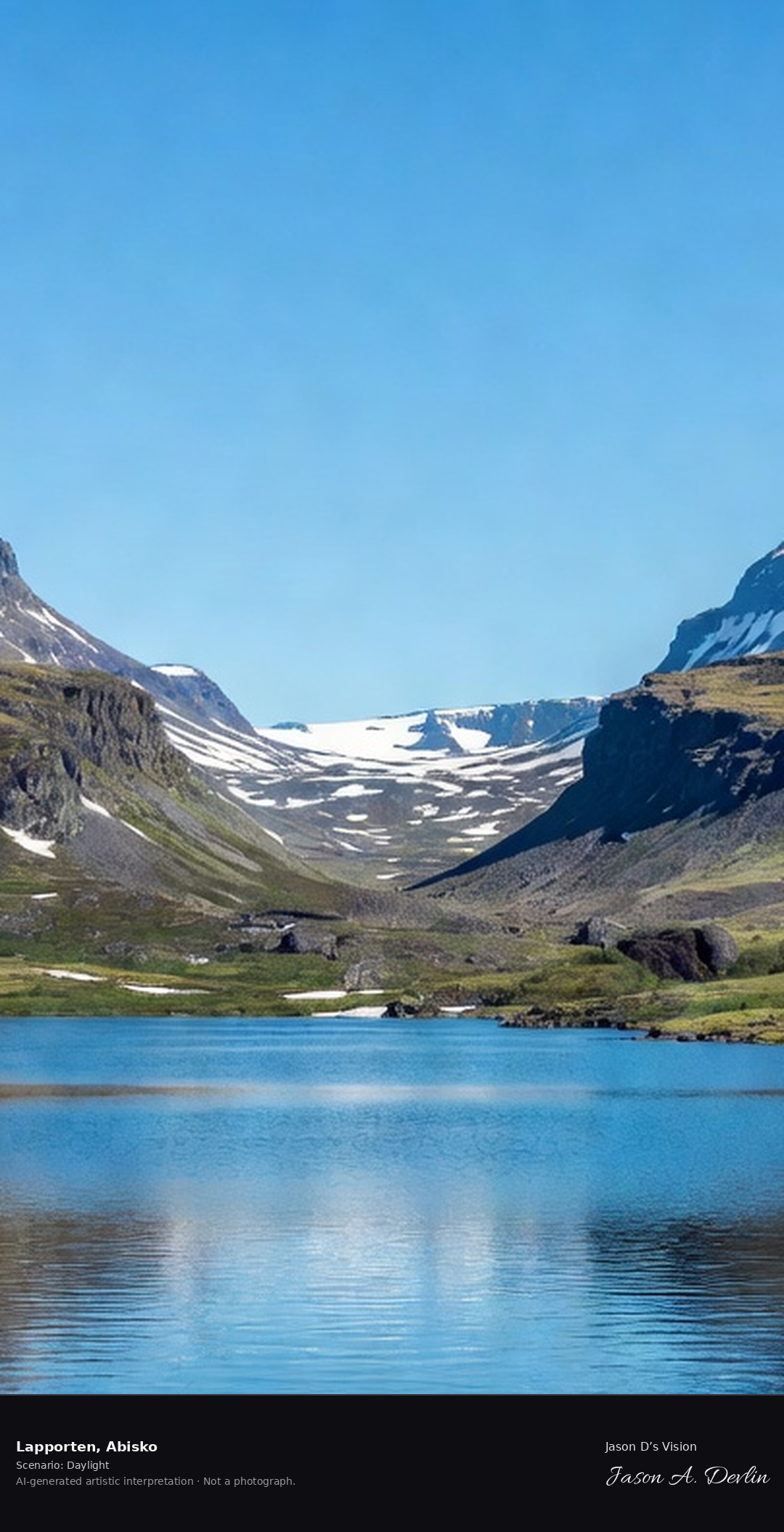
Lapporten's perfect U-shaped mountain gap between Tjuonatjakka and Nissuntjakka, the iconic 'Lapland Gate' viewed across Lake Torneträsk. Sweden's most photographed mountain silhouette.
Lapporten in Abisko, Lapland — Sweden's most photographed mountain silhouette: the perfect U-shaped Lapland Gate gap between Tjuonatjakka and Nissuntjakka viewed across Lake Tornetrask, with snow-flecked Scandes ridges on both sides and a clear blue summer sky. Seen in bright natural daylight.
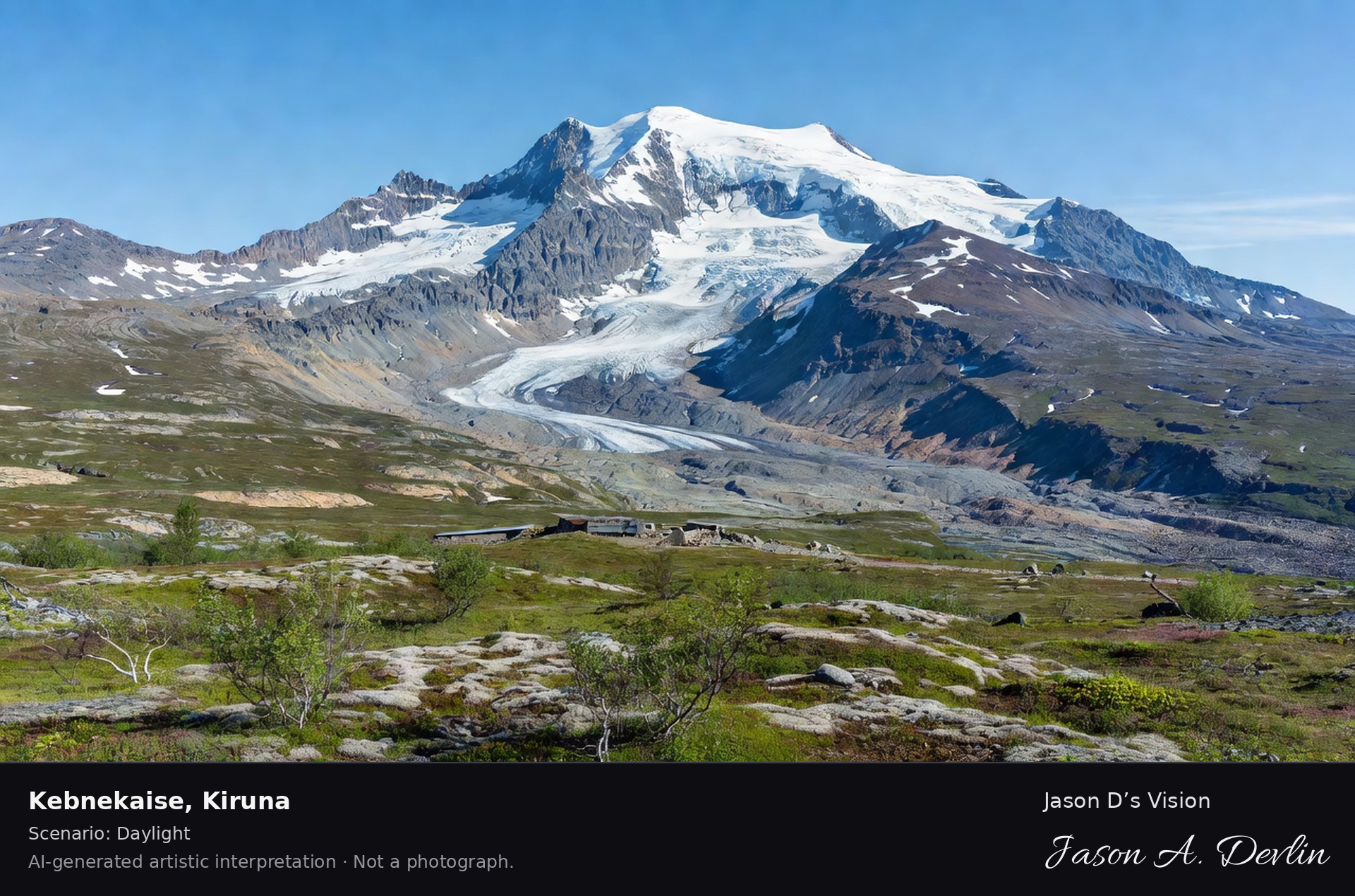
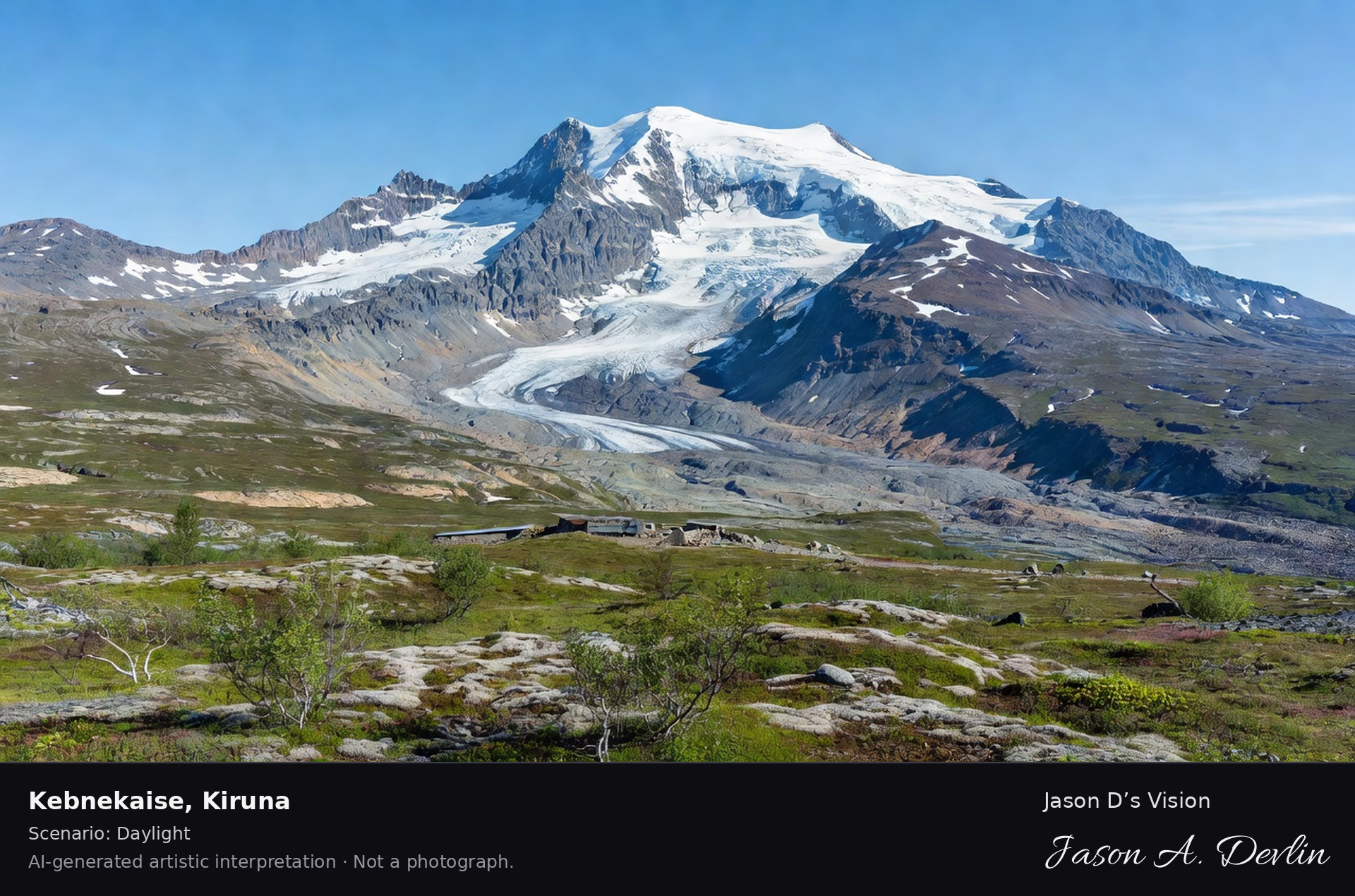
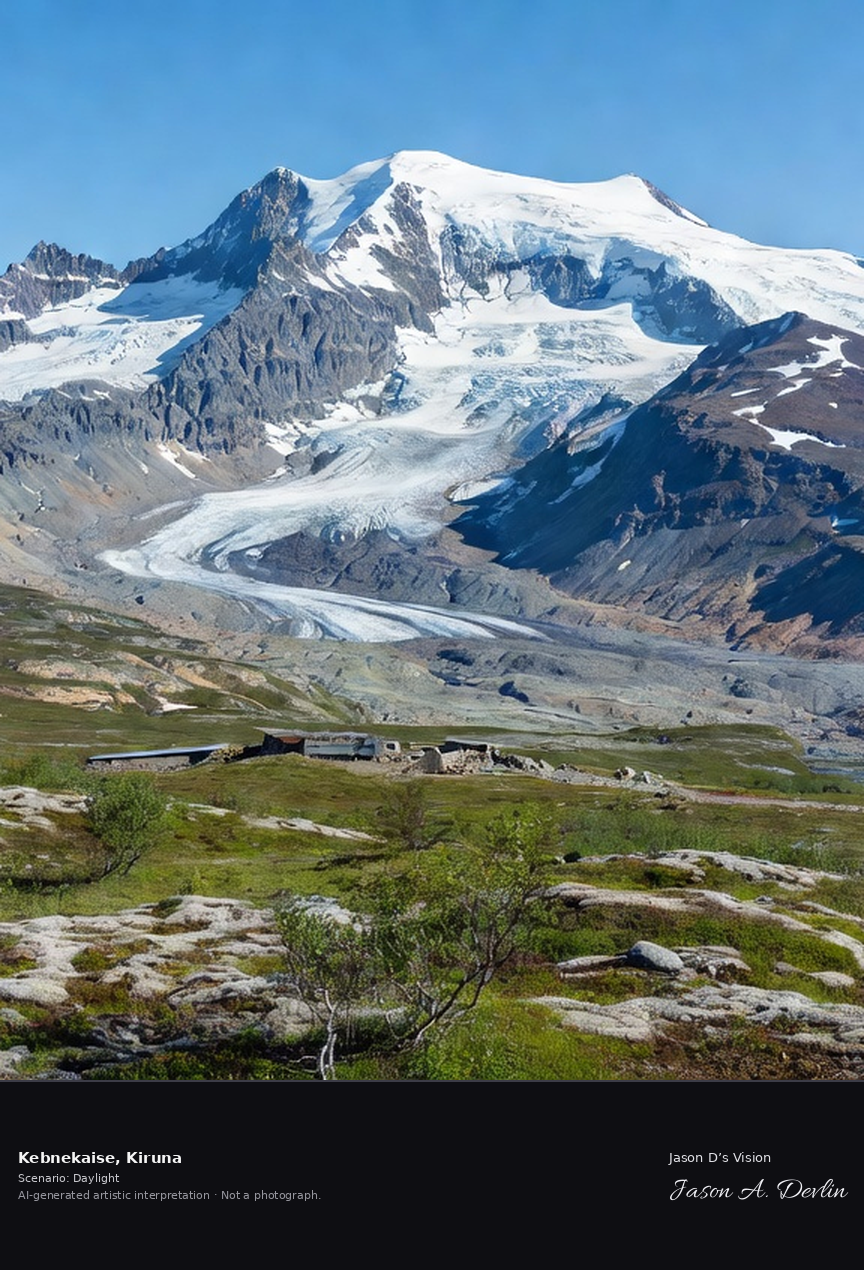
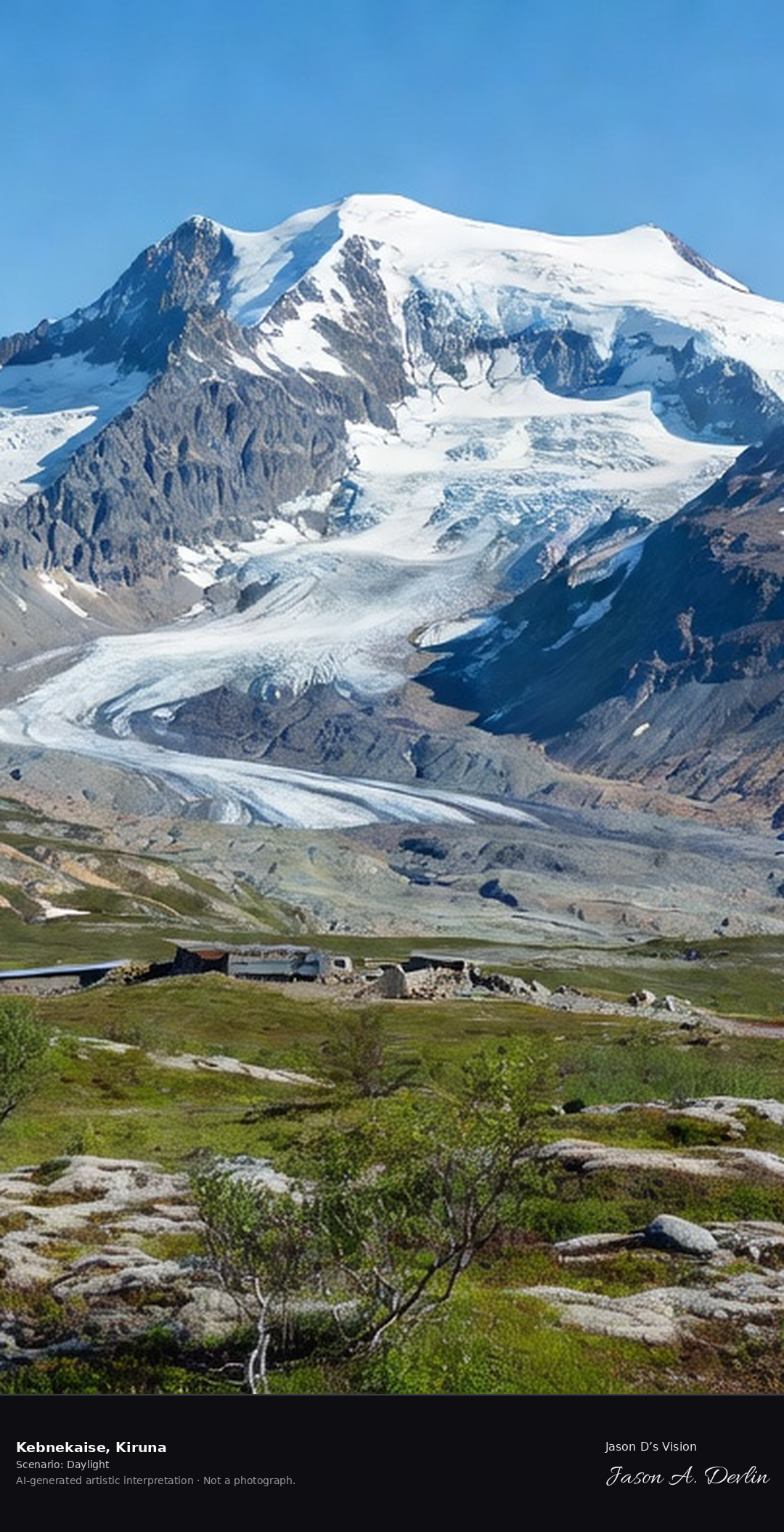
Kebnekaise's glaciated summit massif rising above the Tarfala valley, Sweden's highest mountain at 2,097 meters with its shrinking southern glacier. Viewed from the mountain station with Arctic tundra in the foreground.
Kebnekaise in Kiruna, Lapland — Sweden's highest mountain at 2,097 meters: the glaciated summit massif with its shrinking southern glacier rising above the Tarfala valley, Arctic tundra in the foreground. Seen in bright natural daylight.
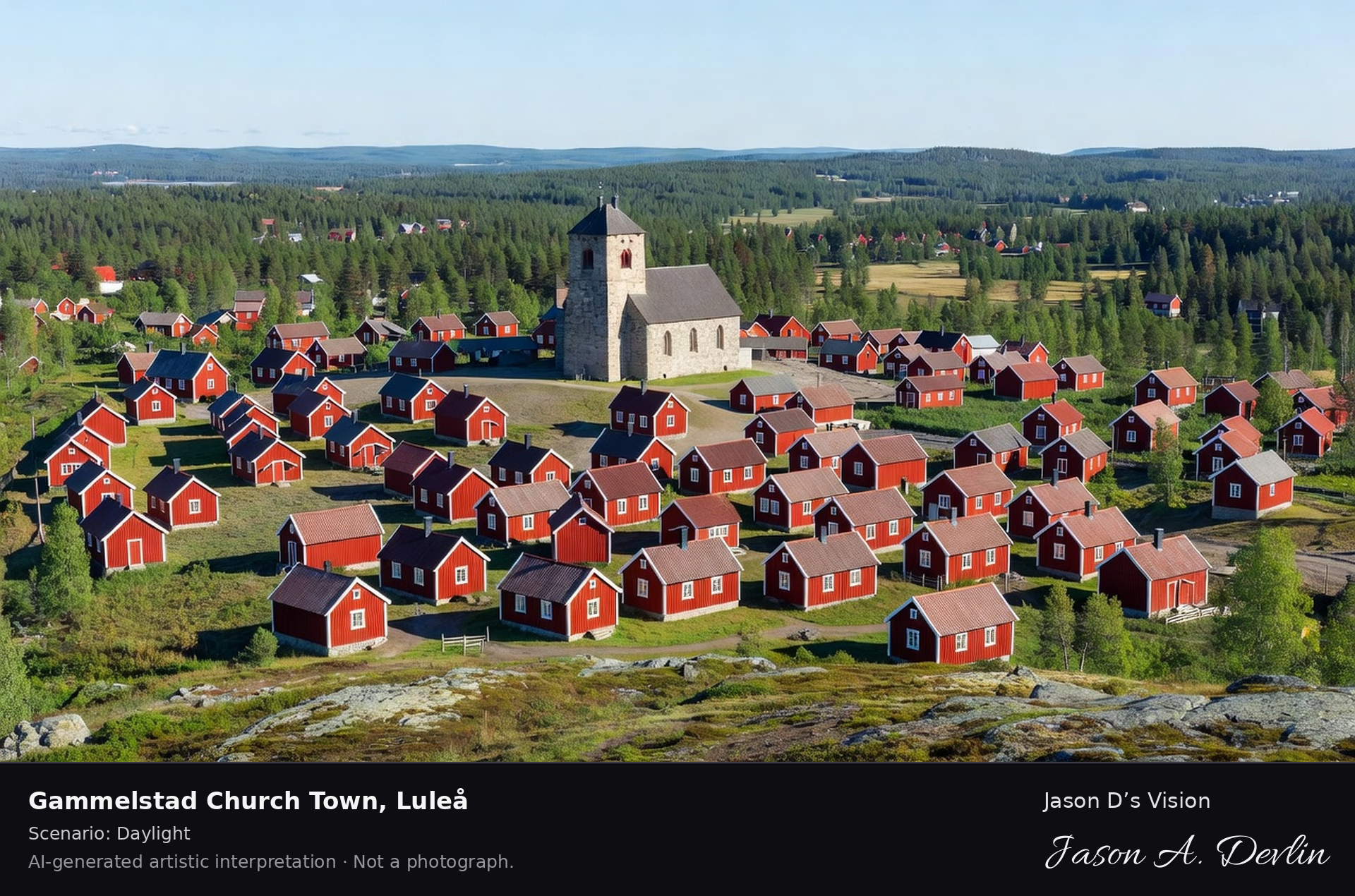
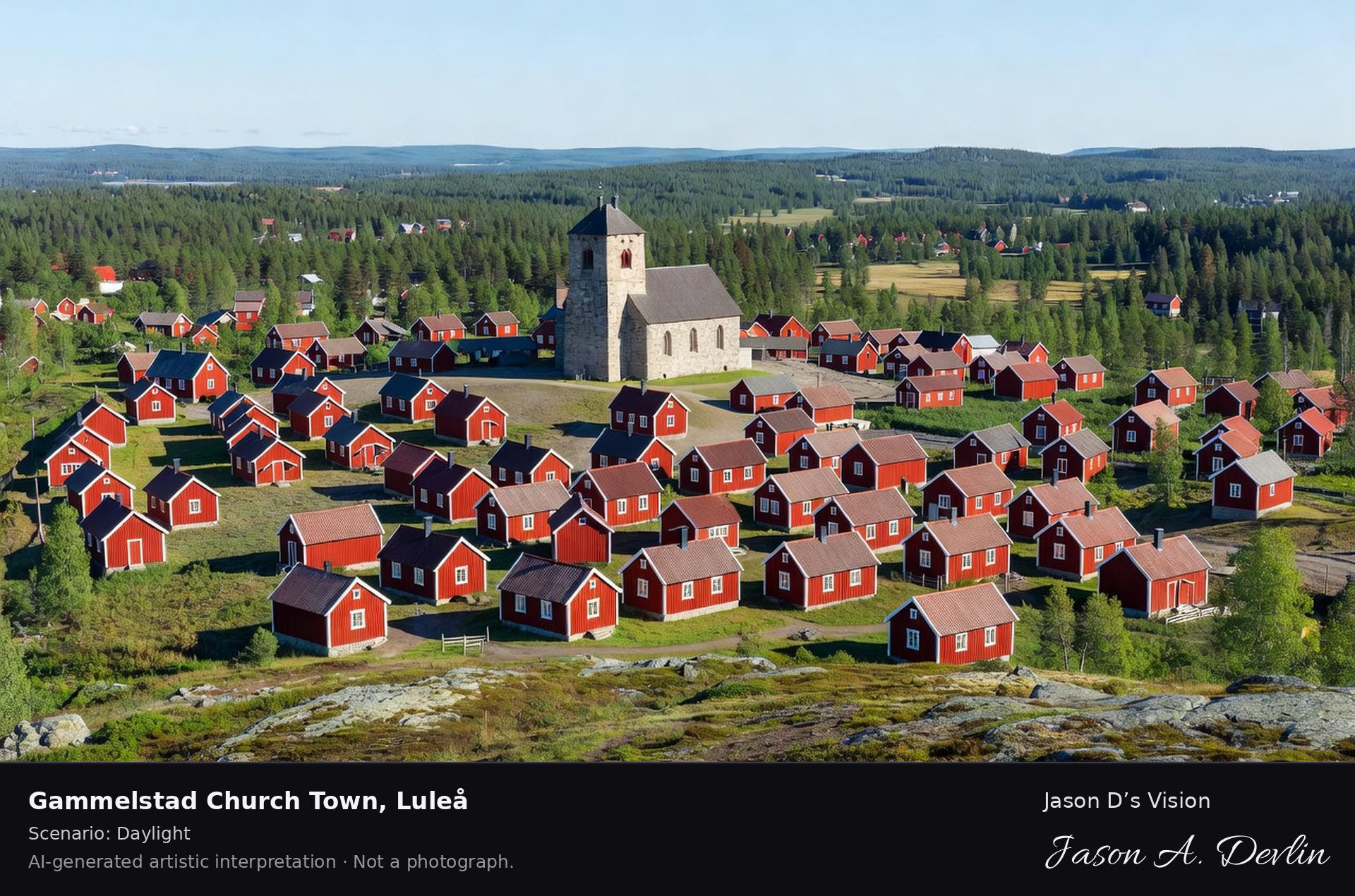
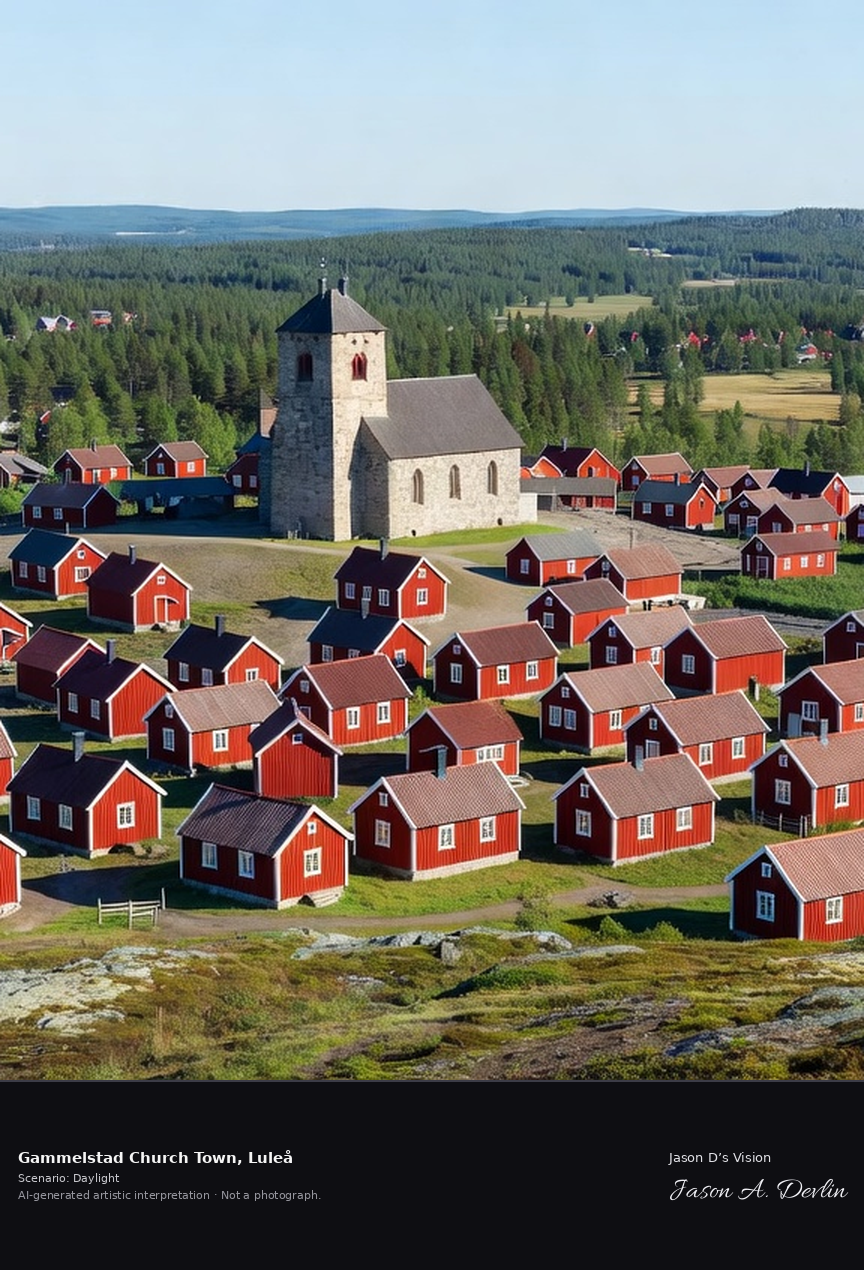
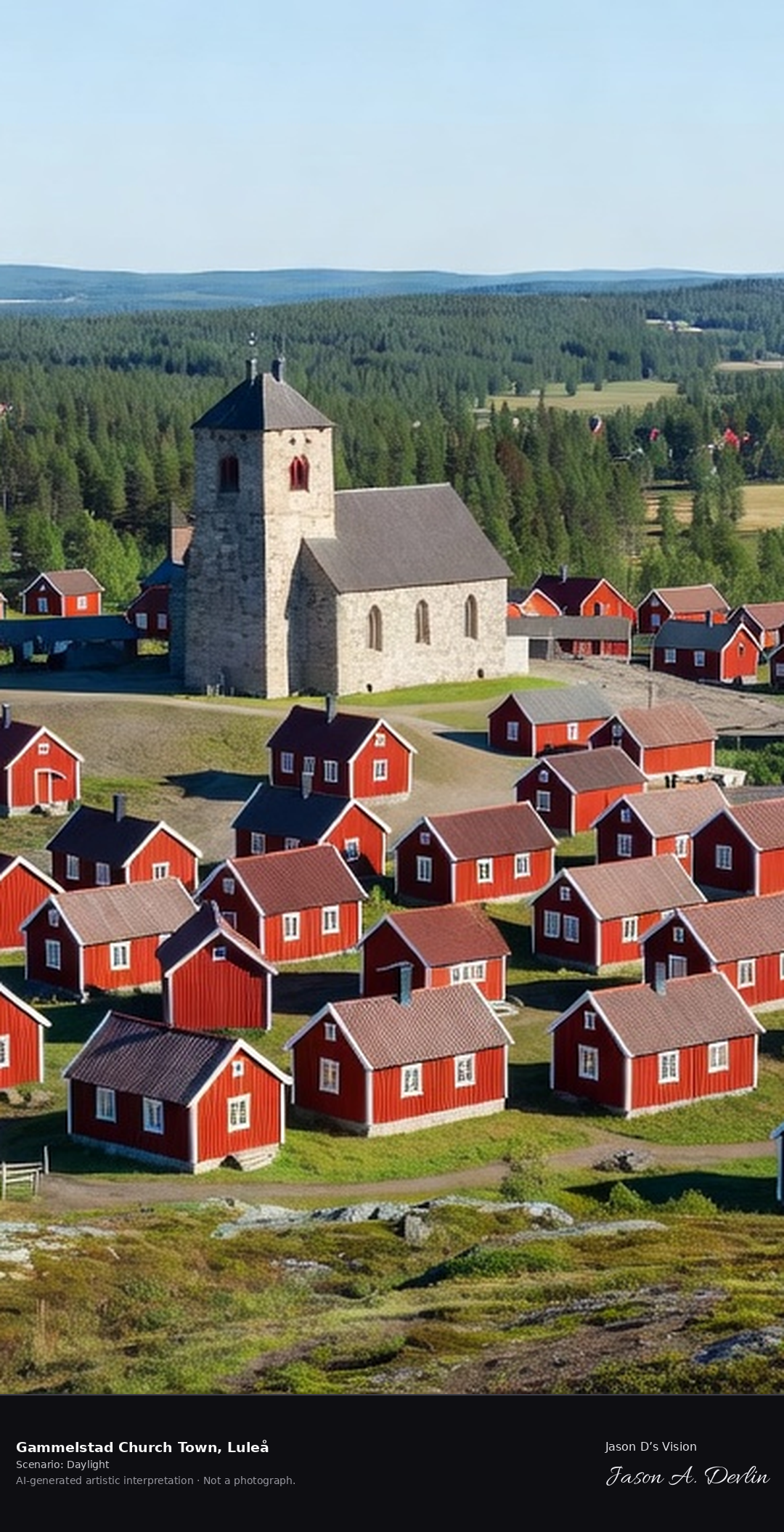
Gammelstad's 424 red wooden church cottages clustered around the 15th-century Nederluleå stone church, the UNESCO-listed church town viewed from the hill above. A perfectly preserved Sami and settler gathering place.
Gammelstad Church Town in Luleå: the 424 red wooden church cottages of the UNESCO-listed church town clustered around the 15th-century Nederluleå stone church, in bright natural daylight.
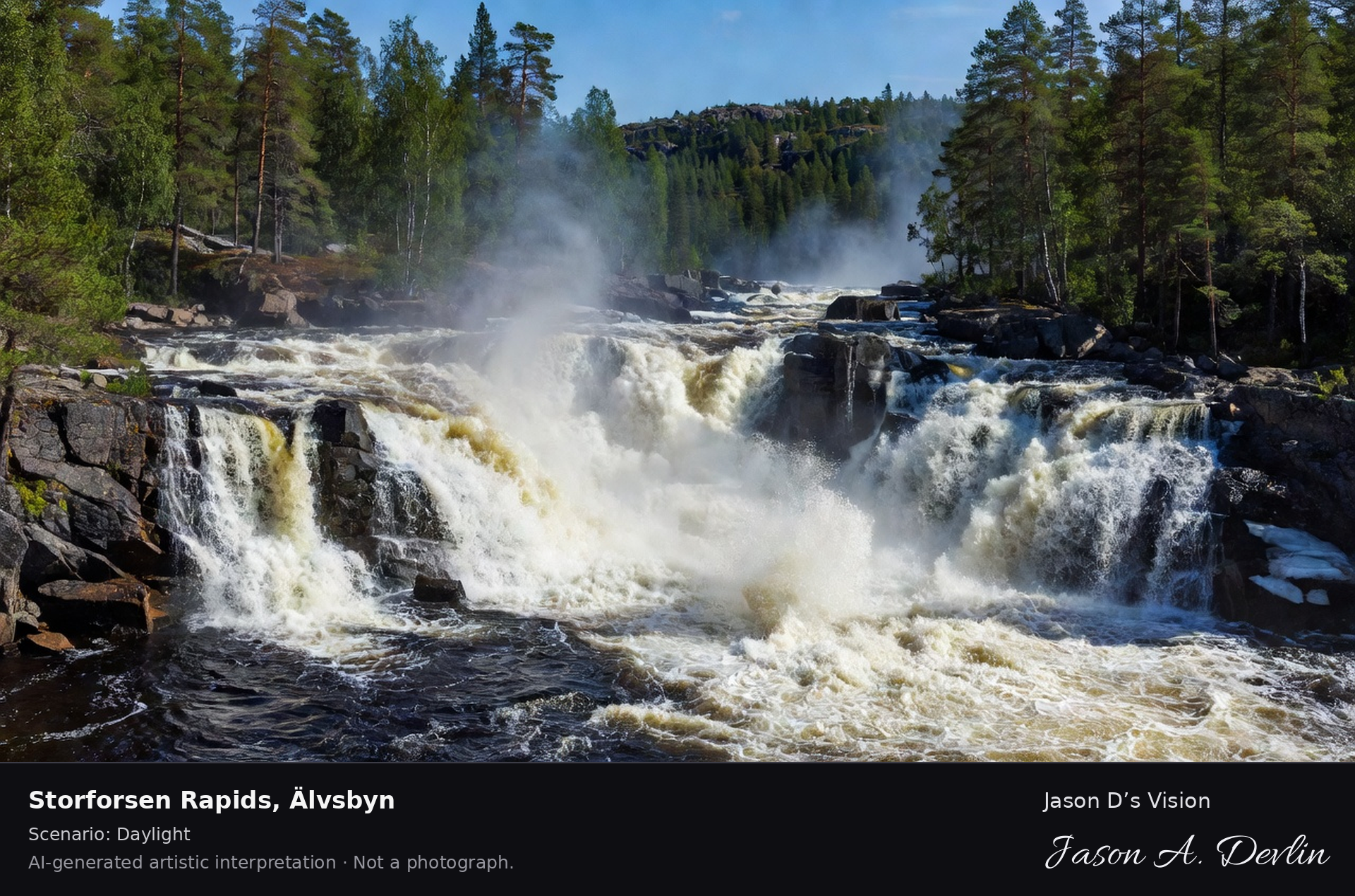
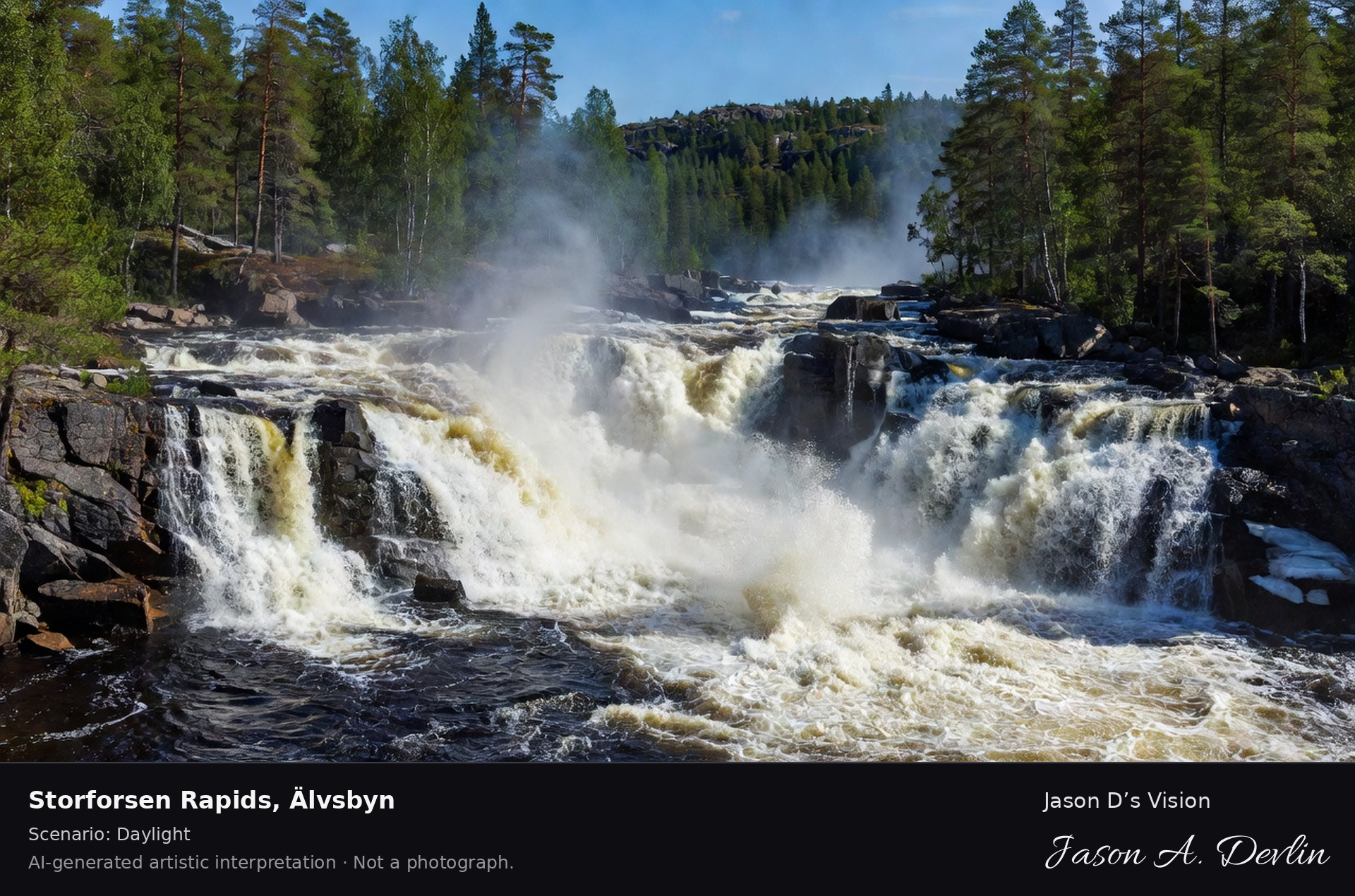
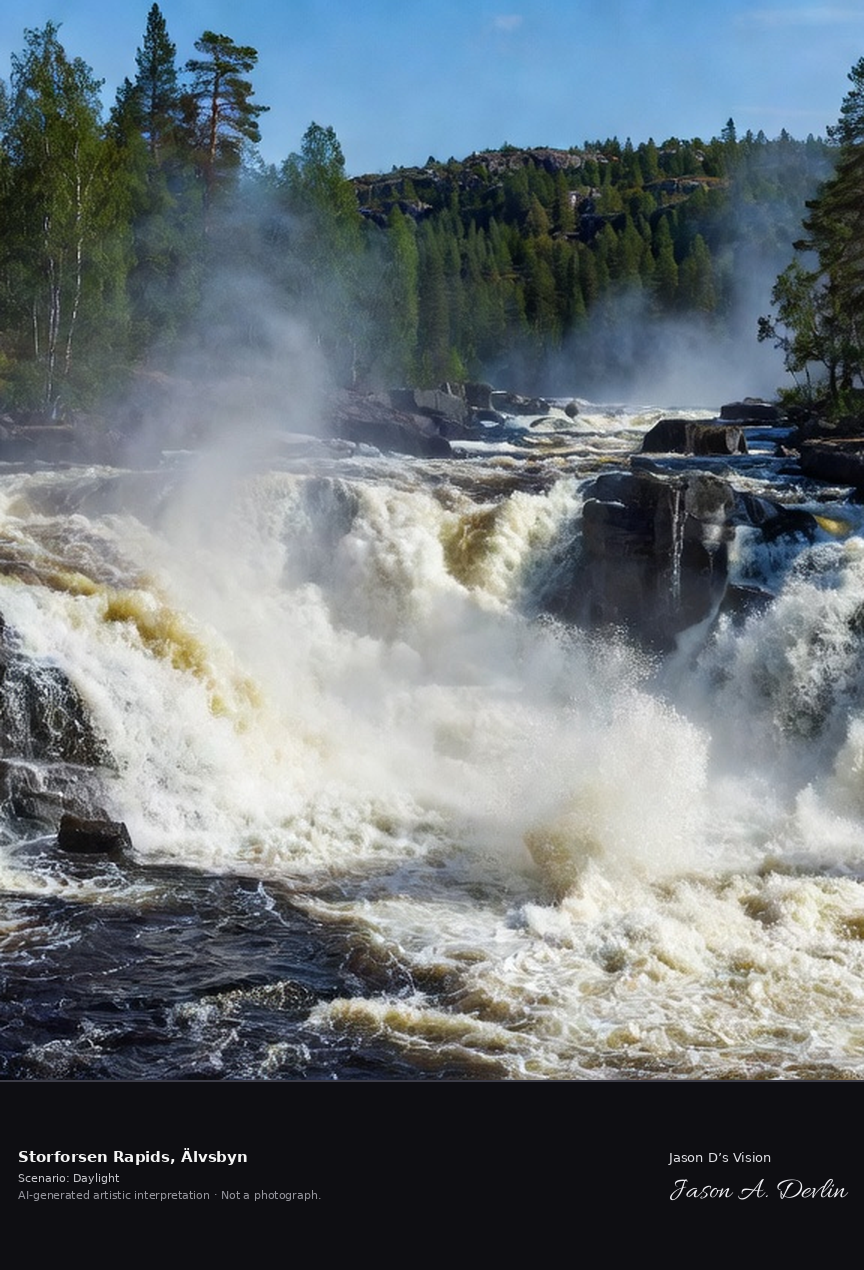
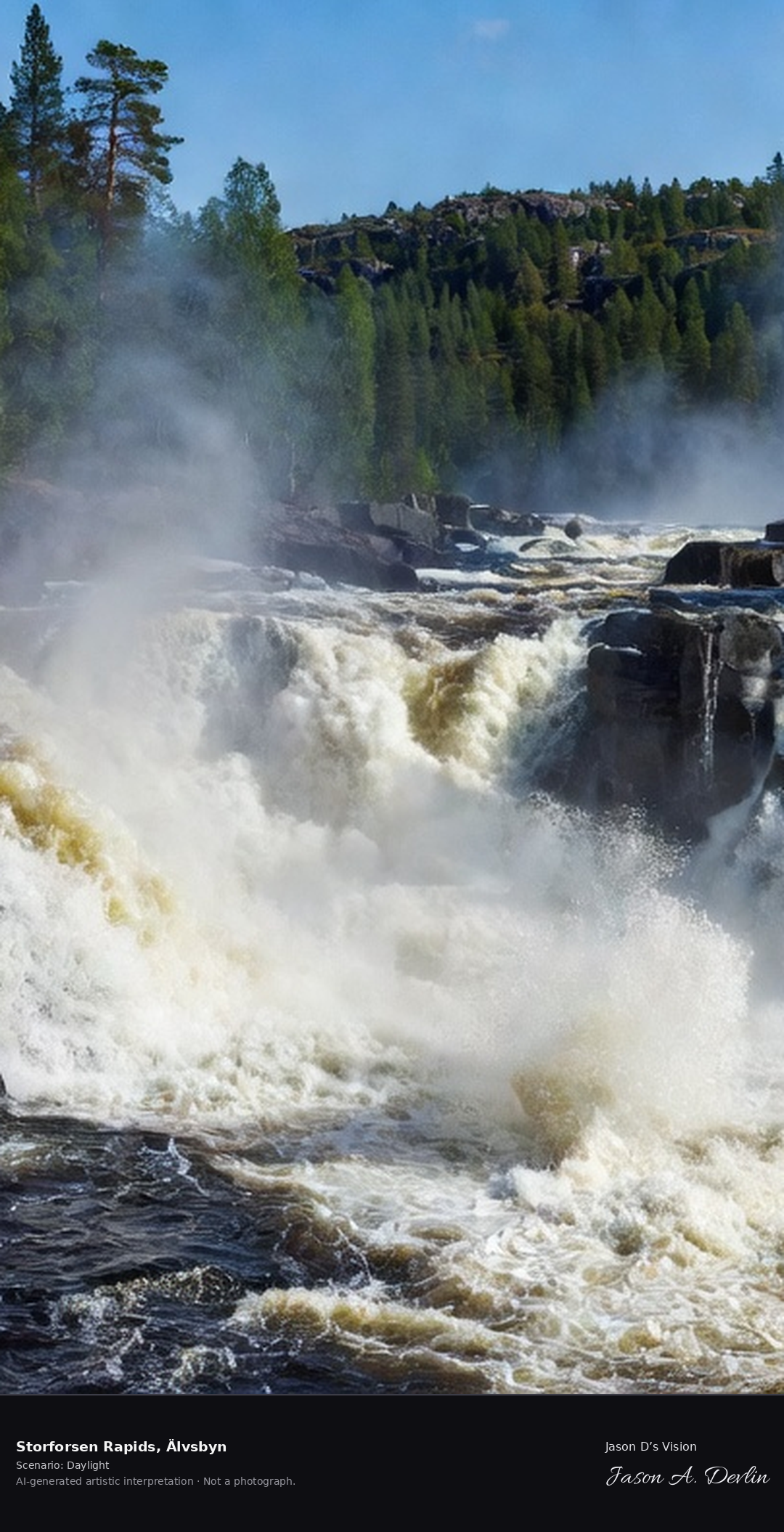
Storforsen's thundering rapids, Scandinavia's largest unregulated whitewater stretch, water exploding over the rocks in the Pite River with spray rising through the pines. A raw display of northern river power.
Storforsen Rapids in Älvsbyn: Scandinavia's largest unregulated whitewater stretch, water exploding over the rocks in the Pite River with spray rising through the pines, in bright natural daylight.
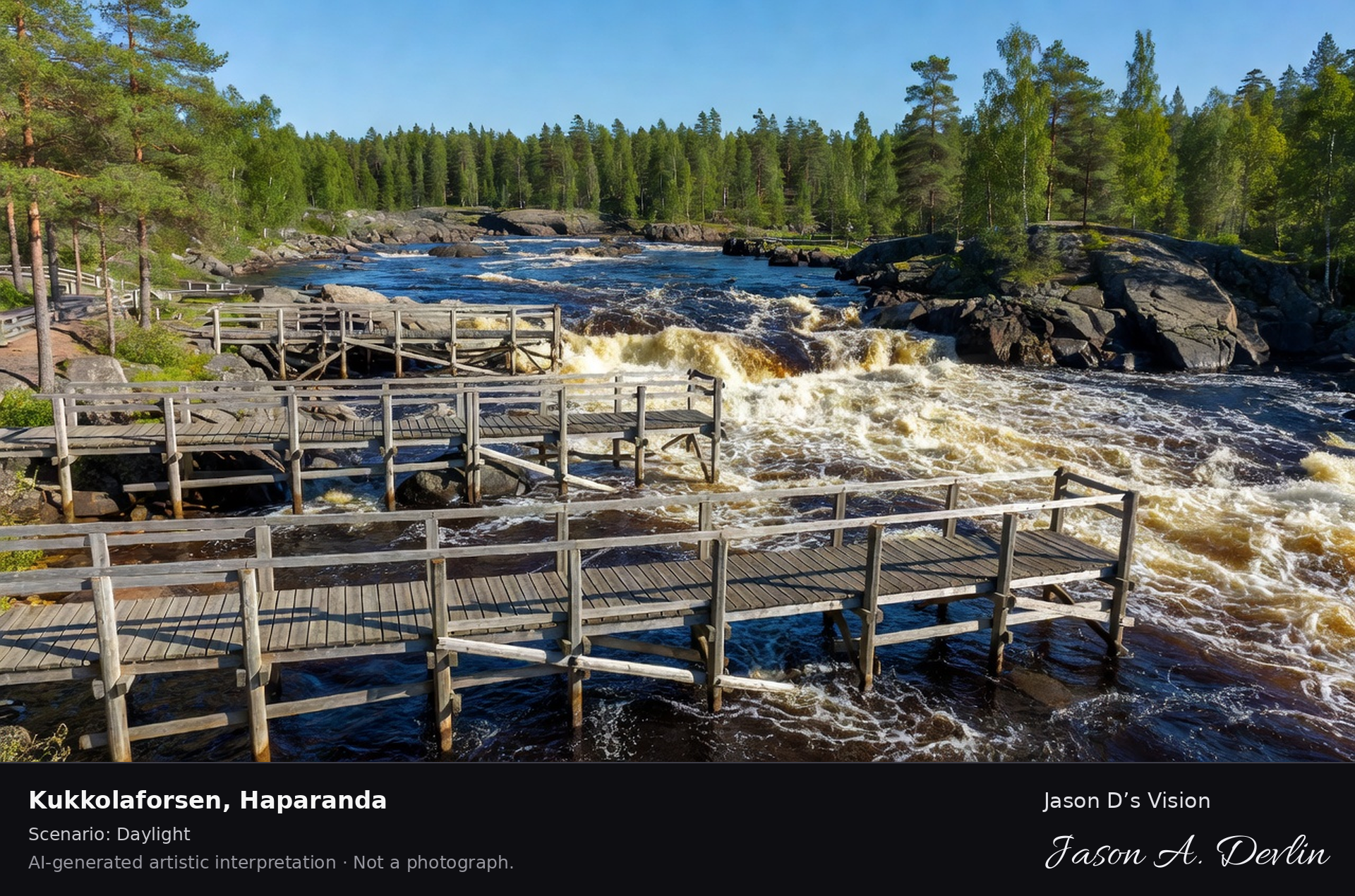
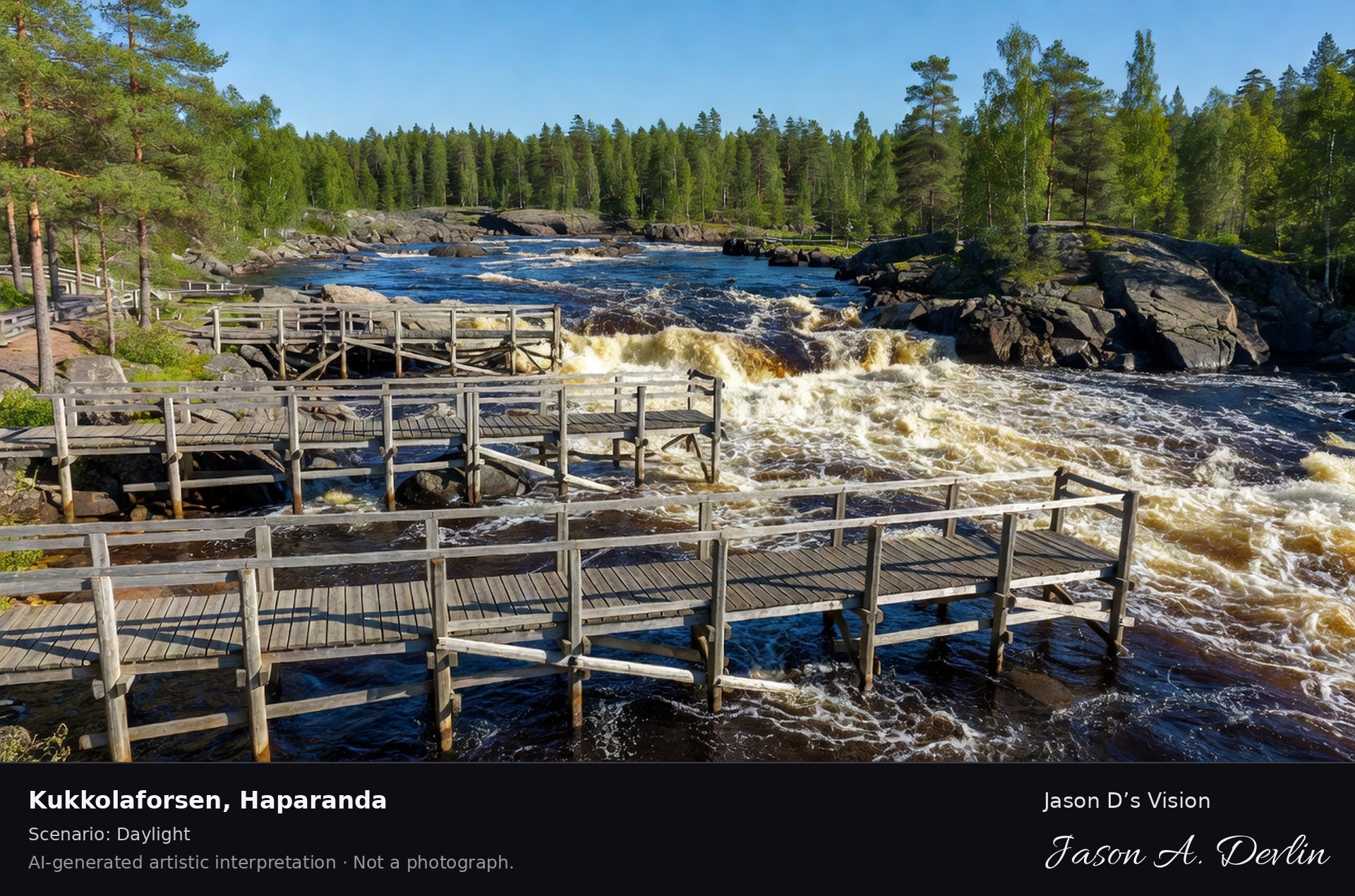
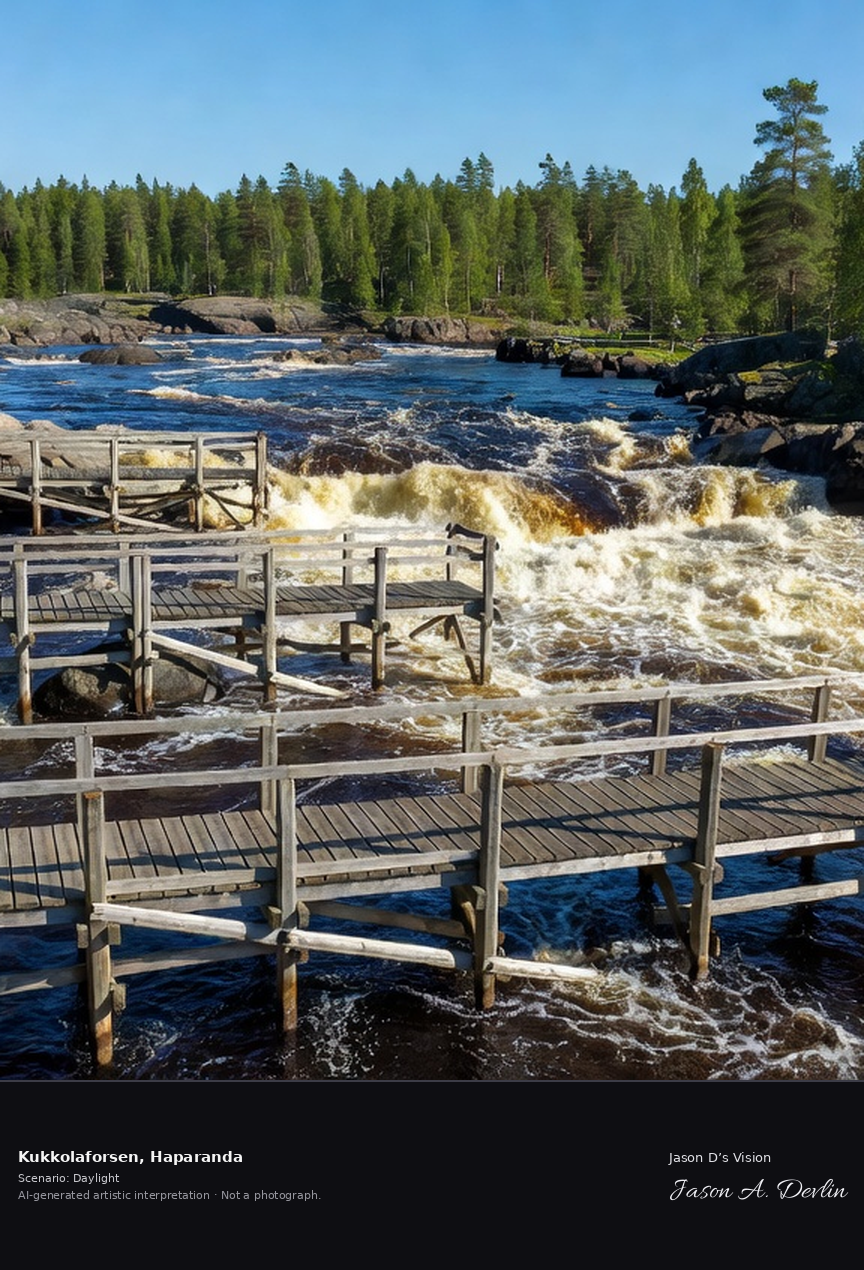
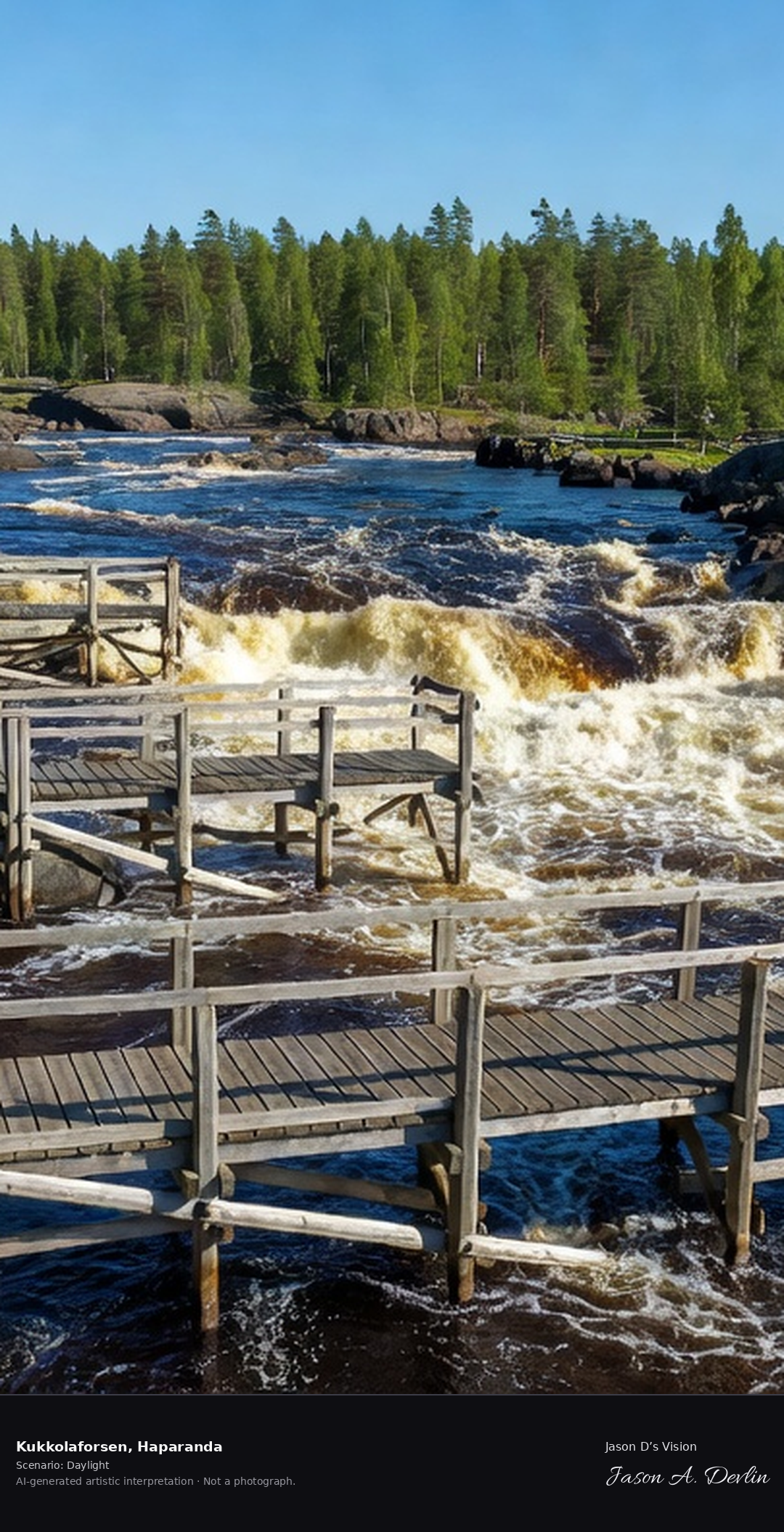
Kukkolaforsen's broad rapids on the Torne River at the Finnish border, traditional wooden fishing piers jutting into the whitewater where whitefish are netted as they have been for centuries.
The view takes in Kukkolaforsen, the broad rapids on the Torne River at the Finnish border. Traditional wooden fishing piers jut into the whitewater, where whitefish are netted as they have been for centuries, in bright natural daylight.
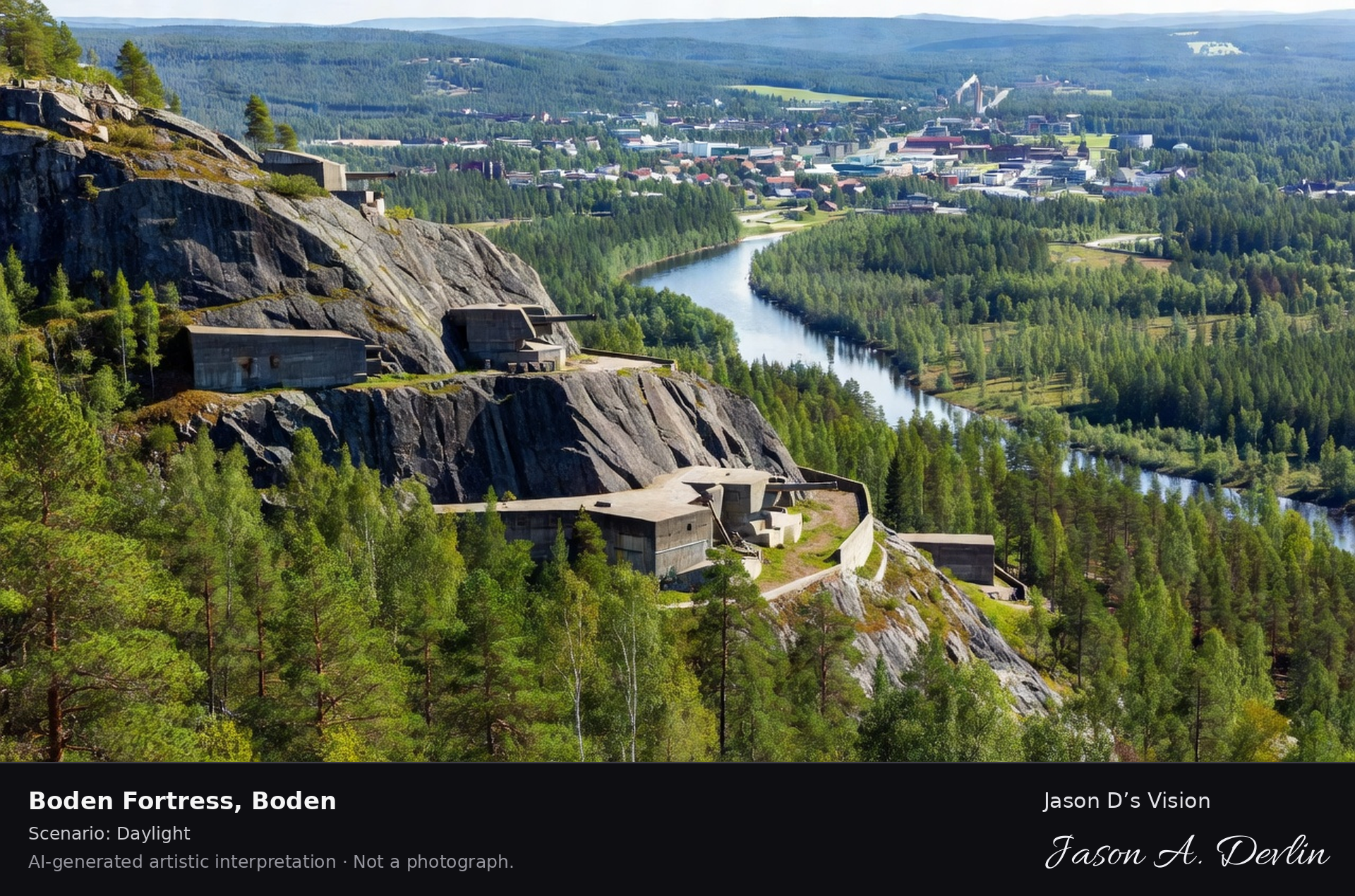
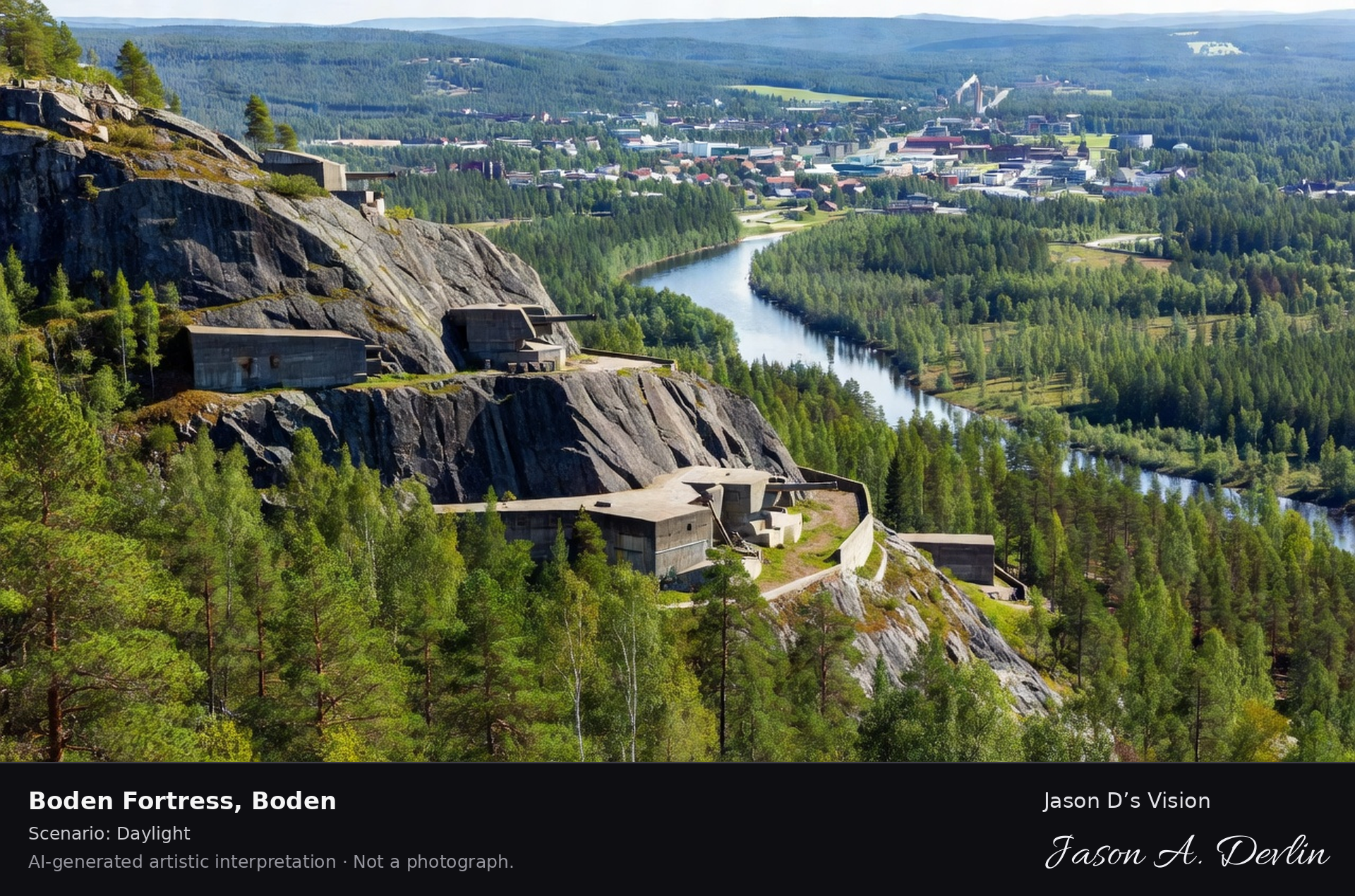
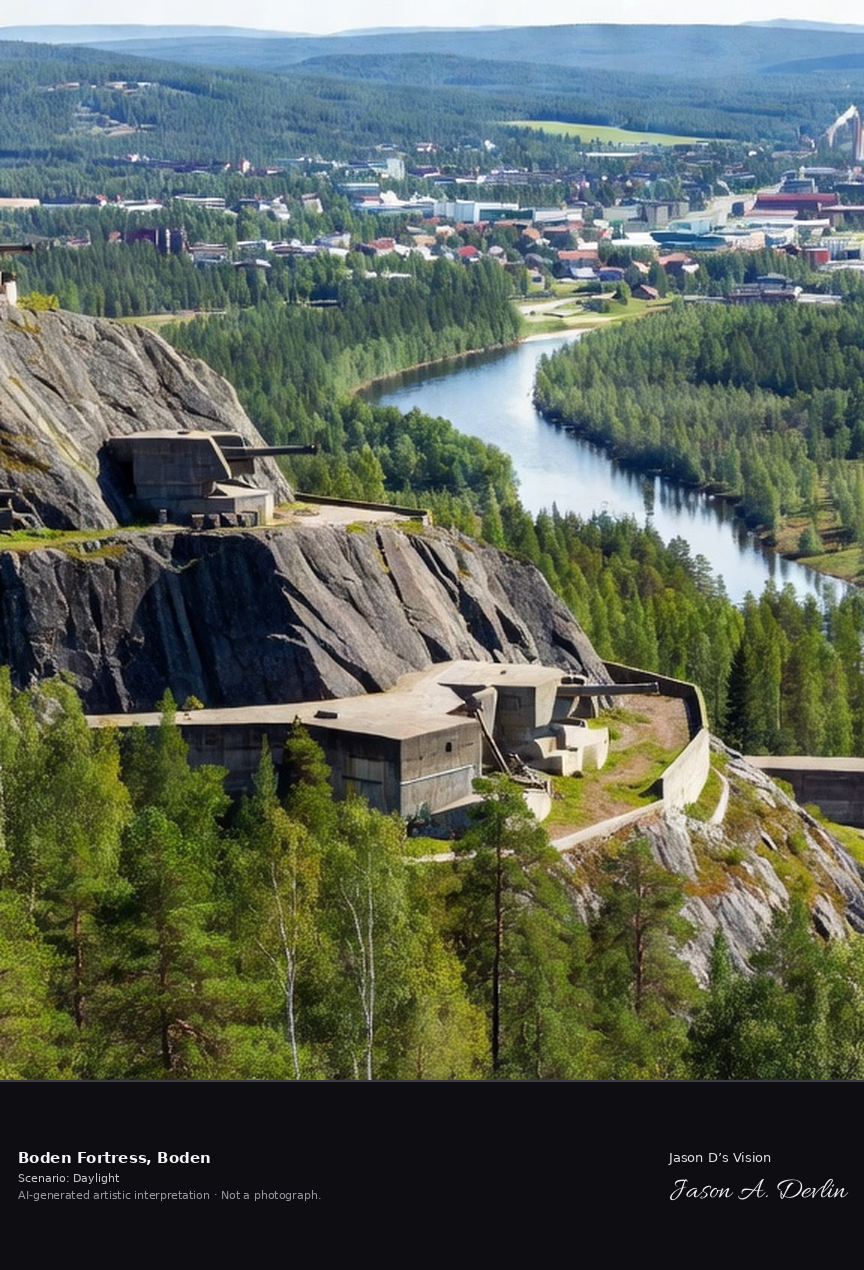
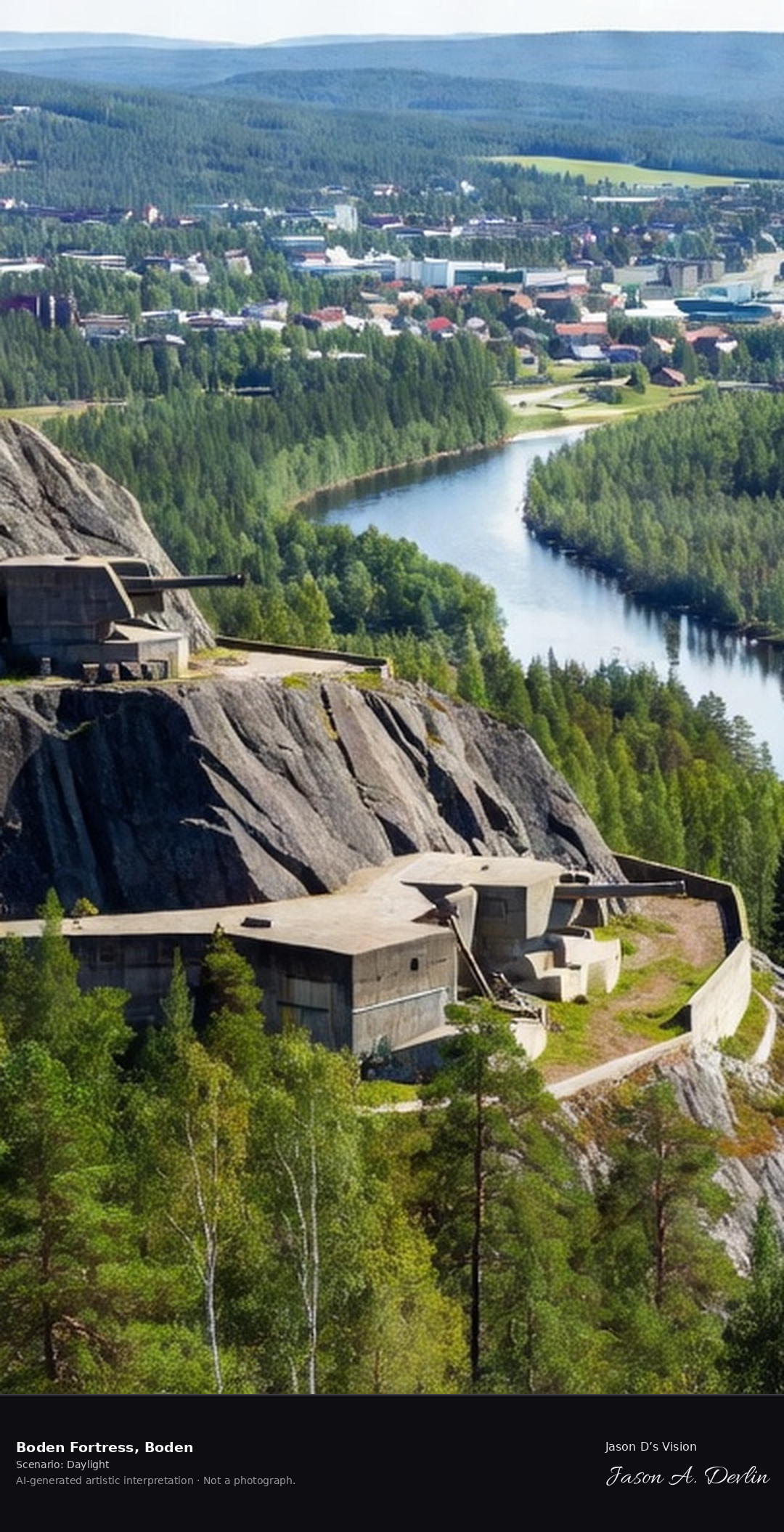
Boden Fortress's Rödberget fort carved into the mountain above the Lule River valley, concrete artillery positions blending into the bedrock with the northern town below. Sweden's last great fortress system.
Boden Fortress in Boden: Sweden's last great fortress system, Rödberget's concrete artillery positions carved into the mountain above the Lule River valley with the northern town below, in bright natural daylight.
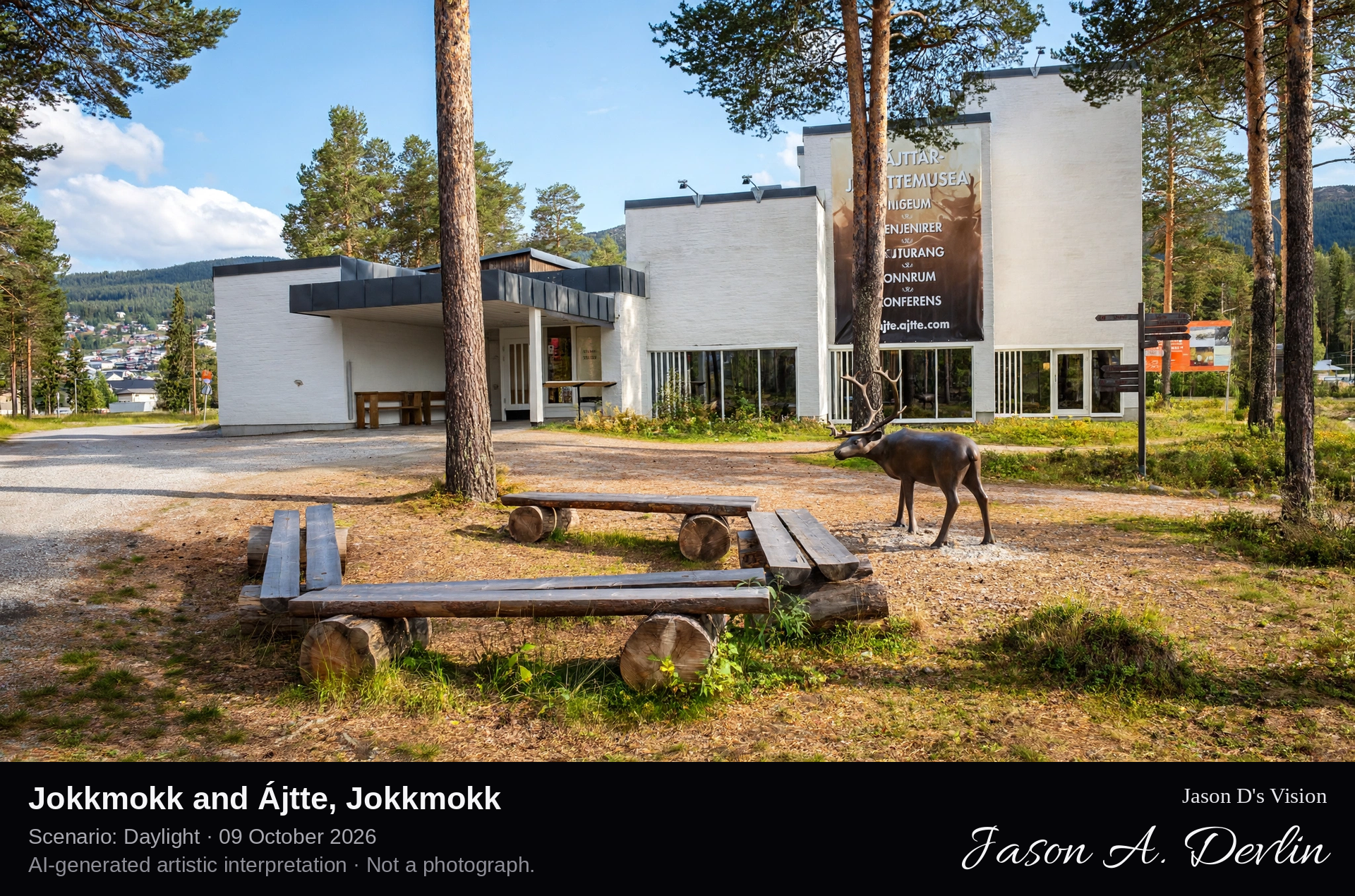
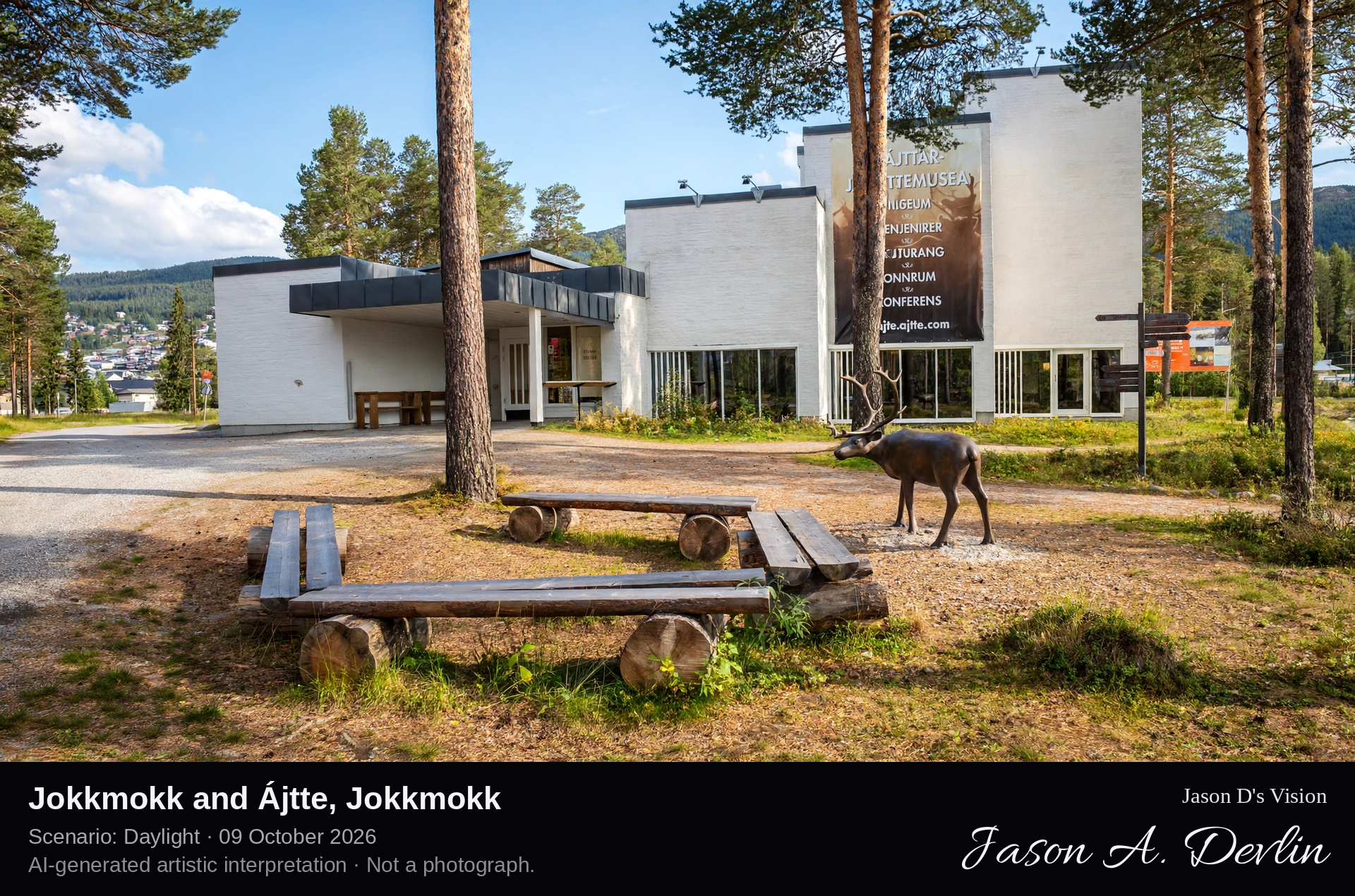
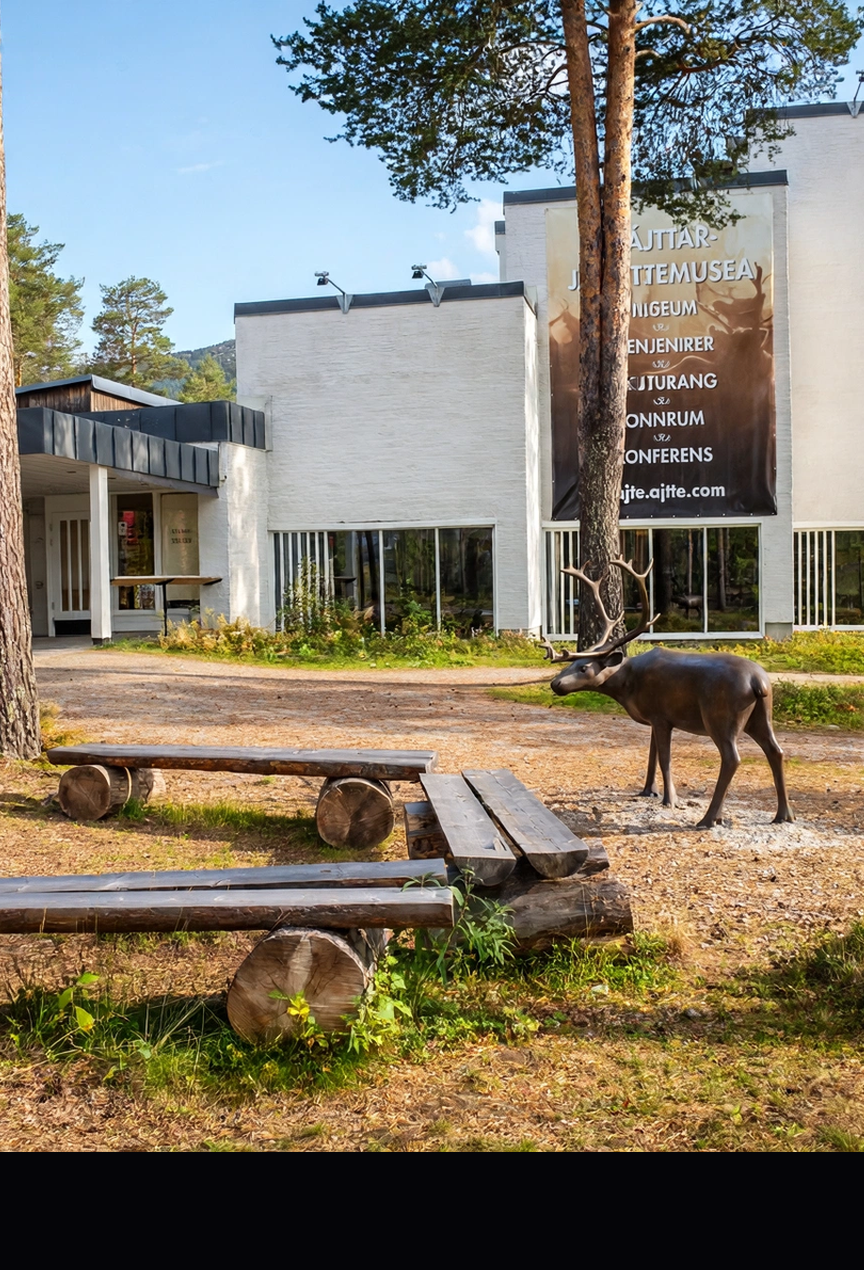
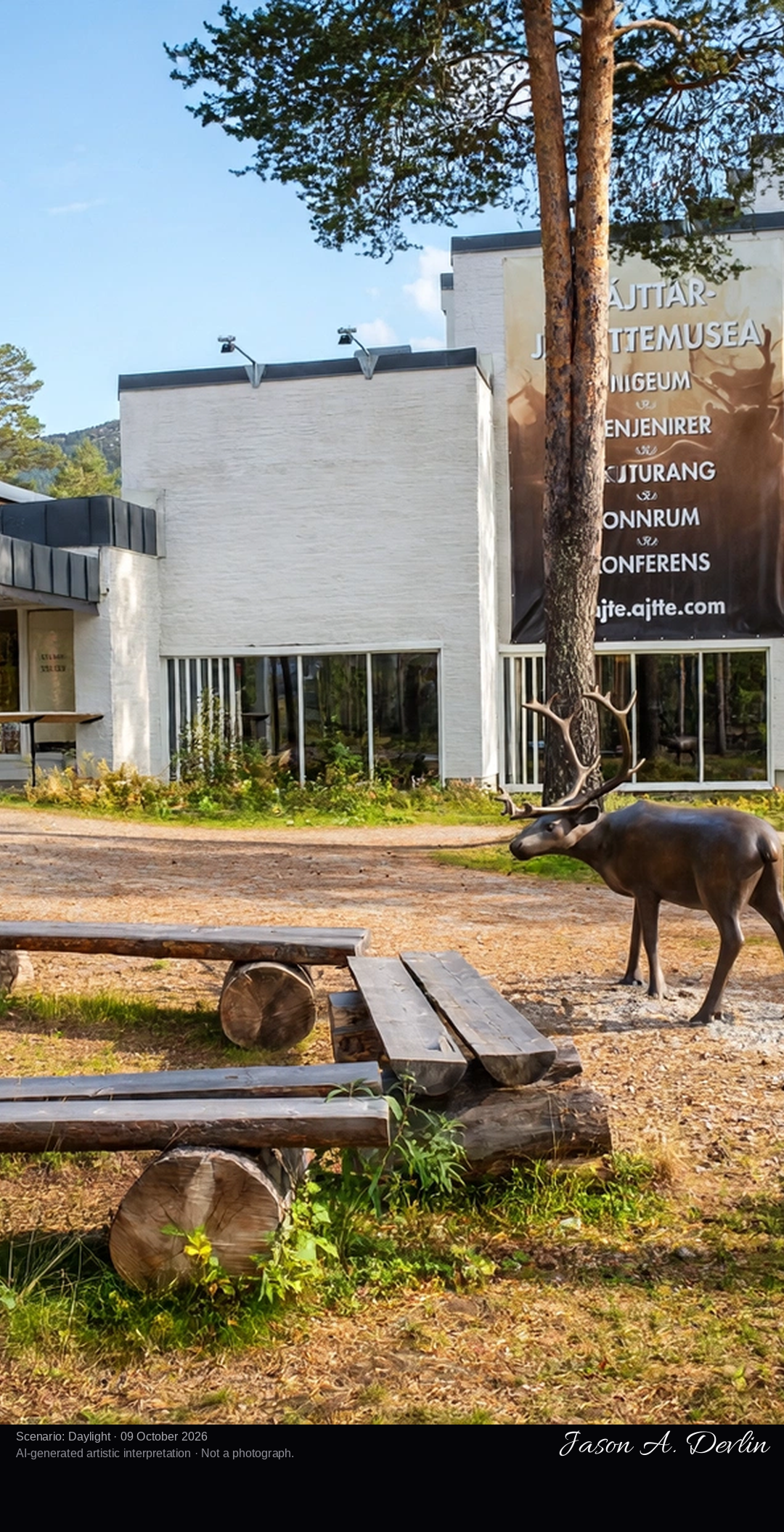
The Ájtte Sami museum's turf-roofed buildings beside Lake Talvatis in Jokkmokk, the heart of Sami culture with the fell landscape beyond. Winter market town for over 400 years.
Jokkmokk and Ájtte in Jokkmokk: the Ájtte Sami museum's turf-roofed buildings beside Lake Talvatis, in the heart of Sami culture with the snow-covered fell landscape beyond, in bright natural daylight.
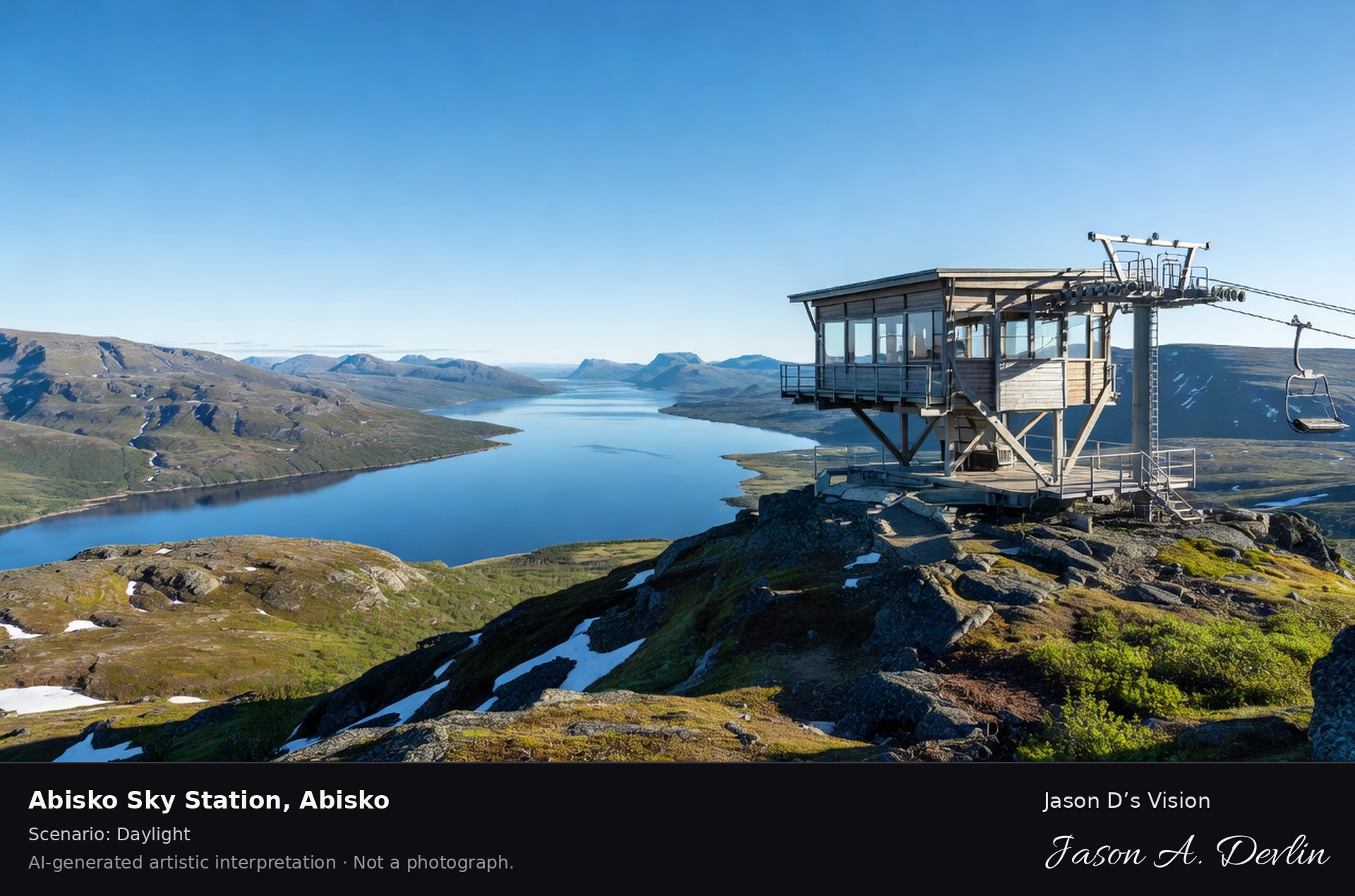
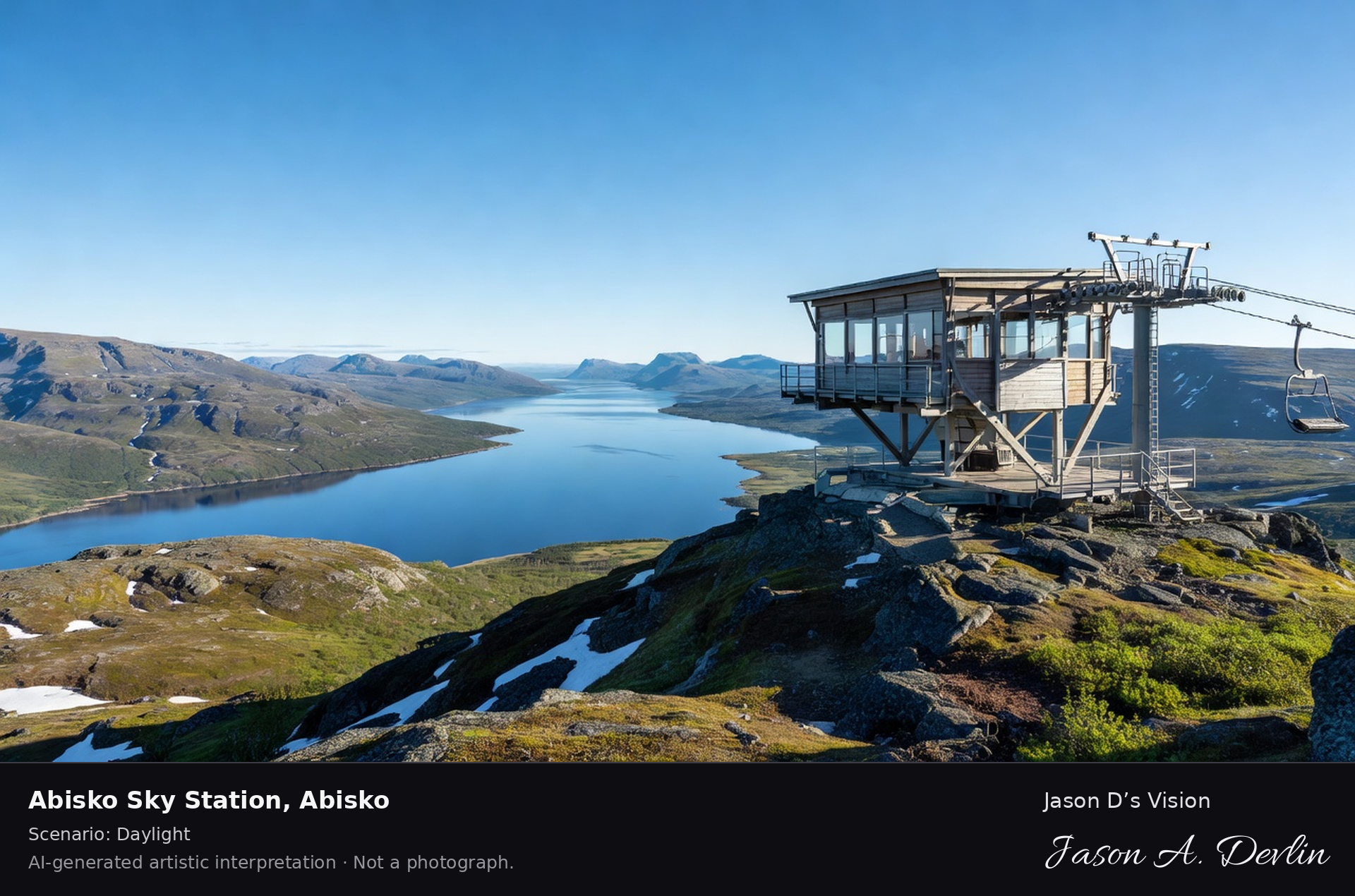
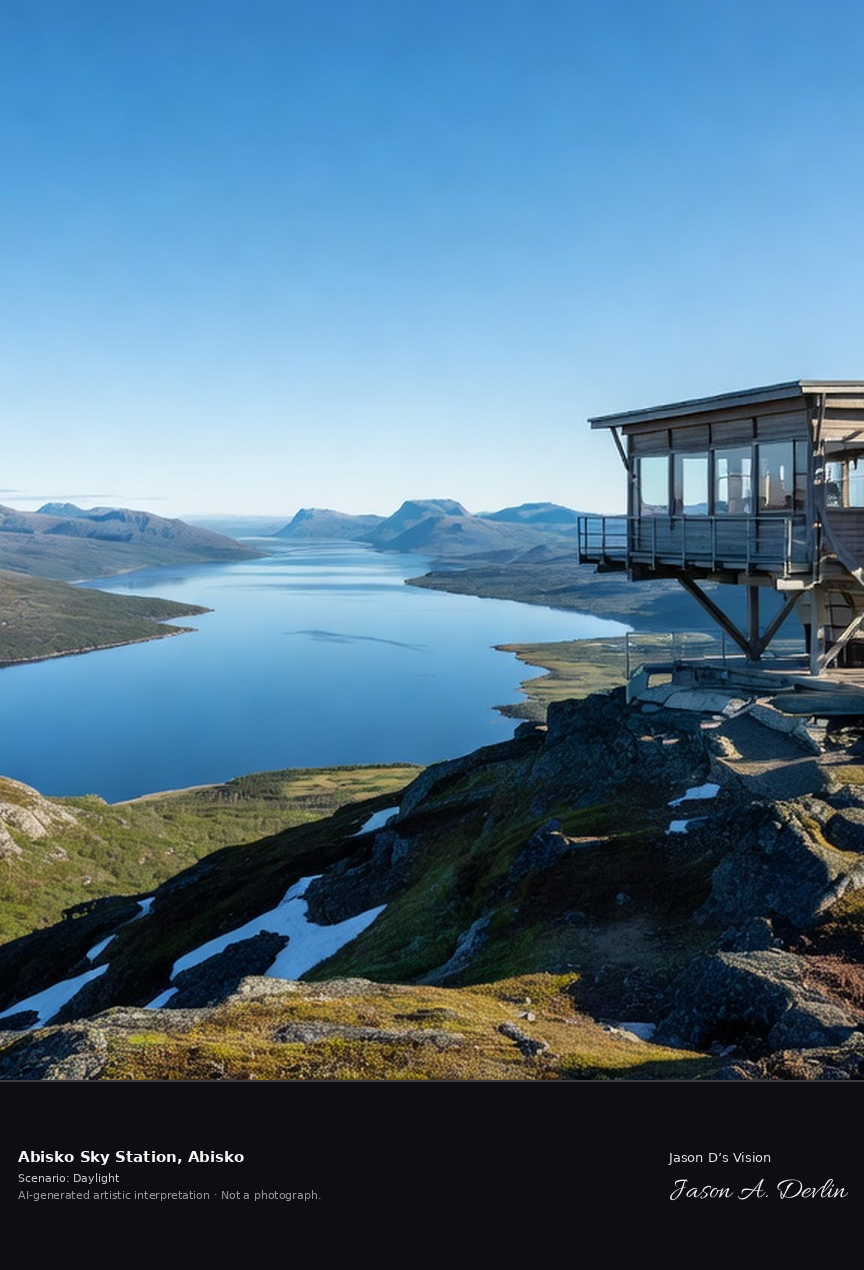
The Abisko Sky Station on Mount Nuolja's summit, the chairlift top station with panoramic views over Torneträsk and the surrounding fells. The world's best aurora viewing platform.
On the summit of Mount Nuolja stands the Abisko Sky Station, the chairlift’s top station. The panorama runs over Torneträsk and the surrounding fells from the station known as an aurora viewing platform, in bright natural daylight.
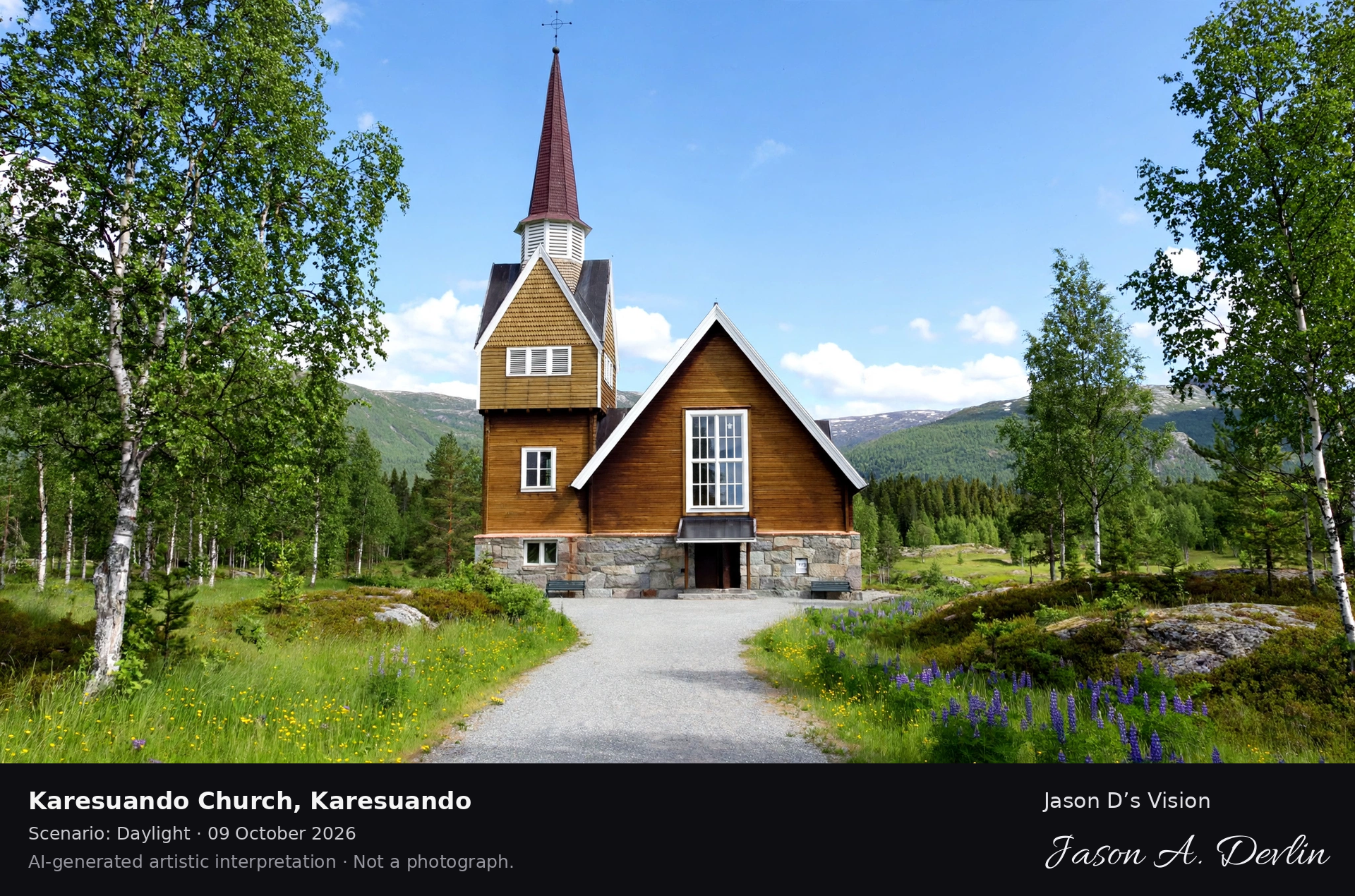
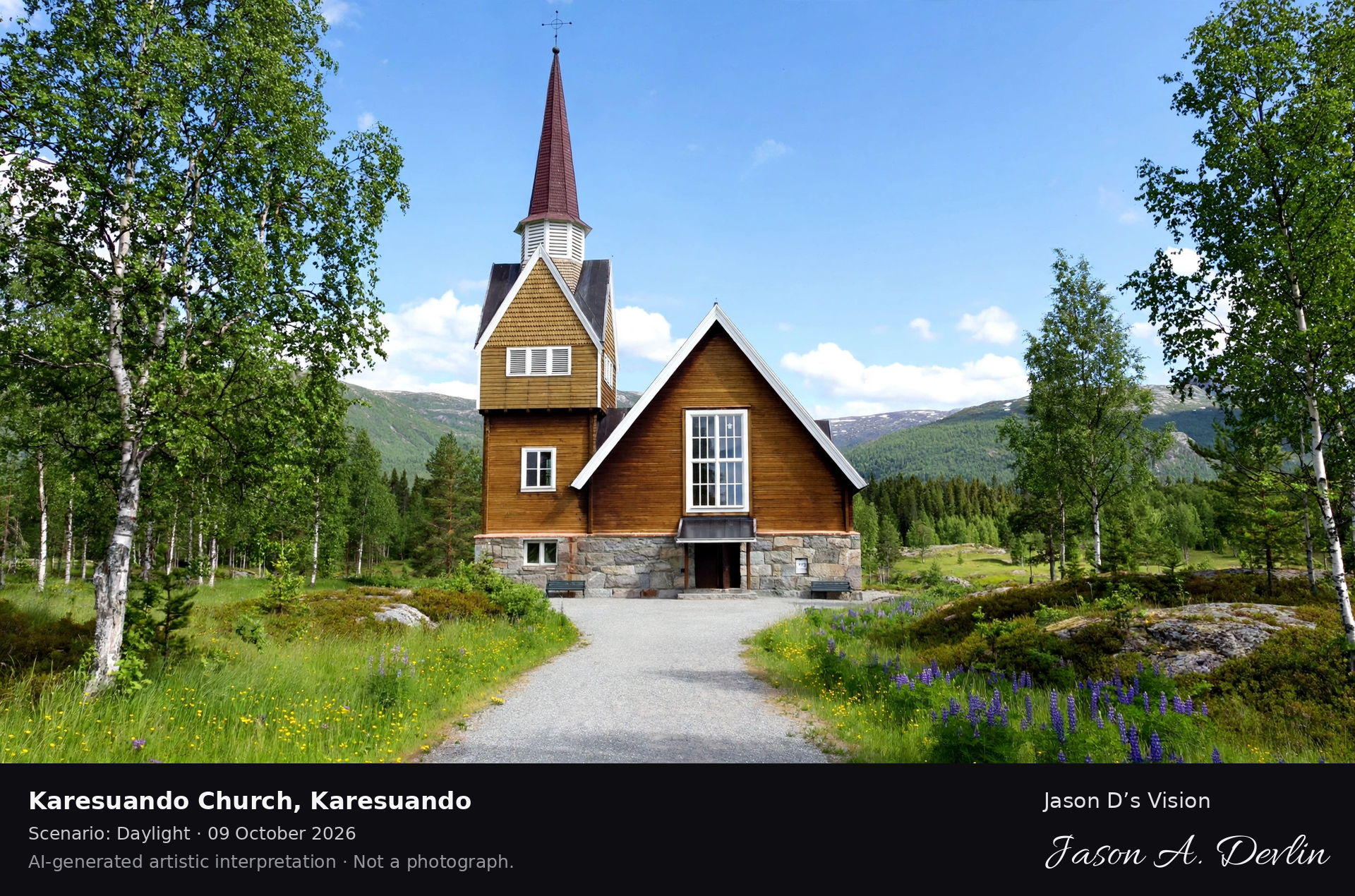
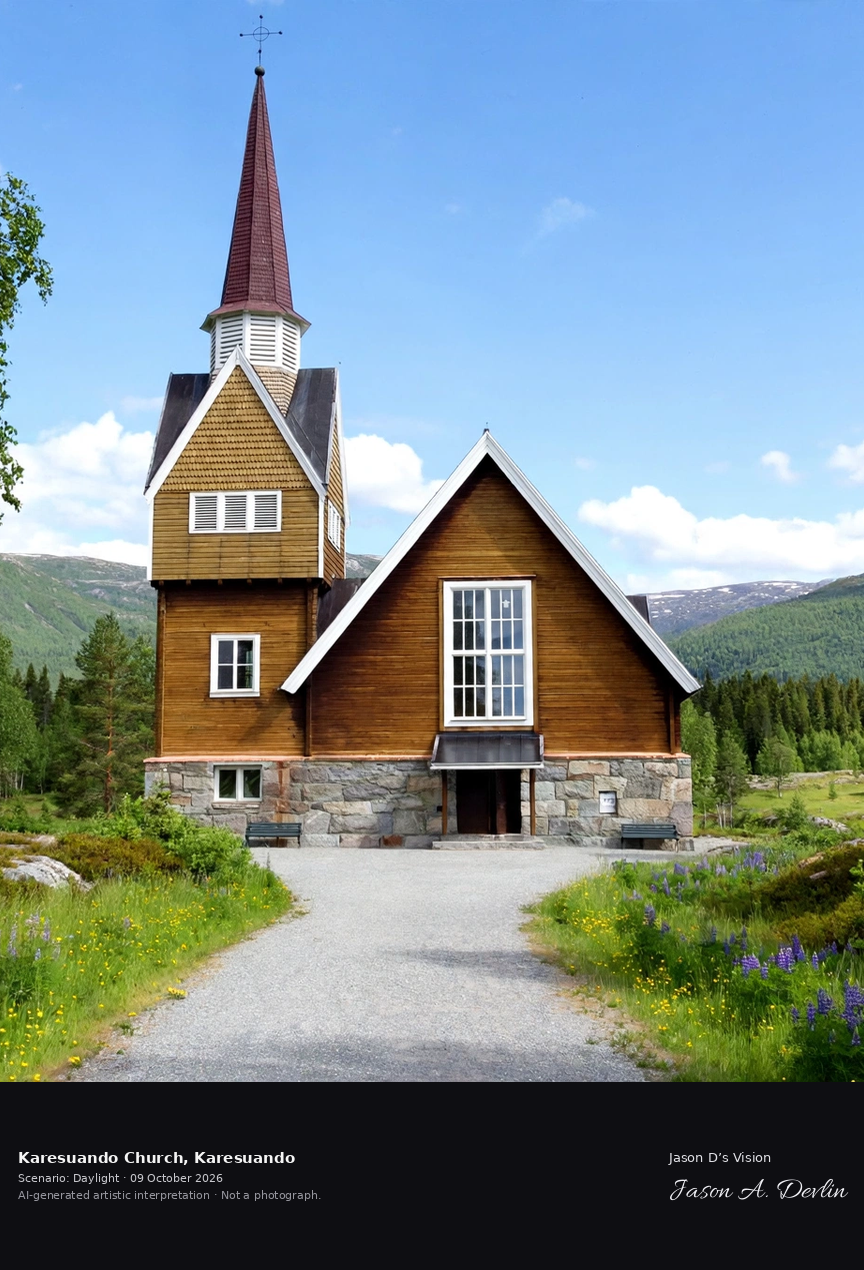
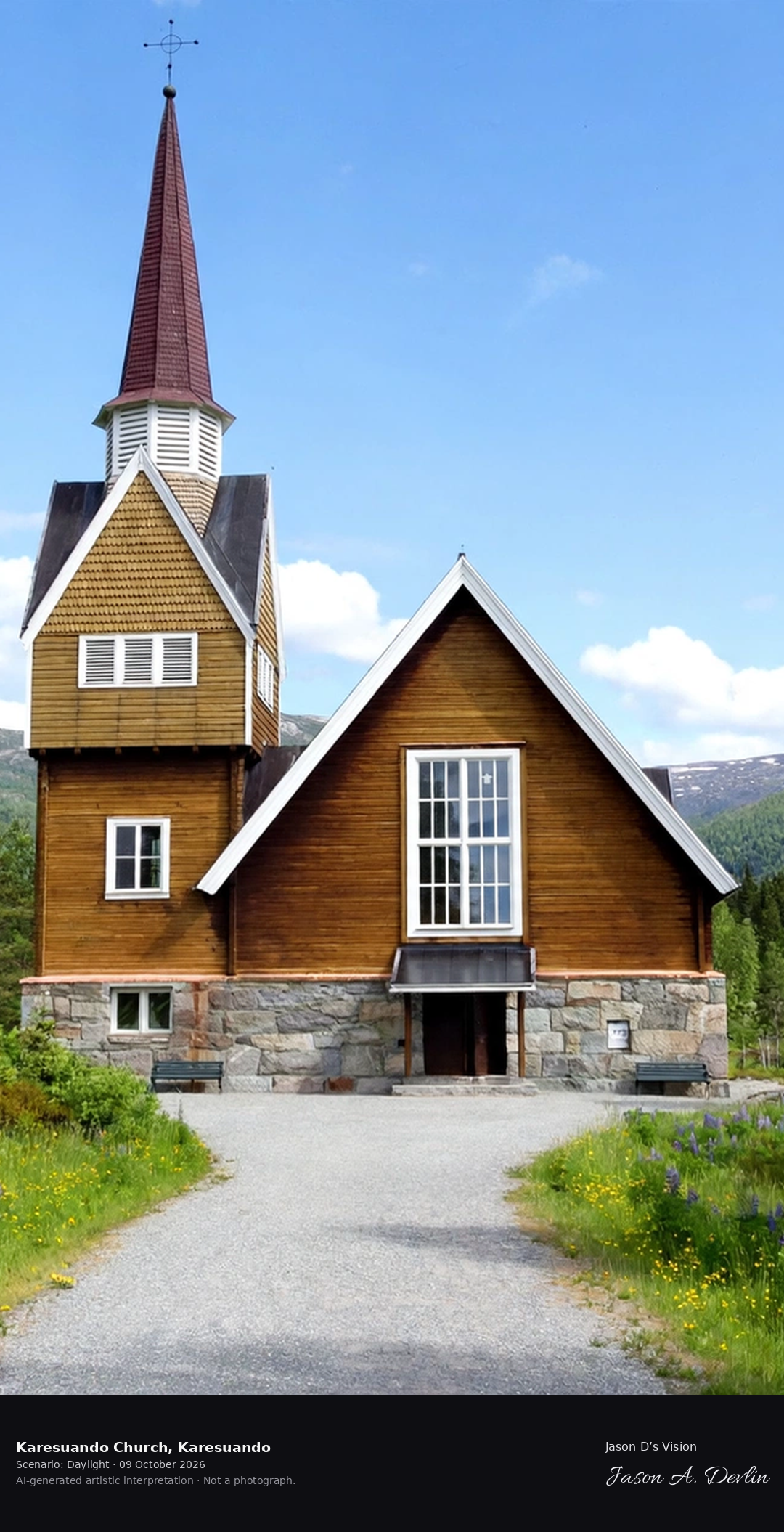
Karesuando's white wooden church, Sweden's northernmost church, standing beside the Muonio River at the Finnish border with the fell landscape stretching north. A lonely Arctic parish in the far north.
Karesuando Church in Karesuando: Sweden's northernmost white wooden church standing beside the Muonio River at the Finnish border, with the open fell landscape stretching north, in bright natural daylight.
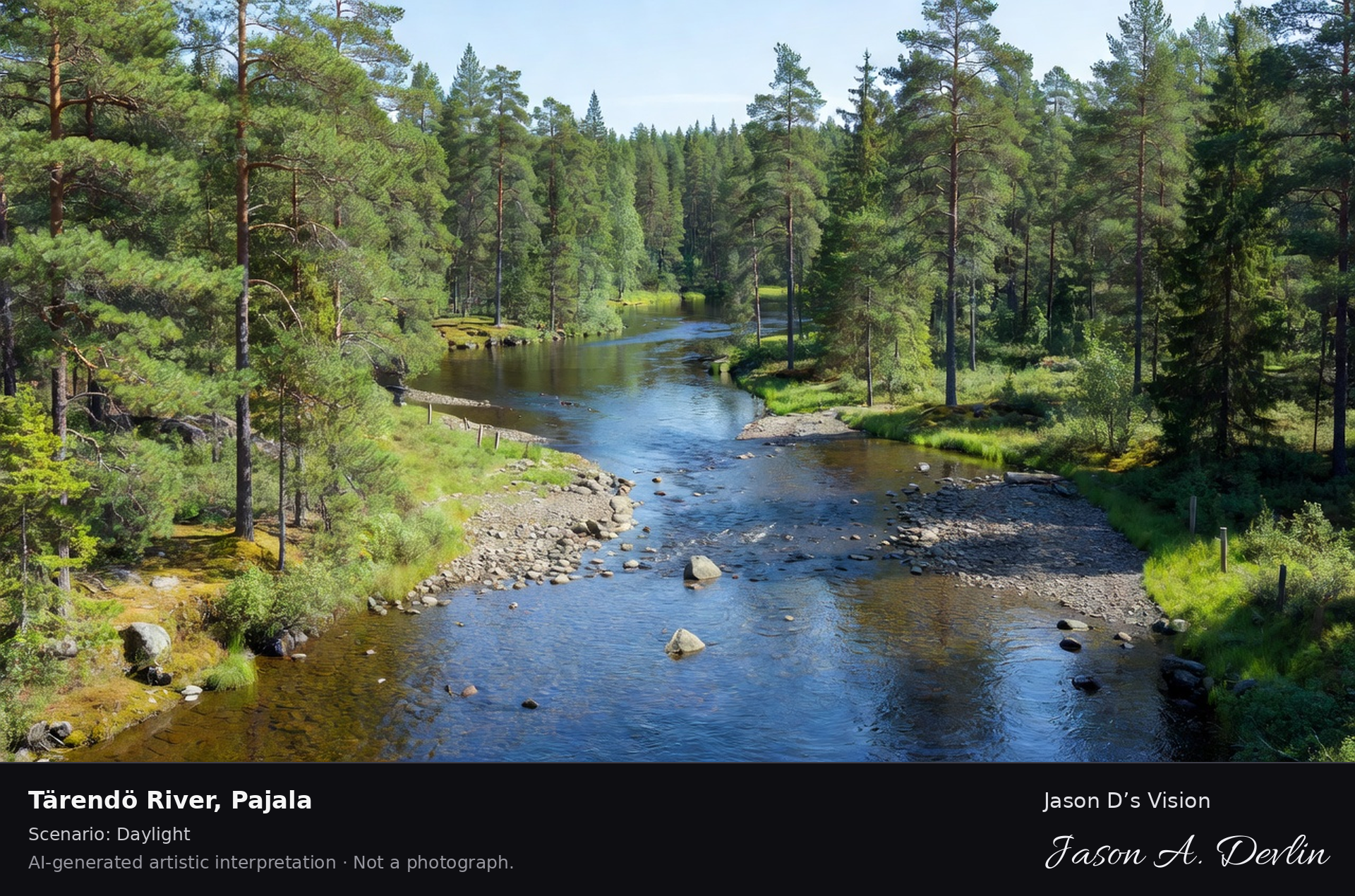
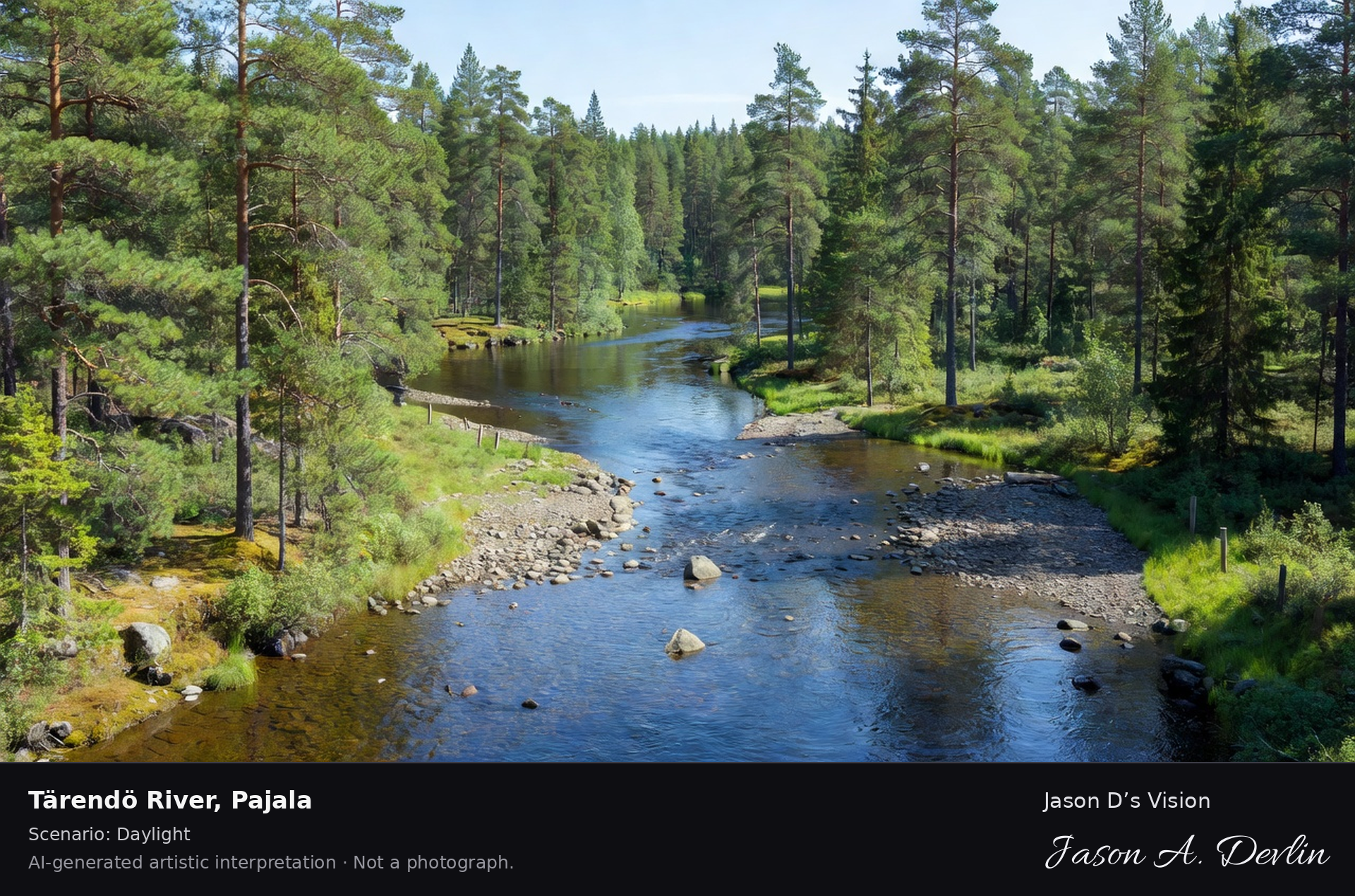
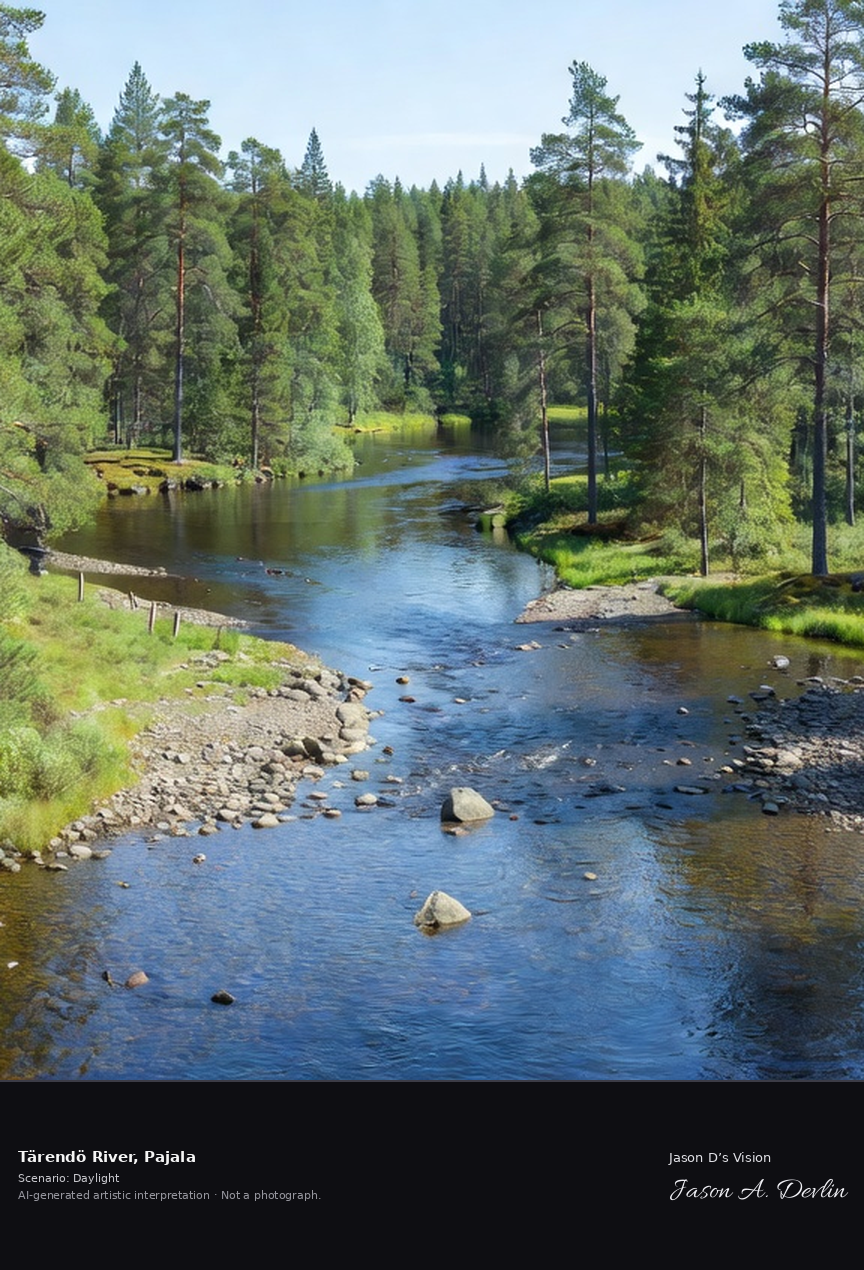
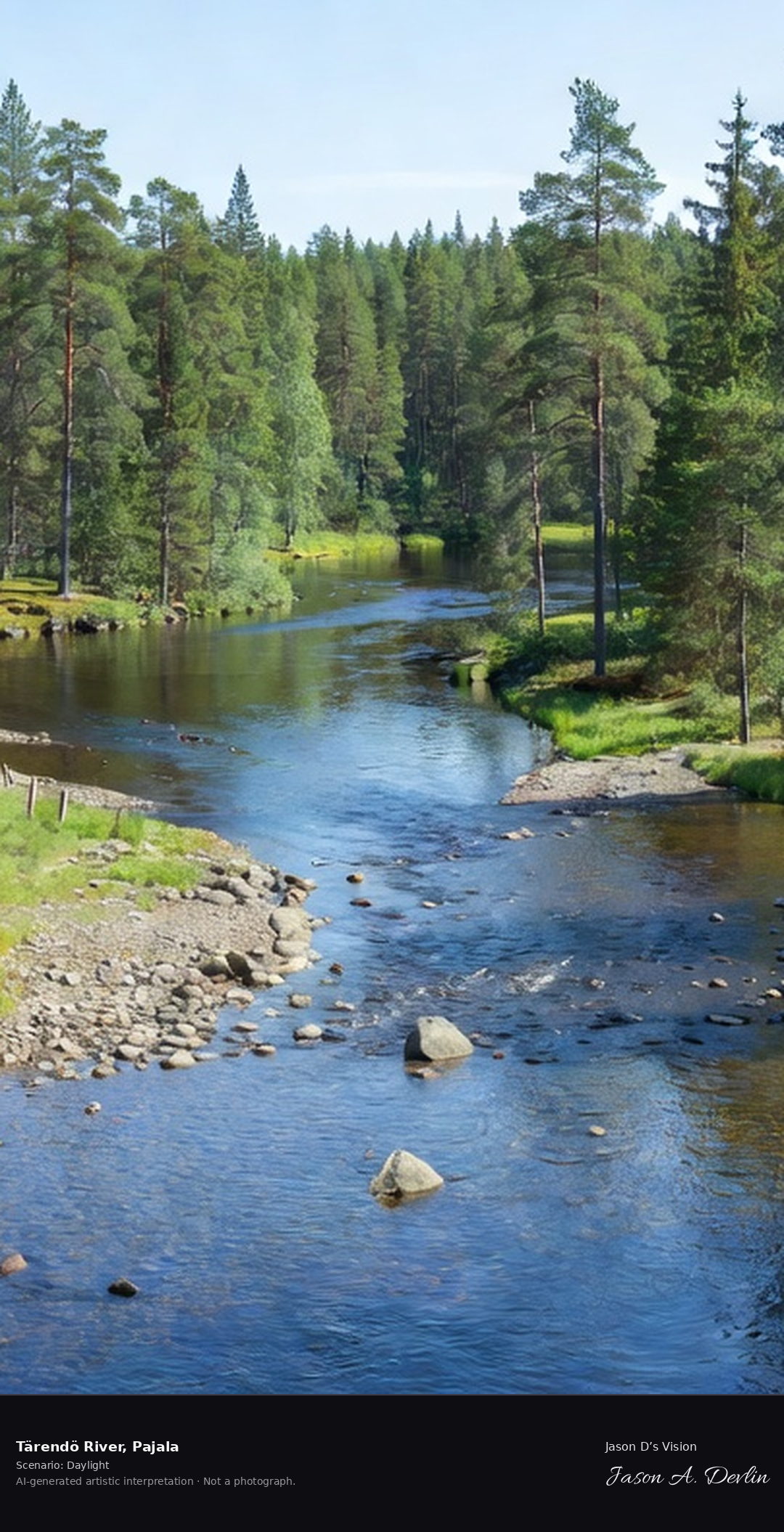
The Tärendö River's remarkable bifurcation where it splits to flow into both the Torne and Kalix rivers, viewed from the riverbank with pristine northern forest. One of the world's great river bifurcations.
Tärendö River in Pajala: the river's remarkable bifurcation reach where it splits toward both the Torne and Kalix rivers, viewed from the riverbank amid pristine northern pine forest, in bright natural daylight.
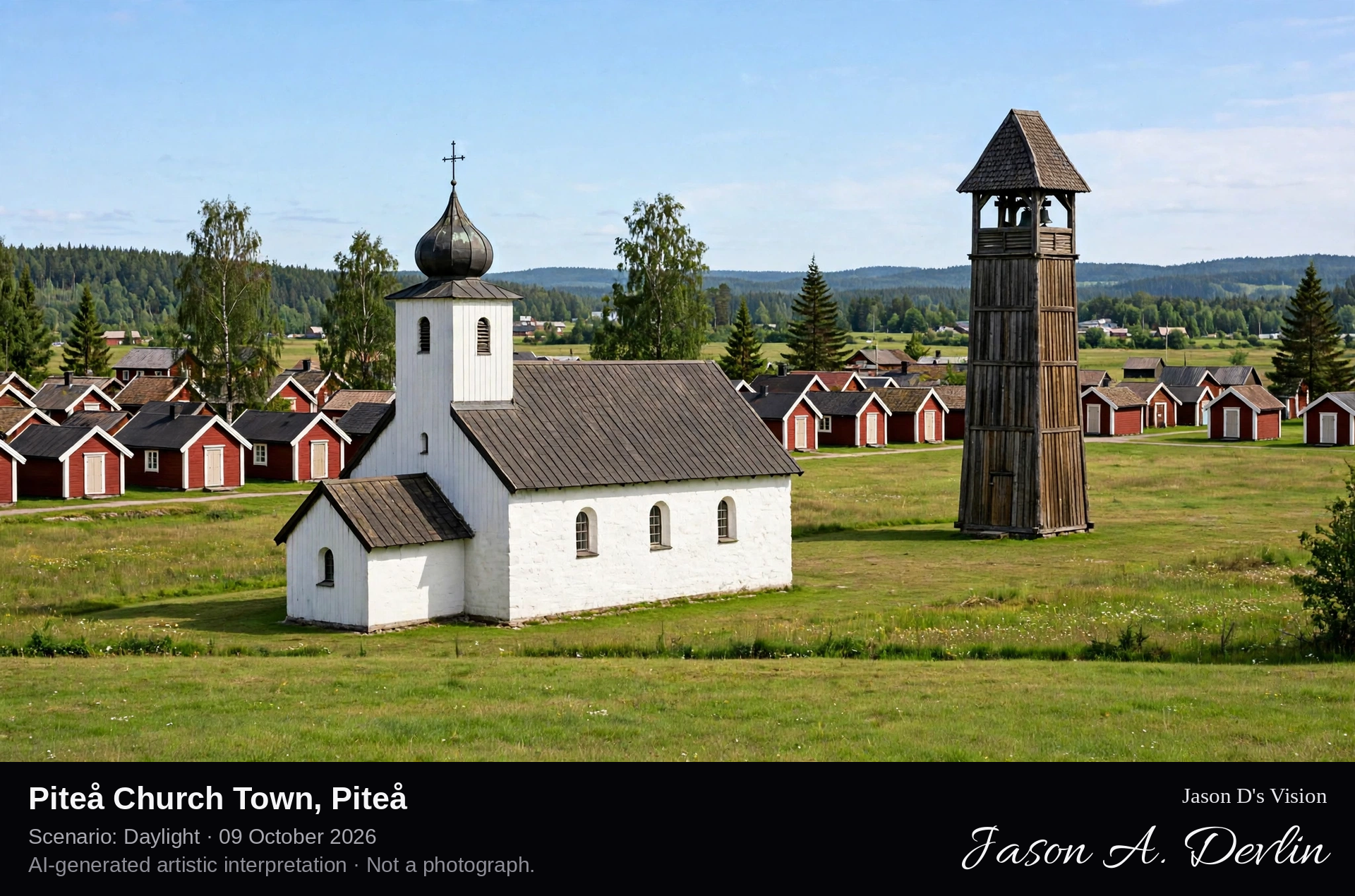
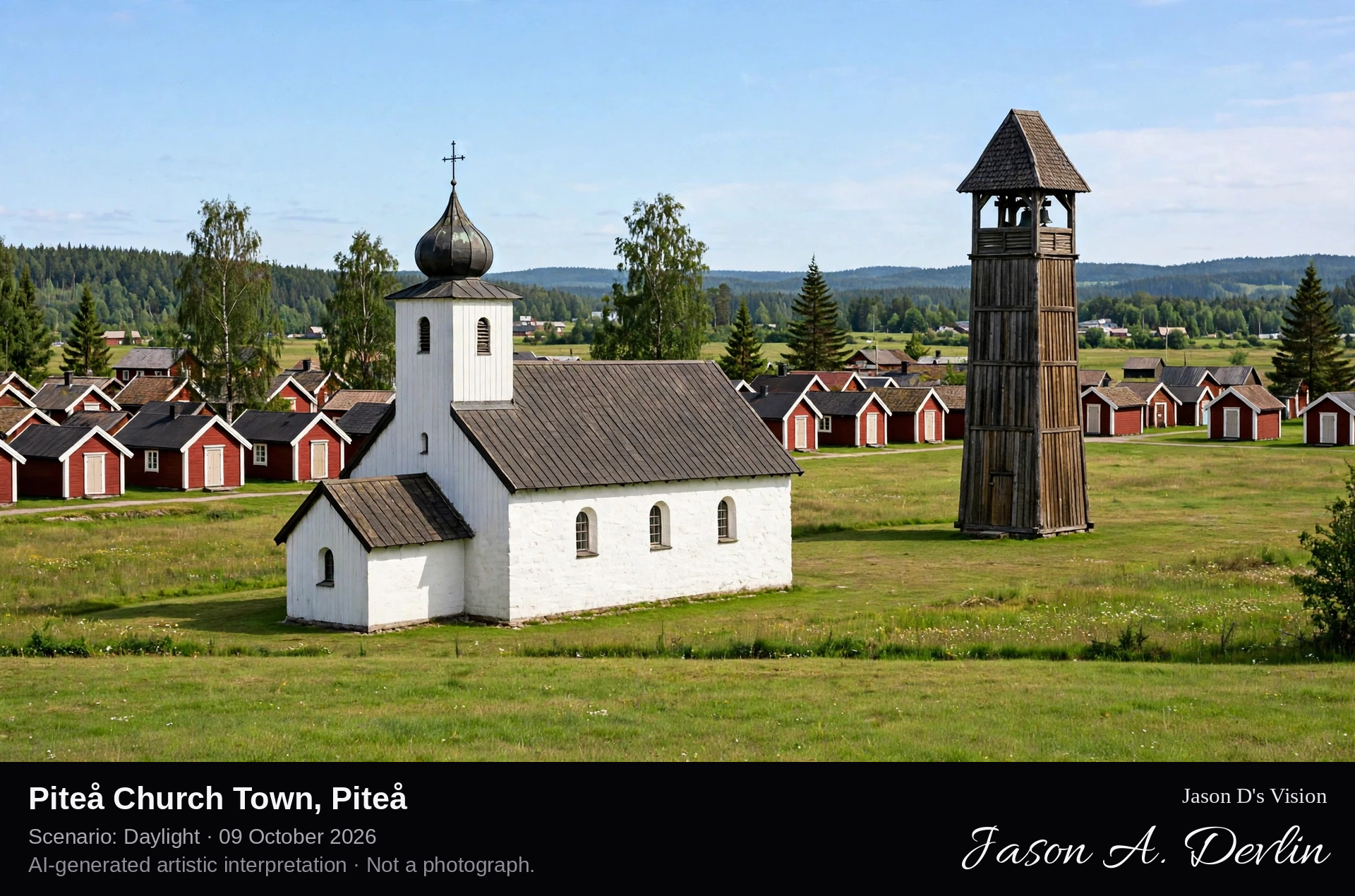
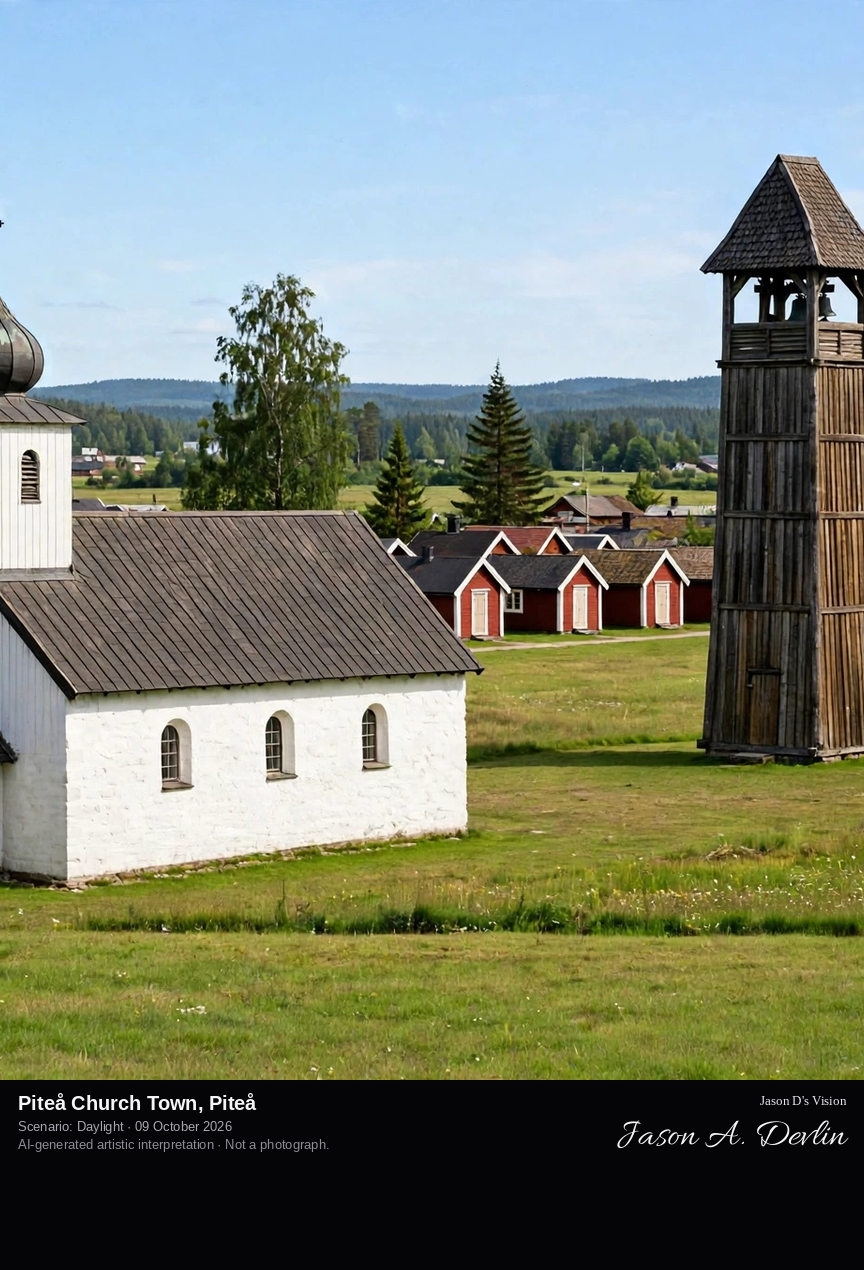
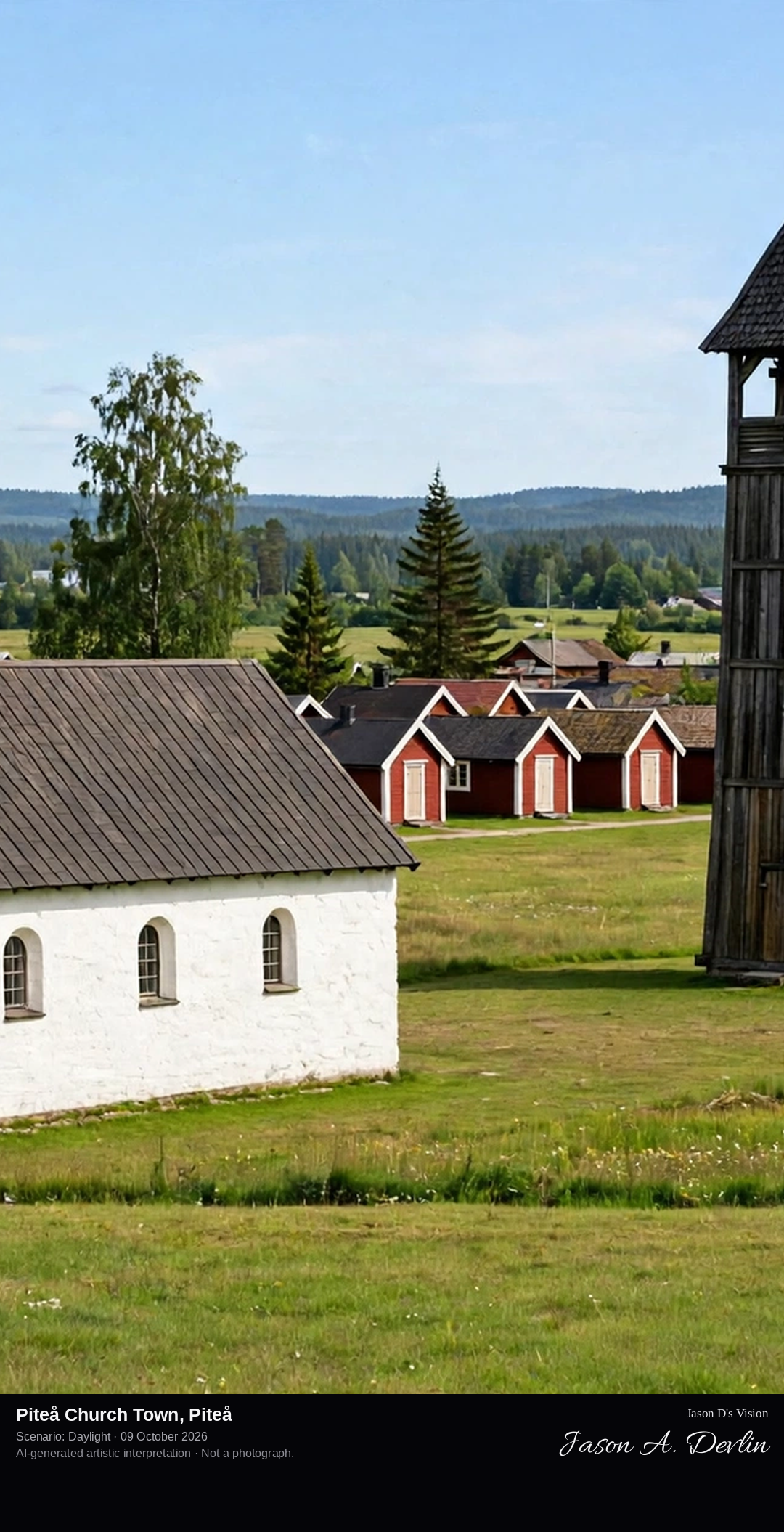
Öjebyn church town outside Piteå, red cottages around the 18th-century church with its distinctive onion dome, the Bothnian coast's best-preserved church town in summer greenery.
Piteå Church Town in Piteå: the red 18th-century Öjebyn church with its distinctive onion dome ringed by traditional red church cottages, one of the Bothnian coast's best-preserved church towns, seen in bright natural daylight amid summer greenery.
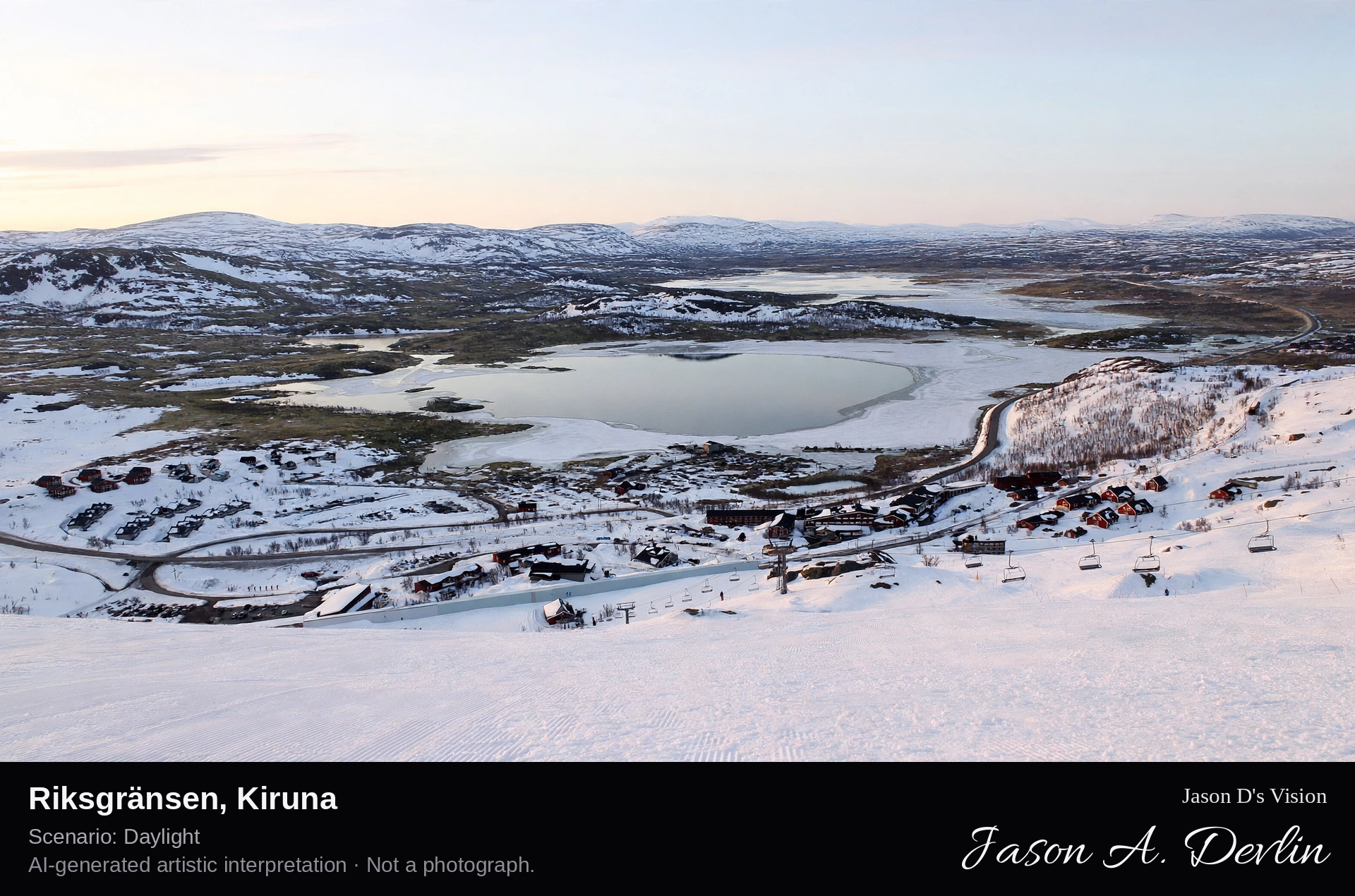
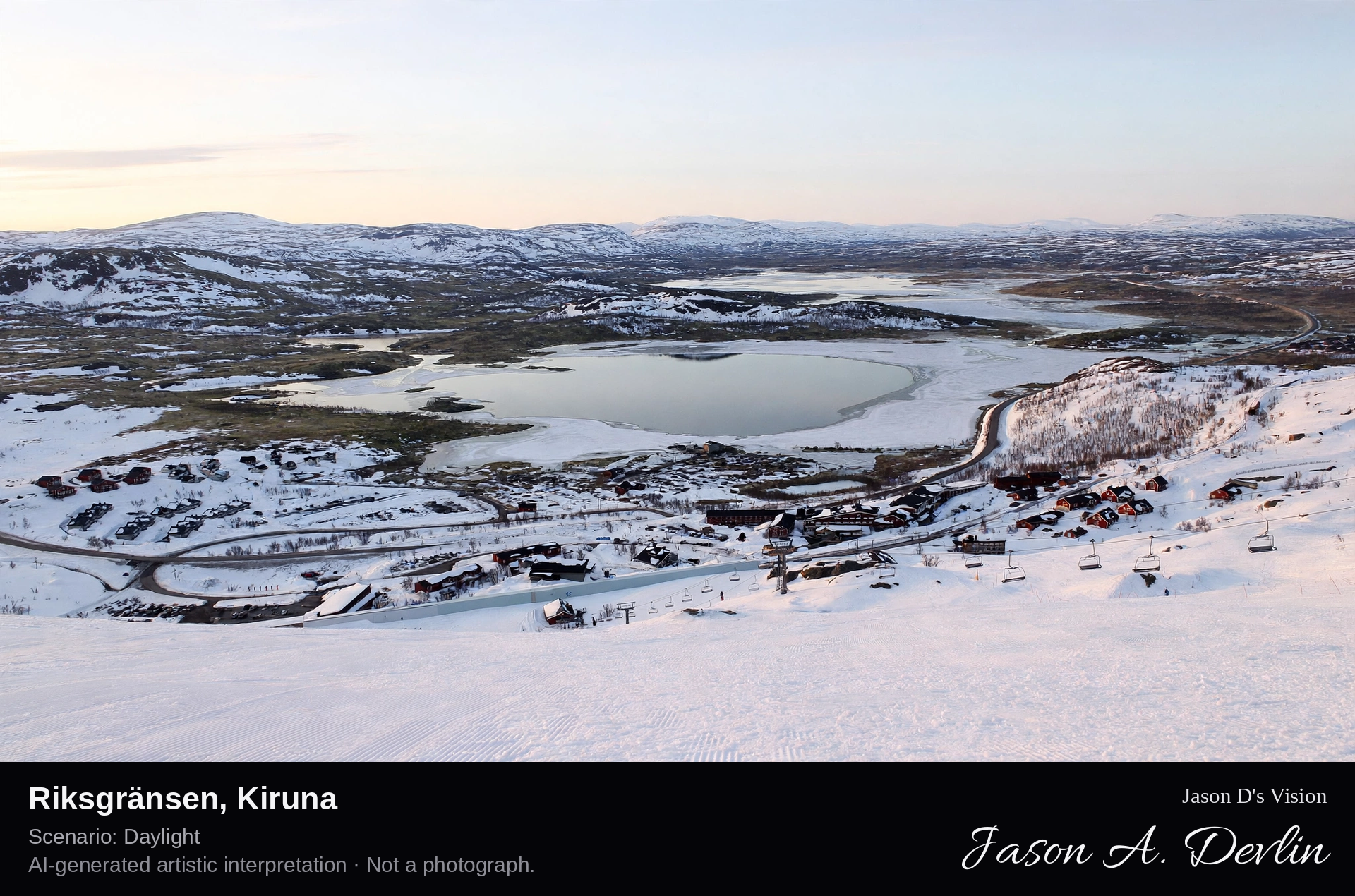
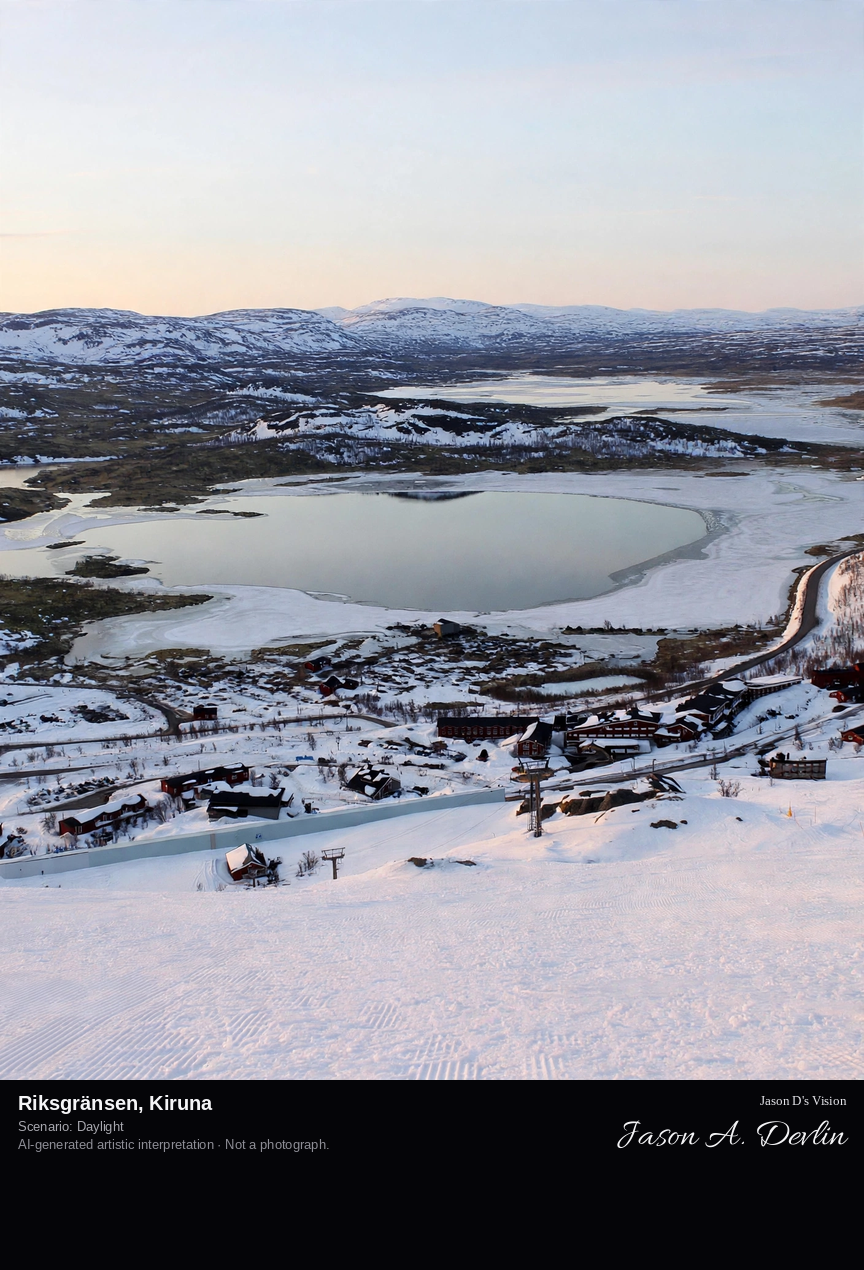
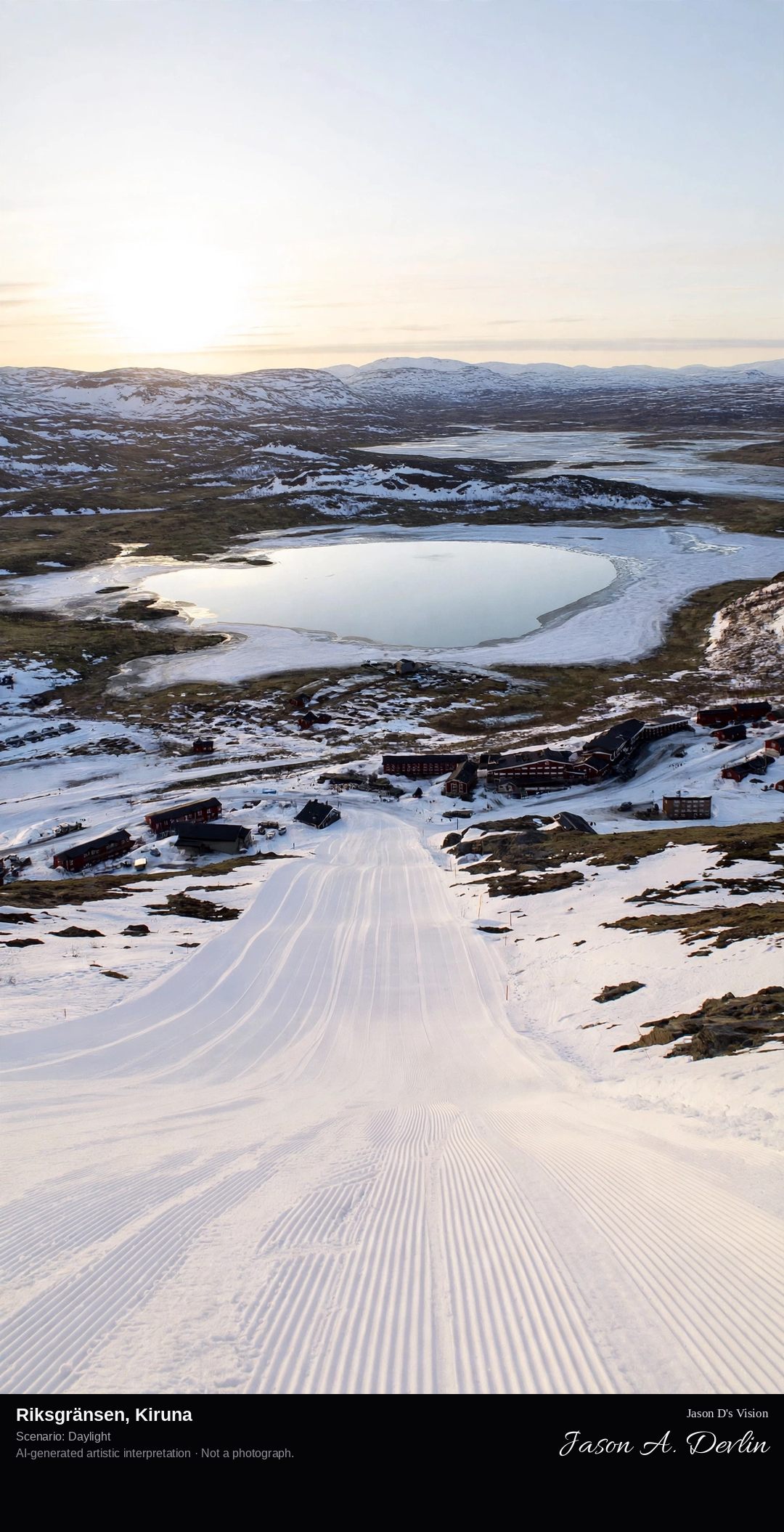
Riksgränsen ski resort on the Norwegian border, the red resort buildings at the foot of the fells, the slopes running east toward compact Lake Vassijaure under a low arctic sun. Sweden’s northernmost ski resort above the Arctic Circle.
Riksgränsen in Kiruna: the ski resort’s red buildings clustered at the foot of snow-covered fells, a ski run cutting the slope, and beyond the resort the compact waters of Lake Vassijaure in the middle distance under a low arctic sun, seen in bright natural daylight. Sweden’s northernmost ski resort above the Arctic Circle.
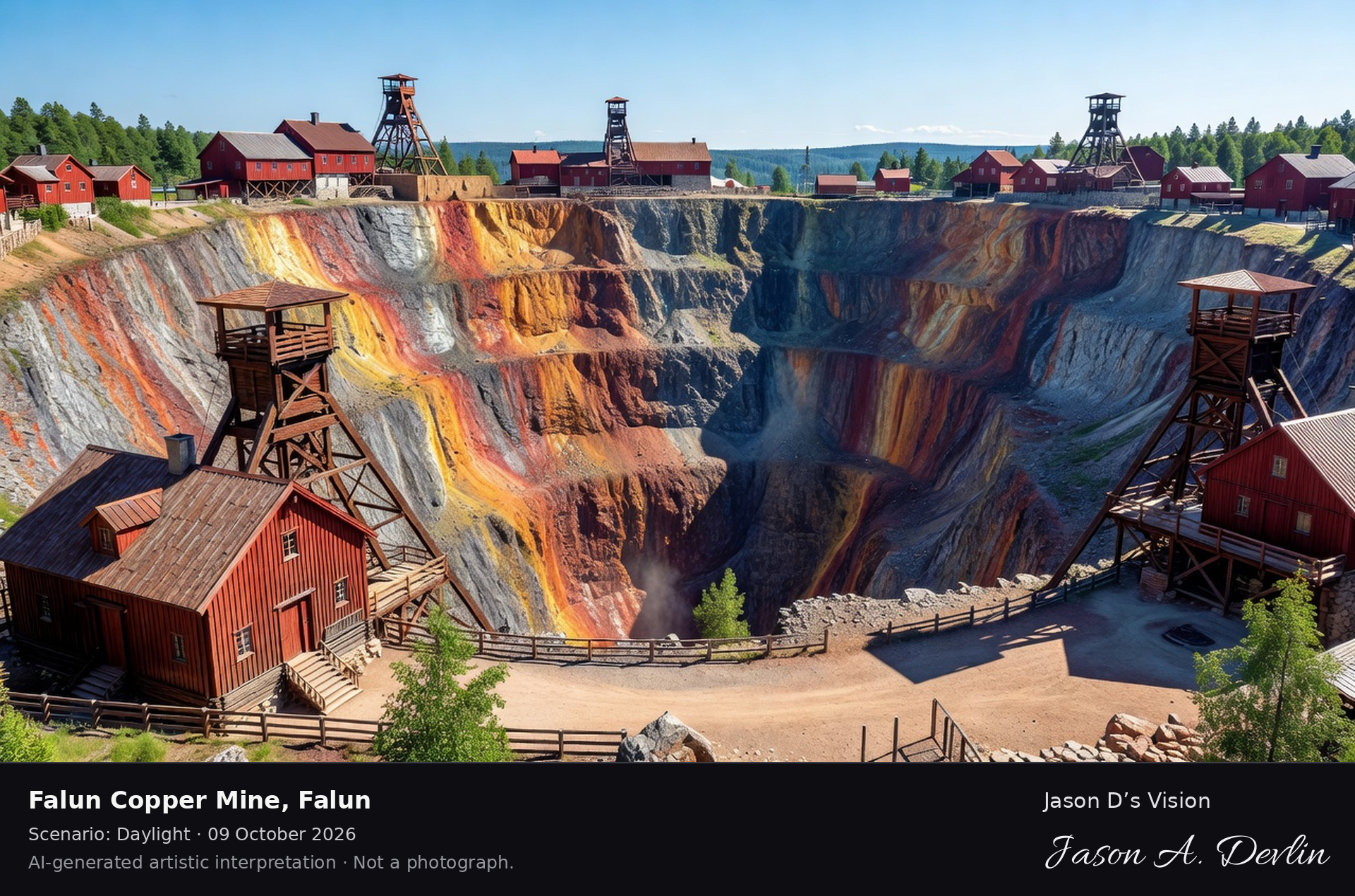
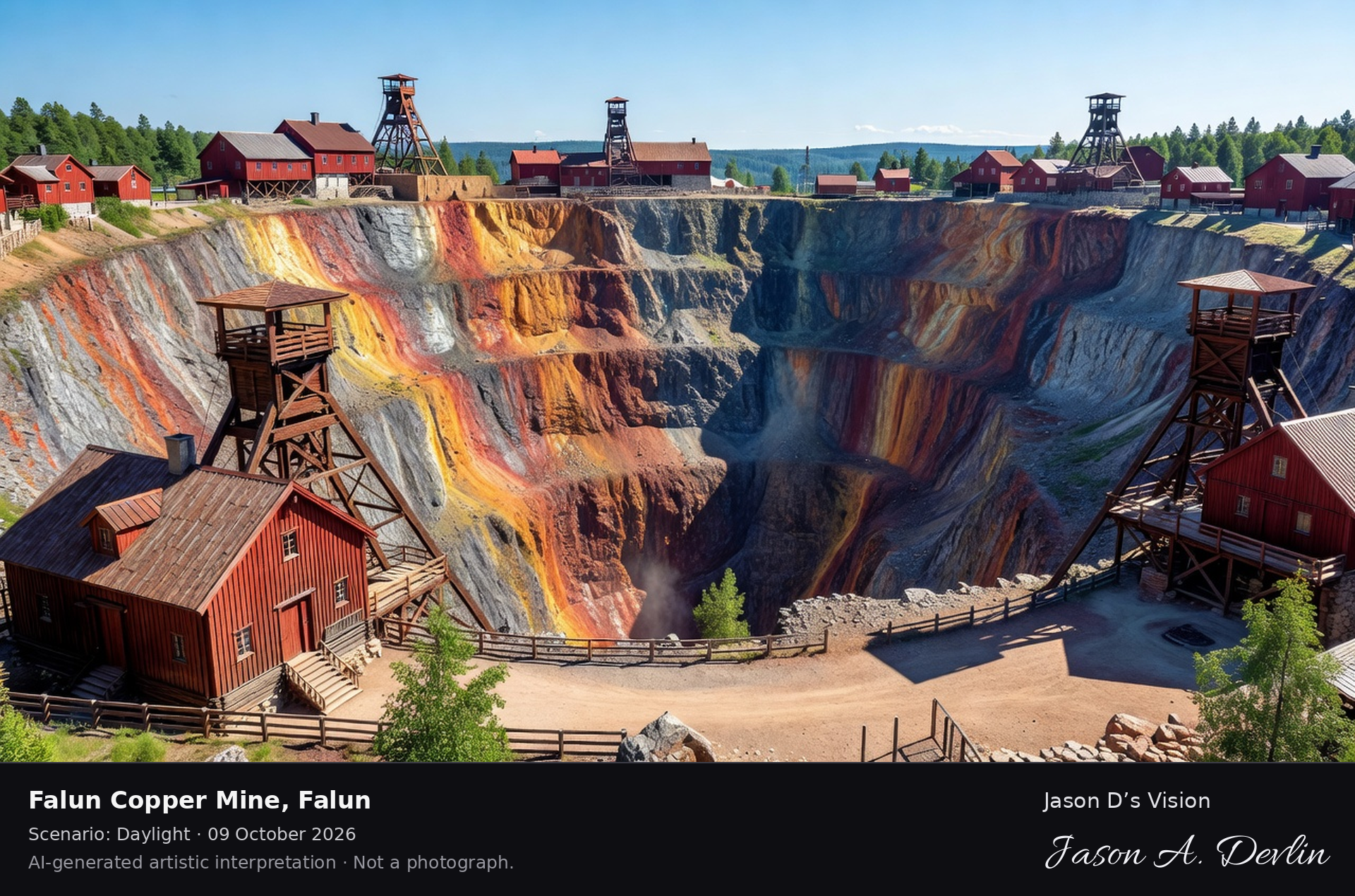
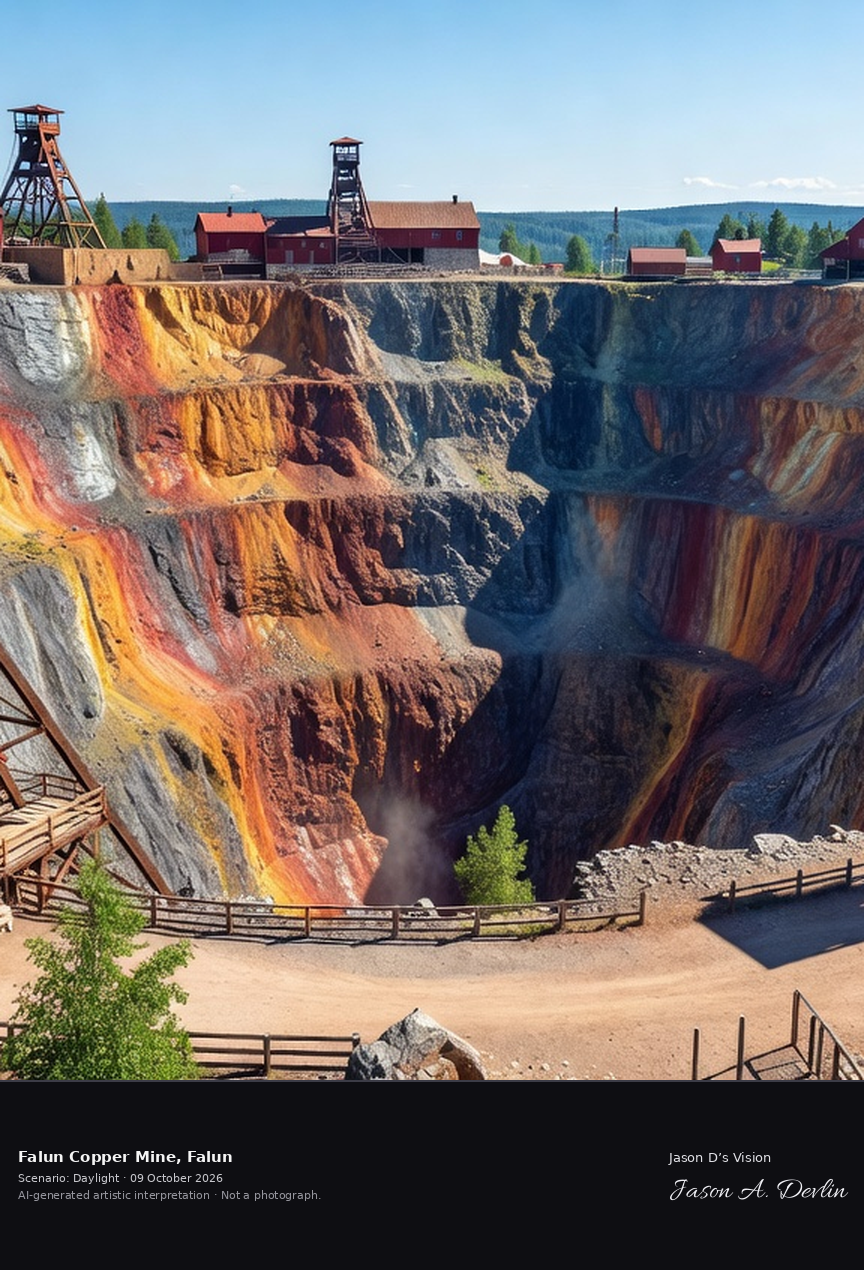
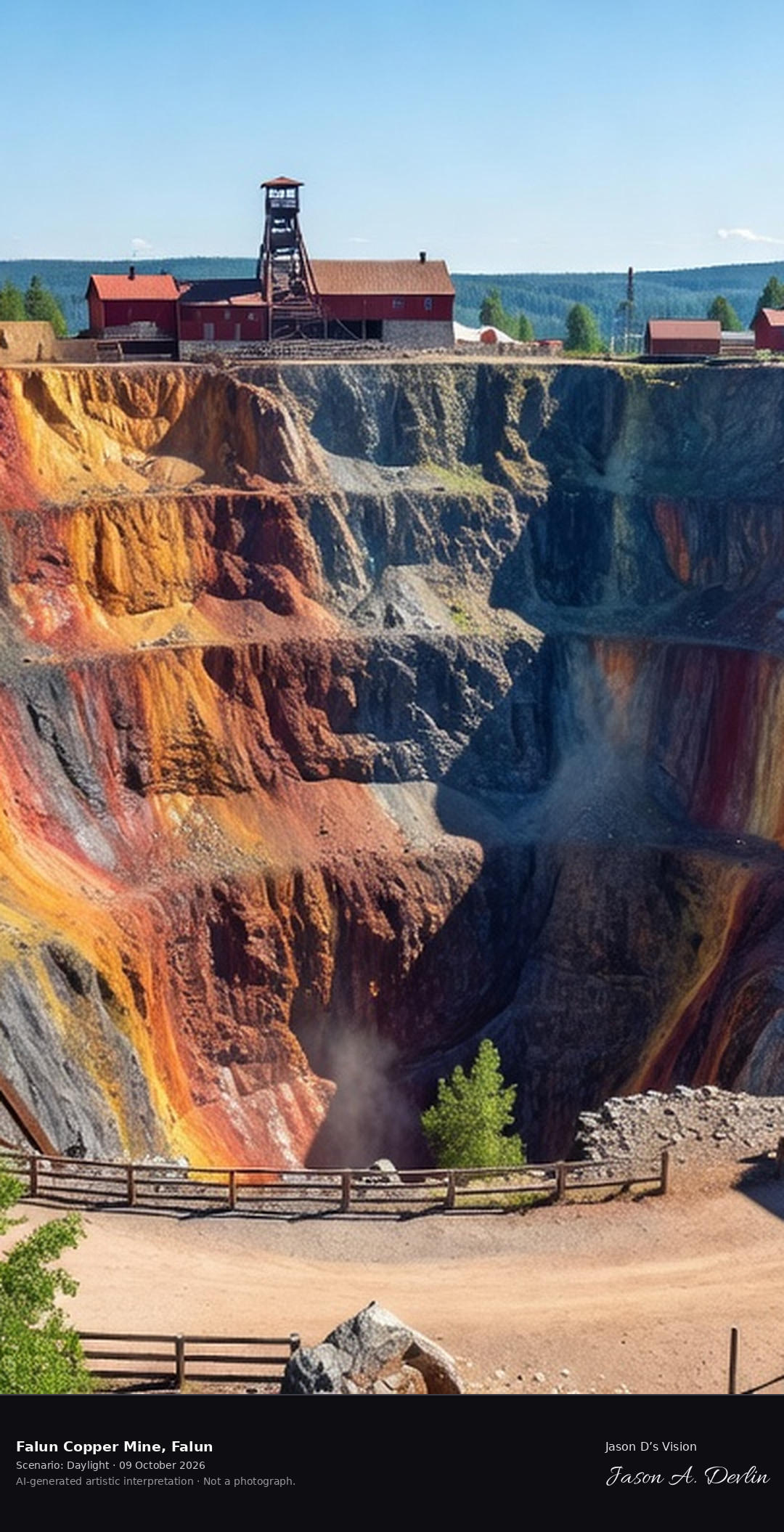
The Great Pit (Stora Stöten) at Falun Mine, the vast 100-meter-deep crater from the 1687 collapse, with the historic mine buildings and headframes around the rim. A UNESCO World Heritage site that funded Sweden's 17th-century empire.
Falun Copper Mine in Falun: the Great Pit (Stora Stöten), the vast 100-metre-deep crater left by the 1687 collapse, its terraced walls stained in rich mineral colours, ringed by the historic red Falu Rödfärg mine buildings and wooden headframes on the rim, seen in bright natural daylight. A UNESCO World Heritage site that funded Sweden's 17th-century empire.
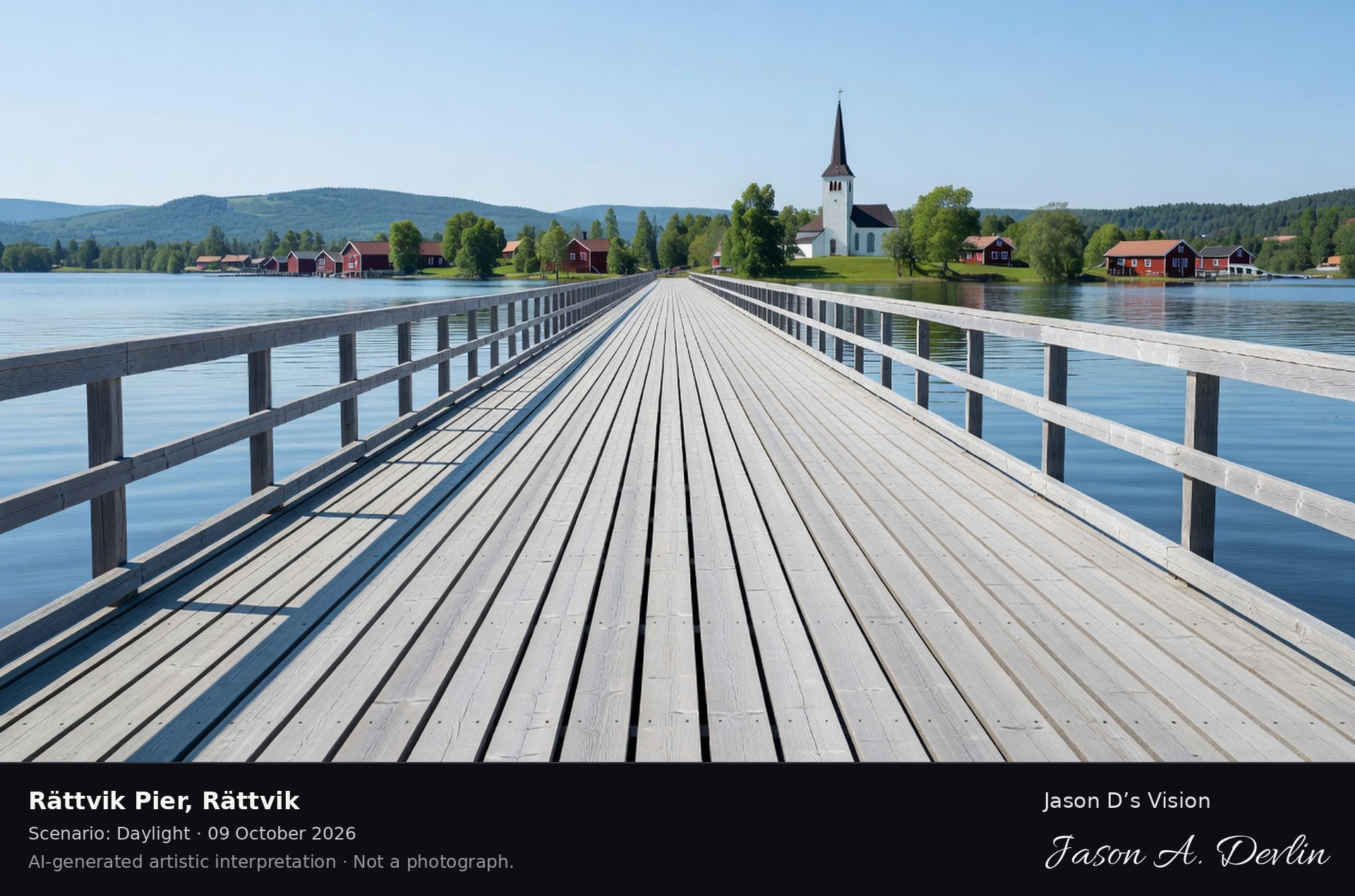
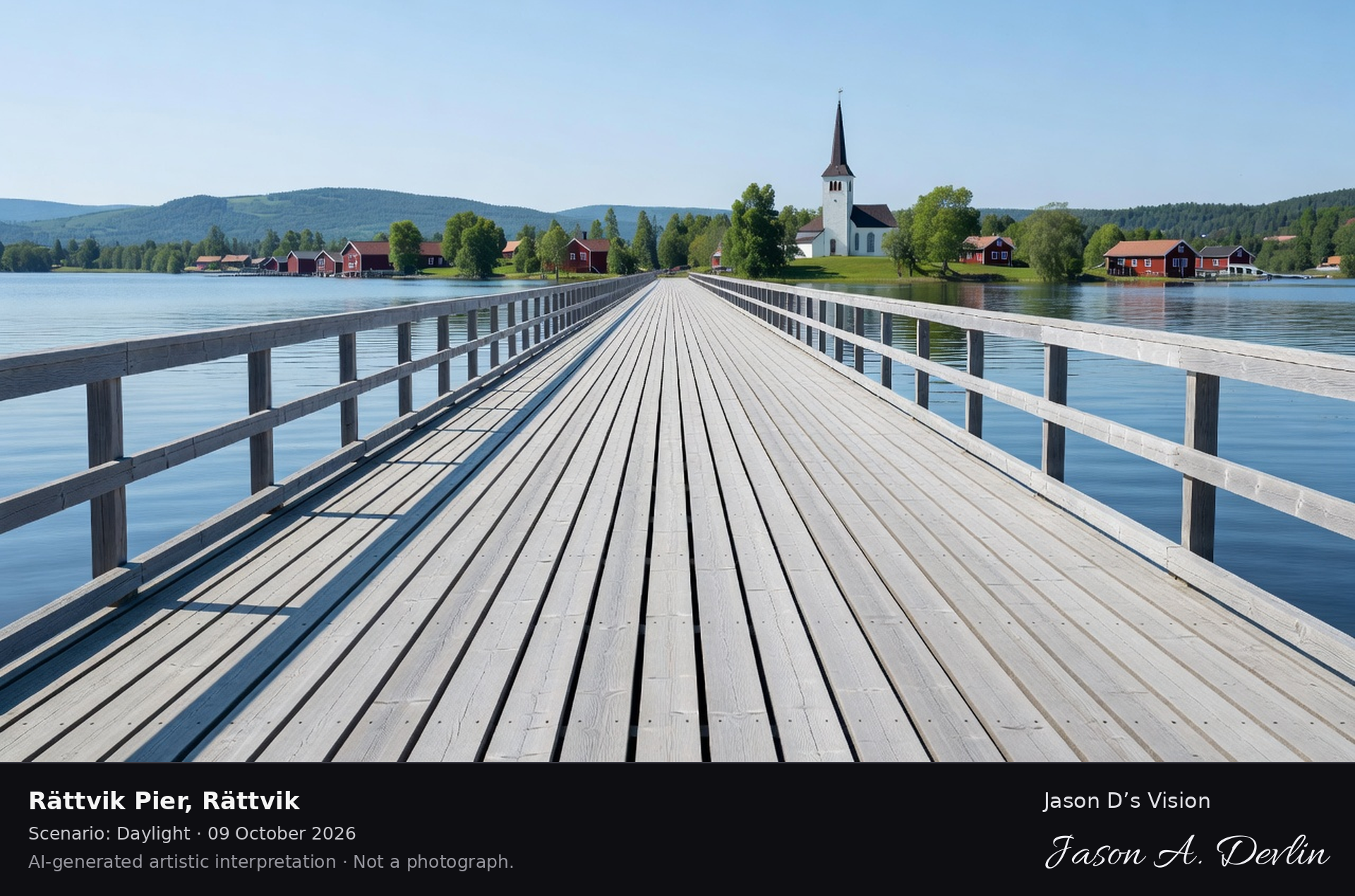
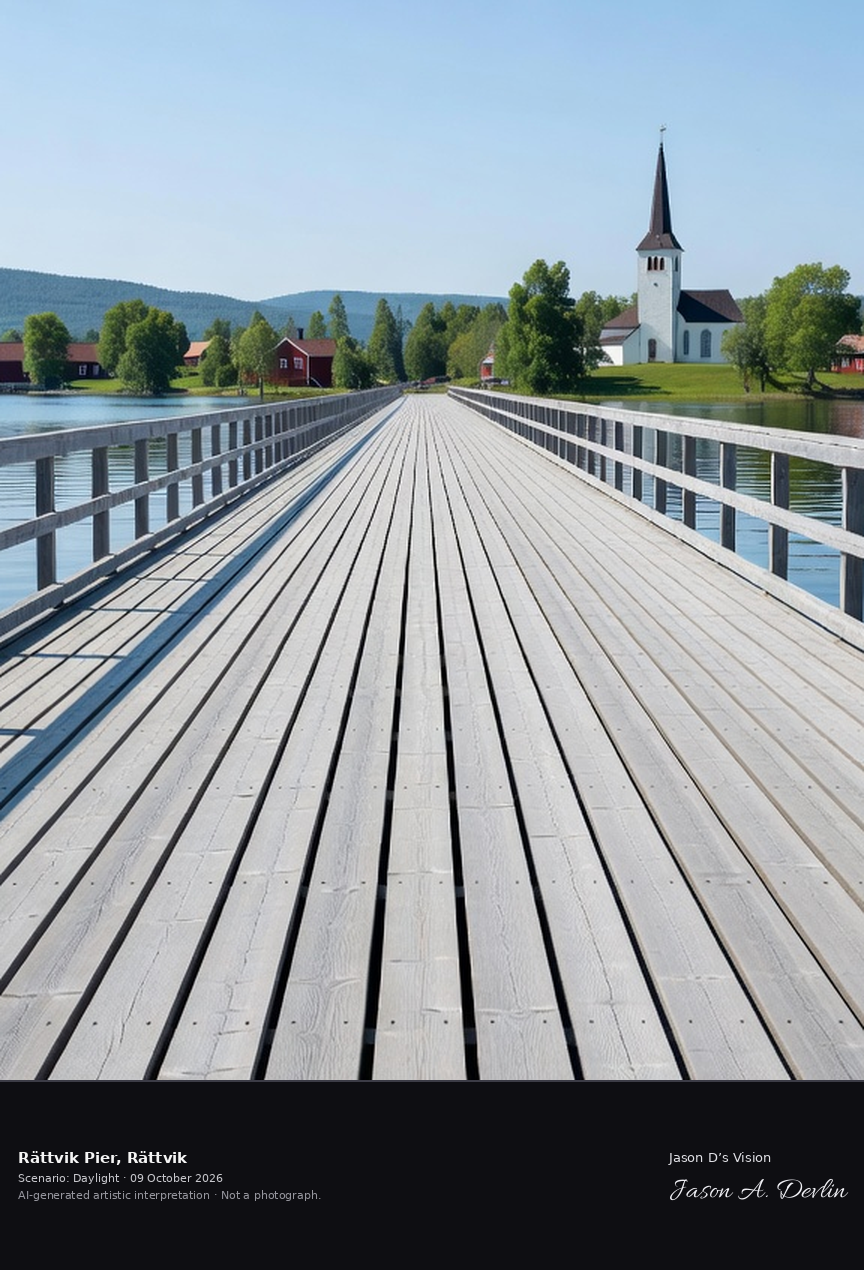
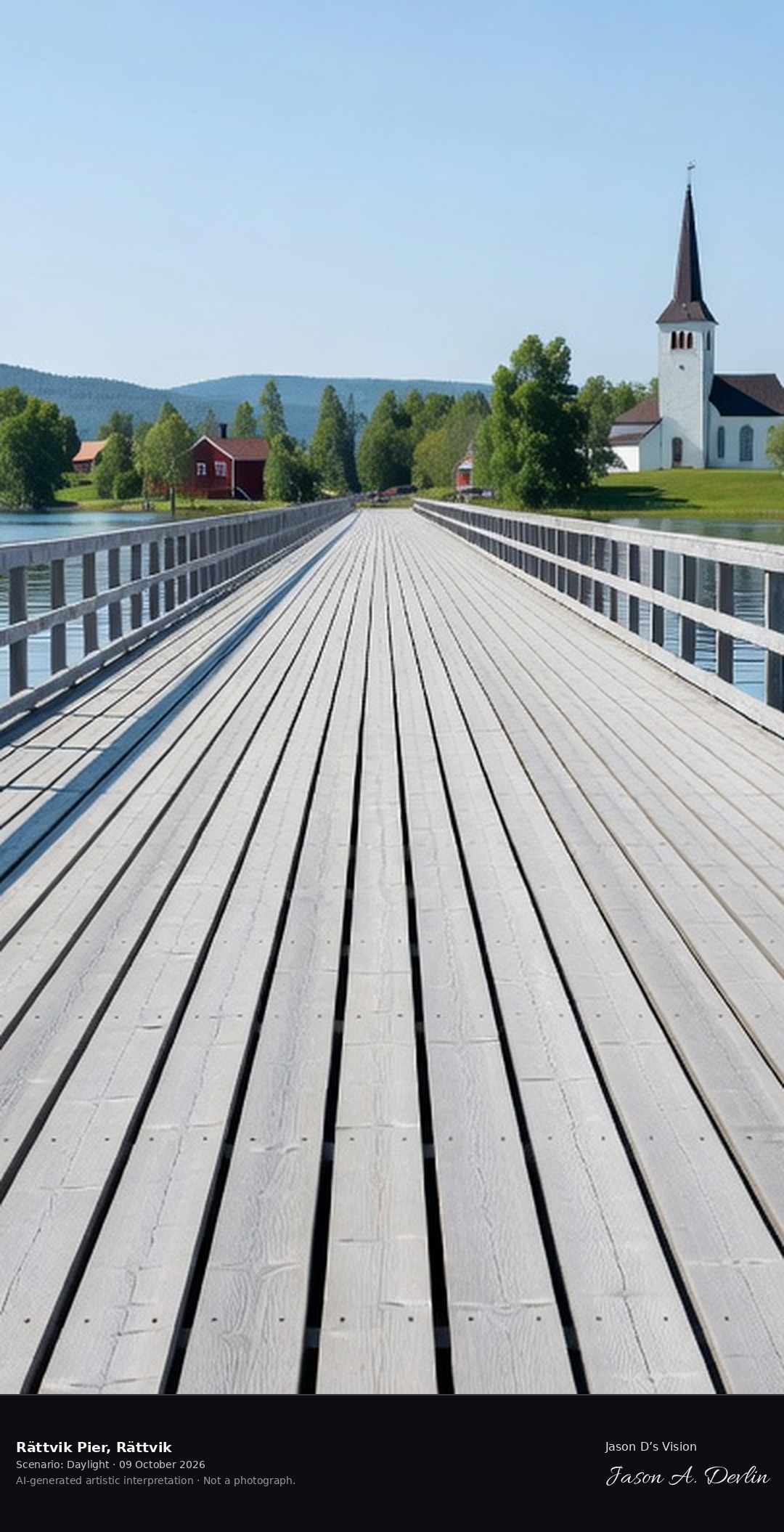
Rättvik's 628-meter-long wooden pier stretching into Lake Siljan, Sweden's longest, with the church and classic Dalarna shoreline behind. Viewed along the pier's planks toward the distant fells.
Rättvik Pier in Rättvik: Sweden's longest wooden pier, 628 meters stretching into Lake Siljan — viewed along the weathered planks toward the distant fells, the white church with its tall dark spire rising above the classic red Dalarna cottages on the shoreline, calm blue water under bright natural daylight. A timeless Dalarna summer postcard.
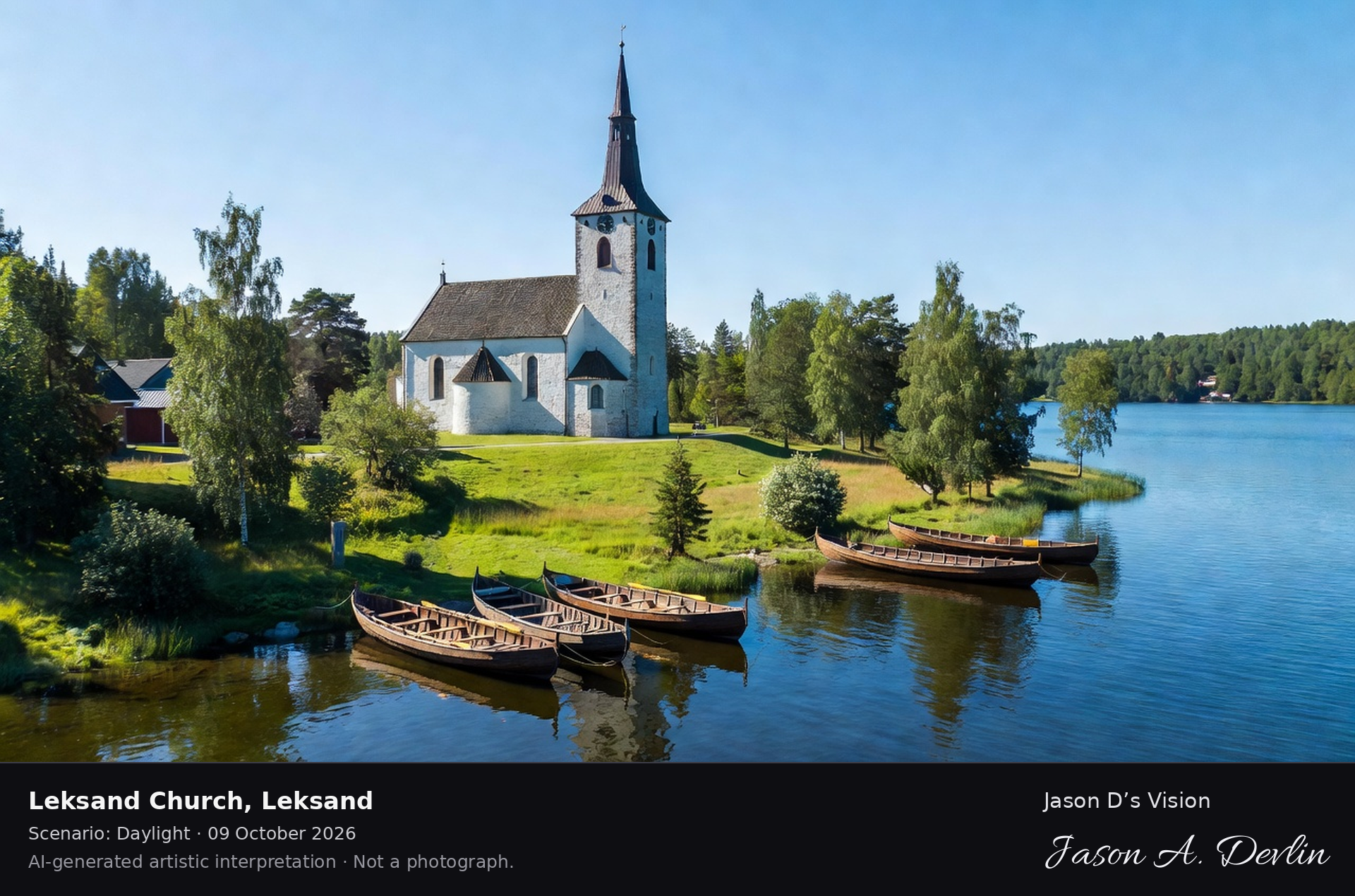
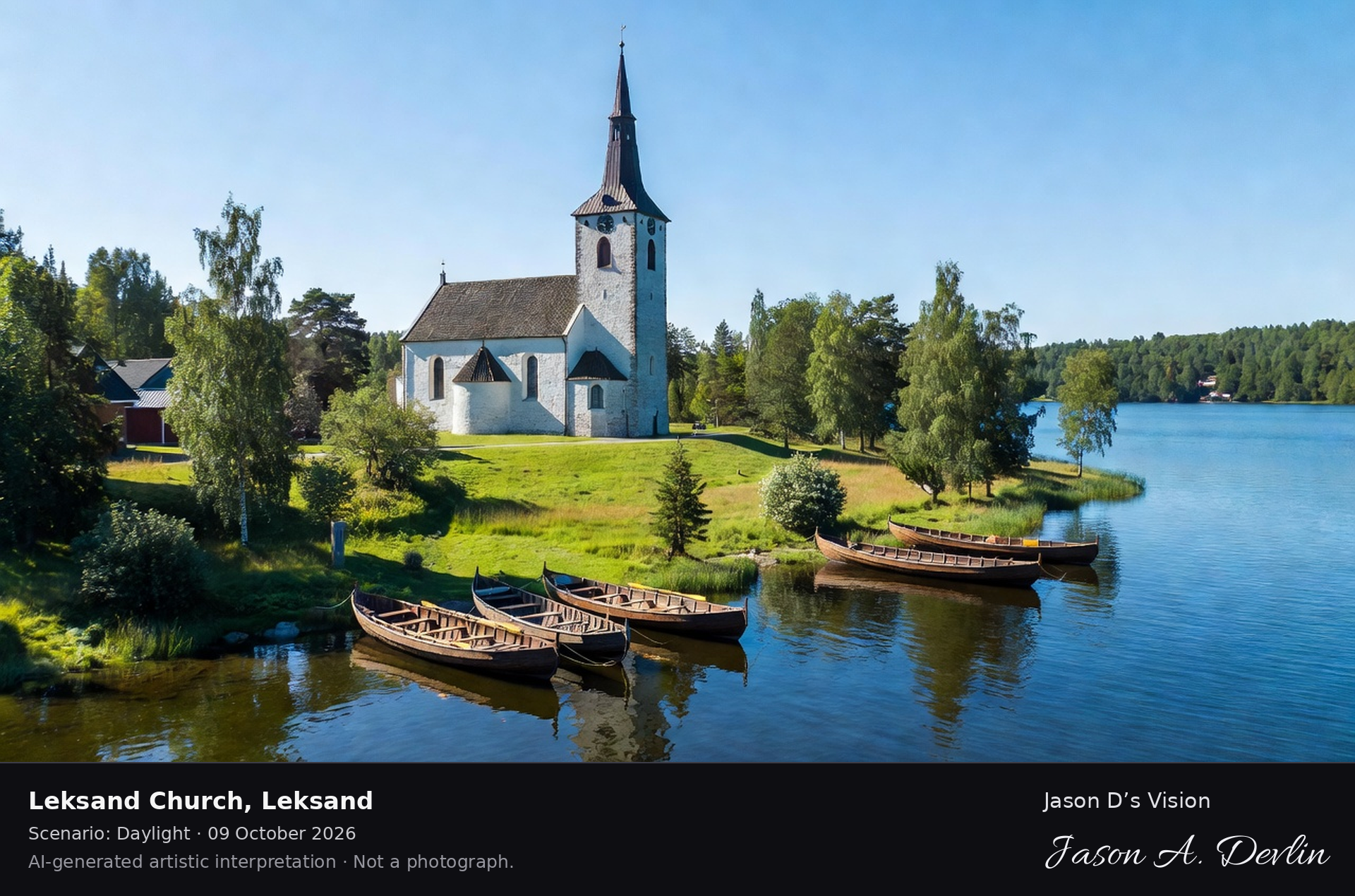
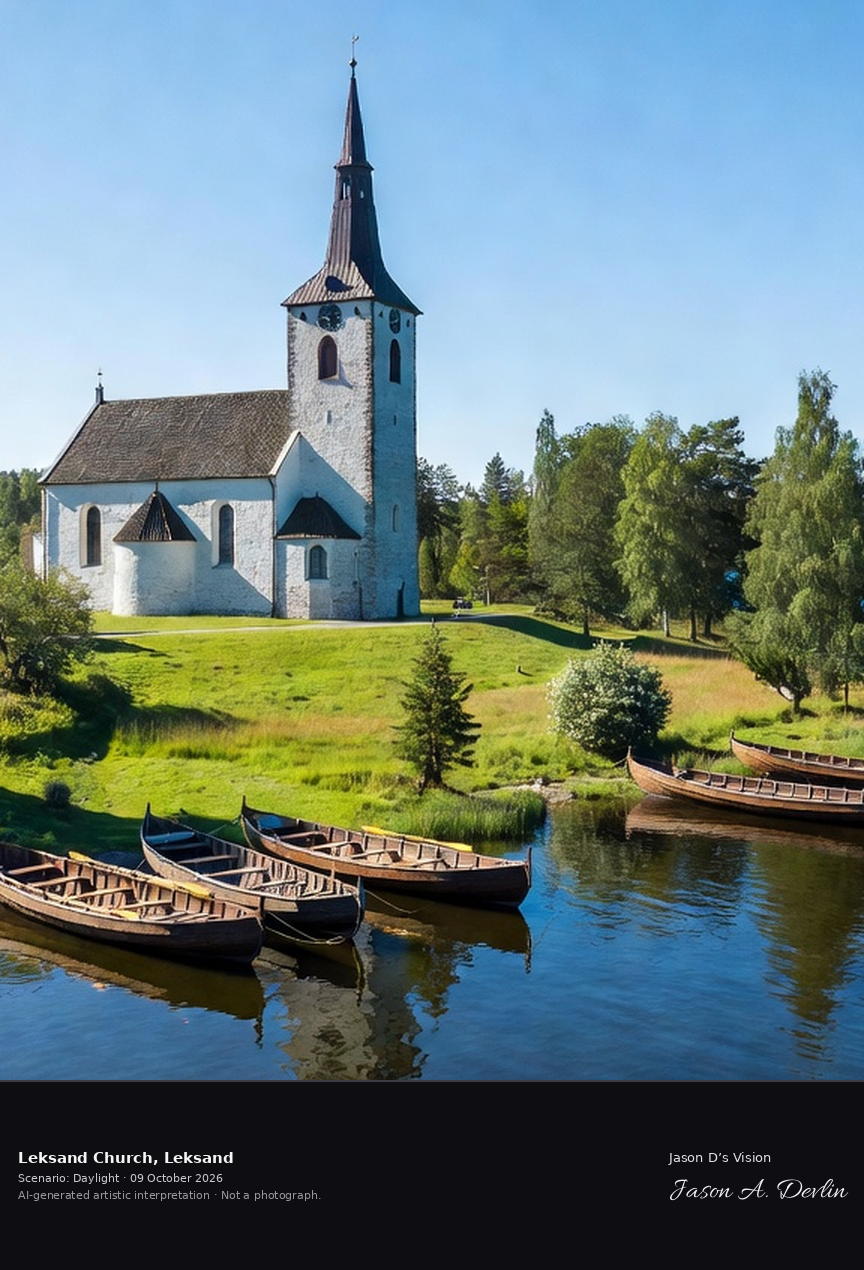
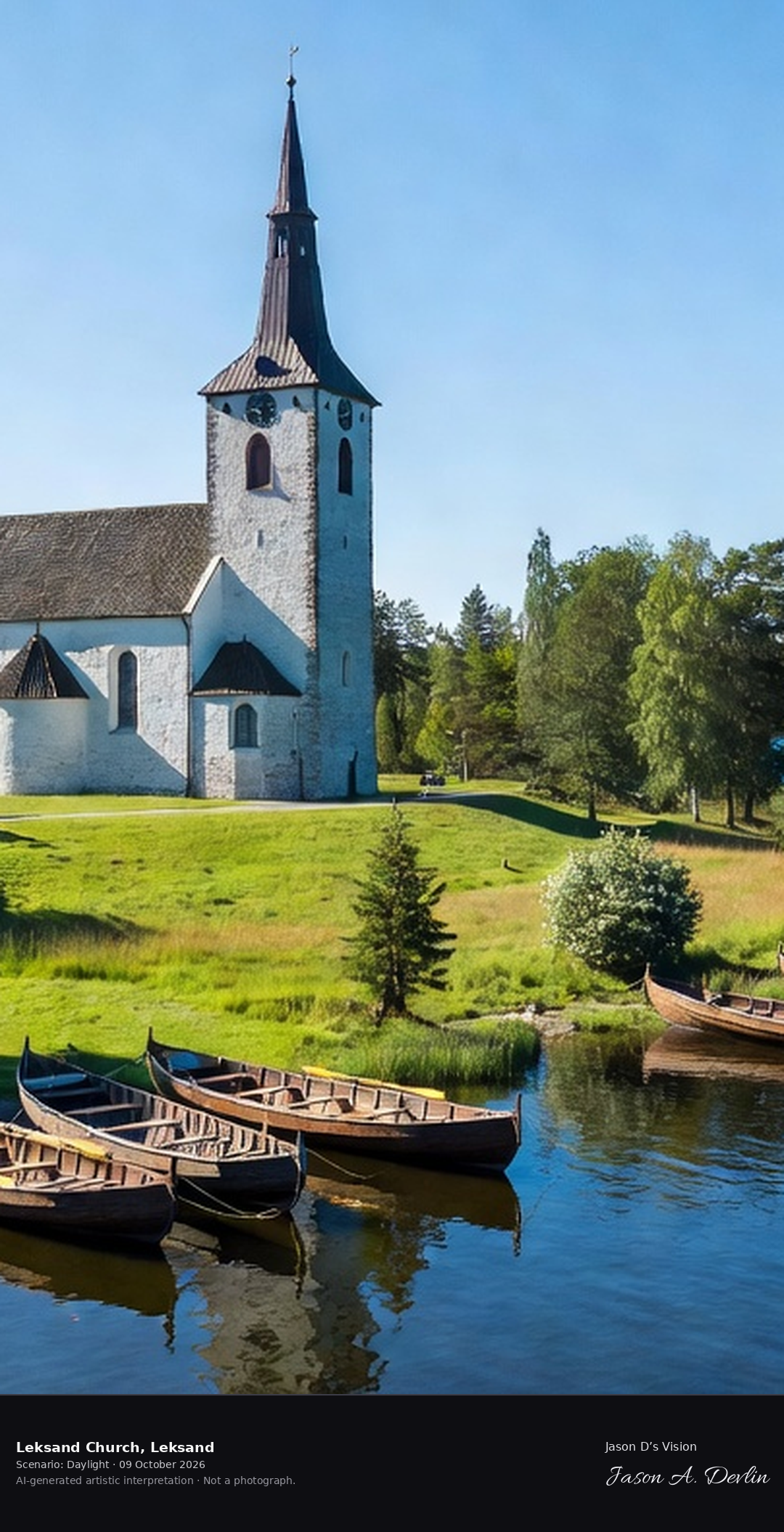
Leksand's white church with its distinctive tower on the Siljan shore, traditional church boats (kyrkbåtar) pulled up on the grass below. The heart of Dalarna's midsummer traditions.
Leksand Church in Leksand: Dalarna's white church with its tall dark spire rising above the green lawn on the Siljan shore — viewed from the lakeside with traditional wooden church boats (kyrkbåtar) pulled up at the water's edge below, forested fells across the calm lake under bright natural daylight. The heart of Dalarna's midsummer traditions.
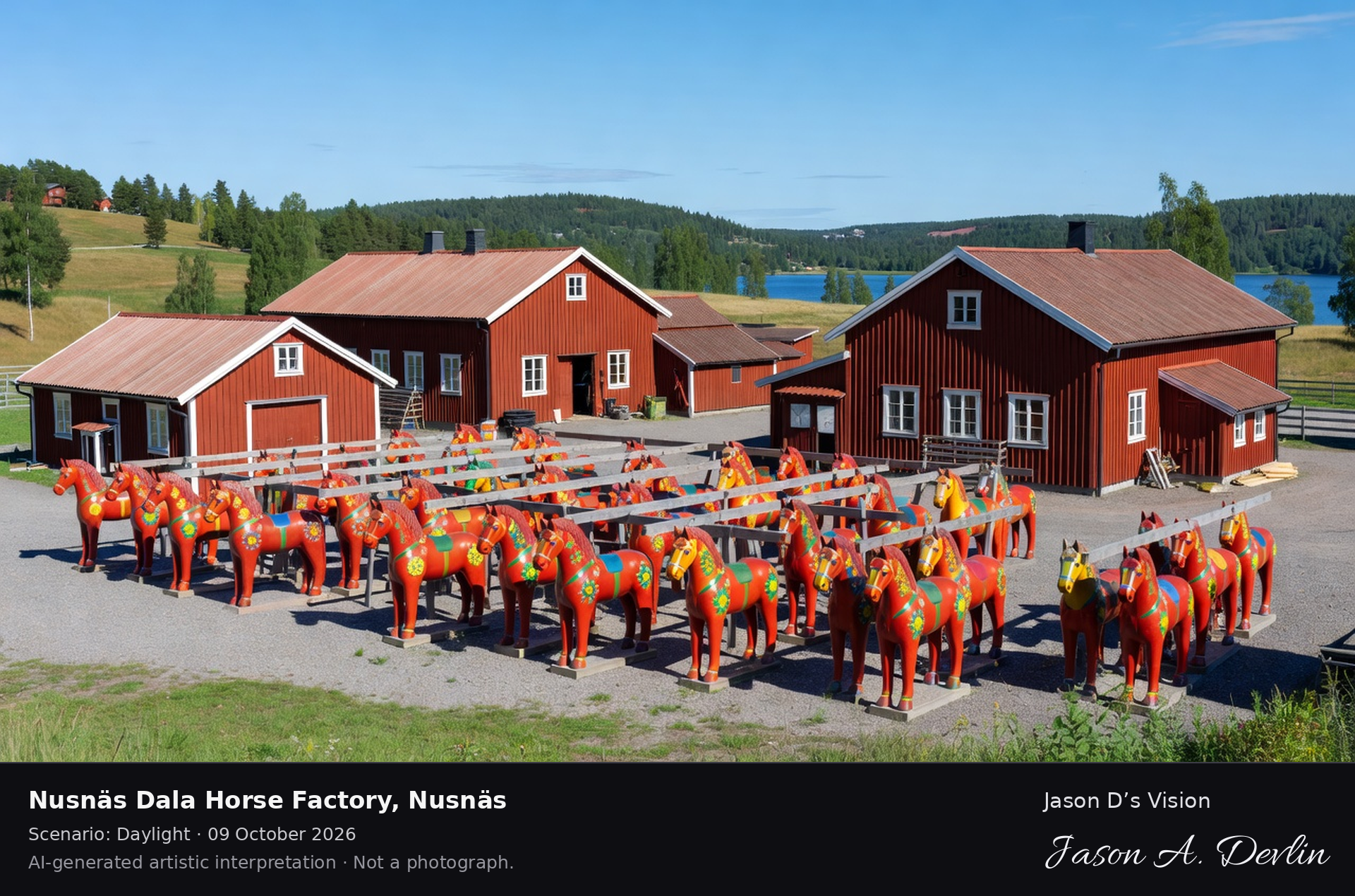
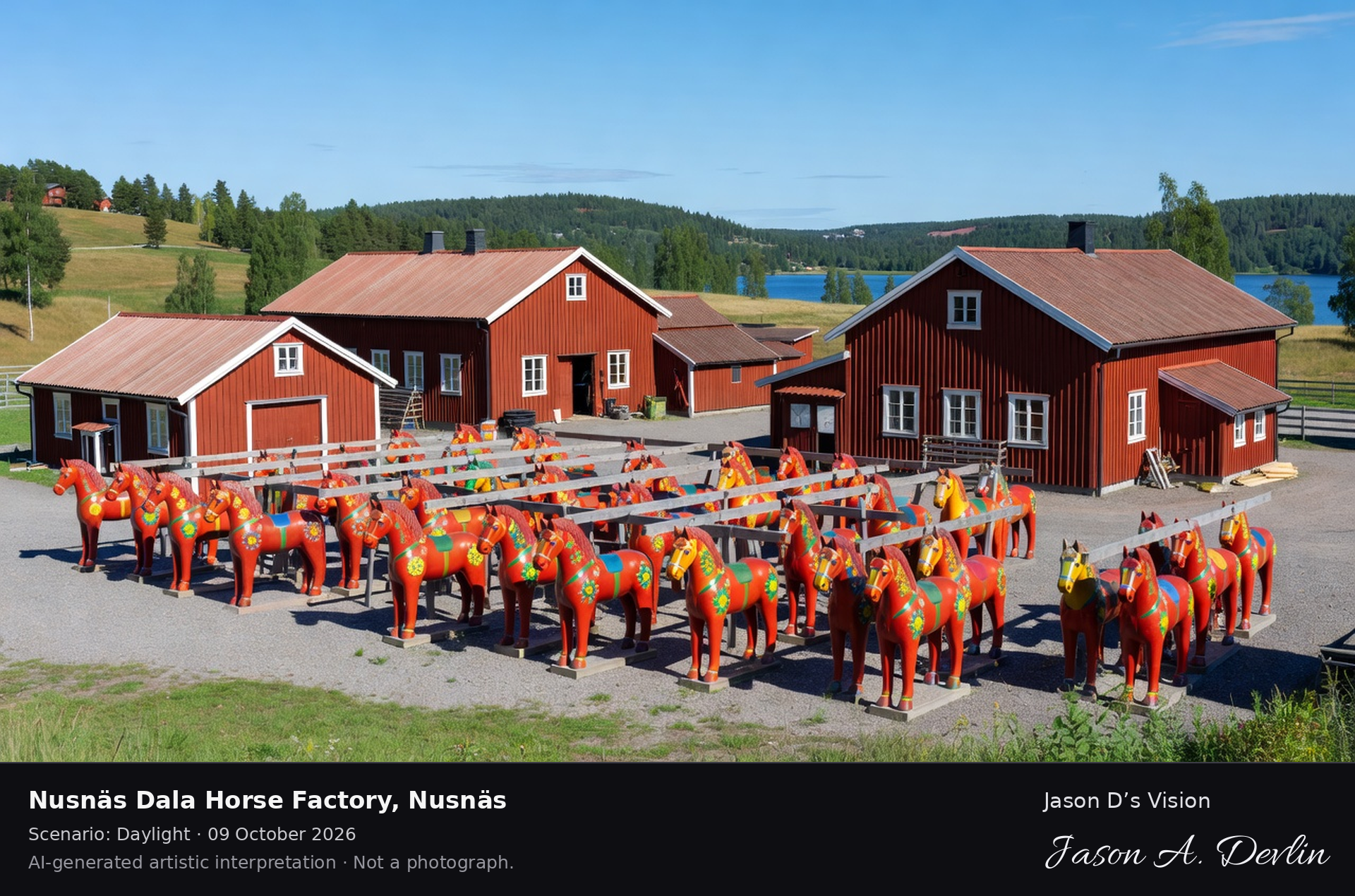
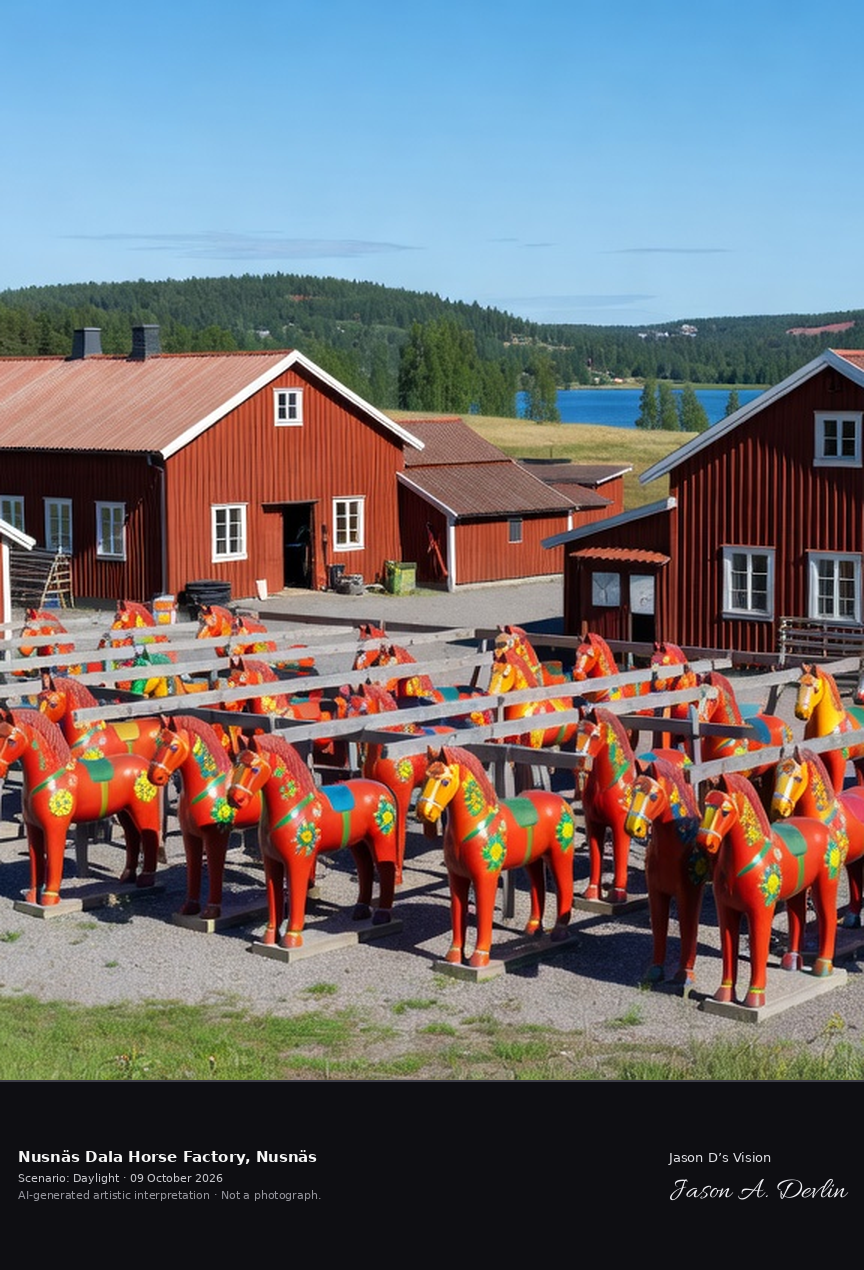
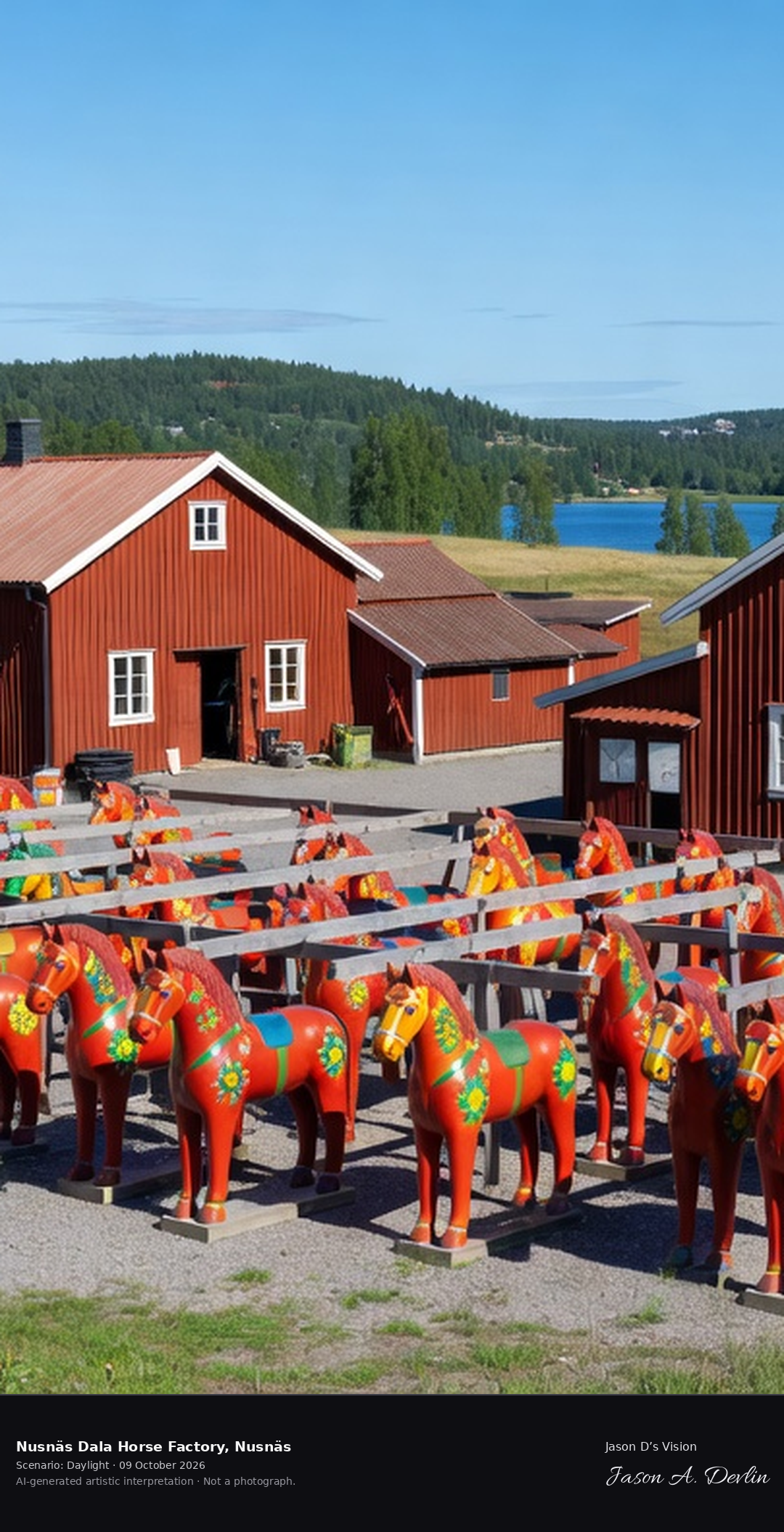
The Nils Olsson Dala horse workshop in Nusnäs, red-painted wooden factory buildings where the iconic dalahästar are still hand-carved and painted, racks of horses drying in the yard.
Nusnäs Dala Horse Factory in Nusnäs: the Nils Olsson Dala horse workshop — Falu-red-painted wooden factory buildings with white trim where the iconic dalahästar are still hand-carved and painted, drying racks of finished horses in the gravel yard, a glimpse of the lake and forested fells beyond, all in bright natural daylight.
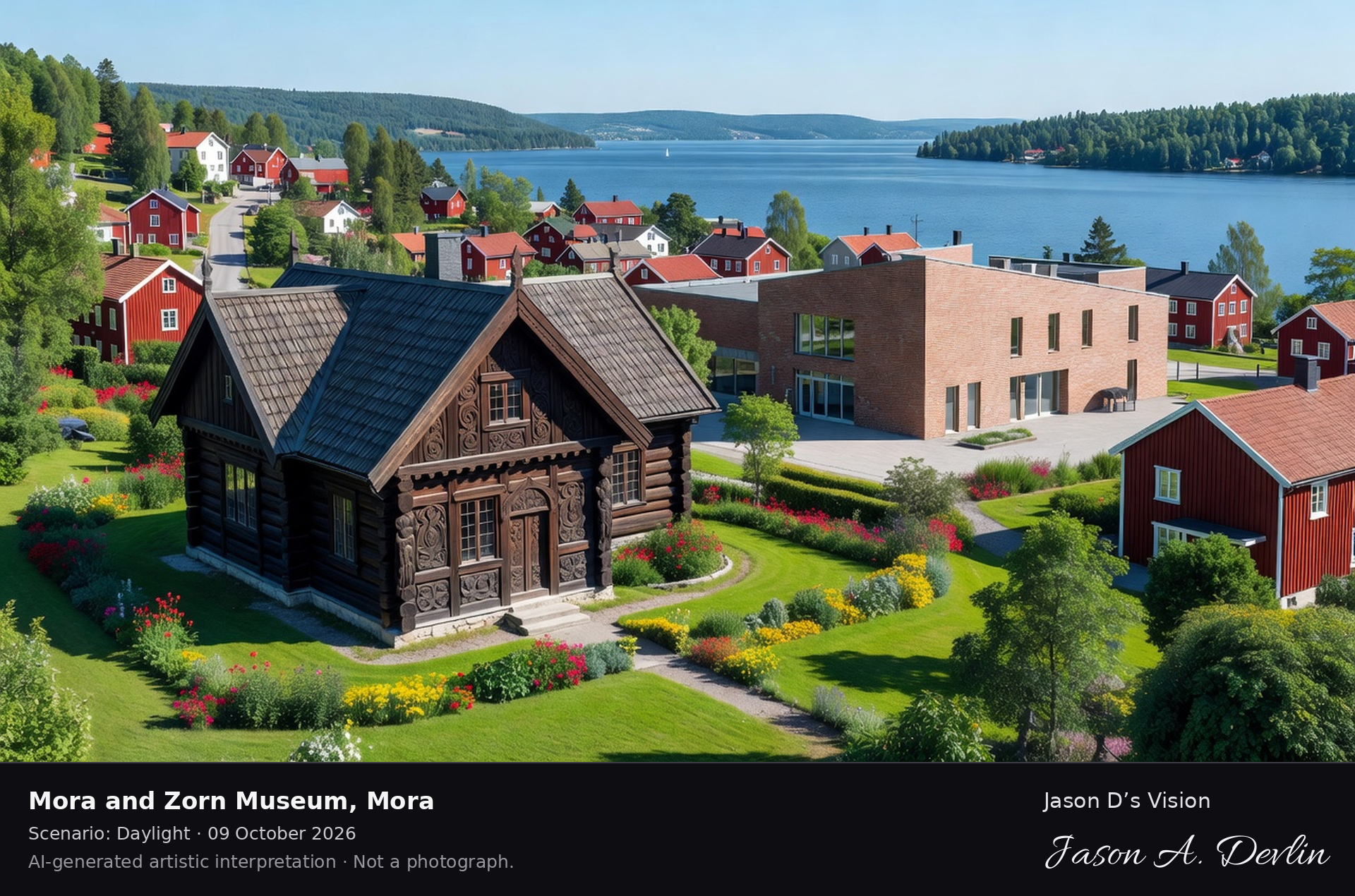
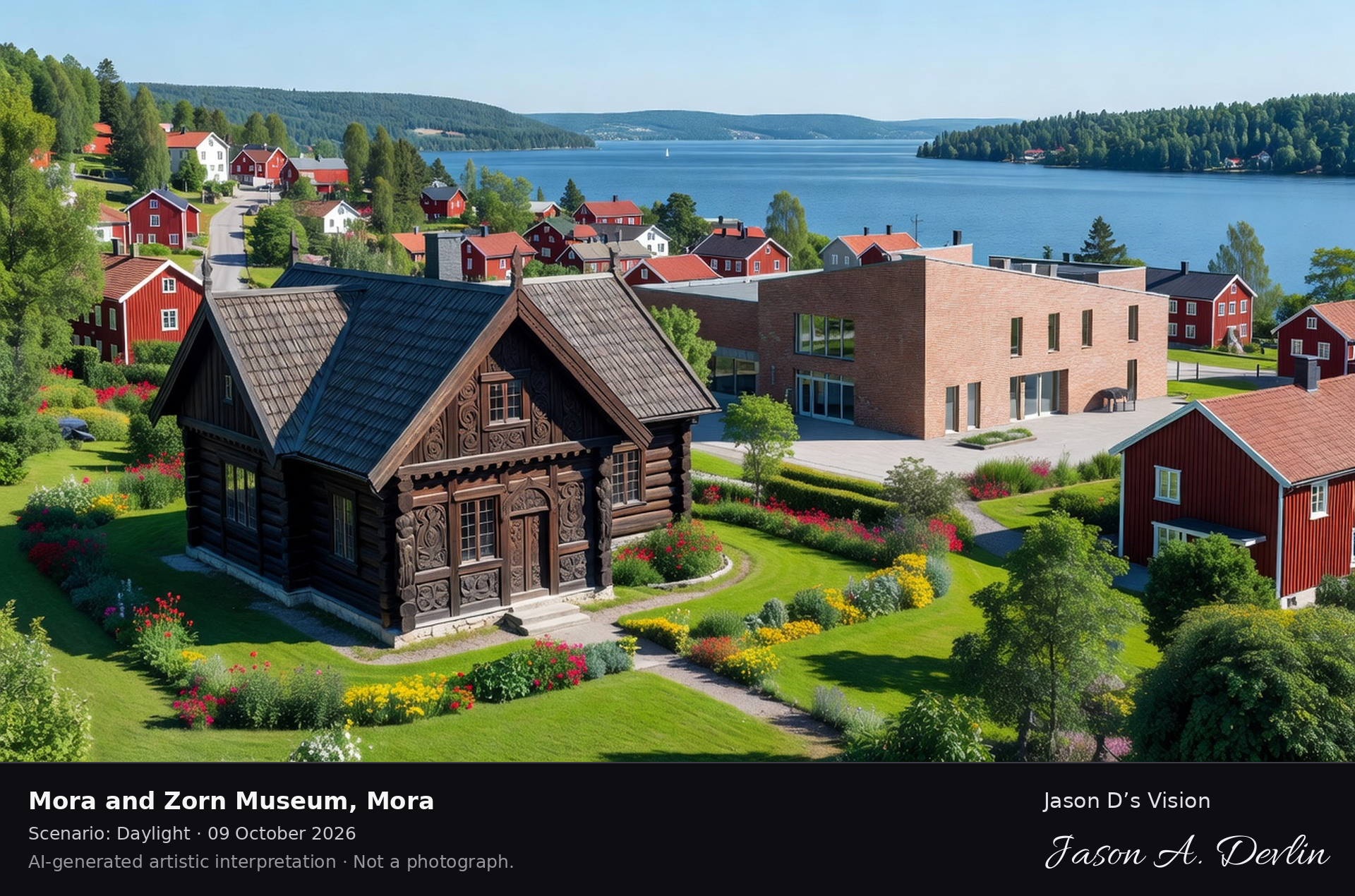
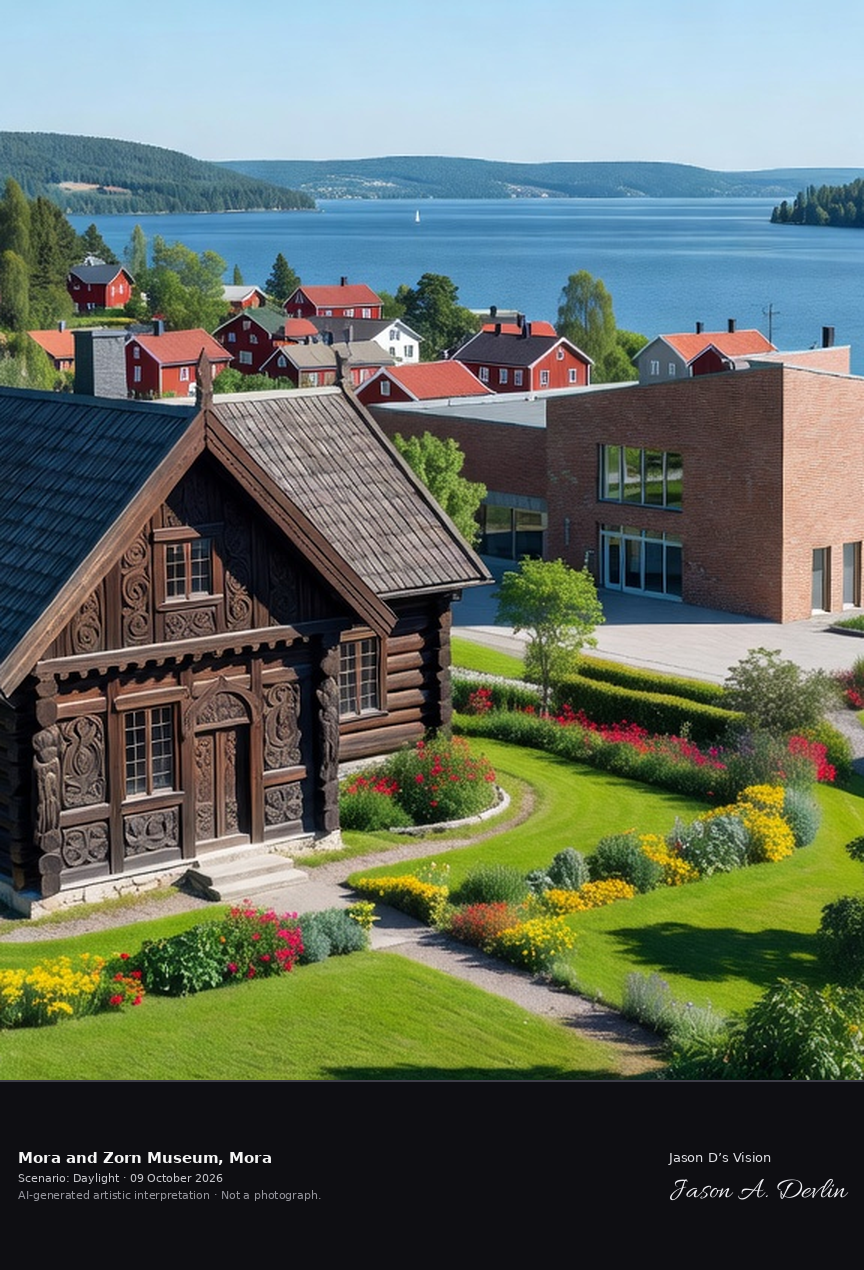
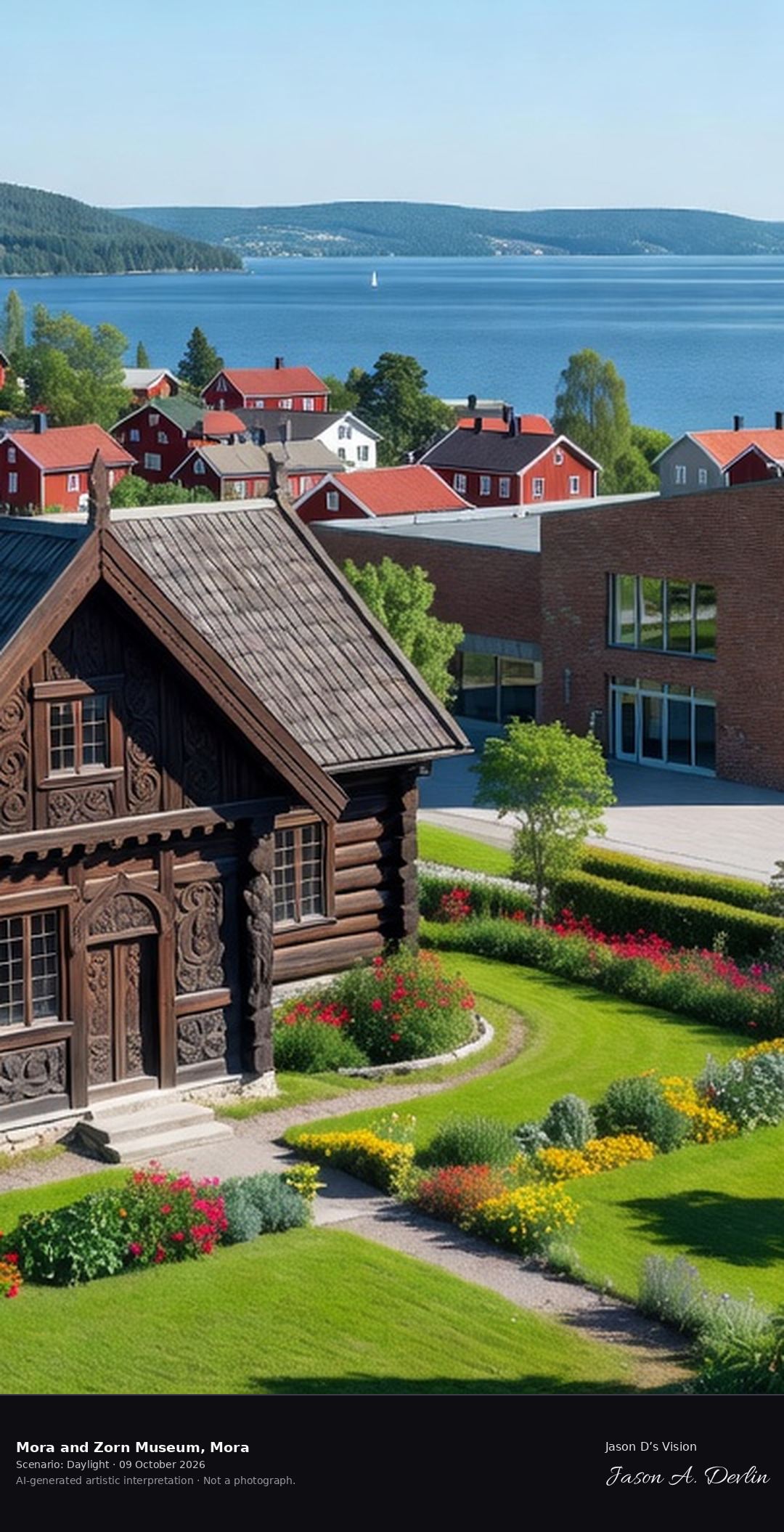
Anders Zorn's home Zorngården in Mora, the timbered artist's villa with its carved details and garden, beside the Zorn Museum's modernist brick building. The Vasaloppet finish town on Lake Siljan.
Mora and Zorn Museum in Mora: Anders Zorn's home Zorngården — the timbered artist's villa with its carved details and garden — beside the Zorn Museum's modernist brick building, with Falu-red houses of the Vasaloppet finish town and Lake Siljan beyond, all in bright natural daylight.
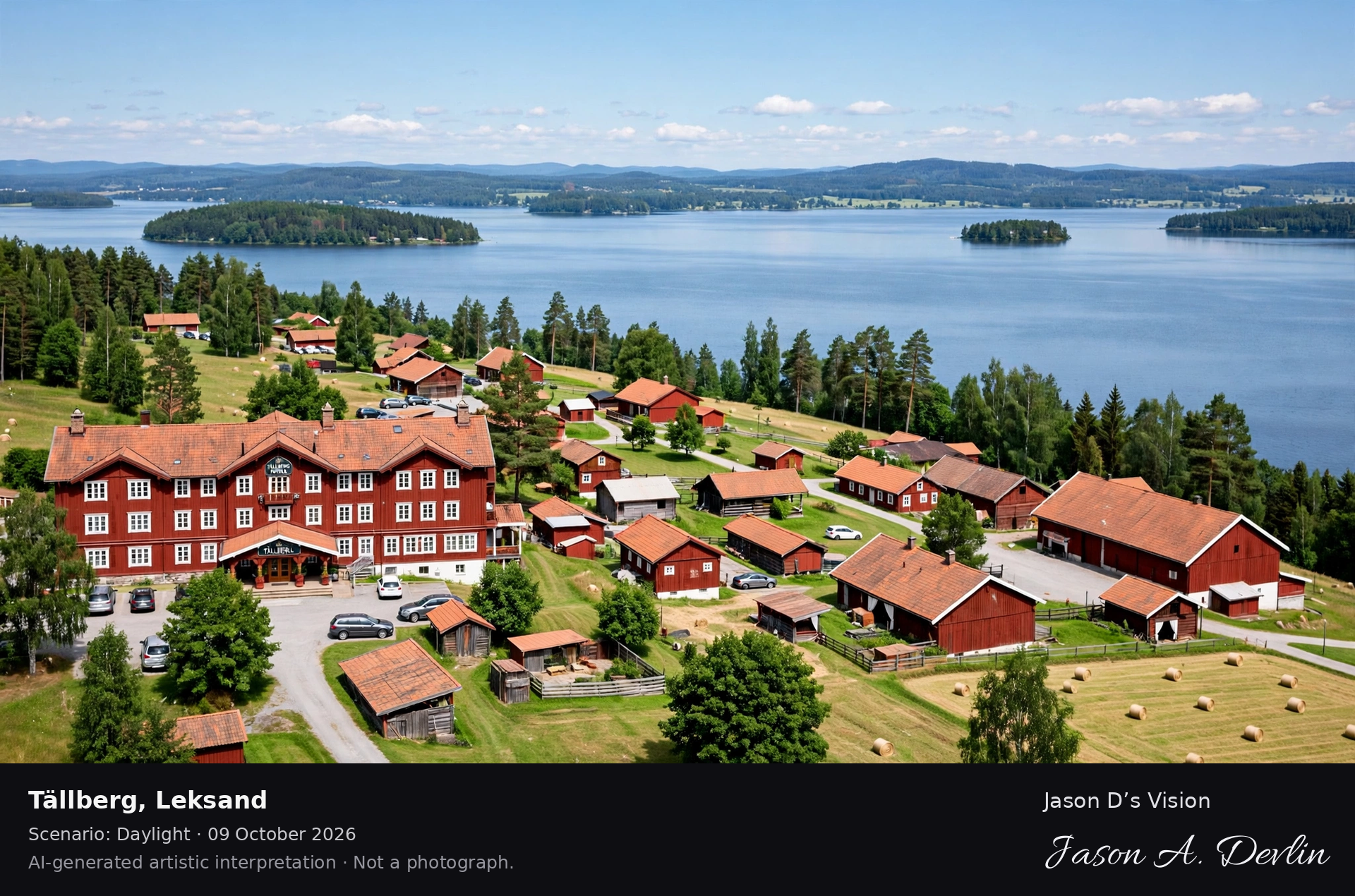
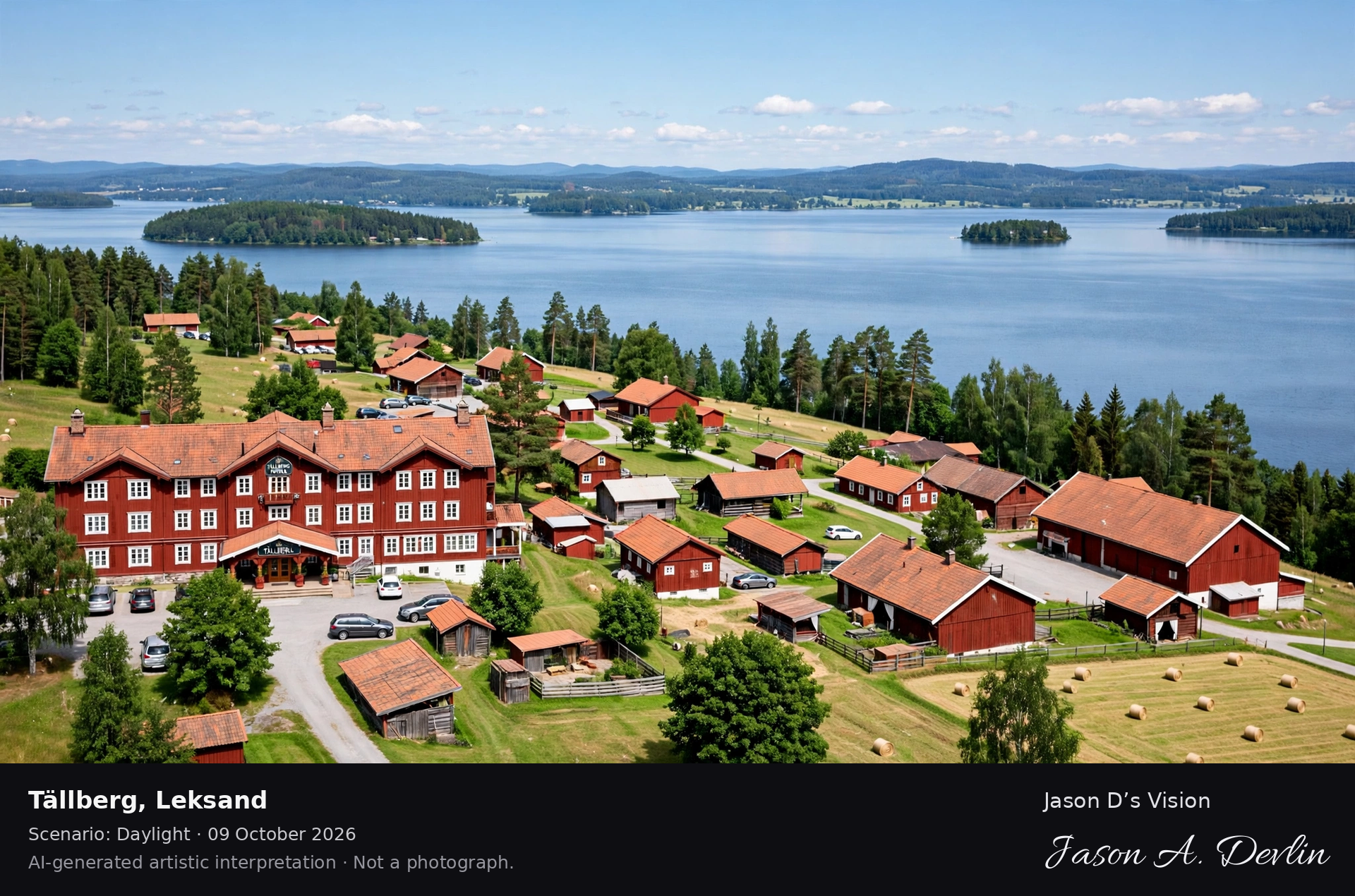
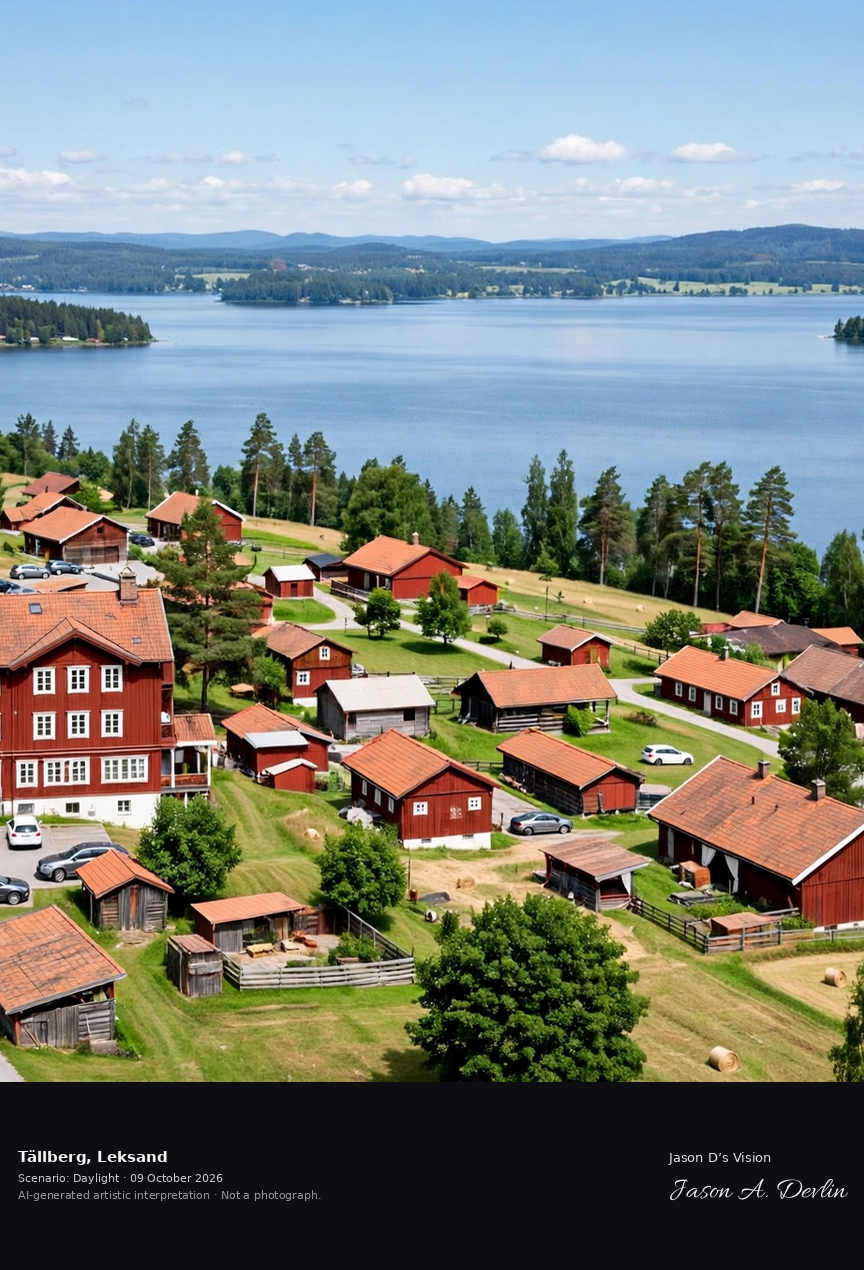
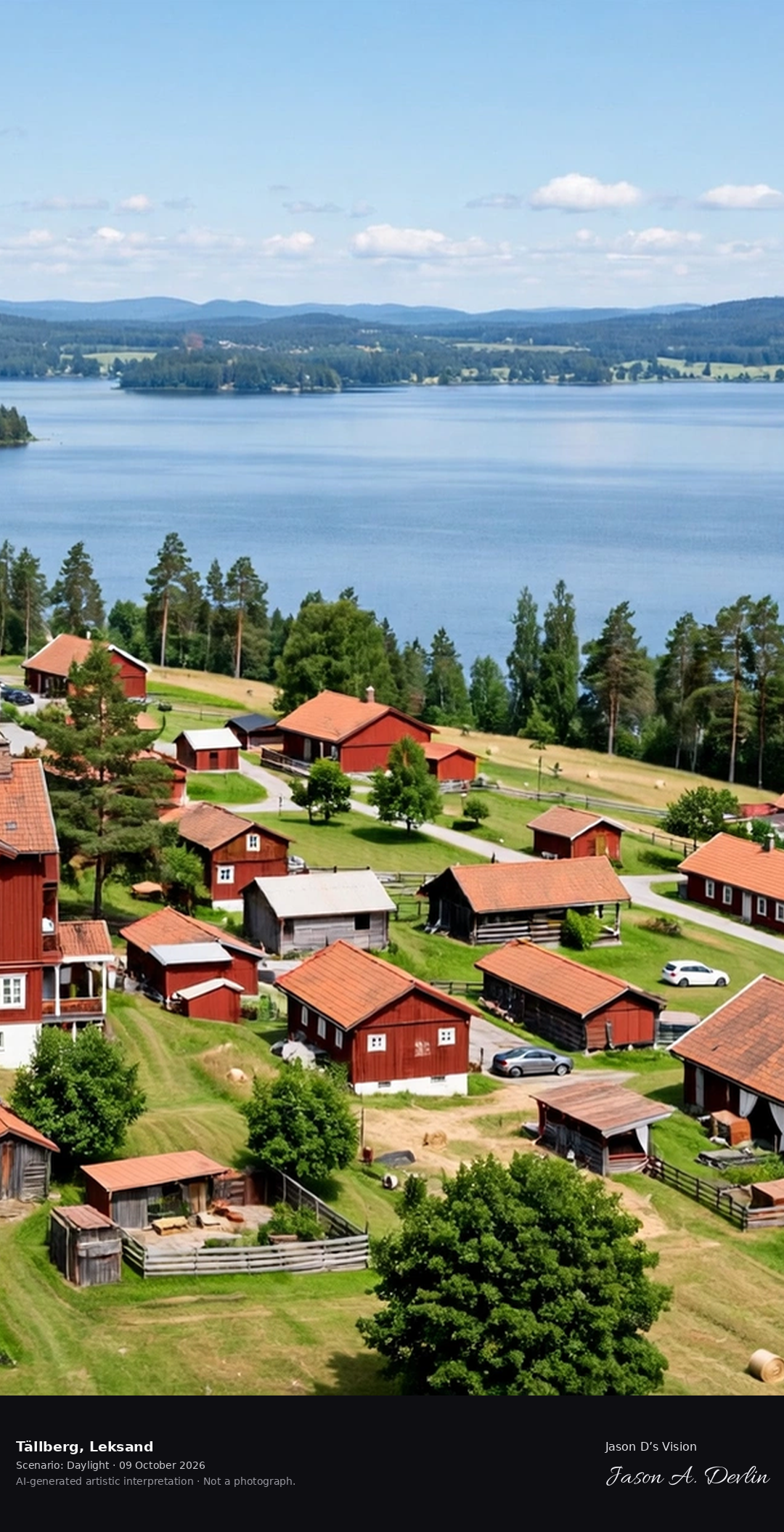
Tällberg's cluster of brown-timbered historic hotels on the hillside above Lake Siljan, traditional Dalarna farmhouses with grass roofs overlooking the water and distant blue fells.
Tällberg in Leksand: the village's cluster of brown-timbered historic hotels on the hillside above Lake Siljan, with traditional Dalarna farmhouses with grass roofs scattered over the green slope, the lake stretching out and distant blue fells on the horizon, all in bright natural daylight.
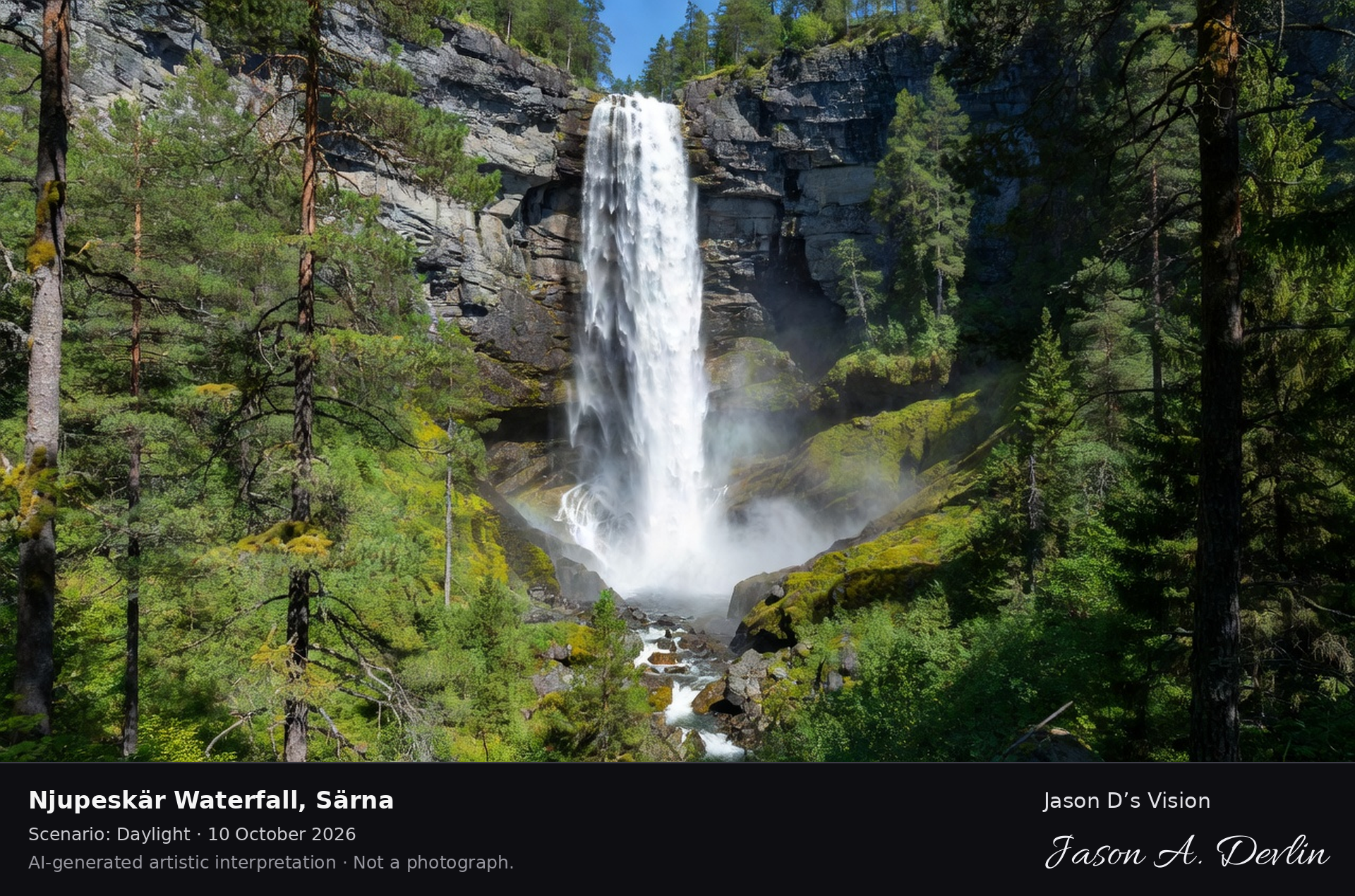
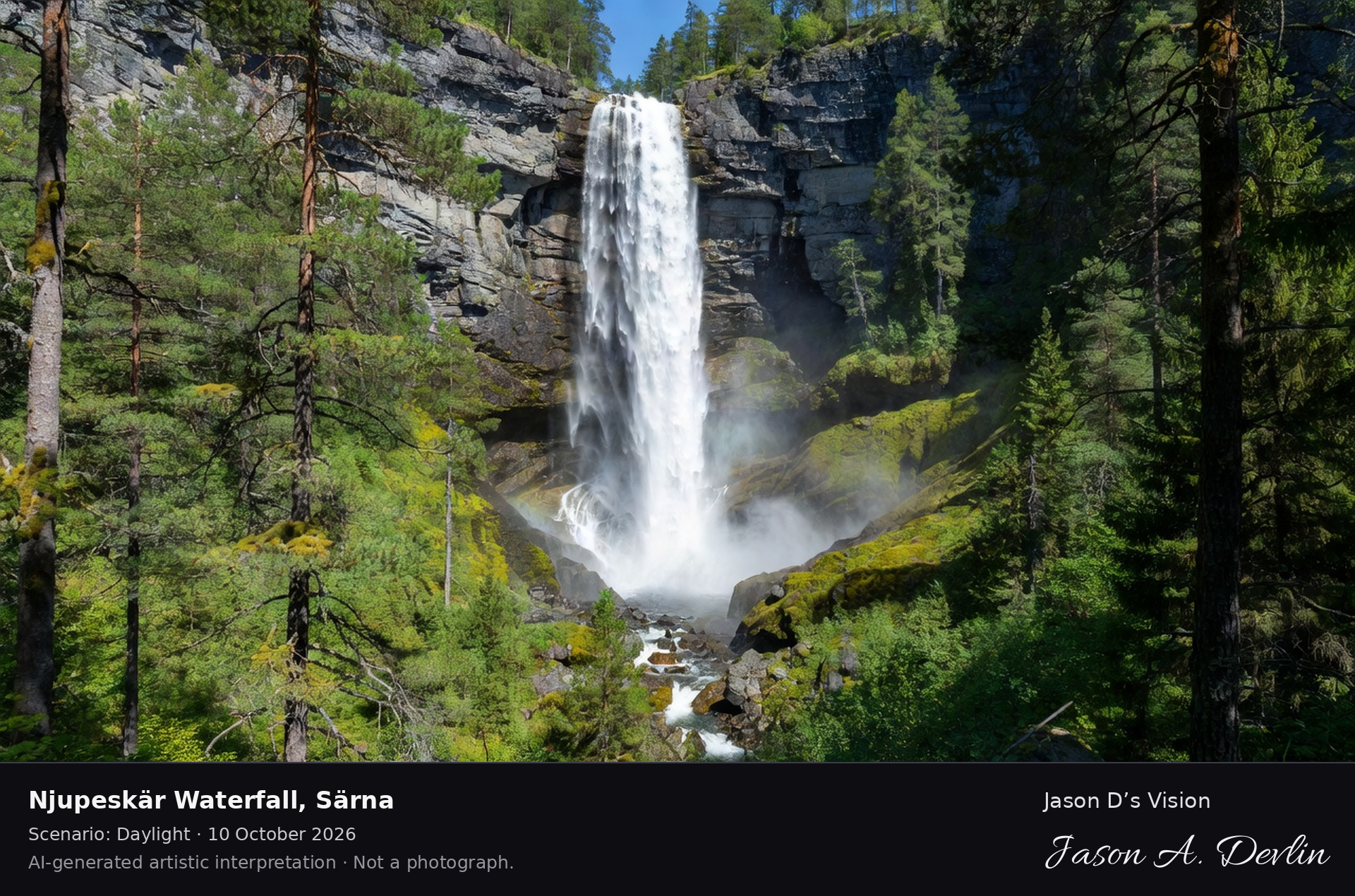
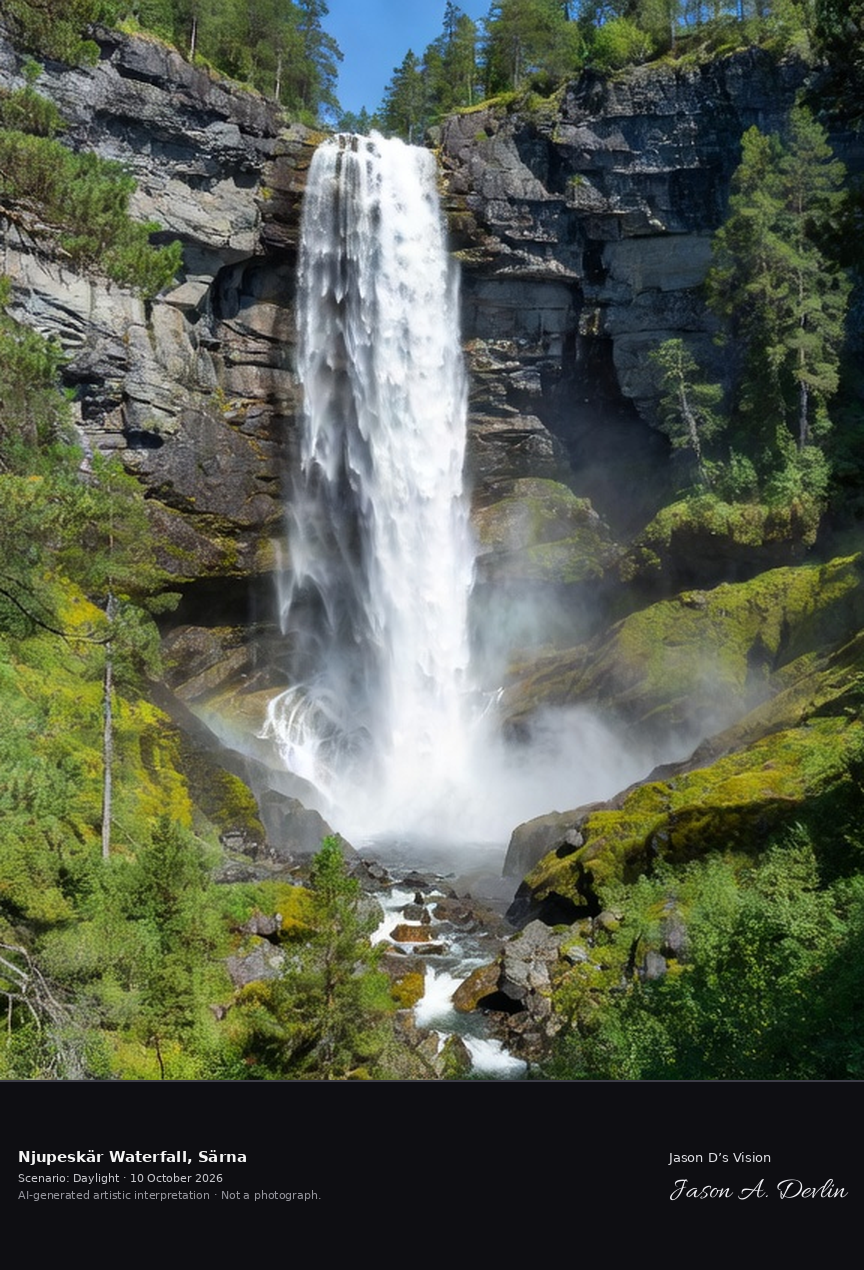
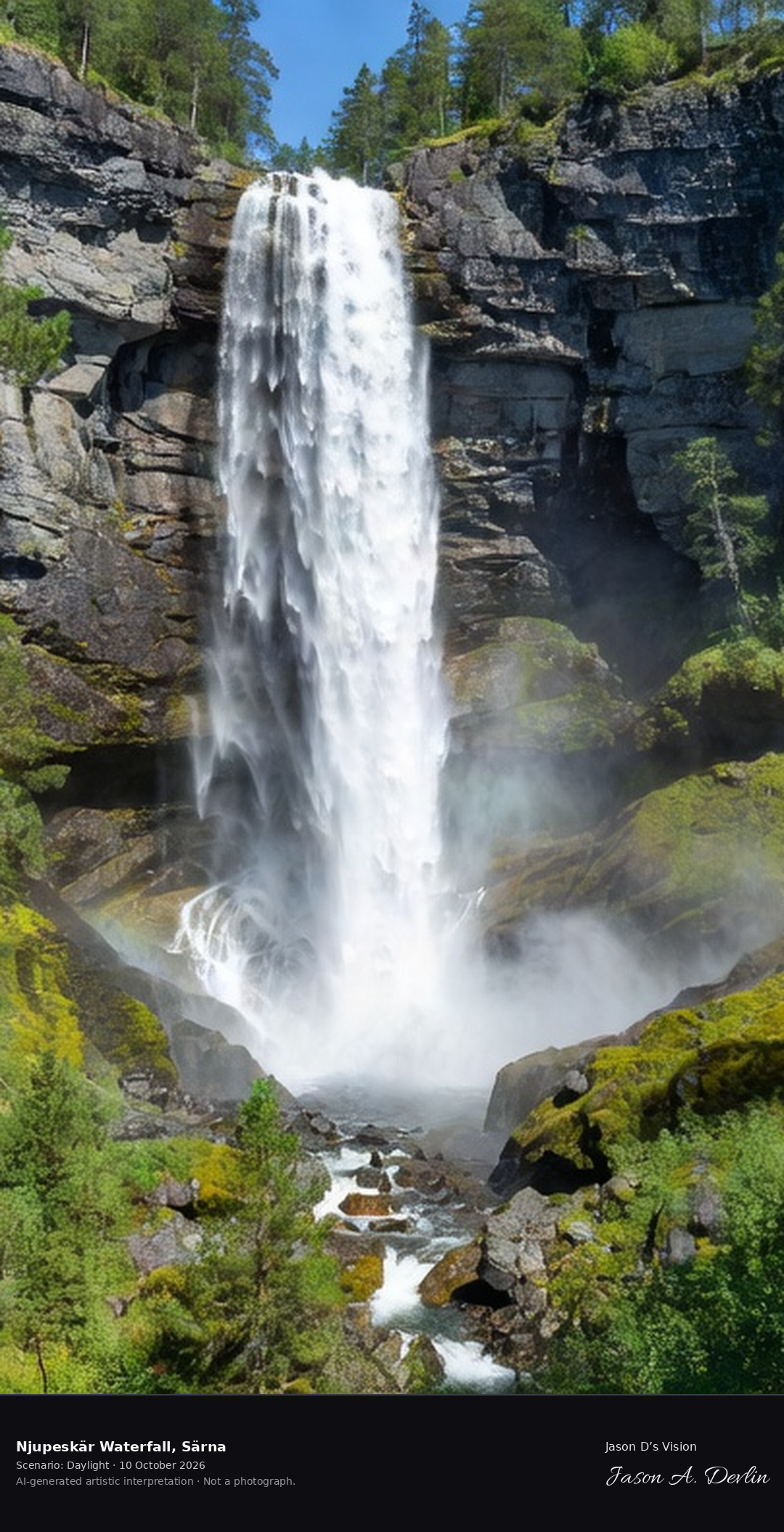
Njupeskär, Sweden's highest waterfall at 125 meters, plunging over the cliff in Fulufjället National Park with the ancient old-growth forest below. Free-falling water in pristine wilderness.
From the classic viewpoint in Fulufjället National Park, the view runs to Njupeskär, Sweden's highest waterfall: a great 125-metre ribbon of white water plunging in free fall over a dark layered cliff. Ancient old-growth pines and mossy boulders frame the falls, while mist rises from the plunge pool at the base where the stream resumes its rocky course — pristine wilderness in bright natural daylight.
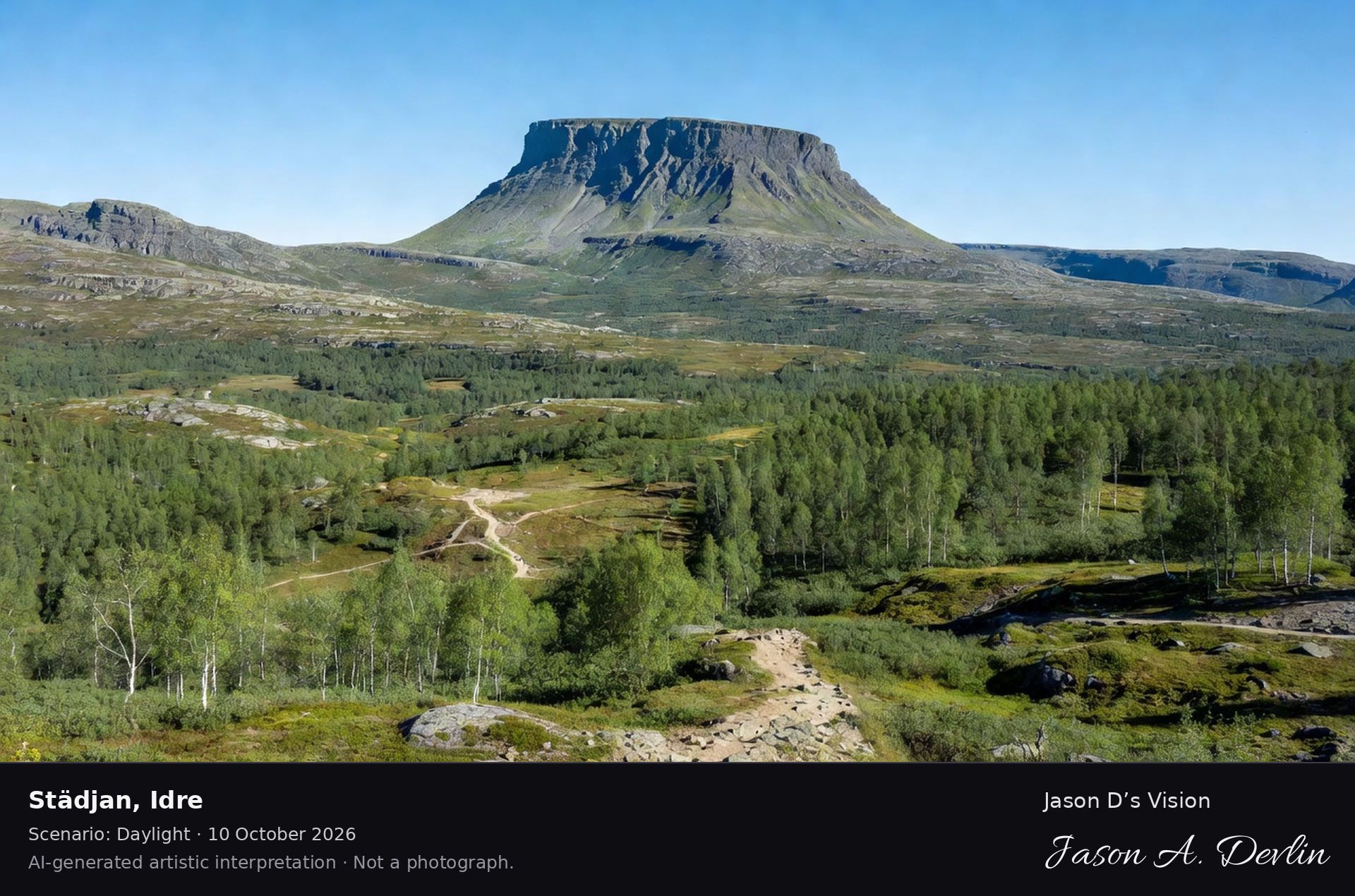
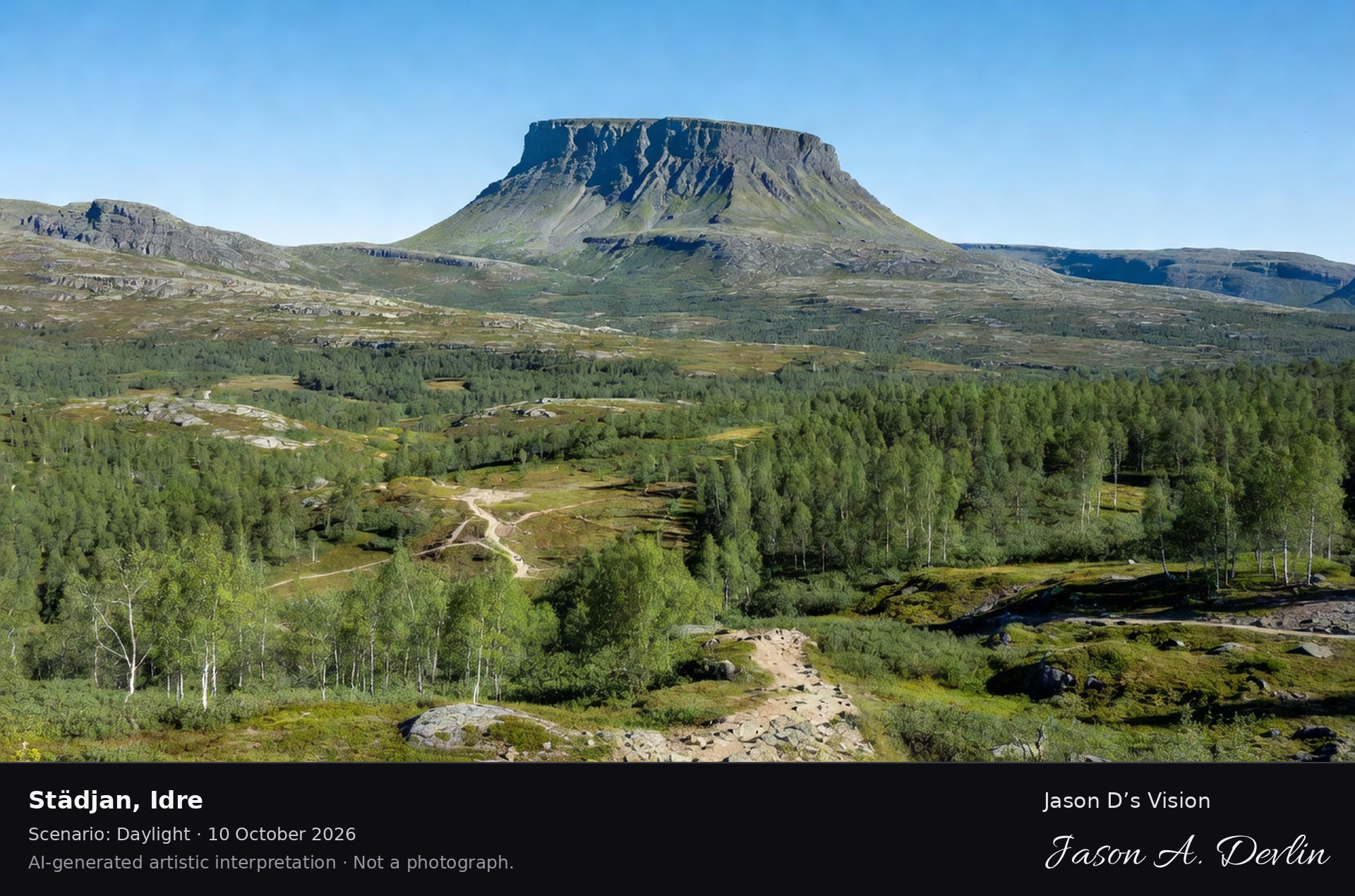
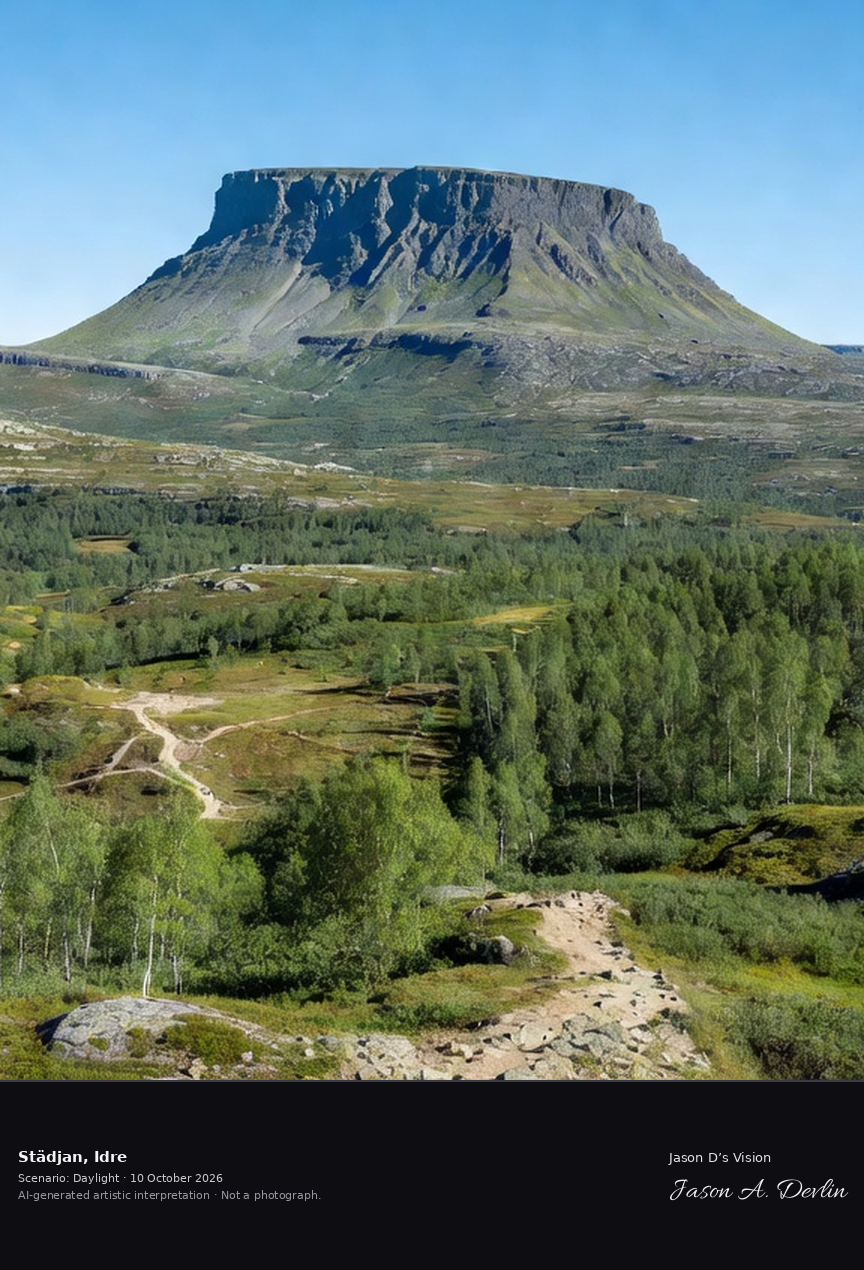
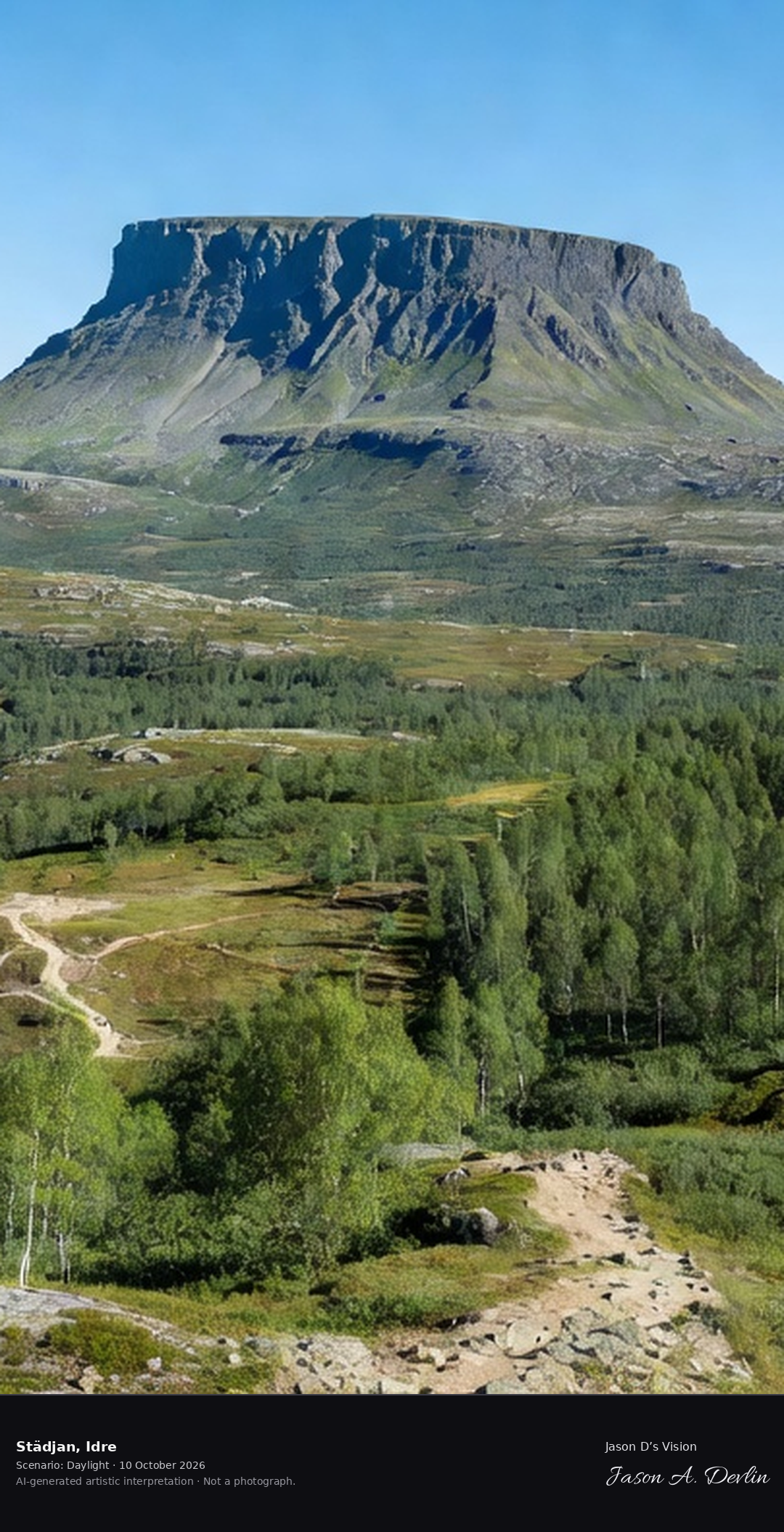
Städjan's distinctive flat-topped Nipfjället silhouette, the table mountain rising above Idre's fell landscape with hiking trails winding through the birch forest below.
From the classic tourist viewpoint over the Idre fells, the view runs to Städjan: the great flat-topped table mountain of Nipfjället rising above Dalarna's wilderness. Hiking trails wind through the birch forest below toward its sheer silhouette, with a green fell slope of birch and low scrub filling the foreground — pristine Swedish fell country in bright natural daylight.
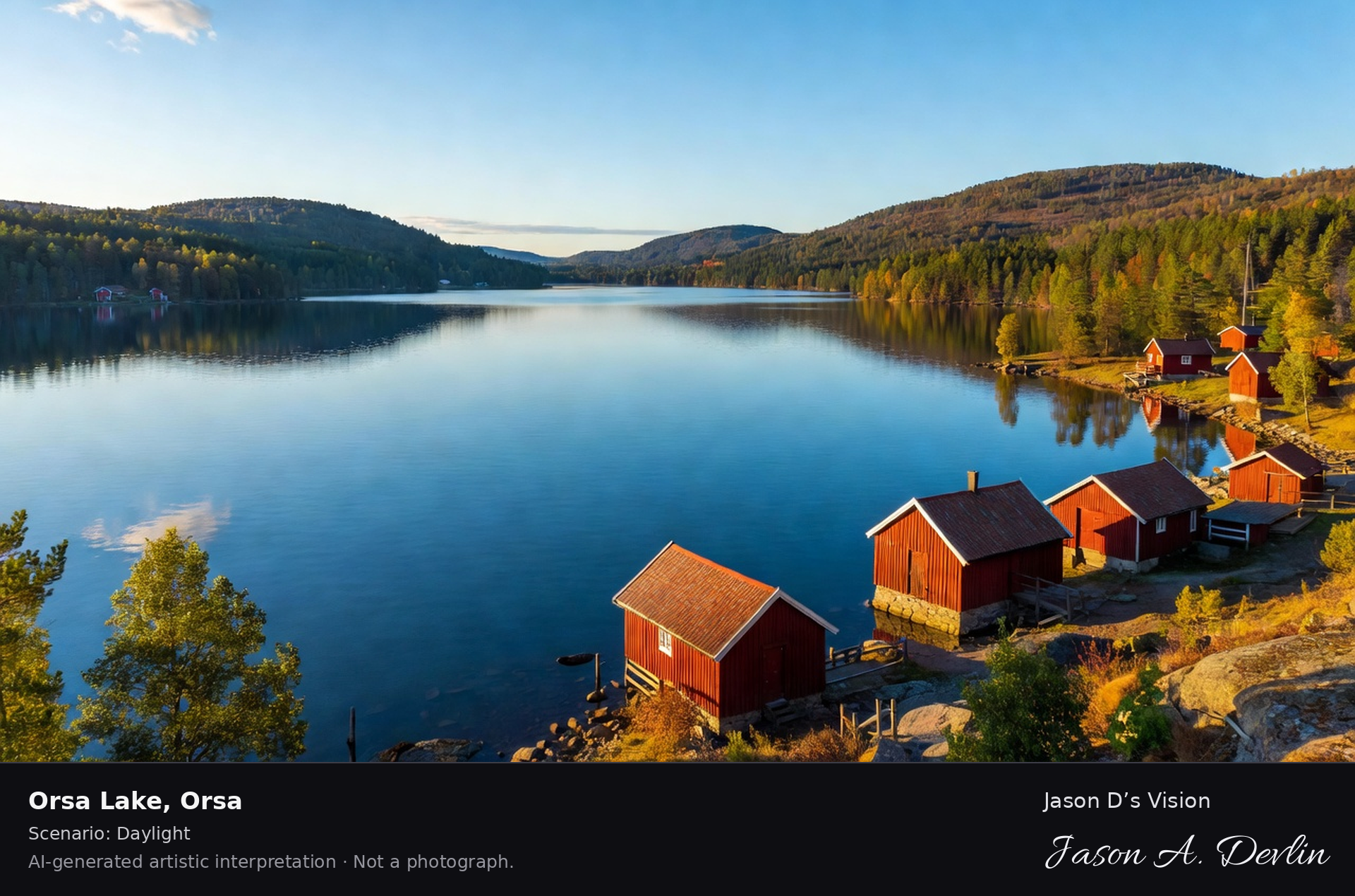
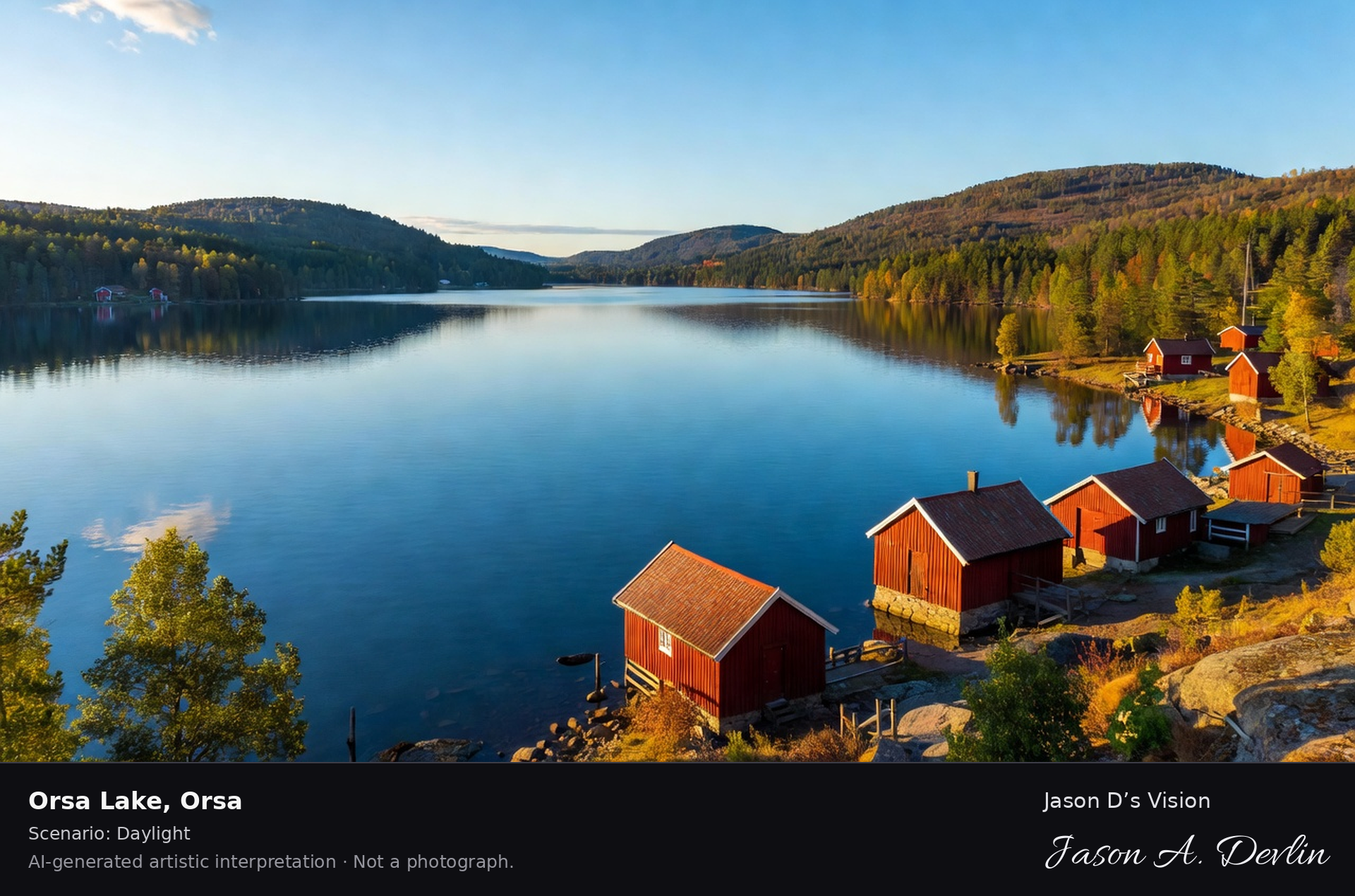
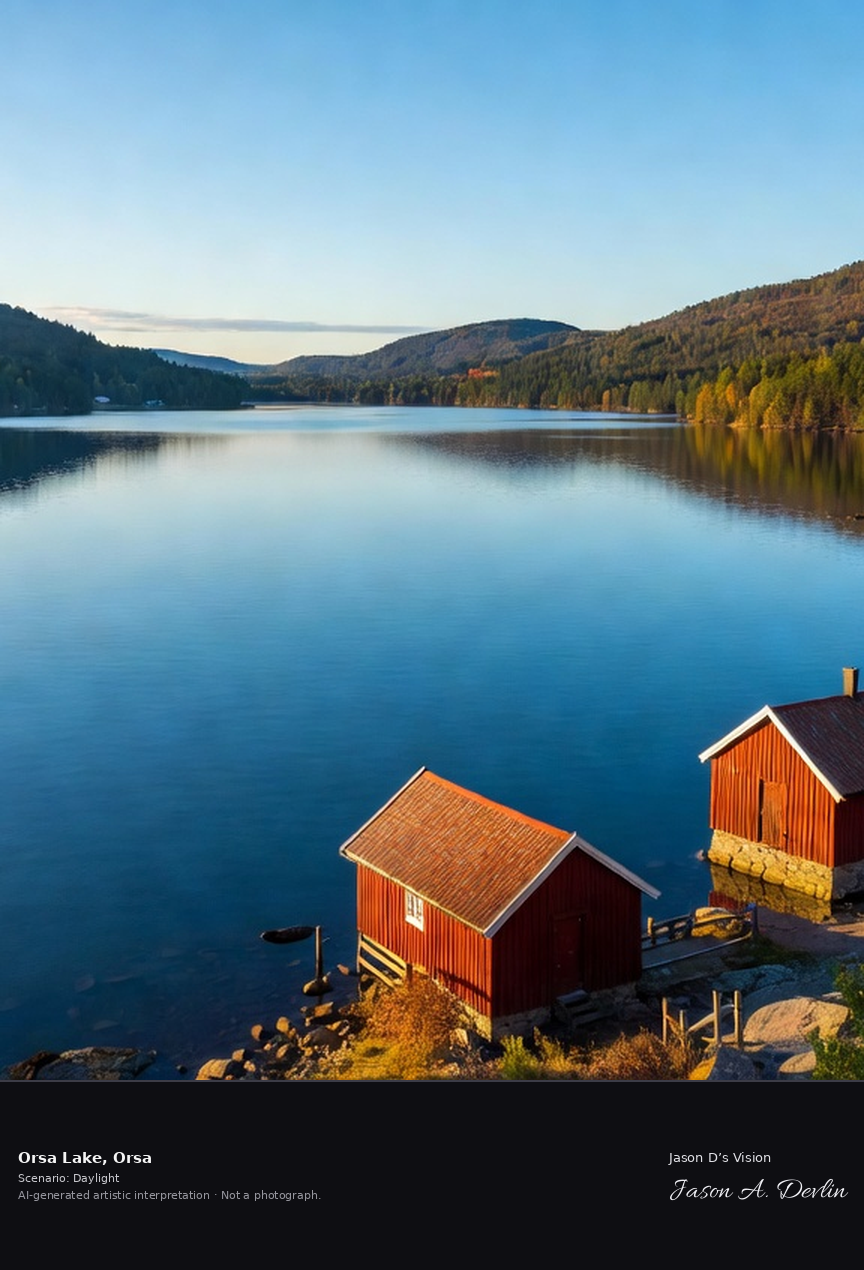
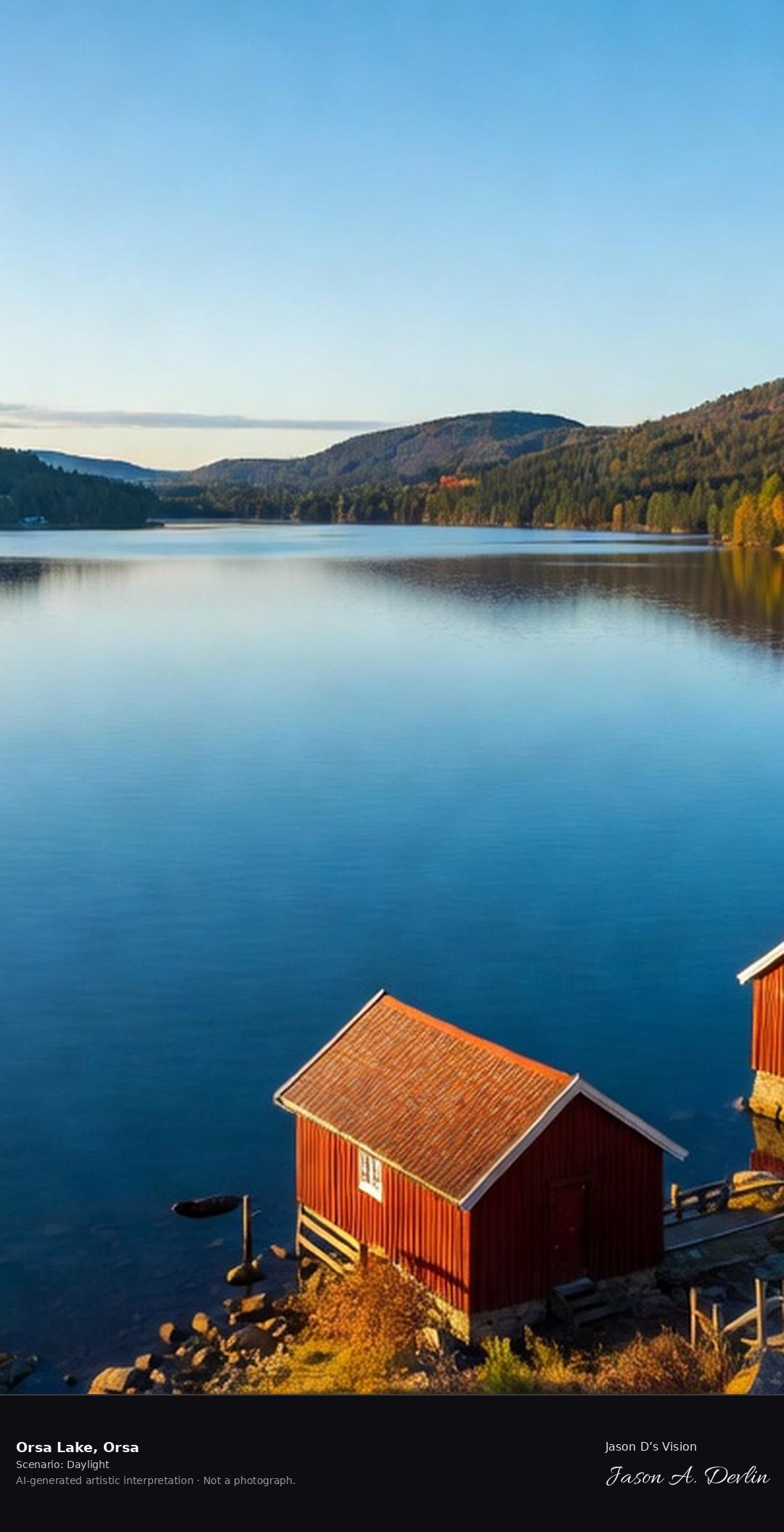
Lake Orsasjön's calm waters with the Grönklitt hills beyond, traditional red boathouses along the shore in the evening light. Dalarna's quieter lake, gateway to the bear park.
Orsa Lake in Orsa, Dalarna, is the quieter of Dalarna's great lakes, gateway to the bear park. From the classic shoreline vantage the view runs across the calm waters of Orsasjön toward the Grönklitt hills beyond, traditional red boathouses clustered along the shore in the foreground with their reflections resting on mirror-calm water, all in bright natural daylight.
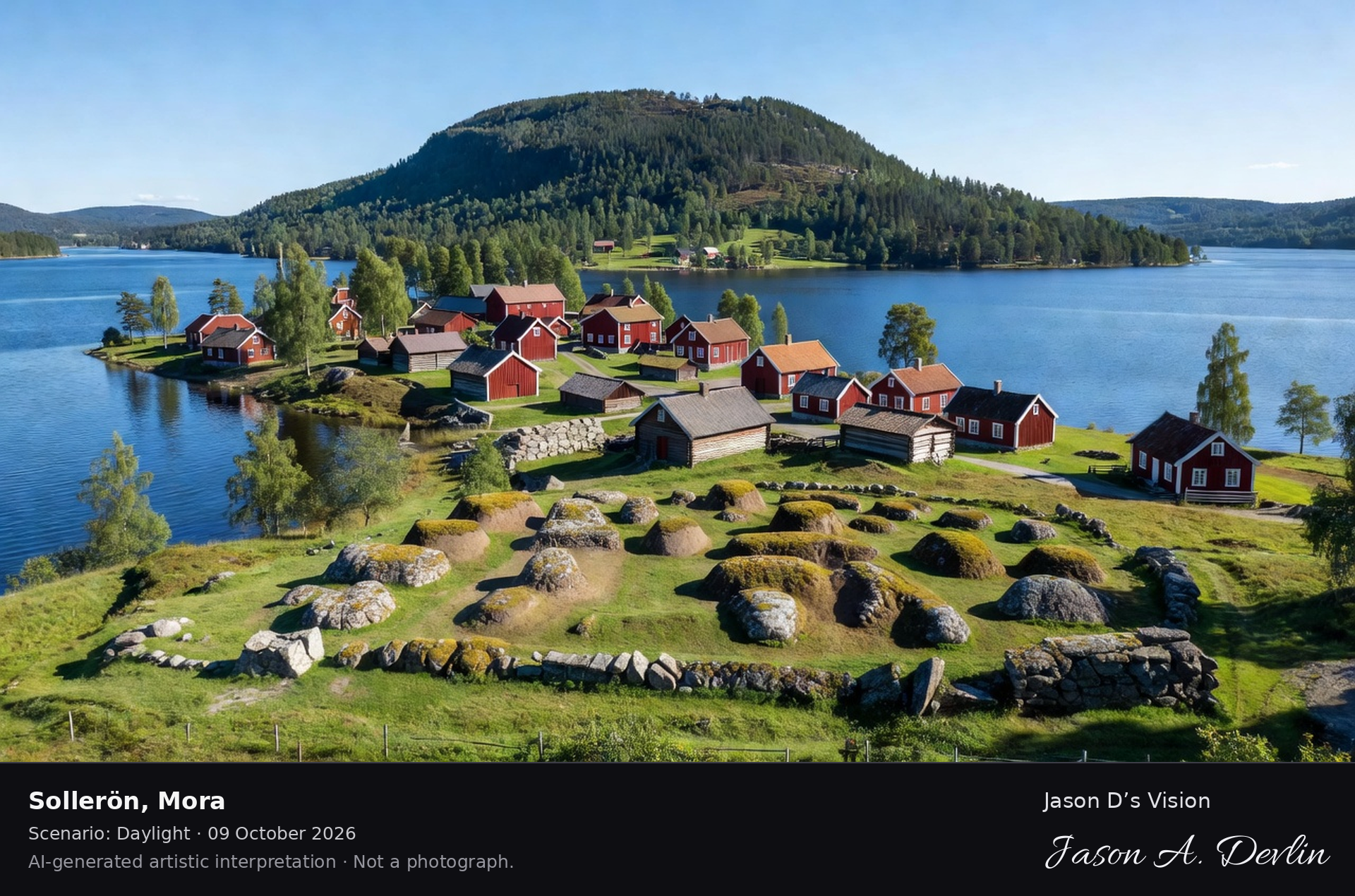
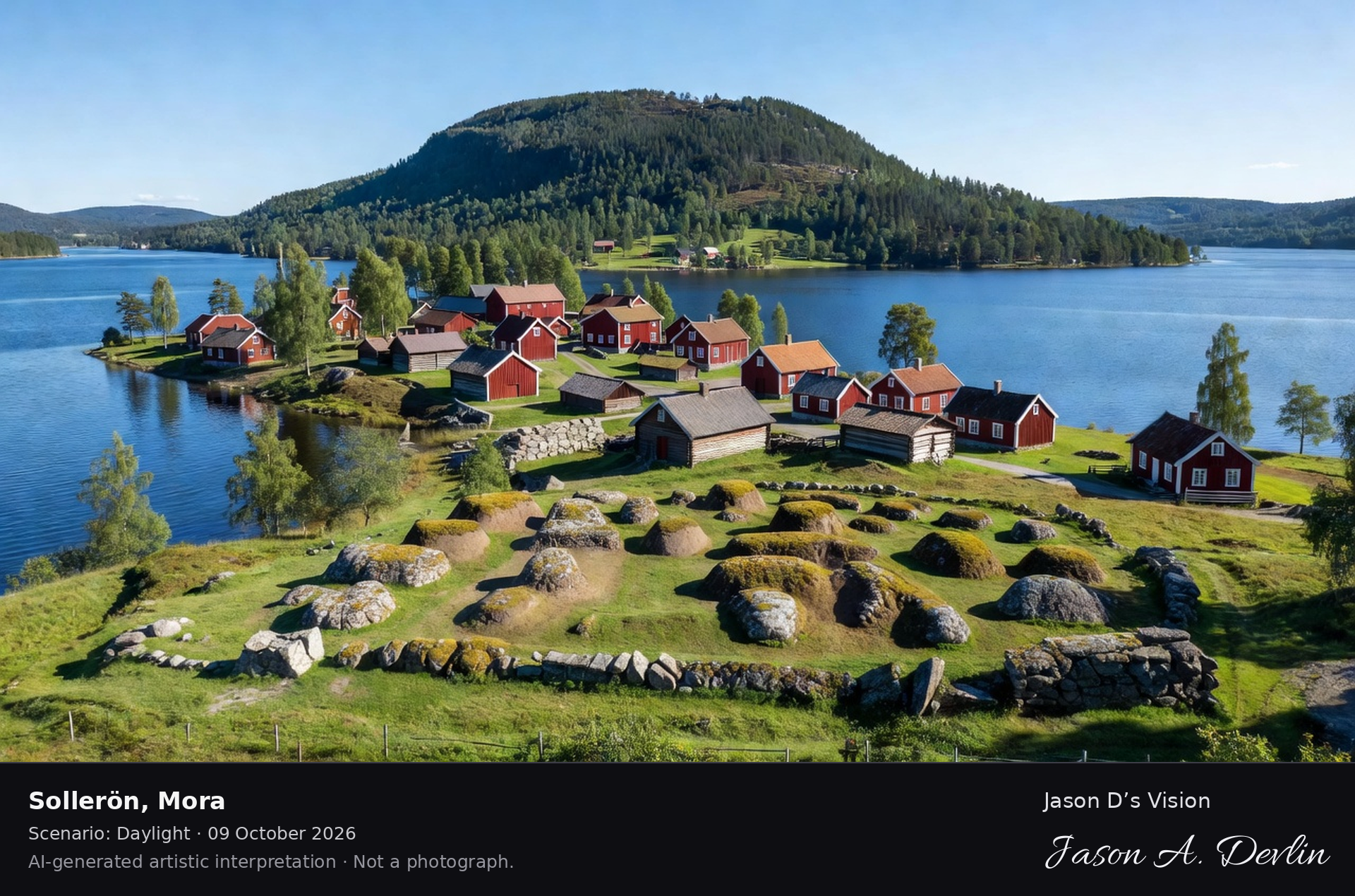
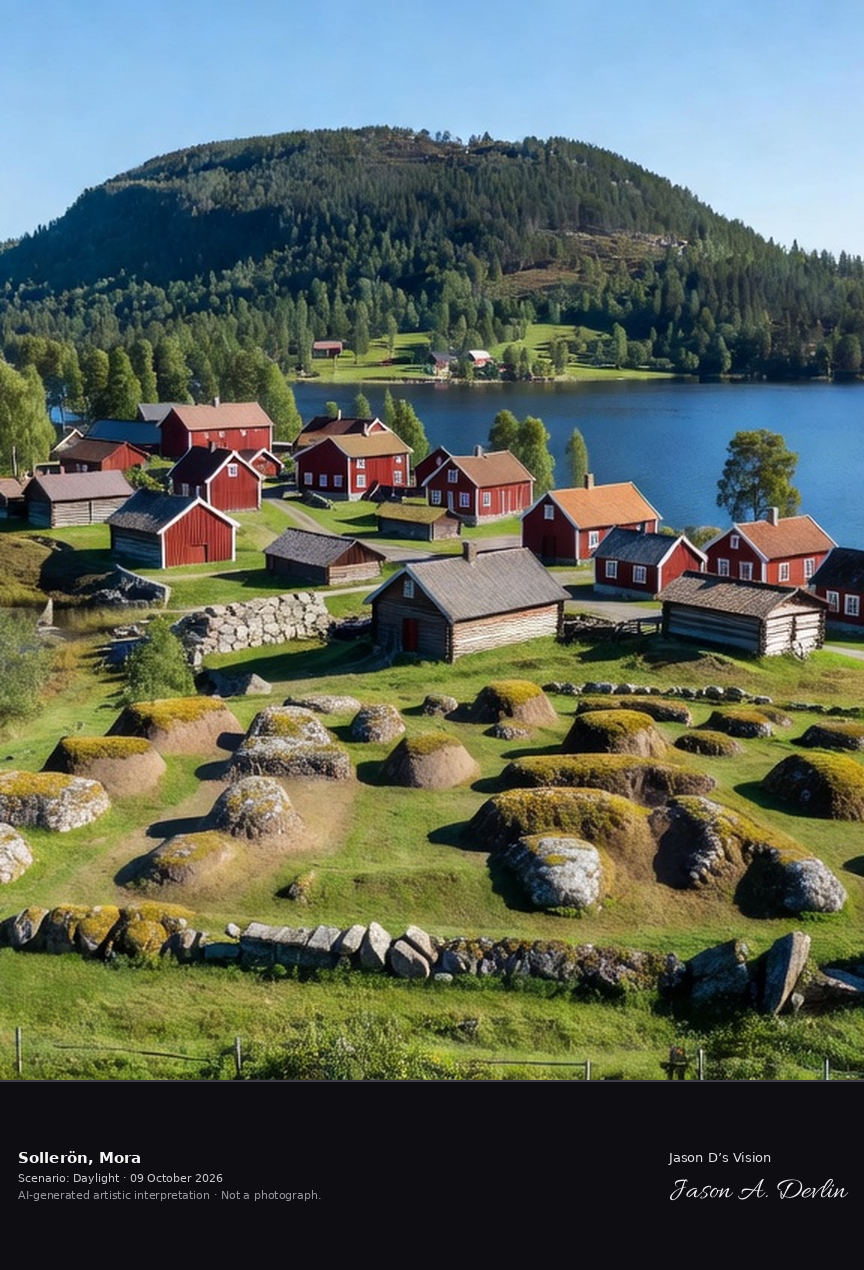
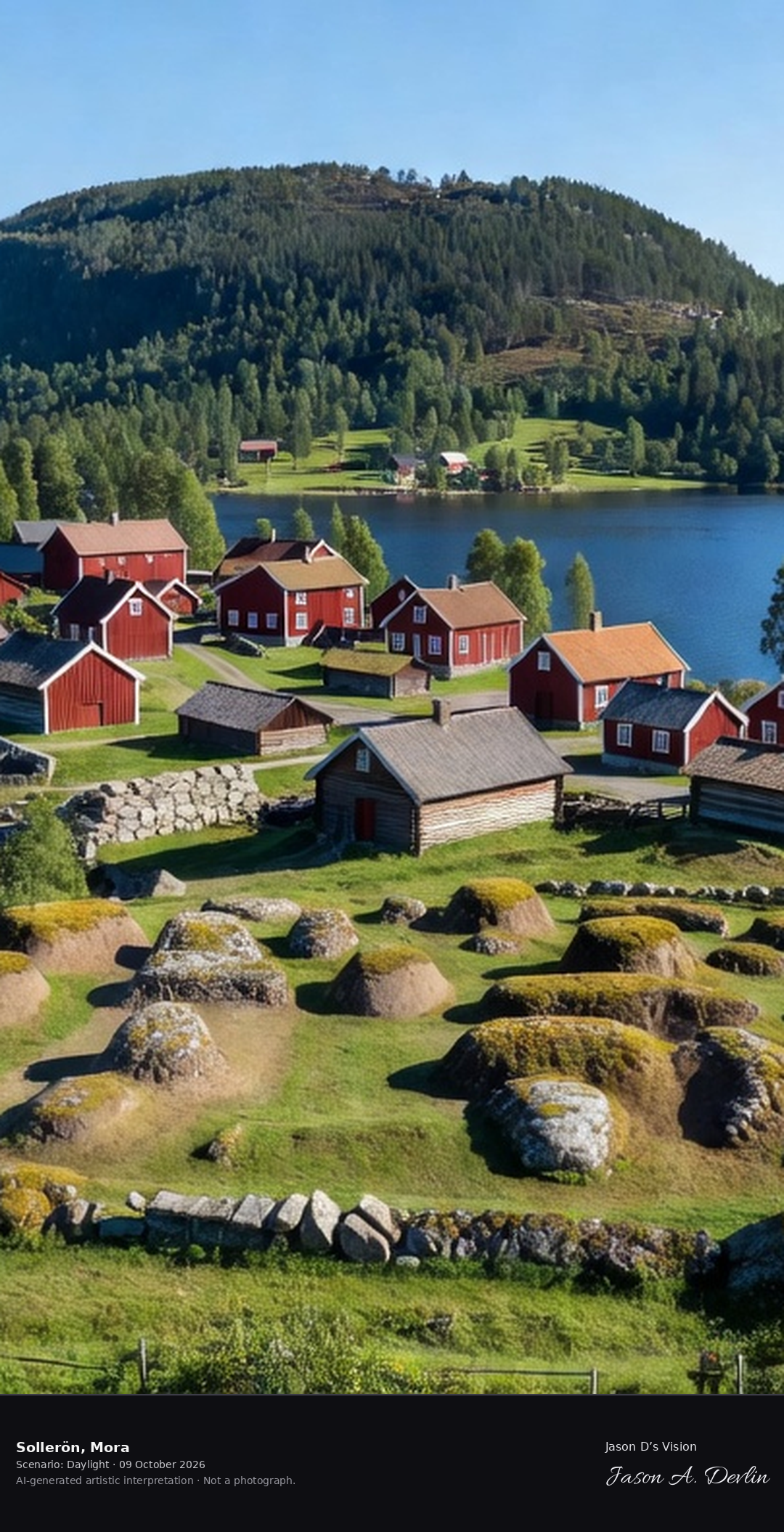
Sollerön island's Viking-age grave fields and traditional villages in Lake Siljan, the Gesundaberget hill rising behind with views across the water. Dalarna's 'Sun Island' with 1,000 years of history.
Sollerön in Mora, Dalarna, is the largest island in Lake Siljan — Dalarna's 'Sun Island' with a thousand years of history. From the elevated vantage the view takes in the island's Viking-age grave field in the foreground, moss-covered burial mounds ringed with stone, with traditional red timber farmsteads clustered along the shoreline beyond and the dark forested slopes of Gesundaberget rising across the glittering lake, all in bright natural daylight.
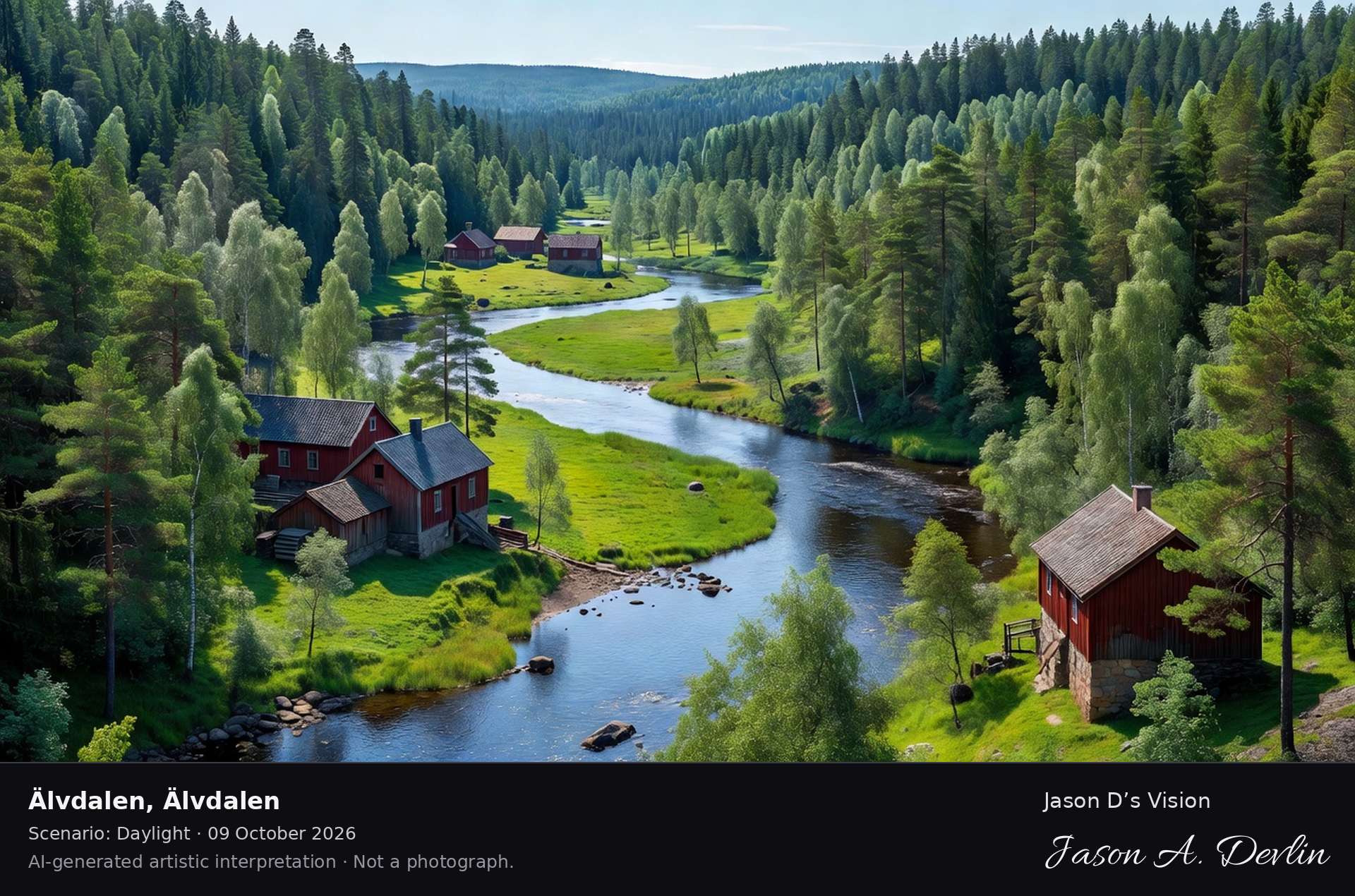
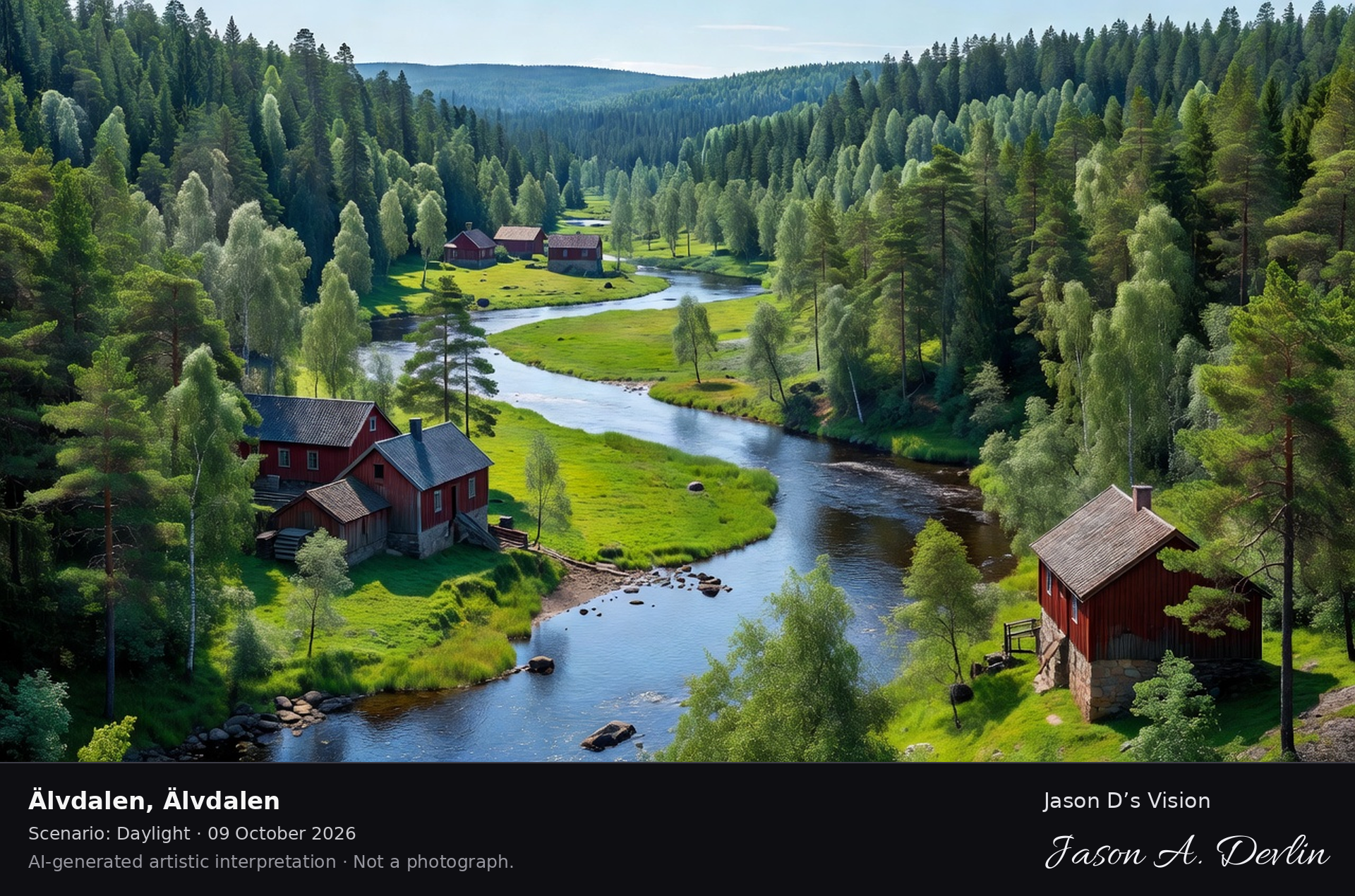
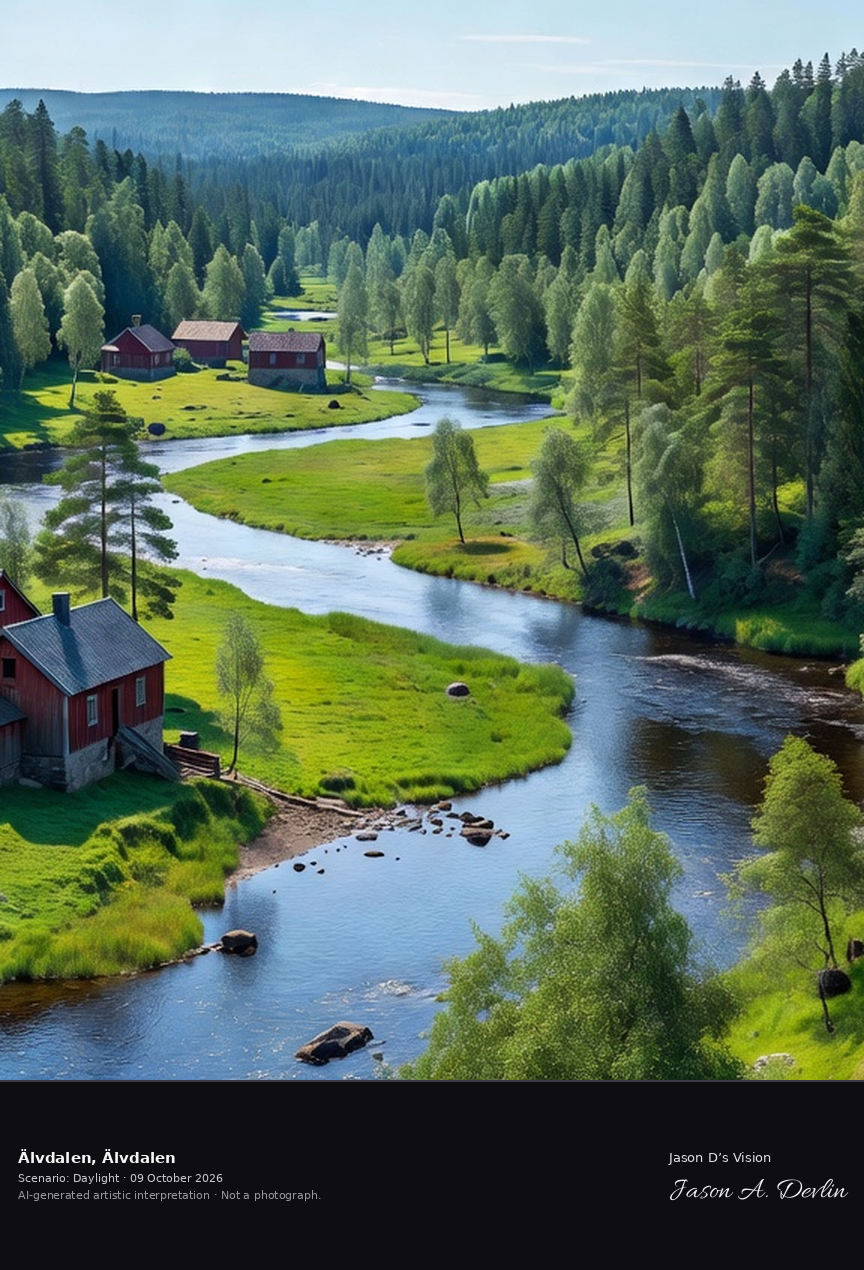
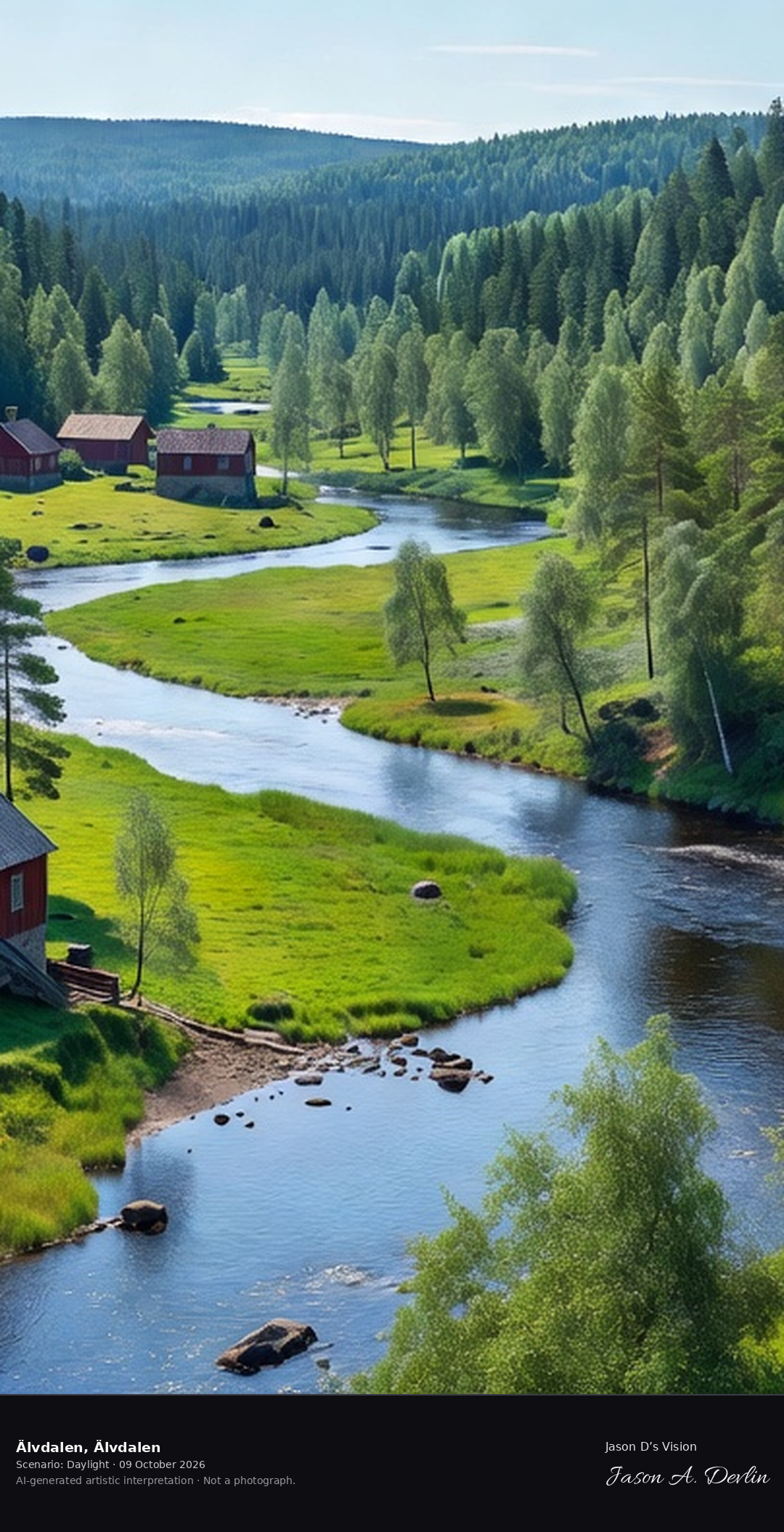
The Österdalälven river winding through Älvdalen's valley with the Porphyry works' historic buildings, the unique Elfdalian language area in the northern Dalarna forests.
Älvdalen in Älvdalen, Dalarna, is a historic river-valley settlement in northern Dalarna — the heart of the unique Elfdalian language area and the old Älvdalen porphyry works. From the elevated vantage the view takes in the Österdalälven winding through the valley in bright natural daylight, its banks lined with classic red timber farmsteads in the foreground left and clustered across the sunlit meadows mid-distance, while dense pine and birch forest rises on both sides of the valley toward the forested ridges beyond.
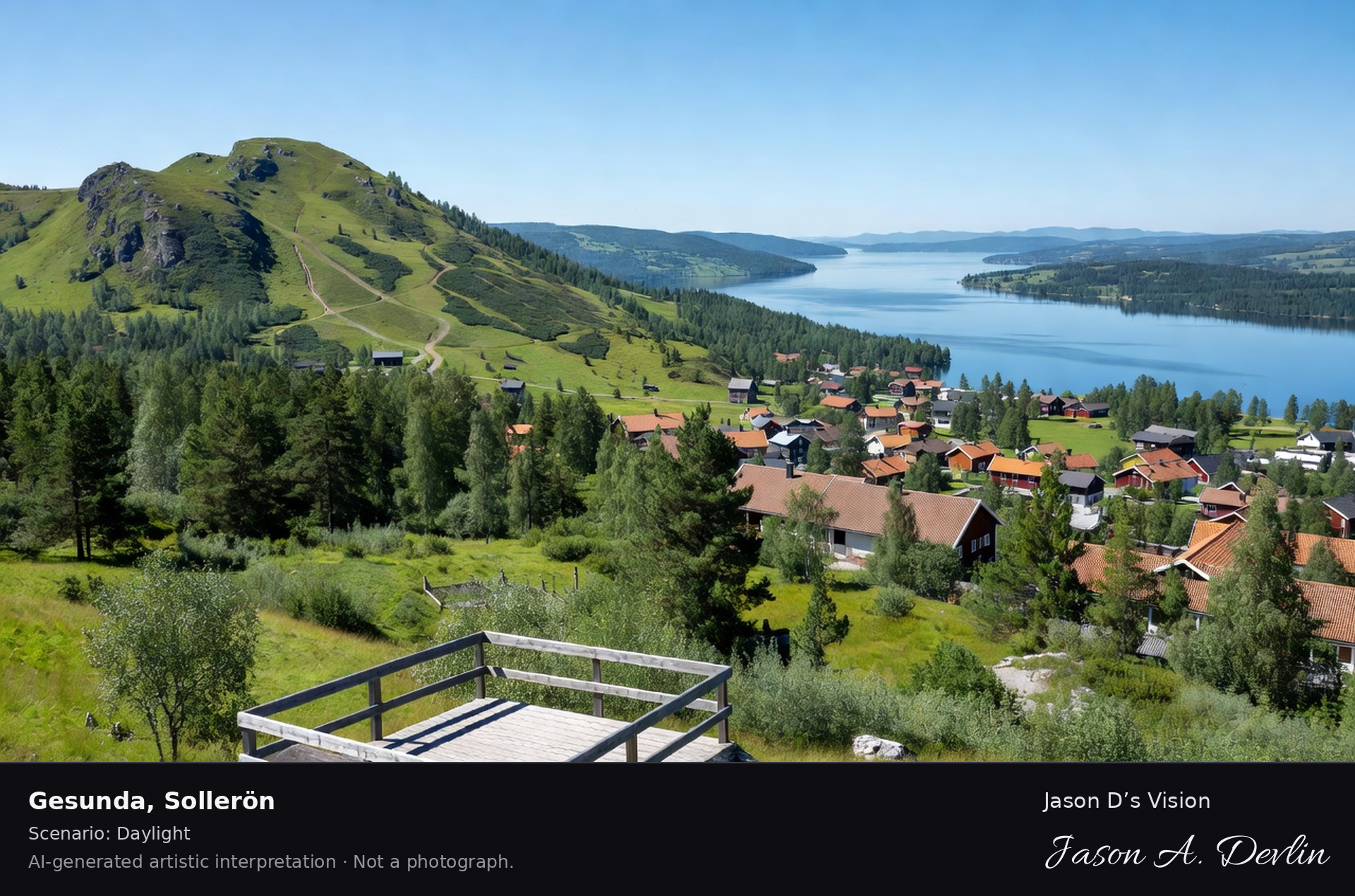
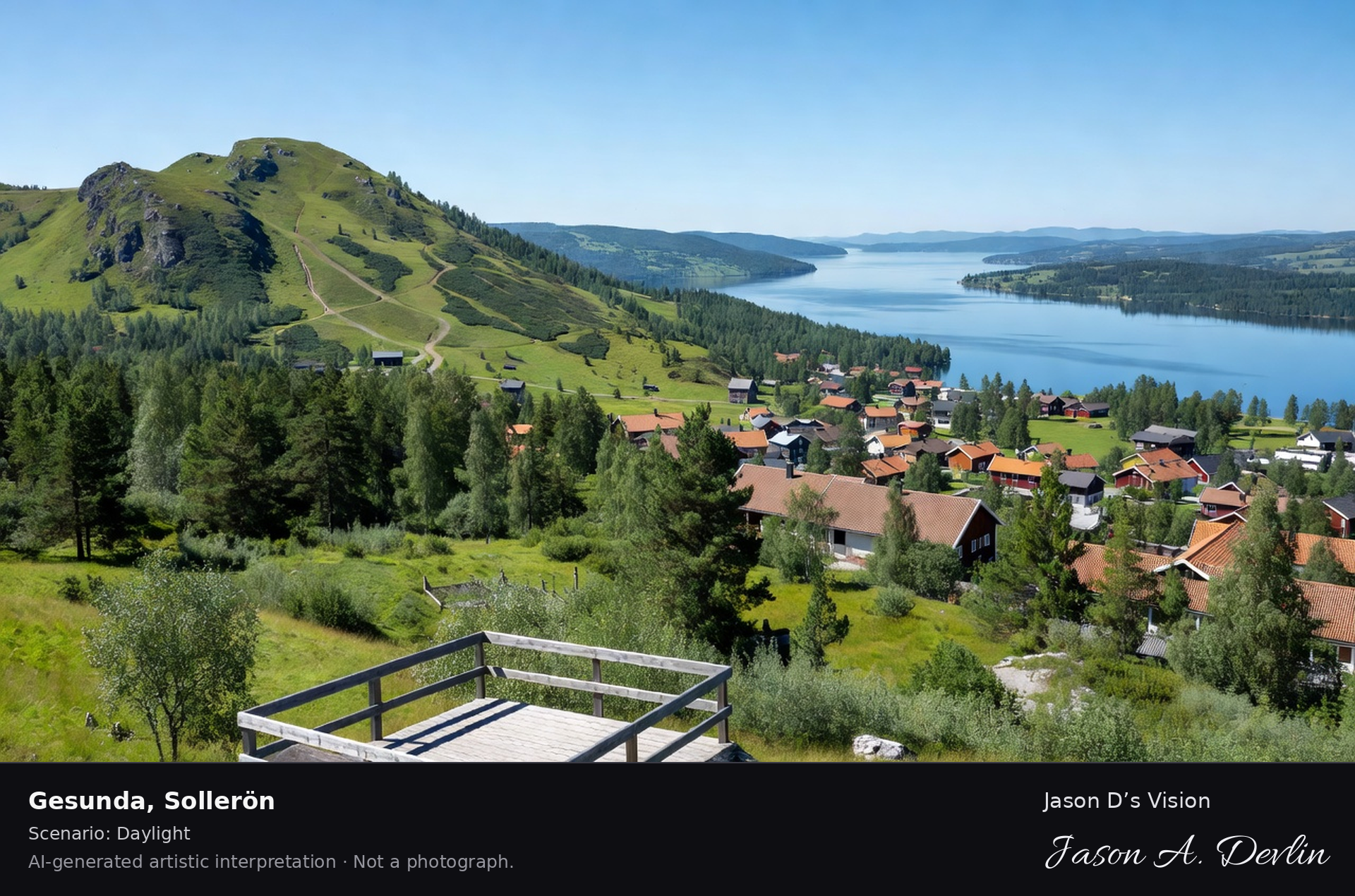
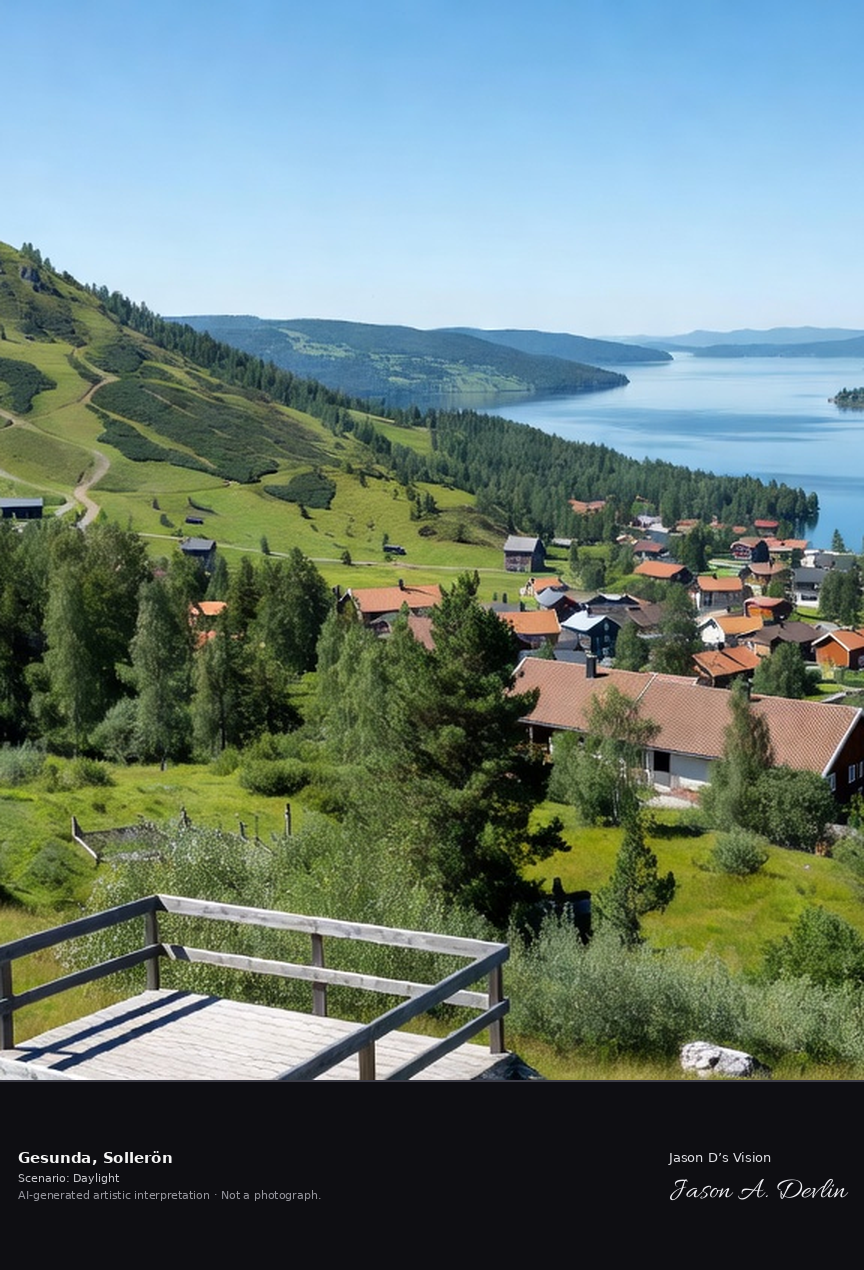
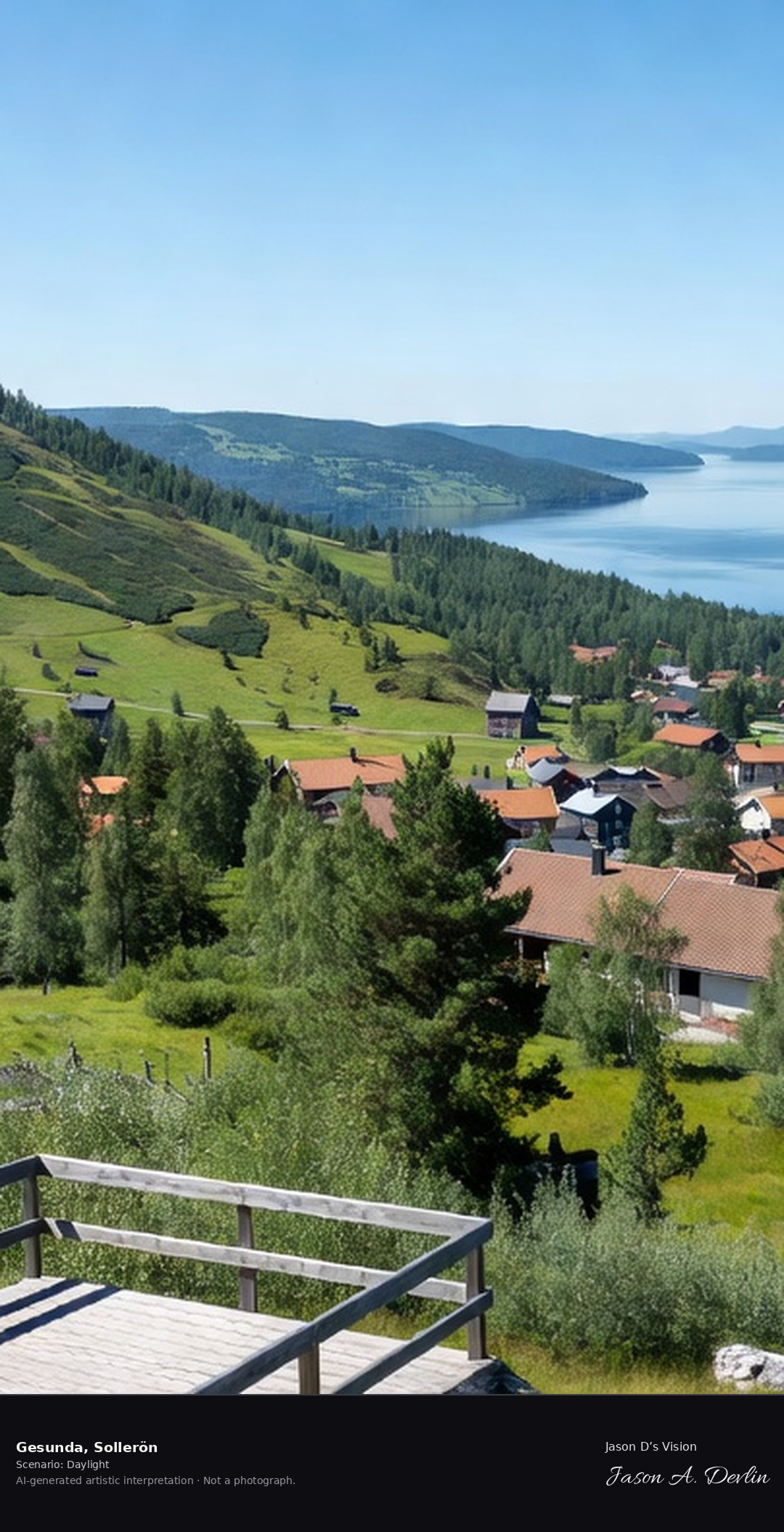
Gesunda's alpine slopes above Lake Siljan with the panoramic view across the water to the distant fells, Dalarna's ski mountain doubling as a summer viewpoint.
The view crosses Gesunda’s alpine slopes above Lake Siljan toward the distant fells. Dalarna’s ski mountain doubles as a summer viewpoint over the water, in bright natural daylight.
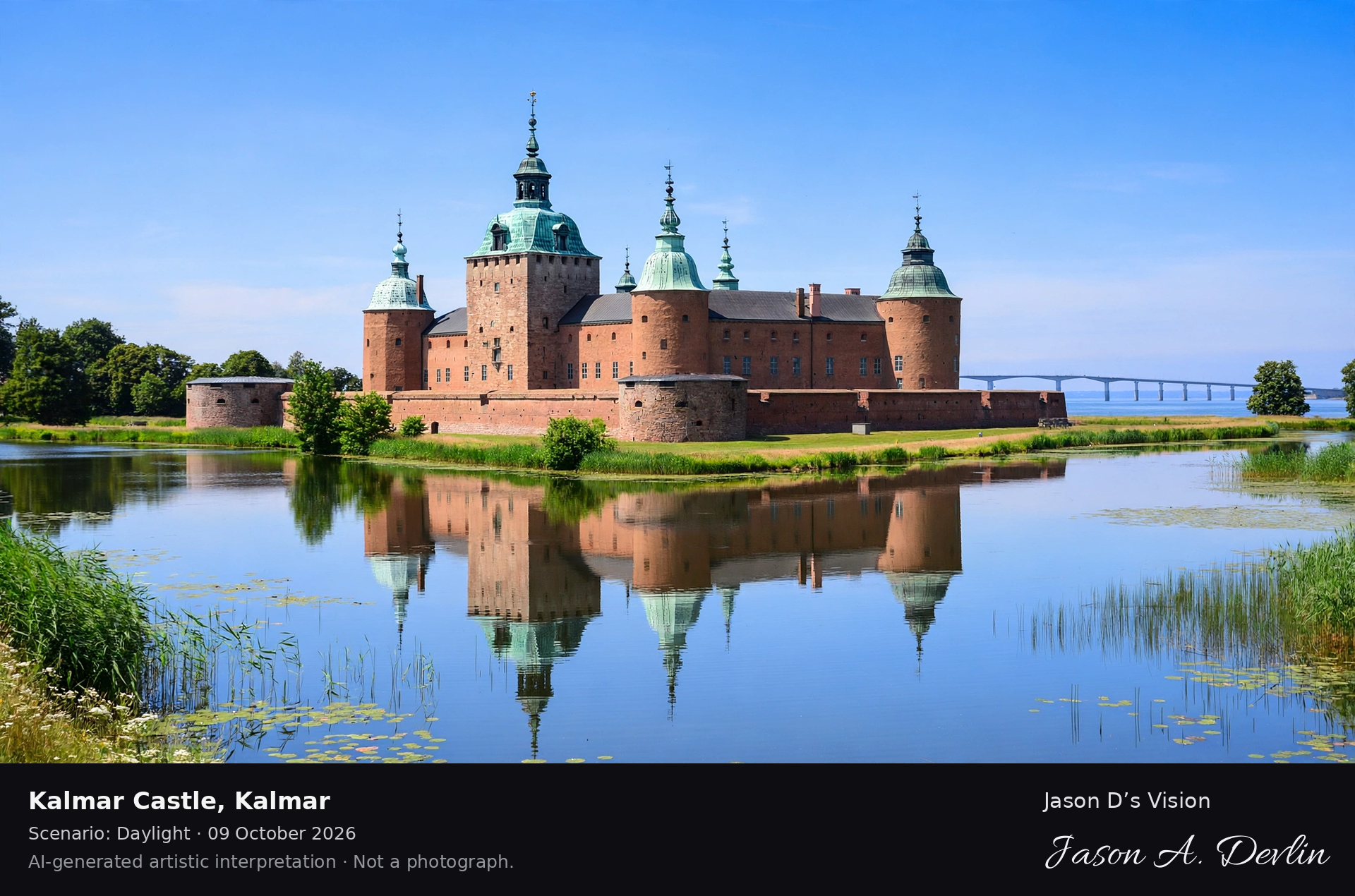
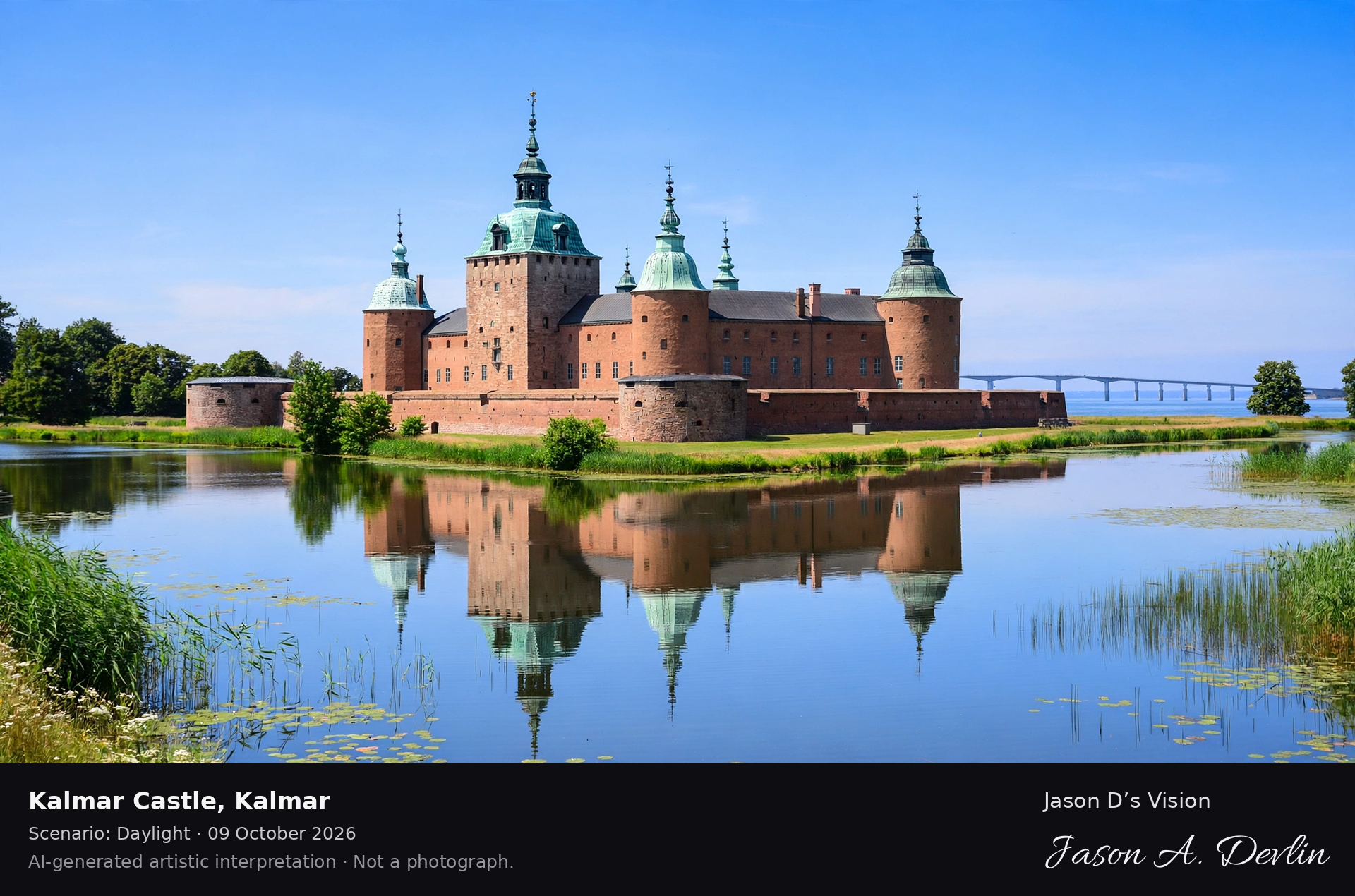
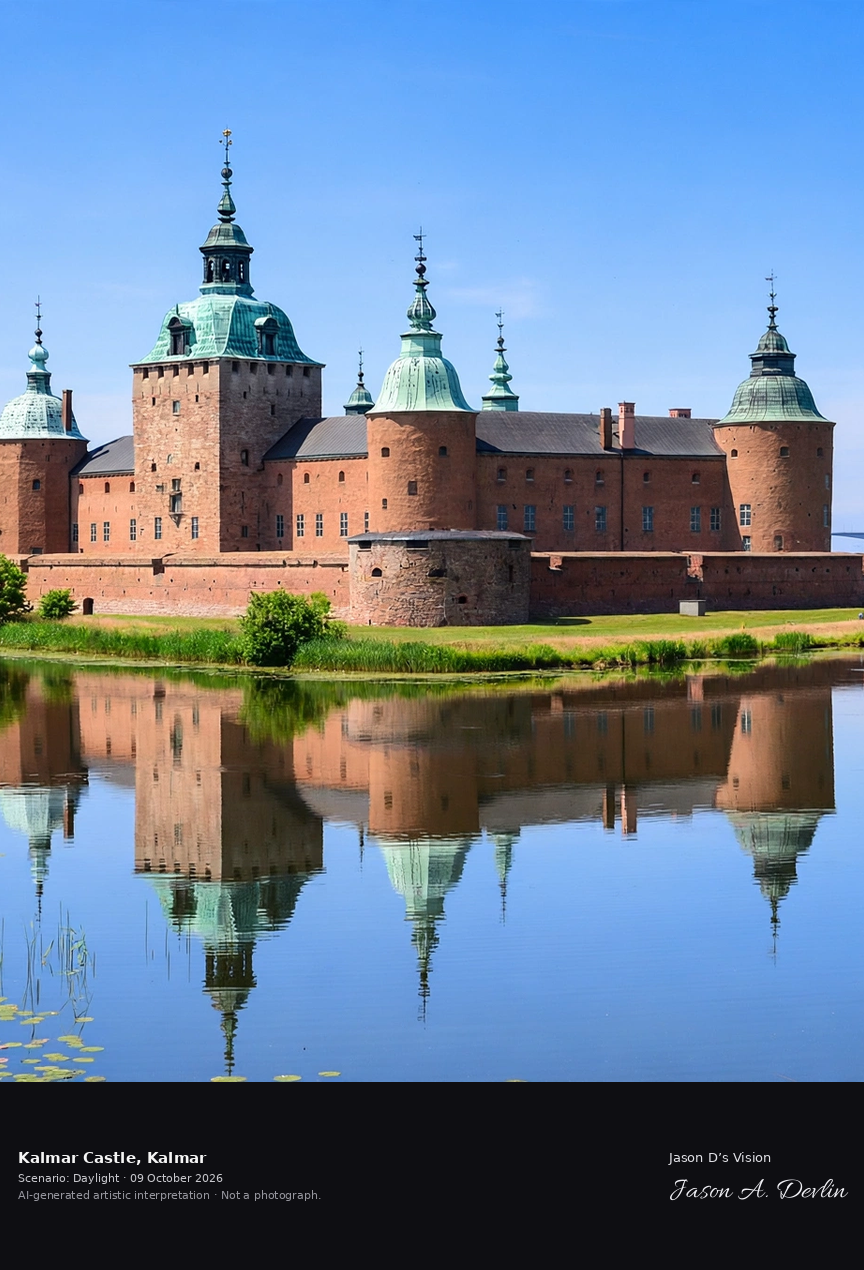
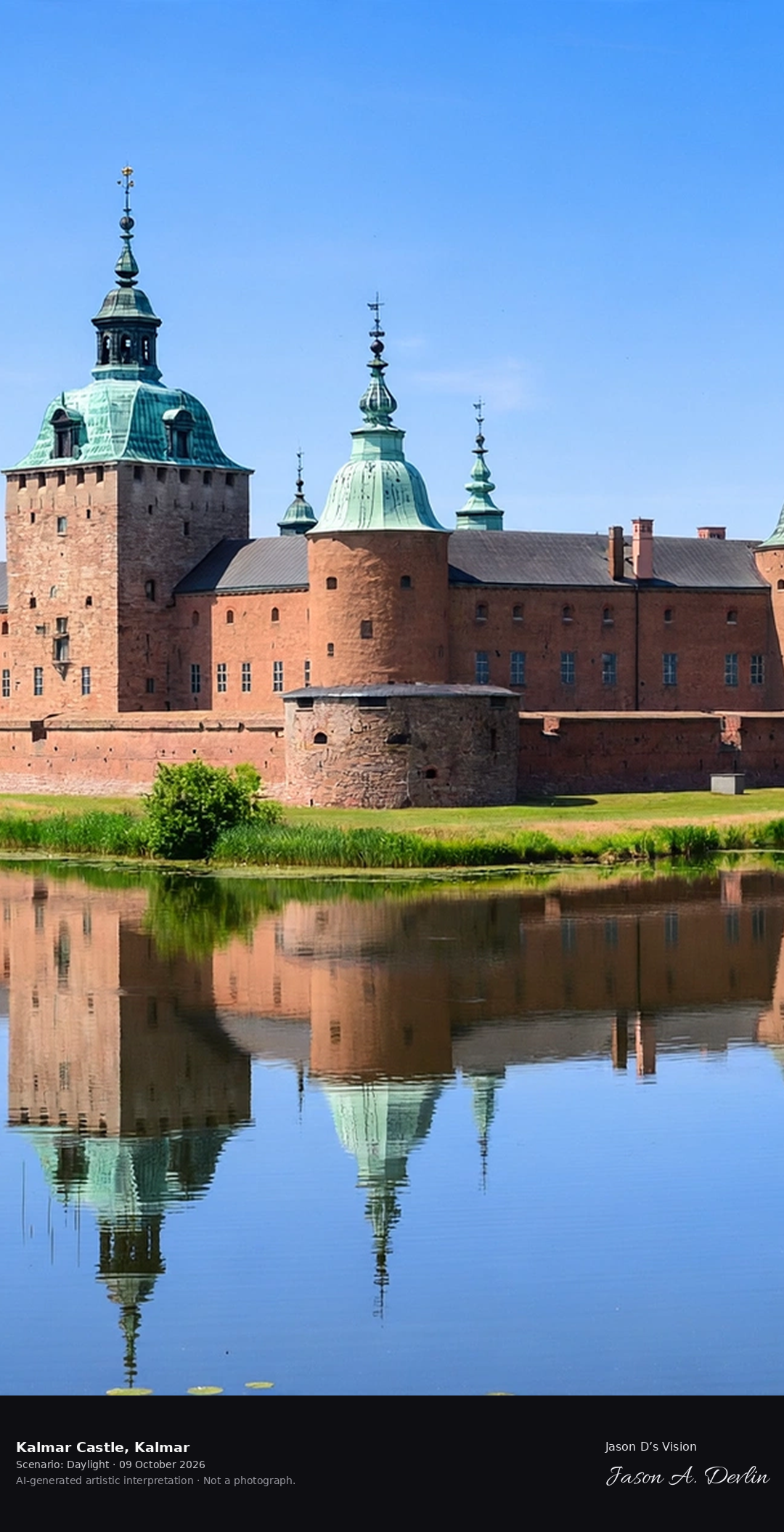
Kalmar Castle's four massive round towers reflected in the moat, the Renaissance palace on its island at the Kalmarsund strait with the Öland Bridge in the distance. Scene of the Kalmar Union.
Kalmar Castle in Kalmar, Småland, is one of Sweden's best-preserved Renaissance castles and the historic site of the 1397 Kalmar Union. From the classic viewpoint across the moat, the castle's four massive round towers are reflected in the still water, the Renaissance palace with its ornate gables rises on its island at the Kalmarsund strait in bright natural daylight, and the Öland Bridge crosses the horizon in the distance.
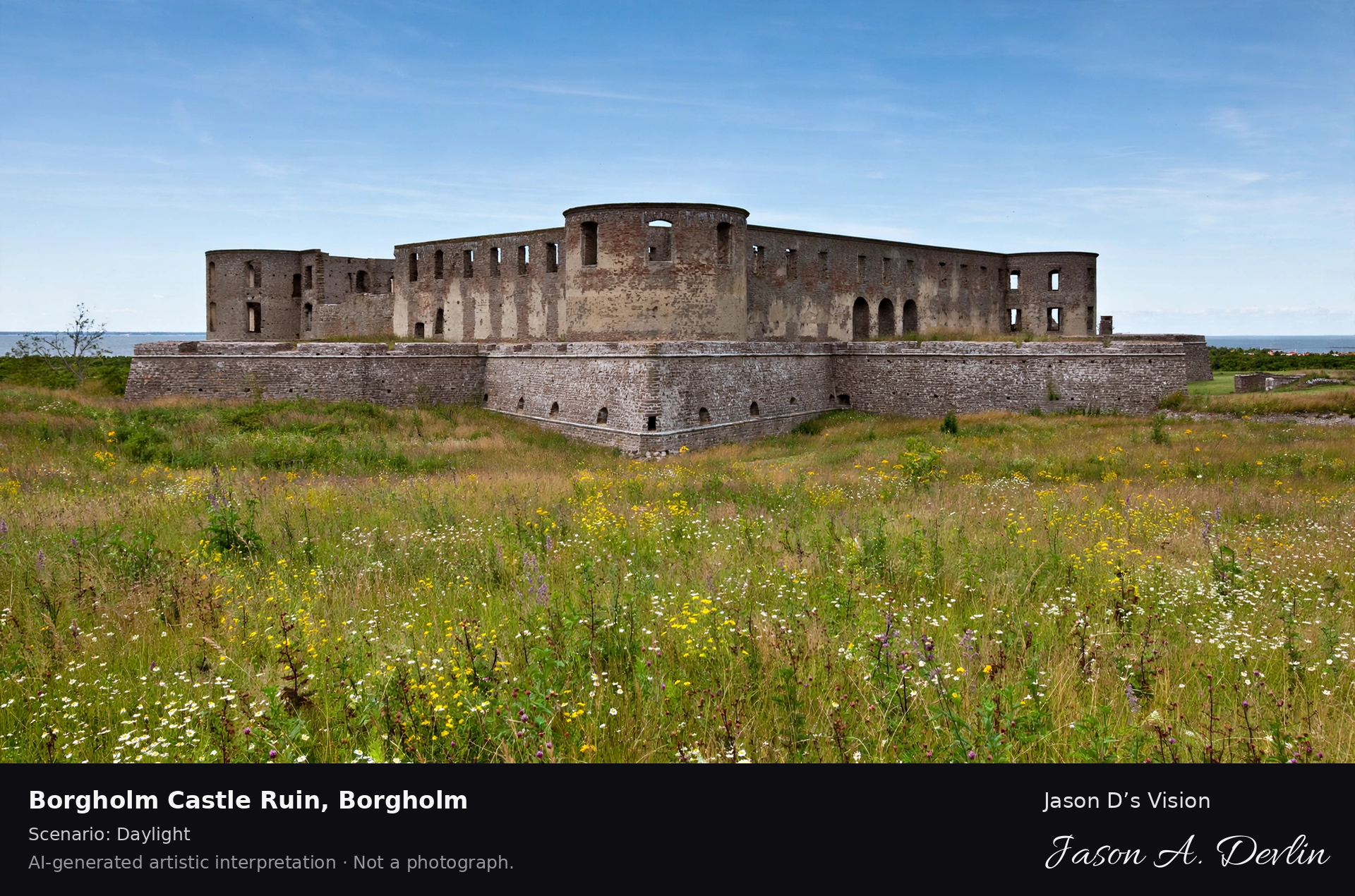
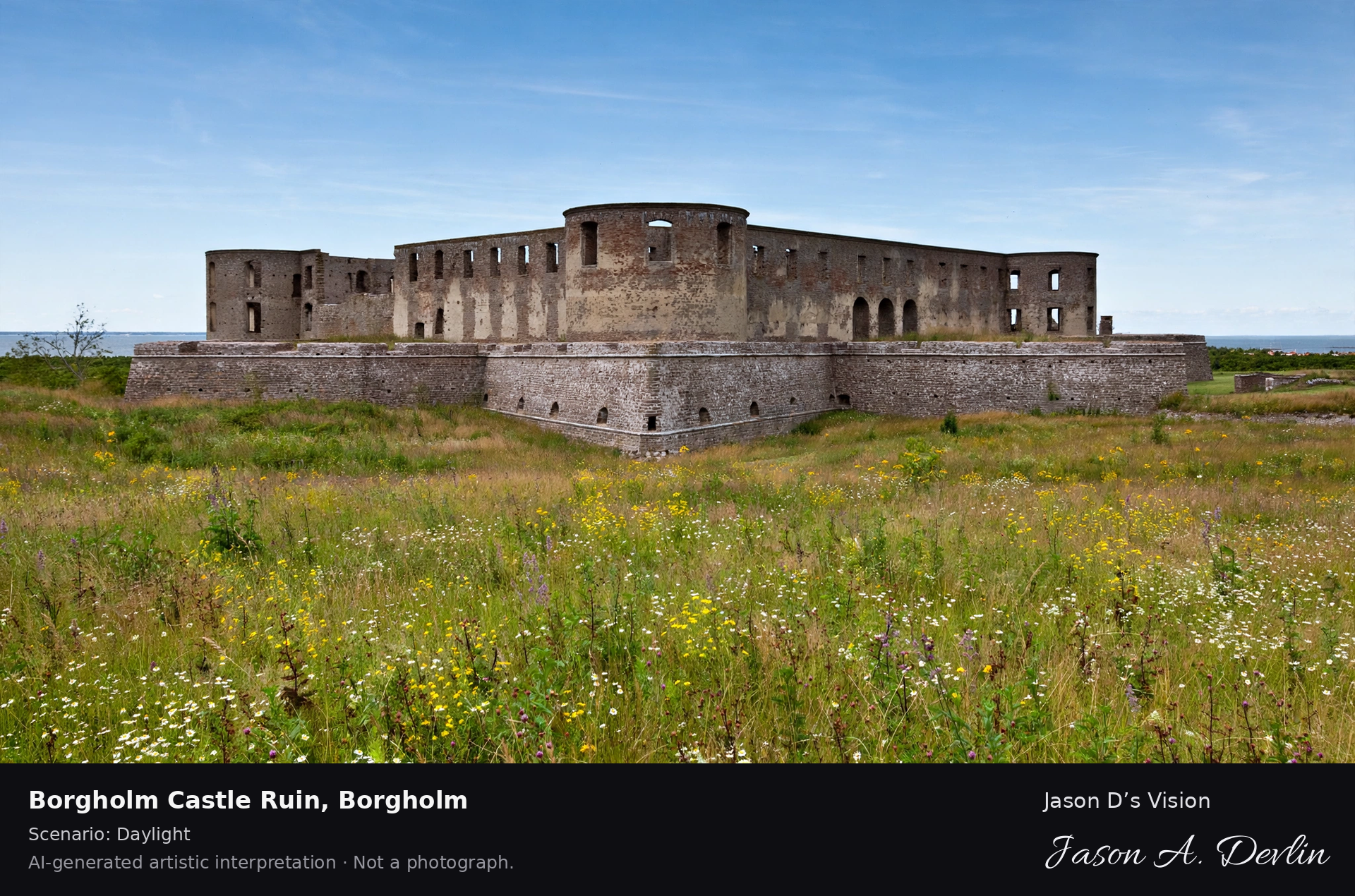
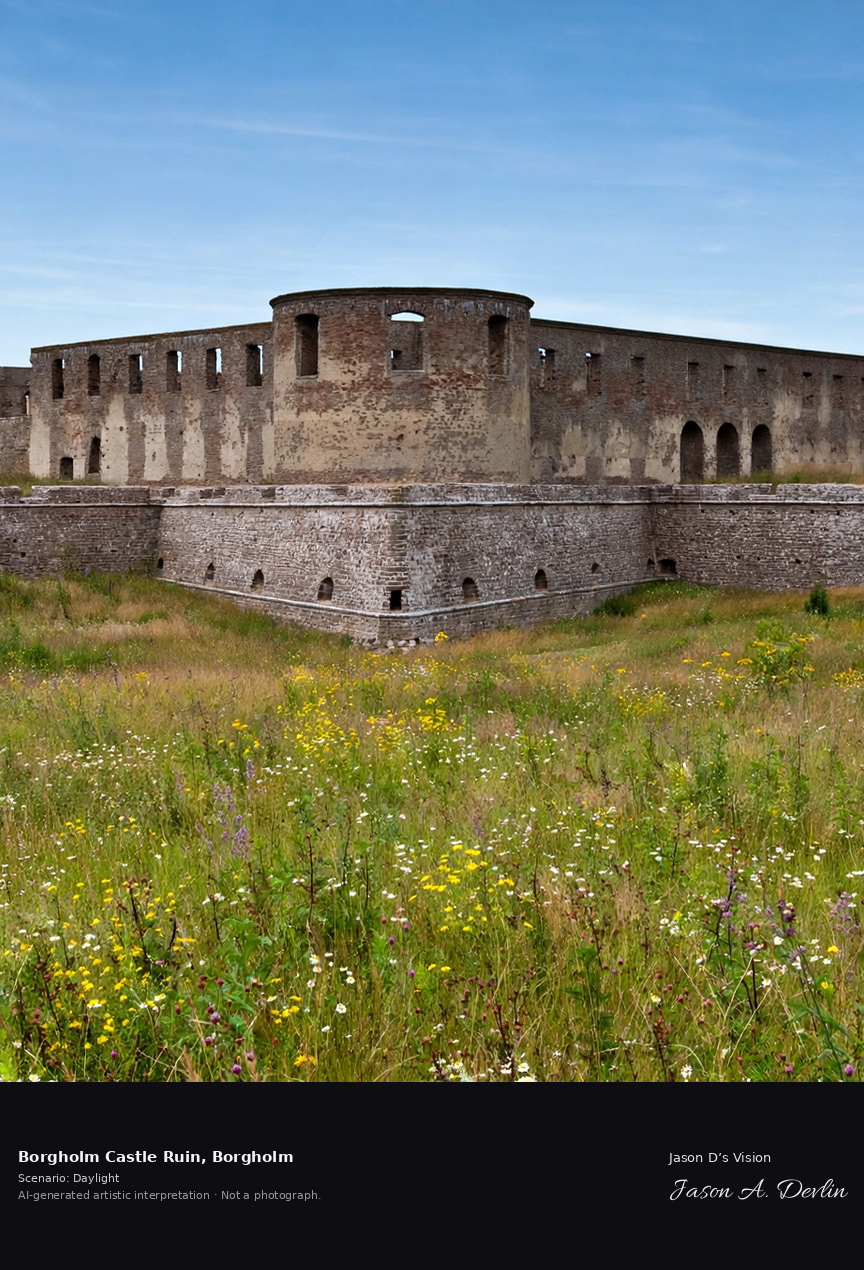
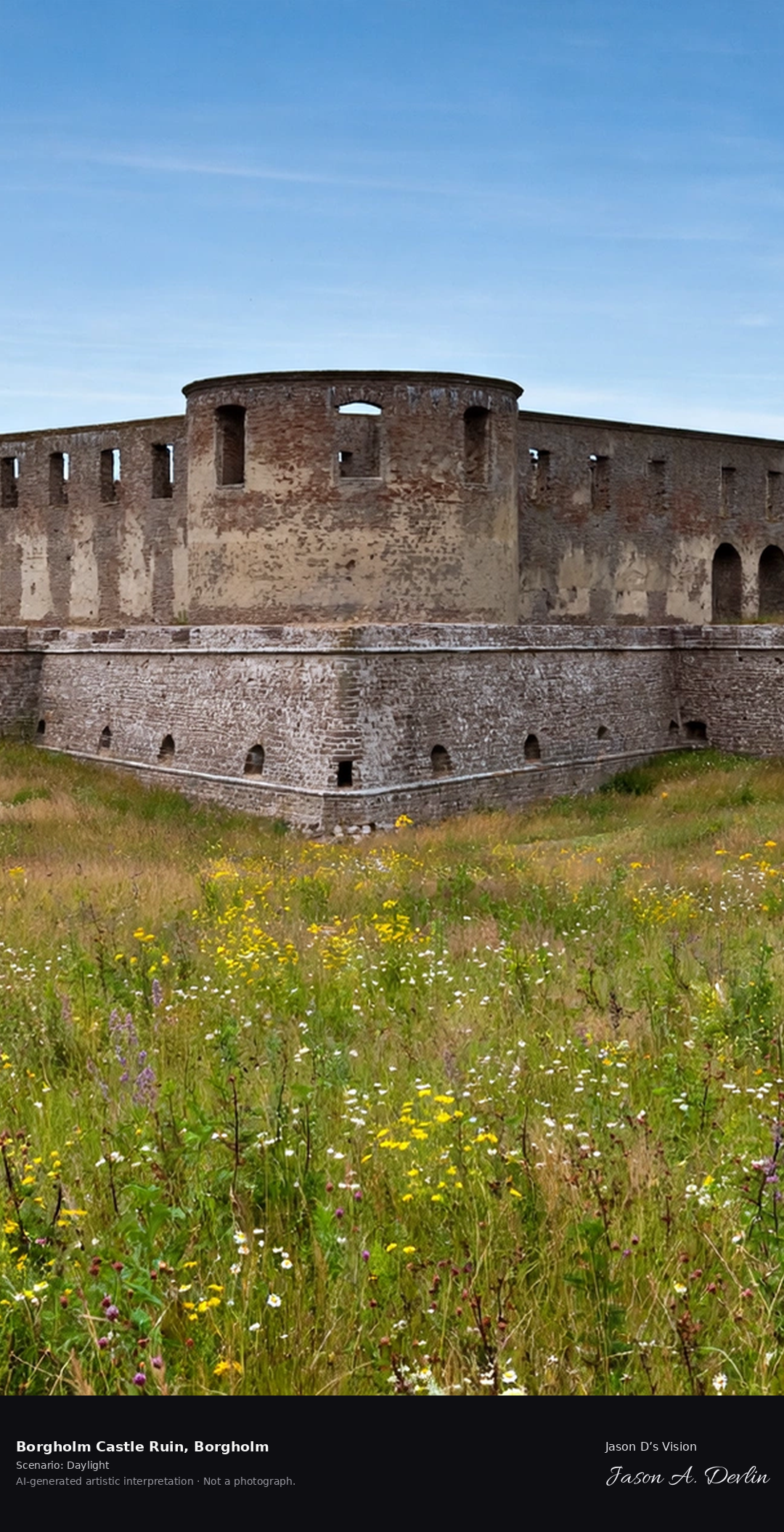
Borgholm Castle's roofless baroque ruin crowning the headland above Kalmarsund, massive walls open to the sky with the strait and mainland beyond. Charles XII's never-completed palace.
Borgholm Castle Ruin in Borgholm, Öland, is Charles XII's never-completed baroque palace, now one of Sweden's most evocative ruins. From the classic headland viewpoint, the roofless walls crown the heights above the Kalmarsund strait, the massive stone shells open to the bright daylight sky, with the blue water and the mainland shore spreading out beyond.
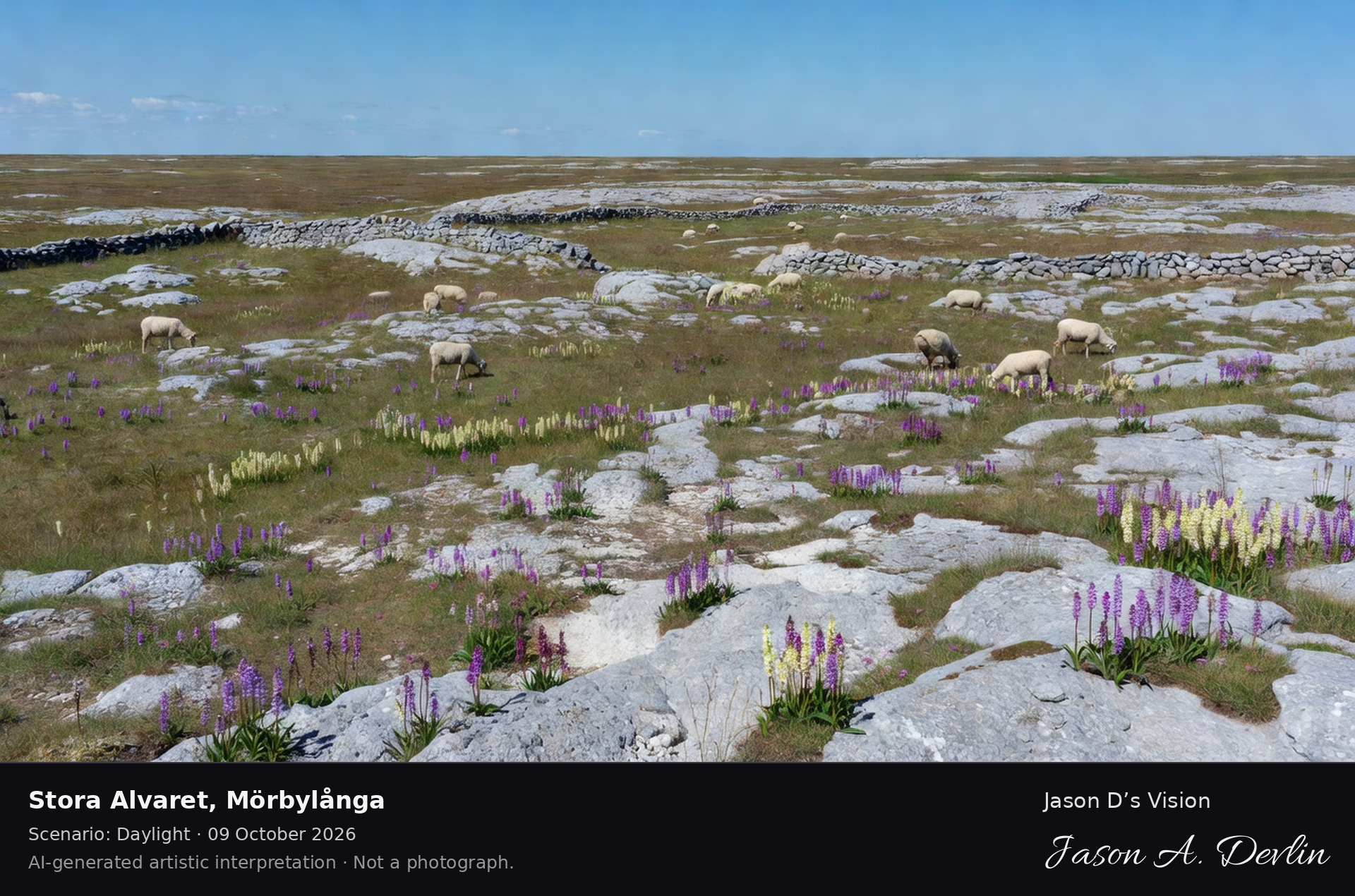
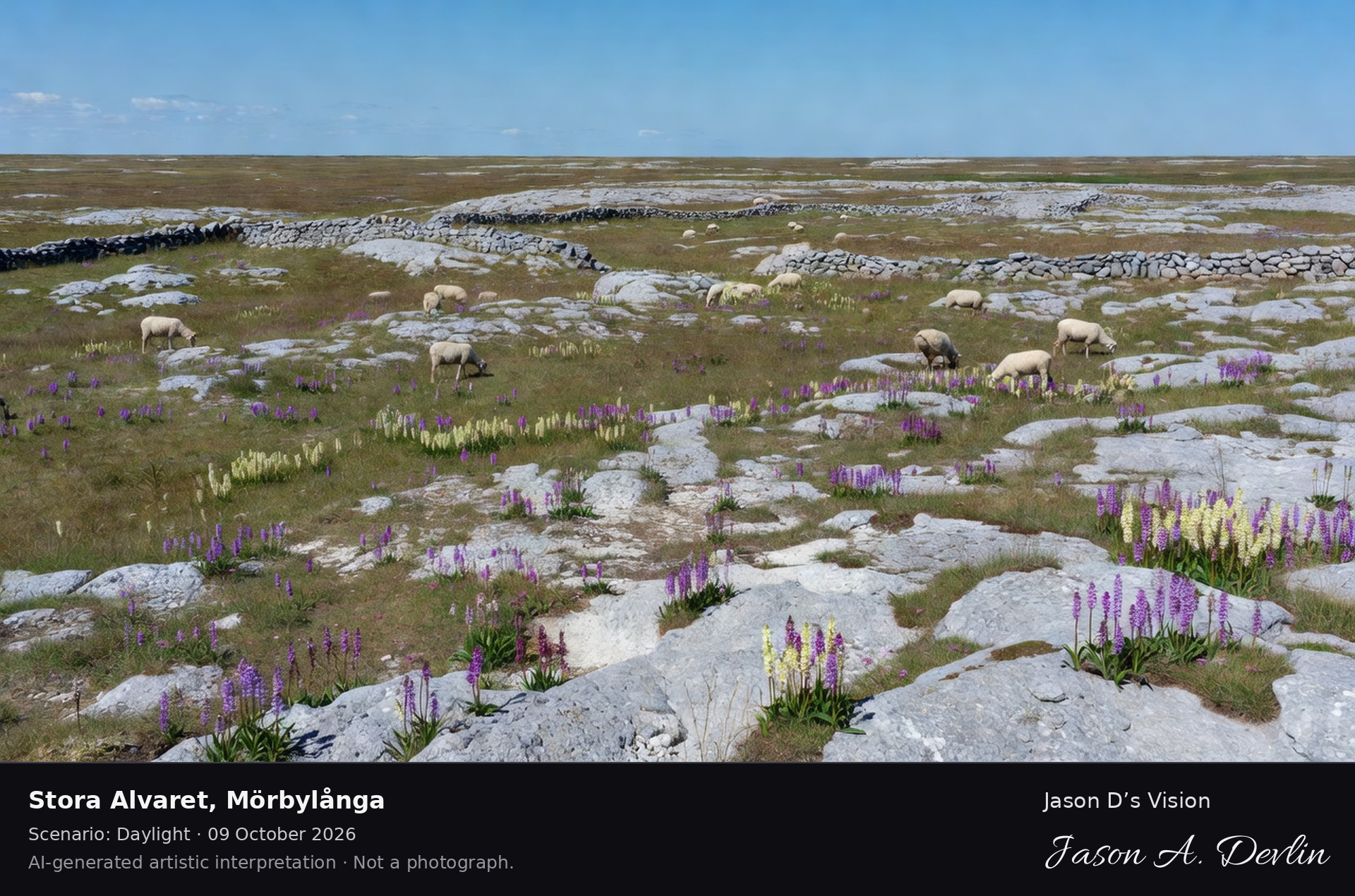
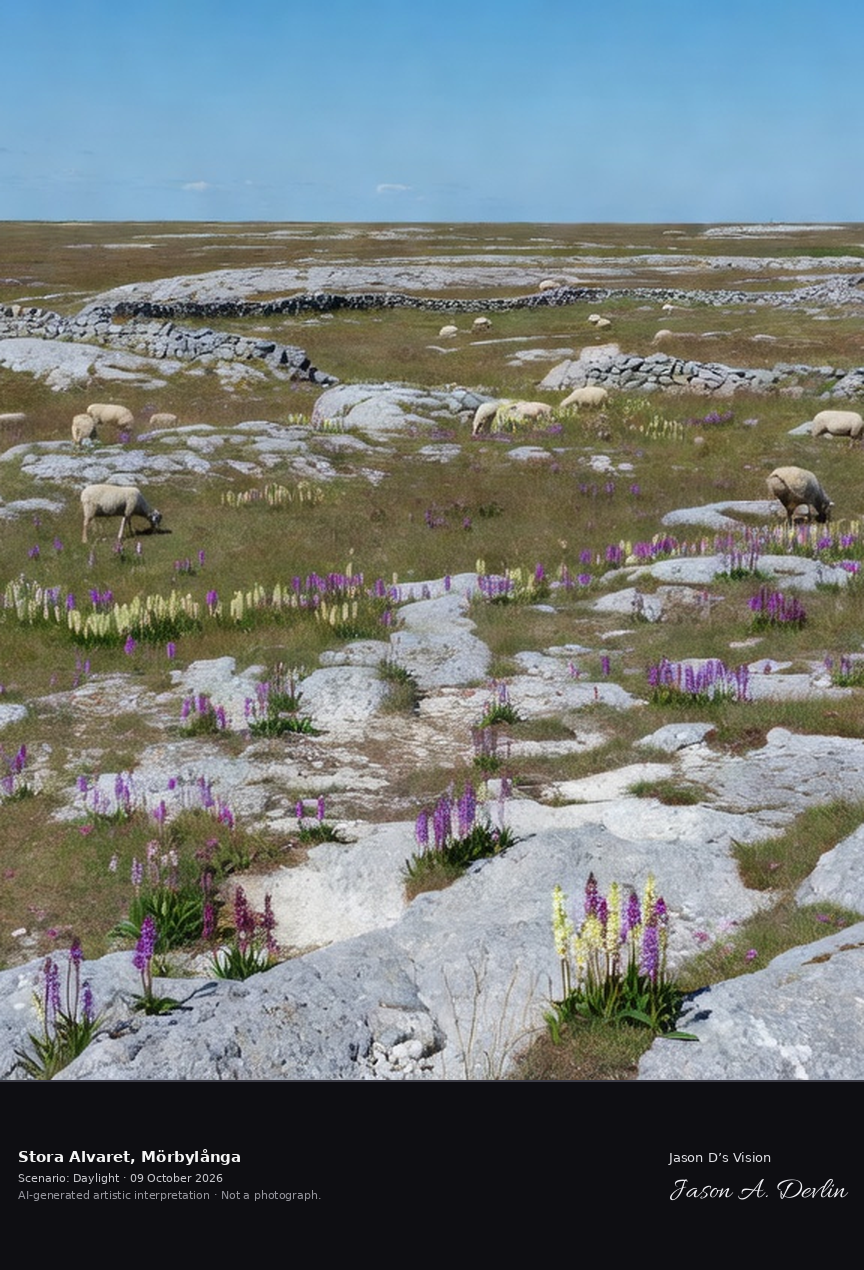
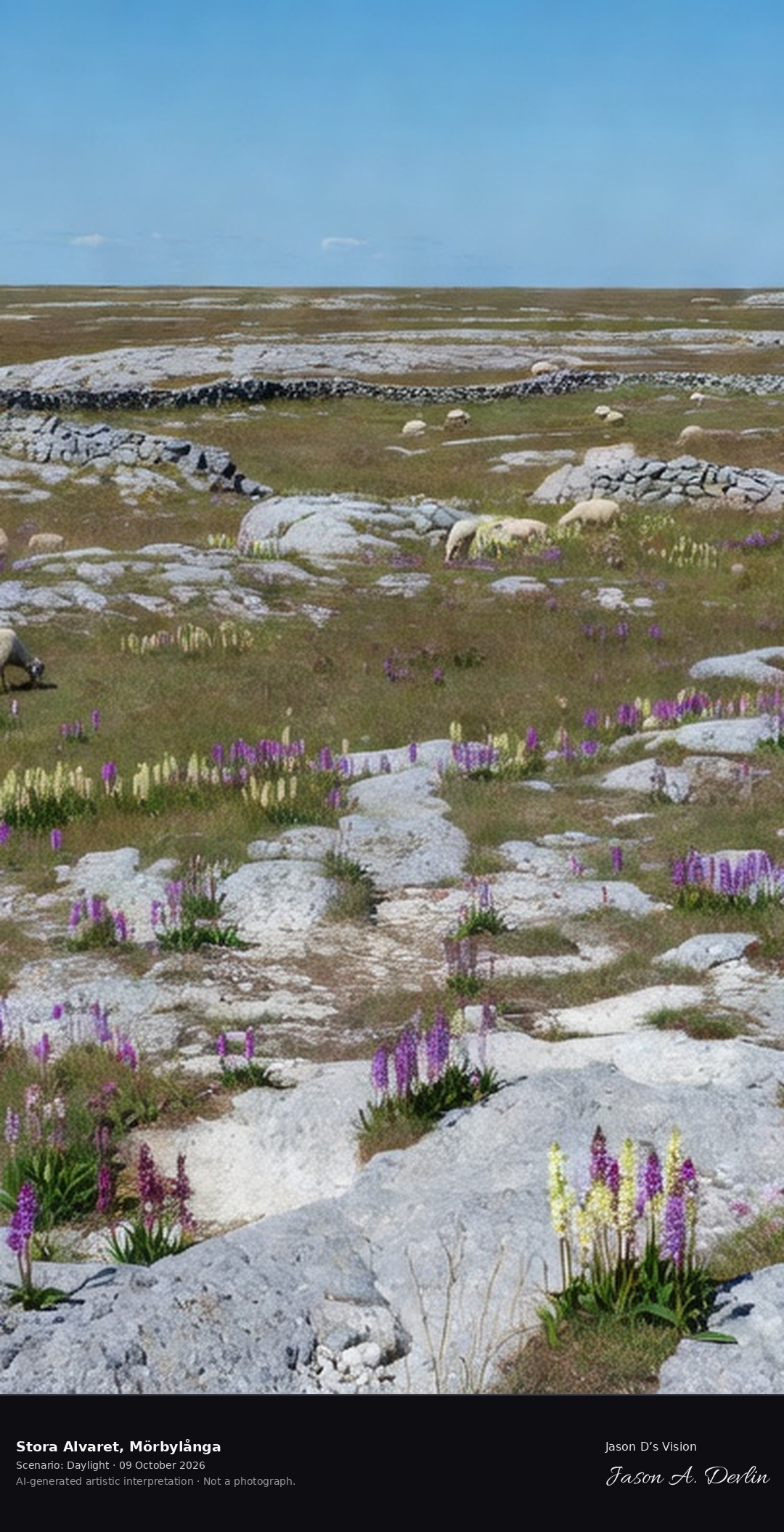
Stora Alvaret's vast limestone plain, the UNESCO-listed steppe-like landscape with its unique orchids and grazing sheep, the flat horizon broken only by ancient stone walls. A lunar meadow on Öland.
Stora Alvaret in Mörbylånga, Öland, is the largest alvar plain in Europe — a vast limestone steppe listed by UNESCO for its unique landscape and biodiversity. From the classic open viewpoint, the flat plain stretches to the horizon under bright daylight, grazing sheep roaming between ancient dry-stone walls, with orchids blooming through the thin turf.
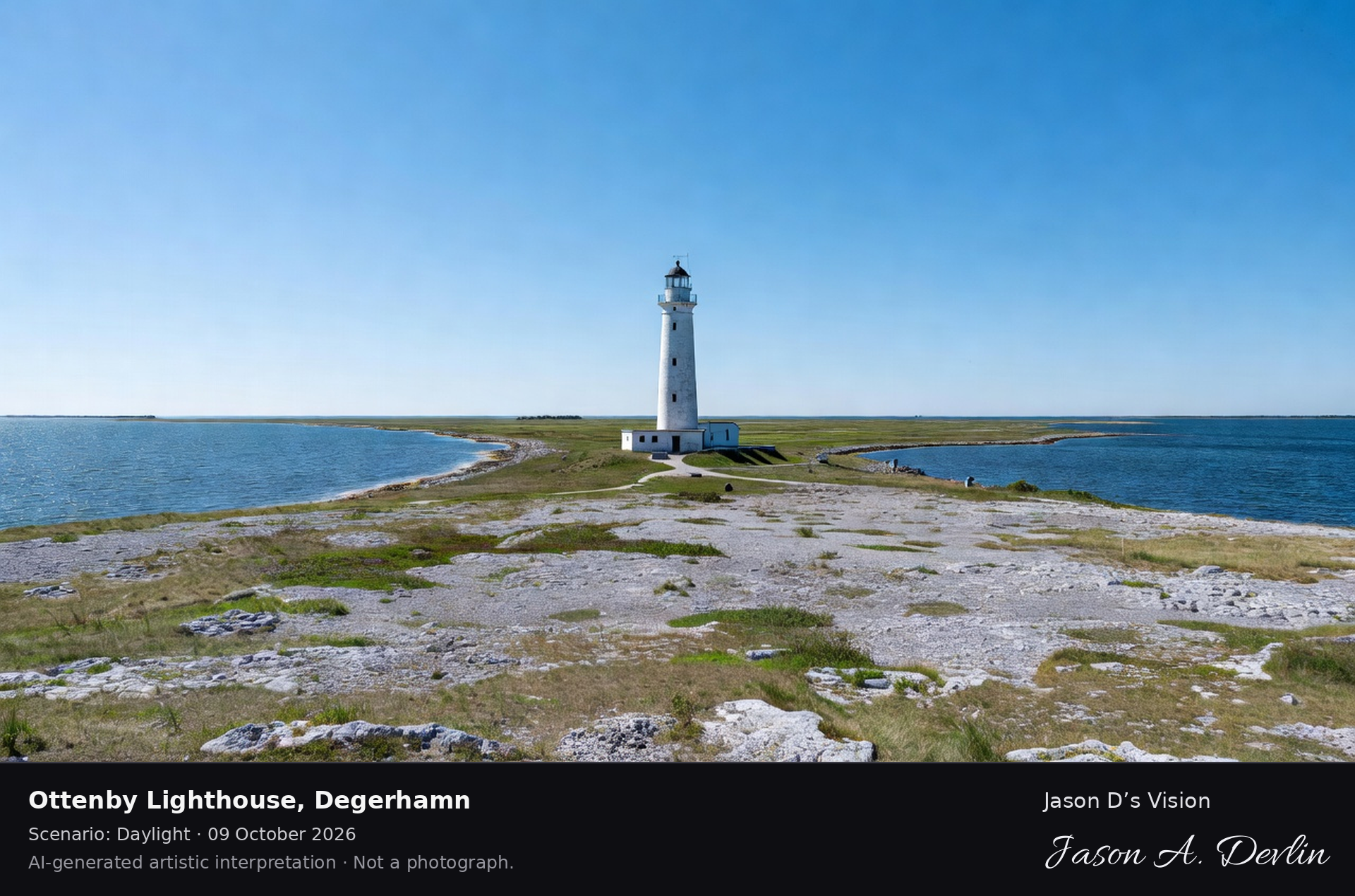
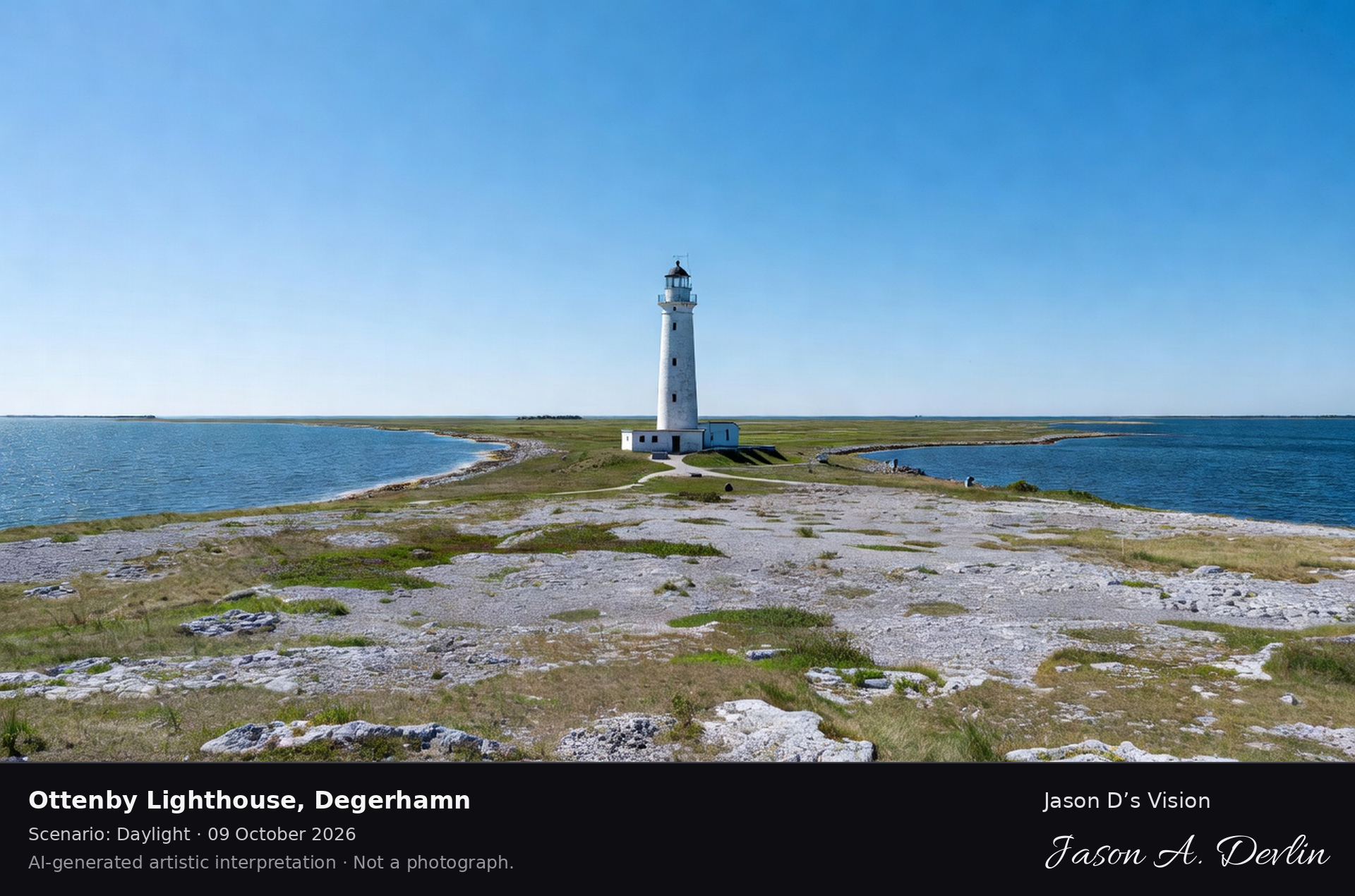
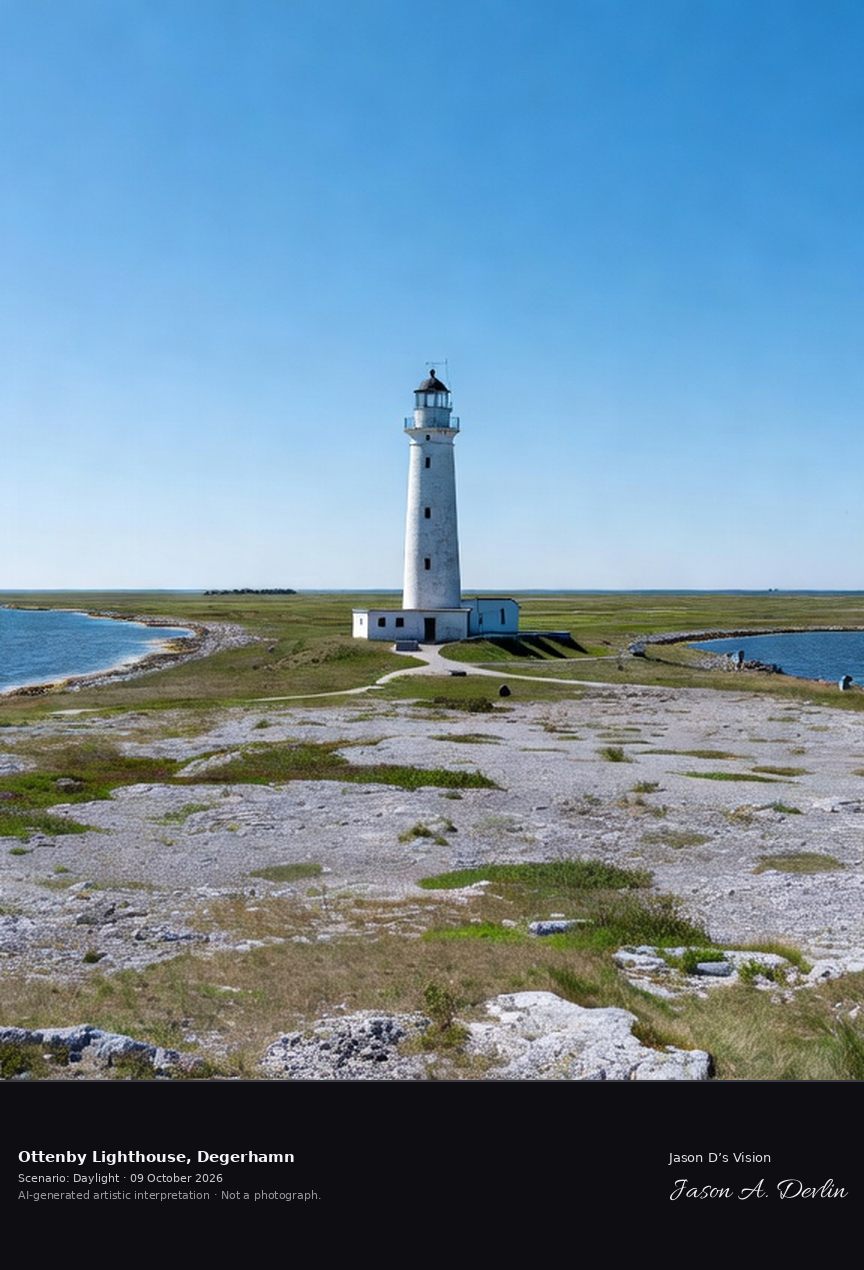
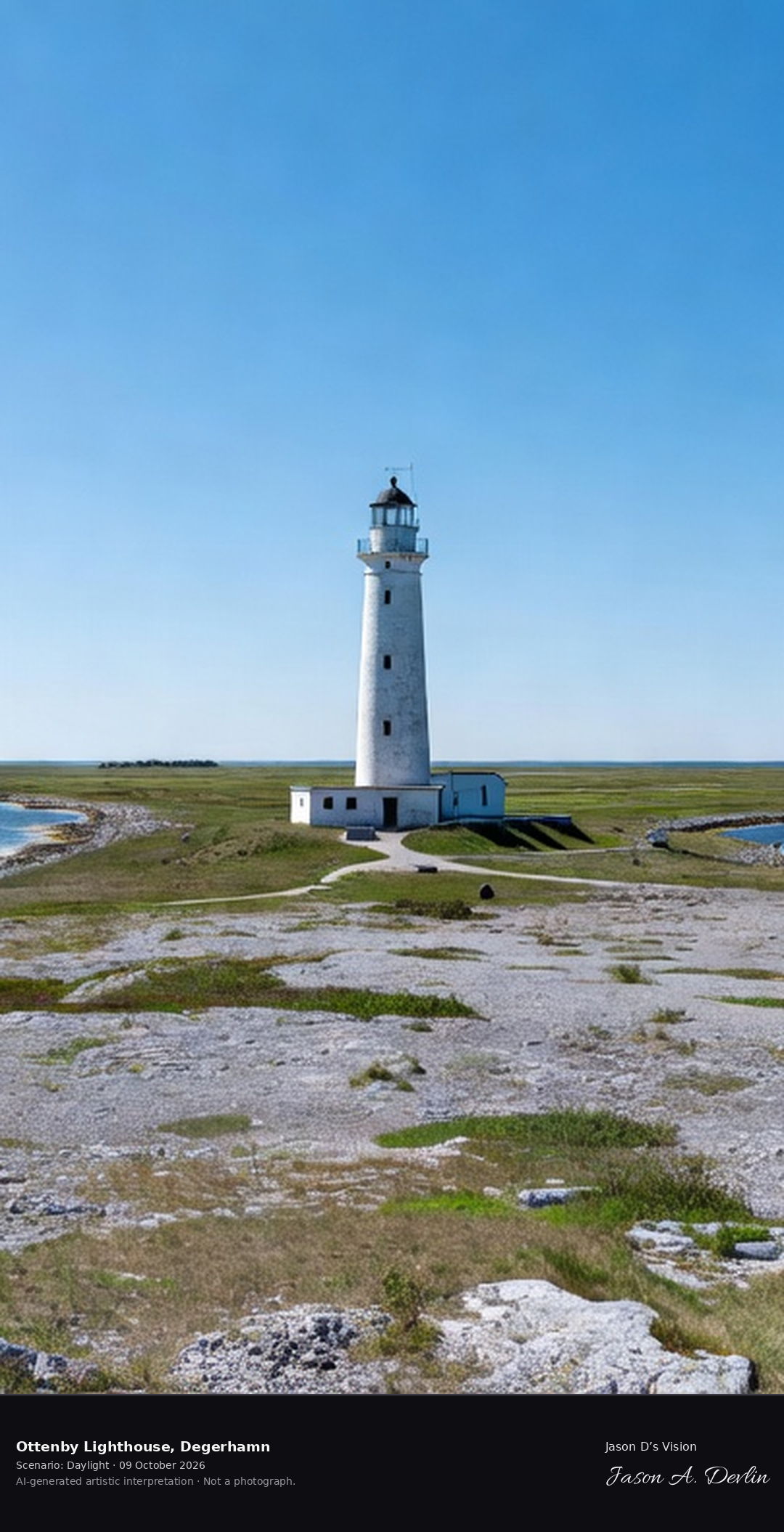
Ottenby's tall white lighthouse at Öland's southern tip, the bird observatory's landmark above the flat alvar with the Baltic on both sides. Sweden's premier bird migration station.
Ottenby Lighthouse in Degerhamn, Öland, stands at the southern tip of the island — the landmark of Sweden's premier bird migration station. From the classic tourist viewpoint, the tall white lighthouse rises above the flat alvar with the Baltic Sea on both sides, the bird observatory's buildings clustered at its base.
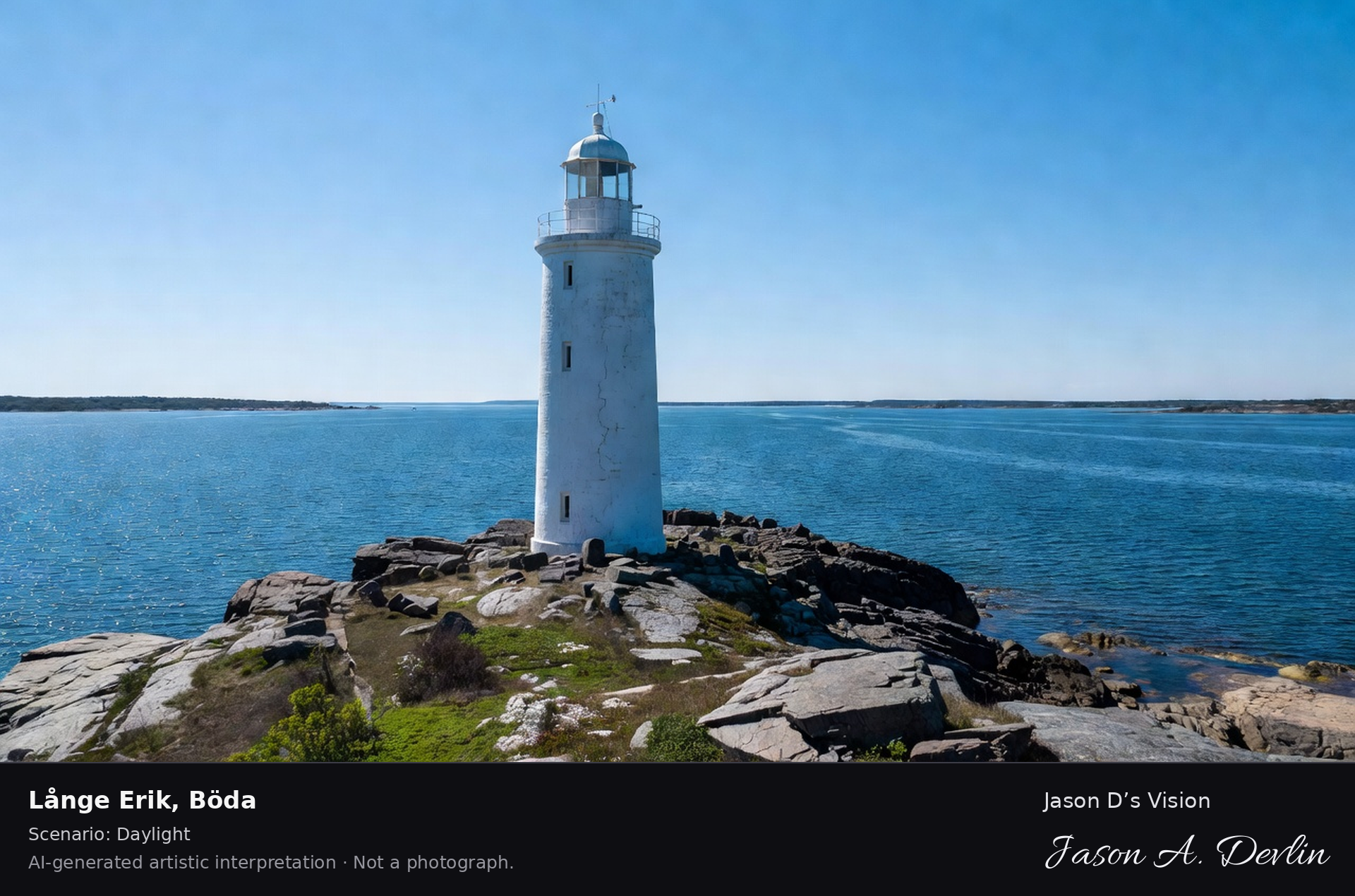
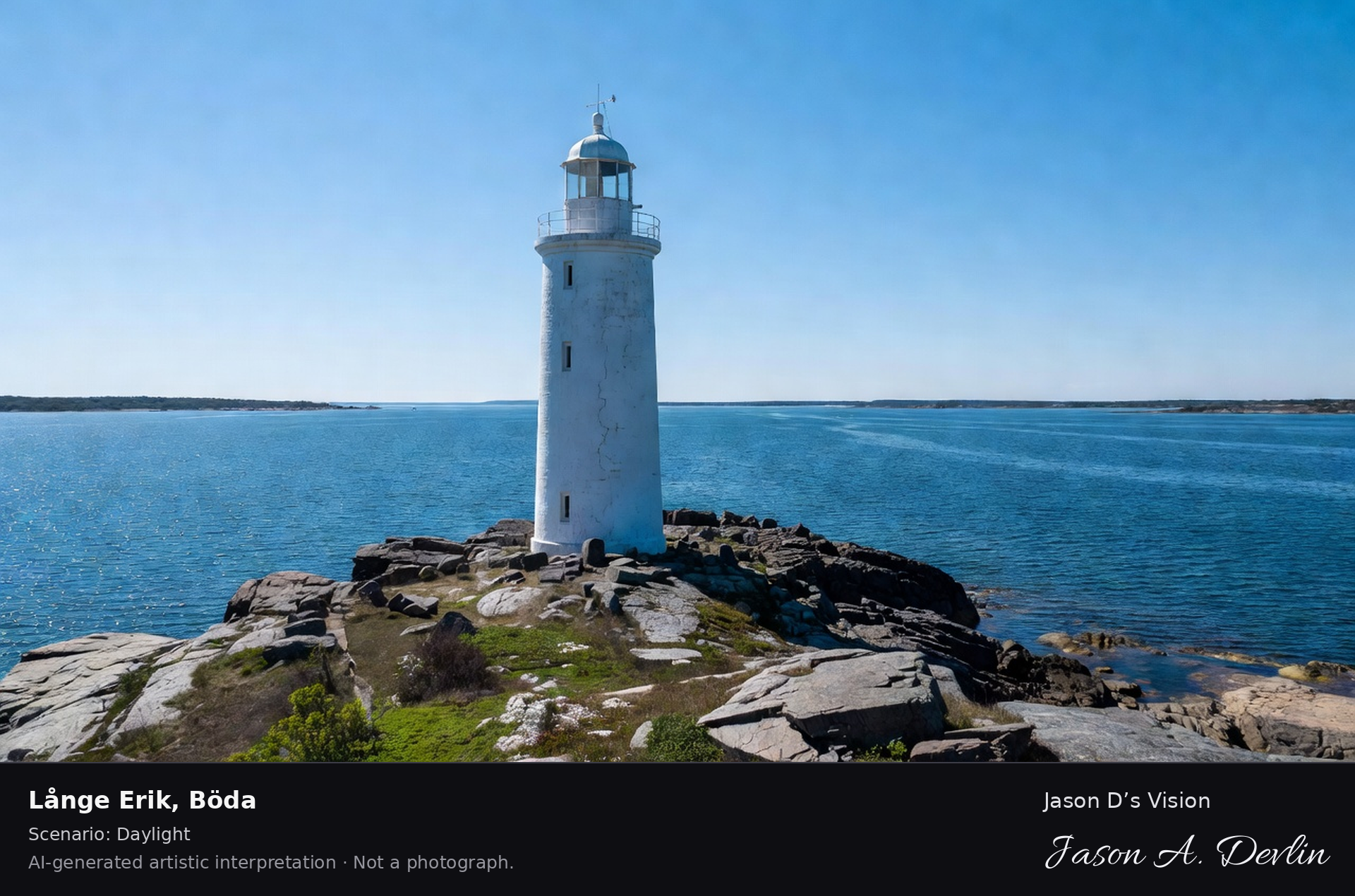
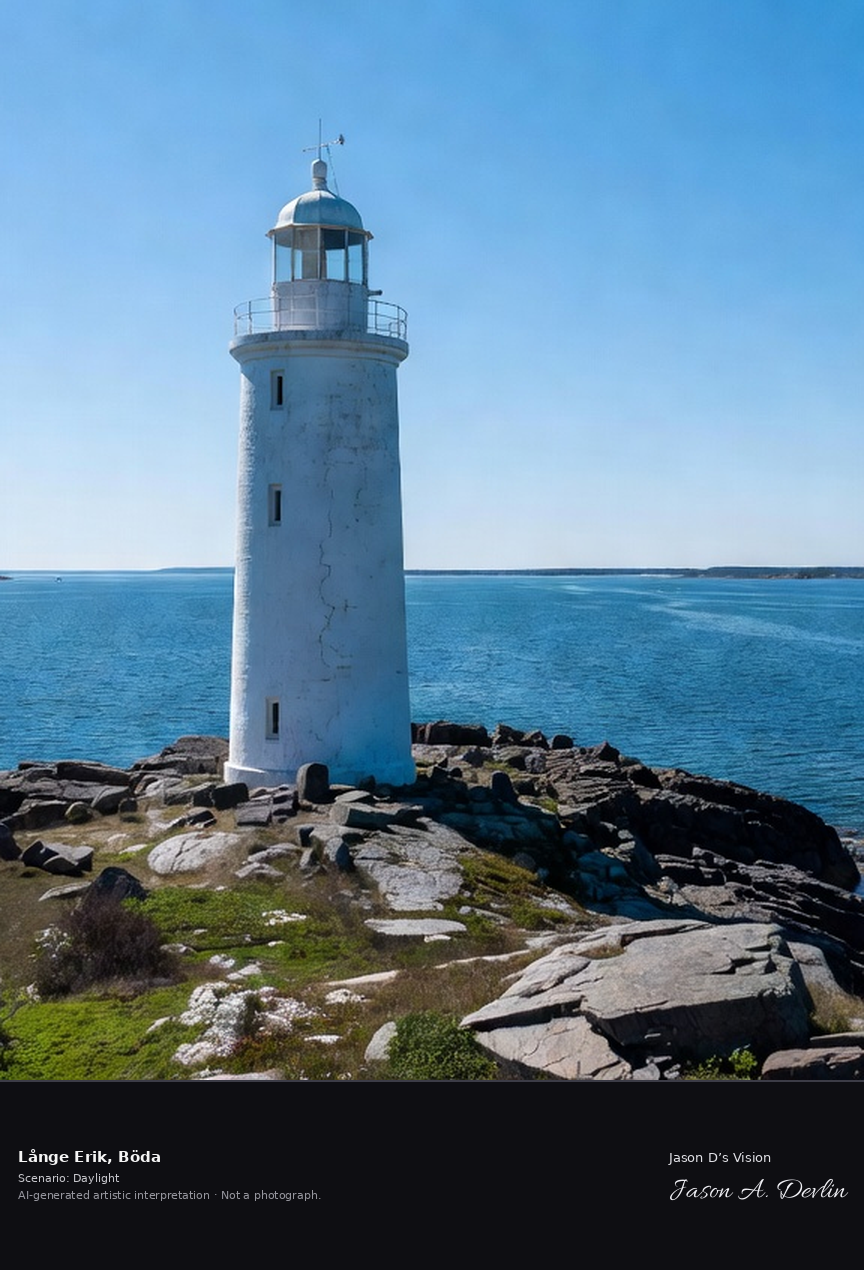
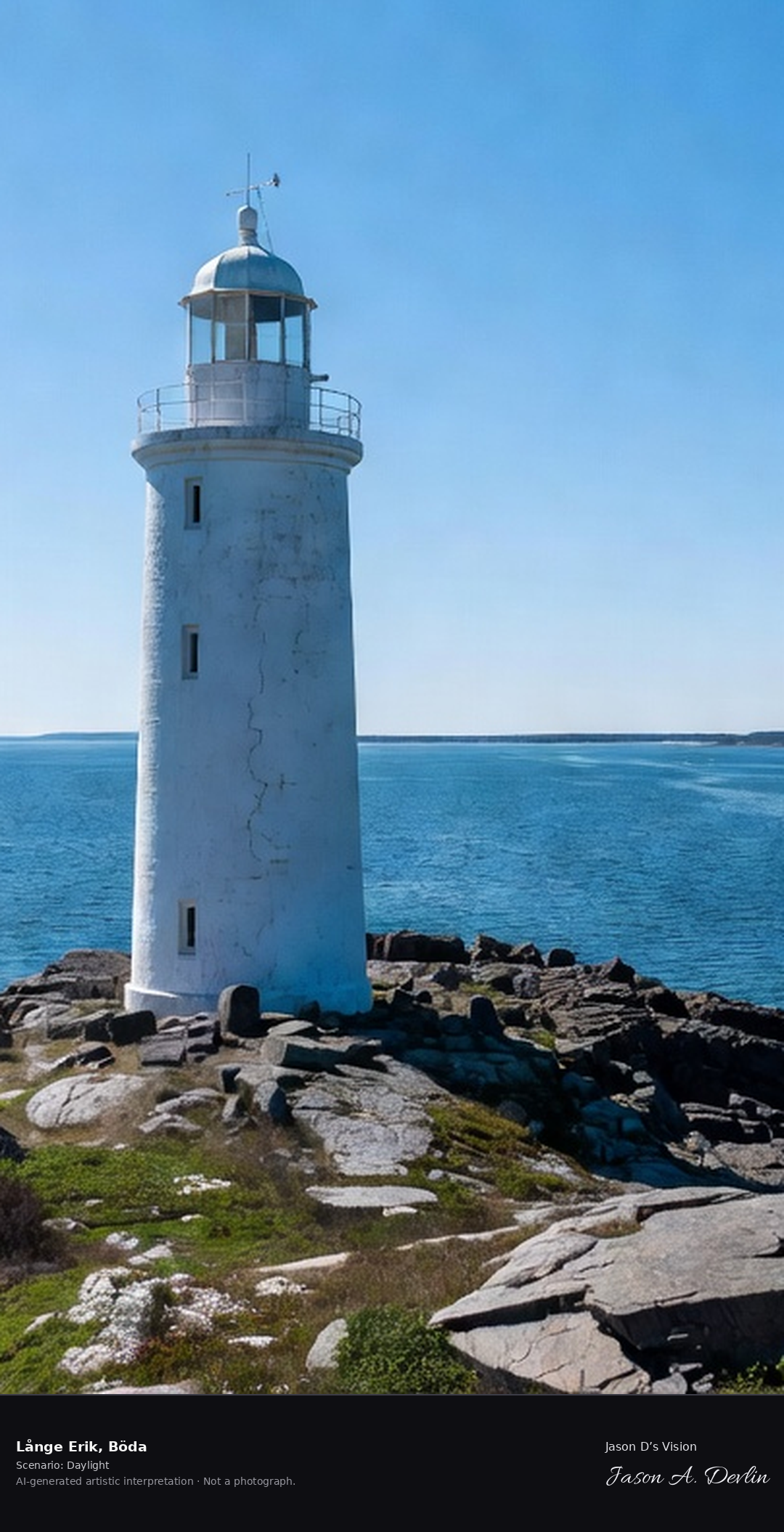
Långe Erik lighthouse at Öland's northern tip, the white tower rising from the rocky point with the Kalmarsund strait beyond. The 'Tall Erik' guiding ships since 1845.
Långe Erik in Böda, Öland, stands at the northern tip of the island — the 'Tall Erik' lighthouse guiding ships through the Kalmarsund strait since 1845. From the classic tourist viewpoint, the white cylindrical tower rises from the rocky point, the blue strait stretching beyond, in bright natural daylight.
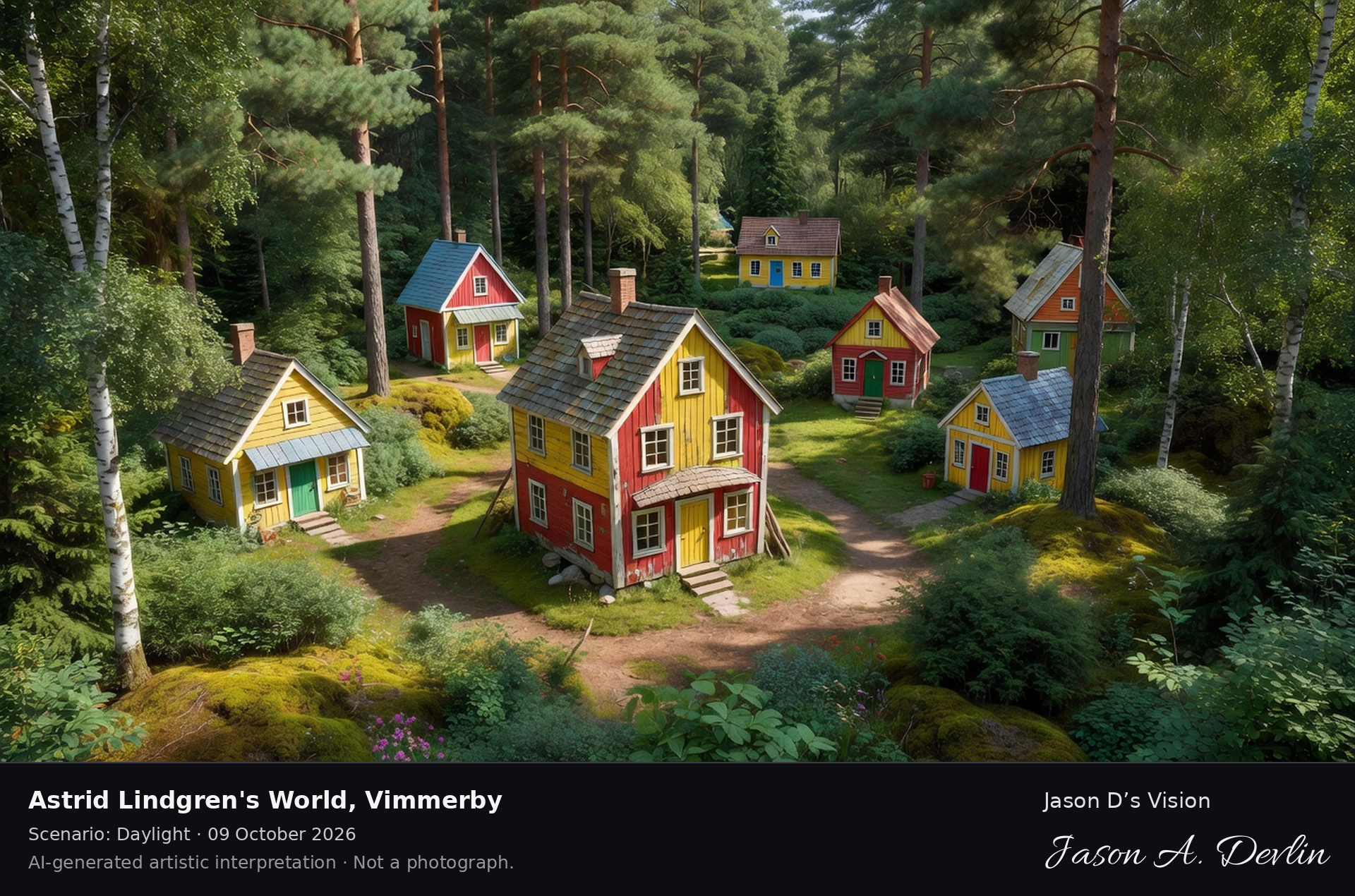
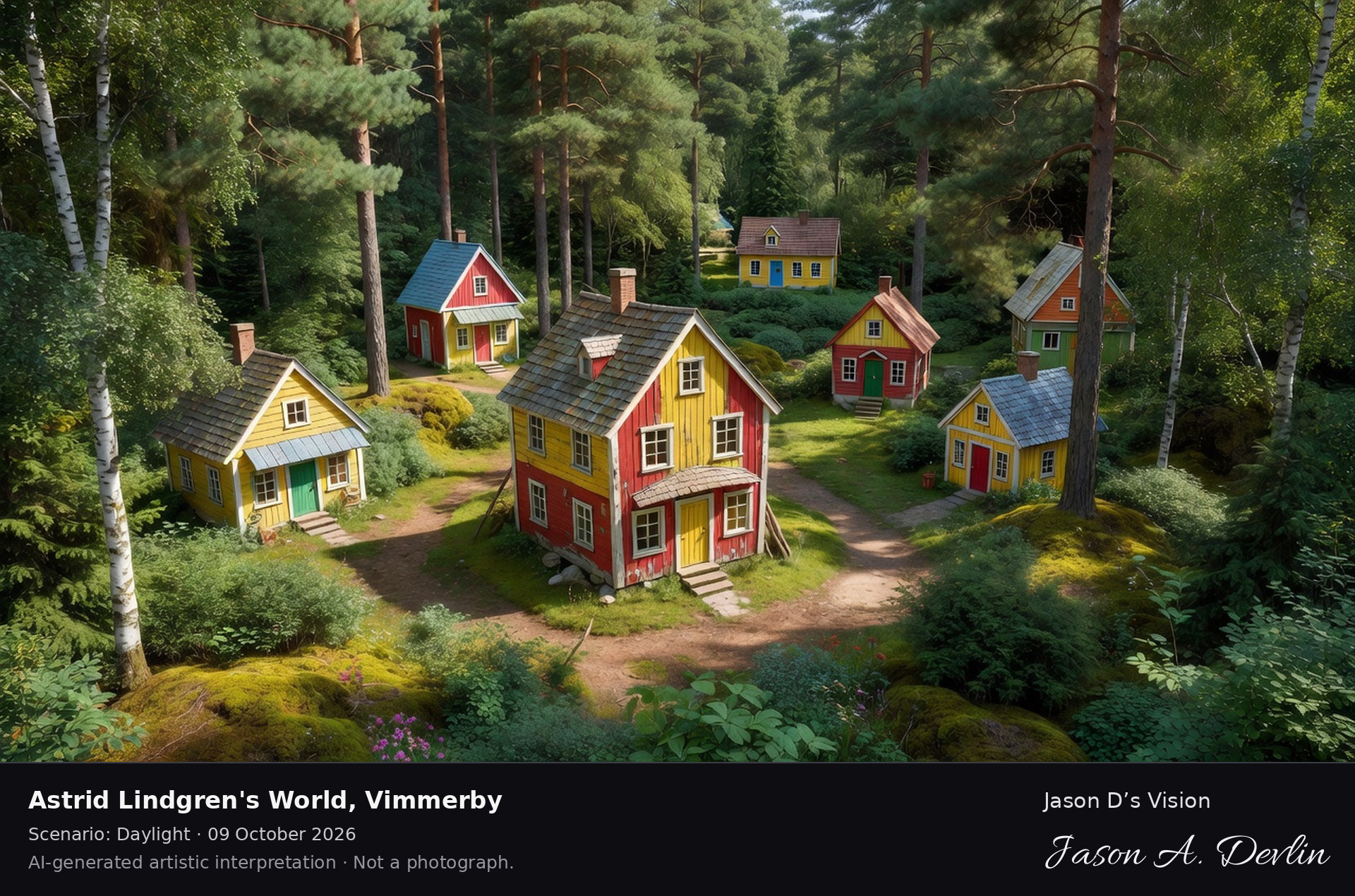
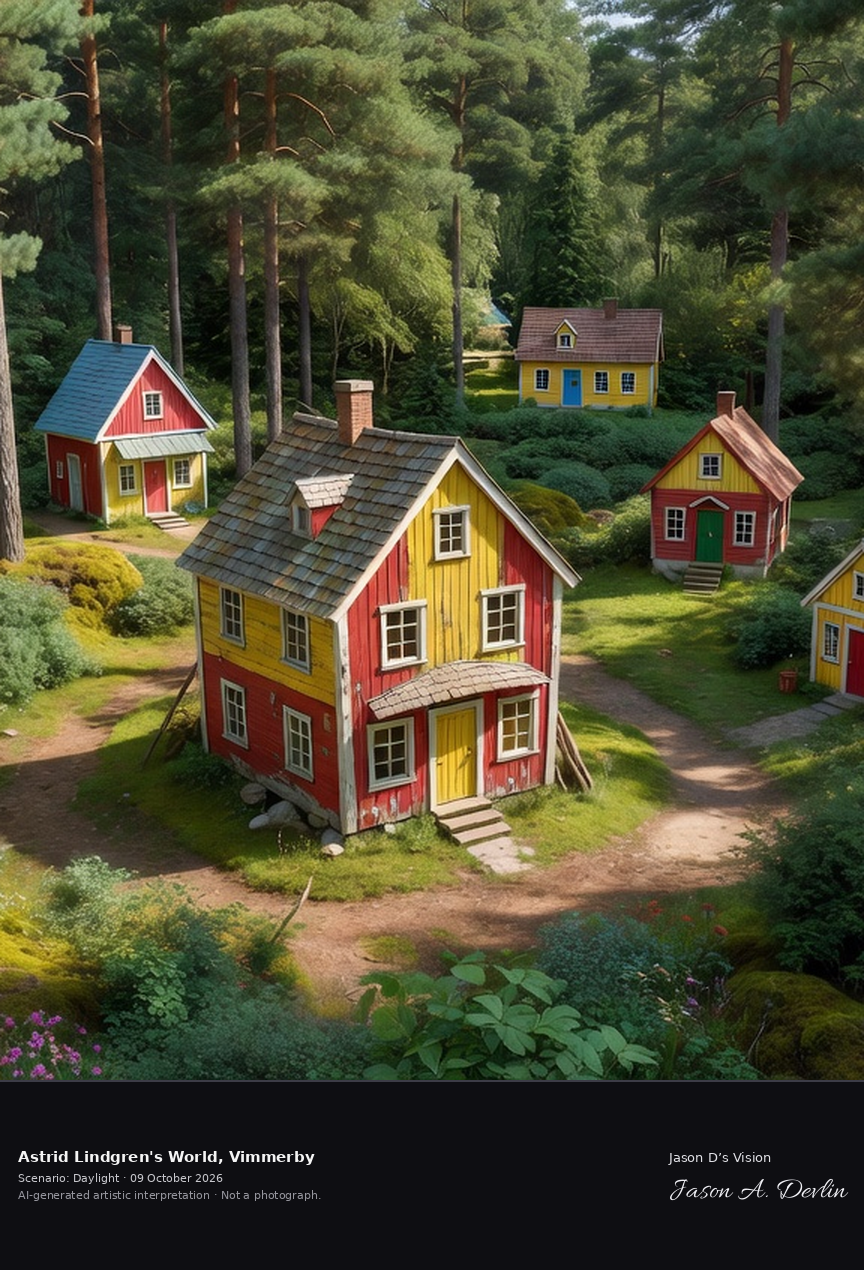
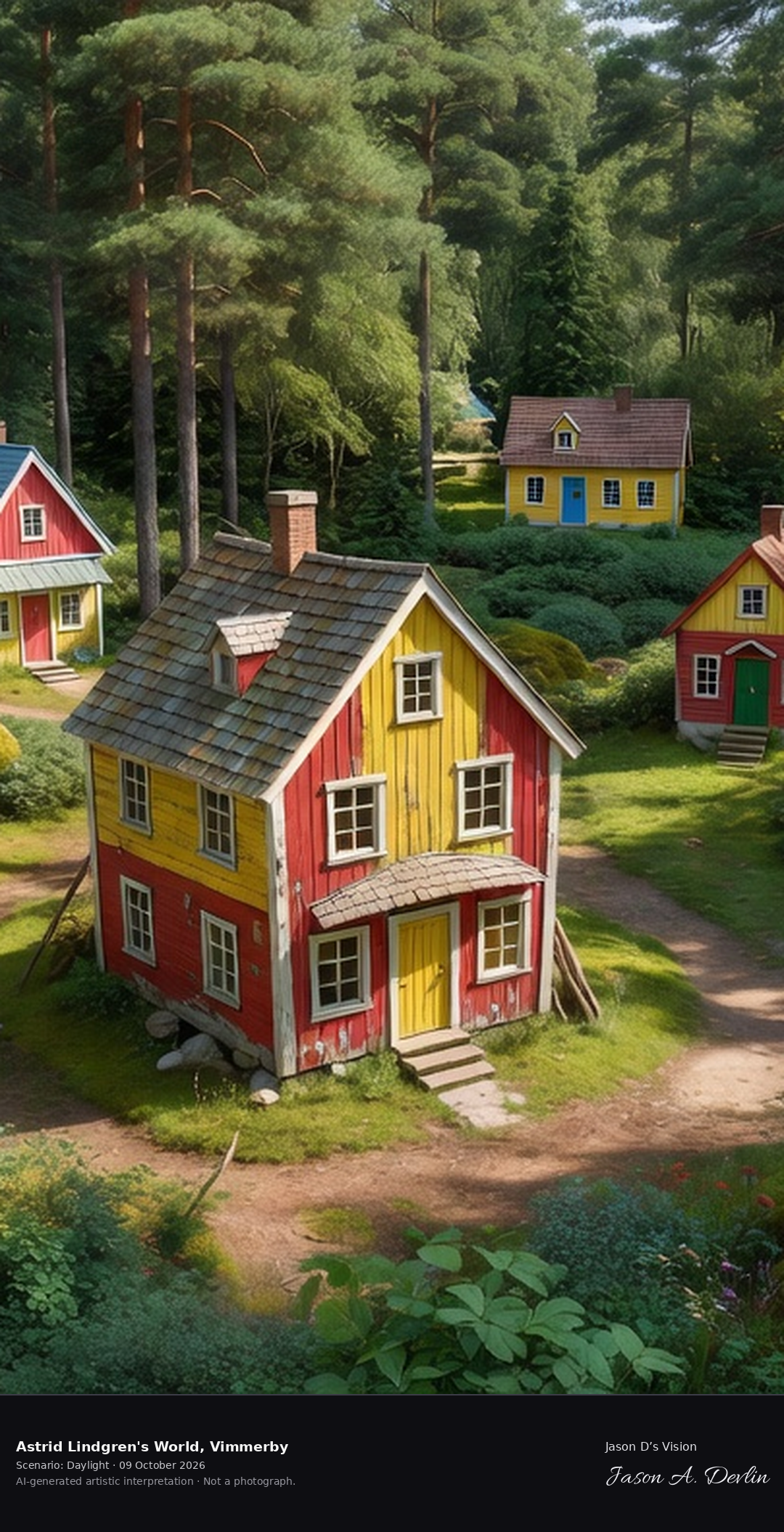
The miniature Villa Villekulla at Astrid Lindgren's World in Vimmerby, Pippi Longstocking's crooked little house among the Småland forest with Junibacken-style storybook buildings. Childhood literature come alive.
Astrid Lindgren's World in Vimmerby, Småland, brings childhood literature to life — the miniature Villa Villekulla, Pippi Longstocking's crooked little house, stands among the Småland forest with Junibacken-style storybook buildings clustered around it. From the classic tourist viewpoint, the colourful crooked cottages nestle among pine and birch trees in bright natural daylight.
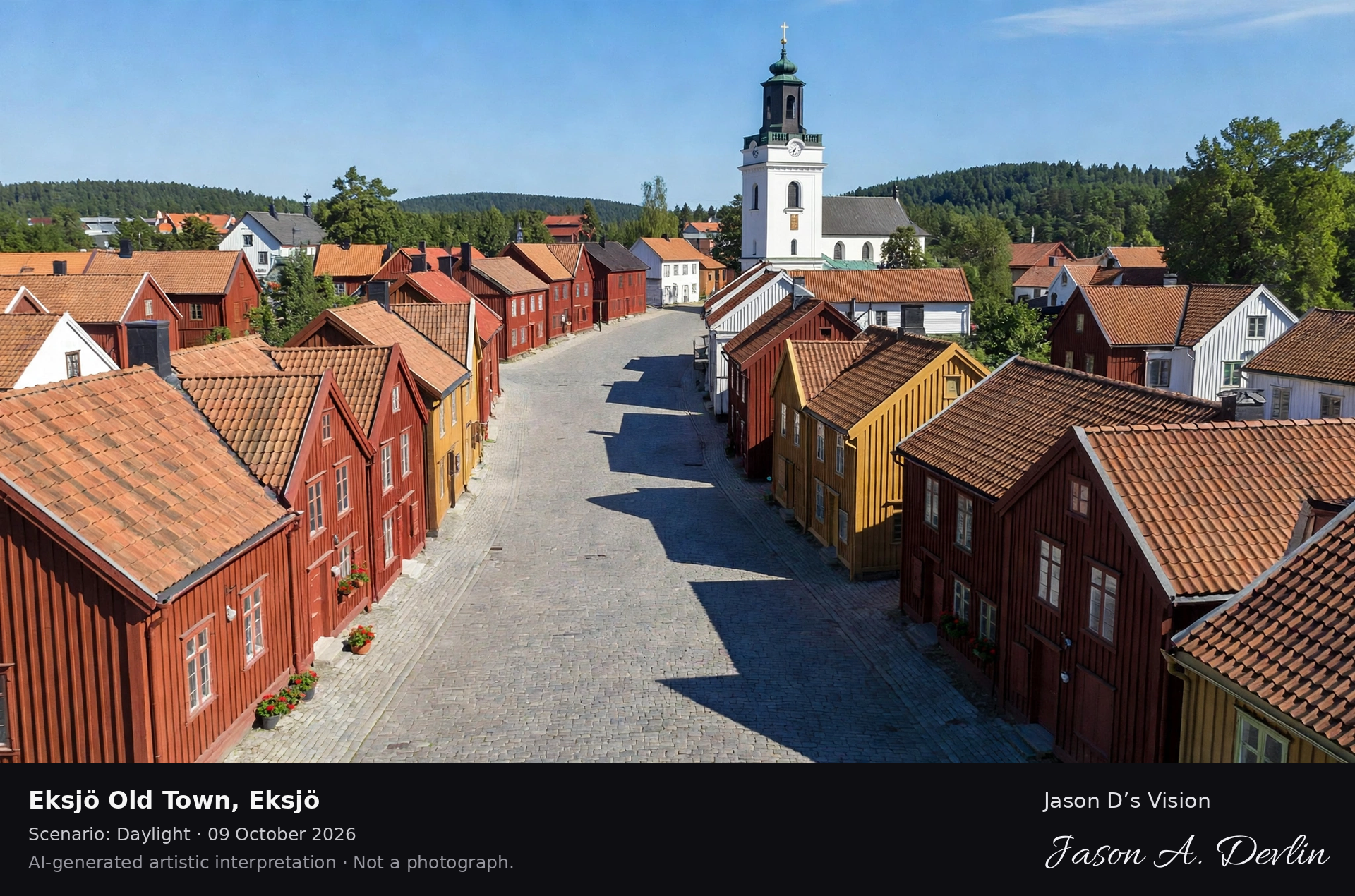
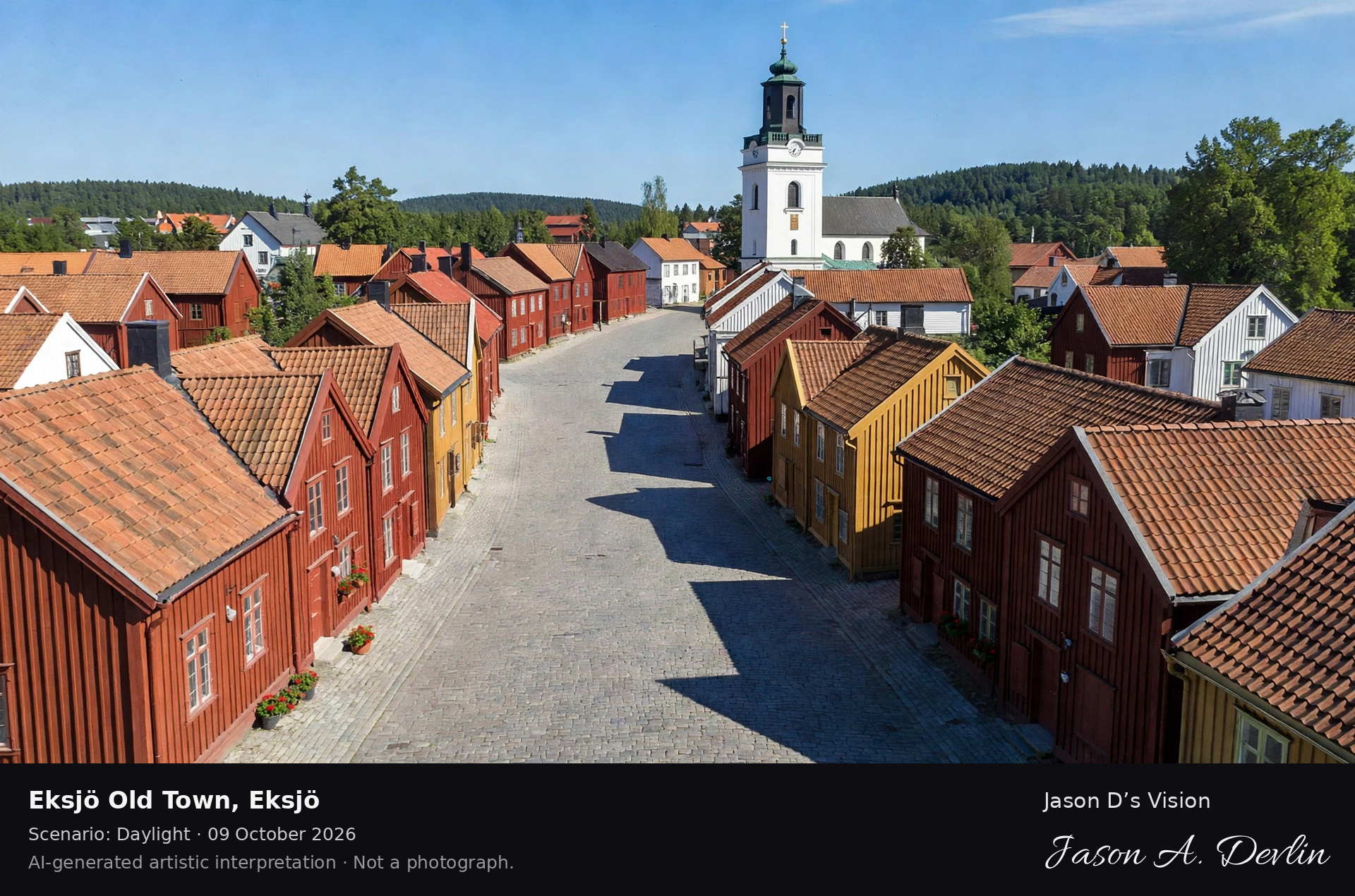
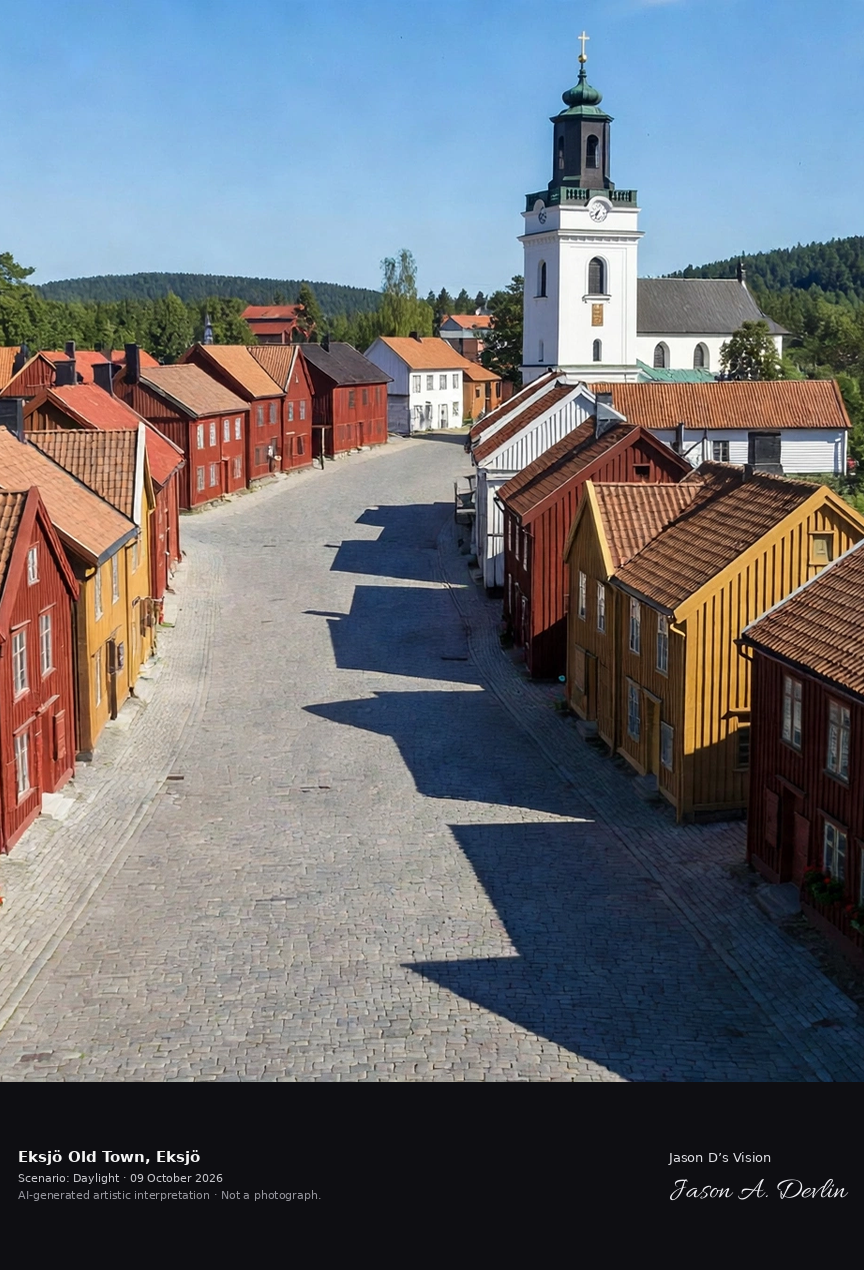
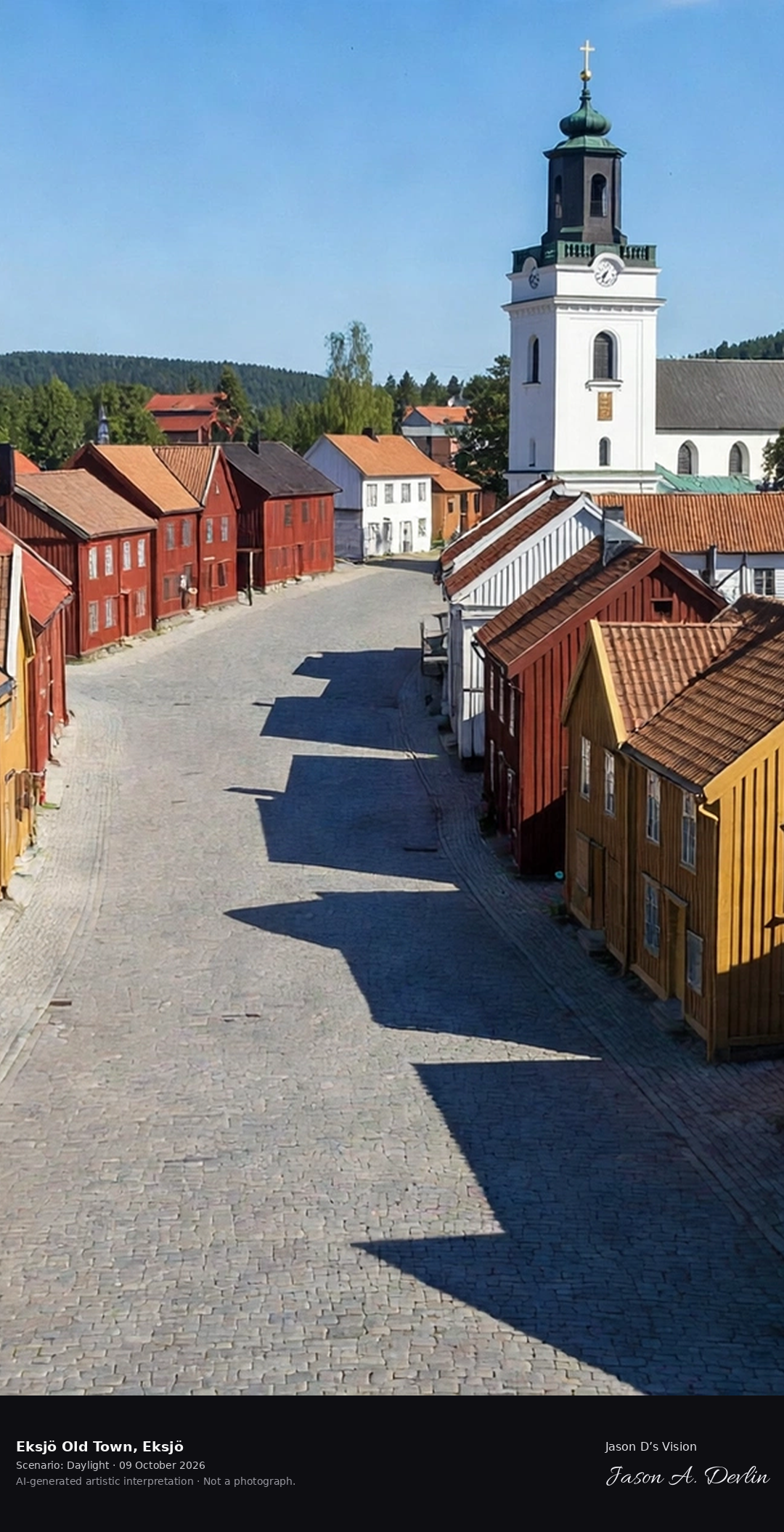
Eksjö's perfectly preserved wooden old town, 56 listed timber houses along cobbled streets with the church square at the center. One of Sweden's best-preserved wooden towns, untouched by fire.
Eksjö Old Town in Eksjö, Småland, is one of Sweden's best-preserved wooden towns — 56 listed timber houses along cobbled streets, untouched by fire. From the classic tourist viewpoint, red and ochre timber houses with tiled roofs flank the cobbled street as it opens toward the church square, where Eksjö's pale parish church and its tall spire rise above the rooftops in bright natural daylight.
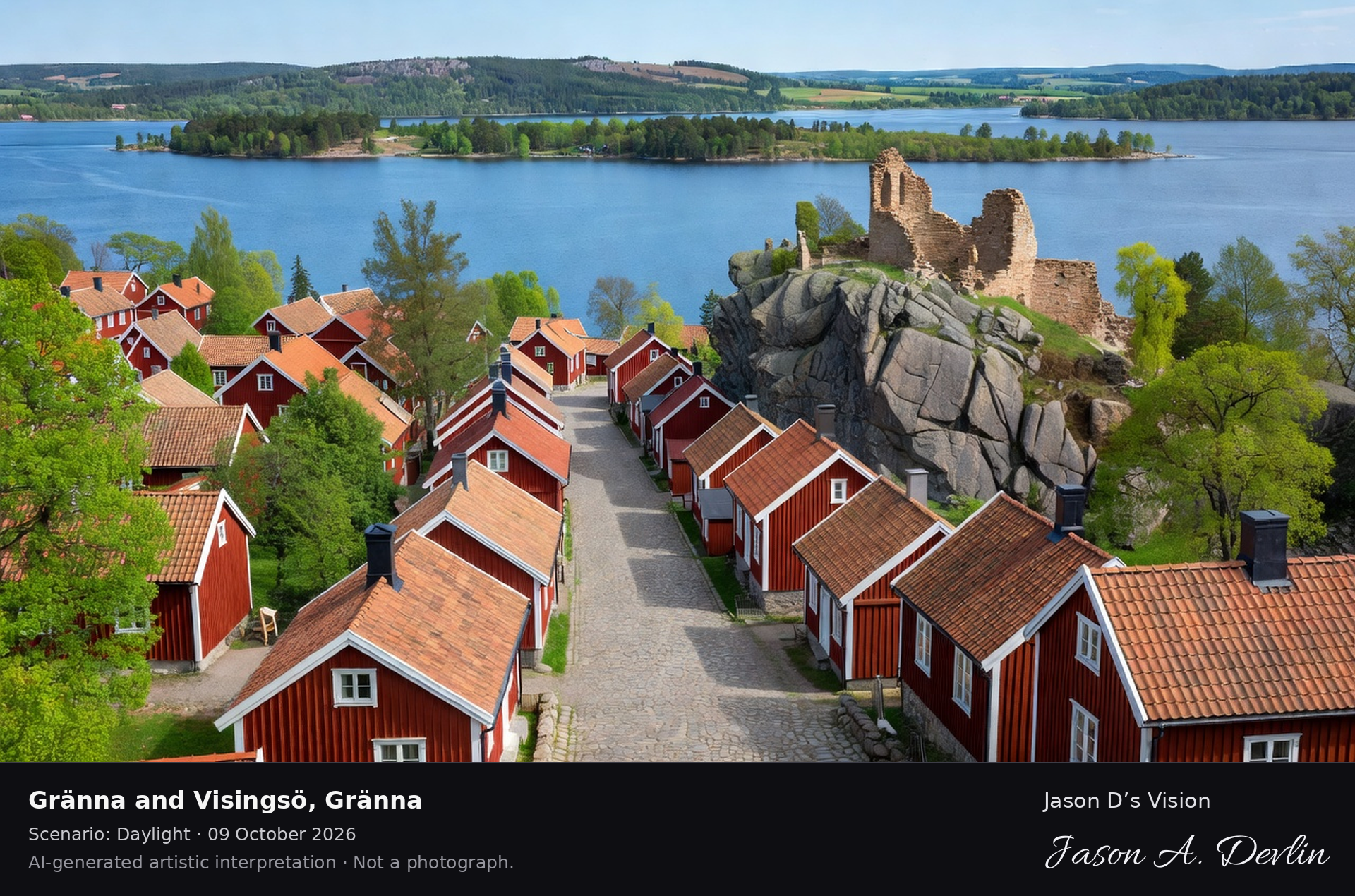
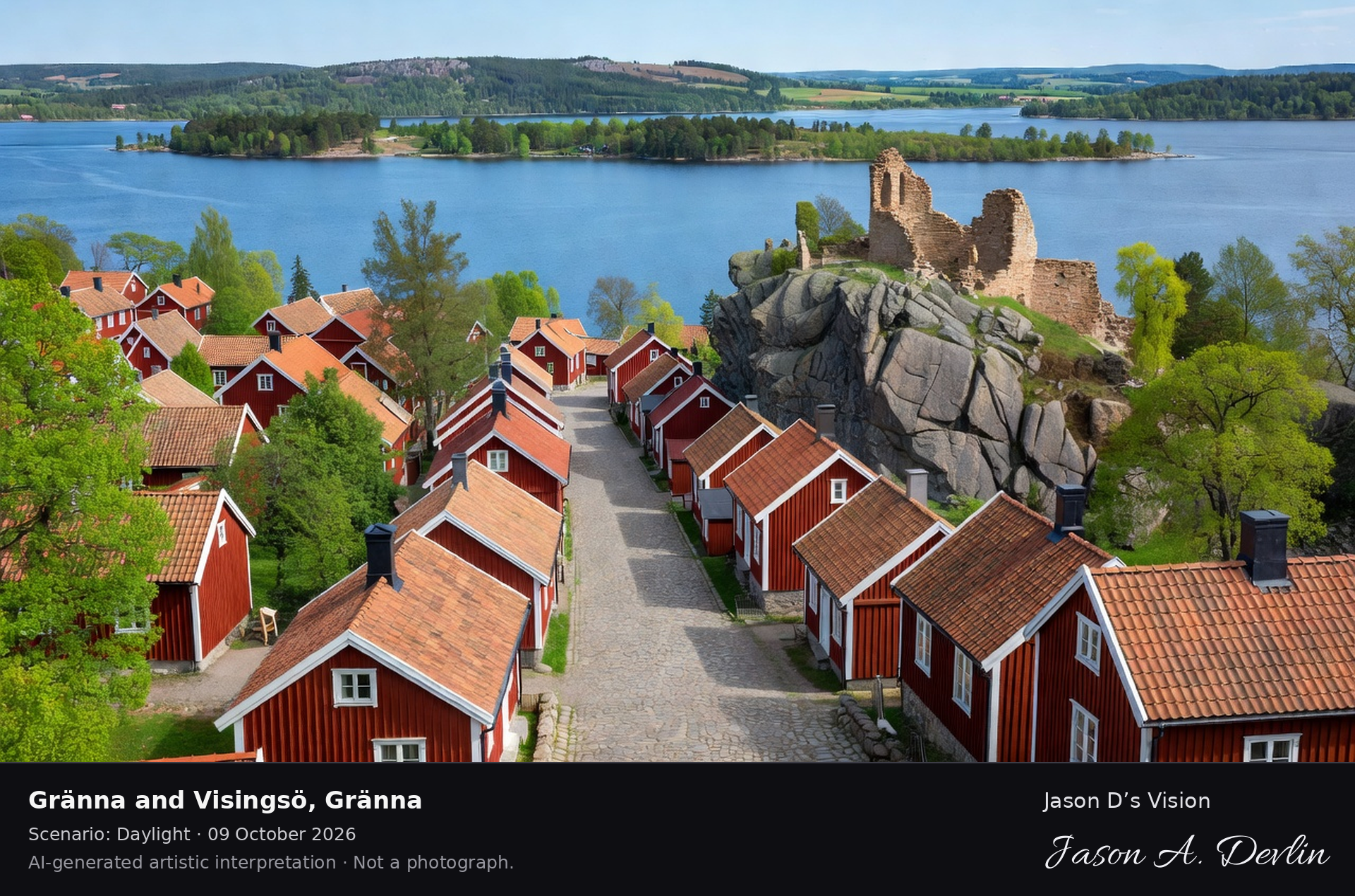
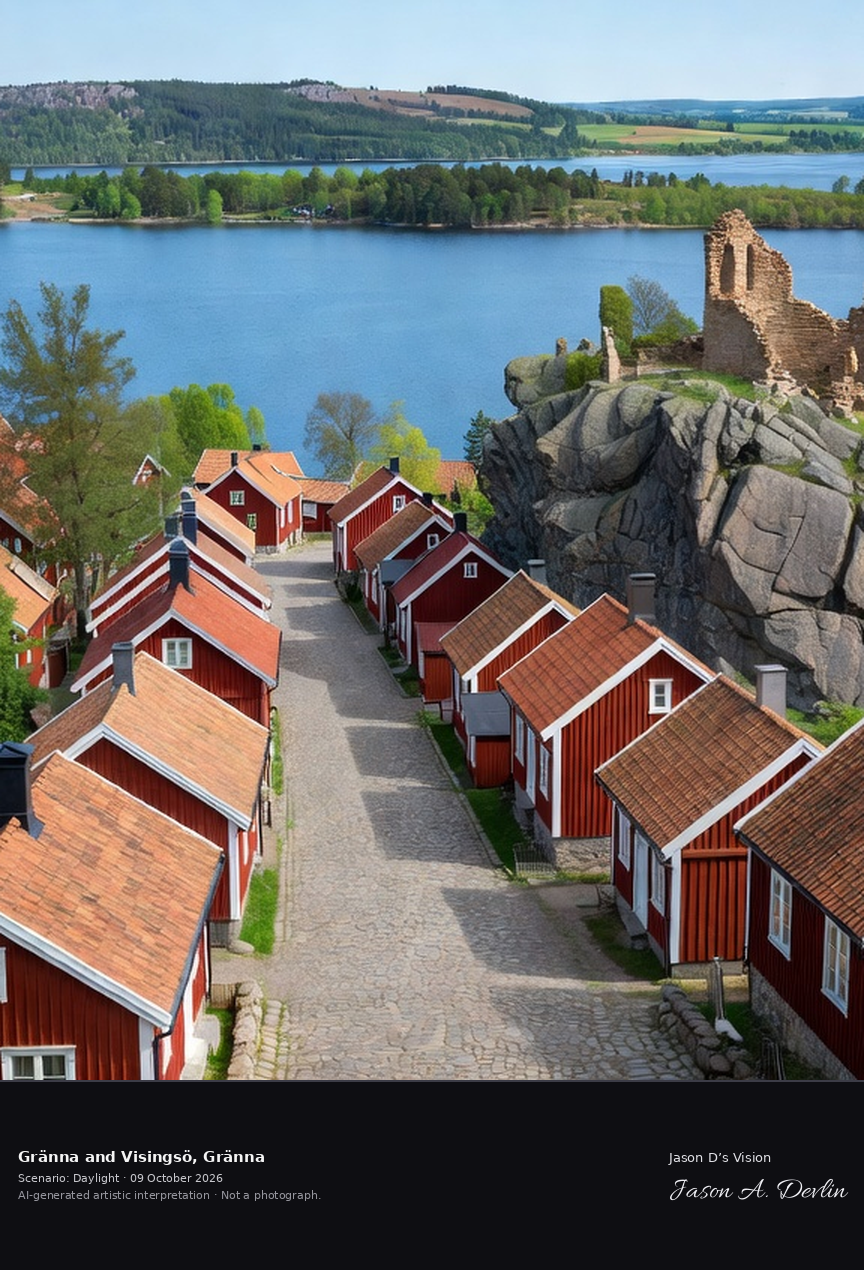
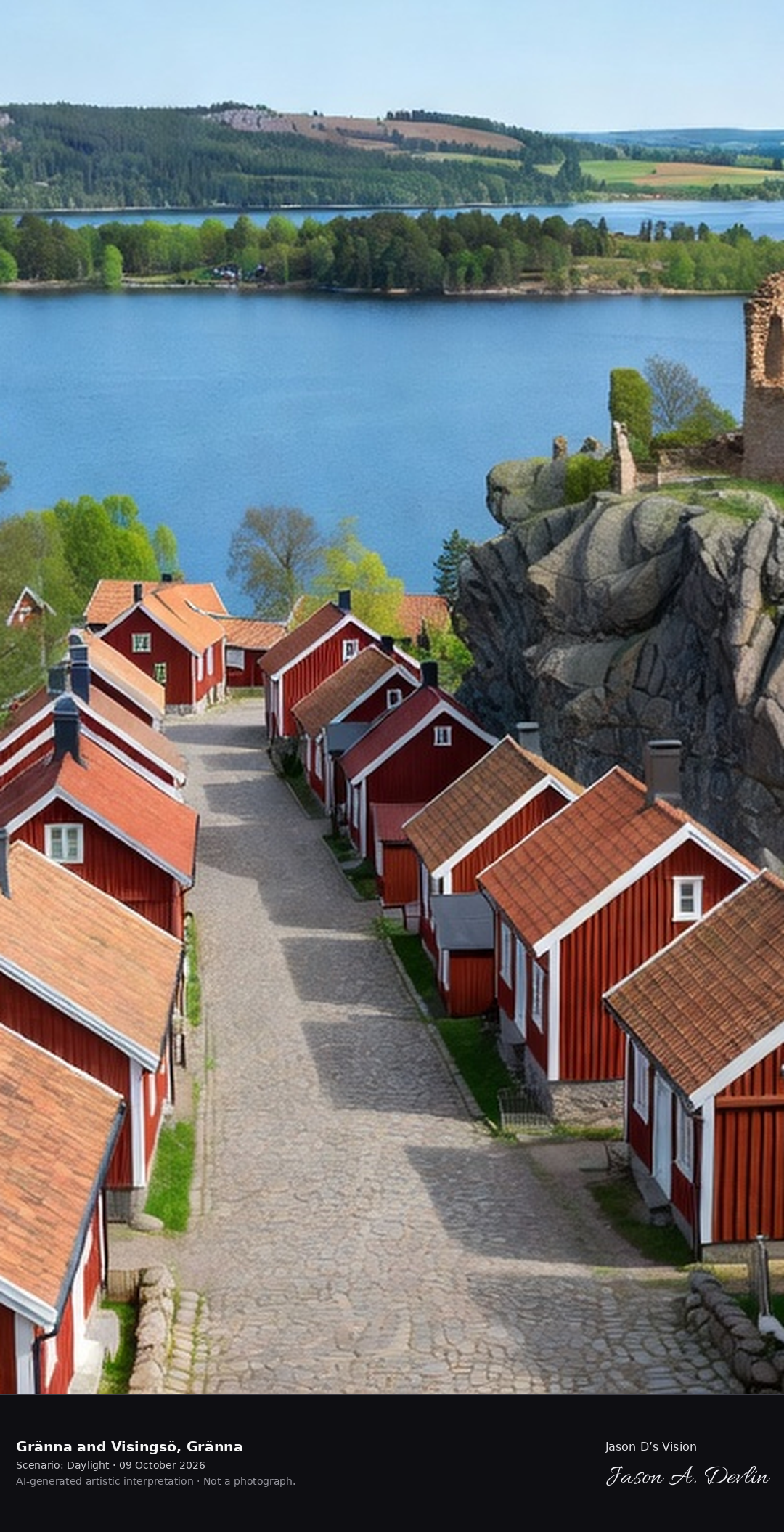
Gränna's steep main street descending to Lake Vättern with Visingsö island across the water, the polkagris (candy cane) town with its red cottages and the Brahehus ruin on the cliff above.
Gränna and Visingsö in Gränna, Småland: Gränna's steep main street with its red cottages and tiled roofs descends to Lake Vättern, the long green island of Visingsö lying across the water, and the stone ruin of Brahehus on the cliff above — the polkagris candy cane town in bright natural daylight.
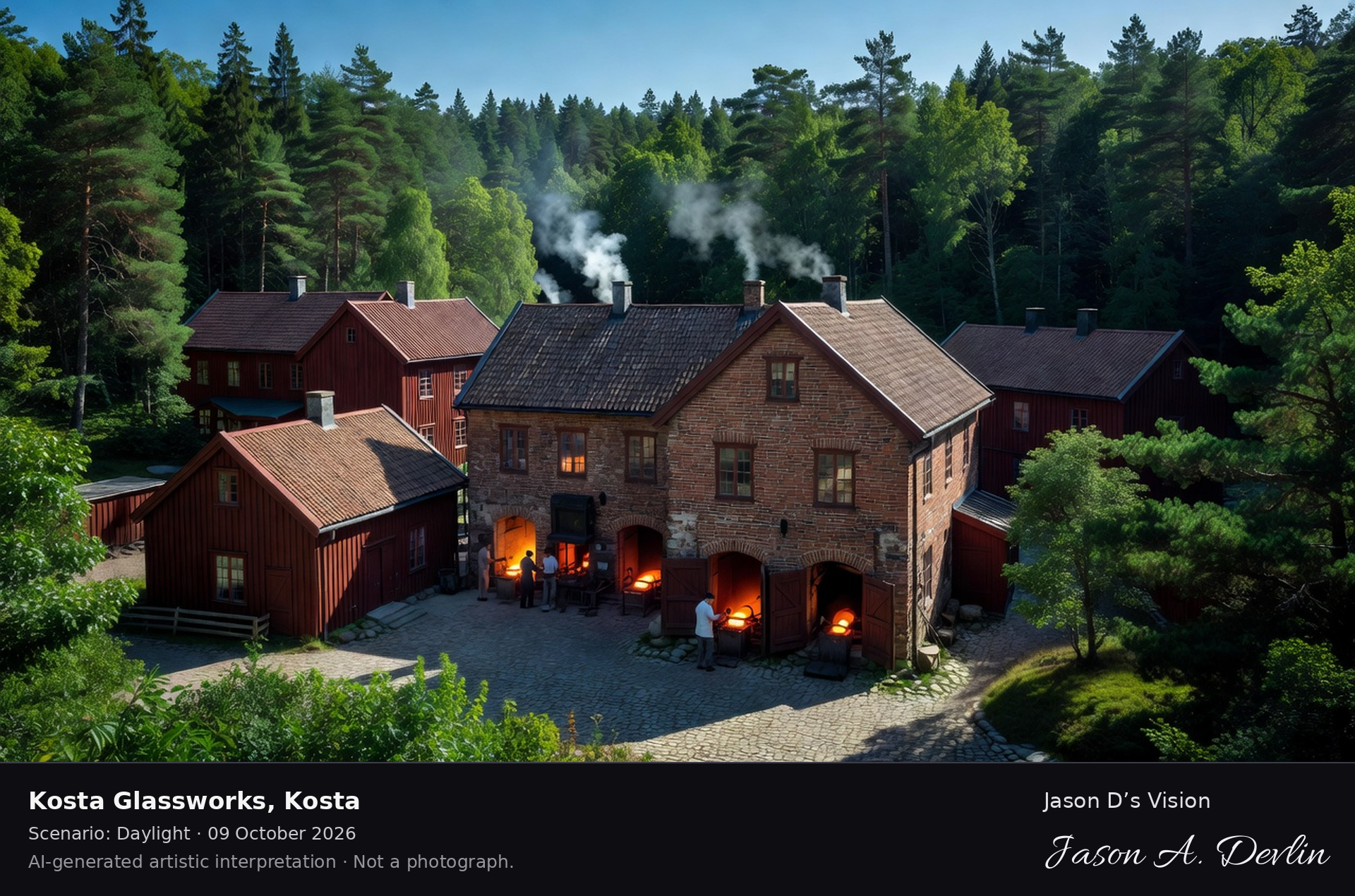
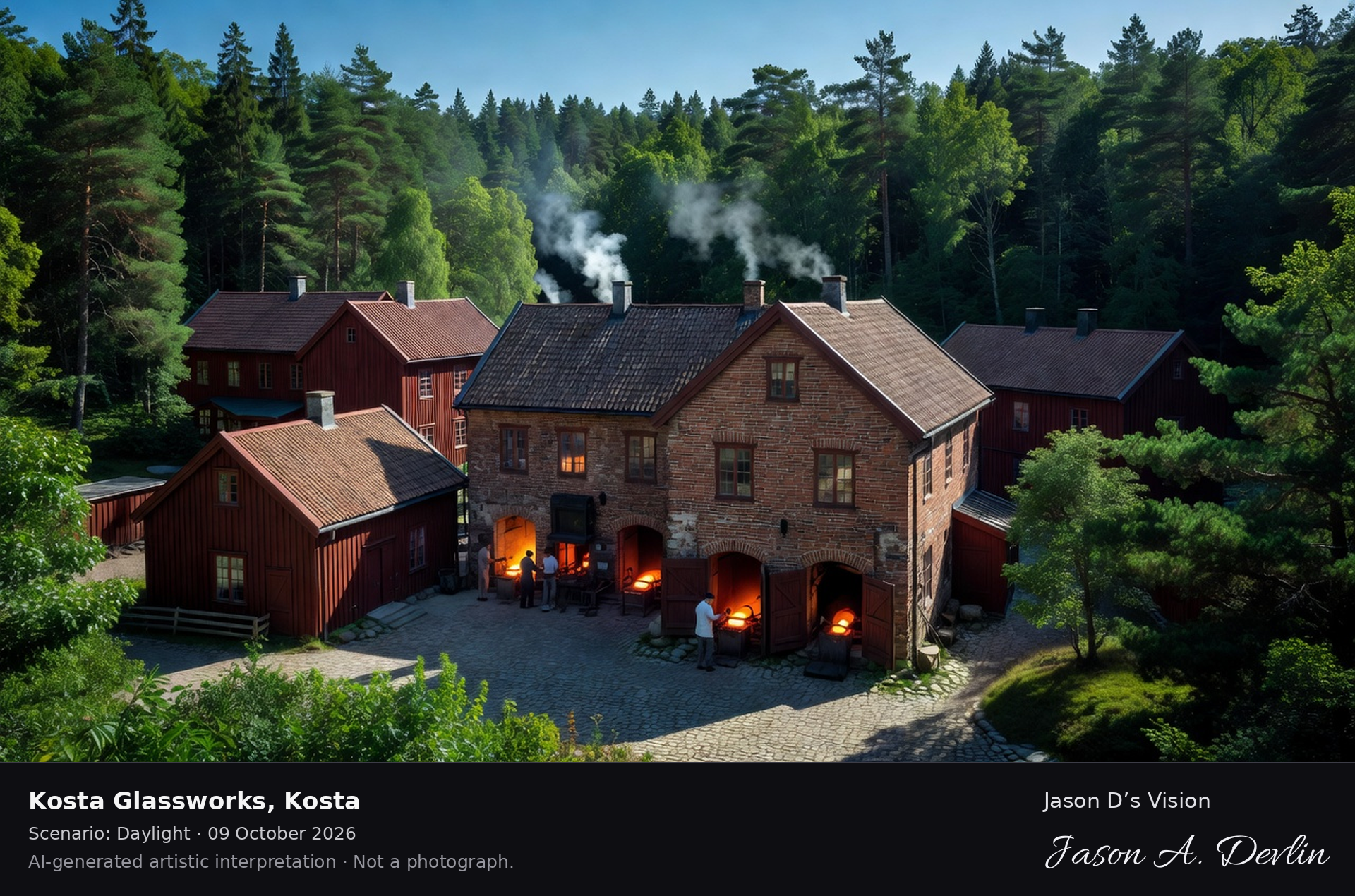
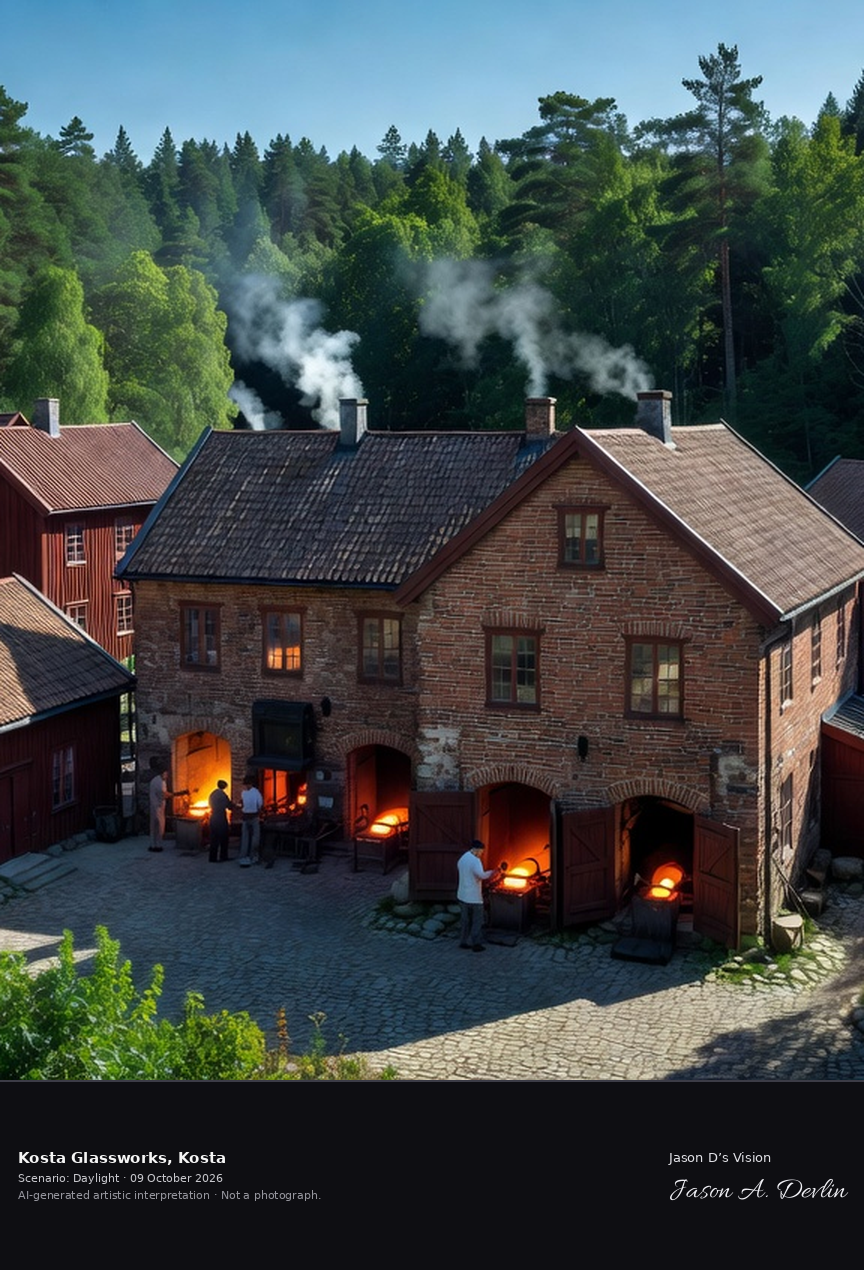
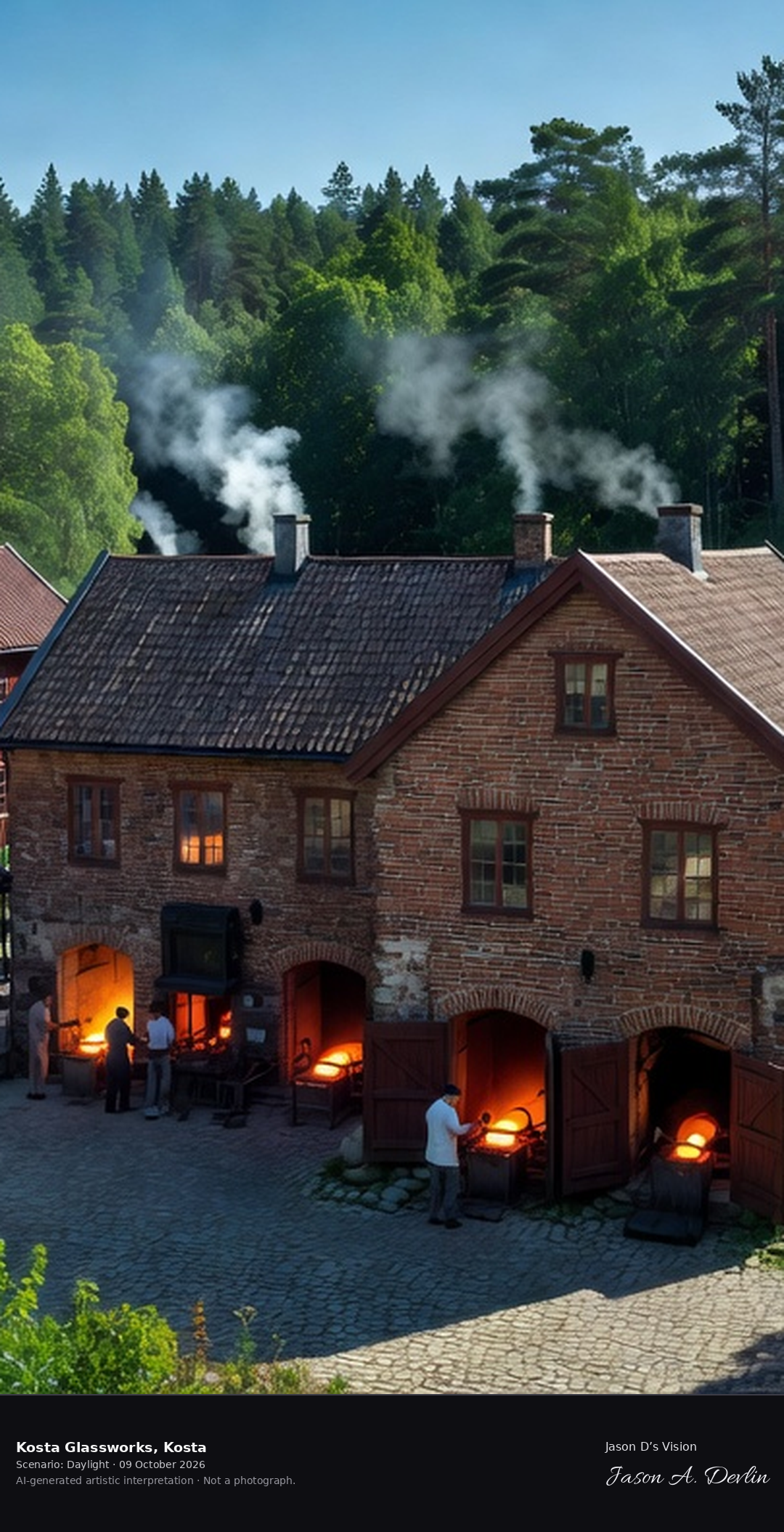
Kosta Boda's historic glassworks in the Kingdom of Crystal, the 1742-founded hytta with its furnaces glowing, surrounded by the deep Småland forest. Sweden's oldest glassworks still blowing.
Kosta Glassworks in Kosta, Småland, is Sweden's oldest glassworks still blowing, founded in 1742 and home to the Kosta Boda brand in the Kingdom of Crystal. From the classic courtyard viewpoint, the brick hytta glows with furnace light, chimney smoke rises into the daylight, and the traditional red timber works buildings stand against the deep green Småland forest.
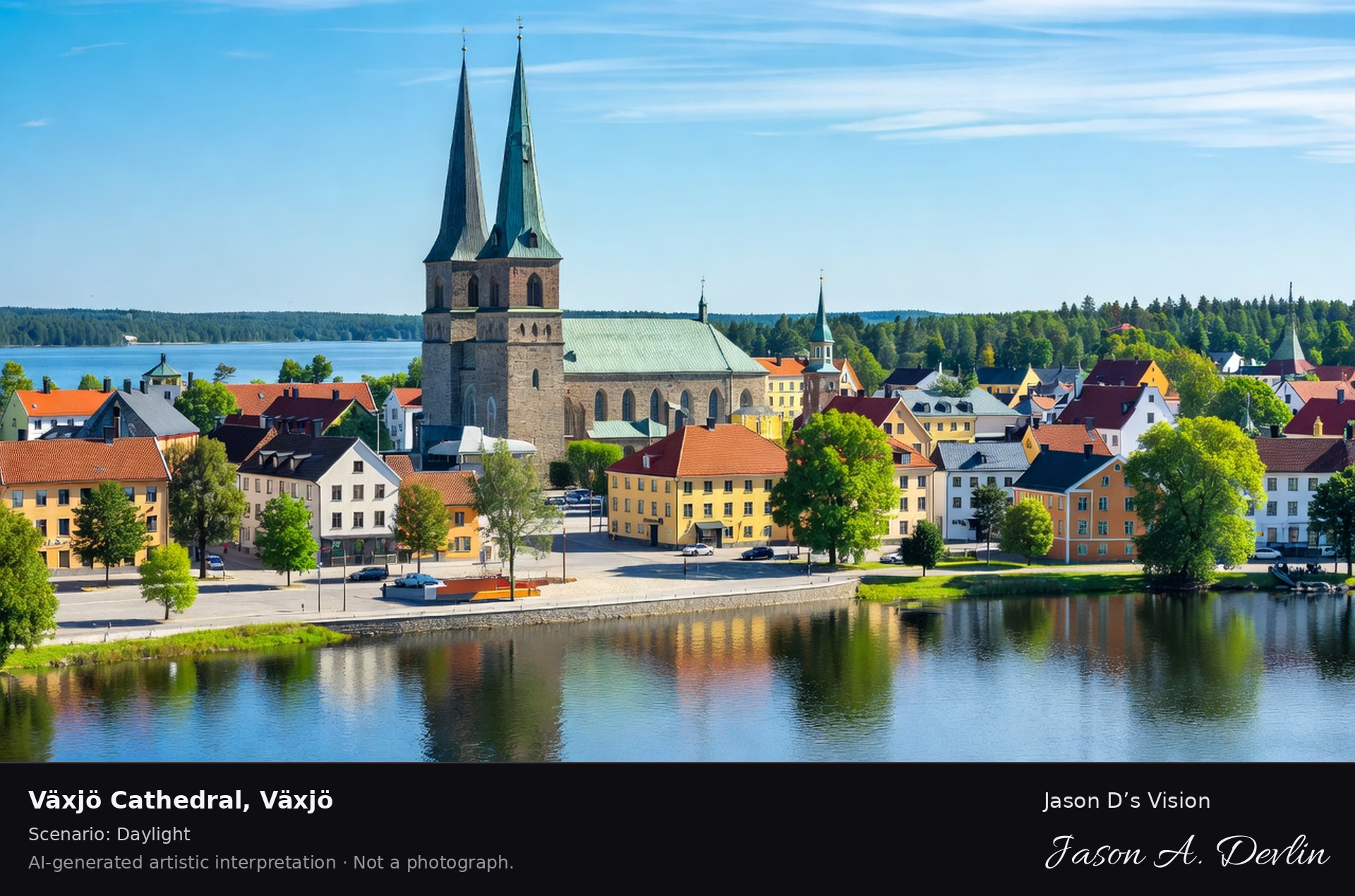
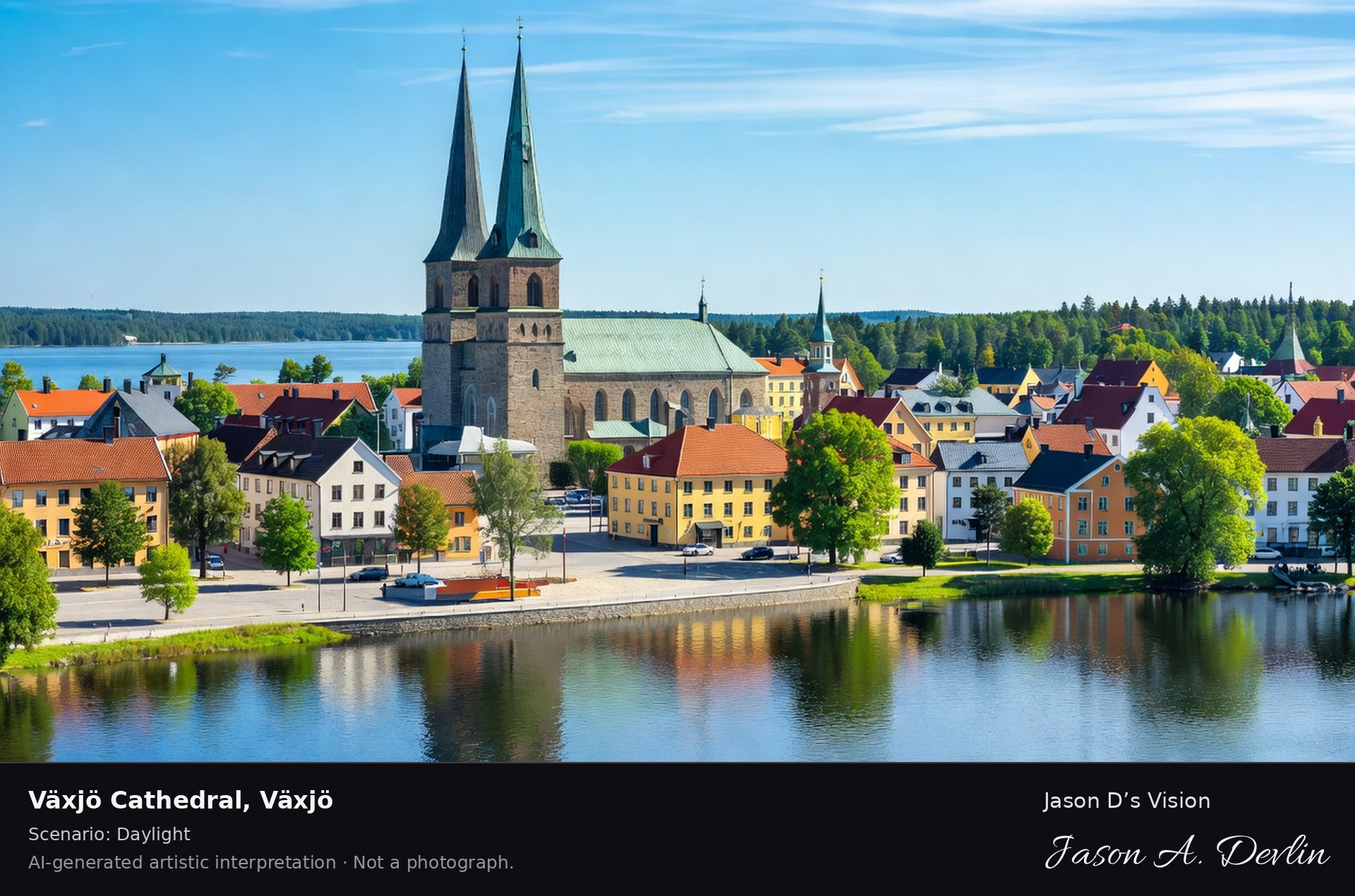
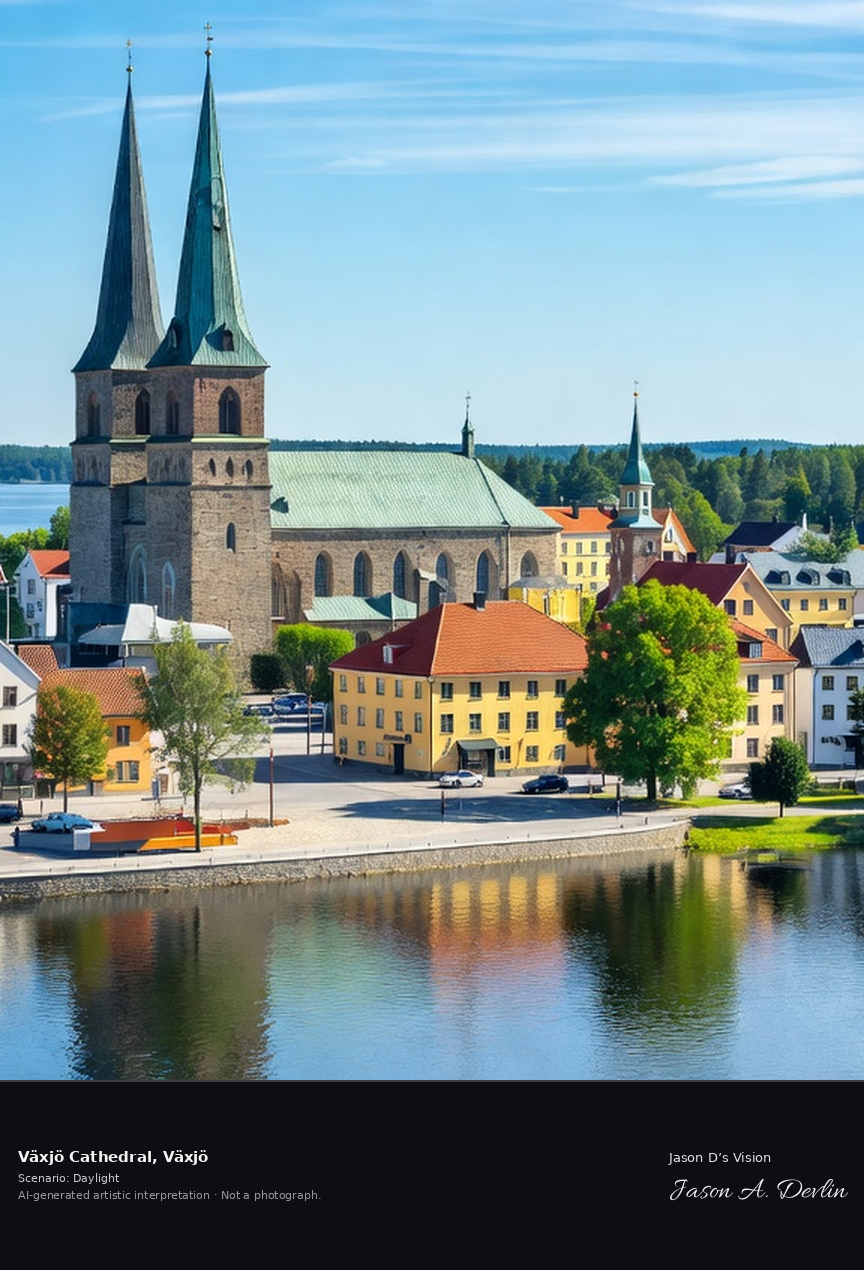
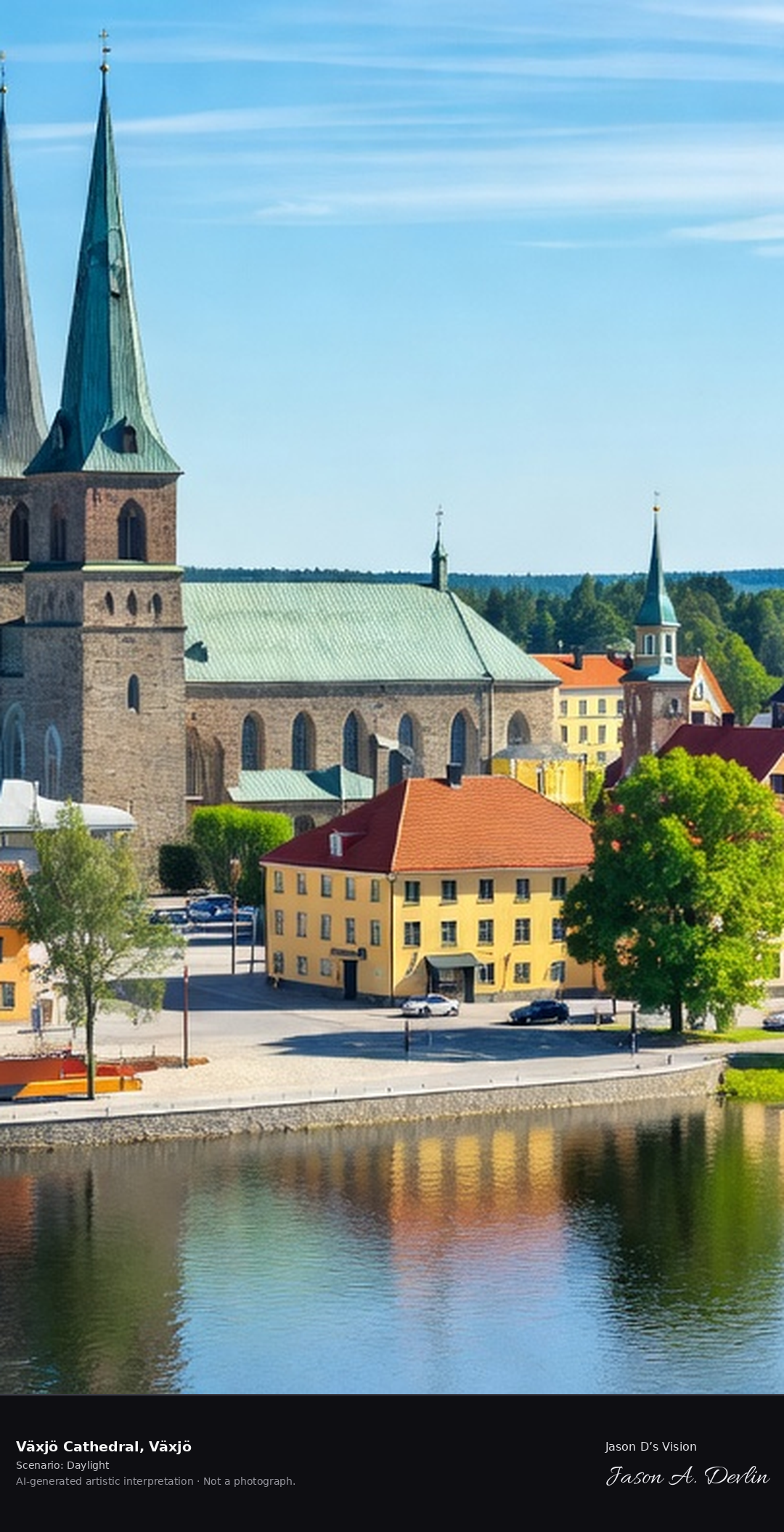
Växjö Cathedral's distinctive twin towers with their copper-clad spires above the town by Lake Växjö, the 13th-century church rebuilt after fires with its striking modernist interior.
Växjö Cathedral's distinctive twin towers with their copper-clad spires rise above the lakeside town, the 13th-century church rebuilt after fires standing over rooftops and Lake Växjö. A bright daylight view from the classic viewpoint across the water, sharp architectural detail and vivid honest colours.
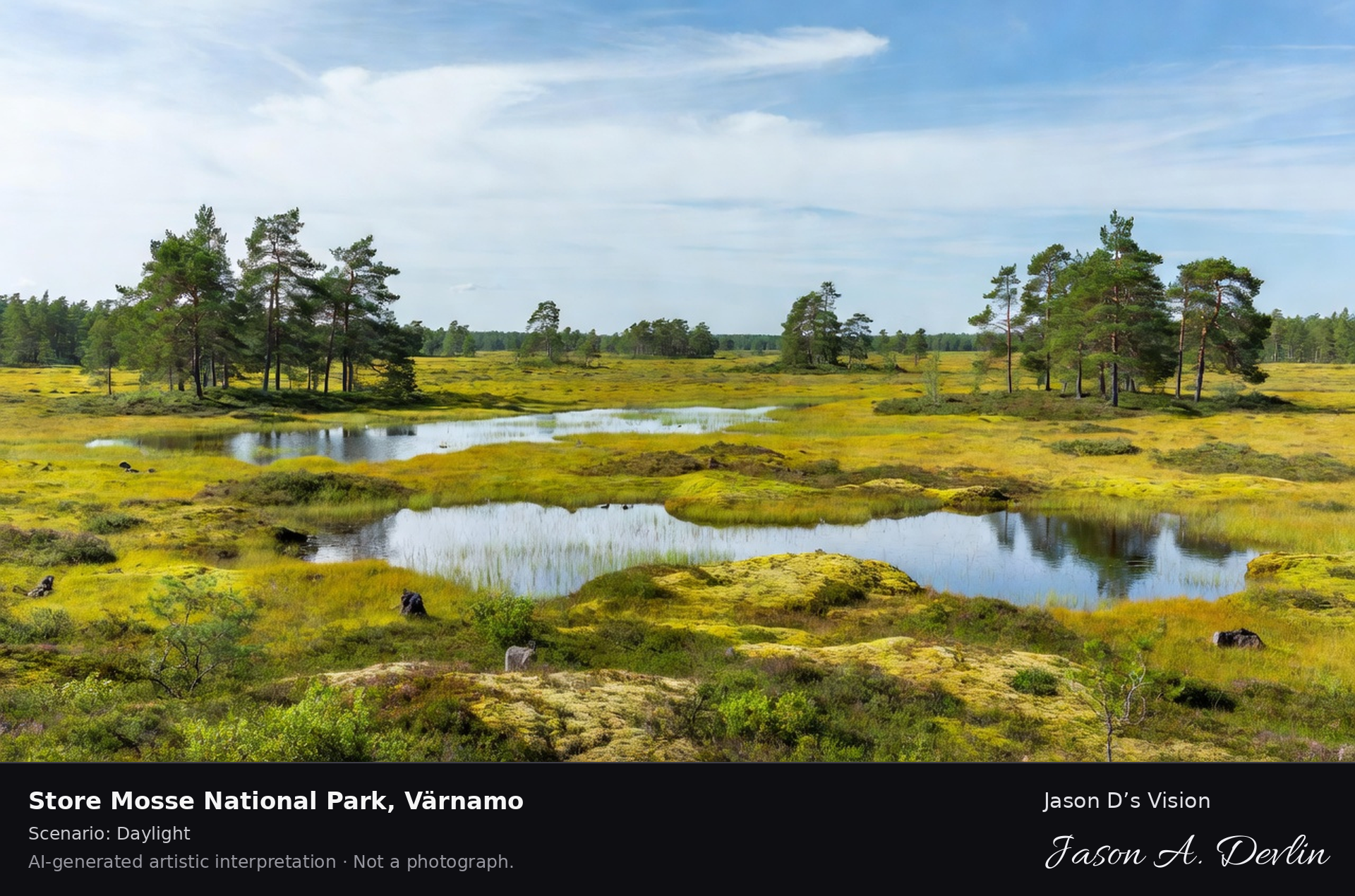
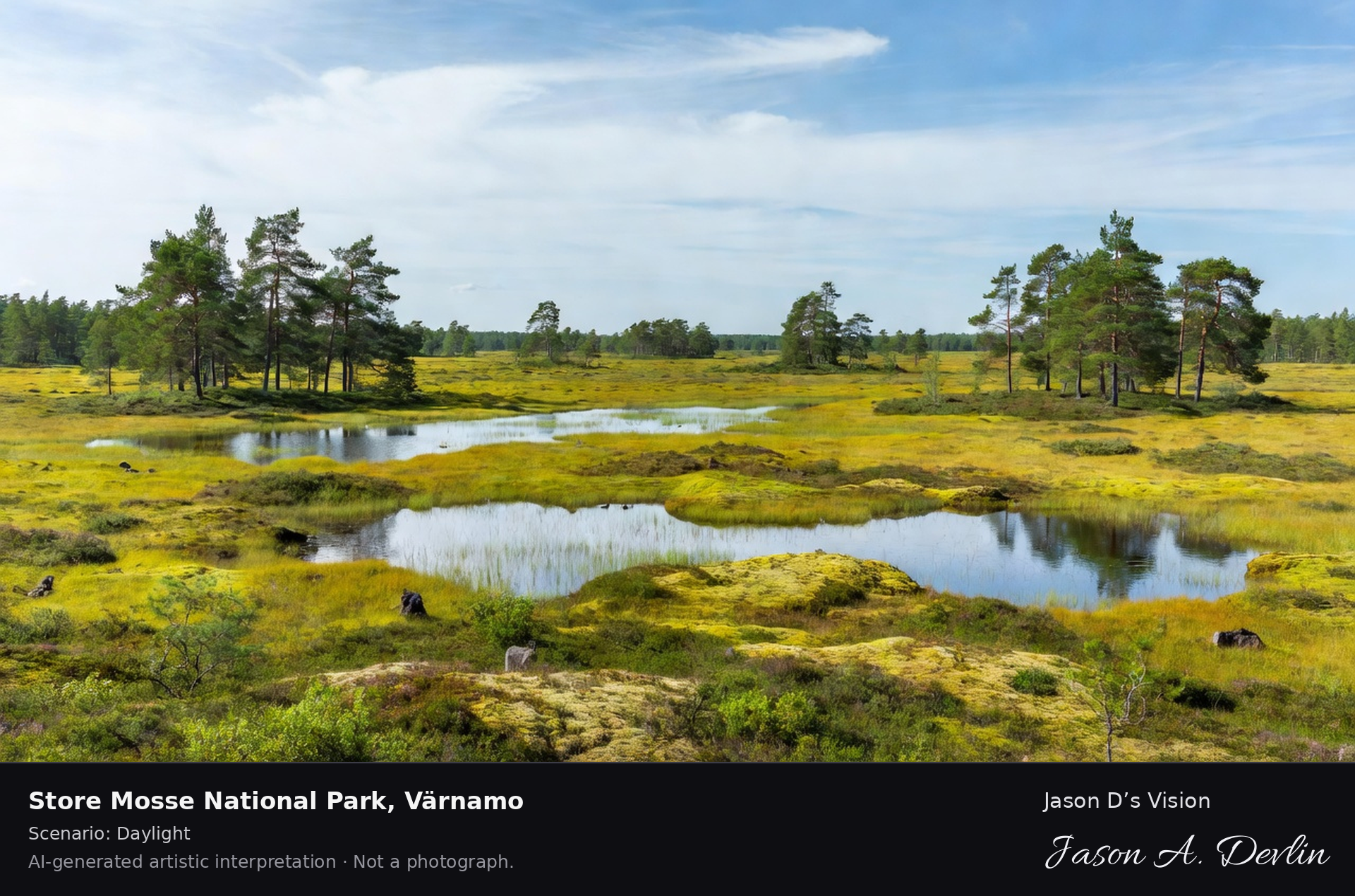
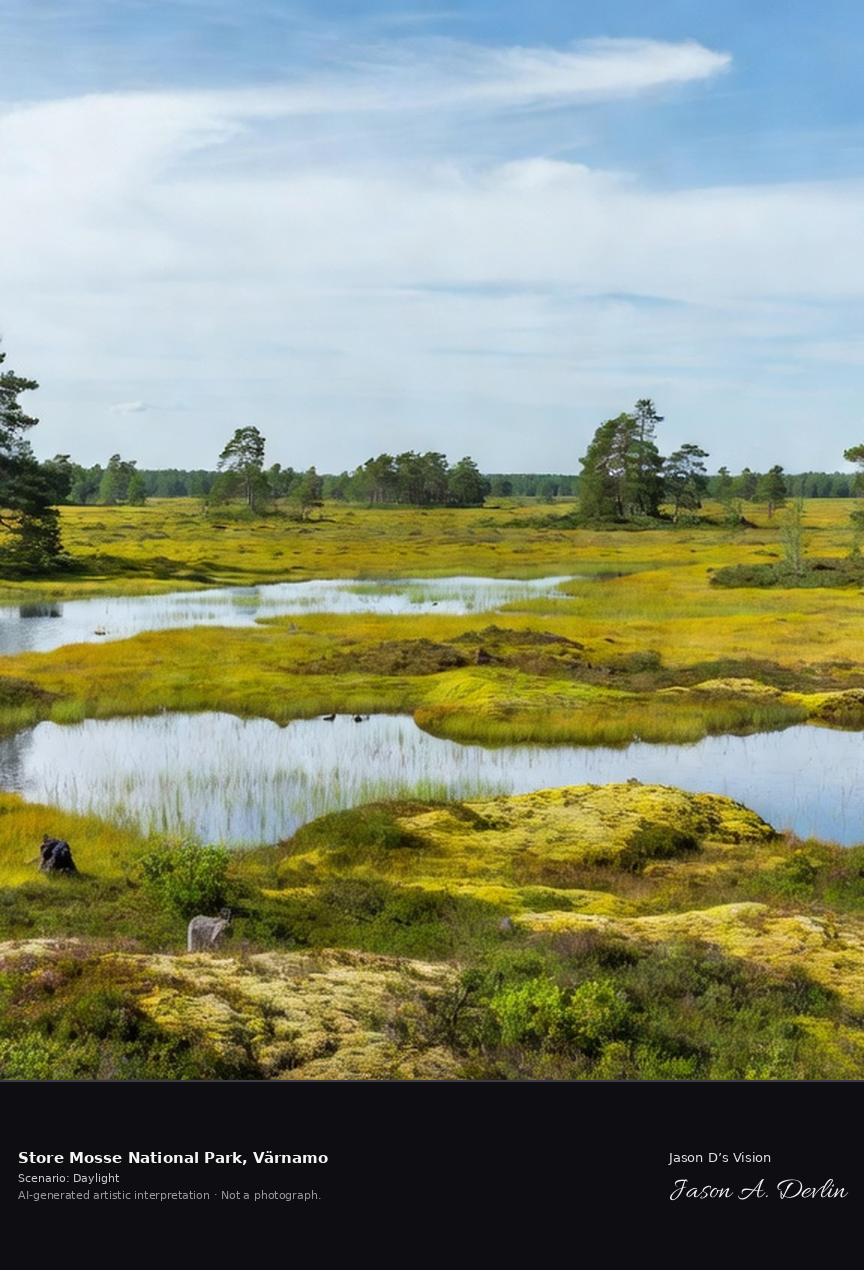
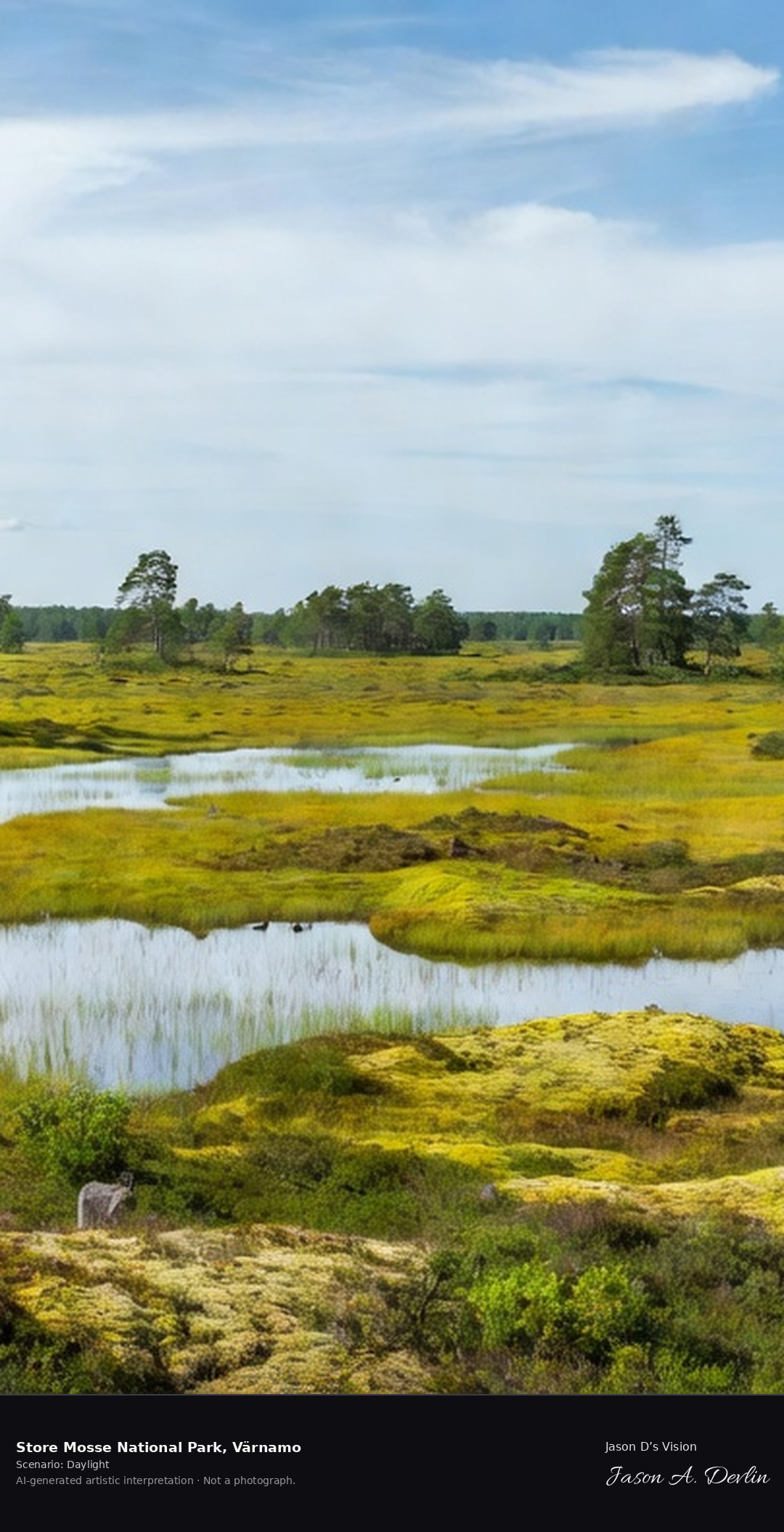
Store Mosse's vast raised bog, Sweden's largest, the endless moss plain with pine islands and bird-rich wetlands under the big Småland sky. A wilderness of mosses south of the great lakes.
Store Mosse National Park's vast raised bog, Sweden's largest, stretches out as an endless moss plain dotted with pine islands and dark bird-rich wetland pools under the big Småland sky. A bright daylight view of a wilderness of mosses south of the great lakes, in vivid honest colour.
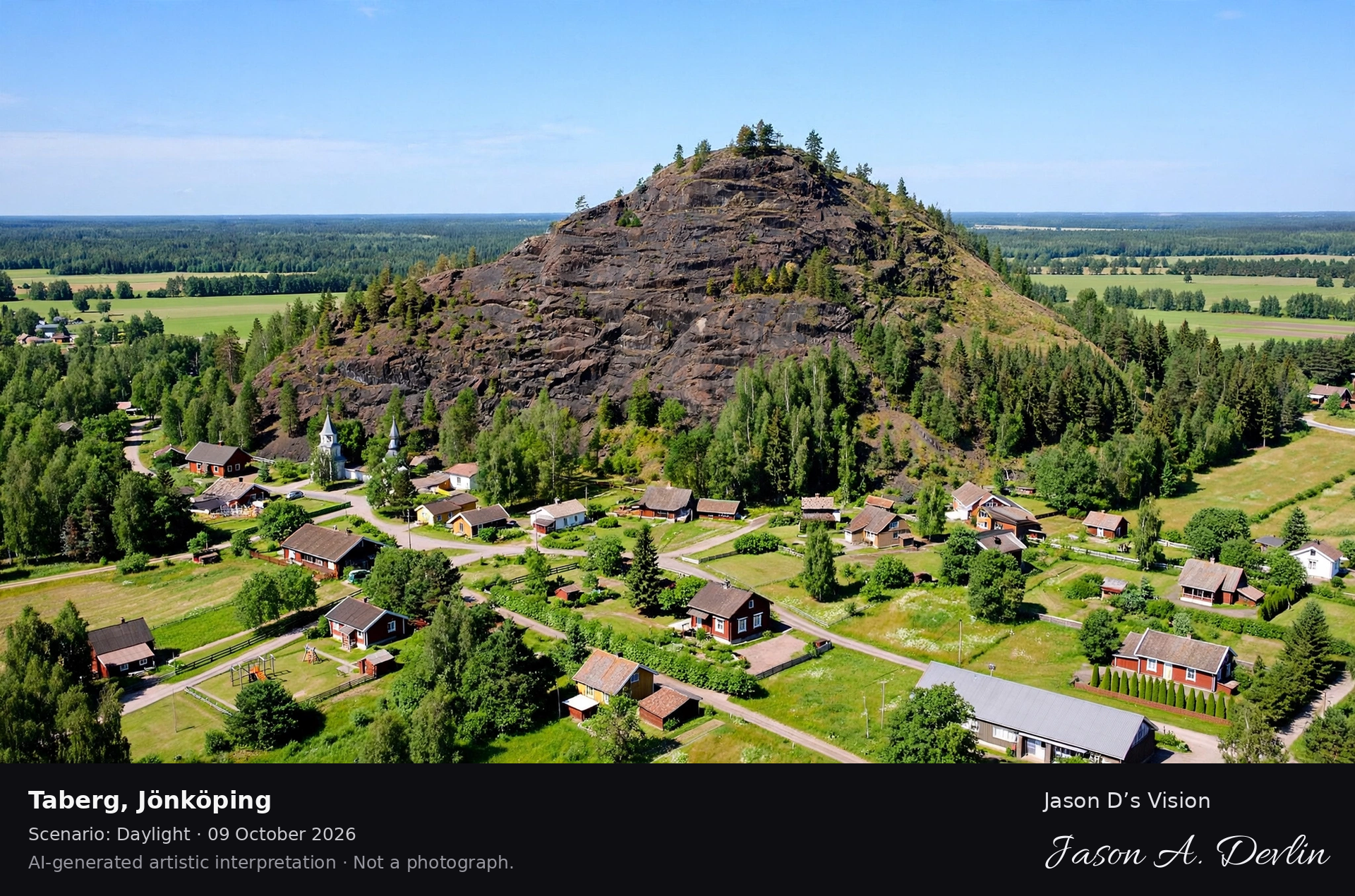
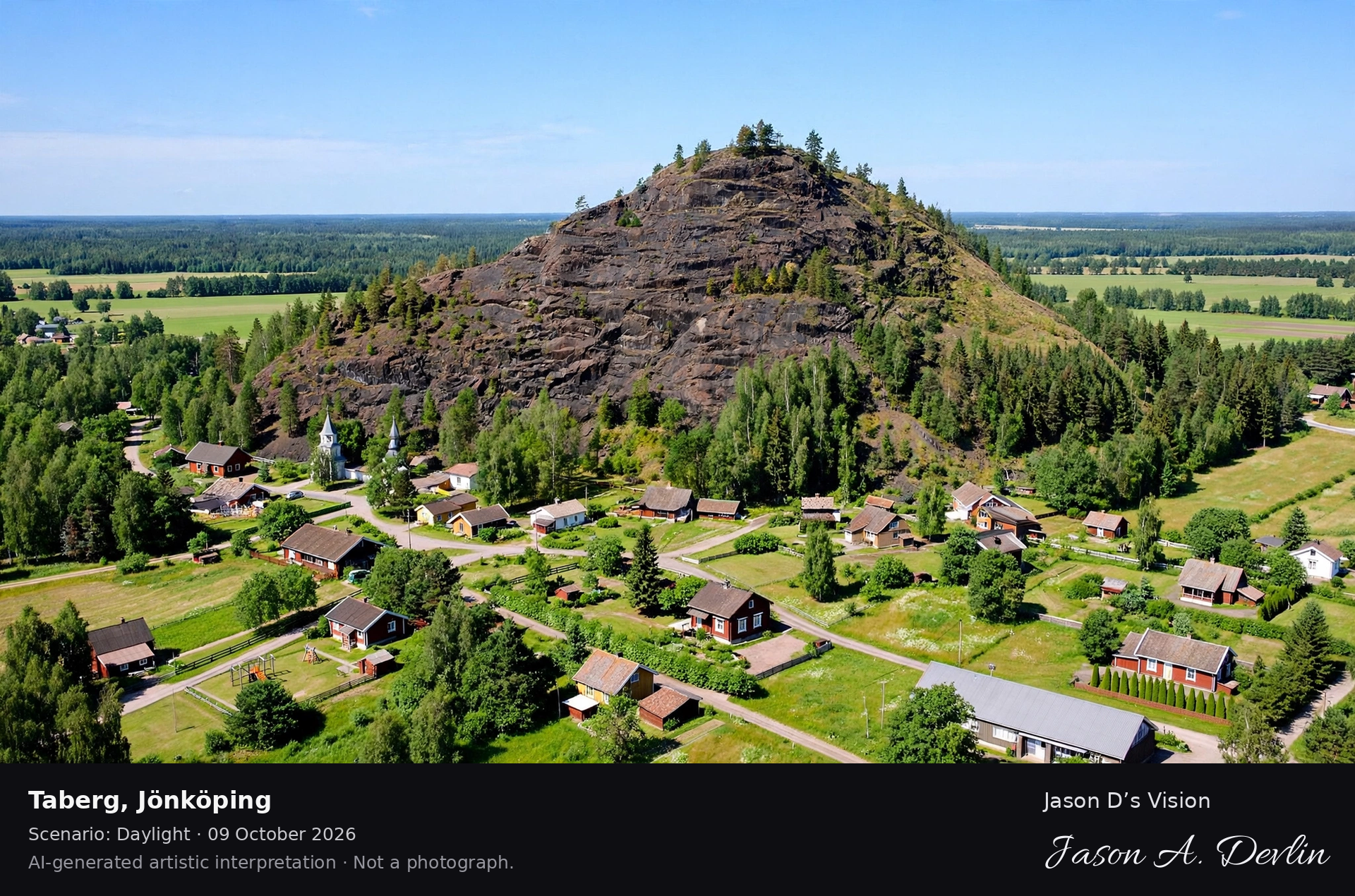
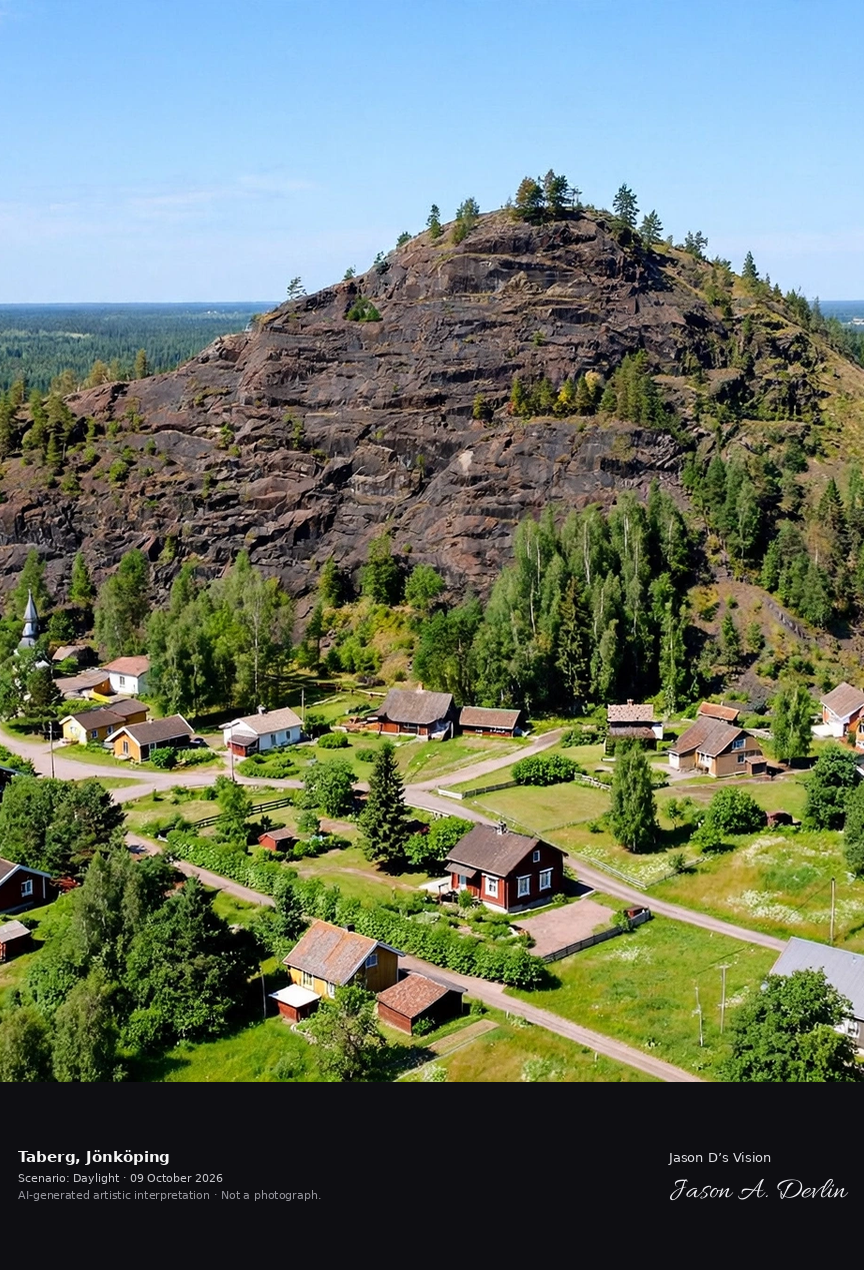
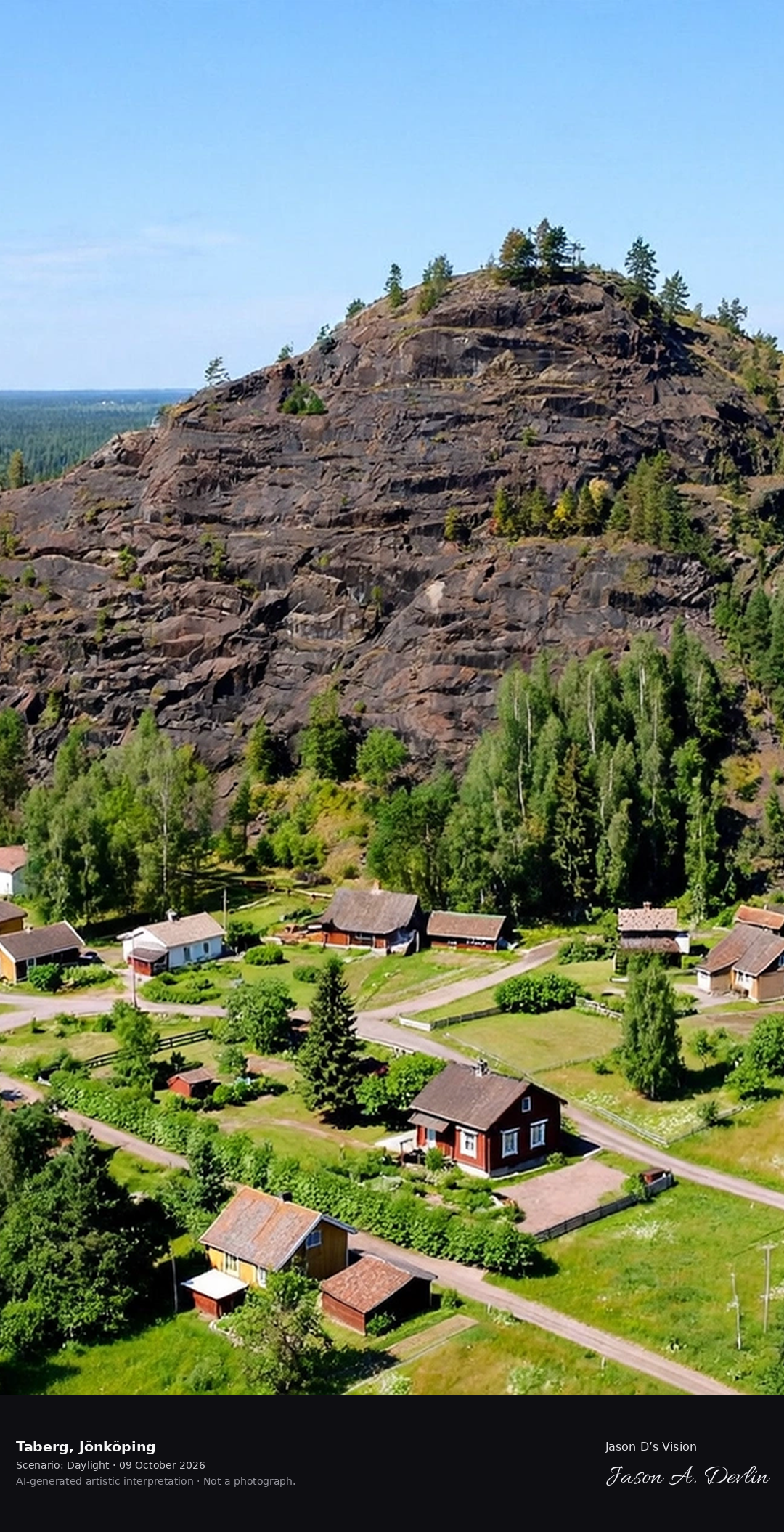
Taberg's iron-rich mountain rising 343 meters above Jönköping, the magnetite peak with its mine adits and the panoramic view over Lake Vättern from the summit.
Taberg's iron-rich magnetite mountain rises 343 meters above Jönköping, its rocky summit crowned with historic mine adits and red-brown iron slopes falling into dark green forest. From the summit viewpoint the panorama sweeps out over the town and across the broad blue surface of Lake Vättern under bright natural daylight — a classic Småland landmark in vivid honest colour.
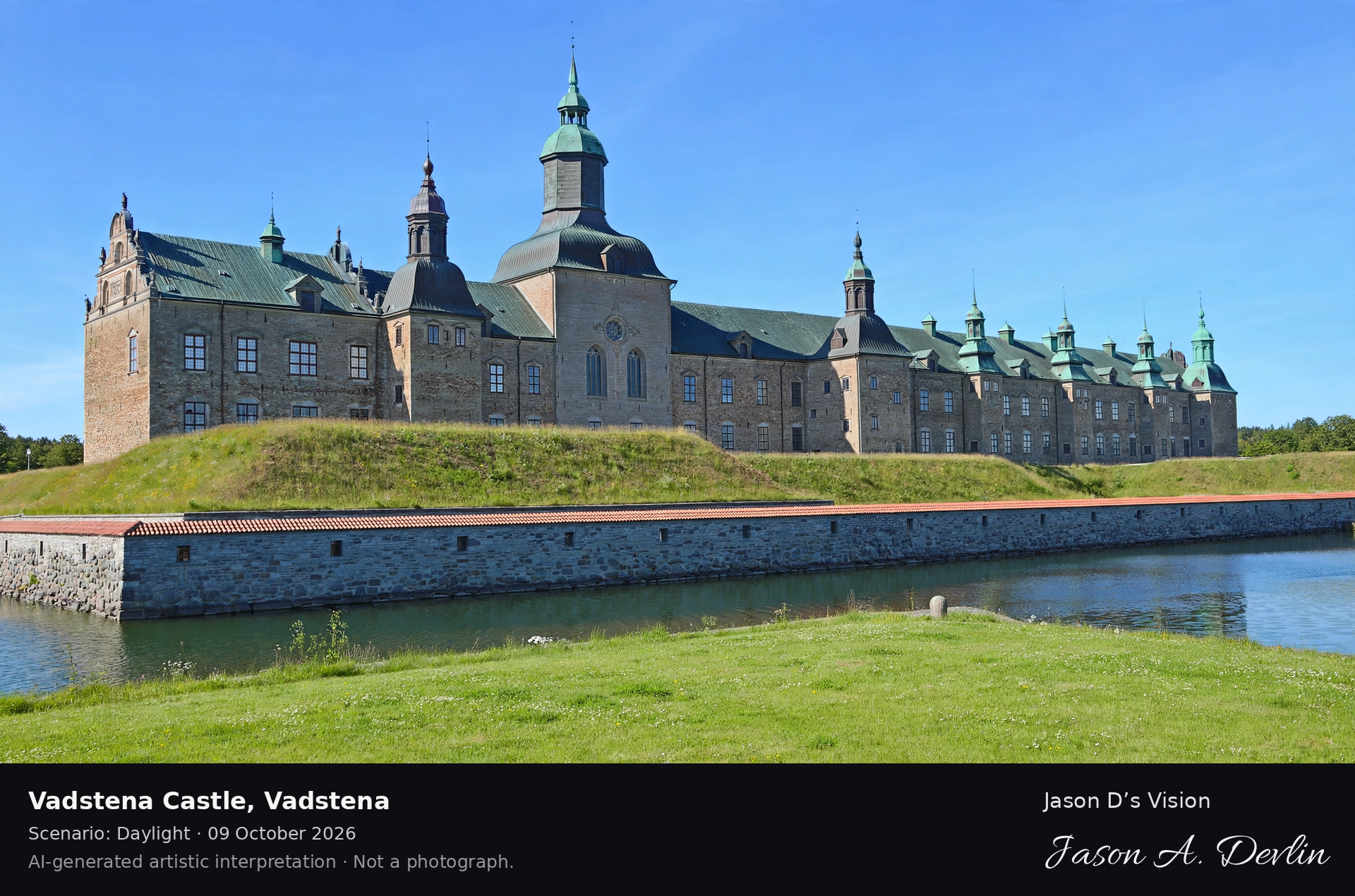
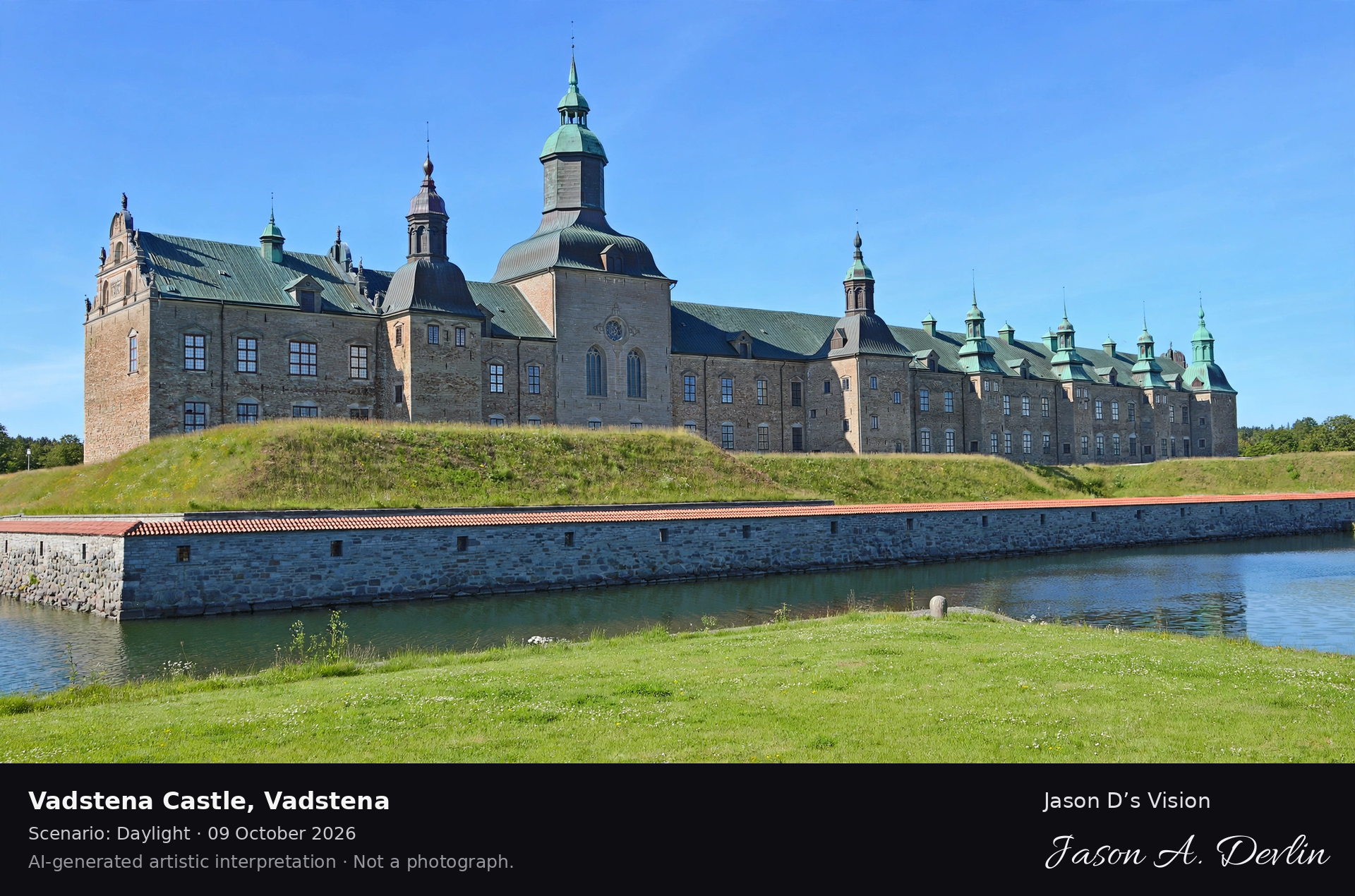
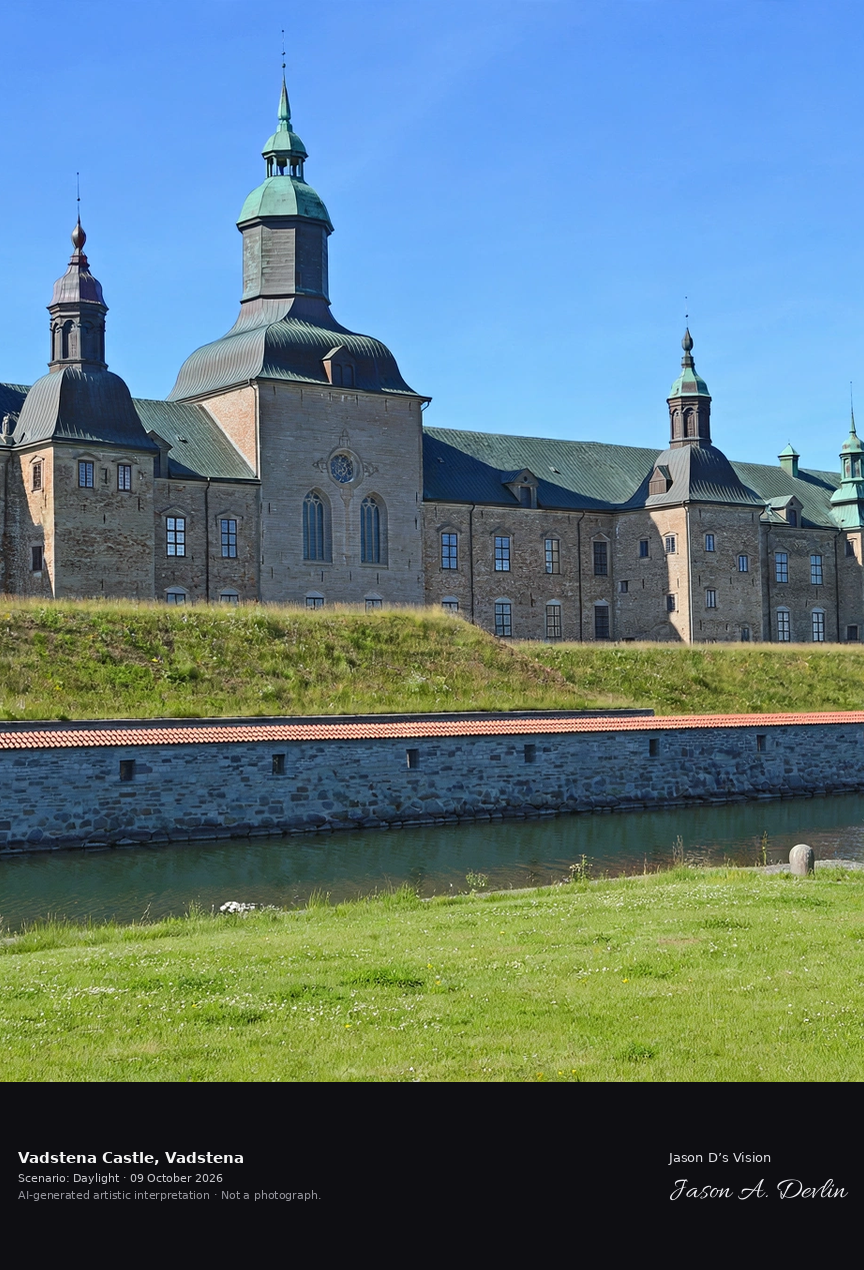
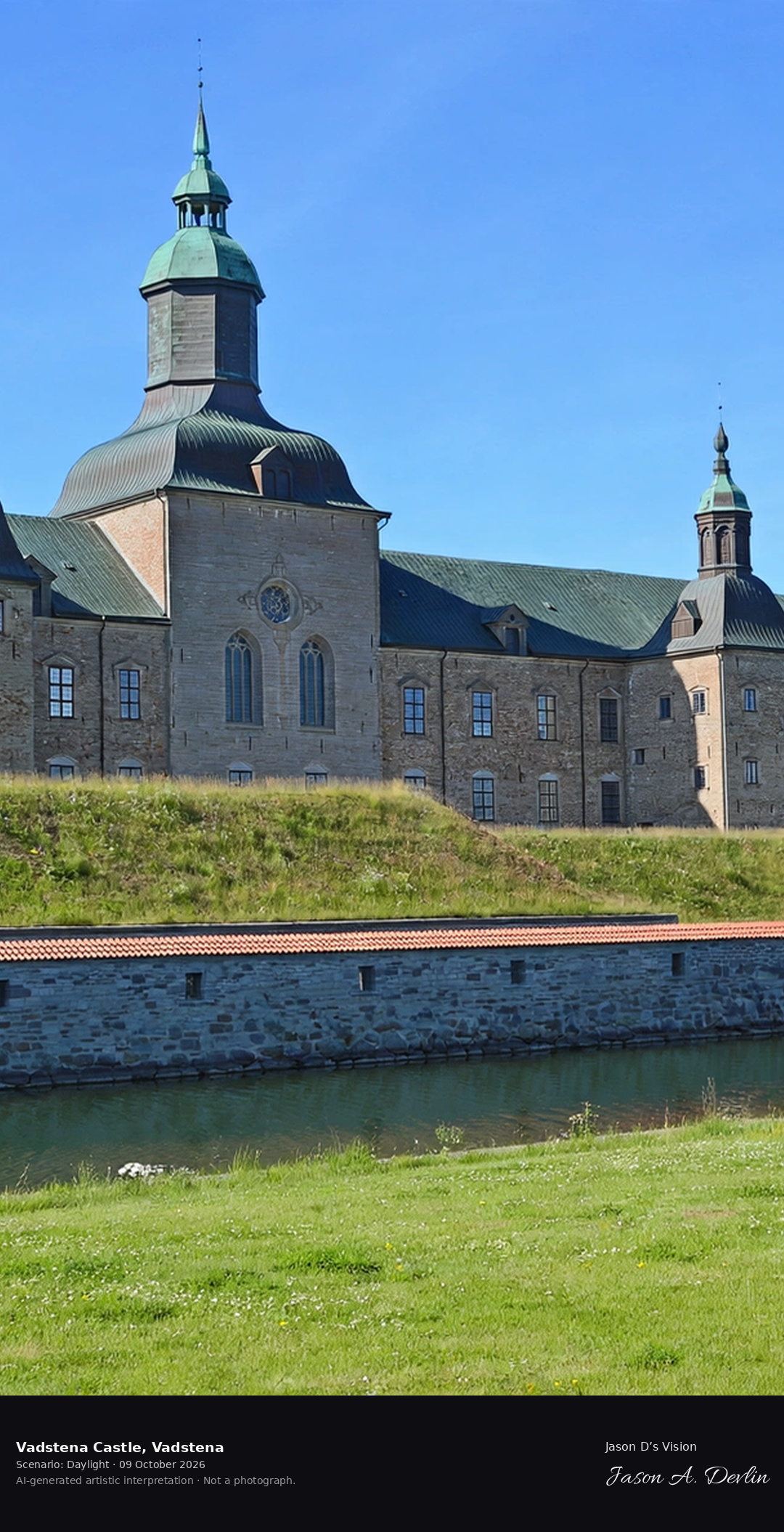
Vadstena Castle's mighty Renaissance bulk on Lake Vättern's shore, the Vasaborgen's round towers and moat with the abbey church spire behind. Gustav Vasa's wedding castle.
Vadstena Castle's mighty Renaissance bulk rises from Lake Vättern's shore — the Vasaborgen's round towers and curtain walls ringed by its moat, with the abbey church spire rising behind. Gustav Vasa's wedding castle stands in bright natural daylight, a classic Östergötland landmark in vivid honest colour.
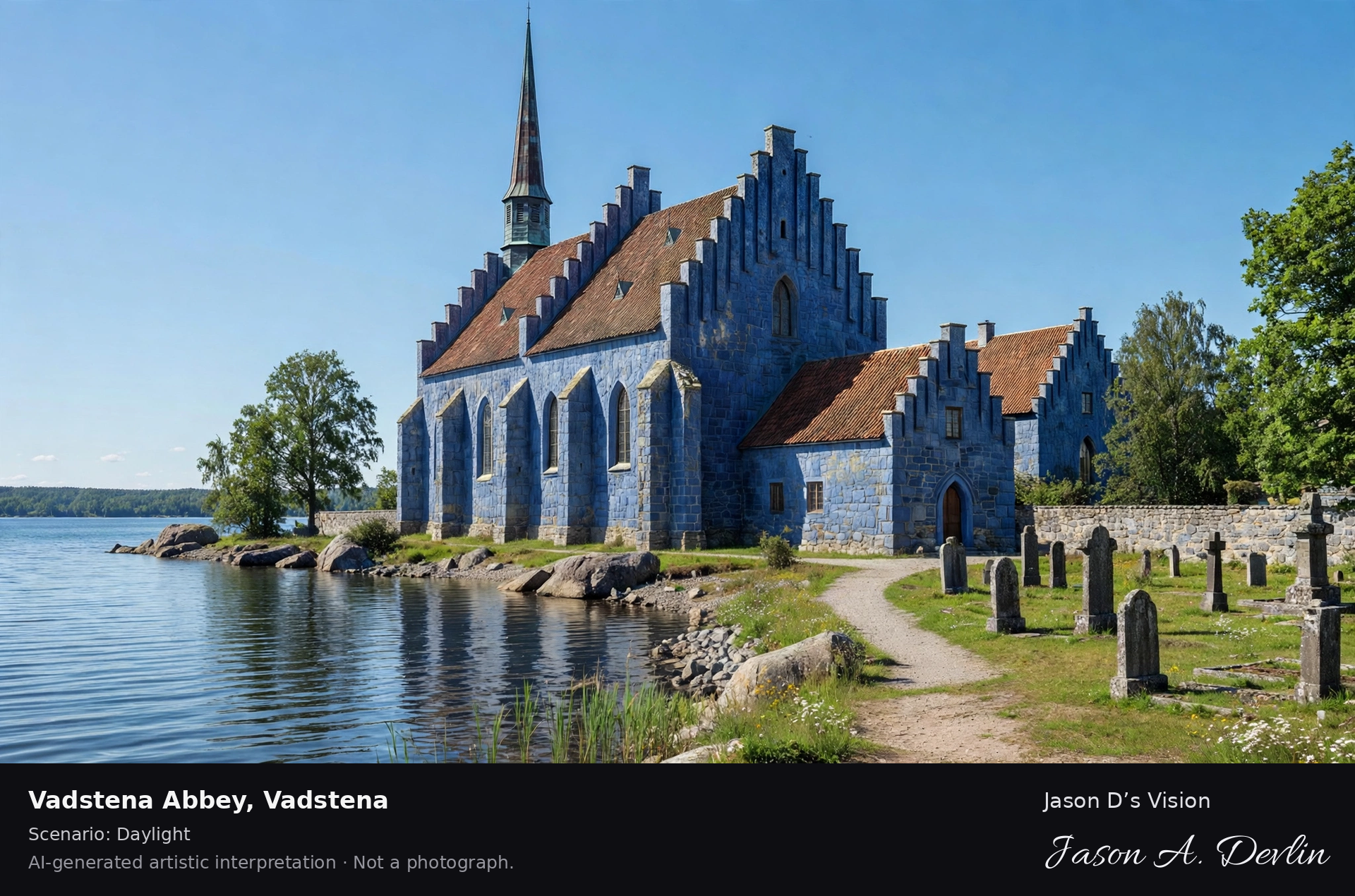
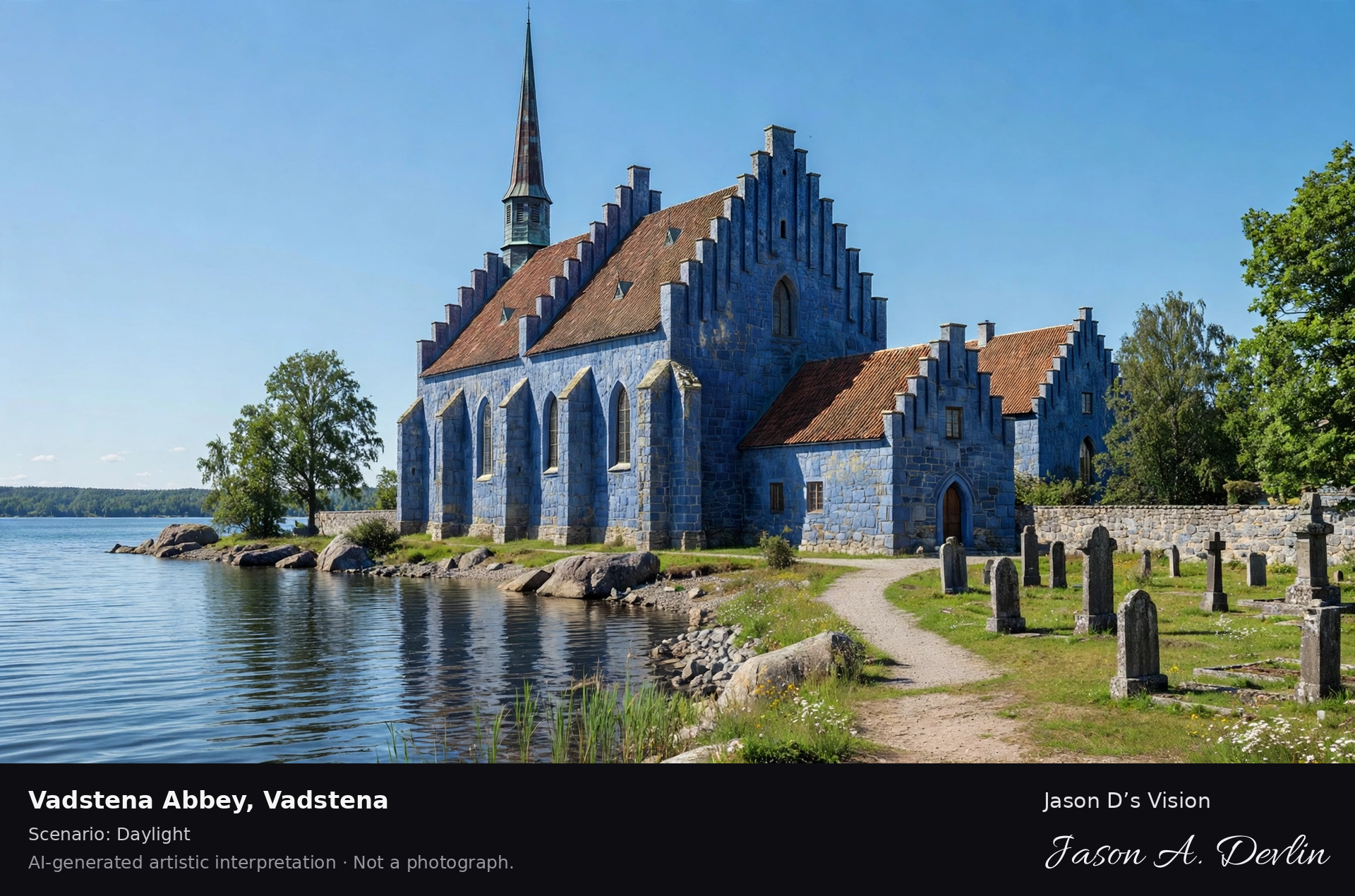
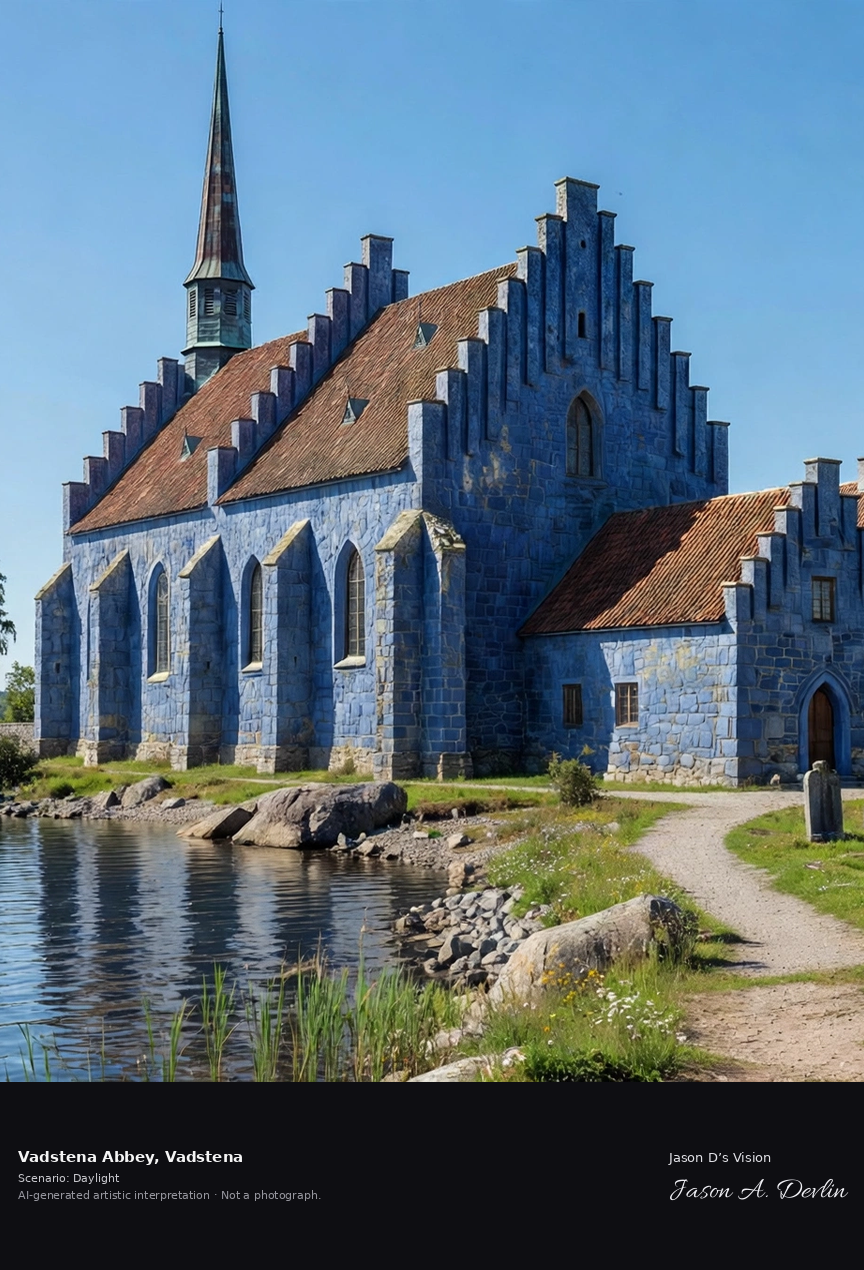
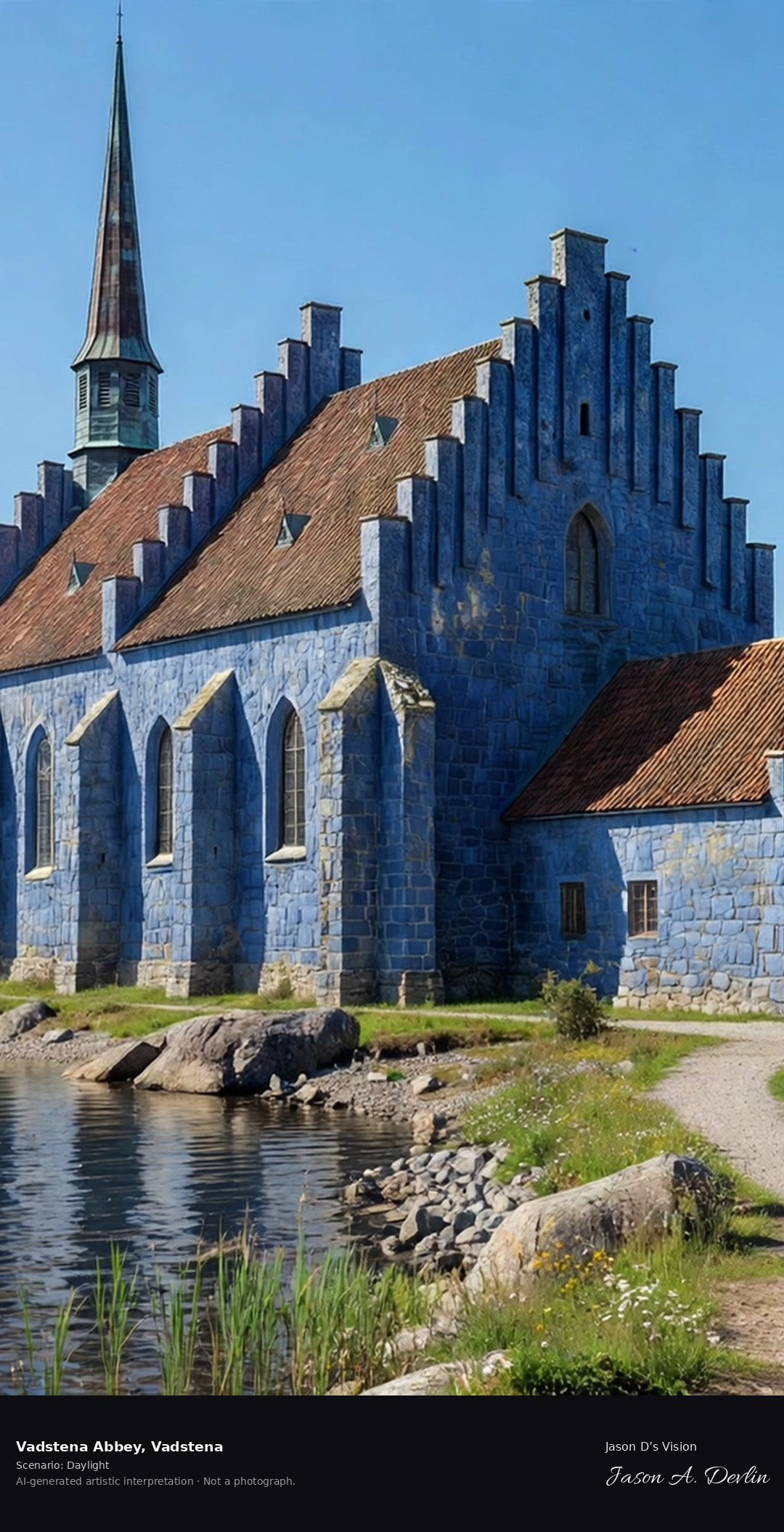
Vadstena Abbey church, St. Bridget's blue church with its distinctive stepped gables on the Vättern shore, the mother house of the Bridgettine order founded 1346.
On the Vättern shore stands Vadstena Abbey church, with its distinctive stepped gables. Known as St. Bridget’s blue church, it is the mother house of the Bridgettine order, founded in 1346, in bright natural daylight.
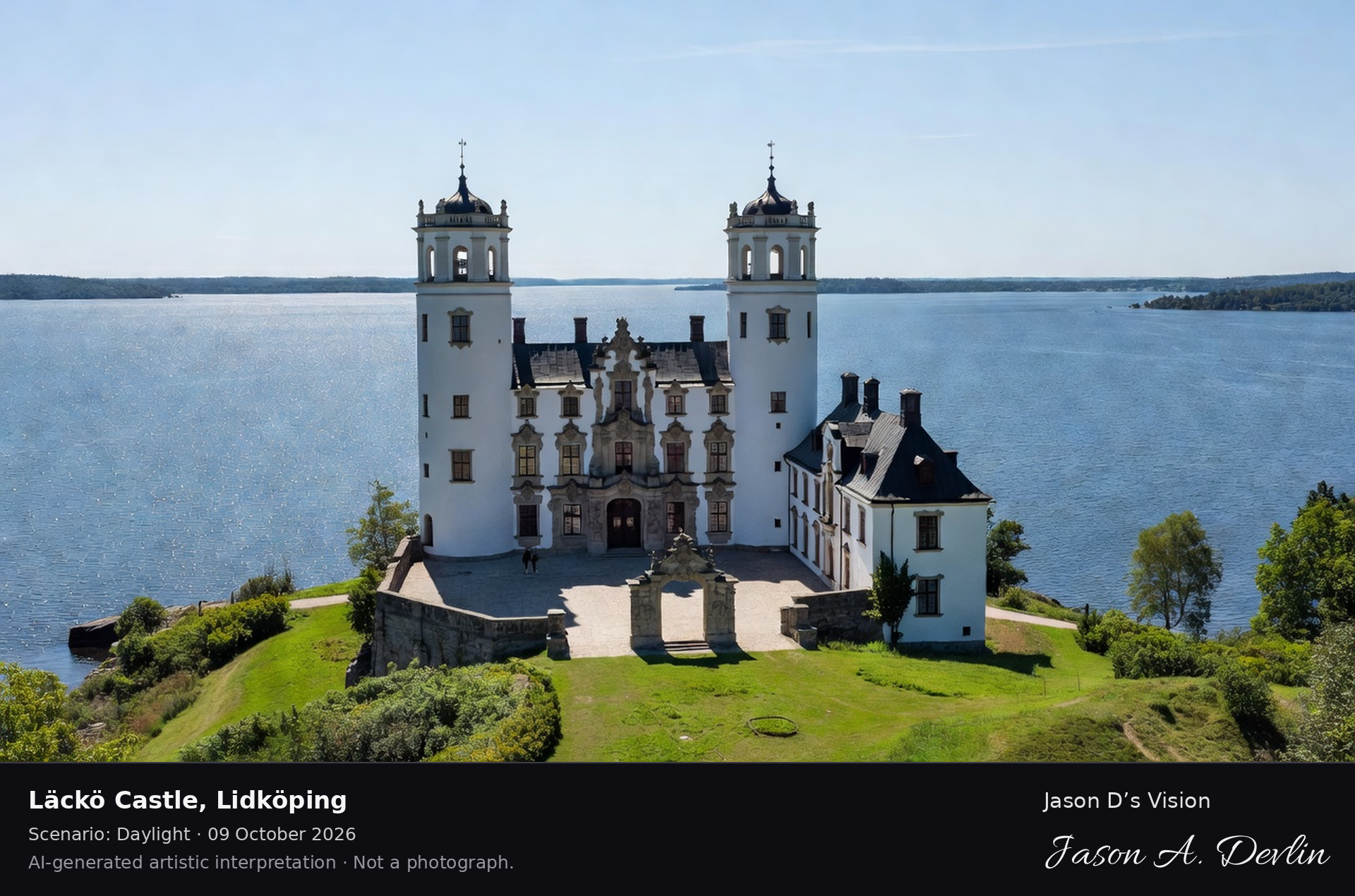
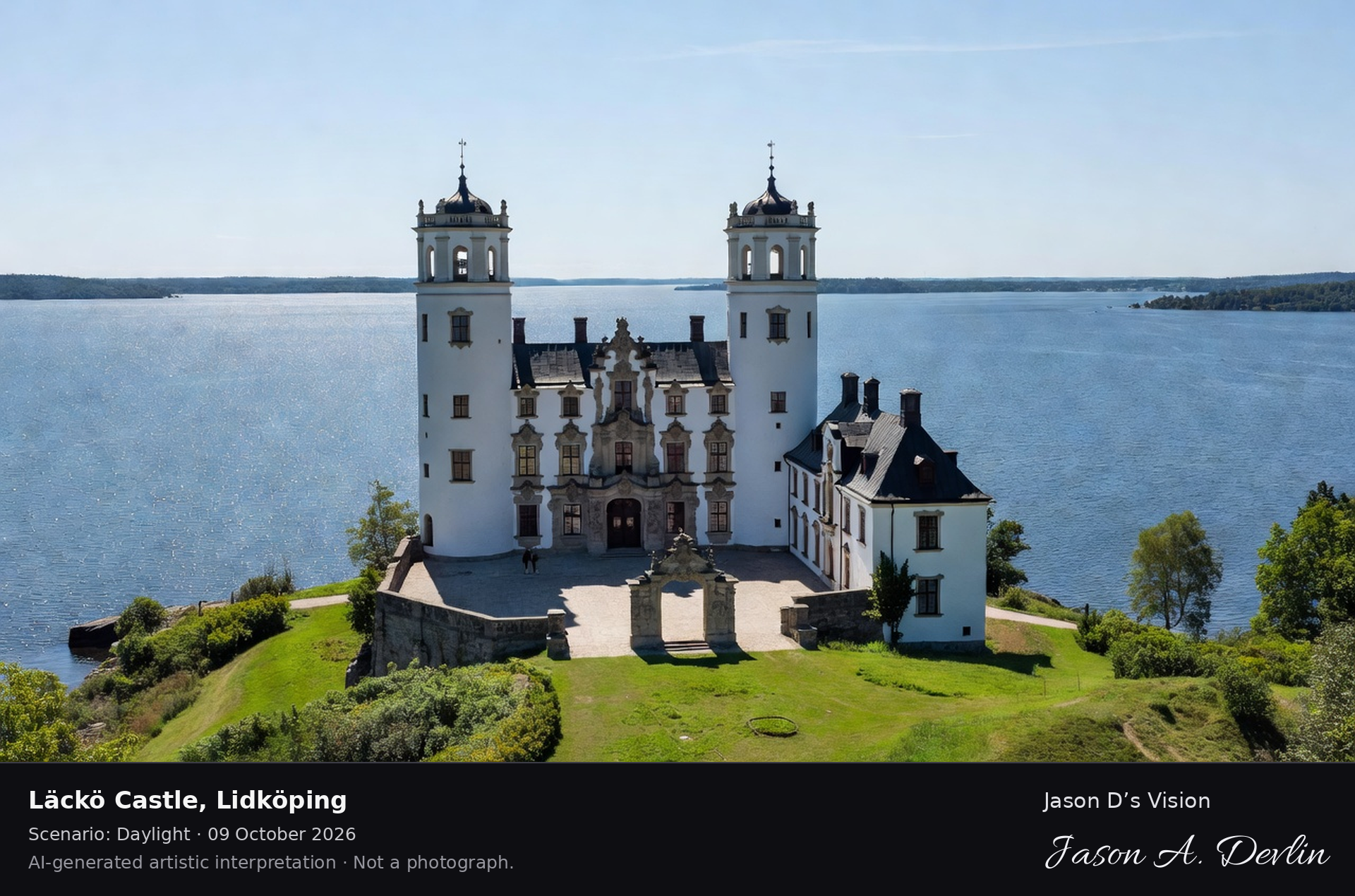
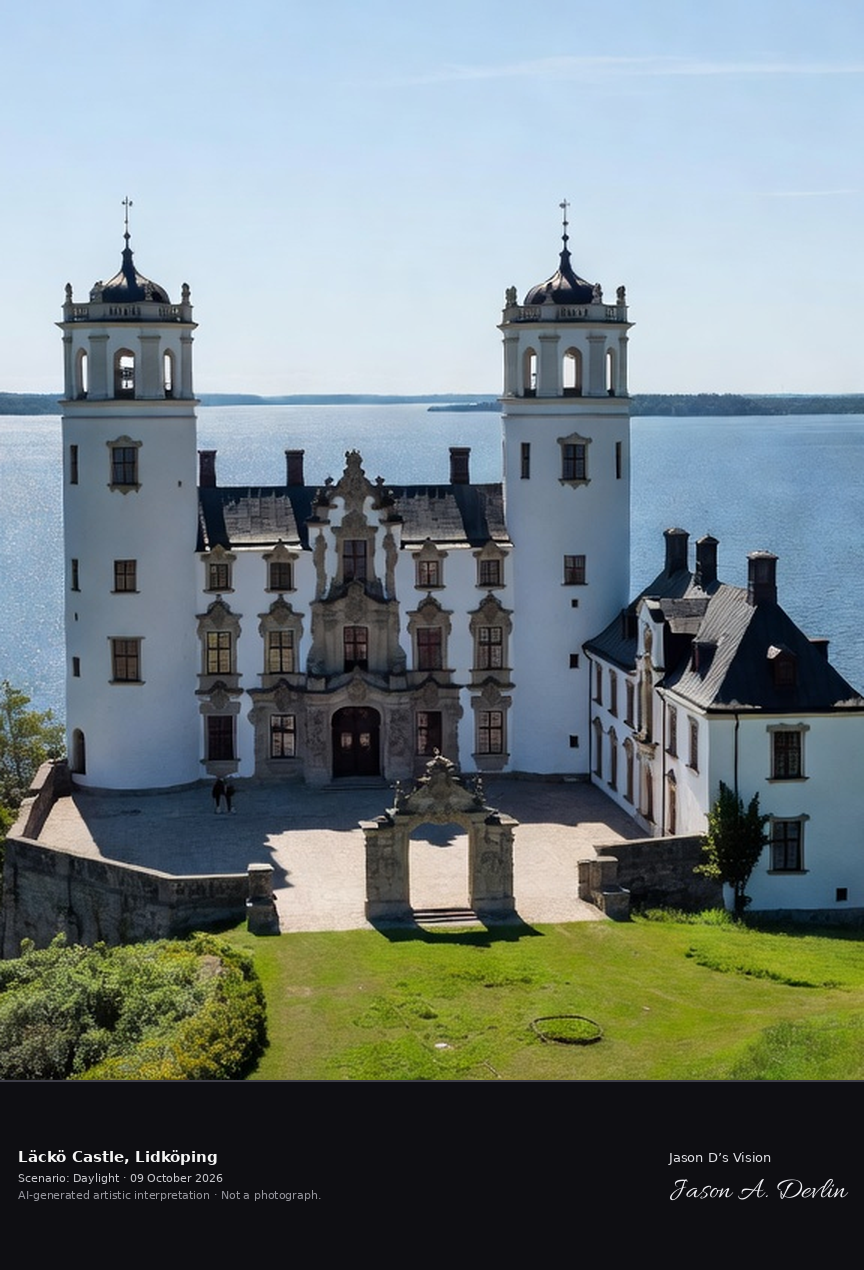
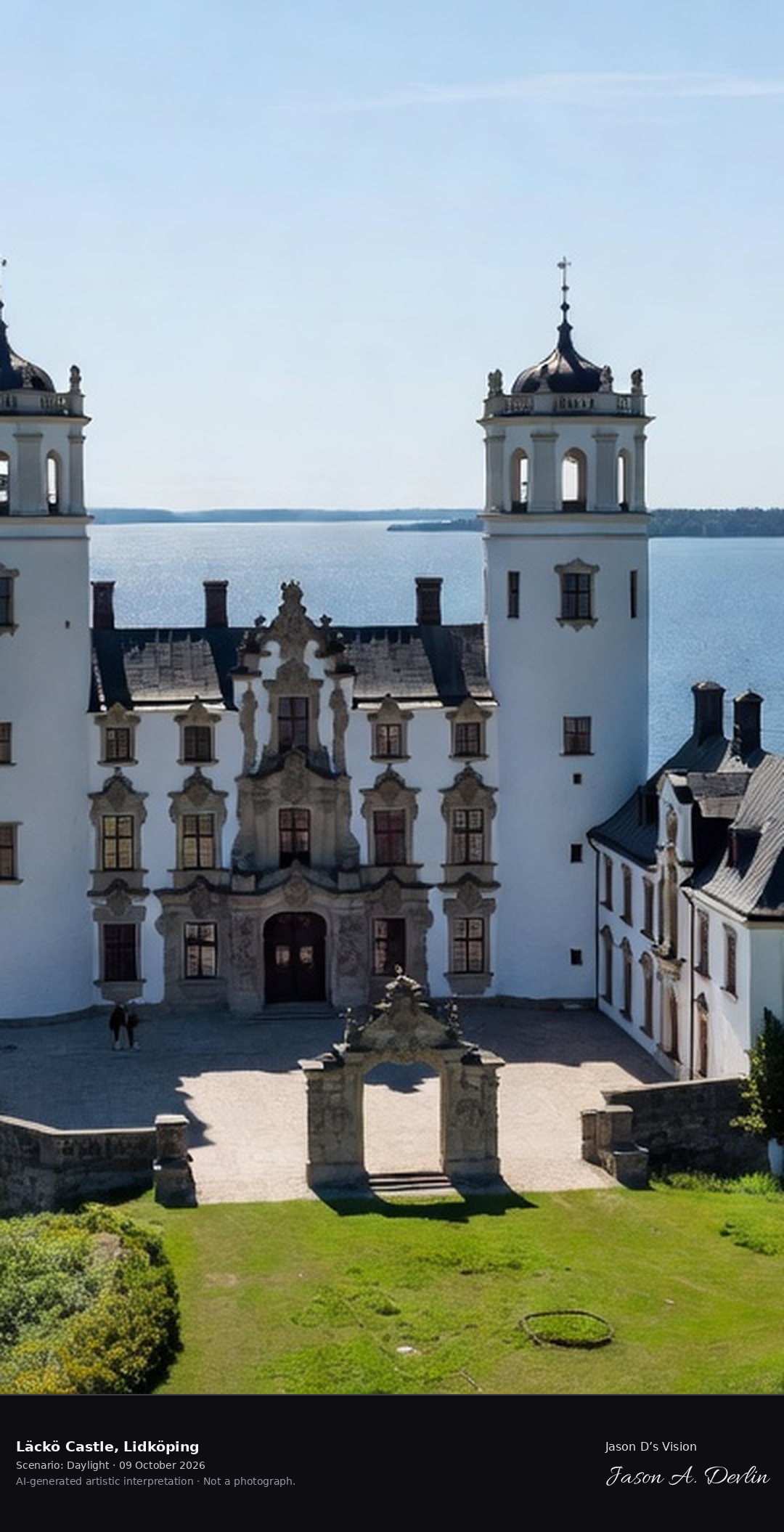
Läckö Castle's white baroque towers on the Kållandsö headland in Lake Vänern, the 'saga castle' with its ornate courtyard and the vast inland sea beyond.
Läckö Castle, the 'saga castle' of Västra Götaland, stands on its Kållandsö headland above Lake Vänern in bright natural daylight. The twin white baroque towers with dark cupolas and the ornate stone entrance portal read clearly from the classic tourist viewpoint, the vast inland sea beyond.
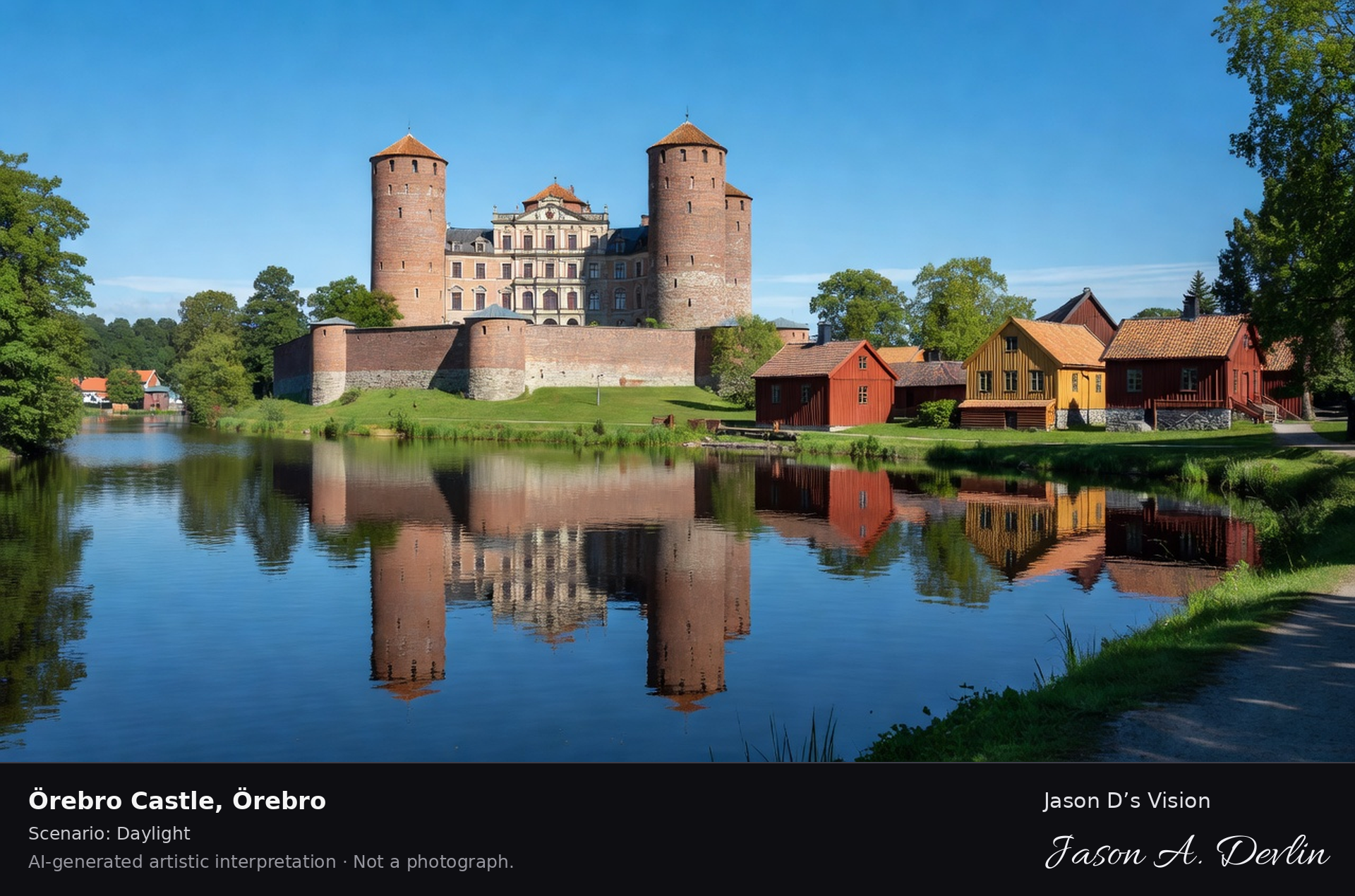
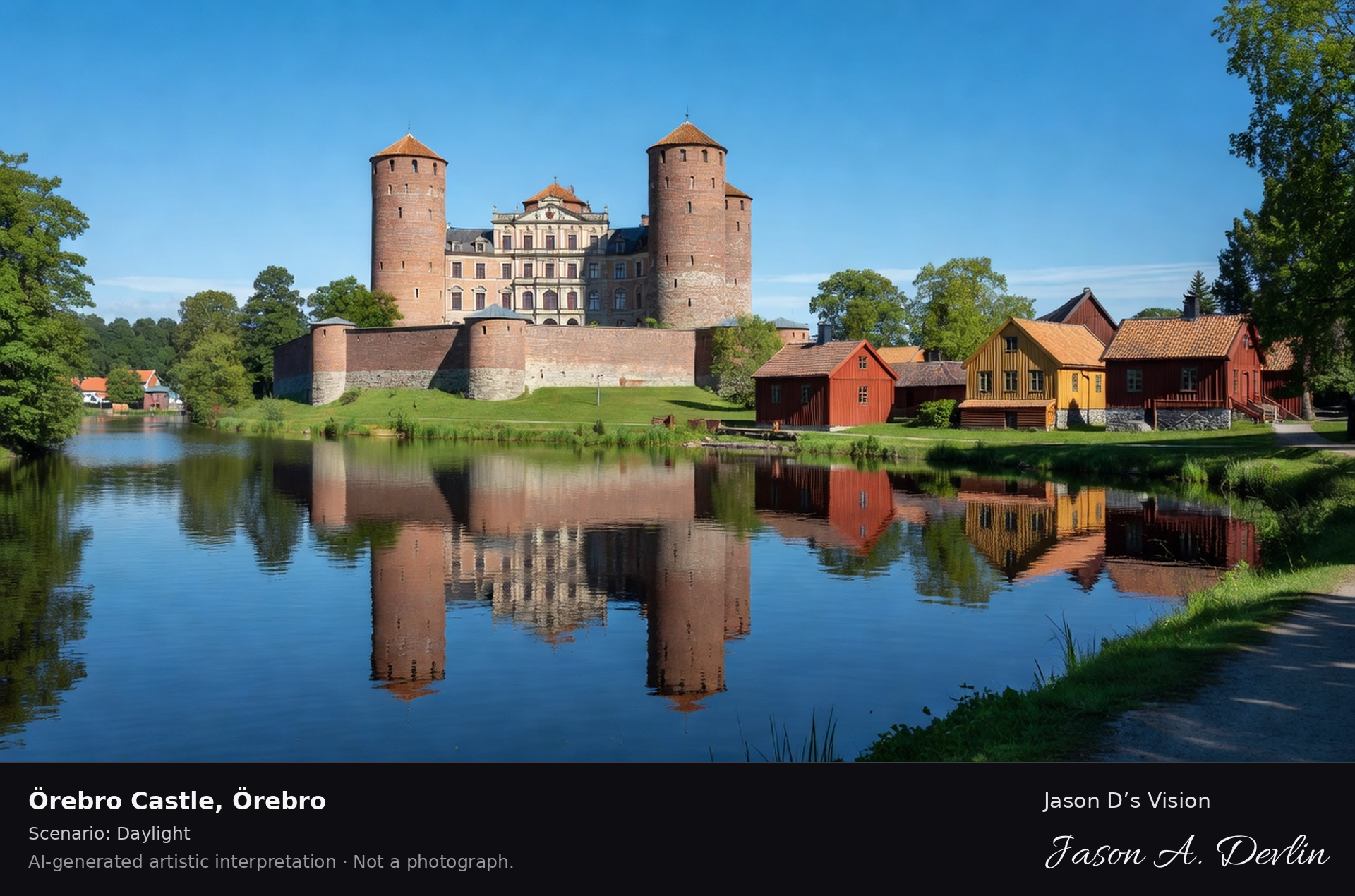
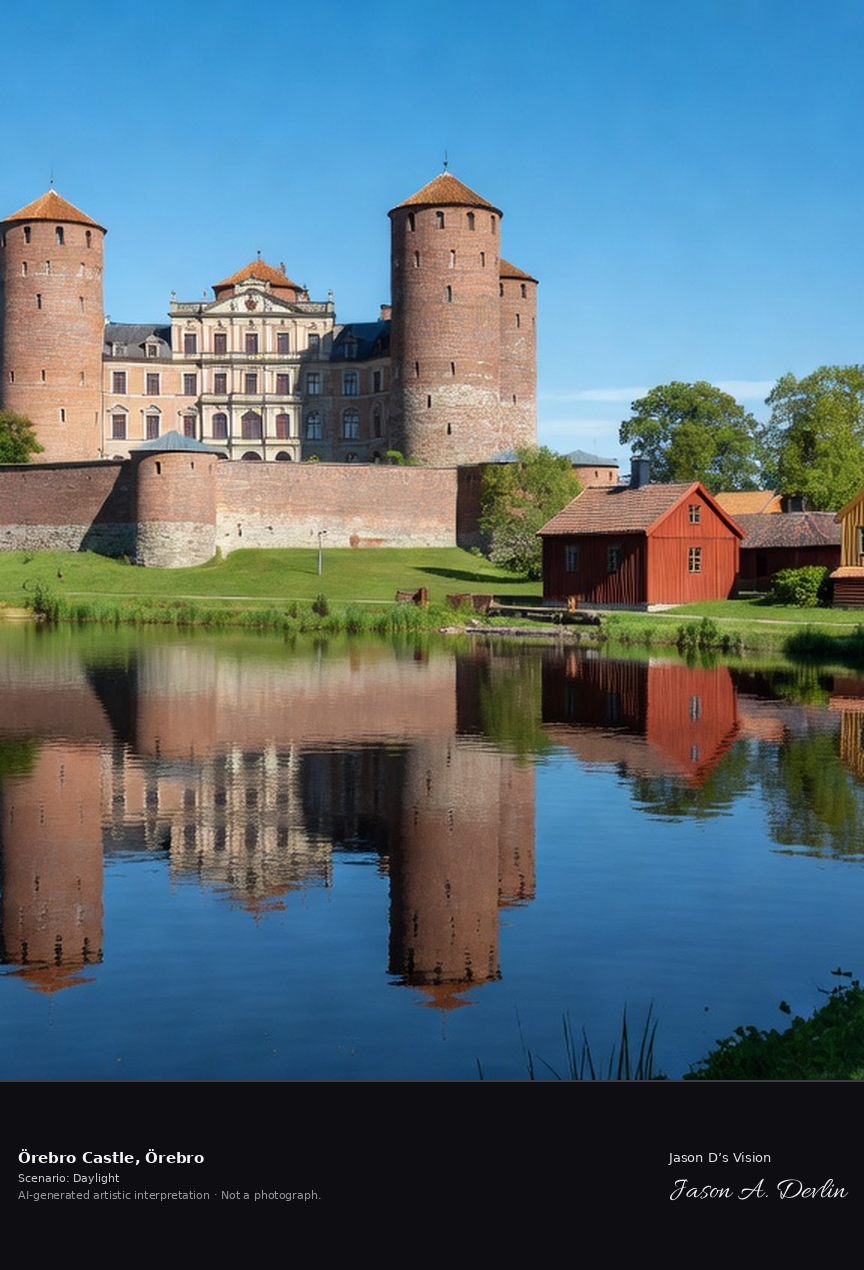
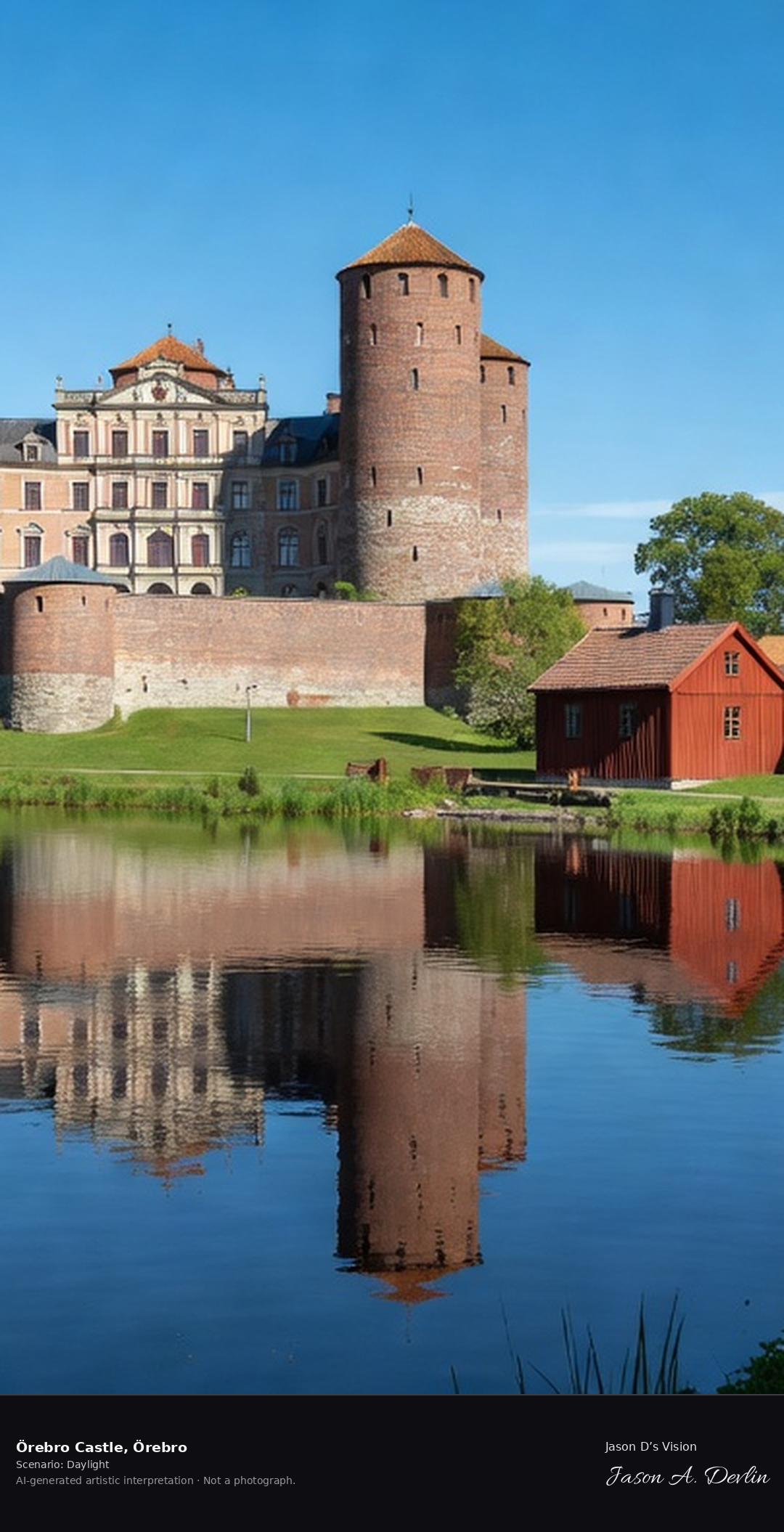
Örebro Castle's four round towers on its island in the Svartån river, the medieval fortress turned Renaissance palace reflected in the water with Wadköping's wooden houses nearby.
Örebro Castle's four round towers rise from their island in the Svartån river — the medieval fortress turned Renaissance palace with its white palace block behind the brick curtain walls, mirrored in the calm water. Wadköping's red and ochre wooden houses line the near bank in bright natural daylight, a classic Närke landmark in vivid honest colour.
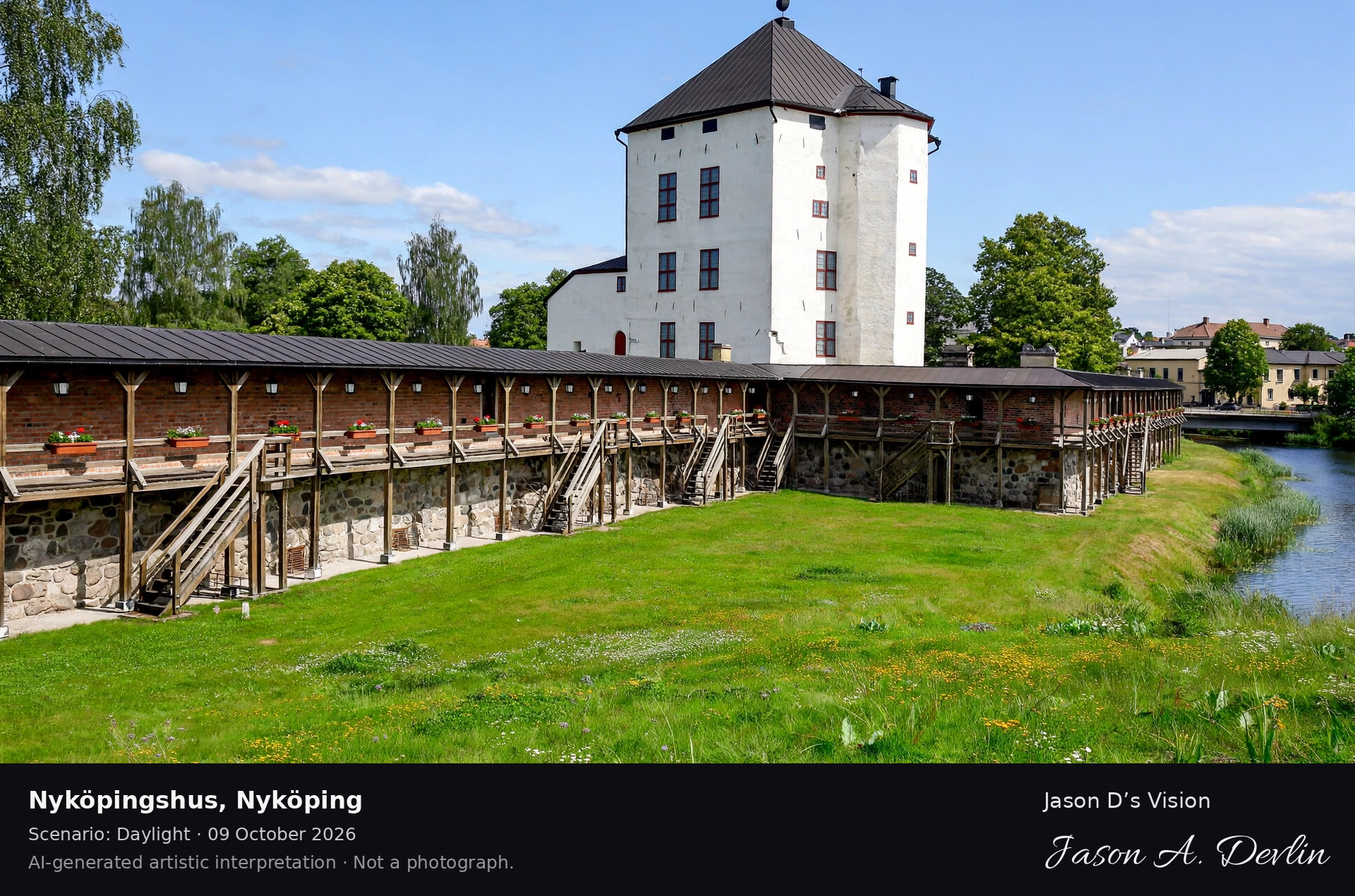
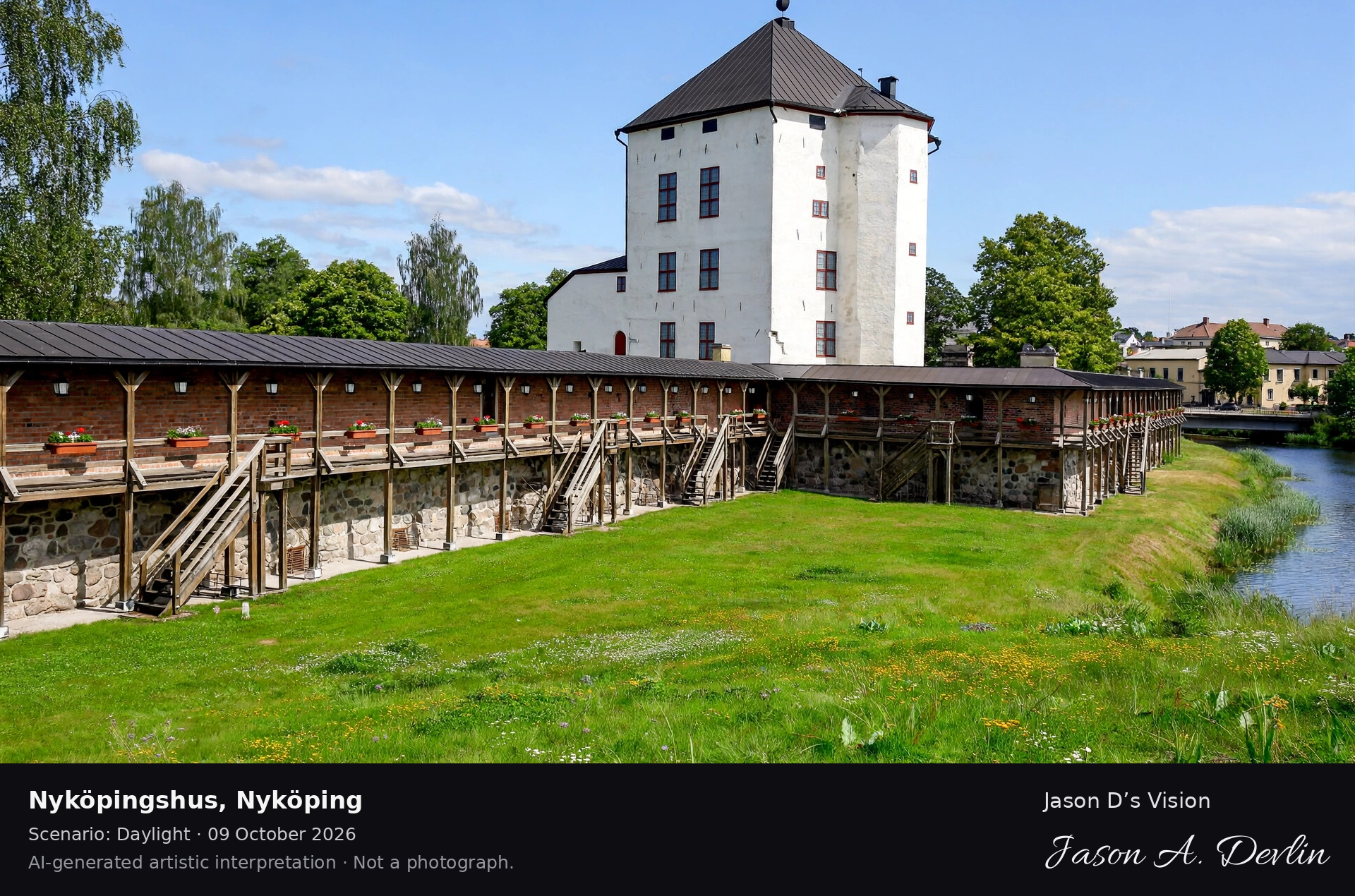
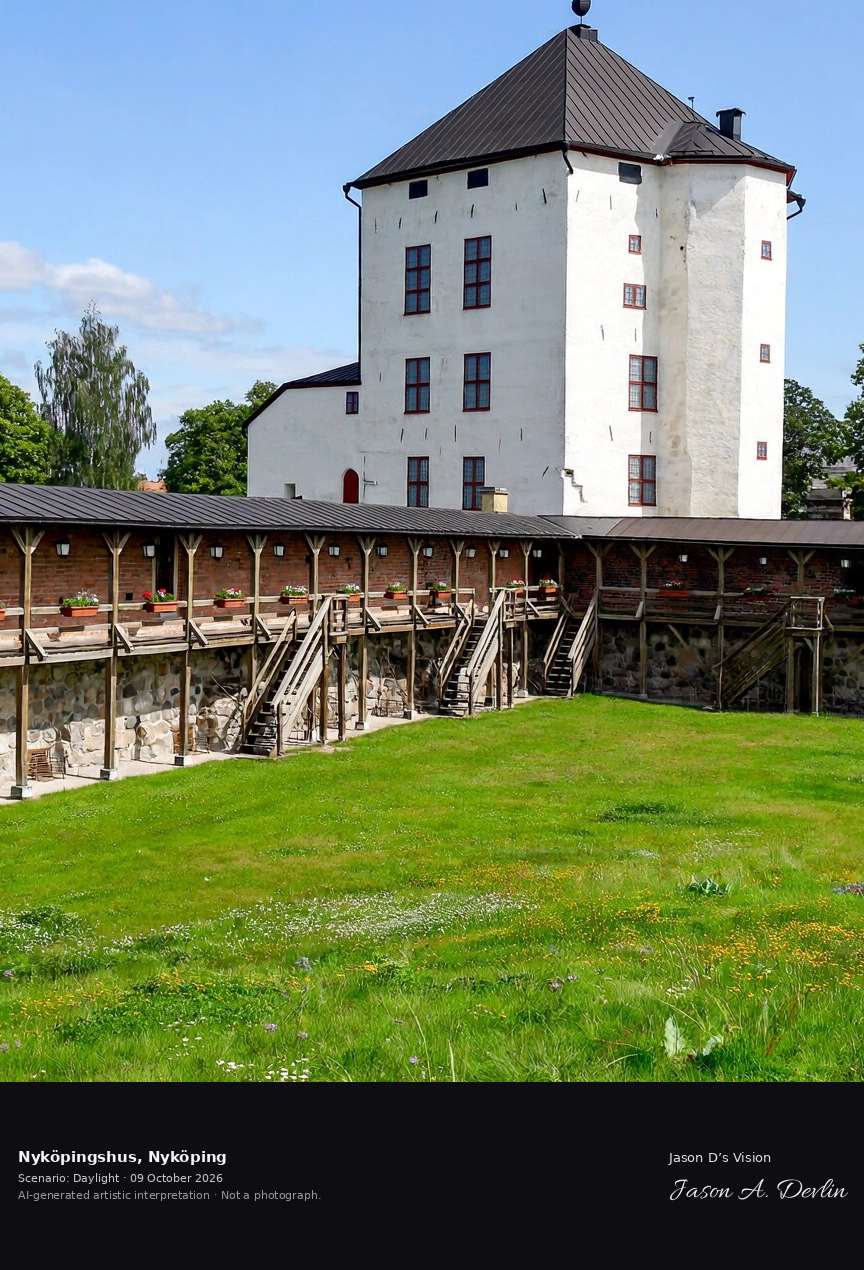
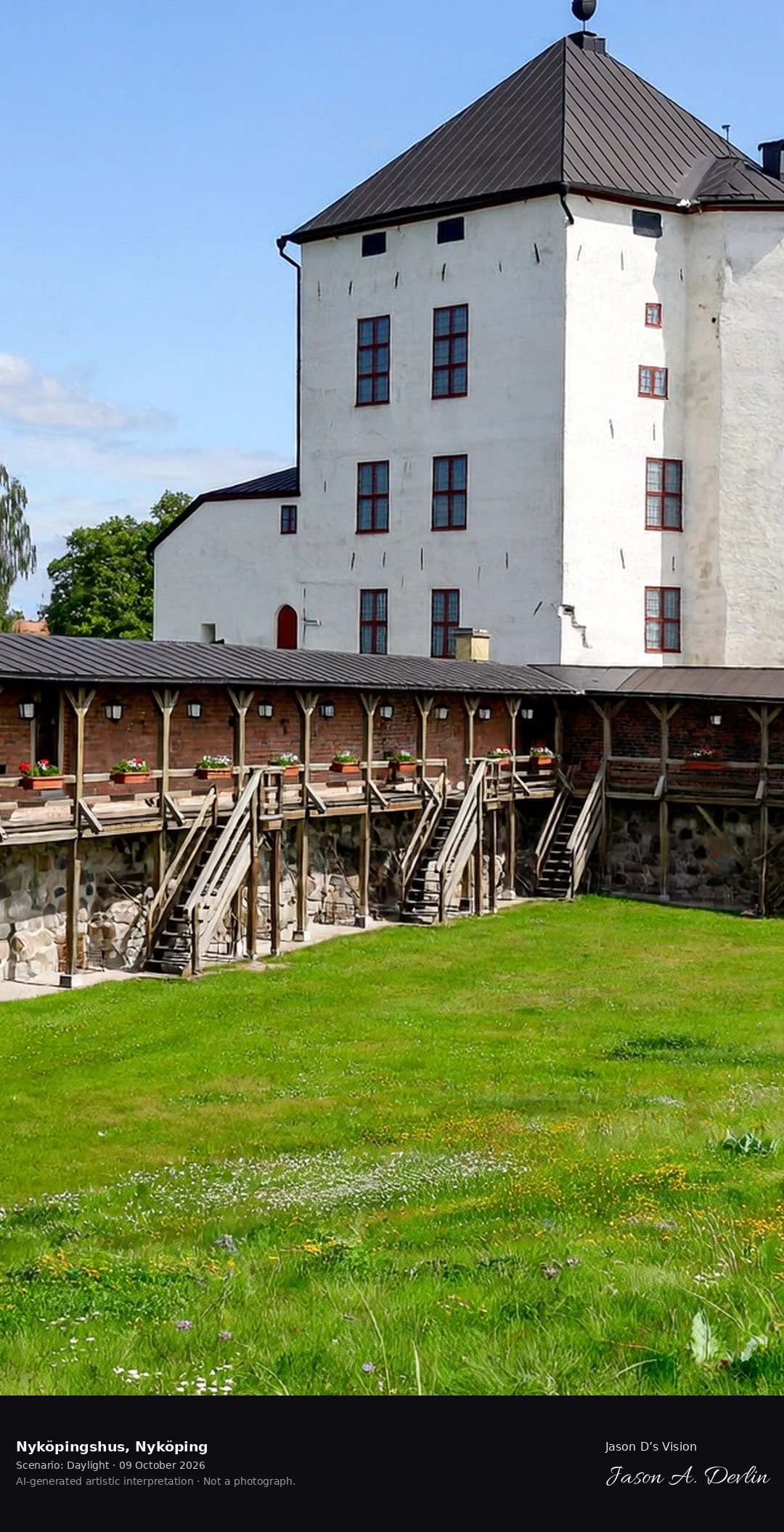
Nyköpingshus castle ruins on the Nyköpingsån river, the medieval fortress famous for the Nyköping Banquet of 1317, brick towers reflected in the water.
Nyköpingshus's medieval brick ruins rise beside the Nyköpingsån river — the tall square keep of Kärntornet with ruined wall fragments stepping down to the water, red-brown brickwork over stone foundations mirrored in the calm river. Green lawns and birch trees frame both banks in bright natural daylight, the fortress famous for the Nyköping Banquet of 1317 in vivid honest colour.
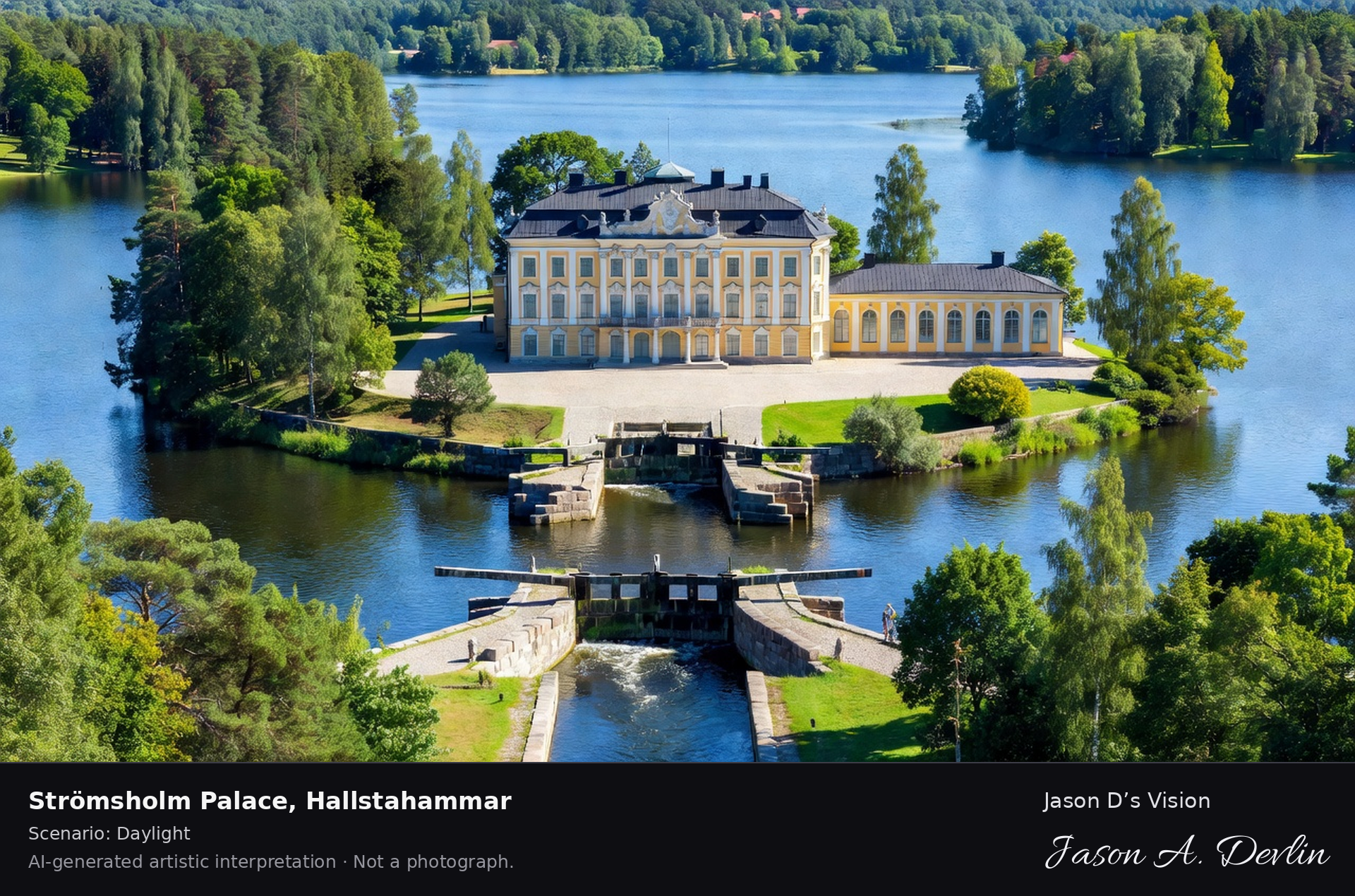
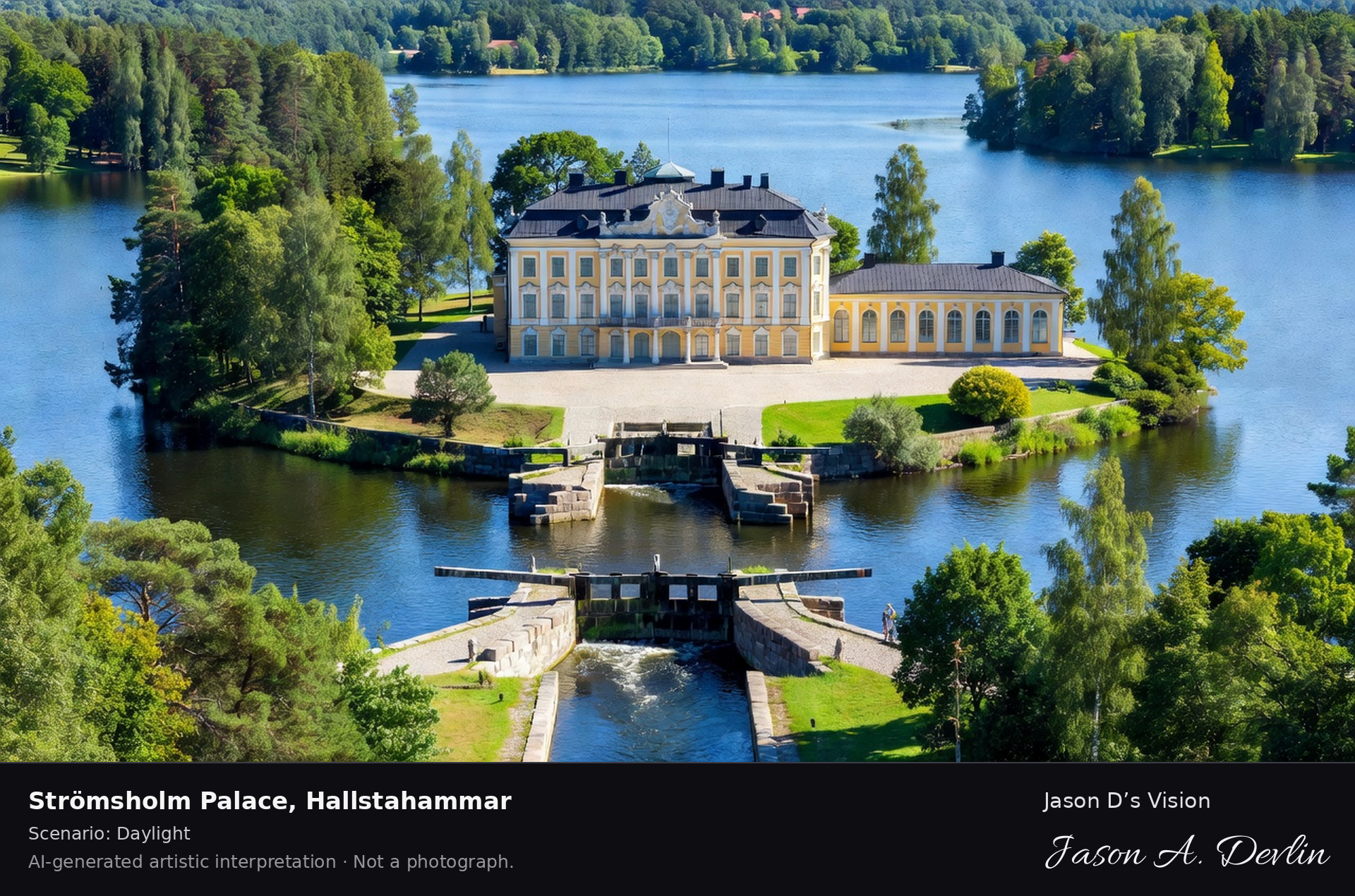
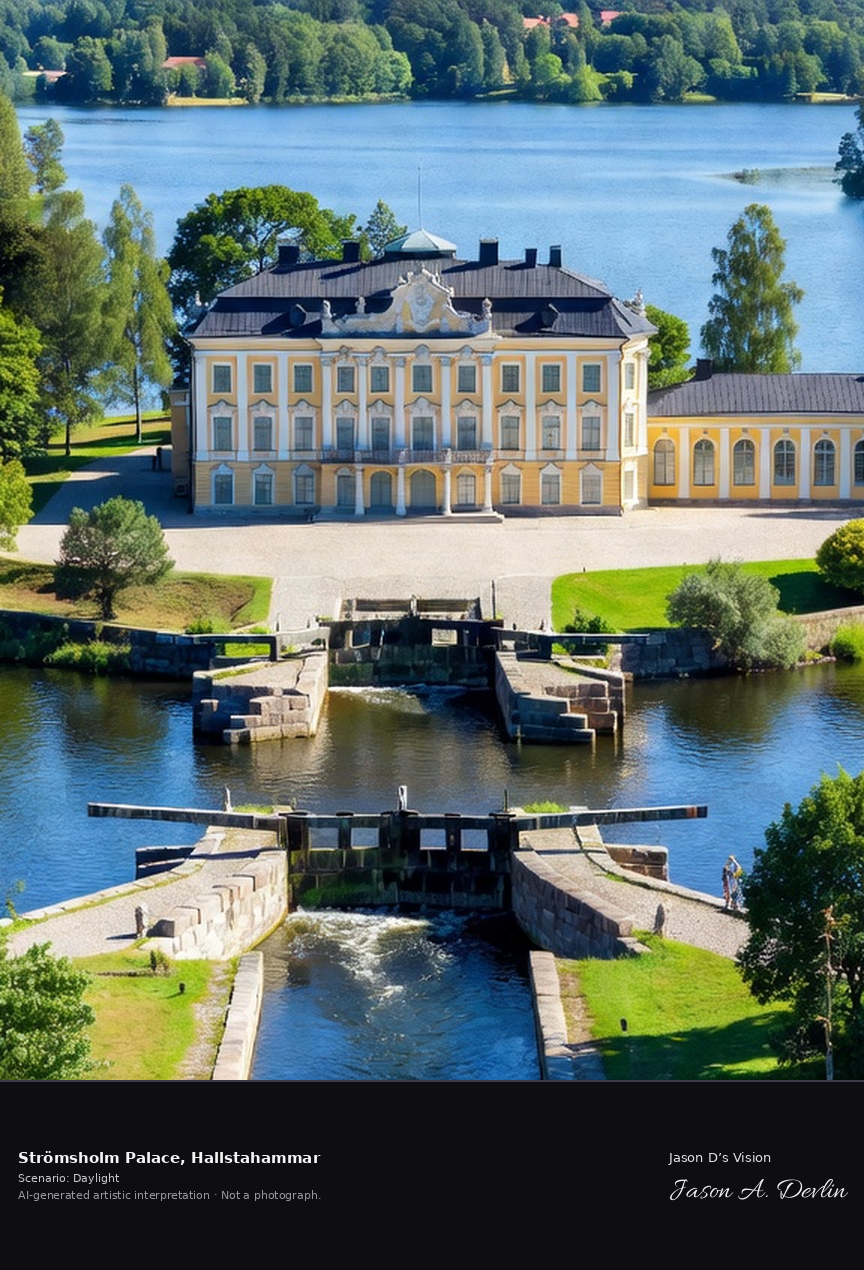
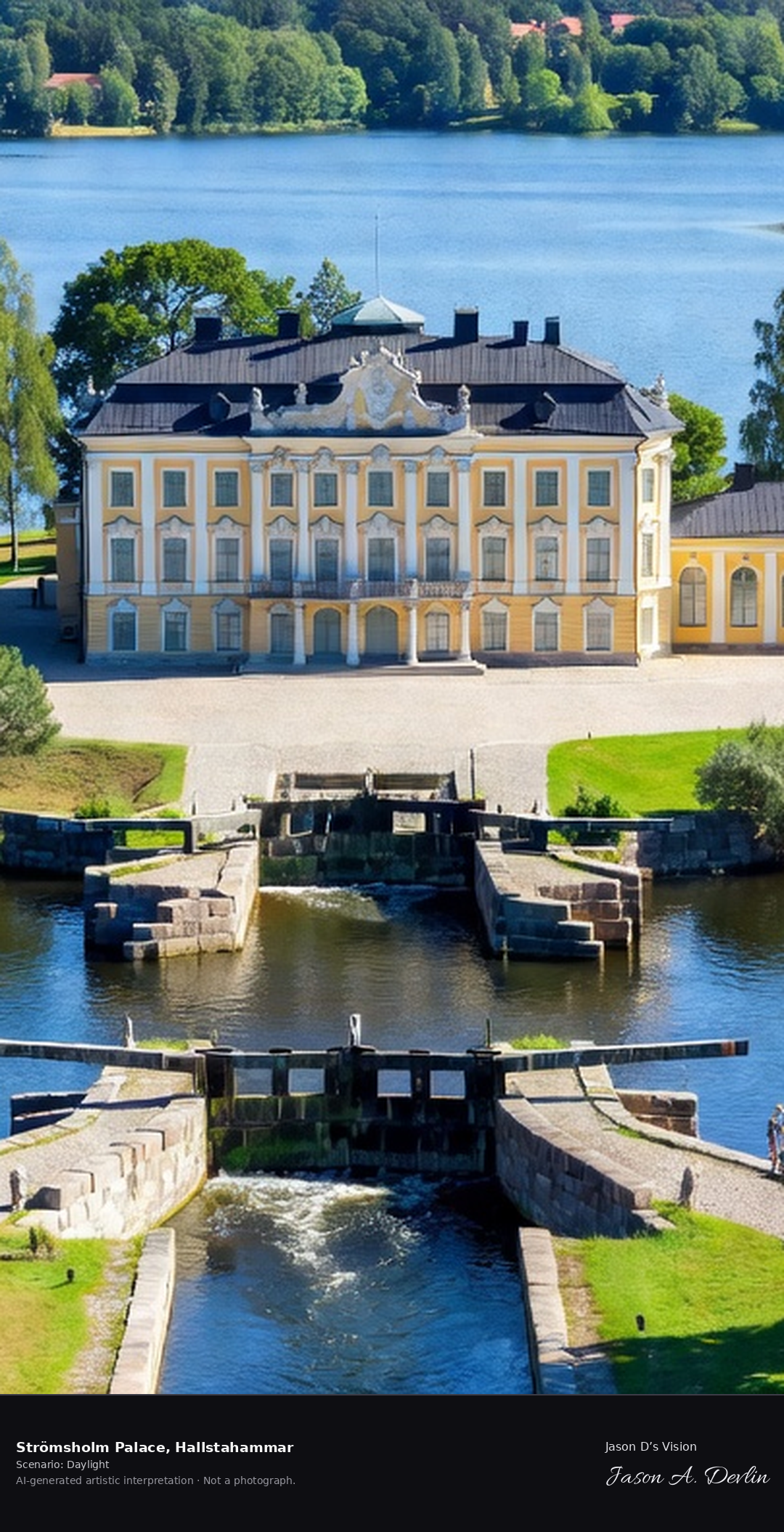
Strömsholm Palace's baroque facade on its island in Lake Mälaren, the royal palace with its famous riding school and the canal locks below. The 'Versailles of Sweden' in miniature.
Strömsholm Palace rises from its island in Lake Mälaren — the baroque palace with its pale-yellow facade, white trim and dark mansard roof mirrored in the calm lake water. In the foreground, the old stone canal locks of the Strömsholm Canal lie directly below the palace walls. The 'Versailles of Sweden' in miniature, home to the famous Royal Riding School, framed in bright natural daylight as any visitor standing at the classic viewpoint would see it.
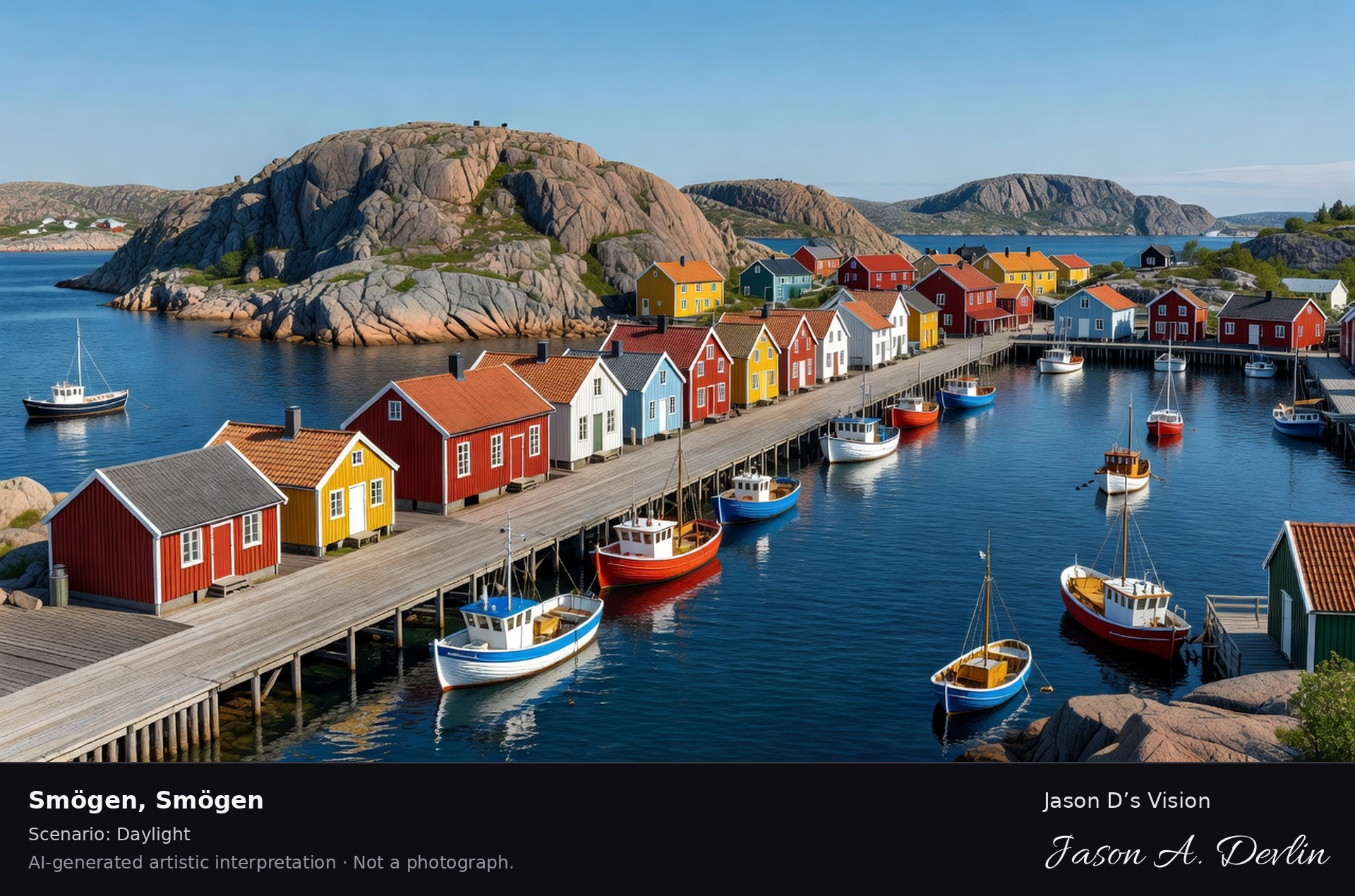
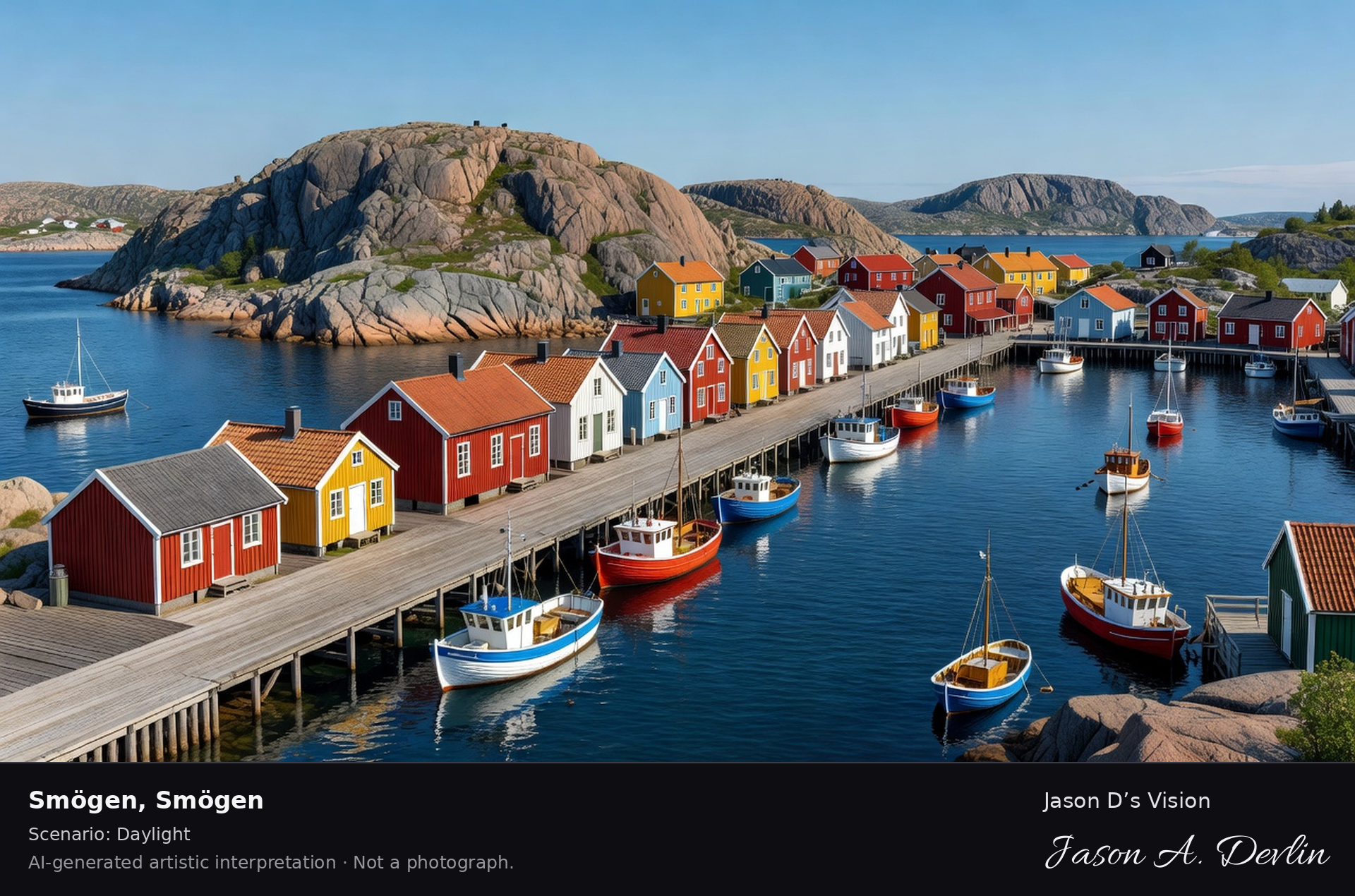
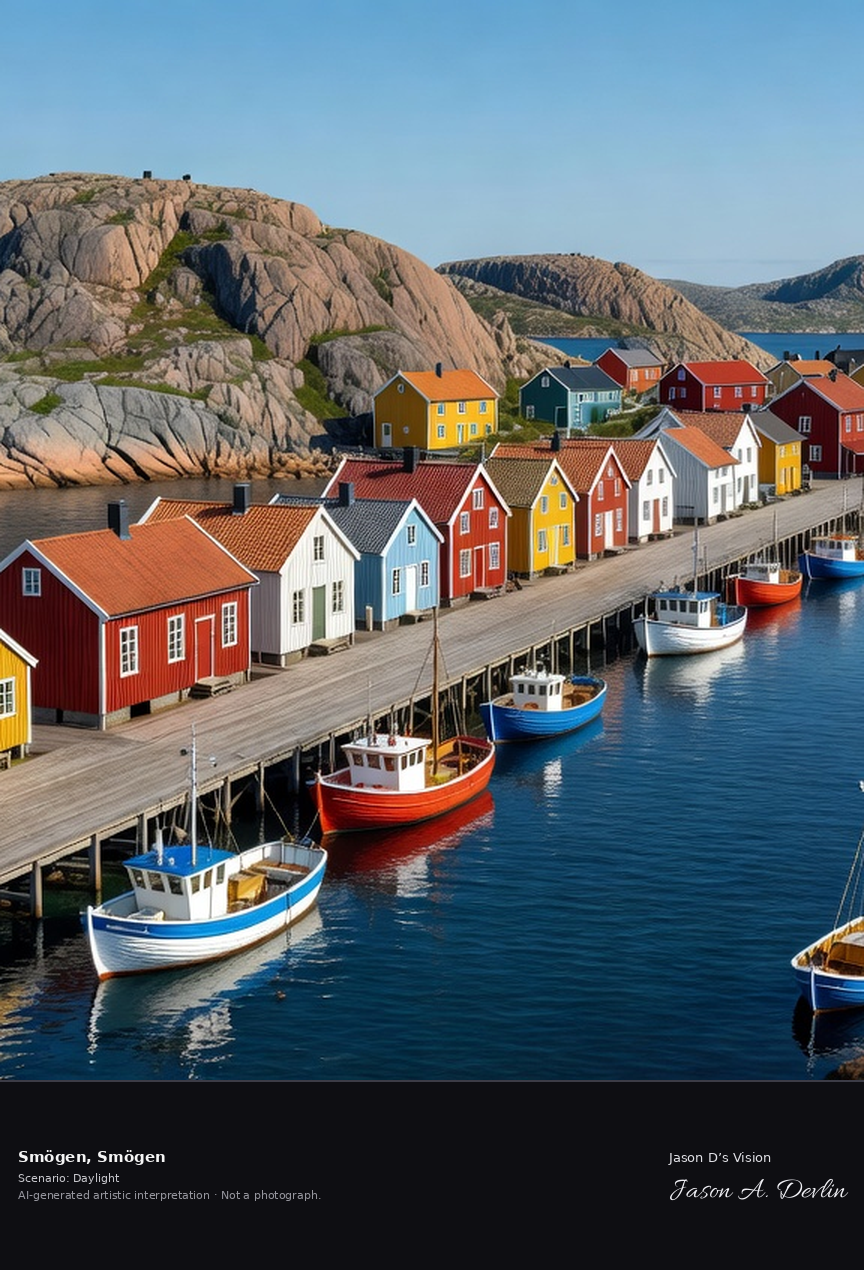
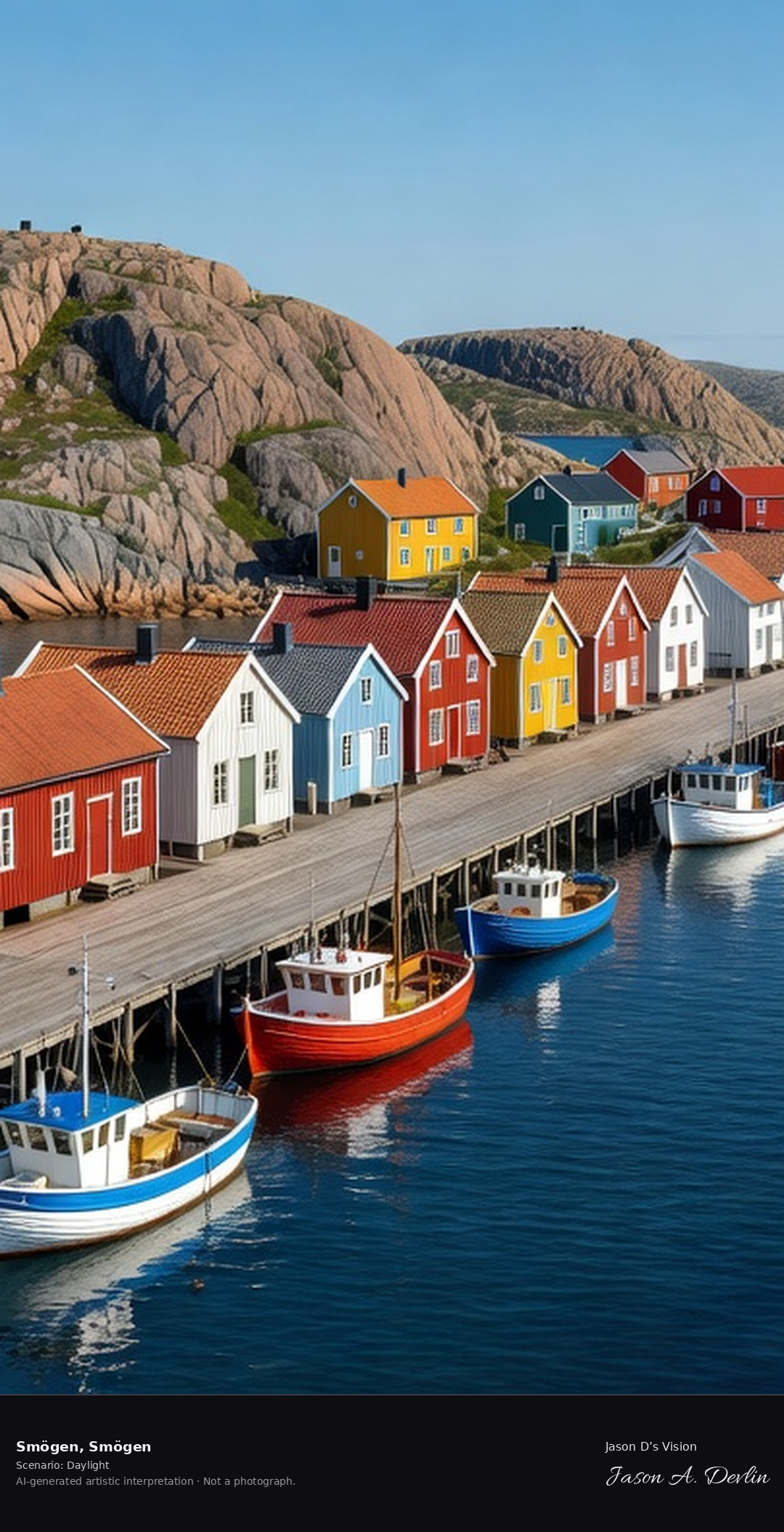
Smögenbryggan's mile-long wooden boardwalk lined with colorful boathouses and seafood restaurants, the granite cliffs of Smögen island behind with the harbor full of boats. Bohuslän's most famous fishing village.
Along Smögenbryggan, the mile-long wooden boardwalk is lined with colorful boathouses and seafood restaurants. Behind it rise the granite cliffs of Smögen island, with the harbor full of boats below, in bright natural daylight.
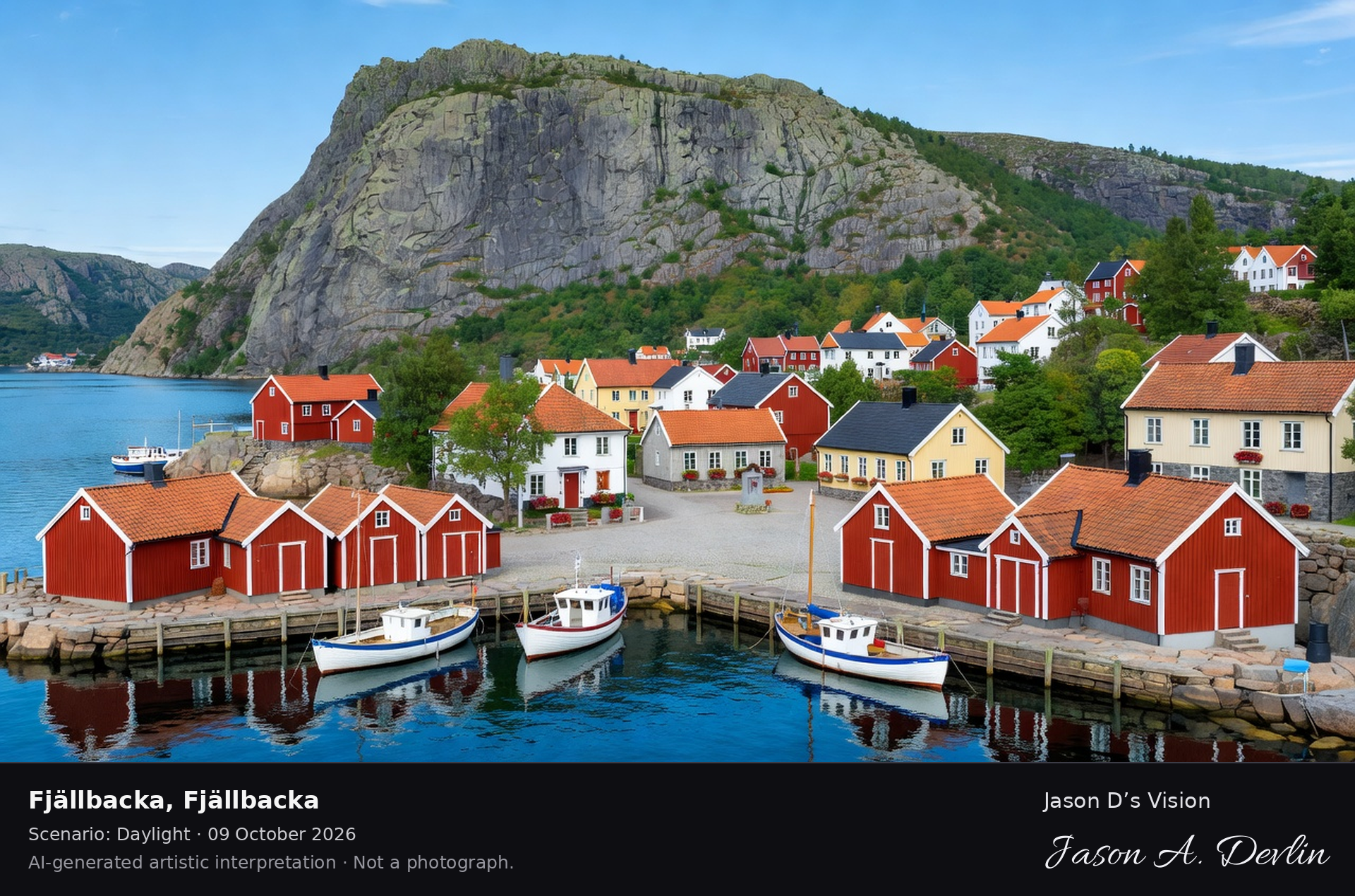
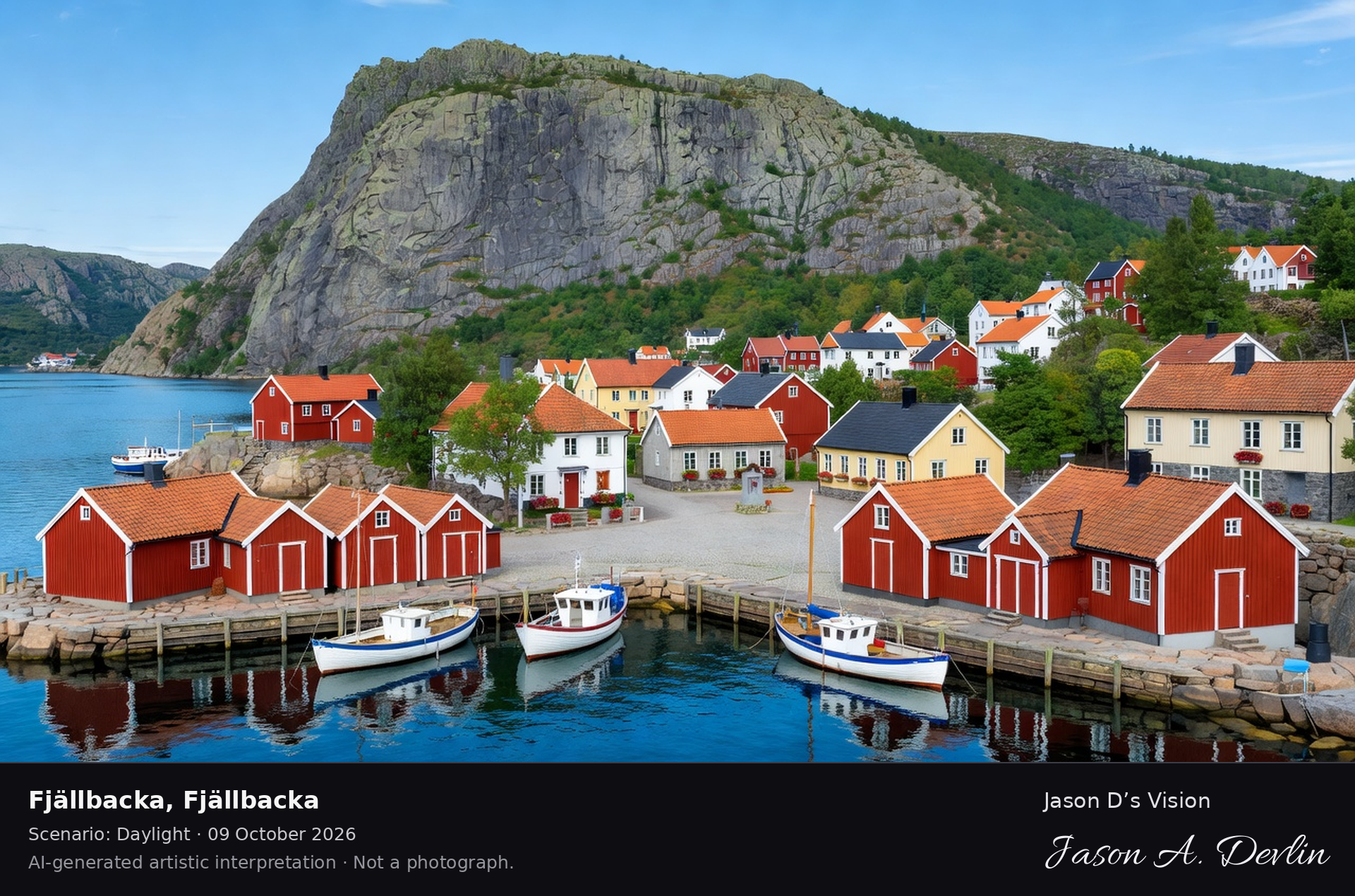
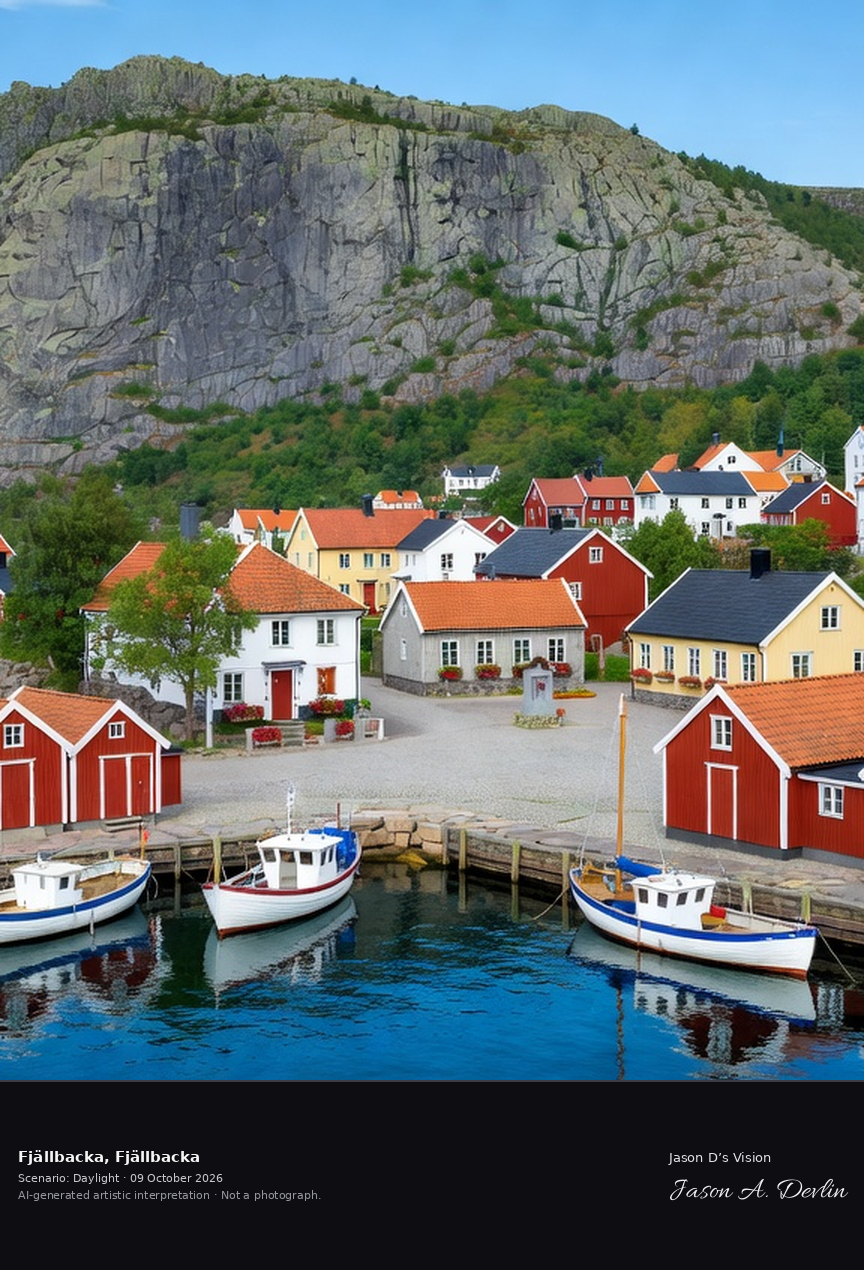
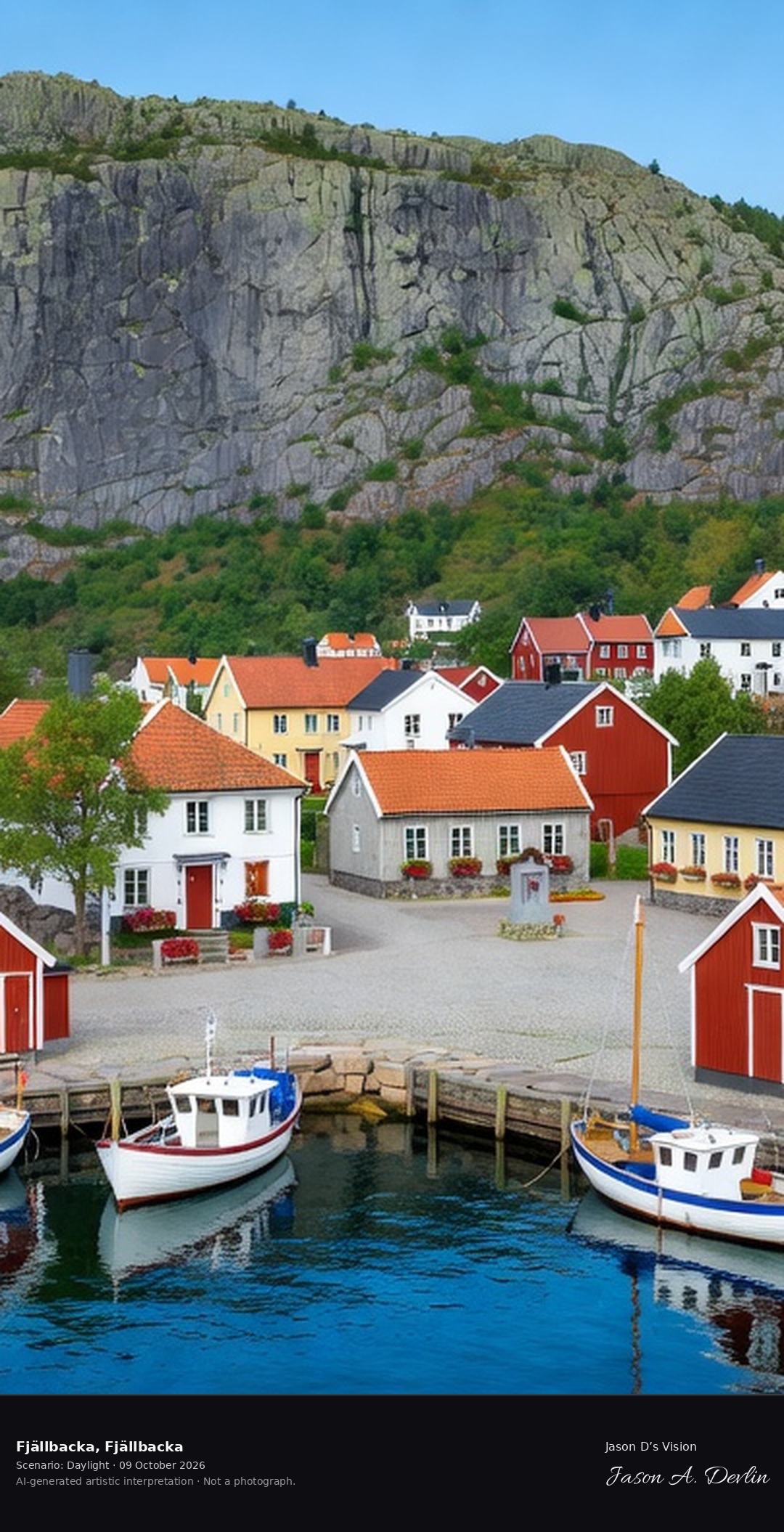
Fjällbacka's harbor with the Vetteberget cliff towering behind, red boathouses along the quay and Ingrid Bergman's square in the village center. Camilla Läckberg's crime-novel town.
From the classic harbor viewpoint the scene takes in Fjällbacka's working quay: red wooden boathouses and small white boats riding at their moorings, the village center and Ingrid Bergman's square climbing behind, and above it all the great gray mass of the Vetteberget cliff — Camilla Läckberg's crime-novel town rendered in bright natural daylight.
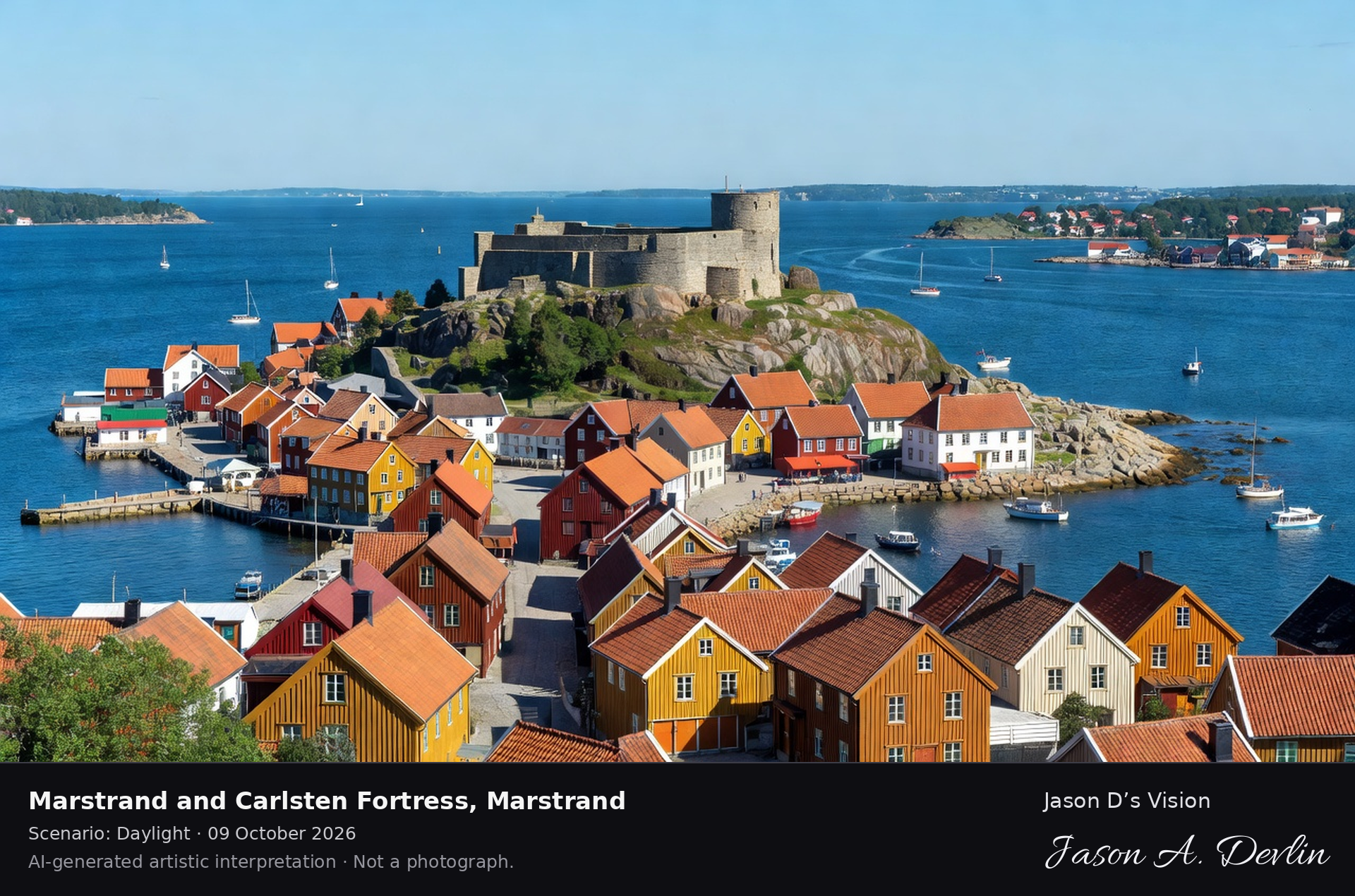
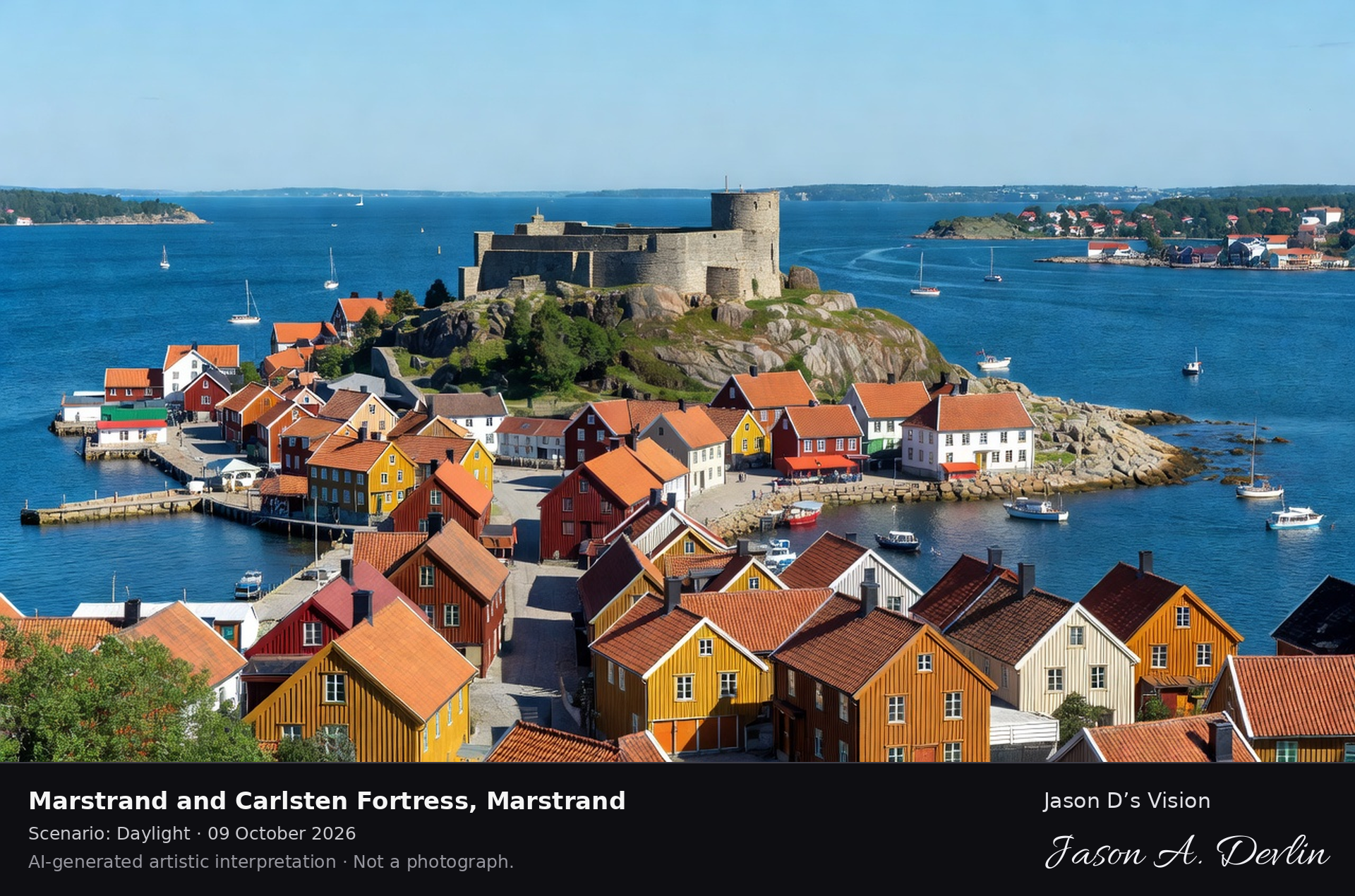
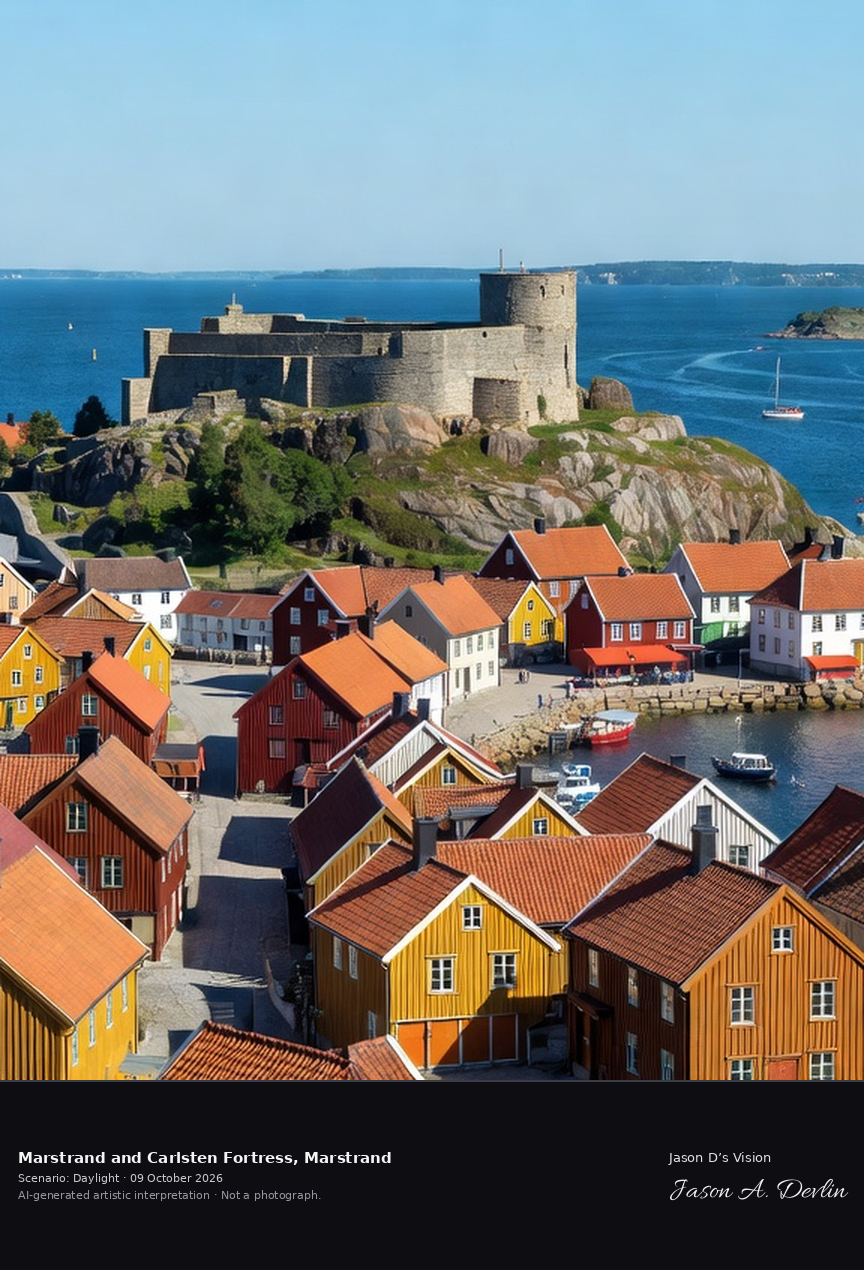
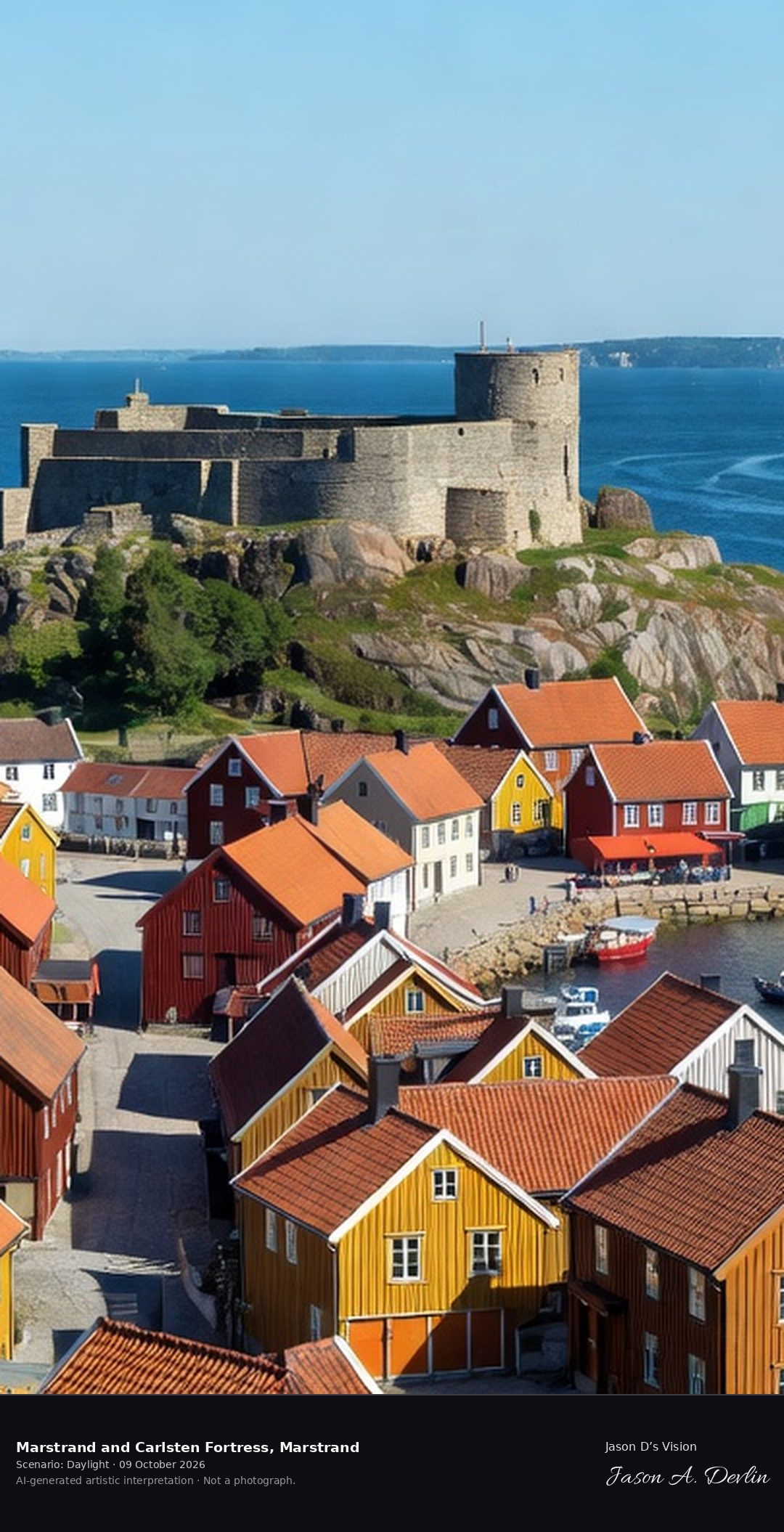
Carlsten Fortress crowning Marstrand island, the massive 17th-century stone fortress above the wooden sailing town with the Skagerrak beyond. Sweden's classic west-coast resort island.
Marstrand, Sweden's classic west-coast resort island, seen from the harbor viewpoint in bright natural daylight. The massive 17th-century Carlsten Fortress crowns the rock above the wooden sailing town, its stone ramparts standing watch over the colorful boathouses and the Skagerrak beyond.
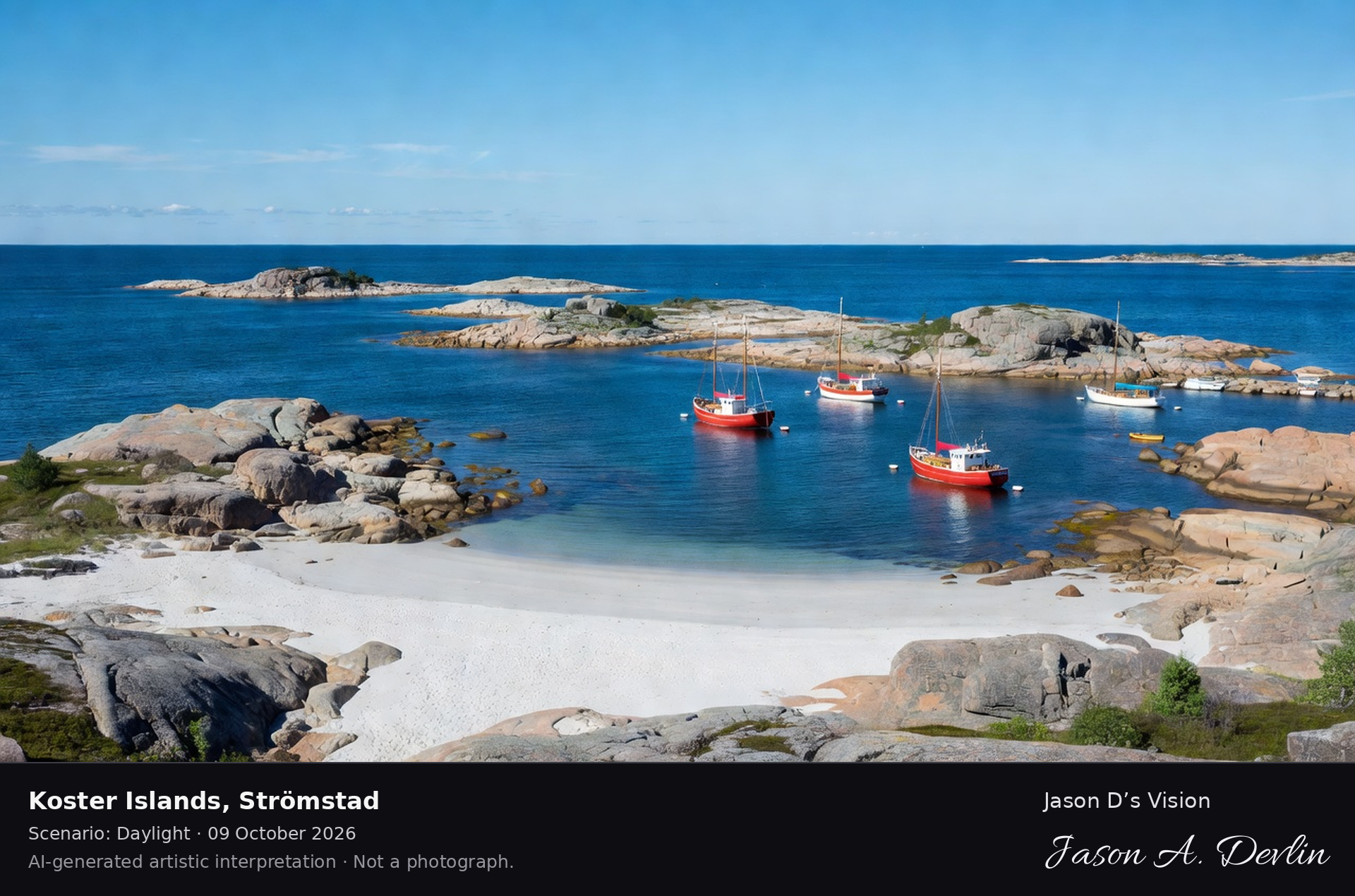
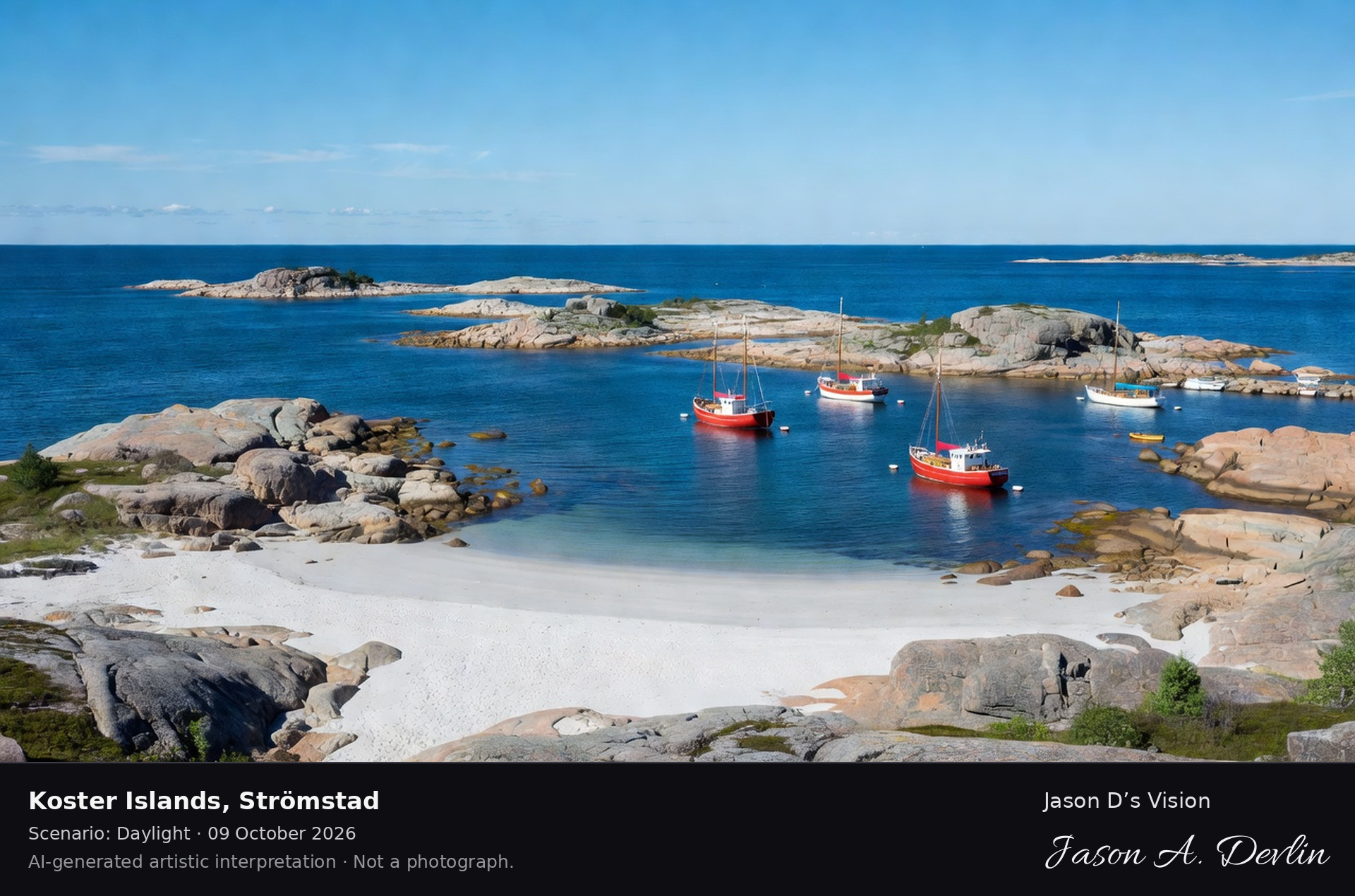
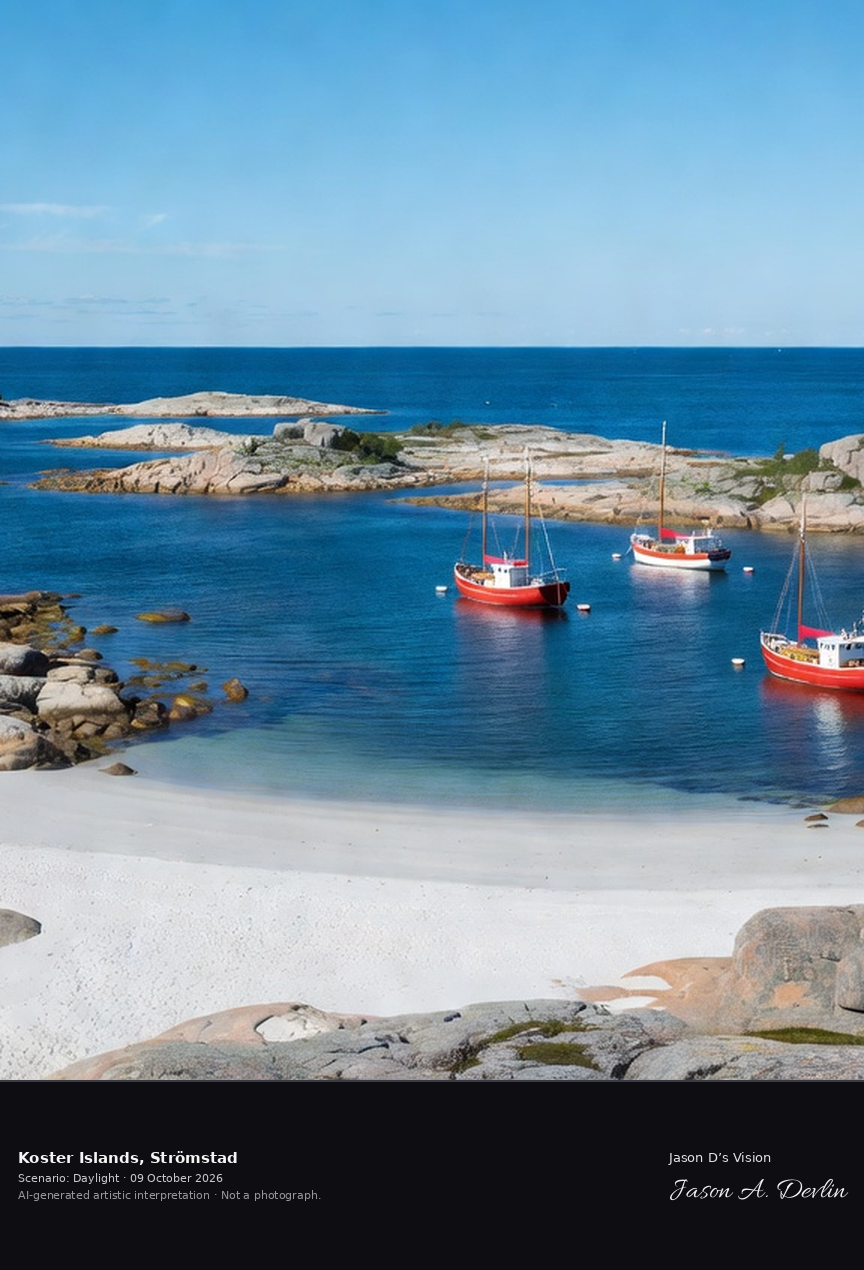
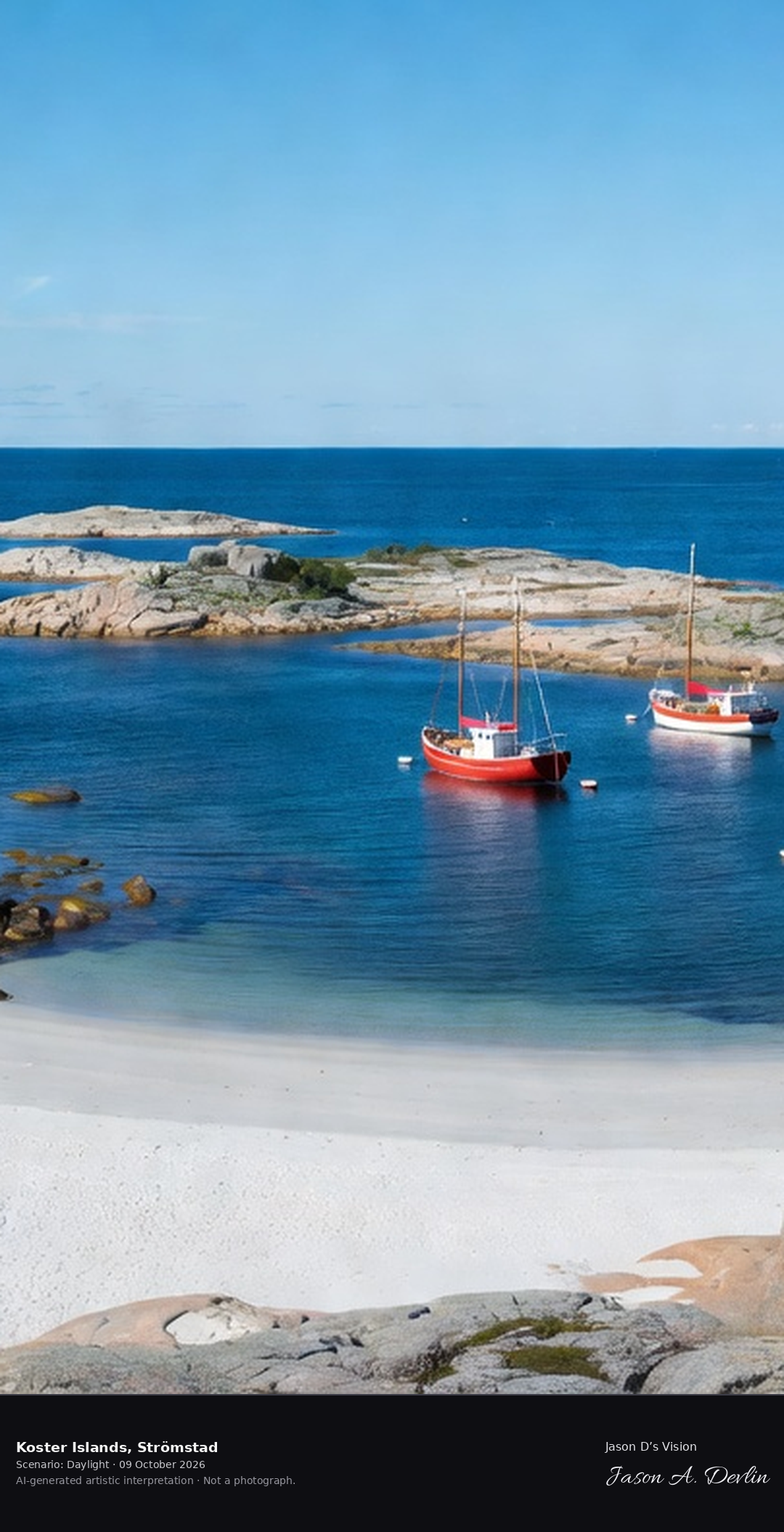
The Koster Islands' smooth granite shores and white sandy beaches in Sweden's only marine national park, with the characteristic Koster boats in the harbor and the Skagerrak horizon.
From the classic elevated viewpoint above the harbor the eye runs across white sandy beach and smooth granite shores to the sheltered bay, where the characteristic Koster boats ride at their moorings. Rocky islets scatter across the deep blue water toward the Skagerrak horizon — the heart of Sweden's only marine national park, Kosterhavet, rendered in bright natural daylight.
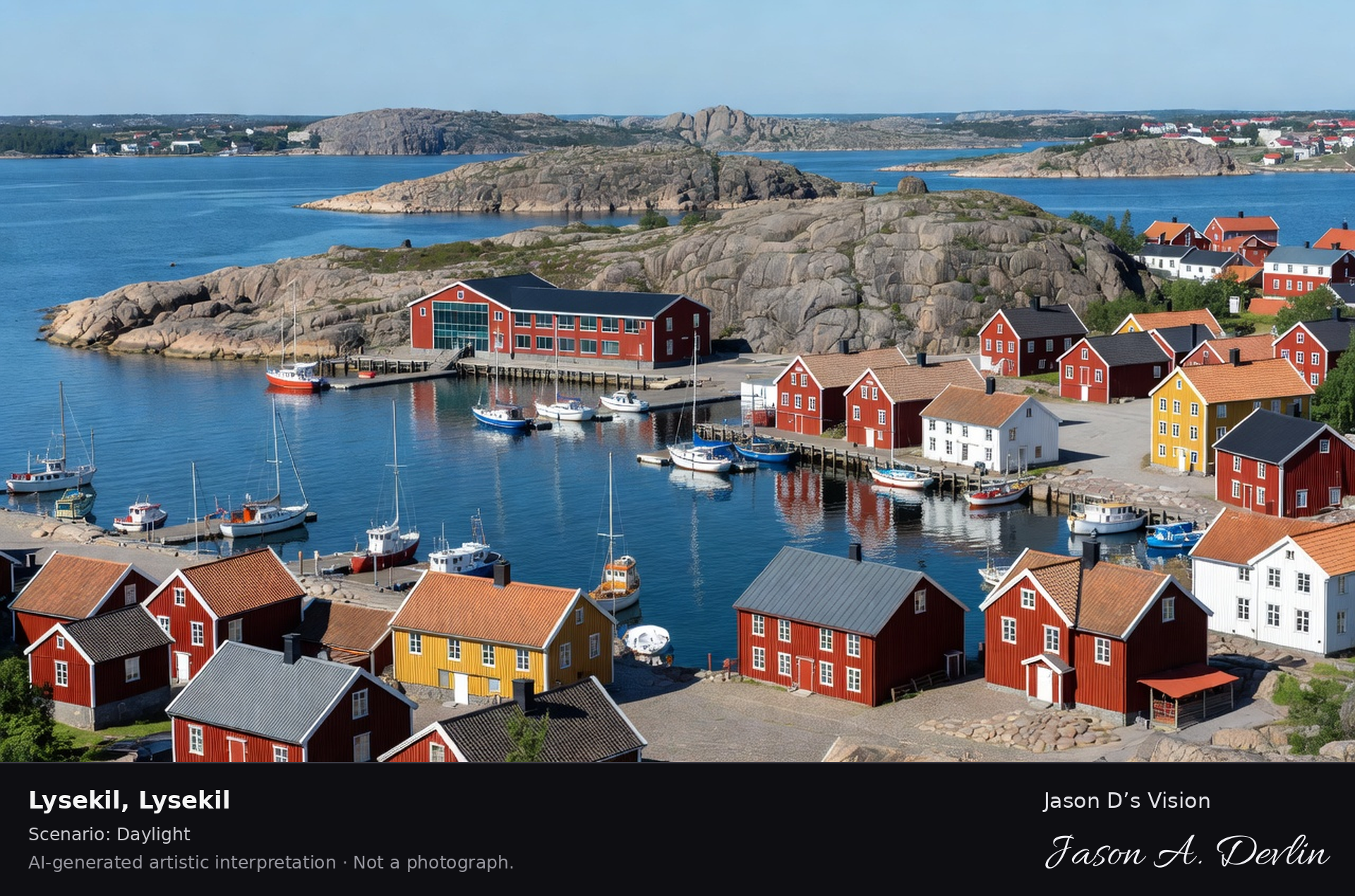
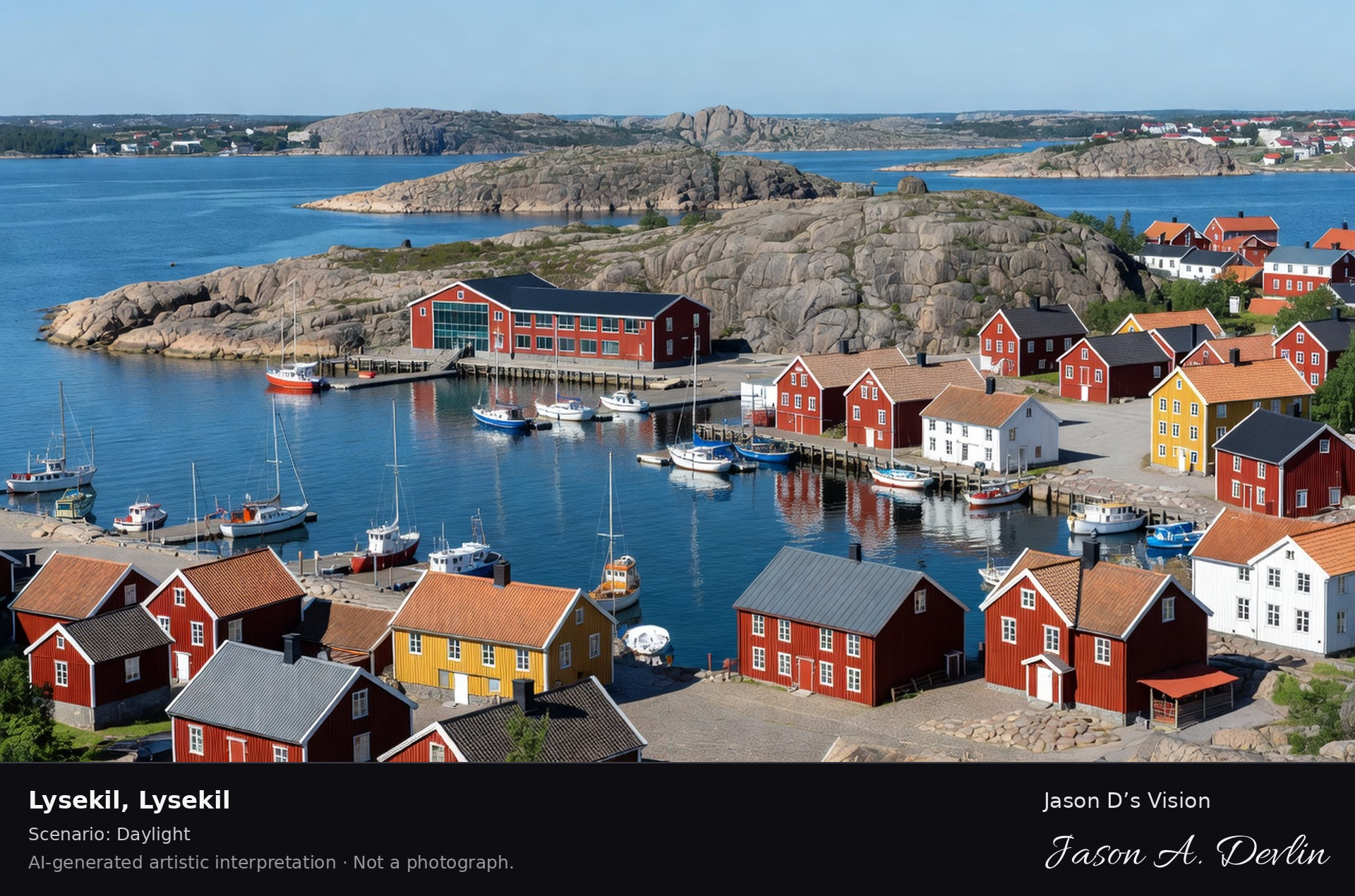
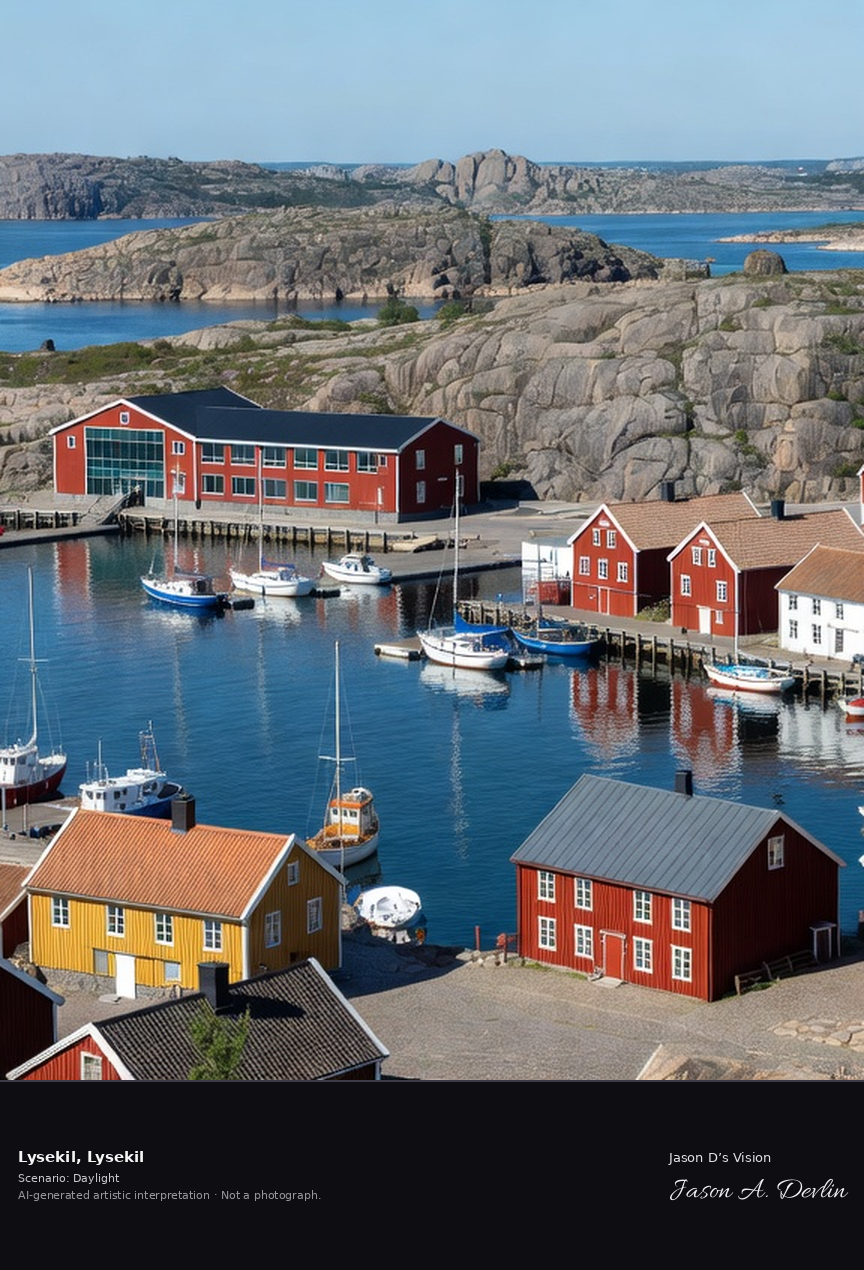
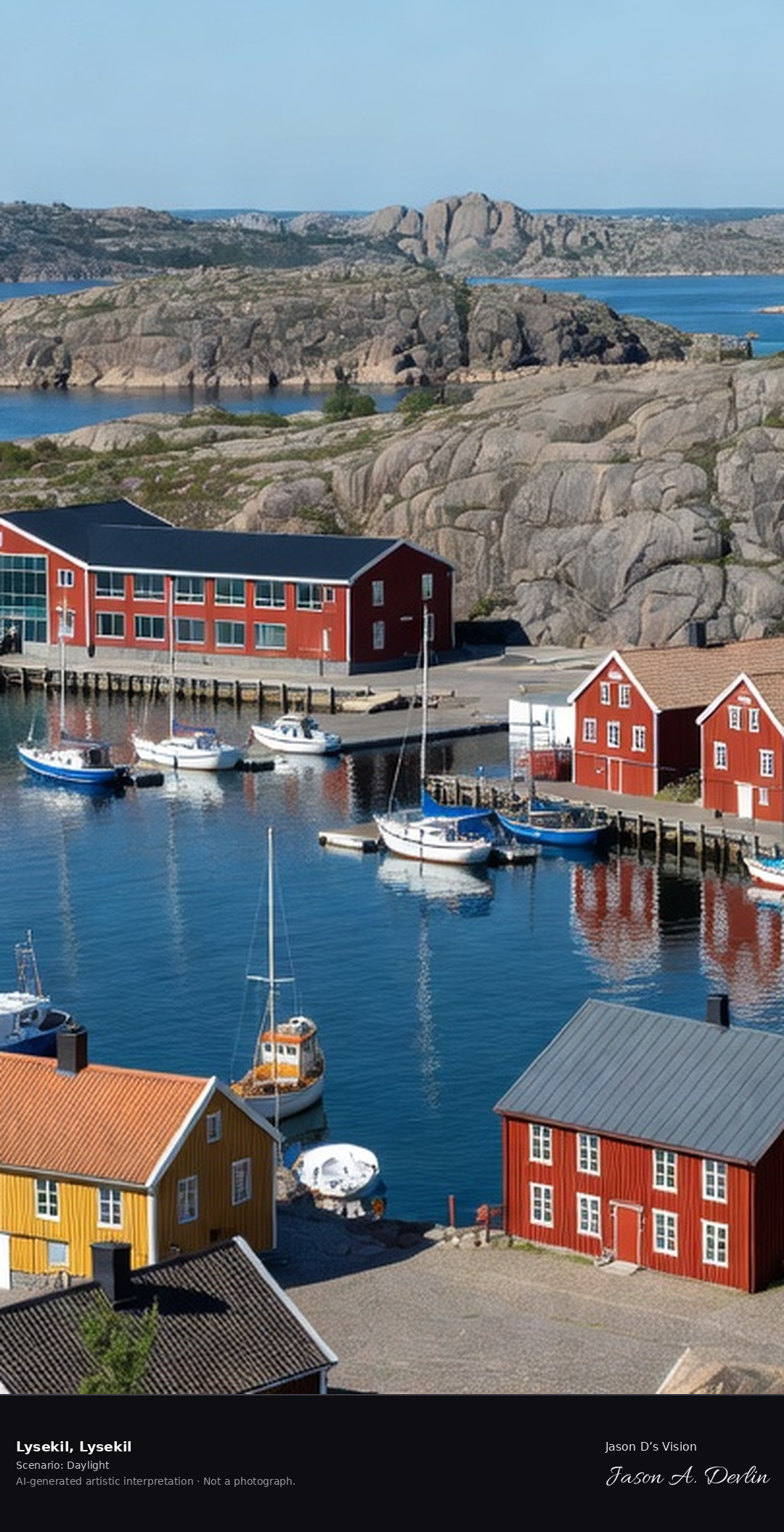
Lysekil's harbor with the distinctive red Havets Hus aquarium and the granite Stångehuvud nature reserve's smooth cliffs, the old bathhouse town on Sweden's 'sunny' west coast.
From the classic elevated viewpoint above the harbor the eye runs across the calm bay to the distinctive red Havets Hus aquarium building, backed by the smooth granite cliffs of the Stångehuvud nature reserve. Red and yellow bathhouse-era wooden houses cluster around the water, with moored boats riding in the sheltered bay — the heart of the old bathhouse town on Sweden's sunny west coast, rendered in bright natural daylight.
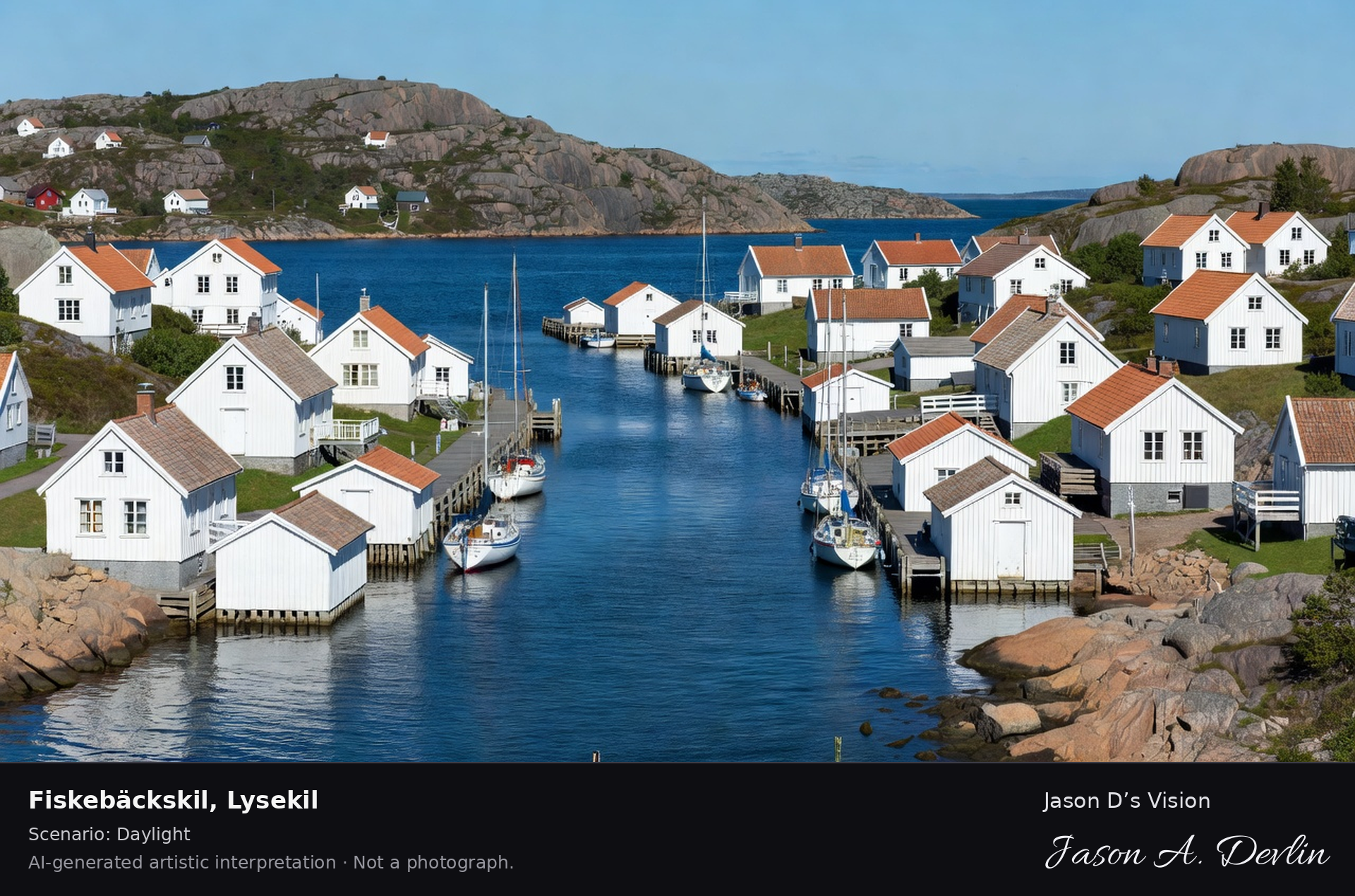
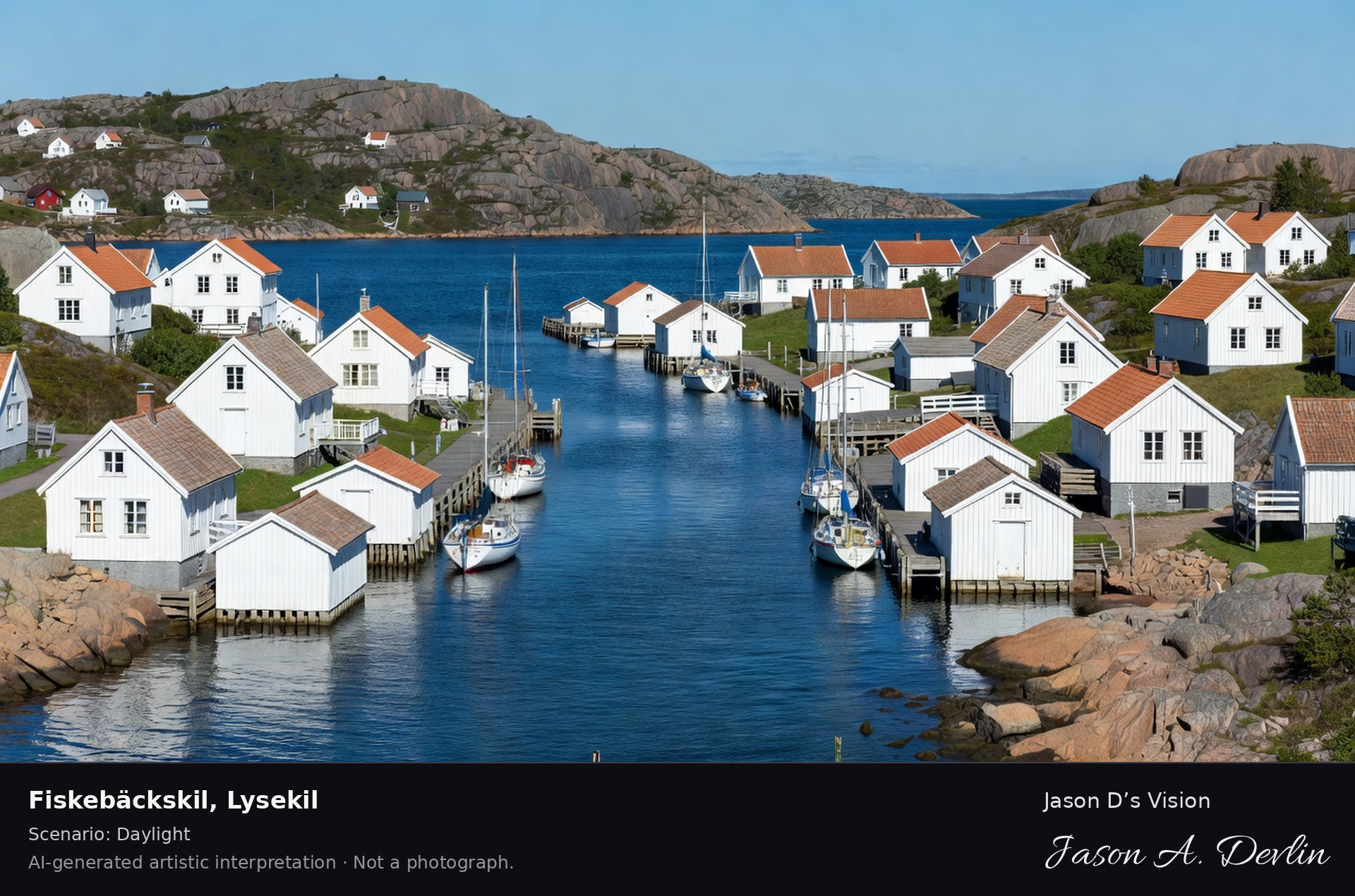
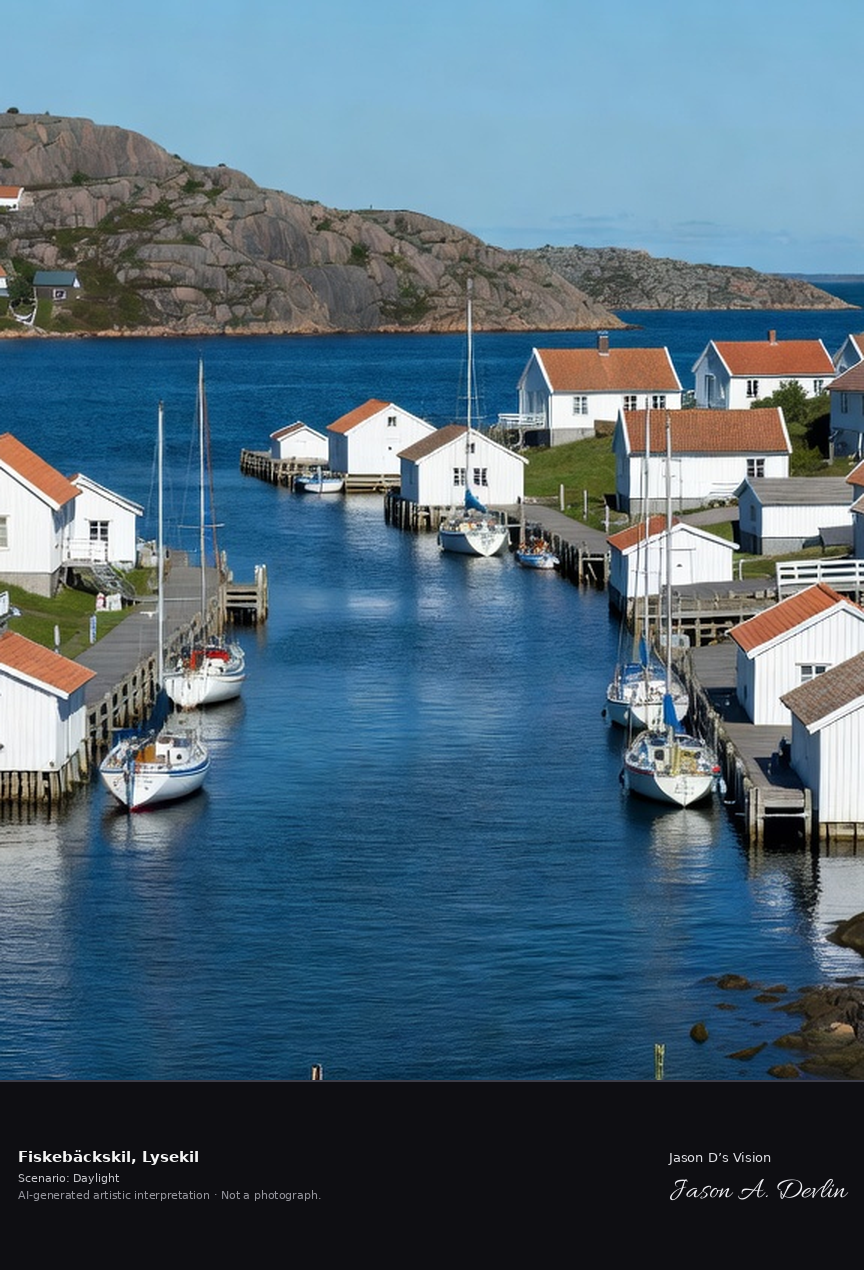
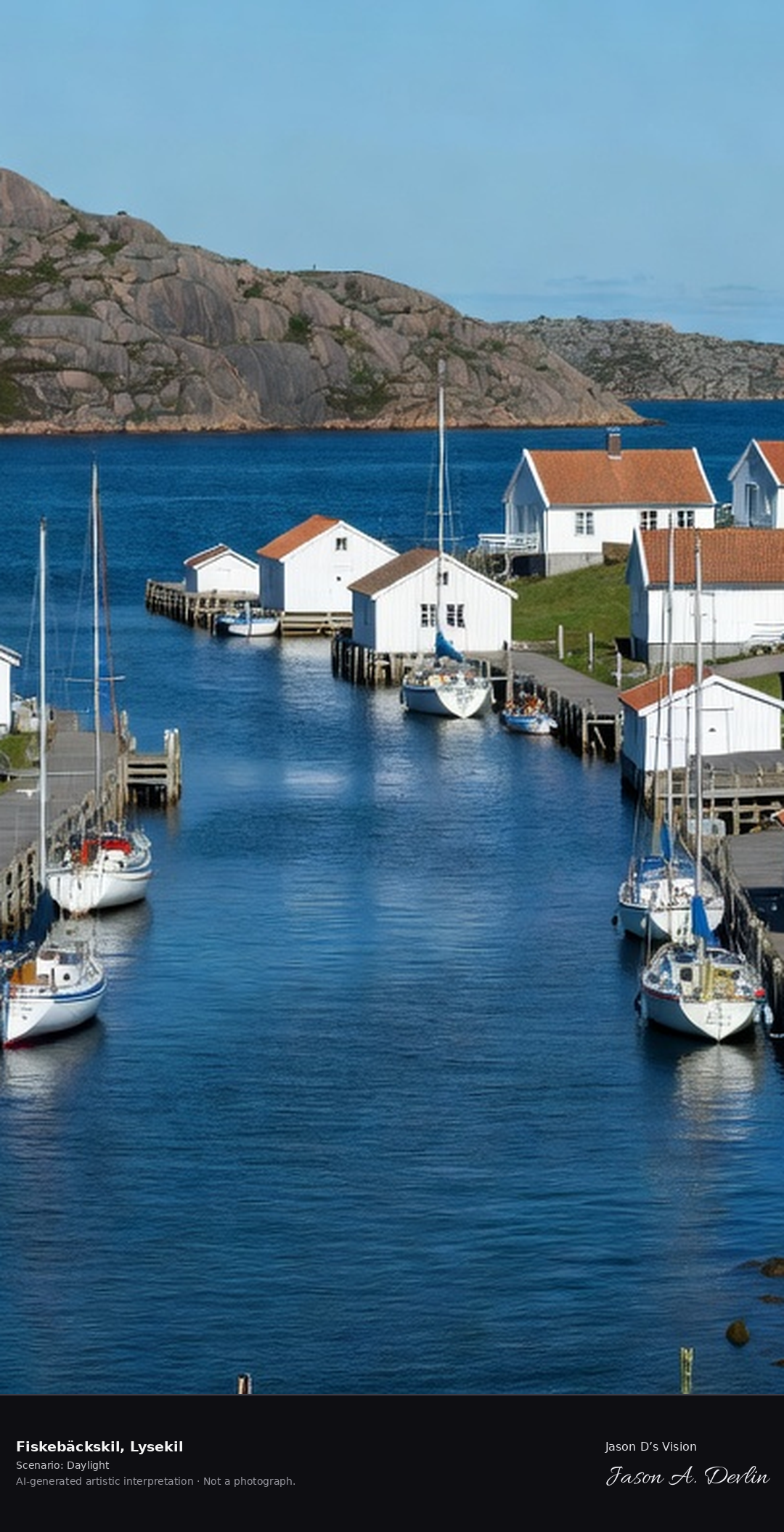
Fiskebäckskil's narrow harbor inlet lined with white wooden houses and boathouses, the Bohuslän fishing village tucked between granite hills with sailing boats at the quays.
From the classic viewpoint above the harbor the eye runs down the narrow inlet, white wooden houses and boathouses lining both shores with sailing boats at the quays. Smooth granite hills frame the Bohuslän fishing village, and the open sea glimmers beyond the inlet's mouth — the heart of Fiskebäckskil on Sweden's sunny west coast, rendered in bright natural daylight.
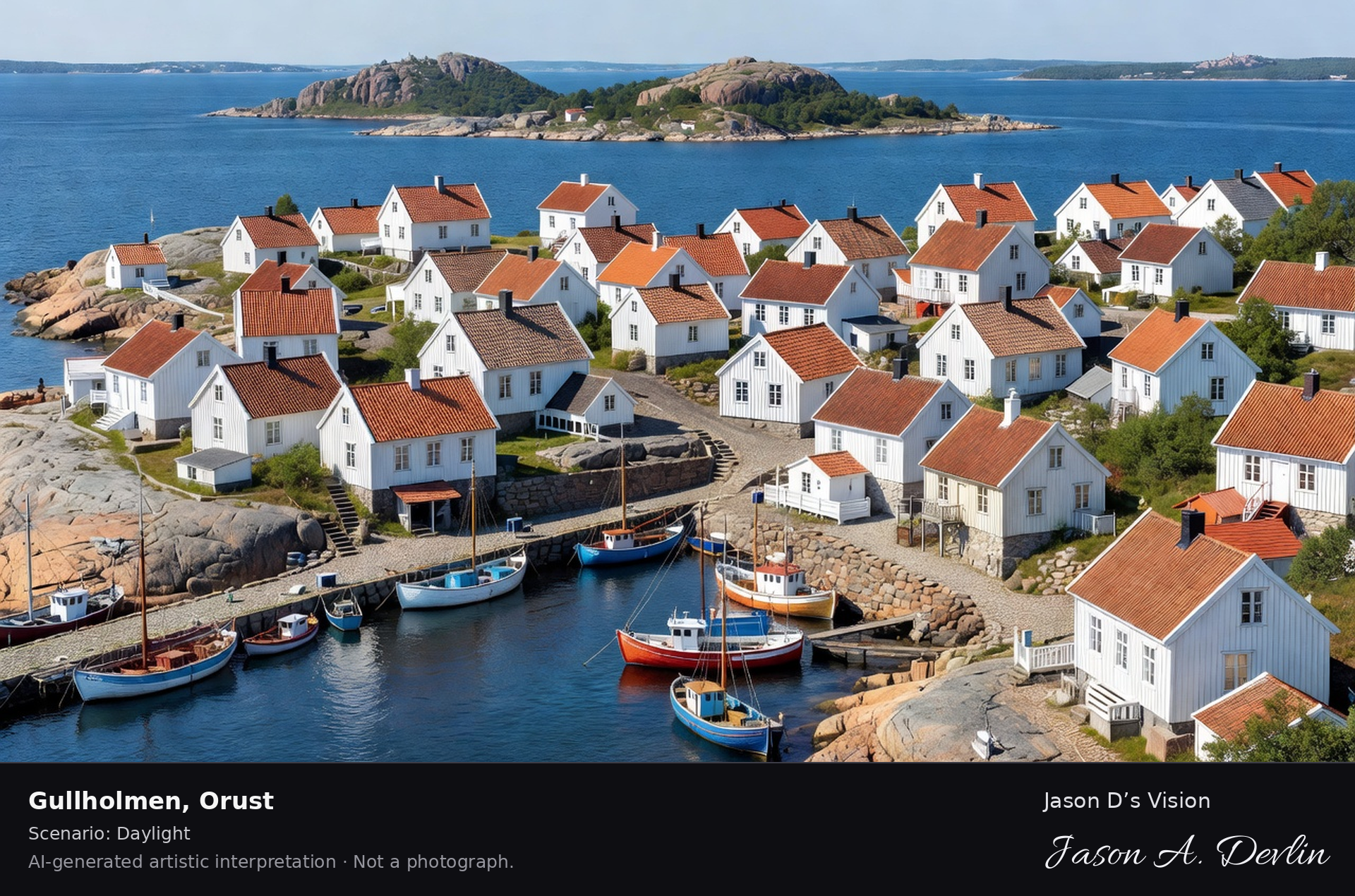
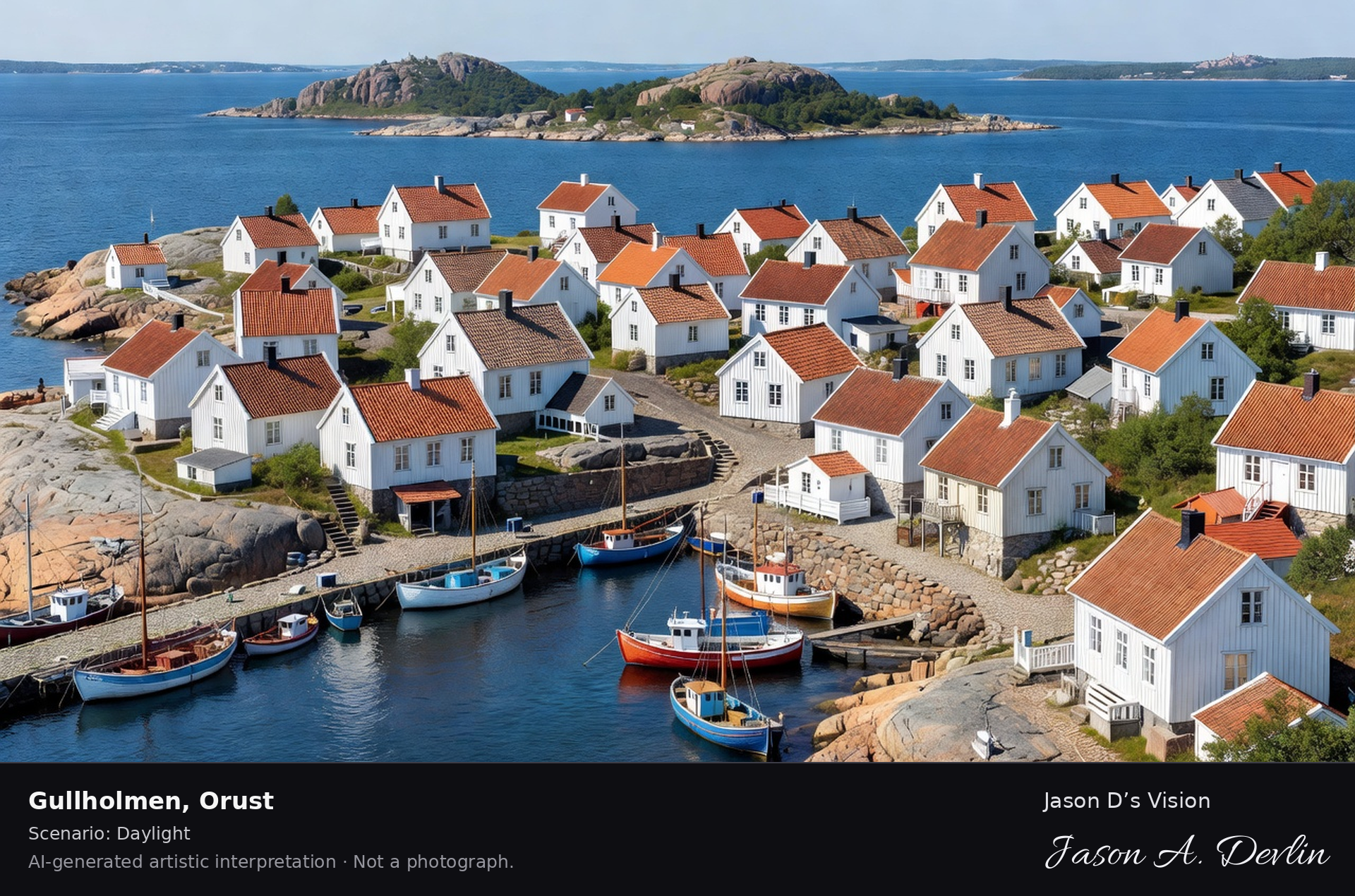
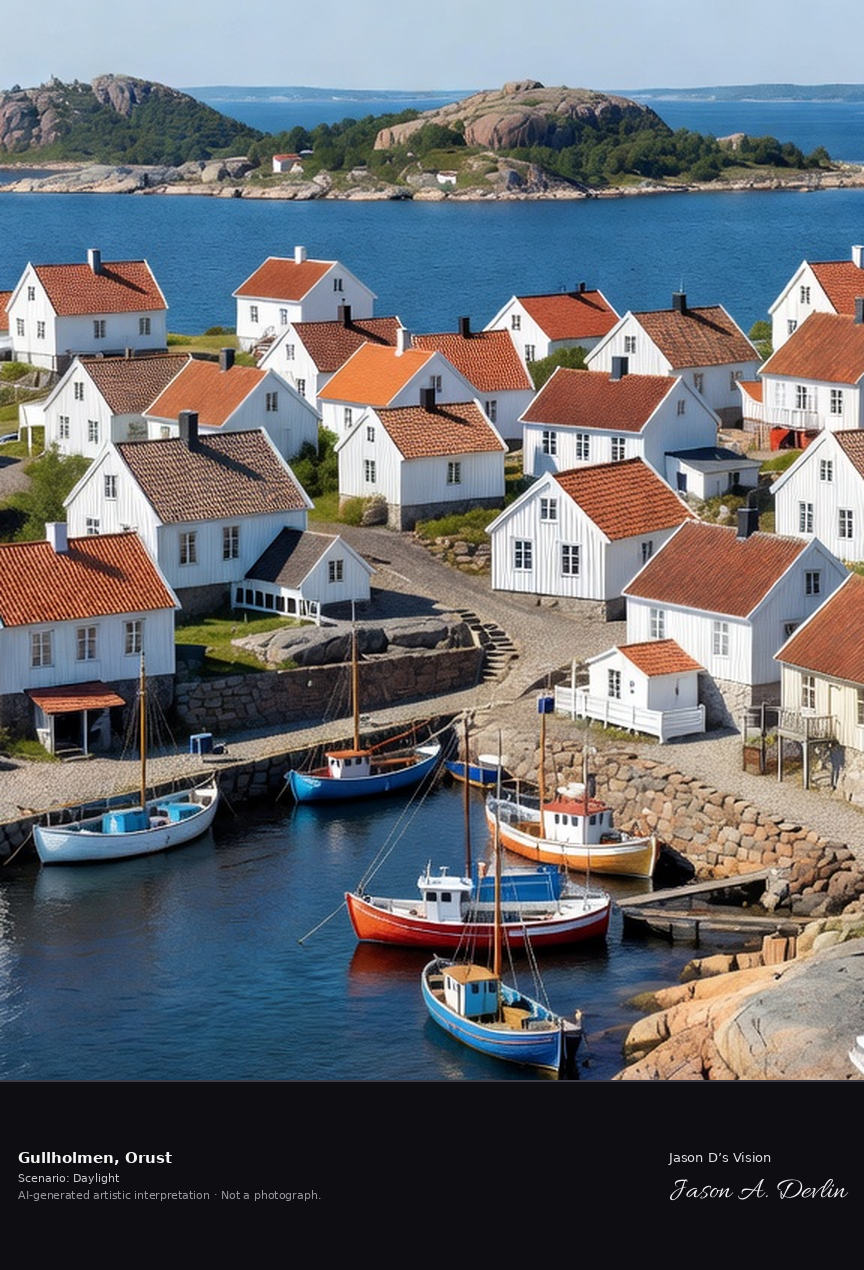
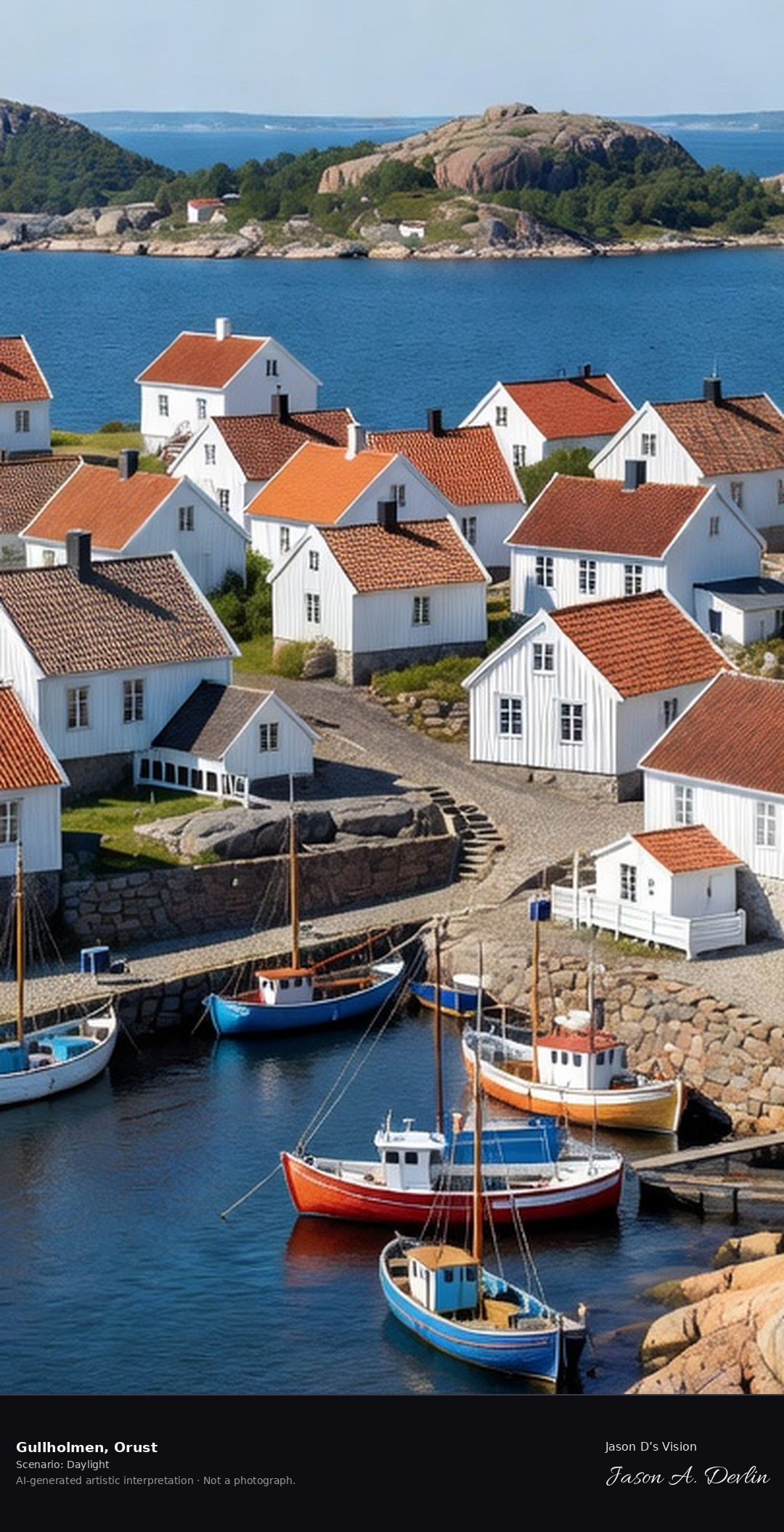
Gullholmen, Sweden's oldest fishing village, its dense cluster of white houses on the car-free island with the harbor and Hermanö beyond. A living museum of Bohuslän fishing life.
From the classic viewpoint over the car-free island the eye takes in the dense cluster of white wooden houses with red roofs among smooth granite outcrops, the small harbor with fishing boats in the foreground and the rounded island of Hermanö beyond the blue water — Sweden's oldest fishing village on Orust in bright natural daylight.
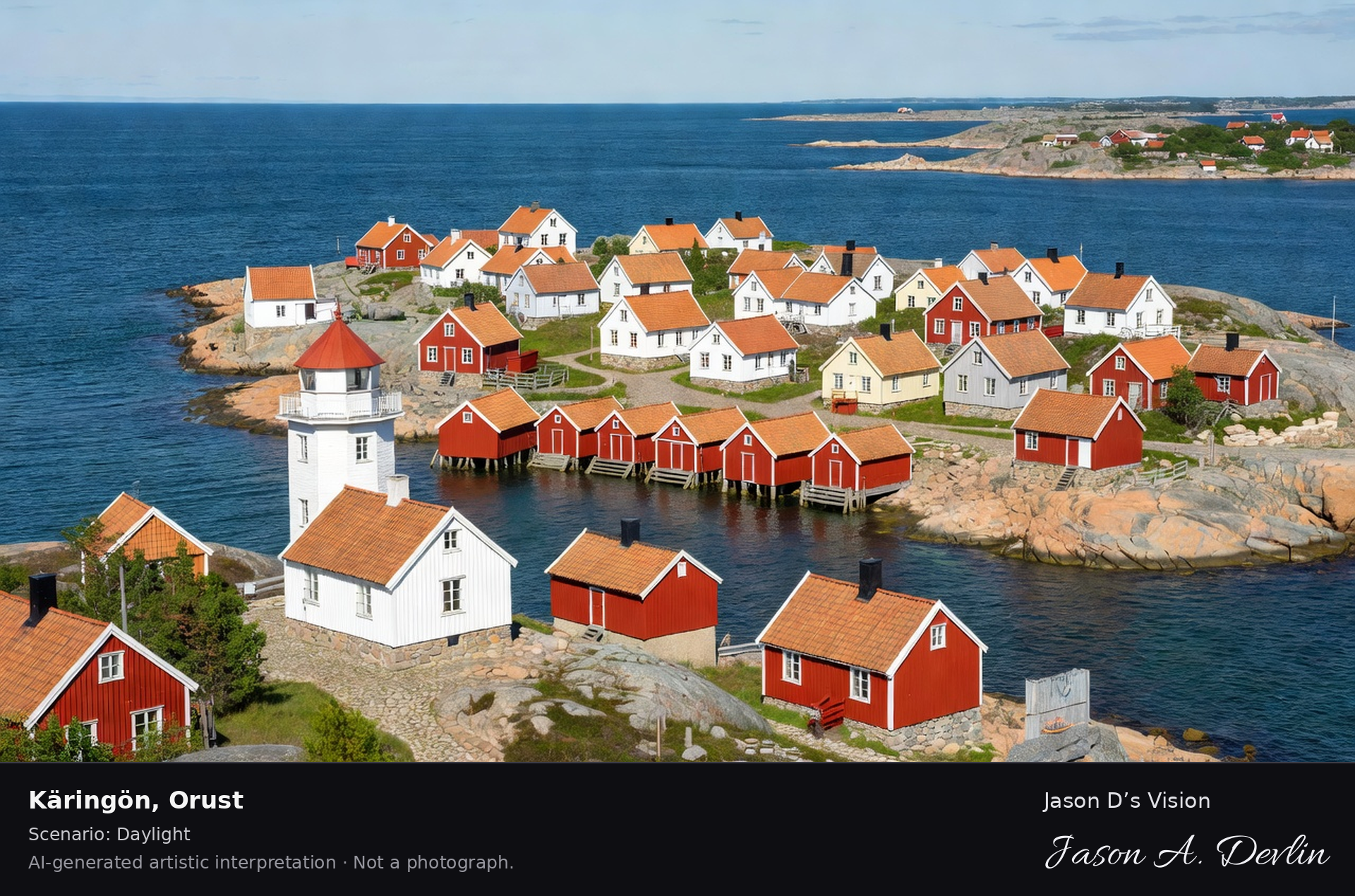
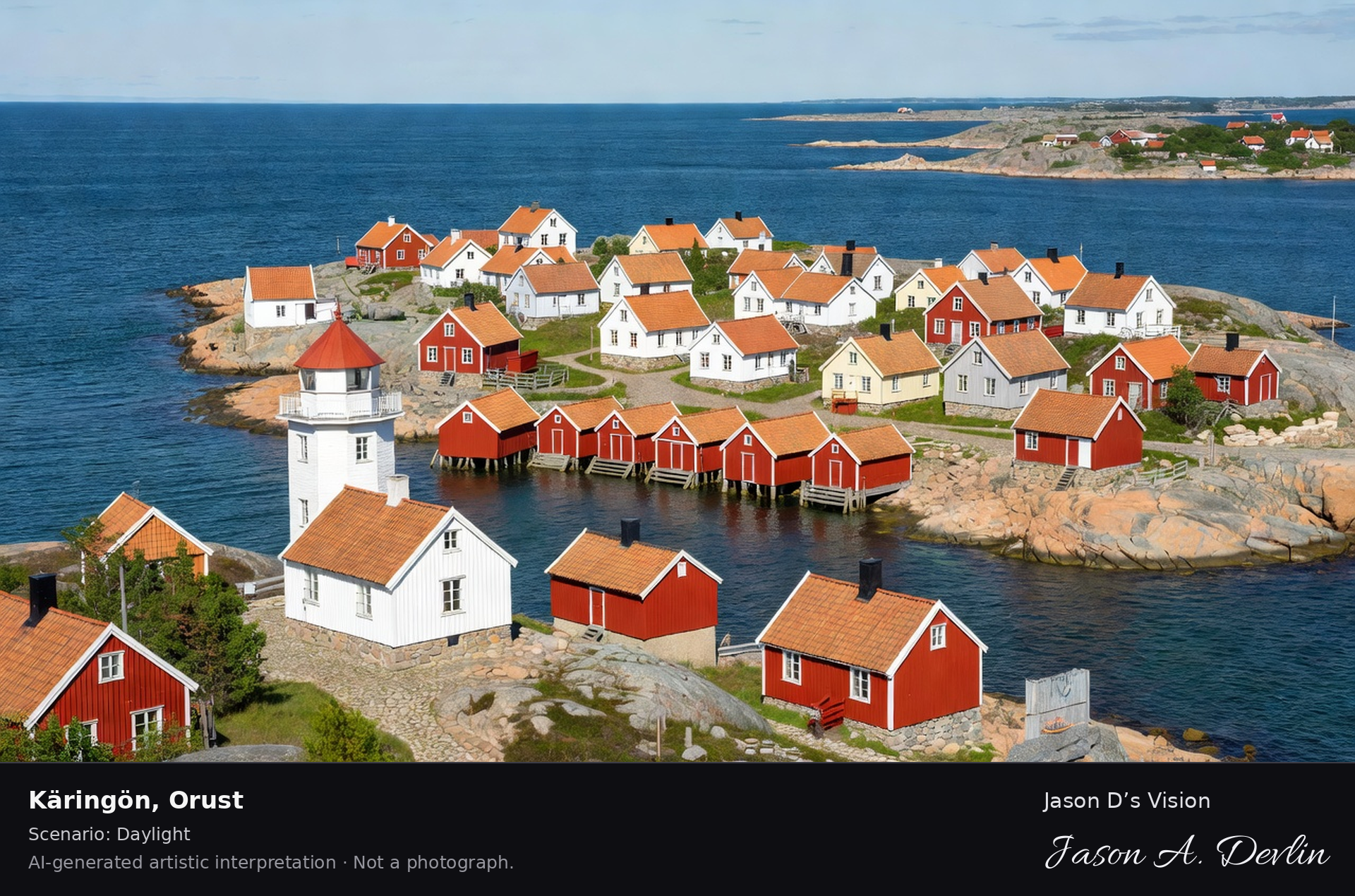
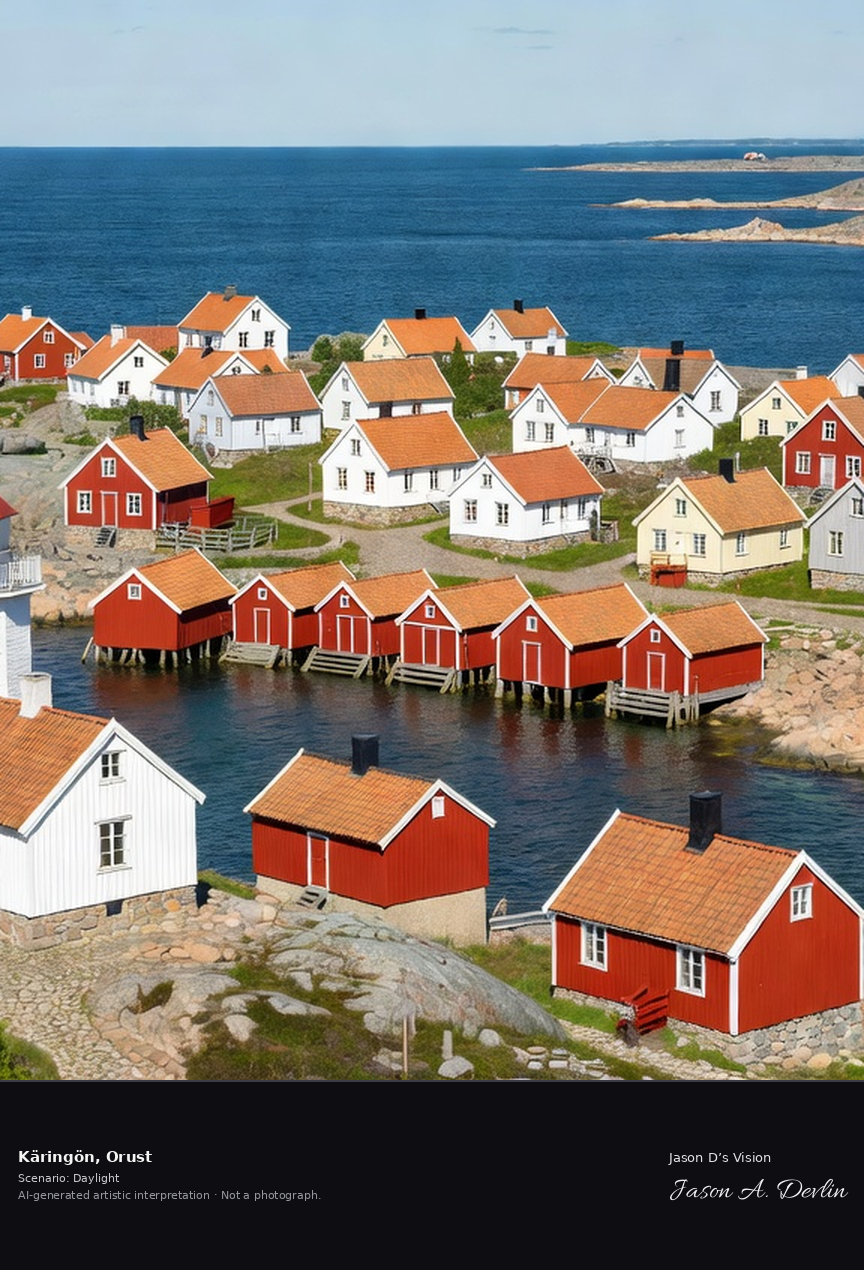
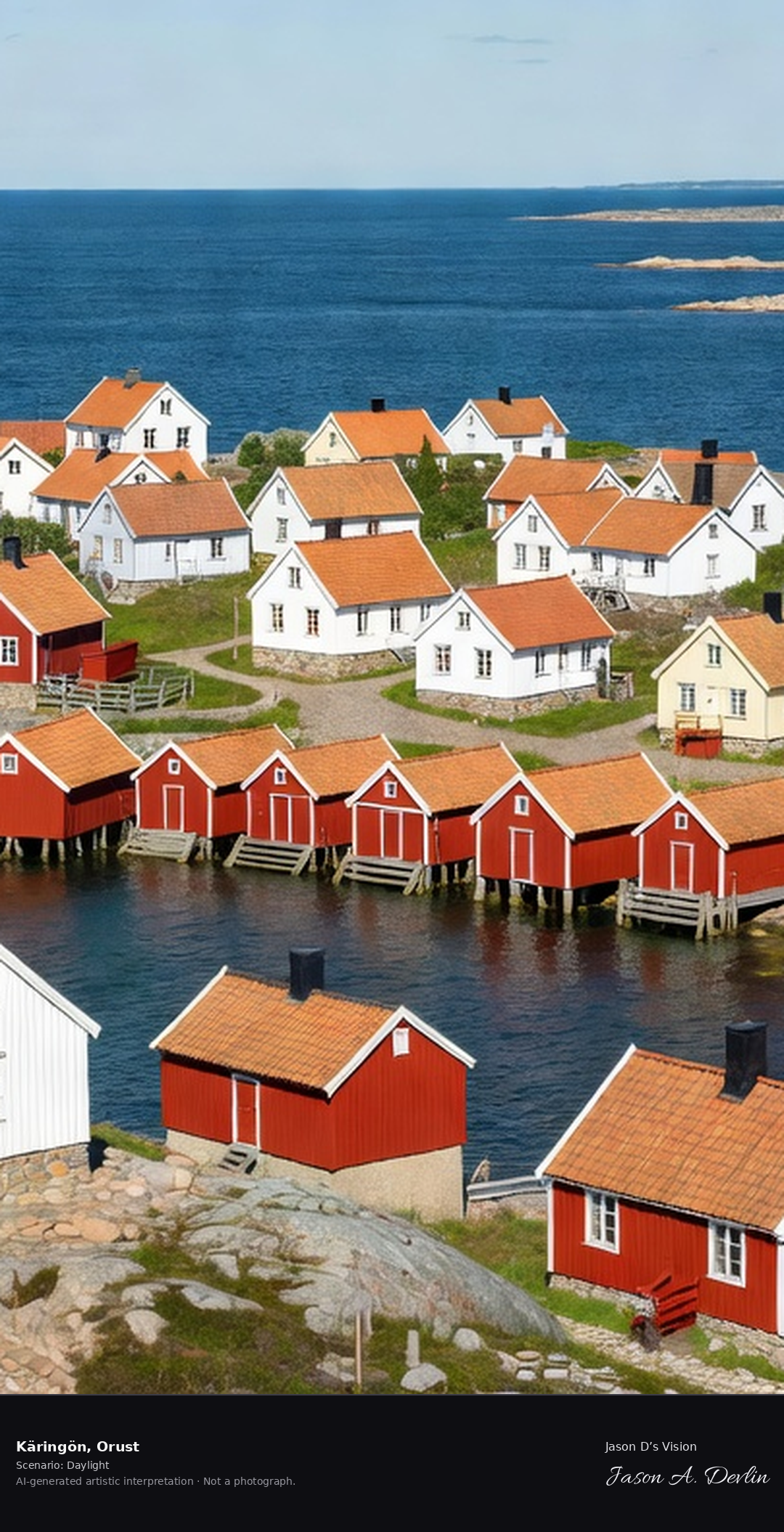
Käringön's car-free island village with its white lighthouse-like pilot tower, red boathouses along the harbor and the open Skagerrak beyond. A preserved 19th-century fishing community.
From the classic tourist viewpoint over car-free Käringön the eye takes in the white lighthouse-like pilot tower among the white houses with red roofs, the row of red boathouses along the harbor in the foreground and the open Skagerrak stretching beyond — a preserved 19th-century fishing village on Orust in bright natural daylight.
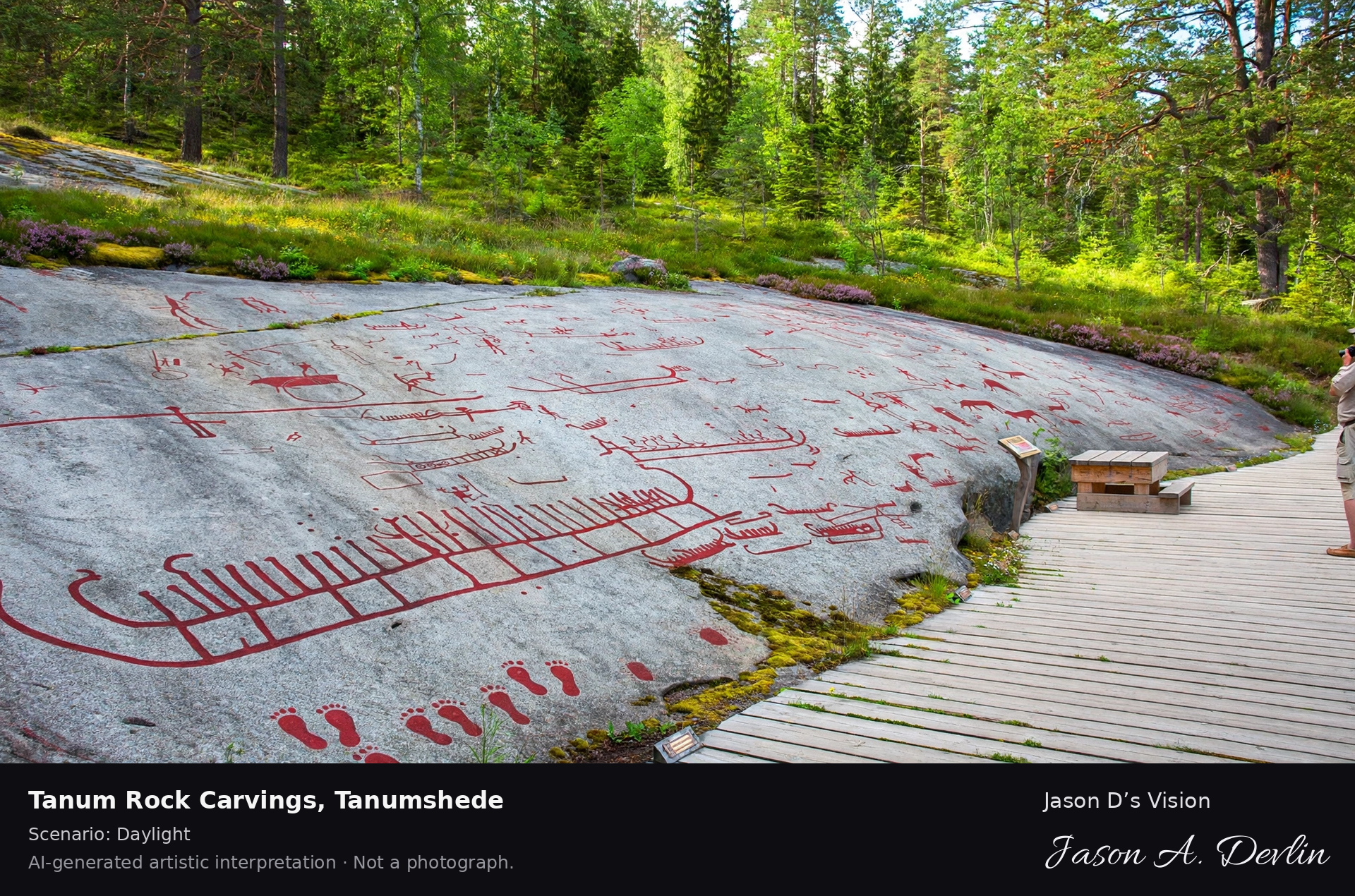
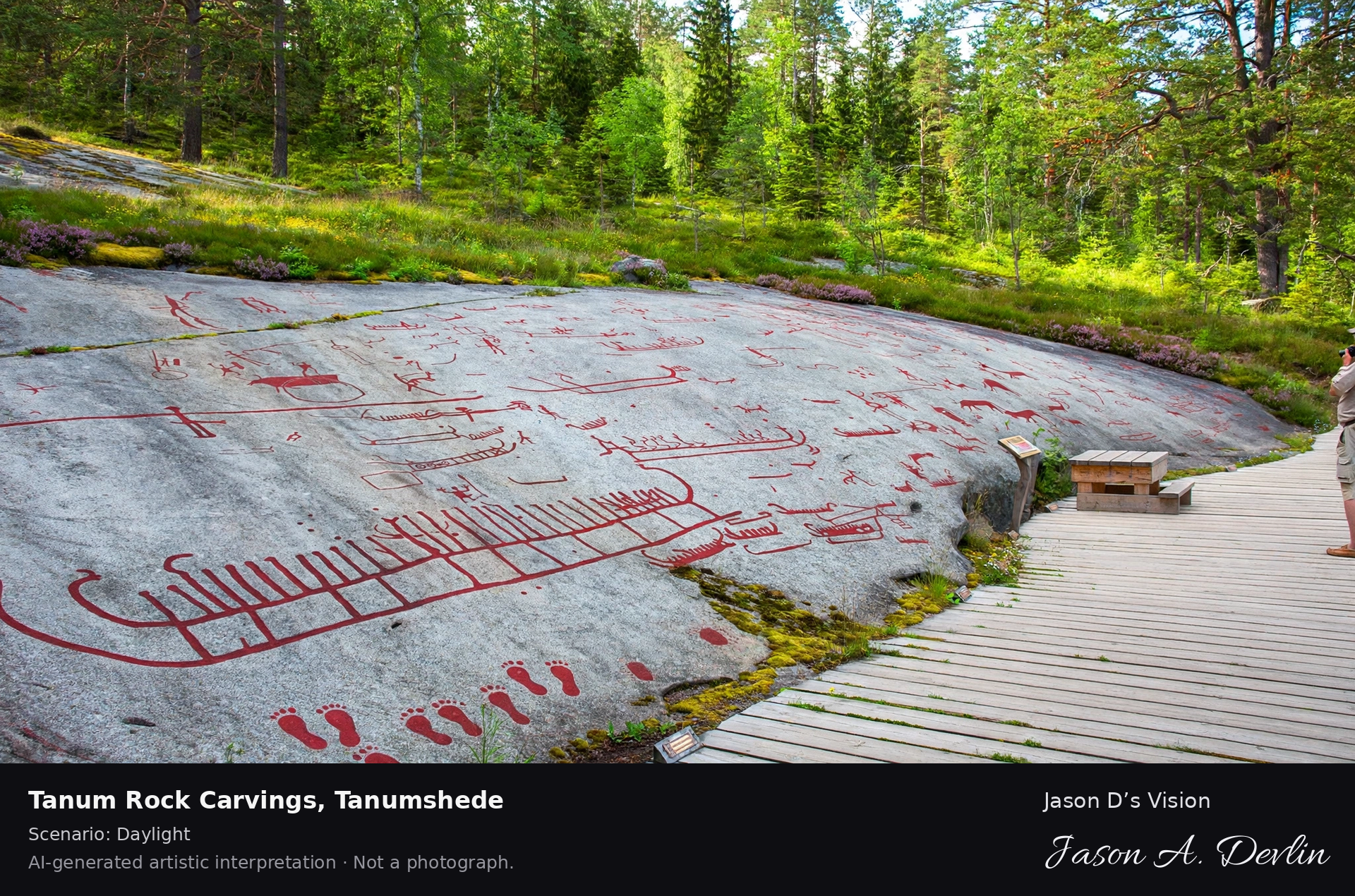
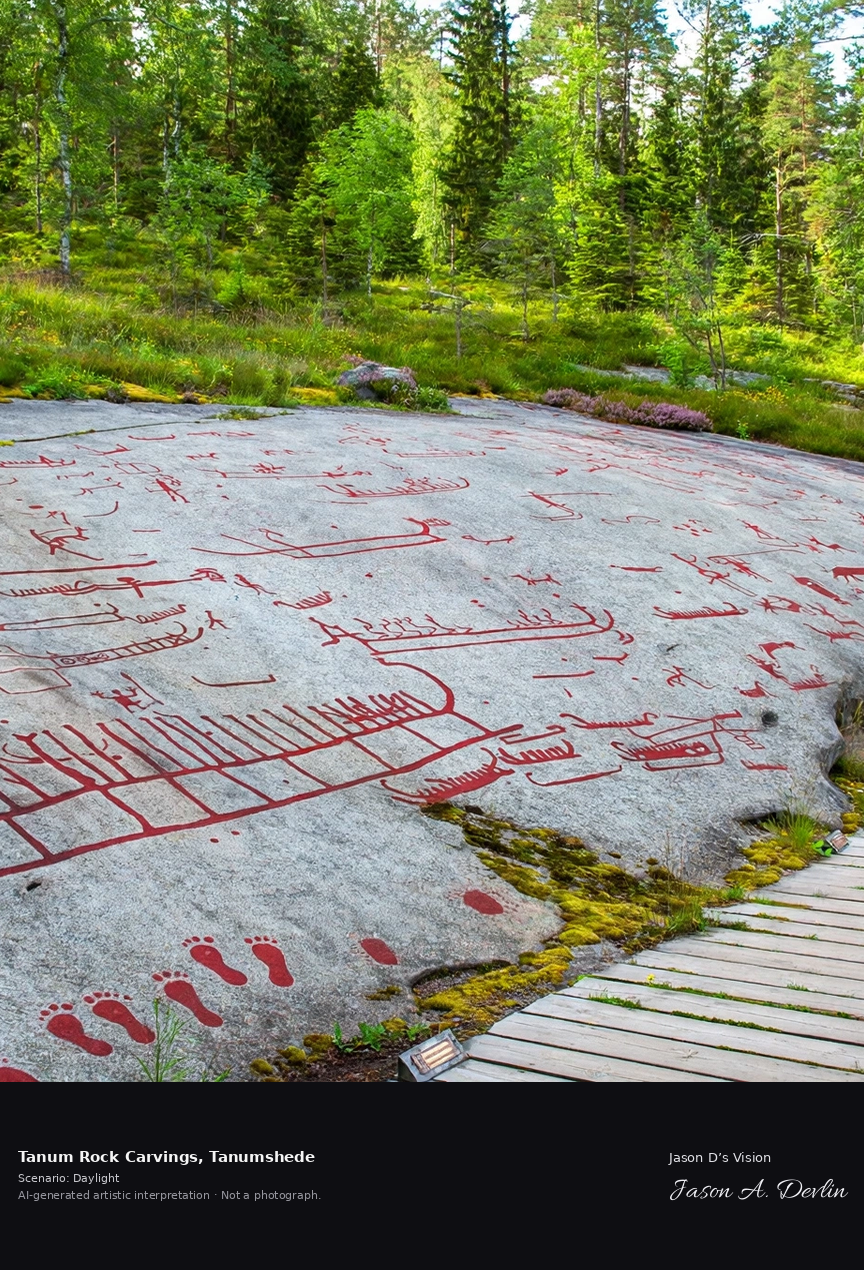
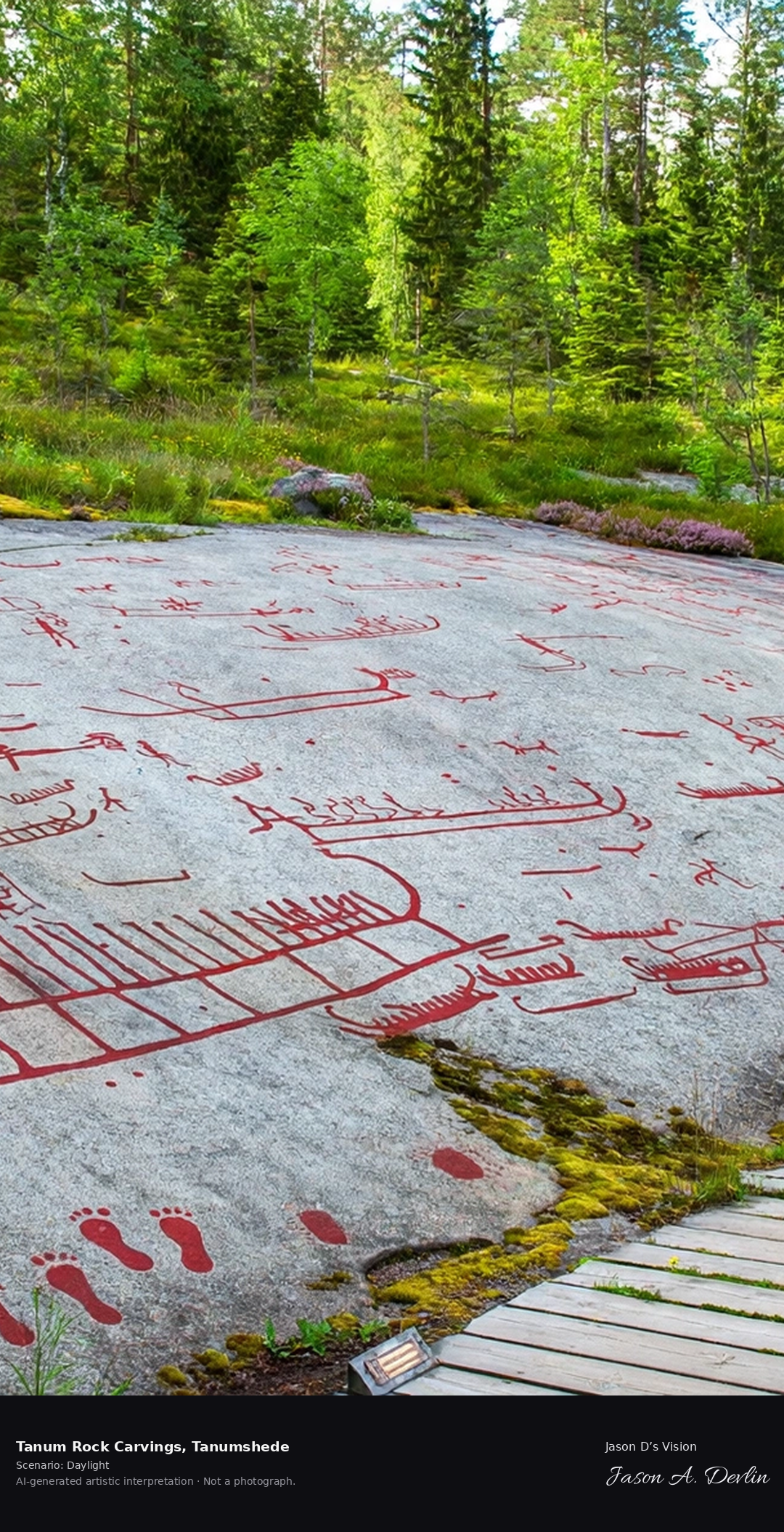
The Vitlycke rock carving panel at Tanum, Bronze Age ships and figures pecked into the smooth granite 3,000 years ago, the UNESCO site's most famous panel in the forest clearing.
From the classic tourist viewpoint at the wooden viewing platform the eye takes in the great granite Vitlycke panel at Tanum: Bronze Age ships with curved prows, human figures, foot soles and sun symbols pecked into the smooth rock face 3,000 years ago — the UNESCO World Heritage site's most famous panel — ringed by pine and birch forest in bright natural daylight.
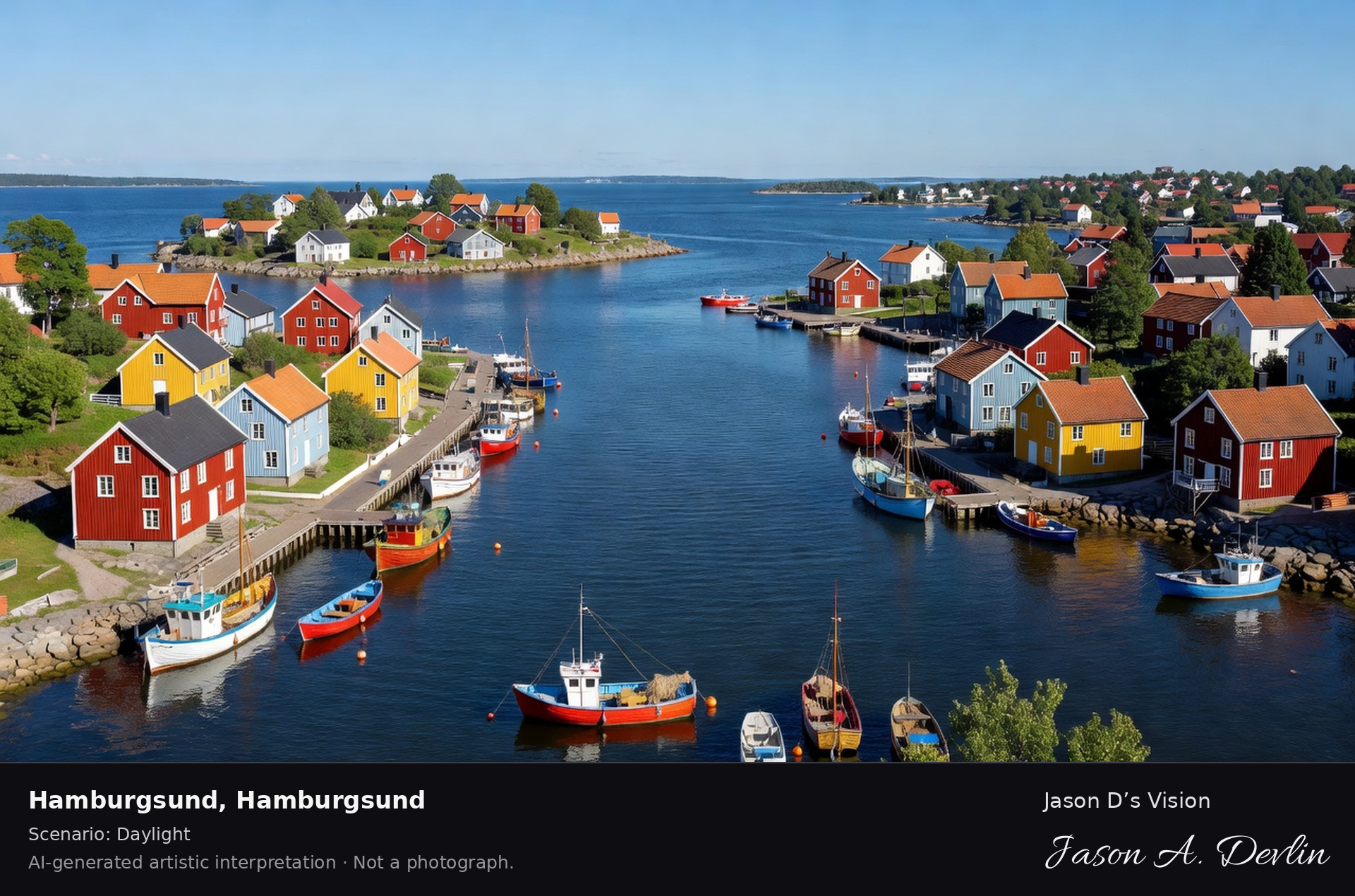
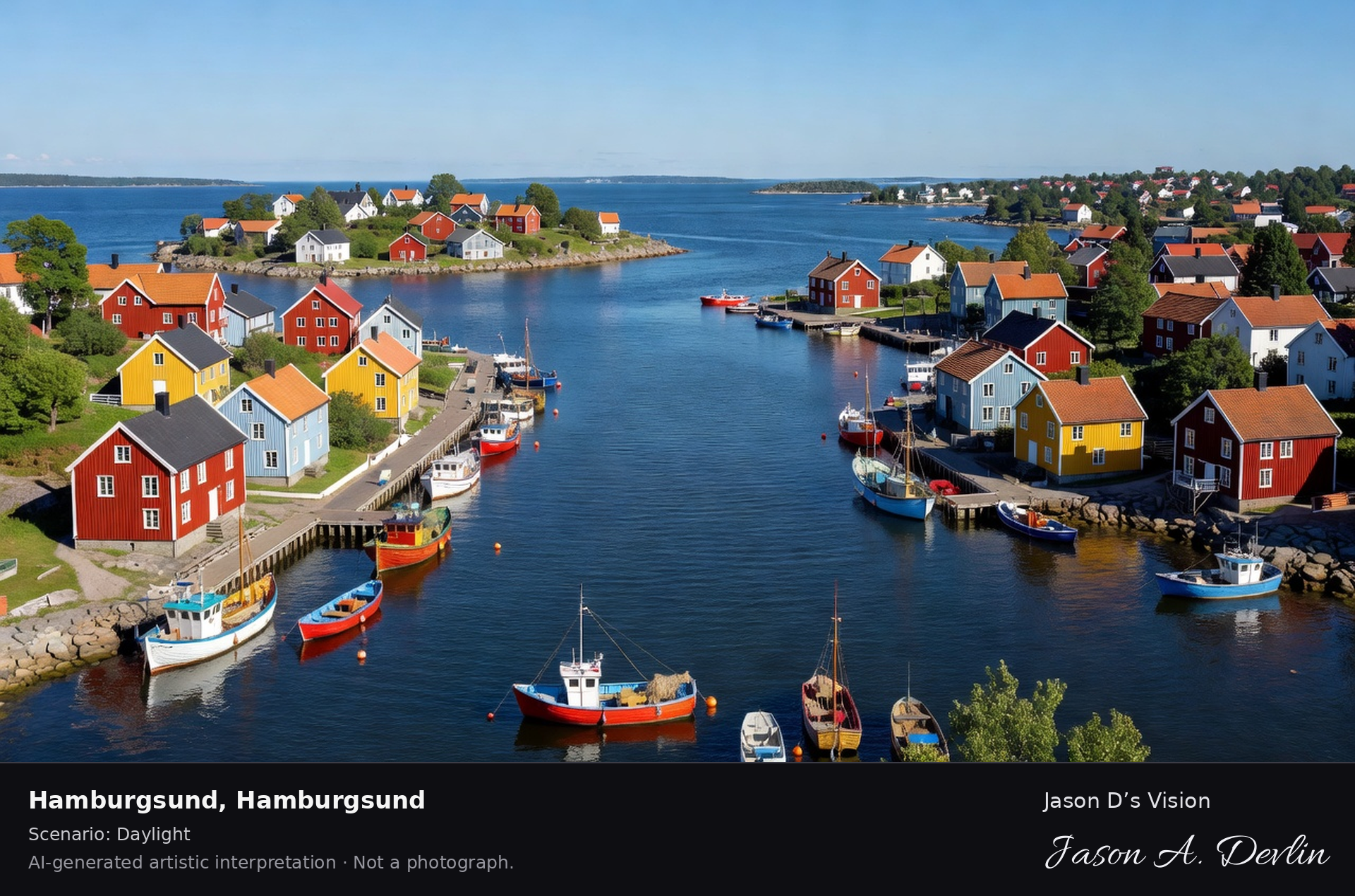
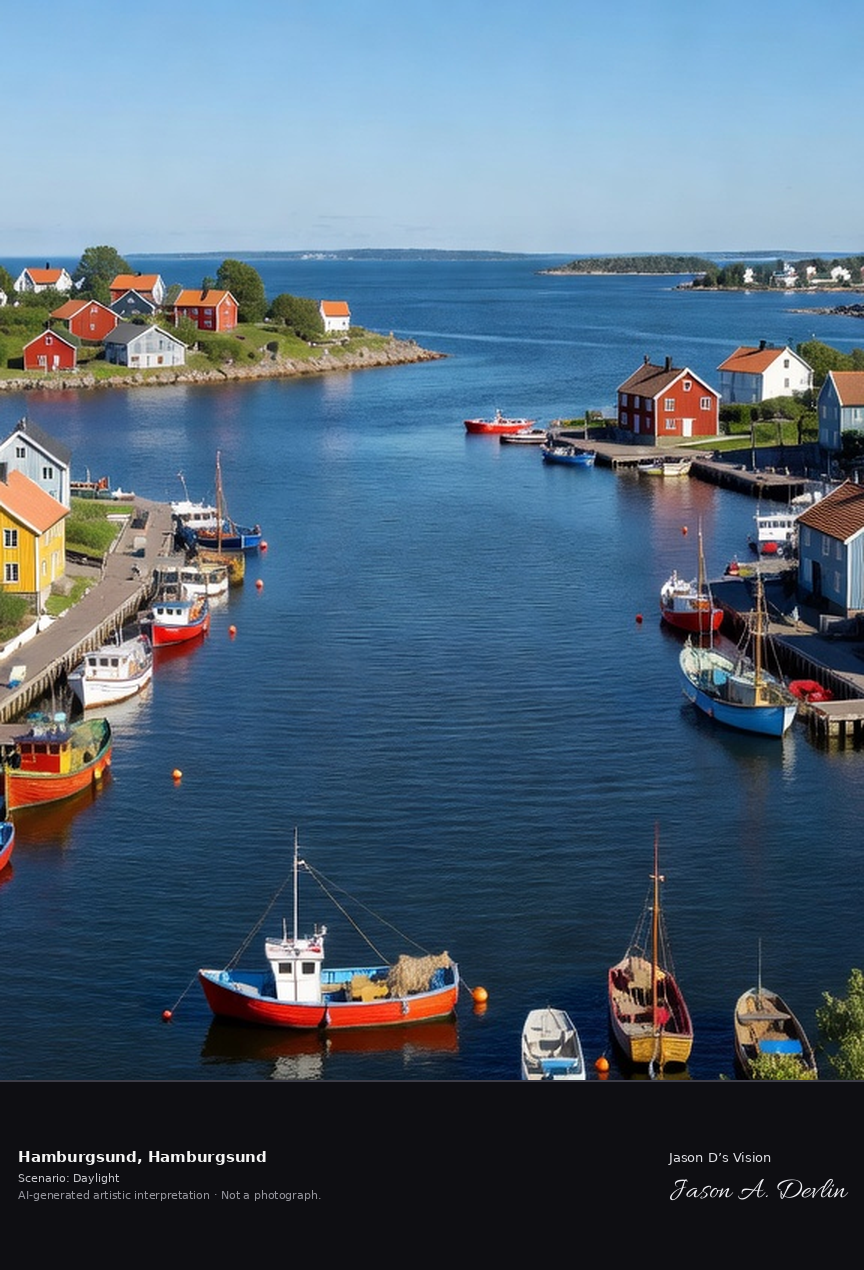
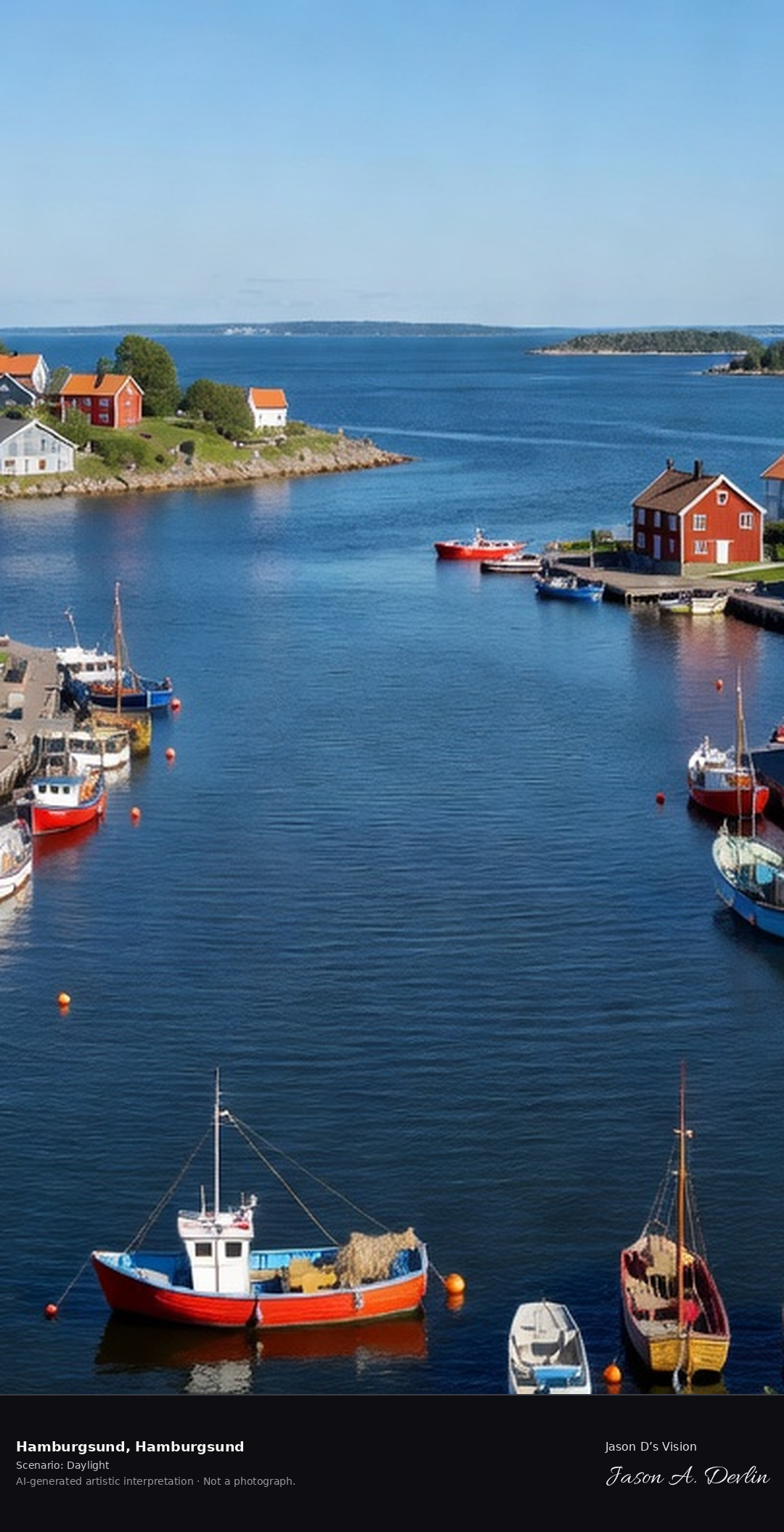
Hamburgsund's narrow strait between the mainland and Hamburgö island, colorful houses on both shores with the fishing fleet and the open sea beyond the sound.
The view looks across Hamburgsund’s narrow strait between the mainland and Hamburgö island. Colorful houses stand on both shores, with the fishing fleet in the sound and the open sea beyond, in bright natural daylight.
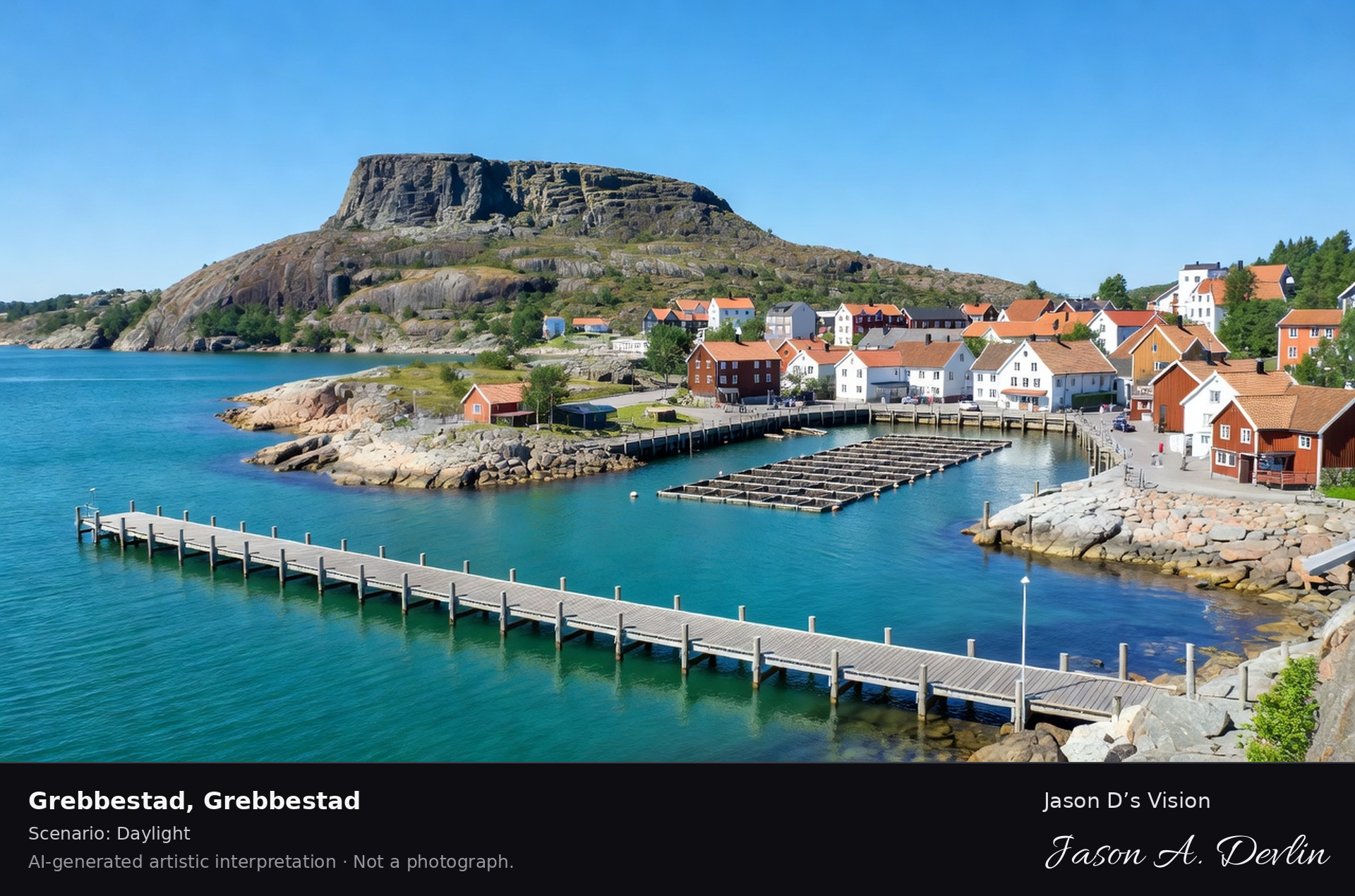
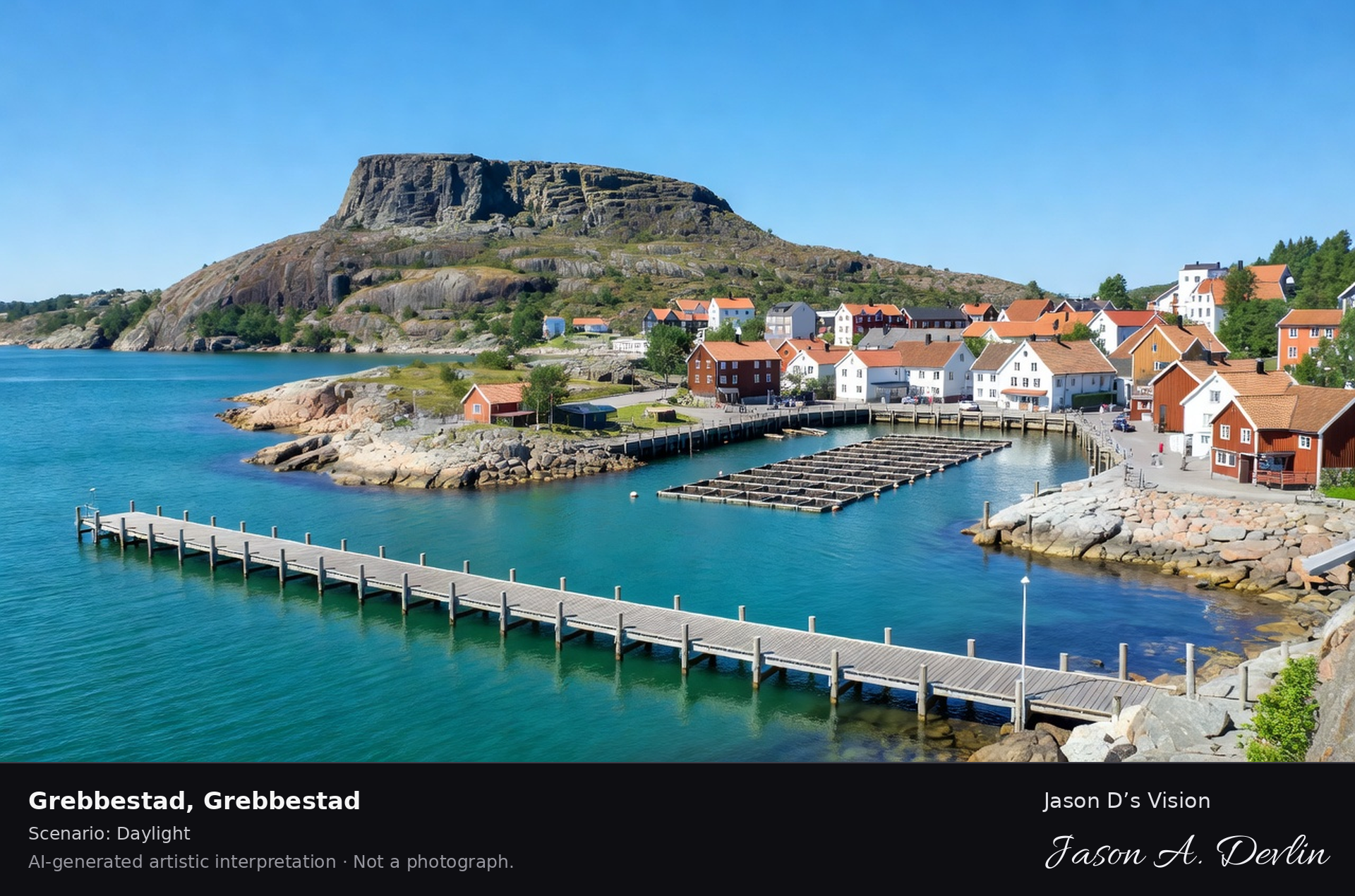
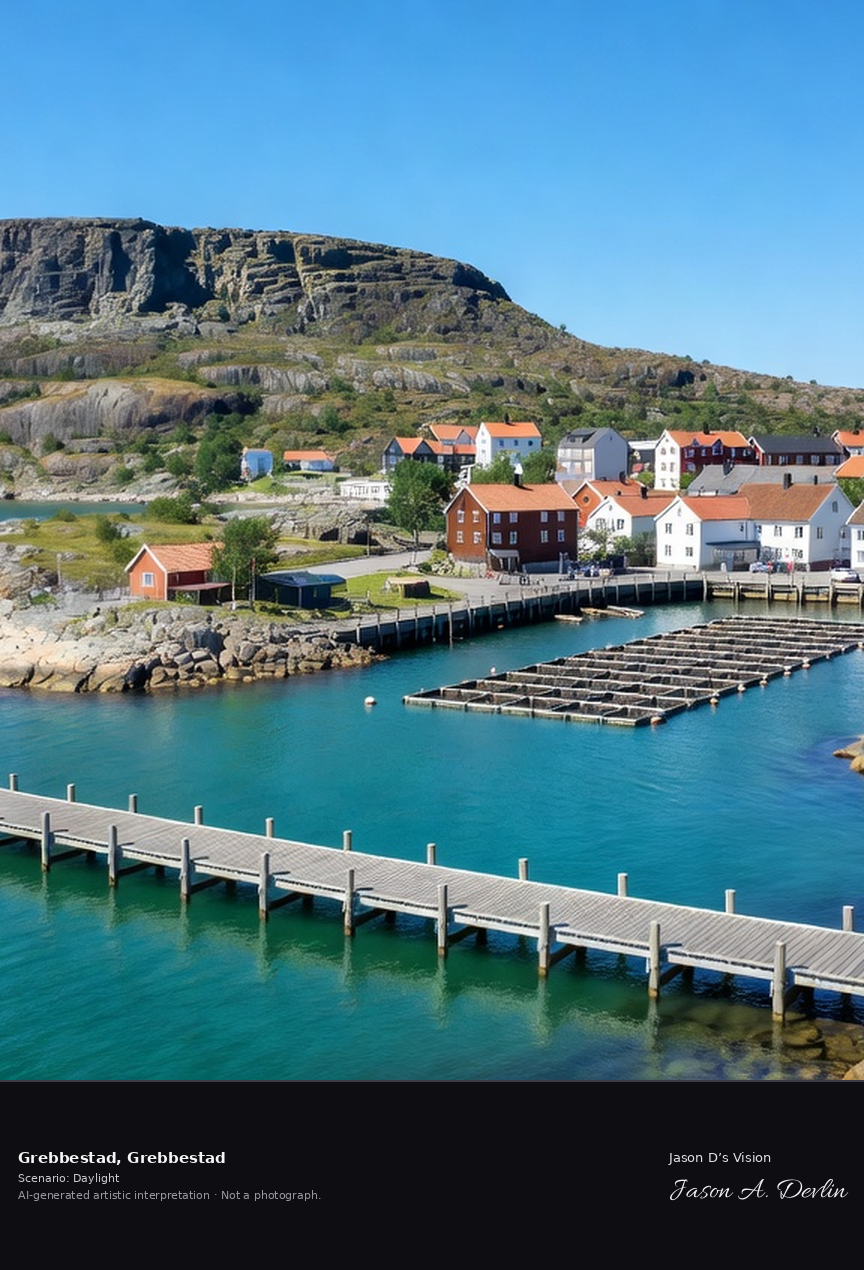
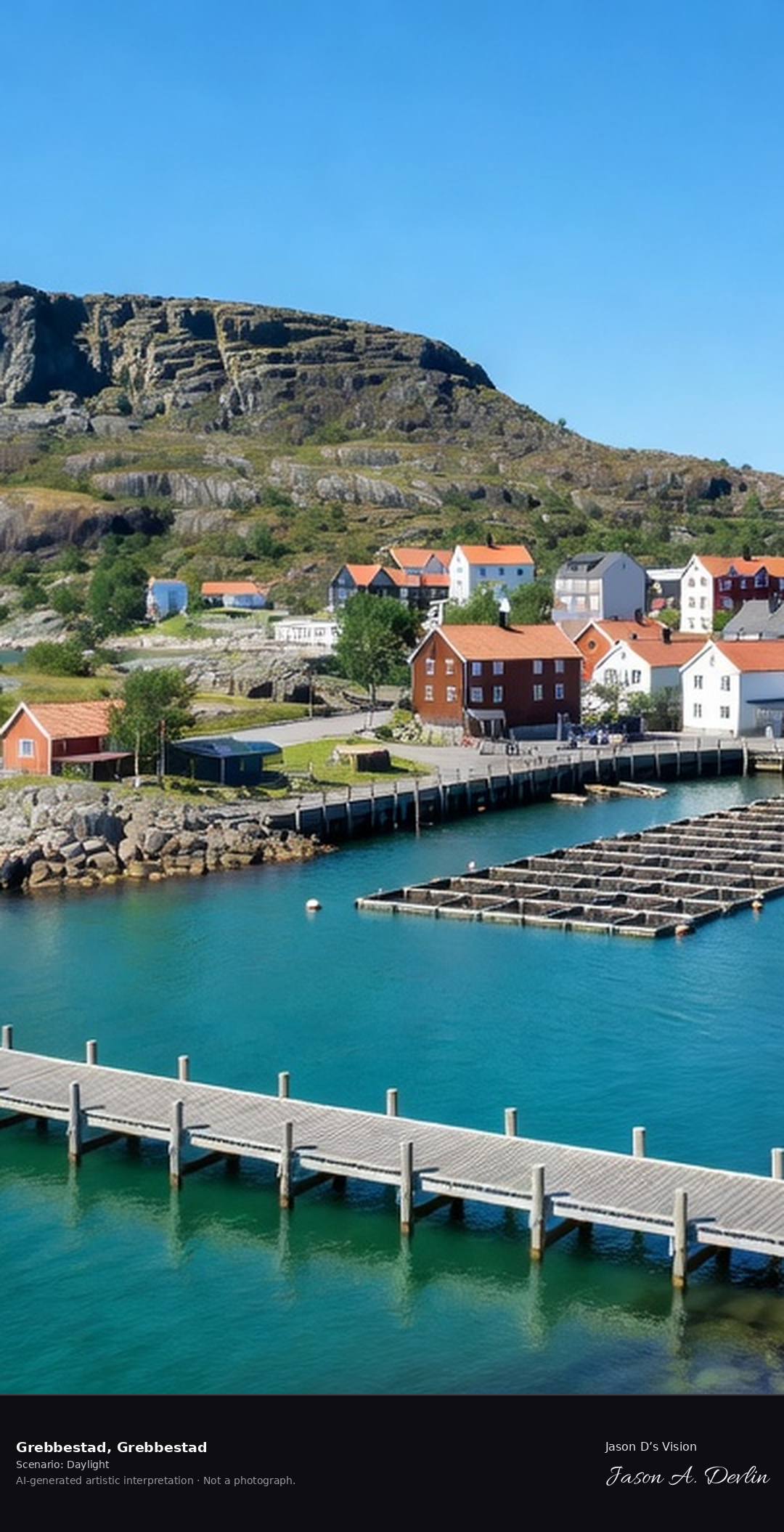
Grebbestad's harbor with the oyster beds and the distinctive flat-topped Stöberget, the 'oyster town' with its long bathing pier and granite quays in the summer sun.
From the classic tourist viewpoint over the harbor the eye takes in Grebbestad in Grebbestad: the long bathing pier in the foreground, oyster-bed rafts floating in the turquoise harbor, the distinctive flat-topped Stöberget rising behind, and the red-and-white wooden houses of Bohuslän's 'oyster town' along the granite quays in bright natural daylight.
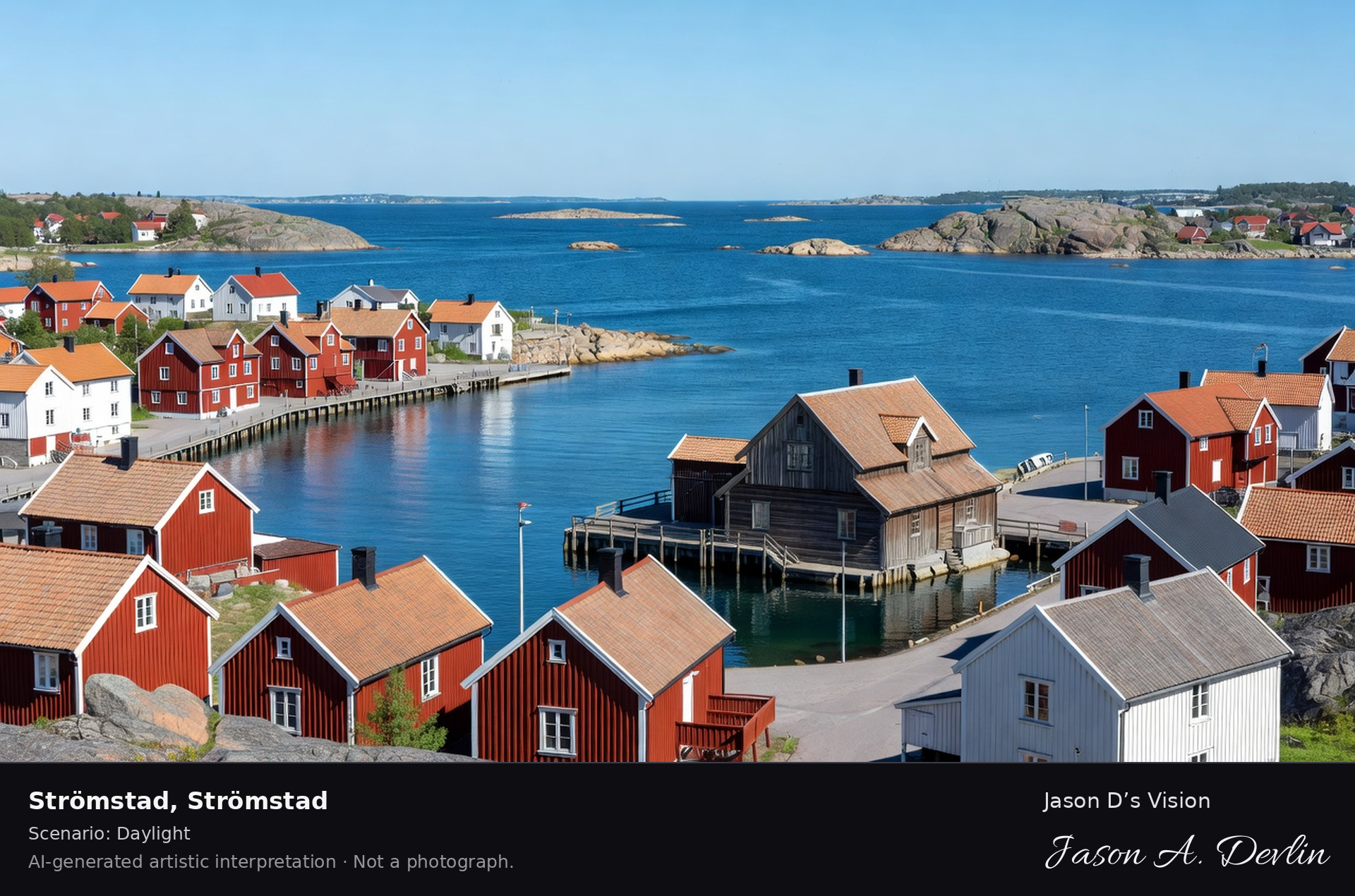
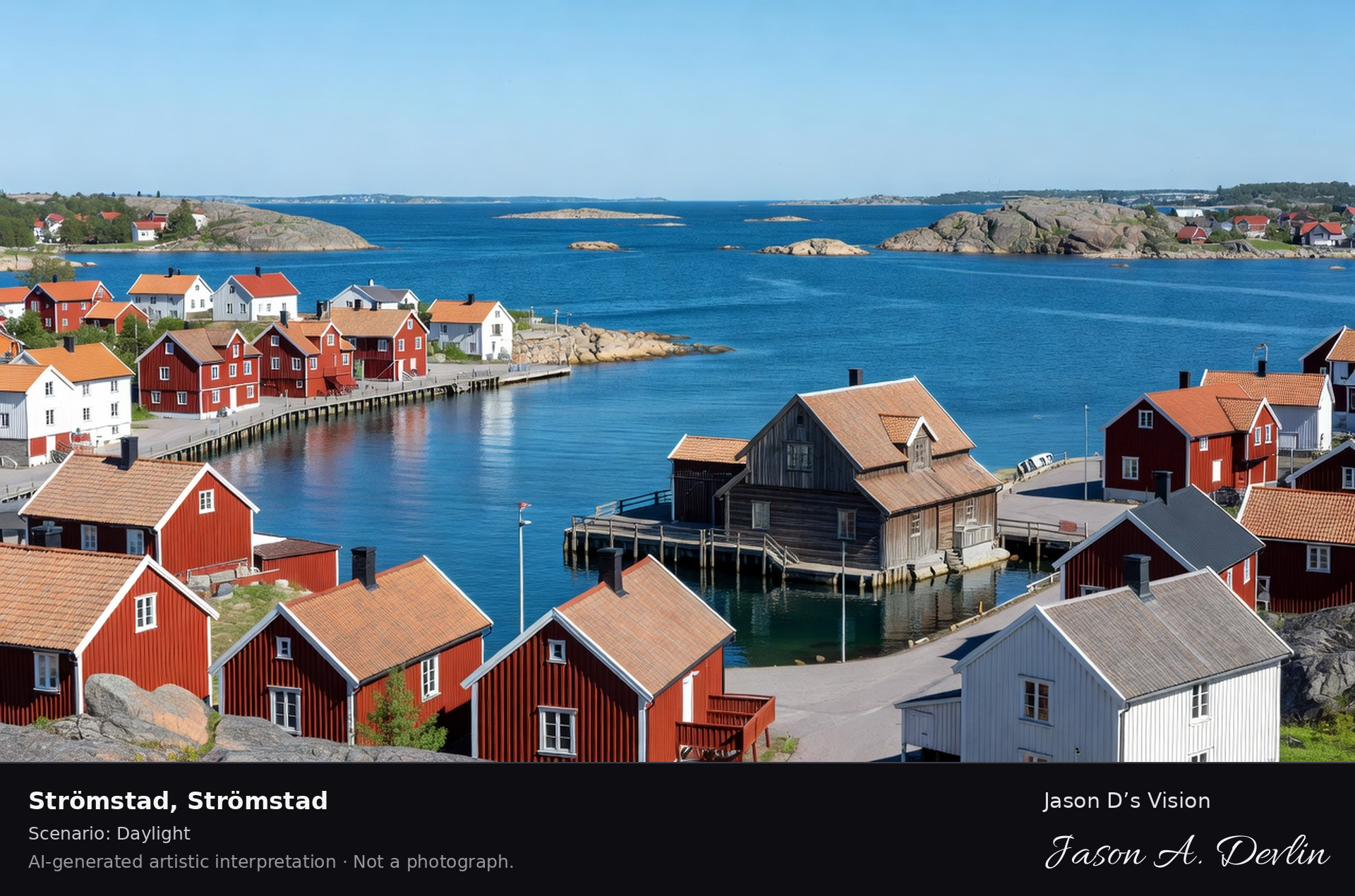
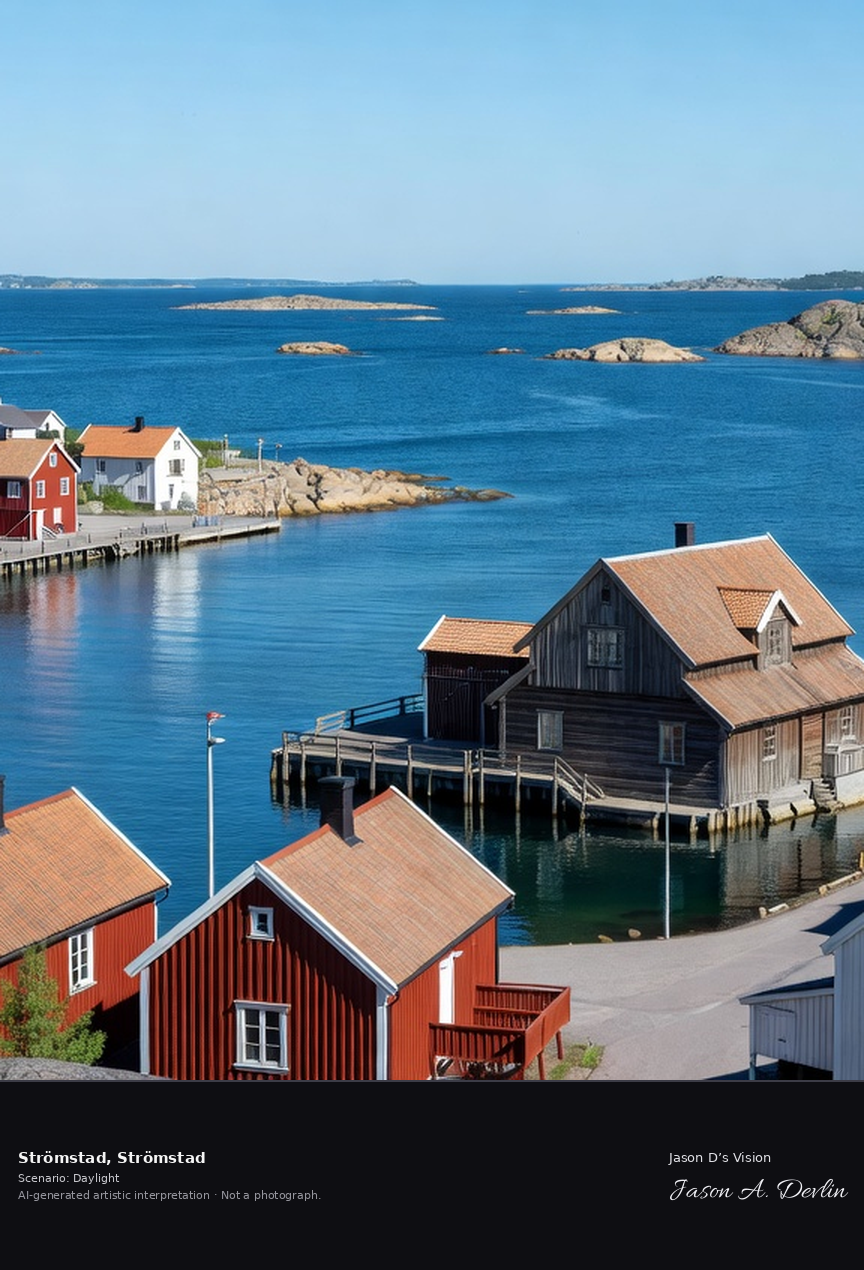
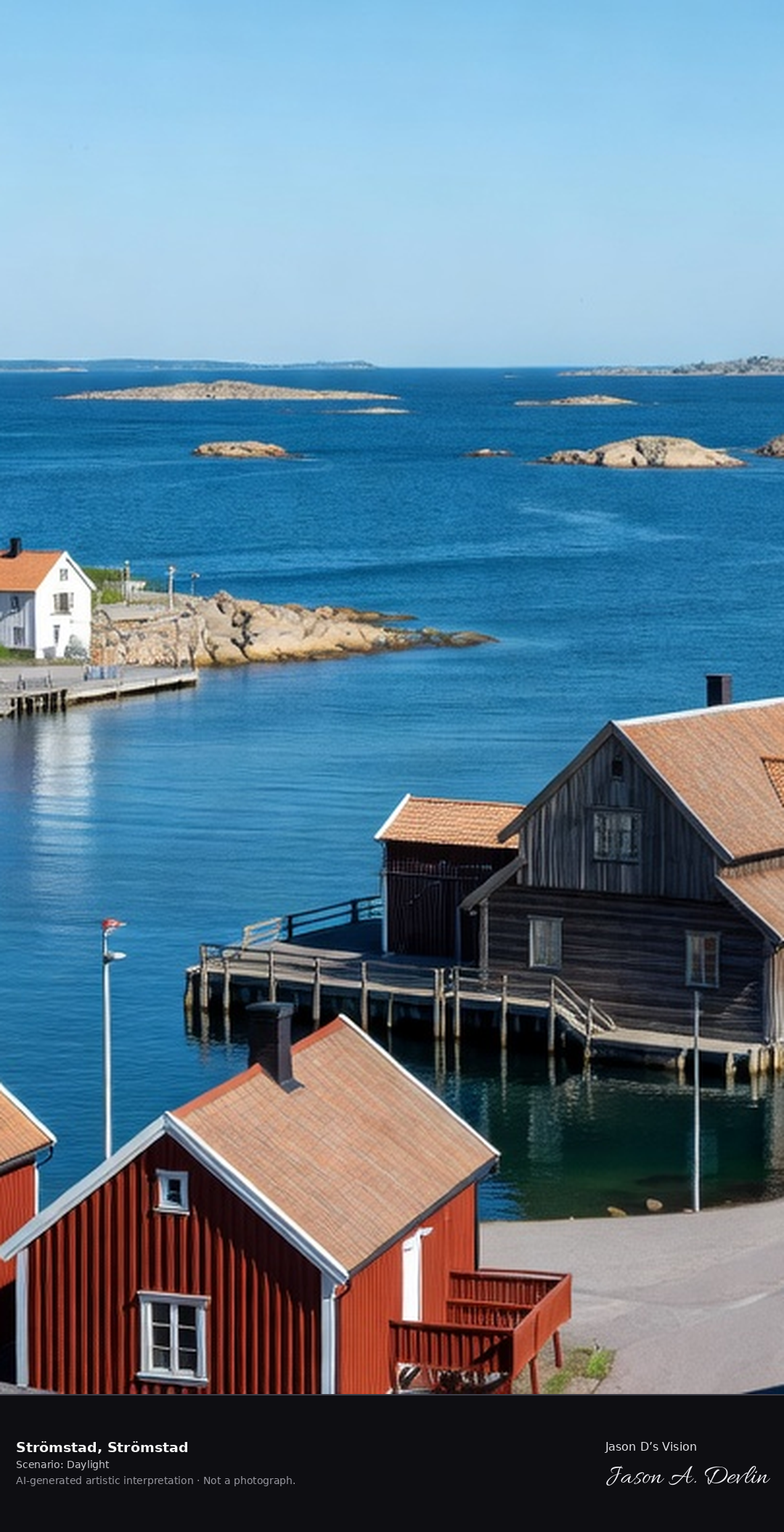
Strömstad's harbor town center with the old bathhouse and the Koster fjord beyond, the northern Bohuslän resort town near the Norwegian border with its wooden villas.
The harbor town center of Strömstad in northern Bohuslän: red-and-white wooden villas lining the granite quay, the old bathhouse boathouse on the jetty, and the blue Koster fjord with its rocky skerries stretching beyond — a classic coastal resort town near the Norwegian border, in bright natural daylight.
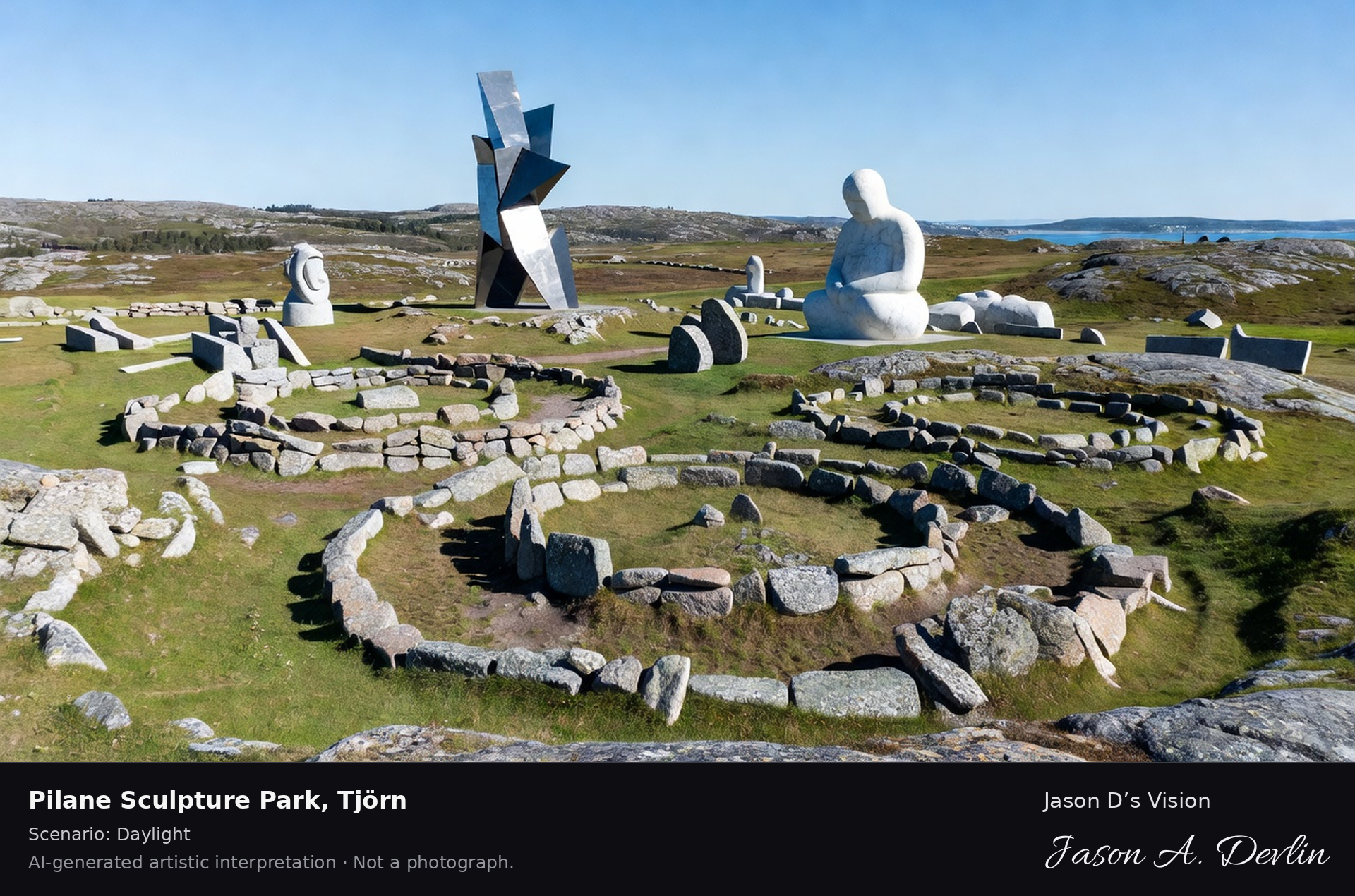
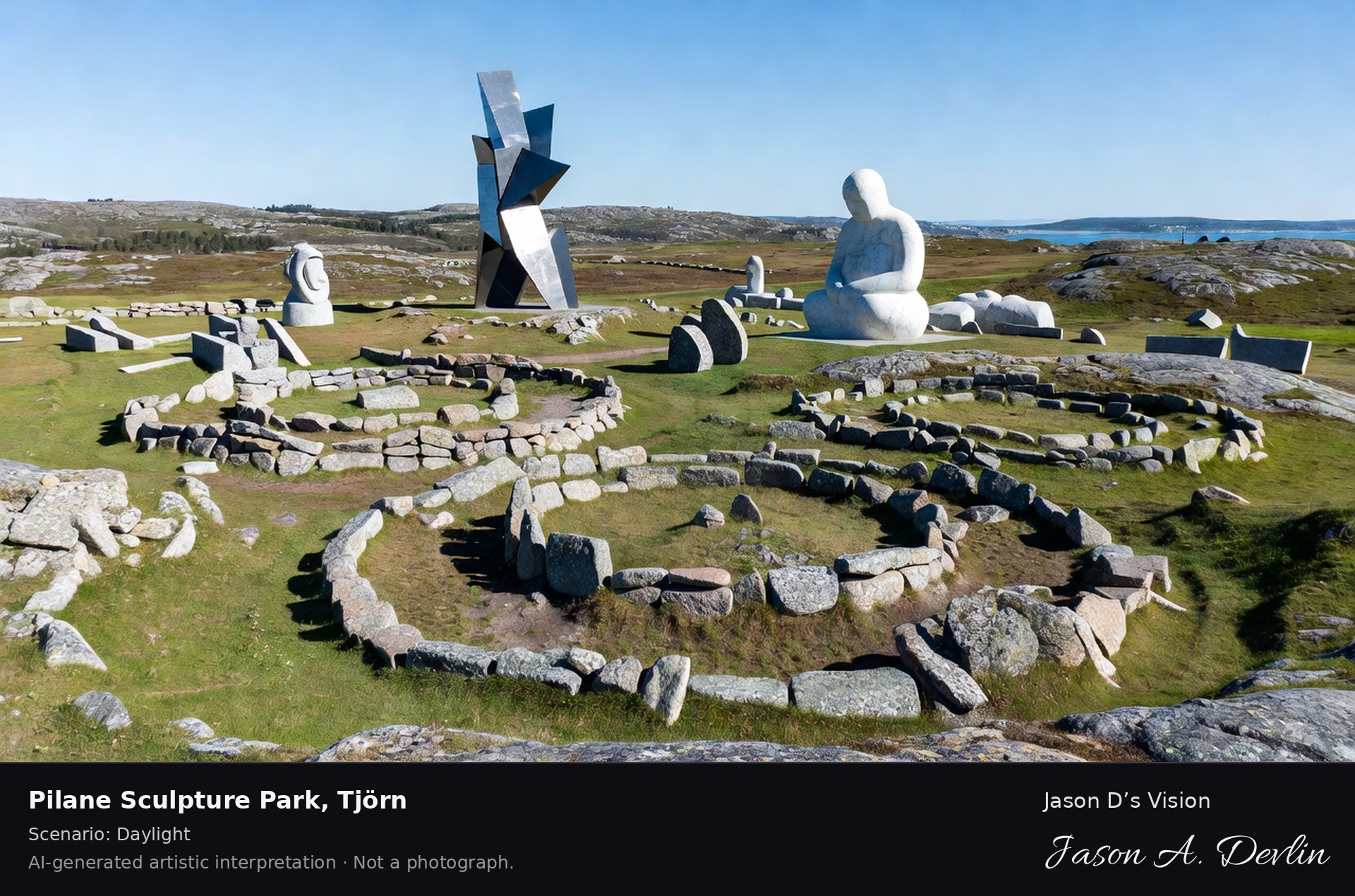
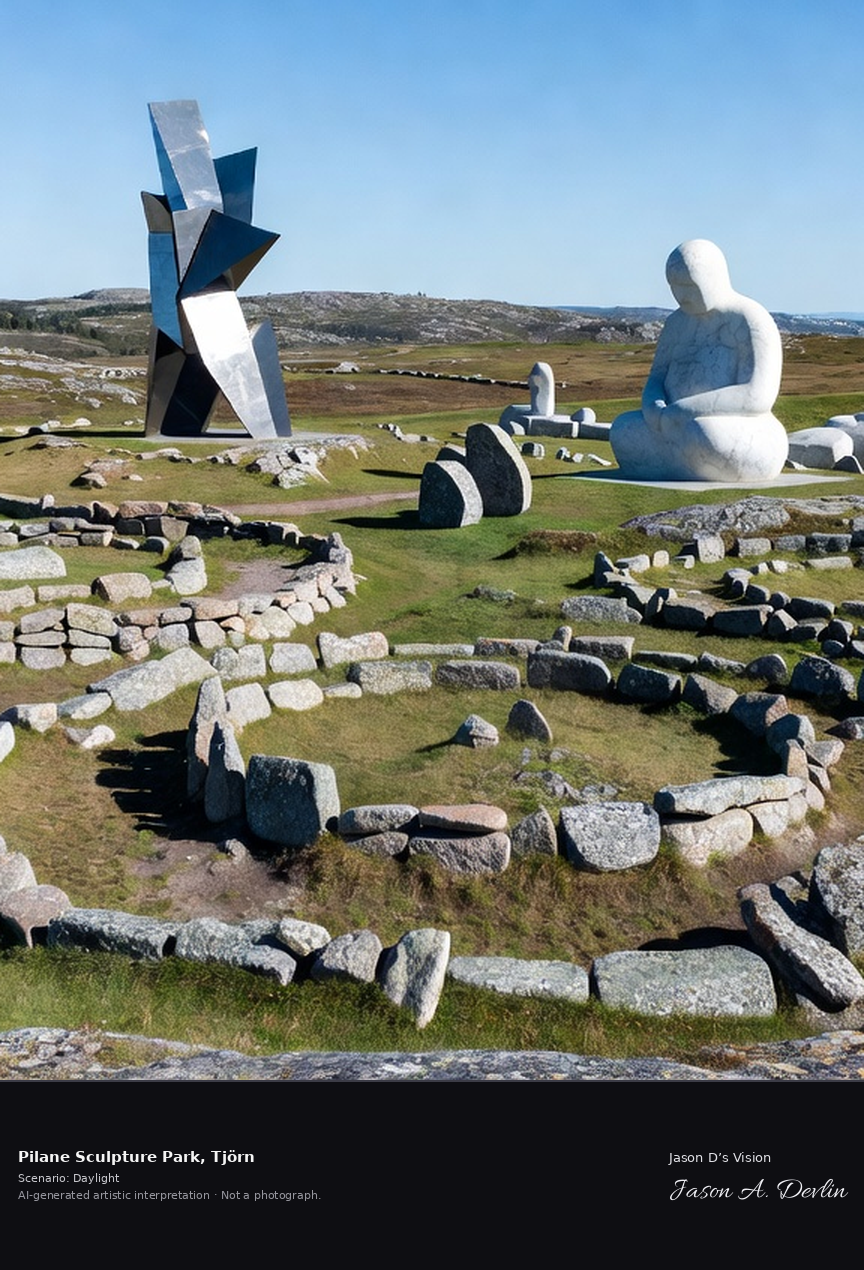
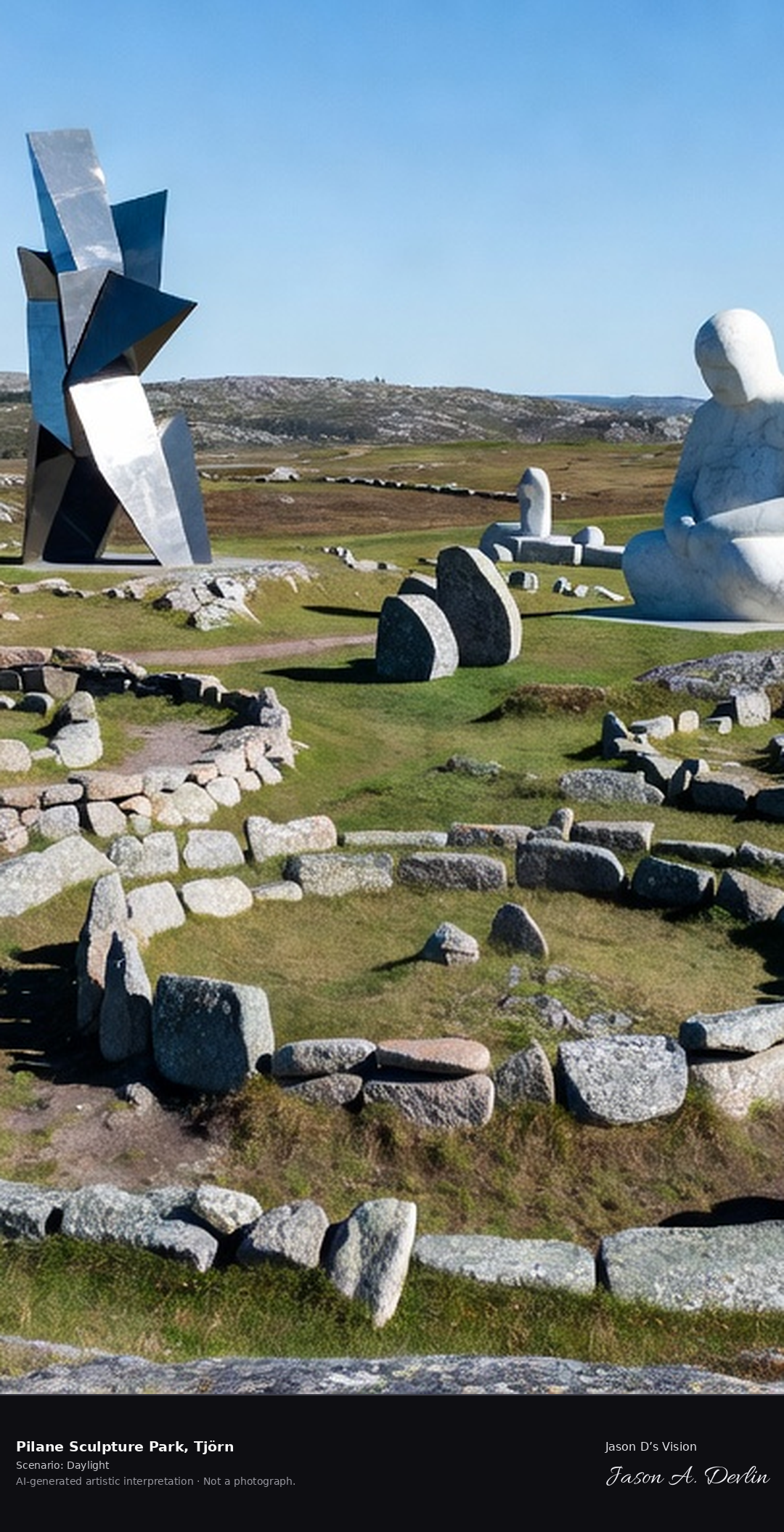
Pilane's ancient grave field on Tjörn dotted with monumental contemporary sculptures, Iron Age stone circles meeting modern art with the Bohuslän landscape rolling beyond.
Across Pilane’s ancient grave field on Tjörn, monumental contemporary sculptures stand among Iron Age stone circles. Beyond, the Bohuslän landscape rolls away in bright natural daylight.
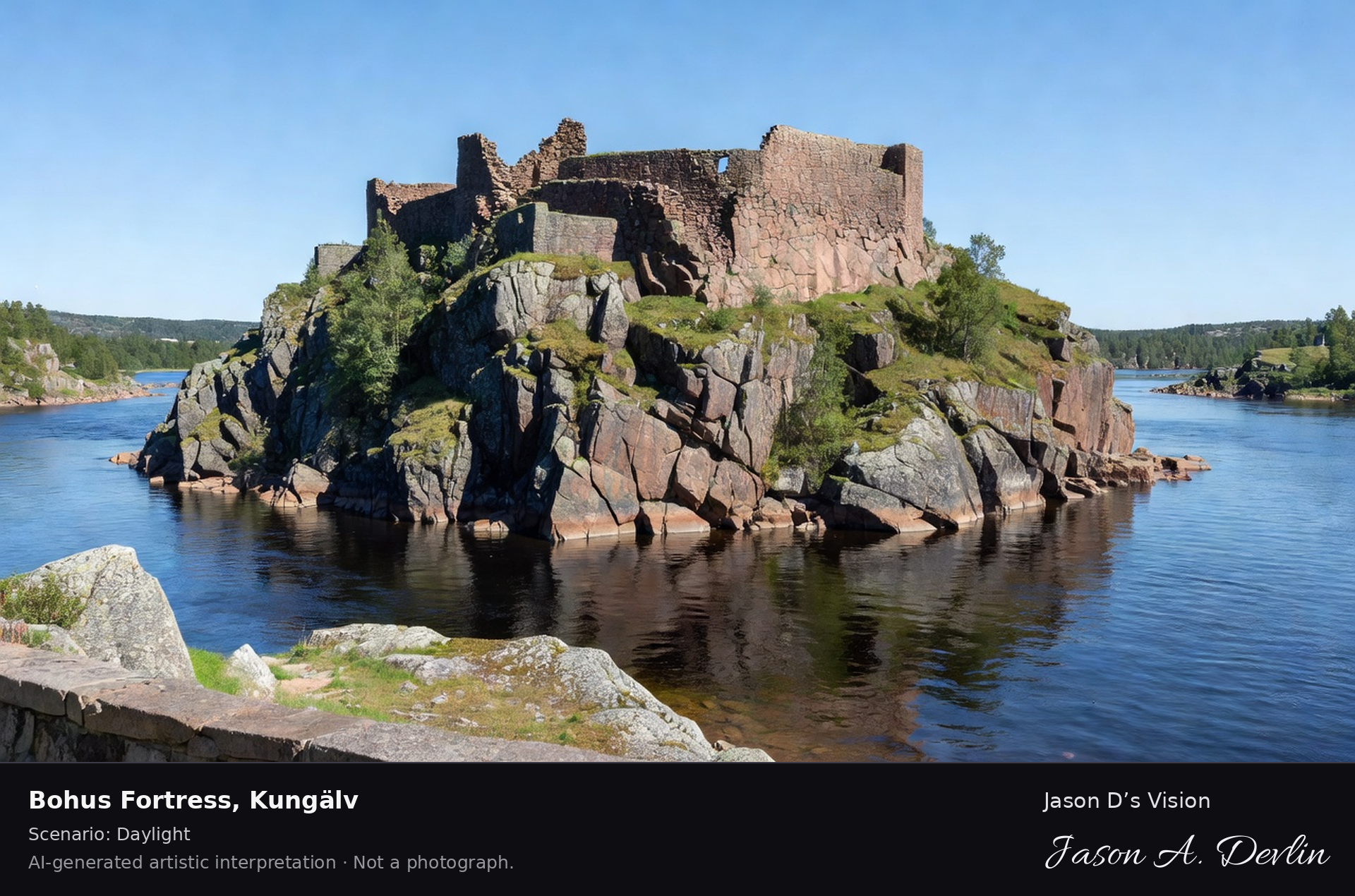
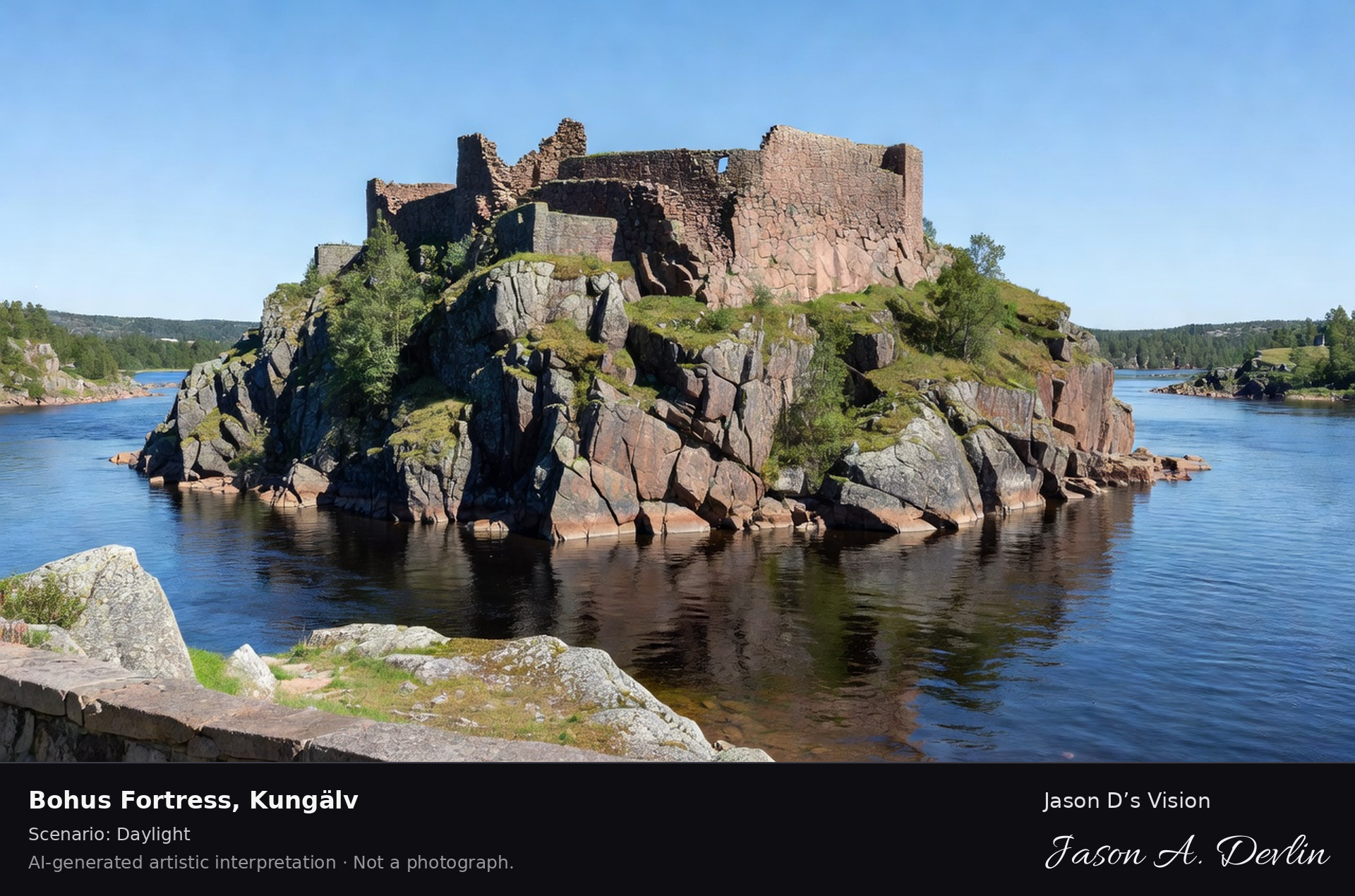
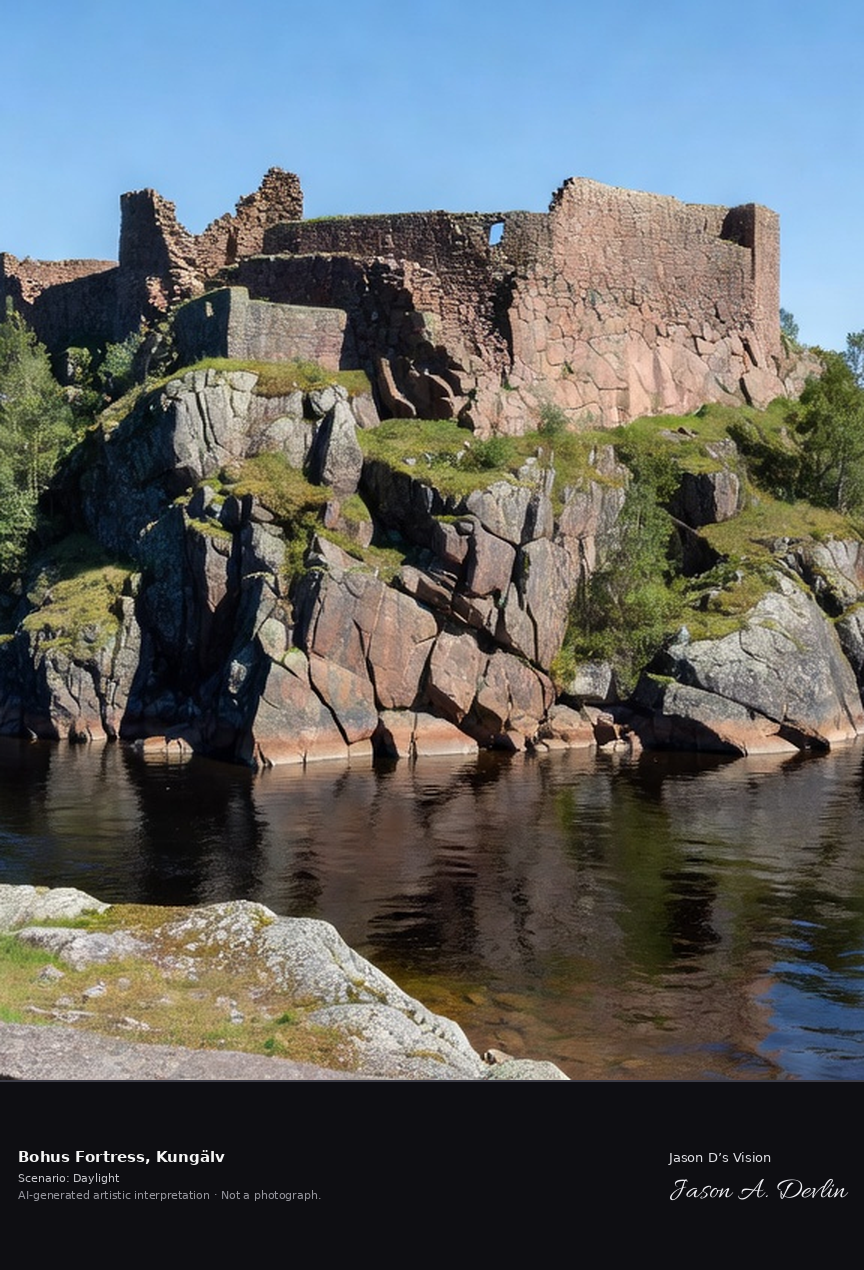
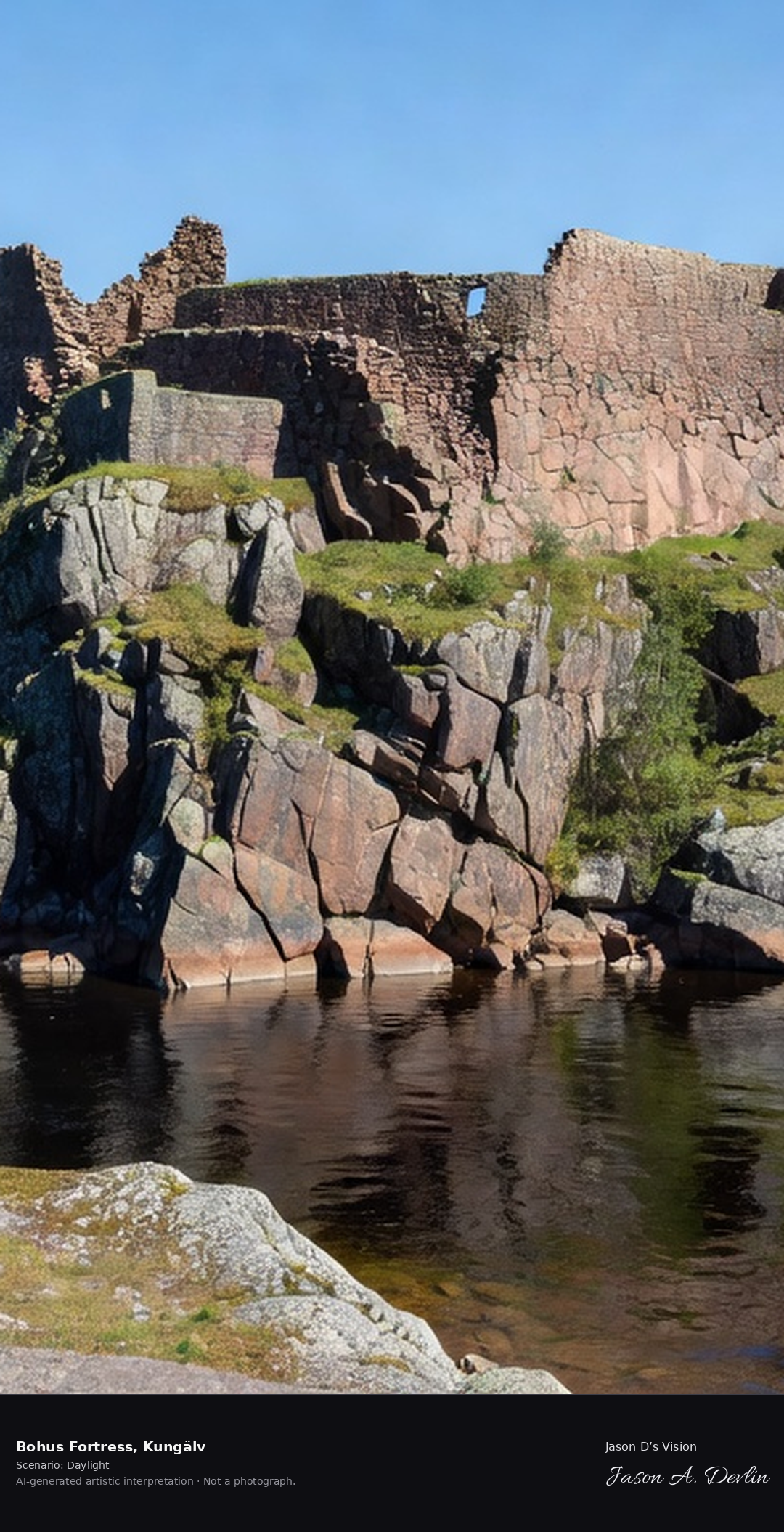
Bohus Fortress's mighty ruins on the cliff above the Nordre Älv, the 14th-century Norwegian-built stronghold that withstood countless sieges, red granite walls against the river.
Bohus Fortress in Kungälv, Bohuslän: the mighty 14th-century Norwegian-built fortress ruins on the cliff above the Nordre Älv, red granite walls withstanding centuries of sieges — a classic Bohuslän stronghold in bright natural daylight.
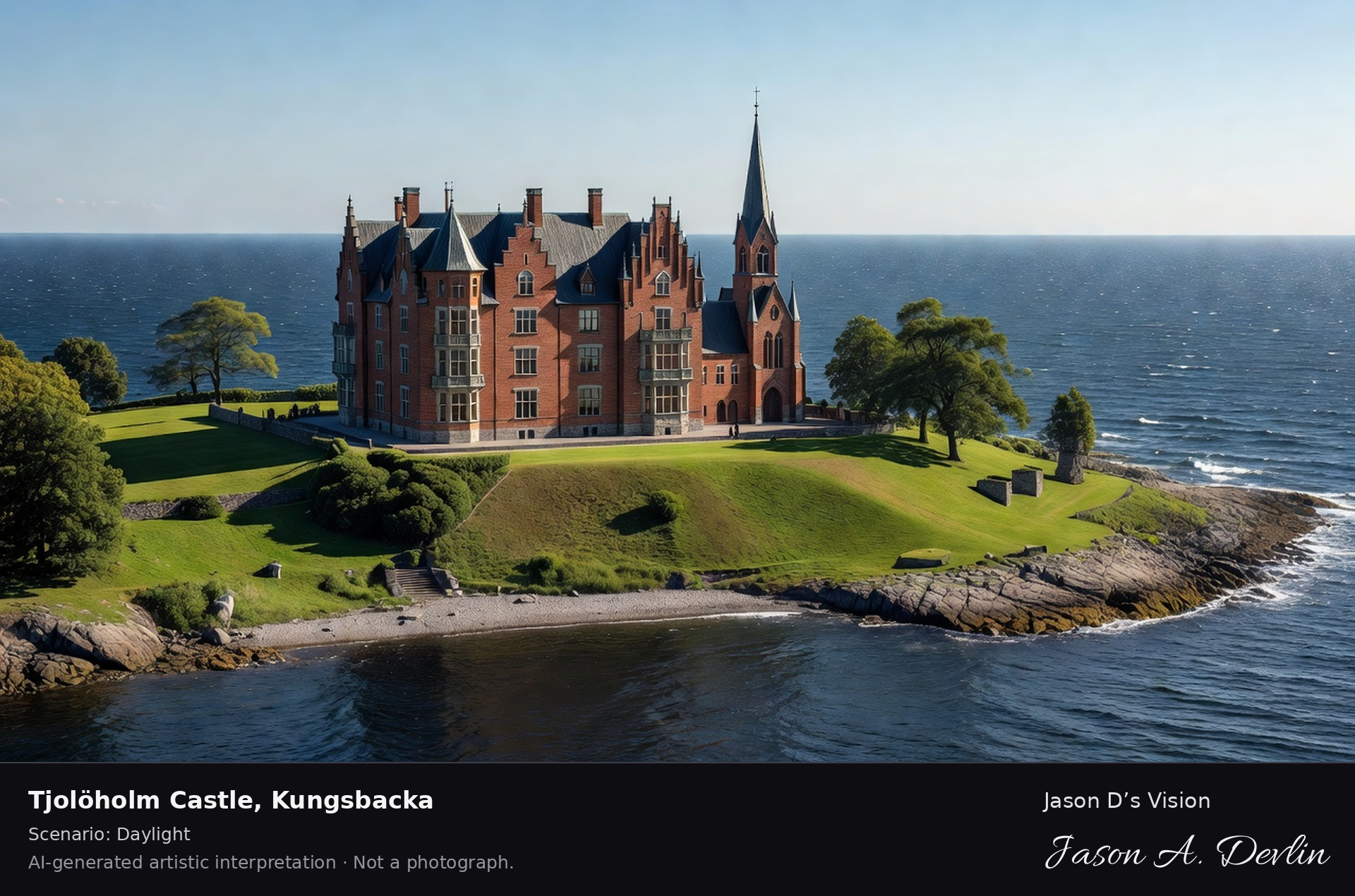
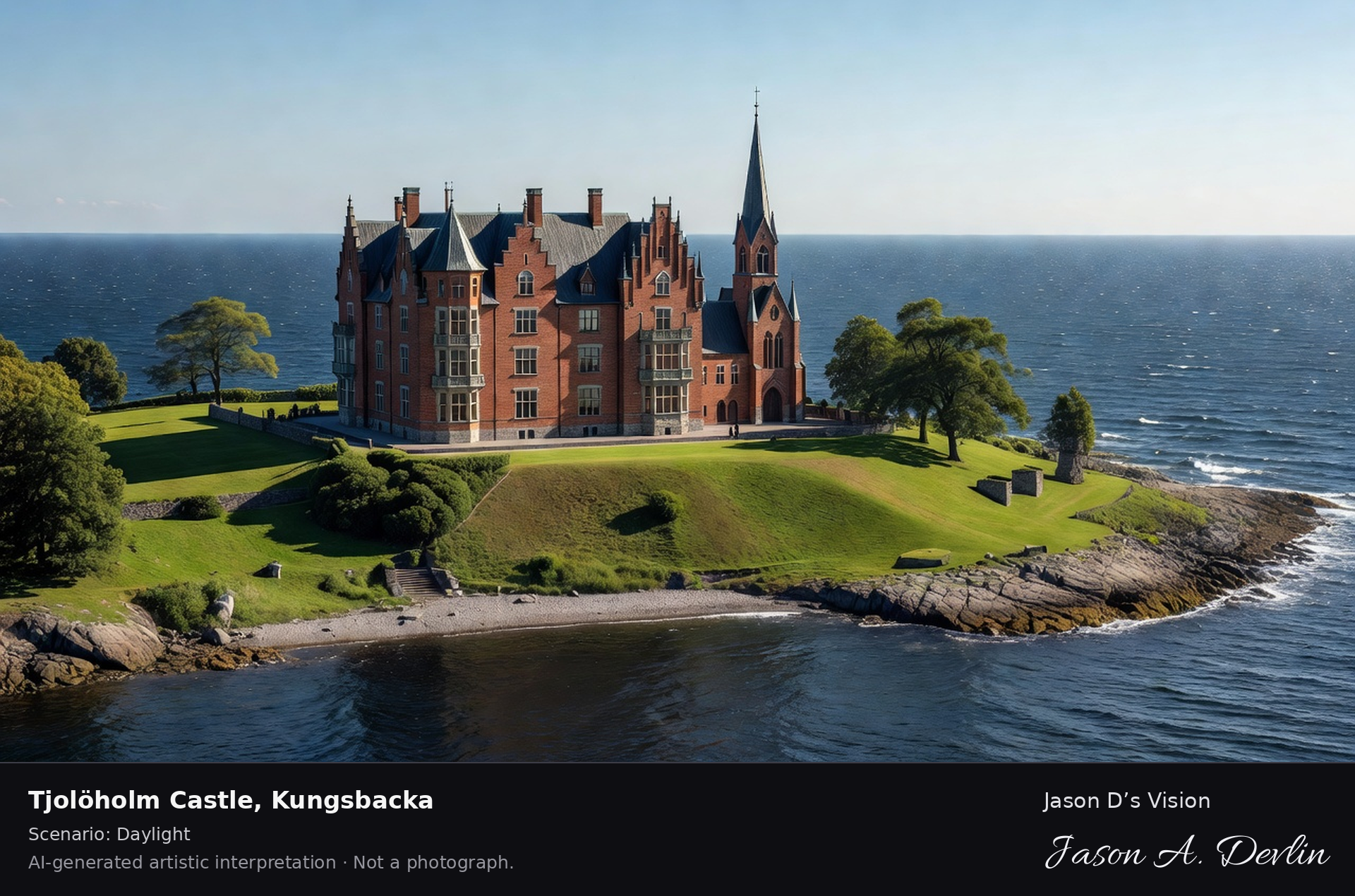
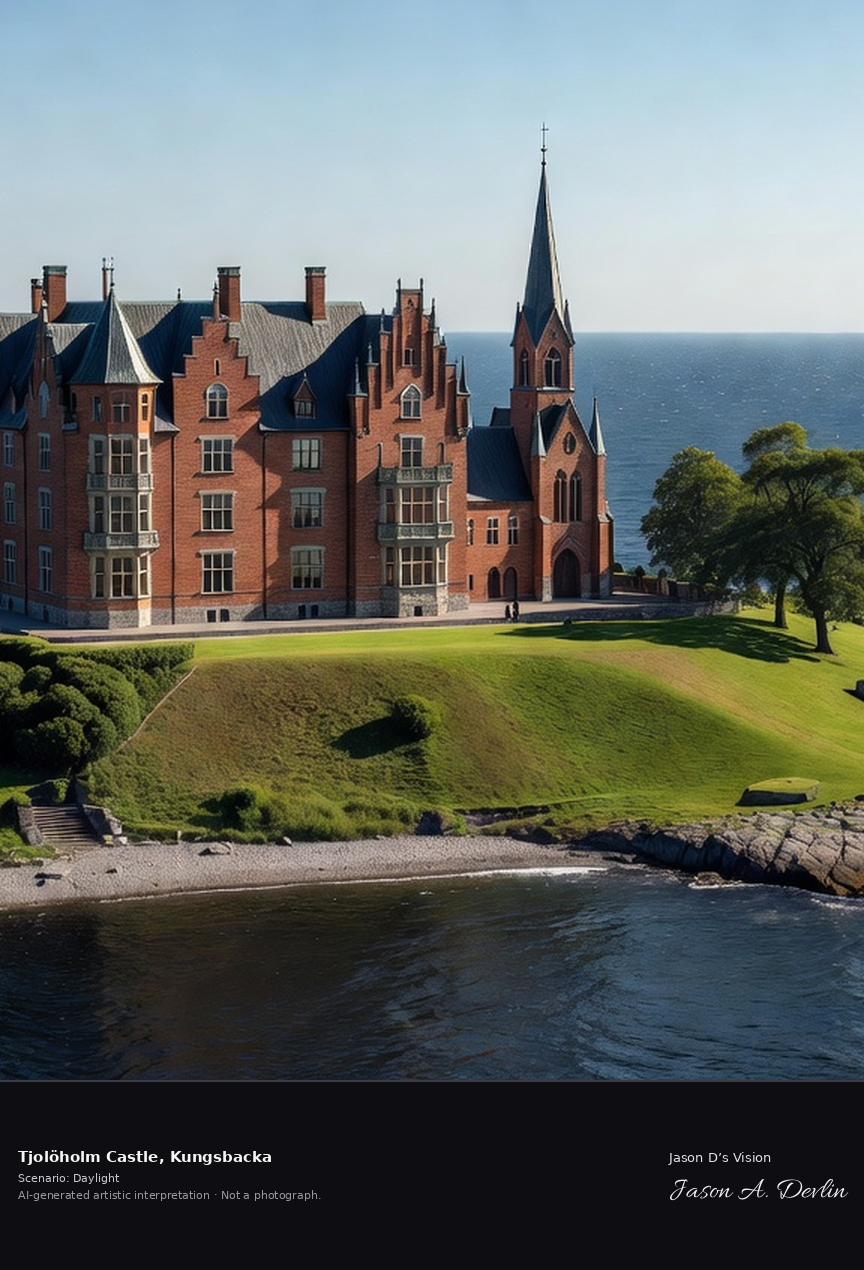
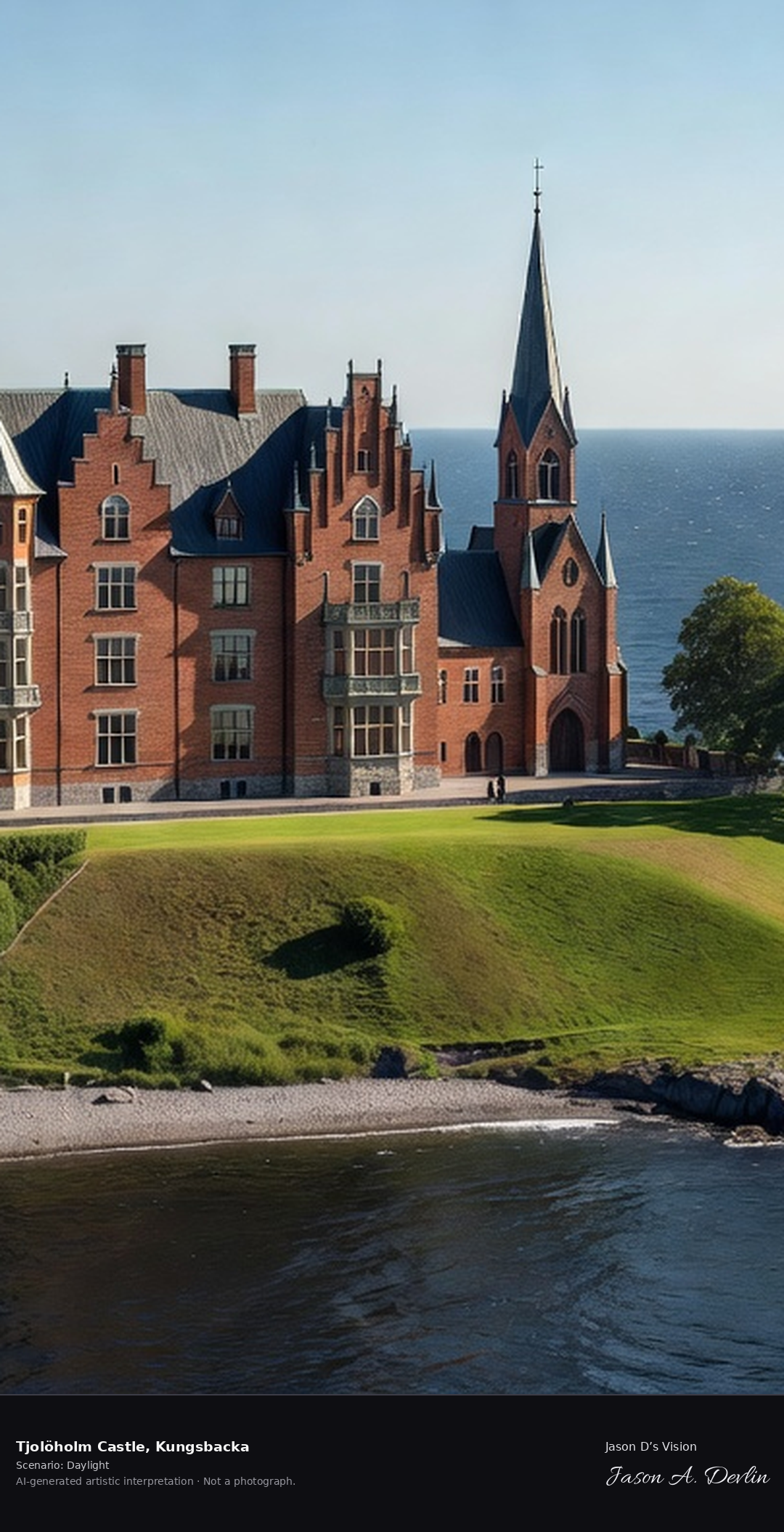
Tjolöholm Castle's Tudor-style red brick fantasy on the Kungsbacka fjord, Sweden's grandest Arts and Crafts mansion with its church-like chapel and the sea beyond.
Tjolöholm Castle in Kungsbacka, Halland: the Tudor-style red brick fantasy on the Kungsbacka fjord — Sweden's grandest Arts and Crafts mansion with its church-like chapel with slender spire, green lawns sloping to the rocky shore and the sea beyond, in bright natural daylight.
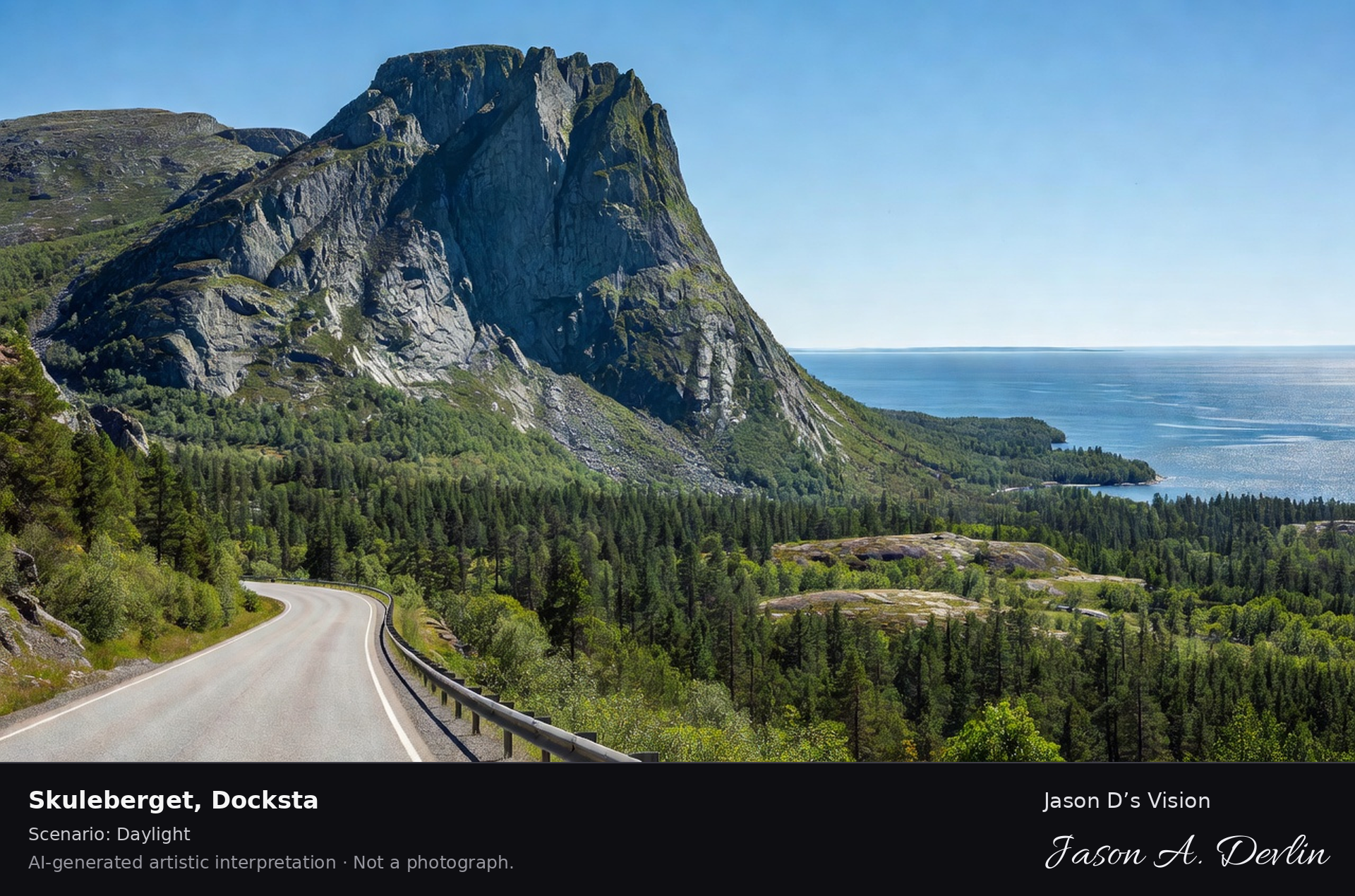
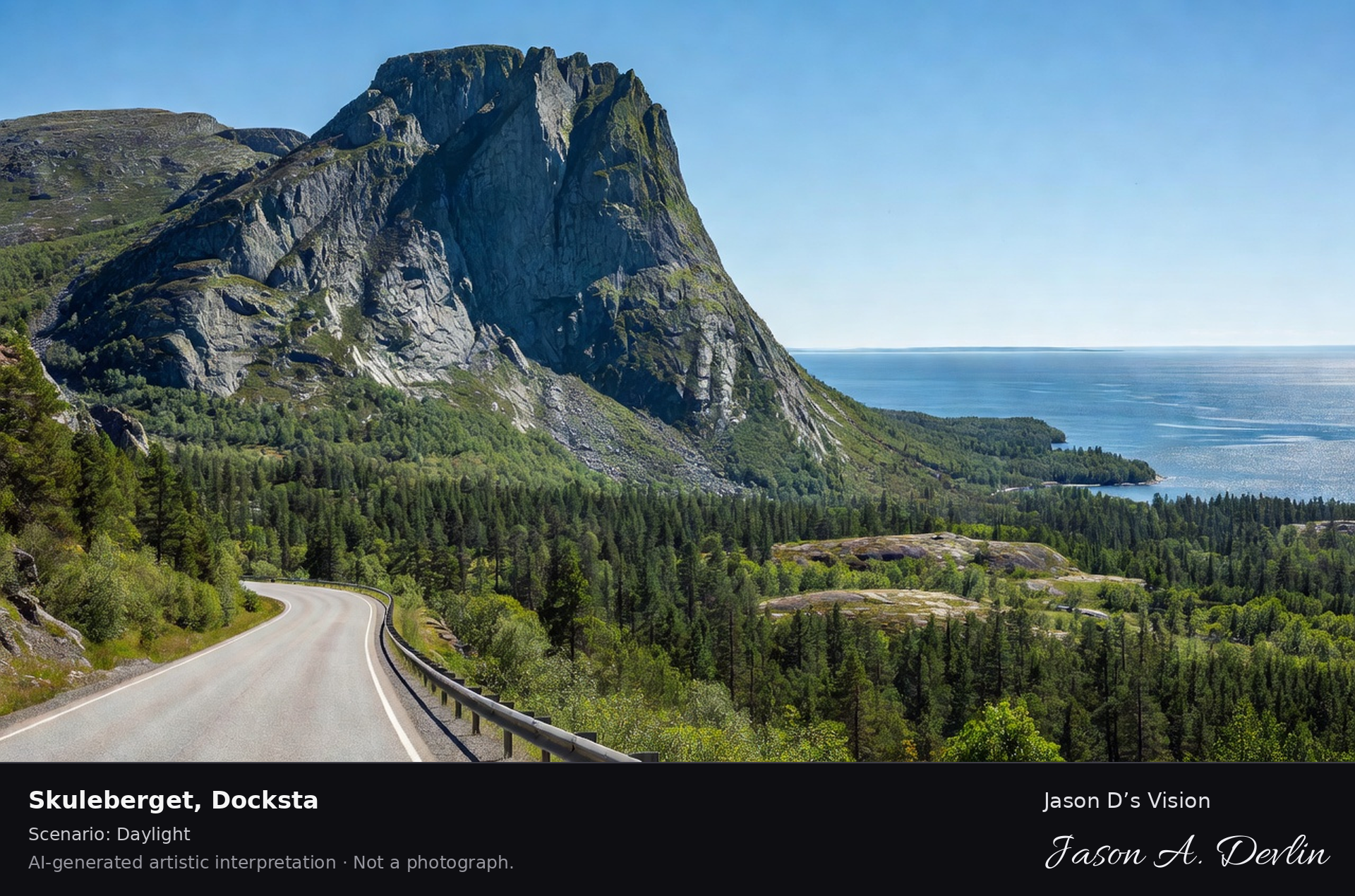
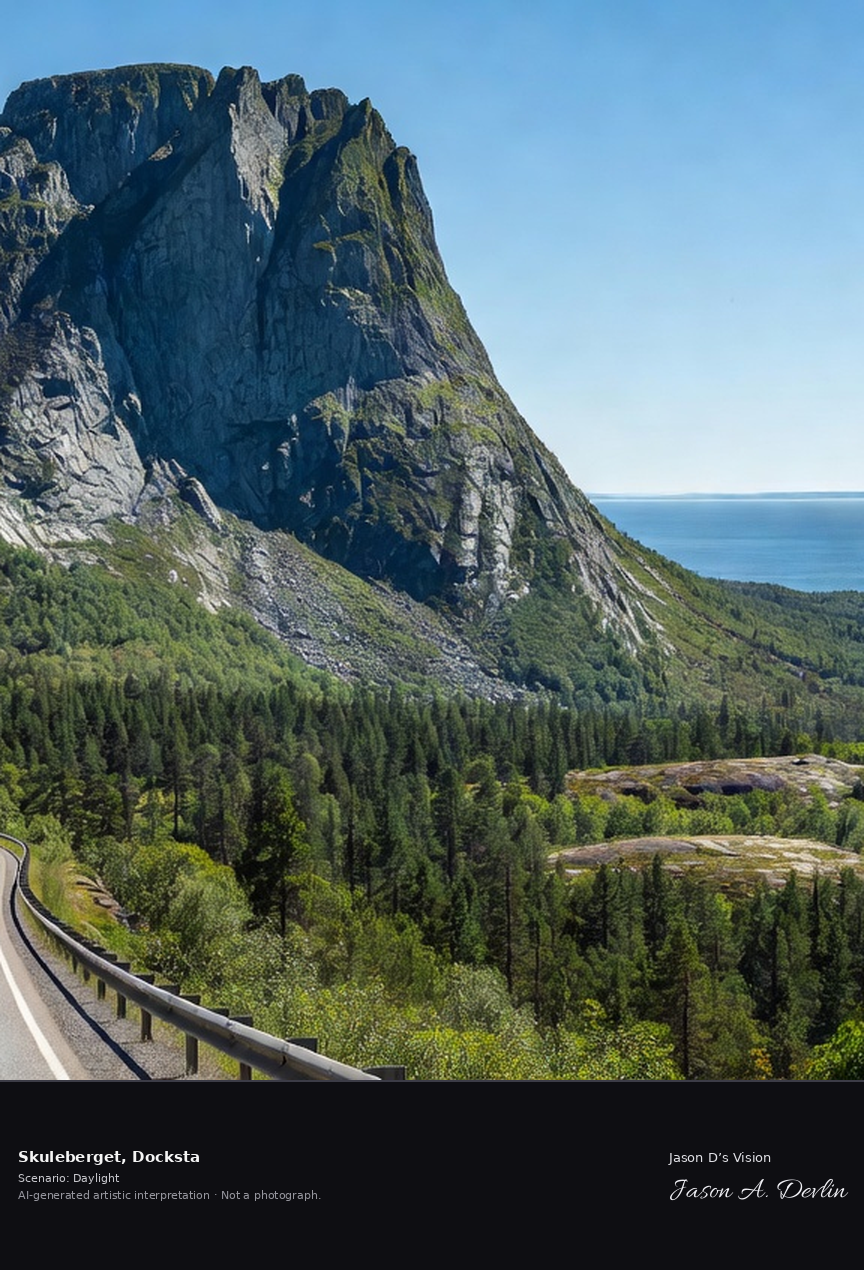
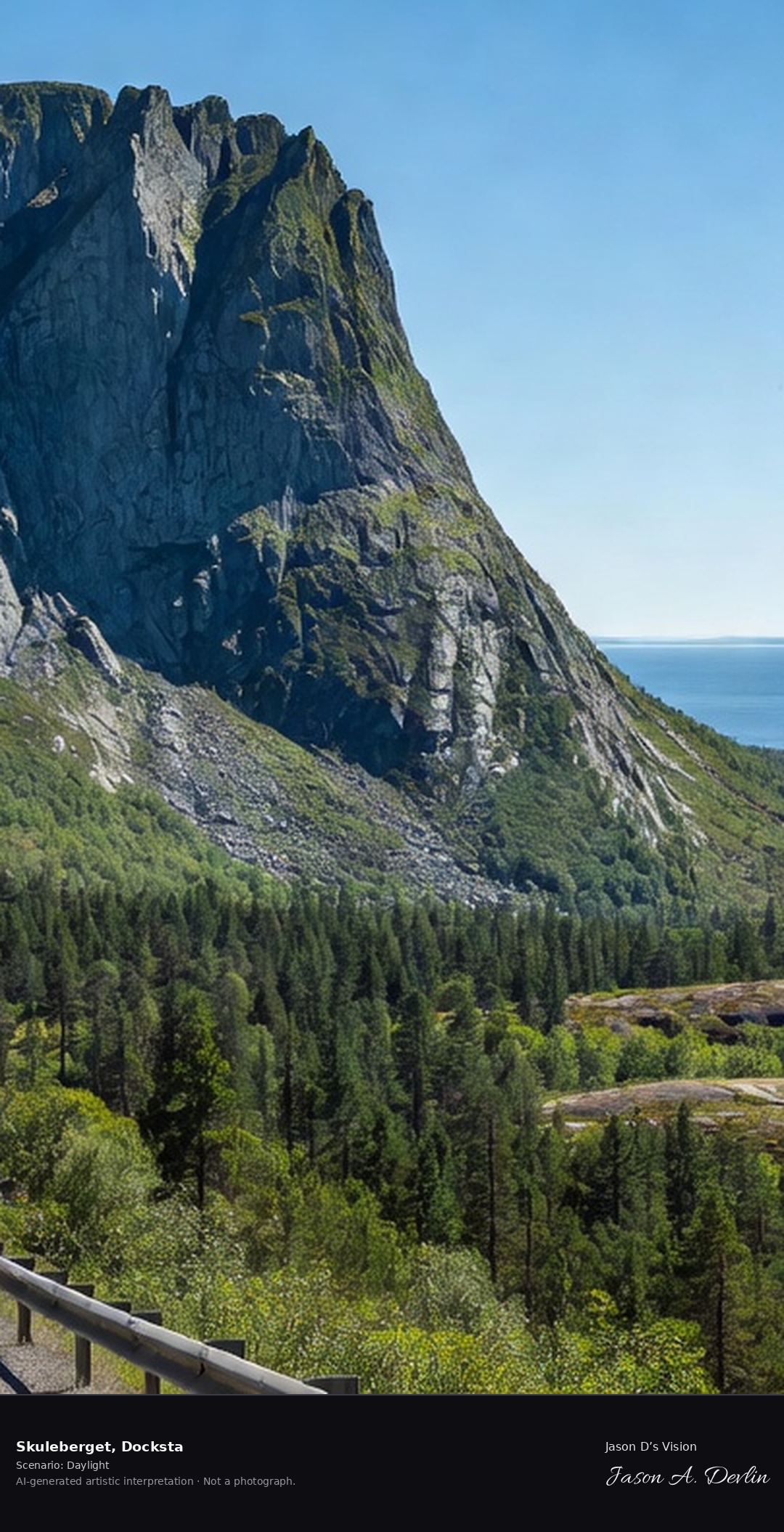
Skuleberget's dramatic cliff face rising 295 meters above the High Coast, viewed from the E4 with the Bothnian Sea beyond. The mountain that proved the land uplift theory, gateway to Skuleskogen National Park.
Skuleberget in Docksta, Ångermanland: the dramatic 295-meter cliff face rising above Sweden's High Coast, viewed from the E4 with the winding roadside in the foreground, dense forest at the mountain's base and the Bothnian Sea beyond, in bright natural daylight.
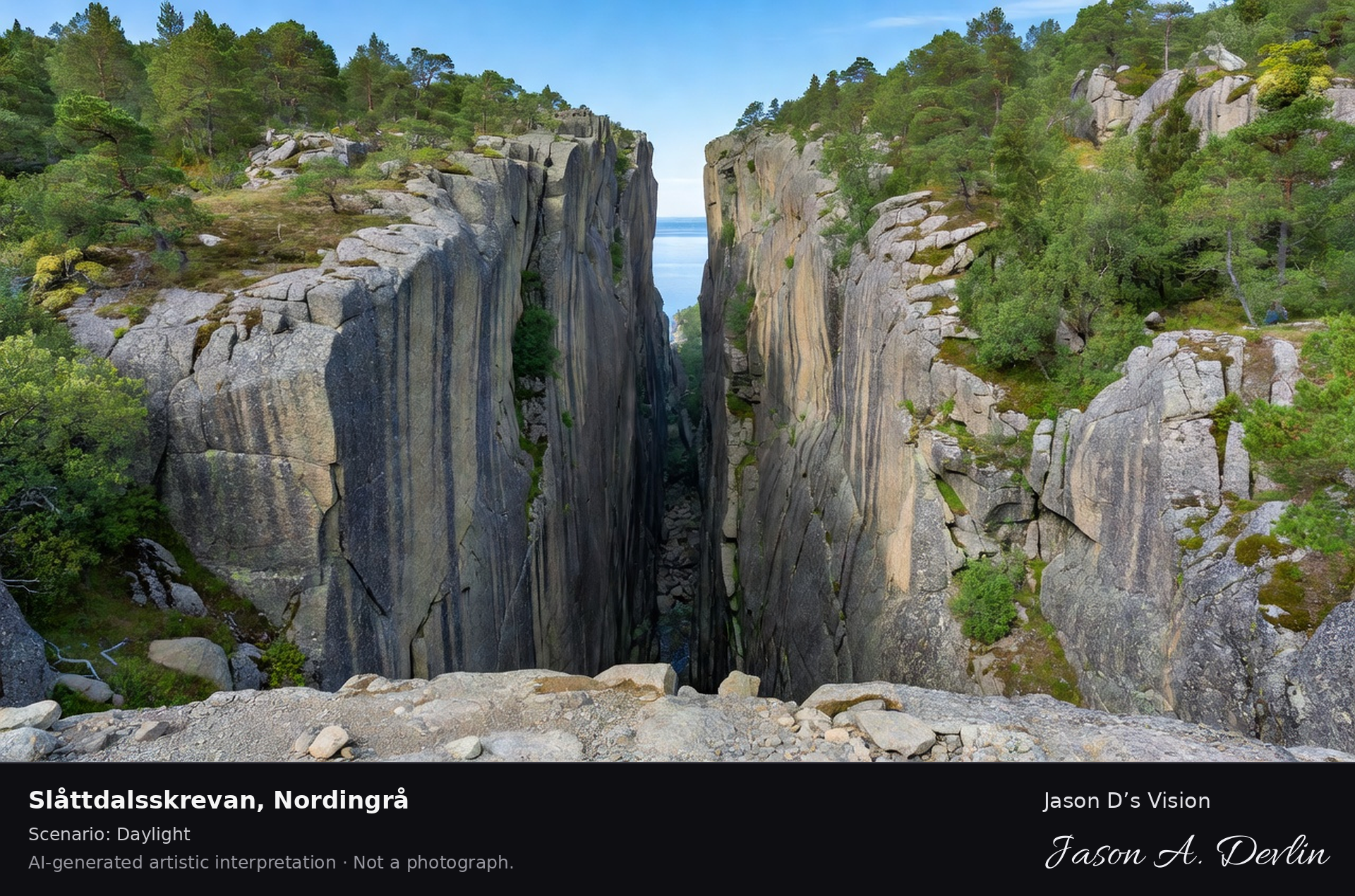
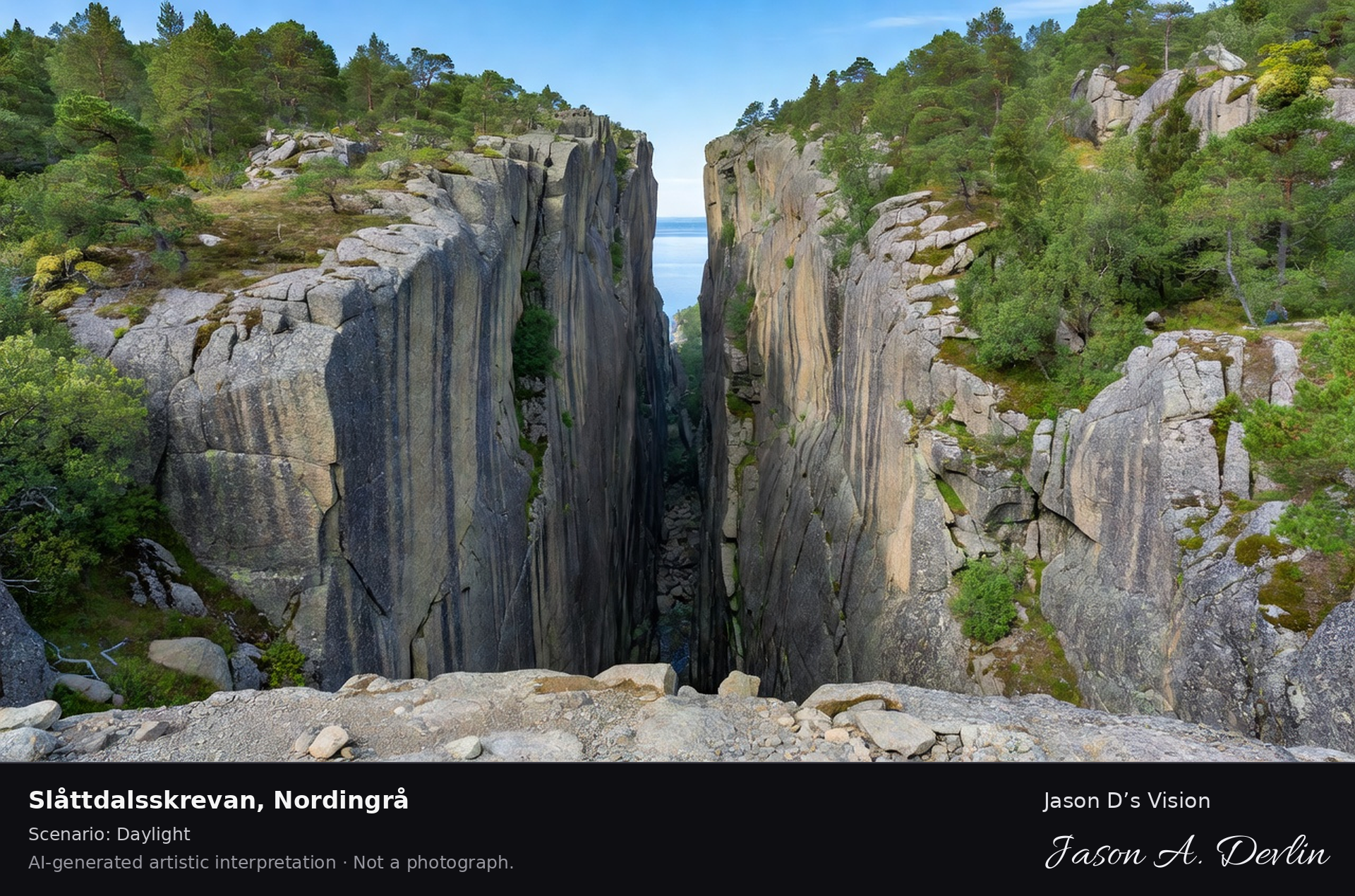
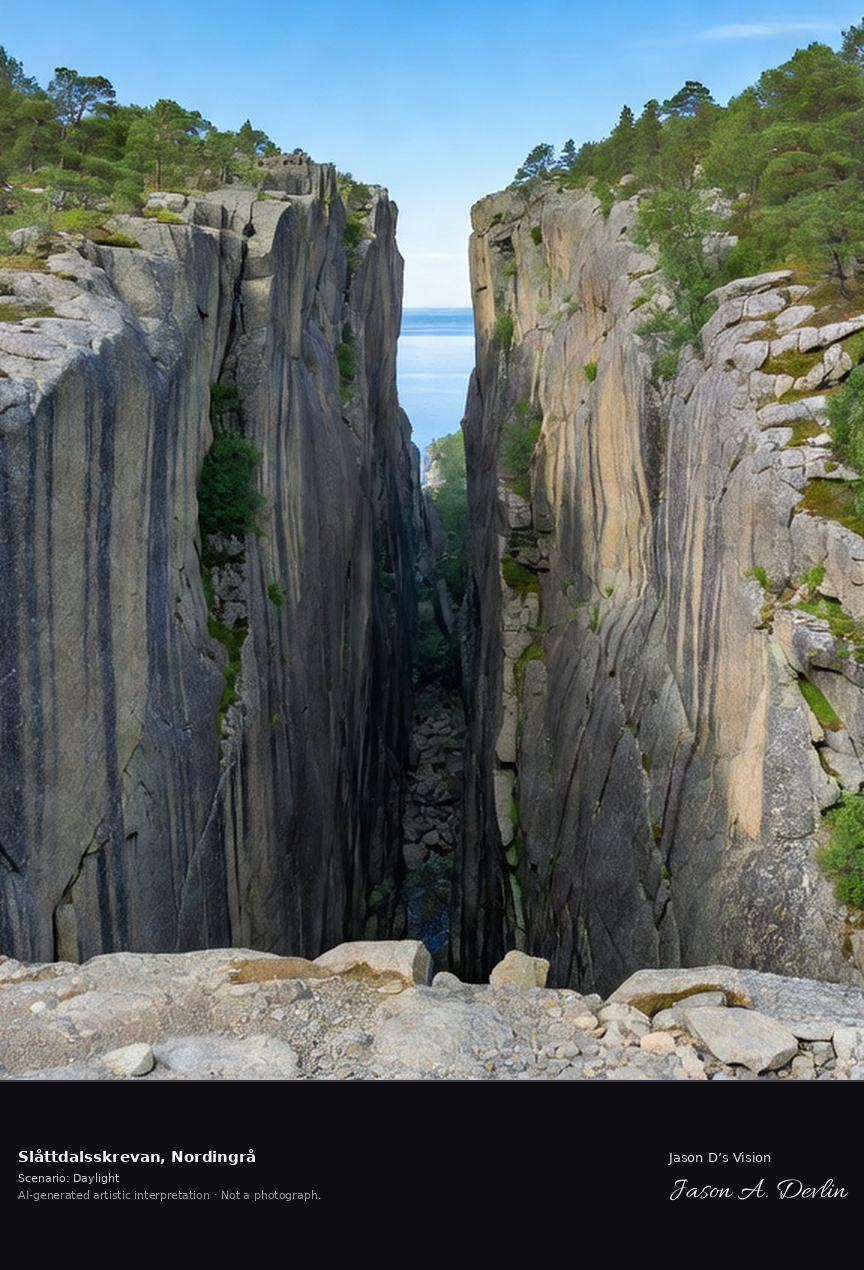
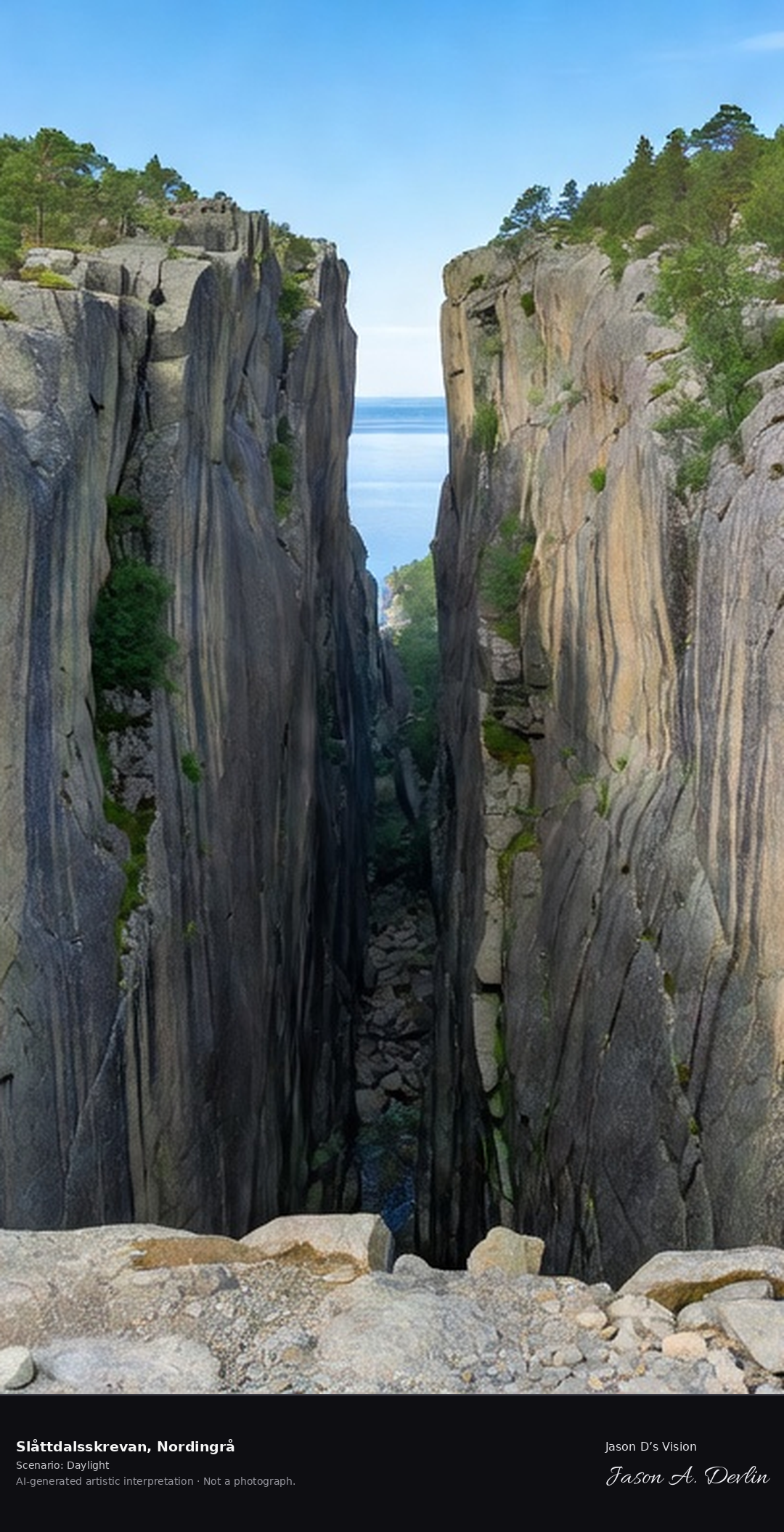
Slåttdalsskrevan's 200-meter-long rock crevice splitting Skuleskogen's mountain, the narrow canyon with 40-meter walls and the Baltic glimpsed at its end. The High Coast's most dramatic gorge.
From the rocky plateau above the gorge the view runs into Slåttdalsskrevan, the 200-meter-long crevasse that splits Slåttdalsberget in Skuleskogen National Park. Sheer granite walls rise some 40 meters on either side of the fissure, with the Baltic Sea glimpsed at its far end and ancient spruce forest crowning the rim — one of the High Coast's most visited natural landmarks, rendered in bright natural daylight.
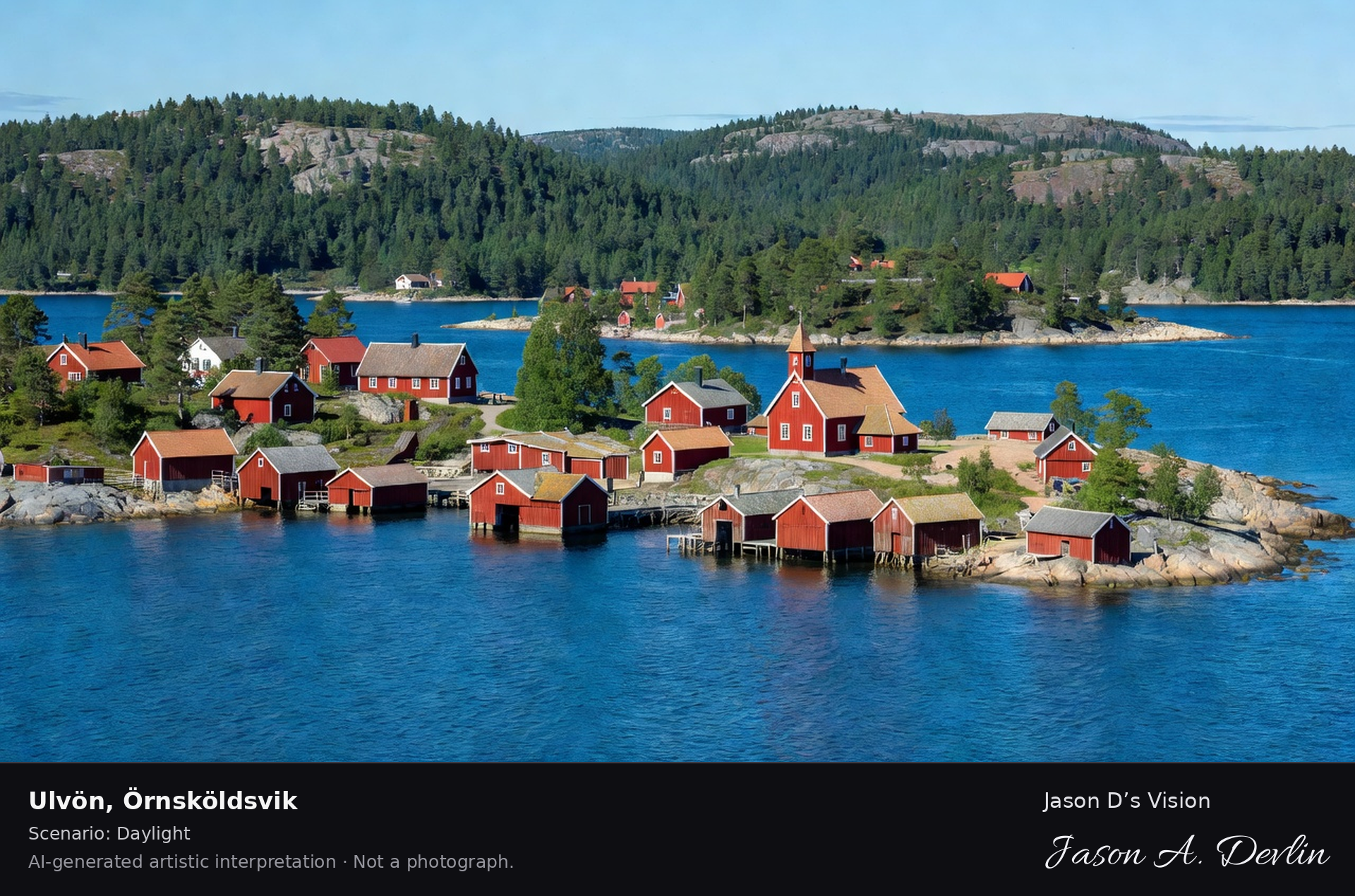
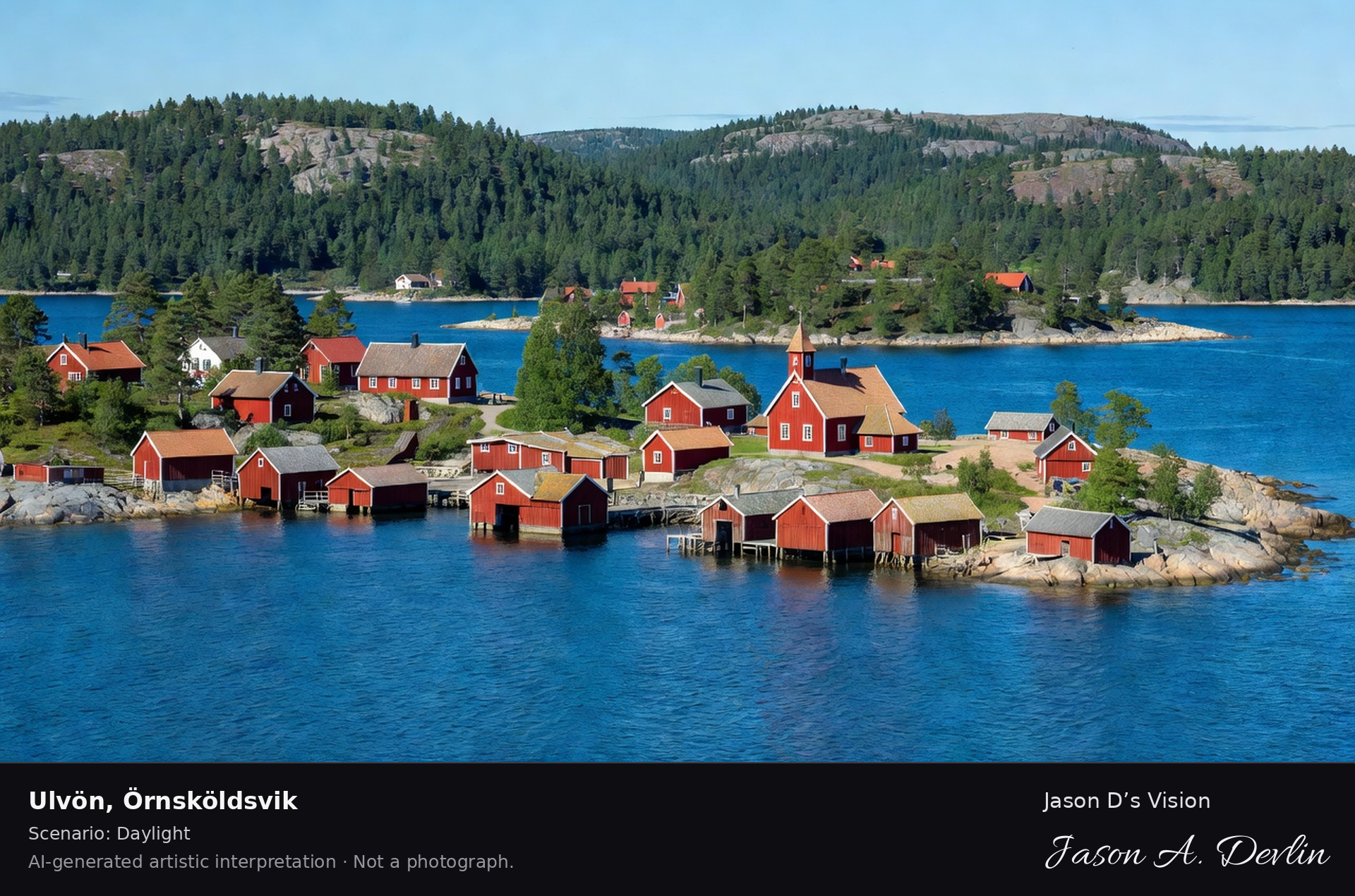
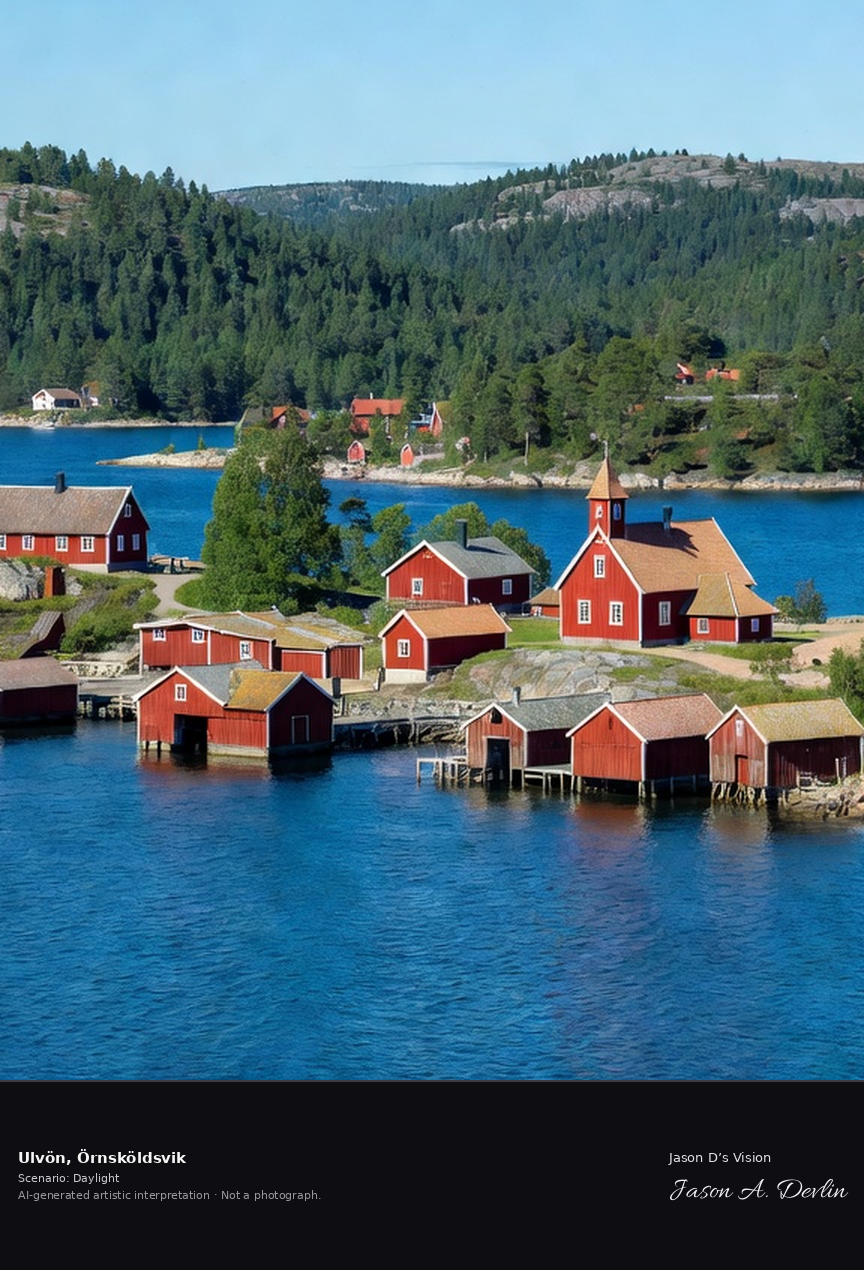
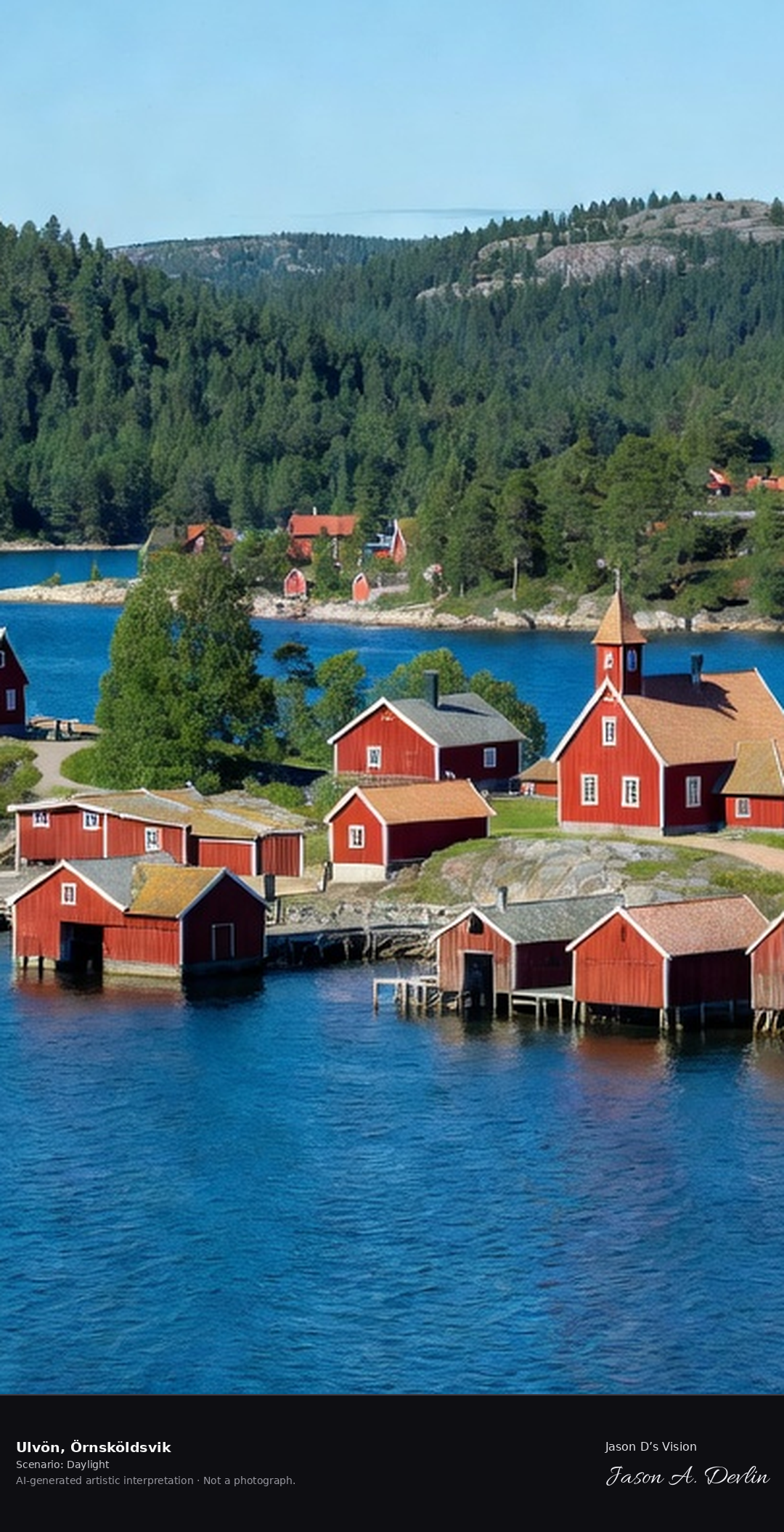
Ulvön island's fishing village Ulvöhamn with its distinctive red chapel and boathouses, the historic surströmming (fermented herring) island in the Bothnian Sea with forested hills behind.
Across the harbour the red fishing village of Ulvöhamn spreads along Ulvön's shore — the historic surströmming island in the Bothnian Sea, a fishing base since the 16th century. Its red chapel with its tower rises among red fishing cottages and waterside boathouses on stilts, the open sea before them and forested Bothnian hills climbing behind. One of the High Coast's most visited island villages, rendered in bright natural daylight.
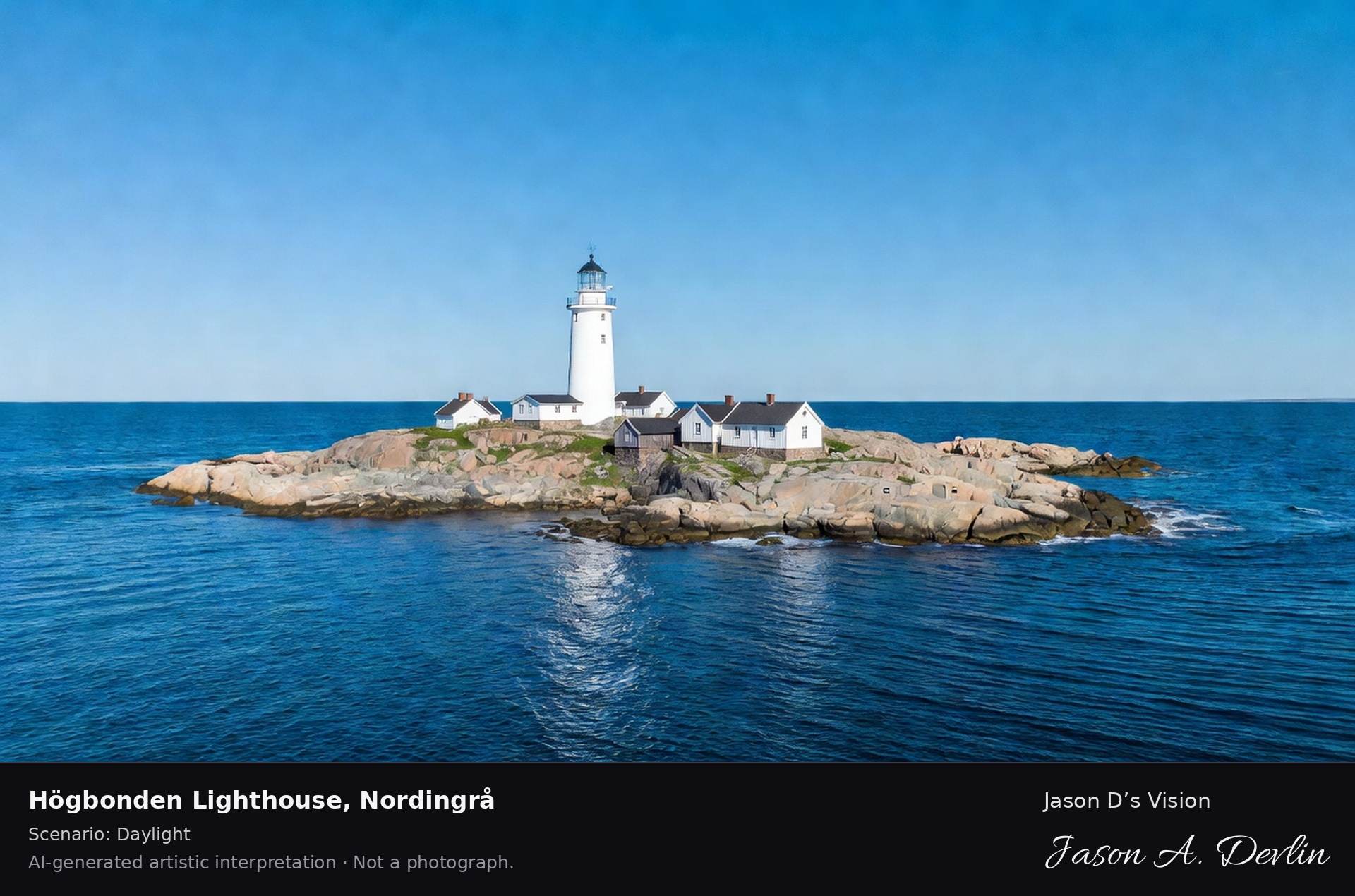
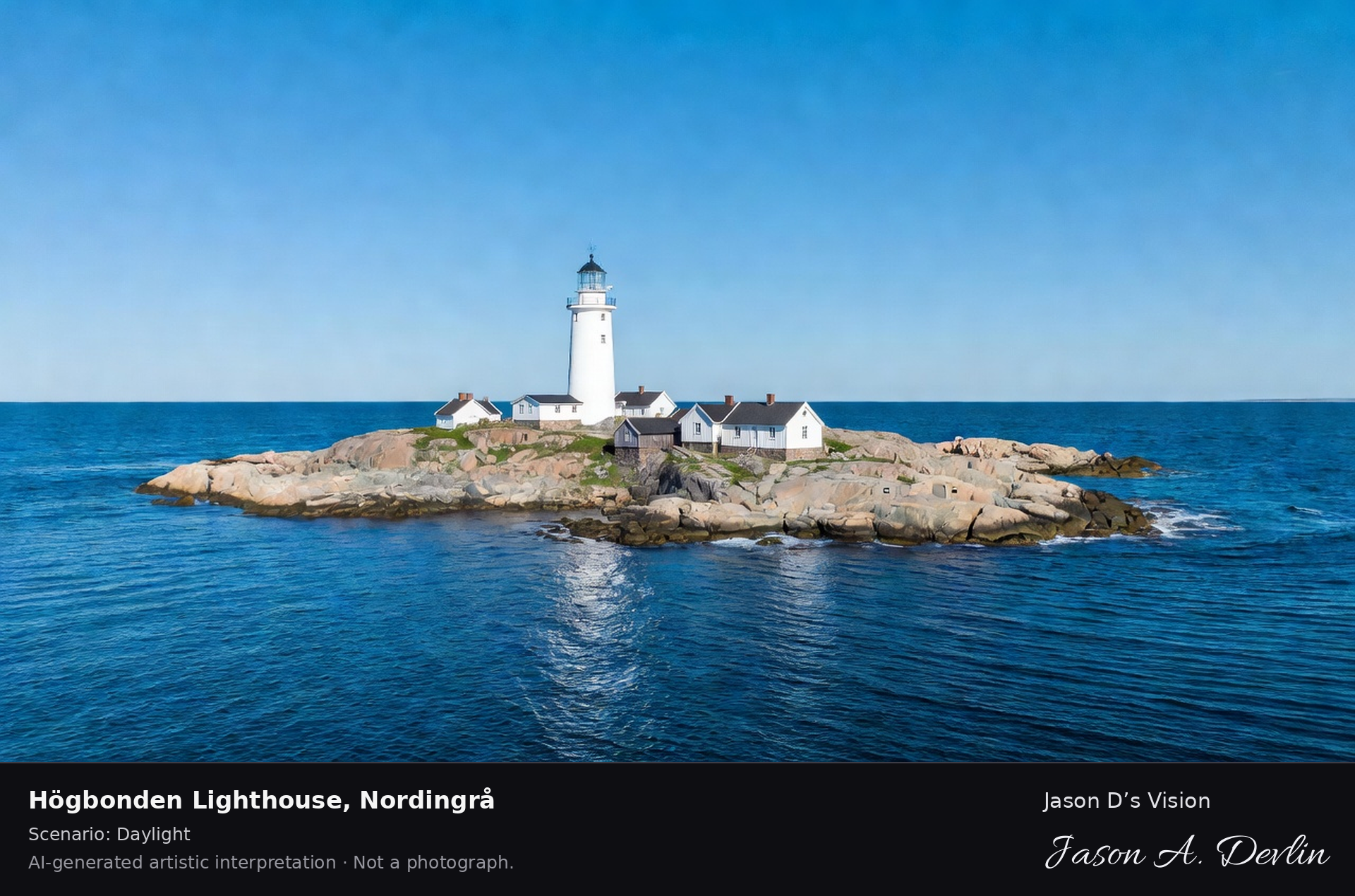
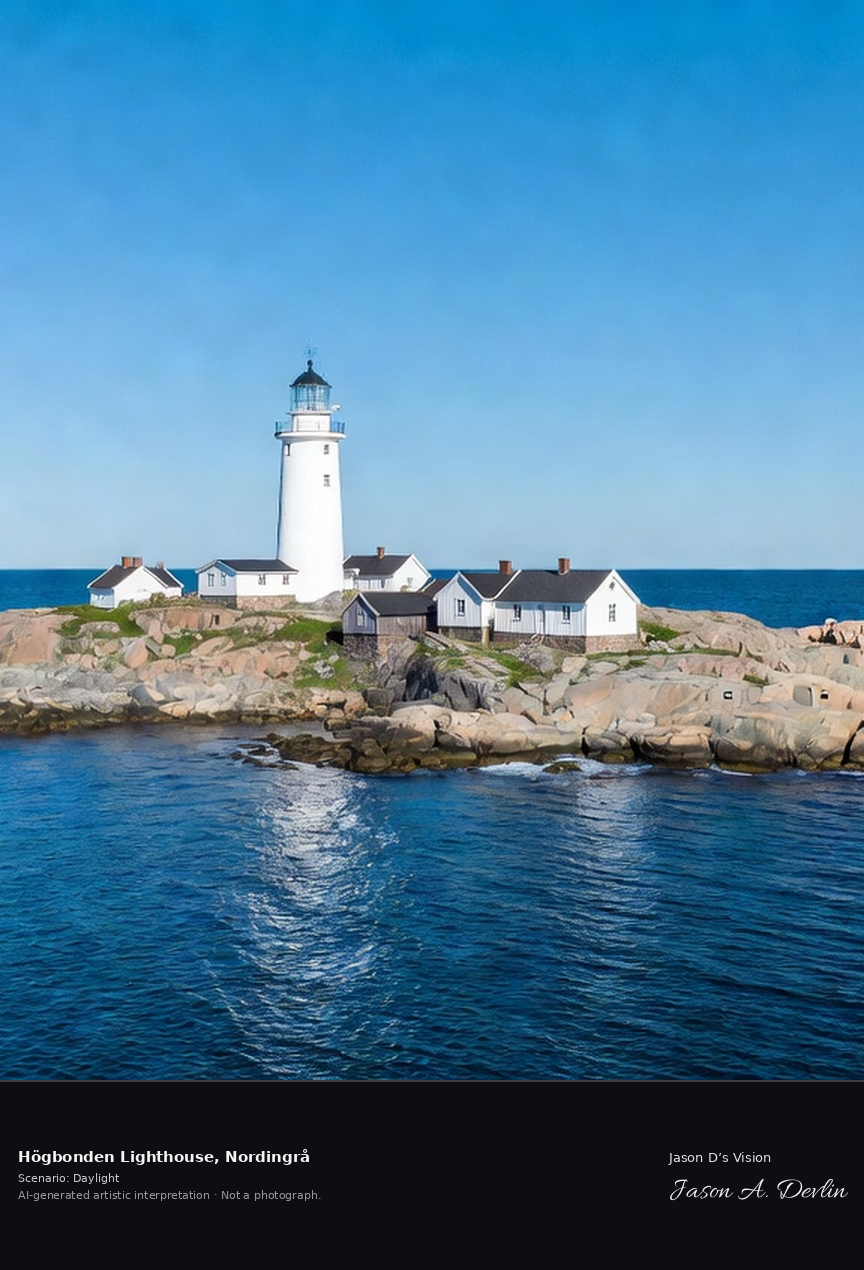
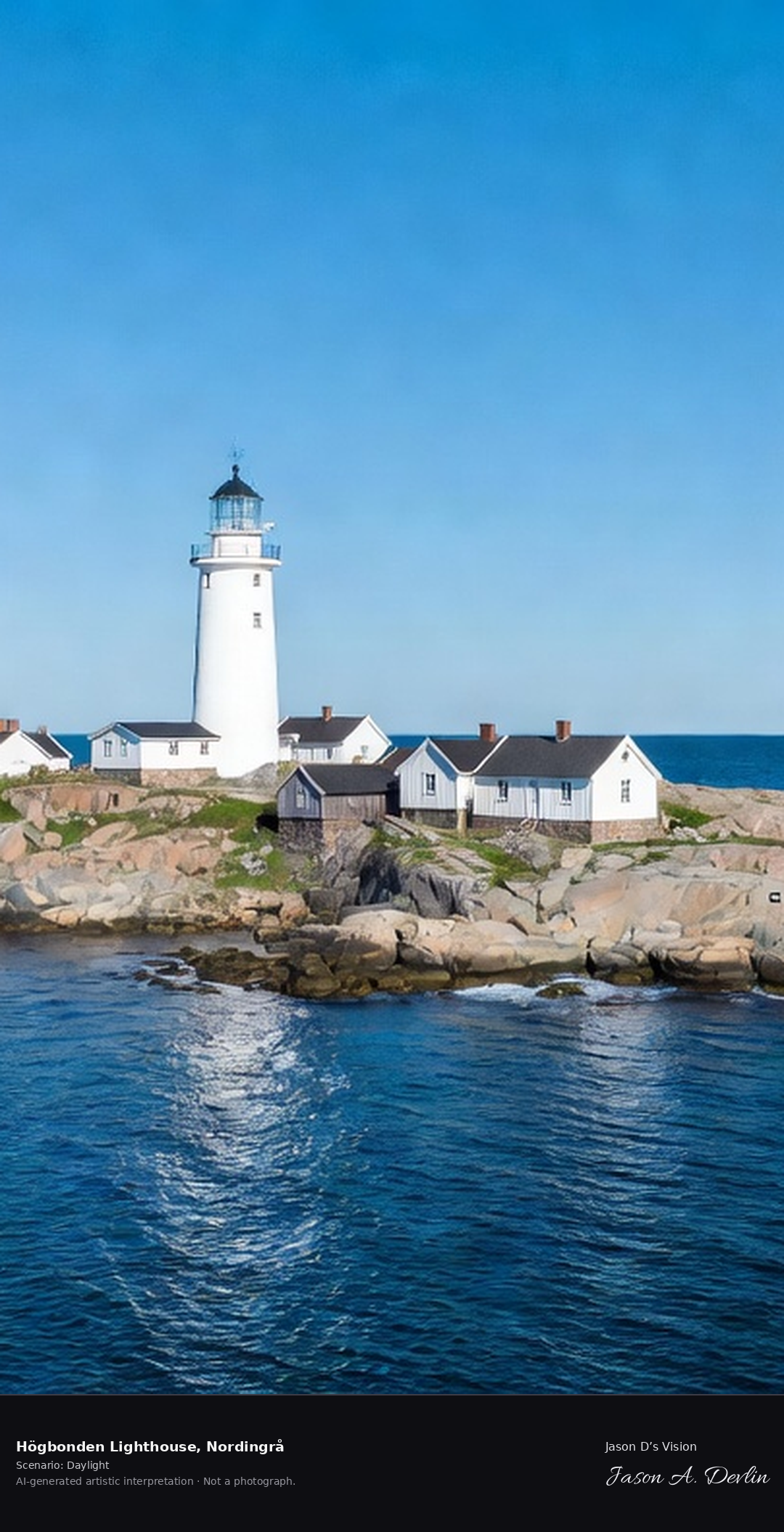
Högbonden's white lighthouse and keeper's cottages on the isolated island at the High Coast's outer edge, now a hostel above the waves with the Bothnian Sea in all directions.
Across the water the white lighthouse of Högbonden rises from its rocky island at the High Coast's outer edge — the lighthouse tower among the keeper's cottages, wave-washed granite skerries in the foreground and the open Bothnian Sea stretching to the horizon in every direction. The island station, now run as a hostel, stands in bright natural daylight above the waves.
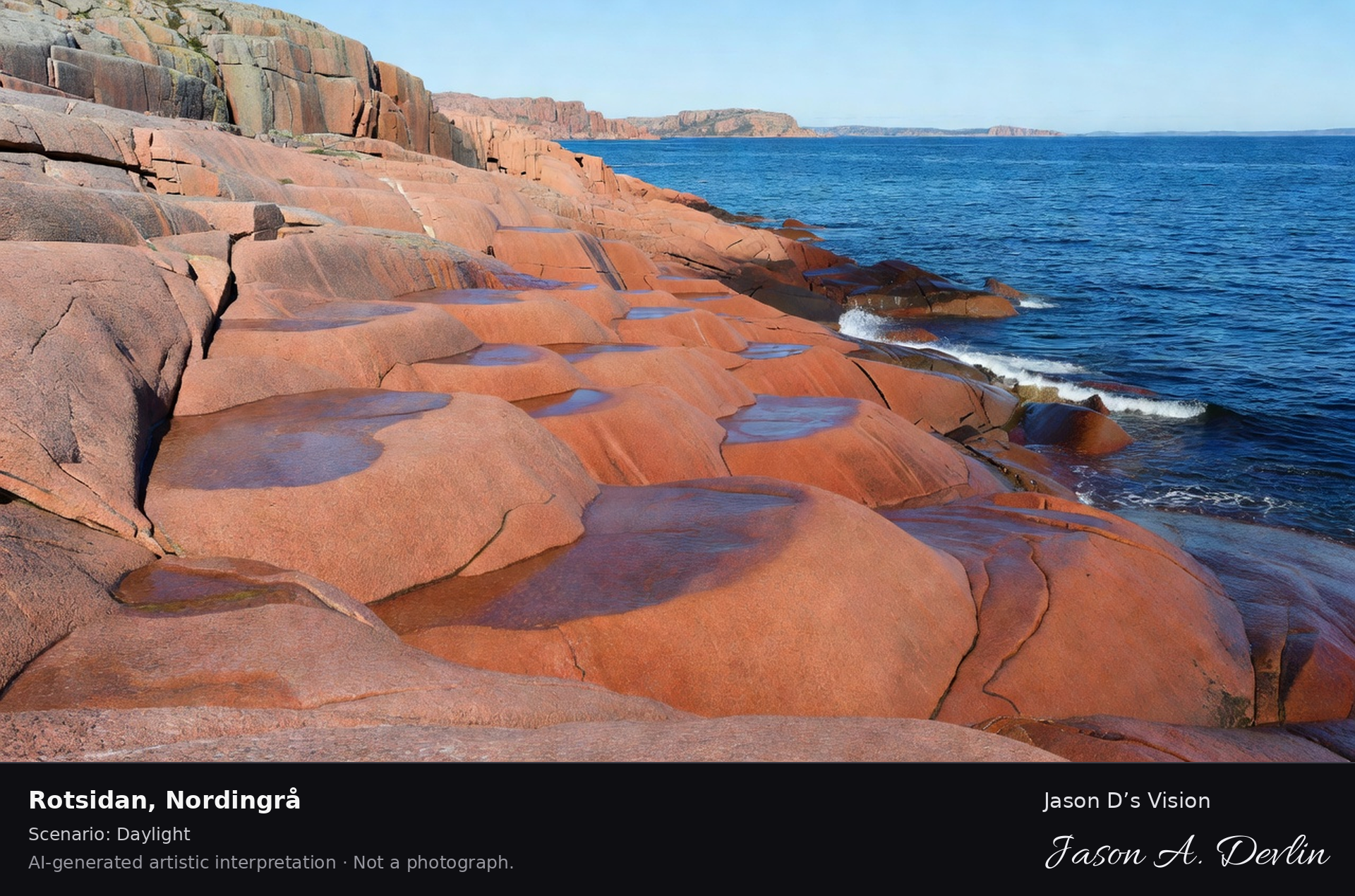
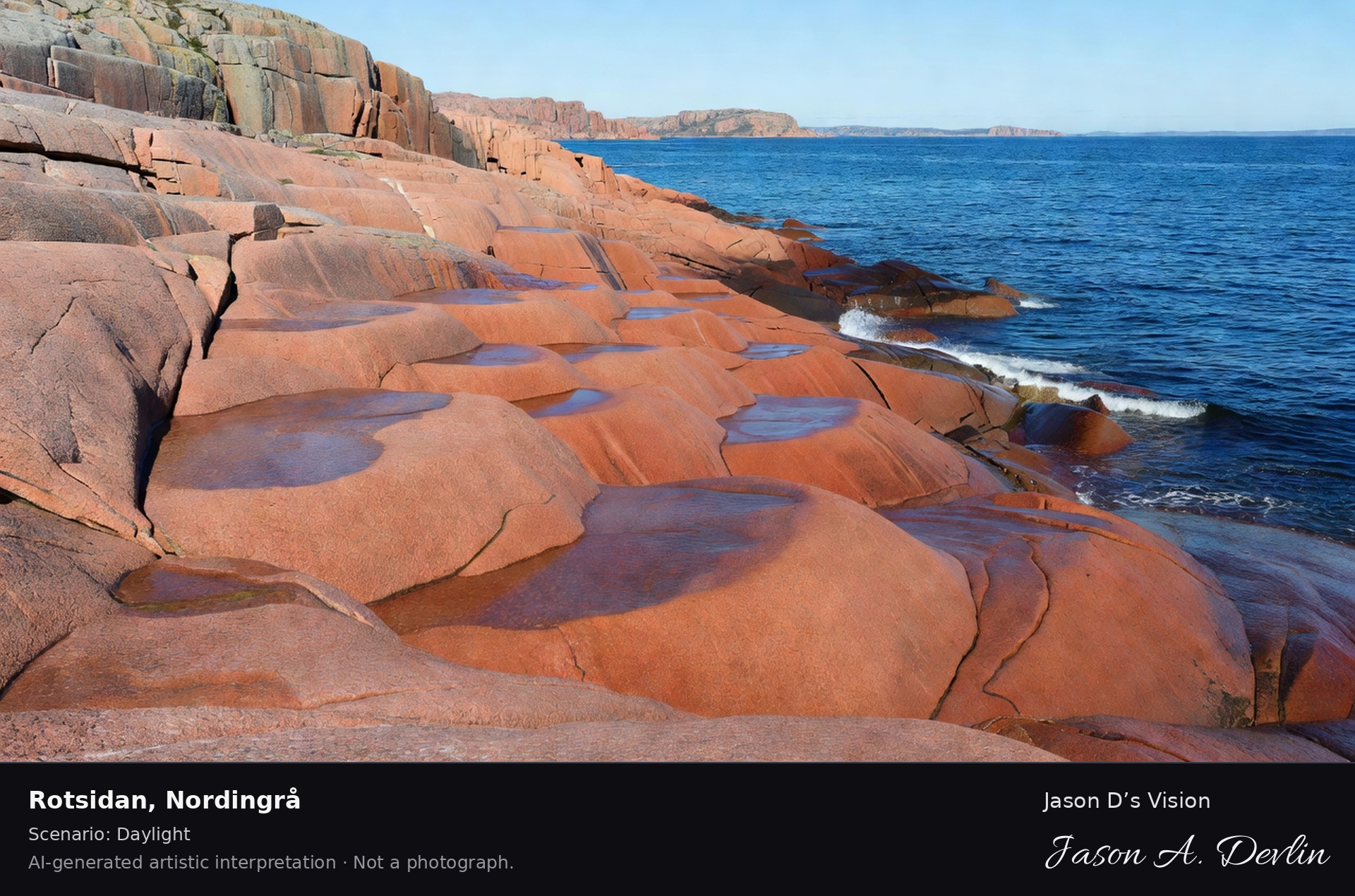
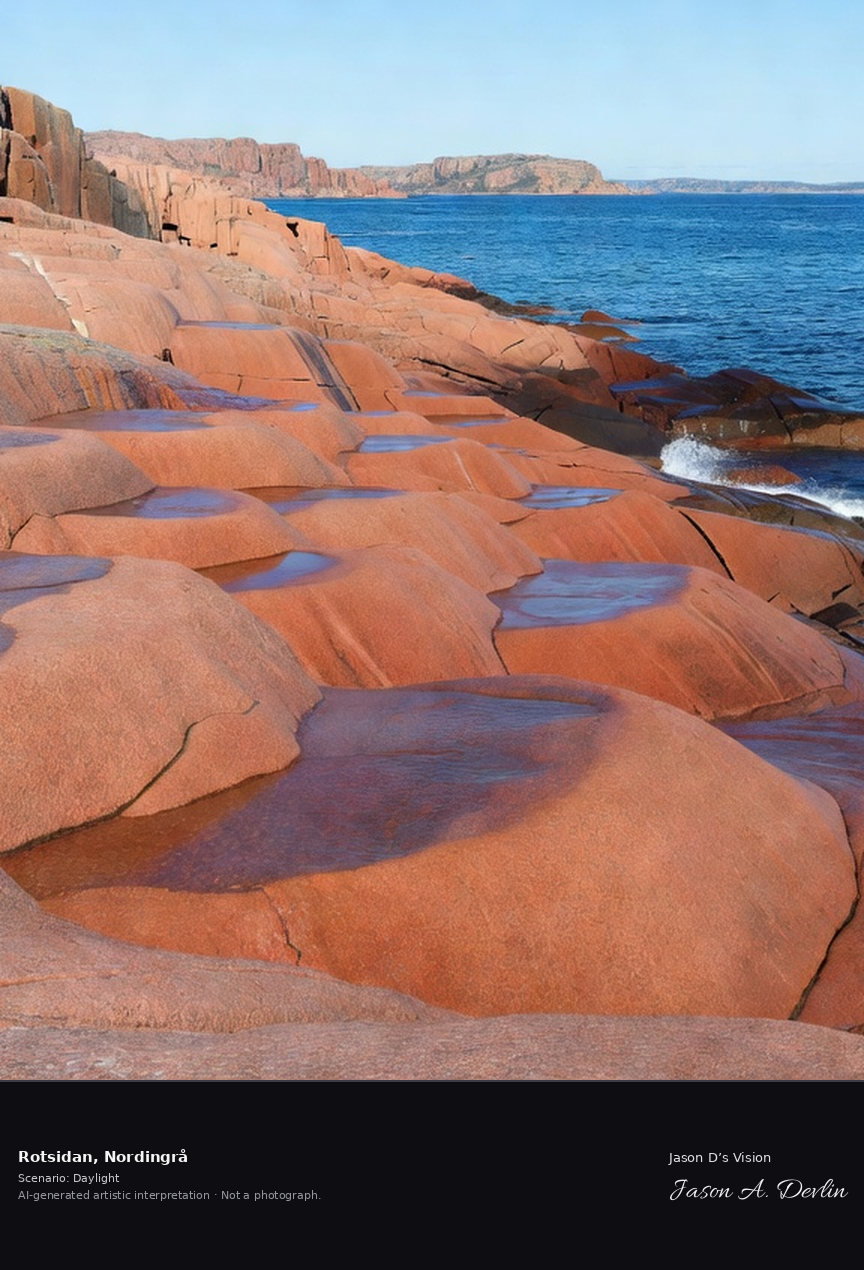
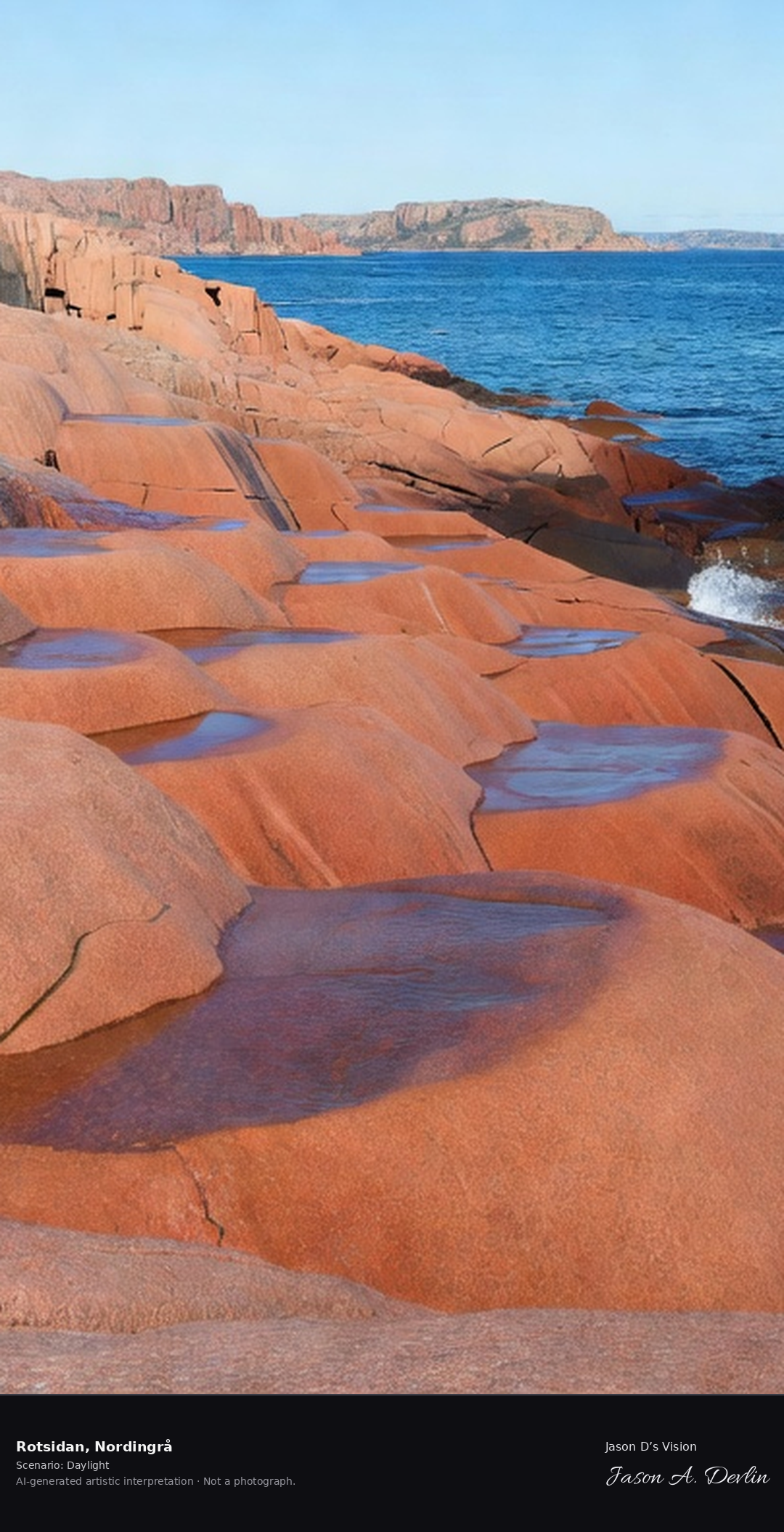
Rotsidan's wave-cut granite terraces sloping into the Bothnian Sea, the High Coast's most photographed shoreline with its red granite platforms and the sea beyond.
Rotsidan’s wave-cut granite terraces slope down into the Bothnian Sea. The red granite platforms are the High Coast’s most photographed shoreline, in bright natural daylight.
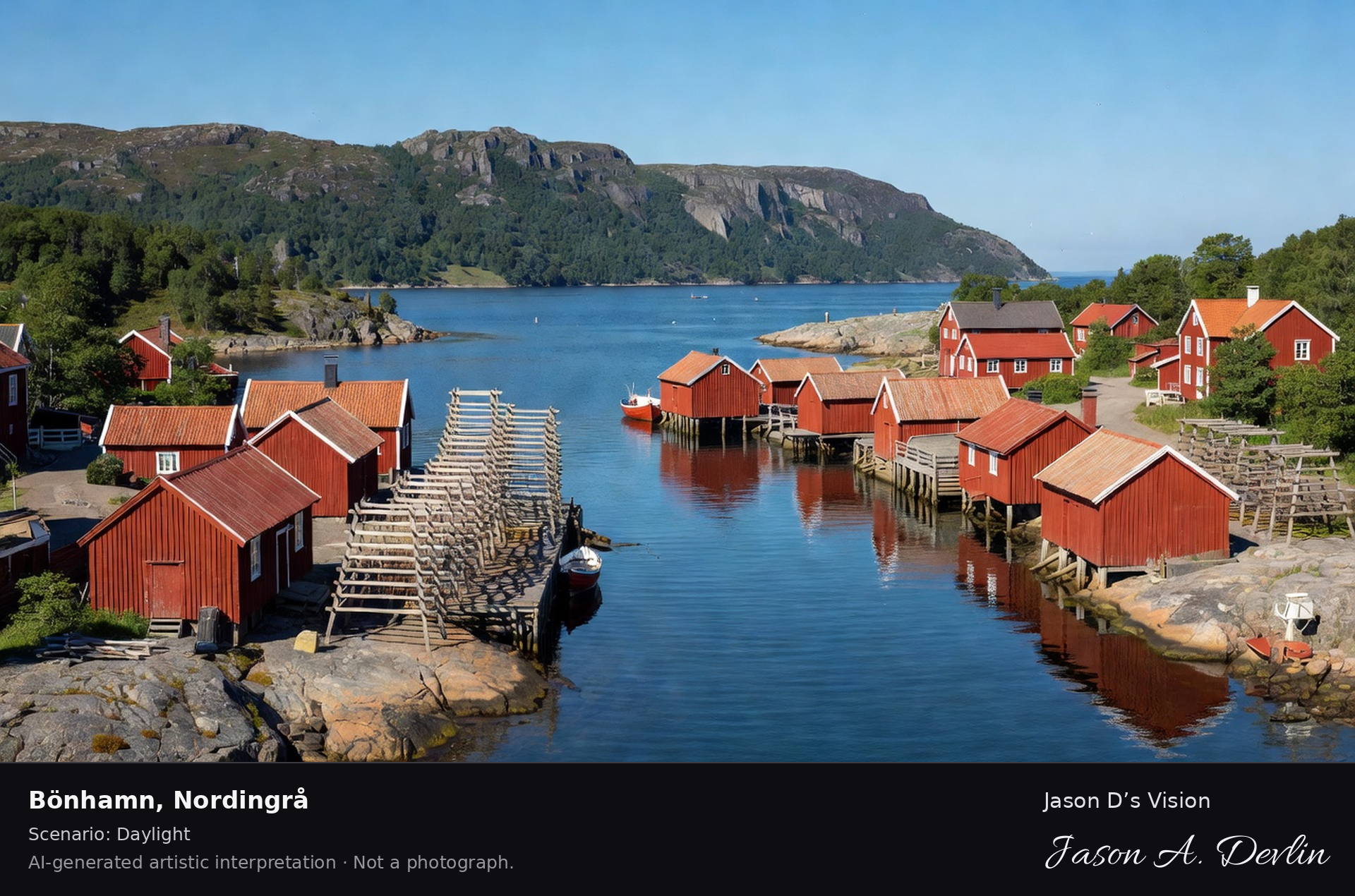
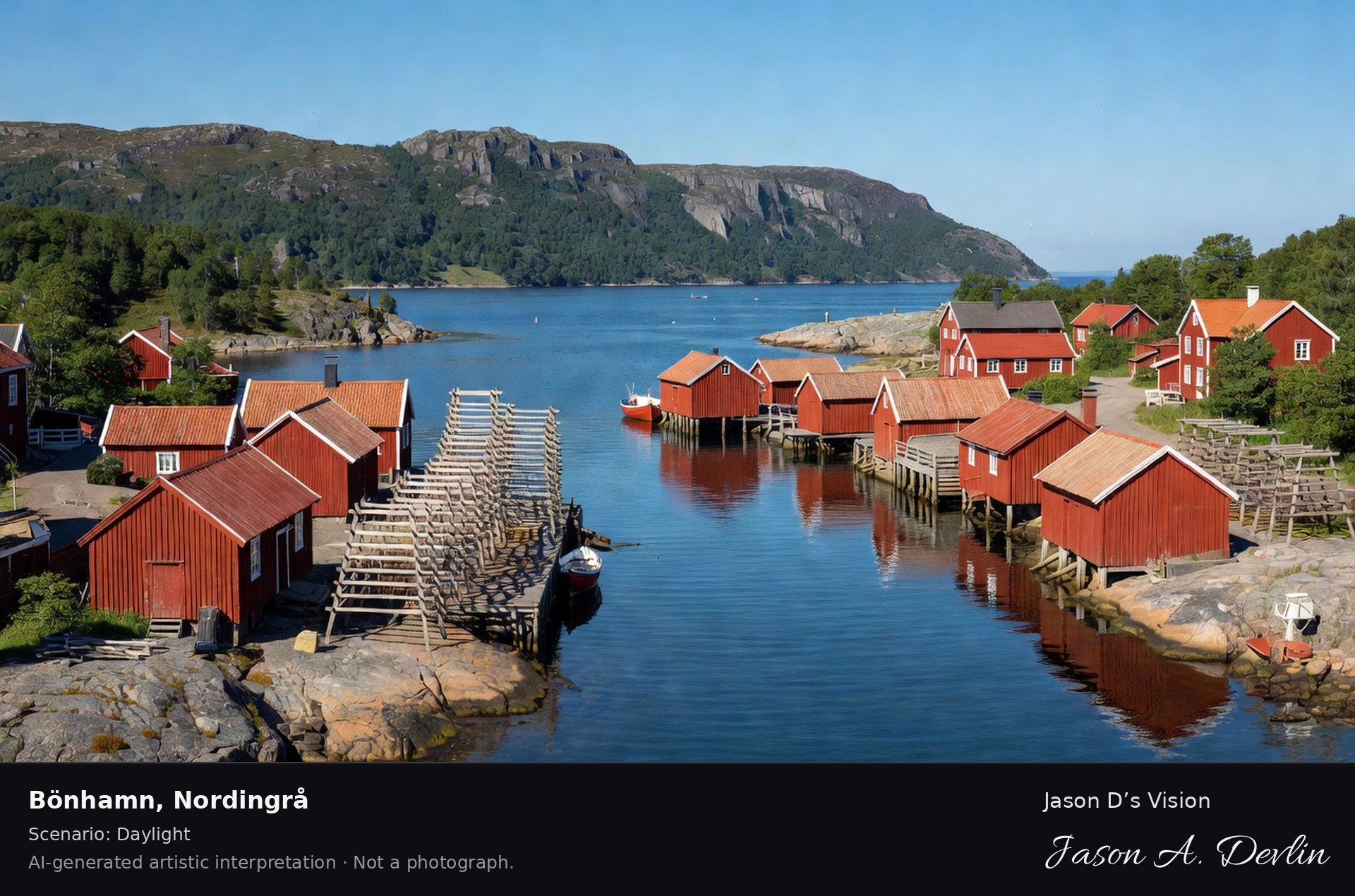
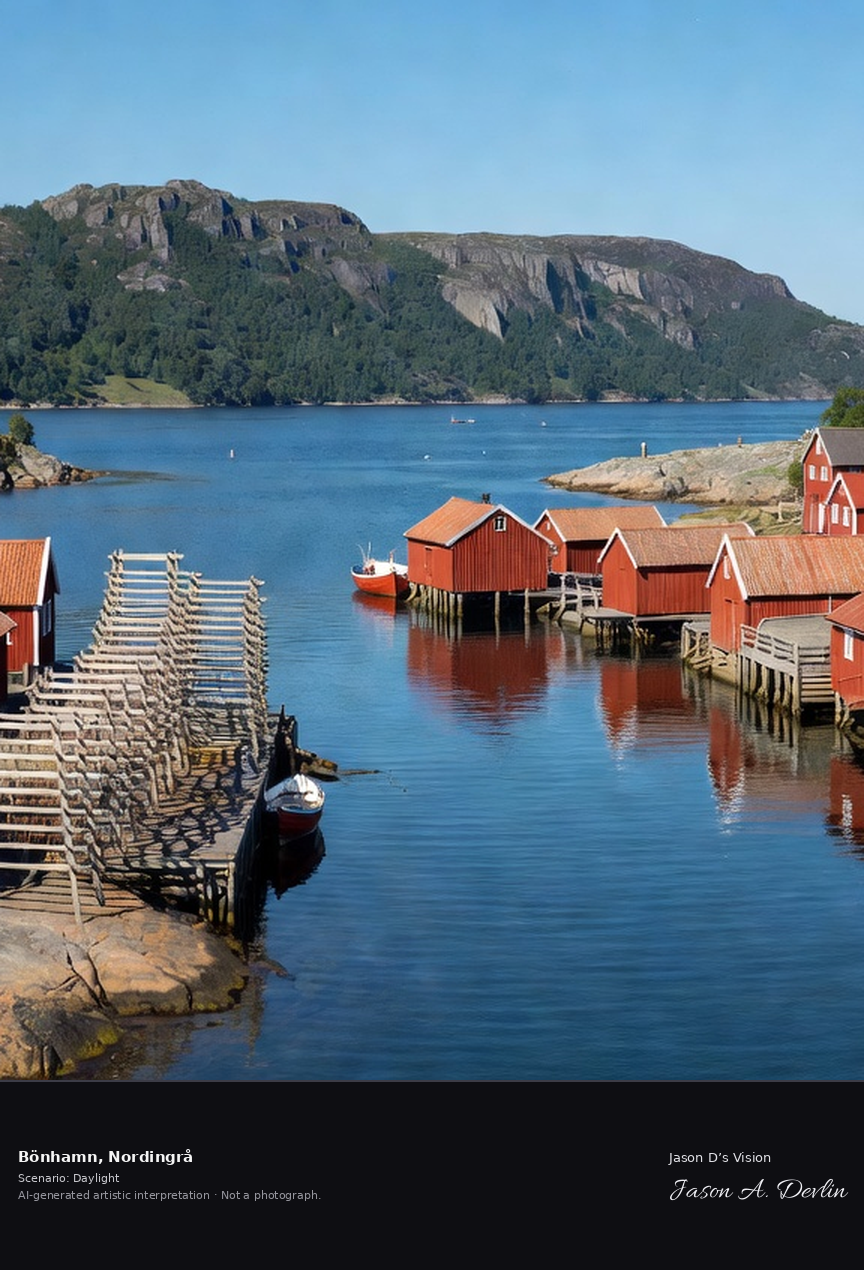
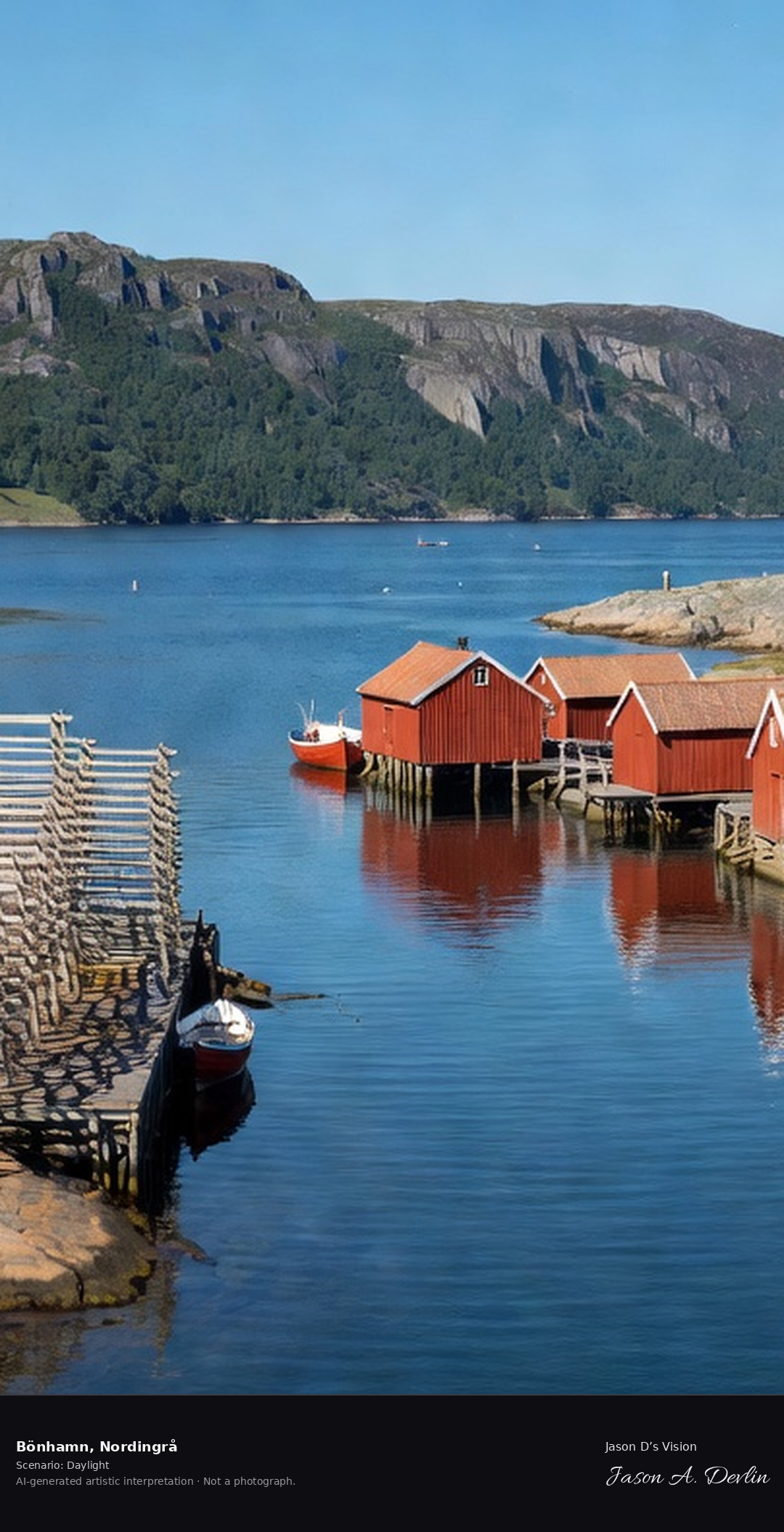
Bönhamn's perfectly preserved fishing village, red boathouses and drying racks along the narrow harbor with the High Coast hills behind. A living 19th-century fishing hamlet.
Bönhamn in Nordingrå, Ångermanland: the perfectly preserved 19th-century fishing village, red boathouses and tall wooden drying racks lining the narrow harbor on both banks, small boats moored at the wooden piers, the forested High Coast cliffs rising behind across the water, in bright natural daylight.
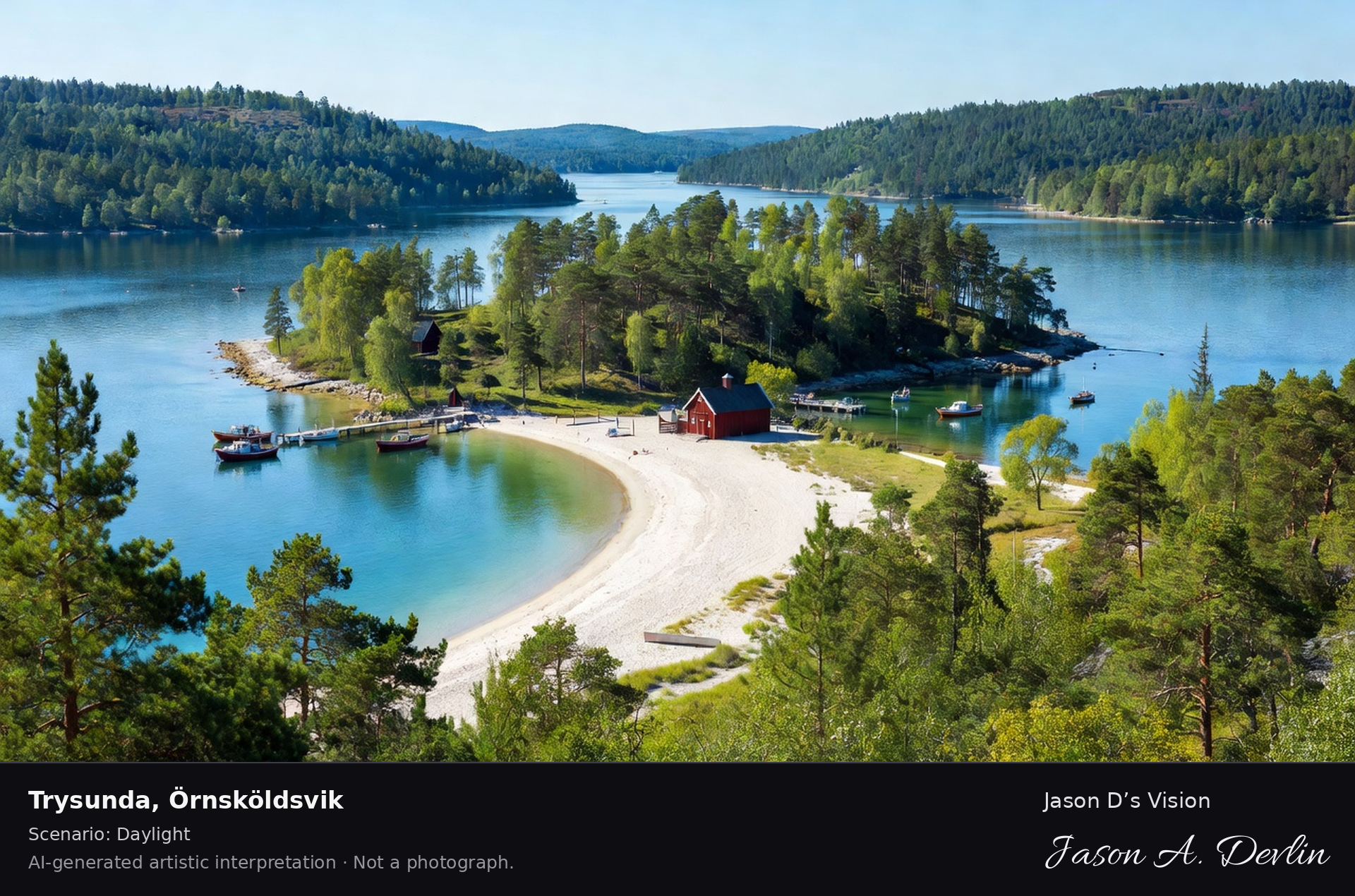
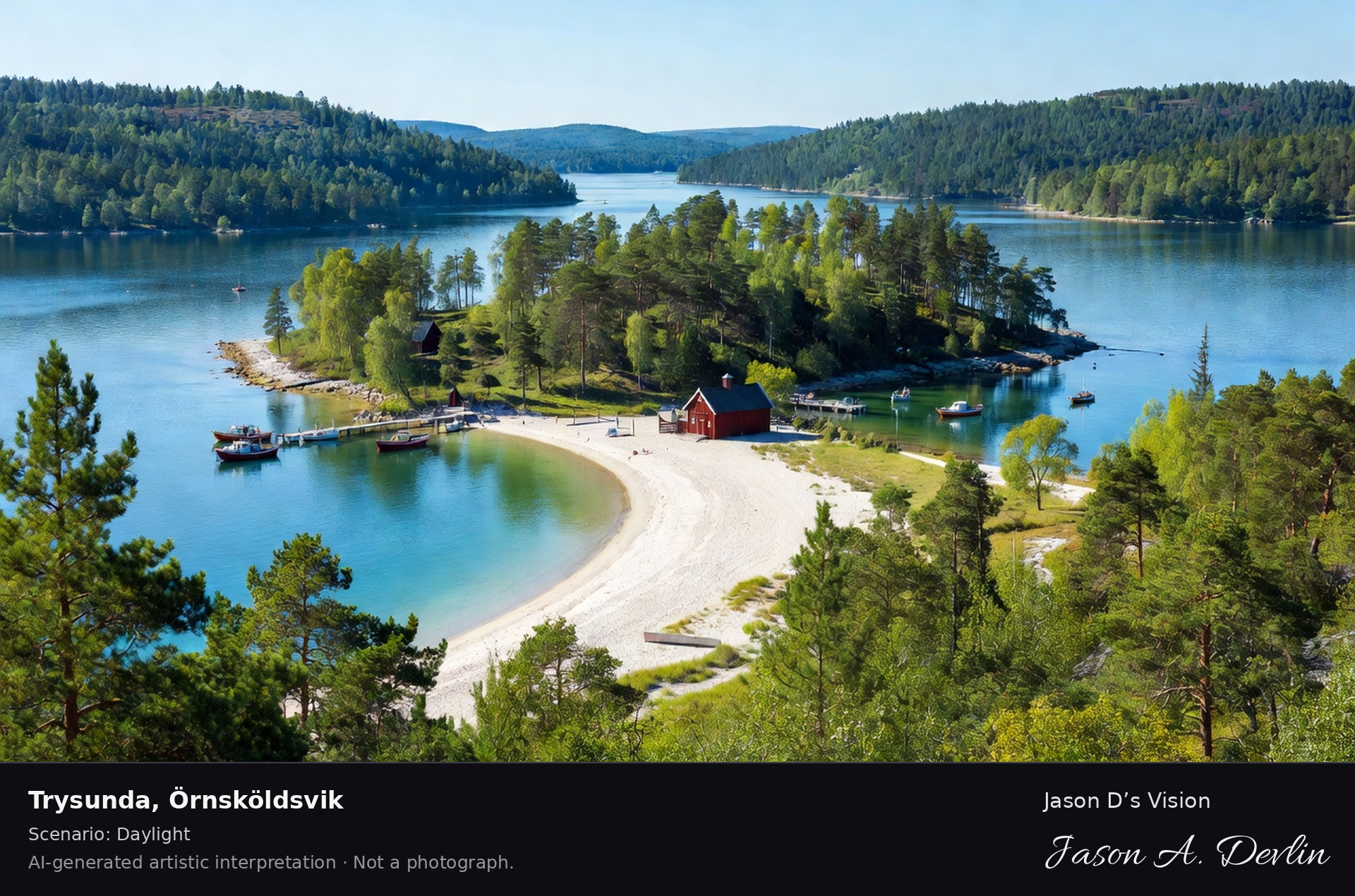
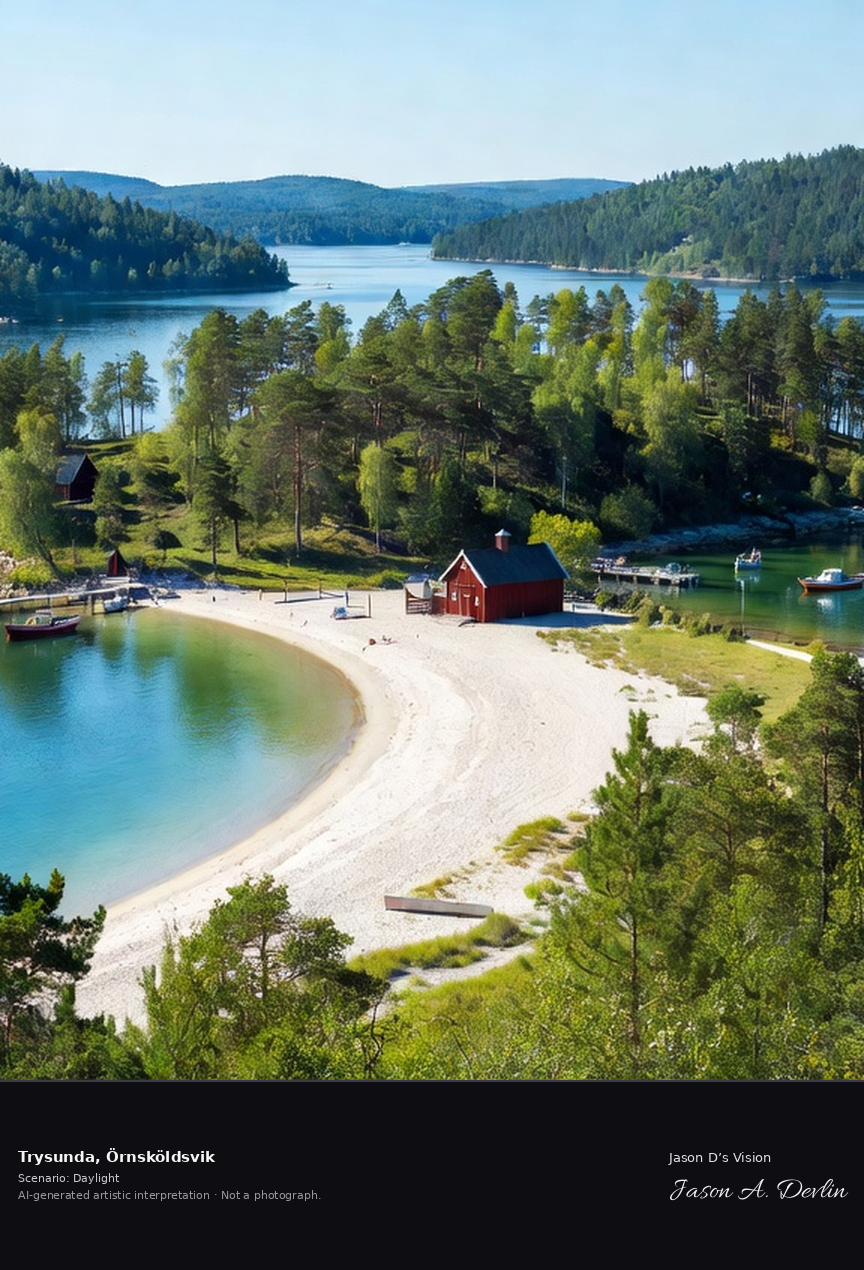
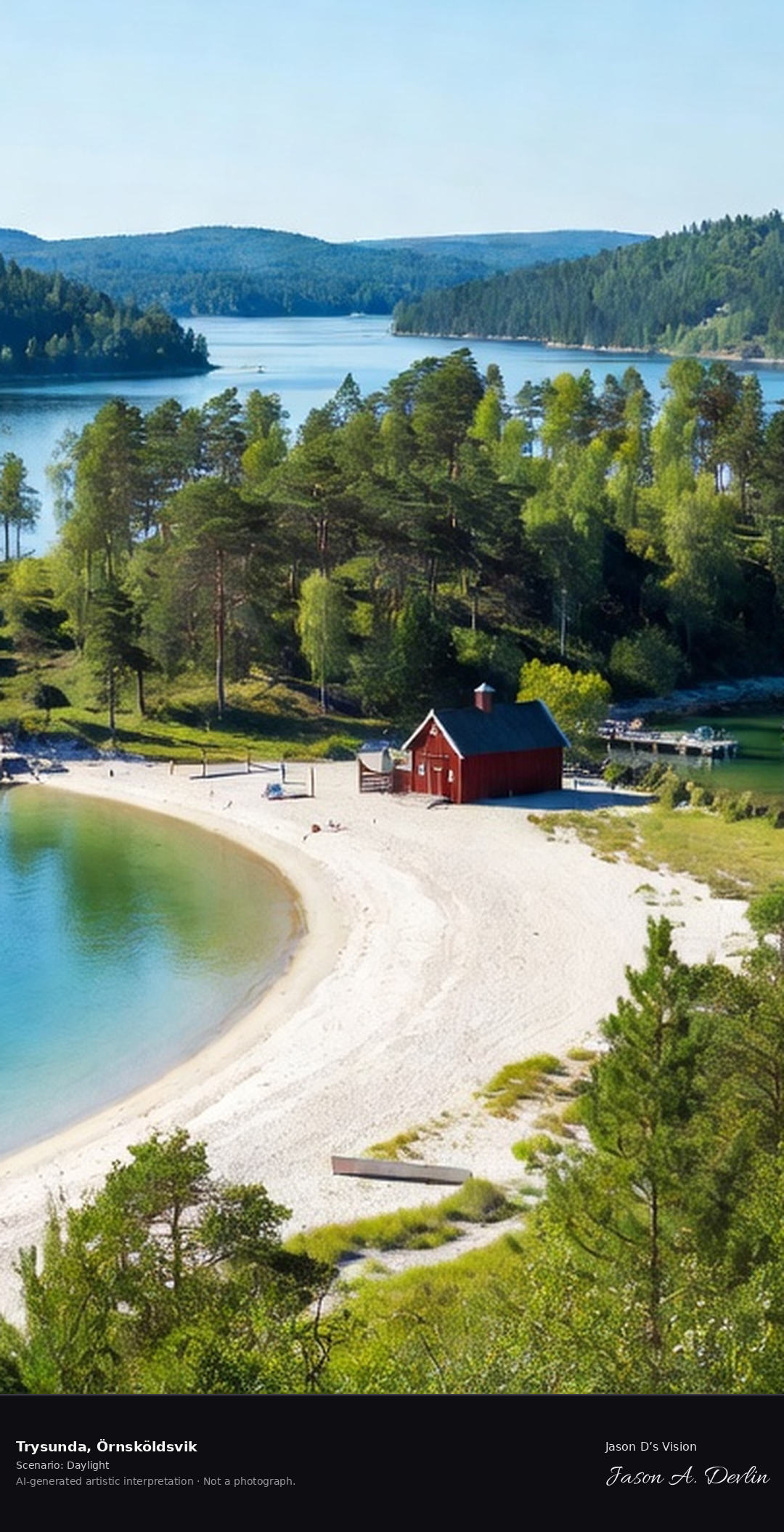
Trysunda island's white sandy beach and fishing chapel in the High Coast archipelago, the 'pearl of the Bothnian Sea' with its sheltered harbor and forested hills.
Trysunda in Örnsköldsvik, Ångermanland: the High Coast archipelago island's white sandy beach and red fishing chapel in a sheltered harbor, small boats moored at wooden jetties, forested hills rising around the shoreline, in bright natural daylight.
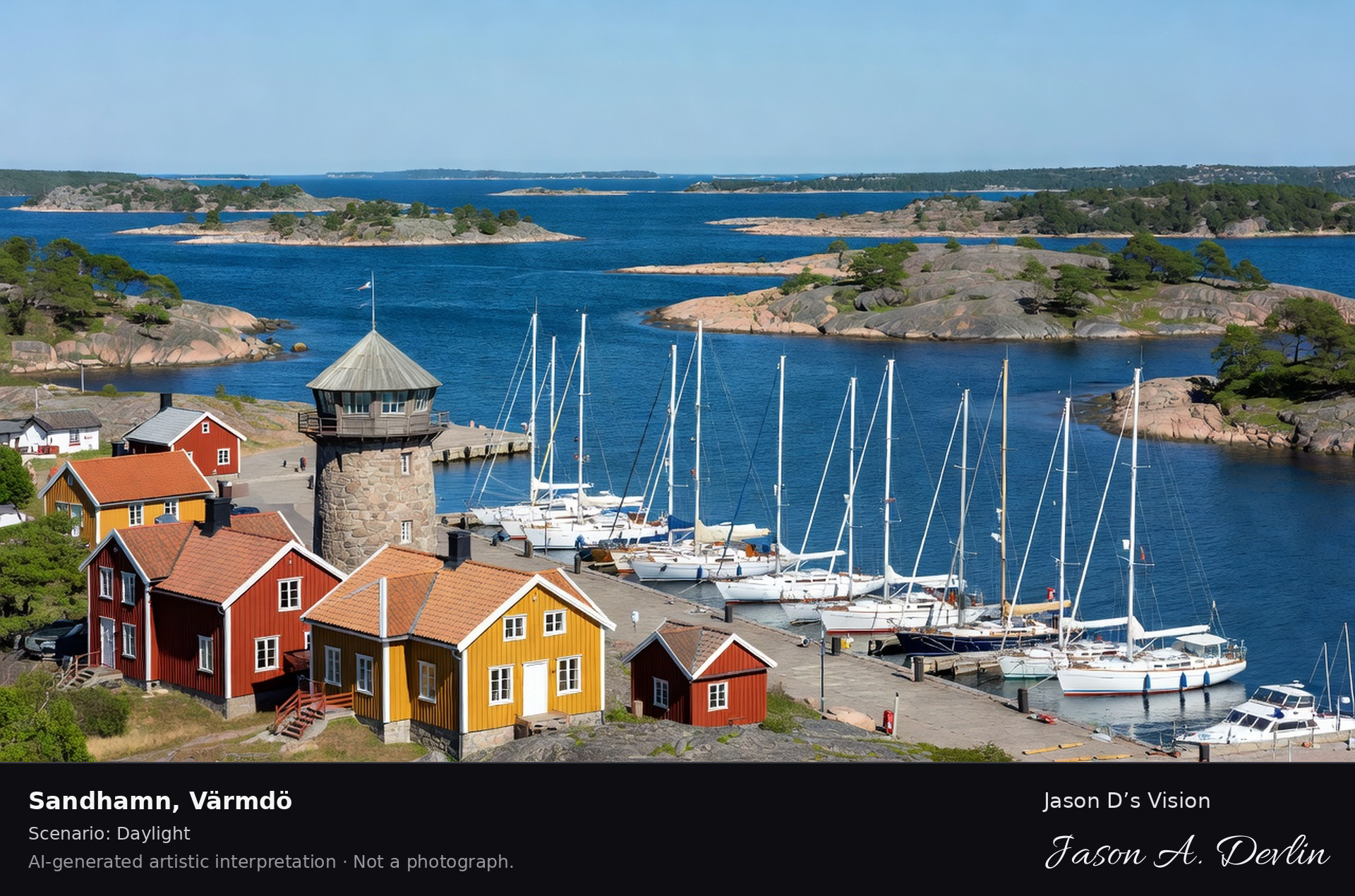
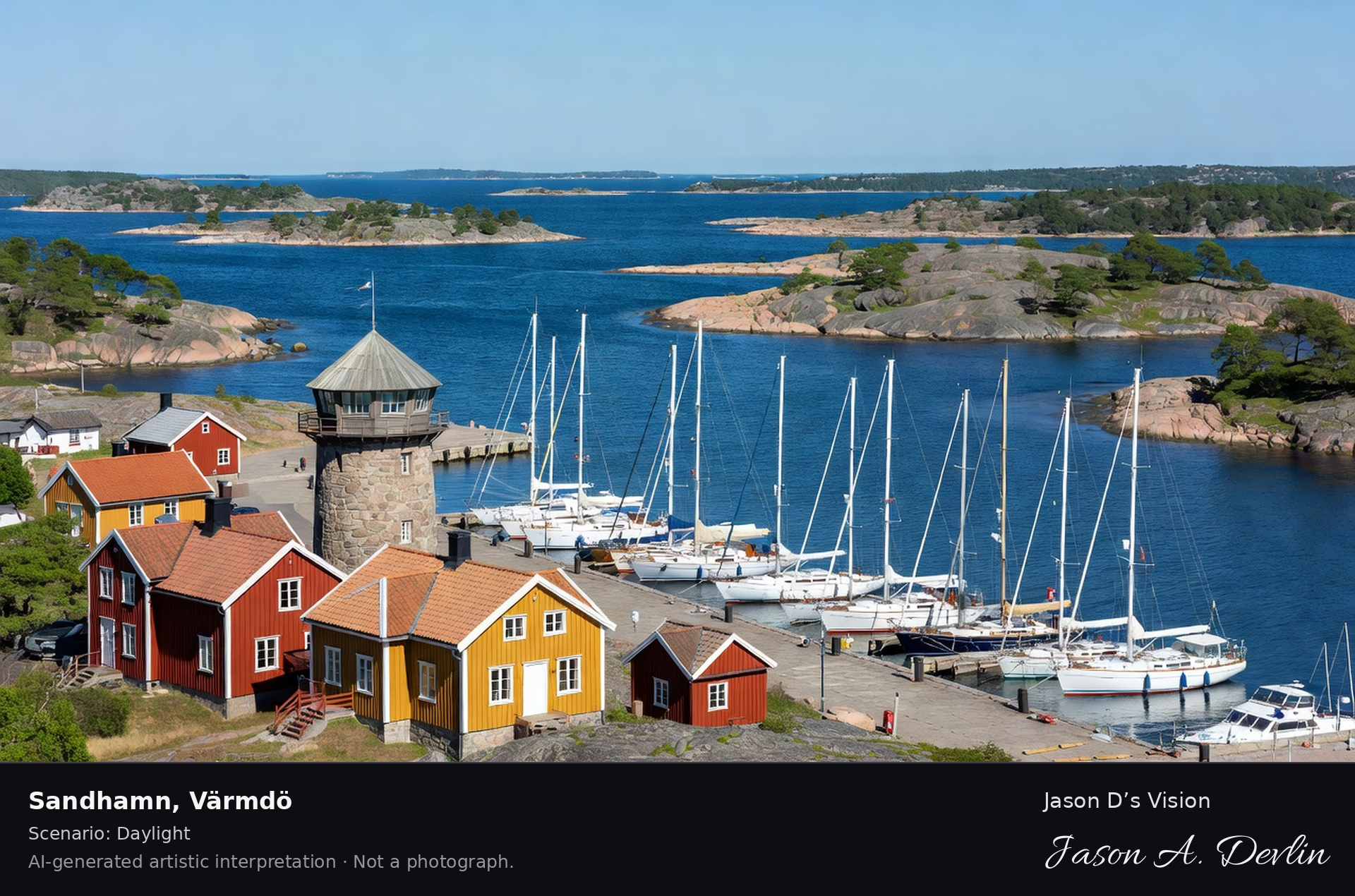
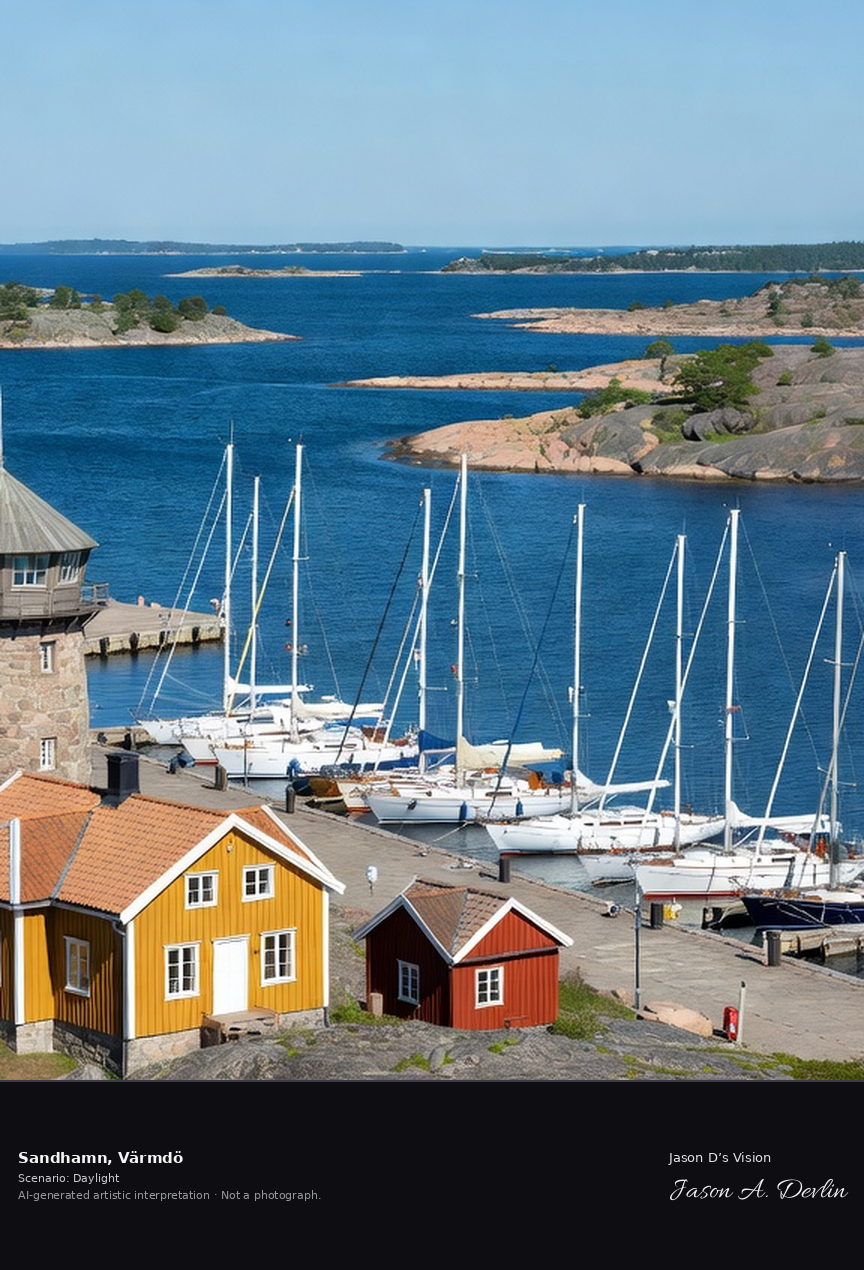
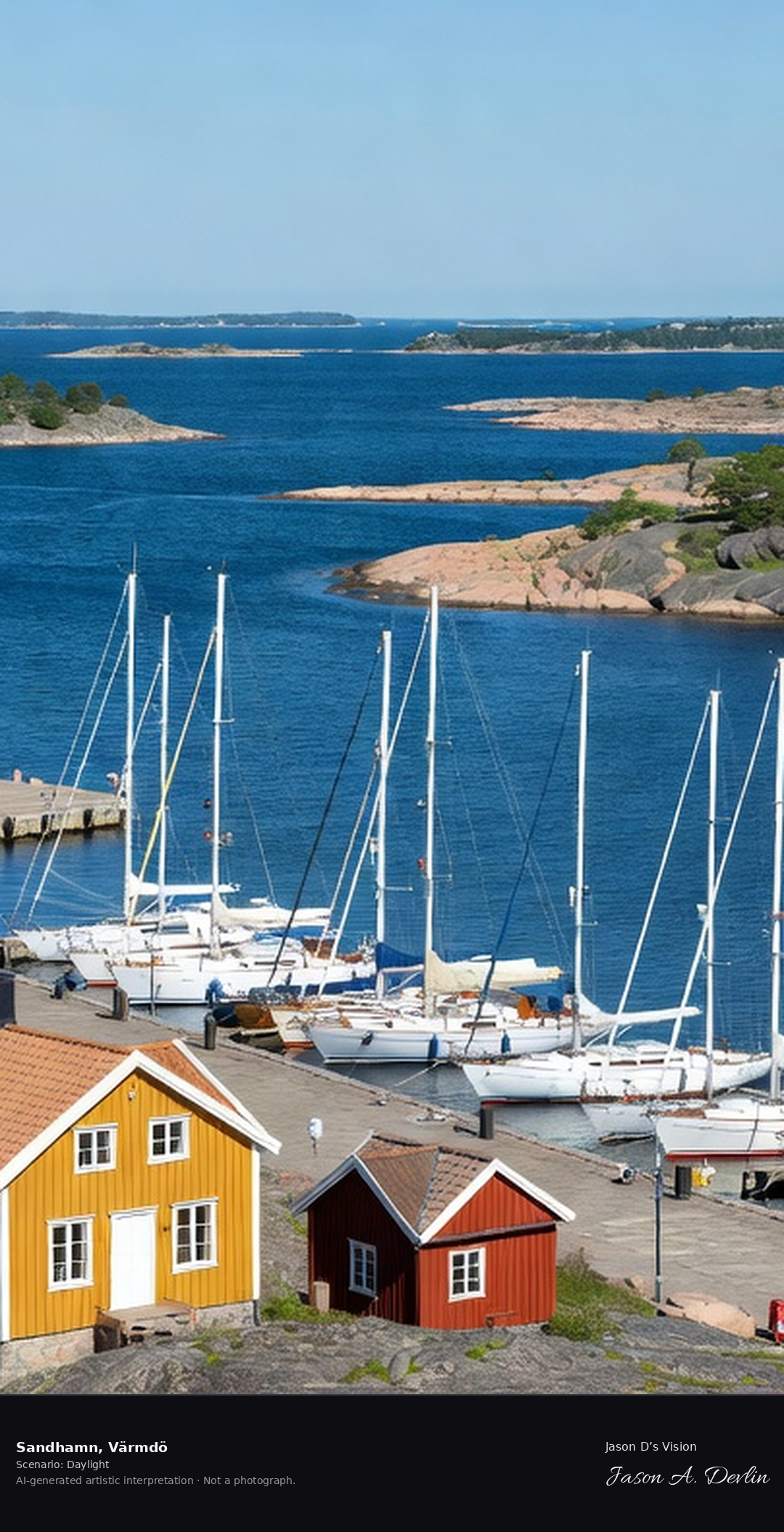
Sandhamn's harbor on Sandön, the Royal Swedish Yacht Club's classic sailing center with wooden villas and the pilot tower, yachts moored along the quays in the outer archipelago.
Sandhamn in Värmdö, Stockholm archipelago: the sailing village's harbor on Sandön, the Royal Swedish Yacht Club's classic sailing center with wooden villas and the pilot tower, yachts moored along the quays, rocky skerries of the outer archipelago beyond, in bright natural daylight.
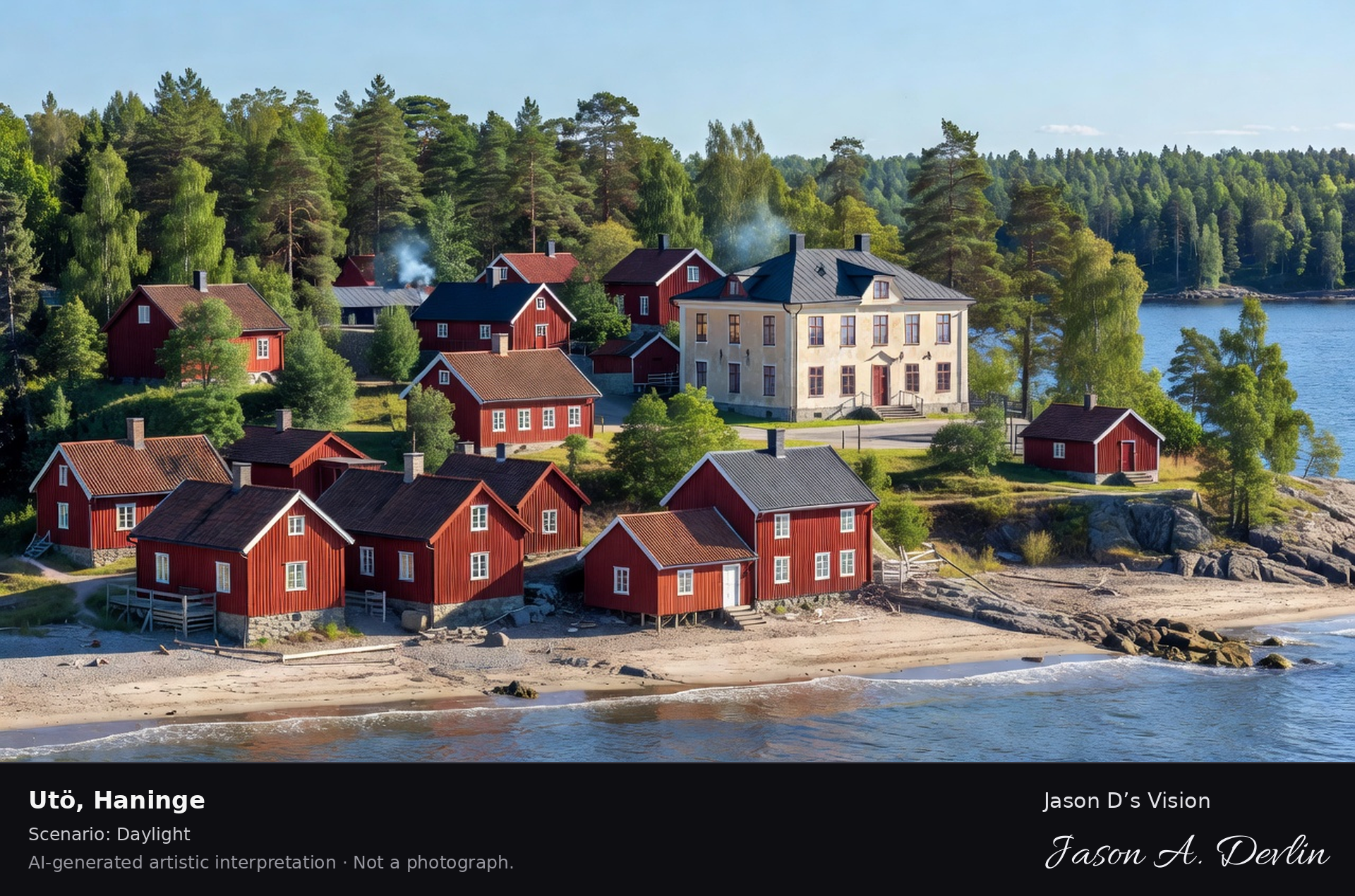
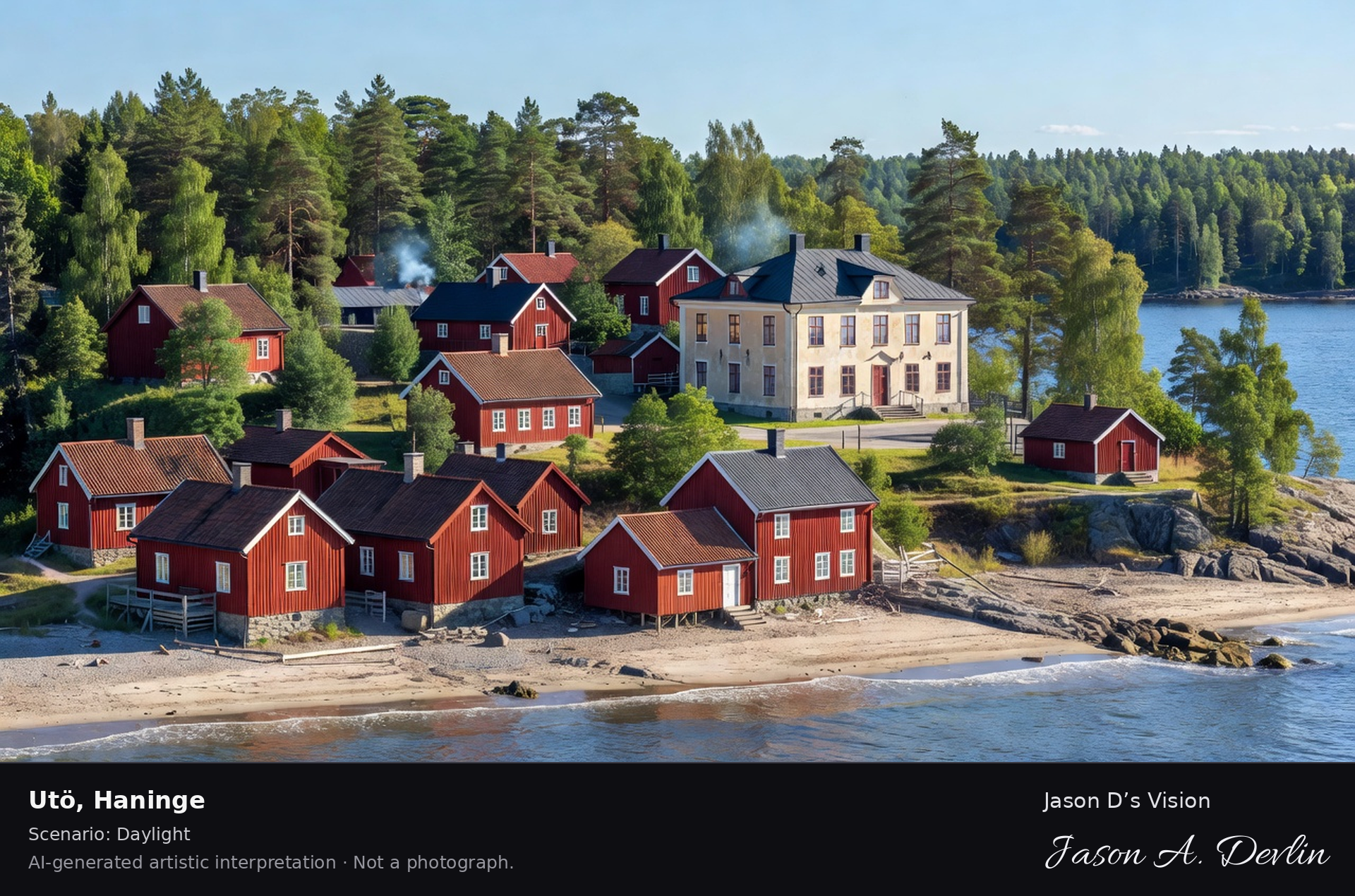
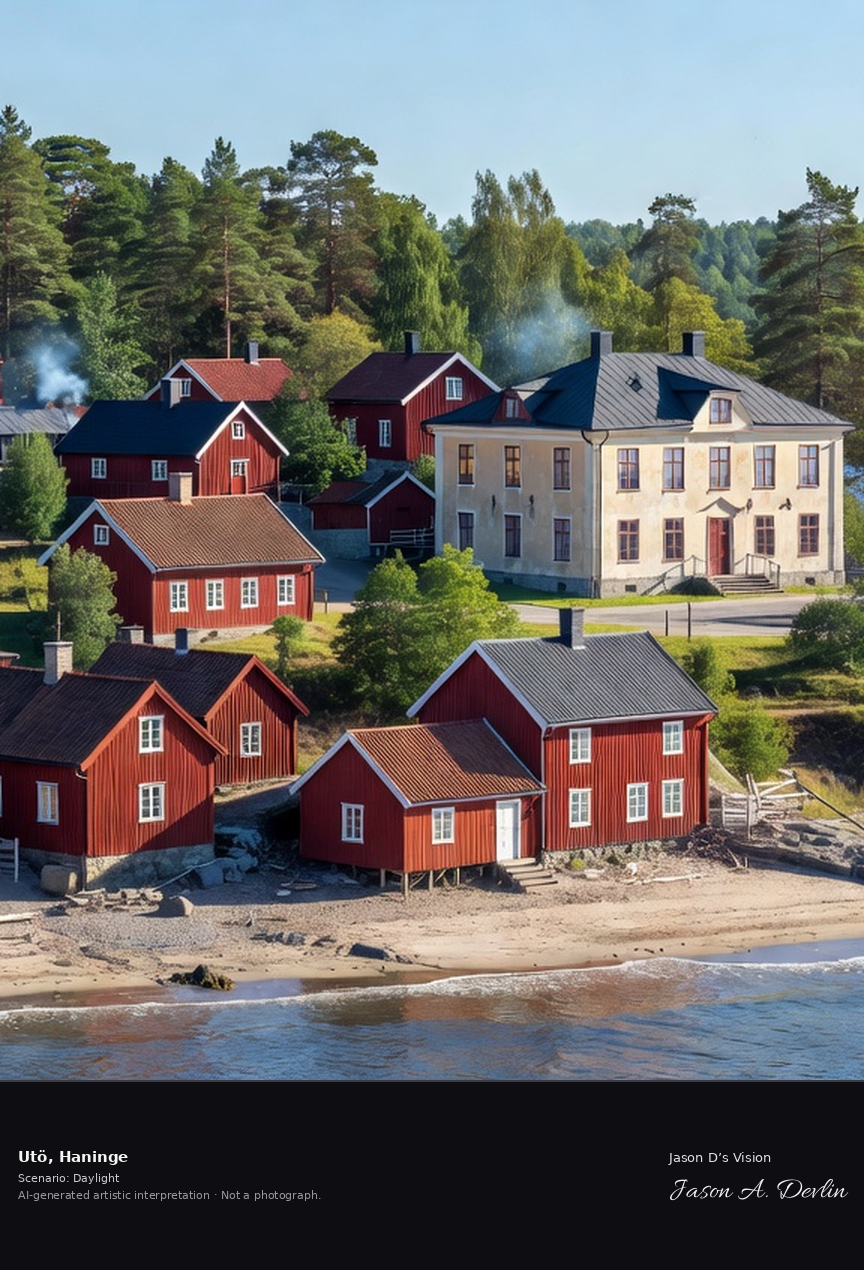
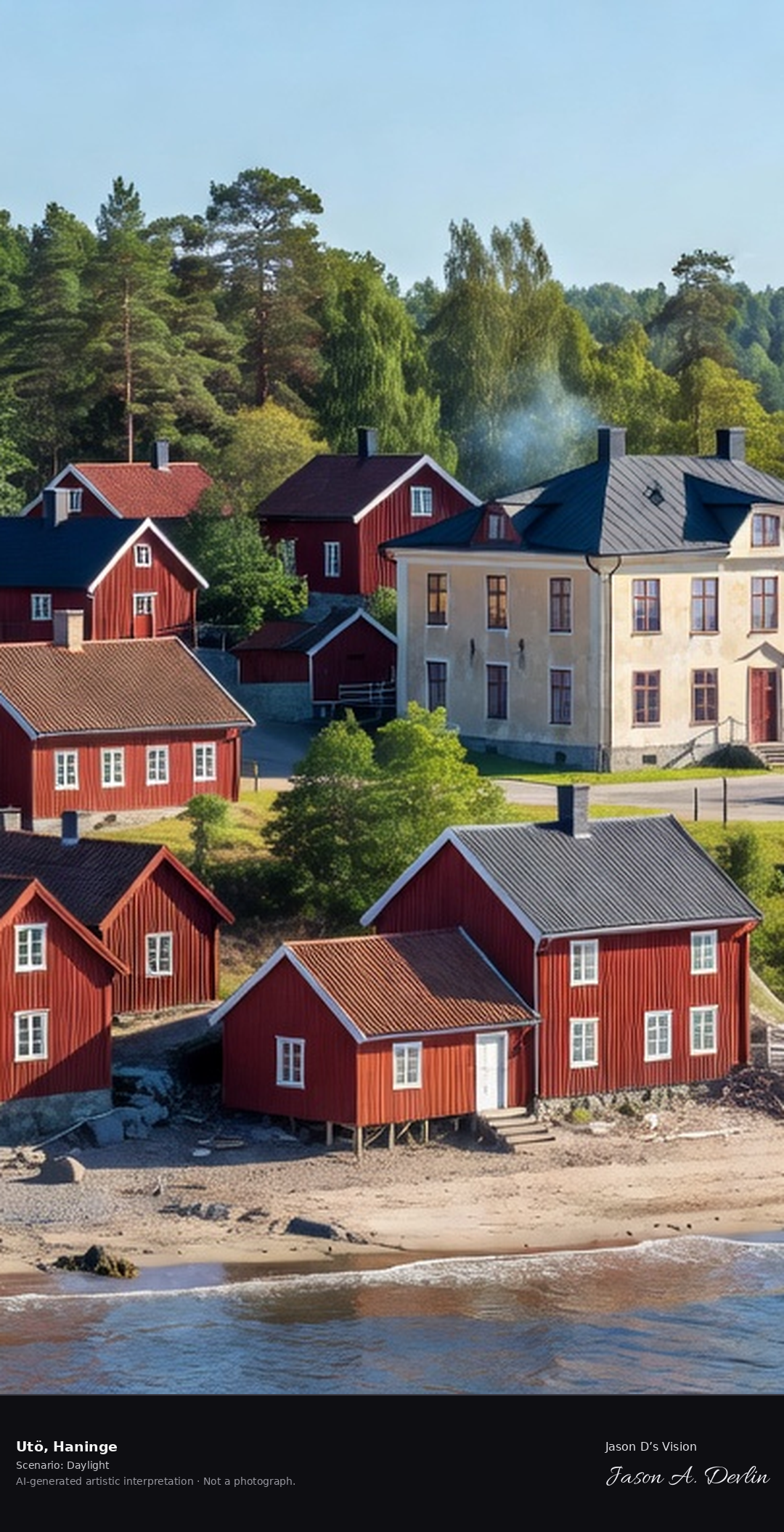
Utö's old iron mine village with the red workers' cottages and the manor house, the historic mining island in the southern archipelago with its beaches and forests.
Utö's old iron mine village in the southern Stockholm archipelago: the red workers' cottages clustered along the shore road, the yellow manor house rising above them, with the island's sandy beaches, calm water and pine forests — a historic mining island in bright natural daylight.
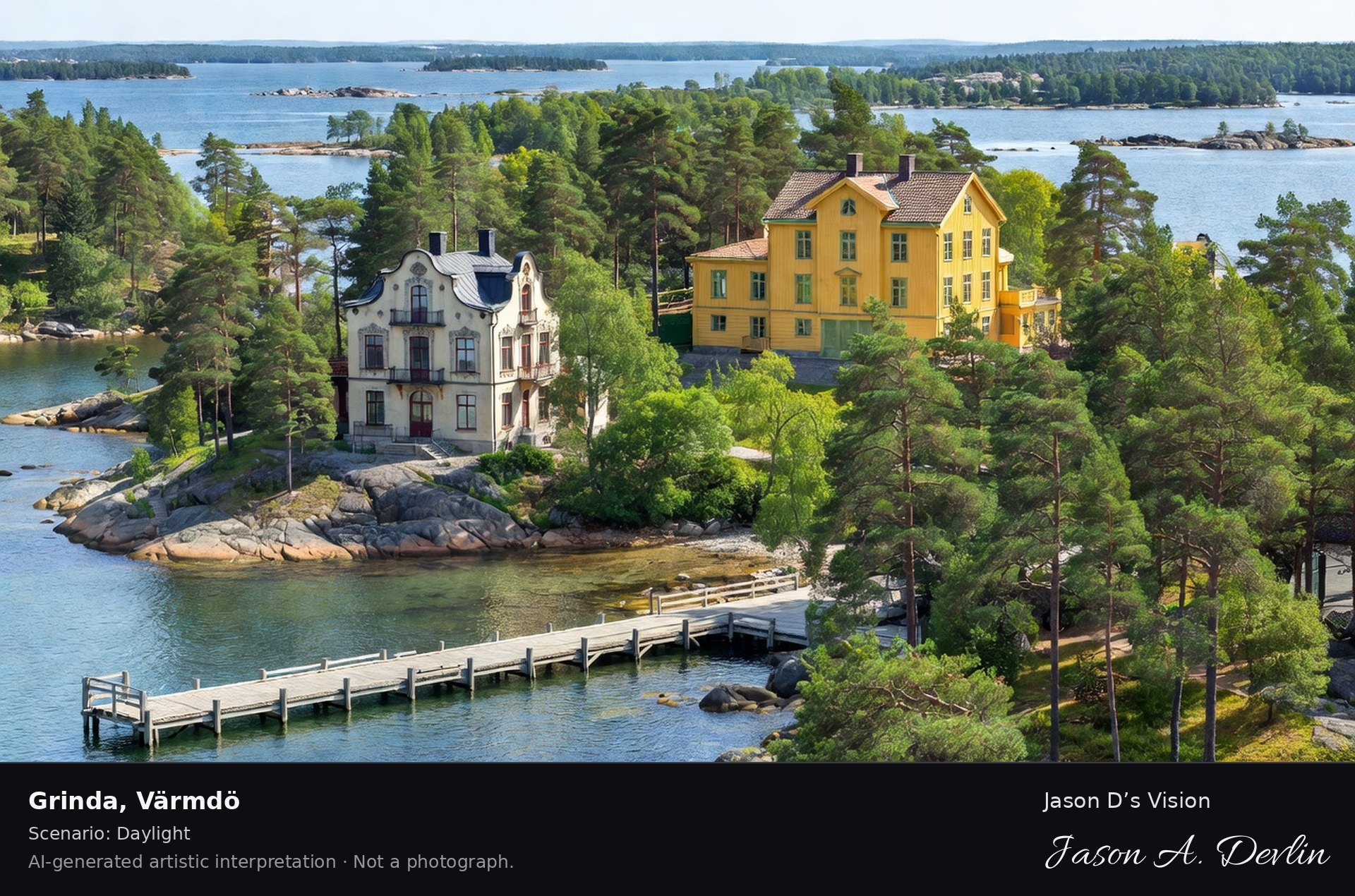
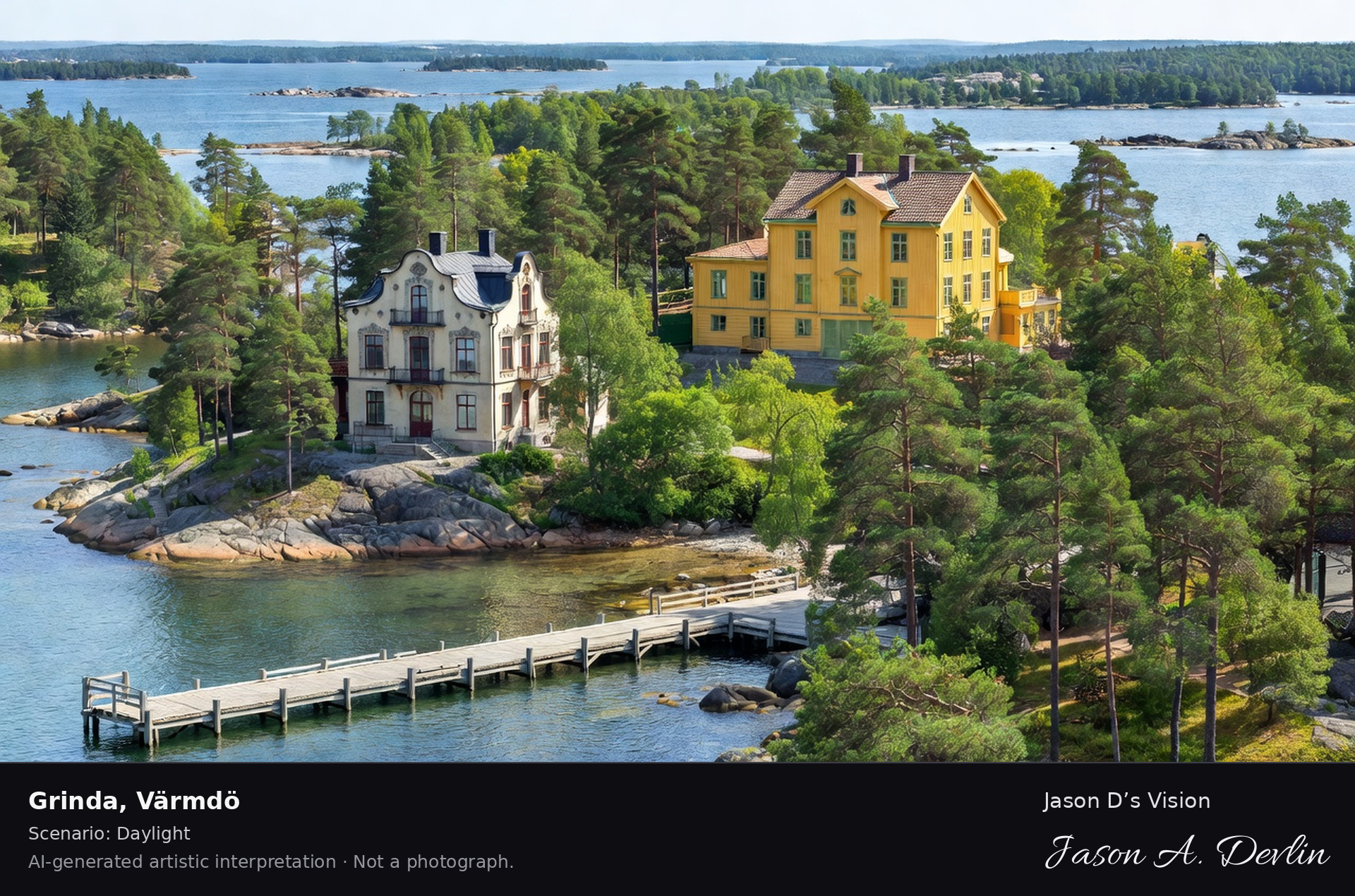
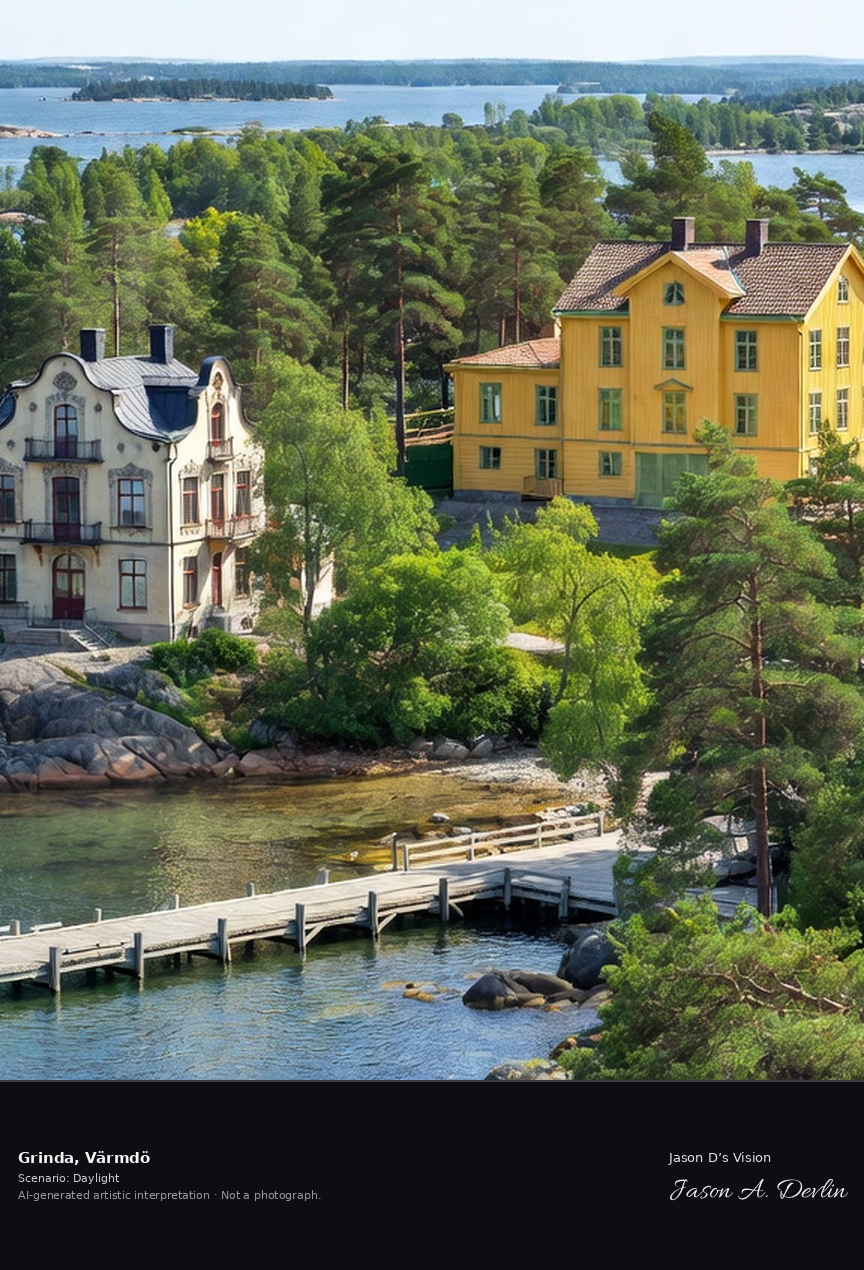
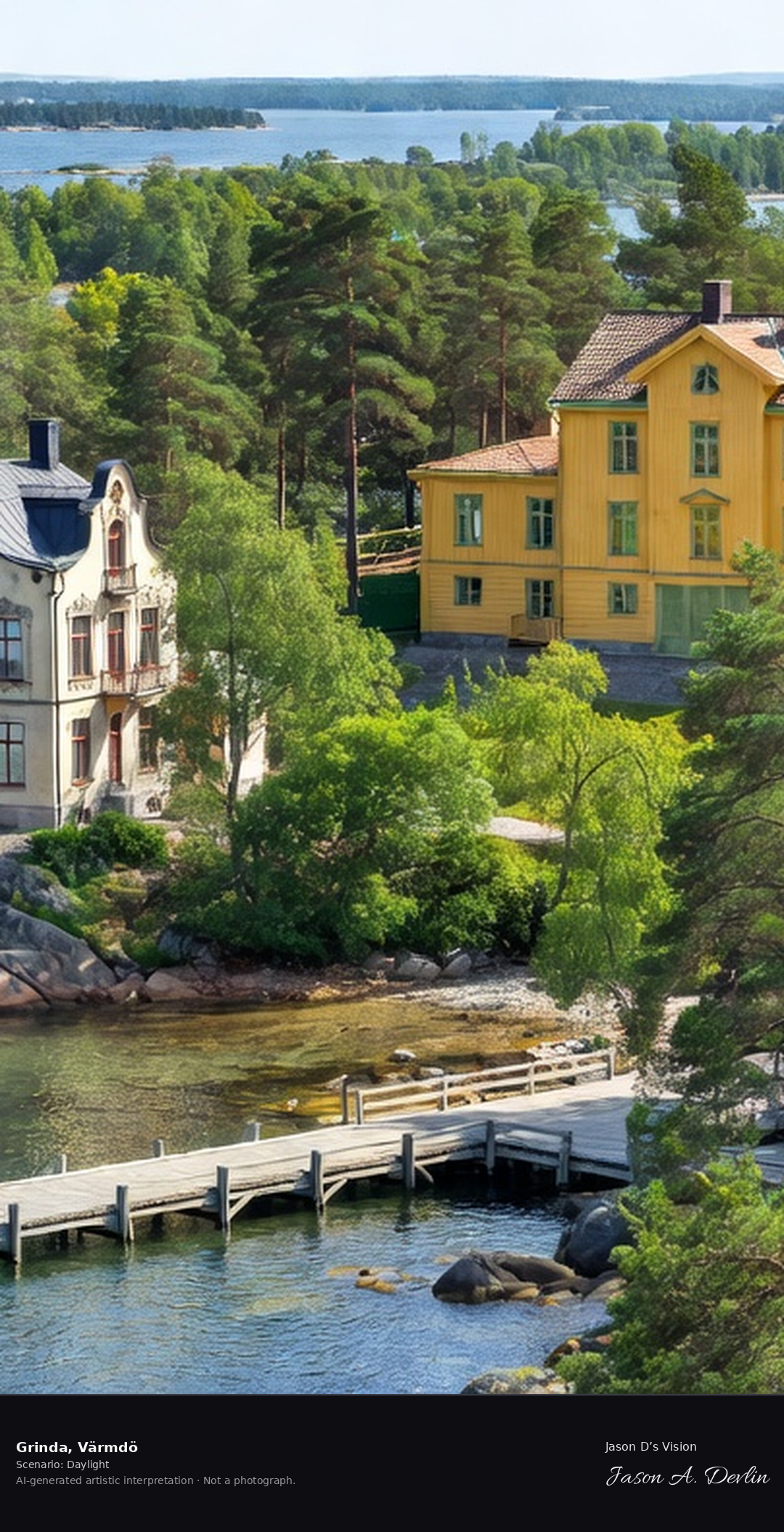
Grinda's art nouveau villa and jetty in the central archipelago, the historic steamboat island with its yellow manor house above the bathing bays and pine forest.
Above Grinda’s bathing bays and pine forest stands the island’s yellow manor house, an art nouveau villa by its jetty. The historic steamboat island lies in the central archipelago, in bright natural daylight.
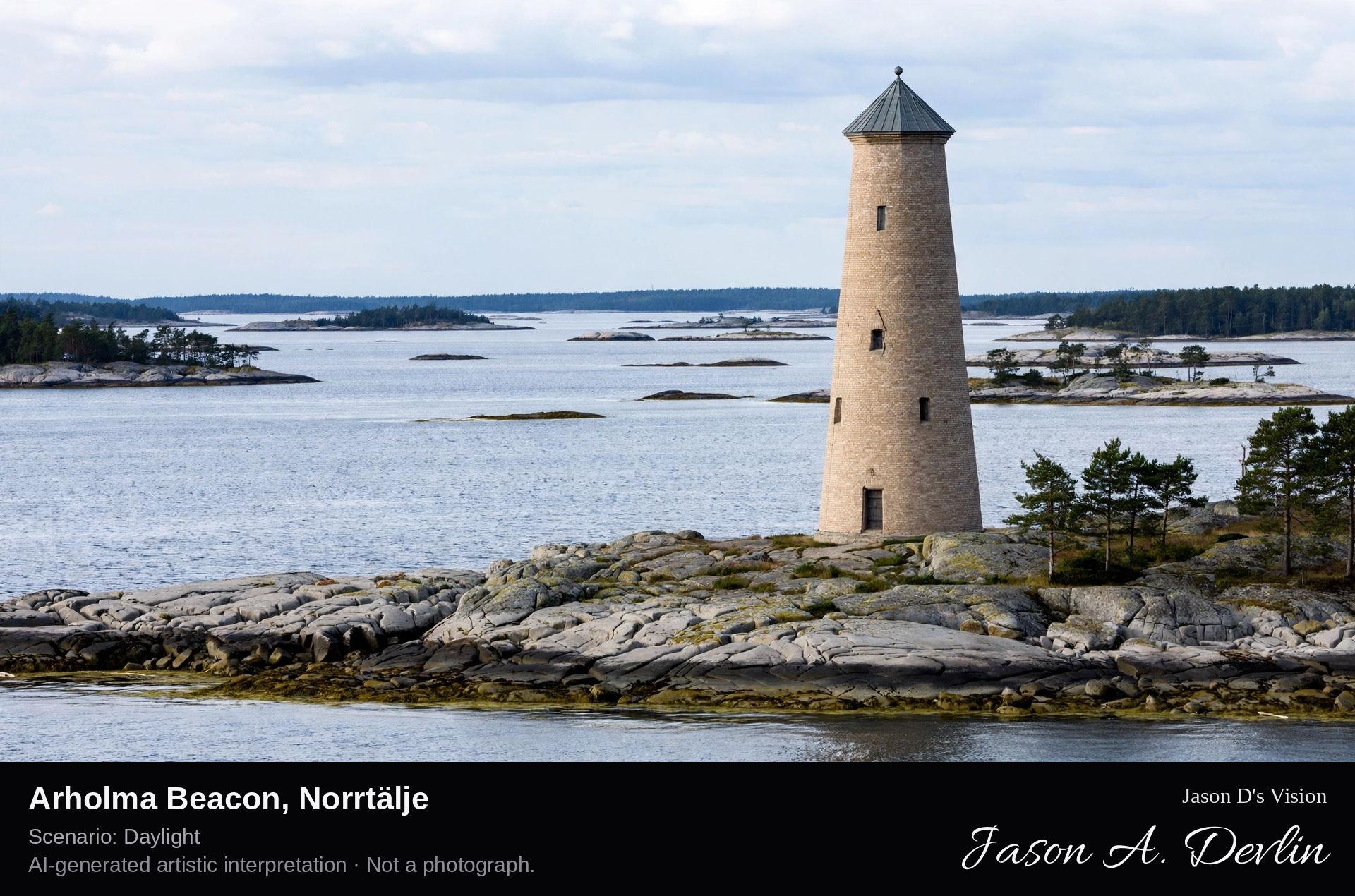
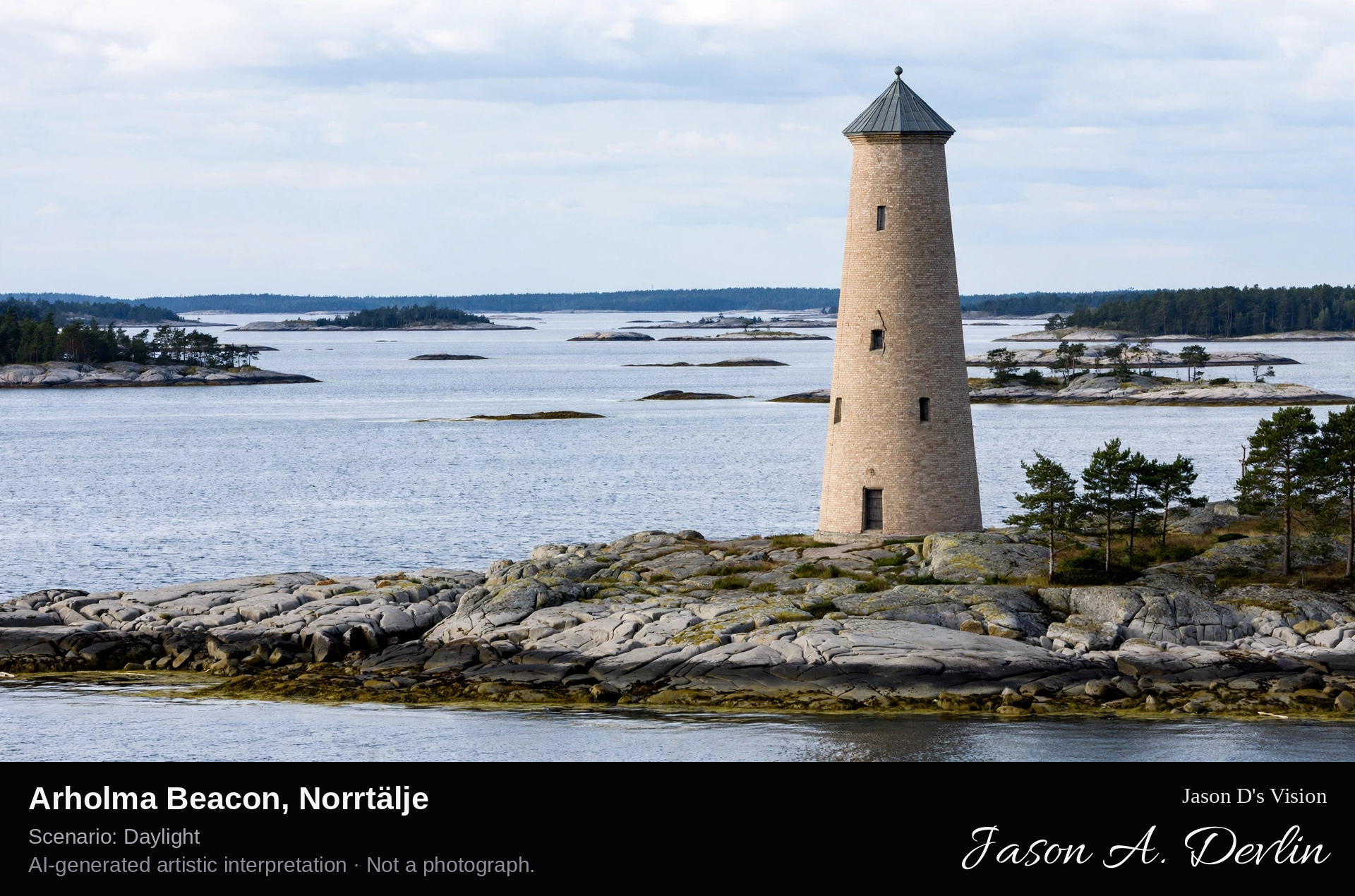
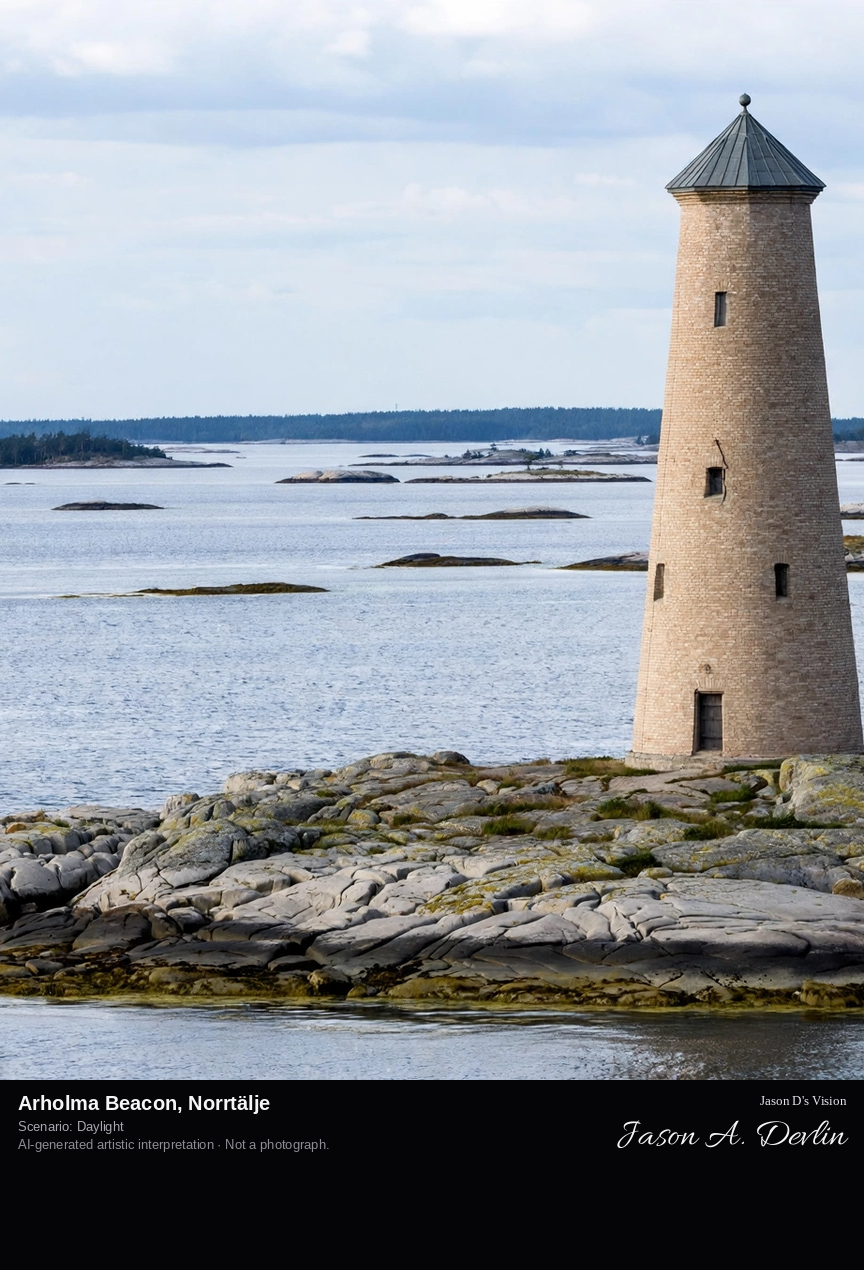
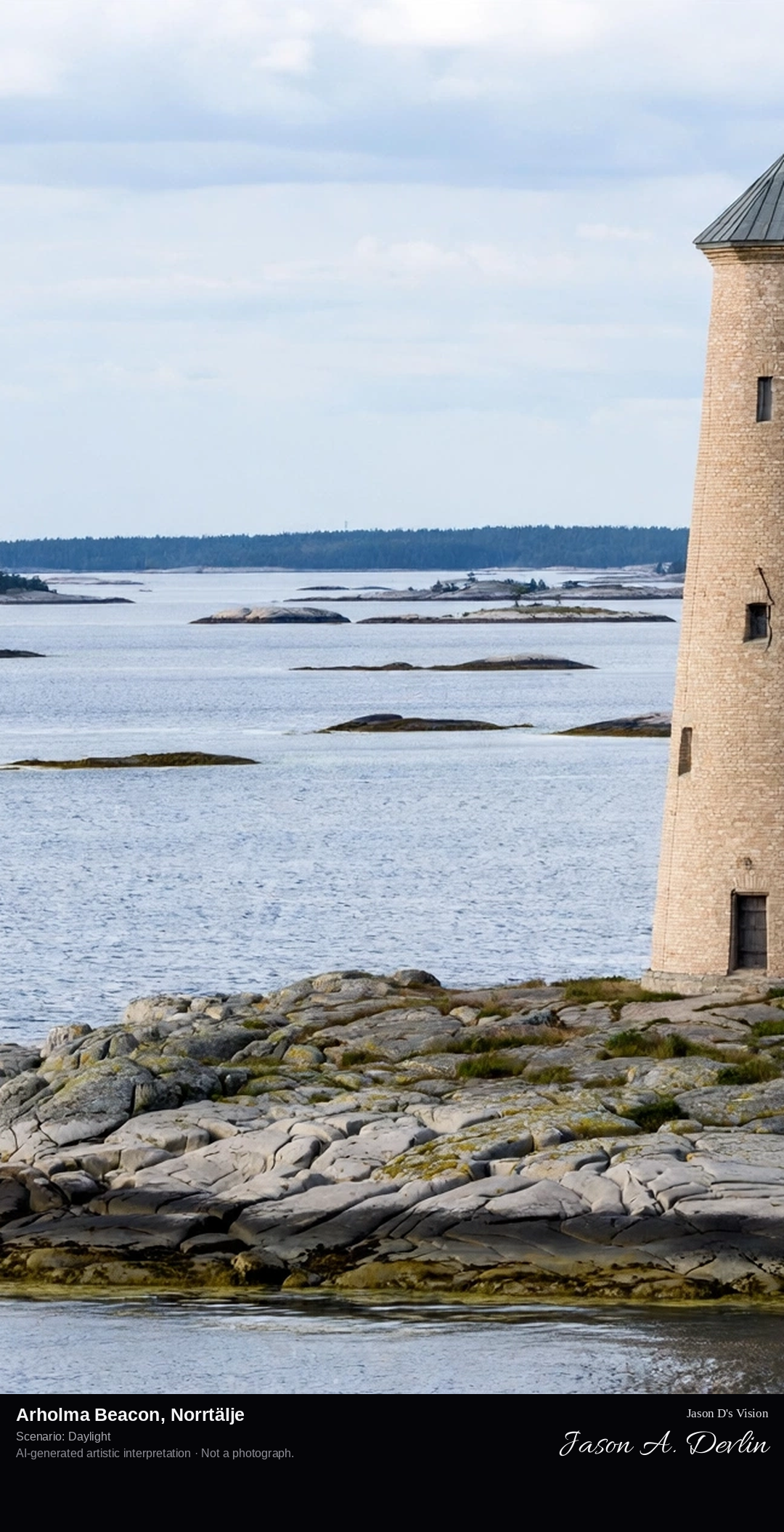
Arholma's day beacon at the northern gateway to the Stockholm archipelago, the tall tapering pale-brick tower on the barren island where the Bothnian Sea meets the archipelago's inner waters.
Arholma Beacon's tall tapering pale-brick tower — the unlit day beacon (båk) raised in 1768, with a pyramidal top and no lantern — standing on the barren red-grey rock of Arholma island, waves breaking on the skerries around it, at the northern gateway to the Stockholm archipelago where the Bothnian Sea meets the inner waters. In bright natural daylight.
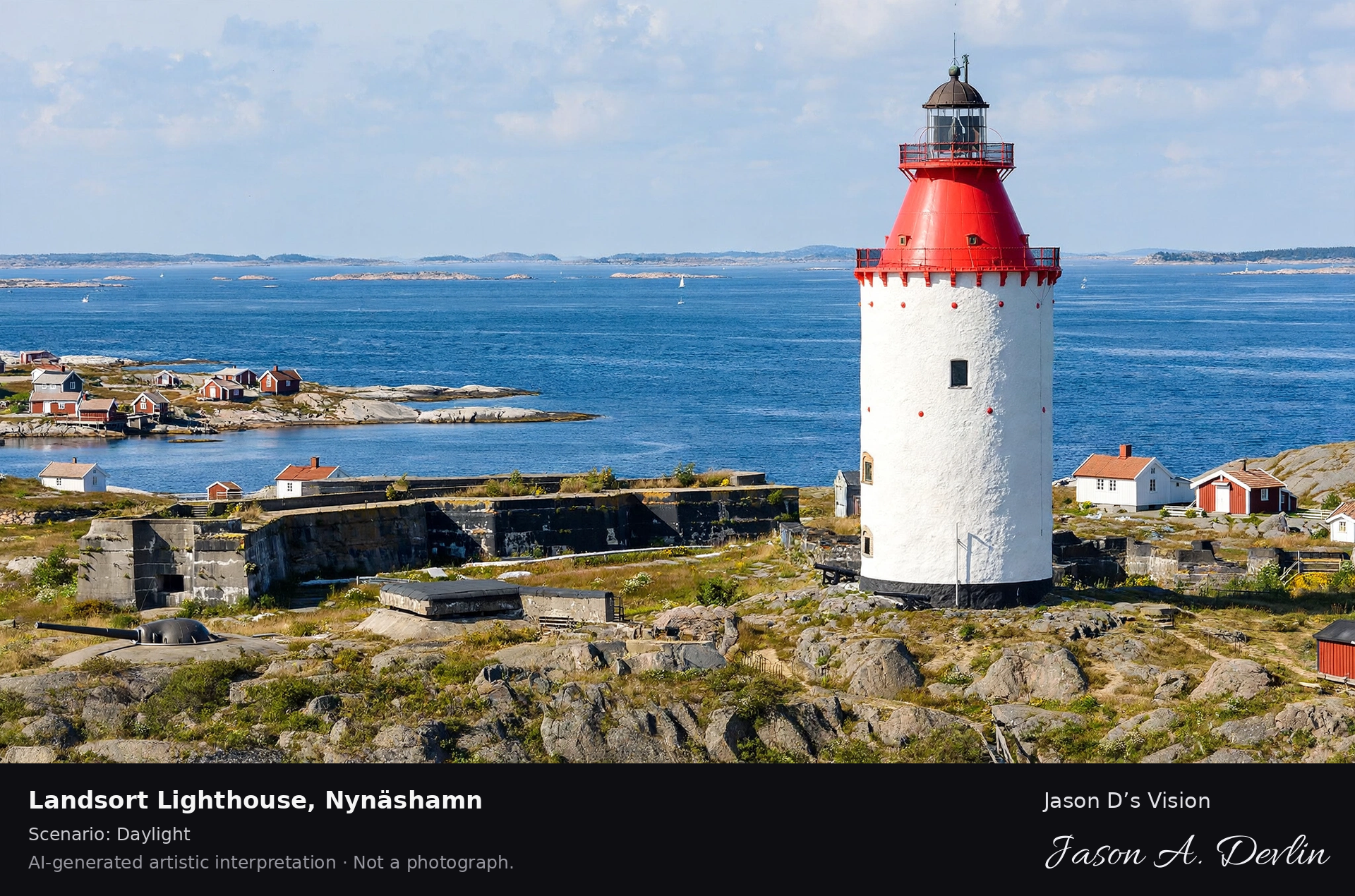
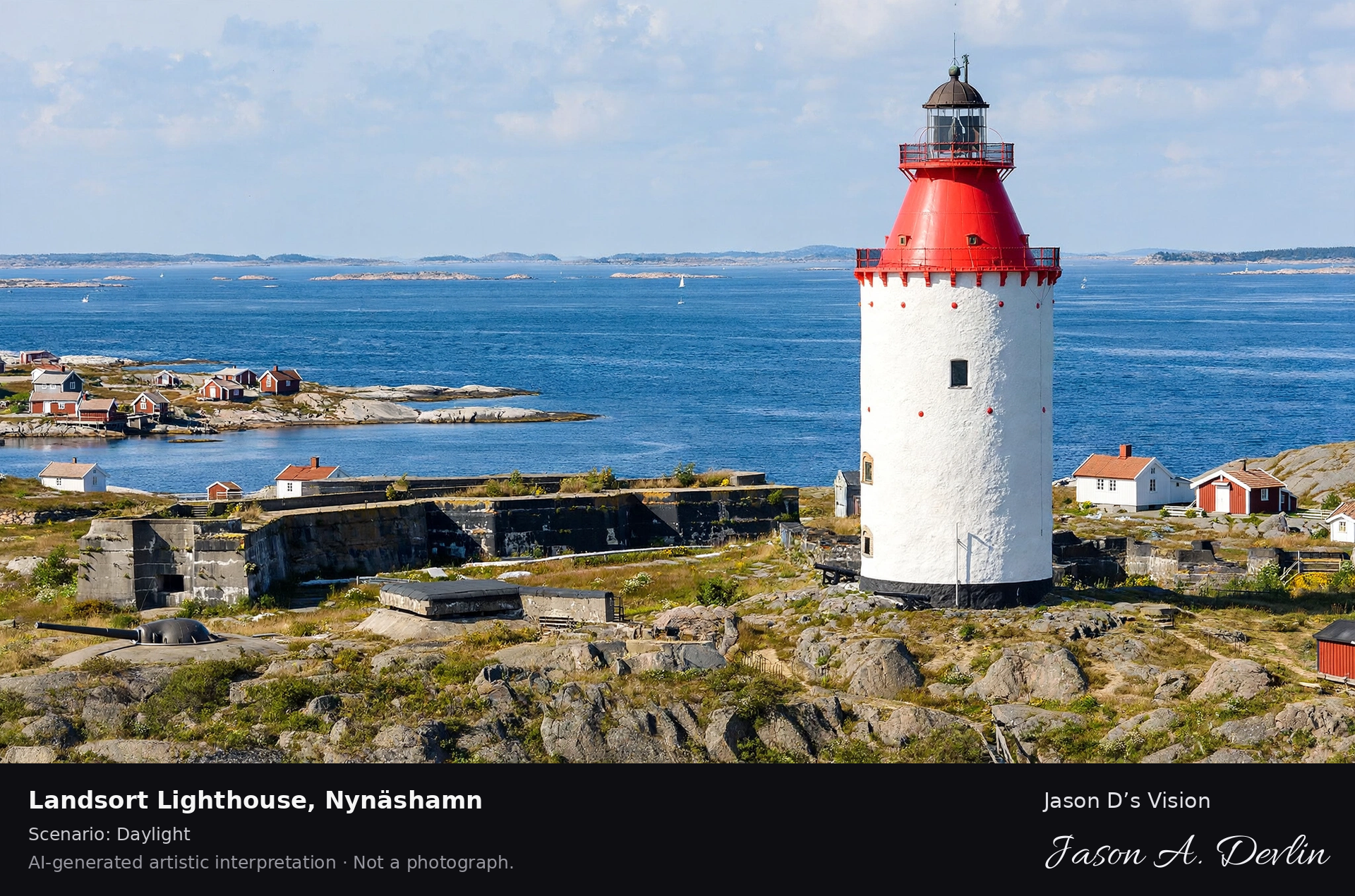
Landsort's lighthouse on Öja island, Sweden's oldest lighthouse site with the 17th-century tower above the pilot village, at the southern entrance to the Stockholm archipelago.
Landsort Lighthouse's grey stone 17th-century tower with its white lantern room rising above the white pilot-village cottages with red tile roofs, the cobbled path leading up between stone walls to the tower, on the rocky Oja island shore at the southern entrance to the Stockholm archipelago. In bright natural daylight.
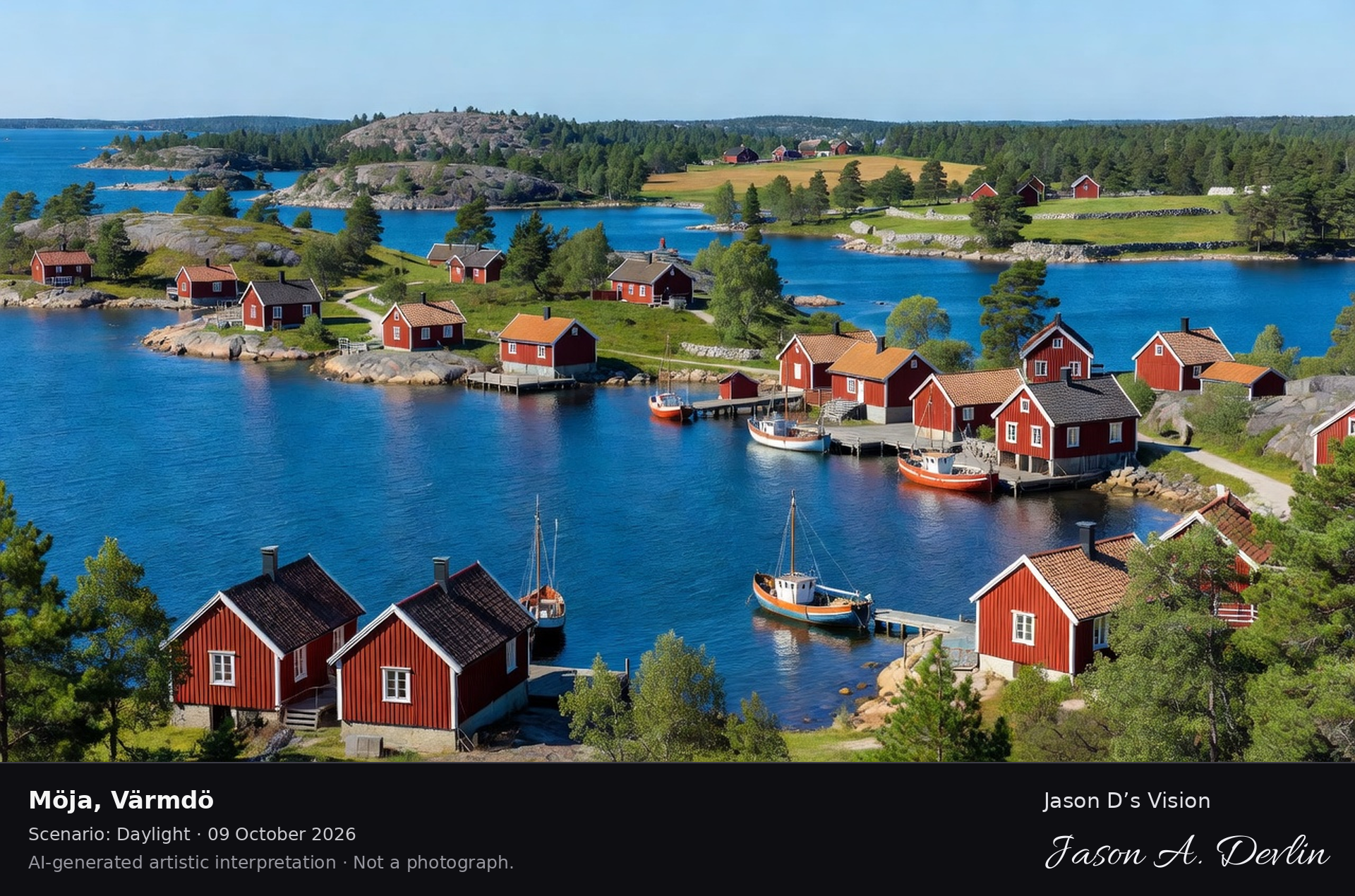
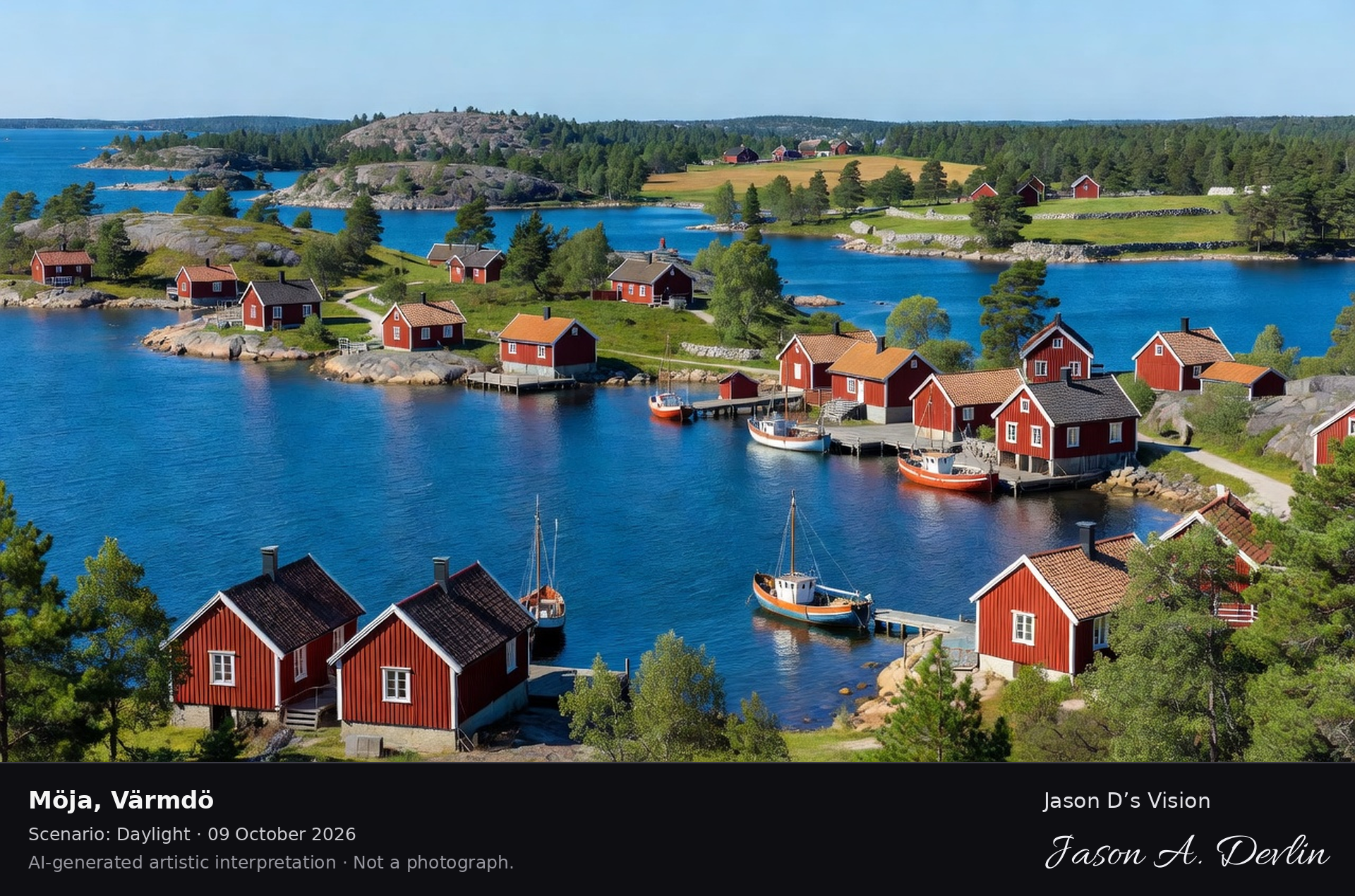
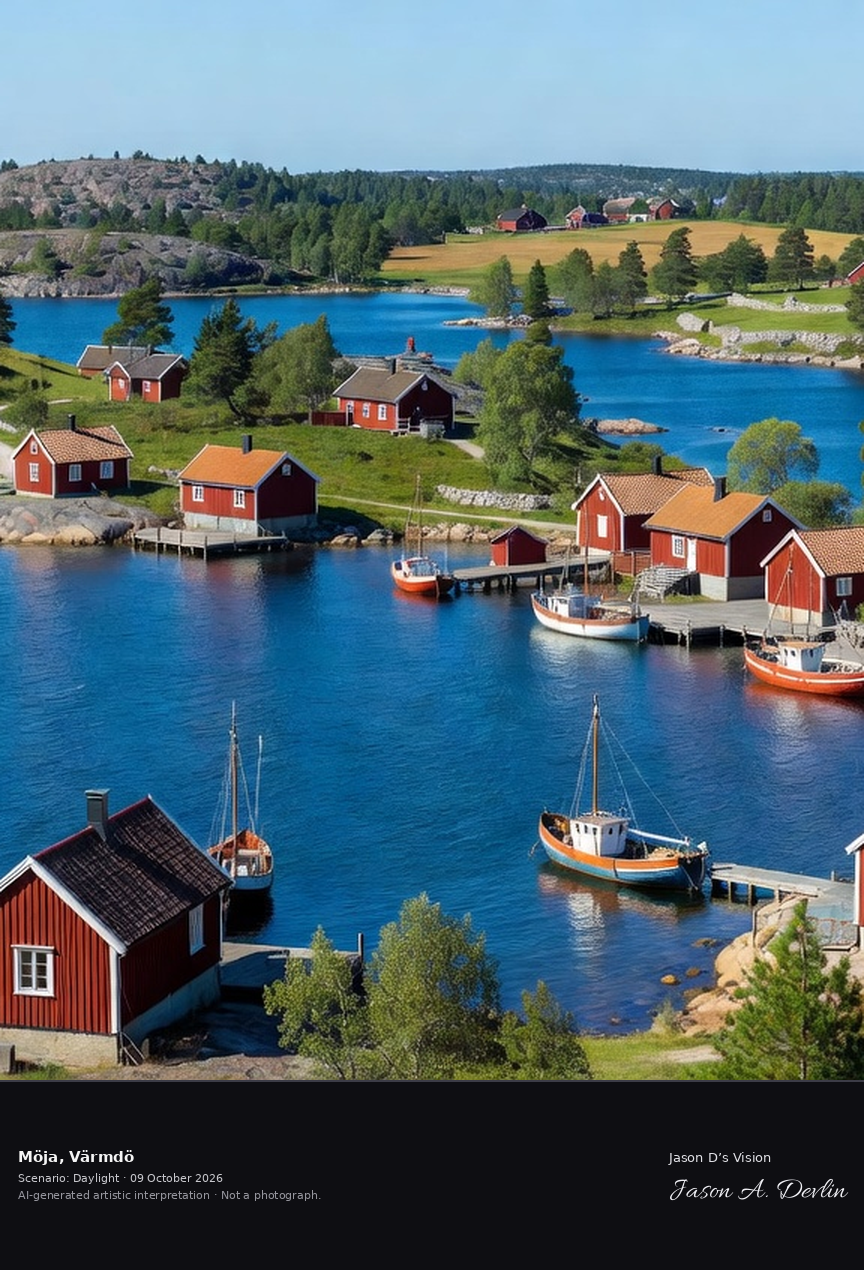
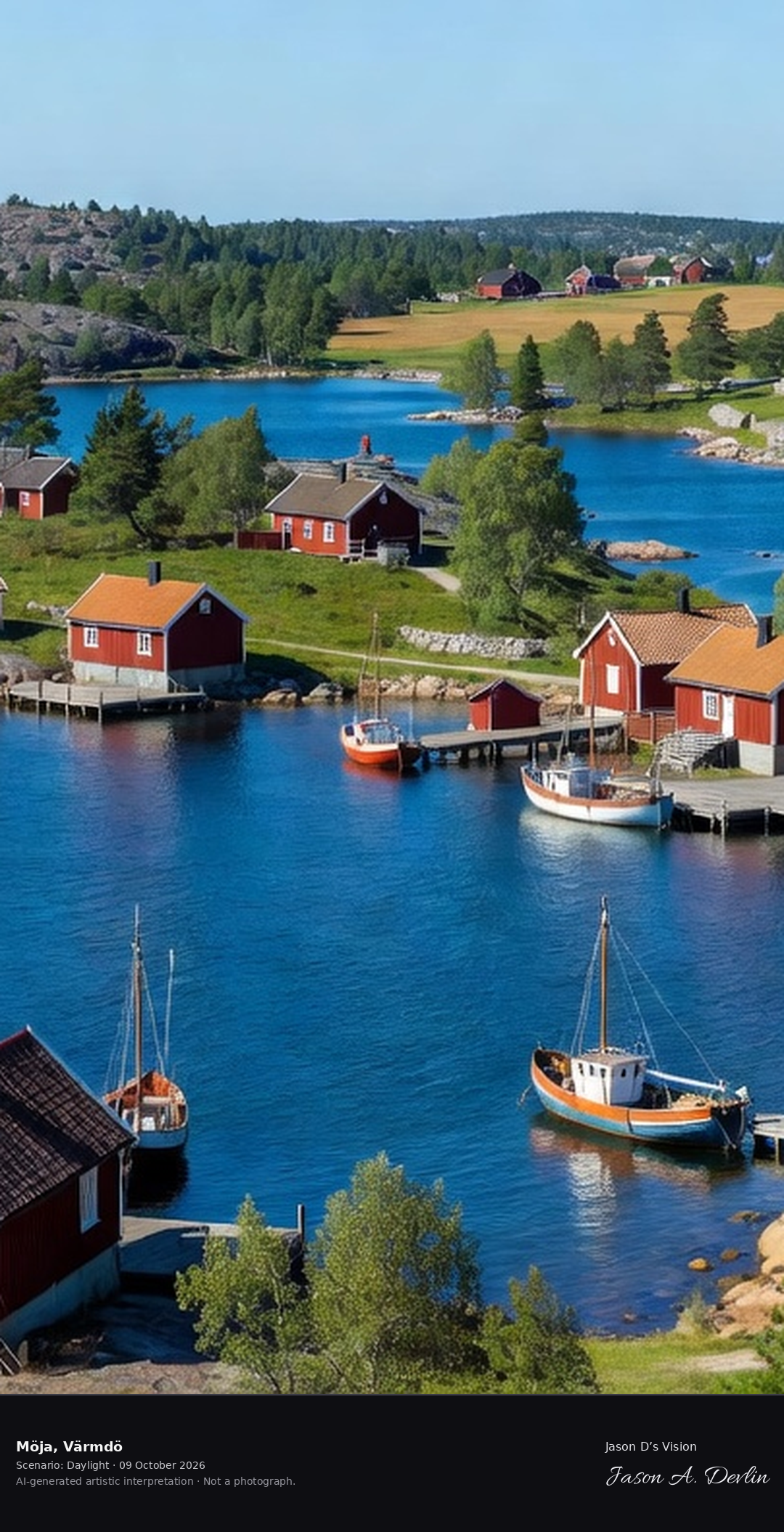
Möja's Långvik harbor with the historic fishermen's cottages and the island's interior lakes, the classic archipelago farming and fishing island in the central skerries.
Möja's Långvik harbor in Värmdö: red fishermen's cottages and boathouses ringing the sheltered harbor with moored boats and wooden jetties, the island's interior farmland and lakes rolling behind, pine-clad skerries beyond — the classic archipelago farming and fishing island in the central skerries, in bright natural daylight.
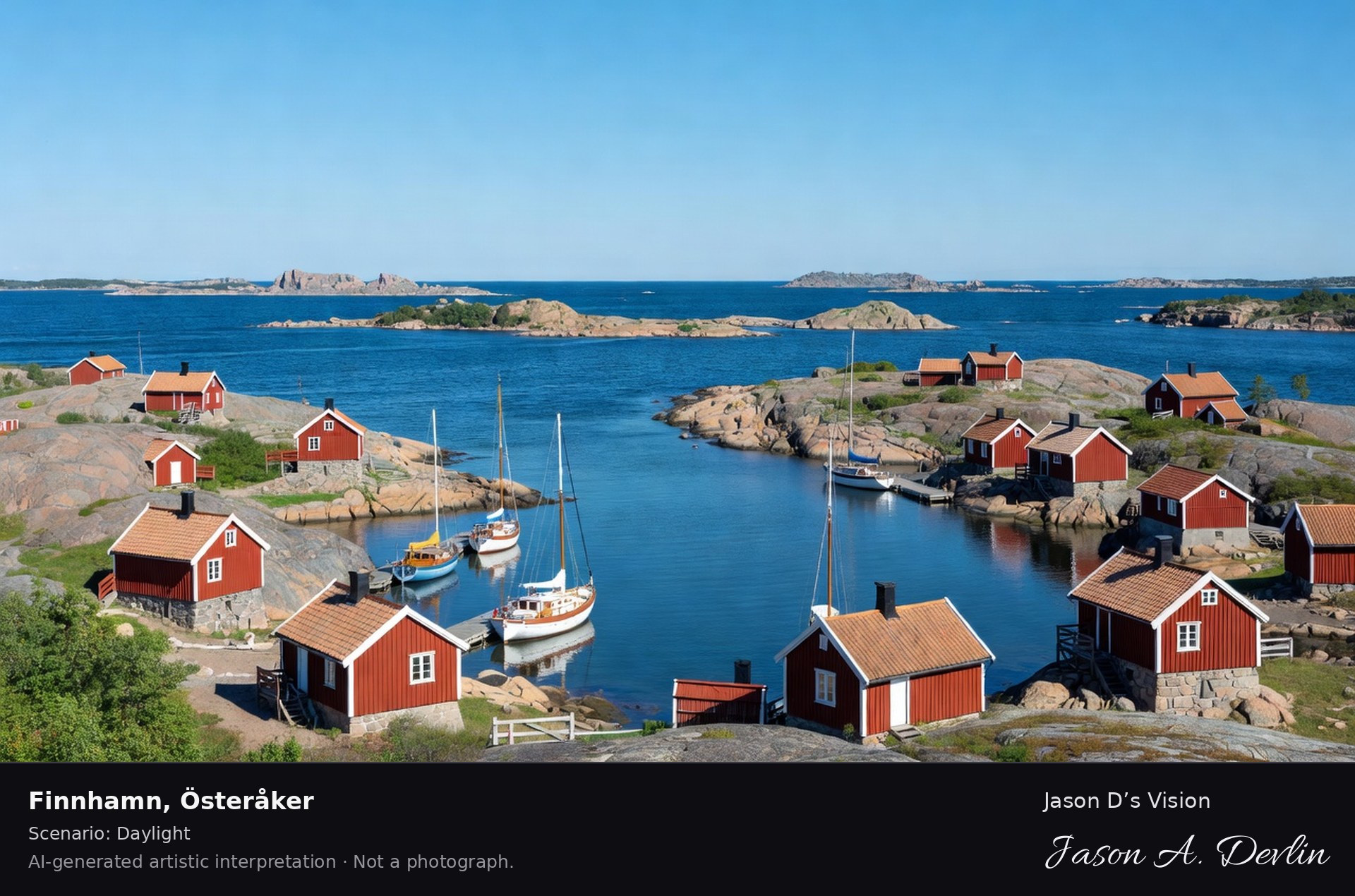
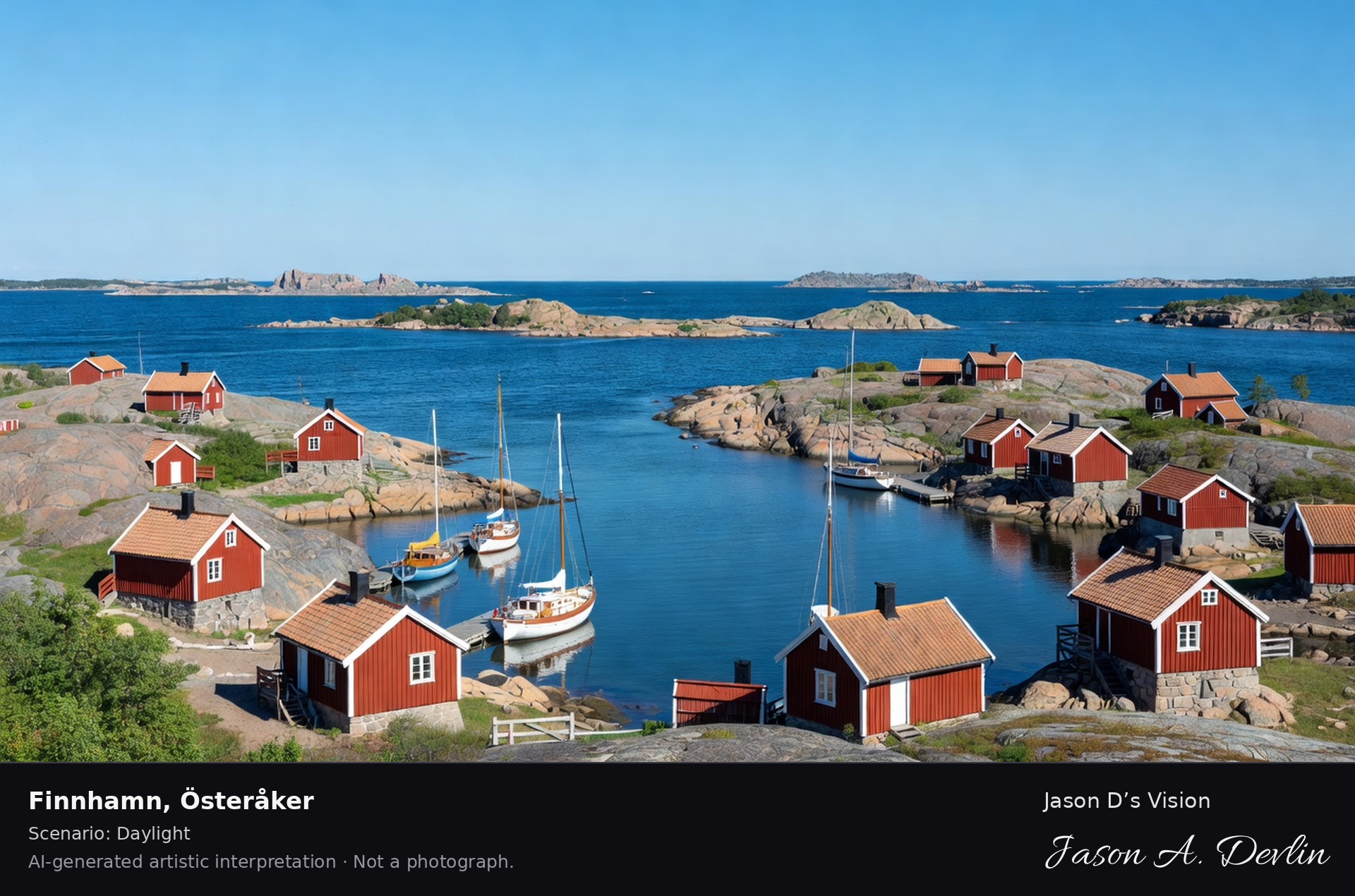
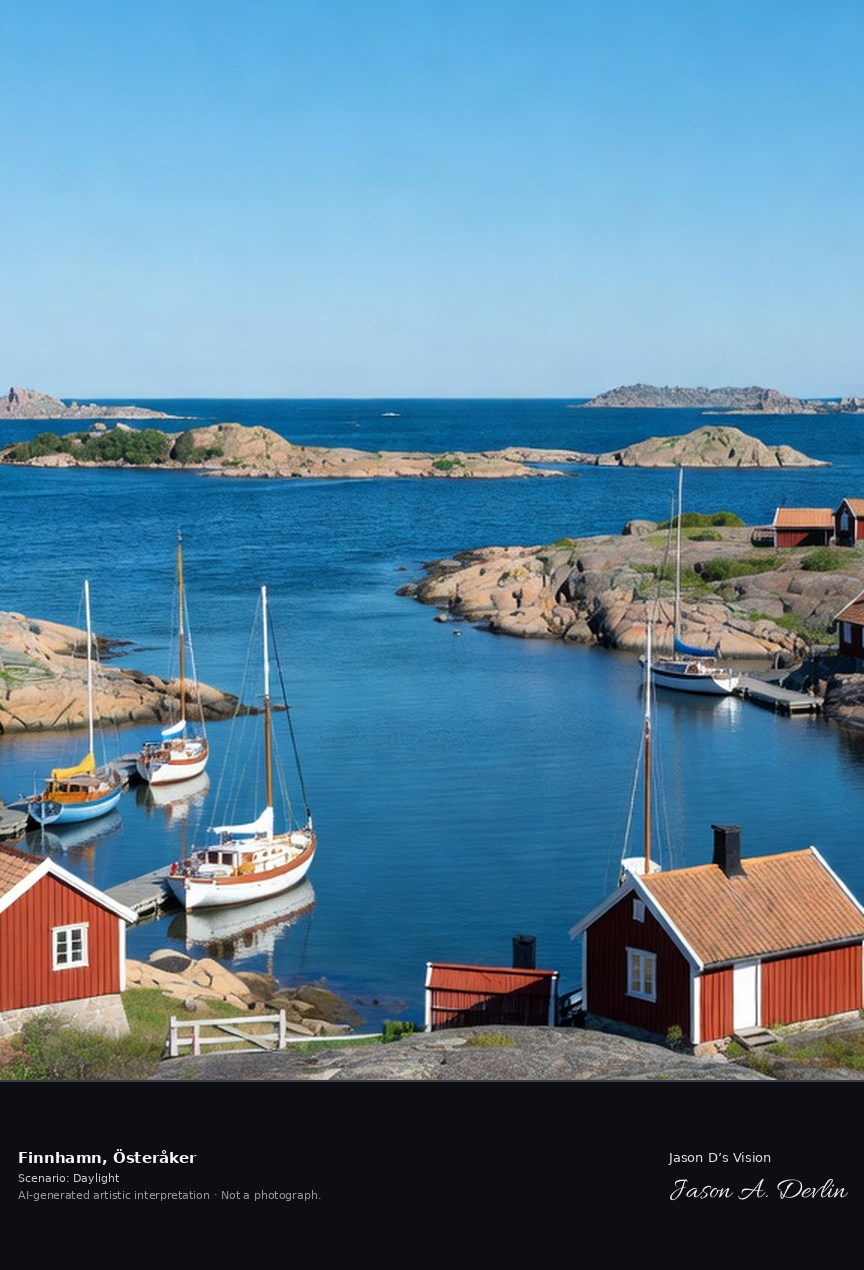
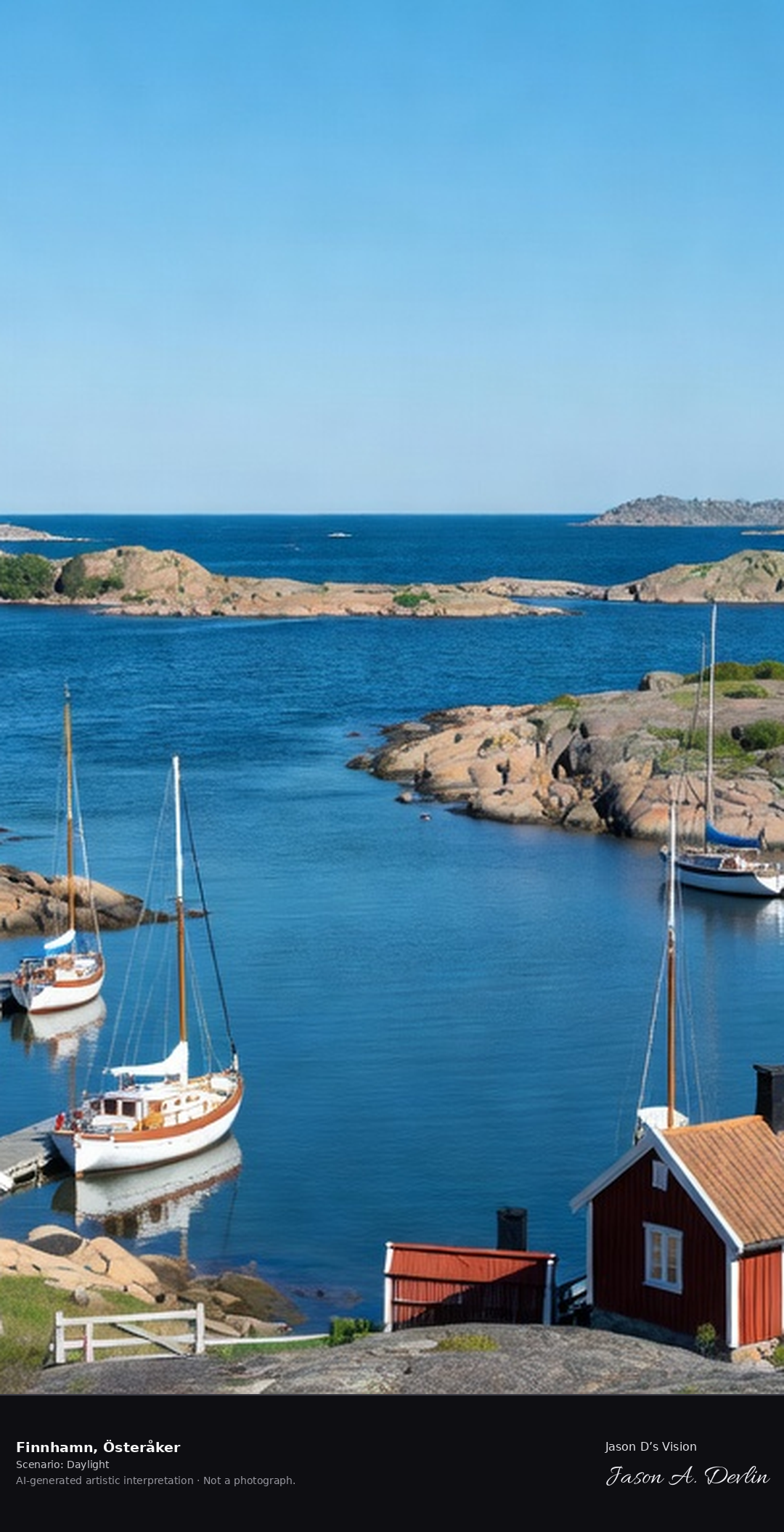
Finnhamn's natural harbor between Stora Jolpan and Lilla Jolpan, the beloved sailing anchorage with its red cottages and the open sea beyond the outer skerries.
Finnhamn's natural harbor in Österåker: red cottages ringing the sheltered harbor inlet between Stora Jolpan and Lilla Jolpan, moored sailboats and wooden jetties in the foreground, rocky skerries and open sea beyond — the beloved sailing anchorage of the Stockholm archipelago, in bright natural daylight.
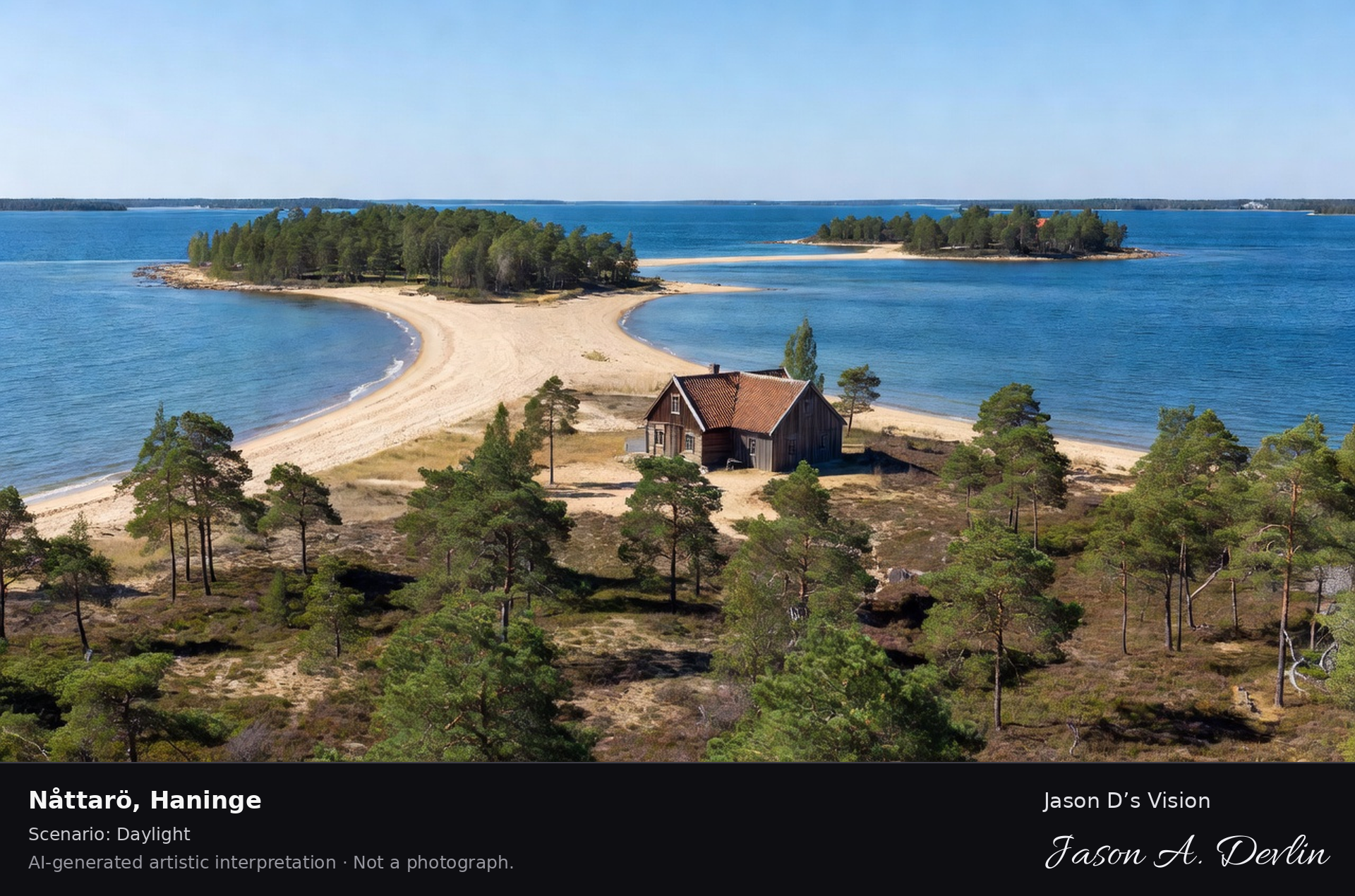
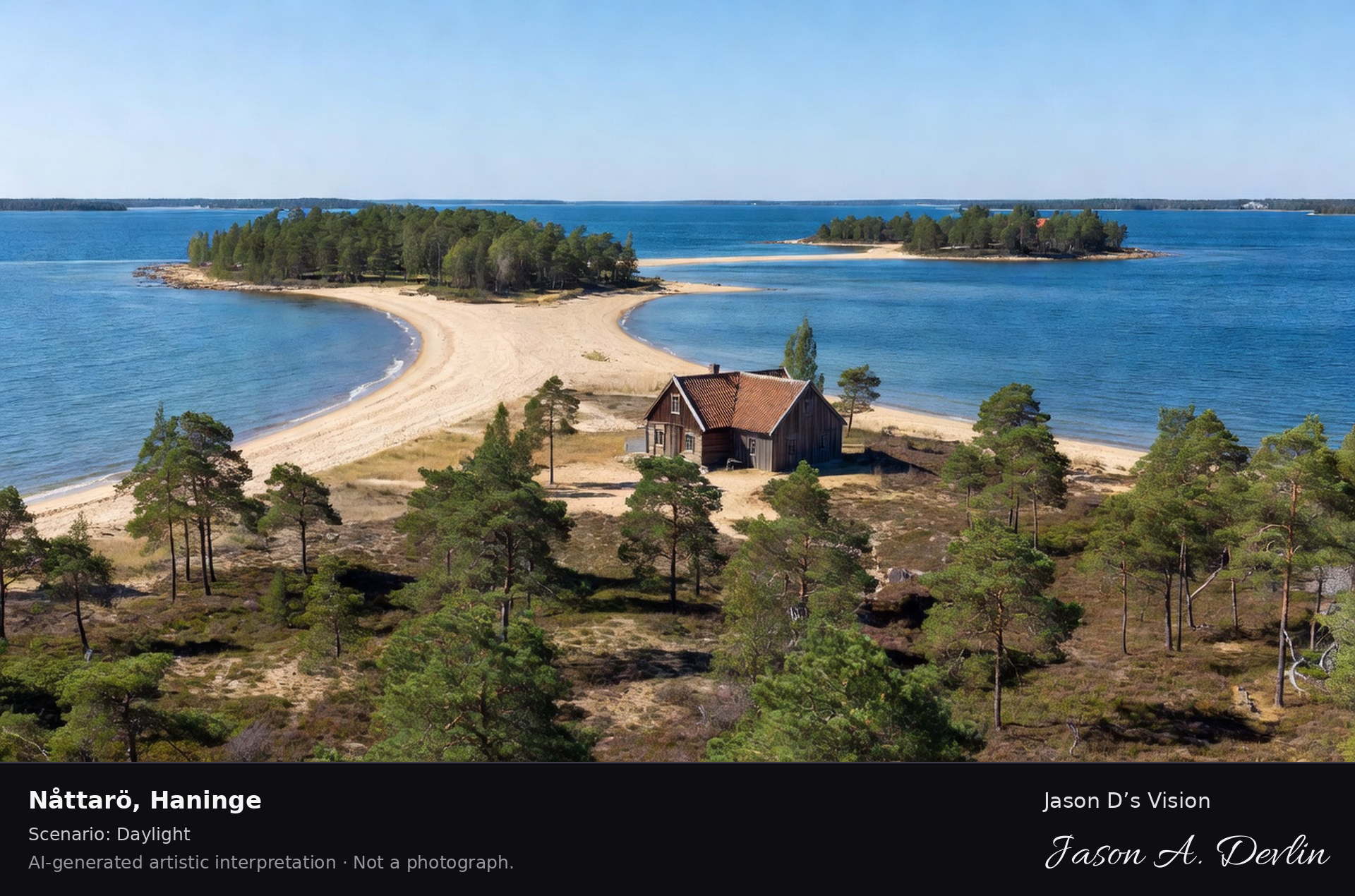
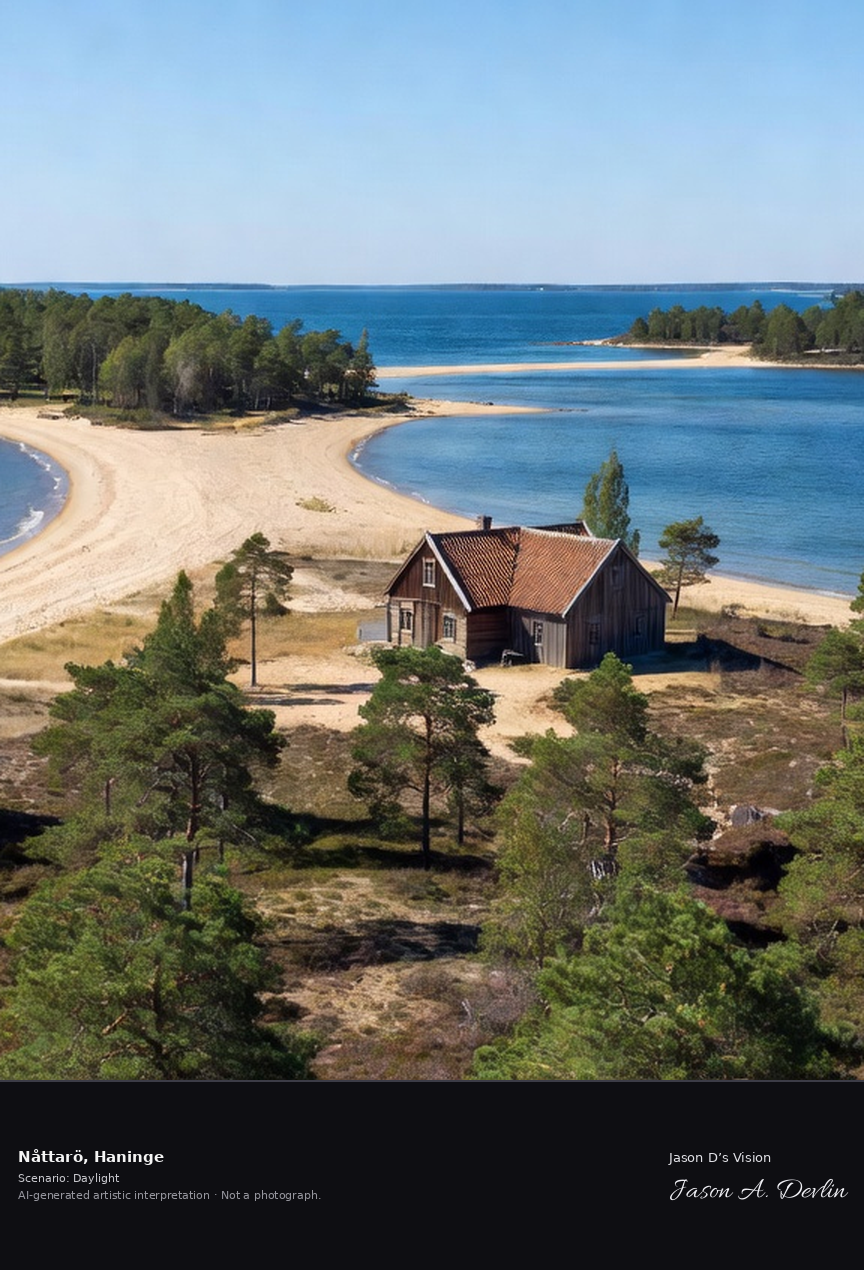
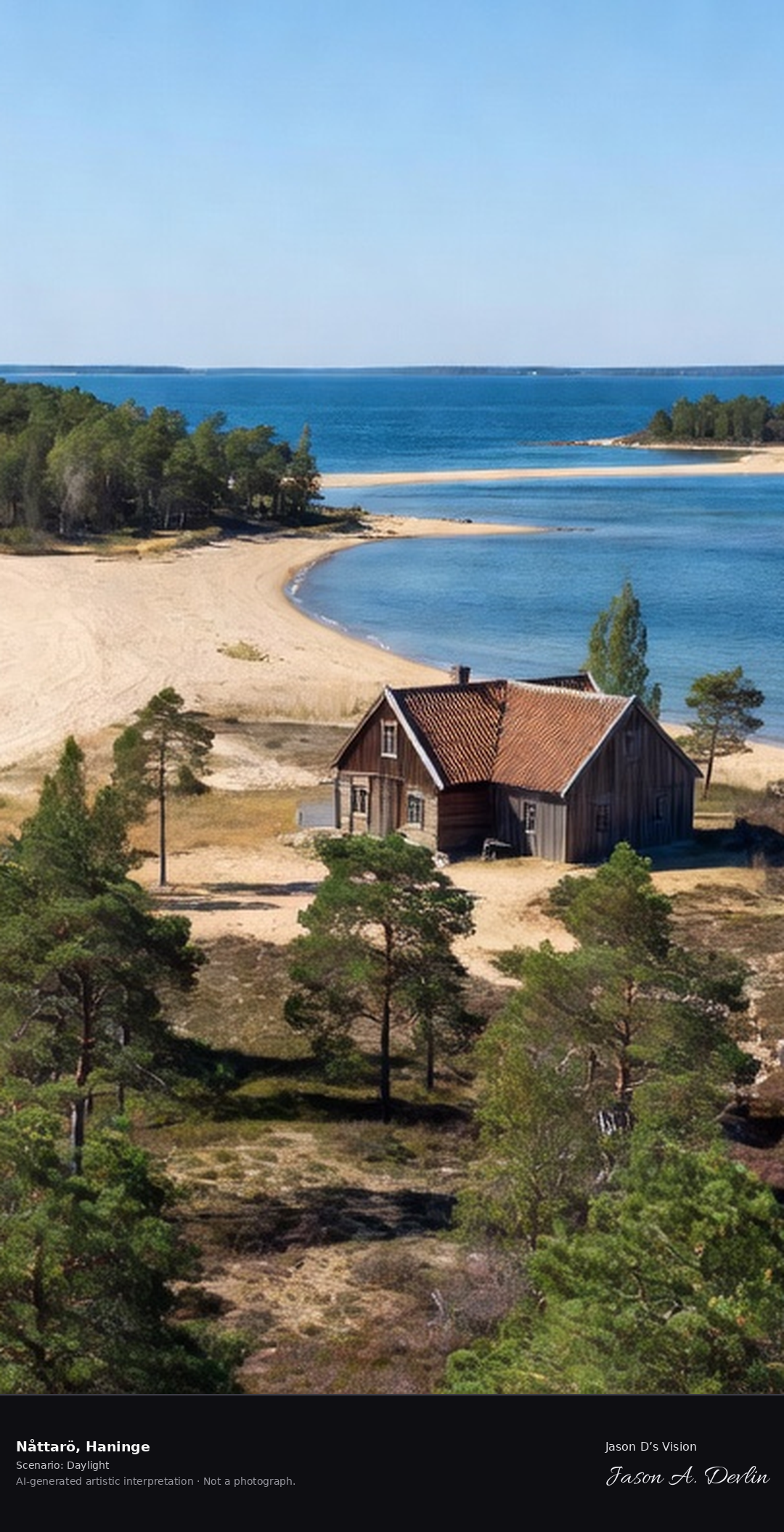
Nåttarö's nature reserve with its long sandy beaches and pine heath, the unspoiled outer archipelago island with the Baltic on three sides and the historic crofter's farm.
Across Nåttarö’s nature reserve, long sandy beaches and pine heath run down to the Baltic. The Baltic lies on three sides of the unspoiled outer archipelago island, which also holds a historic crofter’s farm, in bright natural daylight.
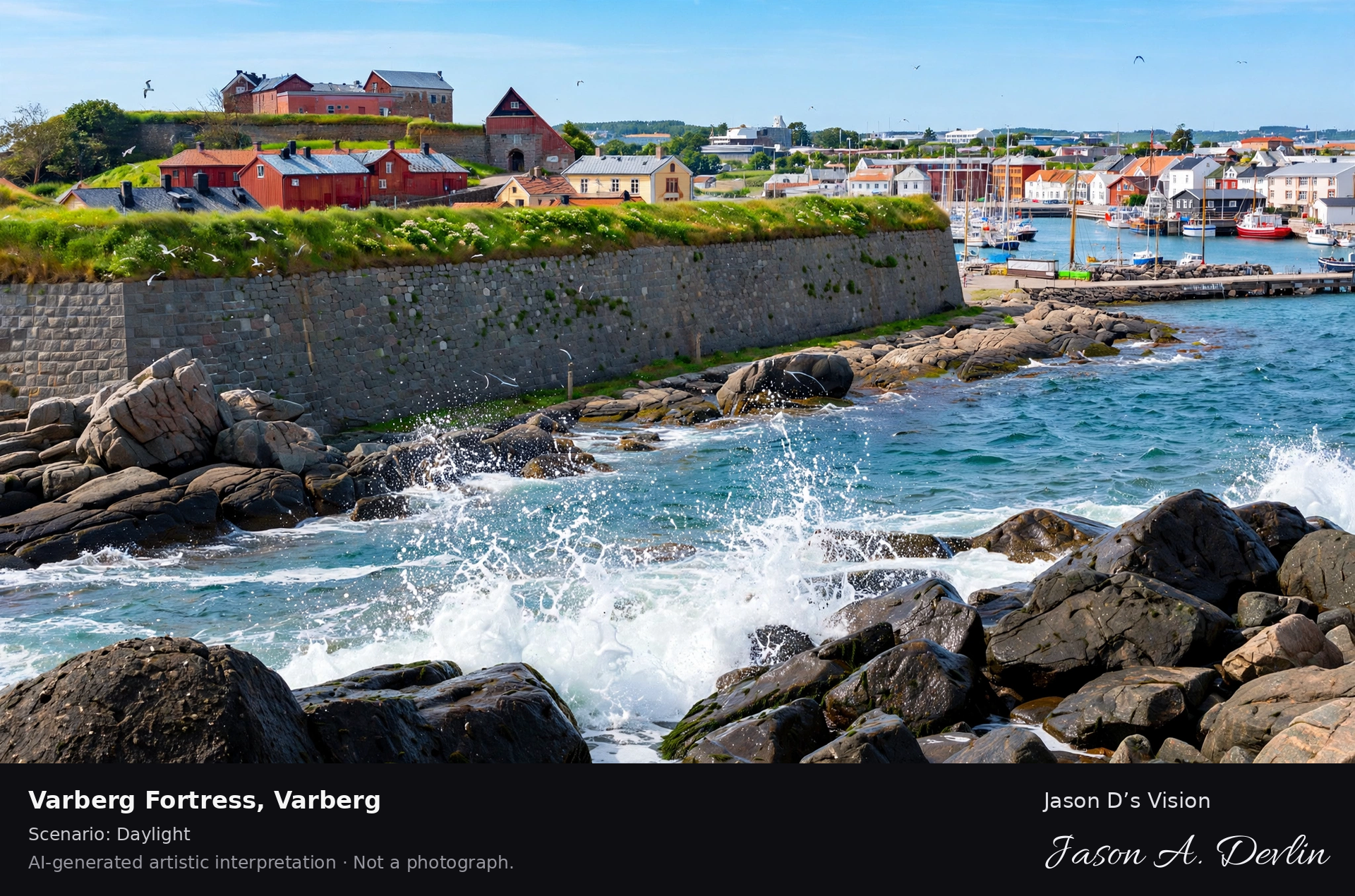
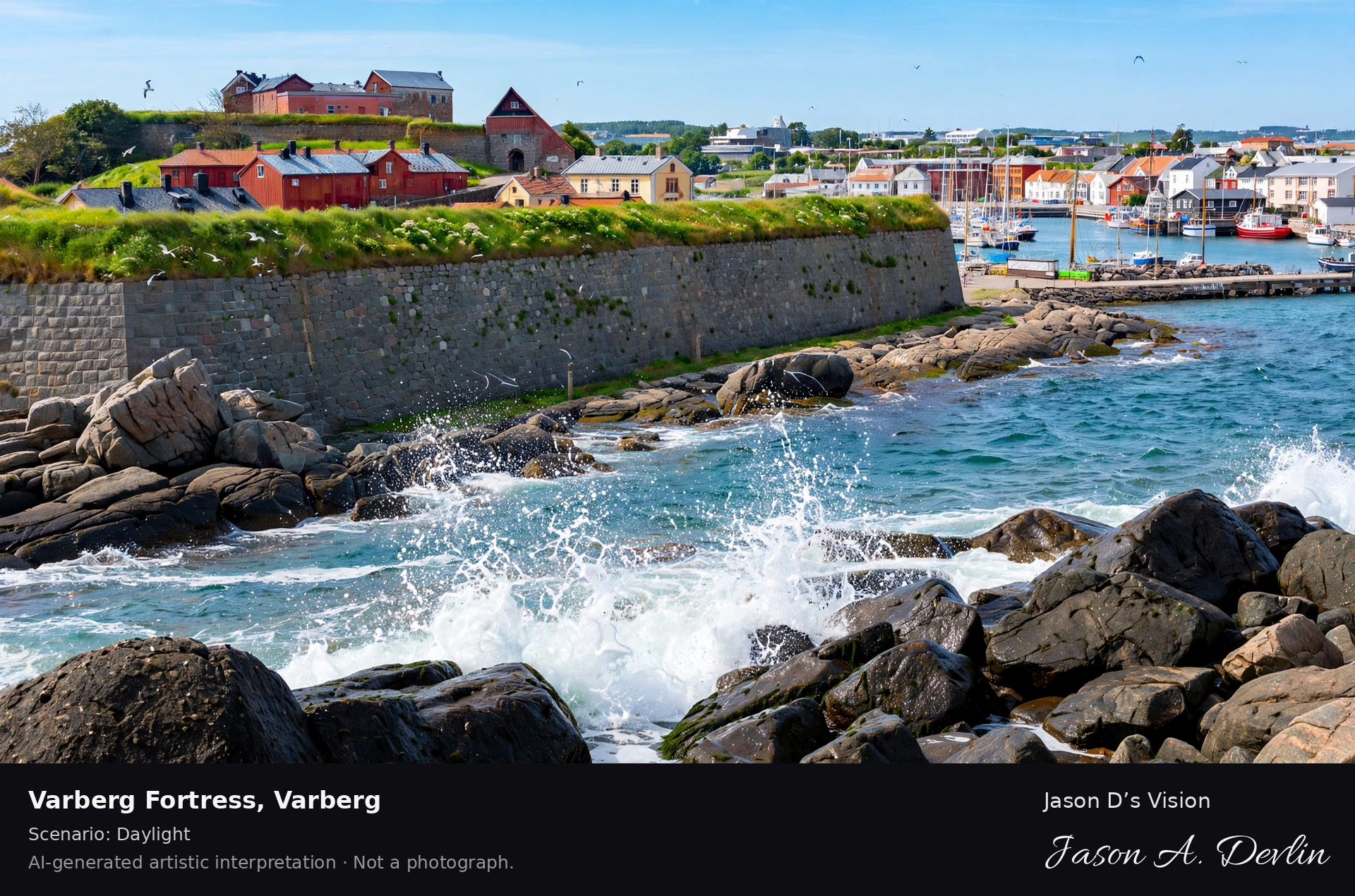
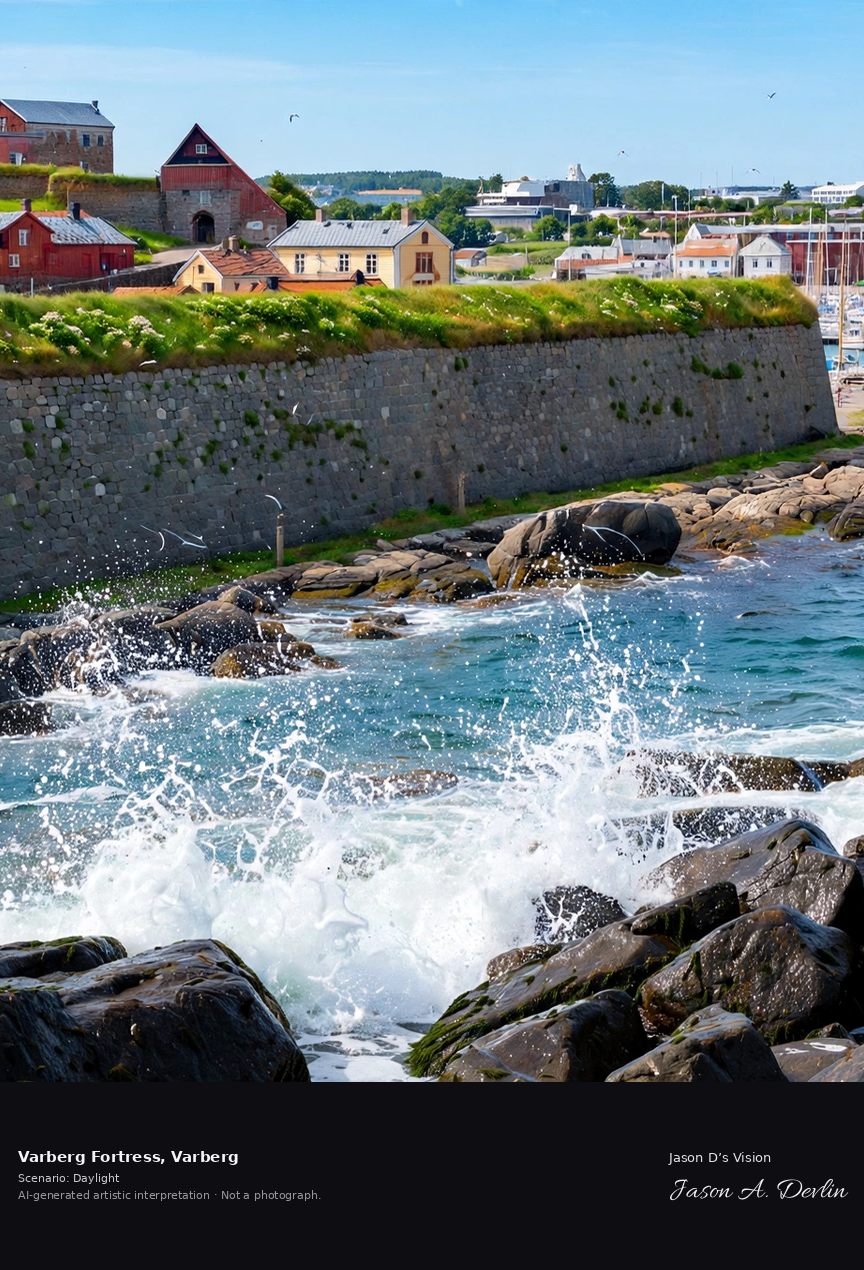
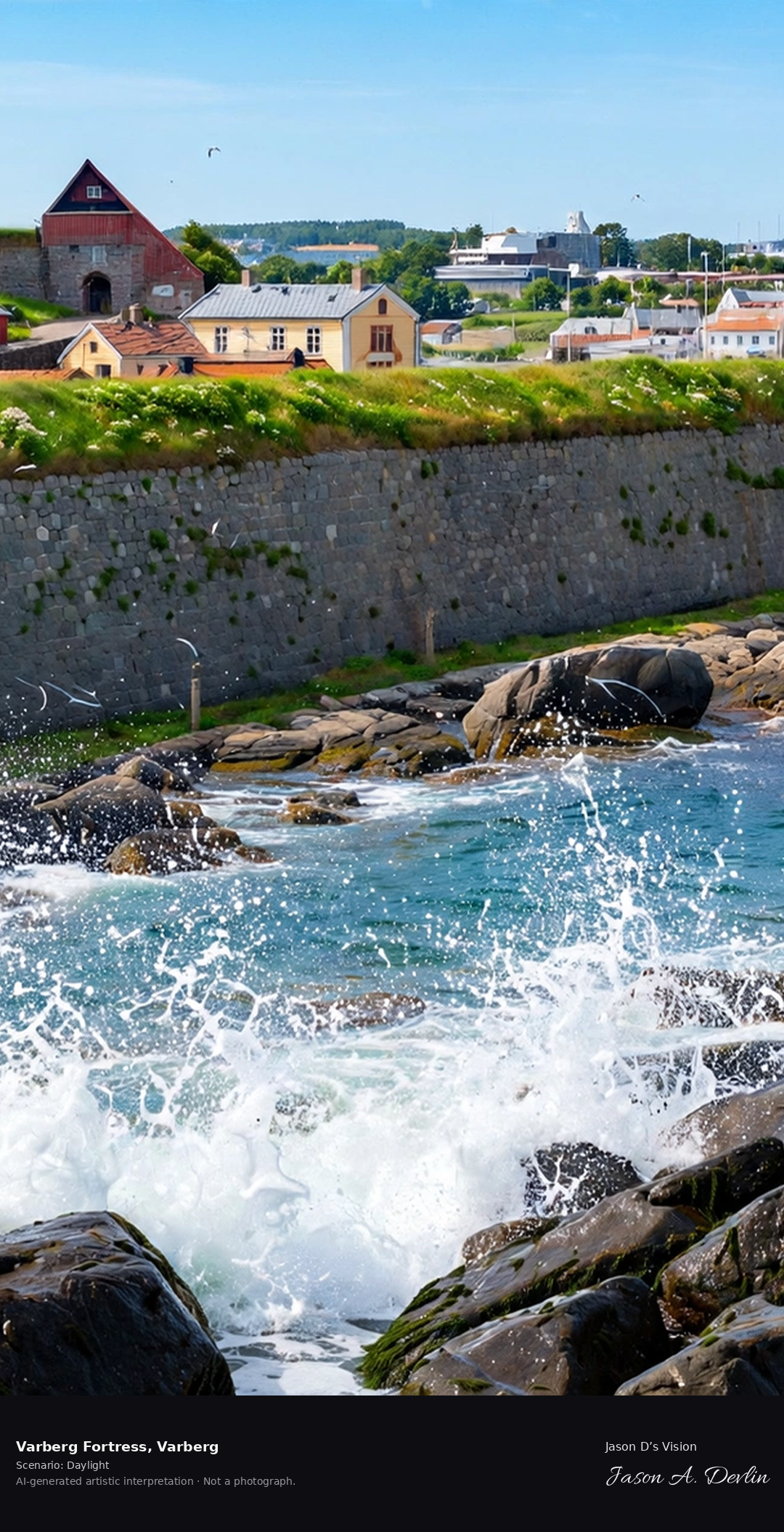
Varberg Fortress's massive walls on the rocky headland above the Kattegat, the 13th-century stronghold with its distinctive round tower and the harbor town below. Halland's great sea fortress.
On the rocky headland above the Kattegat stand the massive walls of Varberg Fortress, with its distinctive round tower. The 13th-century stronghold, Halland’s great sea fortress, looks over the harbor town below, in bright natural daylight.
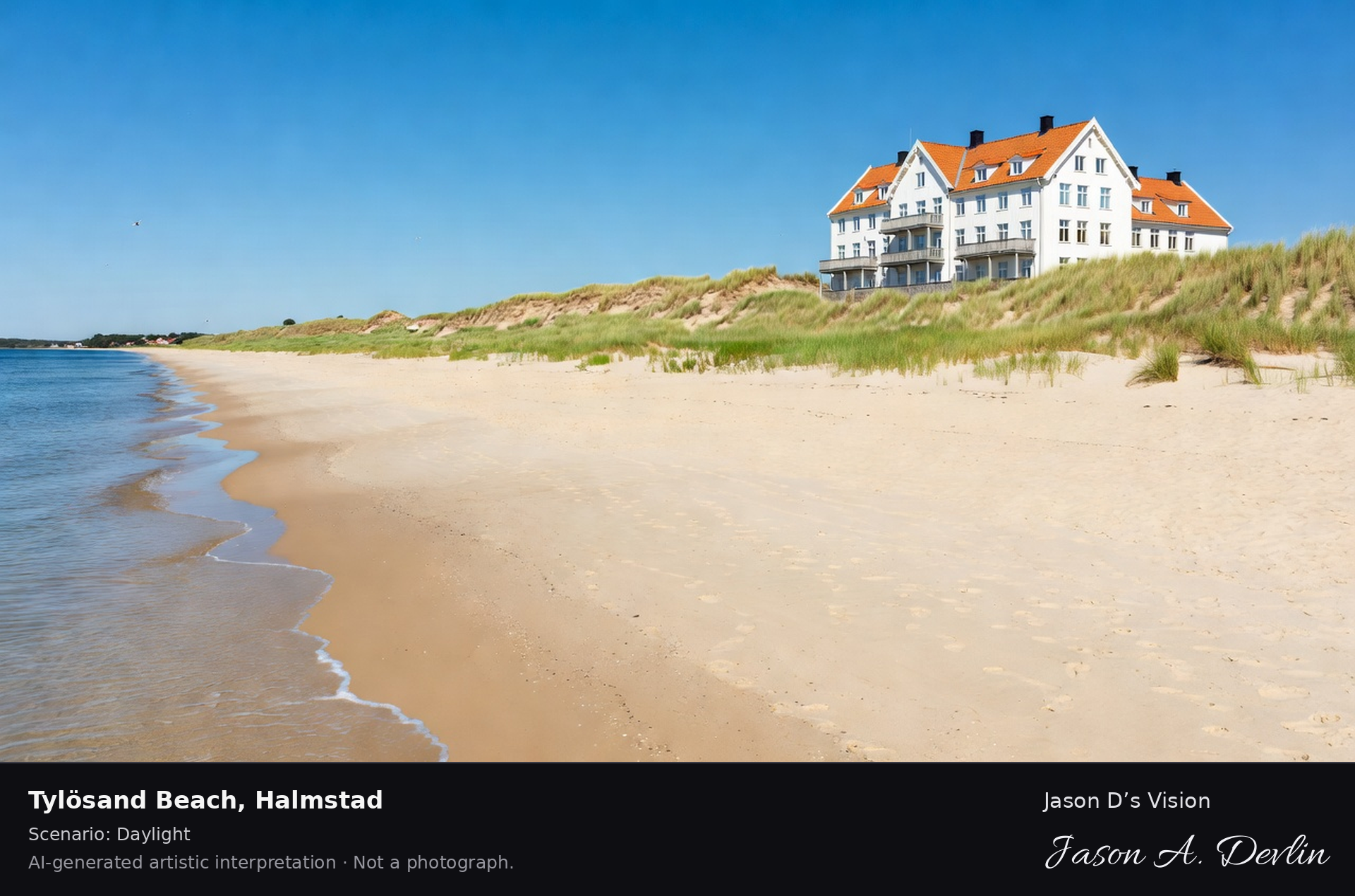
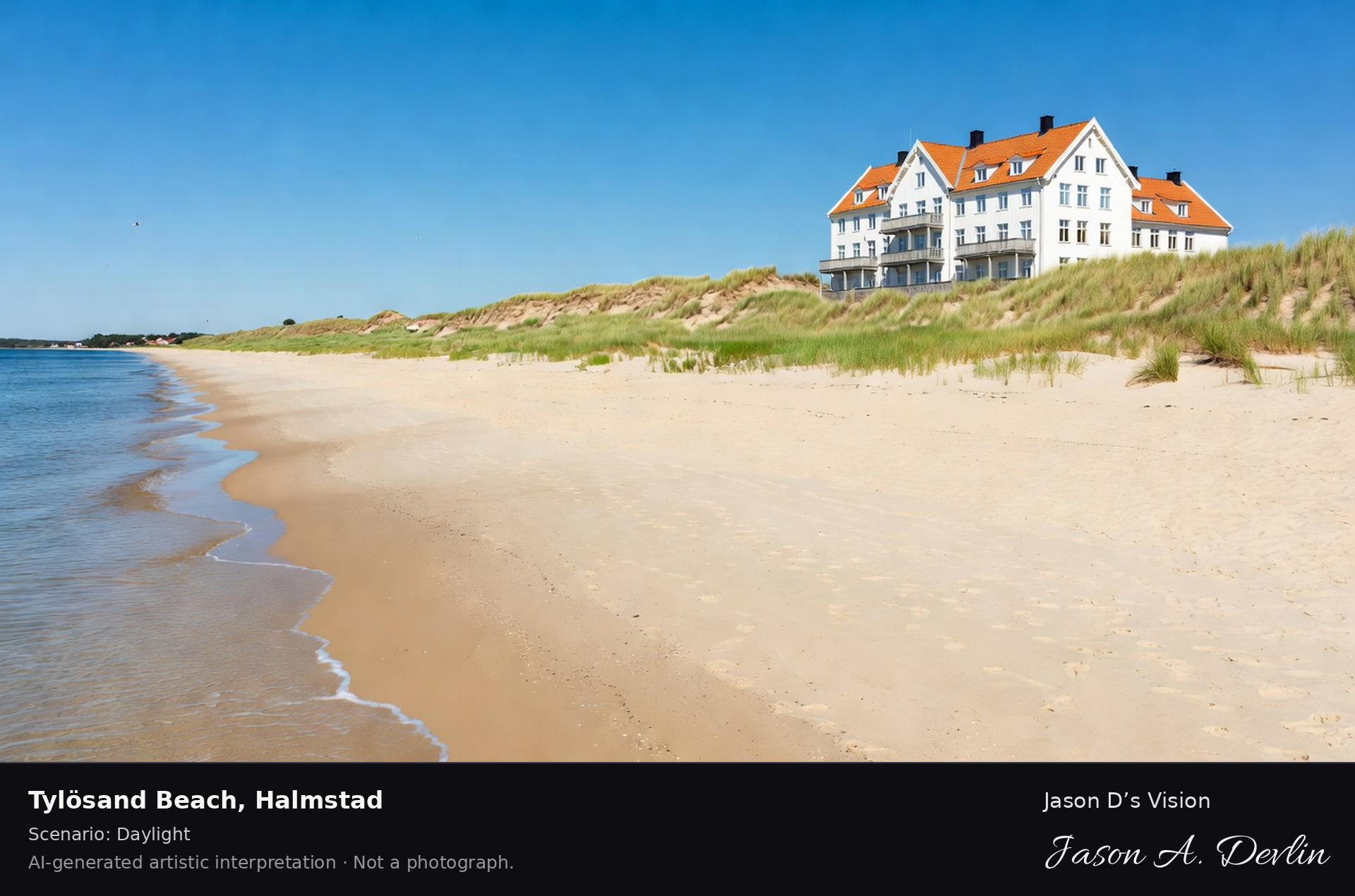
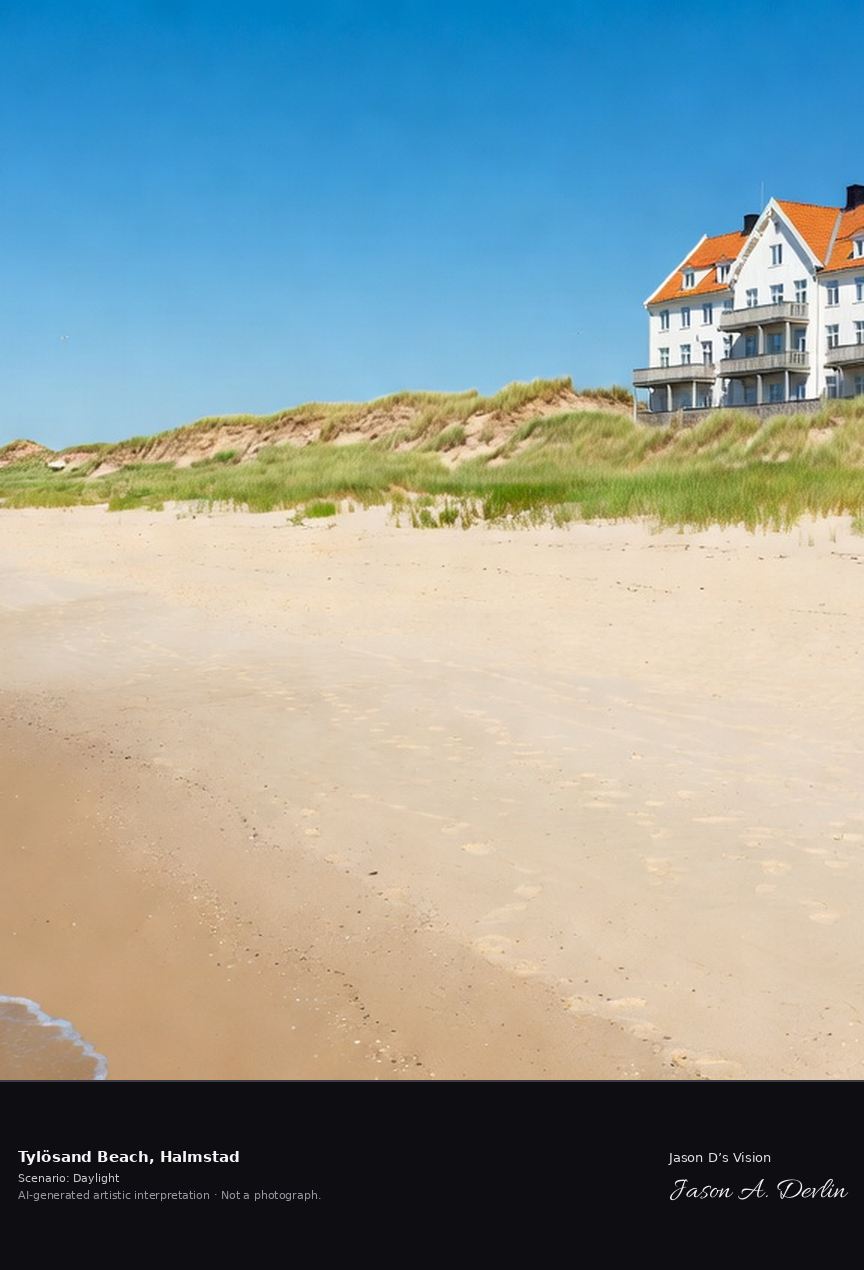
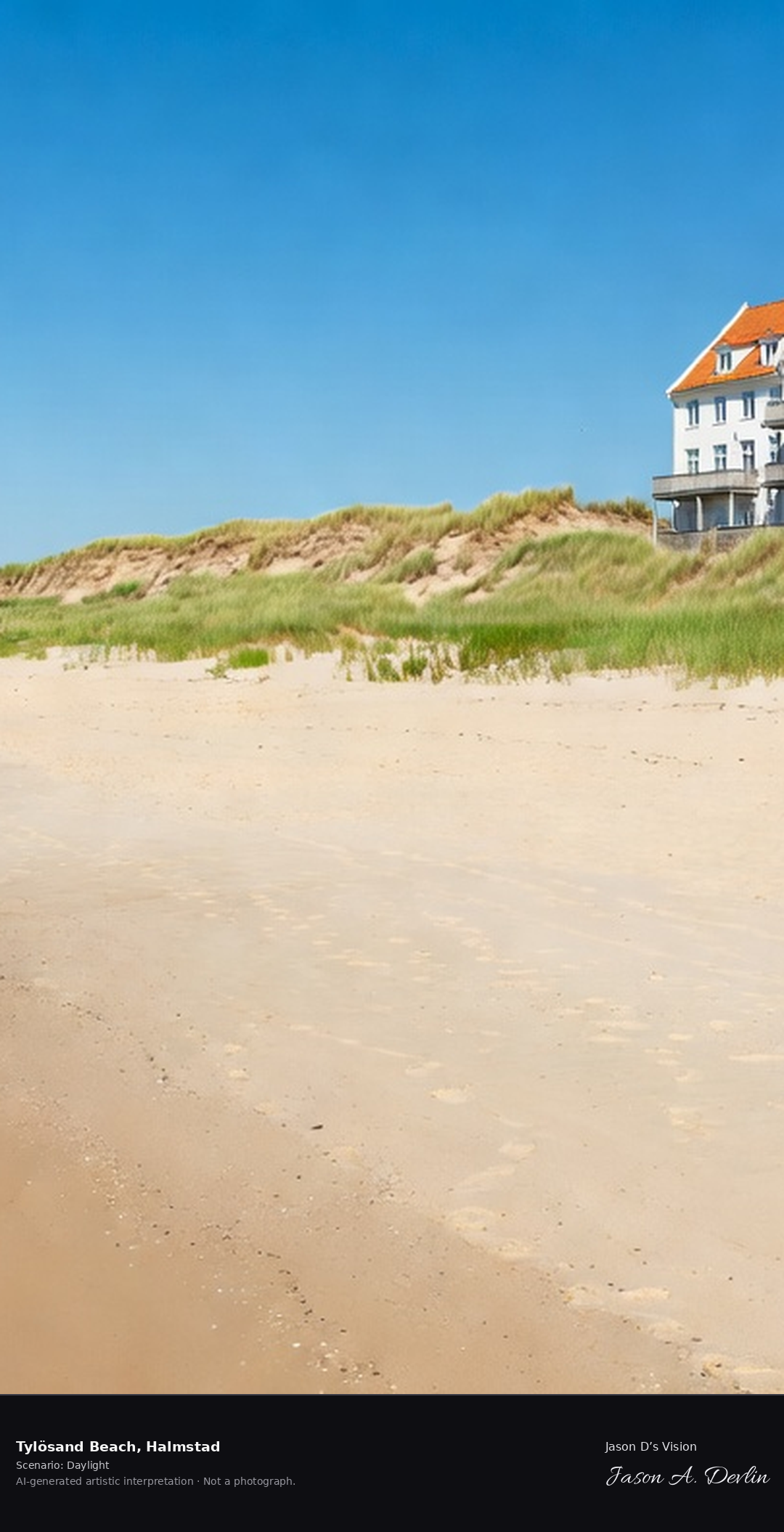
Tylösand's 7-kilometer sandy beach curving along the Kattegat with dune grass and the historic hotel above, Sweden's most famous beach resort in the summer sun.
Tylösand Beach in Halmstad: the 7-kilometer sandy beach curving along the Kattegat, wind-shaped dune grass in the foreground, and the historic white Tylösand hotel with its red tile roof above the dunes — Sweden's most famous beach resort in the summer sun, in bright natural daylight.
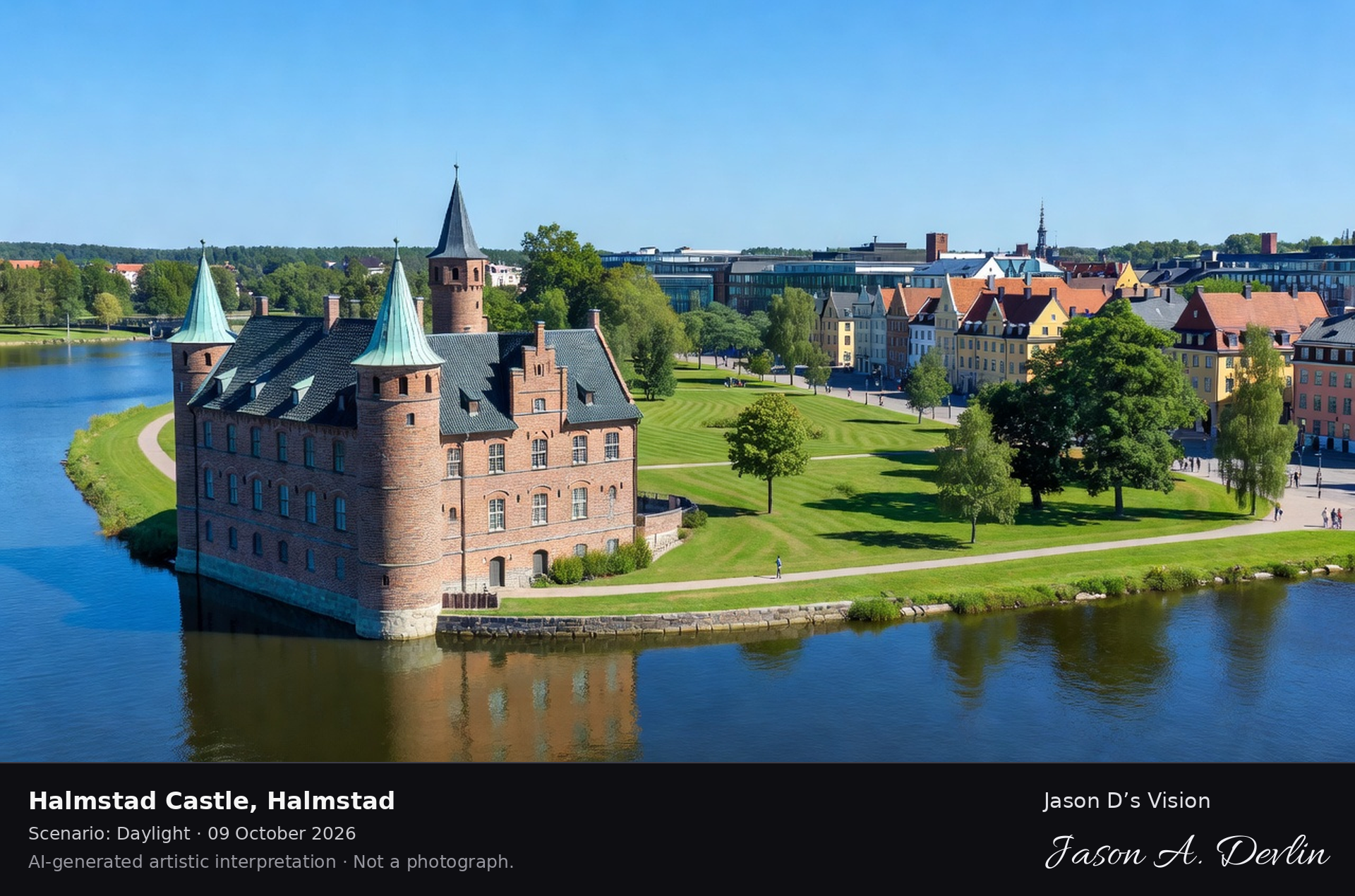
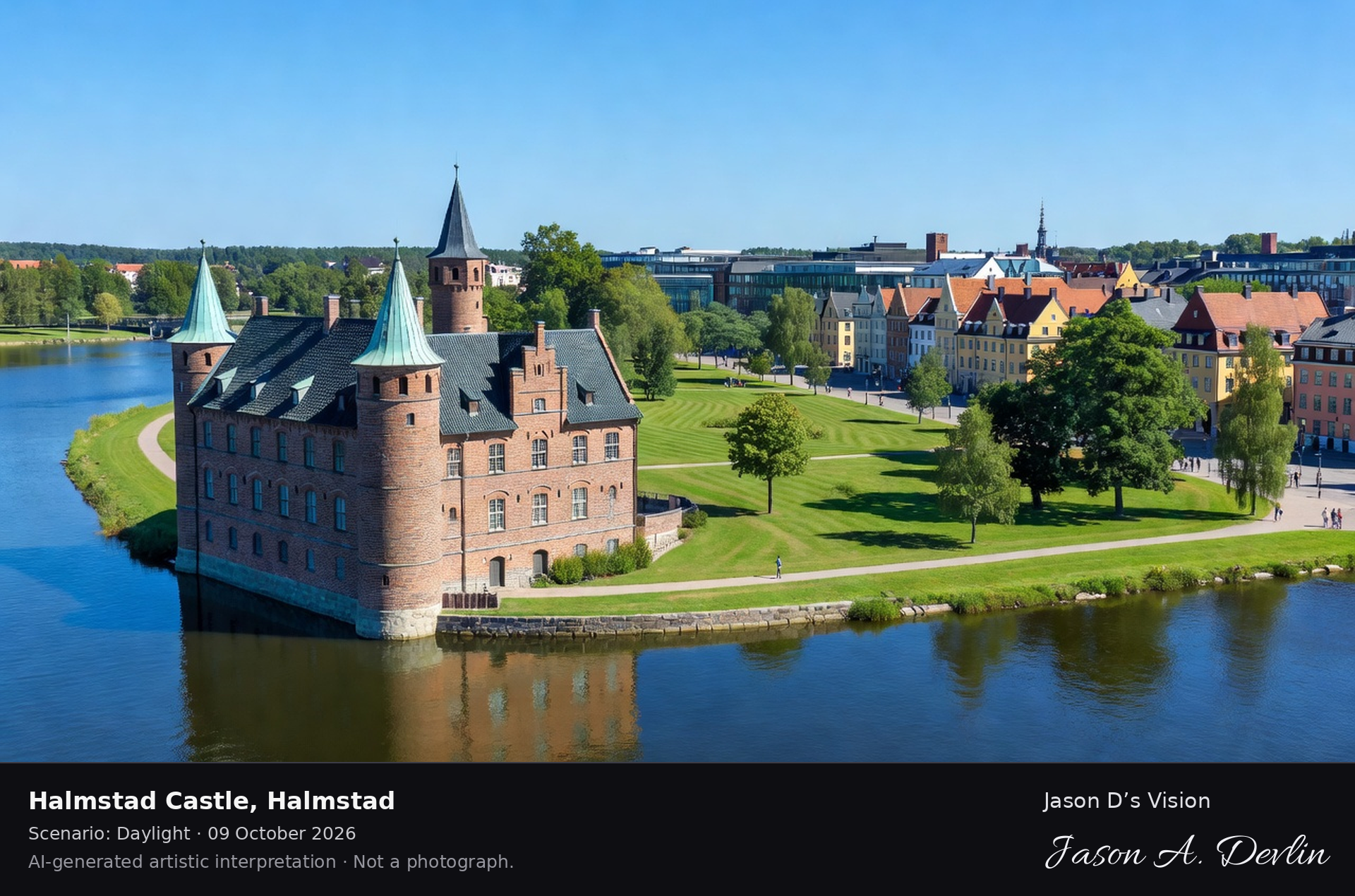
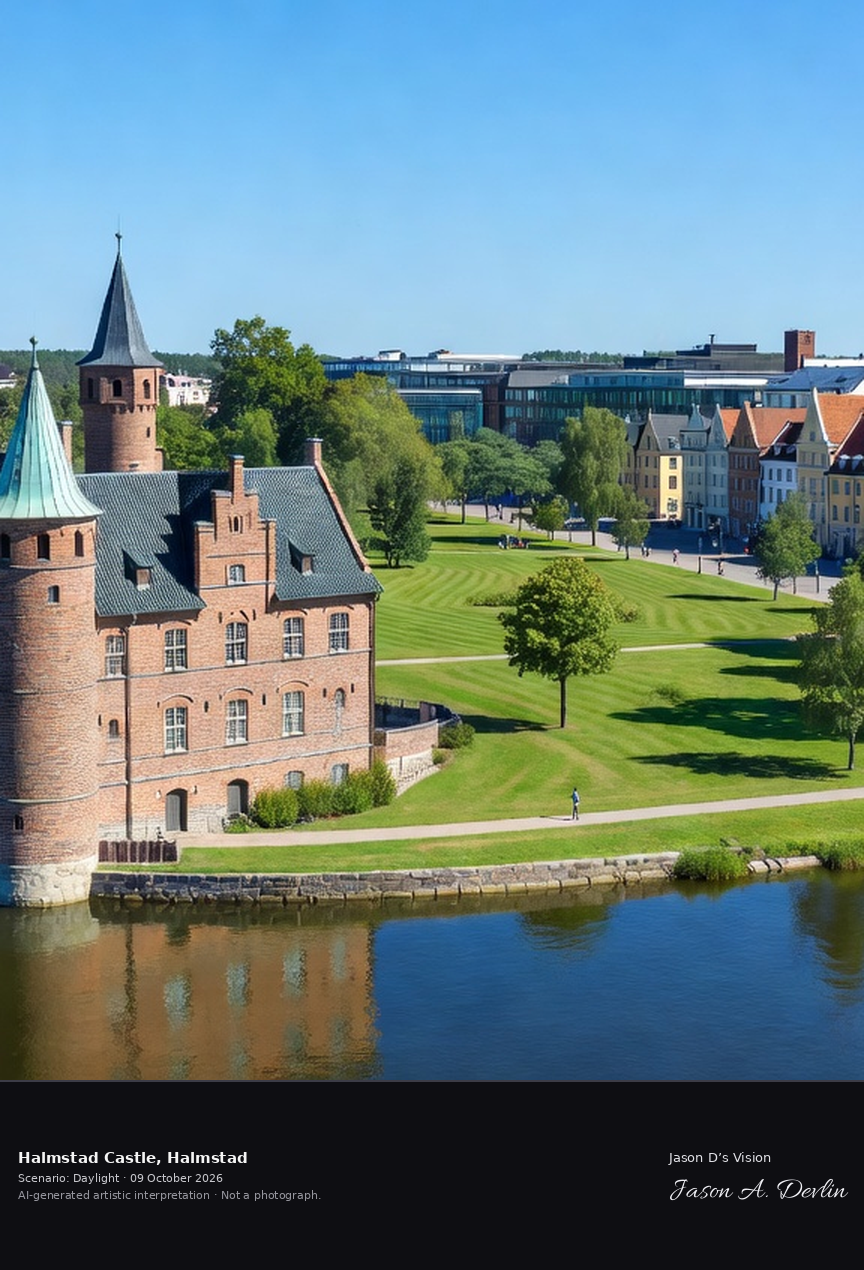
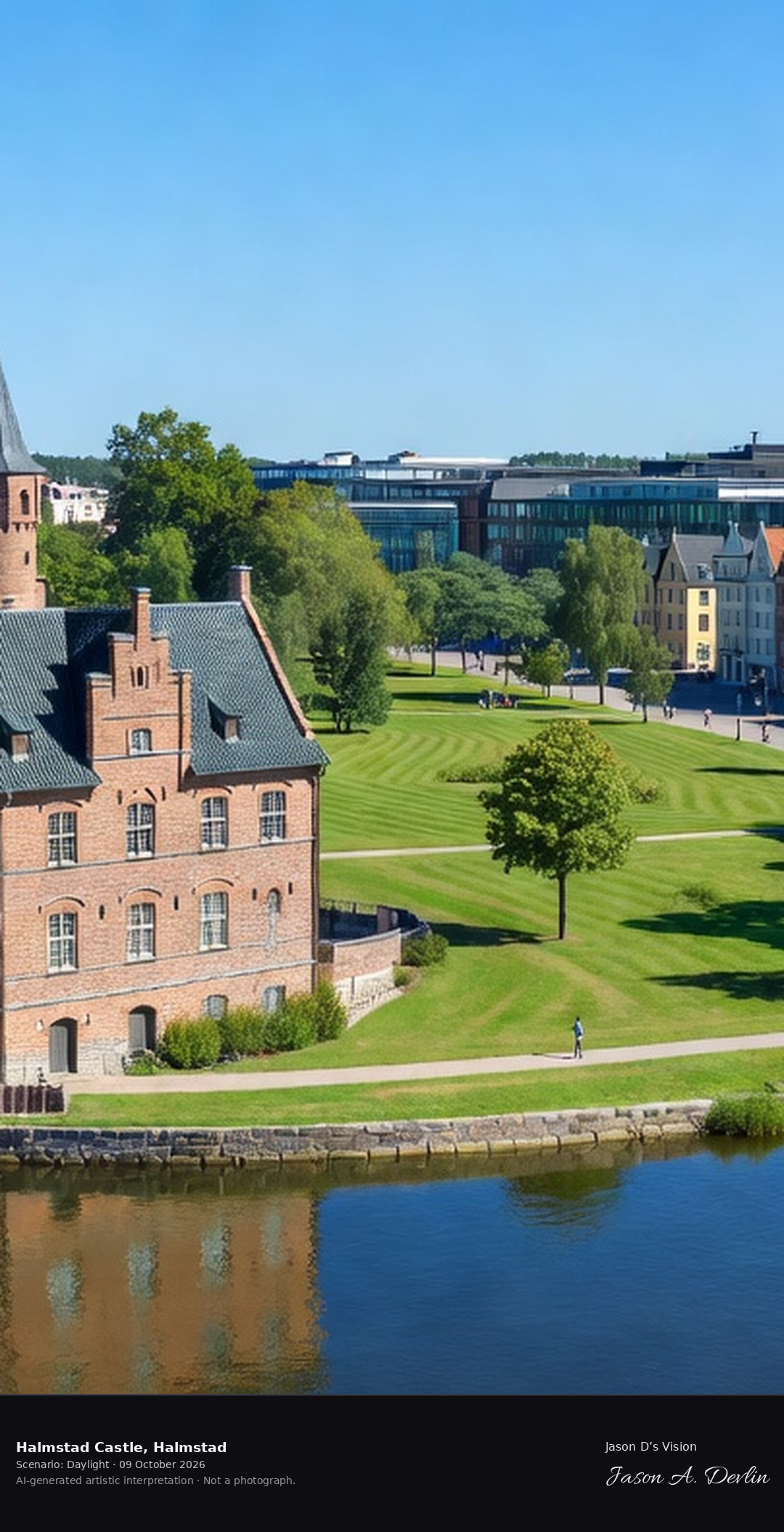
Halmstad Castle's 17th-century brick palace on the Nissan river, the former Danish royal residence with its park and the city center beyond.
Halmstad Castle in Halmstad: the 17th-century brick palace with green copper spires on the banks of the Nissan river, the former Danish royal residence with its park lawns and tree-lined paths, the city center rising beyond — in bright natural daylight.
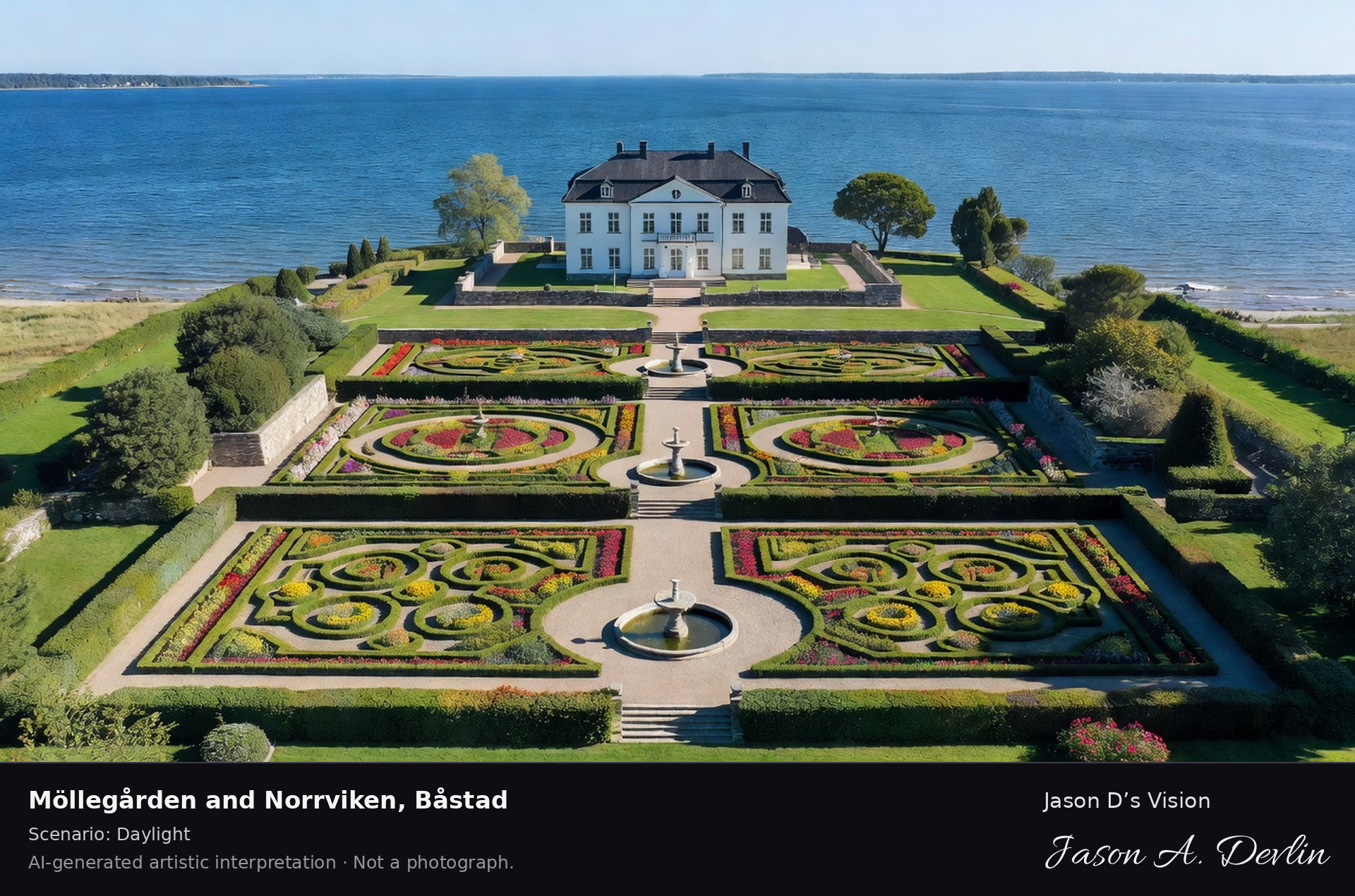
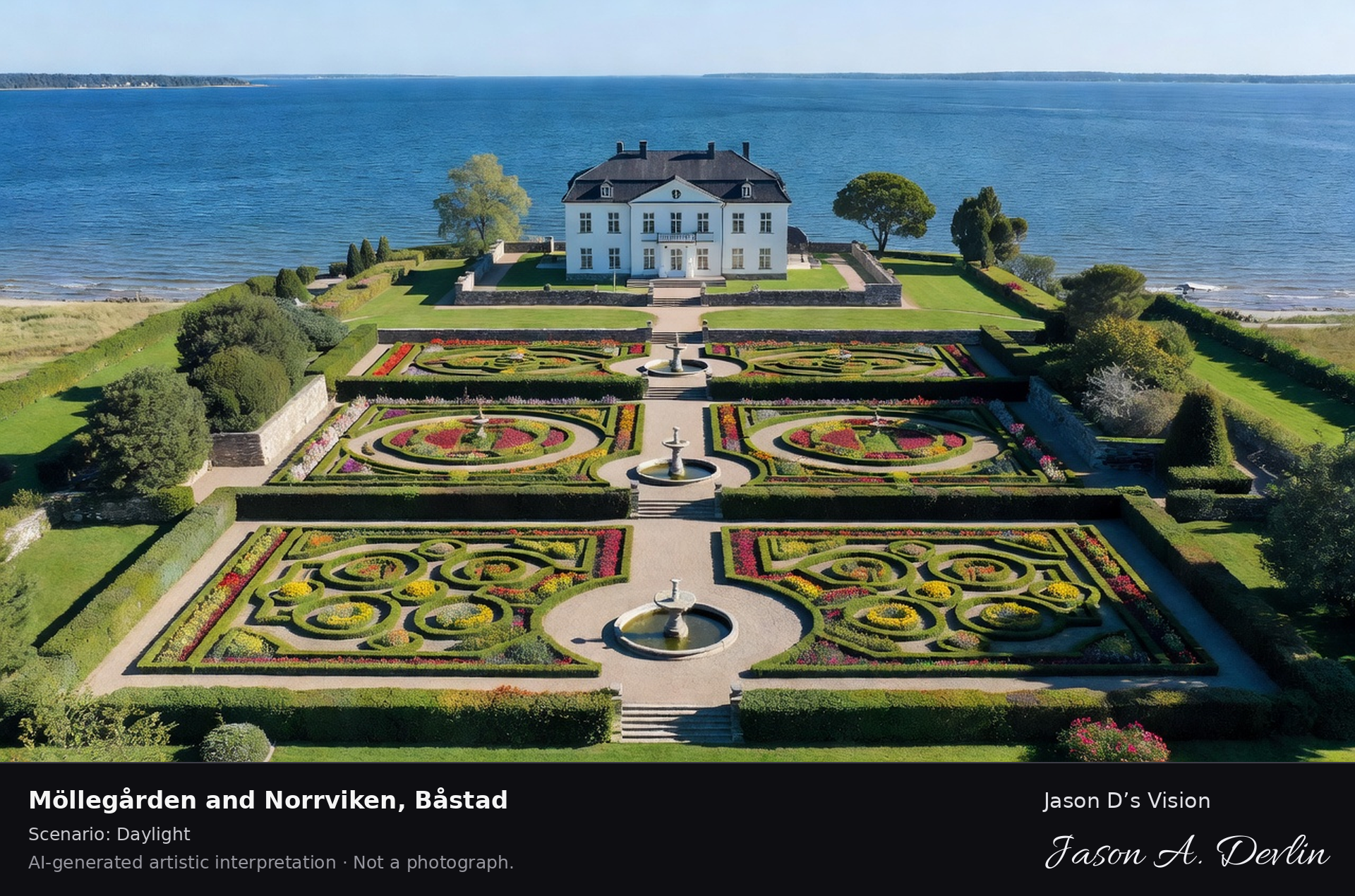
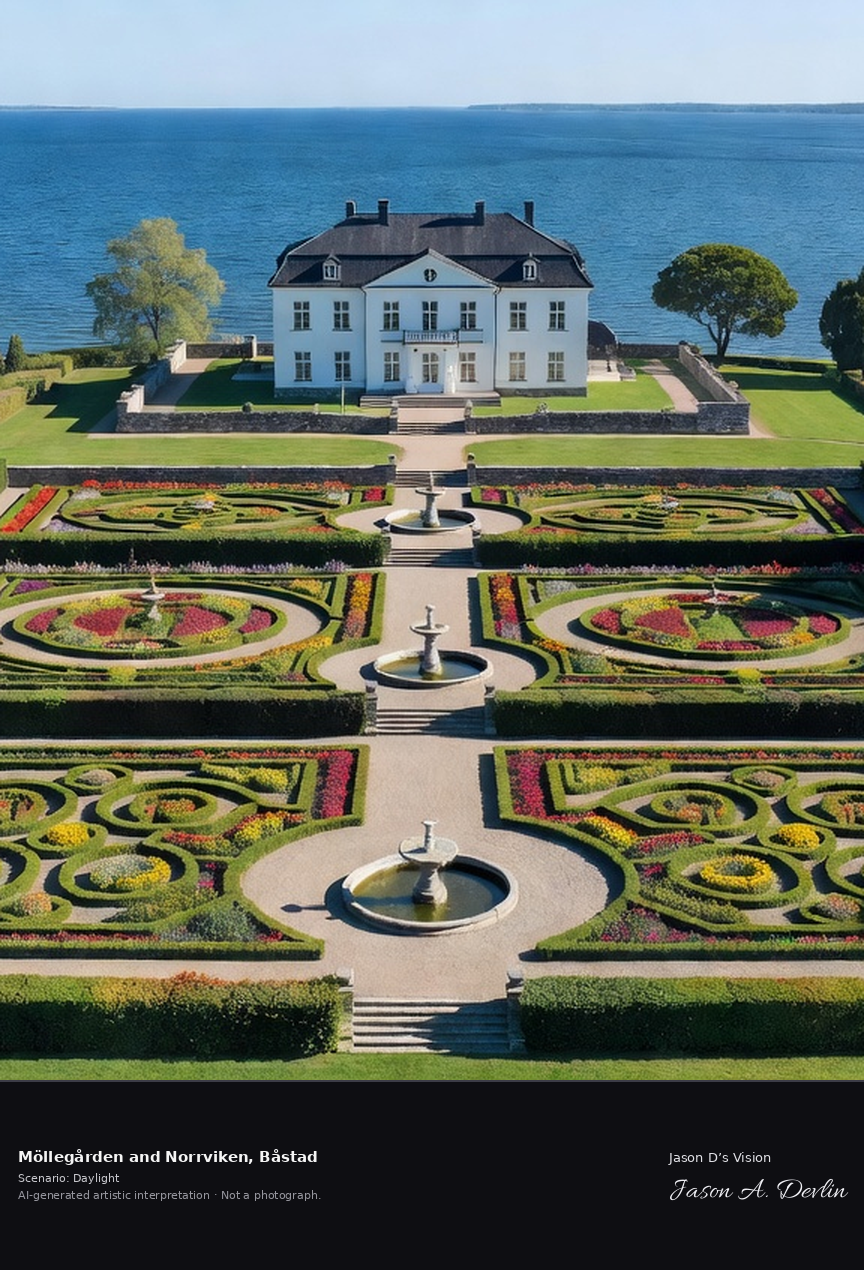
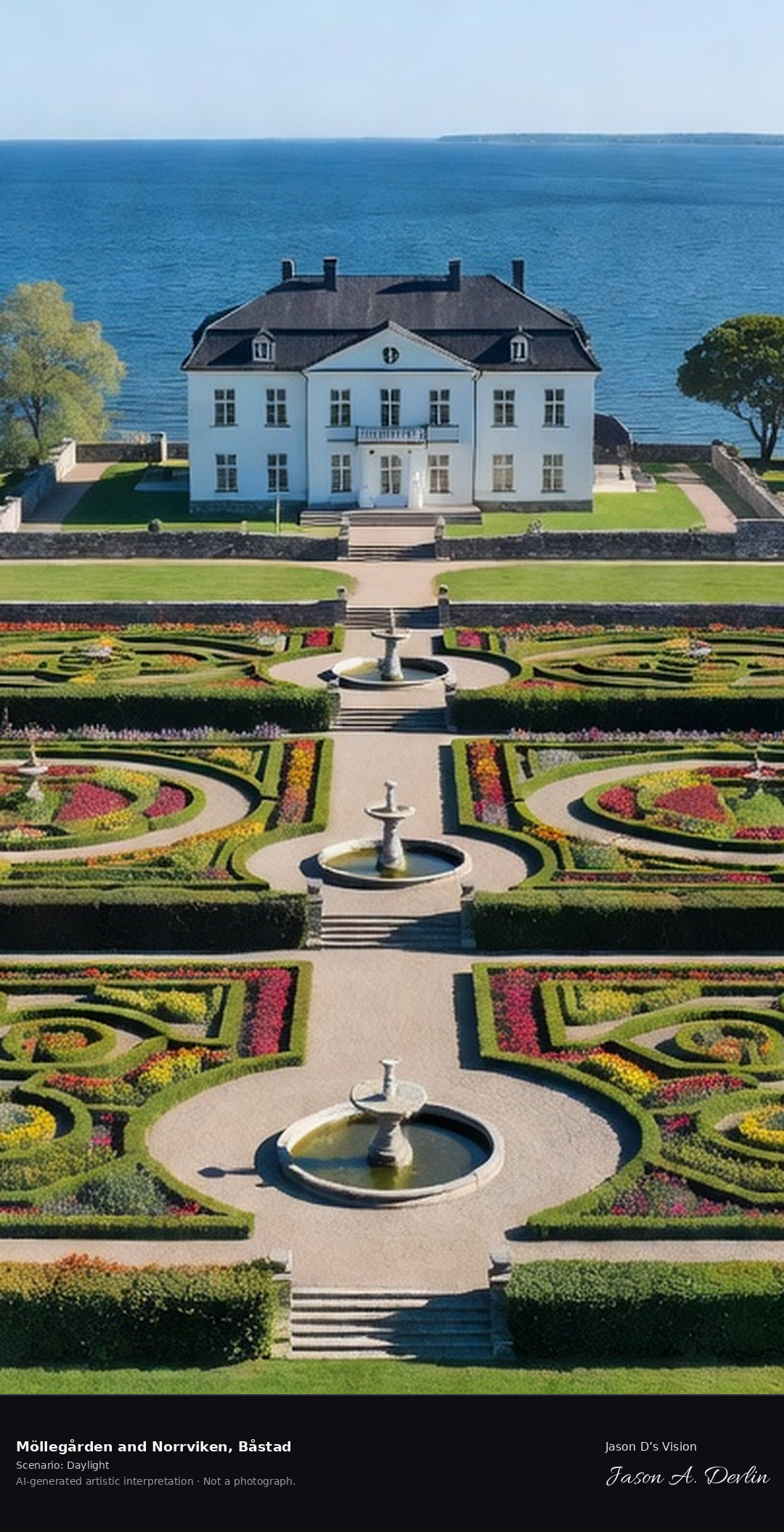
Norrviken Gardens' formal Baroque park above the Laholm Bay, the seven themed gardens with the villa and the sea beyond. Rudolf Abelin's masterpiece of Swedish garden art.
Möllegården and Norrviken in Båstad, Skåne — Rudolf Abelin's masterpiece of Swedish garden art. Norrviken Gardens' formal Baroque park unfolds its seven themed gardens above the Laholm Bay, the white villa rising behind the geometric parterres in bright natural daylight.
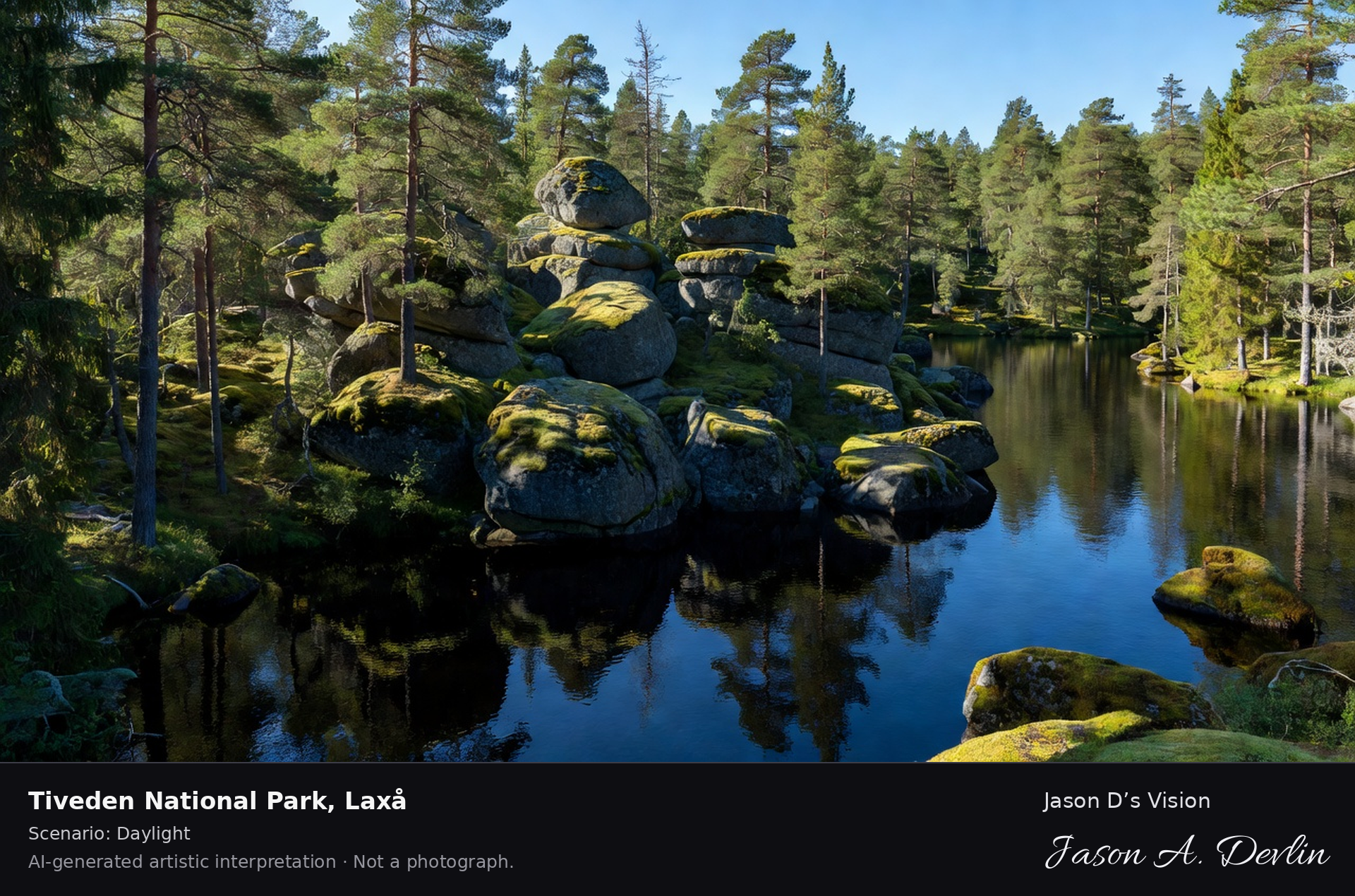
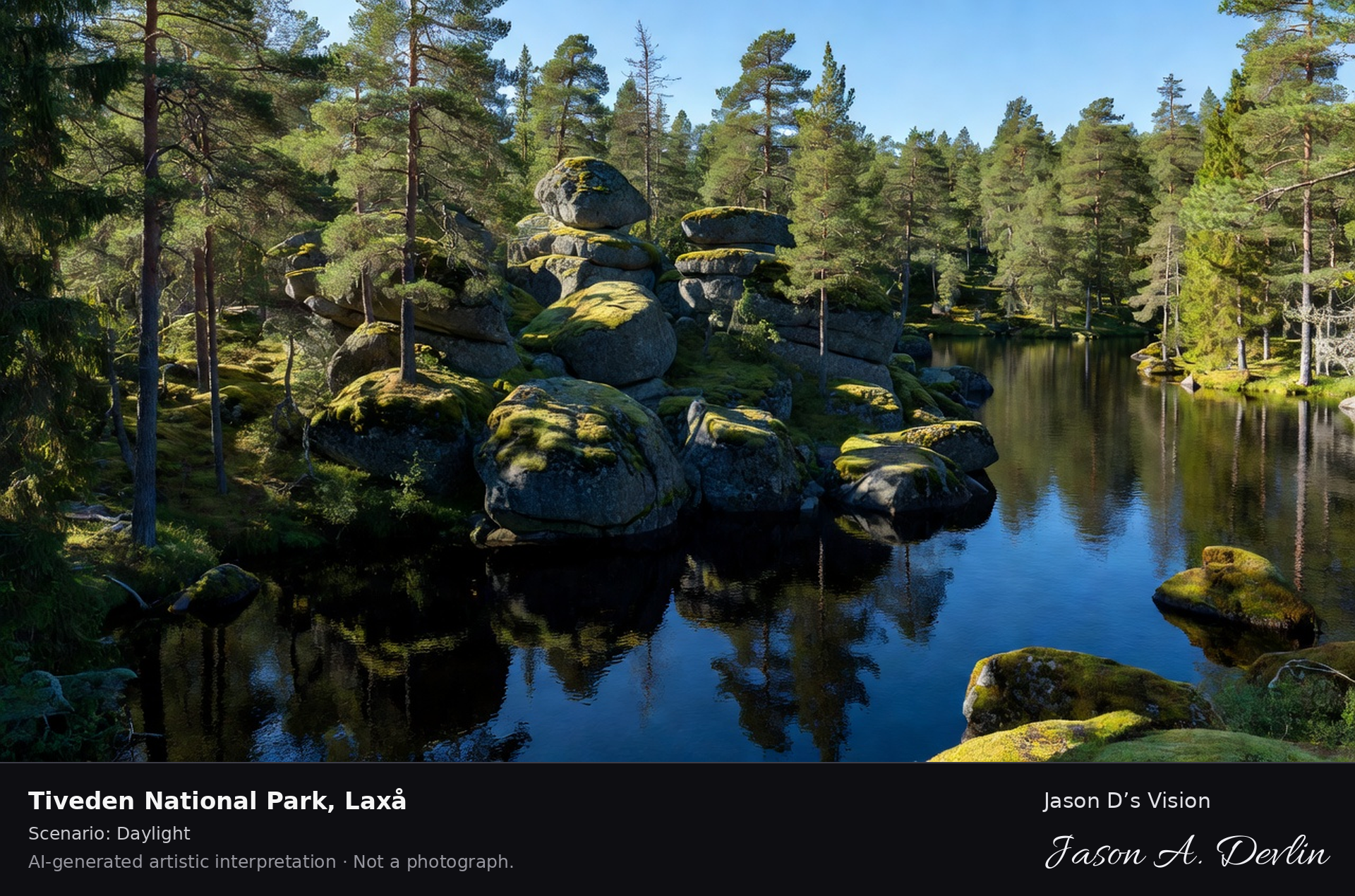
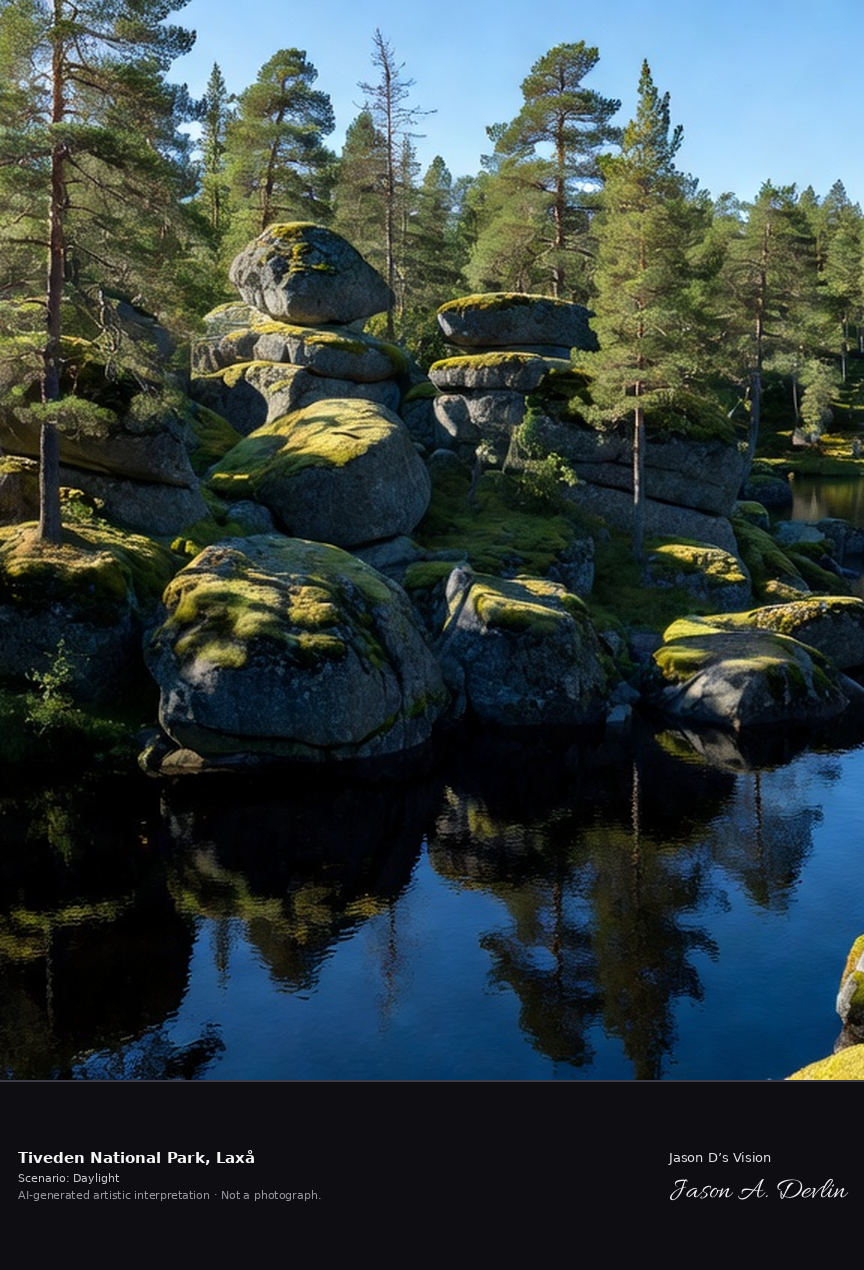
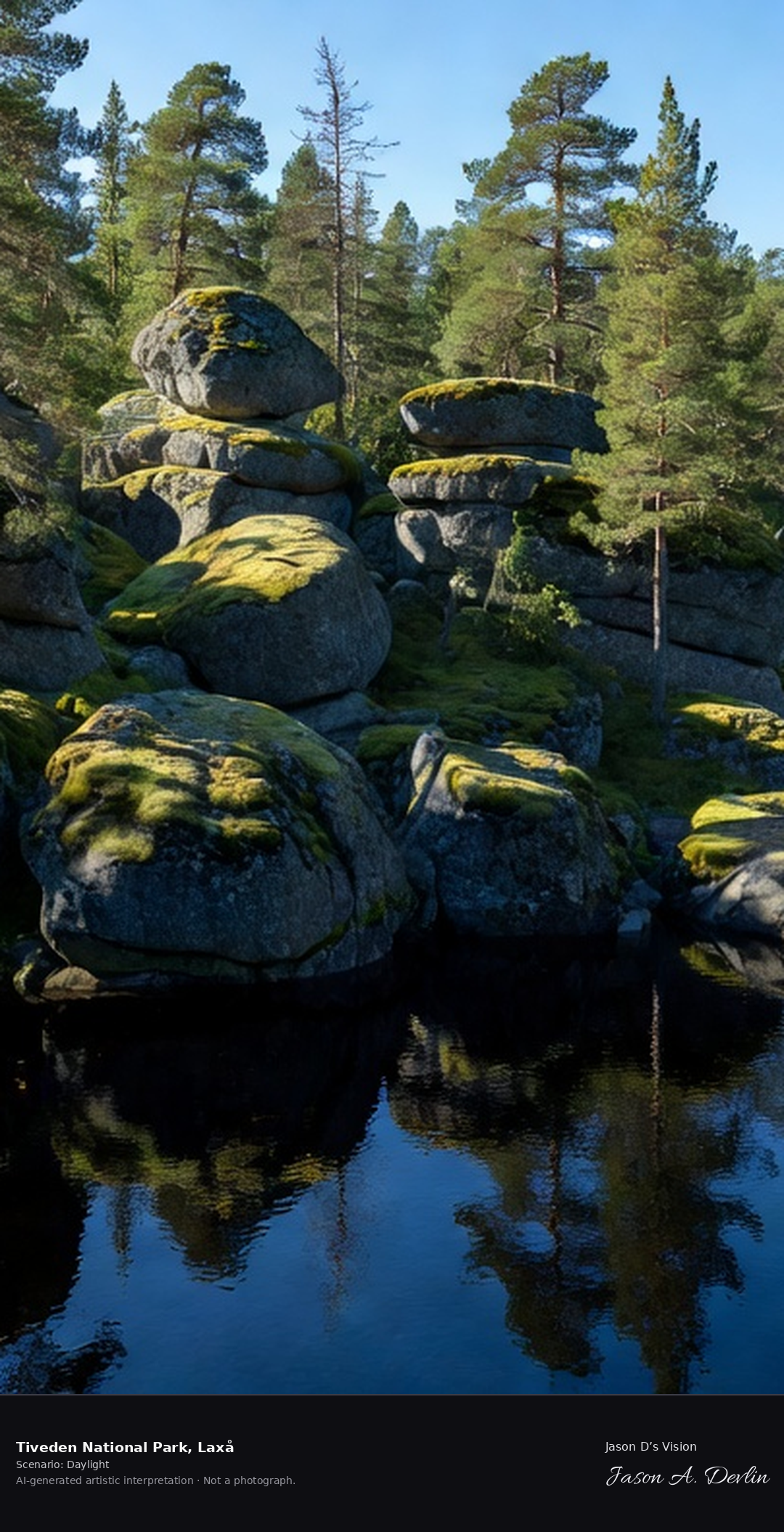
Tiveden's primeval forest with giant moss-covered boulders and the black waters of Lake Stora Trehörningen, Sweden's most troll-like wilderness between the great lakes.
Tiveden National Park in Laxå, Västergötland — Sweden's most troll-like wilderness between the great lakes. Giant moss-covered boulders crowd the black waters of Lake Stora Trehörningen, primeval pine forest rising behind in bright natural daylight.
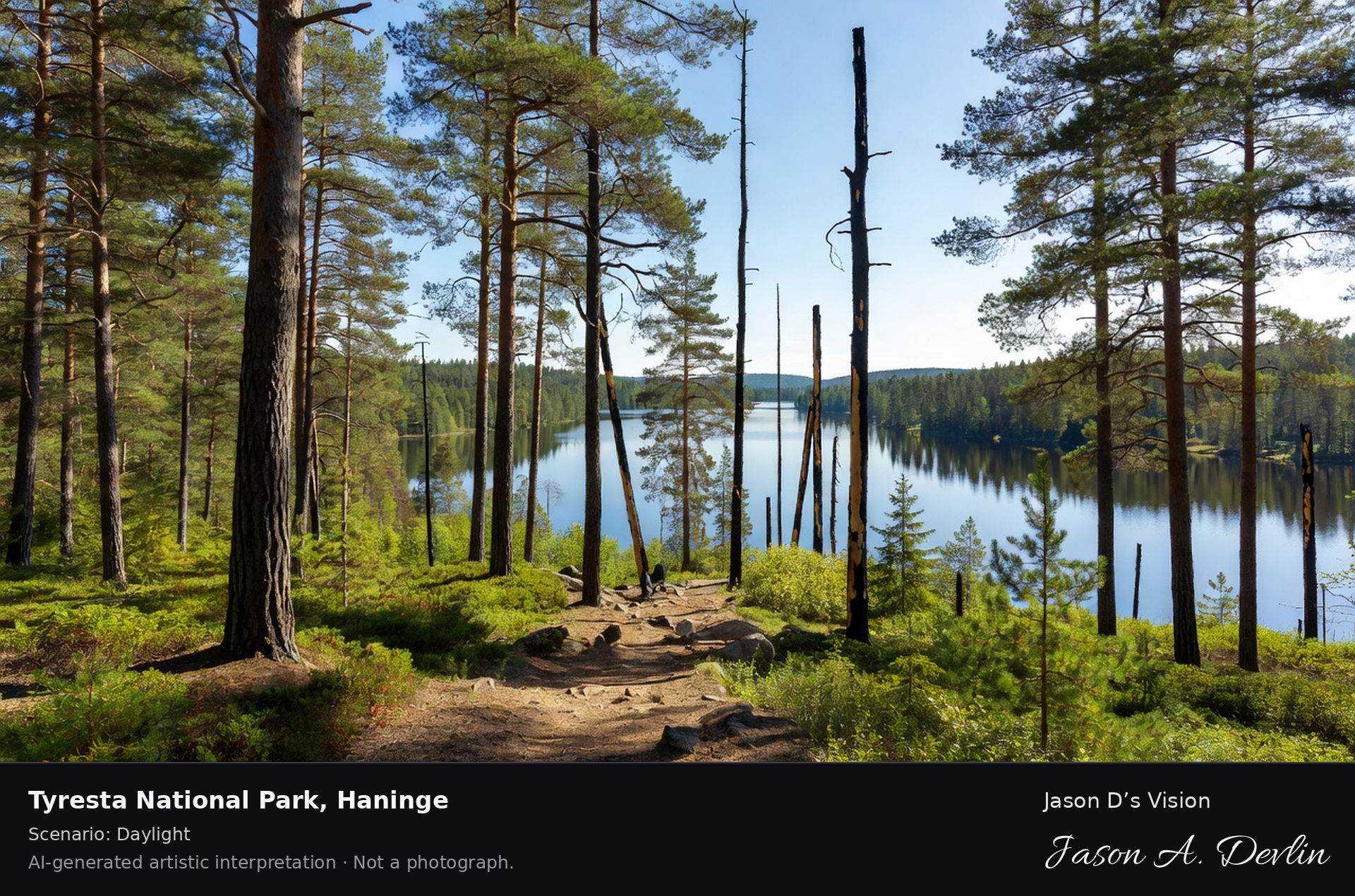
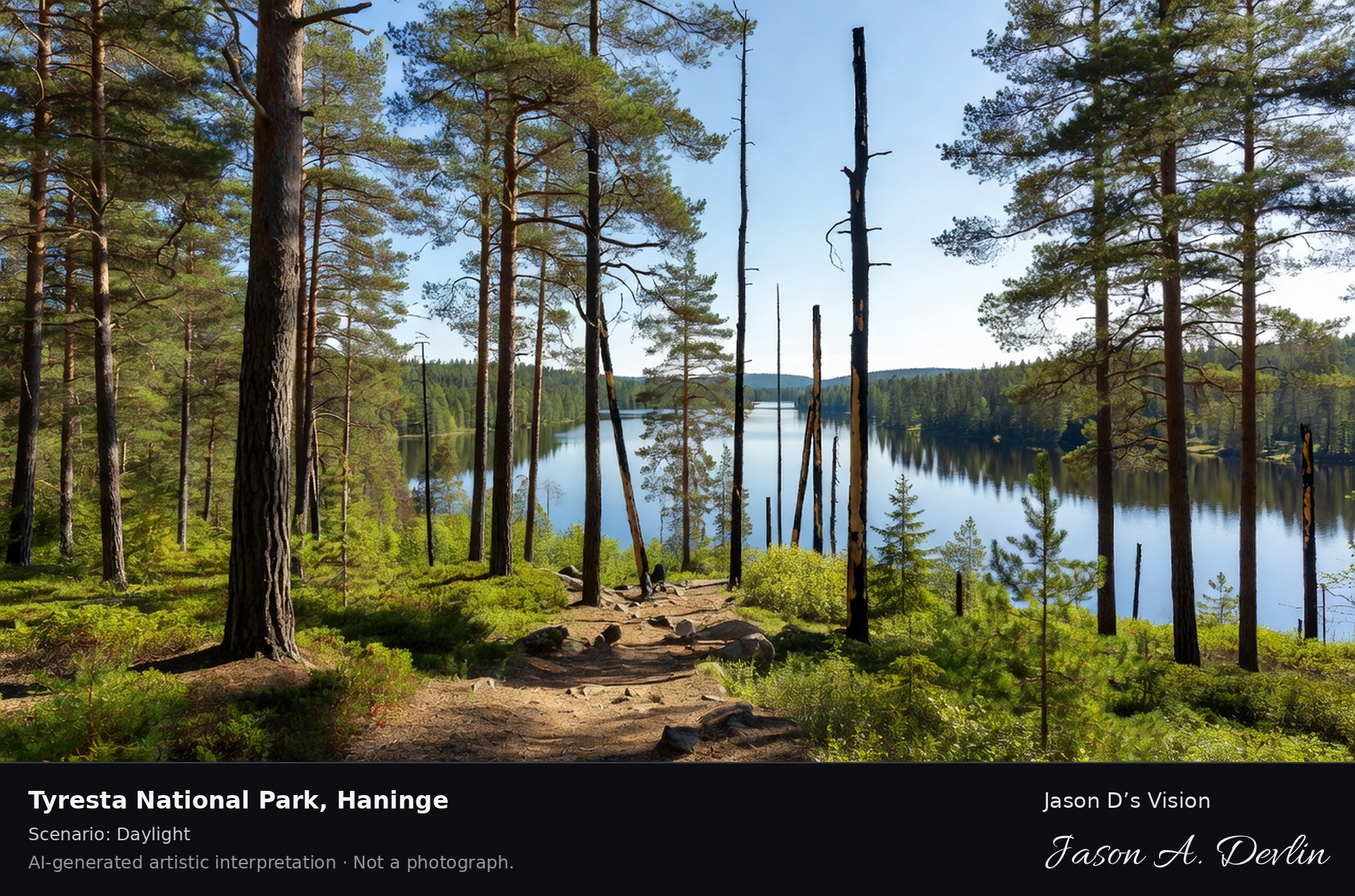
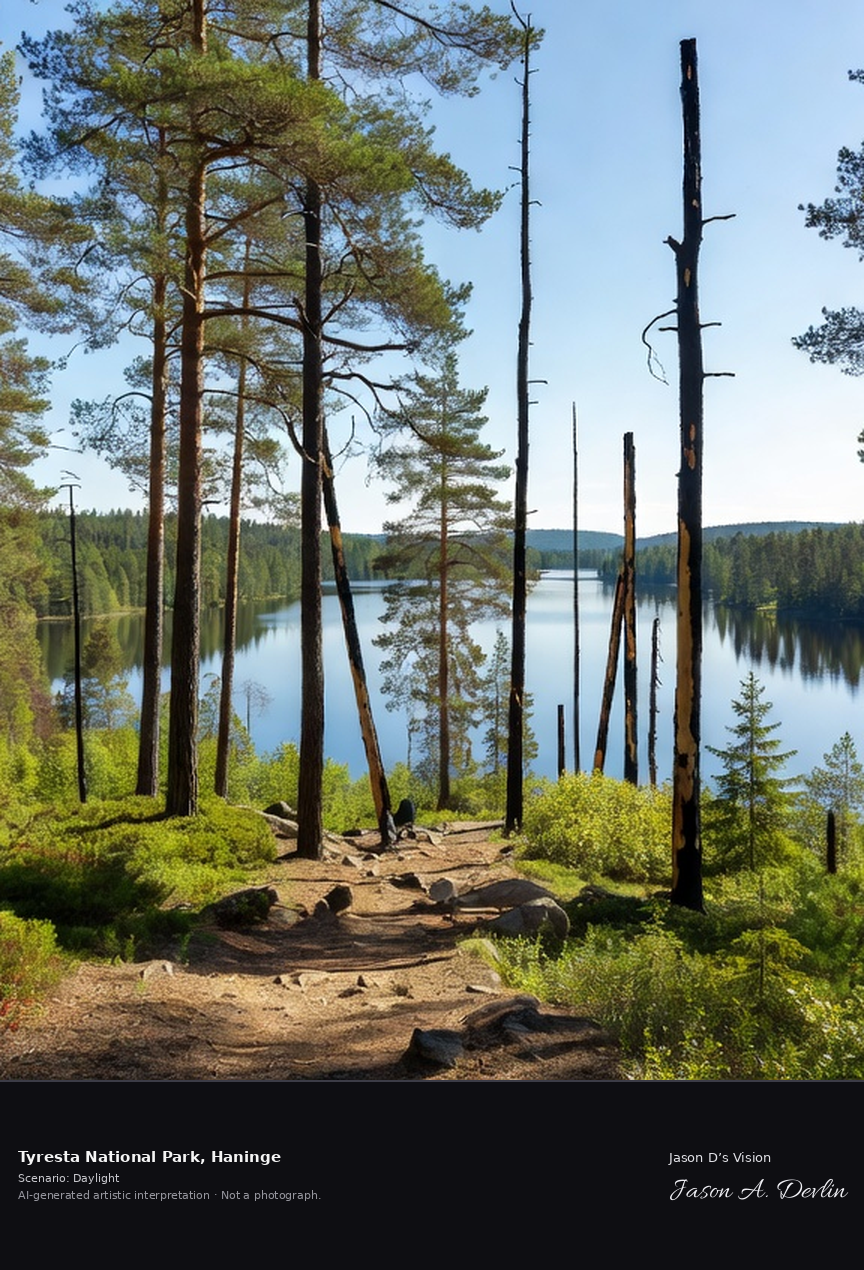
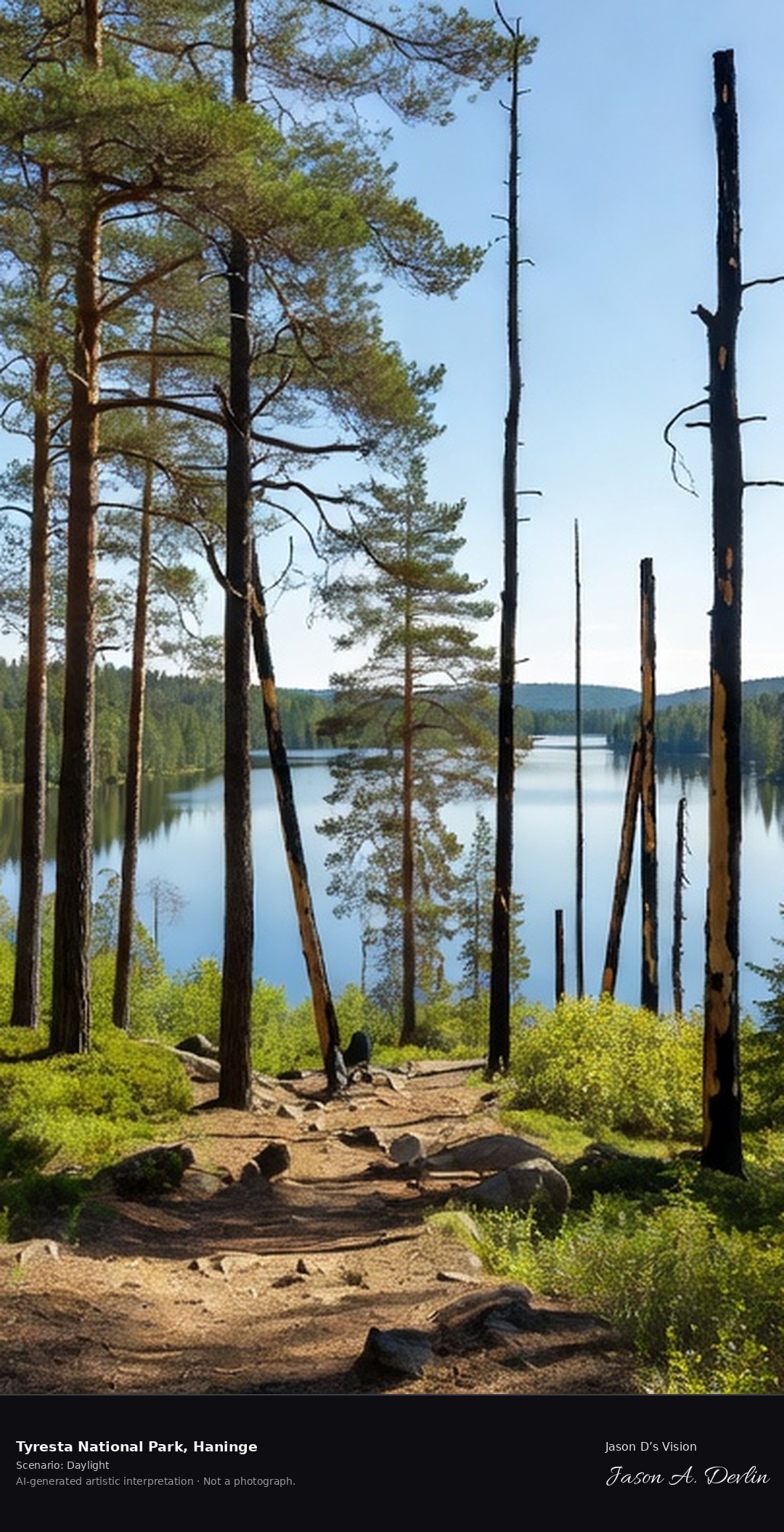
Tyresta's ancient pine forest south of Stockholm, 400-year-old pines around Lake Stensjön with the 1999 fire's charred snags among the new growth. The capital's wilderness.
Tyresta National Park in Haninge, Södermanland — the capital's wilderness south of Stockholm. Tyresta's ancient pine forest wraps Lake Stensjön, the 1999 fire's charred snags standing among 400-year-old pines and new growth in bright natural daylight.
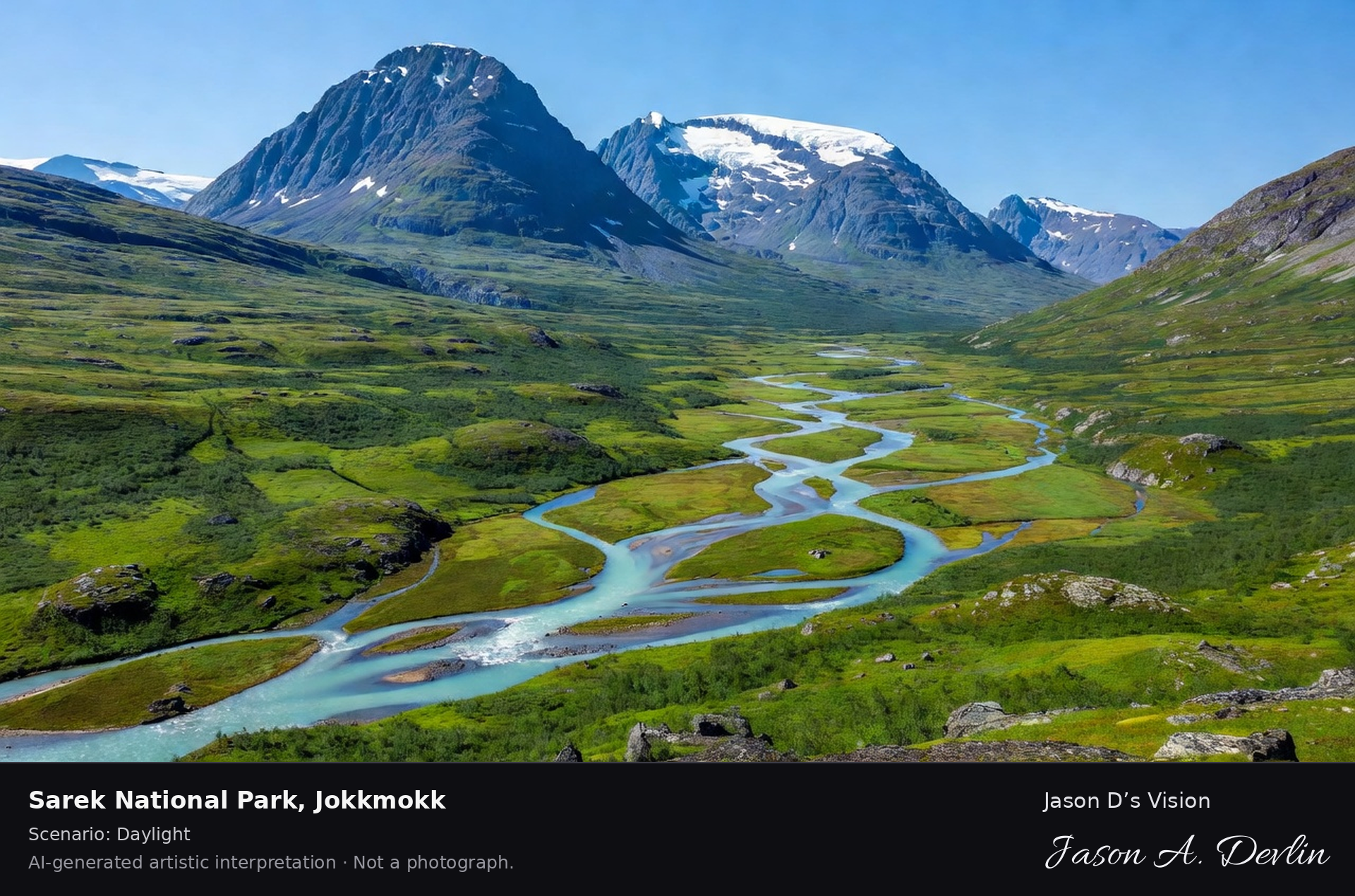
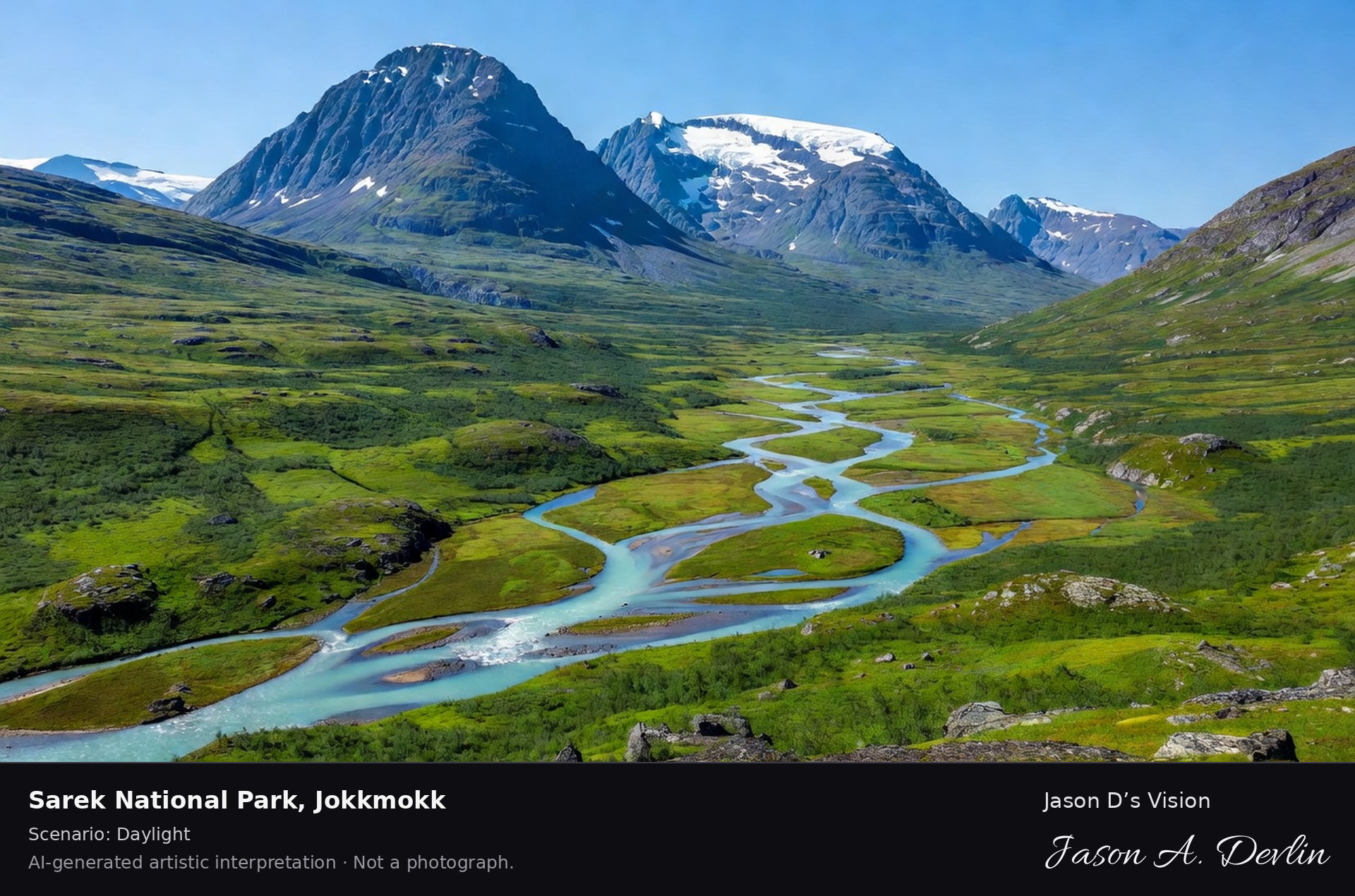
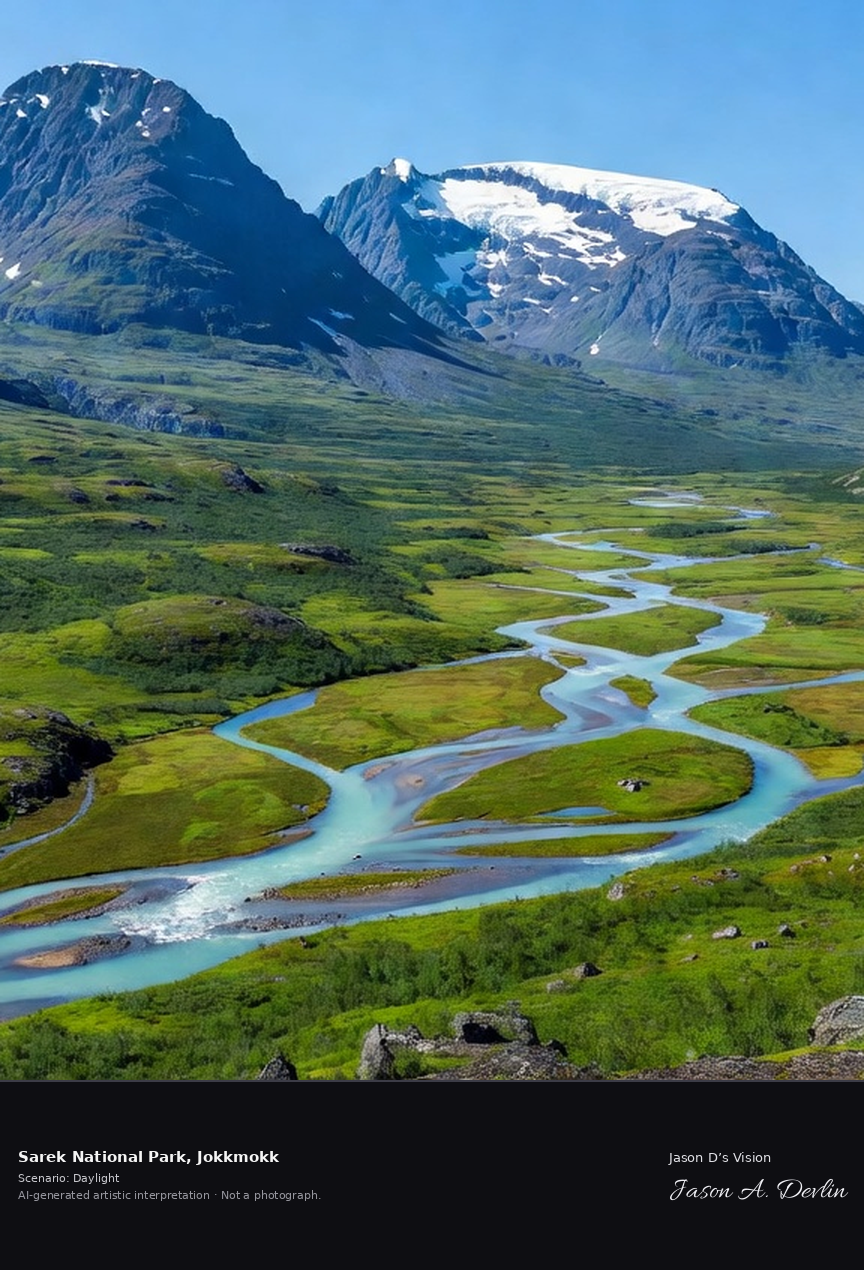
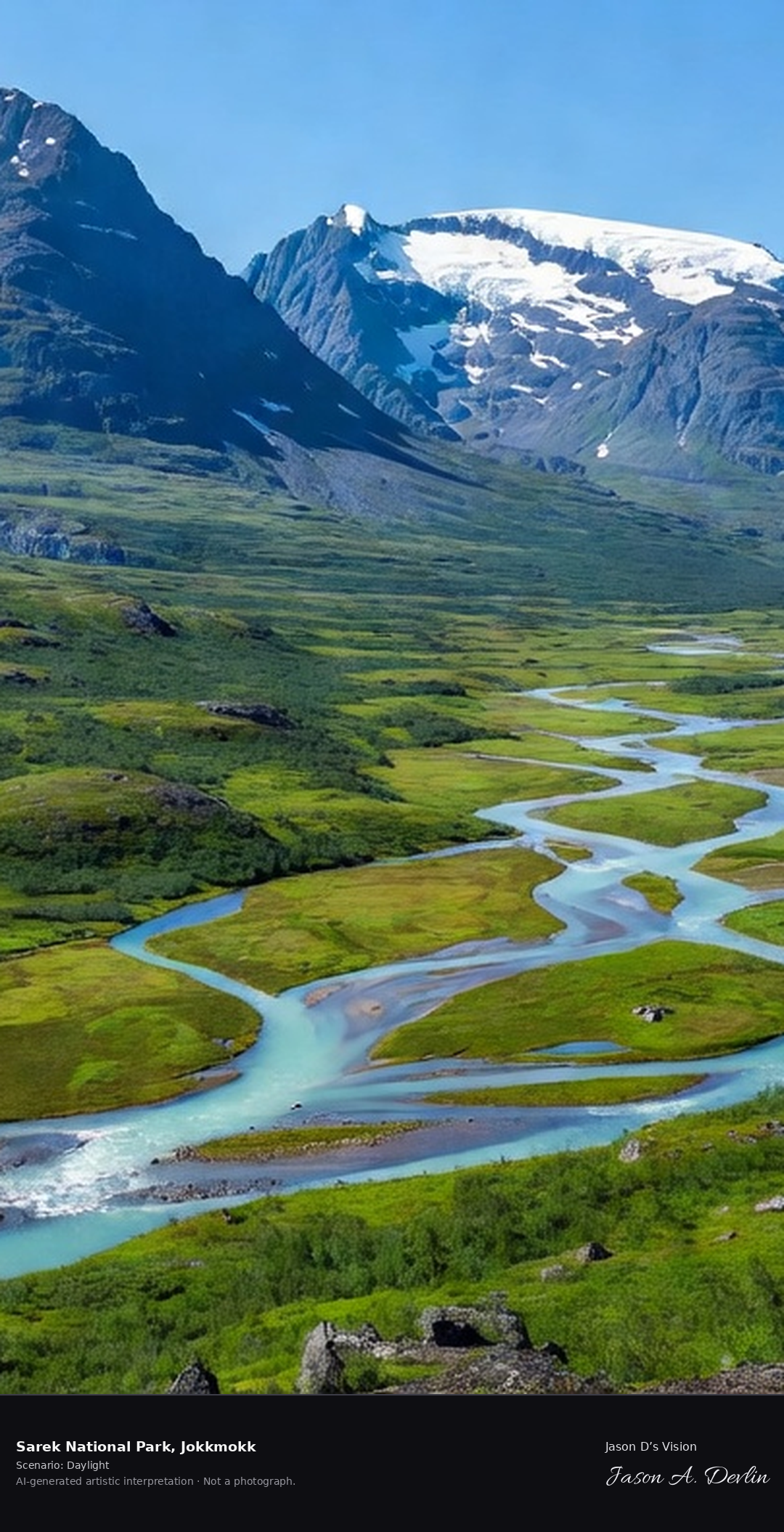
Sarek's wild peaks and the Rapa Valley delta, Europe's last true wilderness with no trails or huts, the Sarektjåkkå massif above the braided glacial river.
Sarek National Park in Jokkmokk, Lapland — Europe's last true wilderness, with no trails or huts. The wild peaks of the Sarektjåkkå massif stand above the Rapa Valley delta, the braided glacial river threading the green valley floor in bright natural daylight.
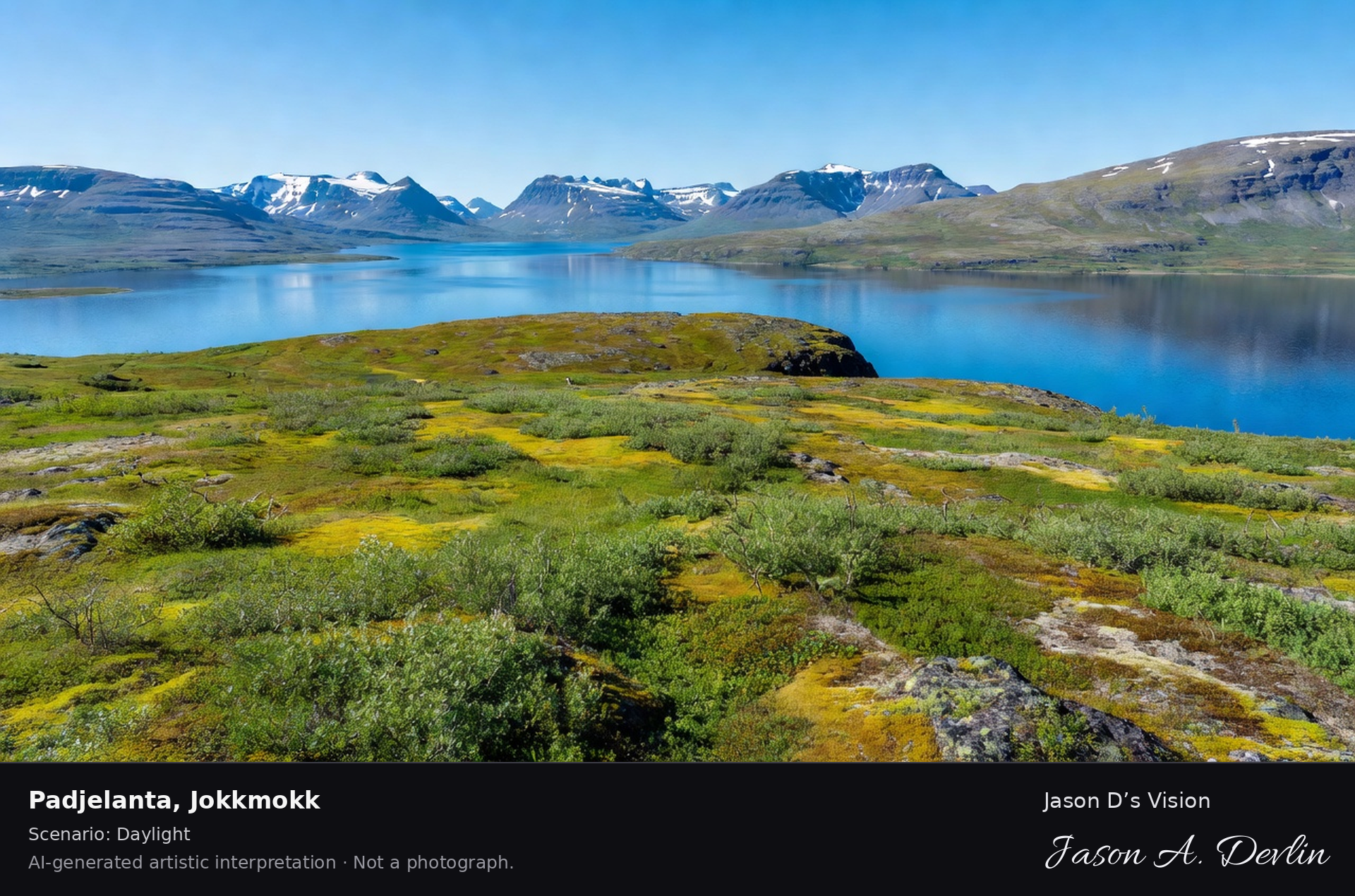
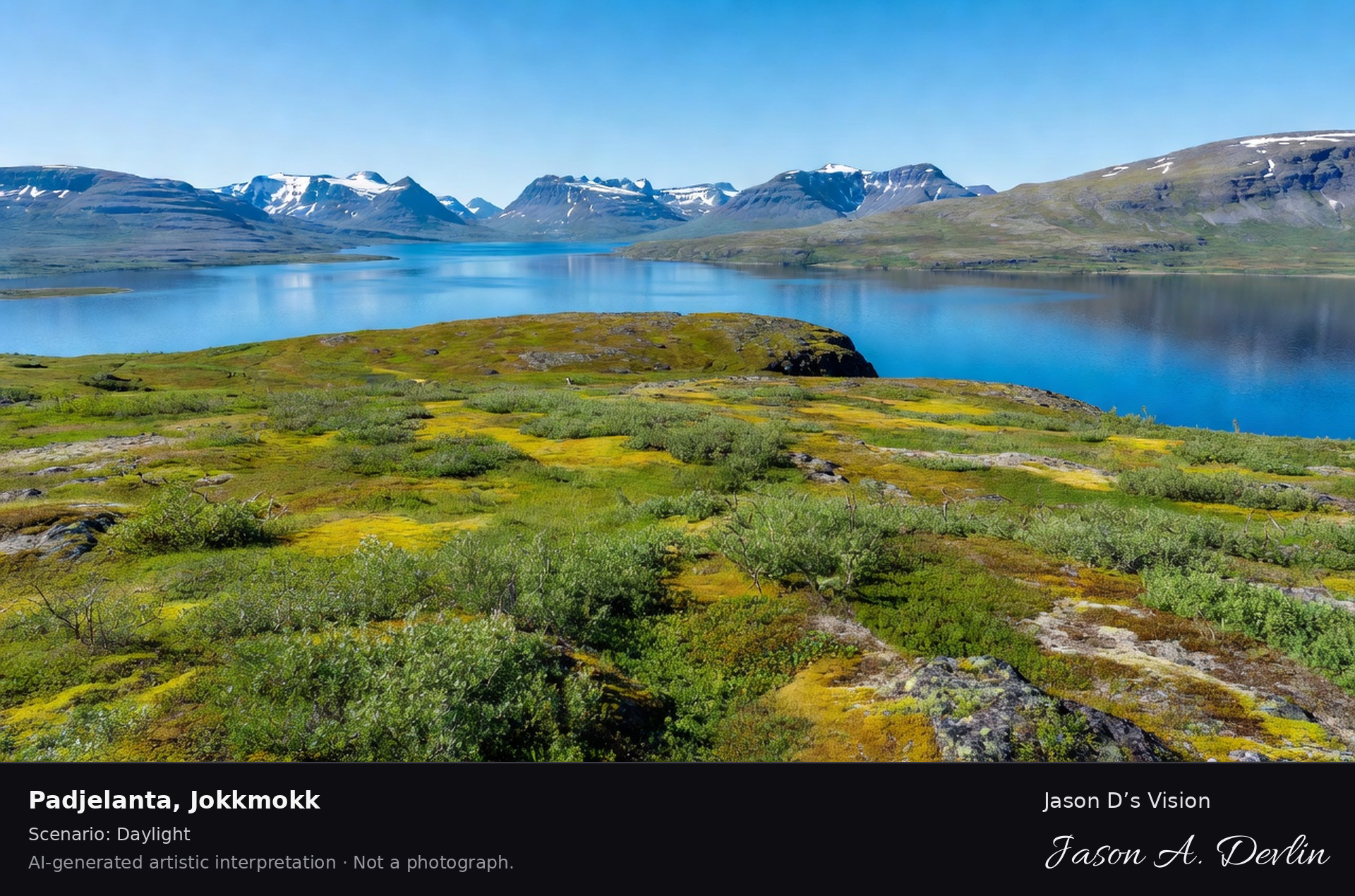
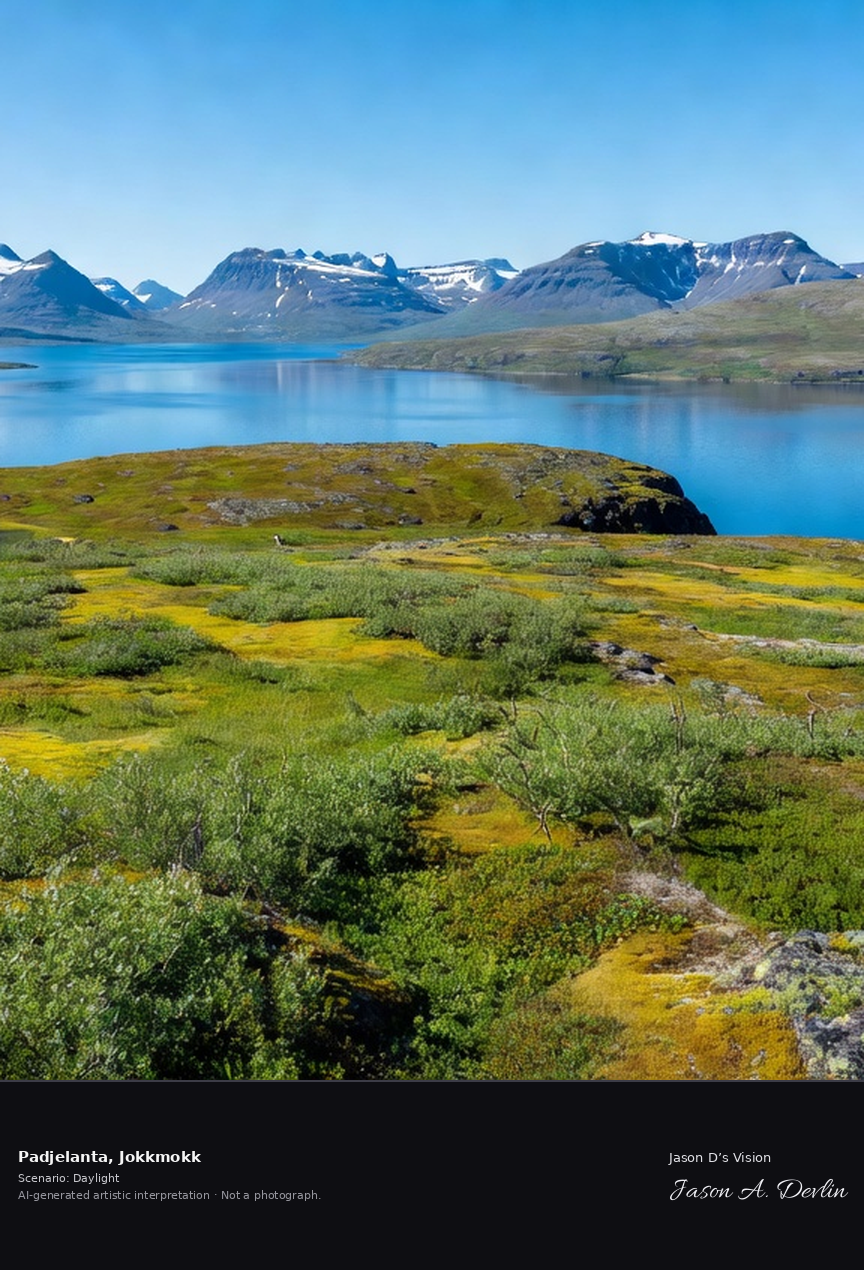
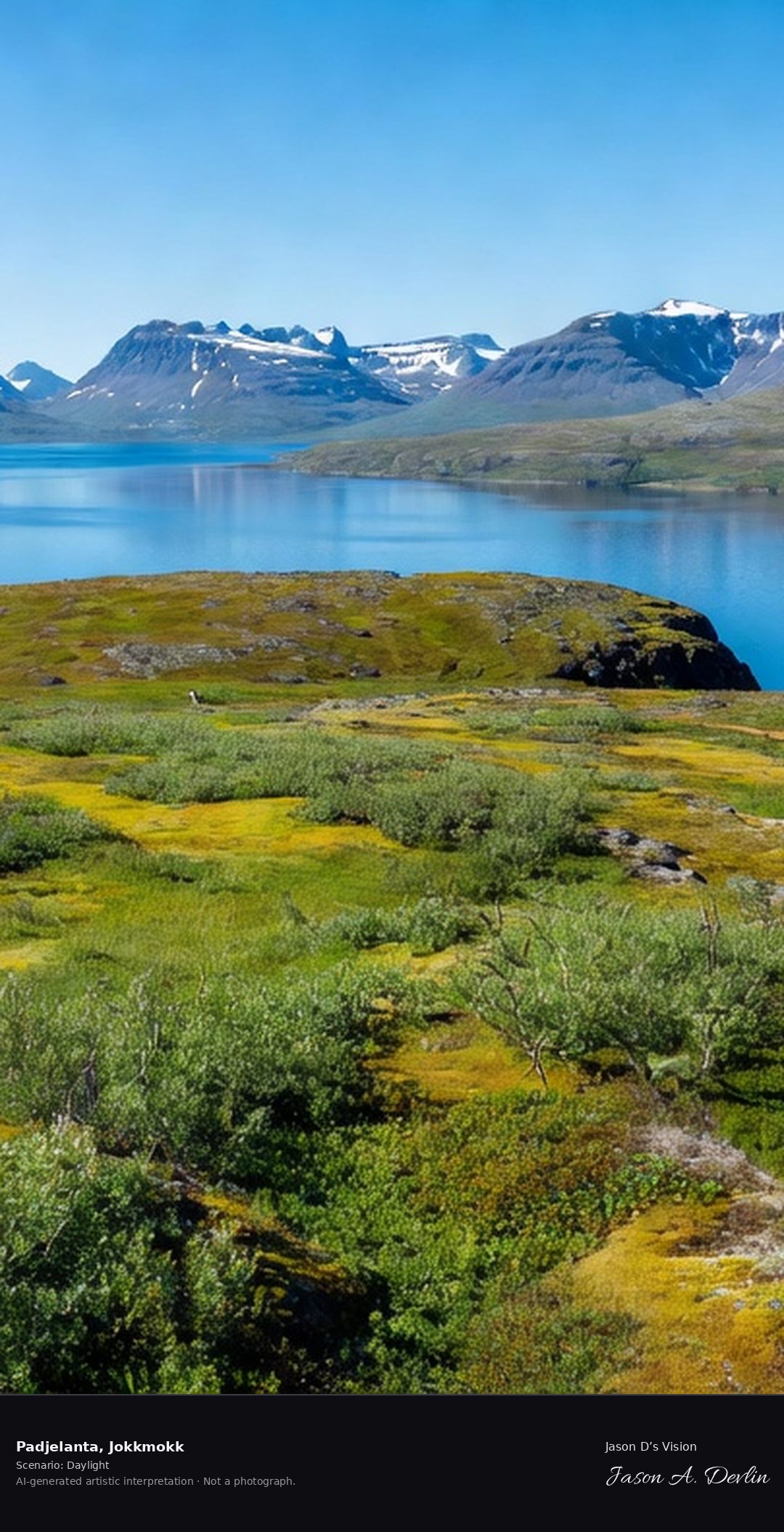
Padjelanta's rolling fell plateau with Lake Virihaure below and the Sarek peaks on the horizon, the 'higher land' of Sami summer grazing in the far north.
Padjelanta in Jokkmokk, Lapland — the 'higher land' of Sami summer grazing, a rolling fell plateau above Lake Virihaure with the snow-capped Sarek peaks on the horizon, seen in bright natural daylight.
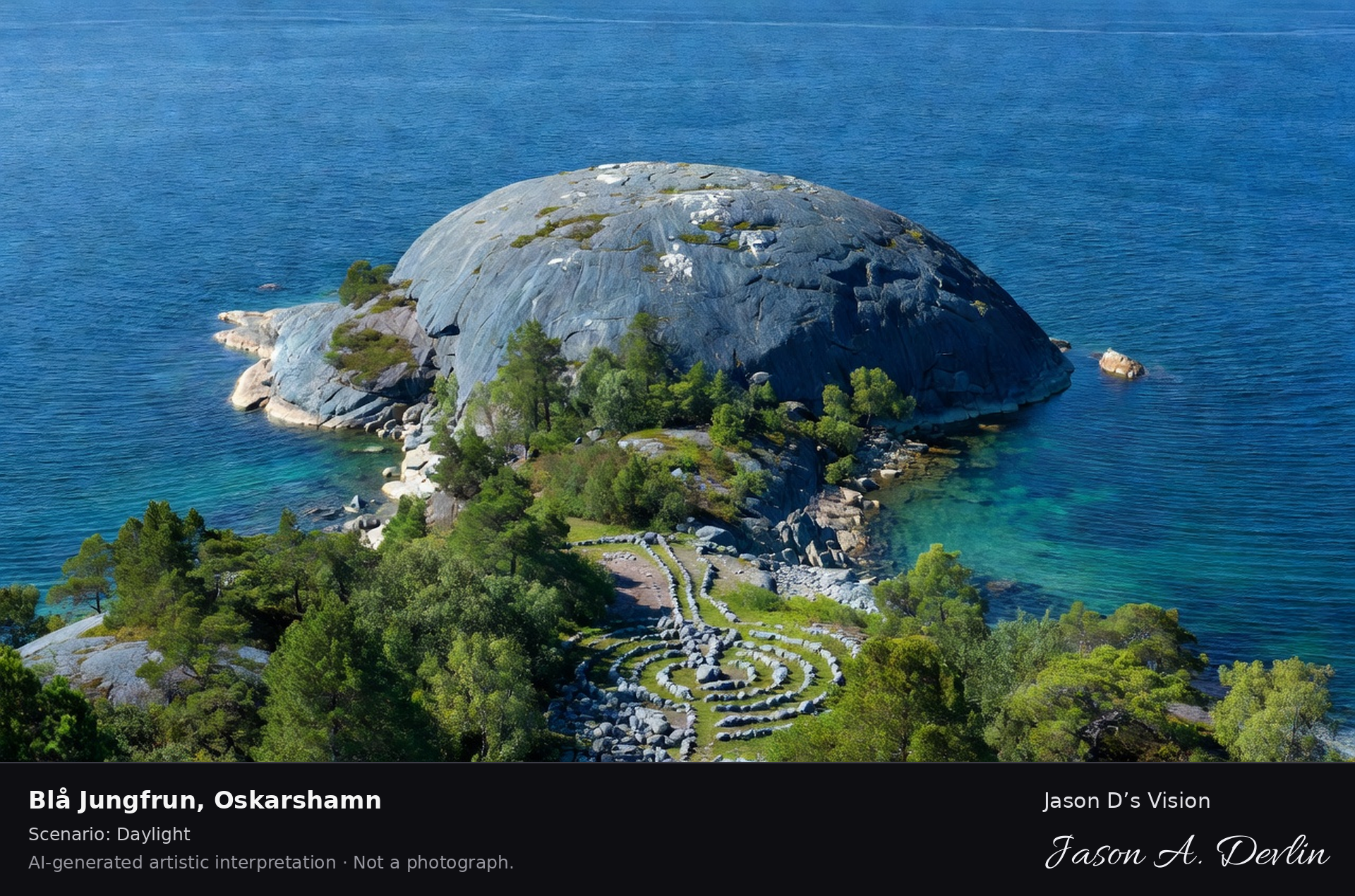
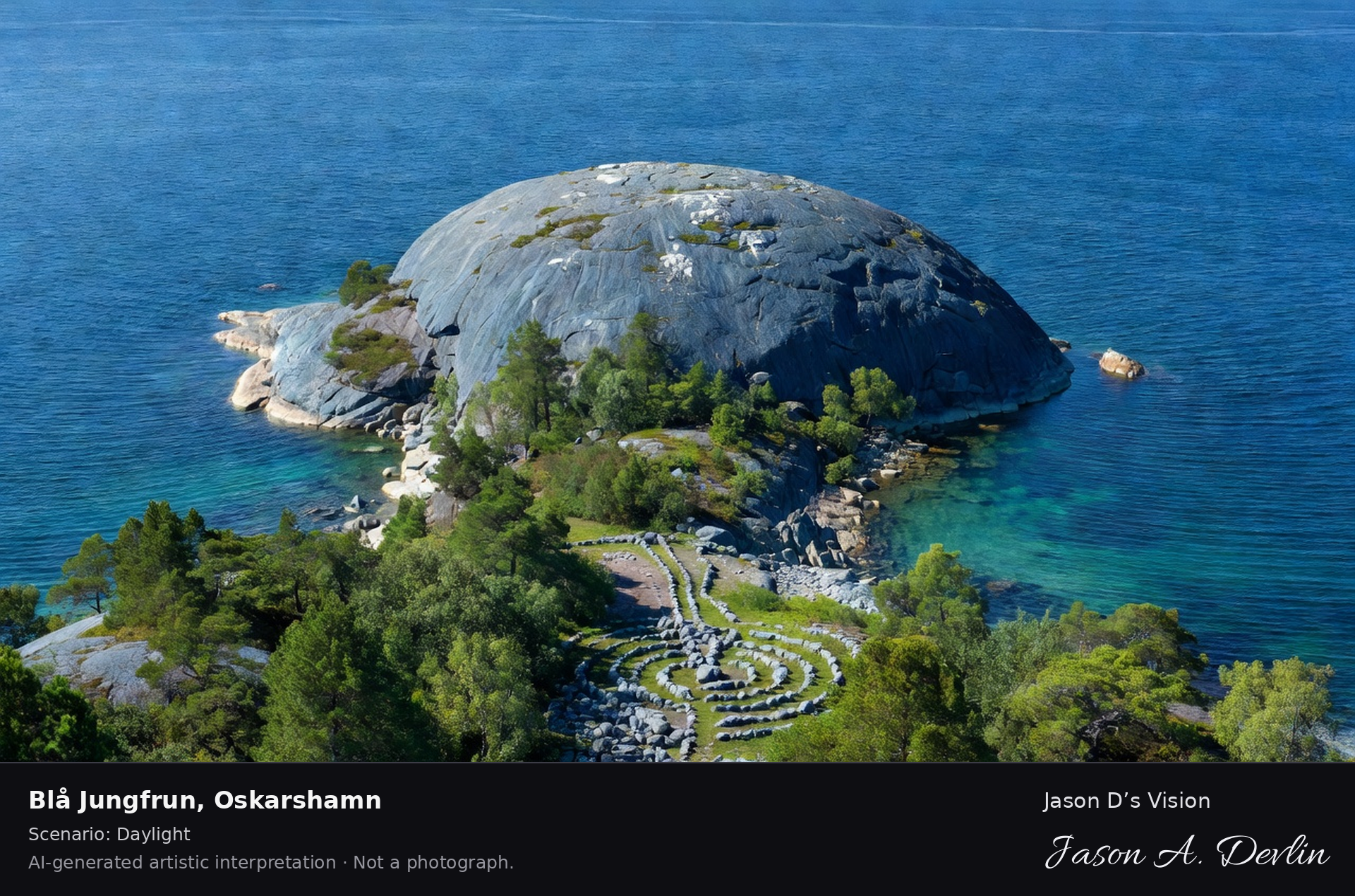
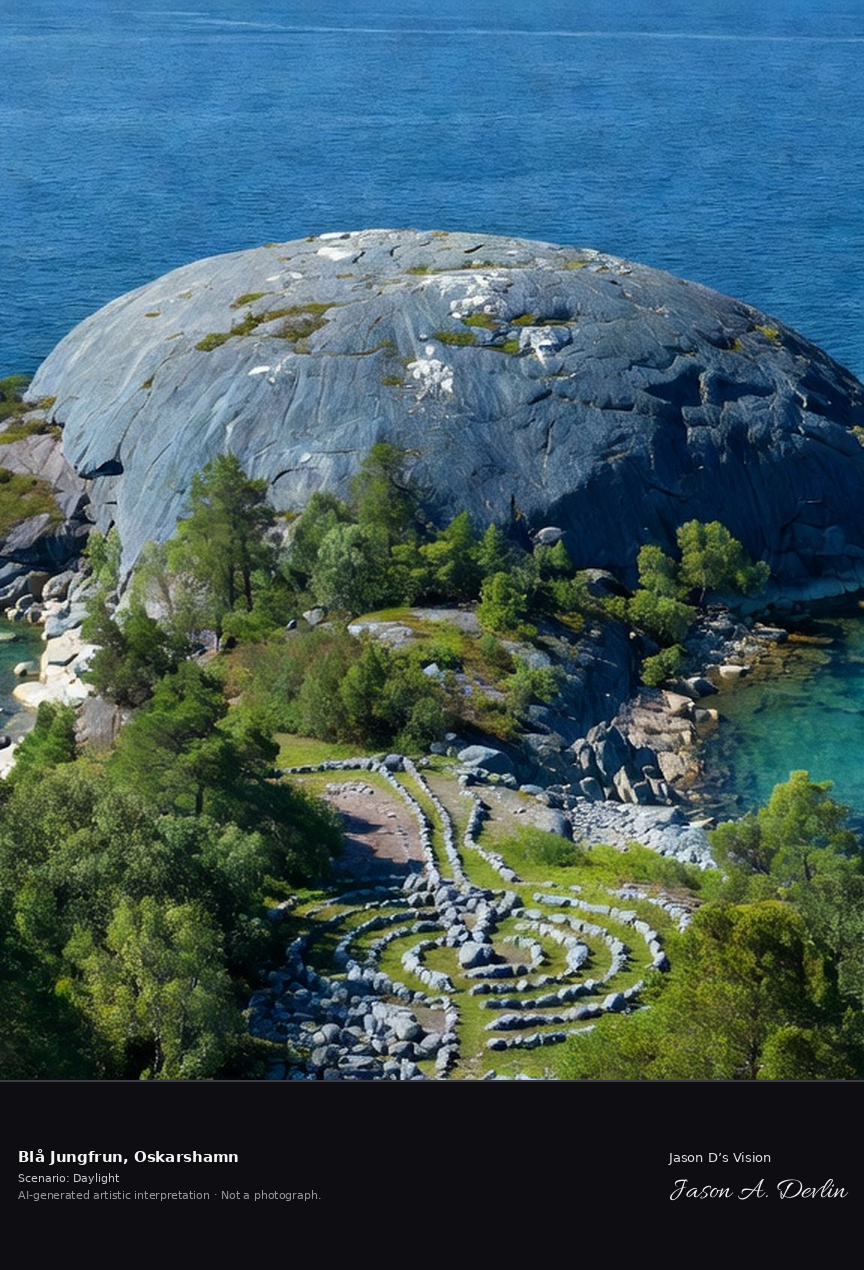
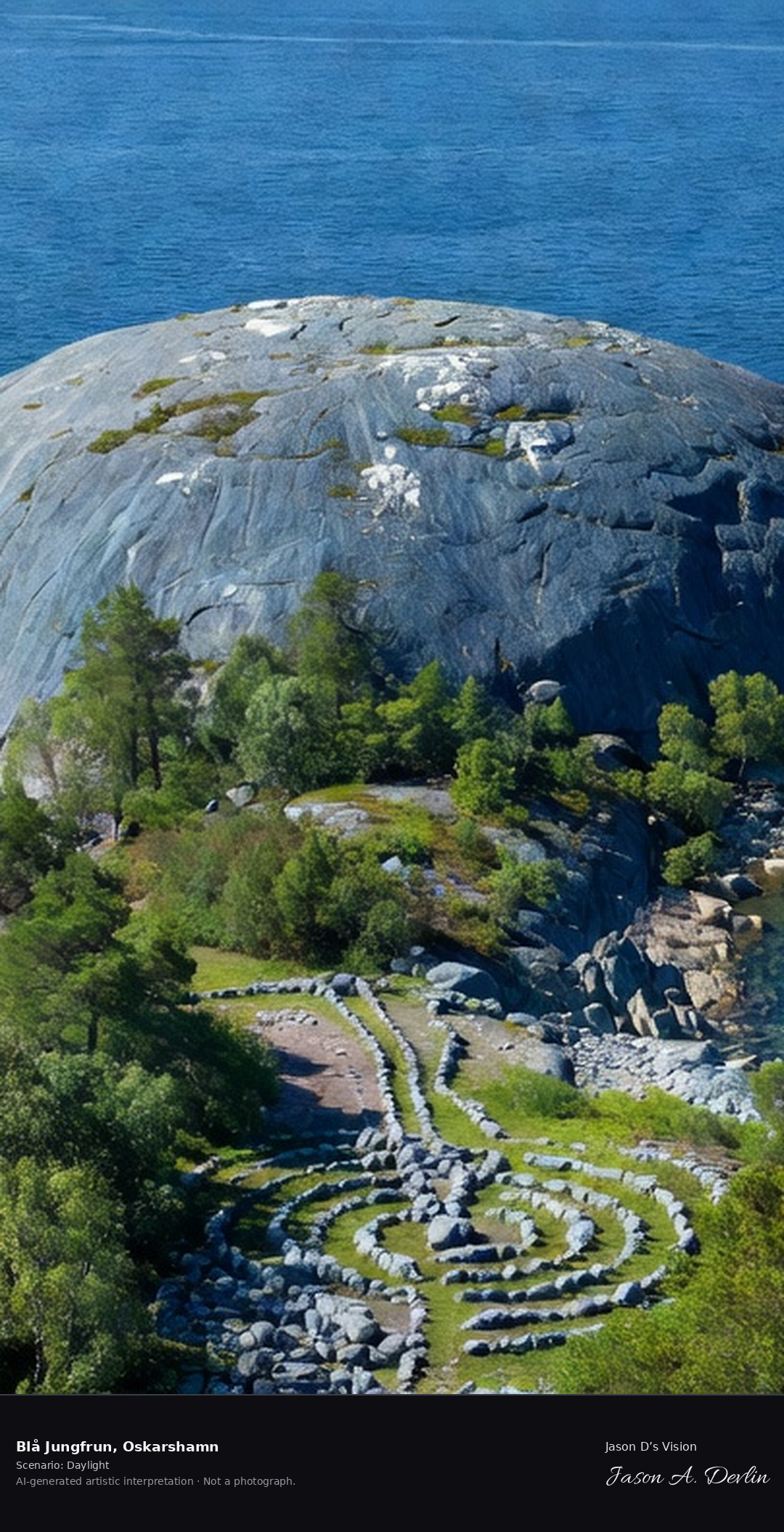
Blå Jungfrun's blue granite dome rising from the Kalmarsund, the legendary 'Blue Maiden' island national park with its labyrinth and witch lore, seen from the sea.
Blå Jungfrun in Oskarshamn, Småland — the legendary 'Blue Maiden' island national park, its blue granite dome rising from the Kalmarsund with the ancient stone labyrinth on its shore, seen from the sea in bright natural daylight.
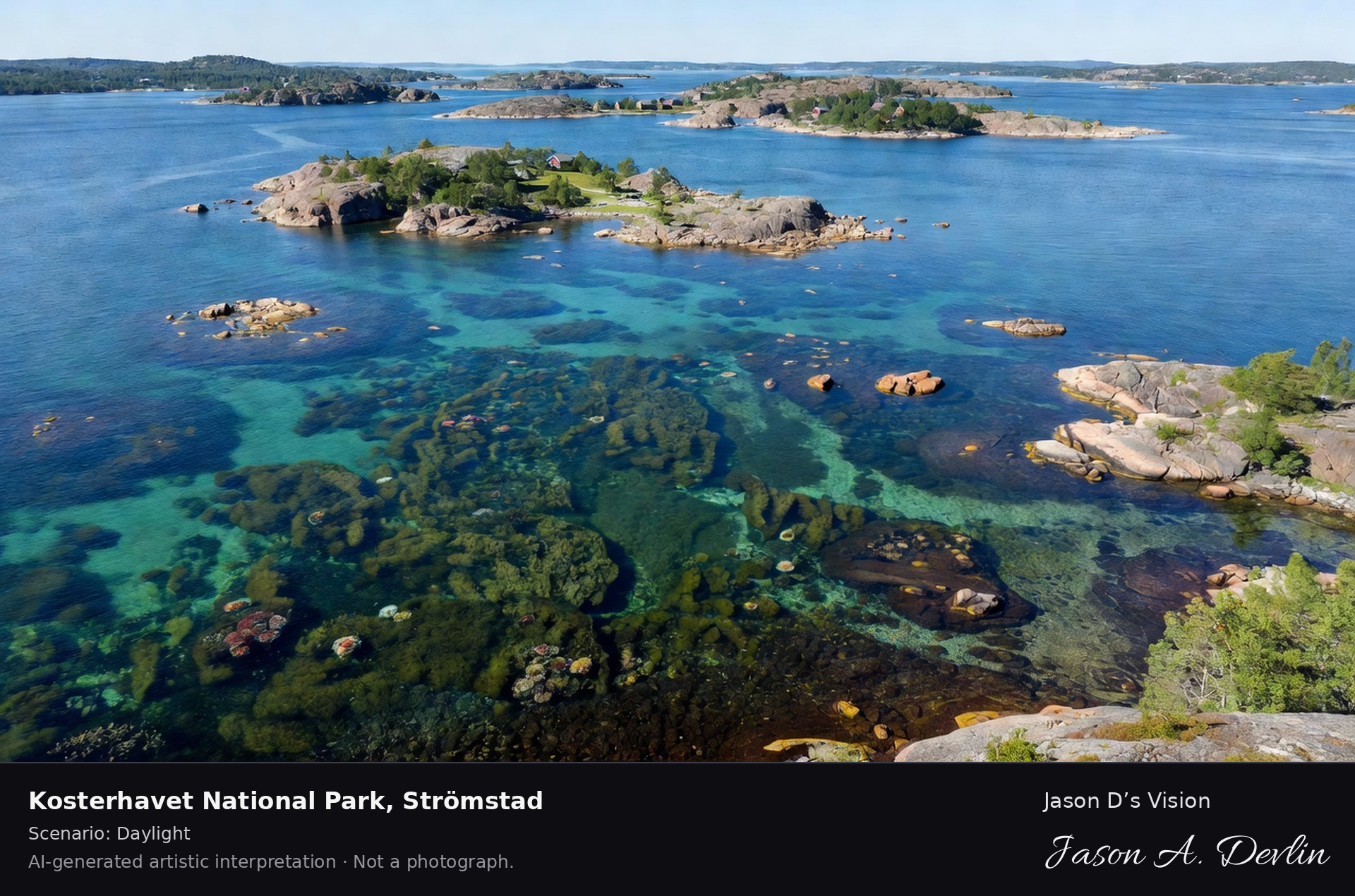
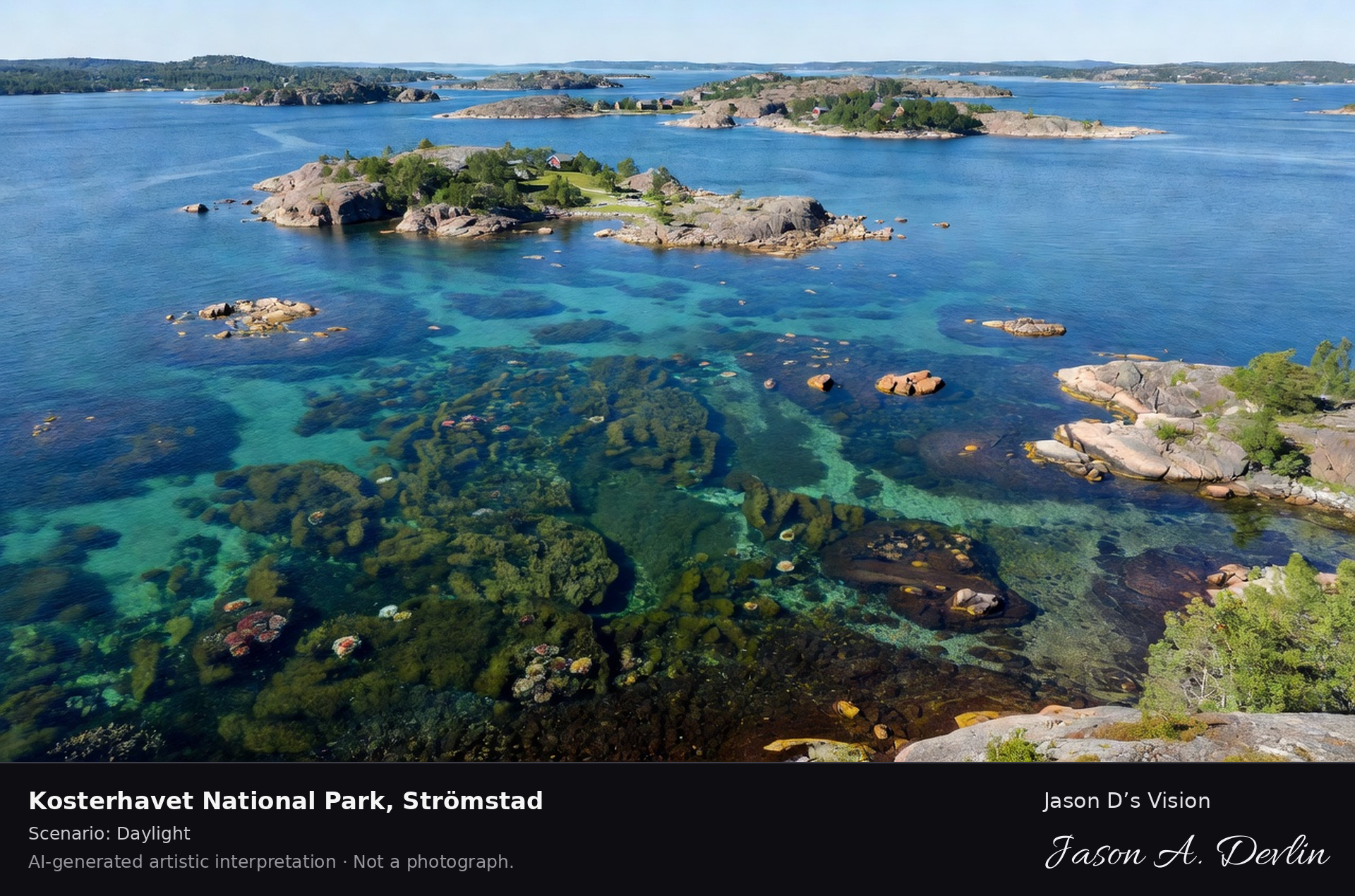
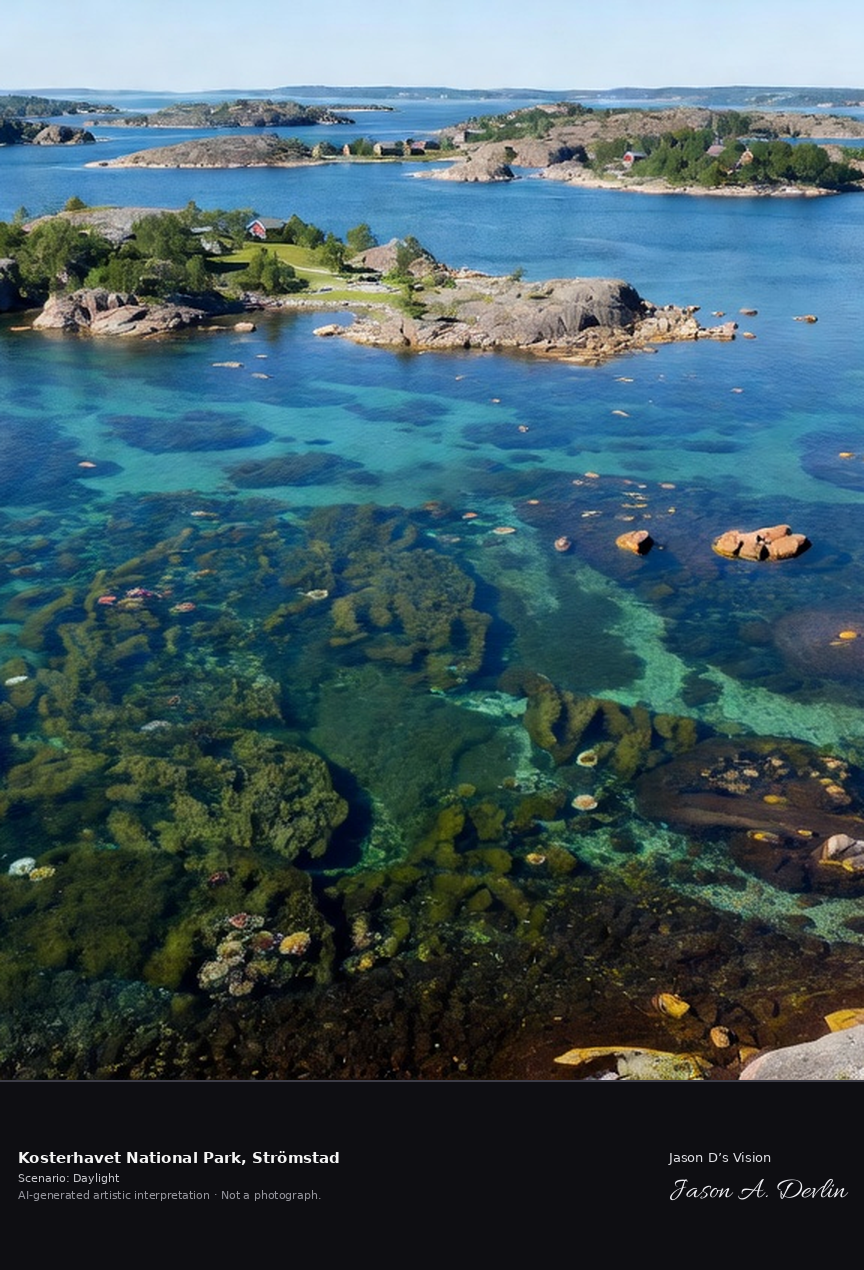
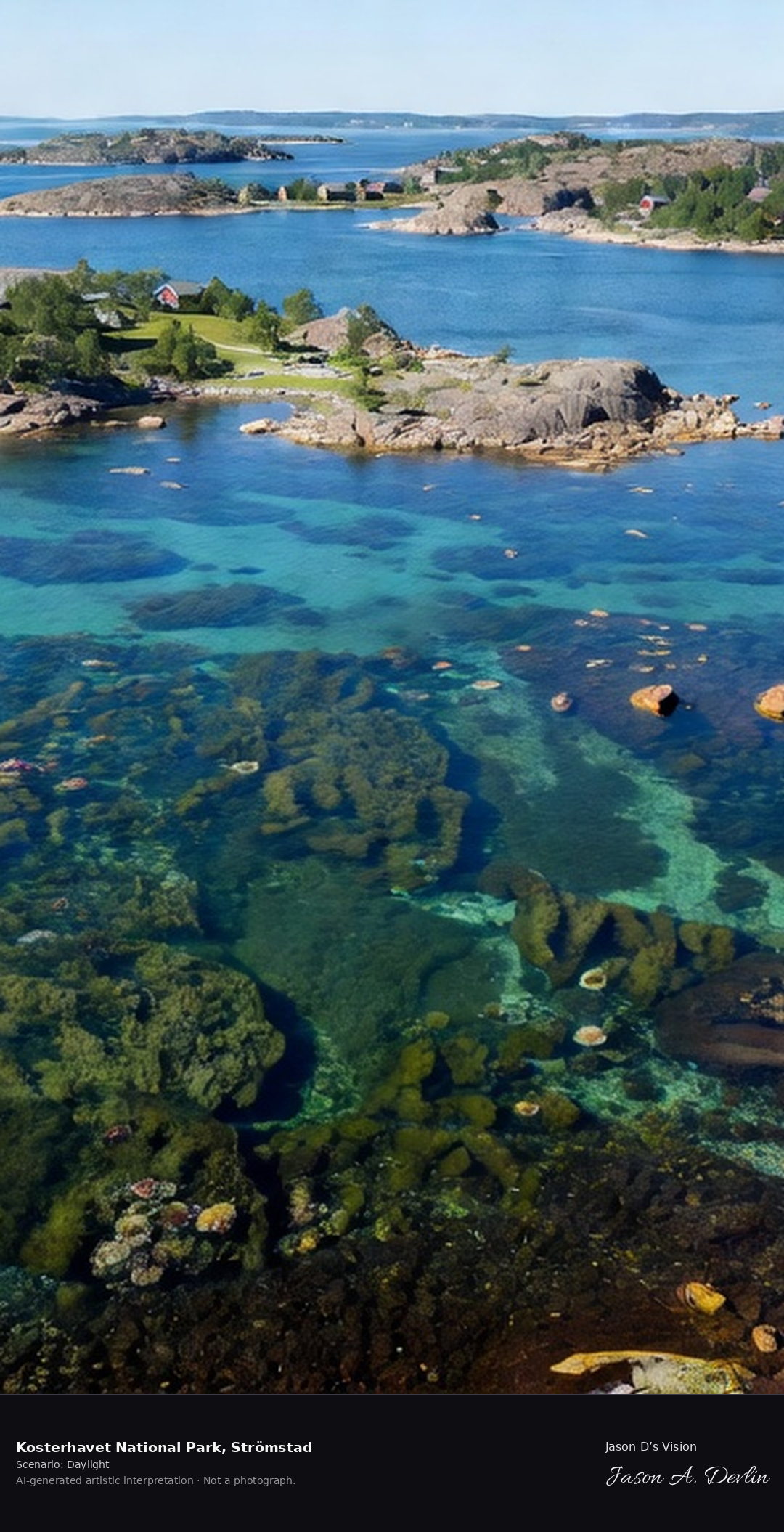
Kosterhavet's underwater world above the waves, the Koster fjord's islands with Sweden's most species-rich marine life below the clear Skagerrak water.
Kosterhavet National Park in Strömstad, Bohuslän — Sweden's most species-rich marine world, where the Koster fjord's islands rise above the waves and kelp forests, anemones and urchins show through the clear Skagerrak water, in bright natural daylight.
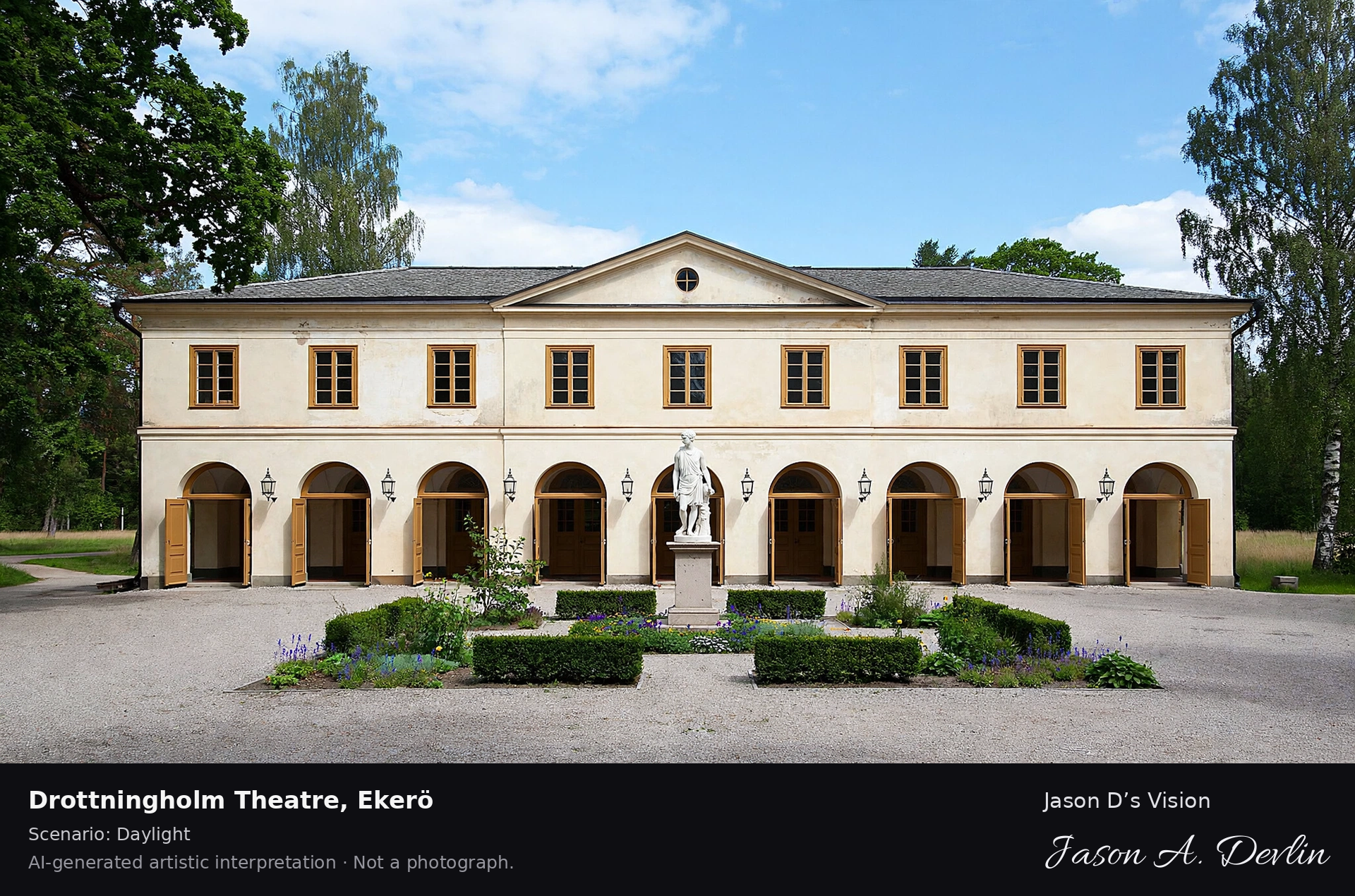
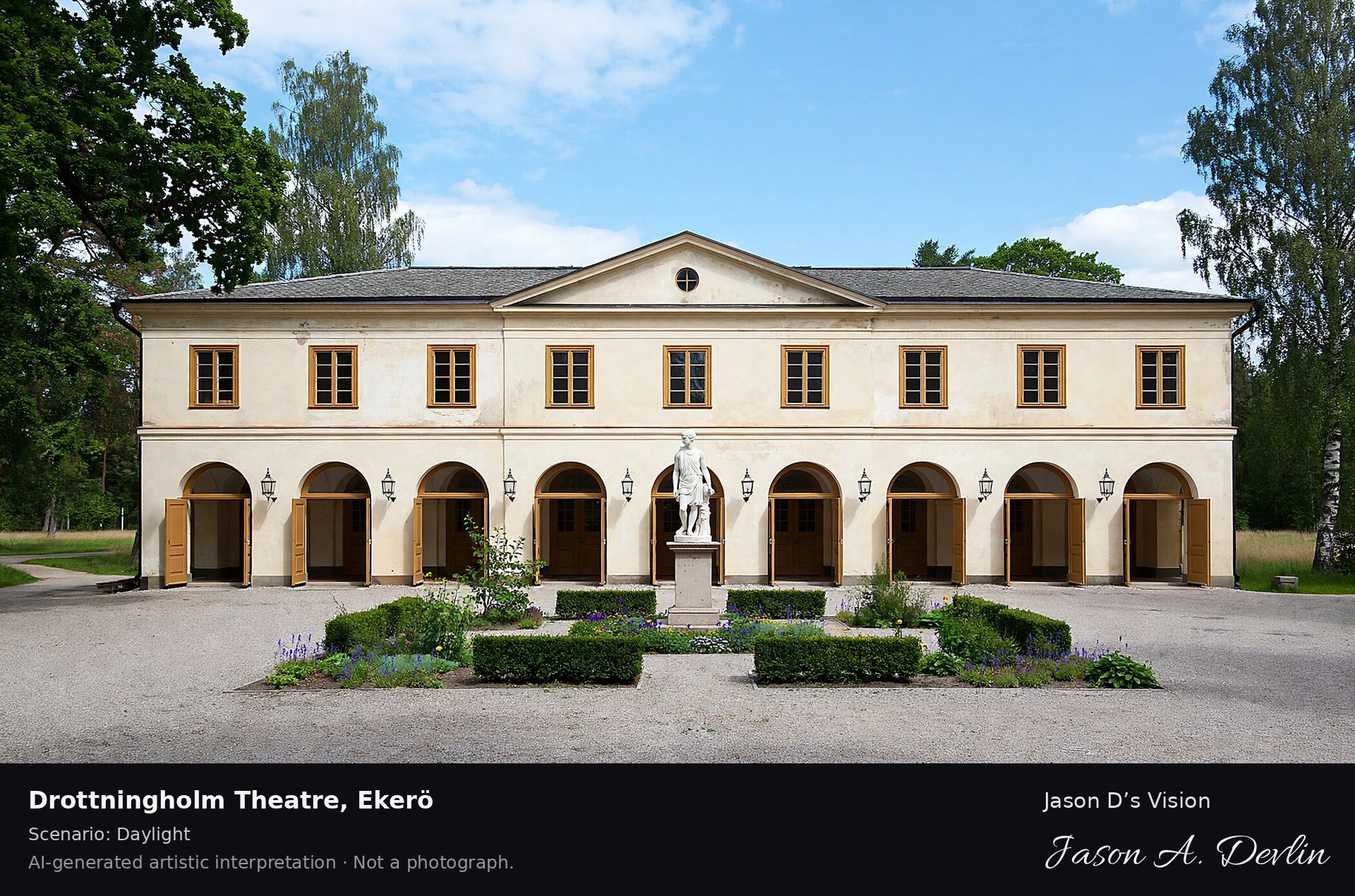
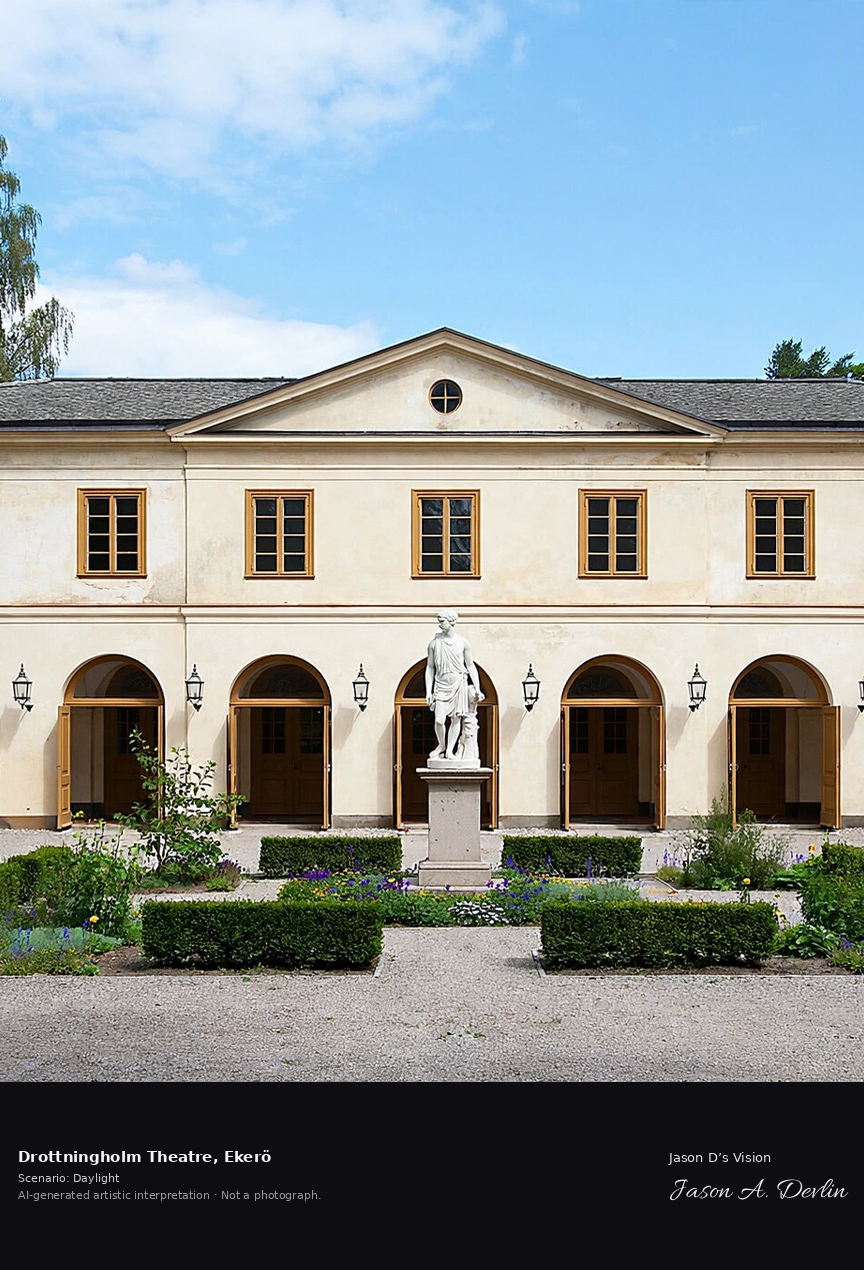
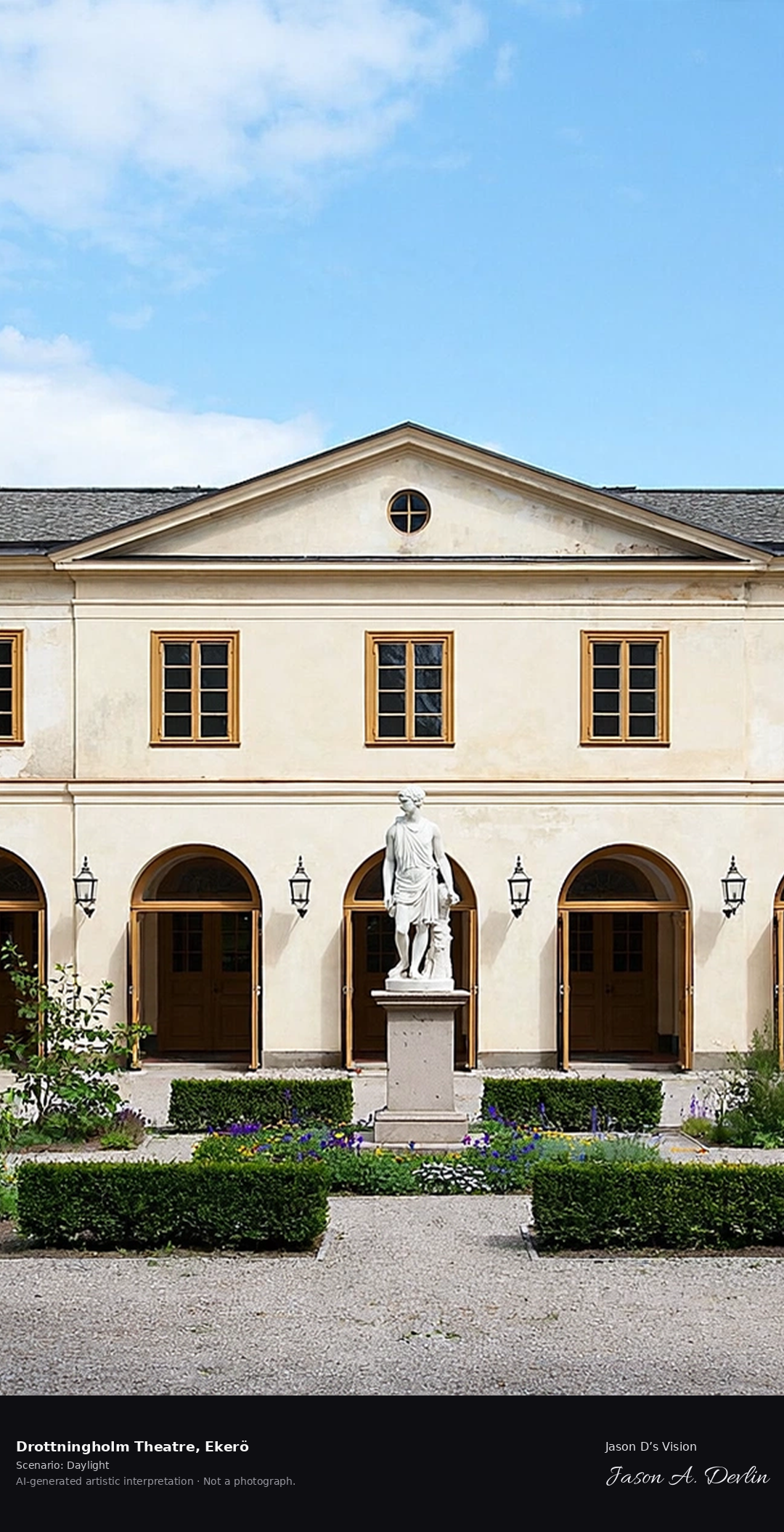
The Drottningholm Court Theatre's 1766 auditorium, the world's best-preserved 18th-century theater with its original stage machinery, in the palace park. (Note: palace itself already covered as SE site.)
Drottningholm Theatre in Ekerö, Stockholm — the 1766 Court Theatre, the world's best-preserved 18th-century theatre with its original stage machinery, standing in the Drottningholm palace park, in bright natural daylight.
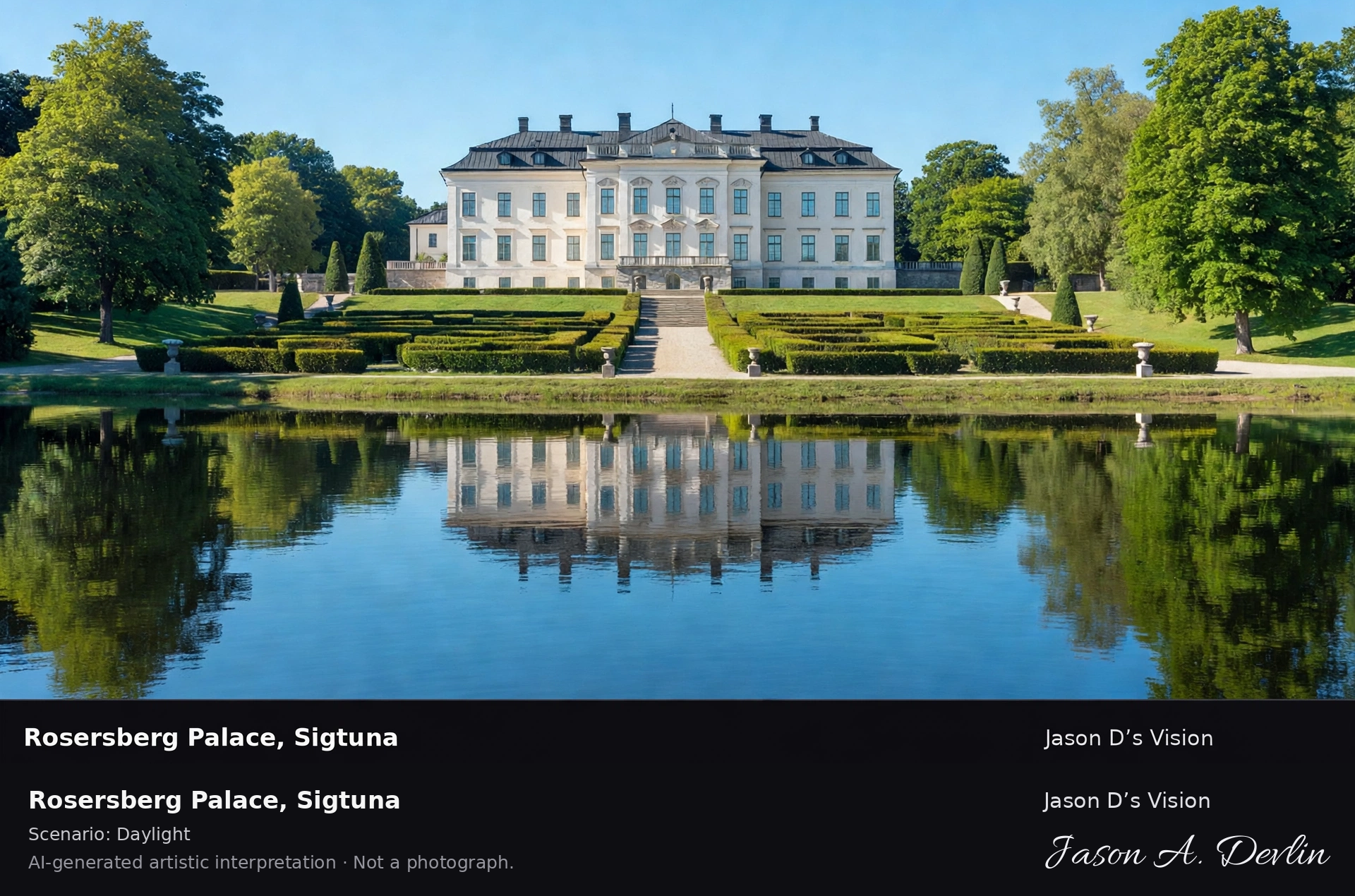
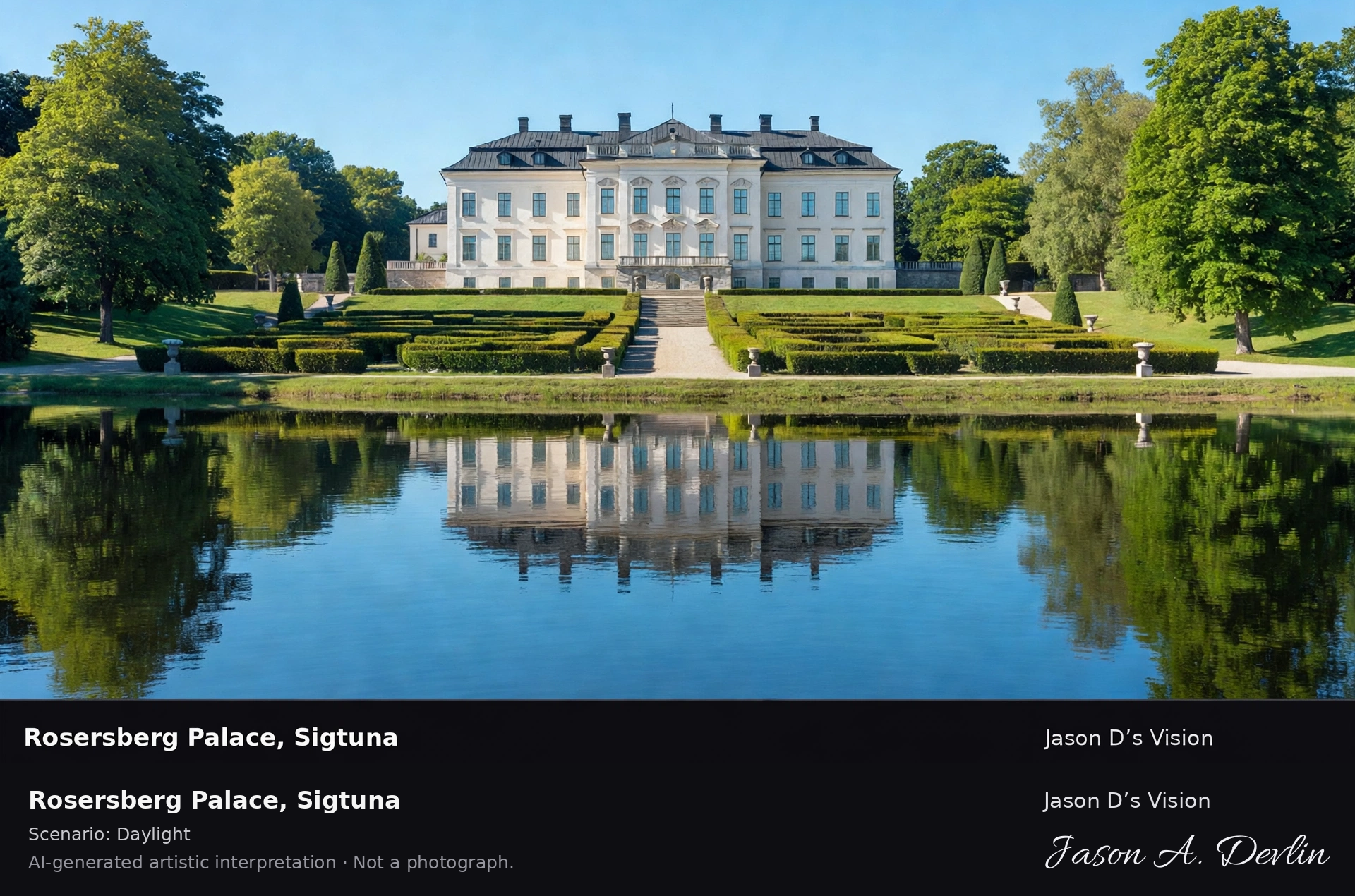
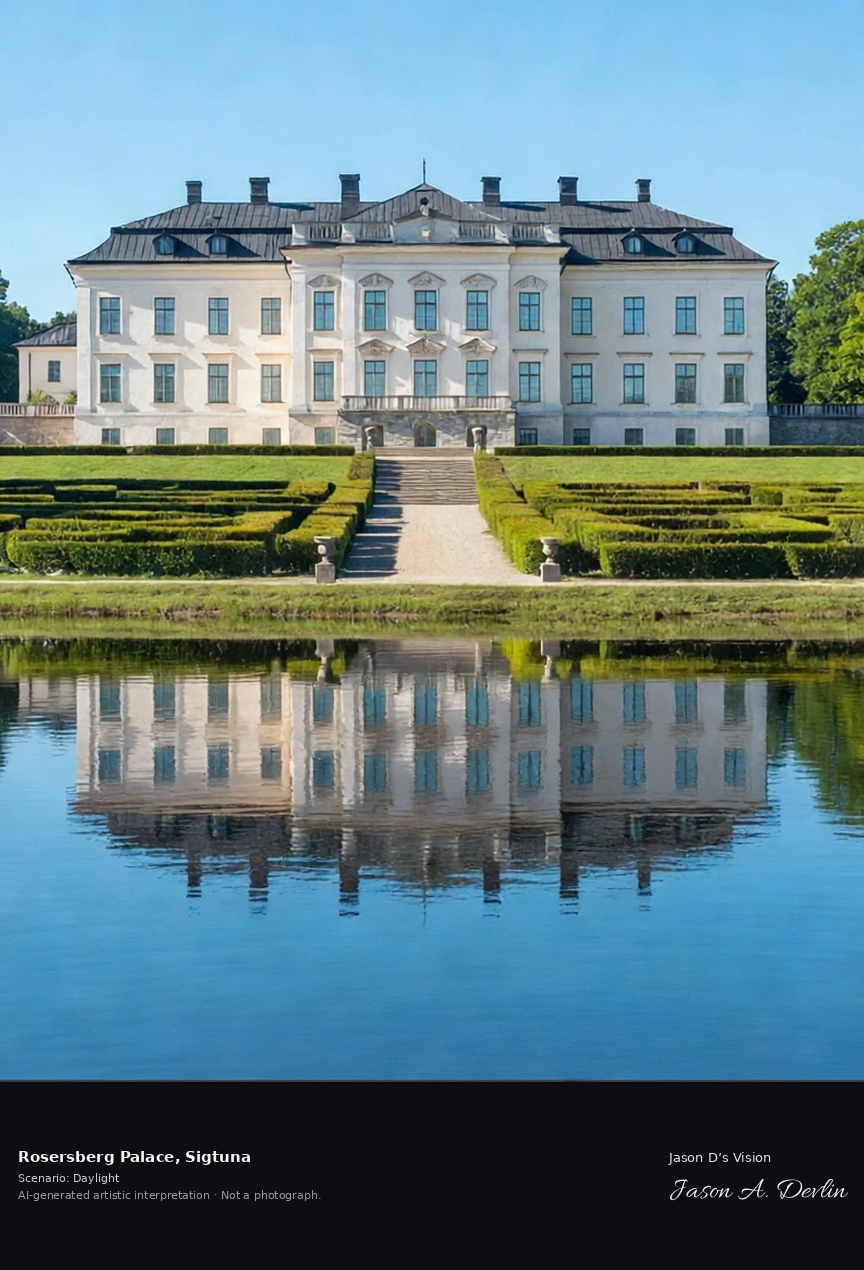
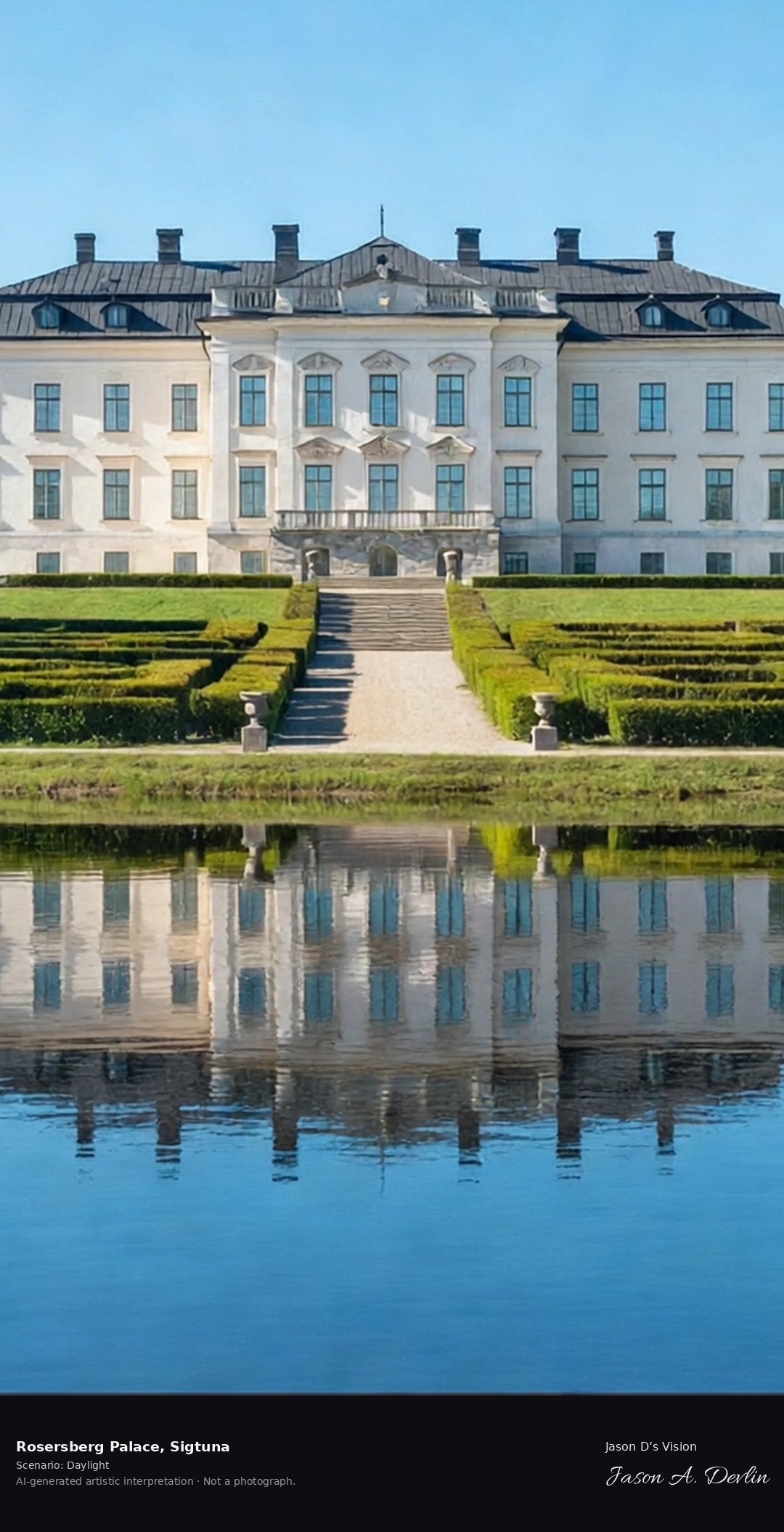
Rosersberg Palace's pink facade reflected in Lake Mälaren, the 17th-century royal palace with its formal Baroque park on the water north of Stockholm.
Rosersberg Palace in Sigtuna, Uppland — the pink 17th-century royal palace with its formal Baroque park, reflected in the calm waters of Lake Mälaren north of Stockholm, in bright natural daylight.
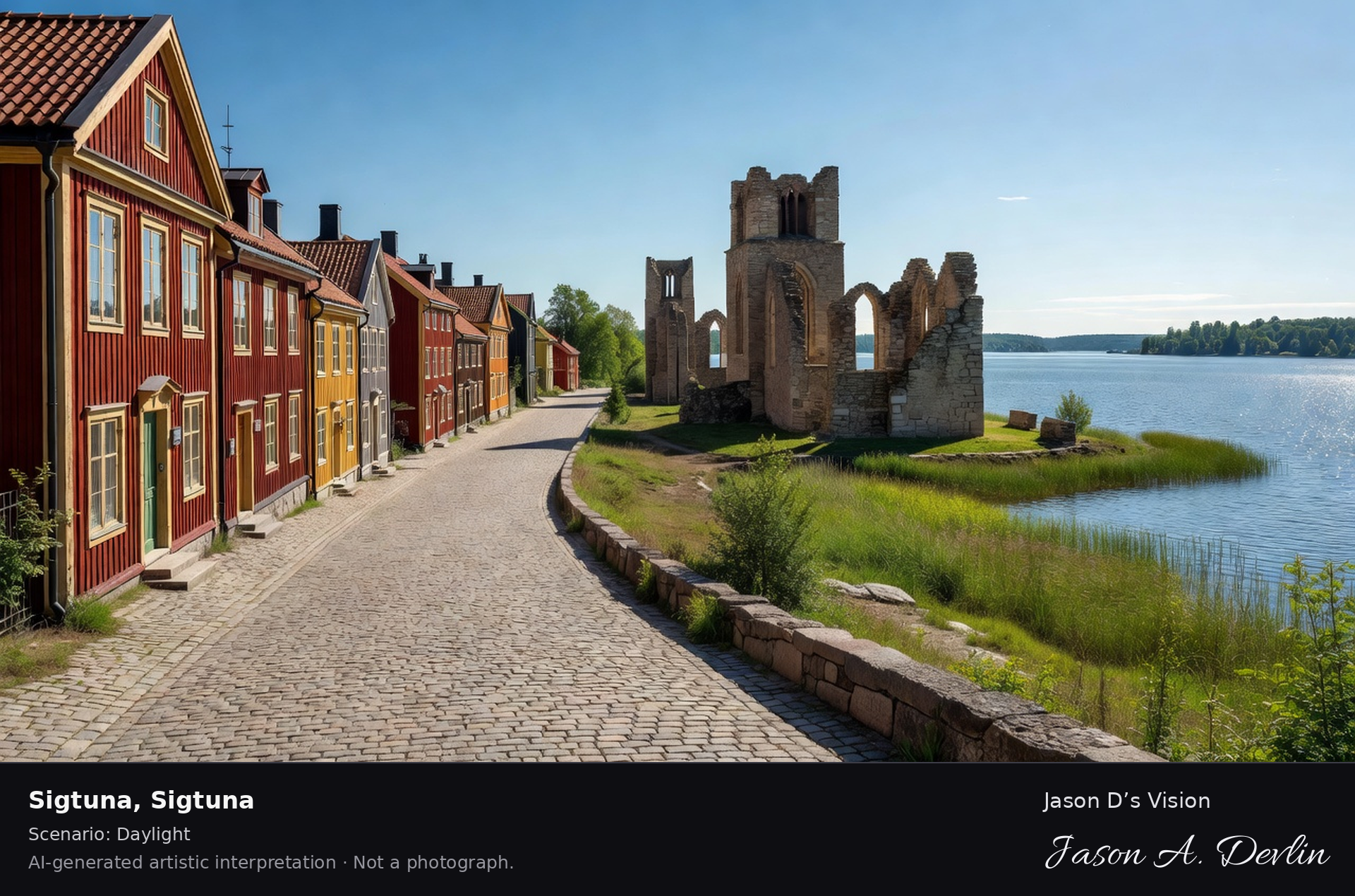
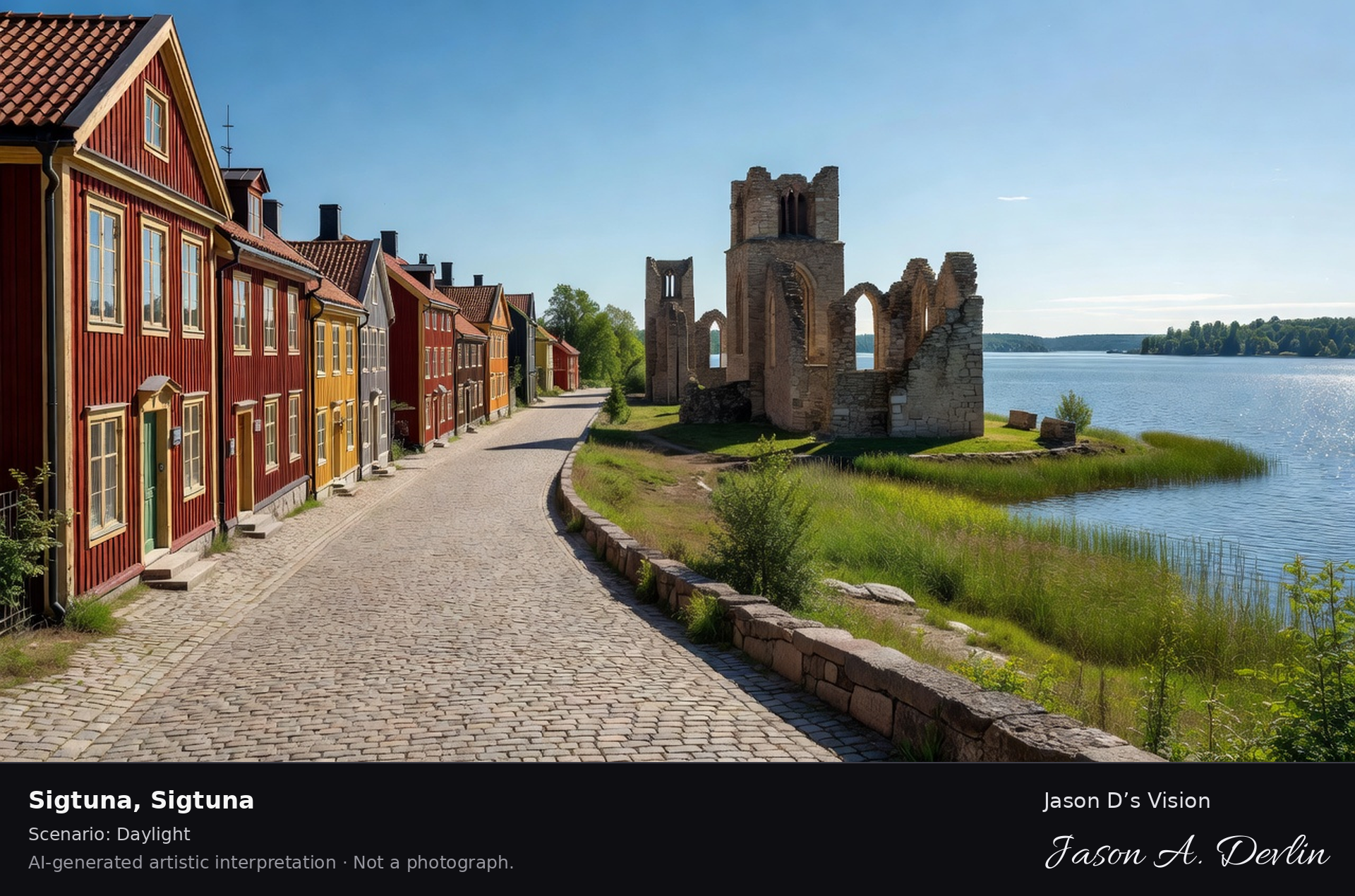
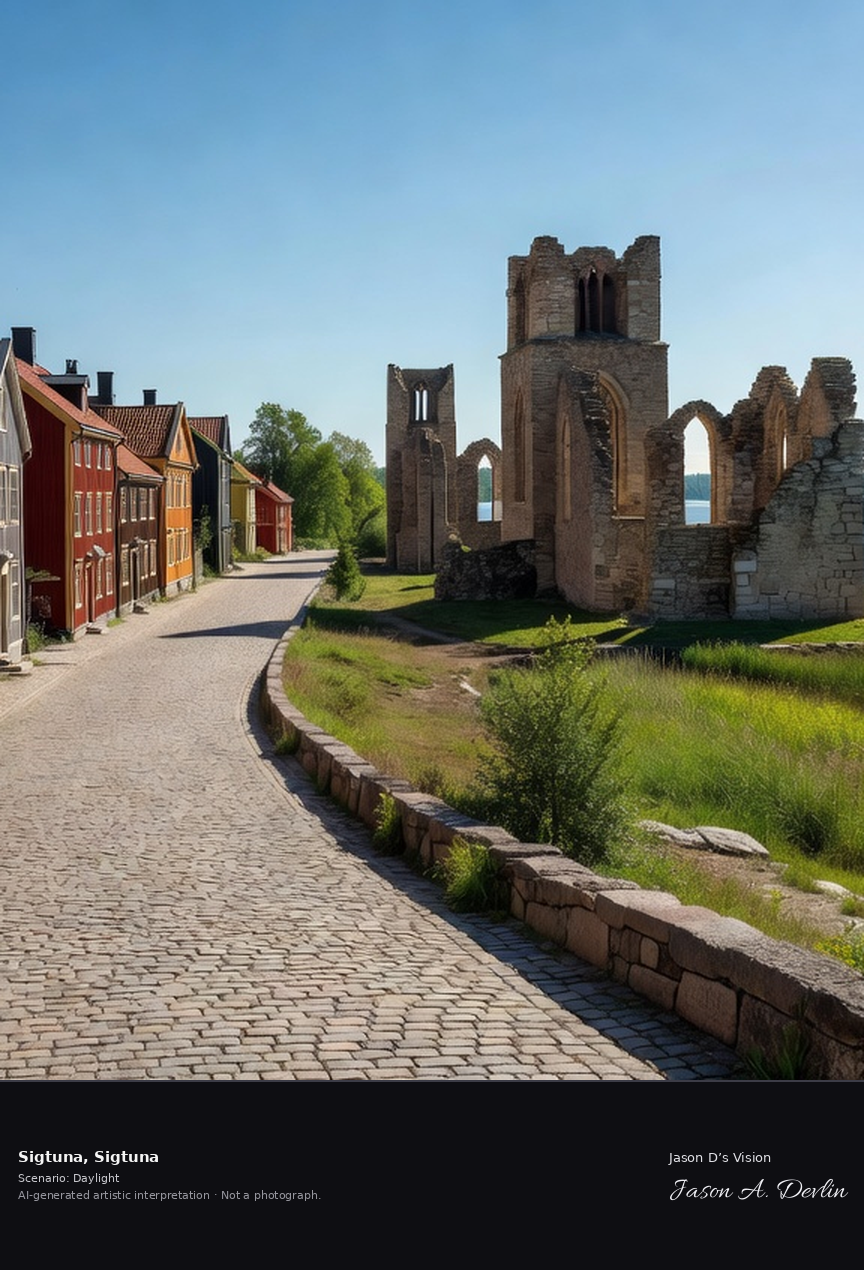
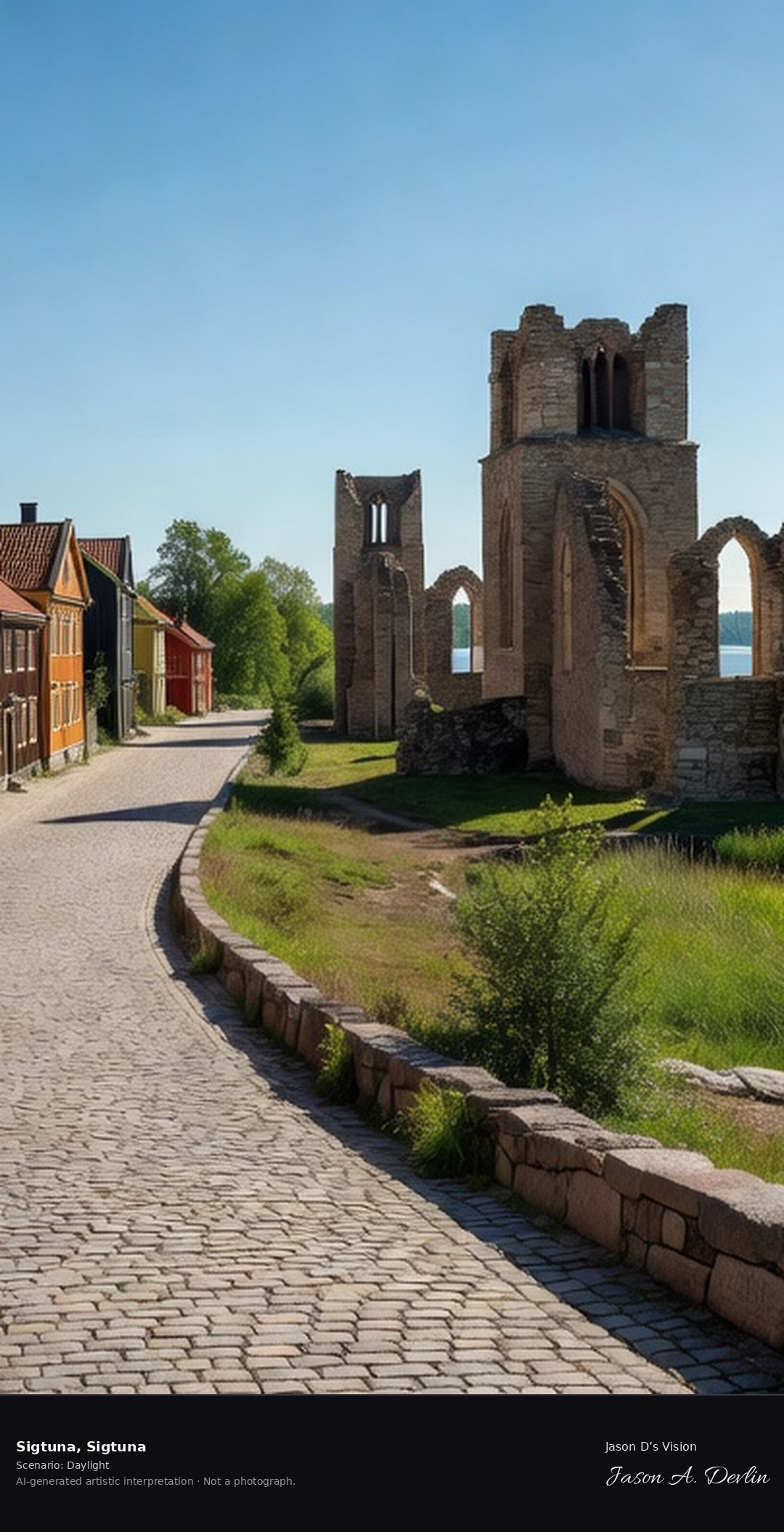
Sigtuna's Stora Gatan, Sweden's oldest town street from the 980s, with the church ruins of St. Per, St. Olof and St. Lars along the Mälaren shore. The first Swedish town.
Sigtuna in Sigtuna, Uppland — Stora Gatan, Sweden's oldest town street from the 980s, with its colorful timber houses and the medieval church ruins along the Lake Mälaren shore, the first Swedish town, in bright natural daylight.
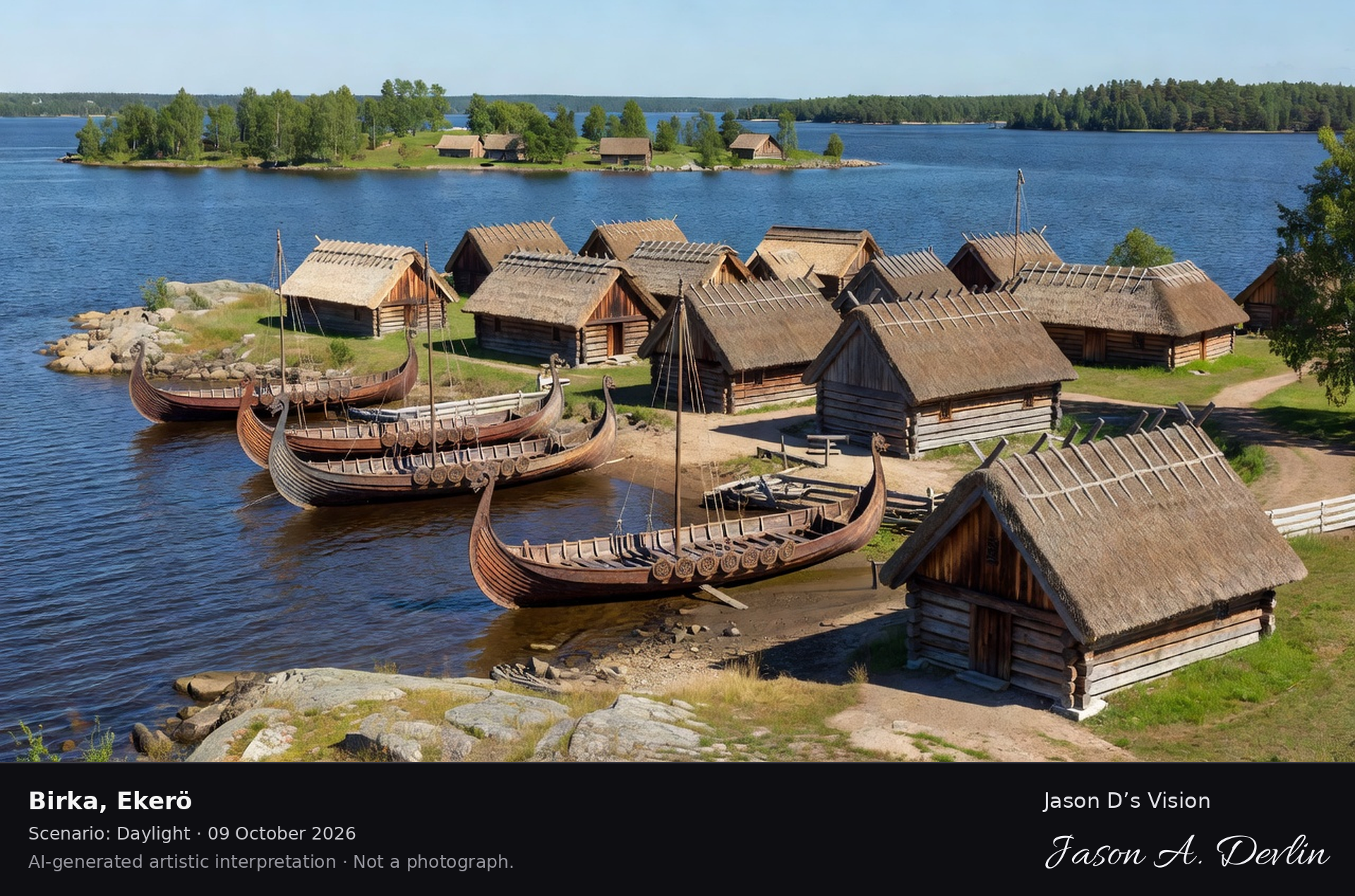
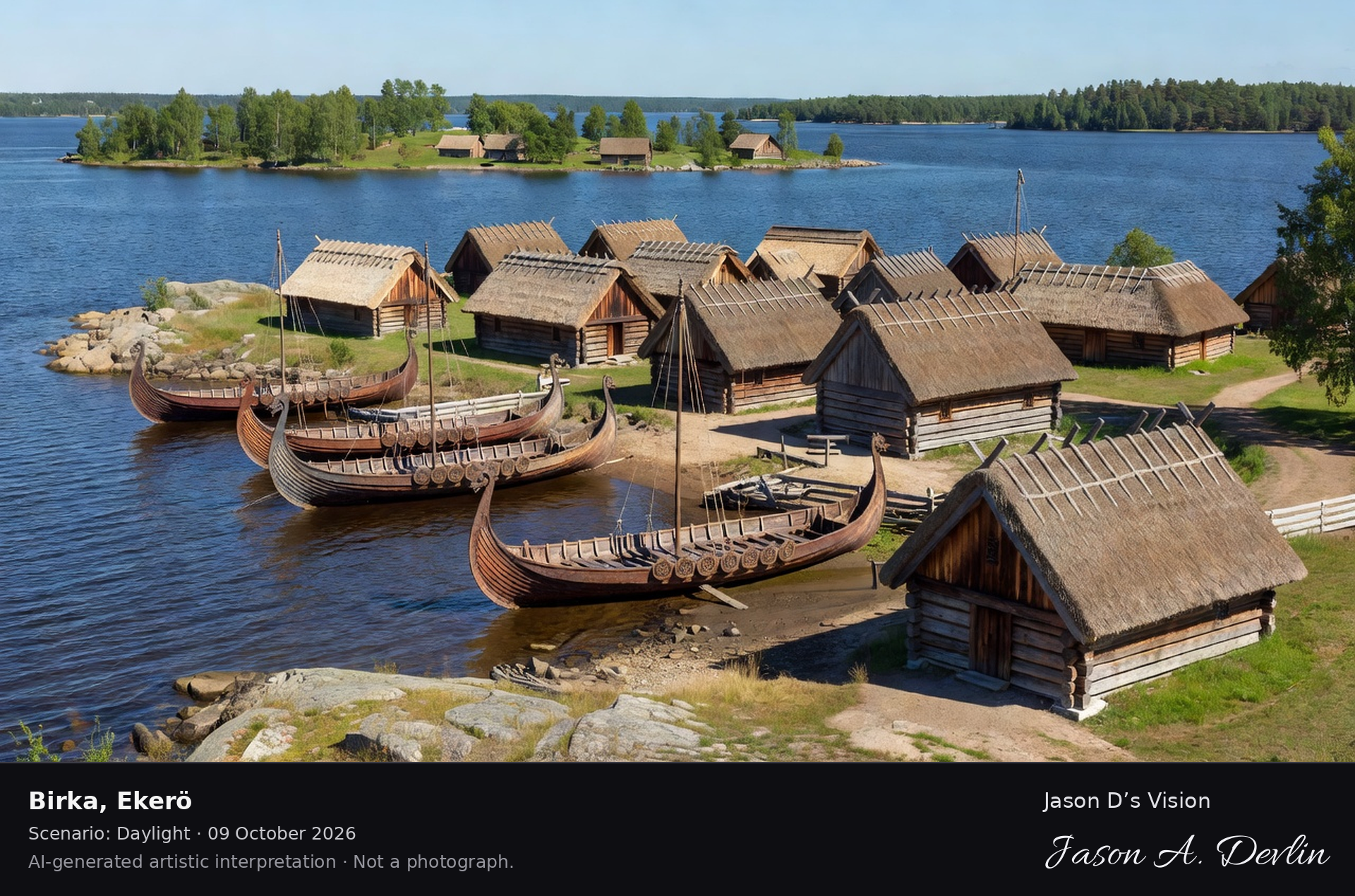
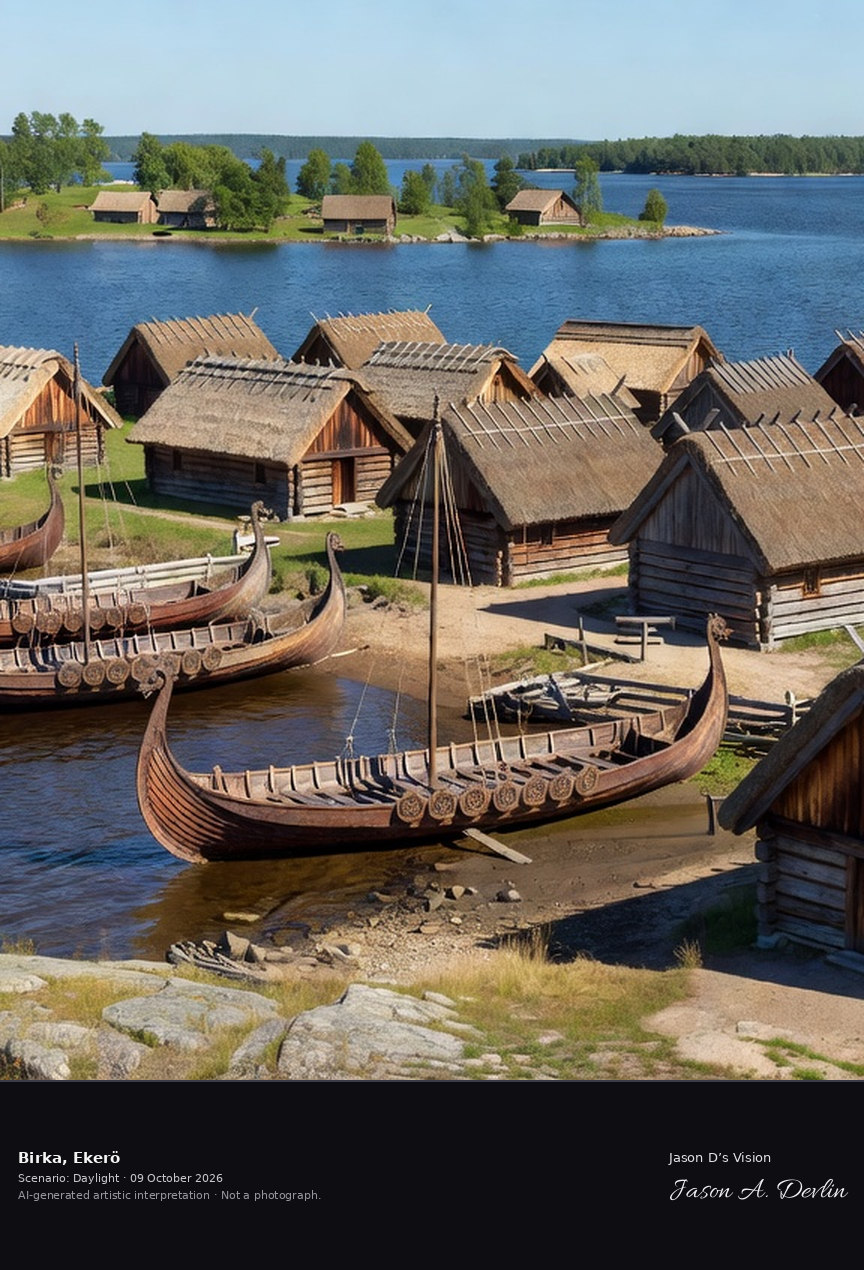
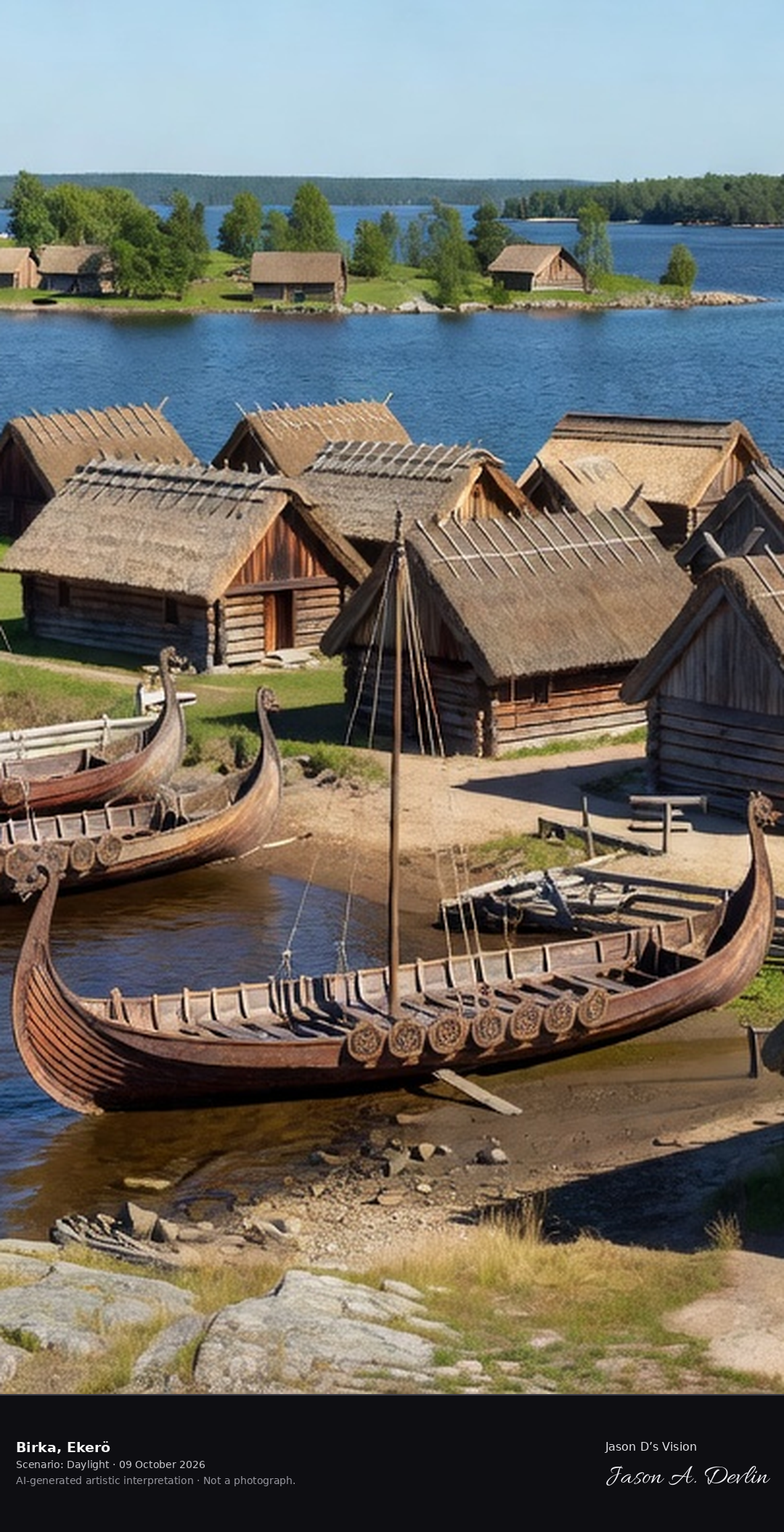
Birka's Viking-age harbor on Björkö island in Lake Mälaren, the reconstructed Viking quarter with its wooden houses above the ancient town's harbor, a UNESCO World Heritage site.
Birka in Ekero, Stockholm — Birka's Viking-age harbor on Bjorko island in Lake Malaren, the reconstructed Viking quarter with its wooden houses above the ancient town's harbor, a UNESCO World Heritage site, in bright natural daylight.
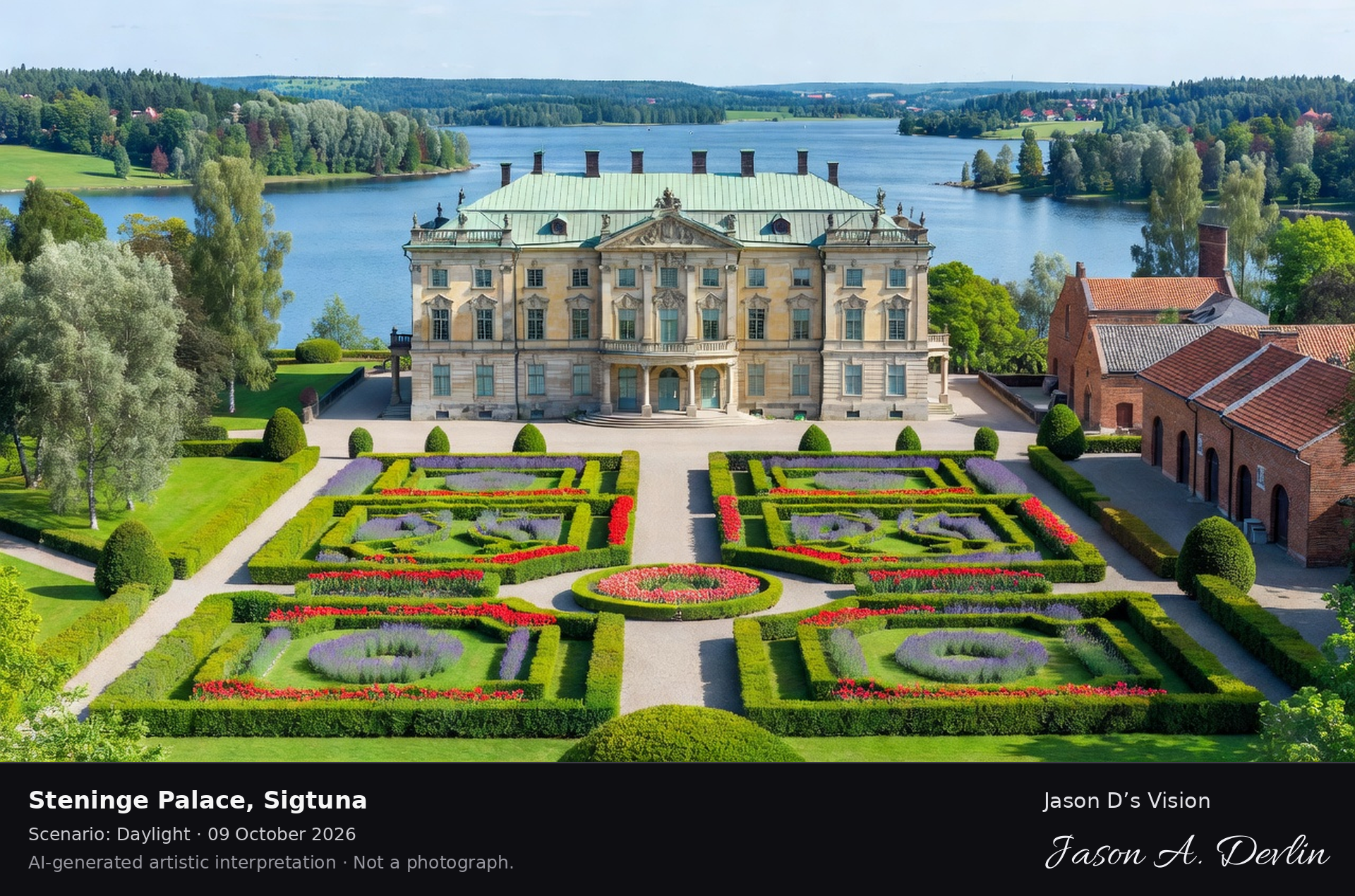
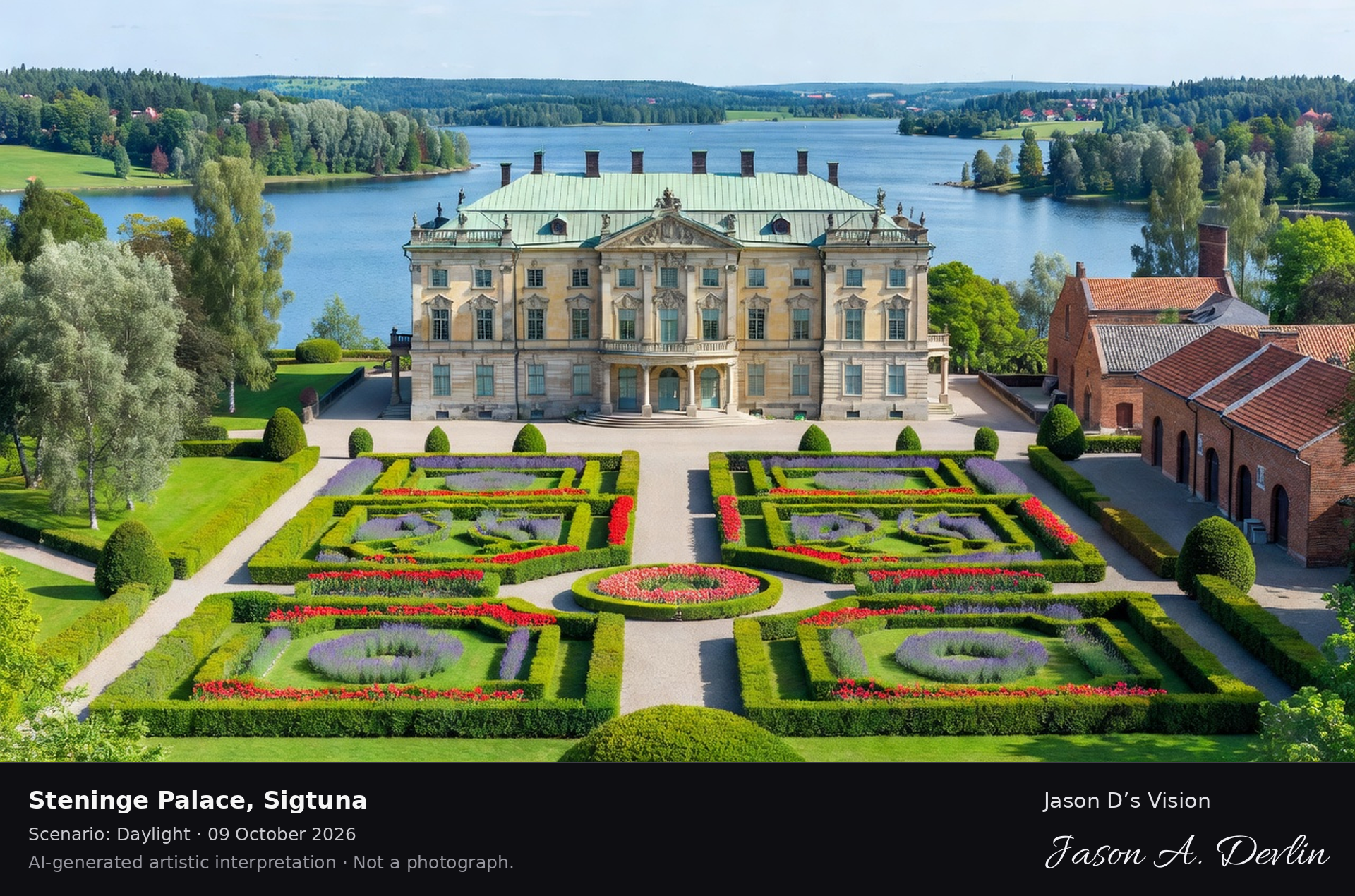
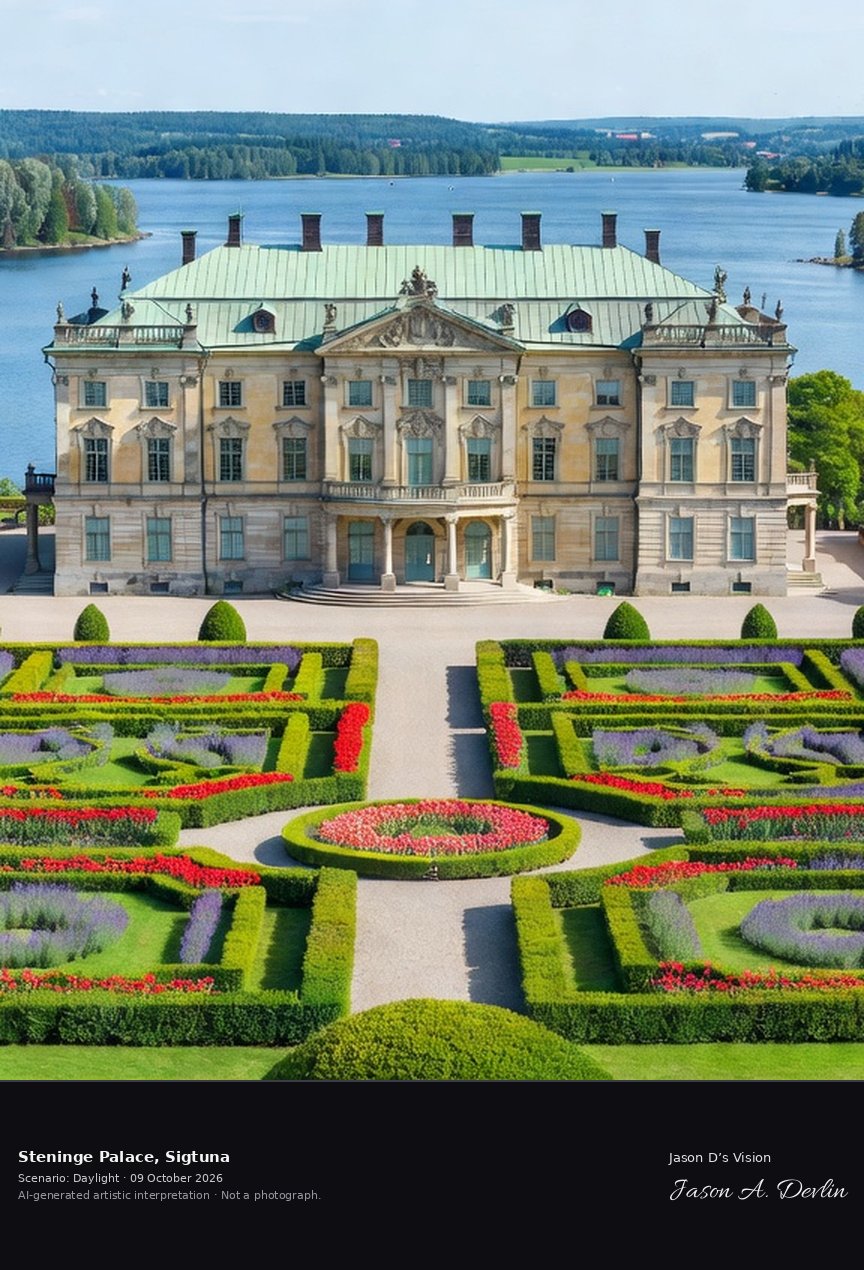
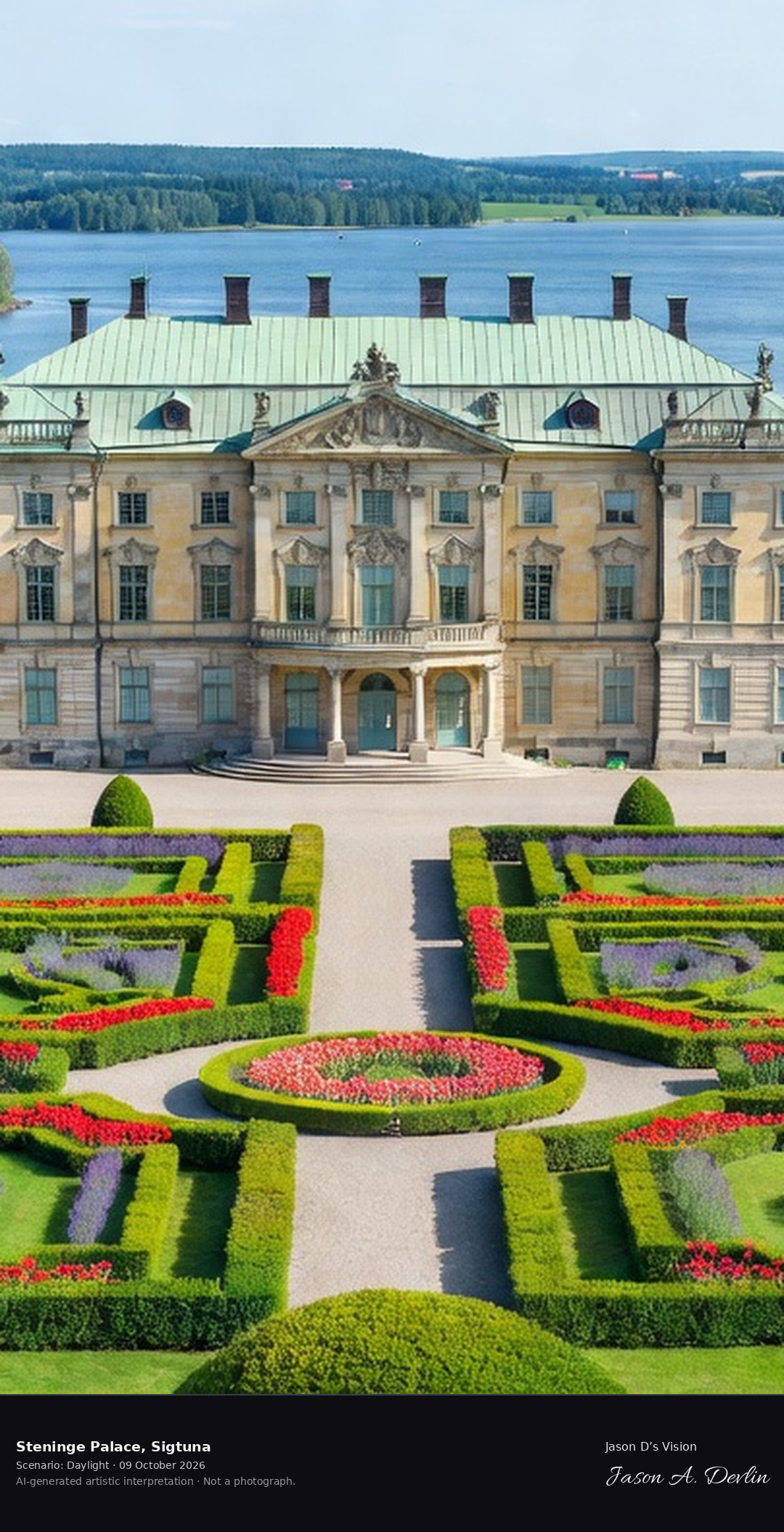
Steninge Palace's baroque facade above Lake Mälaren, Tessin's 1690s masterpiece with its formal gardens and the famous Steninge stoneware center in the stables.
Steninge Palace in Sigtuna, Uppland — Tessin's 1690s baroque masterpiece above Lake Malaren, its formal gardens and the Steninge stoneware center in the stables, in bright natural daylight.
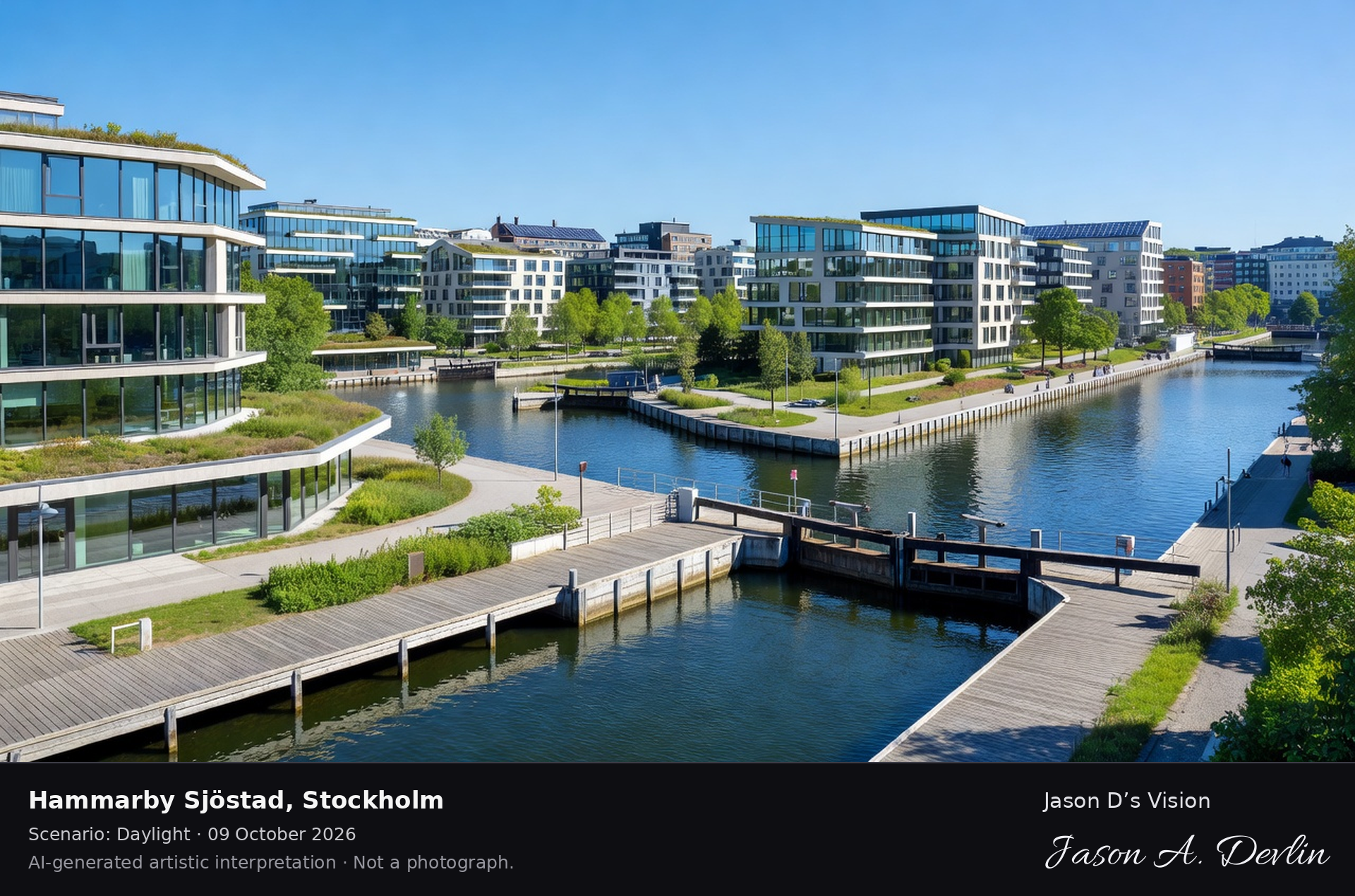
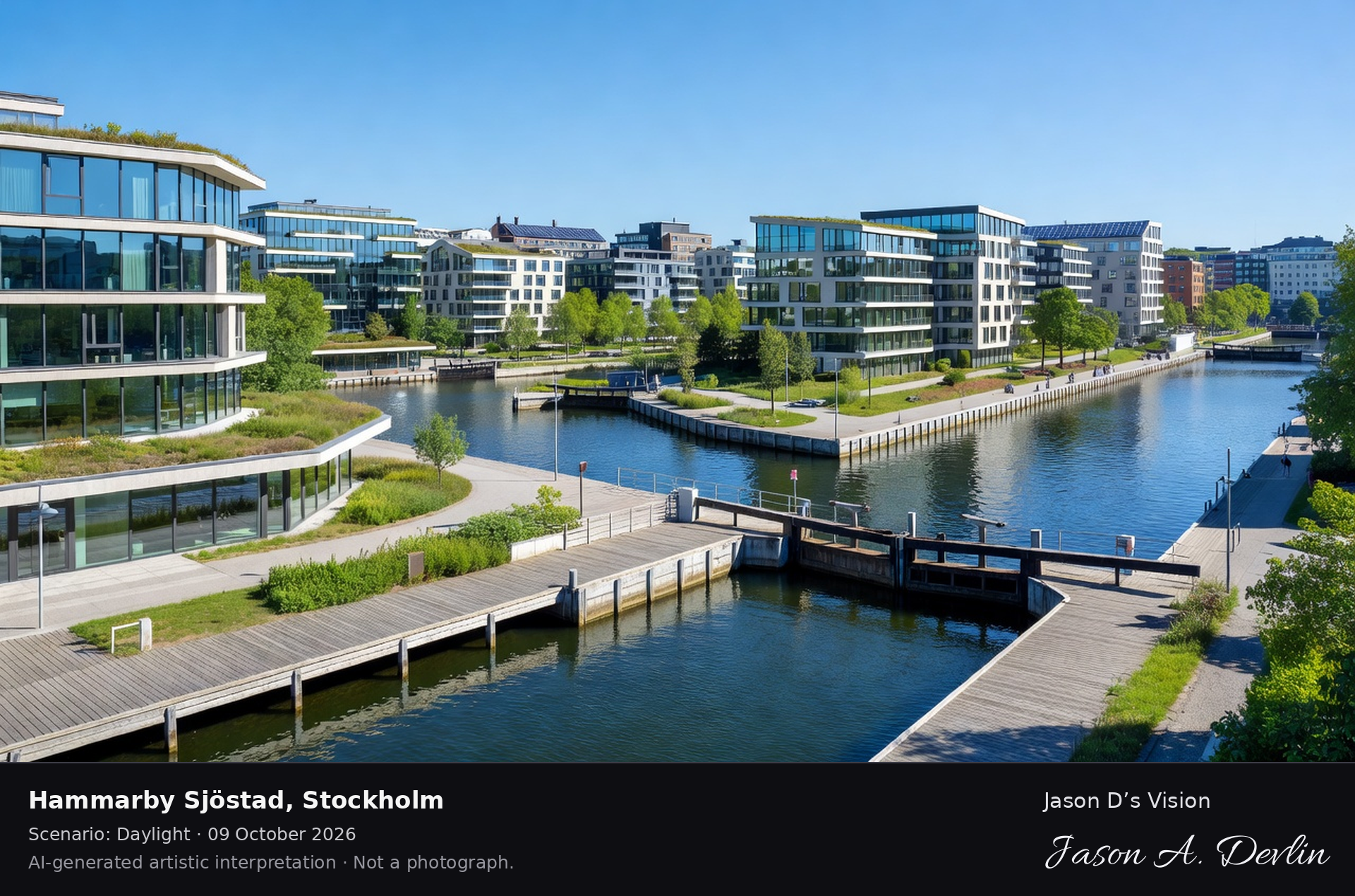
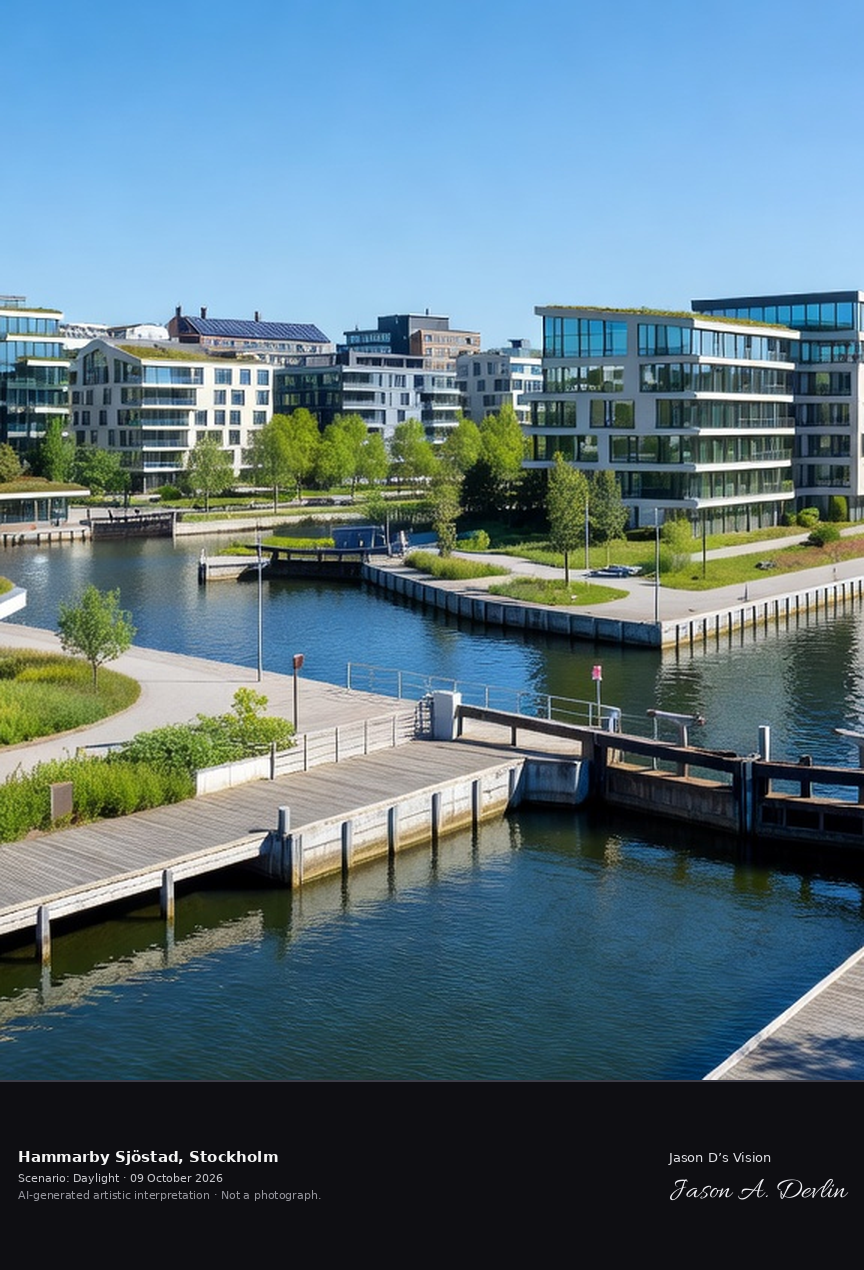
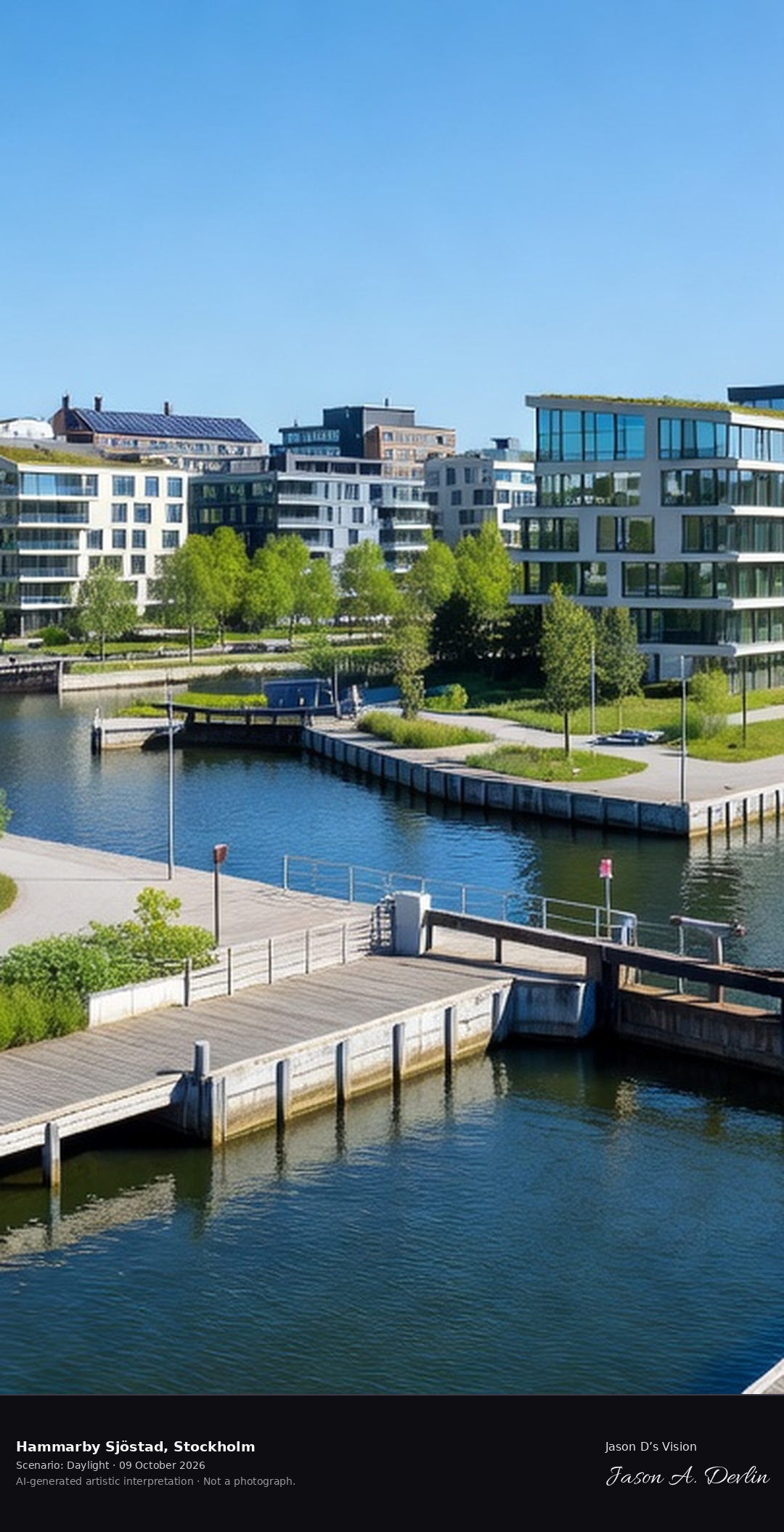
Hammarby Sjöstad's sustainable waterfront district, modern eco-architecture along the Hammarby canal with wooden boardwalks and the Sickla lock. Stockholm's model green neighborhood.
Hammarby Sjostad in Stockholm, Stockholm — Stockholm's model green neighborhood, the sustainable waterfront district with modern eco-architecture along the Hammarby canal, wooden boardwalks and the Sickla lock, in bright natural daylight.
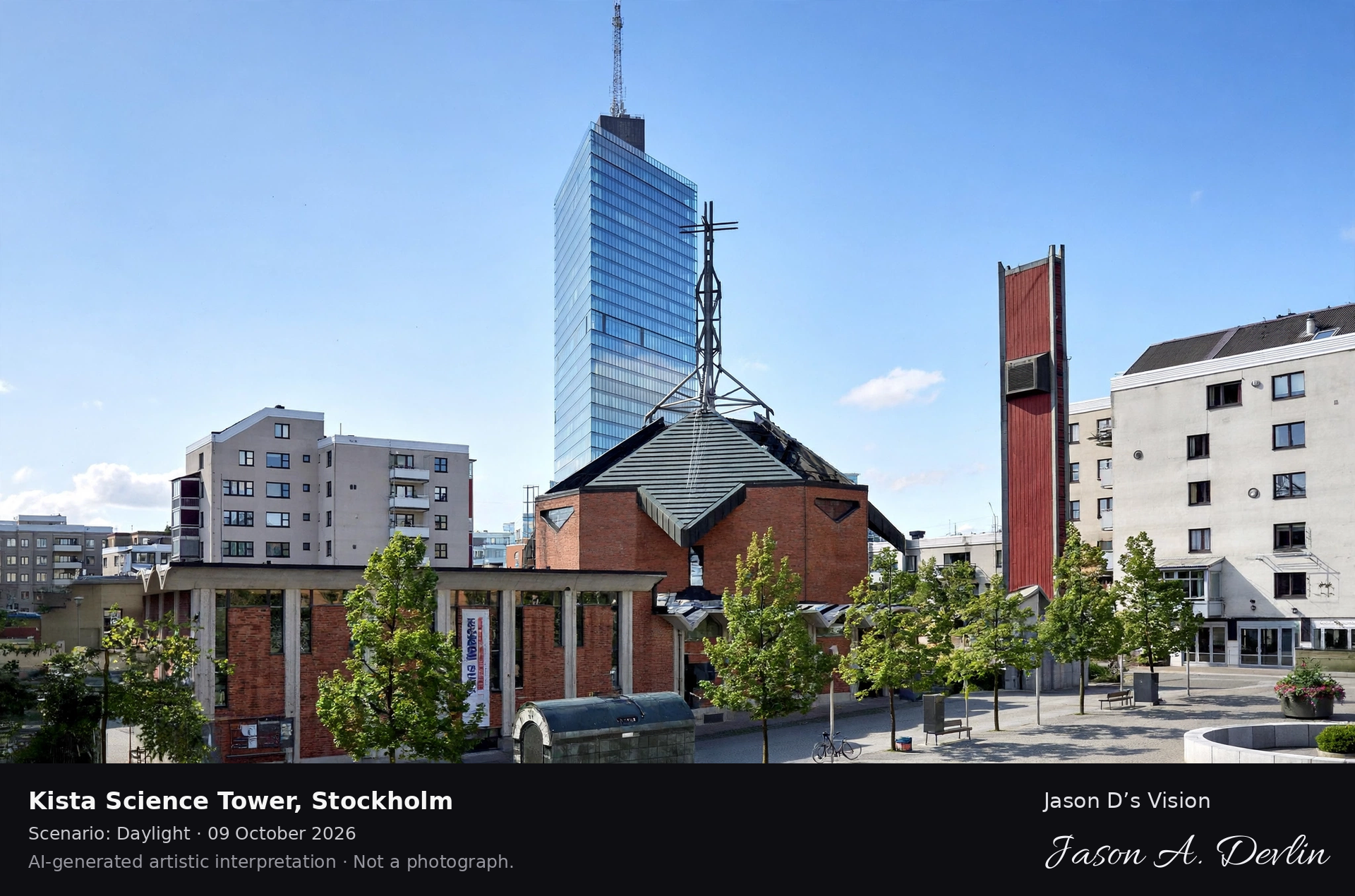
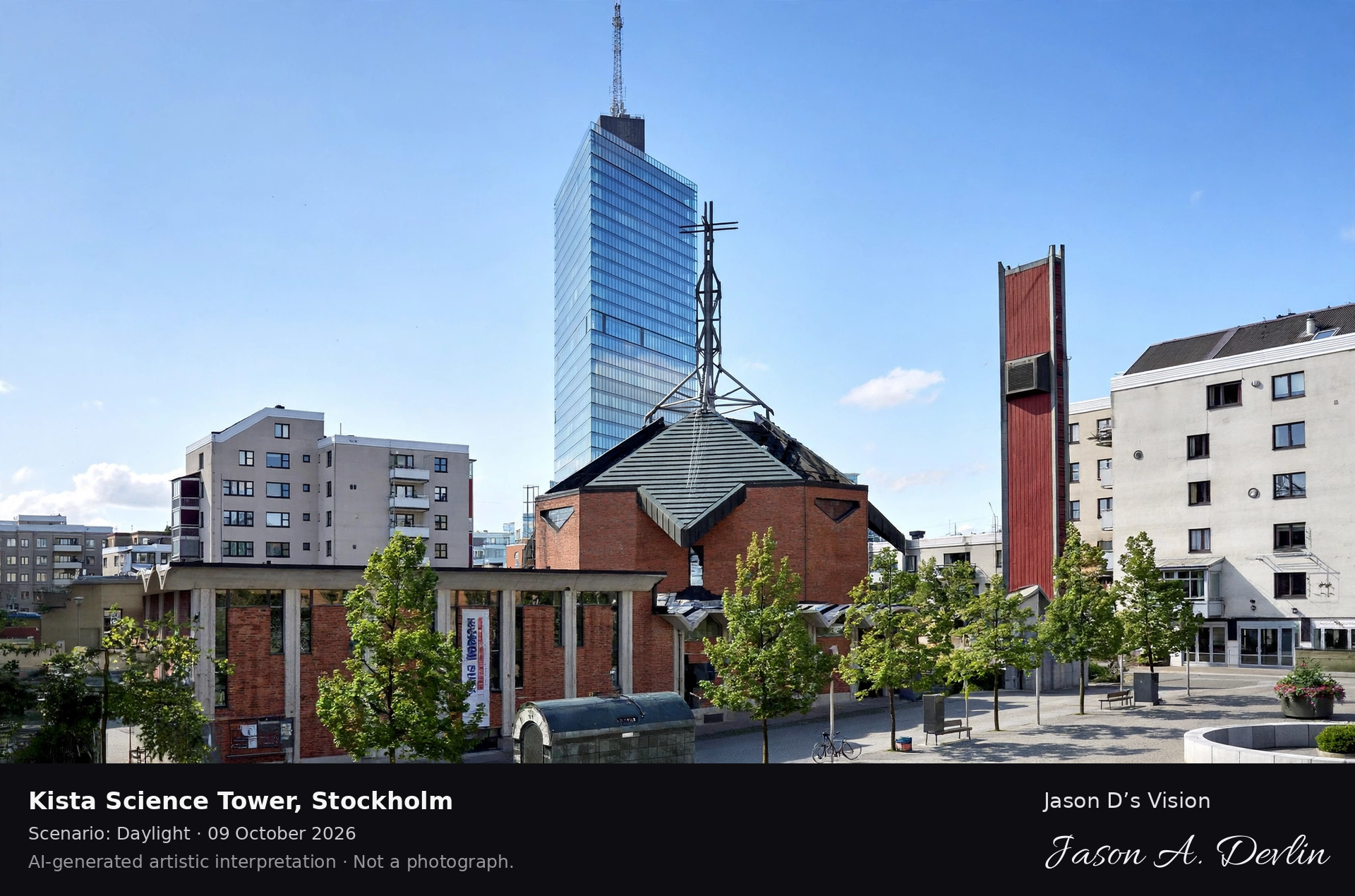
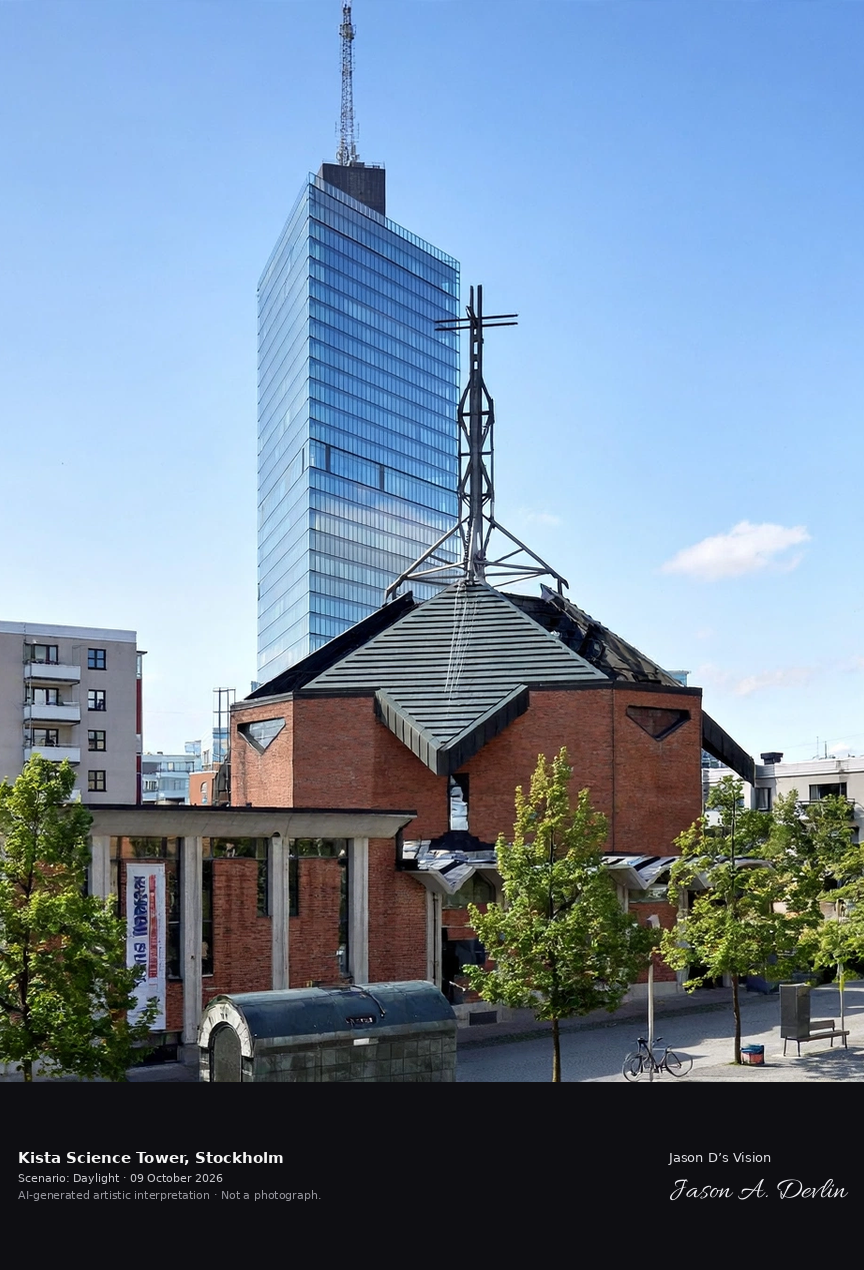
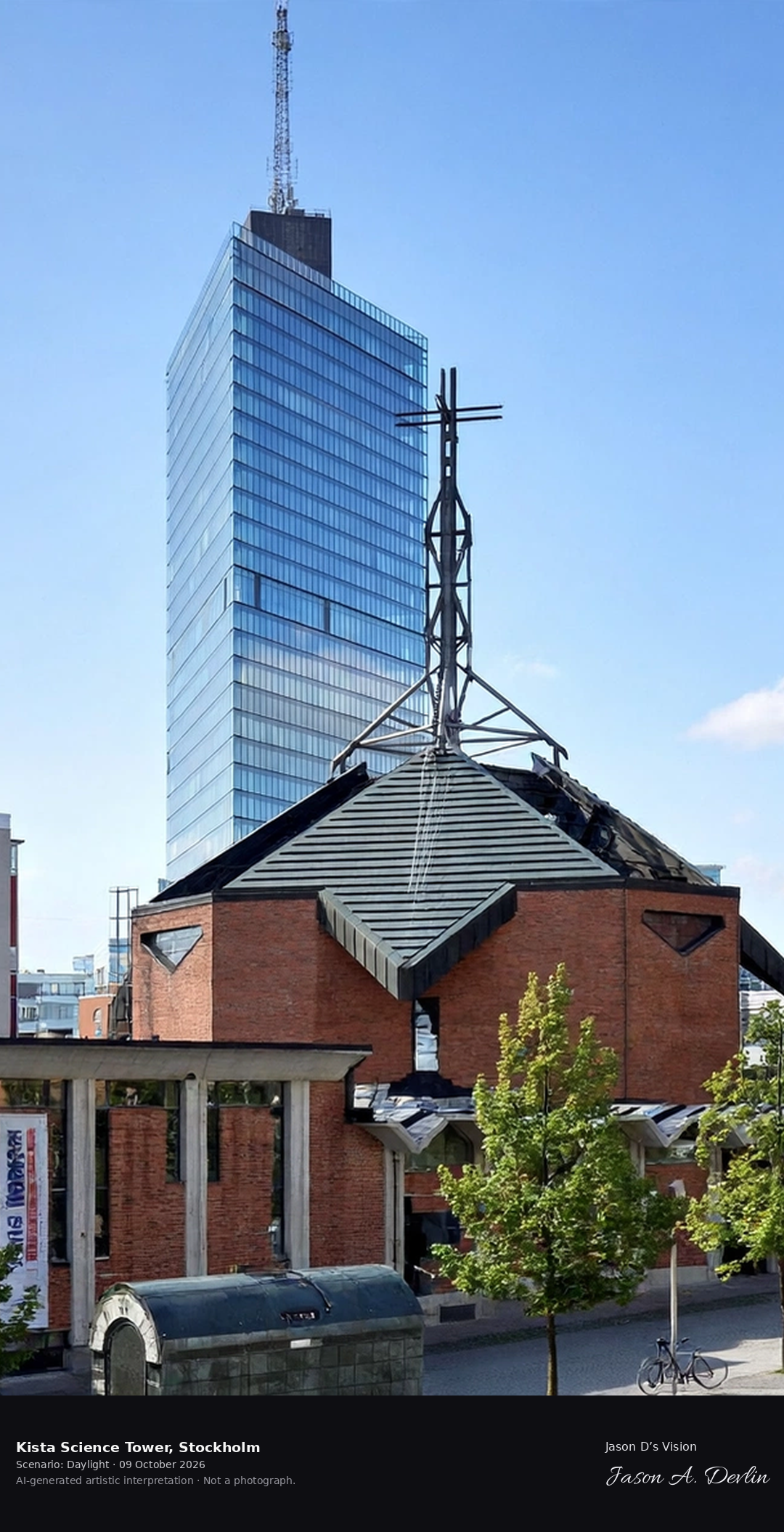
Kista Science Tower's black glass prism rising above the Kista tech district, Scandinavia's Silicon Valley with the historic Kista church below the modern towers.
Kista Science Tower in Stockholm, Stockholm — the black glass prism rising above the Kista tech district, Scandinavia's Silicon Valley, with the historic Kista church below the modern towers, in bright natural daylight.
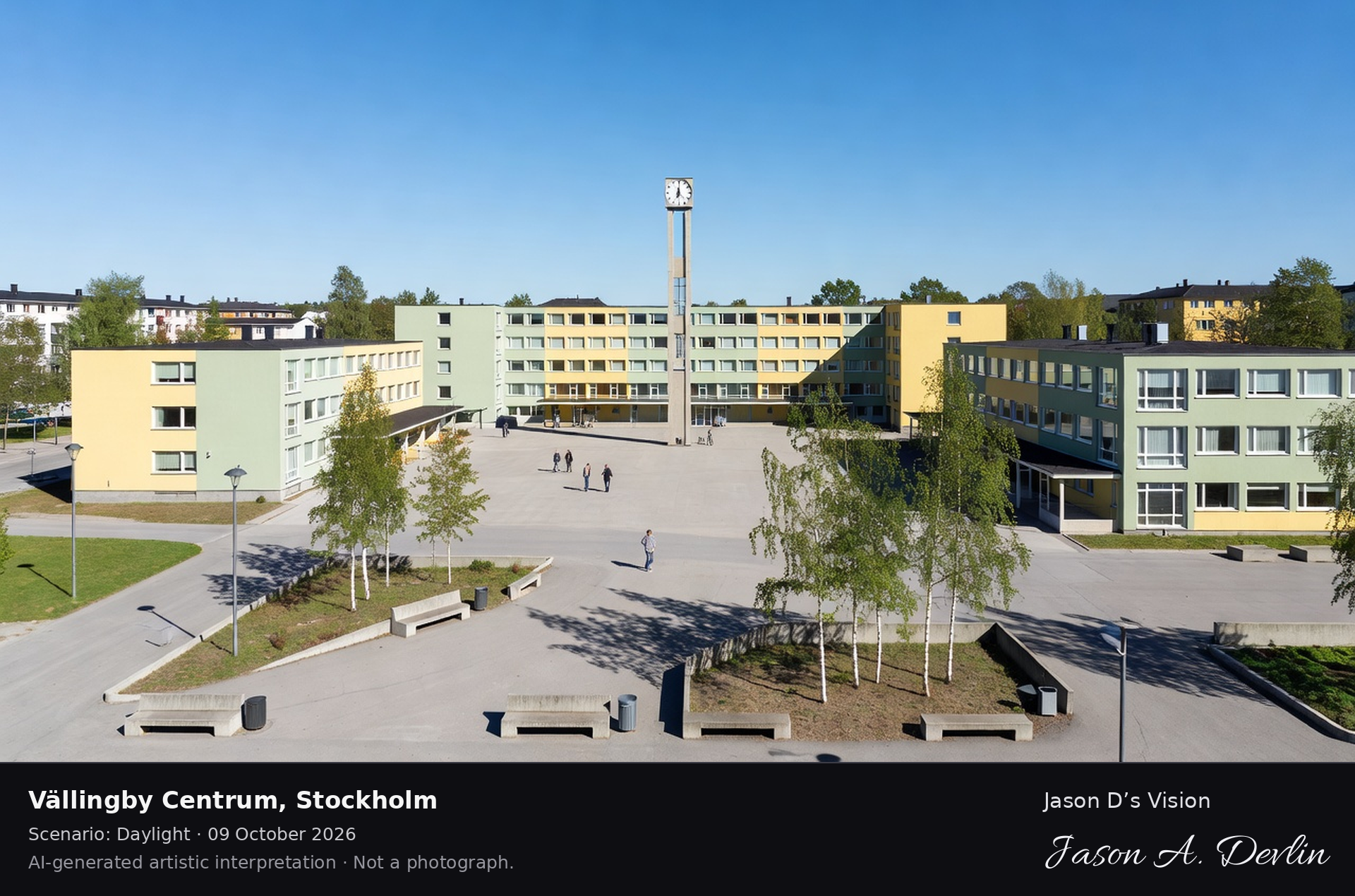
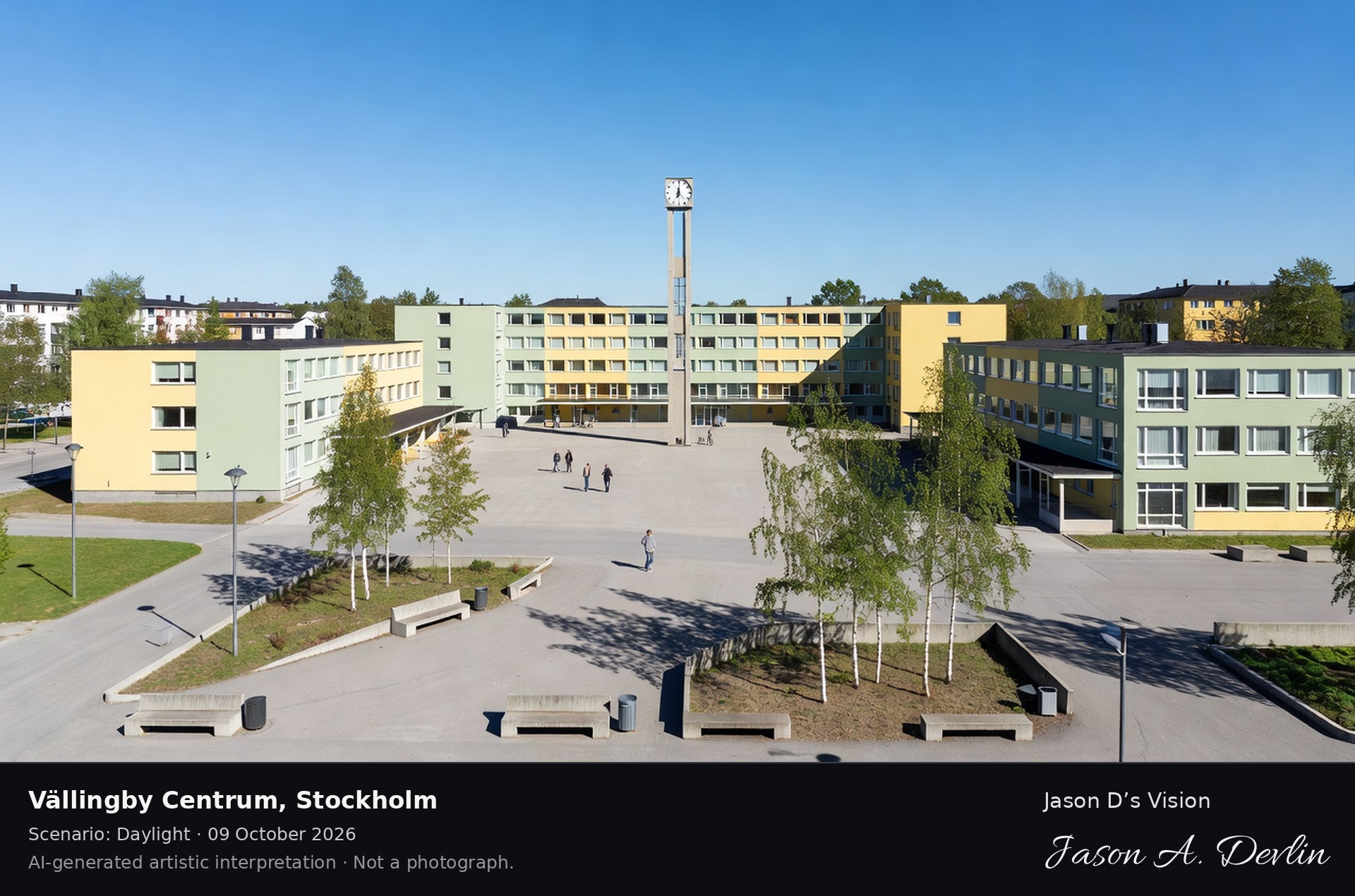
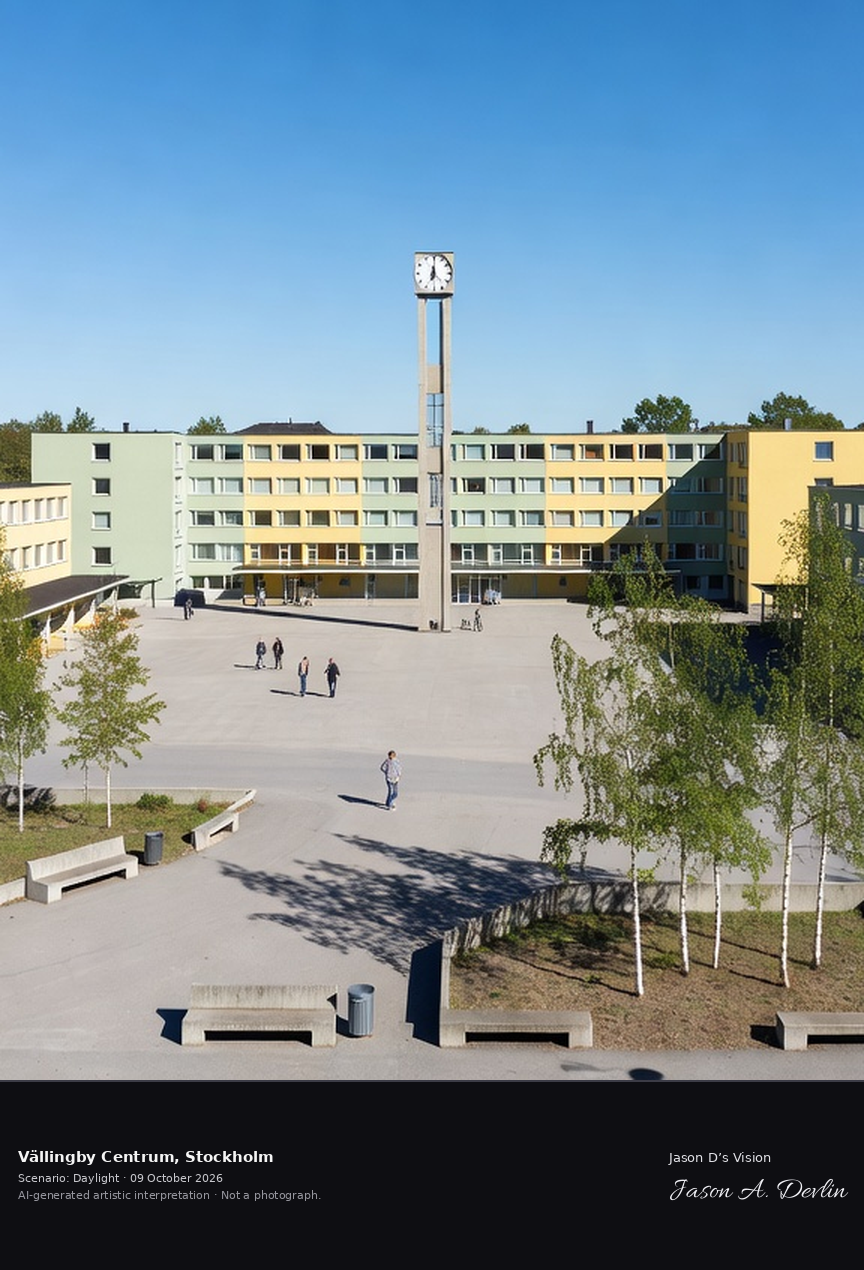
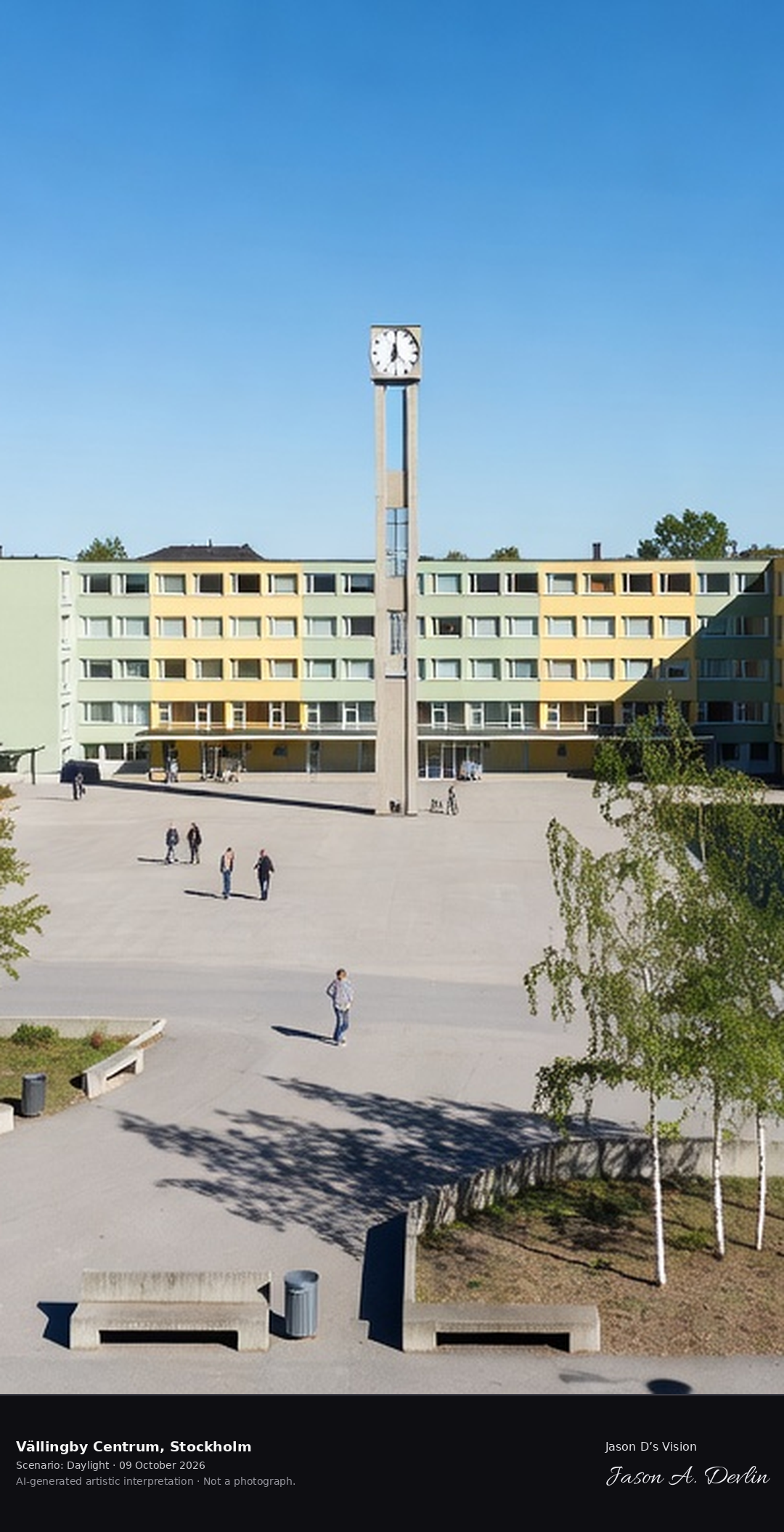
Vällingby Centrum's 1950s ABC-town modernist square, the pioneering post-war suburb with its clock tower and functionalist facades, a landmark of Swedish welfare-state planning.
Vallingby Centrum in Stockholm, Stockholm — the 1950s ABC-town modernist square, pioneering post-war suburb with its clock tower and functionalist facades, a landmark of Swedish welfare-state planning, in bright natural daylight.
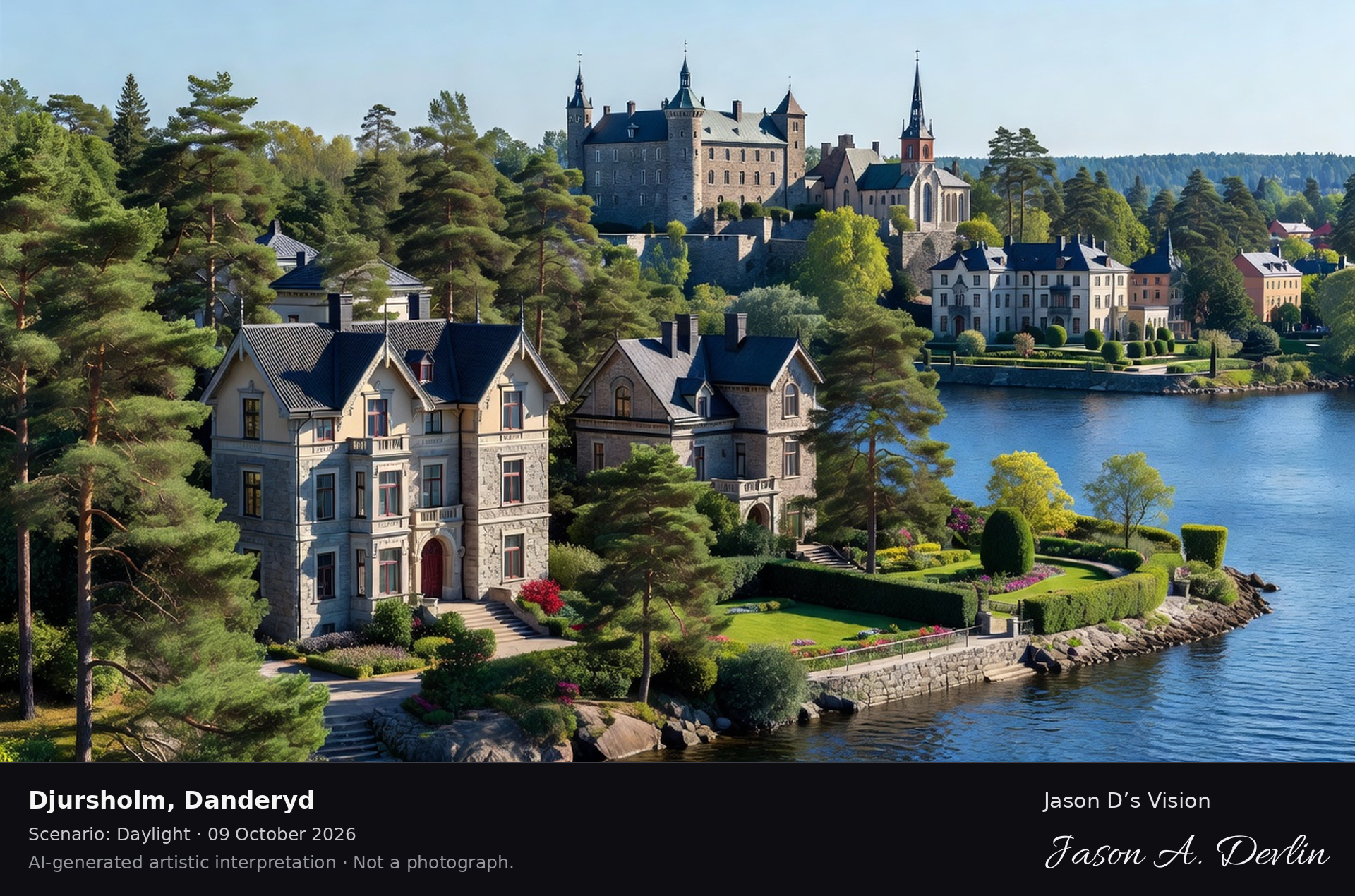
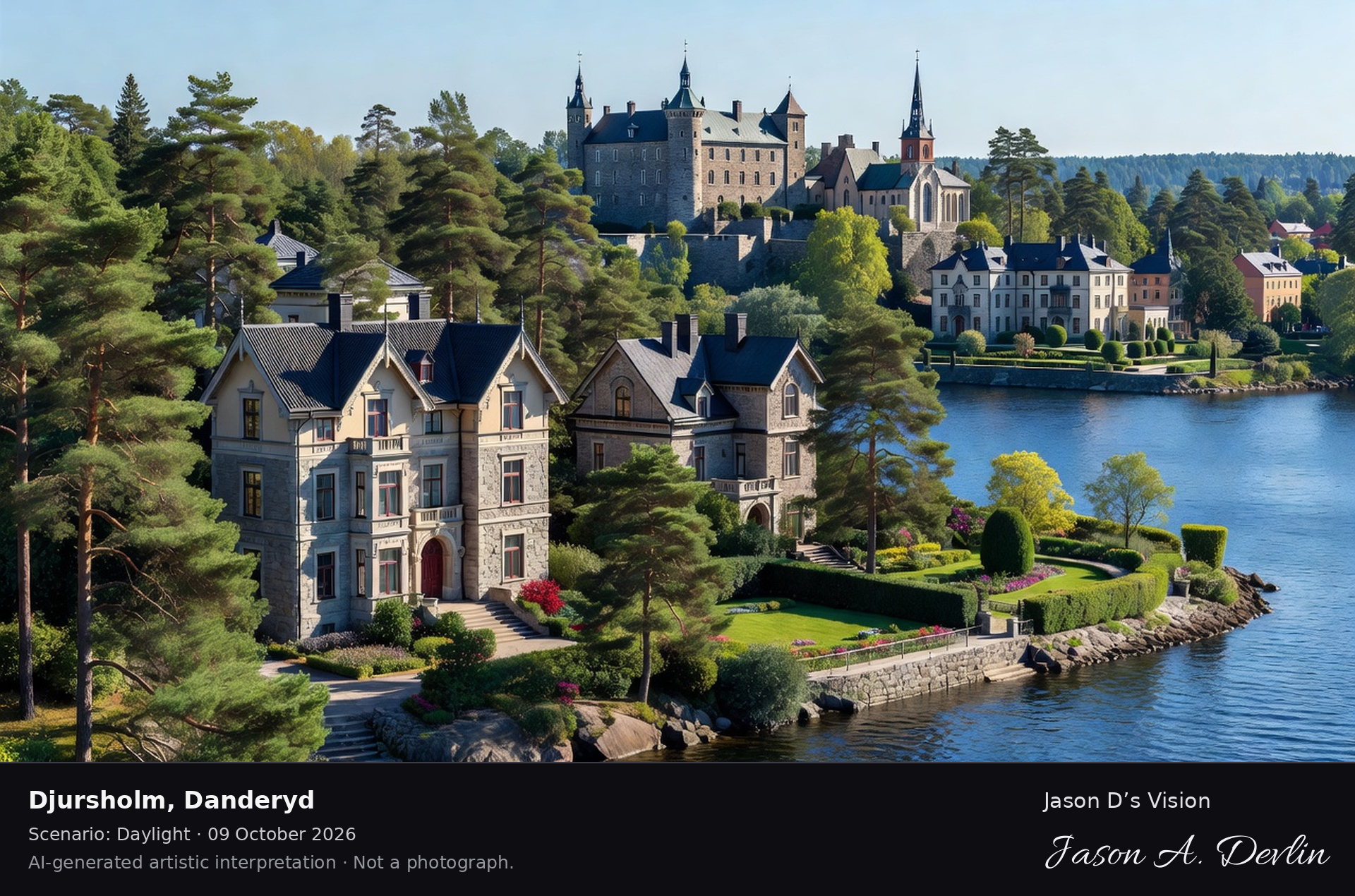
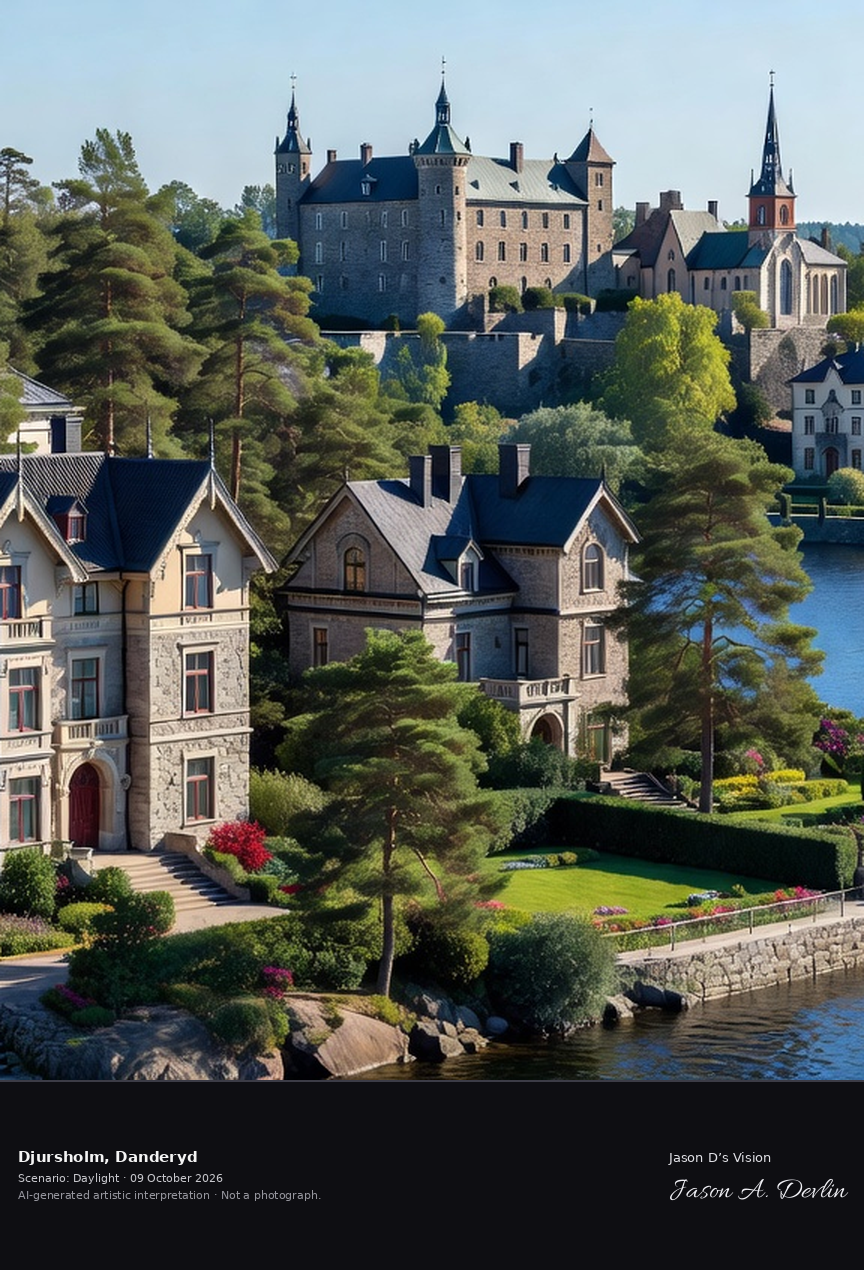
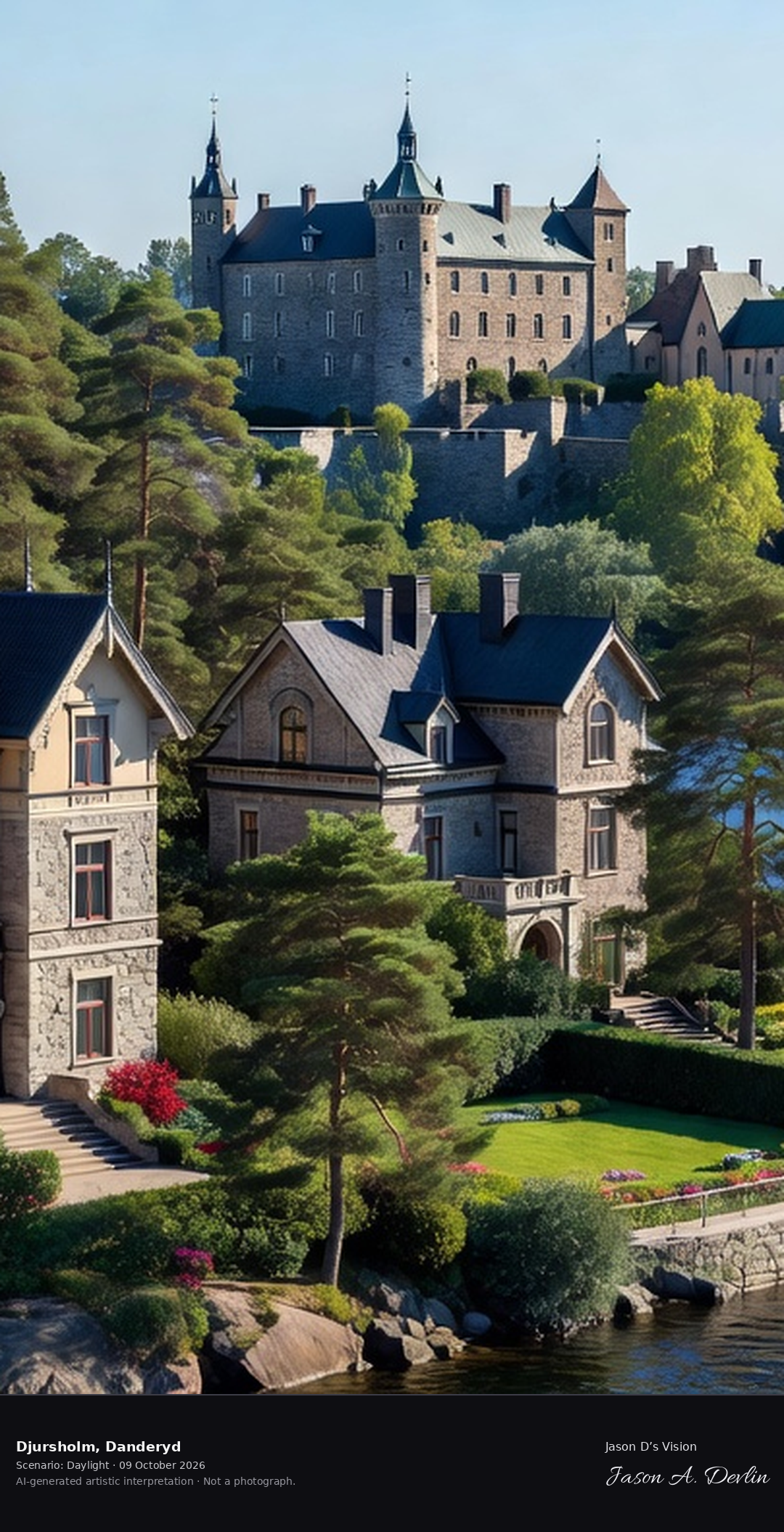
Djursholm's grand turn-of-the-century villas among the pines above the Stora Värtan, Sweden's most prestigious garden suburb with its castle-like Djursholm Castle and chapel.
Djursholm in Danderyd, Stockholm — grand turn-of-the-century villas among the pines above the Stora Vartan, Sweden's most prestigious garden suburb with its castle-like Djursholm Castle and chapel, in bright natural daylight.
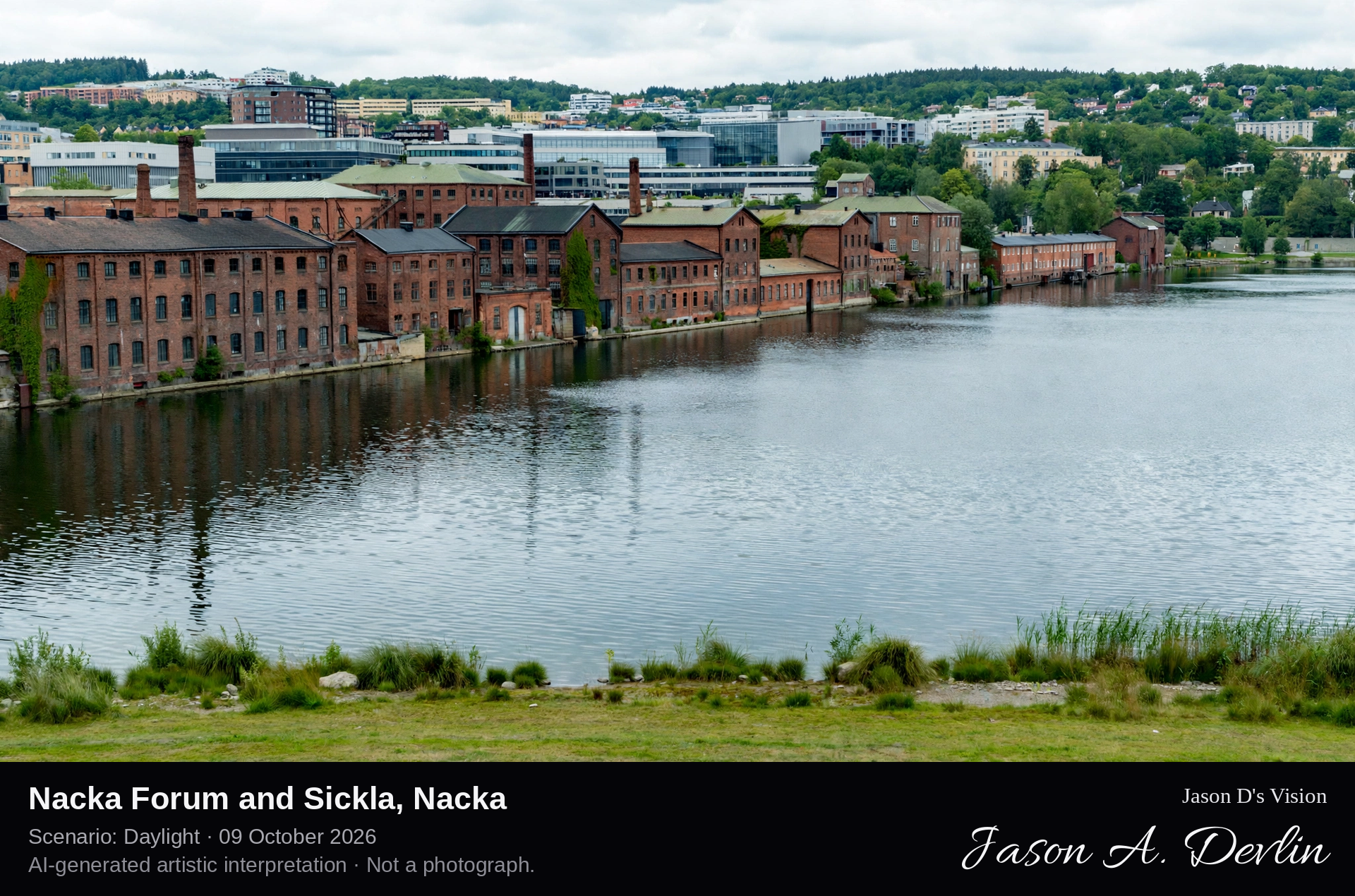
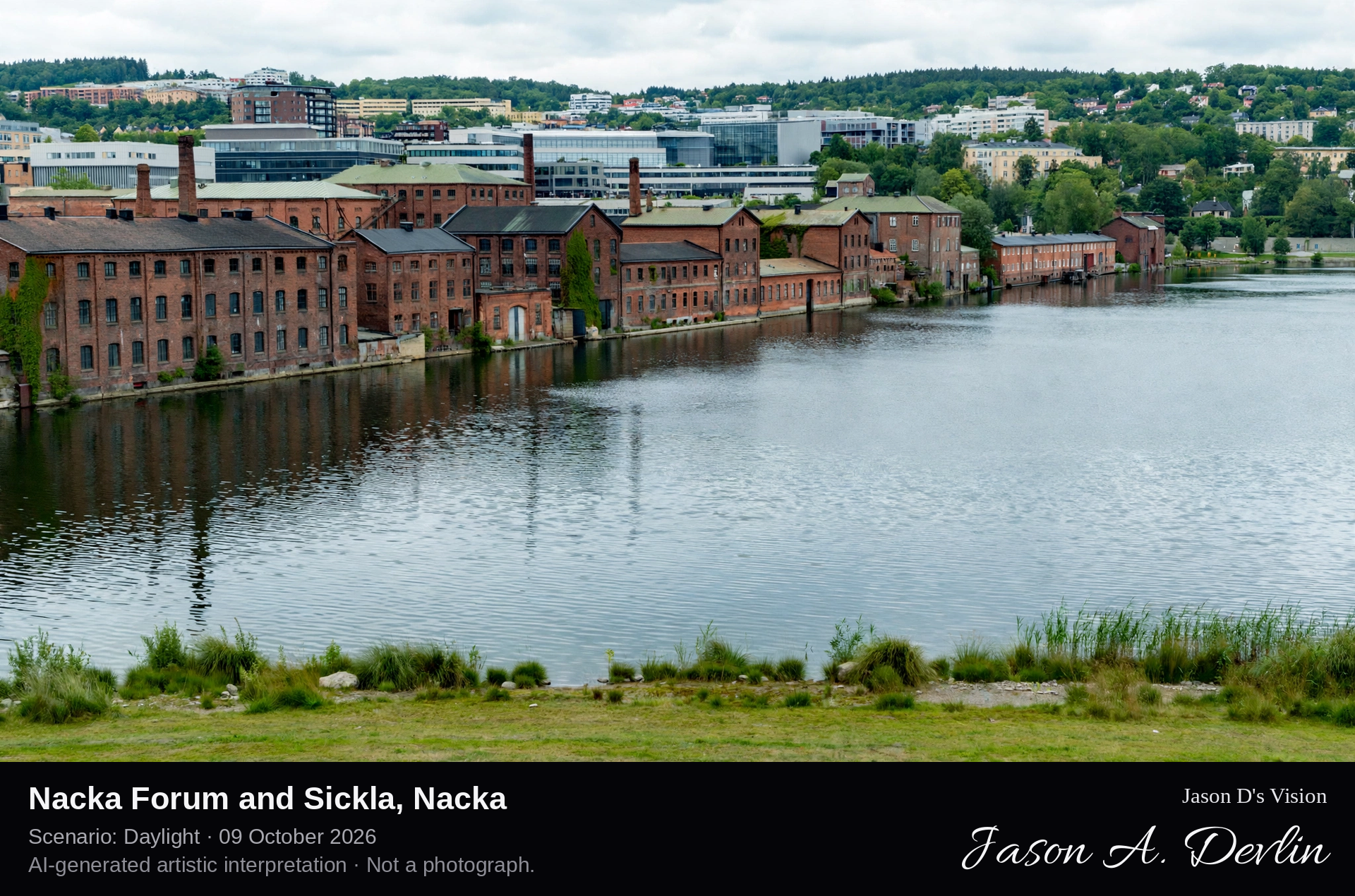
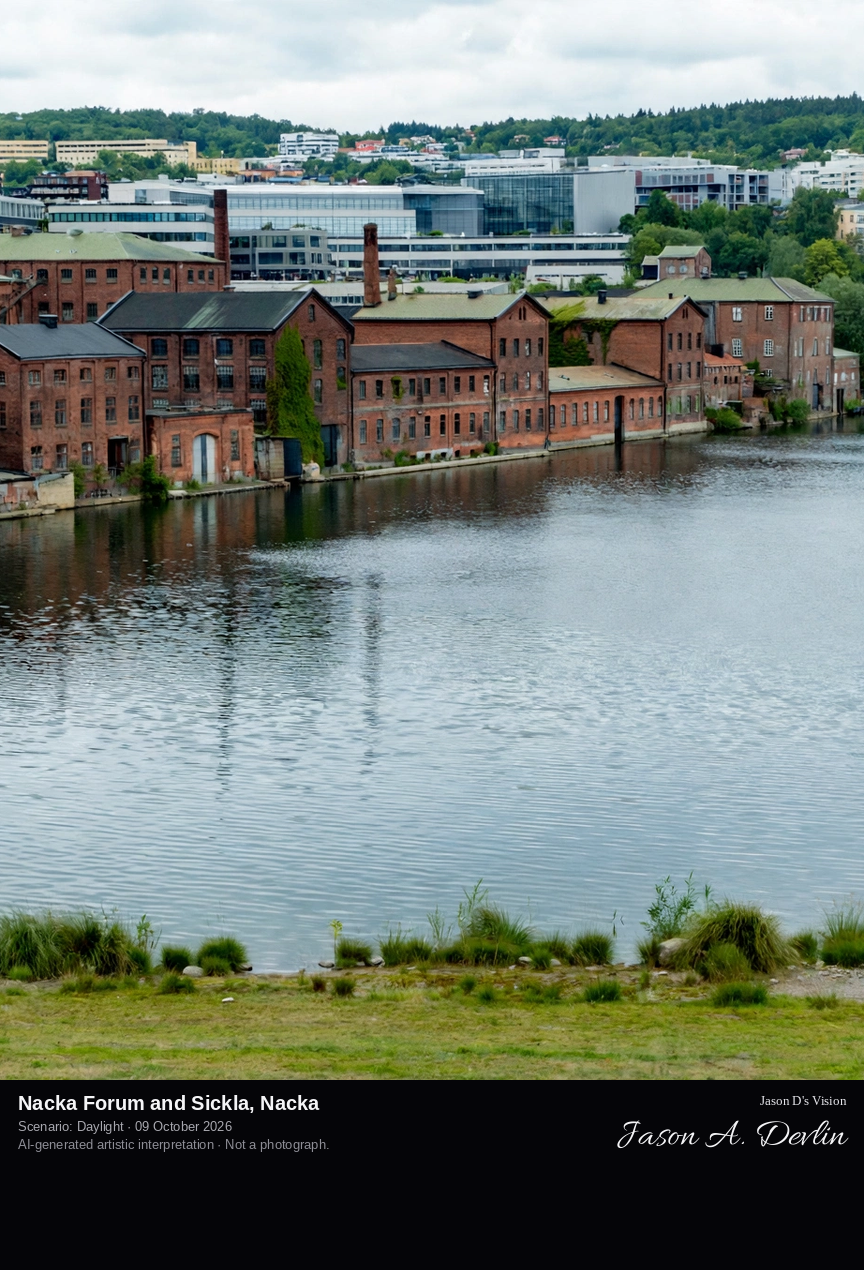
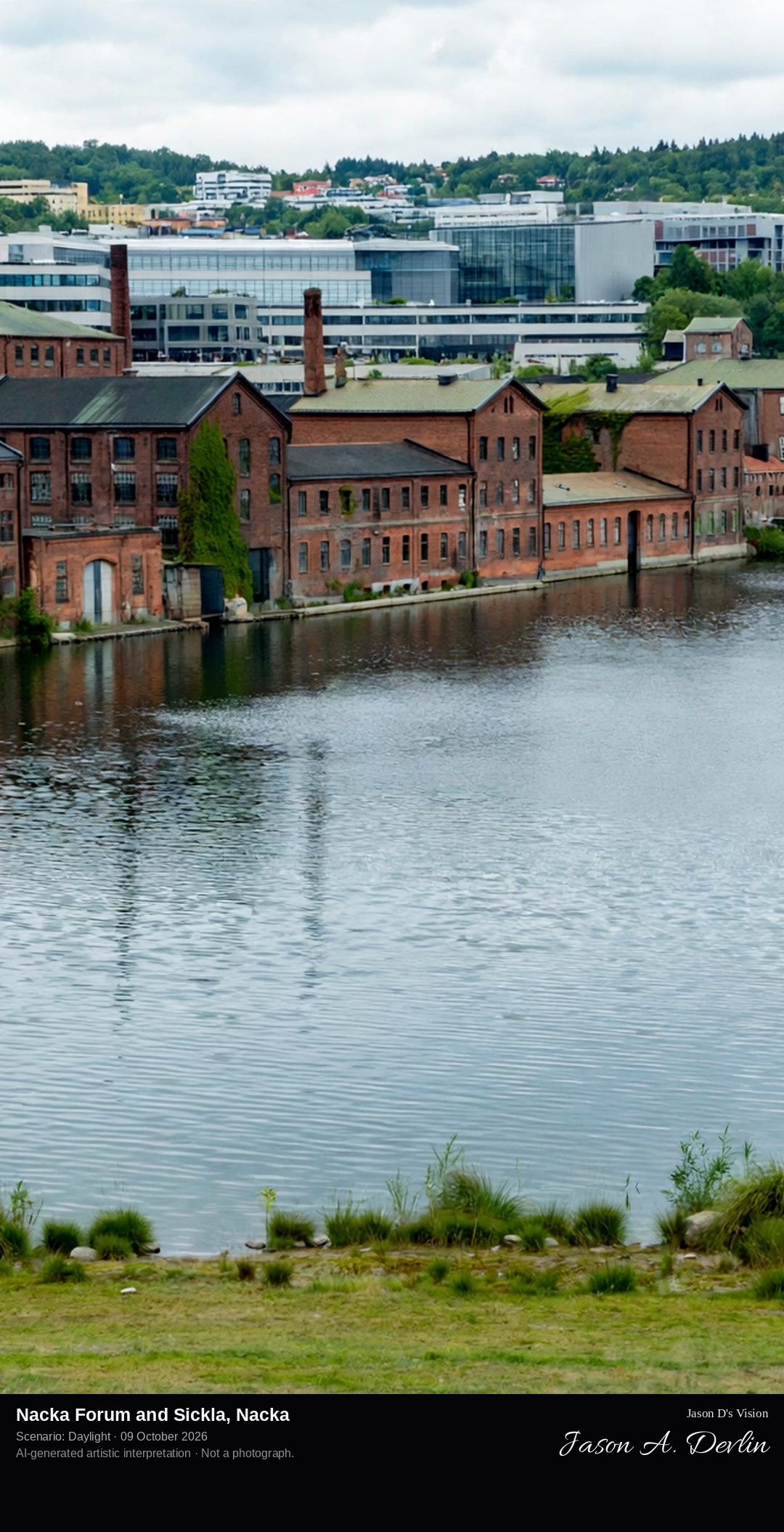
Sickla's transformed industrial waterfront on Hammarby Lake, the old Atlas Copco factories now housing design shops with the lake and the Danvikshem hill behind.
Nacka Forum and Sickla in Nacka, Stockholm — Sickla's transformed industrial waterfront on Hammarby Lake, the old Atlas Copco factories now housing design shops, the lake and the wooded Danvikshem hill behind, in bright natural daylight.
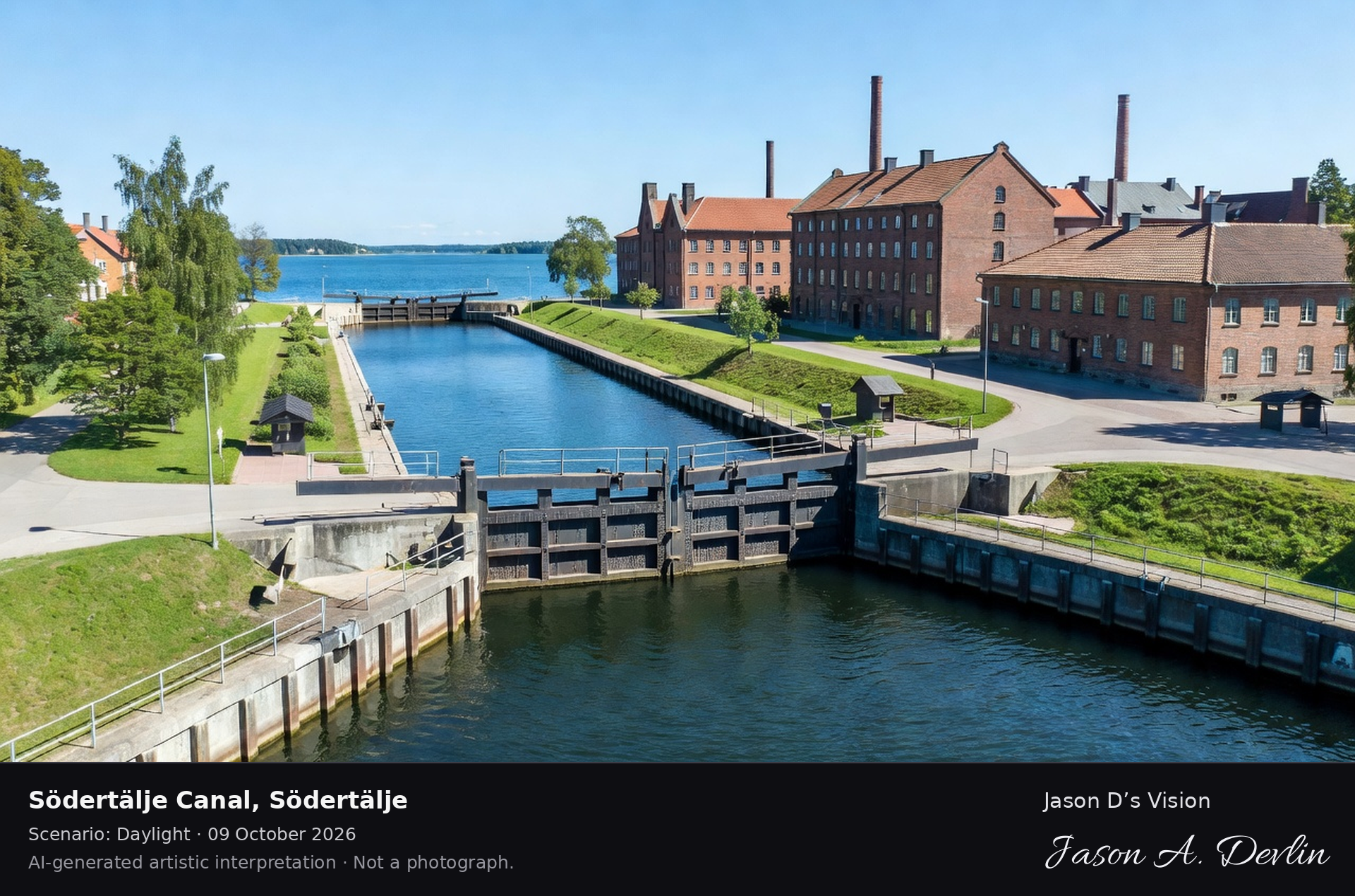
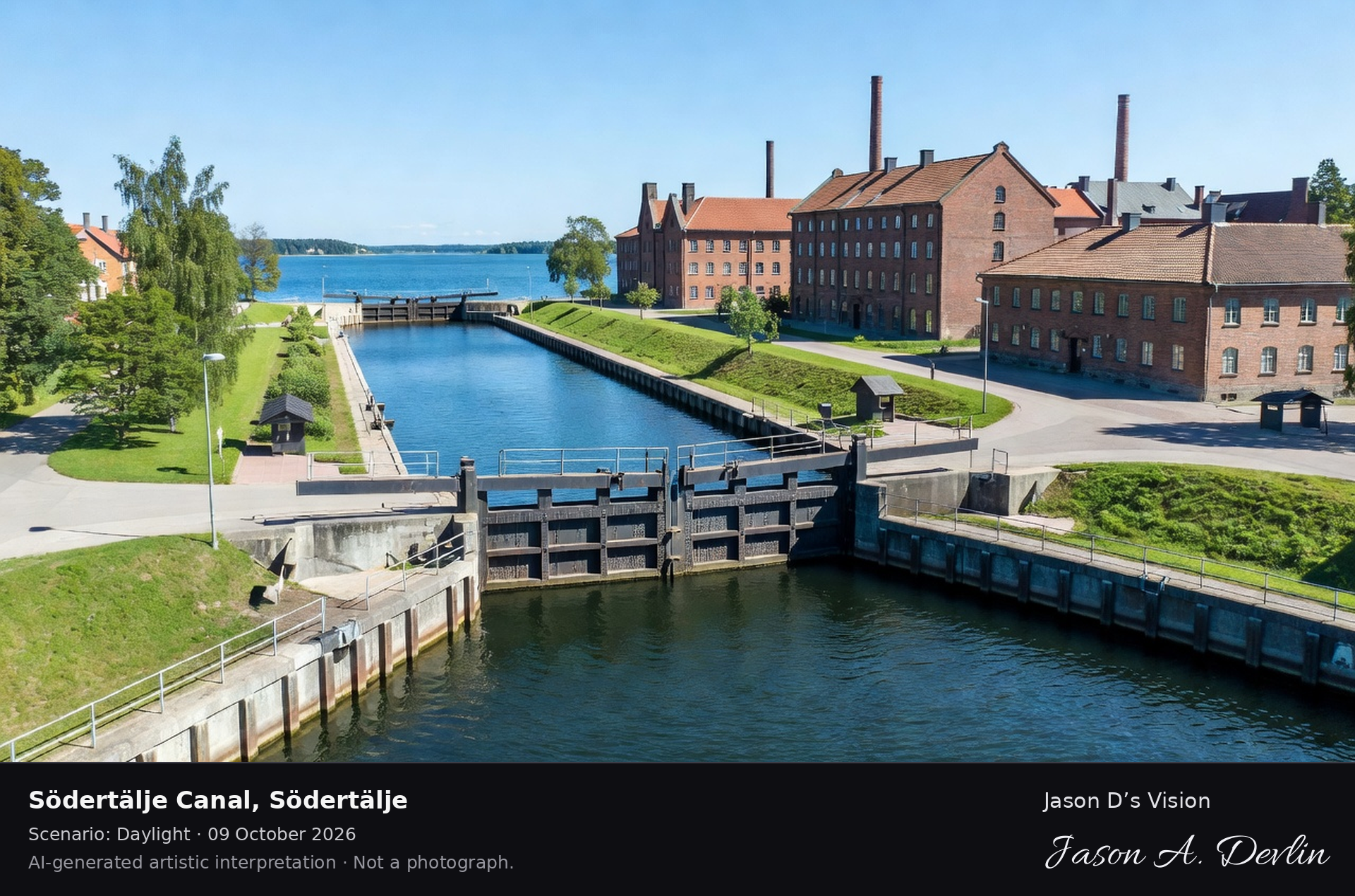
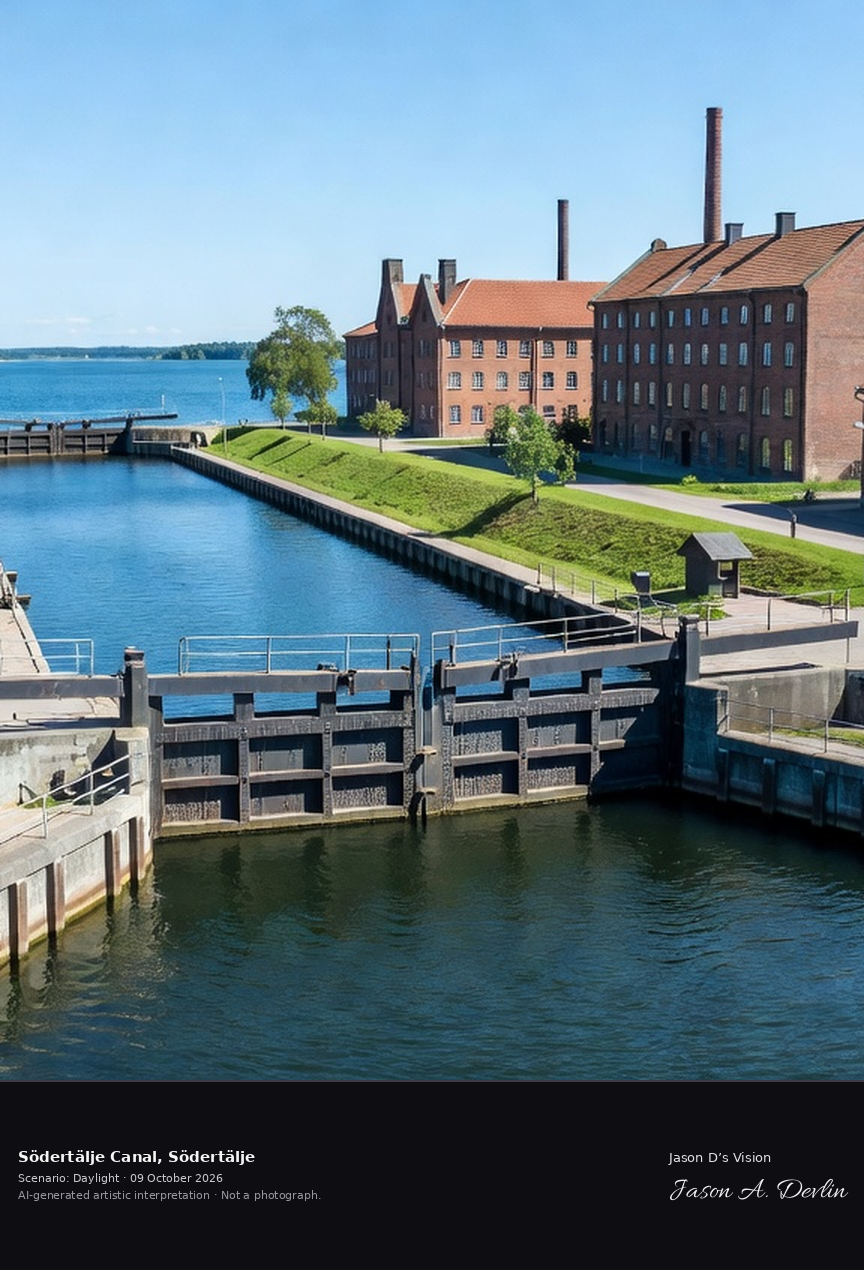
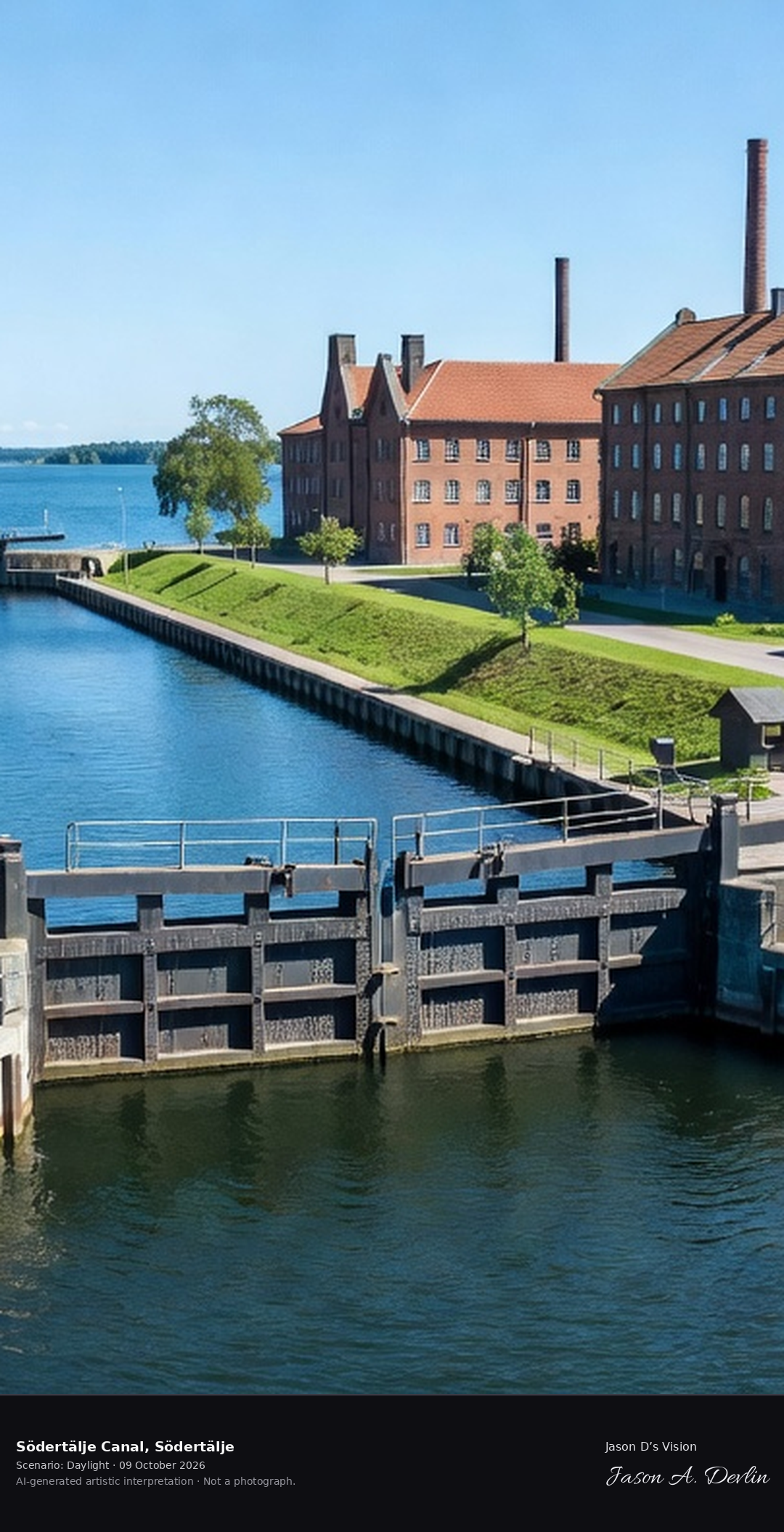
The Södertälje Canal locks connecting Lake Mälaren to the Baltic, the historic waterway with its lock gates and the Astra industrial heritage along the banks.
Södertälje Canal in Södertälje, Södermanland — the historic canal locks connecting Lake Mälaren to the Baltic, with lock gates and the Astra industrial heritage along the banks, in bright natural daylight.
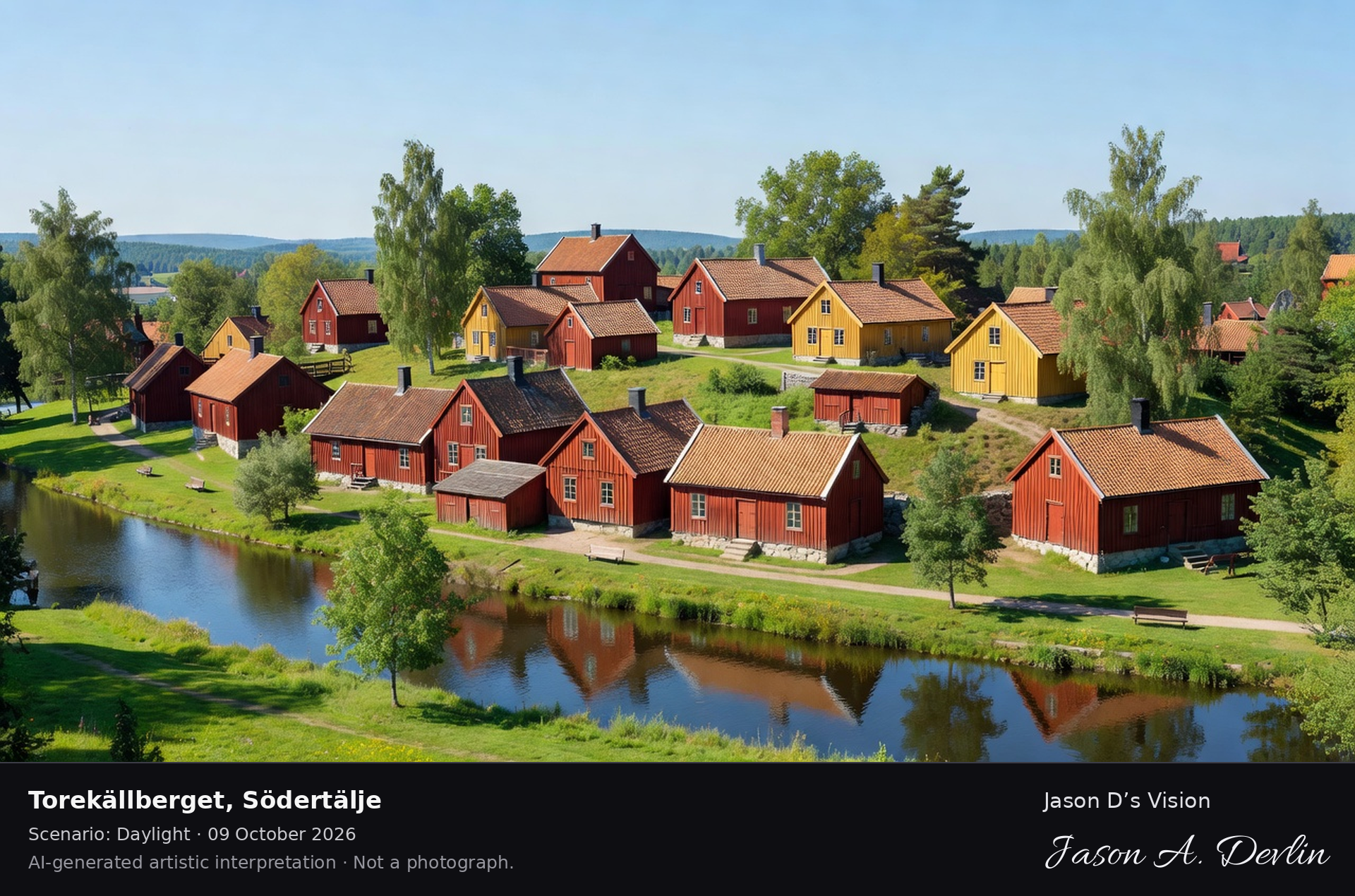
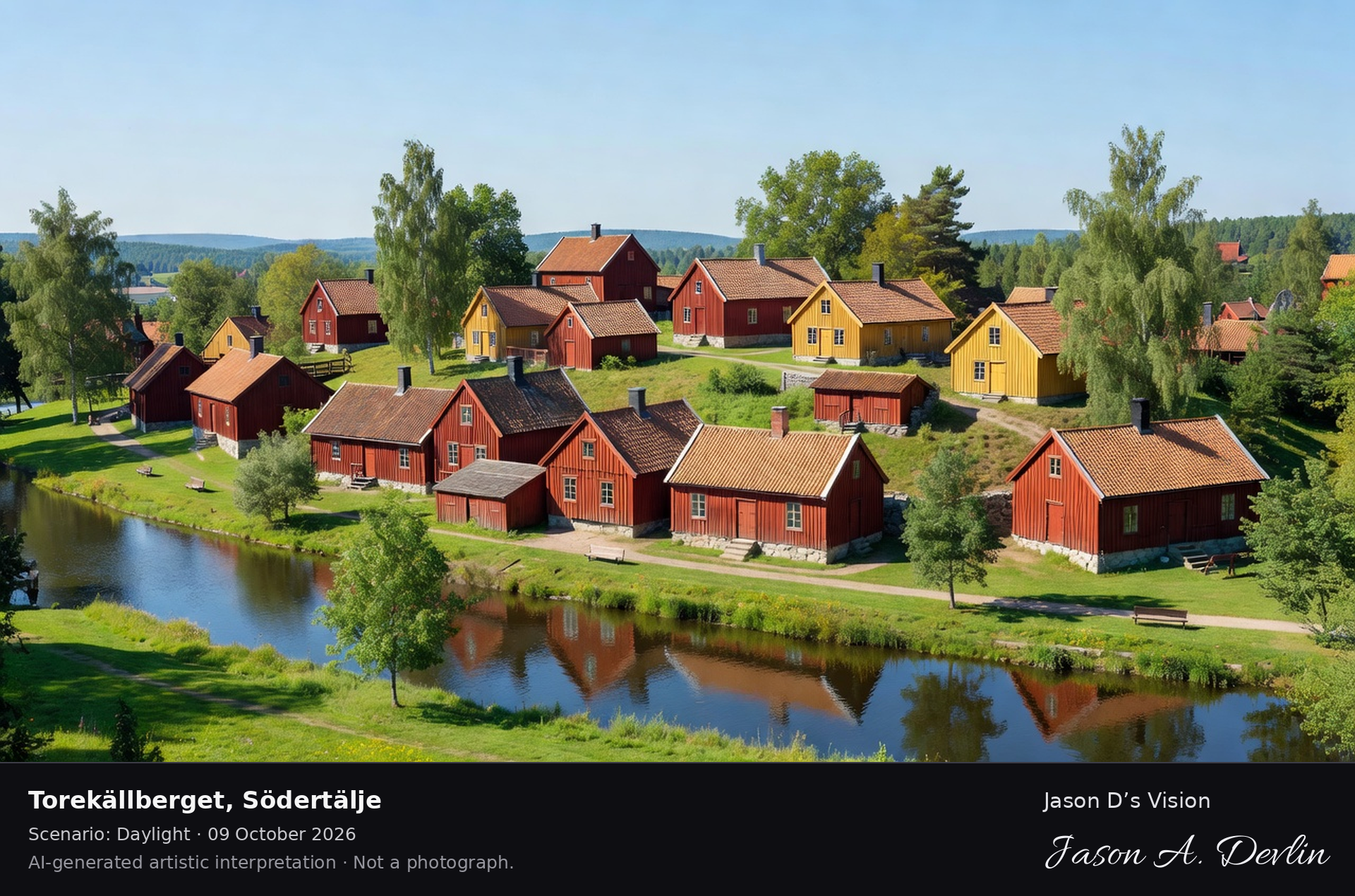
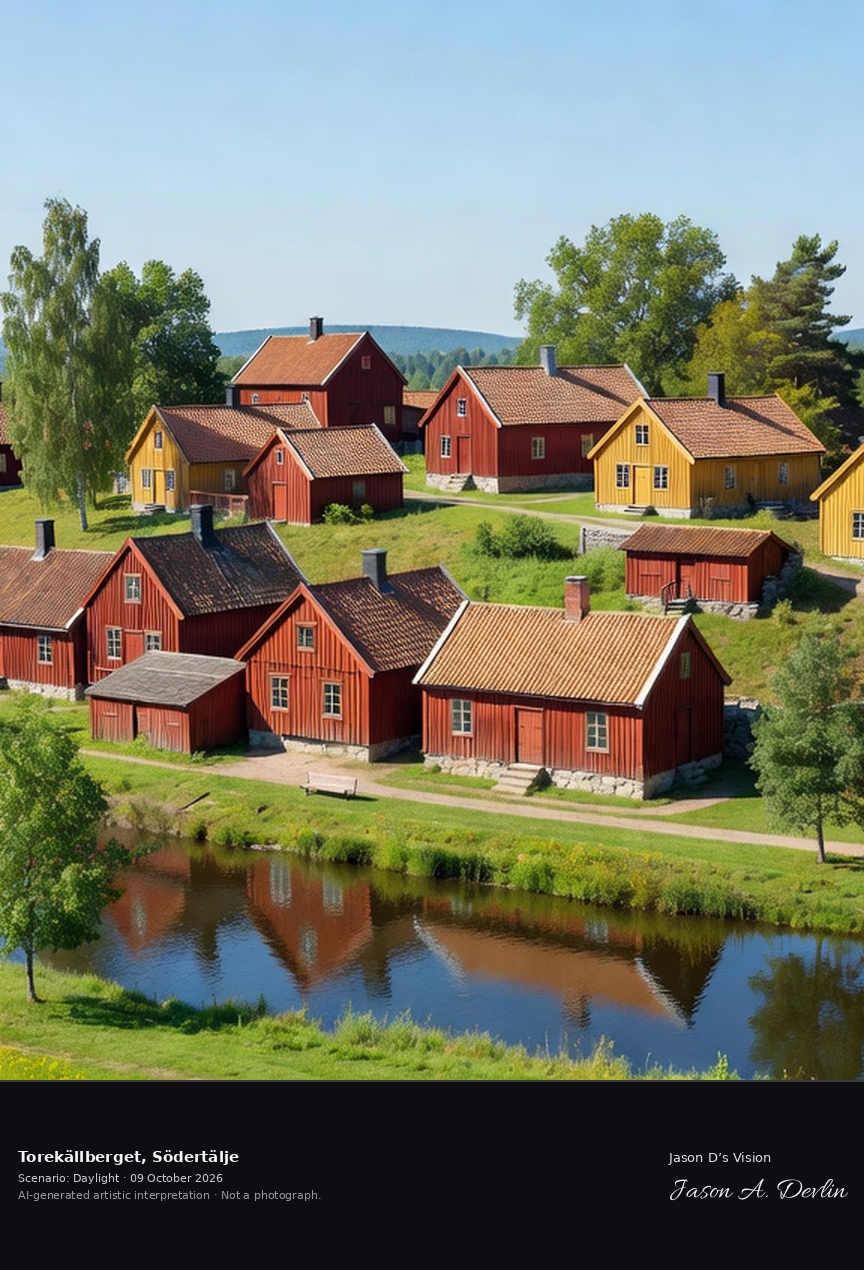
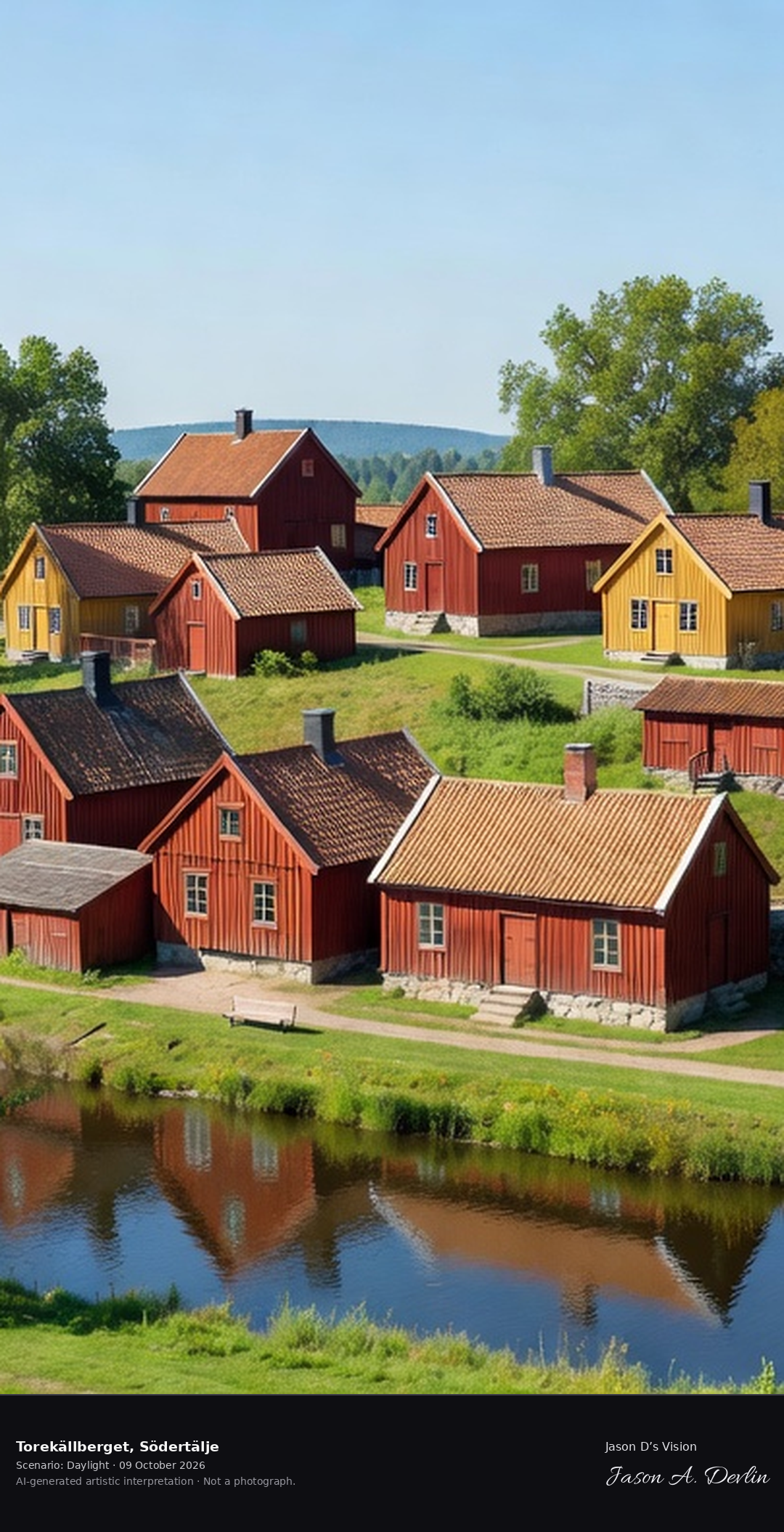
Torekällberget open-air museum's historic Södertälje buildings on the hill above the canal, 19th-century town houses and farmsteads in the city park.
Torekällberget in Södertälje, Södermanland — the Torekällberget open-air museum's historic buildings on the hill above the canal, 19th-century town houses and farmsteads in the city park, in bright natural daylight.
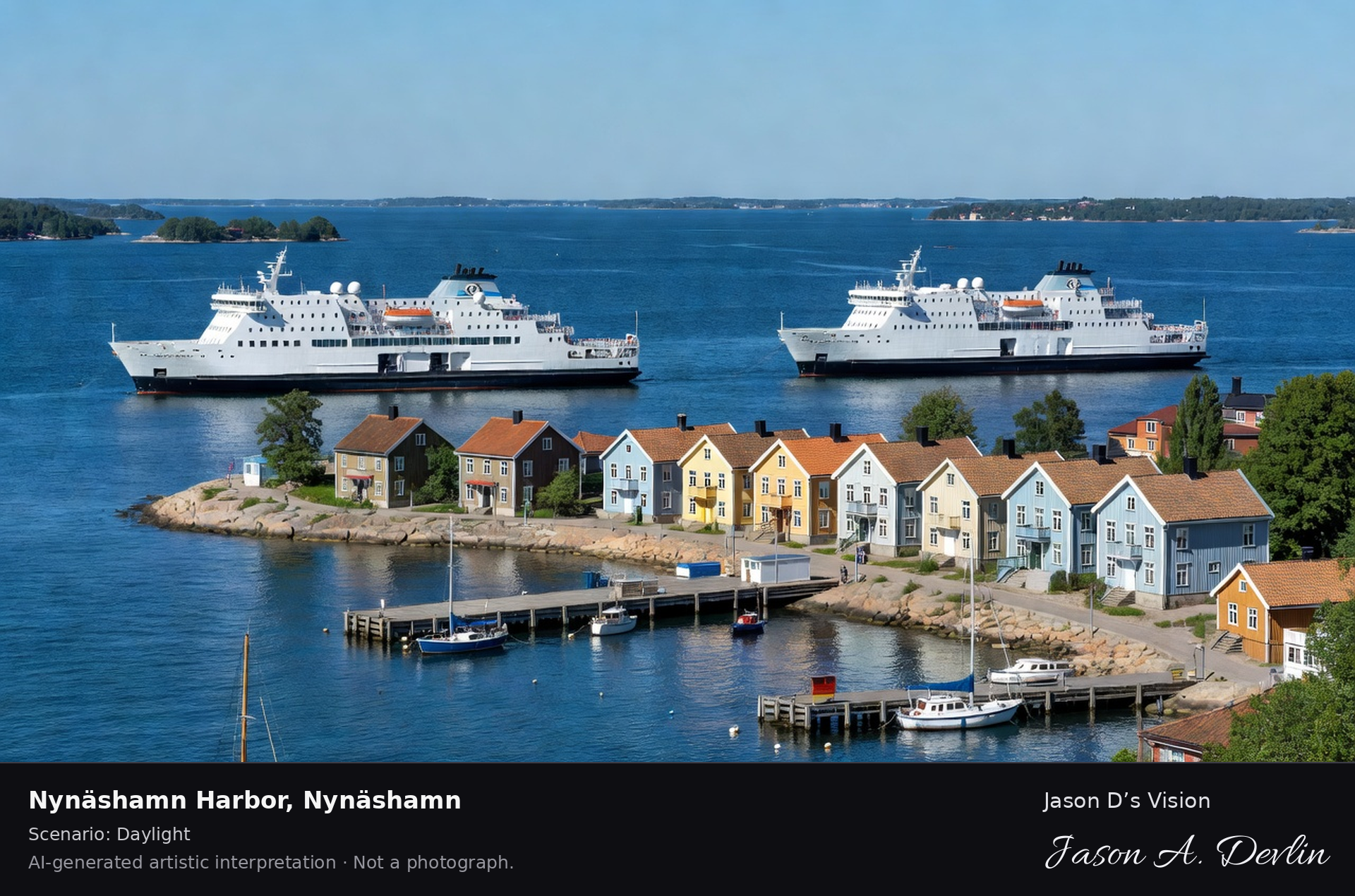
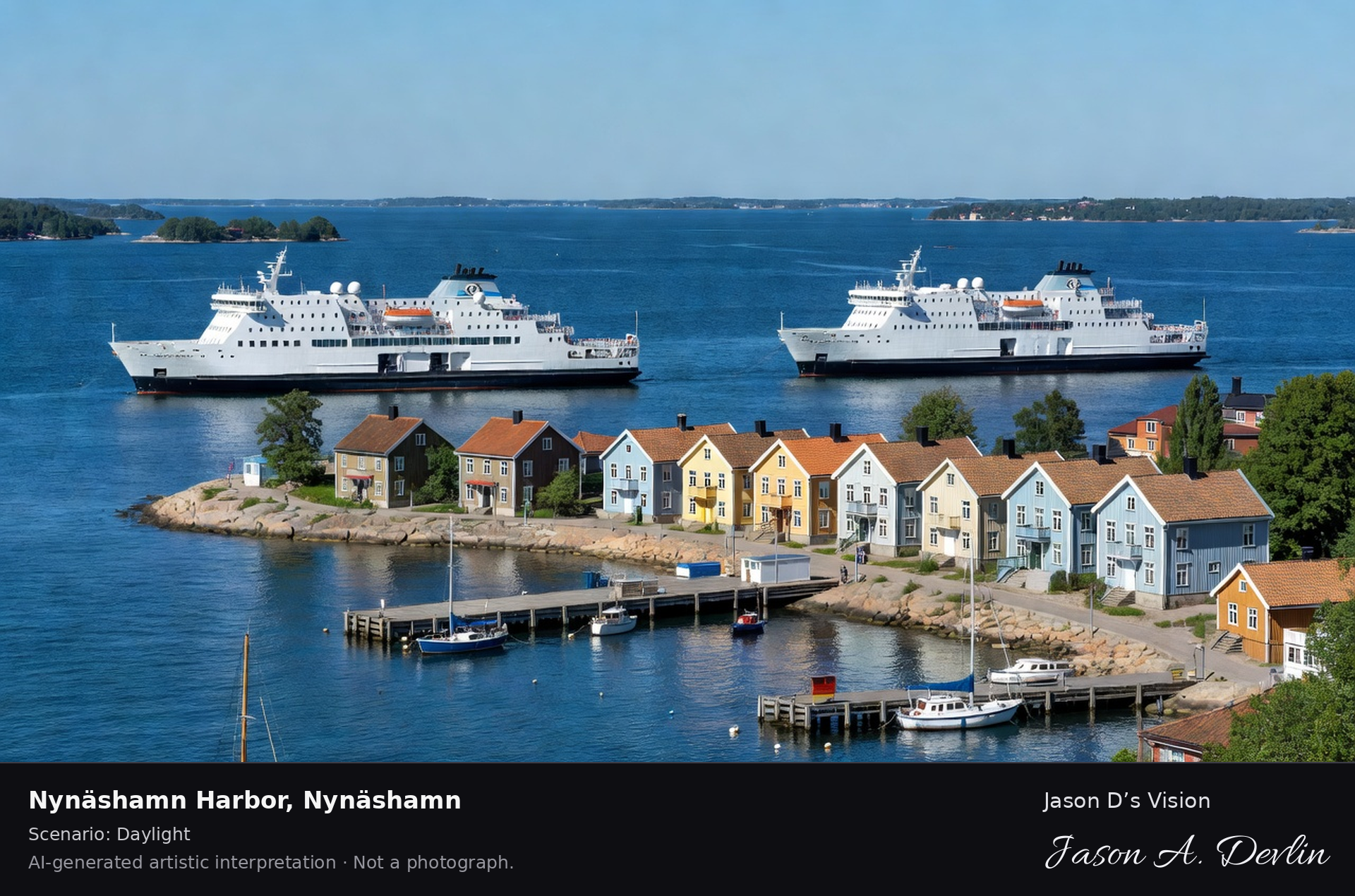
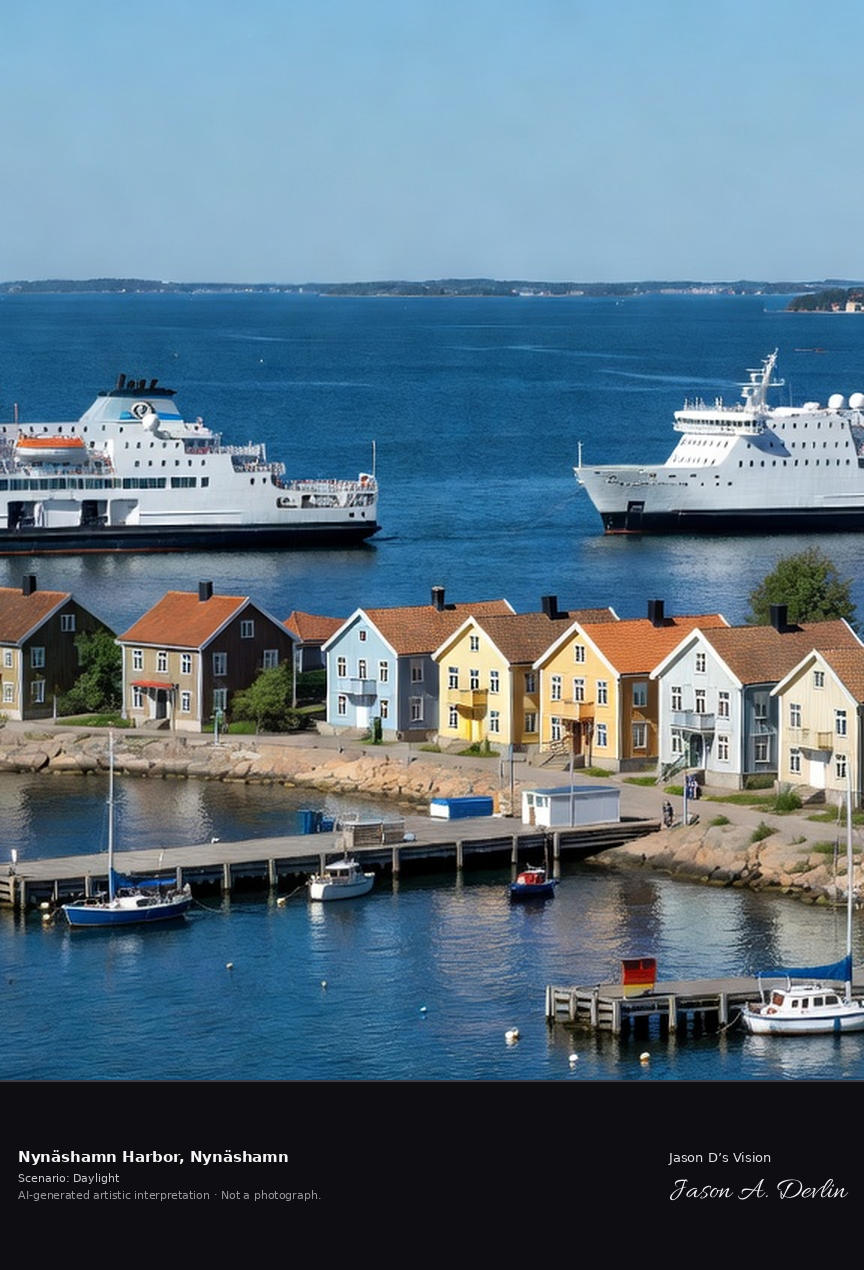
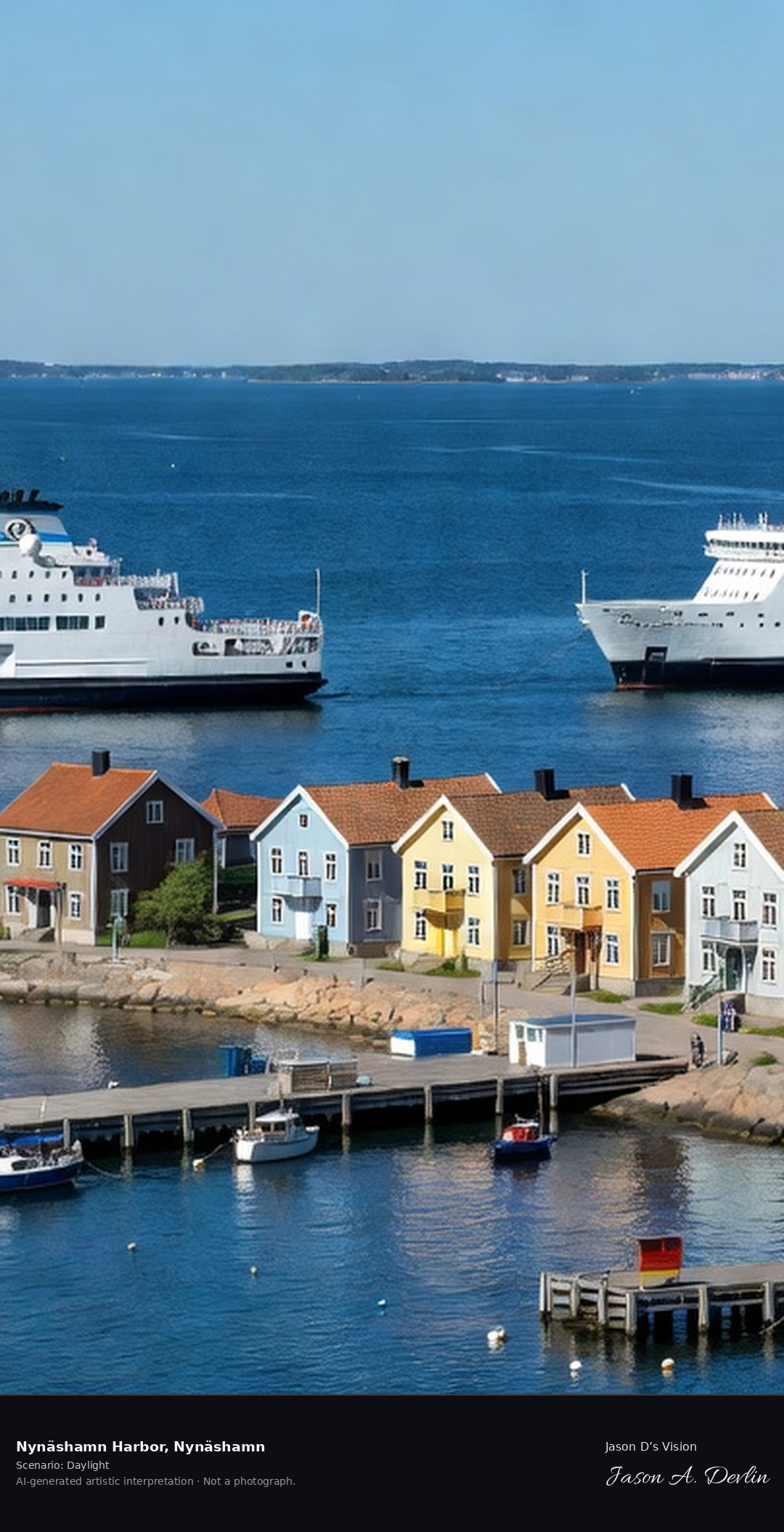
Nynäshamn's harbor with the Gotland ferries and the old bathhouse villas along the shore, the southern gateway to the archipelago with the Baltic beyond.
Bright daylight over Nynäshamn Harbor — two white ferries lie at anchor in the blue water while pastel-painted bathhouse villas curve along the rocky shore, wooden piers reaching out toward the archipelago islands on the Baltic horizon. The town is the southern gateway to the Stockholm archipelago and the departure point for the Gotland ferries.
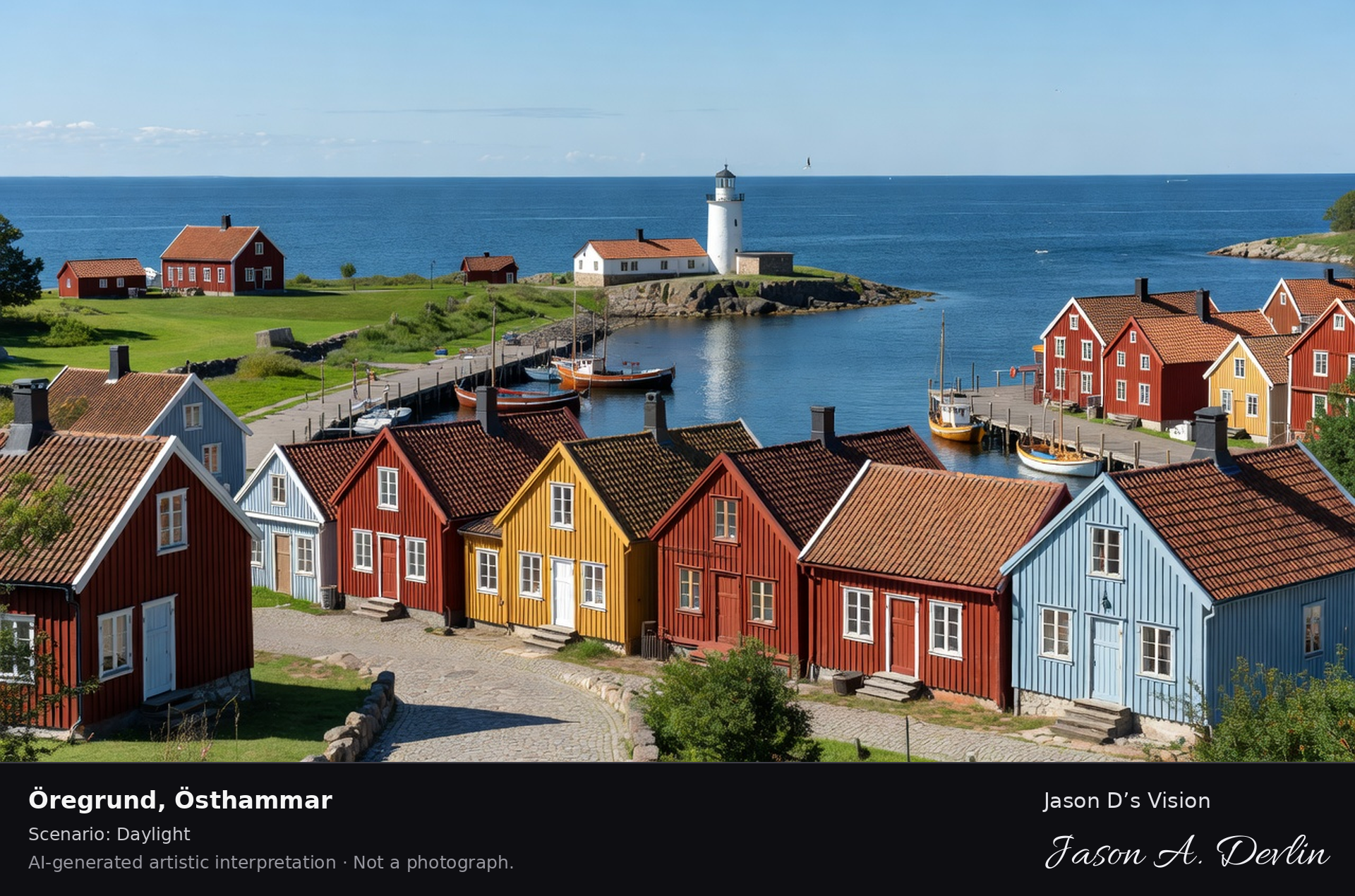
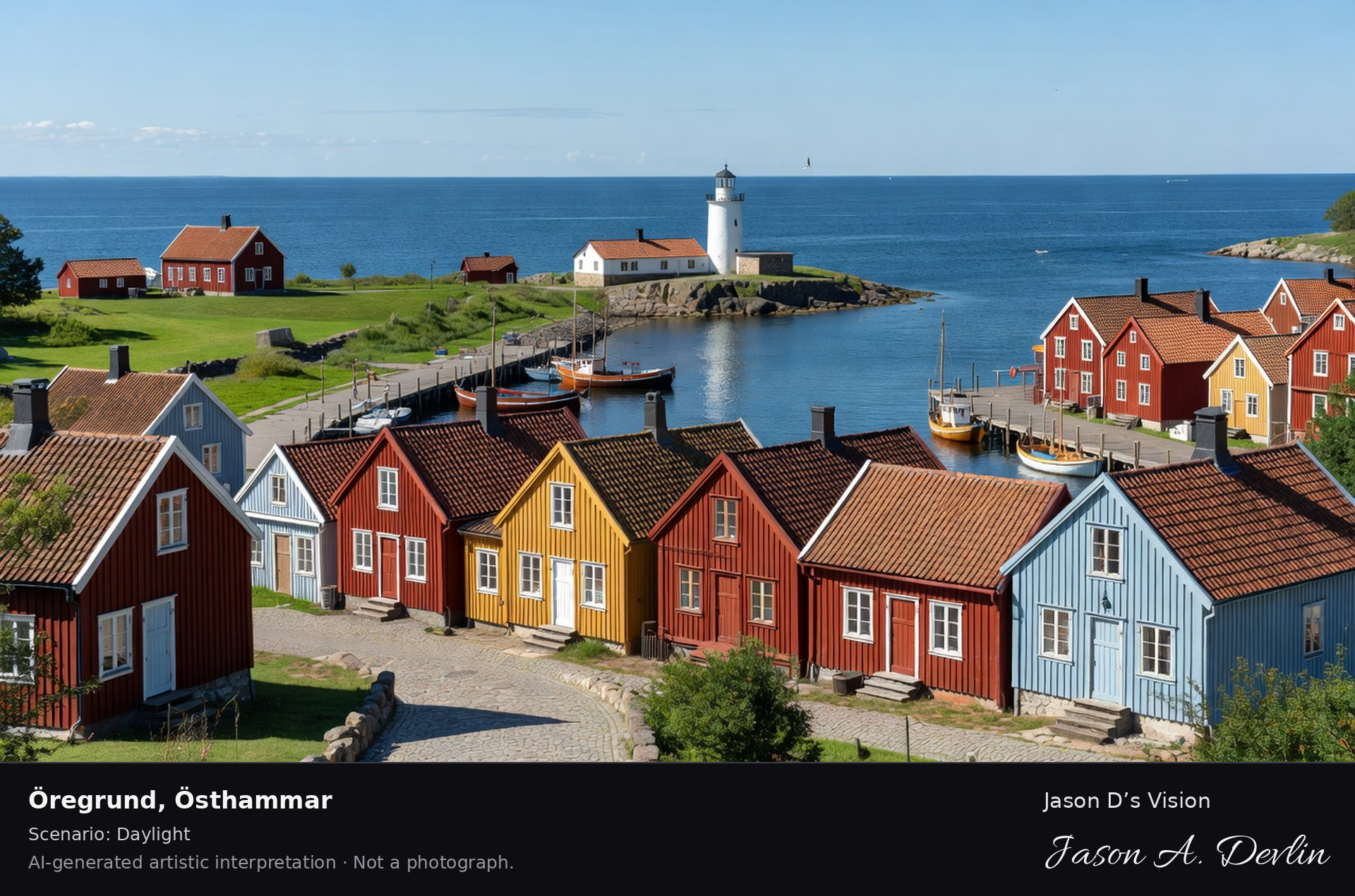
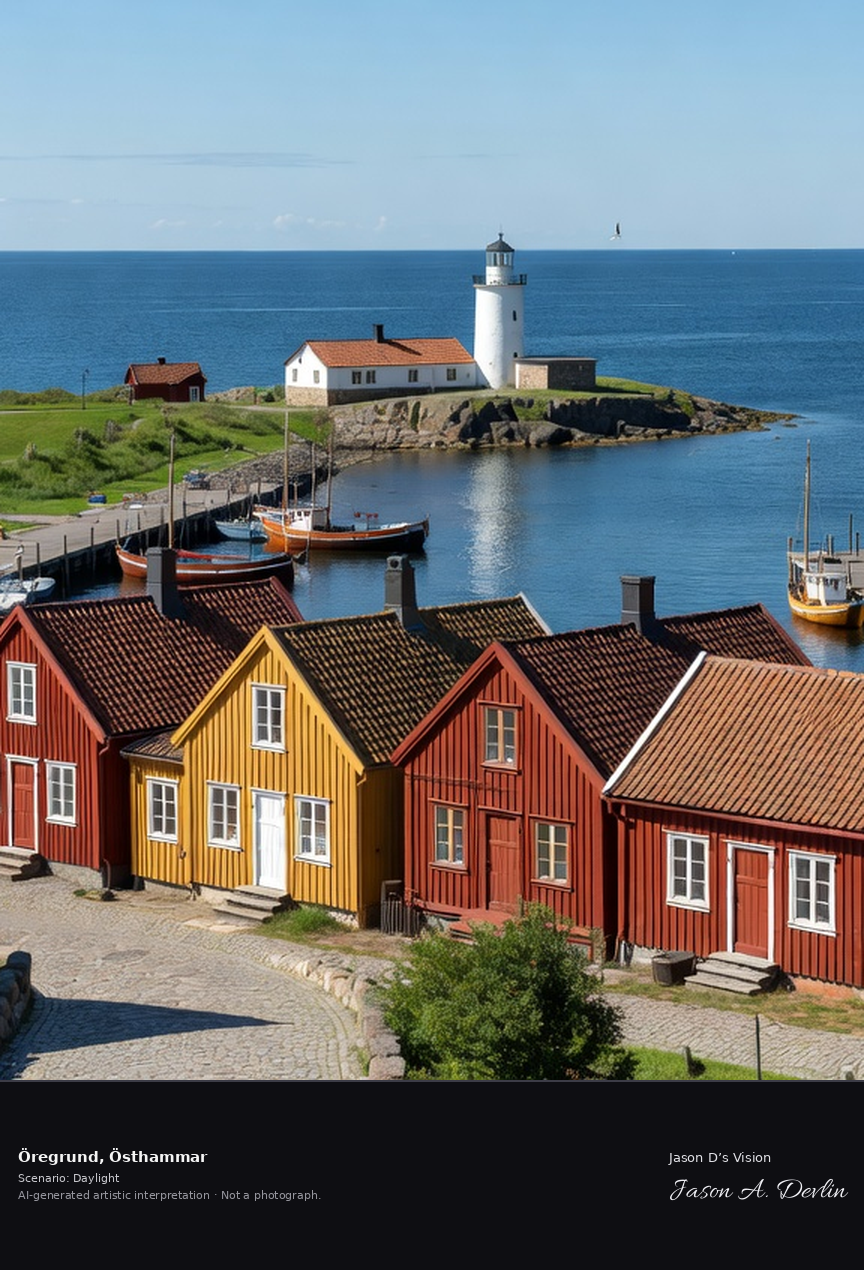
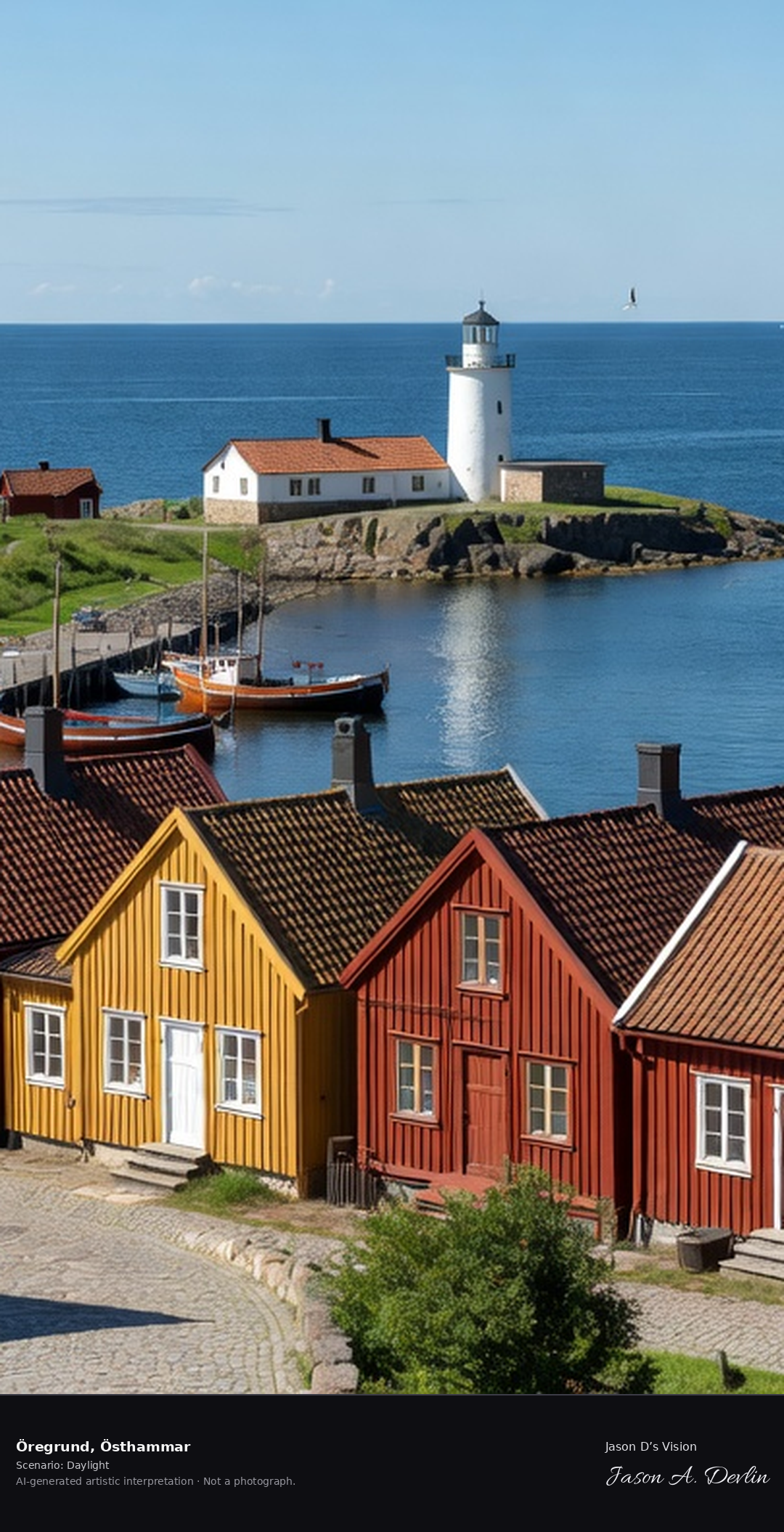
Öregrund's well-preserved 18th-century wooden town on the Uppland coast, captains' houses along the harbor with the lighthouse societetshus and the Bothnian Sea beyond.
Bright daylight over Öregrund's 18th-century wooden harbor town — Falu-red, ochre, and powder-blue captains' houses with tiled roofs line the cobbled lane down to the quay, where wooden sailboats lie at anchor and the white lighthouse guards the rocky point above the Bothnian Sea.
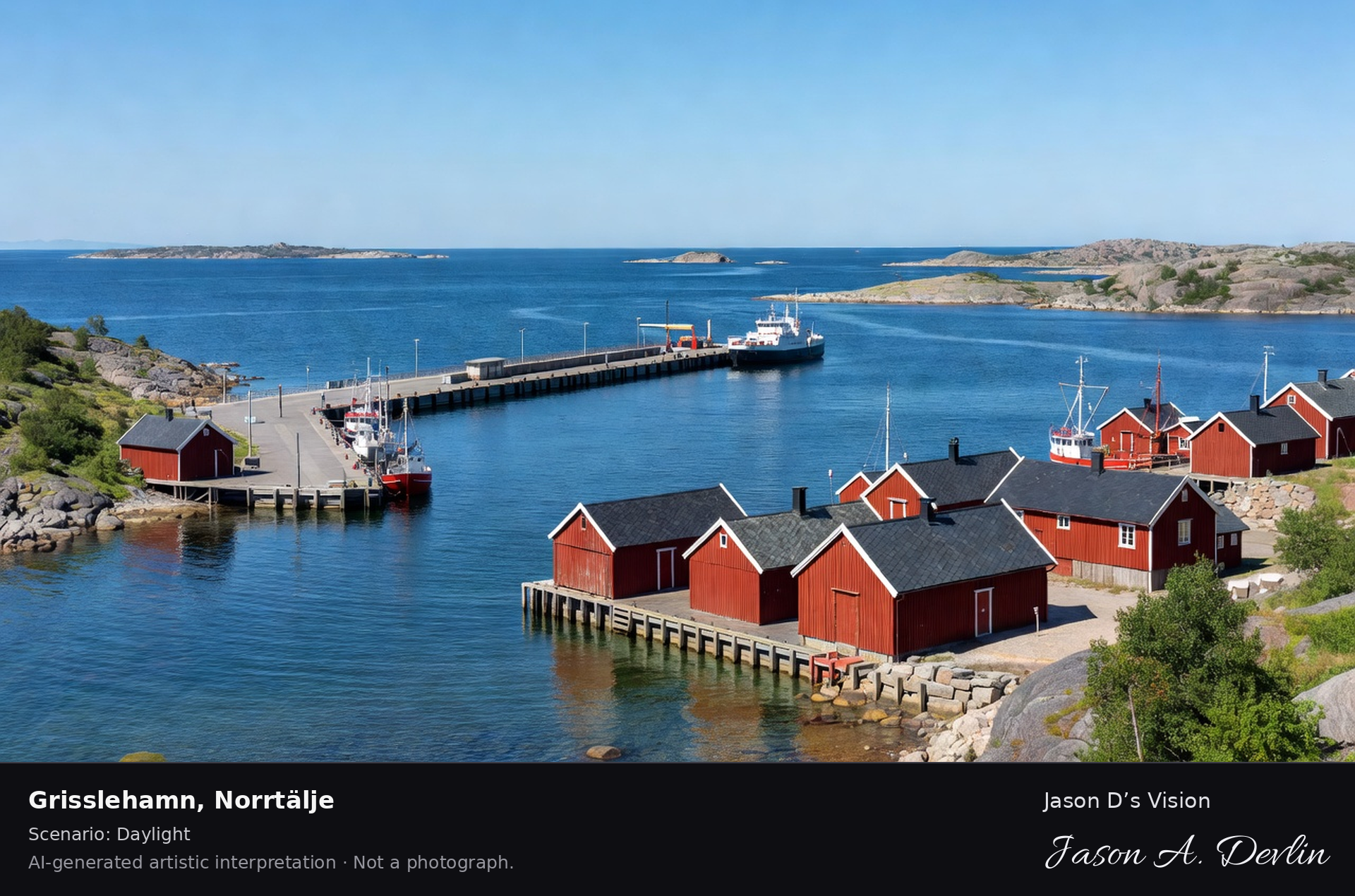
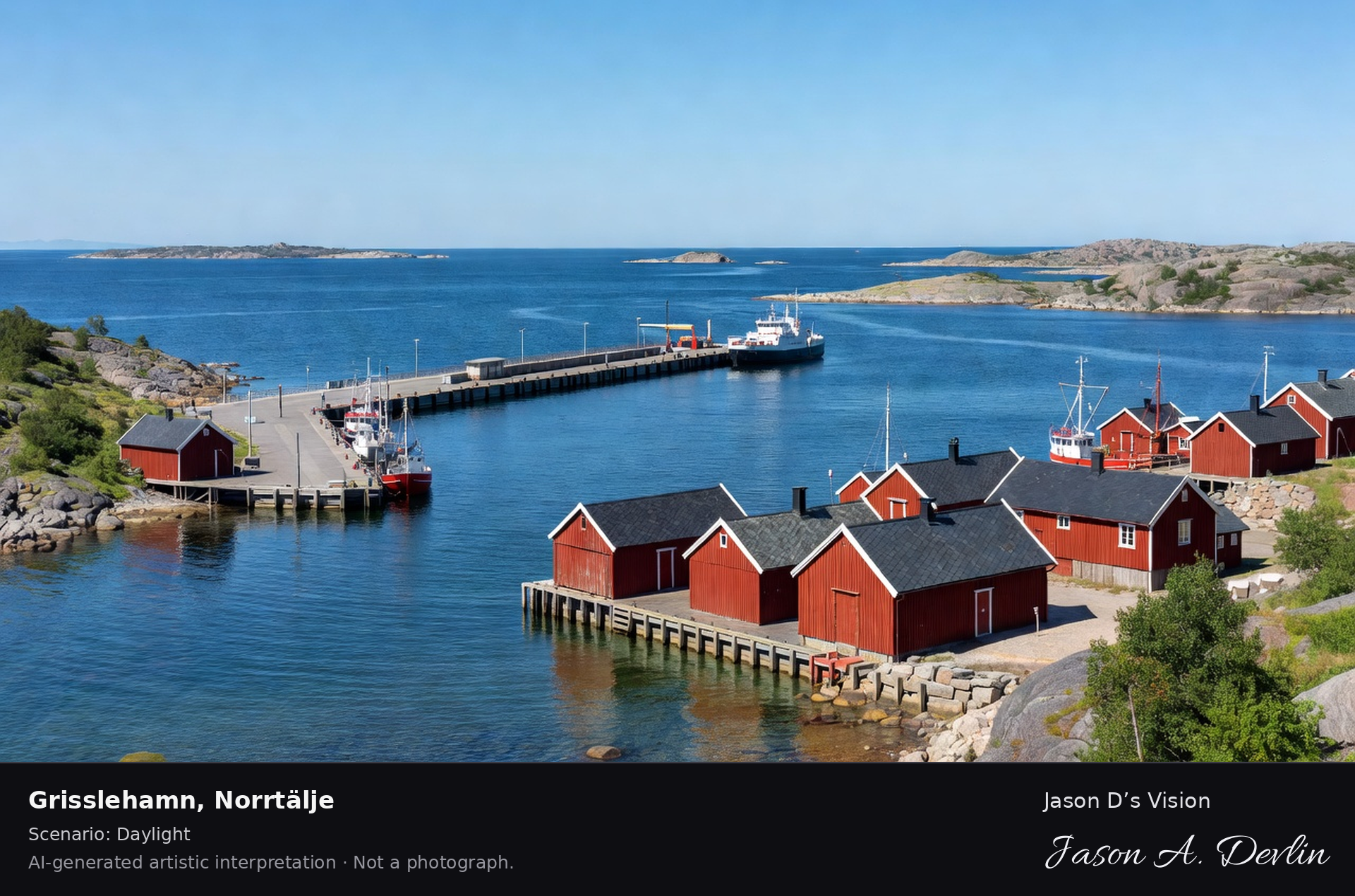
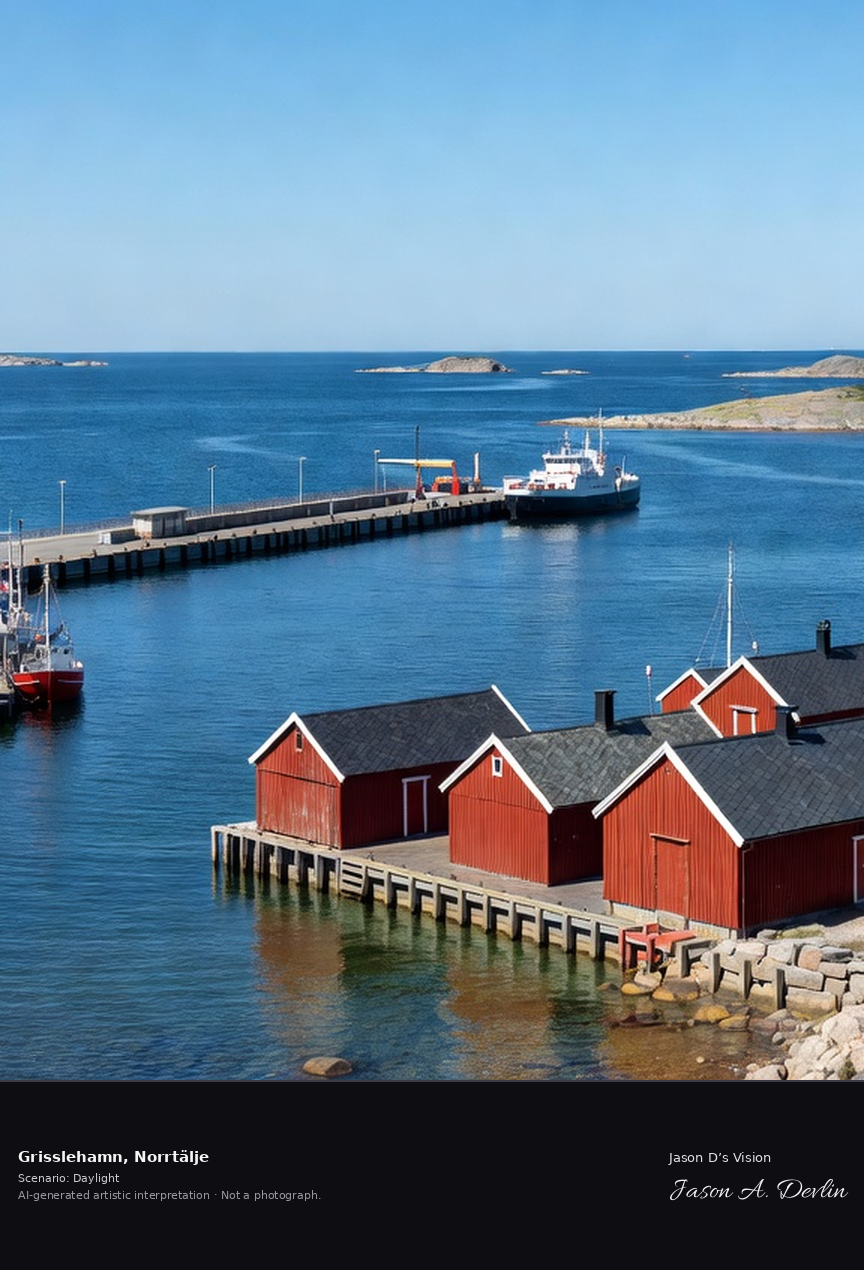
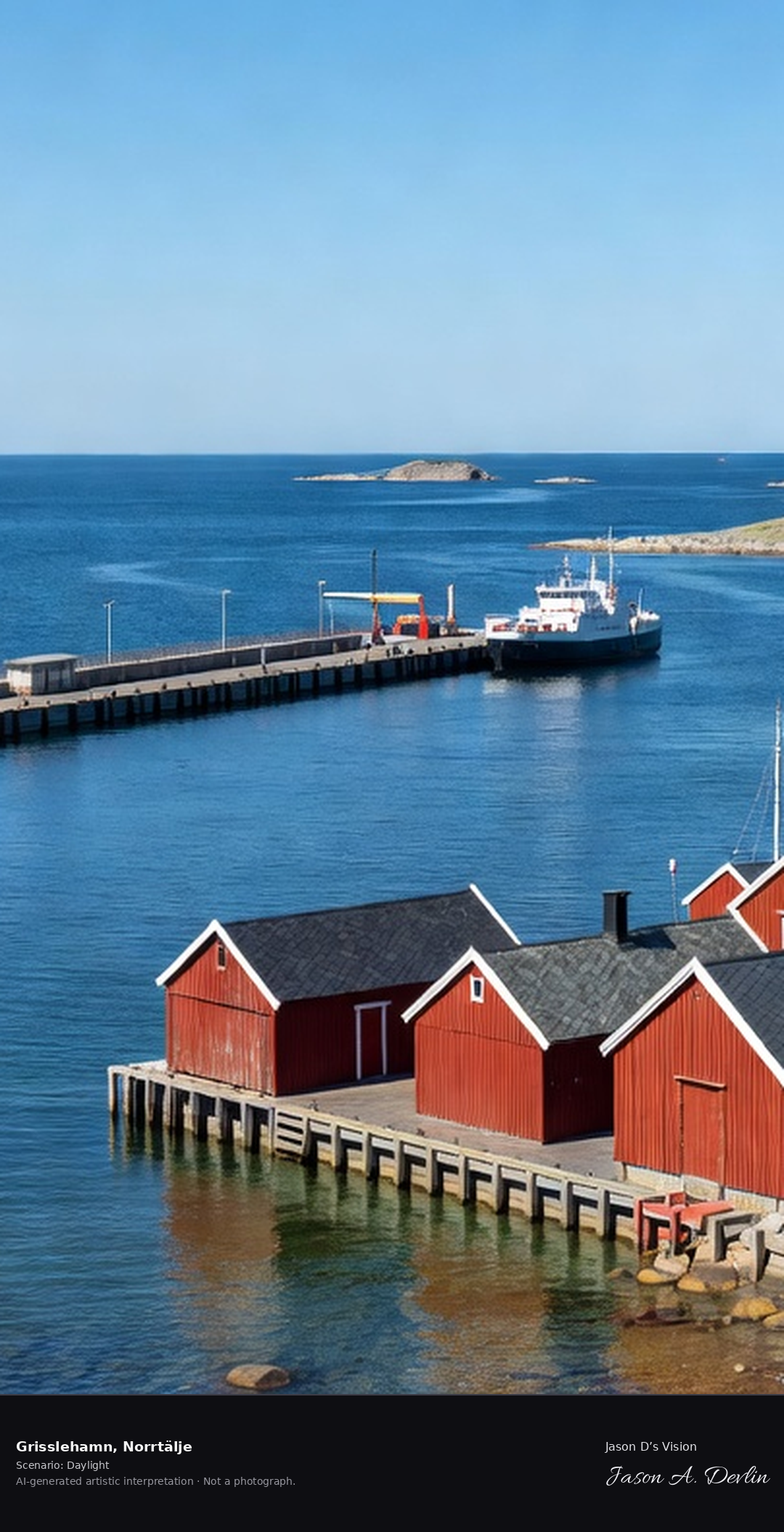
Grisslehamn's fishing harbor on the Väddö coast, the Åland ferry port with its red boathouses and the open Åland Sea horizon, the northern Roslagen coast.
Bright daylight over Grisslehamn's fishing harbor — Falu-red boathouses with dark tile roofs stand on the wooden pier, fishing boats and yachts lie at the quay, and the Åland ferry waits at the jetty with the rocky, pine-tufted Roslagen shoreline and open sea beyond.
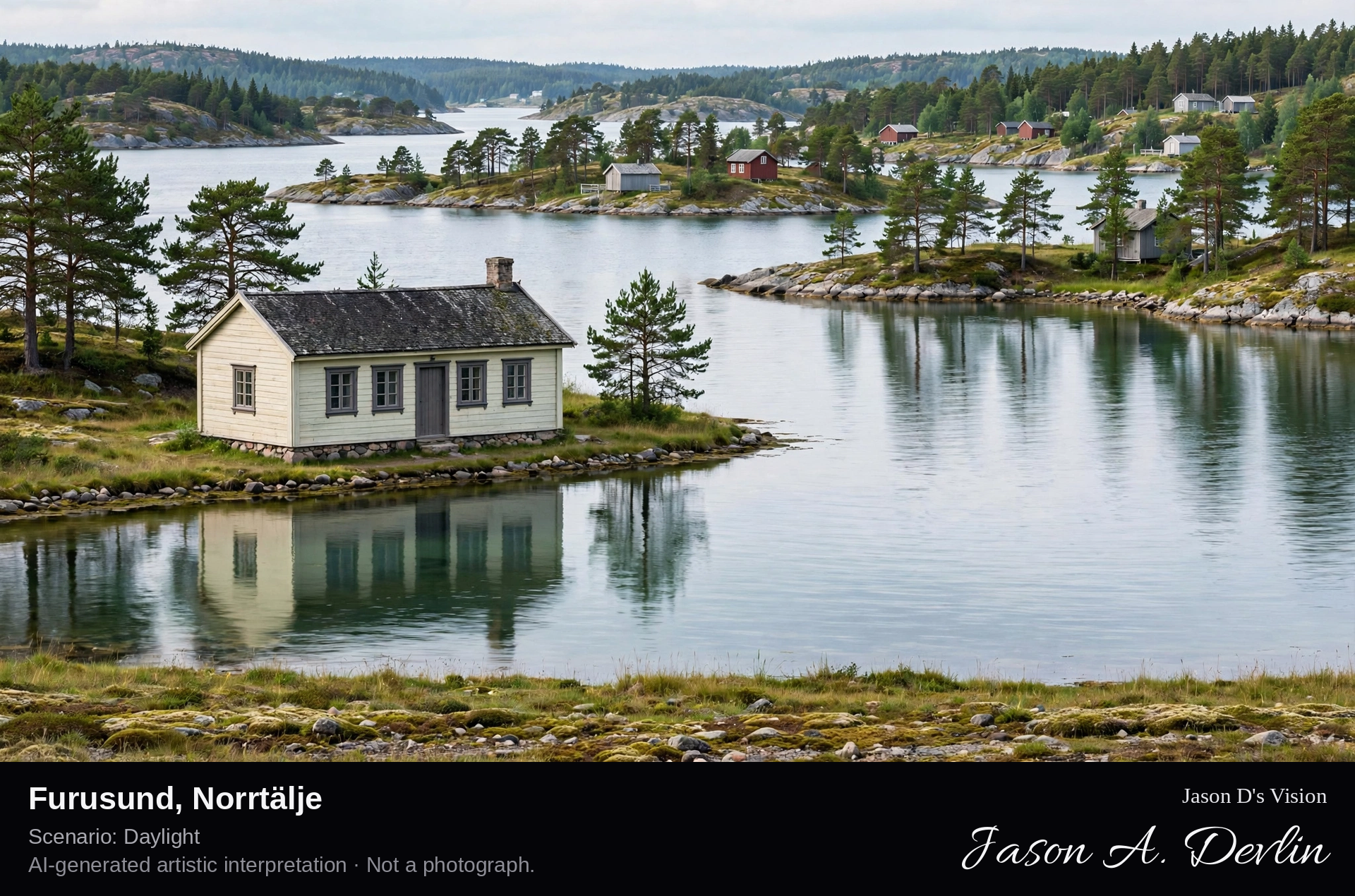
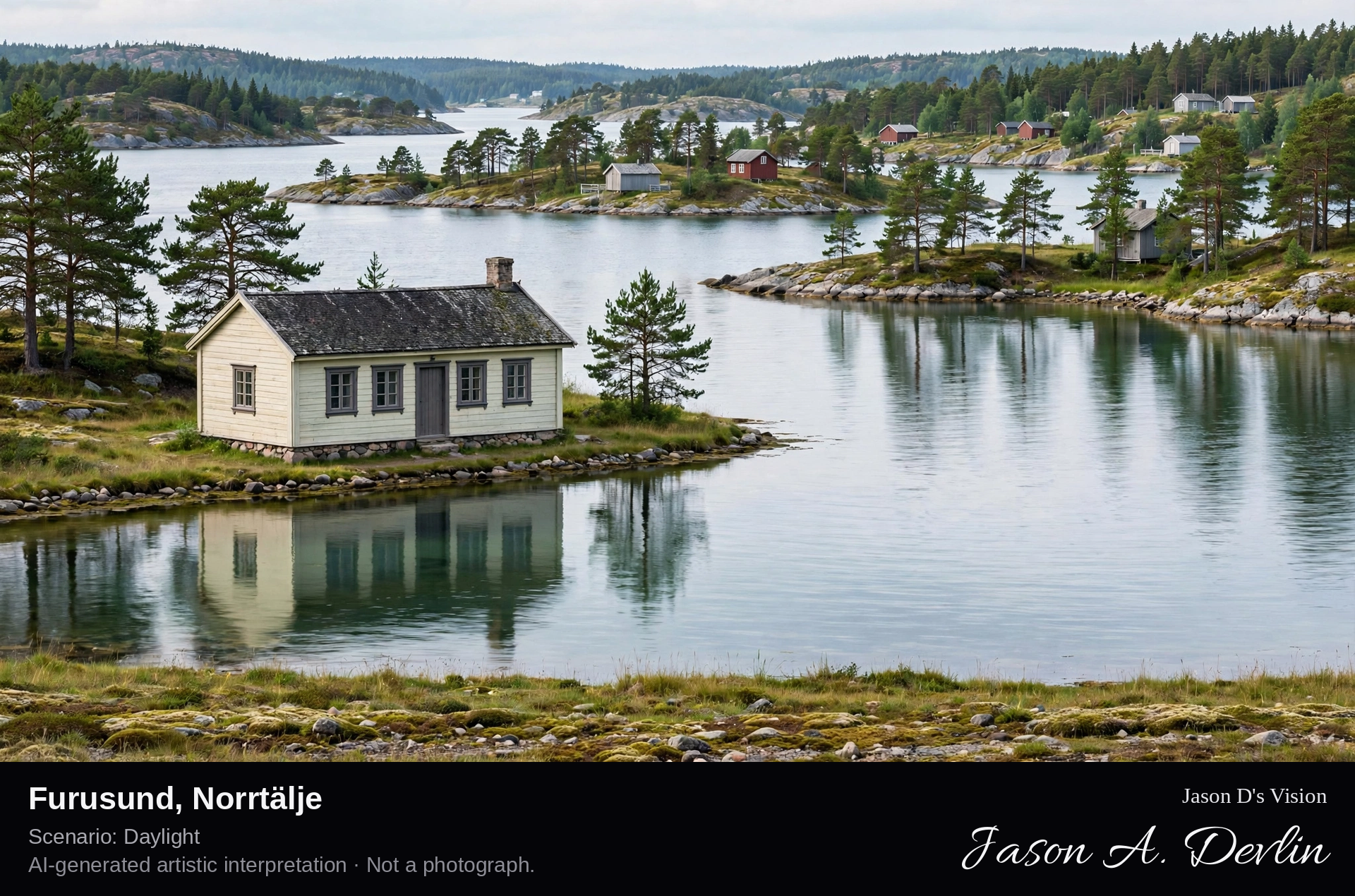
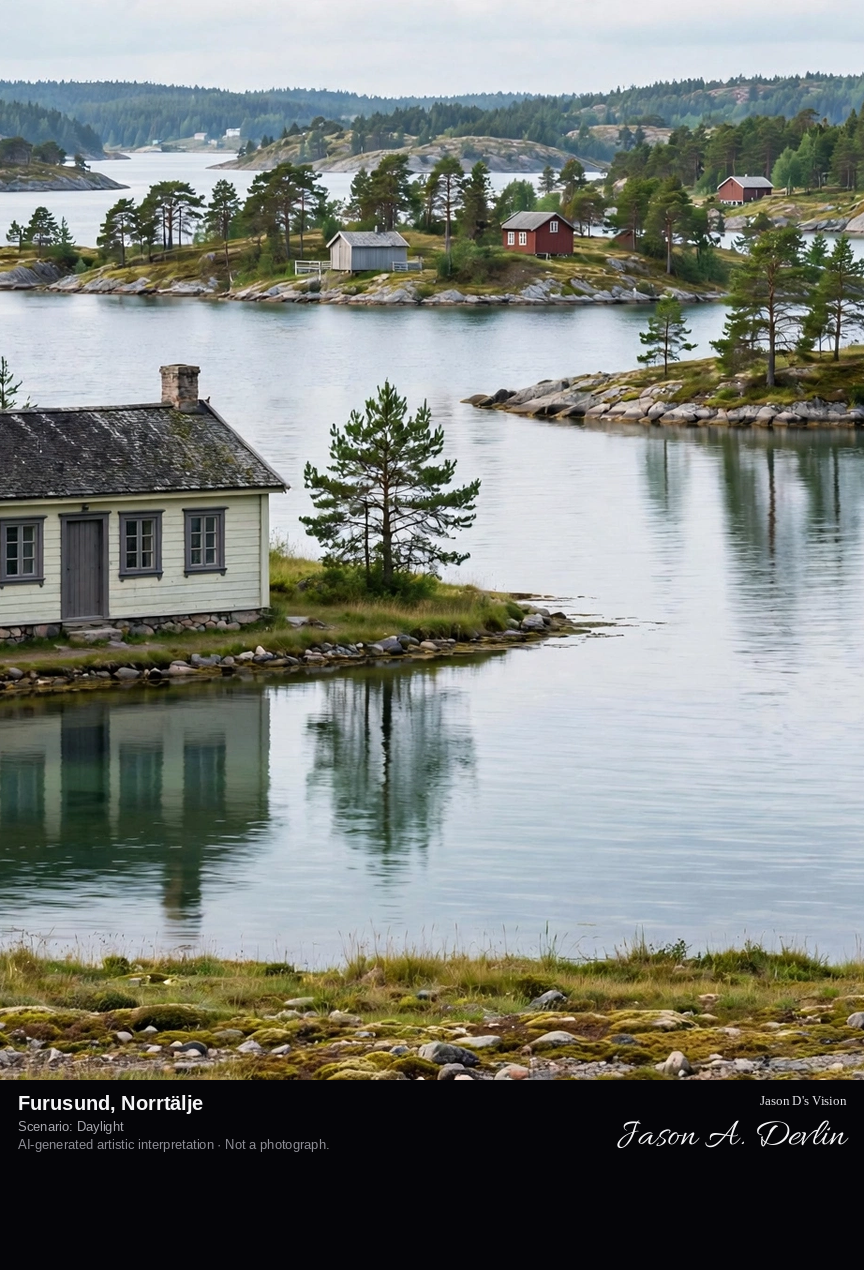
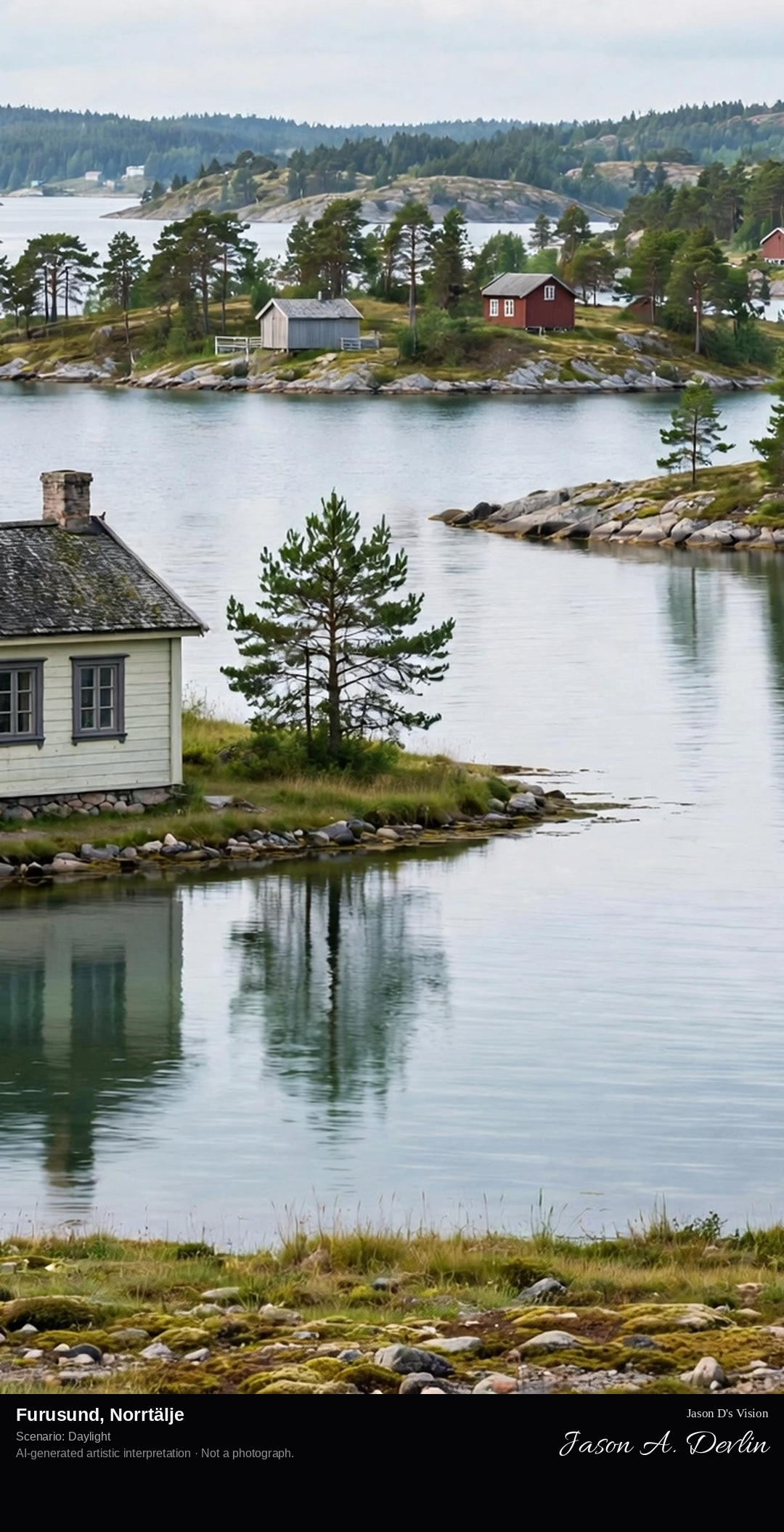
Furusund's historic pilot and customs station island, the grand Societetshus hotel above the strait where Astrid Lindgren summered, in the northern archipelago.
Bright daylight over Furusund's historic pilot and customs station island — the grand white Societetshus hotel with its long veranda stands above the strait where Astrid Lindgren summered, with red wooden harbor buildings, boats at the quay, and archipelago islets reaching to the horizon.
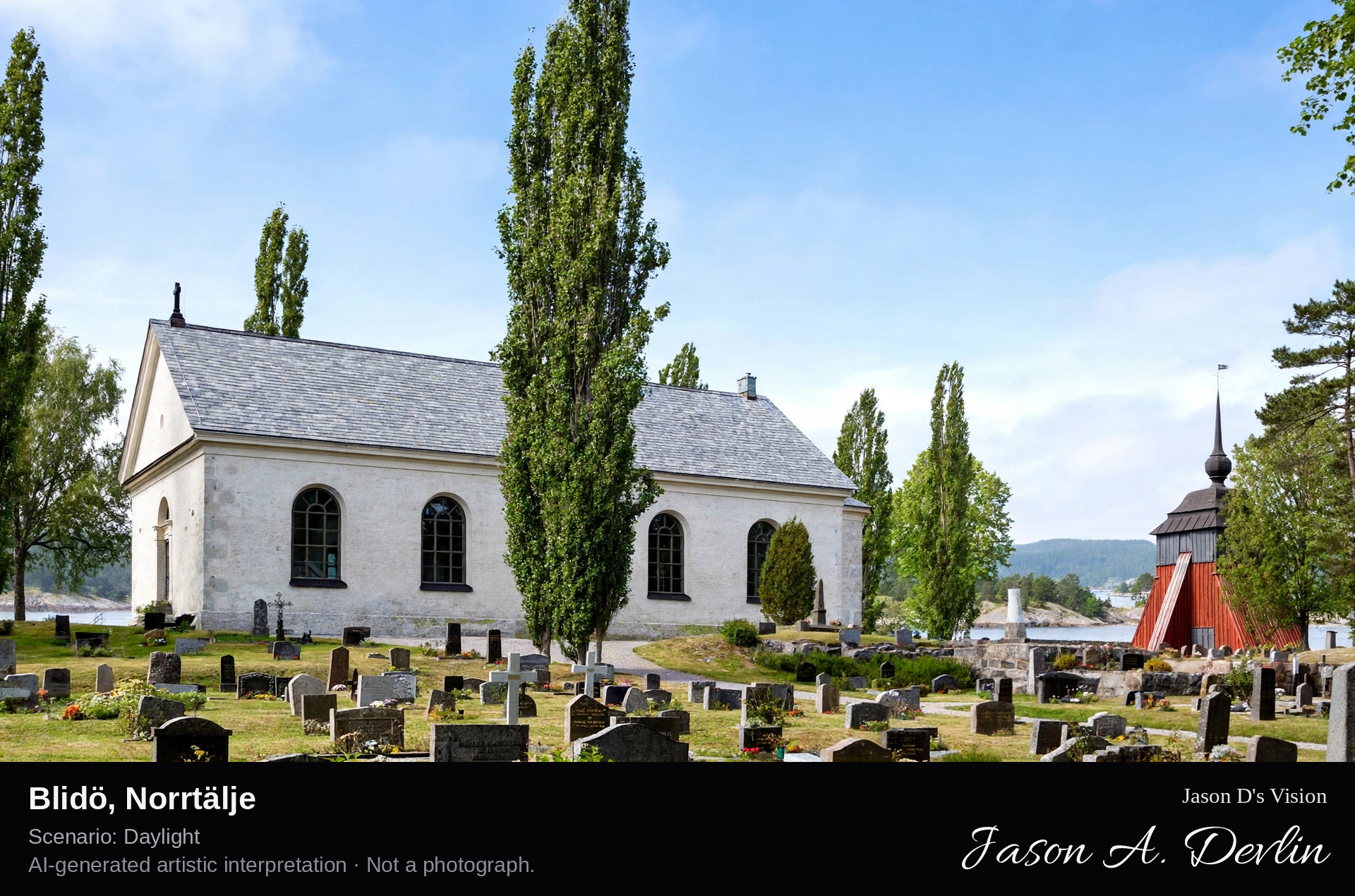
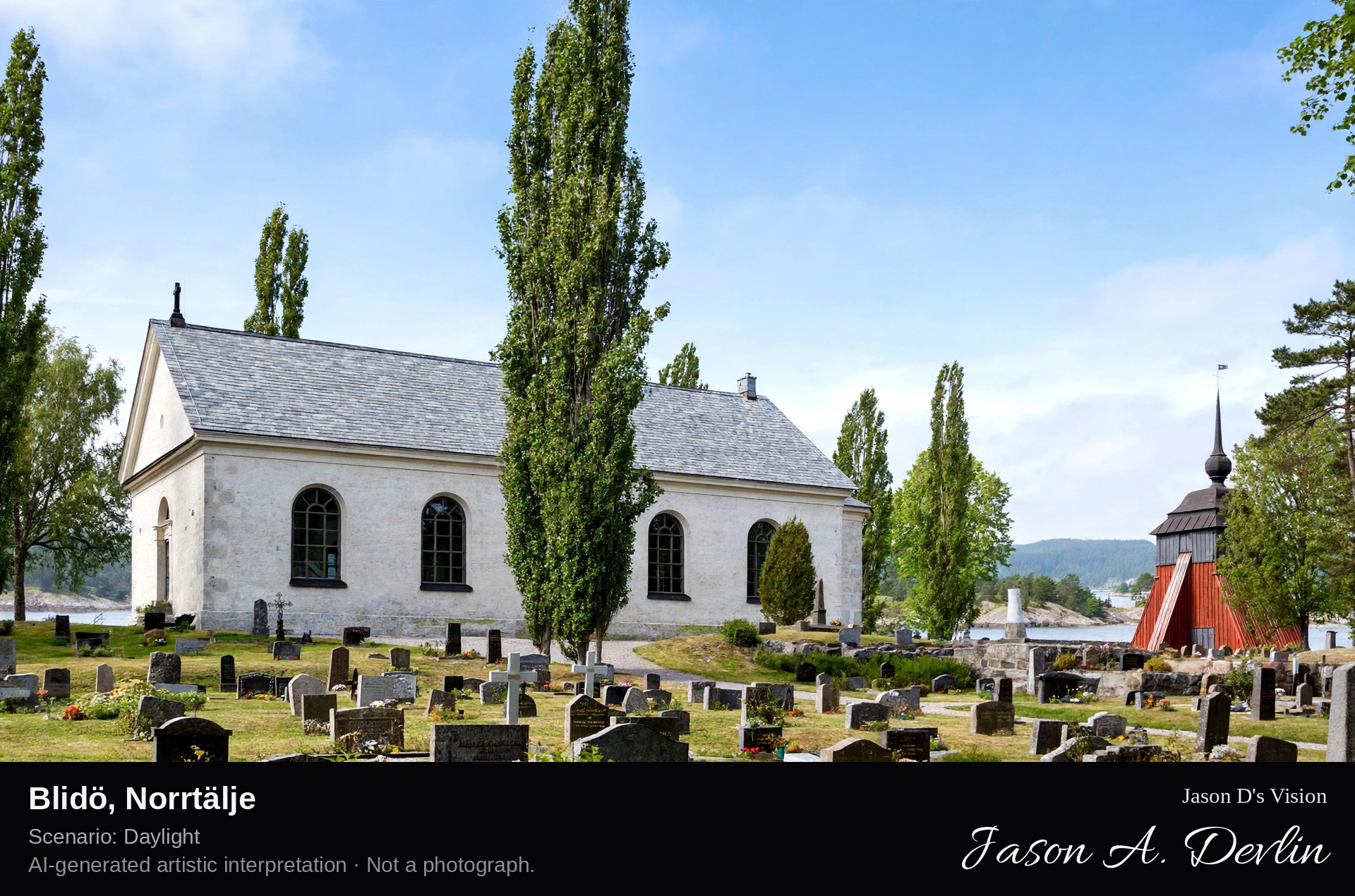
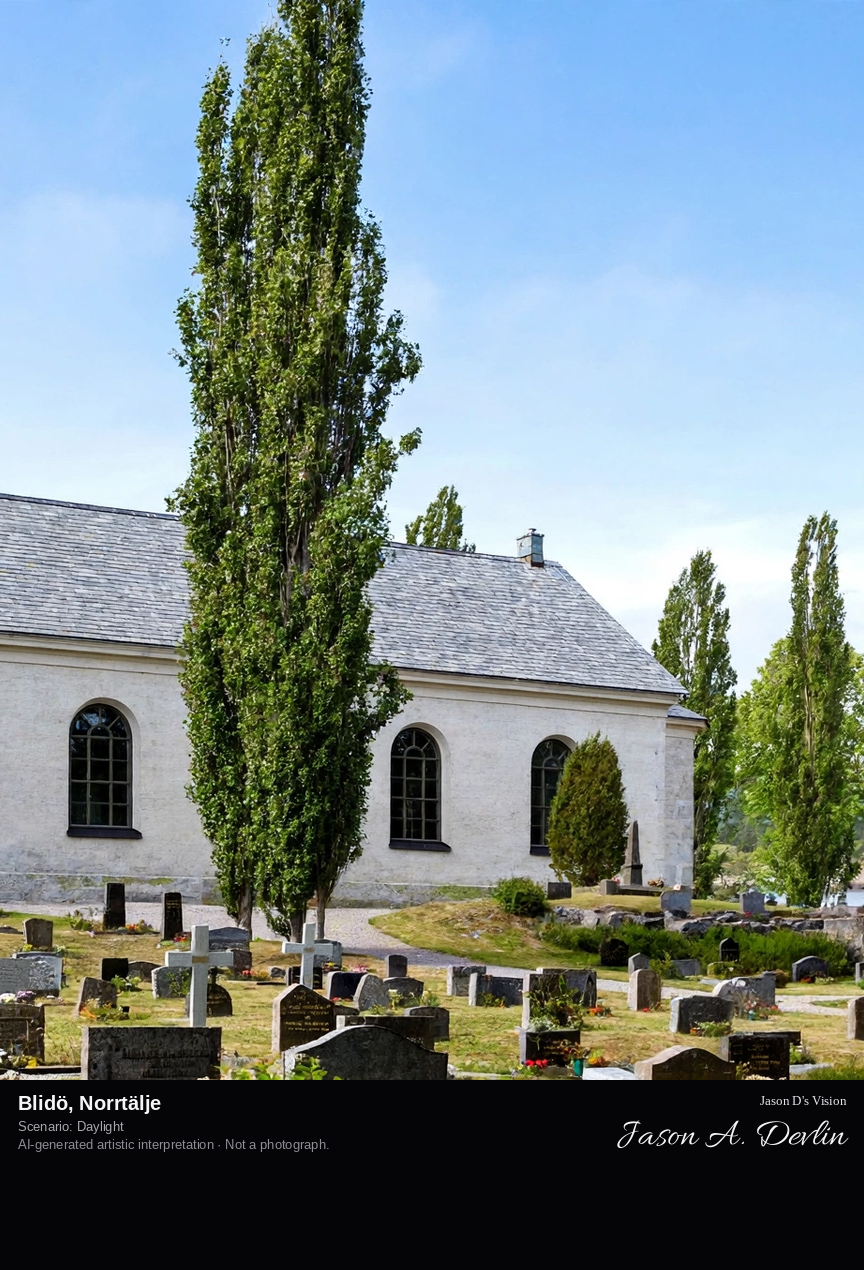
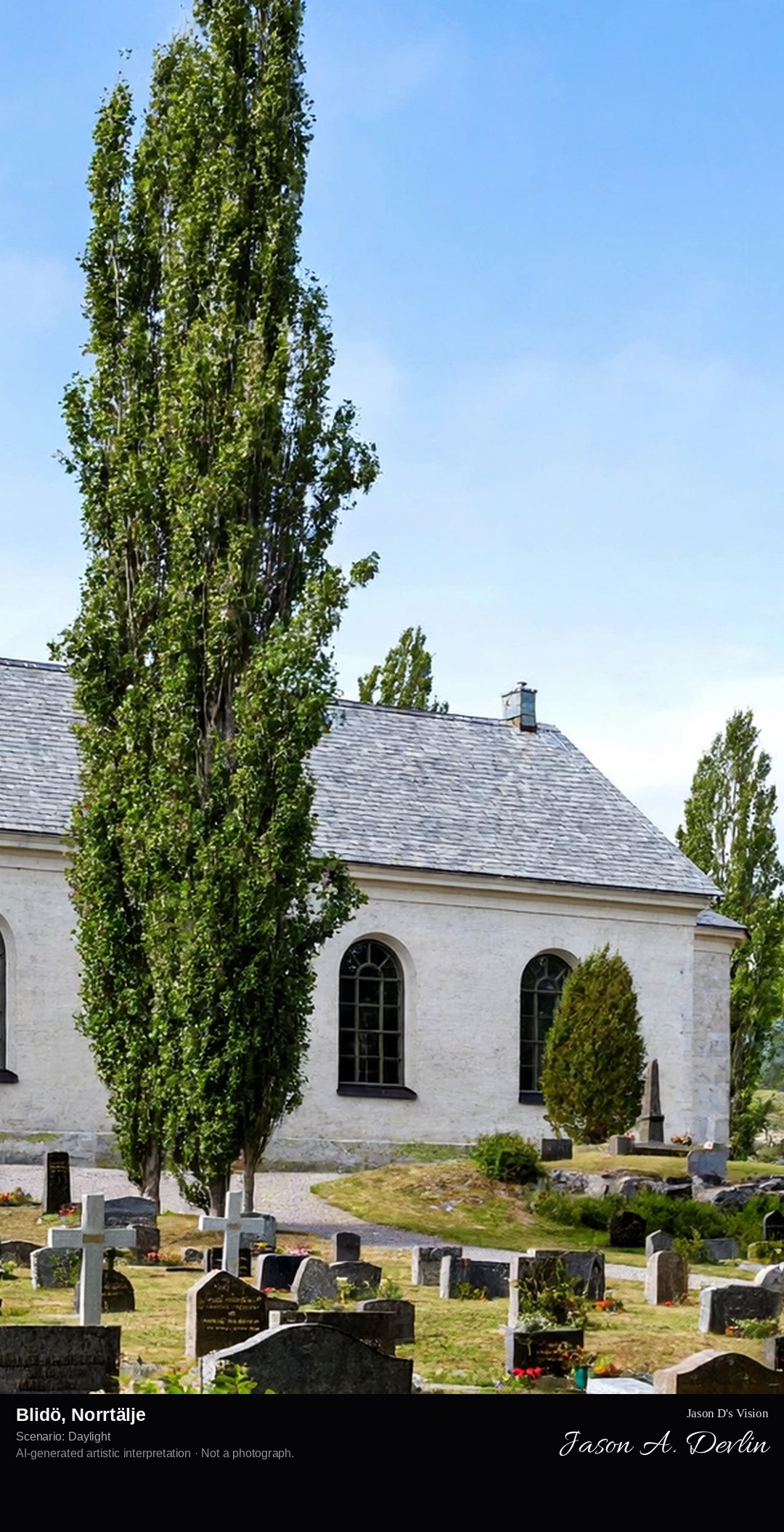
Blidö's church village with the white 19th-century church above the bay, the farming and fishing island in the northern archipelago with its preserved village street.
Bright daylight over Blidö's church village — the white 19th-century church with its tall spire rises above the bay, with the preserved village street of Falu-red wooden houses, fishing boats in the water, and forested archipelago islands behind.
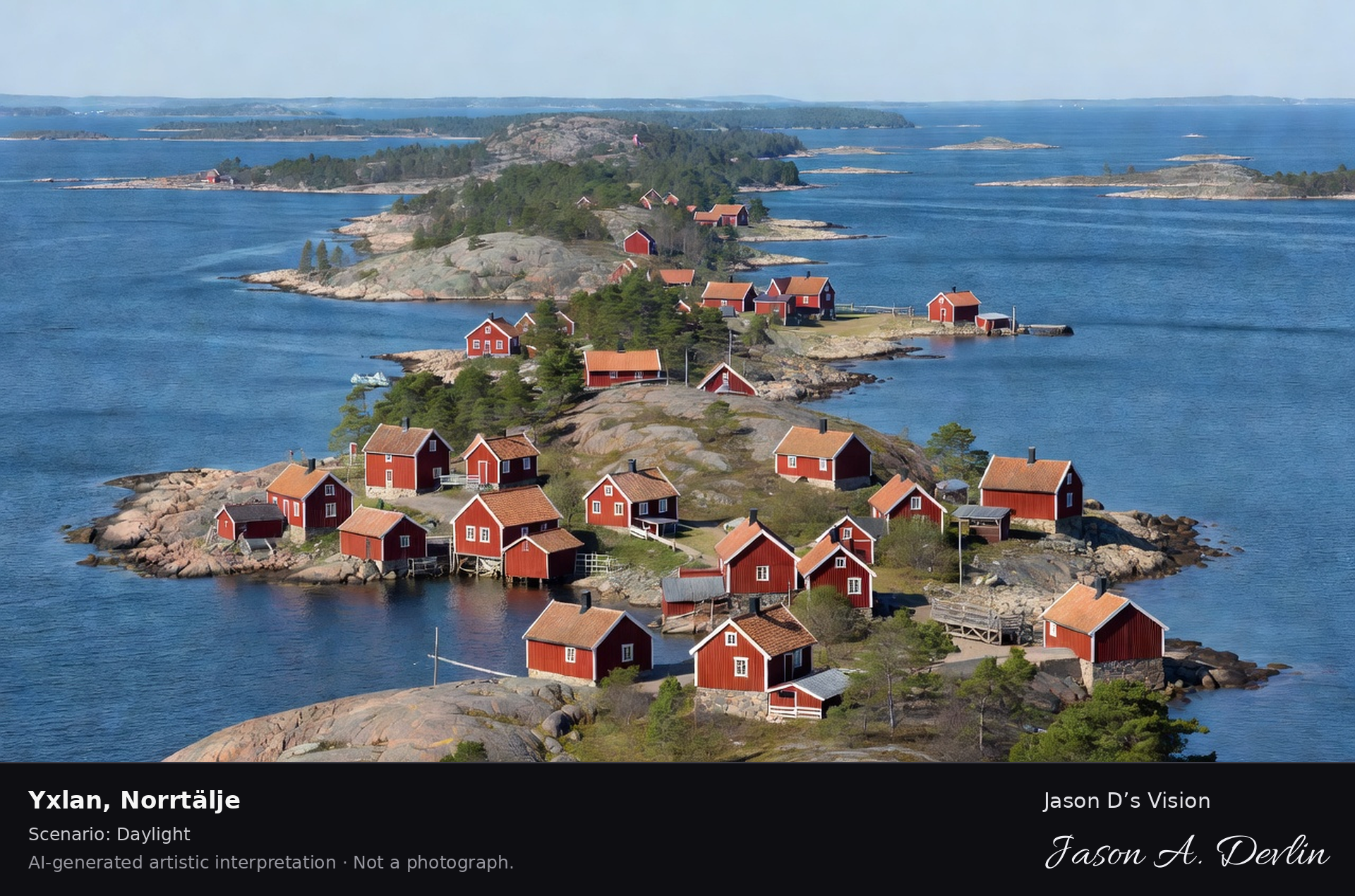
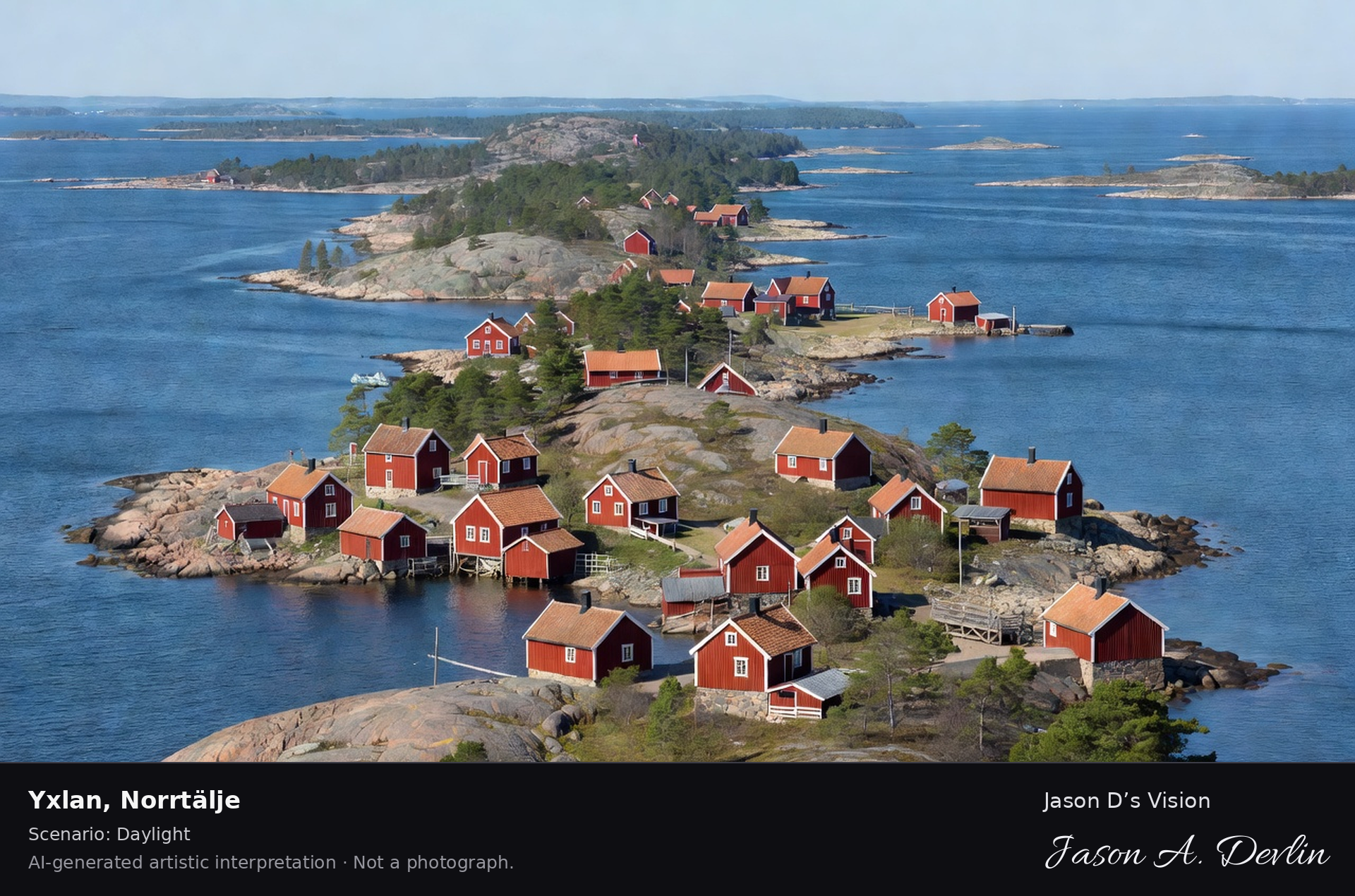
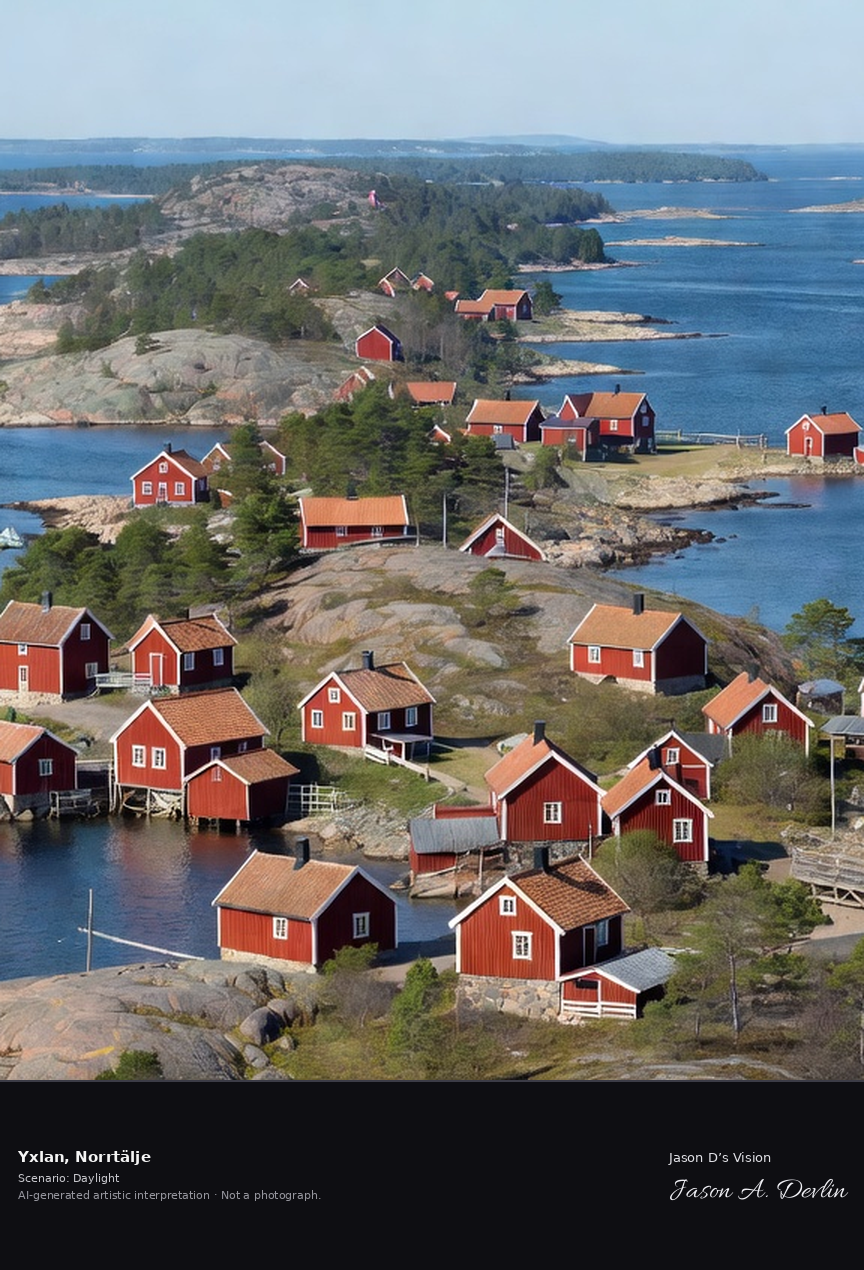
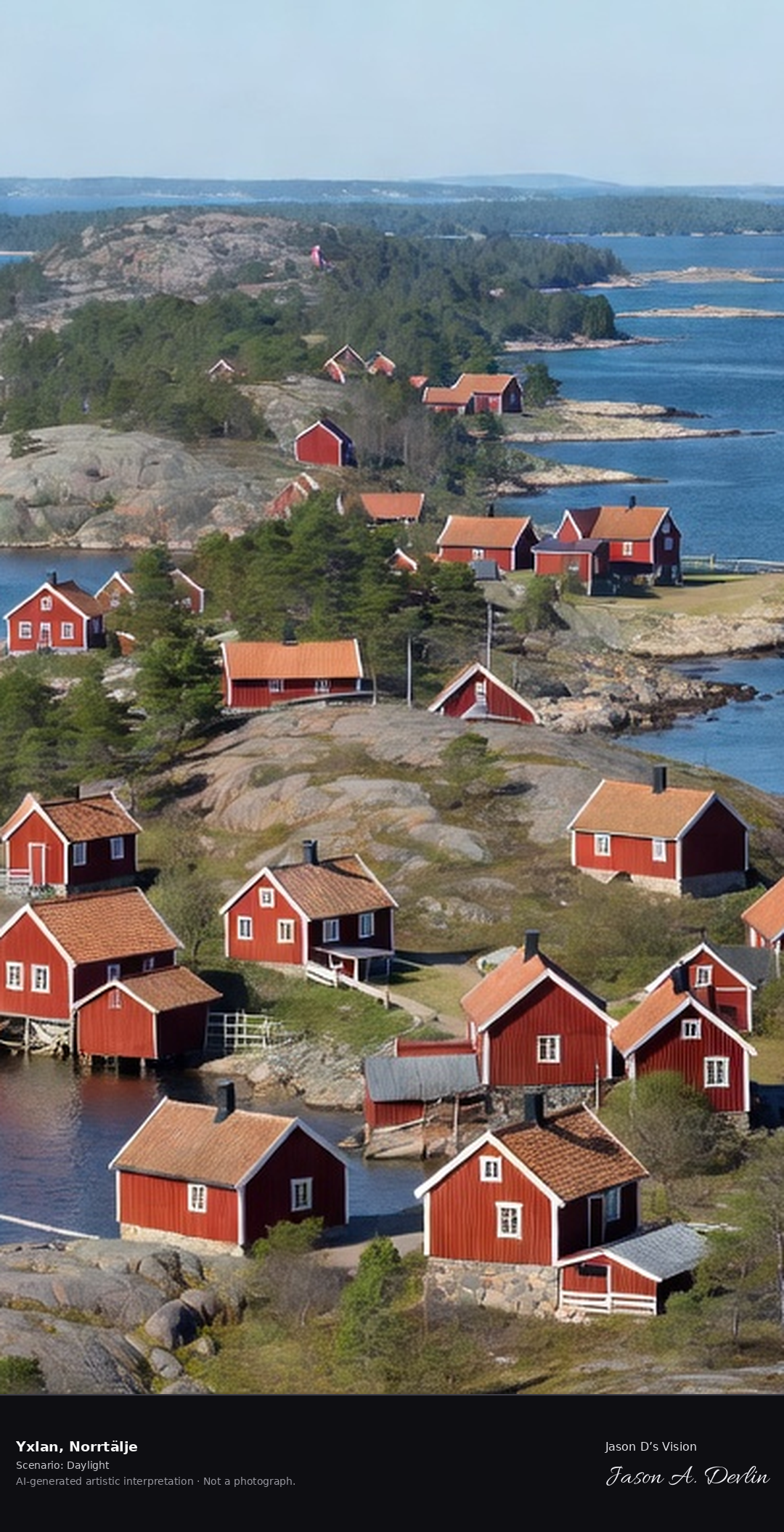
Yxlan's long island ridge in the outer northern archipelago, the historic fishing villages of Köpmanholm and Yxlö with the open sea beyond the Furusund strait.
Bright daylight over Yxlan's long island ridge in the outer northern archipelago — the historic fishing villages of Köpmanholm and Yxlö spread their red wooden houses along the rocky ridge, with the open sea beyond the Furusund strait.
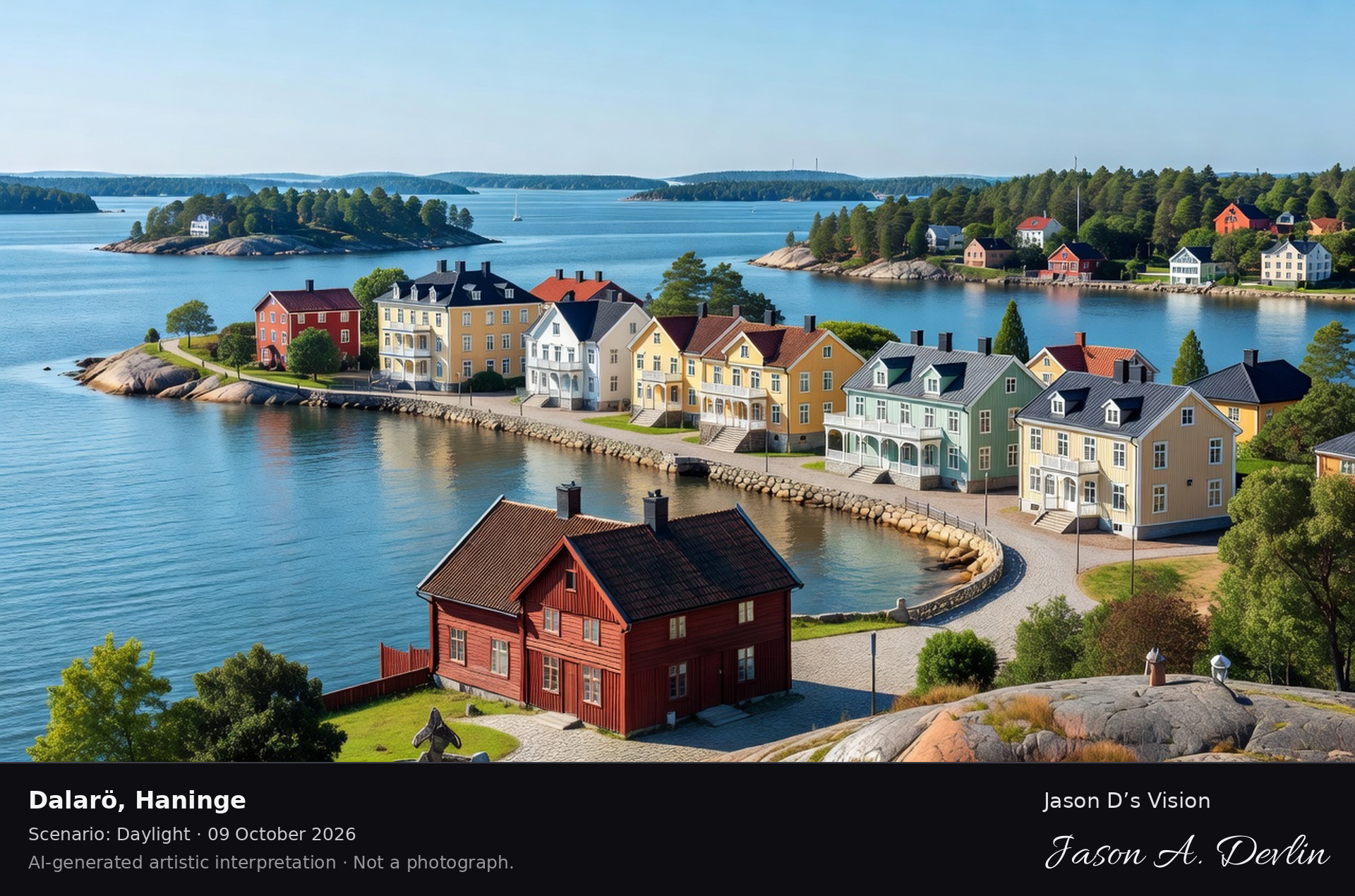
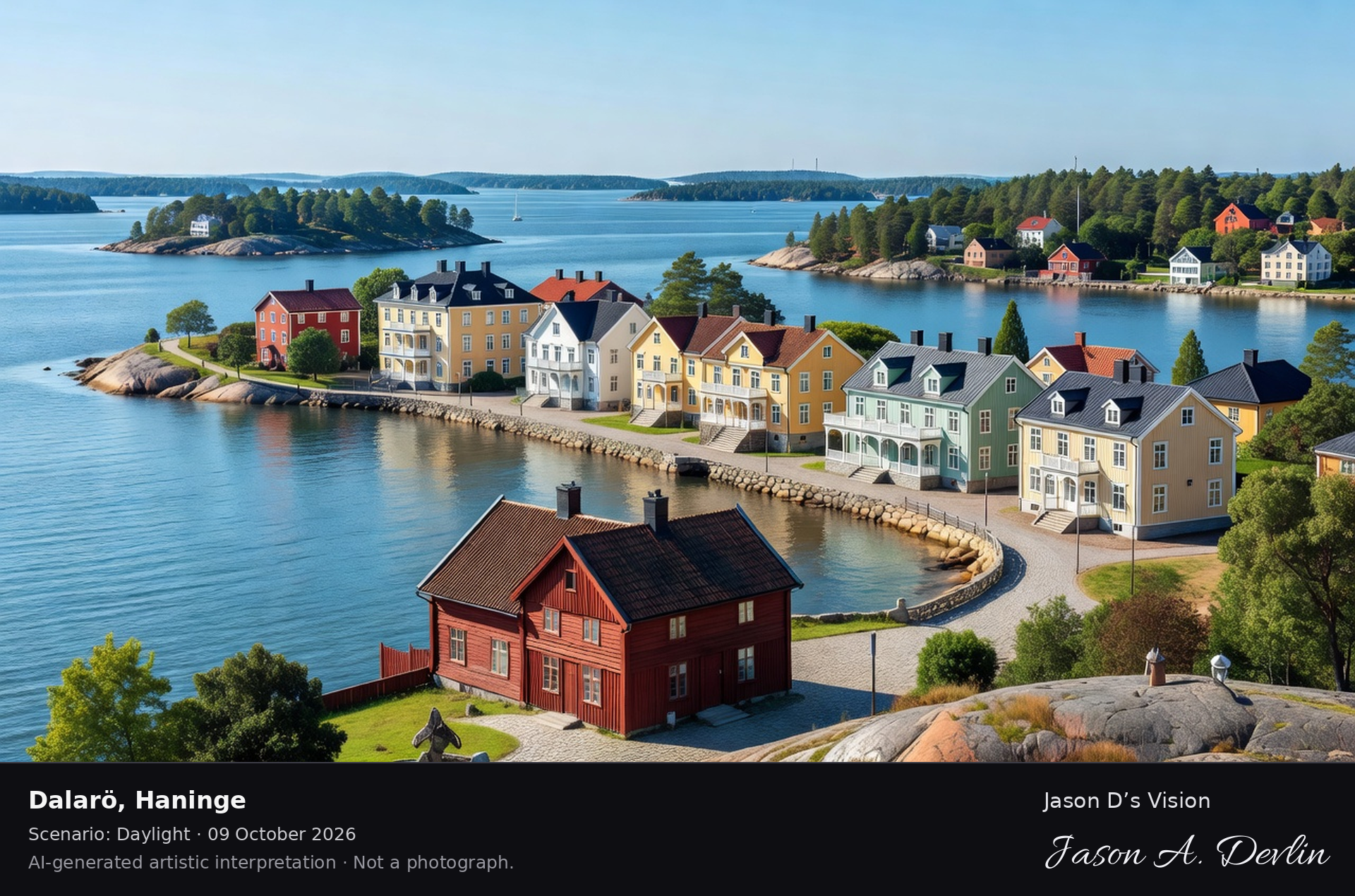
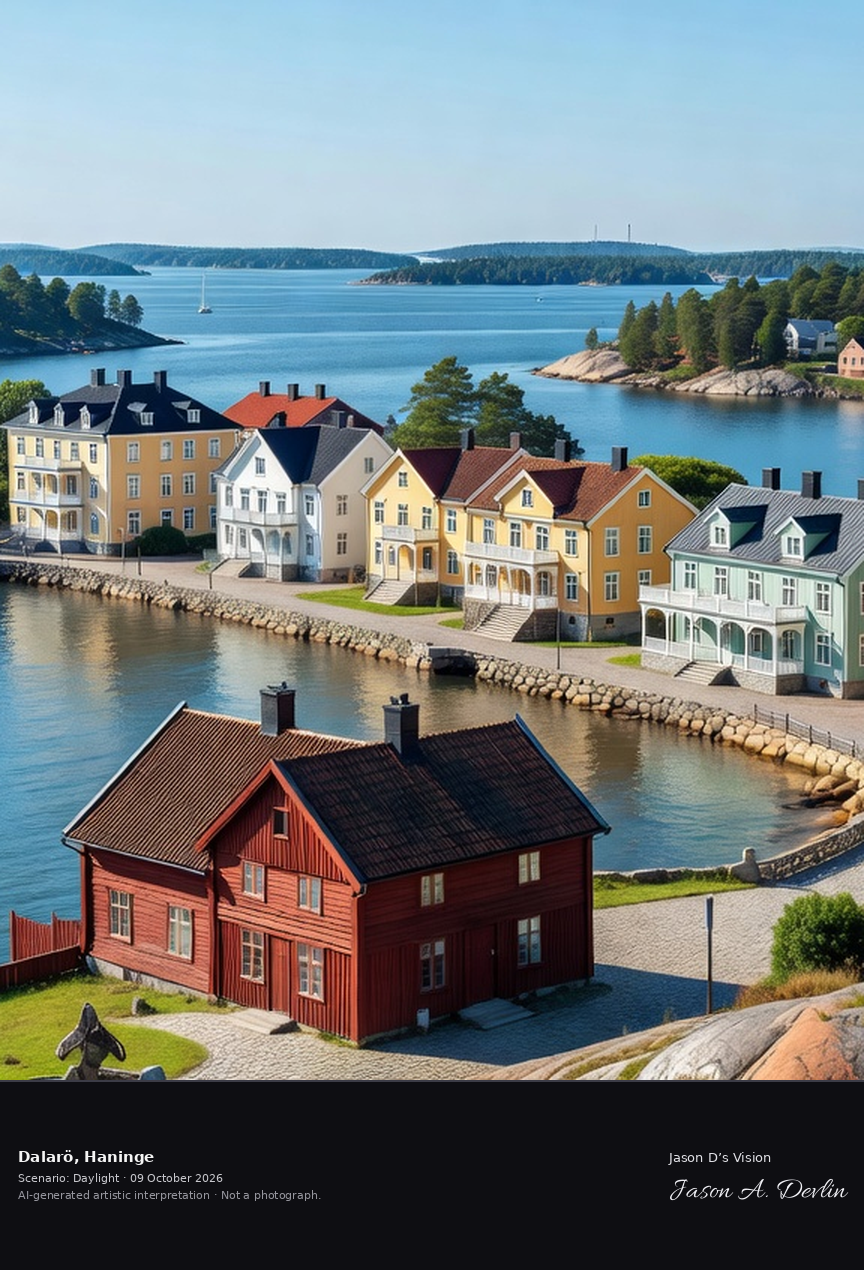
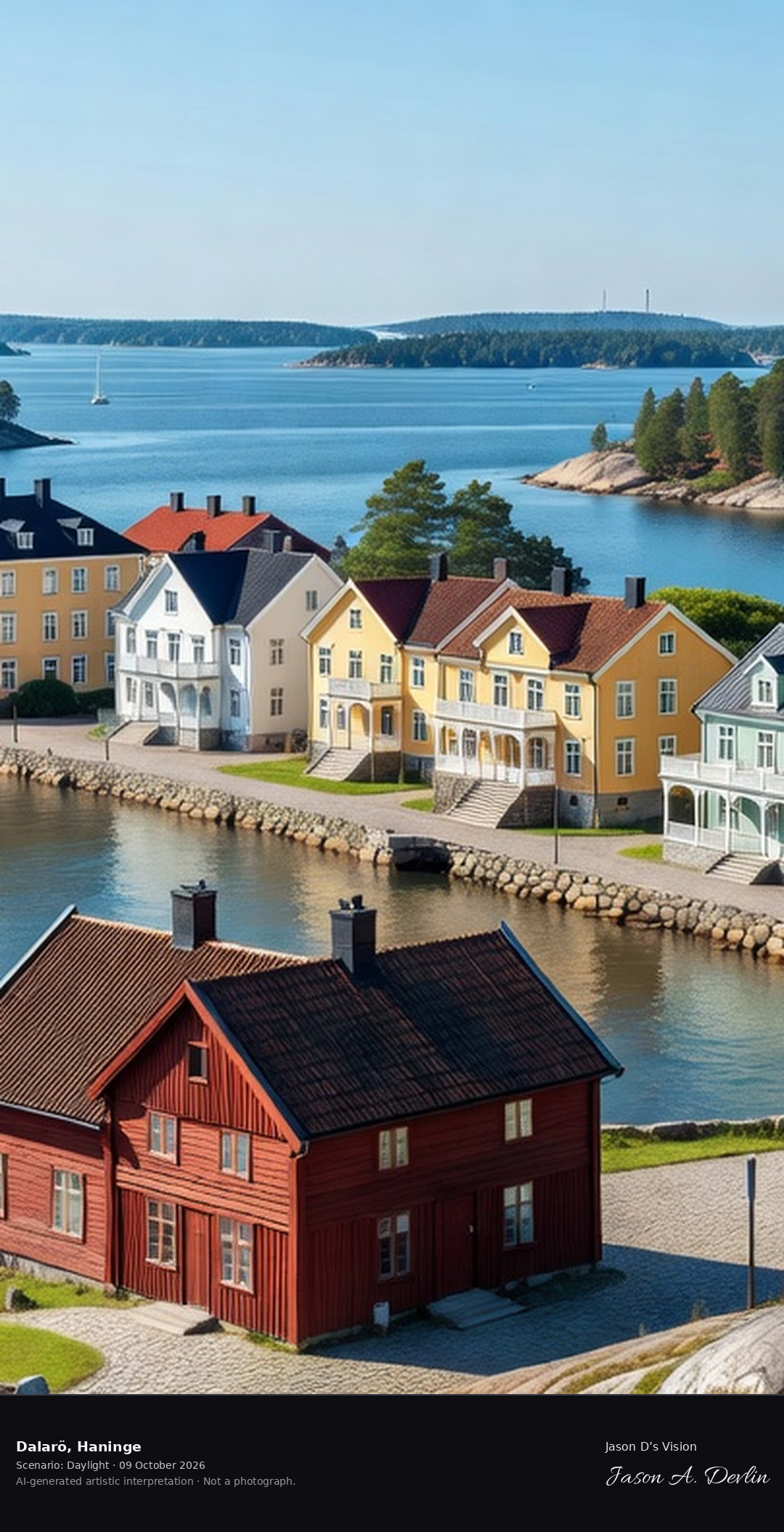
Dalarö's historic seaside resort with the 18th-century customs house and grand villas along the strait, the old pilot town at the archipelago's southern entrance.
Bright daylight over Dalarö's historic seaside resort — the 18th-century customs house and grand 19th-century villas in painted colours line the strait, the old pilot town at the Stockholm archipelago's southern entrance.
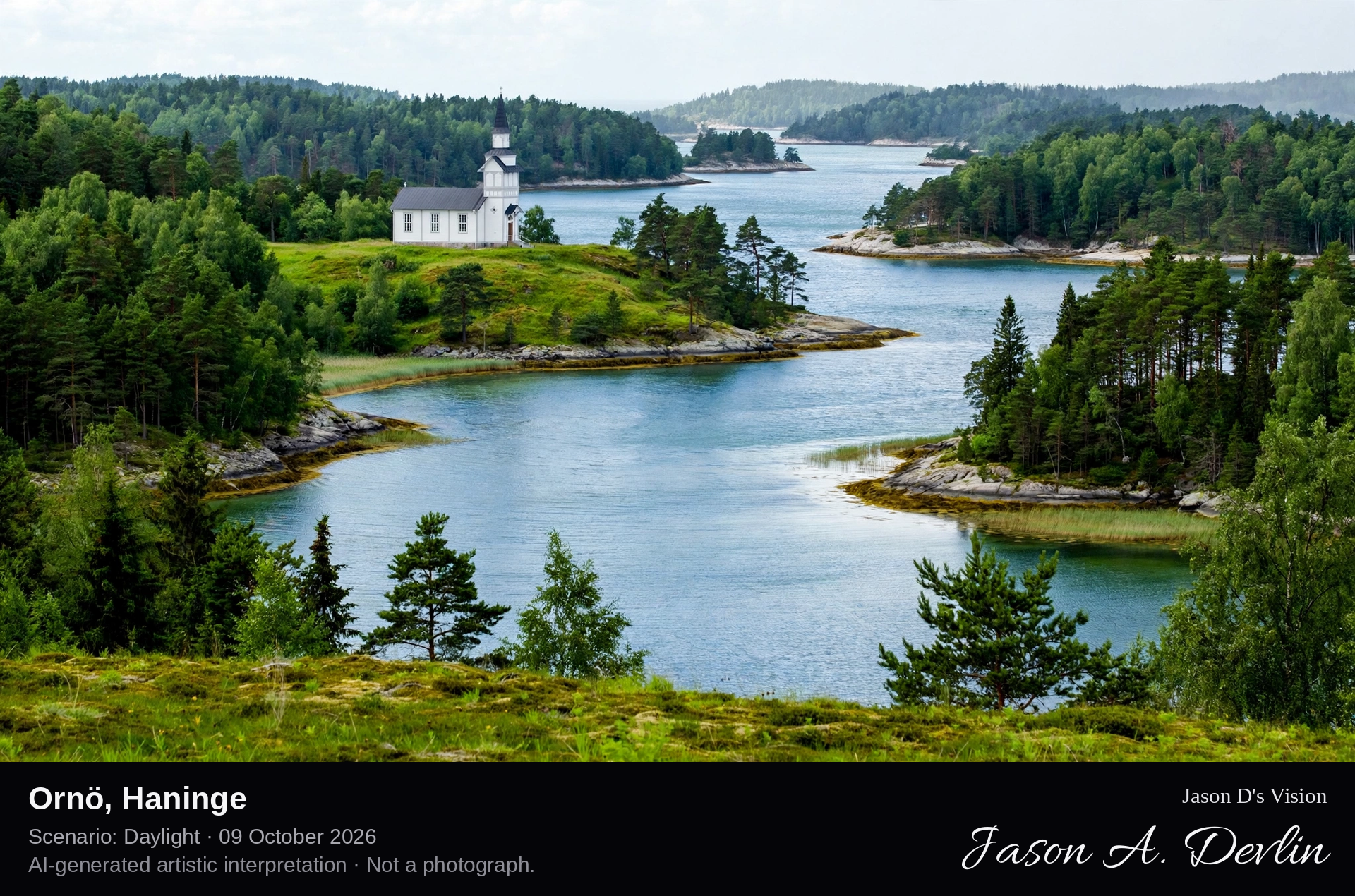
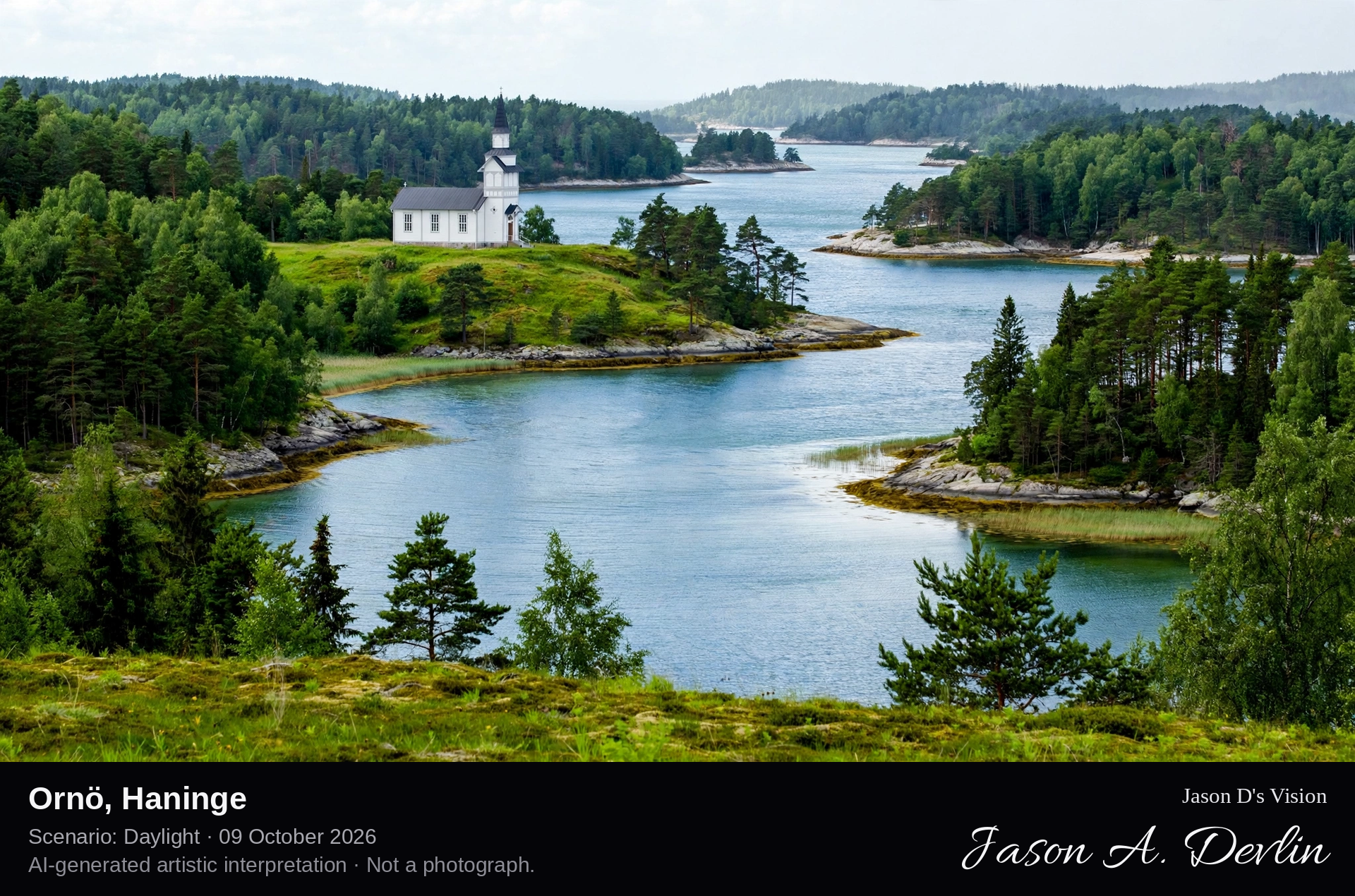
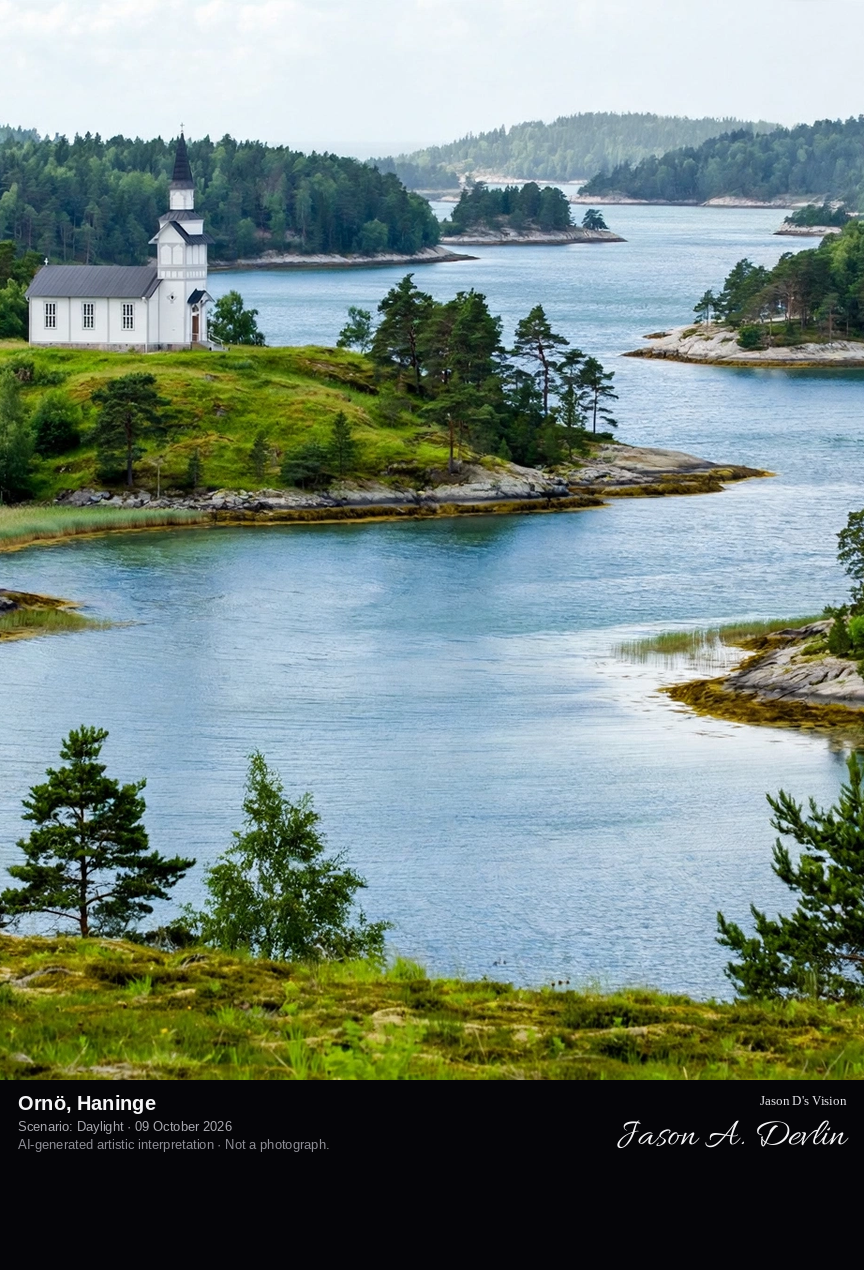
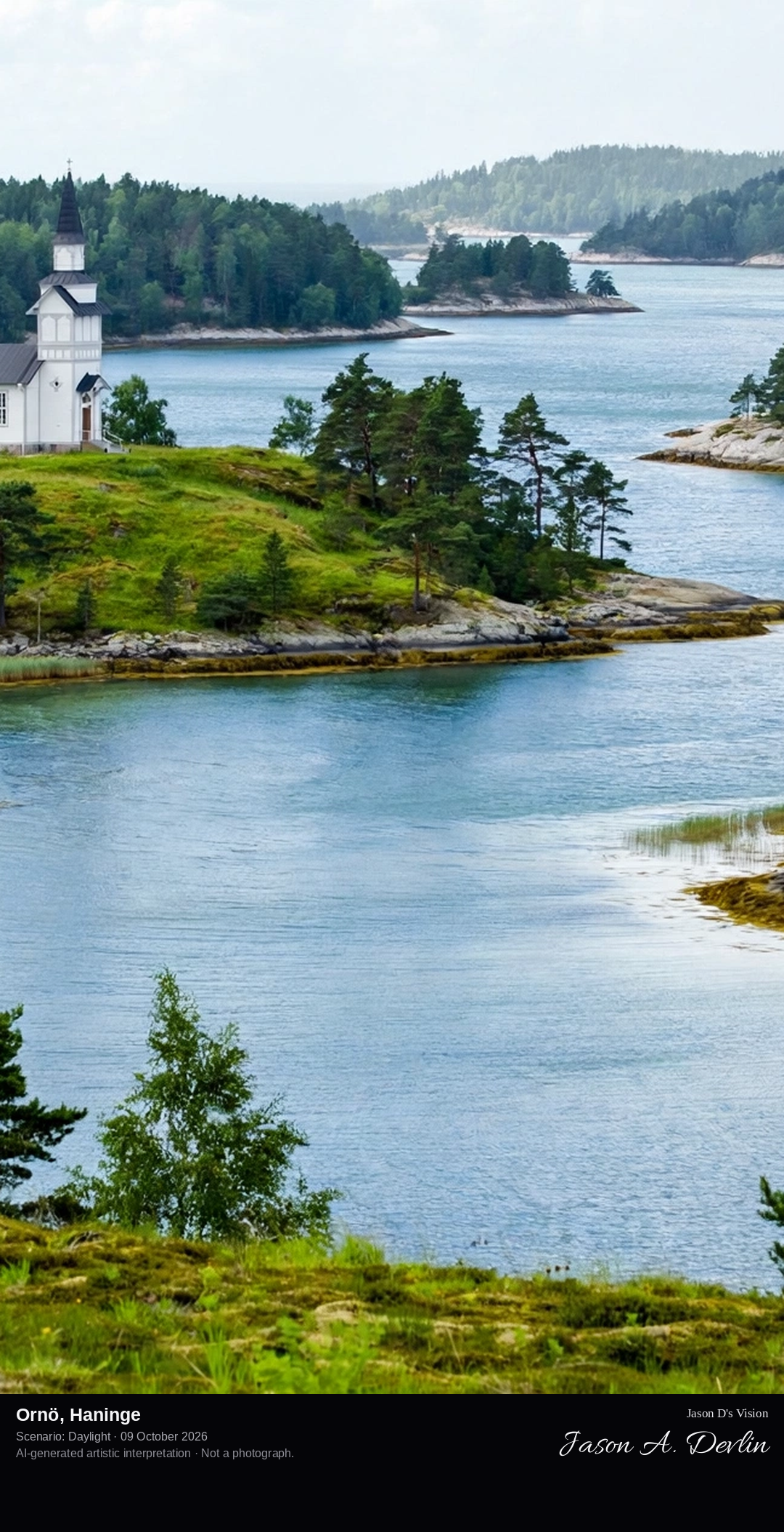
Ornö's church and manor in the southern archipelago, the largest island in the Haninge skerries with its 19th-century church above the bay and the historic ironworks village.
Bright daylight over Ornö's church and manor in the southern archipelago — the 19th-century white church above the bay and the yellow manor house preside over the red ironworks-village buildings on the Haninge skerries' largest island.
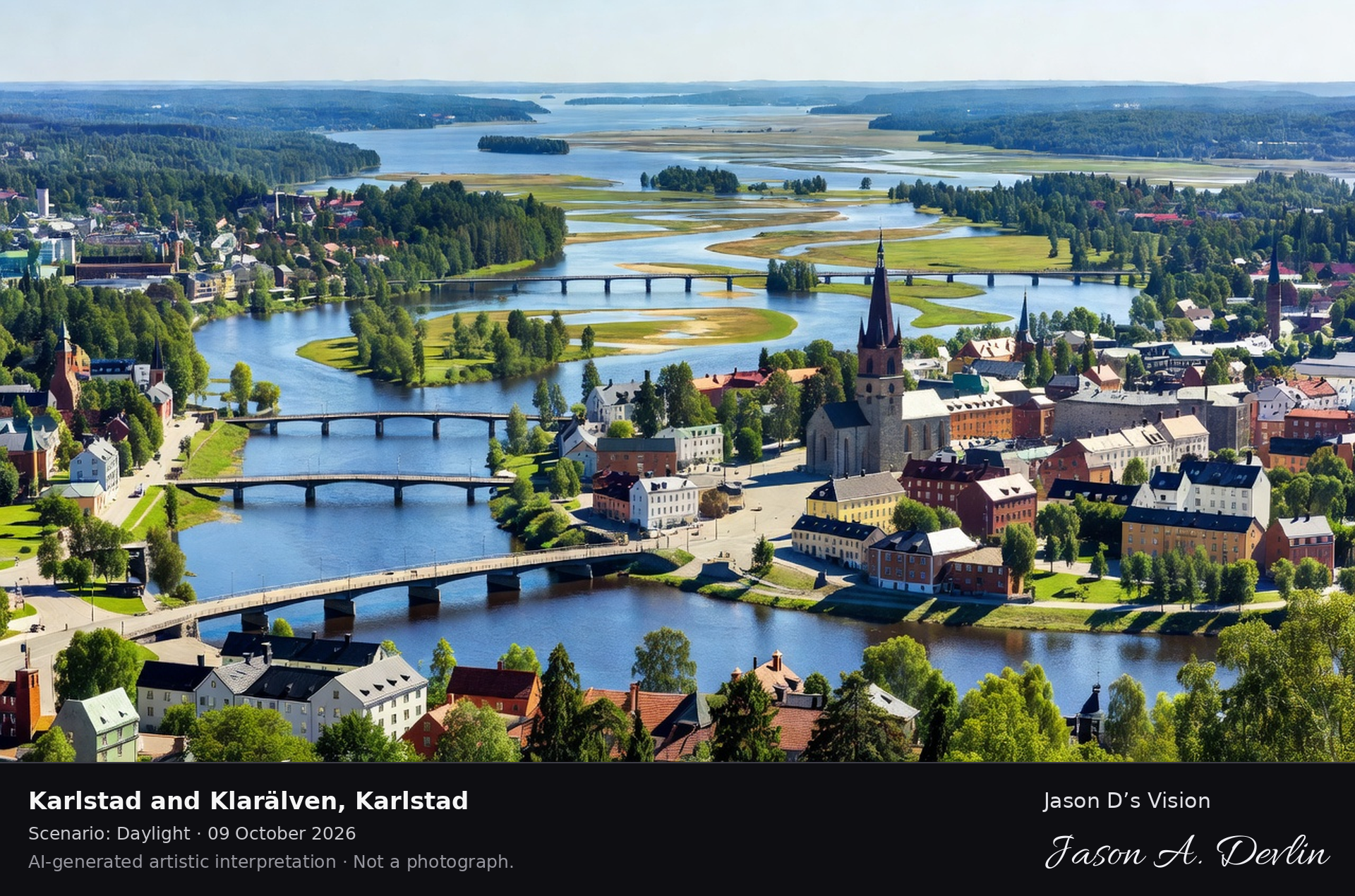
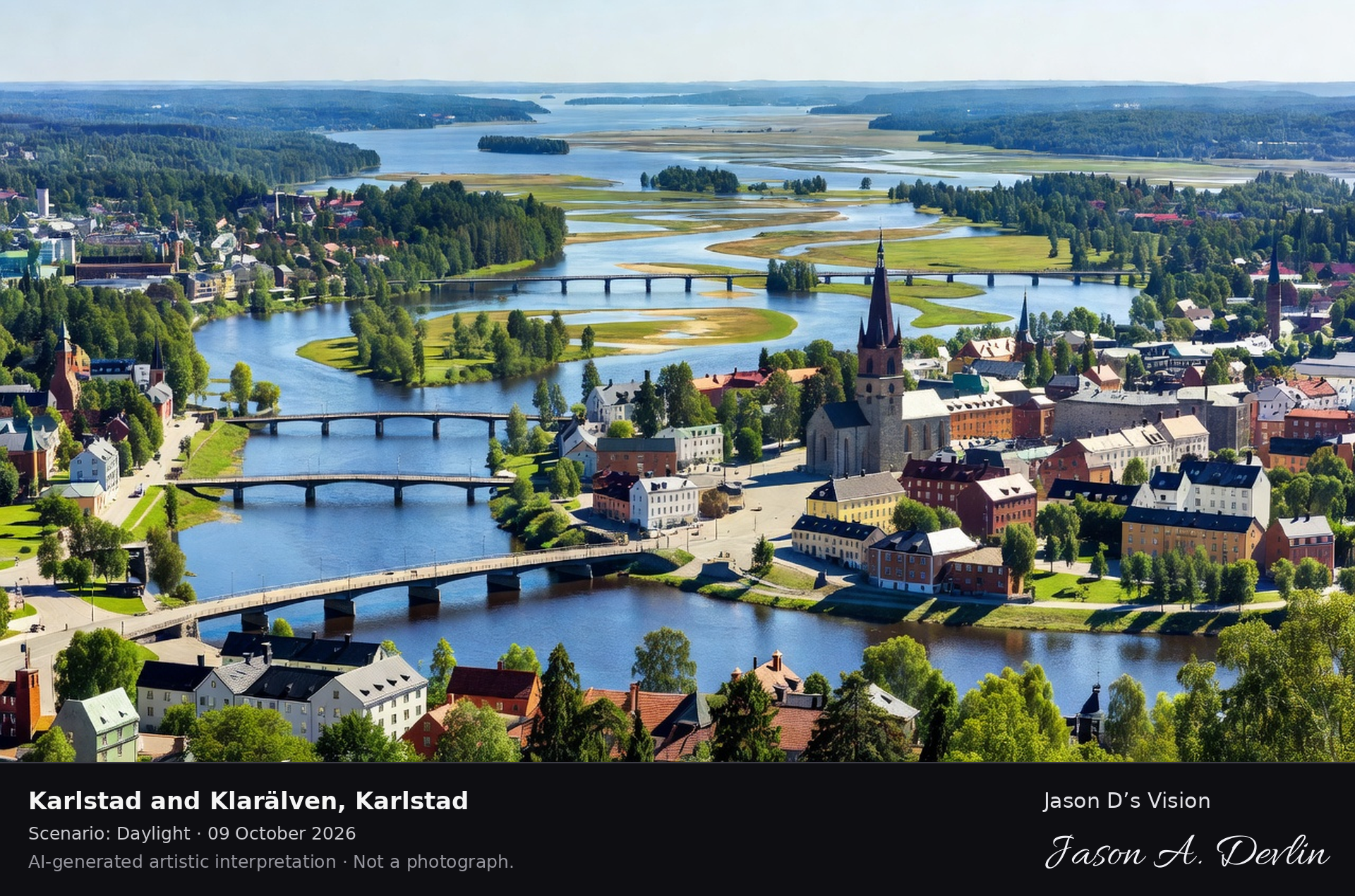
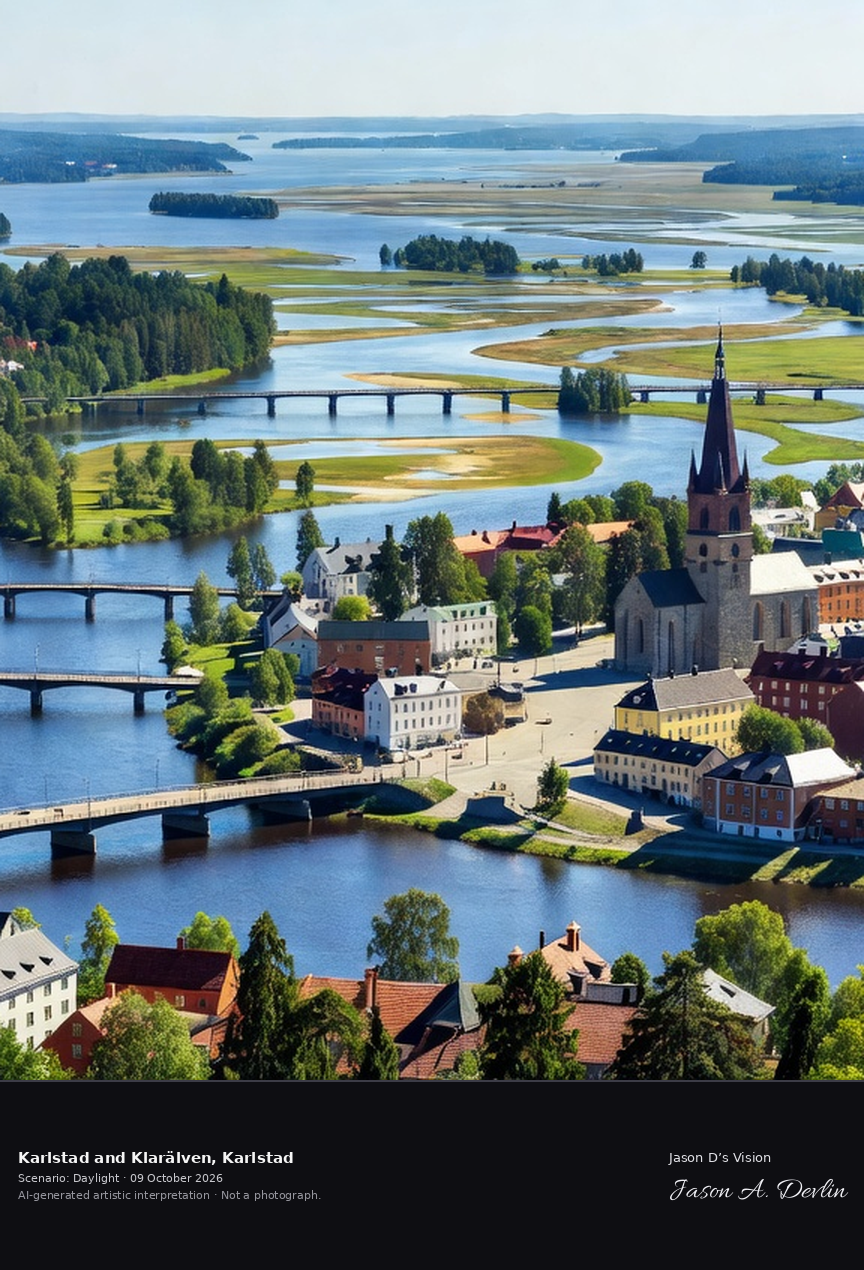
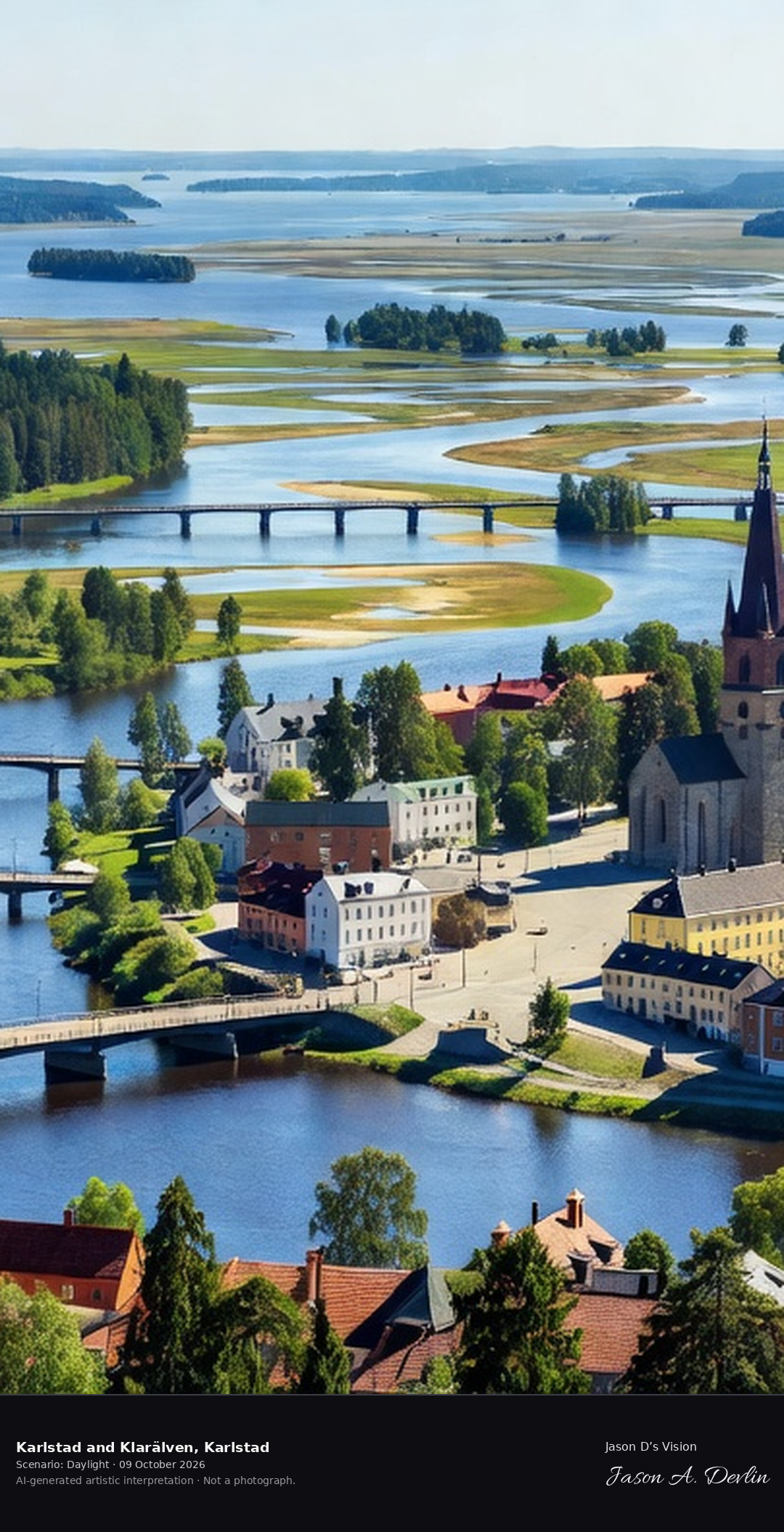
Karlstad's cathedral and the Klarälven river delta fanning into Lake Vänern, the 'sunny city' with its long bridges over the braided river channels and the historic bishop's town center.
Bright daylight over Karlstad where the Klarälven river fans into Lake Vänern — the cathedral spire rises above the historic bishop's town while long bridges thread the braided river channels, the 'sunny city' of Värmland.
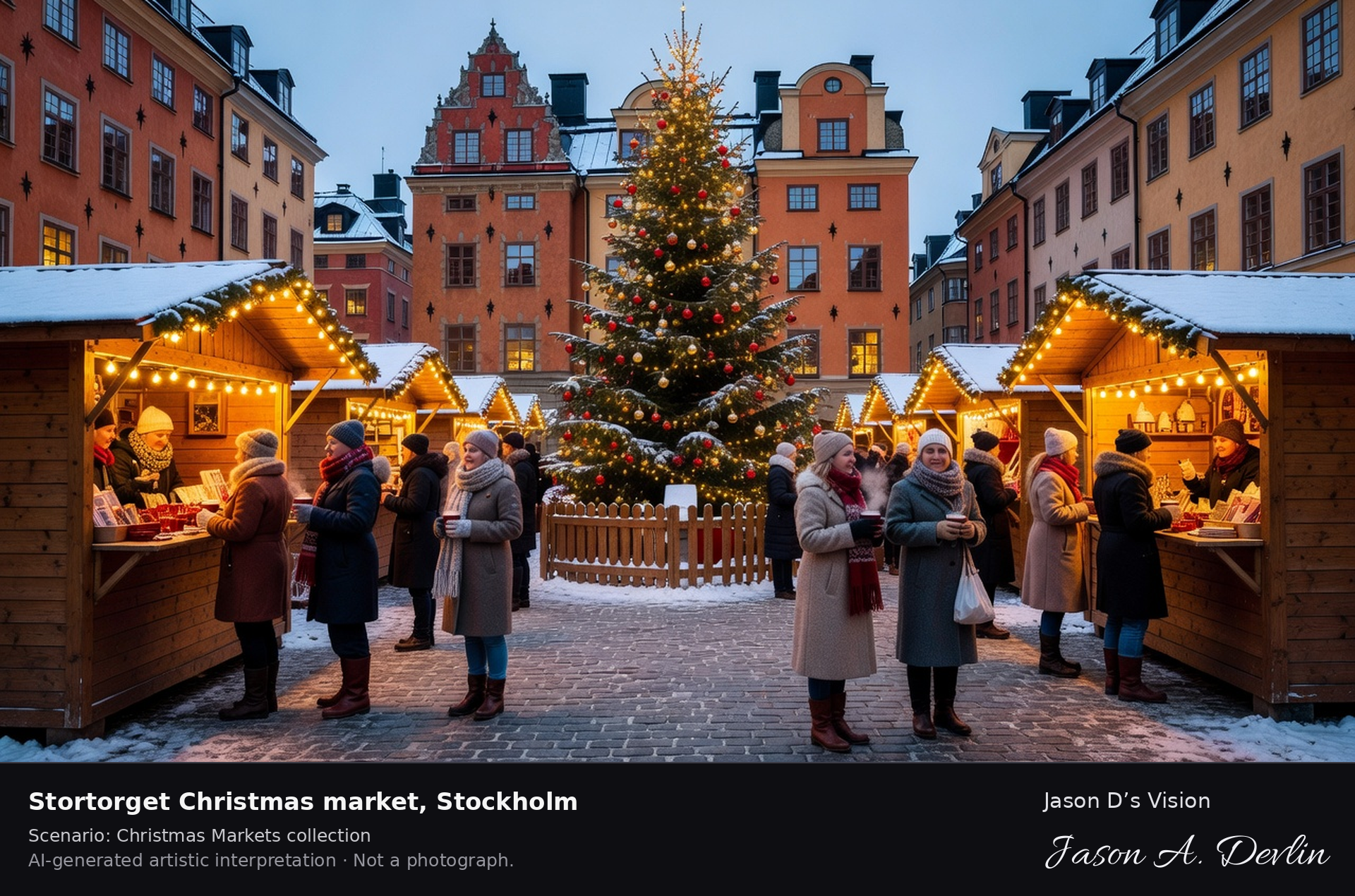
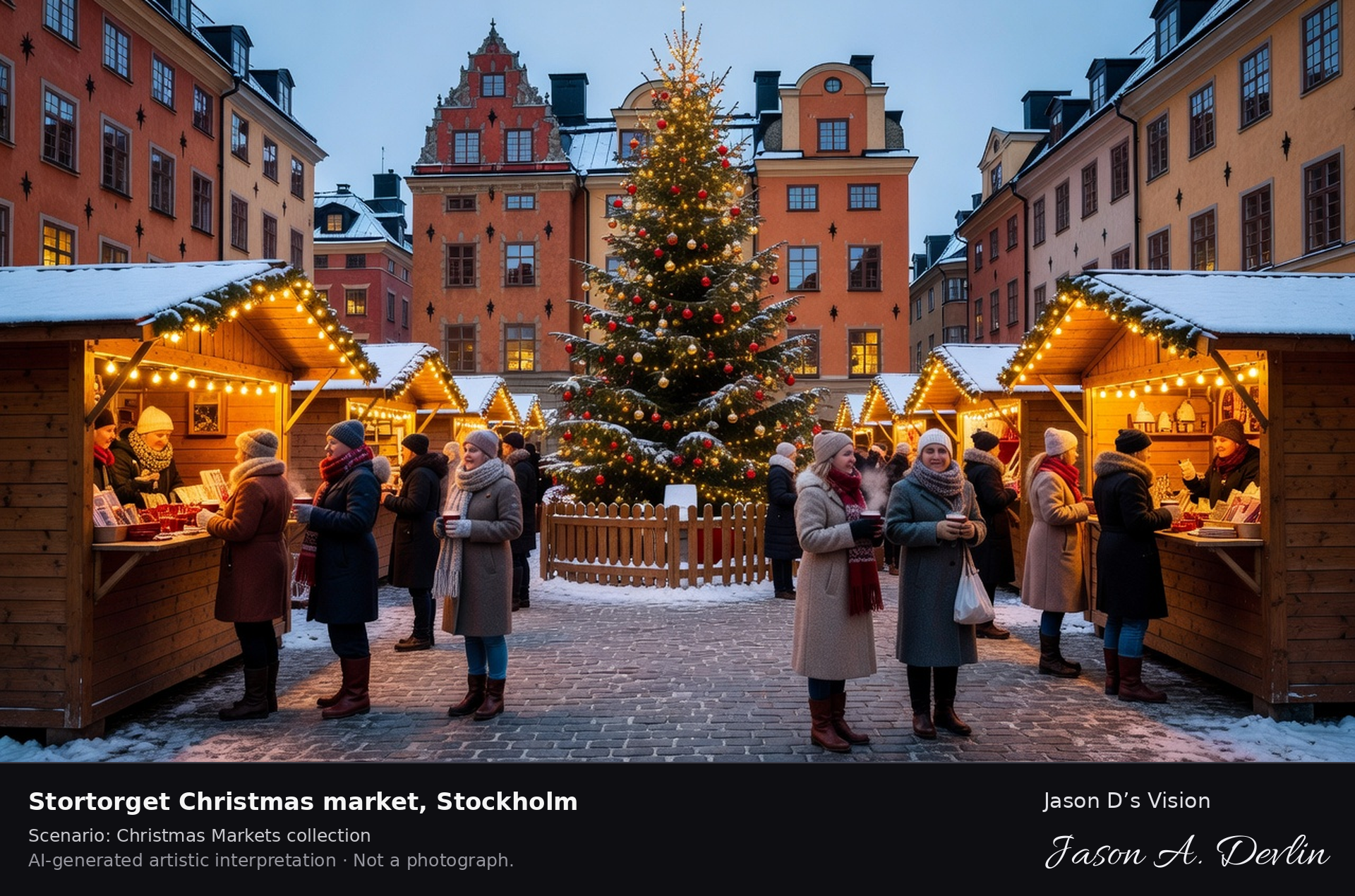
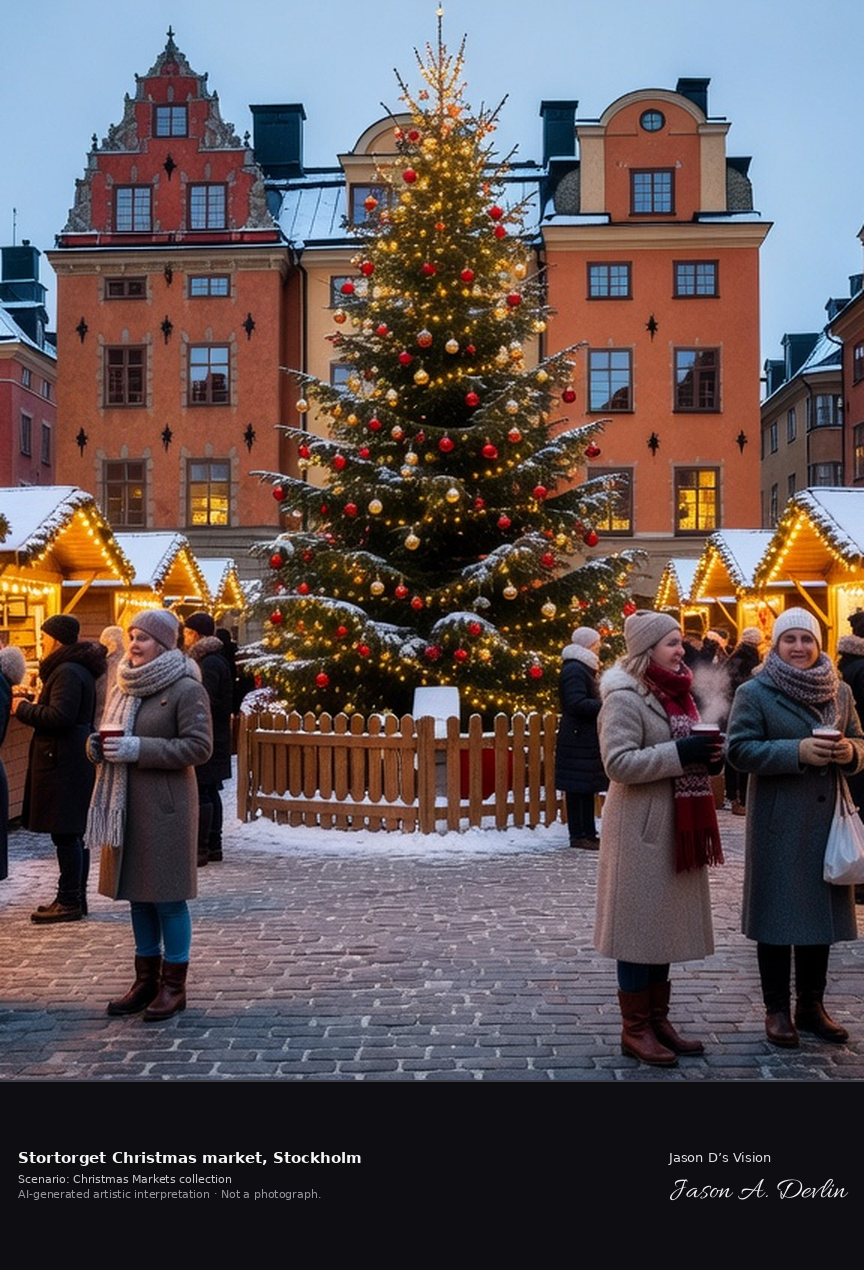
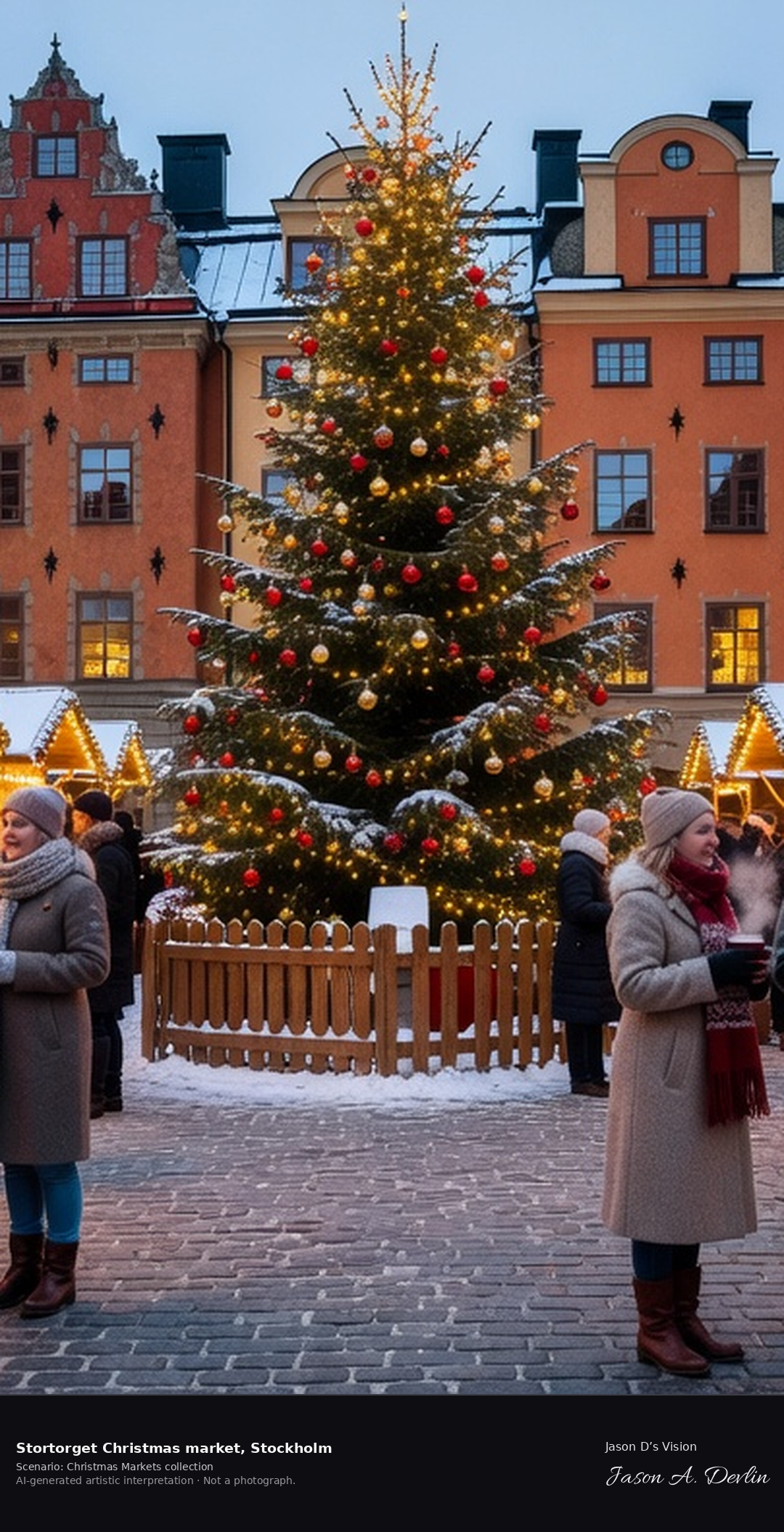
View across Stortorget square in Gamla Stan at dusk, the historic ochre and terracotta merchant houses framing a festive Christmas market: wooden stalls strung with warm lights, a tall decorated Christmas tree at the square's heart, mulled-wine steam rising in the cold air.
From the square's edge the view takes in Stortorget's Christmas market in Gamla Stan, Stockholm: wooden stalls strung with warm lights around a grand decorated Christmas tree, framed by the square's ochre and terracotta historic merchant houses. A festive winter evening in the old town.
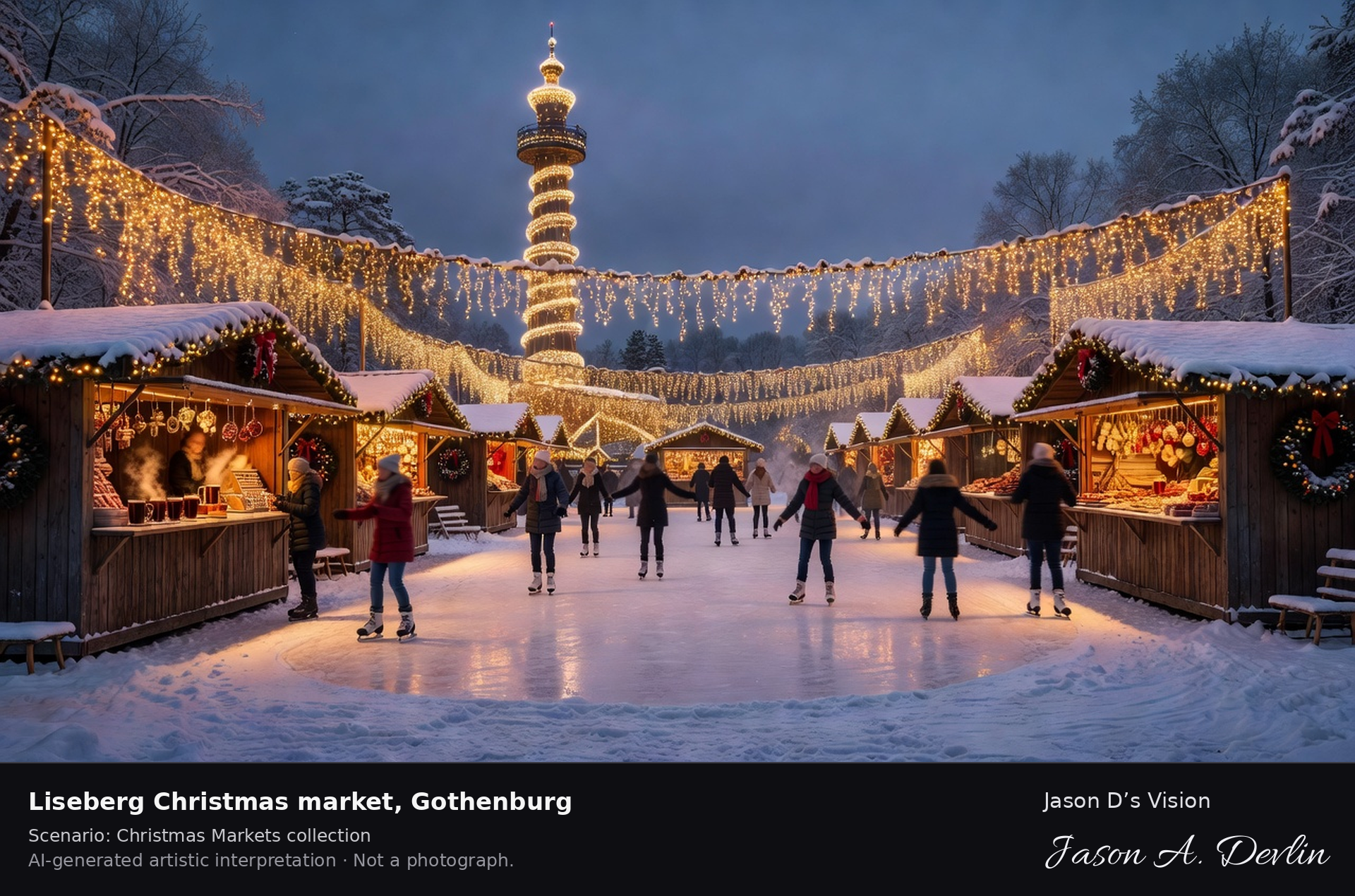
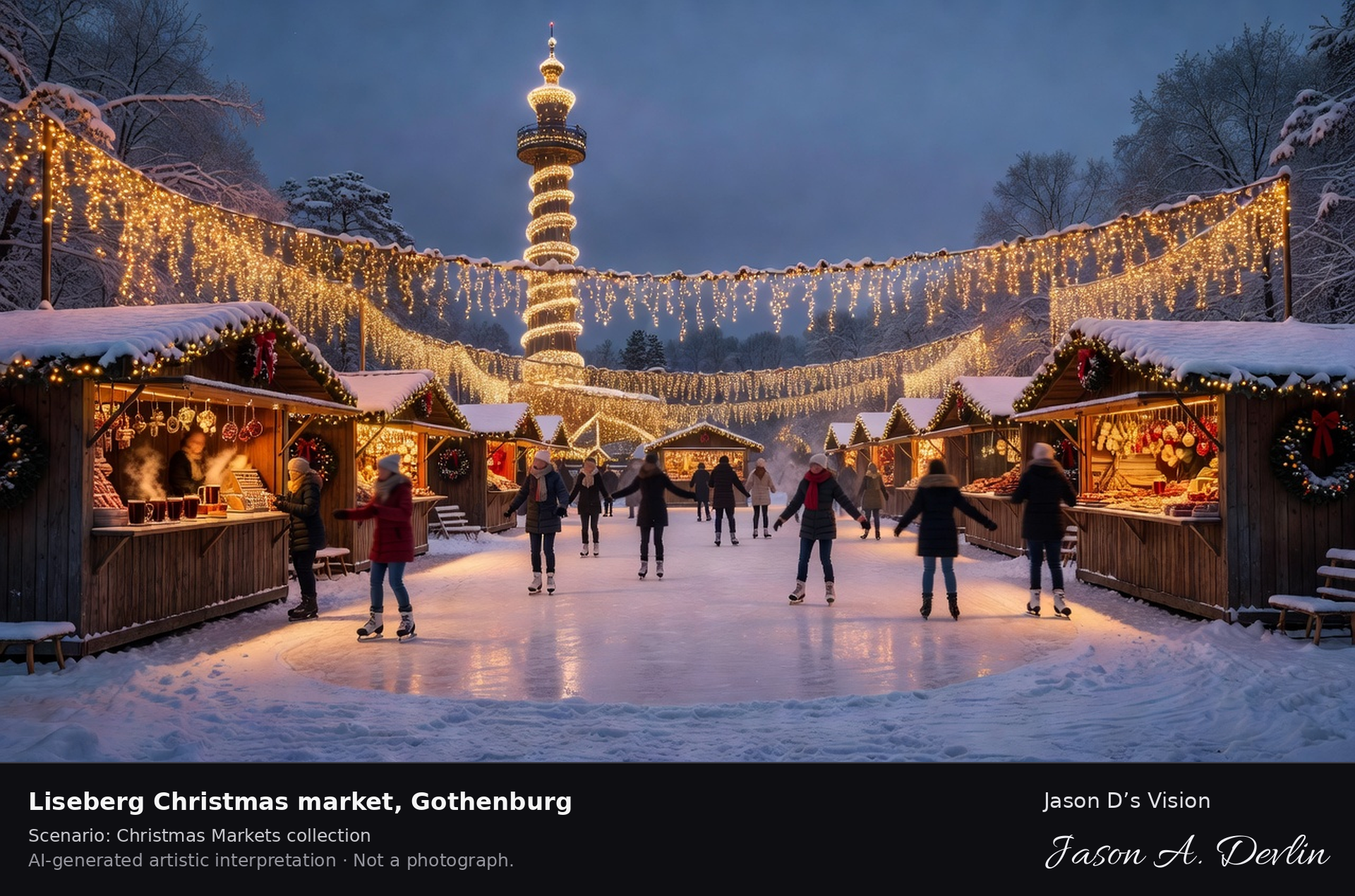
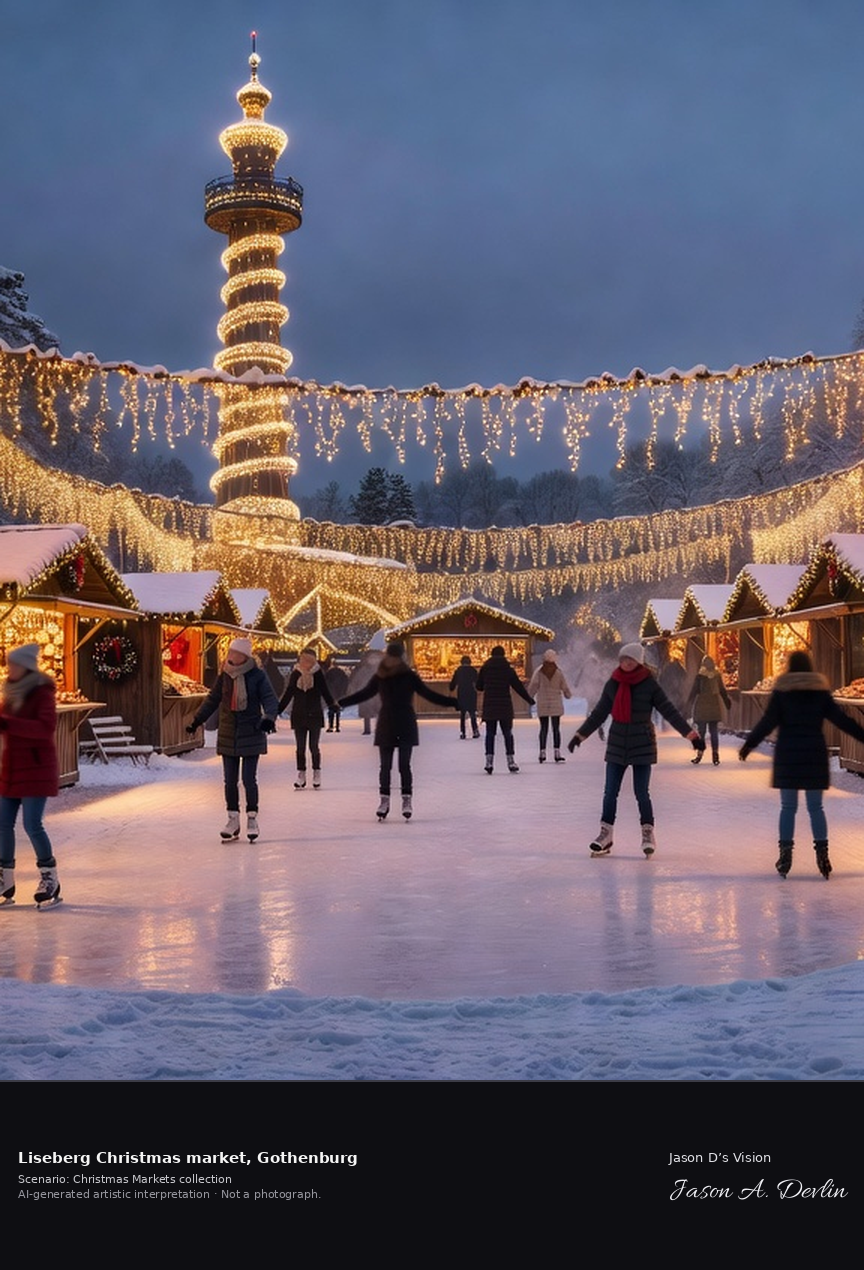
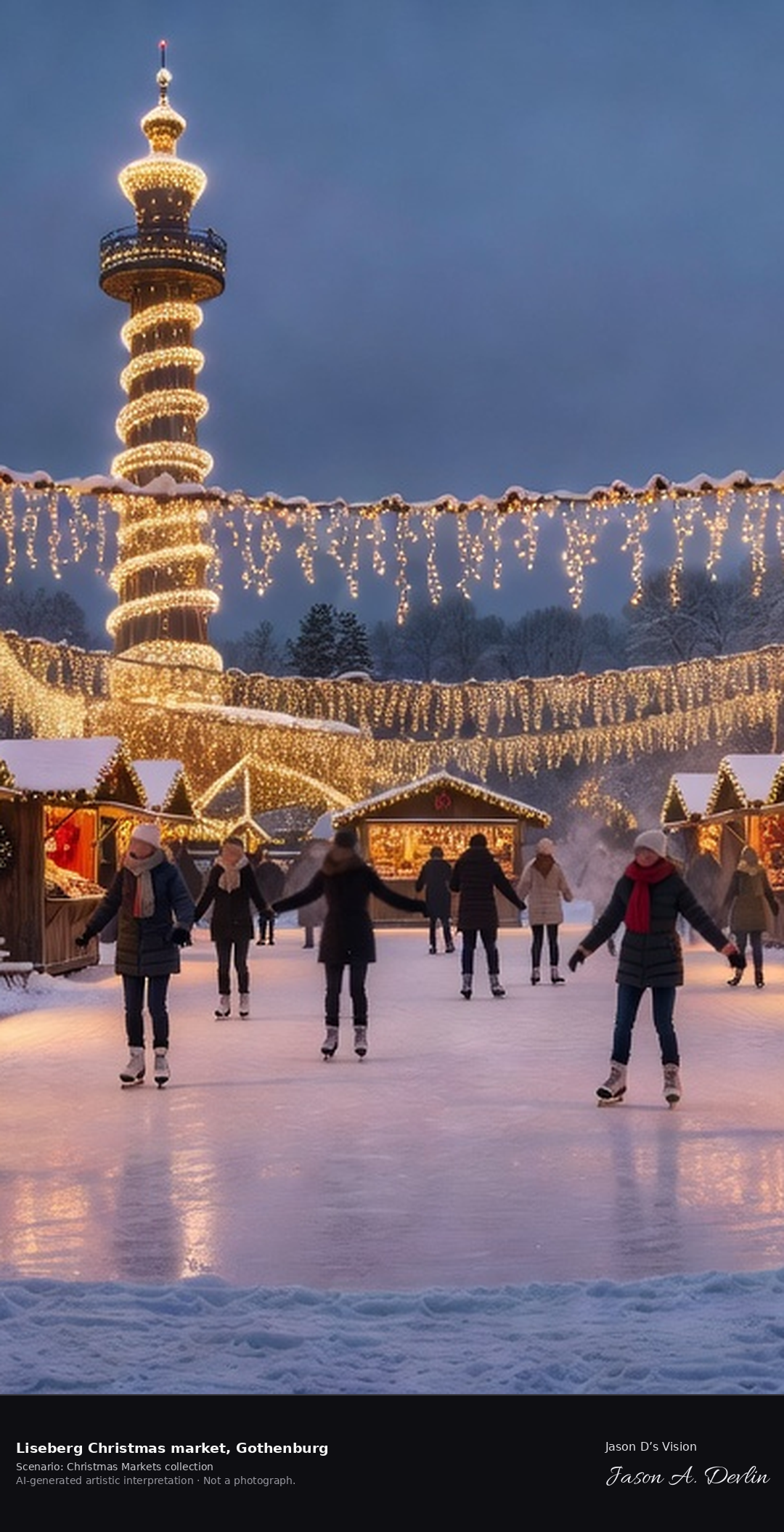
View into Liseberg amusement park dressed for Christmas at dusk: the ice rink glowing under strings of lights, wooden market stalls and the Lisebergstornet tower draped in festive illumination, Scandinavia's largest amusement park transformed into a winter wonderland.
Inside Liseberg amusement park in Gothenburg at dusk, the Christmas market glows: a lit ice rink, wooden stalls, and the Lisebergstornet tower draped in festive illumination, with rides and trees wrapped in strings of warm lights. Scandinavia's largest amusement park as a winter wonderland.
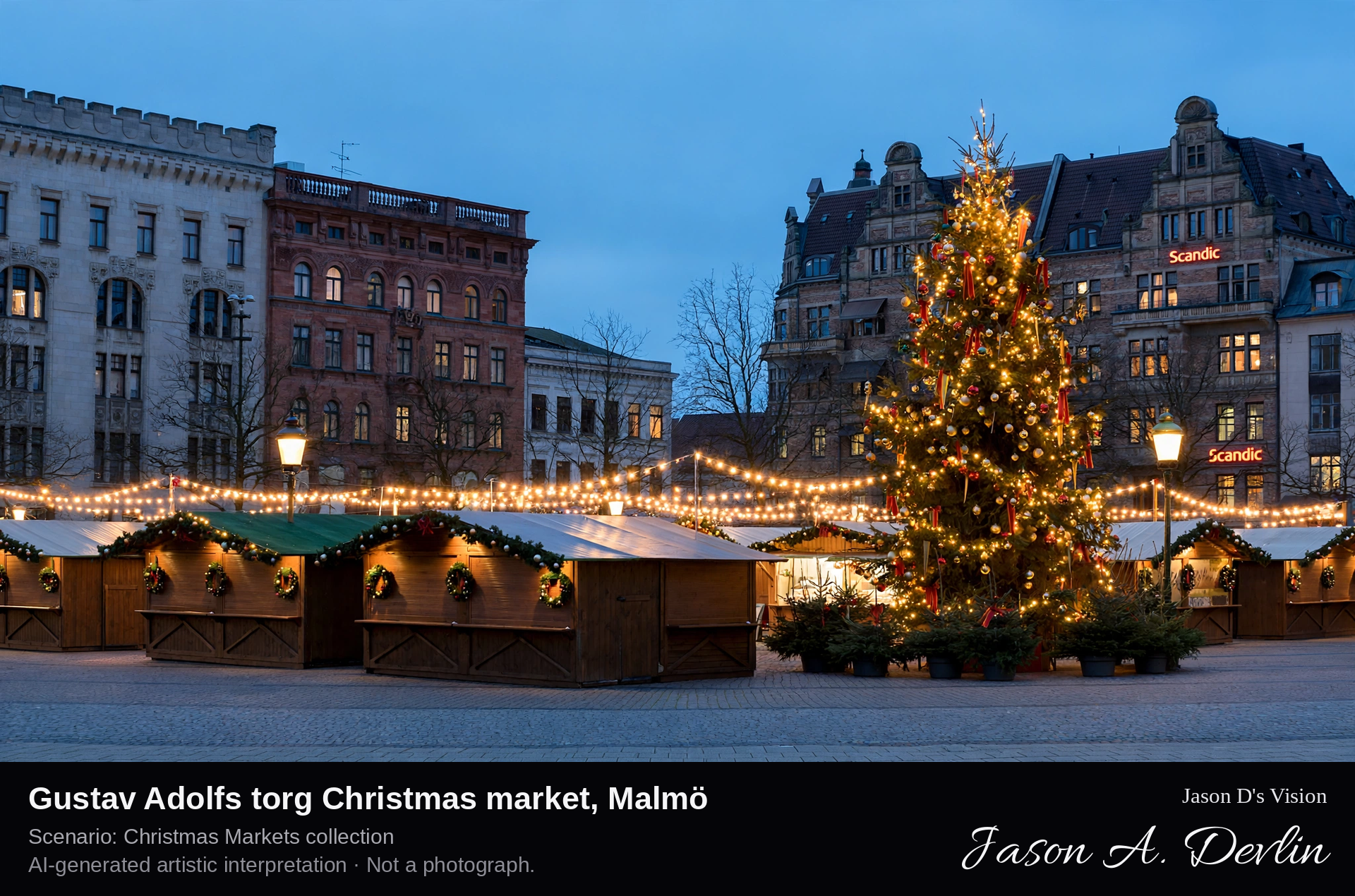
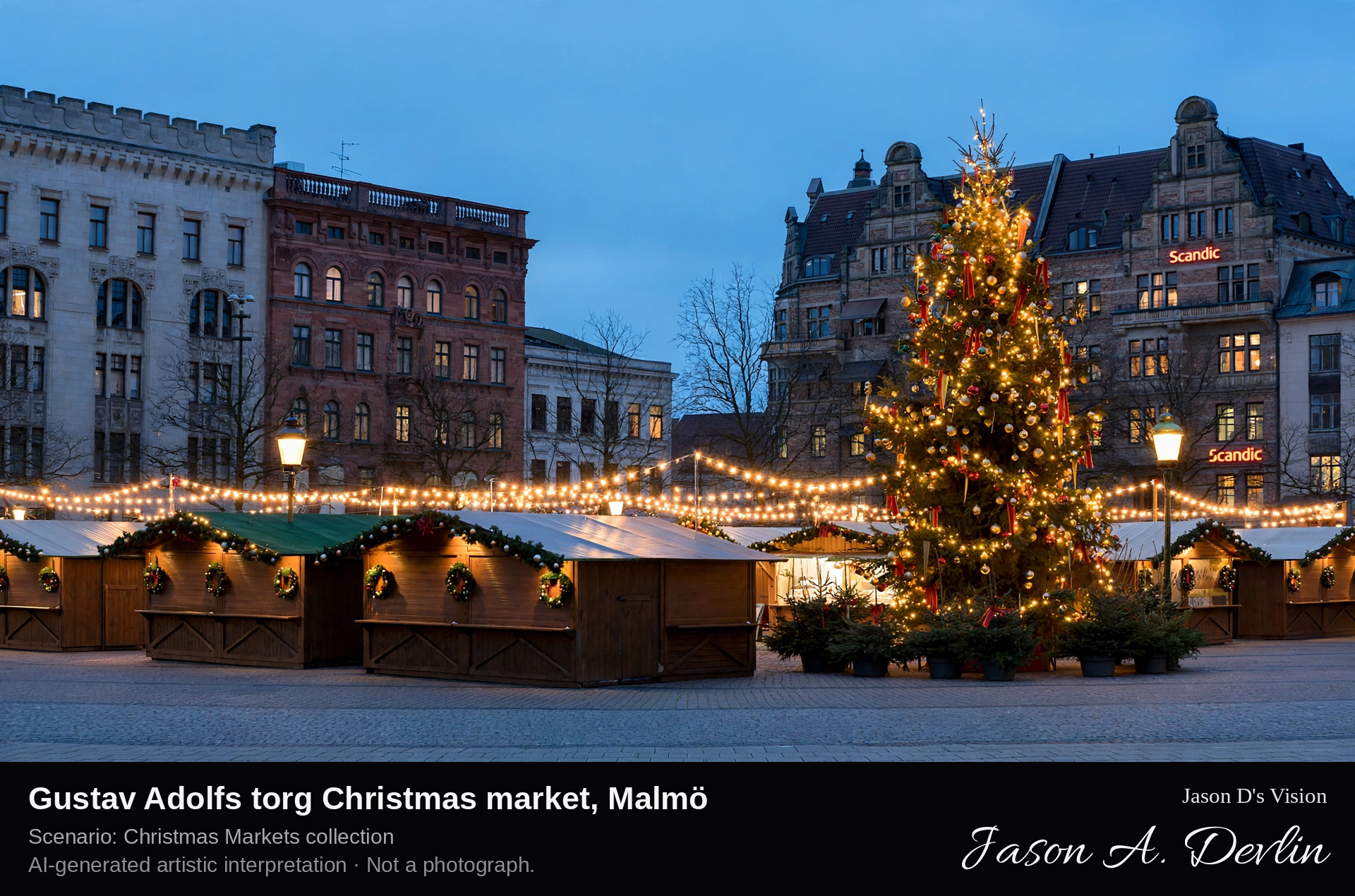
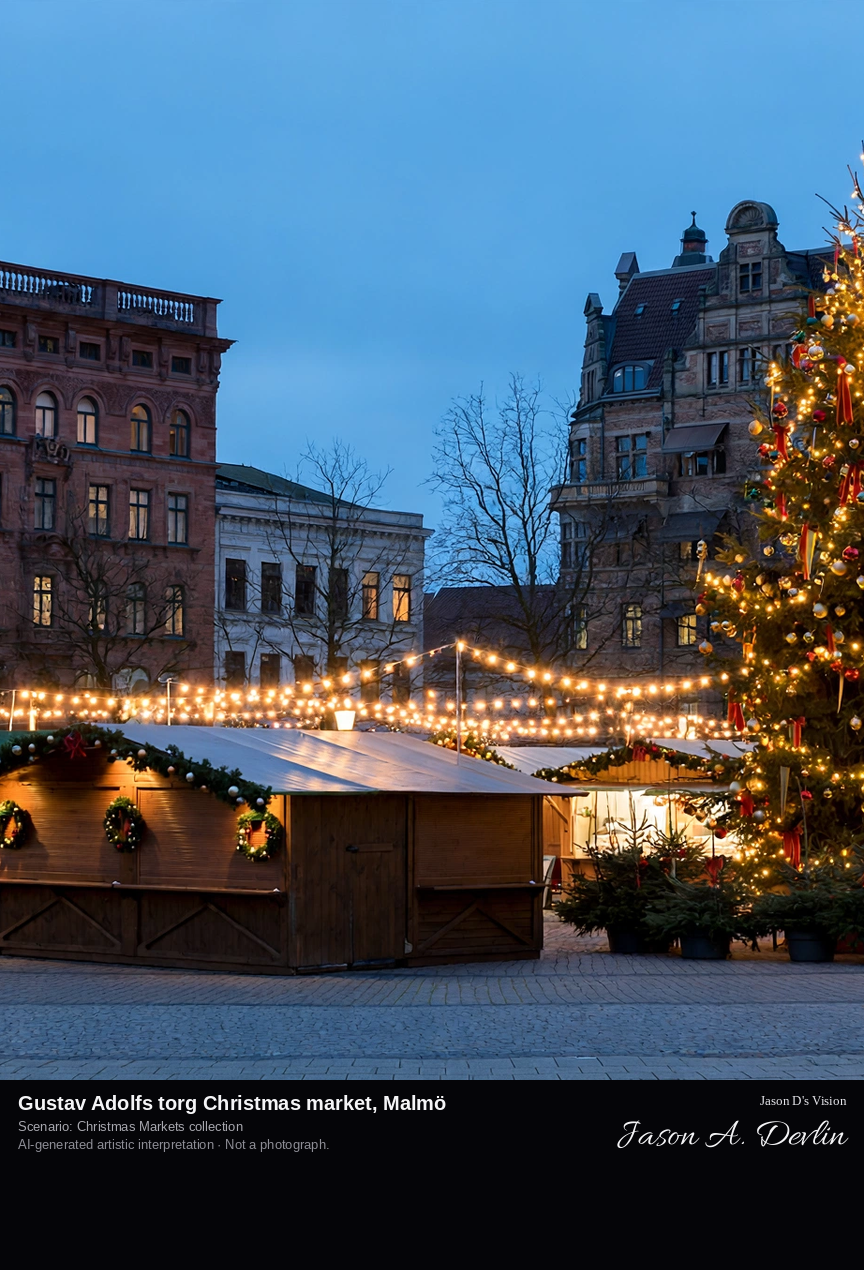
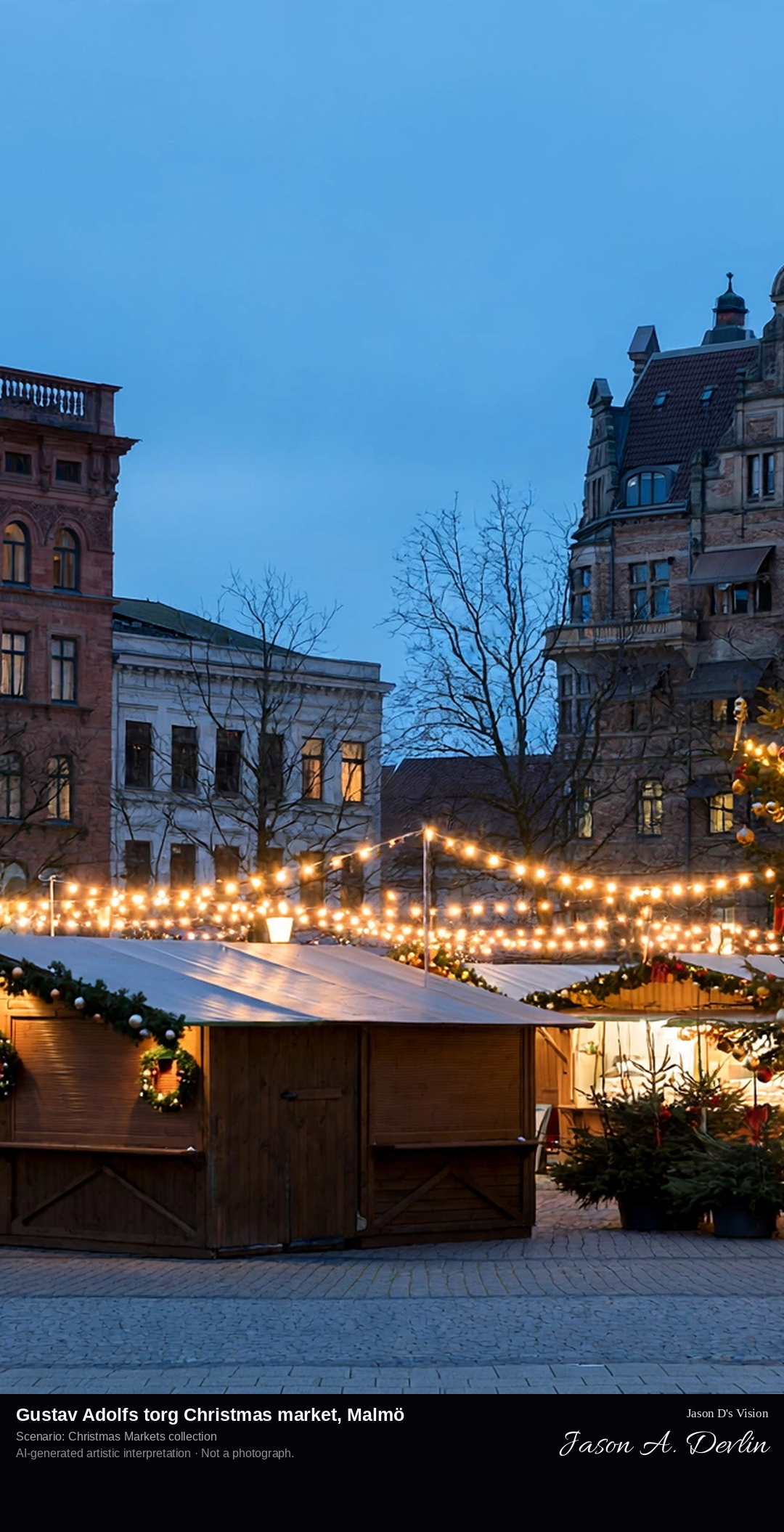
View across Gustav Adolfs torg in Malmo at dusk: the grand equestrian statue of King Gustav Adolf silhouetted against strings of warm market lights, wooden stalls ringing the square, the glowing Christmas tree and historic facades all around.
Across Gustav Adolfs torg in Malmo at dusk: the equestrian statue of King Gustav Adolf silhouetted against strings of warm market lights, wooden stalls ringing the square, and a grand decorated Christmas tree, with historic facades glowing all around.
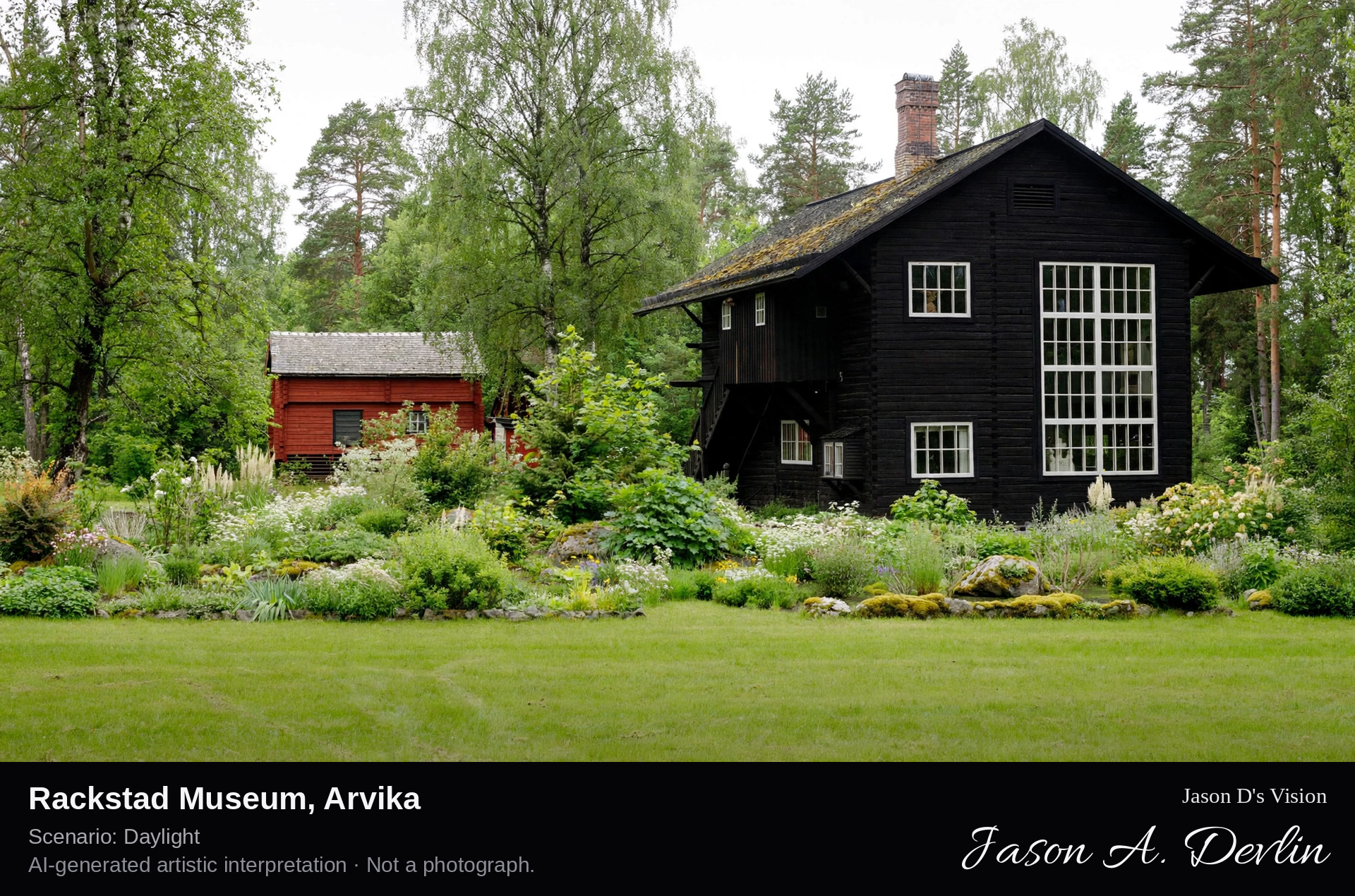
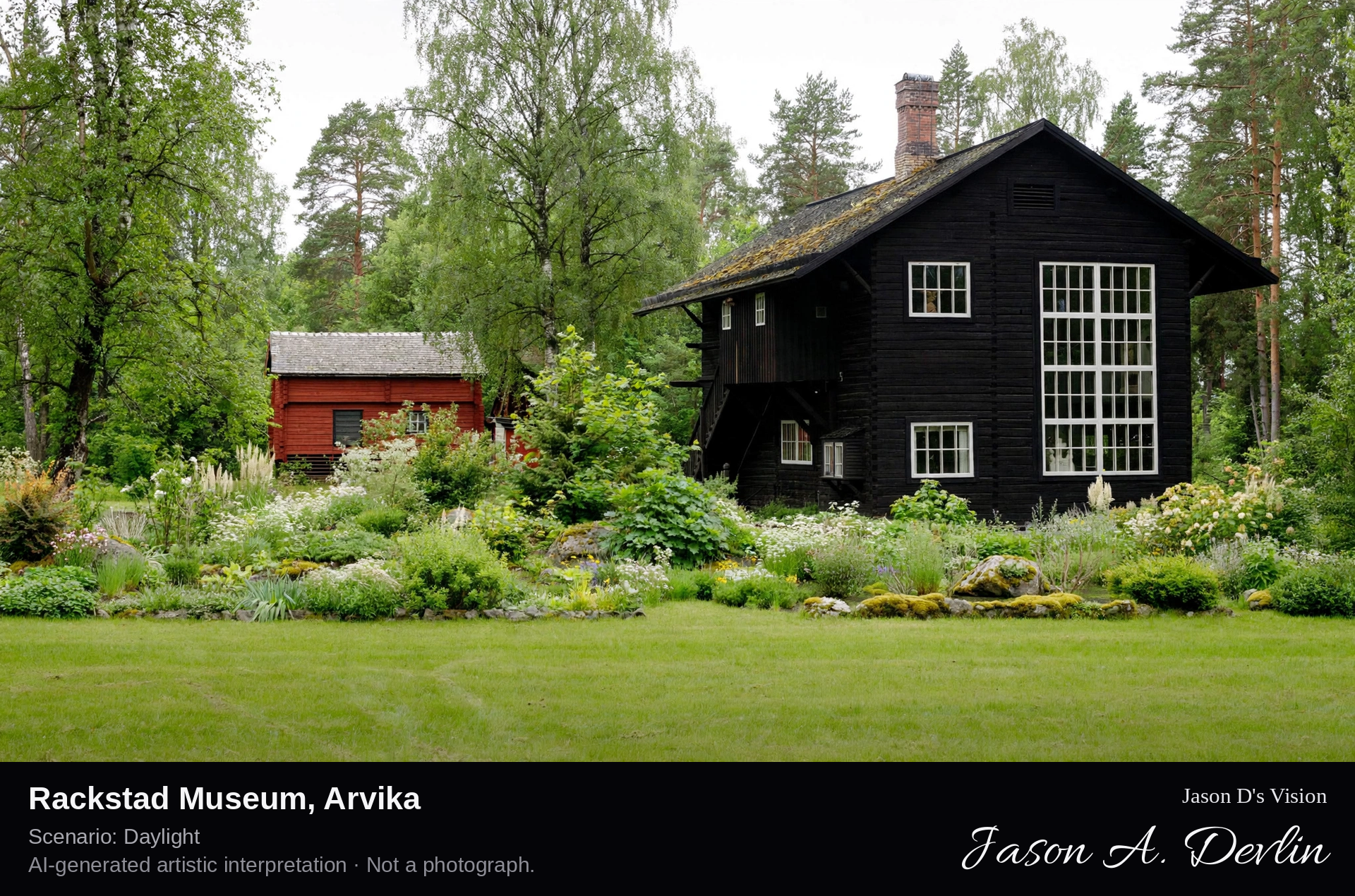
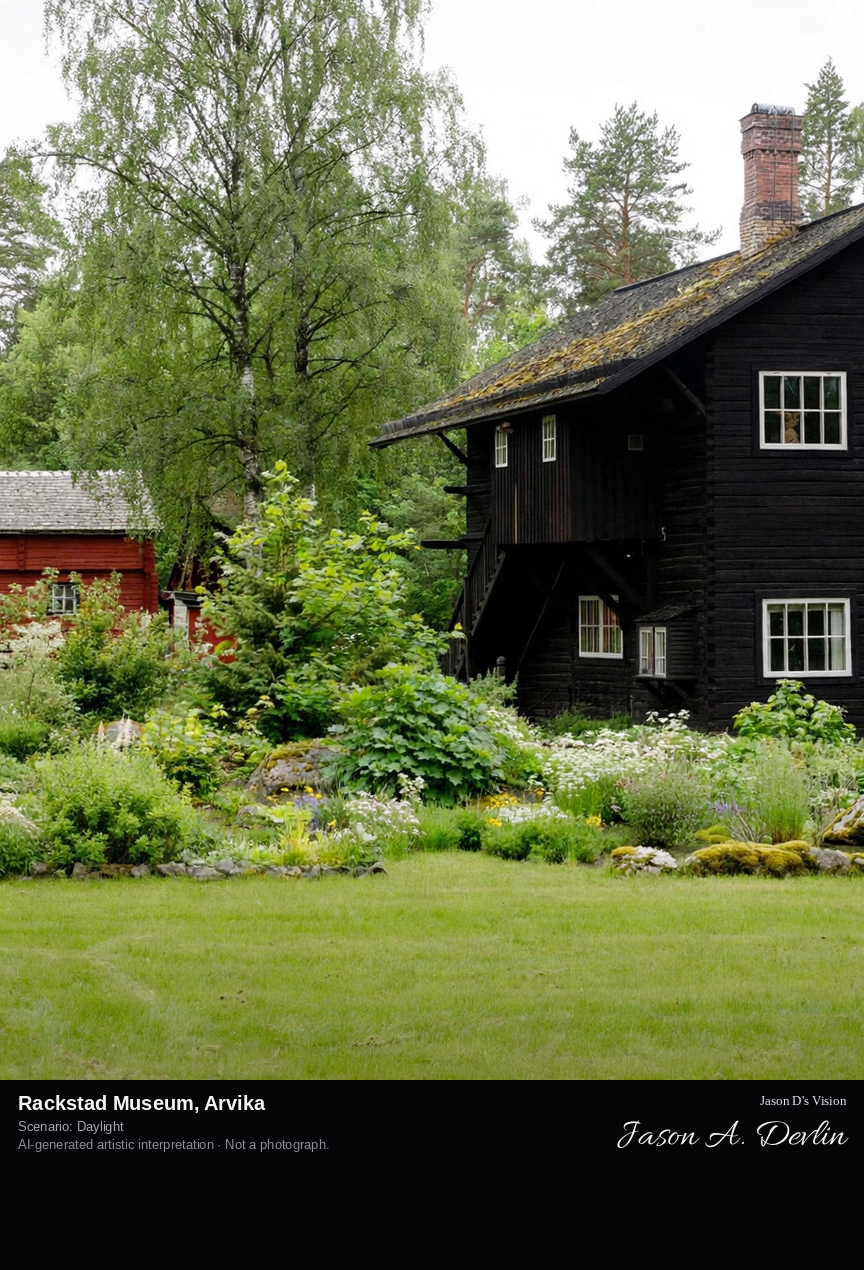
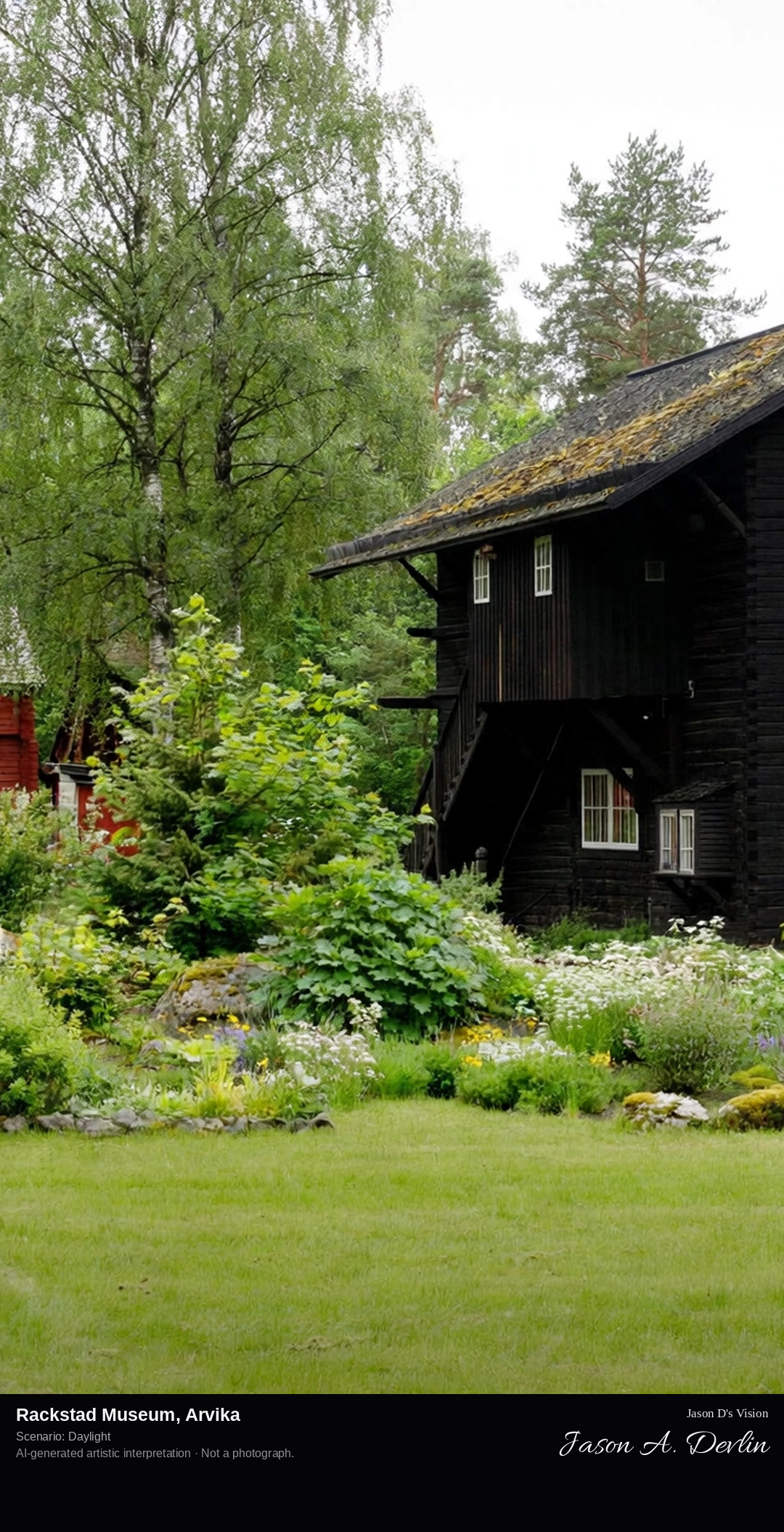
The Rackstad artists' colony at Lake Racken, the Oppstuhage house with its carved dragon details where the Rackstad painters lived, in the deep Värmland forest by the water.
Bright daylight at the Rackstad artists' colony on the Lake Racken shore — the Oppstuhage house with its carved wooden dragon gables, the artists' home framed by deep Värmland pine forest with calm lake reflections.
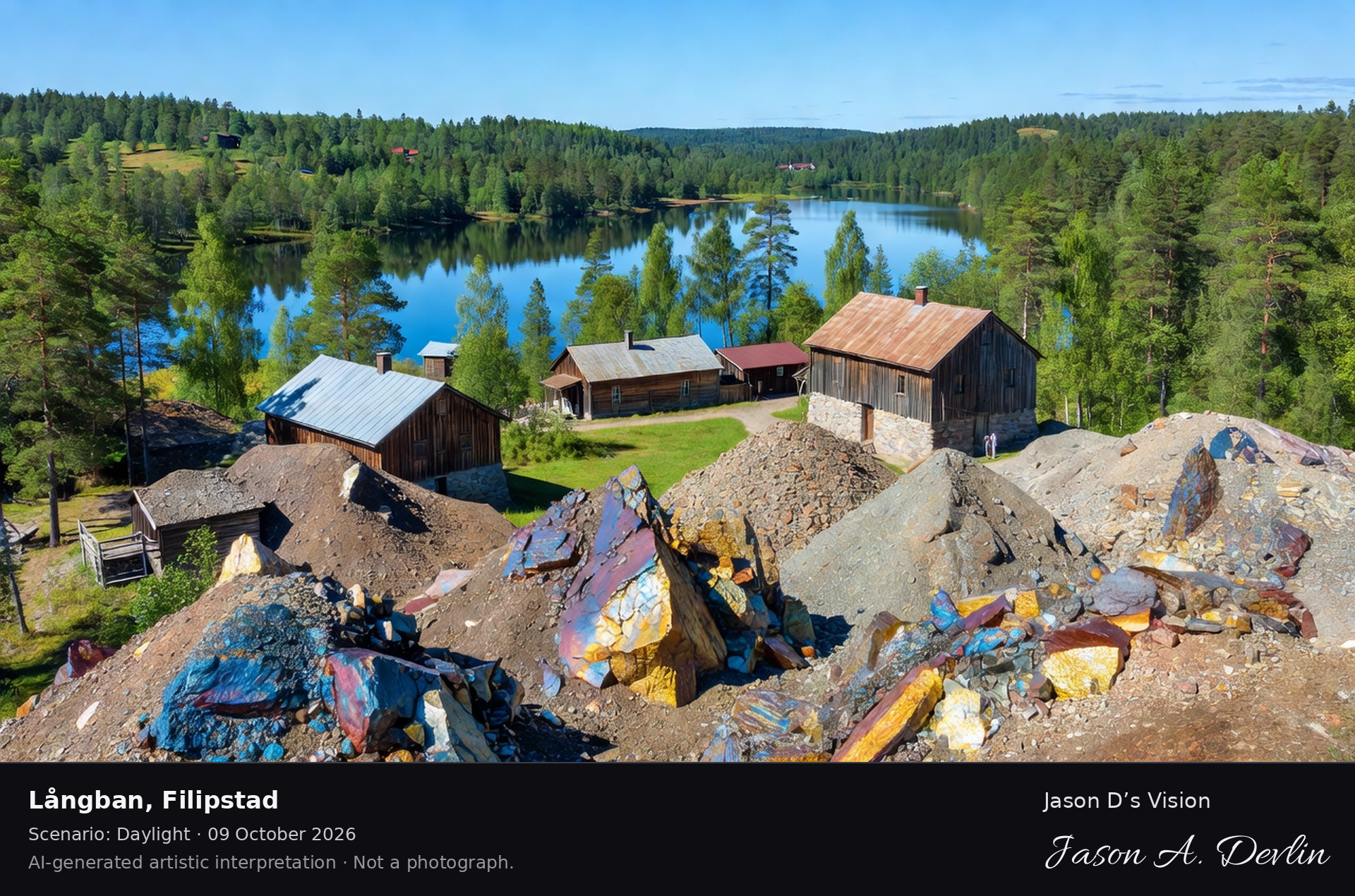
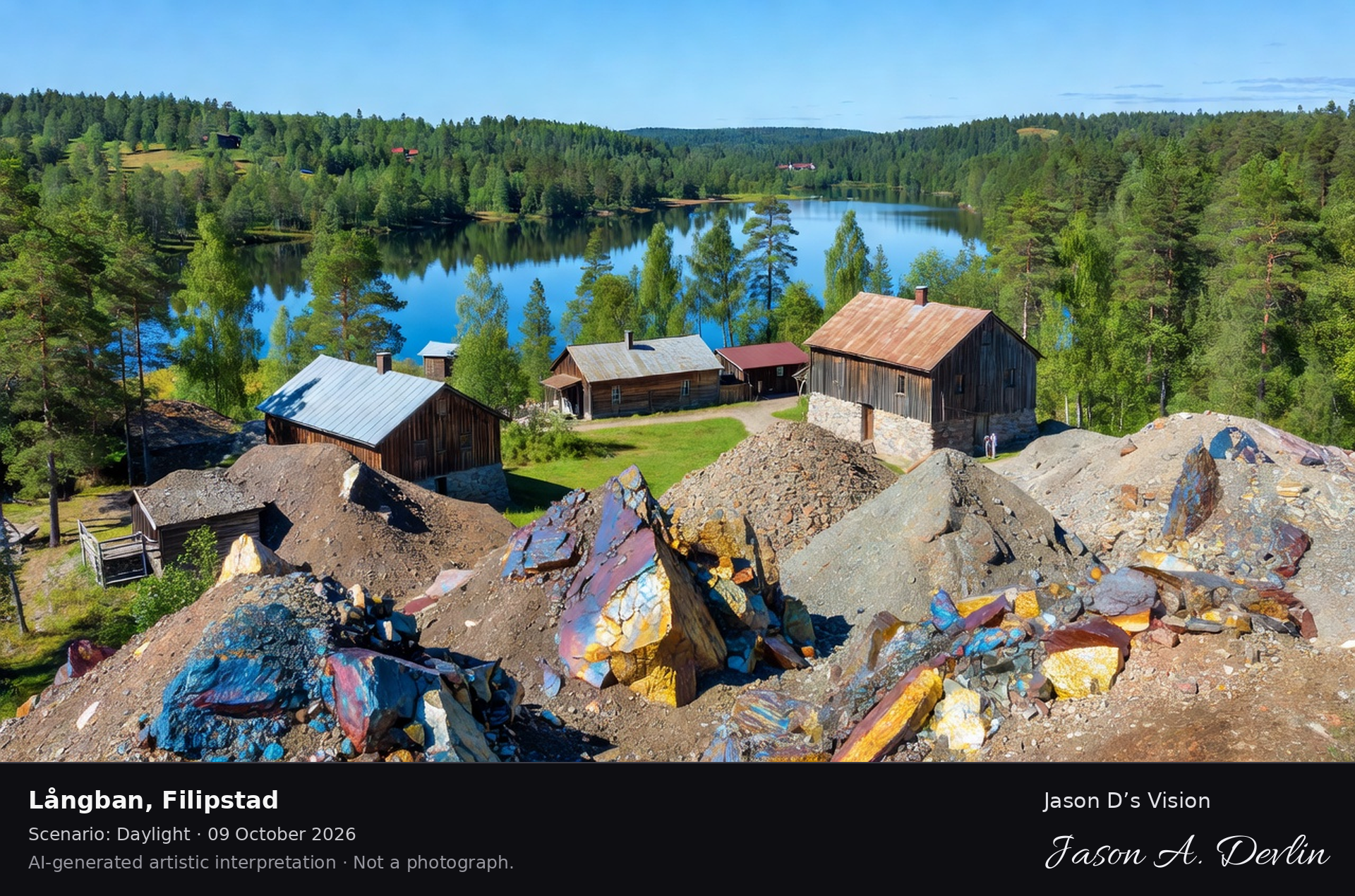
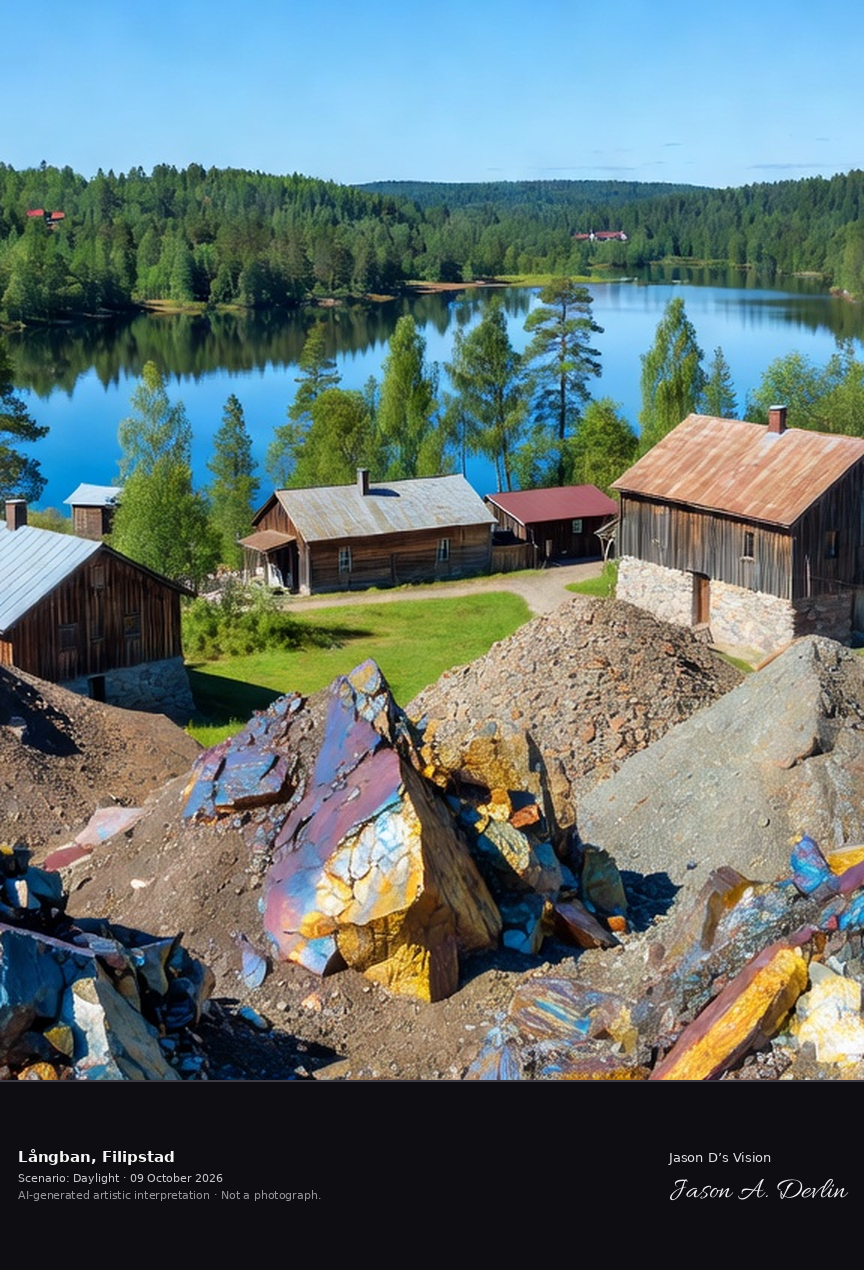
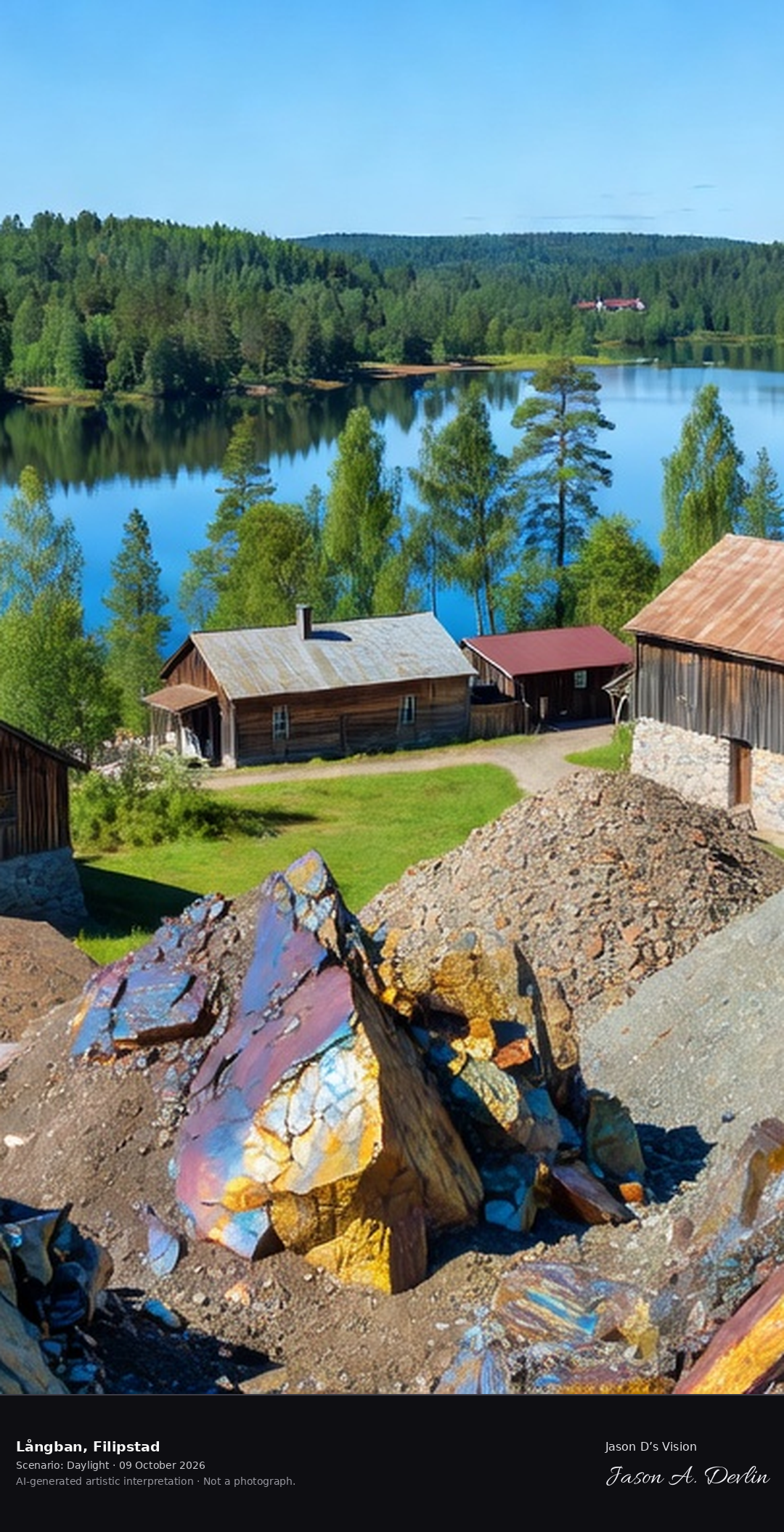
Långban's historic mine with its mineral-rich dumps, the world-famous mineral locality in the Bergslagen forest with the old mine buildings and the lake below.
Bright daylight over Långban's historic mine in the Bergslagen forest — the world-famous mineral locality's colourful slag dumps in blue, purple and green, old timber mine buildings and the lake below.
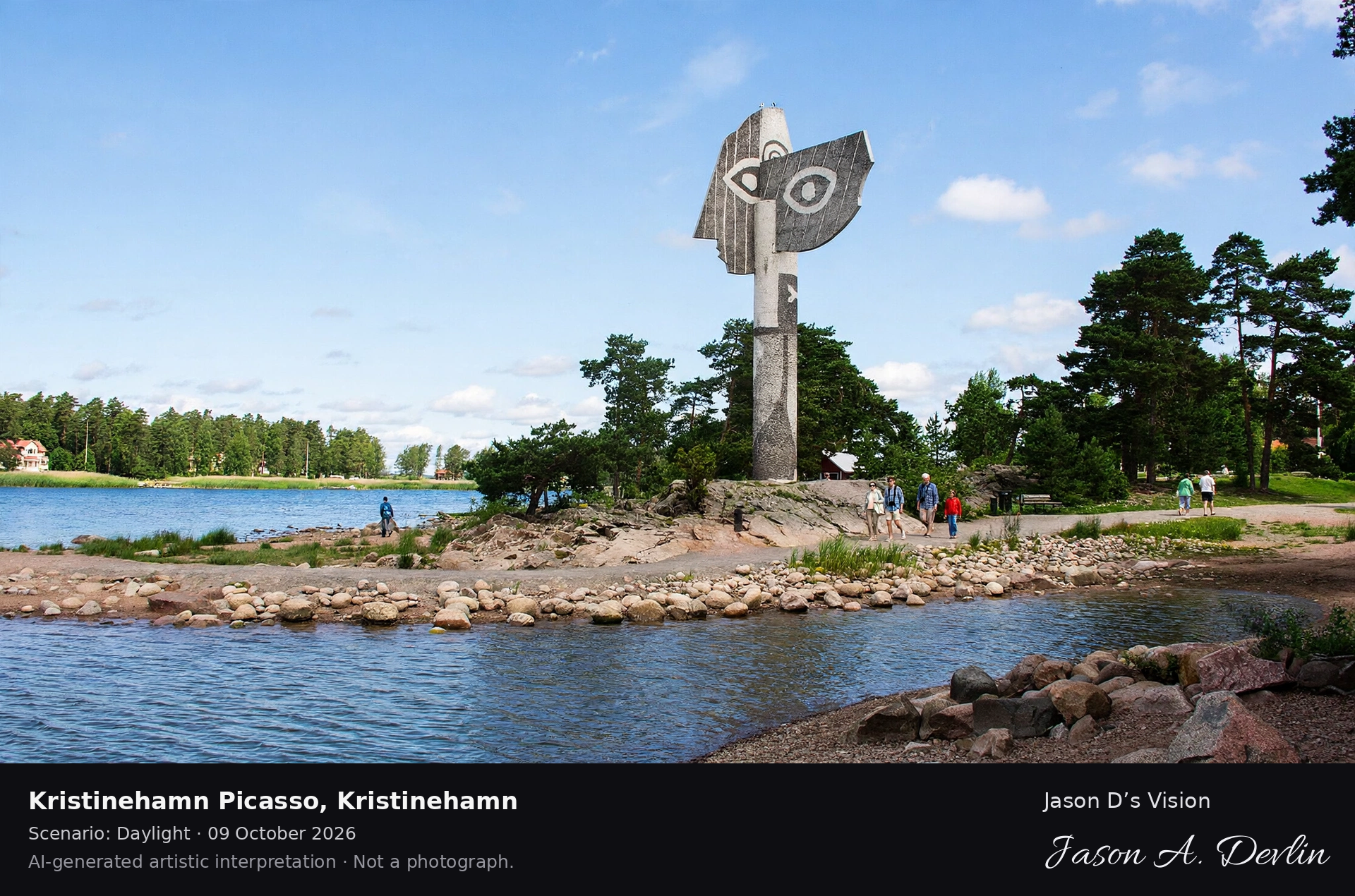
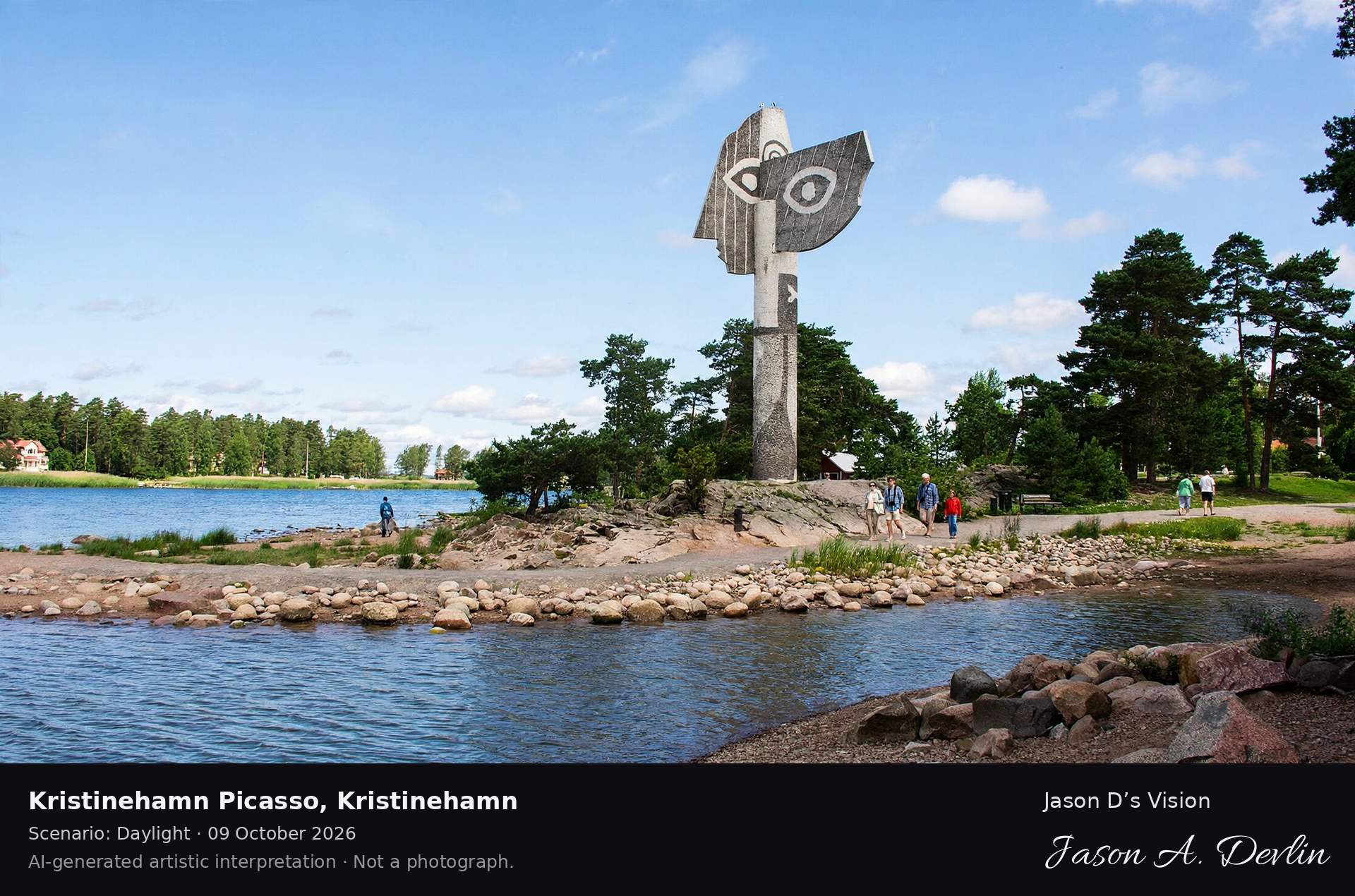
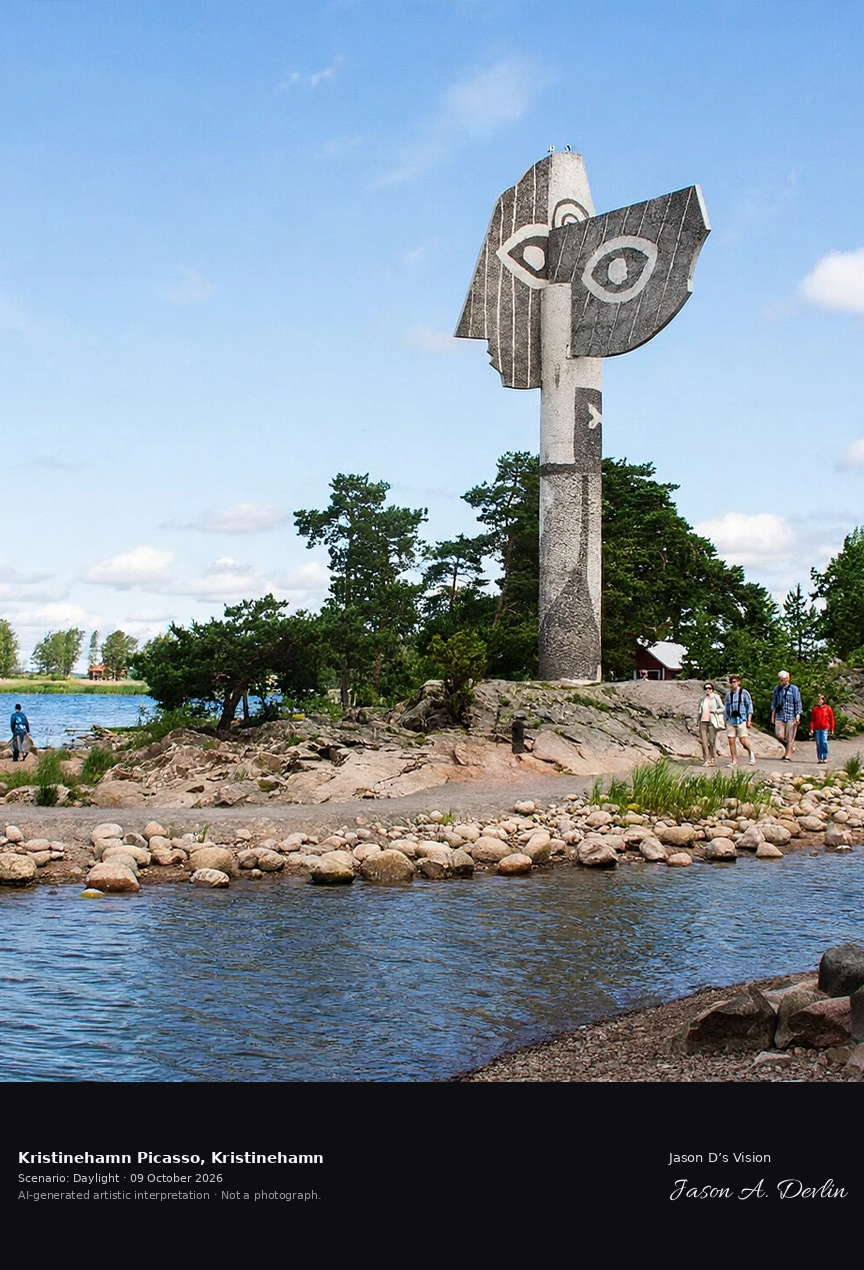
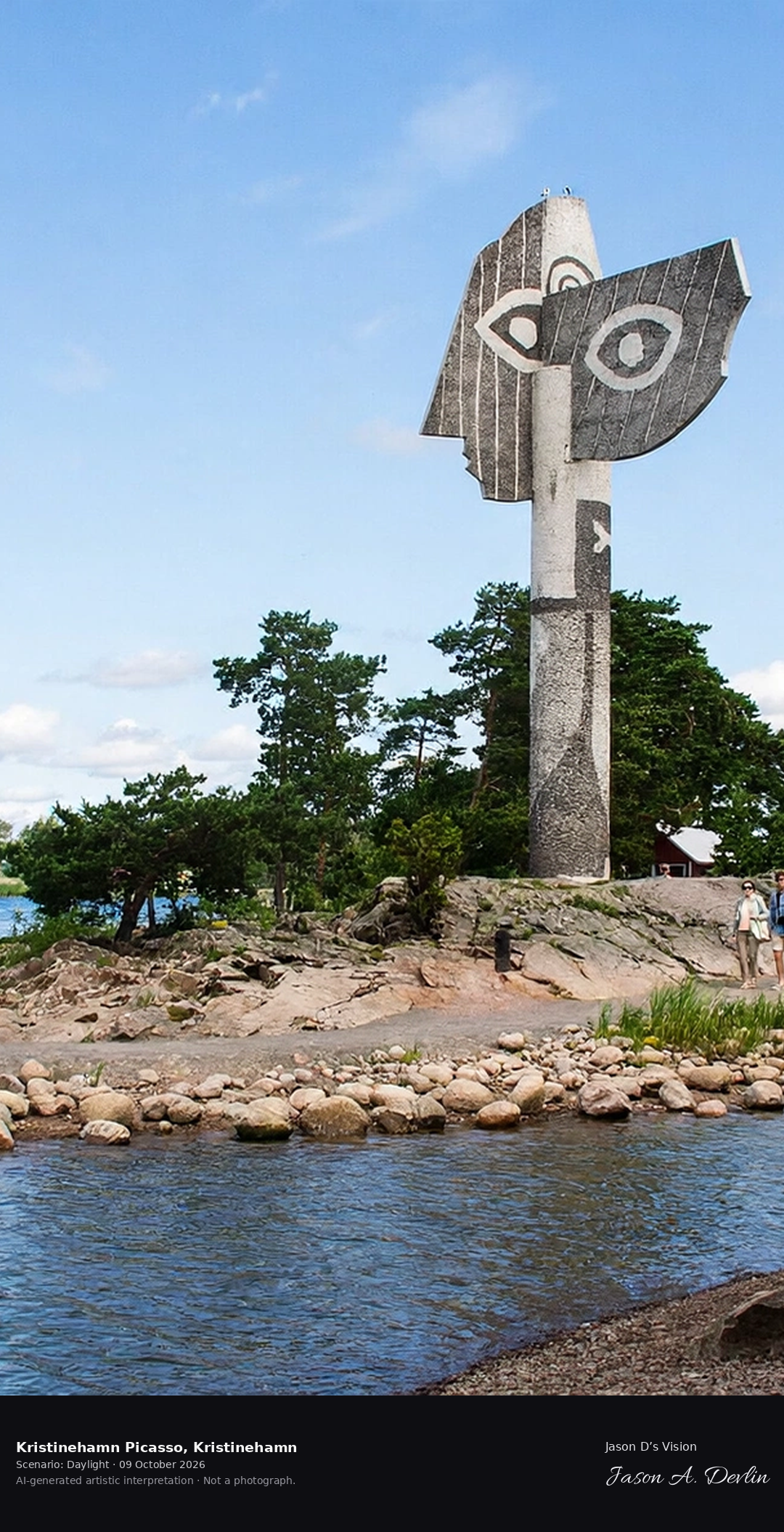
Picasso's 15-meter 'Jacqueline' sculpture on the Lake Vänern shore at Kristinehamn, the world's largest Picasso sculpture with the vast inland sea behind.
Bright daylight on the Lake Vänern shore at Kristinehamn — Picasso's 15-meter 'Jacqueline' sculpture, the world's largest Picasso sculpture, the tall dark cubist figure on its rock plinth with the vast inland sea behind.
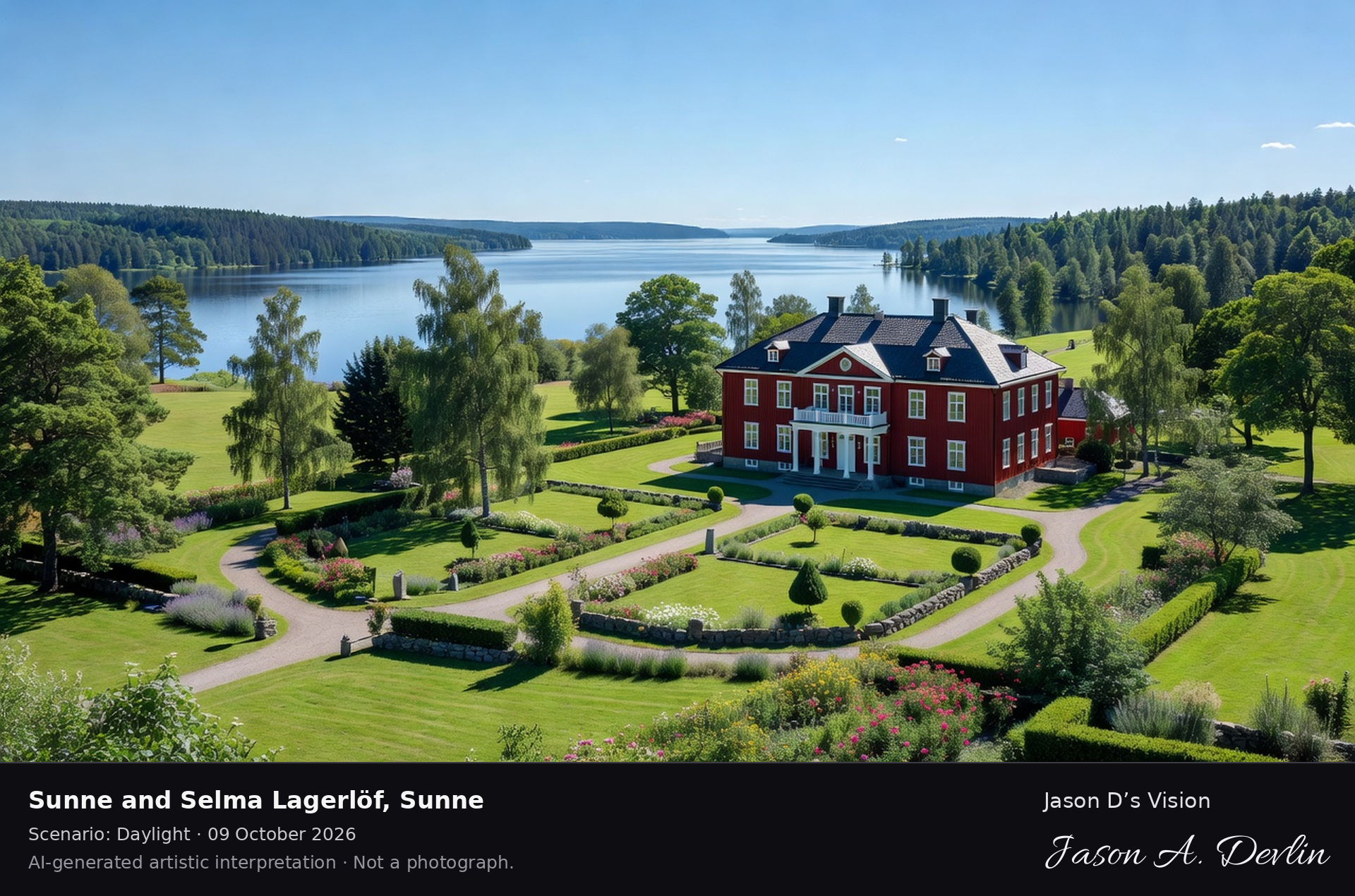
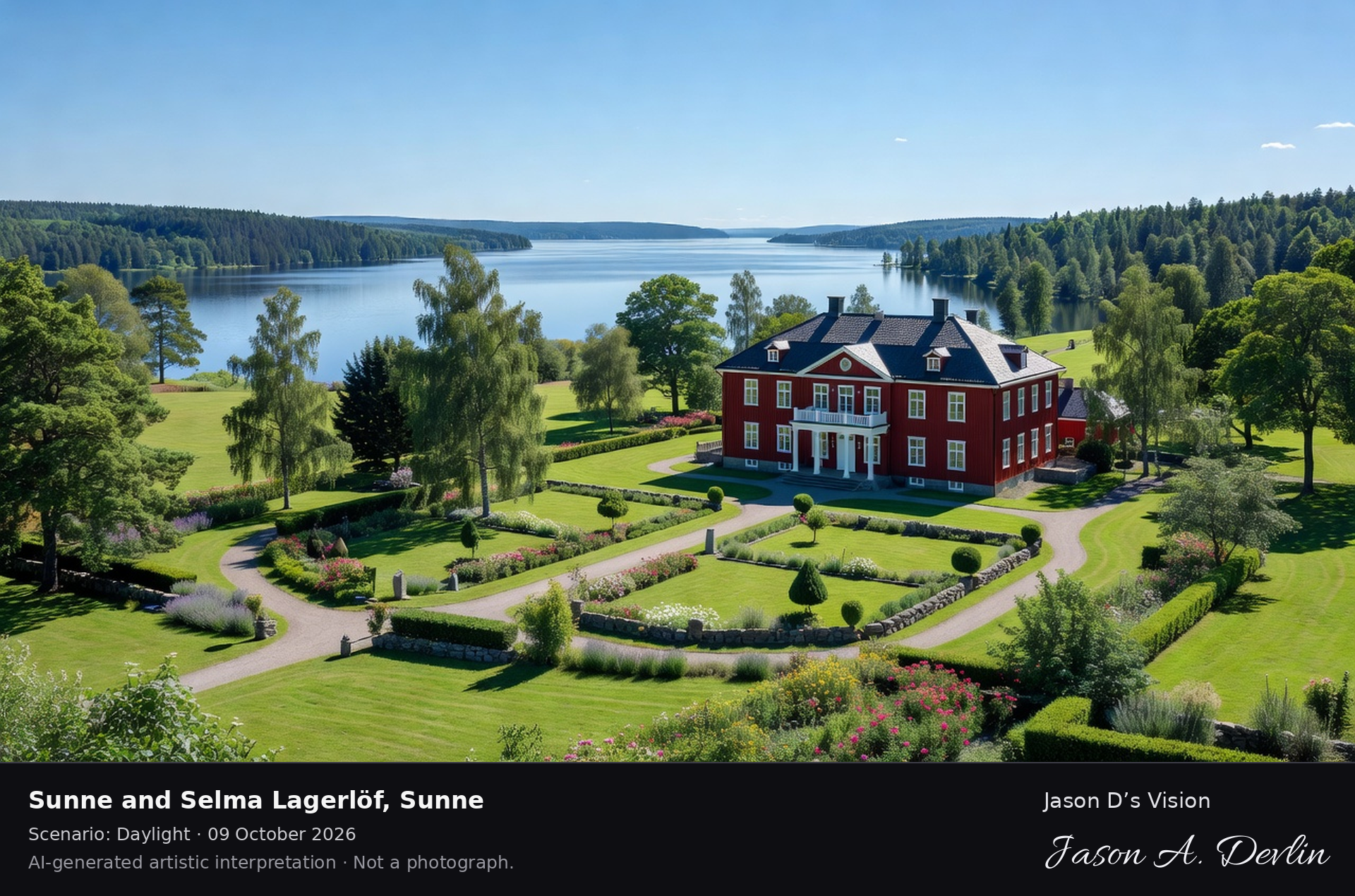
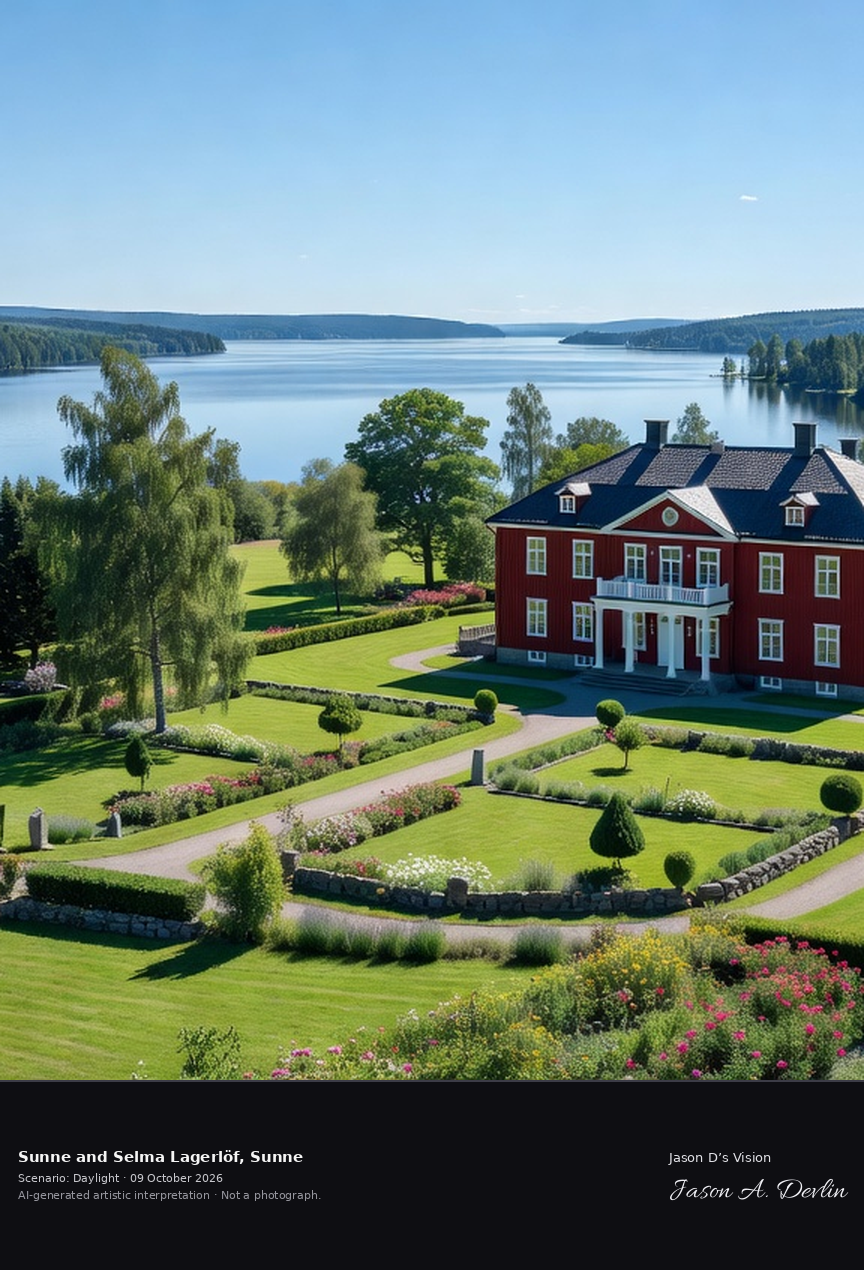
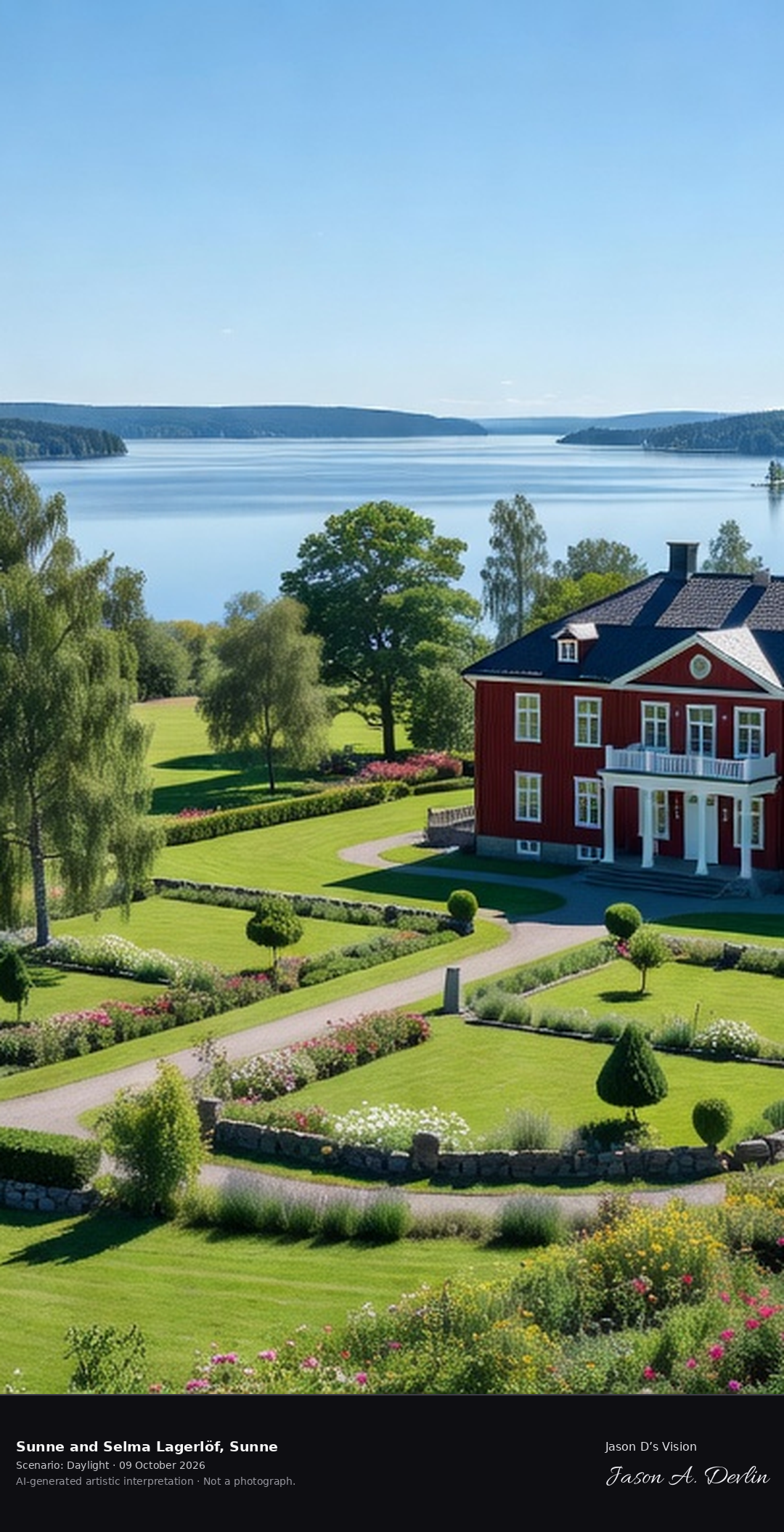
Mårbacka, Selma Lagerlöf's red manor in Sunne, the Nobel laureate's home with its garden above the Fryken lakes, the setting of Gösta Berling's saga.
In Sunne stands Mårbacka, the red manor that was Selma Lagerlöf’s home, its garden above the Fryken lakes. The Nobel laureate’s house is the setting of Gösta Berling’s saga, in bright natural daylight.
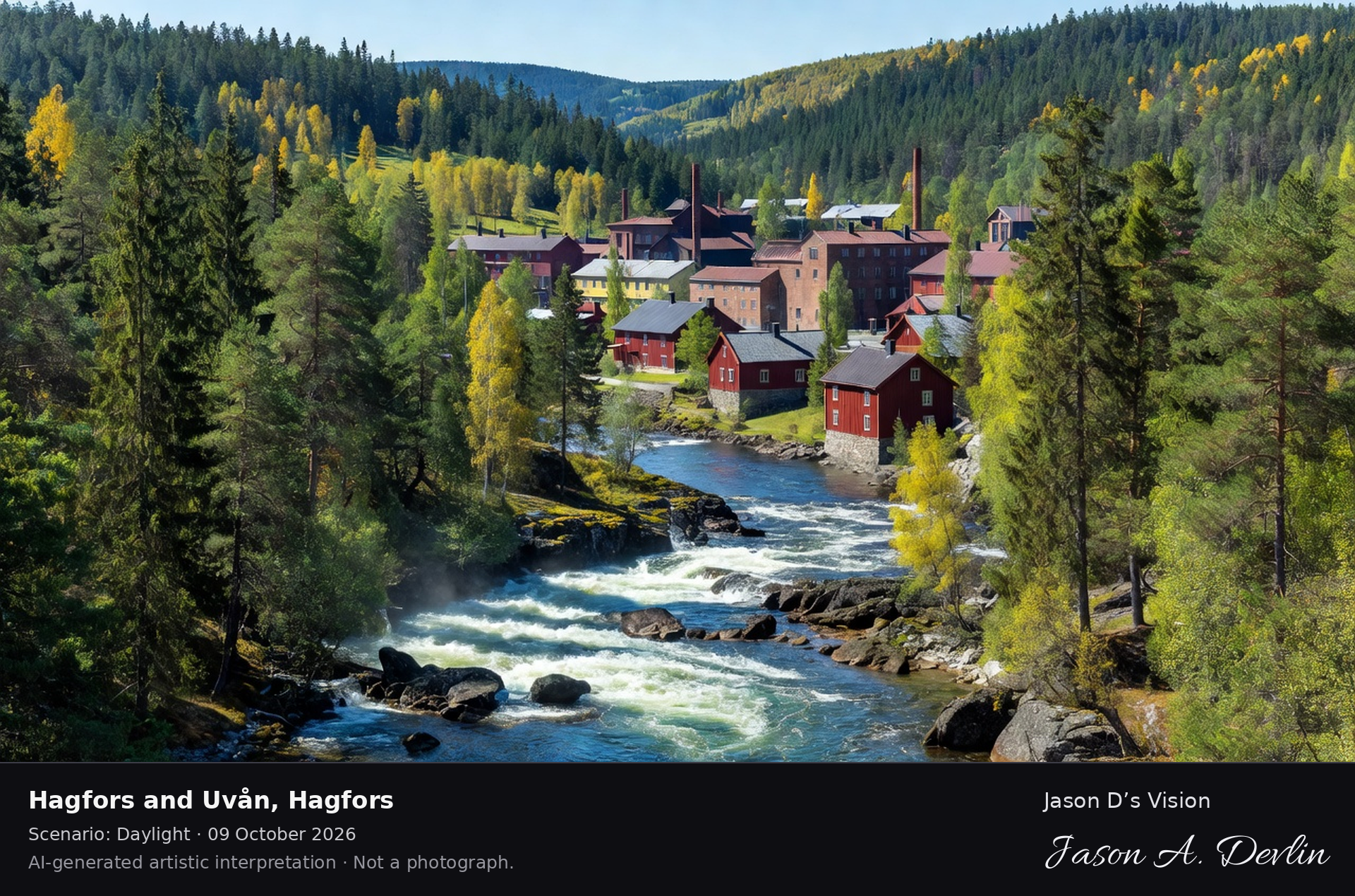
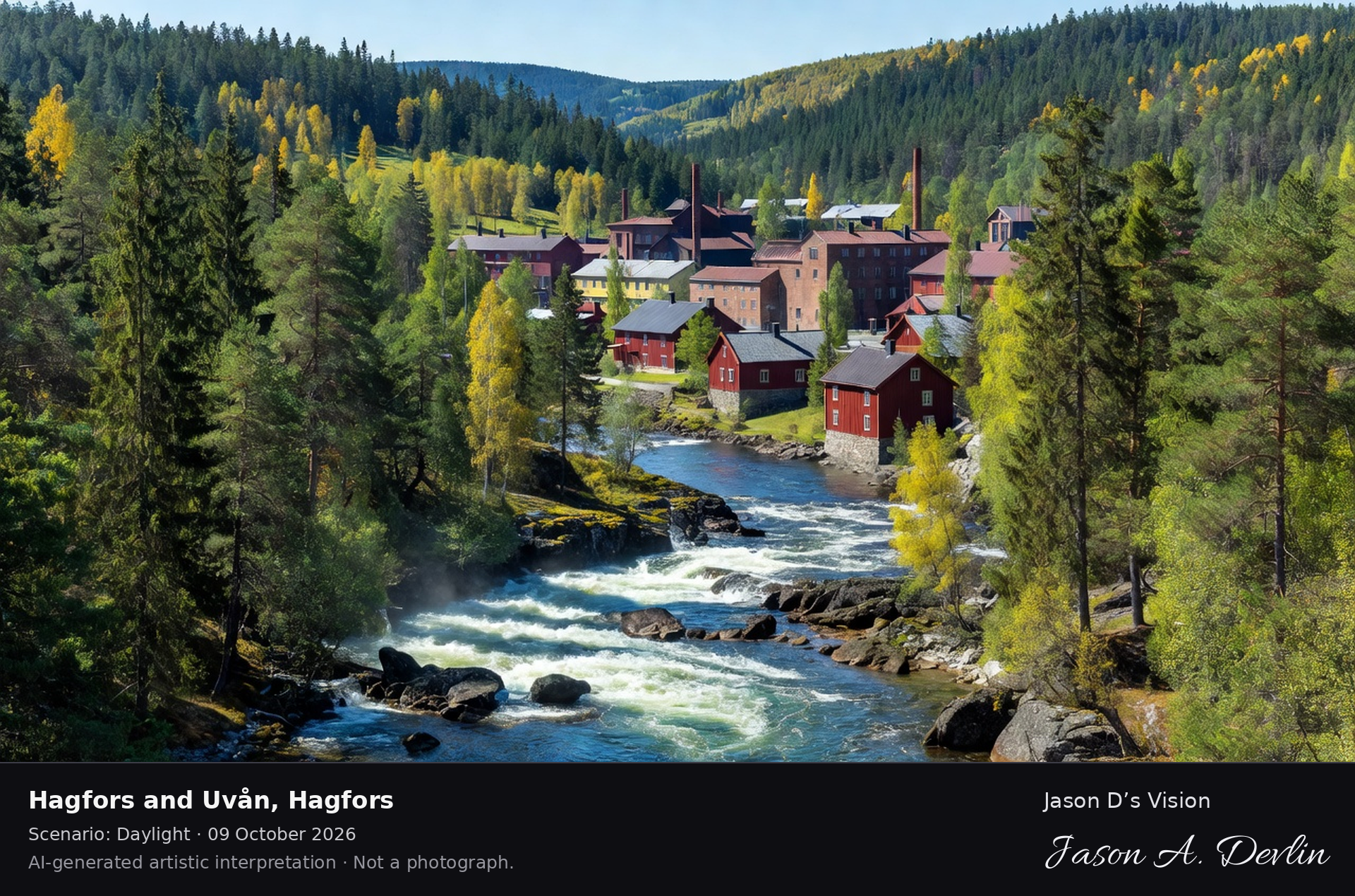
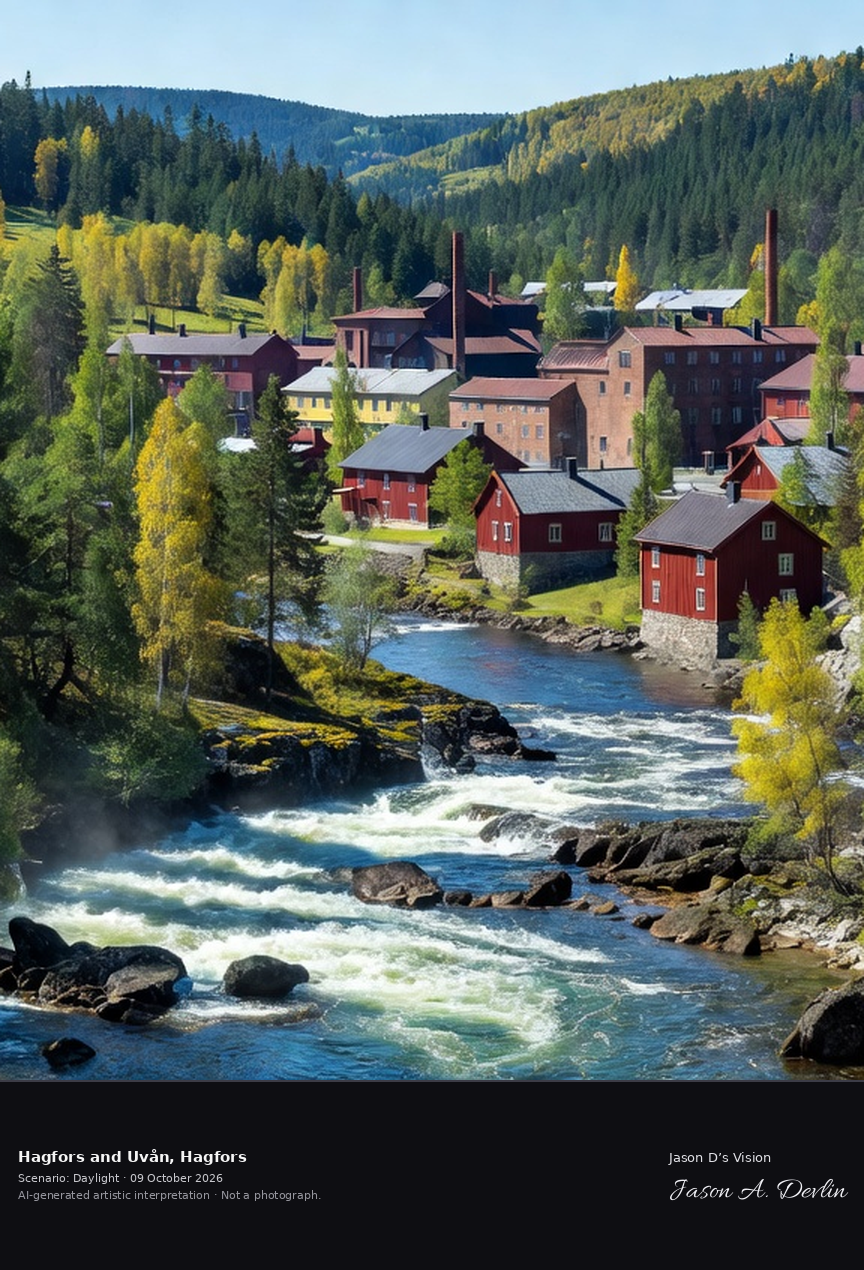
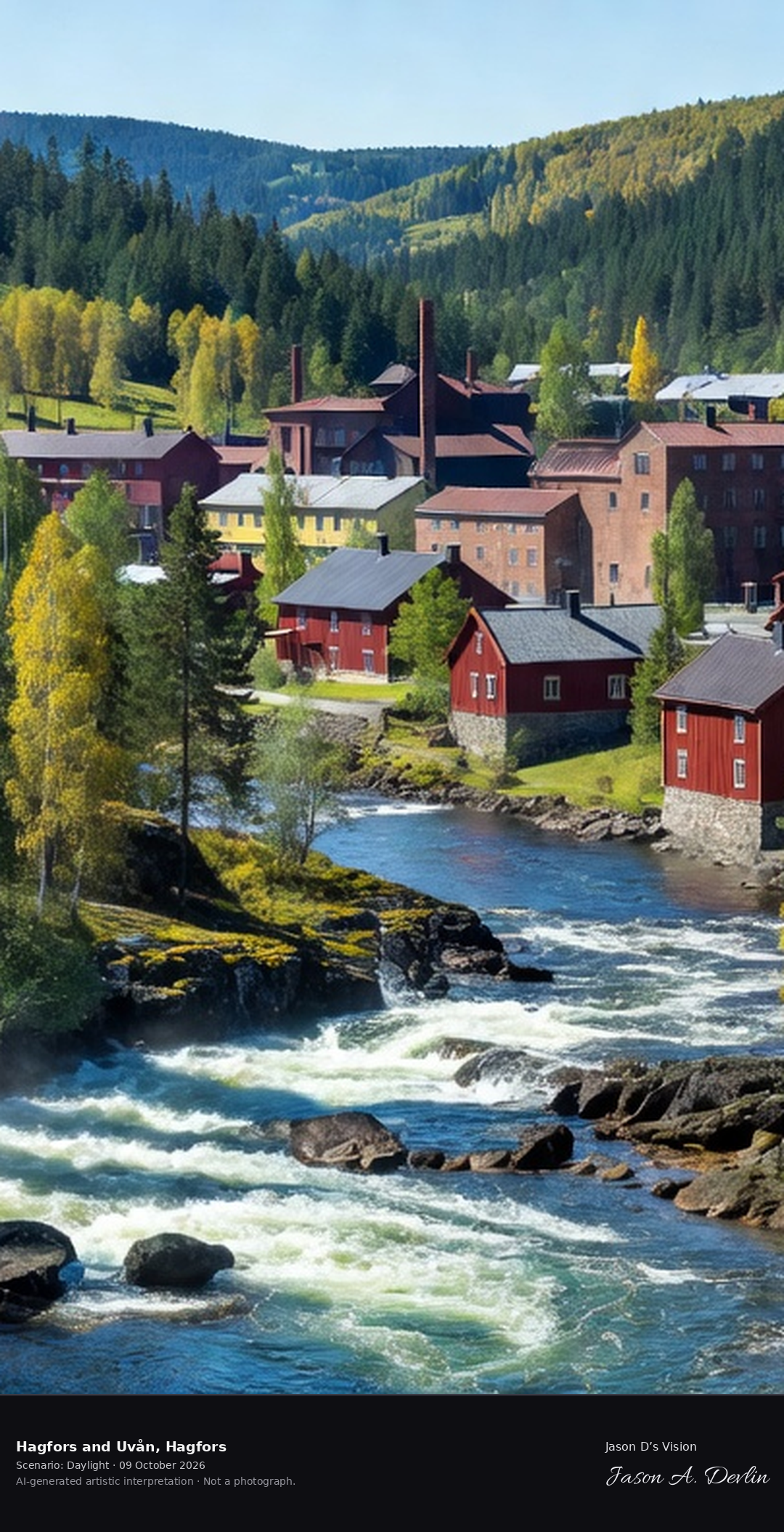
The Uvån river's rapids through Hagfors in the deep Värmland forest, the ironworks town on the wild river with the forested hills beyond.
Through Hagfors run the rapids of the Uvån river, in the deep Värmland forest. The ironworks town stands on the wild river, with forested hills beyond, in bright natural daylight.
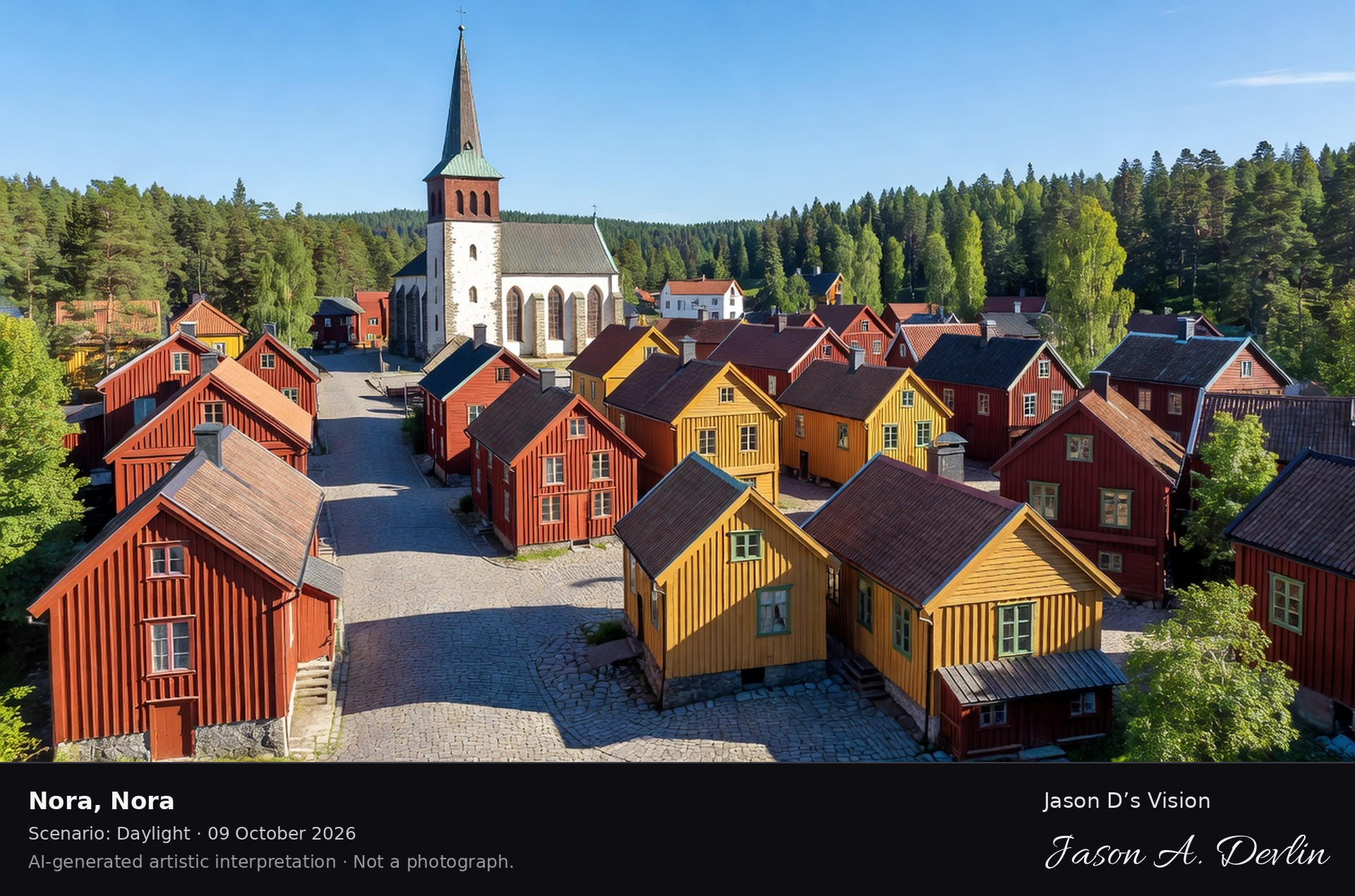
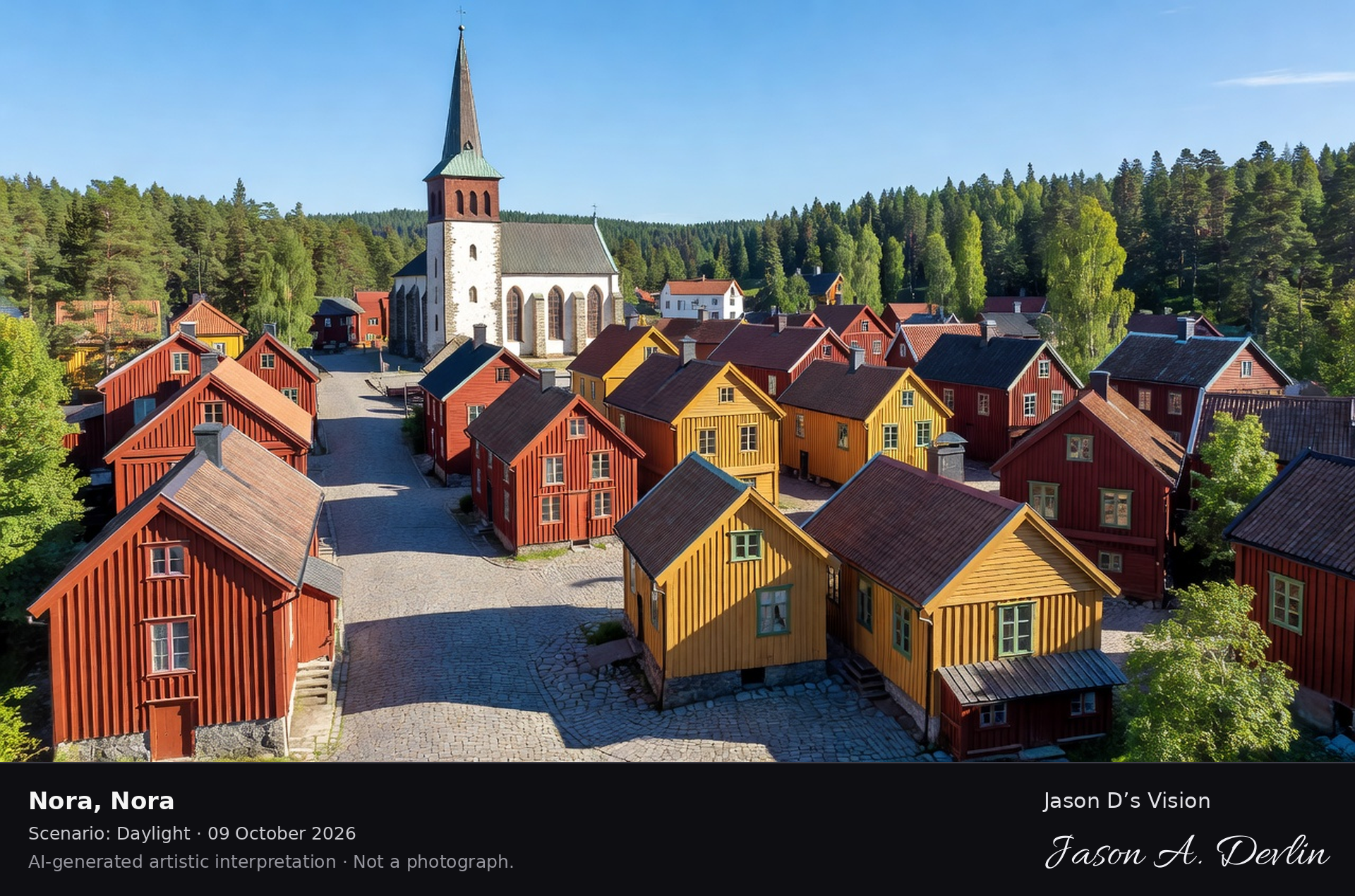
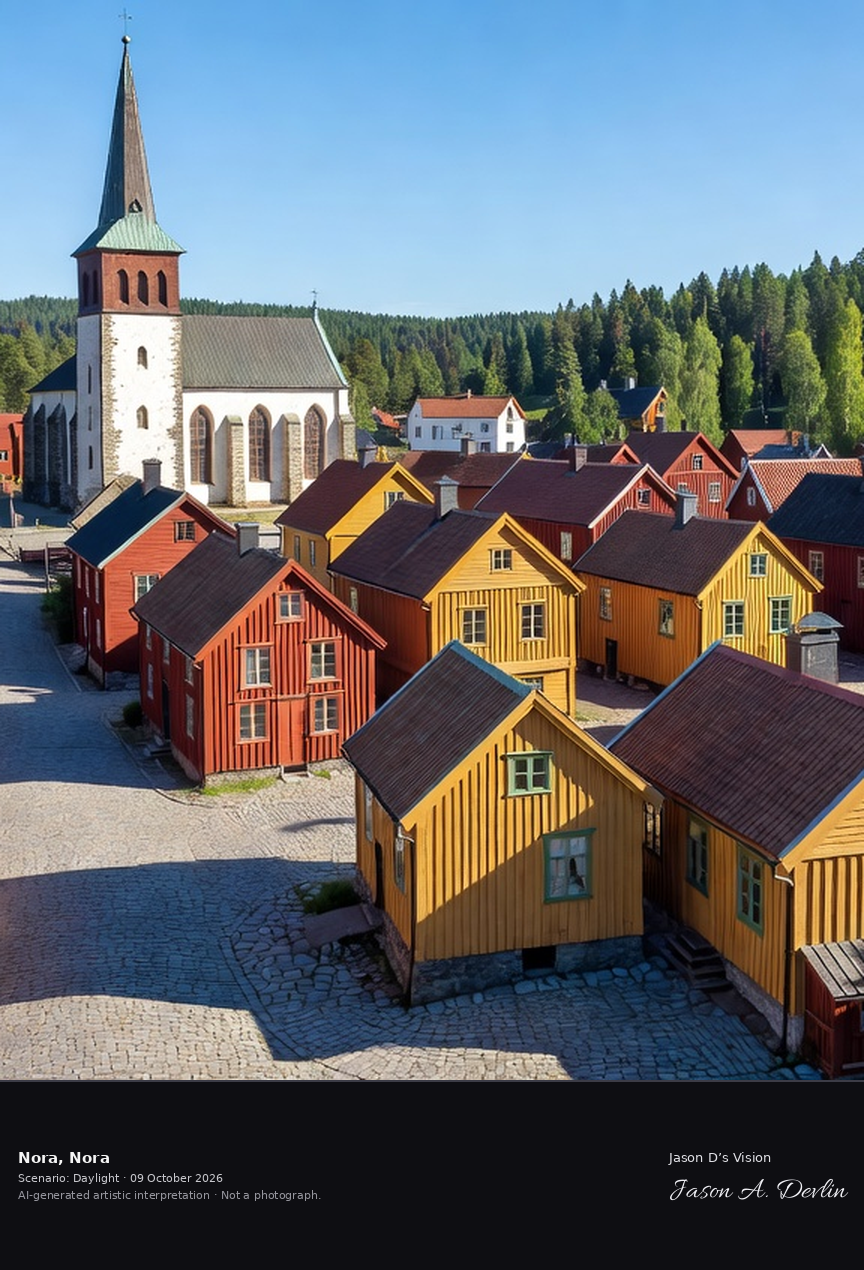
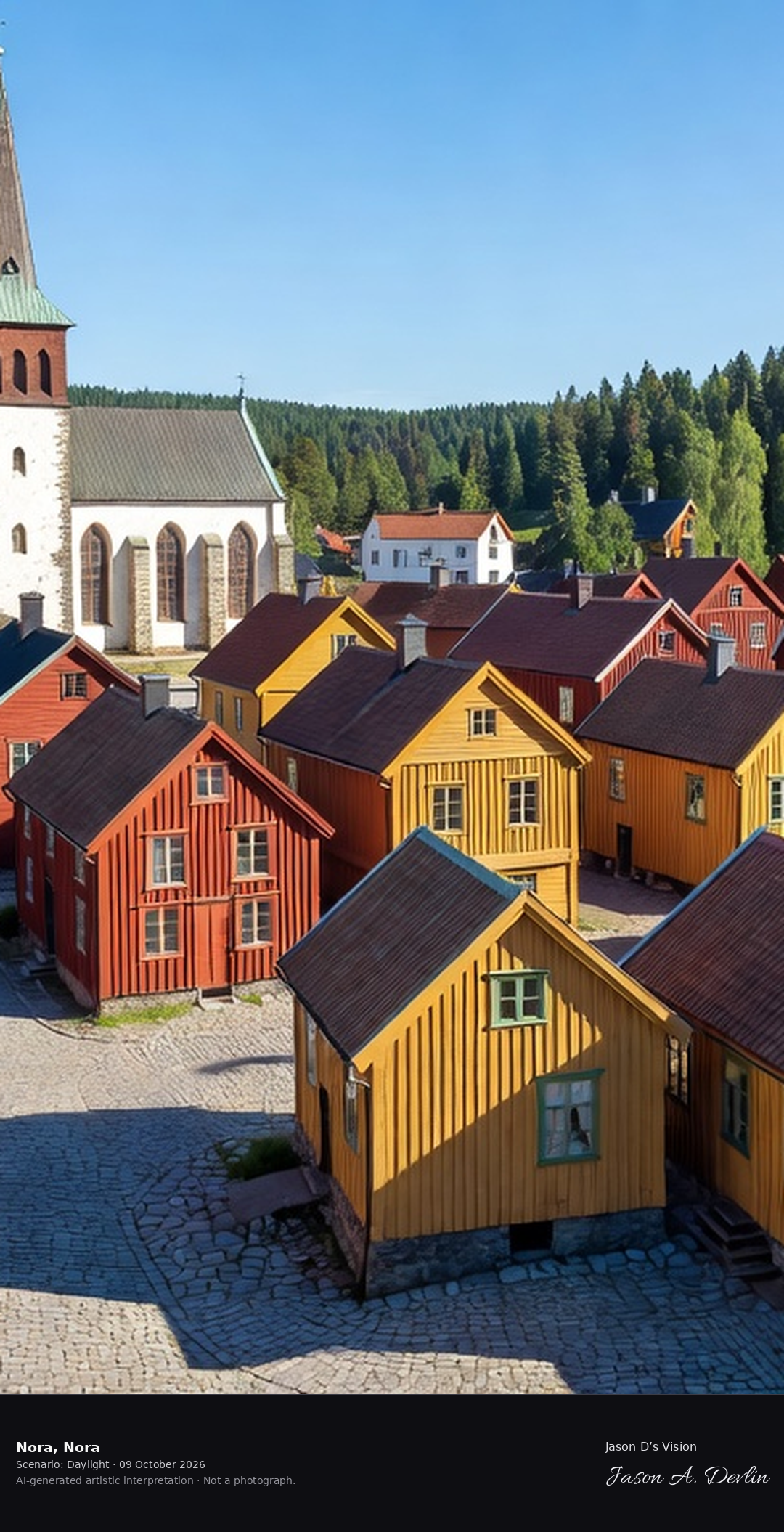
Nora's perfectly preserved 18th-century wooden town, the Bergslagen mining town with its church and market square, cobbled streets of low timber houses.
Nora’s cobbled streets are lined with low timber houses, around its church and market square. The Bergslagen mining town is a perfectly preserved 18th-century wooden town, in bright natural daylight.
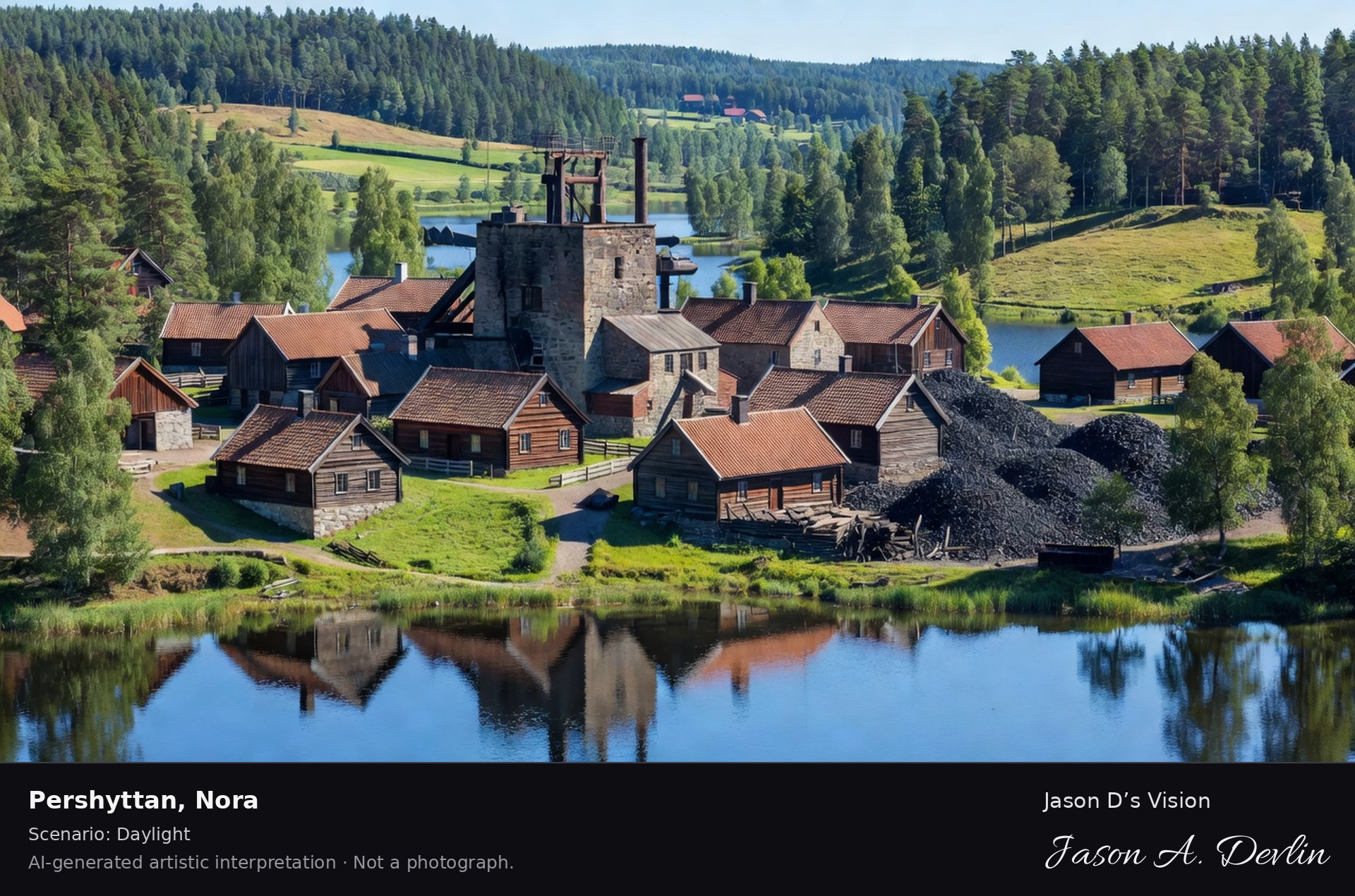
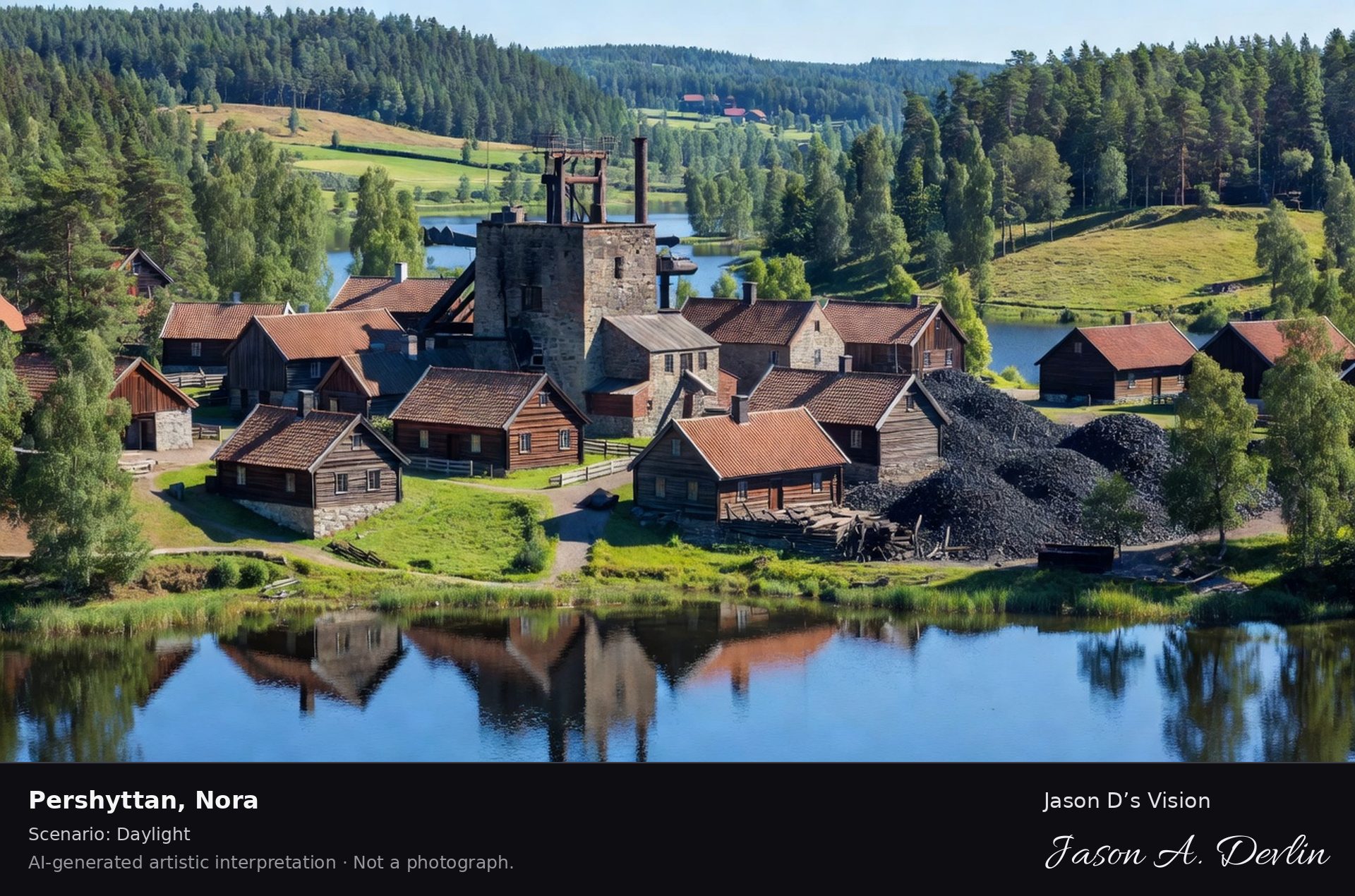
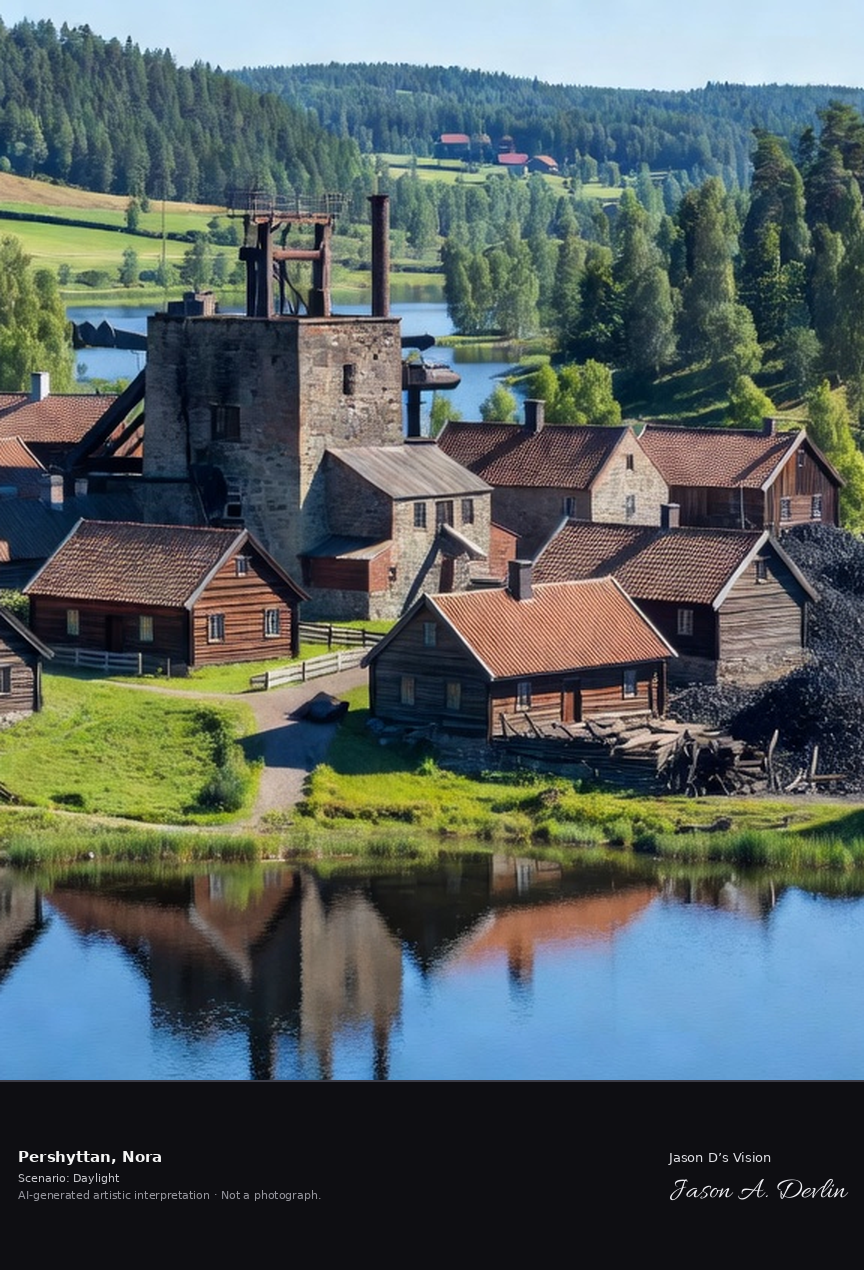
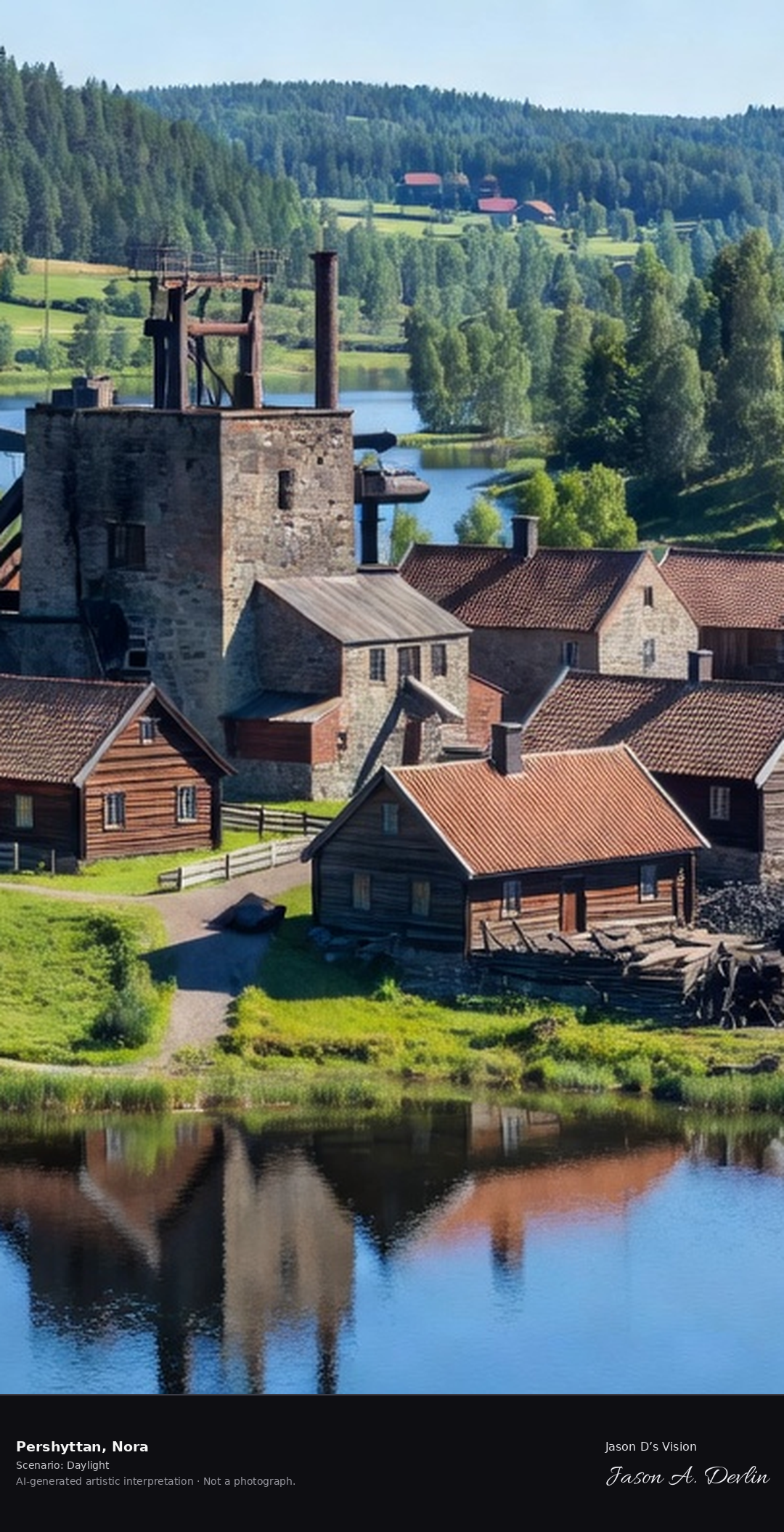
Pershyttan's blast furnace and miners' cottages, the 14th-century ironworks village with its charcoal stacks and the lake below, a complete Bergslagen iron landscape.
Bright daylight over Pershyttan in Nora, Bergslagen — the 14th-century ironworks village: the stone blast furnace with its headframe, rows of red and timber miners' cottages, black charcoal stacks, and the calm lake with pine forest behind.
Every image in Jason D's Vision is free to use for any purpose — personal or commercial. No credit is required. If you'd like to credit, 'Jason D's Vision' is appreciated, but it's entirely your choice.
Jason D's Vision waives its own rights in these images. This doesn't waive anyone else's rights: if an image happens to include a trademark, logo, or other third-party material, those rights still belong to their owners. All images are AI-generated artistic interpretations, not photographs, and use of an image doesn't imply endorsement by Jason D's Vision.